Human Mission to Mars: Timeline, Challenges, and Who Gets There First
Sending humans to Mars is the most complex and dangerous undertaking in the history of exploration — a two-to-three-year mission across interplanetary space with no rescue possible. Here is where the plans stand, what must be solved, and who is closest to making it happen.
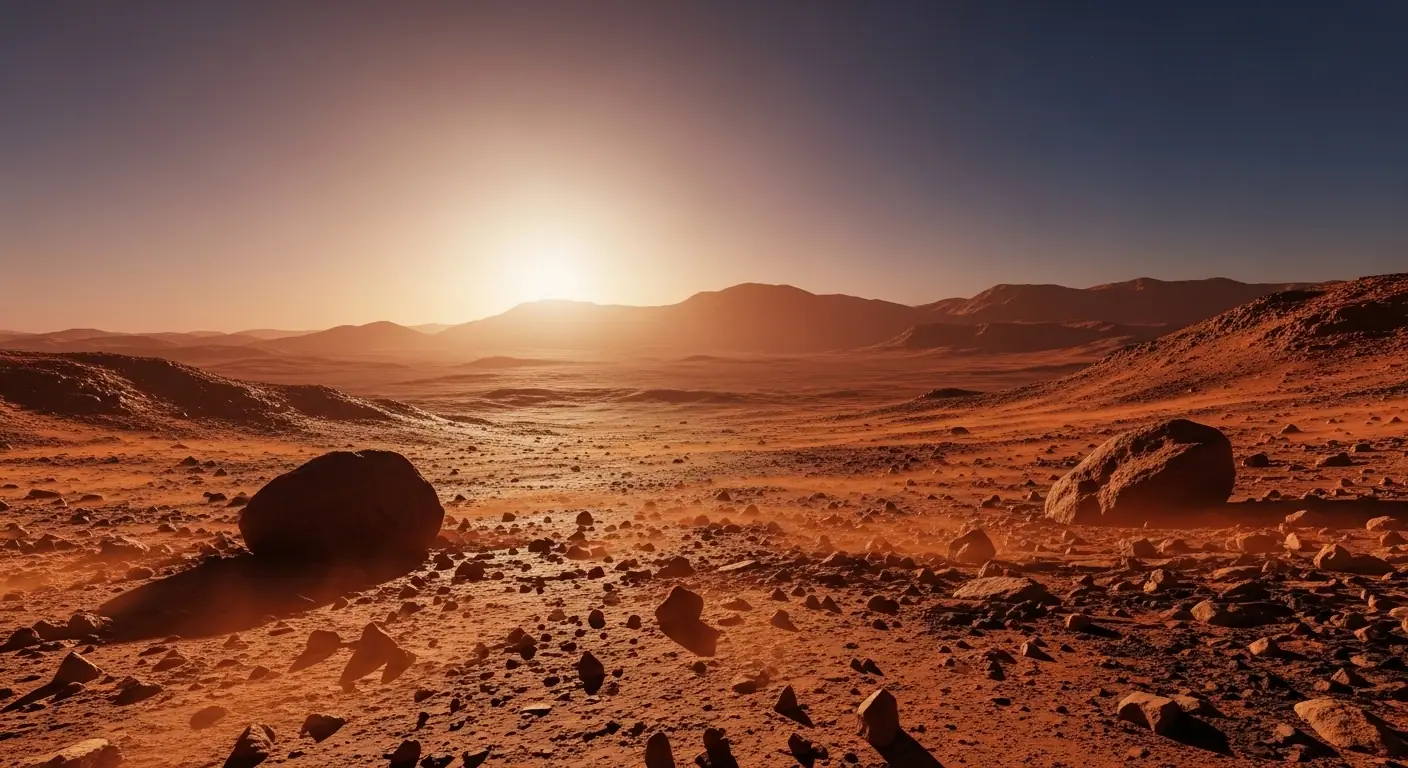
Mars is 225 million kilometers away at its closest approach to Earth. A one-way journey takes six to nine months depending on the trajectory chosen, and return trips must wait for the next favorable planetary alignment roughly 26 months later, making the minimum mission duration approximately two to three years. The planet's surface is hostile in almost every measurable way: thin unbreathable atmosphere, average temperatures of -60 degrees Celsius, no global magnetic field to deflect radiation, and dust storms that can engulf the entire planet. And yet, within this decade or the next, humans may stand on its surface. The question is not really whether — it is who, when, and how.
Why Mars? The Case for the Red Planet
Among the destinations accessible to human exploration with foreseeable technology, Mars stands alone as a world with genuine potential for long-term human habitation. It has a day length almost identical to Earth's (24 hours and 37 minutes), gravity of 0.38g (compared to the Moon's 0.16g, which may be insufficient to maintain human bone density over long periods), a thin carbon dioxide atmosphere that can serve as a feedstock for rocket propellant and oxygen production, accessible water ice at the poles and in the shallow subsurface at higher latitudes, and a geologically rich history suggesting it was once a warm, wet world potentially capable of supporting life.
The practical argument for Mars as humanity's second home is straightforward: if life on Earth were threatened by an extinction-level event — an asteroid impact, a volcanic superpluvial, a pandemic — a self-sustaining Mars colony could preserve civilization. This "backup for humanity" argument, championed most vocally by Elon Musk, motivates the most ambitious Mars plans. More pragmatically, the scientific case for sending humans to Mars is compelling: a geologist on the Martian surface could accomplish in a single afternoon what a rover takes months to achieve, and the search for evidence of past or present life on Mars — one of the most profound scientific questions ever posed — could be dramatically accelerated by human presence.
Mars's proximity also matters. At its closest, Mars is only about 3 light-minutes away, meaning communications delay is 3 to 22 minutes depending on orbital geometry. This is challenging but manageable for crews trained to operate with significant autonomy. Compare this to the outer solar system, where communication delays of hours make real-time interaction with Earth essentially impossible. Mars sits in a workable middle ground: distant enough to pose extraordinary engineering challenges, close enough that a human mission is within the reach of current and near-future technology.
SpaceX's Mars Architecture: Starship and the Road to a City
SpaceX has developed the most detailed and publicly described human Mars architecture of any organization. Its centerpiece is Starship, the largest rocket ever built, consisting of the Super Heavy booster (approximately 70 meters tall, powered by 33 Raptor engines producing over 7,500 tons of thrust at liftoff) and the Starship upper stage (50 meters tall, powered by 6 Raptor engines). The fully stacked vehicle stands roughly 121 meters tall and is designed to be fully and rapidly reusable — both stages are intended to land and fly again within hours, like commercial aircraft.
The Mars mission profile for Starship involves several key steps. A Starship bound for Mars departs Earth orbit after being fully fueled — a process requiring multiple tanker Starship flights to top up the vehicle's tanks in orbit, as the full propellant mass required for a Mars transit and landing cannot be lifted on a single launch. In orbit, propellant is transferred from tanker vehicles to the mission Starship through orbital refueling operations that SpaceX has been developing and demonstrating. Once fully fueled with liquid methane and liquid oxygen, the Starship coasts to Mars on a Hohmann-like transfer orbit taking approximately six to nine months.
Arriving at Mars, the Starship enters the thin Martian atmosphere using aerodynamic braking — the vehicle belly-flops through the upper atmosphere, using its large surface area to slow down — before igniting its engines for the final powered descent to the surface. Mars's thin atmosphere, about 1 percent of Earth's sea-level pressure, provides some aerodynamic braking but not nearly enough to land a large vehicle without powered descent. SpaceX's architecture relies on the Starship's heat shield, combined with a propulsive landing, to deliver cargo and eventually crew safely.
The key to making the return trip economically feasible is propellant production on Mars. Starship's engines burn methane (CH4) and liquid oxygen (LOX). Mars's atmosphere is 95 percent carbon dioxide, and evidence strongly supports the presence of water ice in the Martian subsurface at mid-latitudes. The Sabatier reaction combines CO2 with hydrogen to produce methane: CO2 + 4H2 → CH4 + 2H2O. Hydrogen can be obtained by electrolyzing water derived from subsurface ice. The oxygen produced by electrolysis can be liquefied and stored as LOX. An automated propellant production plant sent to Mars in advance of crewed missions could, over months or years of operation, fill the tanks of a waiting Starship for the return journey.
Musk has articulated a vision of sending fleets of Starships — potentially 1,000 or more over decades — to build a self-sustaining city of a million people on Mars. The first cargo missions, potentially as early as the 2026–2028 launch window, would deliver power systems, ISRU equipment, and basic infrastructure. The first crewed missions, targeting the 2029–2031 launch windows depending on technical readiness, would carry small crews of astronauts/colonists to begin surface operations. Timeline slippage is expected; SpaceX's internal timelines have historically proved optimistic, but the direction of progress is undeniable, and Starship's test flight program has moved through increasingly ambitious milestones on the way to operational capability.
NASA's Moon-to-Mars Strategy
NASA's approach to human Mars missions is more deliberate and incremental than SpaceX's, explicitly building capability through the Artemis lunar program before committing to a Mars crewed mission architecture. The logic of Moon-to-Mars is that the Moon provides a proving ground 3 days from Earth, not 6–9 months away, where new systems can be tested with the option of emergency return. Technologies for life support, surface habitation, ISRU, and long-duration human spaceflight can be validated in a demanding but recoverable environment before being committed to a multi-year Mars transit with no rescue option.
The Lunar Gateway, a small space station being built in lunar orbit as part of the Artemis program, is explicitly designed with Mars in mind. Its life support systems, power infrastructure, and deep space communications architecture are prototypes for the systems that will eventually be used on a Mars transit vehicle. Astronauts spending extended periods on the Gateway — potentially months at a time — will provide data on human physiology in the deep space radiation environment that low Earth orbit does not replicate, because the ISS is partially shielded by Earth's magnetic field.
NASA's current planning envisions human Mars missions in the 2035–2040 timeframe, though this range is highly dependent on funding continuity, technical progress, and political prioritization. The Space Launch System (SLS) and Orion spacecraft, which anchor the Artemis program, are not sized for Mars missions; a Mars-class vehicle would require a different architecture, likely involving in-space assembly of Mars Transit Vehicles in cislunar space using heavy-lift launches. The agency has studied various Mars mission architectures over the decades, from conjunction-class missions (long surface stays taking advantage of both favorable launch windows, totaling roughly 900 days) to opposition-class missions (shorter surface stays with faster return trajectories, at the cost of much higher radiation exposure and energy requirements).
The Journey: Six to Nine Months in Deep Space
The transit from Earth to Mars presents challenges qualitatively different from any human spaceflight mission flown to date. The longest single human spaceflight missions, aboard the ISS, have approached or slightly exceeded one year — providing valuable data on how the body responds to microgravity over time. A Mars transit would expose crew members to microgravity for six to nine months outbound, followed by months or years on Mars at 0.38g, followed by another six to nine months in microgravity on the return. The cumulative physiological effects remain incompletely understood.
Bone density loss in microgravity occurs at approximately 1 to 2 percent per month in weight-bearing bones, and despite countermeasures including resistive exercise, crews on long ISS missions arrive home with significantly reduced bone strength. Muscle atrophy follows a similar pattern. The cardiovascular system, accustomed to pumping blood against Earth's gravity, adapts to microgravity in ways that reduce heart efficiency, and the redistribution of bodily fluids toward the head causes optic nerve swelling and visual impairment — the Spaceflight Associated Neuro-ocular Syndrome (SANS) — in a significant fraction of long-duration ISS crew members. Strategies to mitigate these effects include artificial gravity through rotation of part or all of the spacecraft, though this adds enormous engineering complexity.
Cosmic radiation is the most serious health threat. Earth's magnetic field and the ISS's partial shielding reduce radiation exposure in low Earth orbit significantly. In deep space, crews are exposed to two primary sources: galactic cosmic rays (GCRs), which are high-energy particles from outside the solar system that arrive continuously from all directions, and solar particle events (SPEs), which are intense bursts of energetic protons released by solar flares and coronal mass ejections. GCRs are difficult to shield against because their very high energies allow them to penetrate almost any practical thickness of material, and heavy shielding materials actually produce secondary radiation when struck by GCRs. NASA estimates that a Mars crew would receive radiation doses sufficient to raise their lifetime cancer risk by several percent, with current NASA guidelines limiting astronauts to doses that keep this increase below a 3 percent excess cancer mortality risk.
Communication delays of 3 to 22 minutes each way mean that real-time interaction with Earth is impossible. A crew experiencing a medical emergency on the transit to Mars cannot receive instant guidance from flight surgeons on Earth. This demands a level of crew medical training and autonomous decision-making capability far beyond what current astronaut selection and training programs provide. Every critical system — life support, propulsion, power — must be designed for crew-level maintenance and repair, with extensive spare parts and redundancy.
Psychological factors compound the physical challenges. A Mars crew would be the most isolated group of humans in history, unable to have a real-time conversation with anyone outside the spacecraft, aware that any emergency requiring evacuation would be impossible to execute. Interpersonal conflict, depression, cognitive decline, and motivational degradation have all been observed in analog environments such as Antarctic winter-over stations and NASA's CHAPEA habitat simulation. Crew selection, team dynamics training, and mission design must account for these factors as rigorously as engineering does for hardware reliability.
Landing on Mars: The Seven Minutes of Terror, Amplified
Landing on Mars is notoriously difficult. The planet's atmosphere is thick enough to cause severe aerodynamic heating during entry — requiring heat shields comparable to those used for Earth reentry — but thin enough that it provides only about 1 percent of the deceleration available from atmospheric braking compared to Earth. This means that parachutes alone cannot slow a large vehicle to a safe landing speed. Every Mars lander to date has used some combination of heat shield, parachute, retrorockets, and airbags, tailored to its specific size and landing location requirements.
NASA's Curiosity rover, weighing 899 kilograms, required the unprecedented "sky crane" landing system — a rocket-powered descent stage that lowered the rover on cables. Perseverance used the same system for its 1,025-kilogram entry. A human landing system, with a crew habitat, supplies, and ISRU equipment, might weigh 40,000 to 100,000 kilograms or more — far beyond the capability of any landing system yet demonstrated. SpaceX's approach for Starship relies entirely on propulsive landing after aerodynamic deceleration, eliminating parachutes entirely and depending on the Raptor engines' deep throttling capability to execute a precise powered descent. This approach has been tested extensively on Earth but has never been demonstrated at Mars.
Dust storms add further complexity. Mars experiences regional dust storms regularly and planet-encircling storms roughly every few Earth years. A major dust storm that reduced solar power to near zero, degraded visibility for landing, or significantly altered atmospheric density profiles could jeopardize a landing attempt. Mission planning must account for seasonal dust storm probability and design systems tolerant of worst-case atmospheric conditions.
Living on Mars: Habitats, Radiation, and ISRU
Once on the surface, a Mars crew faces the challenge of survival in a deeply hostile environment. Surface pressure on Mars is about 0.6 percent of Earth's sea level — fatal to humans within seconds of exposure. Temperatures range from about -125 degrees Celsius at the poles in winter to a comfortable 20 degrees Celsius on a warm summer day at the equator, but average around -60 degrees Celsius. The thin atmosphere provides negligible protection from ultraviolet radiation and only modest protection from cosmic rays and solar particle events.
Early habitats will likely be pre-deployed modules sealed against the atmosphere, with radiation shielding provided by surrounding the habitable volume with regolith, water tanks, or polyethylene shielding. Burying habitats under two to three meters of Martian soil would substantially reduce radiation exposure to near-Earth surface levels. ISRU experiments aboard the Perseverance rover have already demonstrated one key technology: the MOXIE instrument produced oxygen from the Martian CO2 atmosphere through solid oxide electrolysis, validating the core process at laboratory scale. A full-scale MOXIE-derived ISRU plant, scaled up by a factor of several hundred, could produce the tonnes of LOX needed to fuel a Starship for departure.
Food production will be essential for long surface stays. Early missions will likely rely on pre-packaged food, but caloric and mass constraints make resupply from Earth expensive. Controlled-environment agriculture — growing crops under artificial lighting inside pressurized greenhouses — is a long-studied concept that is becoming increasingly practical. Plants also contribute to psychological wellbeing and can contribute to carbon dioxide removal and oxygen generation in life support systems. Mars's regolith contains perchlorate salts at concentrations toxic to plants, requiring either remediation of soil for agriculture or fully hydroponic or aeroponic growing systems.
Timeline Comparison: SpaceX, NASA, and China
Three serious players have articulated timelines for human Mars missions, though with very different levels of commitment and technical specificity.
SpaceX has publicly stated a goal of landing the first humans on Mars between 2029 and 2031, during one of the two launch windows in that period when Earth-Mars transfer energy requirements are relatively low. This timeline assumes the successful development of orbital propellant transfer, reliable Starship reusability, and the prior delivery of cargo and ISRU infrastructure to the Martian surface in the 2026–2028 windows. Independent analysts generally consider this timeline optimistic but not impossible; a more conservative SpaceX timeline would push first crewed Mars landing to the mid-2030s. What is not in doubt is that SpaceX is developing the hardware most directly applicable to human Mars missions and has the operational cadence to iterate faster than any government program.
NASA's timeline for human Mars missions has varied with administrations and budgets but generally clusters around the late 2030s to early 2040s. The agency's current Moon-to-Mars framework does not commit to a specific Mars mission date, describing instead a series of capability milestones and technology demonstrations that would enable a crewed Mars mission when the necessary elements are mature. NASA's advantage is its institutional knowledge of human spaceflight operations, its scientific expertise accumulated through decades of Mars robotic exploration, and its budget stability relative to a commercial startup. Its disadvantage is the slower pace that congressional funding cycles and risk-averse decision-making impose.
China has officially stated a goal of landing humans on Mars around 2033, a timeline that aligns with a favorable launch window in that year. China's human spaceflight program has progressed rapidly, with the Tiangong space station operational and crews rotating through on a regular schedule. China's Mars robotic program demonstrated successful orbiting, landing, and rover operations with Tianwen-1 and Zhurong. The Long March 9 super-heavy-lift rocket, currently in development, would provide the launch capacity needed for a crewed Mars mission architecture. Whether China's 2033 goal is technically and politically achievable is uncertain, but the program's track record of meeting ambitious timelines faster than Western analysts expected makes it unwise to dismiss.
Key Technology Milestones Still Needed
Regardless of which organization gets to Mars first, several technology gaps must be closed before a crewed Mars mission can occur safely. Orbital propellant transfer — refueling a spacecraft in Earth orbit — has been demonstrated at small scale but needs to be proven at the propellant masses needed for a Mars mission, involving cryogenic fluids with boil-off management in the vacuum of space. SpaceX is developing this capability for Starship, and successful demonstration would be a pivotal milestone.
Large-scale ISRU on Mars must be demonstrated robustly before crews depart Earth on a mission that depends on locally produced propellant for return. A failure of the ISRU plant after a crew arrives on Mars would be catastrophic if there is no backup. The architecture must either ensure extremely high ISRU reliability or provide Earth-launched emergency propellant pre-positioned in Mars orbit as a contingency.
Reliable nuclear power is almost certainly required for Mars surface operations at the scale needed to support humans and run ISRU equipment. NASA and the Department of Energy are developing the Fission Surface Power system, a 10-kilowatt fission reactor, for lunar demonstration. Mars missions will likely need hundreds of kilowatts of power — requiring either multiple small reactors or larger systems not yet developed. Solar power at Mars is viable (irradiance is about 43 percent of Earth's) but vulnerable to dust storms and less practical at polar latitudes where ice resources are concentrated.
Medical autonomy — the ability of a crew to diagnose and treat serious medical conditions without real-time support from Earth — needs to be developed through advances in medical AI, telemedicine systems, surgical robotics, and comprehensive crew medical training. The probability of a serious medical emergency in a multi-year Mars mission is not negligible, and the consequences of being unable to treat it are fatal.
The race to Mars is not simply a repeat of the Apollo-era space race. It involves multiple actors — an ambitious commercial company, the world's largest space agency, and a rising space superpower — pursuing different architectures on different timelines for different reasons. What is certain is that the technical, physiological, and psychological challenges are being addressed with unprecedented seriousness, that hardware is being built rather than merely studied, and that the first humans to walk on Mars are almost certainly alive today. The question of whether they will wear SpaceX suits, NASA suits, or taikonauts' suits remains, as of 2026, genuinely open.