Orbital Mechanics Explained: How Spacecraft Actually Get to Space (and Stay There)
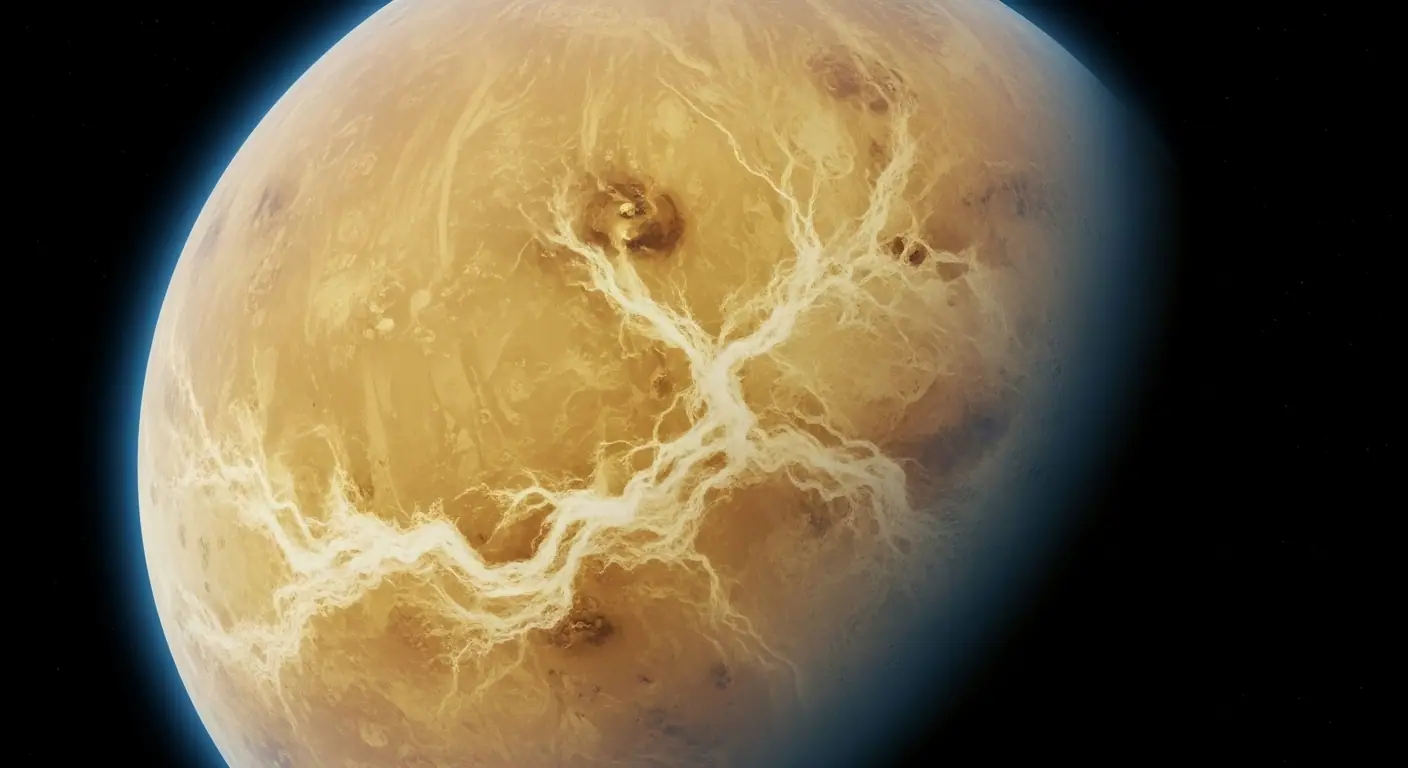
Orbital mechanics is the physics that governs everything from a Starlink satellite skimming the upper atmosphere to a probe launched at the Sun using Venus as a slingshot. Understanding it transforms spaceflight from magic into elegant engineering.
There is a common misconception about orbiting objects: that they are somehow "beyond" gravity, floating free in a gravity-free zone. In reality, the International Space Station is in Earth's gravity field at essentially full strength — the gravitational acceleration at 400 kilometers altitude is about 89 percent of what it is on the surface. The station is not escaping gravity; it is falling. It falls continuously and entirely around the Earth, with its forward velocity perfectly matched to the rate at which the curved surface falls away beneath it. Understanding this — truly understanding it — is the beginning of orbital mechanics.
Why Orbiting Is Falling Around the Earth
Isaac Newton captured the key insight with a thought experiment: imagine a cannon on a very high mountain, firing horizontally. A slow cannonball falls and hits the ground nearby. A faster one travels farther before landing. A fast enough cannonball would travel so far that, as it falls, the Earth's surface curves away beneath it at the same rate — the cannonball never lands. It orbits.
For low Earth orbit, "fast enough" is approximately 7.8 kilometers per second — about 28,000 kilometers per hour. At this speed, a spacecraft falls 4.9 meters per second due to gravity, and the spherical Earth's surface curves away by exactly 4.9 meters per second in the horizontal direction. The spacecraft perpetually falls and perpetually misses the ground. This is why astronauts aboard the ISS feel weightless: they and the station are falling together at the same rate, so there is no contact force between an astronaut and the floor. Weightlessness is not the absence of gravity — it is the experience of being in free fall.
Kepler's Three Laws (Without the Math)
Johannes Kepler, working in the early 17th century from Tycho Brahe's meticulous astronomical observations, derived three laws describing planetary motion. They apply equally well to satellites and spacecraft.
Kepler's First Law: Orbits are ellipses, with the central body (Earth, Sun) at one focus. A circle is a special case of an ellipse where both foci coincide. Many spacecraft orbits are nearly circular, but all are technically elliptical. The point on the orbit closest to Earth is called the perigee; the farthest point is the apogee. (For orbits around other bodies, the terms vary: perihelion/aphelion for the Sun, periselene/aposelene for the Moon.)
Kepler's Second Law: A line connecting the spacecraft to the central body sweeps equal areas in equal times. The practical implication: a spacecraft moves fastest at perigee and slowest at apogee. This is directly analogous to a figure skater spinning faster when arms are pulled in — conservation of angular momentum at work. For mission planners, this means the optimum place to fire a rocket engine for maximum efficiency is at perigee, where the spacecraft is already moving fastest (the Oberth effect).
Kepler's Third Law: The square of the orbital period is proportional to the cube of the orbit's semi-major axis. Translated: the farther out you orbit, the longer your period, but the relationship is not linear. A geostationary satellite at 35,786 kilometers altitude has an orbital period of exactly 24 hours — it appears stationary over one point on Earth's equator. The ISS at 400 kilometers orbits in about 90 minutes. The Moon at 384,400 kilometers takes about 27 days. This law gives mission designers an immediate relationship between where a spacecraft needs to orbit and how long each orbit takes.
Delta-V: The Currency of Spaceflight
Delta-v (written Δv) is the change in velocity that a spacecraft must achieve through rocket thrust. It is the fundamental budget of any space mission, analogous to fuel in a road trip — except that in space, changing your speed (or direction) requires fuel, and the relationship is nonlinear. Delta-v is measured in meters per second or kilometers per second.
Reaching low Earth orbit from the ground requires approximately 9.4 km/s of delta-v — 7.8 km/s to achieve orbital velocity, plus additional delta-v to overcome atmospheric drag and gravity losses during the ascent. Getting from LEO to geostationary orbit requires another ~4 km/s. A lunar landing and return from LEO requires roughly 15–16 km/s total. A one-way trip to Mars requires about 3.6 km/s from LEO (not counting landing). These numbers are fixed by physics; no rocket design can change them. Mission designers work within these constraints the same way an engineer designs a bridge within the fixed constraints of gravity and material strength.
The reason delta-v is the right currency (rather than raw fuel mass) comes from the Tsiolkovsky rocket equation, derived by the Russian theorist Konstantin Tsiolkovsky in 1903. The equation shows that the delta-v achievable by a rocket depends on two things: the exhaust velocity of the propellant (related to the specific impulse of the engine) and the mass ratio — the ratio of the rocket's fueled mass to its unfueled mass. Because propellant itself has weight, there are sharply diminishing returns to adding more: to double your delta-v by adding more propellant, you need to square the mass ratio. This is why rockets are mostly fuel by mass — a Falcon 9 is roughly 97 percent propellant by mass at launch — and why rocket staging (discarding empty tanks and engines) is so valuable for increasing the effective mass ratio.
Orbit Types: LEO, MEO, GEO, SSO, and More
Different missions require different orbits, each with distinct characteristics:
Low Earth Orbit (LEO, roughly 160–2,000 km altitude) is where the ISS, most crewed missions, and most Earth observation satellites operate. Orbital periods are 90 minutes to a few hours. LEO is cheap to reach in delta-v terms, provides relatively low communication latency, but requires continuous station-keeping to counter atmospheric drag.
Medium Earth Orbit (MEO, roughly 2,000–35,786 km) is home to GPS, GLONASS, Galileo, and other navigation constellation satellites at around 20,000 km. MEO sits between the Van Allen radiation belts and offers a compromise between coverage geometry and launch cost.
Geostationary Orbit (GEO, 35,786 km) is where communications and weather satellites hover stationary over the equator. A GEO satellite can see nearly a full hemisphere continuously, making it ideal for broadcast communications and weather monitoring. Latency is significant (~250 ms round trip), which is why low-orbit constellations like Starlink were developed for internet applications.
Sun-Synchronous Orbit (SSO) is a near-polar orbit with a specific inclination (typically around 97–99 degrees) chosen so that the orbital plane precesses at exactly one degree per day — the same rate Earth orbits the Sun. The result is that a spacecraft in SSO crosses the equator at the same local solar time on every pass, ensuring consistent sun angle for imaging. Most Earth observation satellites (Landsat, Sentinel, etc.) use SSO.
Highly Elliptical Orbit (HEO) features a low perigee (300–1,000 km) and high apogee (10,000–500,000 km). A spacecraft spends most of its time near apogee, where it moves slowly, providing extended dwell time over a specific latitude. Russia's Molniya orbit uses this geometry to provide long coverage of high-latitude Russian territory that geostationary satellites, constrained to the equatorial plane, cannot efficiently serve.
The Hohmann Transfer: Most Fuel-Efficient Path Between Orbits
If you want to move a spacecraft from one circular orbit to a higher circular orbit, the most fuel-efficient maneuver is the Hohmann transfer orbit, named for German engineer Walter Hohmann who calculated it in 1925. The maneuver consists of exactly two engine burns. The first burn at perigee of the current orbit adds velocity, raising the apogee to the altitude of the target orbit — creating a transfer ellipse that touches both circles. The spacecraft coasts along this ellipse until it reaches the high point, then a second burn adds more velocity to circularize the orbit at the new altitude.
The counterintuitive aspect of Hohmann transfers — and orbital mechanics generally — is that to go to a higher orbit, you speed up; but once in the higher orbit, you are moving more slowly. Speeding up raises your orbit, which reduces your average speed. Slowing down (deorbit burn) lowers your orbit, which increases your speed. This reversal of intuition is one of the reasons orbital mechanics feels strange at first. The ISS uses Hohmann-style reboost maneuvers every few months to counteract the gradual orbital decay caused by atmospheric drag, raising its orbit back to the operational altitude.
Gravity Assists: Stealing Speed from Planets
A gravity assist (also called a gravitational slingshot or swingby) uses a planet's gravity and its orbital motion around the Sun to change a spacecraft's speed and direction without using any propellant. The spacecraft falls toward the planet, curves around it on a hyperbolic trajectory, and leaves the planet's vicinity with a different velocity than it arrived with — having "borrowed" momentum from the planet's orbital motion.
The mathematics requires a frame of reference shift to understand: in the planet's reference frame, the spacecraft enters and exits with equal speed (conservation of energy in an elastic gravitational interaction). But in the Sun's reference frame, the spacecraft has exchanged momentum with the planet. Because the planet is astronomically more massive, its speed change is utterly negligible; the spacecraft can gain (or lose) many kilometers per second.
Voyager 1 and 2 used gravity assists at Jupiter and Saturn (and for Voyager 2, also Uranus and Neptune) in the late 1970s to achieve velocities far beyond what their launch vehicles could have provided directly — they are now in interstellar space, the most distant human-made objects in existence. The JUICE mission (Jupiter Icy Moons Explorer), launched by ESA in 2023, uses a complex sequence of Earth, Venus, and Earth flyby gravity assists to build up the energy needed to reach Jupiter efficiently. Most spectacularly, NASA's Parker Solar Probe uses repeated Venus gravity assists to progressively lower its perihelion — the closest point of its orbit to the Sun — traveling faster with each pass, eventually achieving the fastest speed ever achieved by a human-made object.
Lagrange Points: Gravitational Sweet Spots
In a system of two massive bodies (the Sun and Earth, or the Earth and the Moon), there are five special points in space where a small object can maintain a stable or semi-stable position relative to both bodies. These Lagrange points (L1–L5), calculated by mathematician Joseph-Louis Lagrange in 1772, result from the balance of gravitational and centrifugal forces in the rotating reference frame.
The L1 point sits between the Sun and Earth, about 1.5 million kilometers sunward — this is where NOAA's DSCOVR satellite and NASA's solar wind monitoring spacecraft orbit, providing continuous views of the Sun and early warning of solar storms. The L2 point is on the opposite side, 1.5 million kilometers anti-sunward — and this is where the James Webb Space Telescope operates. L2 is ideal for astronomy because a spacecraft there can always point away from both the Sun and Earth, keeping its optics permanently cold and dark. Webb's sunshield keeps the telescope's instruments at approximately -233°C. L4 and L5 (the "Trojan points" 60 degrees ahead of and behind Earth in its orbit) are gravitationally stable over long timescales; Jupiter's Trojan asteroids occupy its L4 and L5 points.
Orbital Decay, Station-Keeping, and the Deorbit
Even at 400 kilometers altitude, the atmosphere is not completely absent — it is a wispy exosphere, with density roughly a trillion times lower than at sea level, but still sufficient to exert a tiny drag force on passing satellites. Over time, this atmospheric drag removes energy from the orbit, causing the satellite to spiral inward. Left uncorrected, a spacecraft in a 400 km orbit would naturally reenter within months to years depending on solar activity (higher solar activity expands the upper atmosphere, increasing drag). The ISS fires its engines for reboosts every few weeks to months to maintain its altitude. Starlink satellites, at lower altitudes, deorbit quickly if thrust is lost — a safety feature that prevents orbital debris accumulation.
When it comes time for controlled reentry, mission designers must thread the spacecraft through a narrow entry corridor. Enter too steeply, and the deceleration is so rapid that aerodynamic heating exceeds the heat shield's capacity — the spacecraft burns up like a meteor. Enter too shallowly (below the minimum entry angle), and the atmosphere is too thin to provide sufficient braking, and the spacecraft literally bounces off the upper atmosphere like a stone skipping on water, returning to space in a higher orbit. The nominal entry corridor for a crewed capsule is typically 2–3 degrees half-angle: precise enough that small navigation errors at entry interface (roughly 120 km altitude, traveling at 7–11 km/s) must be corrected through careful trajectory management during the weeks before reentry.
Real Examples: Artemis II and Parker Solar Probe
Artemis II, NASA's first crewed mission around the Moon using Orion and SLS, uses a free-return trajectory. The Orion capsule is launched to a high Earth orbit, then a translunar injection burn sends it on a trajectory that passes behind the Moon at a distance of approximately 8,900 kilometers. The Moon's gravity curves the spacecraft's path in a figure-eight, returning it to Earth for a Pacific Ocean splashdown. No additional engine burn is needed to return — the trajectory is geometrically shaped so that if the engine failed after translunar injection, the crew would still return to Earth safely. This free-return geometry was used on Apollo 13 after its service module oxygen tank exploded, and it remains a crew safety requirement for early Artemis missions.
The Parker Solar Probe, launched in 2018, represents orbital mechanics at its most ambitious. To reach the inner solar system and orbit near the Sun, a spacecraft actually needs to slow down relative to the Sun — counterintuitively, because Earth is already moving at 30 km/s in its orbit, a spacecraft launched from Earth shares that velocity. The most efficient way to shed orbital energy and fall inward toward the Sun is through Venus flyby gravity assists that progressively reduce Parker's orbital energy. The probe has completed multiple Venus flybys, each one bringing its perihelion closer to the Sun. At its closest approaches, Parker has achieved speeds exceeding 190 km/s — approximately 0.064 percent of the speed of light — and survived temperatures near 1,400°C on its sunward face while its instruments operate at room temperature behind its carbon-composite heat shield. Every element of this trajectory was calculated using the same Keplerian and Newtonian physics described in this article, applied with extraordinary precision.