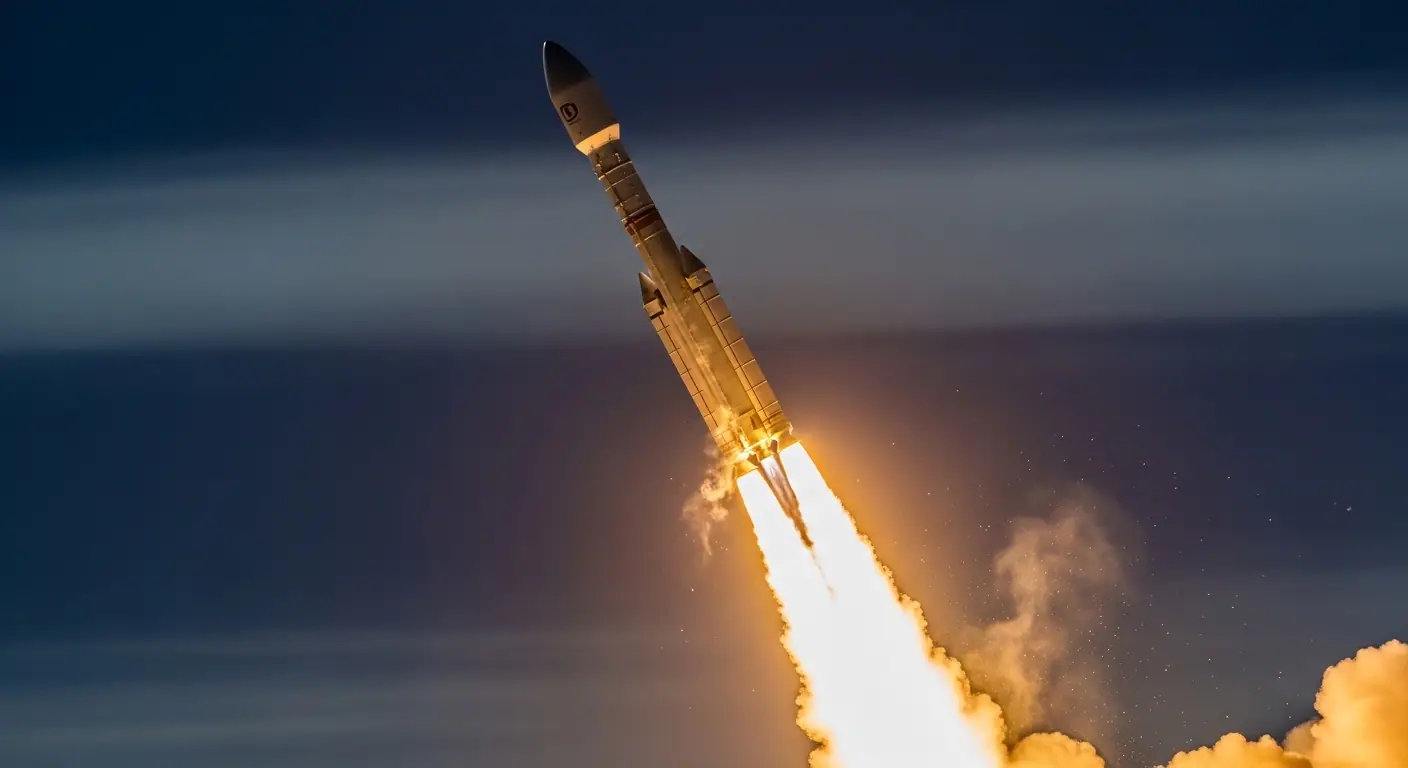
SpaceX Starship V3: Everything We Know About Flight 12
The most powerful rocket ever built is about to get a major upgrade. Booster 19, Ship 39, Raptor 3 engines, and a brand-new launch pad — here is the complete guide to Starship Version 3 and what's coming in May 2026.
SpaceX has been flying Starship in rapid succession since its first successful integrated flight test in April 2023, and each iteration has brought meaningful changes. Flight 12, currently targeting May 2026, will be the debut of something fundamentally different: a Version 3 vehicle that SpaceX says can carry more than 100 metric tons to low Earth orbit in reusable configuration — nearly three times the payload capacity of the Version 2 hardware that flew through Flight 11. It is a step-change upgrade, not an incremental one, and understanding what is changing and why matters for everyone who follows the future of space launch.
The Starship Development Story So Far
SpaceX's path to Flight 12 has been relentless. After the first two integrated flight tests in 2023 both ended in vehicle loss — the first shortly after stage separation due to multiple Raptor failures, the second during a self-destruct command when propellant leaked triggered a fuel-air explosion — the program found its stride in late 2023. Flight 3 in March 2024 demonstrated hot staging separation for the first time and achieved the first controlled ocean landing of the Ship. Flights 4 through 6 progressively refined the booster catch system, culminating in the first successful "chopstick" catch of a Super Heavy booster at the Starbase launch tower in October 2024.
Flights 7 through 11 focused on increasing reliability, demonstrating back-to-back booster reuse, refining the Ship heat shield tile application, and extending the duration and precision of the Ship's own reentry. By Flight 11, SpaceX had demonstrated the full flight profile of a reusable Starship system — launch, booster catch, Ship entry, Ship landing — with high consistency. Having established that the architecture works, the company is now ready to make it significantly more capable.
What Is Starship Version 3?
The Version 3 designation refers to a comprehensive upgrade package applied simultaneously to both the Super Heavy booster and the Starship upper stage. SpaceX rarely provides detailed public specifications in advance, but information from Elon Musk's posts, FAA permit filings, and supply chain reports has filled in a reasonably complete picture.
Performance Claims
The headline number is payload capacity. Starship V2 in reusable configuration was estimated to deliver approximately 35 metric tons to low Earth orbit when accounting for the propellant needed for booster and Ship recovery. Starship V3 is expected to deliver more than 100 metric tons to LEO in reusable configuration — a number that, if achieved, would be the highest payload capacity of any rocket in history by a wide margin, surpassing even the fully expendable configuration of the Saturn V.
In fully expendable mode (no hardware recovery), SpaceX has indicated that V3 Starship could theoretically deliver approximately 200 metric tons to LEO. However, the emphasis for operational use is on the reusable figure, since the economics of Starship depend entirely on flying the same hardware many times. An expendable Starship sacrifices both the booster (valued at tens of millions of dollars) and the Ship, eliminating the cost advantage that makes the vehicle attractive.
How Is the Performance Gain Achieved?
Three main factors drive the V3 performance improvement:
- Raptor 3 engines: The new engine generation produces significantly higher thrust and improved specific impulse compared to Raptor 2. SpaceX has indicated that Raptor 3 achieves over 280 bar chamber pressure — an extraordinary figure for a production engine — and delivers approximately 280 metric tons-force of thrust per engine at sea level. With 33 Raptor 3 engines on the Super Heavy booster, total booster thrust exceeds 9,200 metric tons-force, compared to roughly 7,400 metric tons-force on a Raptor 2 booster.
- Increased propellant load: The V3 Super Heavy booster is slightly taller than V2, adding additional propellant tankage. The V3 Ship also features a larger liquid oxygen header tank for improved landing margin, which paradoxically increases payload since less propellant needs to be reserved as a conservative buffer.
- Structural mass reduction: Each Starship version has been lighter than its predecessor as SpaceX iterates on the stainless steel structure, weld processes, and hardware simplification. Reducing the dry mass of both stages directly increases the payload fraction available for cargo.
Booster 19 and Ship 39
Flight 12 will be flown by Super Heavy Booster 19 and Starship Ship 39. Both vehicles have been visible in aerial imagery of the Starbase facility near Boca Chica, Texas, in various stages of stacking and test preparation during early 2026.
Booster 19
Booster 19 is the first Super Heavy to be built to full V3 specification. Key visible differences from V2 boosters include a lengthened propellant section, a revised forward dome with relocated grid fin attachment points, and new Raptor 3 engine bells that are noticeably different in geometry from Raptor 2 — Raptor 3 eliminated the external gas generator and simplified the external plumbing, giving it a cleaner appearance. The booster's heat shielding, applied to the forward section to handle the thermal loads of hot staging separation, has also been redesigned based on experience from previous flights.
Booster 19 is expected to attempt a chopstick catch at the Starbase launch tower after stage separation, as has become standard procedure for Super Heavy. The catch mechanism has been refined after the successful demonstrations on Flights 5 through 11, and the probability of a successful catch is now considered high enough that SpaceX no longer files for an ocean landing contingency on every mission.
Ship 39
Ship 39 is the first V3 Starship upper stage. The most significant external change is the heat shield tile array, which uses a new tile geometry and improved tile attachment clips that SpaceX developed after analyzing heat shield performance data across V2 flights. The goal is to achieve consistent tile retention through multiple reentries, a prerequisite for the rapid-turnaround flight rates that SpaceX is targeting.
Ship 39 also incorporates Raptor 3 vacuum variants for its three center vacuum-optimized engines, which provide most of the orbital insertion performance. The two sea-level Raptors used for landing remain similar to V2 but are built to the Raptor 3 manufacturing standard. The Ship's payload bay remains sized at approximately 9 meters internal diameter, consistent with earlier versions, and is designed to accommodate a wide variety of payload configurations.
New Pad 2 at Starbase
One of the most significant changes for Flight 12 and beyond is that it will launch from Orbital Launch Mount B (OLM-B), commonly referred to as Pad 2 — a second launch mount at Starbase that has been under construction since mid-2024. The original Pad 1 will remain operational, giving SpaceX two independent launch mounts at the same facility.
The rationale for a second pad is straightforward: SpaceX's stated goal for Starship is to eventually achieve launch rates of dozens of flights per year from Starbase alone. A single launch mount limits cadence even if vehicle turnaround is fast, because the mount itself requires inspection and sometimes maintenance after each flight. Two mounts allow launch processing on one while the other is in use or recovery, roughly doubling the potential monthly launch rate.
Pad 2 incorporates lessons learned from Pad 1's operational history. The Mechazilla catch arm system is an updated version with improved actuator response time. The water deluge system, which protects the launch table from acoustic and thermal loads during ignition, has been scaled up based on the first dozen flights' data. Ground propellant loading systems have been redesigned for faster fill rates, targeting a turnaround time eventually measured in hours rather than days.
Raptor 3: Technical Details
Raptor 3 deserves its own section because it is arguably the most significant single change in the V3 package. The Raptor engine family uses a full-flow staged combustion cycle burning liquid methane and liquid oxygen — the most thermodynamically efficient engine cycle known, and one that was considered nearly impossible to engineer in practice before SpaceX demonstrated Raptor 1.
In full-flow staged combustion, both the fuel and the oxidizer are partially combusted in separate preburners before entering the main combustion chamber. This drives the turbopumps with maximum efficiency and eliminates the losses inherent in gas-generator cycles used in most other rockets. The result is extremely high chamber pressure — and higher chamber pressure directly translates to higher specific impulse (fuel efficiency) and higher thrust per unit of engine mass.
Raptor 1 reached approximately 200 bar chamber pressure. Raptor 2 pushed that to around 230-250 bar. Raptor 3 targets over 280 bar, which SpaceX engineers have described as approaching the physical limits of what is achievable with current metallurgy and manufacturing techniques. Achieving this required new turbopump impeller designs, revised main injector geometry, improved materials in the combustion chamber and nozzle, and manufacturing process changes enabled by SpaceX's in-house machining capabilities at the Starbase engine production facility.
The simplification visible in Raptor 3's external appearance — fewer external pipes and brackets compared to Raptor 2 — also has engineering significance. External plumbing is a source of potential leaks, thermal stress, and maintenance burden. By integrating formerly external passages into the engine structure itself (a process SpaceX calls "de-plumbing"), Raptor 3 should be more reliable and faster to inspect and reuse.
Flight 12 Mission Profile
The planned Flight 12 profile is expected to closely follow the established Starship flight architecture, with modifications to test V3-specific capabilities. Based on FAA permit filings and publicly available information, the expected sequence is:
- Liftoff from Pad 2: First use of the new launch mount, validating its systems before it enters operational rotation.
- Hot-stage separation: Super Heavy booster engines light before Ship engines cut off, using the compressed gas between the stages for additional separation force — a SpaceX innovation demonstrated starting with Flight 3.
- Booster return and catch: Super Heavy performs a boostback burn, re-entry burn, and landing burn, targeting a chopstick catch at Pad 2's Mechazilla system.
- Ship orbital insertion: Ship 39 fires its Raptor 3 engines to achieve a low Earth orbit trajectory, validating V3 performance figures.
- Payload demonstration: Ship 39 is expected to carry a simulated payload or internal mass simulators to demonstrate the V3 payload bay environment.
- Ship reentry and landing: Ship performs a controlled reentry over the Indian Ocean (or a Pacific return trajectory, depending on the orbital parameters chosen) and attempts a propulsive water landing or, if the catch system confidence is high enough, a return to Starbase for a tower catch.
SpaceX typically refines the flight profile up to the day of launch based on weather, range availability, and hardware readiness, so specific details may change. The targeting of May 2026 is consistent with the pace of V3 hardware preparation observed at Starbase.
Why V3 Matters: The Bigger Picture
The jump from 35 mt to 100+ mt to LEO is not merely a performance statistic — it changes what Starship can do for nearly every space application. For Starlink deployment, a V3 Starship can carry approximately three times as many satellites per flight, dramatically compressing the timeline for deploying new constellation generations. For NASA's Artemis HLS program, the larger performance margin reduces mission risk and potentially allows more propellant to be pre-positioned in lunar orbit before crew arrival.
For future Mars missions — SpaceX's ultimate stated goal — V3 performance is essential. SpaceX's Mars architecture depends on orbital propellant transfer, where multiple Starship tanker flights fill a depot ship before it departs for Mars. Each additional ton of payload that V3 can deliver to orbit is one more ton of propellant available for the interplanetary journey, directly improving the mass that can arrive on Mars.
The commercial launch market is also watching closely. Several satellite operators have expressed interest in Starship for missions that require a payload capacity beyond what any other launch vehicle can currently provide — very large GEO communications satellites, in-space manufacturing facilities, and multi-ton orbital infrastructure. V3's 100+ mt capability, if demonstrated reliably, would open a segment of the market that currently has no provider.
What Could Go Wrong
SpaceX has been transparent that each Starship flight carries development risk, and Flight 12 introduces more new variables than a typical iteration. Pad 2 is unproven in actual flight conditions — its systems have been tested statically but not under the full thermal, acoustic, and mechanical loads of a Starship launch. Booster 19 and Ship 39 carry Raptor 3 engines that, while extensively test-fired at McGregor, Texas, have not flown on an integrated vehicle. The V3 structural changes create new interfaces that must perform correctly under flight loads.
SpaceX's approach to these risks is to fly and learn, accepting partial mission success as valuable data even if the full objectives are not met. A Flight 12 that achieves booster catch but loses the Ship during reentry would still validate the pad, the engines, and the booster performance — enough information to identify the failure cause and proceed. The company's willingness to accept and learn from failures, combined with the extremely rapid pace of hardware production, is what makes the Starship development program unlike anything previously seen in the launch industry.
What to Watch For
When the webcast goes live for Flight 12, the key moments to watch are: the Pad 2 ignition sequence and whether the flame deflector and water deluge system perform as designed; the Raptor 3 engine ignition spread across Booster 19 (33 engines lighting is always spectacular but also a moment of concentrated risk); the hot-staging event; and the eventual performance telemetry comparison between actual measured V3 performance and SpaceX's stated specifications.
If V3's real-world performance matches the 100+ mt LEO figure, Flight 12 will mark the moment that Starship graduated from a promising prototype program into the most capable launch system ever operated. The space industry's trajectory will look different on the other side.
Learn More About SpaceX
Explore SpaceX's full mission history, vehicle lineup, and company profile.