Category

Government Space Organisations Companies

60 organizations28 countries

60 organizations working in government space organisations across the global space industry.

Names to know in government space organisations

Rank all by market value →
Space Agencies Verified

JAXA

Tokyo, Japan government

The Japan Aerospace Exploration Agency (JAXA) is Japan's national aerospace and space agency, formed in 2003 through the merger of three organizations: the Institute of Space and Astronautical Science (ISAS), the National Aerospace Laboratory of Japan (NAL), and the National Space Development Agency of Japan (NASDA). JAXA conducts research and development in aeronautics, space technology, and space exploration. Headquartered in Chofu, Tokyo, JAXA operates major facilities including the Tsukuba Space Center, Tanegashima Space Center, and Sagamihara Campus. The agency employs approximately 1,500 staff and operates with an annual budget of ¥215.5 billion (JFY2023). Under President Hiroshi Yamakawa, JAXA pursues exploration, Earth observation, and technology development programs. ## History and Milestones Japan's space program dates to 1955 with the launch of the Pencil rocket. NASDA was established in 1969 for satellite and launcher development, while ISAS focused on space science. Japan launched its first satellite, Ohsumi, in 1970, becoming the fourth nation to orbit a satellite. The H-II rocket, first launched in 1994, established Japan's independent heavy-lift capability. The H-IIA, introduced in 2001, became Japan's primary launch vehicle with an excellent success rate. Japanese astronauts have participated in Space Shuttle and ISS missions, with the Kibo laboratory module contributing to the station since 2008. JAXA achieved notable exploration milestones including the Hayabusa mission, which returned asteroid samples to Earth in 2010—a world first. Hayabusa2 returned samples from asteroid Ryugu to Earth in 2020. These missions demonstrated Japan's prowess in deep space exploration and precision navigation. ## Products and Services JAXA's operational medium-lift launcher is H3, which entered service in 2024 with a new LE-9 engine and flexible configurations. The H-IIA, Japan's workhorse since 2001, flew its 50th and final mission on 28 June 2025 (16:33 UTC) from Tanegashima, carrying the GOSAT-GW climate satellite; H-IIB had already been retired after the last HTV cargo flight in 2020. Japan's satellite programs include the Advanced Land Observing Satellite (ALOS) series for Earth observation, the Quasi-Zenith Satellite System (QZSS) for regional navigation enhancement, and communications satellites. JAXA also develops and operates scientific satellites for astronomy and space physics research. The agency provides astronaut services, with Japanese astronauts serving on ISS expeditions and contributing to international partnerships. JAXA is developing lunar exploration capabilities through the Lunar Polar Exploration (LUPEX) mission partnership with ISRO and other international collaborations. ## Technology and Capabilities JAXA has developed advanced technologies in propulsion, materials, and robotics. The LE-9 engine uses an expander bleed cycle for high reliability. The agency's expertise in sample return missions—demonstrated by Hayabusa and Hayabusa2—represents world-leading capability in deep space navigation and precision operations. The H-II Transfer Vehicle (HTV), called "Kounotori," delivered cargo to the ISS from 2009 to 2020, demonstrating Japan's unmanned spacecraft capabilities. Its successor, HTV-X, will serve the station and potentially support lunar Gateway operations. JAXA maintains testing and tracking facilities including acoustic, thermal vacuum, and vibration testing at Tsukuba, plus ground stations for mission operations. The agency also develops technologies for space debris removal, satellite servicing, and in-space propulsion. ## Business and Financial Overview JAXA operates as an independent administrative institution funded primarily by the Japanese government, with an annual budget of ¥215.5 billion (JFY2023). The agency contracts with Japanese aerospace companies including Mitsubishi Heavy Industries, IHI Aerospace, and NEC for spacecraft and launch vehicle development. Commercial launch services are marketed through MHI, which operates H-IIA and H3 launches. Japan seeks to increase its share of the commercial launch market through H3's competitive pricing and reliability. International partnerships include collaboration with NASA on the Artemis program, ESA on various missions, and bilateral agreements with numerous countries. JAXA provides satellite services to international customers and participates in global space science collaborations. ## Recent Developments In 2024, JAXA achieved the first successful H3 launch following an initial failure in 2023, validating the new launch vehicle. The agency advanced lunar exploration preparations, including the SLIM (Smart Lander for Investigating Moon) mission, which achieved Japan's first lunar landing in January 2024. JAXA continued asteroid sample analysis from the Hayabusa2 mission and advanced the Martian Moons eXploration (MMX) mission for launch to Phobos. The agency also developed the HTV-X cargo vehicle and contributed to international Mars sample return planning. The agency expanded commercial space initiatives and private sector partnerships while advancing Earth observation capabilities and maintaining ISS operations. JAXA also developed technologies for the proposed Lunar Gateway station. ## Market Position JAXA represents Japan's comprehensive space capabilities, maintaining independent access to space while contributing to international partnerships. The agency competes with other launch providers through H3 while collaborating with NASA, ESA, and other agencies on exploration. Japan's aerospace industry, led by MHI, IHI, and Kawasaki Heavy Industries, supports JAXA's programs while developing commercial opportunities. The government has established space as a strategic sector, supporting industry growth and international competitiveness. JAXA's strategic priorities include lunar exploration, Mars sample return, Earth observation, and technology development for sustainable space activities.

Tokyo, Japan · Est. 2003
Space Agencies Verified

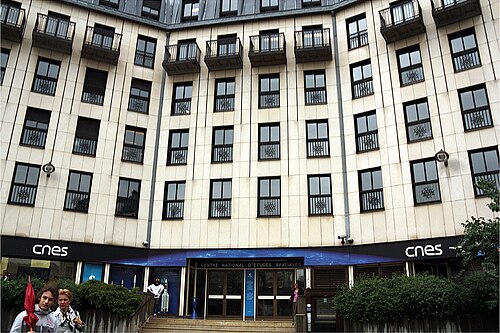
CNES

Paris, France government

The Centre National d'Études Spatiales (CNES) is France's national space agency, established in 1961 and headquartered in Paris. CNES is responsible for shaping and implementing French space policy and manages an annual budget of €3.029 billion (2024), making it one of Europe's largest space agencies. The agency operates the Guiana Space Centre (CSG) in Kourou, French Guiana — Europe's primary orbital launch facility and the site for Ariane, Vega, and Soyuz launches. CNES develops satellites and scientific instruments, leads French contributions to ESA programs, and manages international collaborations with NASA, JAXA, and ISRO. Key programs include the Copernicus Earth observation series, the Galileo navigation system (in partnership with ESA), the SWOT ocean-topography satellite (joint with NASA), and France's military space surveillance capabilities. CNES has a staff of approximately 2,400 engineers and scientists.

Paris, France · Est. 1961
Launch Vehicles Verified

Yuzhnoye Design Bureau

Dnipro, Ukraine government

Yuzhnoye Design Bureau (also transliterated Pivdenne, formally the State Enterprise "Yuzhnoye Design Bureau named after M.K. Yangel") is Ukraine's principal rocket and spacecraft design organization, headquartered in Dnipro and founded in 1951 by Soviet missile designer Mikhail Yangel. During the Soviet era it designed a series of intercontinental ballistic missiles, including the R-12, R-14 and R-16, under the OKB-586 designation; it continues ballistic-missile design work today, including the Hrim-2, alongside civilian and commercial space programs. Its launch-vehicle heritage includes the Zenit family, the Dnepr launcher (a converted R-36 ICBM used for commercial satellite launches), and the Cyclone family. Cyclone-4M remains in development without a launch site: Maritime Launch Services ended its Nova Scotia agreement in 2024 and has since signed with another launch provider. Yuzhnoye designed the first-stage core of Northrop Grumman's Antares rocket, flown on Cygnus cargo missions to the International Space Station, under a partnership with the former Orbital Sciences Corporation; Northrop moved that work to Firefly Aerospace in 2022 and the last Yuzhnoye-built stage flew in August 2023. The bureau also designs satellites, including the Sich Earth-observation series (Sich-2-1, Sich-2-M, Sich-3-O, Sich-3-P), the Mikrosat and Ionosat-Micro small satellites, and YuzhSat variants, along with a range of rocket engines and steering thrusters, including the RD-843 and RD-861K. Yuzhnoye is a fully state-owned enterprise reporting to Ukraine's State Space Agency and is in the process of being converted into a joint-stock company wholly owned by the state. It works closely with, but is organizationally distinct from, the Pivdenmash manufacturing plant that builds the hardware it designs. As of 2026 the bureau remains active despite the disruption the Russian invasion has caused to Ukraine's space-manufacturing base.

Dnipro, Ukraine · Est. 1951
Space Agencies Verified

Norwegian Space Agency

Oslo, Norway government

The Norwegian Space Agency (Norsk Romsenter, NOSA) is Norway's government space authority established in 1987 in Oslo, responsible for managing Norway's participation in the European Space Agency (Norway is a full ESA member state), coordinating national space activities, and administering Norwegian space policy and regulation. Norway's most strategically significant contribution to global space operations is its high-latitude ground station infrastructure: Svalbard Satellite Station (SvalSat) at 78°N latitude, operated by KSAT (Kongsberg Satellite Services), can see any polar-orbiting satellite on virtually every orbit as it crosses over the polar region — providing 10-12 contacts per day compared to 2-4 contacts from mid-latitude stations. This makes Svalbard the world's highest-throughput polar satellite ground station location and gives Norway (via KSAT) a dominant commercial position in LEO satellite data downlink services. The Tromsø Satellite Station at 70°N provides similar high-contact-rate services. Norway's Earth observation focus leverages these ground stations: Norway is a major user of Copernicus satellite data for monitoring the Arctic environment, ocean conditions in the Norwegian Sea, and the vast Norwegian coastline. NOSA also funds domestic space technology companies and research through the Norwegian Research Council and supports Norwegian participation in ESA programs including Galileo, Copernicus, and Aurora exploration.

Oslo, Norway · Est. 1987
Space Agencies Verified

ASI

Rome, Italy government

The Italian Space Agency (ASI / Agenzia Spaziale Italiana), established in 1988 and headquartered in Rome, is the Italian government body responsible for coordinating Italy's space activities, managing national space programs, and representing Italy in ESA and bilateral international space agreements — one of Europe's most technically capable national space agencies with a budget of approximately €650-800 million annually and deep expertise in radar Earth observation satellites, space habitation modules, and planetary science. Italy's most internationally recognized space hardware contribution is in pressurized habitation: the Italian-manufactured Multi-Purpose Logistics Modules (MPLMs) — Leonardo, Raffaello, and Donatello — built by Thales Alenia Space Italy served as the primary cargo carriers for Space Shuttle pressurized logistics to the ISS. The ISS's permanent Permanent Multipurpose Module (PMM, formerly Leonardo) is an Italian-built module. Thales Alenia Space Italy also manufactured the majority of ISS pressurized modules including the Harmony, Tranquility, and Cupola nodes — making Italy the dominant manufacturer of pressurized living and work space on the station. ASI's COSMO-SkyMed program is Europe's most capable radar Earth observation constellation: four X-band SAR satellites (COSMO-SkyMed 1-4, 2007-2010) followed by COSMO-SkyMed Second Generation (CSG-1 2019, CSG-2 2022) operate in dual-use civil/military mode providing 40 cm resolution imagery for emergency response, environmental monitoring, maritime surveillance, and Italian/NATO defense intelligence. ASI operates these satellites jointly with the Italian Ministry of Defense, with civilian data distributed commercially and military products dedicated to defense users. ASI contributes to planetary science through instruments on ESA's Mars Express, Venus Express, Cassini, Rosetta, and BepiColombo missions, and leads the LICIACube cubesat that observed the DART asteroid impact ejecta in 2022 — Italy's first deep-space mission lead. Italy also flies astronauts through the ESA astronaut corps, with Luca Parmitano and Samantha Cristoforetti conducting long-duration ISS missions.

Rome, Italy · Est. 1988
Space Agencies Verified

Australian Space Agency

Adelaide, Australia government

The Australian Space Agency (ASA) is Australia's national civil space coordination body, established in July 2018 and headquartered at Lot Fourteen innovation precinct in Adelaide, South Australia — Australia's first dedicated space hub. The Agency was created to coordinate civil space activities across Australian government departments, support growth of the domestic space industry, and position Australia as a significant contributor to global space partnerships. The ASA operates under the Civil Space Strategy 2019-2028, backed by an initial AUD $150 million investment commitment to expand the nation's space sector from approximately AUD $3.9 billion to AUD $12 billion by 2030, creating an estimated 20,000 additional jobs. Key programs include Moon to Mars — Australia's participation in NASA's Artemis program — and the Australian Rover Program (Trailblazer), which contributed Australian-developed lunar rover payload technology to Artemis missions with a goal of collecting lunar regolith to demonstrate oxygen extraction capability. The Agency focuses on six strategic priorities: communications, Earth observation, positioning/navigation/timing (PNT), space situational awareness, space transport, and STEM education. Australia operates the Tidbinbilla Deep Space Communication Complex (co-operated with NASA's JPL) supporting interplanetary missions including Mars rovers and the Voyager probes. The ASA coordinates with the Australian Space Council, co-chairs bilateral space agreements with the US, UK, and Japan, and administers the International Space Investment initiative targeting foreign investment in Australian space technology companies.

Adelaide, Australia · Est. 2018
Space Agencies Verified

Austrian Space Agency

Vienna, Austria government

The Austrian Space Agency (ASA), established in 1972 and based in Vienna, Austria, serves as the national coordinating body for all Austrian space activities. Its core function is the management of Austria’s participation in European Space Agency (ESA) programs, ensuring effective contribution and benefit from collaborative European space endeavors. Beyond ESA coordination, ASA is responsible for fostering and supporting national space research initiatives and the development of the Austrian space industry. While specific technological details are not publicly available, ASA’s role necessitates expertise in program management, international collaboration, and the facilitation of advanced research and development across various space-related disciplines. The agency acts as a crucial link between Austrian research institutions, industrial partners, and ESA, enabling the translation of scientific advancements into practical space applications. Currently, information regarding specific missions or prominent customers is limited in publicly available sources. However, the agency’s long-standing involvement with ESA suggests participation in a wide range of European space programs, potentially encompassing Earth observation, telecommunications, navigation, and robotic exploration. The Austrian Space Agency’s unique value proposition lies in its role as a national gateway to European space programs, enabling Austrian entities to access funding, expertise, and collaborative opportunities within the broader European space ecosystem. It serves as a central point for promoting innovation and growth within the Austrian space sector, contributing to the nation’s technological advancement and economic competitiveness.

Vienna, Austria · Est. 1972
Space Agencies Verified

Canadian Space Agency

Longueuil, Canada government

The Canadian Space Agency (CSA) is Canada's federal space agency, established in 1989 and headquartered in Longueuil, Quebec, responsible for the peaceful use and development of space, advancing space science, developing space technologies, and promoting commercial exploitation of space for the benefit of Canadians. Canada's most celebrated contribution to human spaceflight is the Canadarm family of robotic manipulators. The original Canadarm flew on all 135 Space Shuttle missions from 1981 to 2011 as the Remote Manipulator System (RMS). Canadarm2, installed on the International Space Station in 2001, is a 17.6-meter robotic arm that assembles station modules, captures visiting cargo vehicles, and supports spacewalks. Dextre (Special Purpose Dexterous Manipulator), installed in 2008, provides fine-dexterity maintenance capability for ISS exterior tasks. Together these systems gave Canada permanent relevance in human spaceflight through robotics expertise. CSA contributions to space science include the Fine Guidance Sensor and NIRISS (Near Infrared Imager and Slitless Spectrograph) instrument package on the James Webb Space Telescope, and the RADARSAT Constellation Mission (RCM, launched 2019) — three C-band SAR satellites providing all-weather surveillance of Canadian maritime zones, Arctic regions, and agriculture. Canadian astronauts including Chris Hadfield, David Saint-Jacques, and Jeremy Hansen (Artemis II lunar flyby crew) have conducted ISS expeditions and NASA mission assignments. CSA's Lunar Gateway contribution includes the Canadarm3 robotic system for the proposed cislunar station.

Longueuil, Canada · Est. 1989
Space Agencies Verified

CNSA

Beijing, China government

The China National Space Administration (CNSA), established in 1993 and headquartered in Haidian District, Beijing, is the governmental organization responsible for China's national civil space program and international space cooperation. Operating as a national bureau under the Ministry of Industry and Information Technology, CNSA oversees policy and international relations but does not directly execute space programs—that responsibility falls to the China Aerospace Science and Technology Corporation (CASC). CNSA has achieved historic milestones including becoming the first space agency to land on the far side of the Moon with Chang'e 4, successfully returning lunar samples with Chang'e 5 and Chang'e 6, and becoming only the second agency to land a rover on Mars with Tianwen-1. CNSA operates three launch facilities: Jiuquan (Gansu province), Taiyuan (Shanxi province), and Xichang (Sichuan province). Human spaceflight programs are managed separately by the China Manned Space Agency.

Beijing, China · Est. 1993

Explore all 60 government space organisations organisations

Filter by country, type or status, sort by market value or founding year. The view is saved in the address bar.

Skip to results

Loading companies…

Loading companies…