Category

Lunar Landers Companies

10 organizations3 countries2 listed

10 organizations working in lunar landers across the global space industry.

Names to know in lunar landers

Rank all by market value →
Launch Services Verified FLY

Firefly Aerospace

Cedar Park, United States commercial

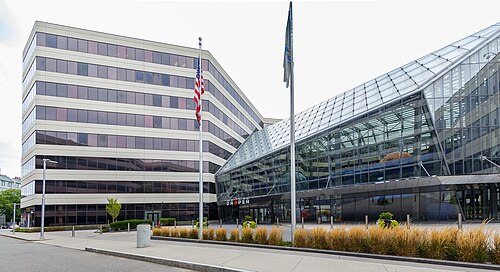
Firefly Aerospace is an American launch and space systems company headquartered in Cedar Park, Texas, developing the Alpha small launch vehicle and the Blue Ghost lunar lander. Founded in 2017 by Tom Markusic after acquiring assets from the original Firefly Space Systems bankruptcy, the company has made rapid progress across both launch and lunar surface delivery. Alpha achieved orbital success in October 2022 after a failed first attempt and has since flown multiple successful missions. Firefly's Blue Ghost lunar lander achieved a historic milestone on March 2, 2025, when it became the first commercially contracted lunar lander to successfully touch down on the Moon and complete a full NASA science mission — delivering ten NASA payloads to Mare Crisium and operating on the lunar surface for a full lunar day (approximately two Earth weeks). The mission represented a major win for NASA's Commercial Lunar Payload Services (CLPS) program. Firefly is majority-owned by AE Industrial Partners and has also developed the Elytra orbital transfer vehicle for in-space transportation services.

Cedar Park, United States · Est. 2017 $3.54B
Lunar Verified 9348.T

ispace

Tokyo, Japan commercial

ispace is a Japanese lunar exploration company developing commercial lunar landers and transportation services. The company's Hakuto-R Mission 2, named Resilience, launched on SpaceX Falcon 9 on January 15, 2025, successfully reaching lunar orbit on May 6, 2025. On June 5, 2025, the lander attempted to touch down at the lunar south pole but experienced a hard landing after its Laser Range Finder encountered delays obtaining valid measurements. The technical analysis confirmed the lander likely impacted the lunar surface. Mission 2 carried TENACIOUS, the first European-built lunar rover (5 kg) designed and manufactured in Luxembourg with co-funding from the Luxembourg National Space Programme. After NASA and Draper ended the CLPS task order behind the ispace-U.S. APEX 1.0 lander in July 2026, ispace reset its roadmap: Mission 3 is now a Japan-built ULTRA lander targeting a 2028 launch on an H3 rocket, and Mission 4 a second ULTRA lander in 2029 carrying ESA's MAGPIE rover, while ispace-U.S. pursues NASA's CLPS 2.0 programme. The company continues working toward establishing lunar transportation infrastructure.

Tokyo, Japan · Est. 2010 $390M
Lunar Landers Verified

Draper Laboratory

Cambridge, United States nonprofit

Draper Laboratory, founded in 1932 and based in Cambridge, Massachusetts, is a nonprofit research and development company specializing in the design, development, and deployment of advanced technological solutions. While operating across multiple sectors including biotechnology and electronic systems, Draper maintains a significant focus on space systems, specifically the development of guidance systems. The company distinguishes itself through a multidisciplinary engineering approach, offering capabilities ranging from initial concept formulation and component development to the integration of existing technologies. Draper’s history is deeply rooted in national security and space exploration, with a notable emphasis on its contributions to the Apollo missions, as highlighted by exhibits within the Draper Museum. Recent news indicates continued investment in research and development, including a $25 million funding award for a new IMPACT Center and partnerships like the one with Space Kinetic Corp., suggesting ongoing activity within the space sector. Though the specific details of current space guidance projects aren’t publicly detailed, Draper’s core competencies and historical involvement position it as a key player in providing advanced technological solutions for challenging problems, including those related to space exploration and national defense. The company supports a robust scholars program, indicating a commitment to fostering innovation and developing future engineering talent.

Cambridge, United States · Est. 1932
Lunar Landers Verified

Dynetics Lunar

Huntsville, United States commercial

Dynetics Lunar is the Huntsville, Alabama-based space systems division of Dynetics, Inc. — a defense and aerospace engineering firm founded in 1974 that was acquired by Leidos (NYSE: LDOS) in 2020 for $1.65B — focusing on lunar lander development, advanced propulsion systems, and space architecture studies. Dynetics became a major competitor in NASA's Human Landing System (HLS) Artemis program, proposing the ALPACA (Alphanumeric Lunar Ascent and Descent Architecture) lander — a horizontally-configured crewed lunar lander where the crew cabin remains close to the lunar surface without a tall ladder, a design the team argued would be safer and more accessible for suited astronauts collecting samples or deploying rovers. ALPACA was designed as a dual-element lander (descent and ascent stages separating on the lunar surface) with a wide, low profile unlike the tall, narrow Lunar Module architecture. NASA initially selected Dynetics as one of three HLS contractors (alongside SpaceX and the Blue Origin-led National Team) for the base period, awarding $253M in April 2020. In April 2021, NASA selected SpaceX exclusively for the Option A HLS contract, prompting Congressional criticism and awarding Dynetics $40.8M for continued HLS sustainable development concept studies — keeping the alternative architecture active for potential future competition. Dynetics also develops propulsion systems and components for other lunar mission customers, leveraging its Huntsville location within NASA Marshall Space Flight Center's propulsion heritage community. The company's defense engineering base (missile systems, directed energy, hypersonic vehicle components for DARPA and Army) cross-funds its space ambitions.

Huntsville, United States · Est. 1974
Propulsion Verified

Frontier Aerospace

Simi Valley, United States commercial

Frontier Aerospace, founded in 2006 and based in Simi Valley, California, is a propulsion company specializing in the development of storable bi-propellant rocket engines. The company focuses on providing propulsion systems for the space industry, with a demonstrated capability in supporting lunar landers and broader spacecraft applications. While detailed information regarding specific engine models or performance characteristics is currently limited, their focus on storable propellants suggests a design emphasis on reliability and ease of long-duration storage – critical factors for missions requiring extended operational lifespans or responsiveness. Currently, publicly available information regarding Frontier Aerospace is limited, particularly concerning detailed technological specifications. However, the company’s stated focus on bi-propellant engines indicates expertise in handling and combining two liquid propellants to generate thrust. This technology is well-established but requires precision engineering for efficient and reliable performance. Their work with lunar landers suggests a capability in developing engines suitable for the demands of soft landings and precise maneuvering in low-gravity environments. Based on the available information, Frontier Aerospace appears to position itself as a provider of specialized propulsion solutions for companies and organizations undertaking lunar missions and spacecraft development. Without further details on their product line or customer base, it is difficult to assess their precise market share. However, their specialization in a critical component – propulsion – and demonstrated application to lunar landers suggests a niche role supporting the growing commercial and governmental interest in lunar exploration and space infrastructure.

Simi Valley, United States · Est. 2006
Launch Vehicles In development

Firefly Defense

Cedar Park, United States commercial

Firefly Defense is the defense-focused division of Firefly Aerospace, a U.S.-based space company founded in 2023, providing launch and space services. Firefly Aerospace offers a comprehensive suite of capabilities encompassing launch, lunar landing, and in-space operations. The company is currently scaling production of its Alpha rocket, a fully operational launch vehicle in the 1,000-kilogram class, and is developing the larger, reusable Eclipse rocket in partnership with Northrop Grumman, targeting a 16,000-kilogram payload capacity. A key achievement for Firefly is becoming the first commercial company to successfully land on the Moon with its Blue Ghost lunar lander. Firefly is planning multiple annual missions to the Moon utilizing Blue Ghost, offering payload delivery, lunar surface operations support, and sample return capabilities. Additionally, the company’s Elytra spacecraft provides in-space maneuverability and services, including on-demand payload delivery, imaging, and communications across cislunar space. Firefly Aerospace currently serves a diverse customer base including Lockheed Martin, the U.S. Space Force, and NASA, demonstrating its growing role within the defense and space sectors. The company’s integrated approach – encompassing launch, landing, and on-orbit services – positions it as a versatile provider for both government and commercial clients seeking end-to-end space solutions.

Cedar Park, United States · Est. 2023
Lunar In development

Venturi Astrolab

Hawthorne, United States commercial

Venturi Astrolab, founded in 2019 and headquartered in Hawthorne, California, develops the FLEX Rover — a large-format lunar terrain vehicle designed to support both crewed astronaut operations and autonomous robotic missions on the Moon's surface, with particular emphasis on NASA's Artemis program requirements for sustained polar operations near the lunar south pole. The FLEX Rover's defining physical innovation is its hyper-deformable wheel system: custom-engineered wheels that flex and deform over rocks and craters rather than rigidly rolling over them, distributing load across a larger contact patch and reducing slippage in the loose, low-cohesion lunar regolith. NASA's Apollo-era Lunar Roving Vehicle used rigid wheels with wire mesh construction; FLEX's compliant wheel design draws on lessons from decades of Mars rover wheel failures (Curiosity's aluminum wheels accumulated extensive puncture damage) to engineer passive deformability as a durability solution for multi-year lunar surface operations. FLEX carries a 1,500 kg payload capacity — substantially larger than Apollo's LRV (approximately 490 kg total loaded) — and is designed for a 10-year operational life, reflecting NASA's intent to maintain permanent infrastructure near the lunar south pole rather than conduct short-duration sorties. The rover accommodates detachable payload modules (science instruments, drill systems, construction equipment) that can be swapped at a lunar base, enabling the same rover chassis to serve multiple mission types over its service life. In 2024, NASA selected Venturi Astrolab for the Lunar Terrain Vehicle (LTV) services contract, which will provide crewed and autonomous rover capabilities for Artemis lunar surface missions. NASA reported that Astrolab achieved the highest mission suitability score among finalists — which also included Intuitive Machines and a Lockheed Martin / General Motors team — validating the FLEX design against NASA's operational requirements for crew safety, payload versatility, range, and autonomous navigation capability. Venturi Astrolab is backed by the Venturi Group (Monaco-based clean energy and mobility conglomerate) and has conducted terrestrial FLEX prototype demonstrations in the Mojave Desert, accumulating dozens of kilometers of rough-terrain test data to validate the wheel design and autonomous navigation systems.

Hawthorne, United States · Est. 2020
Lunar Rovers Verified

Ceres Robotics

Oakland, United States commercial

Ceres Robotics is an Oakland, California-based commercial lunar surface systems company founded in 2017 by veterans of NASA's Mars rover programs at JPL — engineers who spent careers developing, operating, and troubleshooting Spirit, Opportunity, and Curiosity, bringing mission-tested robotic surface operations expertise directly to commercial lunar lander and rover development under NASA's Commercial Lunar Payload Services (CLPS) program. The company's primary CLPS program is the B5 lander: a large-class lunar delivery vehicle targeting approximately 1 metric ton of surface payload capacity — significantly exceeding the payload capacities of first-generation CLPS landers (Astrobotic Peregrine at ~100 kg, Intuitive Machines Nova-C at ~100 kg, Firefly Blue Ghost at ~150 kg). This heavier payload class positions B5 for delivering large science instruments, substantial ISRU (in-situ resource utilization) equipment, pressurized logistics modules, or multi-rover deployments to the lunar surface as the Artemis program scales toward sustained lunar presence in the late 2020s and 2030s. MoonPower is Ceres Robotics' second major product line: a concept for a distributed lunar surface power infrastructure — solar arrays, battery storage, and power distribution systems — providing persistent electrical power to payloads and future crewed infrastructure at the lunar surface. The fundamental challenge is the 14-Earth-day lunar night during which solar power is unavailable, making battery-buffered power systems or alternative sources (nuclear RTGs, beamed power) essential for any sustained lunar surface operations. MoonPower aims to deploy and interconnect power generation nodes at strategic locations — potentially crater rims where sunlight is nearly continuous near the south pole — creating a shared power grid for the growing lunar economy. Ceres Robotics' founding team's JPL Mars rover operations heritage is a significant differentiator in the CLPS competitive field: actual mission operations experience managing anomalies, navigating terrain, and executing surface science under real mission constraints — not just spacecraft hardware development. Competing CLPS lander developers include Astrobotic Technology, Intuitive Machines, Firefly Aerospace, and Draper Laboratory. The MoonPower infrastructure concept competes with emerging lunar power solutions from Astrobotic's CubeRover power modules and Zeno Power's RTG units.

Oakland, United States · Est. 2017
Lunar Landers Verified

TeamIndus

Bangalore, India commercial

TeamIndus, headquartered in Bangalore, India, is a private aerospace company founded in 2010 by a team of former aerospace engineers and entrepreneurs — originally organized to compete in the Google Lunar XPRIZE (GLXP) competition, which offered $30 million in prizes to the first private team to land a spacecraft on the Moon, drive 500 meters, and transmit HD imagery back to Earth. TeamIndus developed the HHK-1 (also designated Z-01) lander — a four-legged, propulsively landed spacecraft designed to deliver up to 25 kg of surface payload to the lunar south polar region. The lander used a bipropellant main engine for descent and landing, with radar and optical terrain-relative navigation. Alongside the lander, TeamIndus developed the ECA (Ek Choti si Asha — 'a small hope') lunar rover for surface operations. TeamIndus was one of only five teams still active when the GLXP competition closed in 2018, and won a $1 million interim milestone prize for demonstrating technical progress — one of only a handful of teams worldwide to achieve GLXP milestone awards. TeamIndus secured a launch contract with ISRO for the PSLV launch vehicle, making it the only GLXP team to hold an Indian launch vehicle contract — a culturally significant achievement demonstrating Indian private sector engagement with space exploration. The GLXP competition expired in March 2018 without a winner after all five remaining teams failed to launch, and TeamIndus's mission was also not completed. Following the GLXP, TeamIndus pivoted to commercial lunar payload delivery services, entering a partnership with OrbitBeyond — a U.S.-India joint venture that won a NASA Commercial Lunar Payload Services (CLPS) contract in 2019 to deliver NASA science instruments to the Moon. TeamIndus contributed the lander technology to the OrbitBeyond mission concept. India's first successful private lunar landing remains an open milestone as the Indian private space sector, energized by ISRO's Chandrayaan-3 success in 2023, continues developing commercial lunar transportation capabilities.

Bangalore, India · Est. 2010

Explore all 10 lunar landers organisations

Filter by country, type or status, sort by market value or founding year. The view is saved in the address bar.

Skip to results

Loading companies…

Loading companies…