Category

Optical Communications Companies

28 organizations13 countries

28 organizations working in optical communications across the global space industry.

Names to know in optical communications

Rank all by market value →
Optical Communications

Aalyria

Livermore, United States commercial

Aalyria, founded in 2022 and based in Livermore, California, is a network orchestration company specializing in connectivity solutions across diverse environments – land, sea, air, and space. The company was spun out of Google’s Project Loon and leverages two core technologies: Tightbeam, an advanced atmospheric laser communications system, and Spacetime, a software platform for orchestrating complex networks. Tightbeam utilizes coherent light free space optics to deliver high-speed data transmission through the atmosphere, exceeding the capabilities of many existing solutions, while Spacetime optimizes network performance by dynamically managing antenna scheduling, traffic routing, and spectrum resources. Aalyria’s technology is designed for interoperability with existing and future network architectures, including 5G NTN and FutureG. Since its formation, the company has secured contracts with key players in the space industry, including the Defense Innovation Unit, Rivada Space Networks, Intelsat, Telesat, the European Space Agency (ESA), and NASA, demonstrating its growing market traction. These partnerships focus on orchestrating LEO constellations and developing advanced connectivity platforms. Aalyria’s team comprises over 80 professionals with experience from leading technology and aerospace organizations, positioning the company as a significant emerging player in the evolving landscape of global connectivity.

Livermore, United States · Est. 2022
Satellite Manufacturing

Aperture Optical Sciences

Meriden, United States commercial

Aperture Optical Sciences is a United States-based company specializing in the design and manufacture of silicon carbide (SiC) optical telescopes for satellite applications. The company focuses on providing advanced optical components, including aspheres and custom optical systems, leveraging the unique properties of SiC for enhanced performance in space environments. Their core business centers around enabling high-bandwidth imaging and laser communications capabilities for satellite platforms. Aperture Optical Sciences’ key technology lies in the utilization of silicon carbide as an optical material. SiC offers significant advantages over traditional telescope mirror materials like glass or beryllium, including superior stiffness, thermal stability, and lightweight characteristics – all critical for maintaining optical precision in the harsh conditions of space. This allows for the development of more compact, robust, and higher-performing optical systems. While specific missions or customers are not publicly detailed, Aperture Optical Sciences positions itself as a provider of enabling technology for the growing satellite imaging and communications market. The company’s focus on SiC optics suggests a value proposition centered on delivering superior optical performance, reduced weight, and increased reliability for space-based optical systems, potentially serving both commercial and government entities.

Meriden, United States · Est. 2010
Optical Communications

Astrogate

Tokyo, Japan commercial

Astrogate is a Tokyo-based company founded in 2019 focused on the development of optical communication technologies for the space industry. The company specializes in laser terminals designed to establish high-speed data links between satellites and ground stations. This positions Astrogate within the rapidly growing satellite communications sector, addressing the increasing demand for bandwidth and data transfer capabilities in space. Currently, Astrogate’s core business revolves around the design and development of these optical communication components. While specific technological details are not publicly available, the focus on laser terminals indicates expertise in precision optics, laser technology, and potentially free-space optical communication protocols. This technology aims to overcome the limitations of traditional radio frequency (RF) communication, offering significantly higher data rates and improved security. As a relatively young company, publicly available information regarding completed missions or specific customer contracts is limited. However, Astrogate’s development of laser terminals suggests a target market encompassing satellite operators, government space agencies, and potentially commercial entities requiring high-bandwidth communication solutions. Astrogate’s unique value proposition lies in its dedication to optical communication, a technology poised to become increasingly critical for modern space infrastructure. By focusing specifically on laser terminals, the company aims to contribute to the advancement of high-speed, reliable data transfer capabilities for a variety of space-based applications.

Tokyo, Japan · Est. 2019
Ground Systems Verified

Officina Stellare

Sarcedo, Italy commercial

Founded in 2009 and based in Italy, Officina Stellare designs, manufactures, and delivers integrated opto-electronic systems for the aerospace, scientific research, and defense industries. The company focuses on both space and ground segment solutions, specializing in optical ground stations and related technologies. Officina Stellare positions itself as a vertical integrator, handling in-house design, analysis, and manufacturing – including MAIT facilities – for optical payloads. Key technologies include adaptive optics systems and laser communication/Quantum Key Distribution (QKD) terminals and equipment, alongside the capability to produce fully automated telescopes up to 1.6 meters, including wide-field optical systems. The company’s products support applications in Earth Observation, Space Situational Awareness (SSA), Space Domain Awareness (SDA), and secure communication. Officina Stellare has been serving the ground segment for nearly two decades and has been involved in projects such as the Platino 3/4 Project with Leonardo and the Ylara Project. They emphasize quality, scalability, and continuous innovation through dedicated research and development. The company aims to provide cost-effective and reliable opto-mechanical systems, enabling customers to deploy space assets and infrastructure efficiently. Officina Stellare’s integrated approach and in-house capabilities differentiate it within the growing space technology market.

Sarcedo, Italy · Est. 2009
Quantum Verified

QuantumCTek

Hefei, China commercial

QuantumCTek, founded in 2009 and based in Hefei, China, is a pioneering company focused on the development and commercialization of quantum technologies, specifically within the realm of satellite communications. As China’s first publicly-traded company in the quantum technology sector, QuantumCTek represents a significant national investment in this emerging field. The company’s core business centers around leveraging quantum key distribution (QKD) to enhance the security of communication networks. While specific technological details are limited in publicly available information, QuantumCTek’s focus on QKD indicates expertise in photonics, cryptography, and potentially advanced materials science. QKD utilizes the principles of quantum mechanics to generate and distribute encryption keys, offering theoretically unbreakable security against eavesdropping attempts – a critical advantage for sensitive communications. Their work in satellite communications suggests development of technologies for transmitting these quantum keys over long distances, overcoming the limitations of terrestrial fiber optic networks. As a first-mover in a strategically important technology area for China, QuantumCTek is positioned to serve government, military, and potentially commercial clients requiring the highest levels of data security. The company’s public listing signals strong state backing and a commitment to scaling its technologies for wider deployment. Given the nascent stage of the quantum communications market, QuantumCTek’s unique value proposition lies in its early entry and established position within the Chinese ecosystem. This allows them to capitalize on growing demand for secure communications infrastructure and potentially establish a leading role in the global quantum communications landscape.

Hefei, China · Est. 2009
Optical Communications Verified

Space Micro (LaserComm)

San Diego, United States commercial

Space Micro (LaserComm division) develops miniaturized free-space optical communication terminals designed for small satellites and CubeSats — a specialized product line within Space Micro Inc., a San Diego-based space electronics company. The division's optical transceivers enable high-rate inter-satellite links (ISL) and satellite-to-ground optical downlinks at data rates well beyond what RF links can provide in the same mass and power budget. Space Micro has demonstrated optical communication links in space and holds contracts with the Space Development Agency (SDA) and the broader DoD proliferated LEO (pLEO) architecture, which mandates optical ISL for its Transport Layer satellites. The company competes with Mynaric, Tesat-Spacecom, and SA Photonics in the growing optical communications terminal market driven by SDA's PWSA constellation and commercial LEO operators.

San Diego, United States · Est. 2018
Satellite Communications In development

Astrolight Lithuania

Vilnius, Lithuania commercial

Astrolight Lithuania, founded in 2020 and based in Vilnius, Lithuania, is a space technology company specializing in the development of laser-based communication platforms. The company focuses on enabling high-bandwidth data transfer for both space-to-ground and space-to-space communication applications. Their core offerings include optical ground stations (OGS) and laser communication terminals, exemplified by the ATLAS-2 product, designed for high data rate connectivity. A key technological focus for Astrolight is the advancement of optical communication, offering a potentially more secure and higher bandwidth alternative to traditional radio frequency (RF) communication. They have demonstrated a functional space-to-ground laser communication link and completed the first operational test of their optical ground station technology. Beyond traditional space applications, Astrolight is also developing solutions for terrestrial defense, with the POLARIS system – a radio-silent, unjammable C3 data link intended for naval applications. While specific customer details are not publicly available, Astrolight’s development of both space and defense-focused laser communication systems positions them within a growing market segment. The company differentiates itself by focusing exclusively on optical communication technologies, potentially offering superior performance and security compared to RF-based alternatives. They are actively contributing to the advancement and deployment of this emerging technology for a variety of applications.

Vilnius, Lithuania · Est. 2019
Quantum In development

KETS Quantum Security

Bristol, United Kingdom commercial

KETS Quantum Security, founded in 2016 and based in Bristol, UK, develops chip-based quantum security solutions designed to protect against emerging threats like quantum computing and AI. The company focuses on two core technologies: Quantum Key Distribution (QKD) and Quantum Random Number Generators (QRNG). QKD enables the secure distribution of cryptographic keys using the principles of quantum mechanics, while QRNG generates truly unpredictable random numbers for enhanced security applications. KETS offers both full-system and sub-system products, targeting sectors including defense, finance, critical infrastructure, and telecommunications. Specific use cases highlighted include hardening satellite communications, securing naval networks, upgrading telecommunication networks, and enhancing encryption algorithms. The company recently secured a £1.7m contract funded by Innovate UK to accelerate development of its next-generation QKD solution and has partnered with CryptoNext Security to build comprehensive quantum-safe solutions. KETS positions itself as a provider of scalable, compact, and energy-efficient quantum security, addressing a growing need for proactive measures against future quantum computing capabilities. Through thought leadership and active development, KETS aims to remove key barriers to the adoption of quantum encryption technologies and prepare organizations for a “quantum-safe” future.

Bristol, United Kingdom · Est. 2016
Optical Communications In development

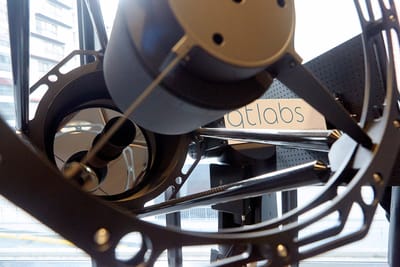
qtlabs

Vienna, Austria commercial

qtlabs, founded in 2017 and based in Vienna, Austria, is a European company specializing in the emerging field of quantum communication. The company positions itself as a full-service provider, offering consulting, development, and integration services for both satellite-based and terrestrial free-space quantum communication systems. This indicates a focus on building end-to-end solutions, rather than solely component manufacturing. qtlabs’ core business centers around enabling secure communication through the principles of quantum mechanics. While specific technological details aren’t publicly detailed, their focus on free-space optical communication suggests expertise in photonics, precision optics, and potentially advanced tracking and pointing systems necessary for maintaining links over long distances. The company’s dual focus on satellite and terrestrial systems suggests a versatile approach, potentially allowing for hybrid quantum networks. Currently positioning itself as a European leader, qtlabs appears to be targeting early adopters in sectors requiring ultra-secure communication, such as government, defense, and finance. While specific missions or customers aren’t publicly listed, the company’s services are geared towards establishing secure communication infrastructure, suggesting a role in building the foundational technology for future quantum networks. qtlabs’ unique value proposition lies in its comprehensive service offering – from initial consultation and system development to full integration – within the specialized and rapidly evolving field of quantum communication. This positions them as a key player in enabling the development and deployment of secure communication technologies for both terrestrial and space-based applications.

Vienna, Austria · Est. 2017

Explore all 28 optical communications organisations

Filter by country, type or status, sort by market value or founding year. The view is saved in the address bar.

Skip to results

Loading companies…

Loading companies…