Space Solar In development
AAetherflux
San Carlos, United States commercial
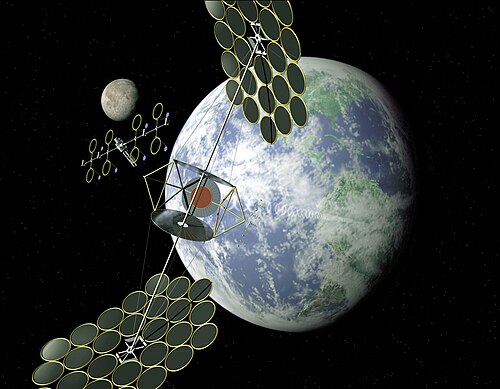
Aetherflux is a San Carlos, California-based space-based solar power (SBSP) startup founded in 2024 by Baiju Bhatt — co-founder and former CEO of Robinhood Markets — pursuing the long-studied concept of collecting solar energy in orbit and beaming it to Earth as infrared laser radiation, with $60 million raised from Breakthrough Energy Ventures (Bill Gates's climate tech fund), Andreessen Horowitz (a16z), and NEA for initial development targeting US military forward operating bases and remote power-constrained installations. The space-based solar power concept is technically elegant: solar panels in LEO orbit receive continuous, unattenuated sunlight (no atmosphere, no nighttime shadow for most orbits) and convert it to electricity, which then drives a high-power infrared laser transmitter (typically 1550nm wavelength for safety and atmospheric transmission efficiency) that beams concentrated photonic energy to a ground receiver (photovoltaic array tuned to convert the laser wavelength). The receiver — a compact 'rectenna' or laser-PV array — can be deployed in remote locations without grid infrastructure, potentially delivering kilowatts to megawatts of reliable power from a single satellite at any location on Earth. The military application is the initial target because DoD's cost of delivering fuel to forward operating bases in conflict zones averages $400/gallon when fully burdened with logistics chain costs — making the high cost of early power-beaming satellites economically competitive against diesel generators. DARPA has previously funded power-beaming research (SBIR programs), and the Naval Research Laboratory demonstrated wireless power transfer from orbit with the PRAM experiment on the X-37B in 2020. Aetherflux aims to move from experiment to operational service. Aetherflux's technical differentiation from previous SBSP concepts (which typically proposed microwave transmission with large phased arrays and large ground antennas) is the use of tightly focused infrared laser beams: smaller transmitter aperture required on orbit, smaller ground receiver footprint, and the directional concentration of energy delivery. The eye safety and aircraft safety challenges of high-power laser beams from orbit require sophisticated tracking and interlock systems to prevent inadvertent exposure. LEO orbit's lower altitude (compared to GEO proposals) reduces transmission path loss and satellite mass requirements while introducing eclipse periods that must be managed. Competitors in power beaming include Virtus Solis, Solaris (ESA study), and various national programs in UK, Japan, and China.
San Carlos, United States · Est. 2024