Category

Propulsion Companies

197 organizations34 countries14 listed

197 organizations working in propulsion across the global space industry.

Editorial overview

Propulsion: who does what

Propulsion is two industries wearing one tag. Launch engines are a handful of very large programmes, mostly vertically integrated inside launch providers. In-space propulsion is dozens of small companies selling thrusters to satellite builders, where electric systems now dominate new orders.

A third group, nuclear and other advanced concepts, is mostly pre-revenue and government-funded.

For the ranked, narrative version see Space Propulsion Technologies.

Launch vehicle engines

Engines for first and upper stages, most of them built in-house by the launch provider.

CompanyCountryFoundedStatusListingFunding / market cap
SpaceXUnited States2002publicSPCX$1.99T
Blue OriginUnited States2000operationalPrivate
Aerojet RocketdyneUnited States1942acquiredPrivate
Ursa MajorUnited States2015operationalPrivate
ArianeGroupFrance2015operationalPrivate
AVIOItaly1984publicAVIO.MI$1.55B
Firefly AerospaceUnited States2017publicFLY$3.54B
Relativity SpaceUnited States2015operationalPrivate$2.45B raised
Stoke SpaceUnited States2019developmentPrivate$2.3B raised

In-space and electric propulsion

Thrusters, tugs and propulsion modules for satellites already in orbit.

CompanyCountryFoundedStatusListingFunding / market cap
BusekUnited States1985operationalPrivate
EnpulsionAustria2016operationalPrivate
ExotrailFrance2017operationalPrivate
ThrustMeFrance2017operationalPrivate
Phase FourUnited States2015operationalPrivate
Benchmark Space SystemsUnited States2017operationalPrivate
Dawn AerospaceNew Zealand2017operationalPrivate
Impulse SpaceUnited States2021operationalPrivate$1B+ raised
MomentusUnited States2017restructuredMNTS$89M
Agile Space IndustriesUnited States2016operationalPrivate

Nuclear and advanced concepts

Fission, thermal and other propulsion still in development.

CompanyCountryFoundedStatusListingFunding / market cap
Atomos Nuclear and SpaceUnited States2018acquiredPrivate
BWX Technologies SpaceUnited States1867operationalBWXT$13.8B
General GalacticUnited States2023developmentPrivate

Segments curated by Rusty Flint, Launch & Propulsion Writer, on 2026-09-03. Figures come from each company's directory record; the full list of 197 organisations follows.

Names to know in propulsion

Rank all by market value →
Launch Services Verified AVIO.MI

AVIO

Colleferro, Italy commercial

AVIO is an Italian aerospace company listed on Borsa Italiana (ticker: AVIO.MI) specializing in the development and operation of the Vega family of small-lift launch vehicles and solid rocket motors for European launch programs. Headquartered in Colleferro, Italy, AVIO is the prime contractor for Vega and Vega-C, which launch from the Guiana Space Centre in Kourou, French Guiana. Vega-C suffered an in-flight anomaly in its second launch in December 2022 traced to a degraded nozzle in the Zefiro-23 upper stage; AVIO conducted redesign work and returned Vega-C to flight readiness in 2024. AVIO also manufactures solid rocket boosters for Ariane 6 (P120C) and is developing Vega-E, a next-generation version using a liquid oxygen/liquid methane upper stage for improved performance and lower cost. The company employs about 1,200 people and generates around €400 million in annual revenue.

Colleferro, Italy · Est. 1984 $1.55B
Components Verified MOG-A

Moog Inc

East Aurora, United States commercial

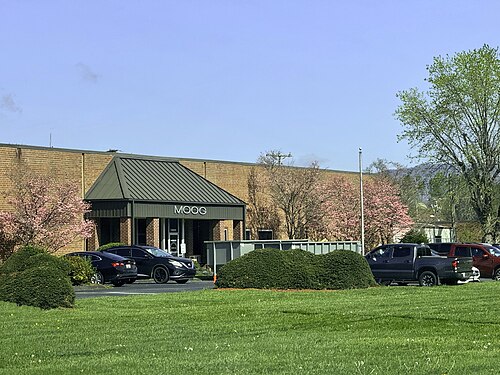
Moog Space, founded in 1951 and headquartered in East Aurora, New York, is a key provider of solutions for the space industry, specializing in the design, development, and manufacture of critical systems and components. While initially focused on propulsion, the company has expanded its portfolio to encompass a broad range of technologies including spacecraft avionics, guidance systems, fluid controls, structures, and environmental control & life support systems (ECLSS). Moog serves both commercial and government customers, supporting missions ranging from launch vehicles and satellite buses to human spaceflight initiatives, including contributions to NASA’s Space Launch System and future lunar missions. A core strength lies in Moog’s advanced avionics systems, offering integrated Command and Data Handling (C&DH) and Electrical Power Systems (EPS). The company is actively investing in next-generation technologies such as radiation-hardened computing – exemplified by the Cascade Single Board Computer featuring a RISC-V processor – and additive manufacturing to enhance capabilities and meet evolving mission demands. Beyond electronics, Moog provides mechanical solutions including hexapods for precision payload positioning, spacecraft mechanisms, shock and vibration isolation systems, and structural adapters for various satellite sizes. This diverse offering positions Moog Space as a comprehensive partner for organizations operating across the entire space ecosystem.

East Aurora, United States · Est. 1951 $11.6B
Spacecraft Components Verified PH

Parker Hannifin Space

Irvine, United States commercial

Parker Hannifin Space, a division of the century-old Parker Hannifin Corporation, focuses on the design and manufacture of critical components for the space industry. The company specializes in spacecraft components, with a core product line encompassing space valves, seals, and advanced thermal-management systems. Beyond these foundational elements, Parker Hannifin Space also develops and provides propulsion components and cryogenic systems essential for a range of space applications. A key strength of Parker Hannifin Space lies in its established engineering expertise and demonstrated flight heritage. The company highlights a history of successful implementation across both commercial and government space programs, suggesting a reliable and proven technology base. While specific technologies aren’t detailed publicly, the focus on cryogenic systems indicates capabilities in handling extremely low temperatures – a crucial requirement for propellant storage and advanced space exploration. Given the limited publicly available information, assessing precise market position is challenging. However, the combination of valves, seals, thermal control, and propulsion elements suggests Parker Hannifin Space operates as a key supplier to larger prime contractors and spacecraft manufacturers. Their long history and flight heritage likely position them as a trusted, established provider within the supply chain, rather than a direct-to-end-user company. Ultimately, Parker Hannifin Space appears to be a vital, if understated, contributor to the space industry, providing essential enabling technologies for a broad spectrum of missions. Their focus on reliability and proven performance, evidenced by their flight heritage, likely differentiates them in a competitive market.

Irvine, United States · Est. 1917 $119.8B
Propulsion Verified SAF.PA

Safran

Paris, France commercial

Safran is a French multinational aerospace company founded in 2005, with a core focus on the development and delivery of technologies within the propulsion and electronics sectors. While specific product details are limited based on available information, the company’s categorization suggests involvement in the design, manufacturing, and potentially the maintenance of systems critical to spacecraft and launch vehicle operation. This likely includes rocket engines, thrusters, and associated control systems, as well as the electronic components necessary for their function and integration. Given its positioning within aerospace, Safran likely leverages advanced materials science, precision engineering, and sophisticated software development in its work. Key capabilities likely encompass areas such as combustion technology, fluid dynamics, and the miniaturization of electronic systems for space applications. The company’s focus on both propulsion and electronics suggests a vertically integrated approach, potentially allowing for optimized system performance and reduced development timelines. Without further details regarding specific missions or customers, it is difficult to assess Safran’s current market position beyond its established presence within the broader aerospace industry. However, as a multinational company based in France, it is reasonable to assume involvement in European space programs and collaborations, potentially serving agencies like the European Space Agency (ESA) or commercial launch providers. Safran’s unique value proposition likely lies in its combined expertise in both propulsion and electronics, enabling the development of integrated and optimized space systems. This holistic approach, coupled with its established position in the aerospace sector, positions the company as a key player in the evolving space landscape.

Paris, France · Est. 2005 $158.3B
Nuclear Verified BWXT

BWX Technologies Space

Lynchburg, United States commercial

BWX Technologies (NYSE: BWXT) stands at the forefront of nuclear technology development for space exploration, playing a pivotal role in NASA's ambitious plans to revolutionize deep space propulsion. Headquartered in Lynchburg, Virginia, the company brings decades of expertise in nuclear reactor design and manufacturing to the emerging field of space nuclear propulsion. BWXT was to build the reactor for DARPA's Demonstration Rocket for Agile Cislunar Operations (DRACO), a nuclear thermal propulsion demonstrator with Lockheed Martin, but the flight was put on hold in January 2025, NASA zeroed its share of the funding that May, and DARPA confirmed the programme had ended in June 2025. Under a contract worth approximately $200 million over three years, BWXT is responsible for designing the nuclear reactor, manufacturing the hardware and high-assay low-enriched uranium (HALEU) fuel, and delivering the complete fueled reactor subsystem. Nuclear thermal propulsion offers thrust-to-weight ratios 10,000 times greater than electric propulsion and specific impulse two to five times greater than chemical rockets. In March 2025, BWXT opened its Innovation Campus, a 170,000 square-foot facility dedicated to advancing nuclear technologies for land, sea, and space applications. This campus houses the Advanced Technologies business unit and over 350 team members working on cutting-edge nuclear systems for NASA, the Department of Energy, Department of Defense, and commercial applications. The company has been involved with NASA's Nuclear Thermal Propulsion design since 2017, establishing itself as a leading U.S. entity capable of producing space-grade nuclear reactors.

Lynchburg, United States · Est. 1867 $13.8B
Lunar Verified LUNR

Intuitive Machines

Houston, United States commercial

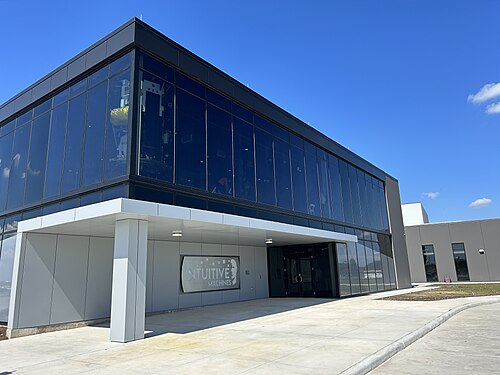
Intuitive Machines is a leading commercial lunar services company providing spacecraft, landers, and space infrastructure supporting NASA's return to the Moon. In February 2024, the company achieved a historic milestone when its Odysseus Nova-C lander became the first commercial spacecraft to successfully soft-land on the Moon and the first American spacecraft to reach the lunar surface since Apollo 17 in 1972. The IM-1 mission launched on SpaceX Falcon 9 from Kennedy Space Center on February 15, 2024, with Odysseus landing at Malapert A crater near the lunar south pole on February 22. The 4-meter tall hexagonal lander carried approximately 100 kg of payload including six NASA-developed experiments and commercial customer payloads. Odysseus was the first spacecraft to use liquid methane and liquid oxygen (methalox) propulsion beyond low-Earth orbit. Selected through NASA's Commercial Lunar Payload Services (CLPS) initiative, Intuitive Machines received $118 million to develop the Nova-C platform. The CLPS program enables NASA to contract with commercial partners providing launch and landing services, accelerating lunar exploration while building a commercial lunar economy. The IM-2 mission, launched in February 2025, delivered the Athena lander to the lunar south pole region, where it tipped over on landing and operated for about a day; it carried Nokia's Lunar Surface Communication System to establish the first cellular network on the Moon. Intuitive Machines continues developing lunar data transmission services, navigation systems, and infrastructure supporting NASA's Artemis campaign to establish a sustainable human presence on the Moon.

Houston, United States · Est. 2013 $2.30B
Launch Services Verified

Blue Origin

Kent, United States commercial

Blue Origin is a private aerospace manufacturer and spaceflight services company founded by Amazon founder Jeff Bezos in 2000. Headquartered in Kent, Washington, the company develops reusable launch vehicles and space technologies with a long-term vision of enabling millions of people to live and work in space. The company operates under the motto "Gradatim Ferociter" (Step by Step, Ferociously). Blue Origin employs over 10,000 people across facilities in Washington, Texas, Florida, and Alabama. The company operates with significant financial backing from Jeff Bezos, who has invested billions of his personal fortune into the venture. Under CEO Dave Limp (appointed 2023), Blue Origin is transitioning from development to operational launch services. ## History and Milestones Jeff Bezos founded Blue Origin in September 2000, initially operating in secrecy while developing vertical takeoff and landing technology. The company's first vehicle, New Shepard, made its debut flight in 2015 and achieved its first successful landing, demonstrating reusable rocket technology. By January 2026 New Shepard had flown 38 times and carried 98 people above the Kármán line. In July 2021, Blue Origin made history when Jeff Bezos, his brother Mark, aviation pioneer Wally Funk, and Oliver Daemen flew on New Shepard's first crewed flight. This mission marked Blue Origin's entry into commercial human spaceflight. The company has since flown multiple crewed suborbital missions carrying paying customers and researchers. NASA awarded the first Artemis Human Landing System contract to SpaceX in 2021; Blue Origin protested, then won a separate $3.4 billion Artemis V landing contract in 2023. The company manufactures BE-4 engines in Huntsville, Alabama, and flies New Glenn from Launch Complex 36 at Cape Canaveral. ## Products and Services New Shepard is Blue Origin's fully reusable suborbital vehicle for tourism and research, carrying up to six people above the Kármán line. On 30 January 2026 the company paused New Shepard flights for at least two years to shift people and resources onto Blue Moon and New Glenn. New Glenn is Blue Origin's heavy-lift orbital launch vehicle that achieved its orbital debut on 16 January 2025, successfully delivering payloads to orbit on its inaugural flight. The two-stage rocket features a reusable first stage powered by seven BE-4 engines, with a first-stage booster recovery profile targeting ship landings similar to SpaceX's approach. New Glenn targets commercial, civil, and national security launch contracts and is now an operational competitor in the medium-to-heavy lift market. Blue Origin manufactures rocket engines for both internal use and external customers. The BE-4 engine, burning liquid oxygen and methane, powers both New Glenn and United Launch Alliance's Vulcan Centaur rocket. The BE-3 engine powers New Shepard, while the BE-7 is designed for lunar landers. ## Technology and Capabilities Blue Origin's BE-4 engine represents a significant technological achievement as the most powerful American liquid oxygen/methane engine, producing 550,000 pounds of thrust. The engine's oxygen-rich staged combustion cycle provides high efficiency and performance. BE-4 development required over a decade and billions of dollars in investment. The company has developed vertical landing capabilities for both New Shepard and the planned New Glenn first stage. This reusability approach mirrors SpaceX's Falcon 9 operations but uses different landing technologies, including thrust vector control and deployable landing systems. Blue Origin's lunar activities center on the Blue Moon lander program, selected by NASA for Artemis V and beyond. The company leads a National Team including Lockheed Martin, Draper, and Boeing to develop sustainable lunar surface access. Blue Origin is also developing technologies for in-space manufacturing and orbital infrastructure. ## Business and Financial Overview Blue Origin is privately held, with Jeff Bezos providing ongoing financial support reportedly totaling over $10 billion since the company's founding. The company does not disclose detailed financial information but generates revenue from New Shepard flights, engine sales to ULA, and government development contracts. NASA has awarded Blue Origin significant contracts including the Human Landing System development agreement worth $3.4 billion and various technology development awards. The company also holds contracts with the Department of Defense and commercial customers for New Glenn launches. Blue Origin competes for talent with SpaceX and other aerospace companies, offering competitive compensation in the Seattle and greater Washington D.C. areas. The company has expanded its manufacturing footprint with facilities in Huntsville, Alabama, and Cape Canaveral, Florida. ## Recent Developments New Glenn reached orbit on its maiden flight on 16 January 2025, making Blue Origin an operational orbital launch provider after more than two decades of development. The debut flight successfully delivered payloads to orbit, validating the BE-4 engine cluster, first-stage performance, and overall vehicle architecture. Booster recovery was also attempted on the maiden flight. In 2024-2025, Blue Origin delivered multiple BE-4 engines to ULA for Vulcan Centaur operations and continued New Shepard crewed tourism flights. The company advanced Blue Moon lunar lander development for NASA's Artemis V mission and progressed on the Orbital Reef commercial space station in partnership with Sierra Space. The company continues aggressive hiring and facility expansion, with engine production in Huntsville and launch operations at Cape Canaveral's LC-36 complex. The NSSL Phase 3 contract (National Security Space Launch) positions New Glenn for U.S. government payloads alongside SpaceX's Falcon 9 and Falcon Heavy. ## Market Position Blue Origin is positioned as SpaceX's primary competitor in the U.S. launch services market, now operational with New Glenn joining the orbital launch roster in January 2025. The company's patient development approach has resulted in longer timelines than SpaceX's rapid iteration model, but the BE-4 engine, New Glenn, and Blue Moon lander represent a credible full-stack space infrastructure play. Key competitors include SpaceX in nearly all market segments, United Launch Alliance for government launches, and emerging companies like Rocket Lab and Relativity Space. In space tourism, Blue Origin competes with Virgin Galactic for high-net-worth customers seeking suborbital experiences. Blue Origin's competitive advantages include significant financial backing from Jeff Bezos, the BE-4 engine's proven performance, and strategic contracts with NASA and national security customers. New Glenn's January 2025 debut, the November 2025 ESCAPADE mission with a successful booster landing, and a May 2026 static-fire accident at LC-36 now define the vehicle's operational record.

Kent, United States · Est. 2000

Propulsion Verified GE

GE Aerospace

Cincinnati, United States commercial

GE Aerospace (NYSE: GE) is one of the world's largest aero-engine manufacturers. It is listed here for completeness rather than for an identifiable space division: GE Aerospace publishes no space systems business, and its FY2025 annual report contains no mention of spacecraft, satellites, launch vehicles or Space Force work. Its nearest activity to spaceflight is high-speed propulsion research, including a hypersonic test aircraft programme funded by the US Defense Innovation Unit, alongside additive manufacturing and power electronics that serve aviation rather than orbital customers. Earlier versions of this profile described satellite power conversion, thermal management and radiation-tolerant electronics as GE space products; none of that could be traced to a primary source, so it has been removed. Readers looking for the company's spaceflight heritage should note that the aerospace businesses General Electric once held in that field were divested long before the 2023 to 2024 separation that created today's GE Aerospace, GE Vernova and GE HealthCare.

Cincinnati, United States · Est. 1917 $335.8B
Propulsion Verified 012450.KS

Hanwha Aerospace

Changwon, South Korea commercial

Hanwha Aerospace, publicly traded on the Korea Stock Exchange (ticker 012450.KS, ~$8B market cap), is South Korea's largest aerospace and defense company, manufacturing jet engines, rocket propulsion systems, aircraft components, ammunition, and ground vehicle systems. Headquartered in Seongnam with manufacturing in Changwon, the company traces origins to Samsung Aerospace before the Hanwha Group acquisition in 2015. In space propulsion, Hanwha Aerospace is the prime contractor for Korea's KSLV-II Nuri rocket engines — the 300-kN liquid oxygen/kerosene first-stage engines and the upper-stage engine are manufactured in-house, making Hanwha the backbone of Korea's sovereign launch capability. Nuri's first successful orbital launch in June 2022 and subsequent launches demonstrated indigenous engine production at a level previously achieved only by a handful of national programs globally. Hanwha is developing larger 2nd-generation engines for an upgraded next-generation launch vehicle targeting 2030s. Beyond propulsion, Hanwha Aerospace is expanding into satellite manufacturing, space situational awareness systems, and satellite assembly through its Hanwha Systems subsidiary. The company invested in Korea's LEO satellite internet initiative and participated in the government's Korea Space Launch Vehicle program as a key industrial anchor. Hanwha Defense Australia and Hanwha's global defense footprint support international space and defense partnerships. Hanwha Aerospace competes with KAI (Korea Aerospace Industries) domestically and with Mitsubishi Heavy Industries, JAXA partners, and ISRO in the broader Asia-Pacific launch and aerospace manufacturing sector. The company's integration across propulsion, aircraft, and defense systems positions it as South Korea's primary aerospace industrial champion in the post-NuriSat era.

Changwon, South Korea · Est. 1977 $43.4B

Explore all 197 propulsion organisations

Filter by country, type or status, sort by market value or founding year. The view is saved in the address bar.

Skip to results

Loading companies…

Loading companies…