Category

National Space Agencies Companies

79 organizations57 countries

79 organizations working in national space agencies across the global space industry.

Names to know in national space agencies

Rank all by market value →
Space Agencies Verified

ESA

Paris, France government

The European Space Agency (ESA) is an intergovernmental organization of 22 member states dedicated to space exploration, technology development, and Earth observation. Established in 1975 through the merger of the European Launcher Development Organisation (ELDO) and the European Space Research Organisation (ESRO), ESA coordinates European space activities and represents Europe's unified presence in space. ESA is headquartered in Paris, France, with major facilities across Europe including the European Space Research and Technology Centre (ESTEC) in the Netherlands, the European Space Operations Centre (ESOC) in Germany, and the European Astronaut Centre (EAC) in Cologne. The agency employs approximately 2,500 staff with an annual budget exceeding €7 billion. ## History and Milestones ESA traces its origins to European space cooperation in the 1960s, when Western European nations sought independent space capabilities. The agency was formally established on May 30, 1975, combining launcher and research organizations. Early achievements included the Giotto spacecraft's flyby of Halley's Comet in 1986. ESA developed the Ariane family of rockets, establishing Europe as a major player in commercial launch services. Ariane 4, introduced in 1988, became the world's leading commercial launcher. Ariane 5, first launched in 1996, has delivered over 100 successful missions, including major telecommunications satellites and scientific spacecraft. European astronauts have participated in Space Shuttle, Mir, and International Space Station missions. ESA provides the Columbus laboratory module and Automated Transfer Vehicles for the ISS, contributing essential infrastructure to the international partnership. ## Products and Services ESA's current launch vehicle is Ariane 6, which entered service in 2024 after years of development. Available in two configurations (Ariane 62 and 64), the rocket provides medium to heavy-lift capability for commercial and institutional missions. ESA also operates the Vega and Vega-C small launch vehicles for lighter payloads. The agency's science program includes flagship missions such as the BepiColombo Mercury mission, the JUICE mission to Jupiter's moons, and the Euclid space telescope for dark energy research. ESA's Earth observation program, Copernicus, operates Sentinel satellites providing free environmental data globally. ESA provides astronaut services, training European astronauts for ISS missions and developing capabilities for future lunar exploration. The agency participates in the Artemis program through the European Service Module, which provides propulsion, power, and life support for NASA's Orion spacecraft. ## Technology and Capabilities ESA operates world-class facilities including ESTEC's test facilities for spacecraft environmental testing, ESOC's mission control infrastructure, and the European Astronaut Centre's training capabilities. The agency maintains the European Space Tracking network (ESTRACK) for spacecraft communications. Technology development focuses on electric propulsion, advanced materials, autonomous navigation, and space debris mitigation. ESA's Clean Space initiative addresses sustainability through debris removal missions and eco-design principles. The agency also develops quantum communication and satellite navigation technologies. ESA coordinates European contributions to international exploration programs, developing technologies for lunar surface access, Mars exploration, and sample return missions. The agency's robotic exploration program includes rover development and autonomous navigation systems. ## Business and Financial Overview ESA operates through member state contributions based on gross national income, with optional programs funded separately by participating countries. The total 2024 budget exceeded €7.8 billion, distributed across science, Earth observation, telecommunications, navigation, human spaceflight, and technology development. Member states retain a "geographic return" principle, receiving contracts proportional to their contributions. This ensures industrial participation across Europe but can complicate efficient procurement. Major contractors include Airbus Defence and Space, Thales Alenia Space, and OHB. ESA's commercial arm, Arianespace, markets launch services globally, competing with SpaceX, ULA, and other providers. The transition from Ariane 5 to Ariane 6 aims to reduce costs and improve competitiveness in the commercial launch market. ## Recent Developments In 2024, ESA's Ariane 6 rocket made its debut launch, restoring European independent access to space following the retirement of Ariane 5 and Soyuz launches from French Guiana. The agency continued development of next-generation launchers including reusable technology demonstrators. ESA advanced lunar exploration preparations, with the European Large Logistics Lander (EL3) program progressing toward lunar surface cargo delivery. The agency's ExoMars rover, developed with Roscosmos partnership before its suspension, sought alternative launch arrangements. The Copernicus Earth observation program expanded with new Sentinel satellite launches, while ESA's science program saw launches and mission operations for major astronomical and planetary missions. The agency also strengthened partnerships with commercial providers for space transportation services. ## Market Position ESA serves as Europe's unified space agency, coordinating national space programs and representing European interests in international partnerships. The agency's mandatory science program and optional programs balance scientific exploration with practical applications in telecommunications, navigation, and Earth observation. ESA partners with NASA on the Artemis program, contributing the European Service Module essential for Orion operations. The agency also maintains partnerships with JAXA, CSA, and other space agencies while developing independent European capabilities in human spaceflight and exploration. Competitive challenges include SpaceX's impact on the commercial launch market and the need to develop reusable launch systems. ESA's response includes the Ariane 6 development, technology investments, and commercial partnership initiatives to strengthen European space industry competitiveness.

Paris, France · Est. 1975
Space Agencies Verified

ISRO

Bengaluru, India government

The Indian Space Research Organisation (ISRO) is India's national space agency, responsible for space science research and planetary exploration. Established in 1969 under the vision of Dr. Vikram Sarabhai, ISRO has developed into one of the world's most capable and cost-effective space organizations, achieving remarkable milestones including successful Mars and lunar missions. Headquartered in Bengaluru, Karnataka, ISRO operates under the Department of Space, Government of India. The agency employs approximately 17,000 scientists and engineers across multiple centers. Under Chairman Dr. V. Narayanan (since January 2025), ISRO continues advancing launch capabilities, satellite technology, and planetary exploration while maintaining its tradition of frugal engineering. ## History and Milestones India's space program began with the establishment of the Indian National Committee for Space Research (INCOSPAR) in 1962 under Dr. Vikram Sarabhai. ISRO was formed in 1969 and launched India's first satellite, Aryabhata, in 1975 using a Soviet rocket. The first successful Indian-built launch vehicle, SLV-3, flew in 1980. The Polar Satellite Launch Vehicle (PSLV), first launched in 1993, became ISRO's workhorse rocket, achieving over 50 successful consecutive missions. In 2008, Chandrayaan-1 discovered water molecules on the Moon, fundamentally changing understanding of lunar resources. The Mars Orbiter Mission (Mangalyaan) in 2014 made India the first nation to reach Mars on its maiden attempt. Chandrayaan-3 in 2023 achieved India's first lunar soft landing, making India the fourth nation to land on the Moon. The Vikram lander and Pragyan rover operated at the lunar south pole, conducting valuable scientific experiments and demonstrating ISRO's capabilities for complex missions. ## Products and Services ISRO operates the PSLV and GSLV launch vehicle families. PSLV provides reliable access to polar and sun-synchronous orbits, serving both Indian satellites and international customers through commercial arm Antrix/NSIL. GSLV Mk III (LVM3), India's heaviest operational rocket, supports geosynchronous and human spaceflight missions. India's satellite programs include the Indian National Satellite System (INSAT) for telecommunications and meteorology, the Indian Remote Sensing (IRS) satellites for Earth observation, and the Navigation with Indian Constellation (NavIC) regional navigation system. These satellites serve agriculture, disaster management, telecommunications, and national security needs. ISRO provides commercial launch services through NewSpace India Limited (NSIL), offering competitive pricing for small to medium satellite deployments. The agency has launched satellites for numerous countries, establishing India as a reliable launch services provider. ## Technology and Capabilities ISRO developed the cryogenic upper stage technology independently after technology transfer denials in the 1990s, demonstrating capability for building advanced rocket propulsion. The agency's frugal engineering approach achieves missions at significantly lower costs than Western counterparts while maintaining high reliability. The Gaganyaan program is developing human spaceflight capabilities, including crew module, launch escape system, and life support systems. ISRO has conducted uncrewed test flights and aims to launch Indian astronauts (Vyomanauts) on indigenous systems. ISRO maintains extensive ground infrastructure including the Satish Dhawan Space Centre at Sriharikota, tracking stations across India and internationally, and satellite assembly and test facilities. The agency also develops applications using satellite data for agriculture, urban planning, and disaster response. ## Business and Financial Overview ISRO operates with an annual budget of approximately $1.5-2 billion from the Indian government, significantly smaller than NASA or ESA but delivering remarkable achievements through cost efficiency. The agency's missions typically cost a fraction of comparable international programs. Commercial activities through NSIL generate revenue from satellite launches, satellite construction for foreign customers, and technology transfer. ISRO has launched over 400 foreign satellites from more than 35 countries, establishing a strong commercial track record. India's space policy reforms in 2020 opened the sector to private investment, with ISRO supporting emerging Indian space startups through technology transfer and testing facilities. This policy shift aims to expand India's share of the global space economy. ## Recent Developments In 2024, ISRO continued preparations for the Gaganyaan human spaceflight program, conducting test vehicle flights and astronaut training. The agency also advanced Chandrayaan-4 lunar sample return mission planning and Venus Orbiter Mission (Shukrayaan) development. ISRO expanded commercial operations, launching satellites for international customers and supporting India's growing private space sector. The agency also conducted PSLV and GSLV missions for national satellite programs including communications and Earth observation. Development continued on the Next Generation Launch Vehicle (NGLV), designed to provide heavy-lift capability with reusability features. ISRO also advanced small satellite launch vehicle (SSLV) operations for responsive, lower-cost access to orbit. ## Market Position ISRO ranks among the world's top space agencies in terms of launch frequency, technical capability, and mission success. The agency's cost-effective approach has established India as a preferred destination for satellite launches, particularly for smaller satellites and constellation deployments. India competes commercially with SpaceX, Rocket Lab, and other providers while maintaining unique capabilities in cost-efficient mission execution. ISRO's emerging private sector partnerships aim to expand India's space industry beyond government programs. The agency's strategic priorities include human spaceflight, planetary exploration, and expanding commercial launch services. ISRO's demonstrated success with Chandrayaan-3 and the Mars Orbiter Mission establishes credibility for increasingly ambitious future missions.

Bengaluru, India · Est. 1969
Space Agencies Verified

JAXA

Tokyo, Japan government

The Japan Aerospace Exploration Agency (JAXA) is Japan's national aerospace and space agency, formed in 2003 through the merger of three organizations: the Institute of Space and Astronautical Science (ISAS), the National Aerospace Laboratory of Japan (NAL), and the National Space Development Agency of Japan (NASDA). JAXA conducts research and development in aeronautics, space technology, and space exploration. Headquartered in Chofu, Tokyo, JAXA operates major facilities including the Tsukuba Space Center, Tanegashima Space Center, and Sagamihara Campus. The agency employs approximately 1,500 staff and operates with an annual budget of ¥215.5 billion (JFY2023). Under President Hiroshi Yamakawa, JAXA pursues exploration, Earth observation, and technology development programs. ## History and Milestones Japan's space program dates to 1955 with the launch of the Pencil rocket. NASDA was established in 1969 for satellite and launcher development, while ISAS focused on space science. Japan launched its first satellite, Ohsumi, in 1970, becoming the fourth nation to orbit a satellite. The H-II rocket, first launched in 1994, established Japan's independent heavy-lift capability. The H-IIA, introduced in 2001, became Japan's primary launch vehicle with an excellent success rate. Japanese astronauts have participated in Space Shuttle and ISS missions, with the Kibo laboratory module contributing to the station since 2008. JAXA achieved notable exploration milestones including the Hayabusa mission, which returned asteroid samples to Earth in 2010—a world first. Hayabusa2 returned samples from asteroid Ryugu to Earth in 2020. These missions demonstrated Japan's prowess in deep space exploration and precision navigation. ## Products and Services JAXA's operational medium-lift launcher is H3, which entered service in 2024 with a new LE-9 engine and flexible configurations. The H-IIA, Japan's workhorse since 2001, flew its 50th and final mission on 28 June 2025 (16:33 UTC) from Tanegashima, carrying the GOSAT-GW climate satellite; H-IIB had already been retired after the last HTV cargo flight in 2020. Japan's satellite programs include the Advanced Land Observing Satellite (ALOS) series for Earth observation, the Quasi-Zenith Satellite System (QZSS) for regional navigation enhancement, and communications satellites. JAXA also develops and operates scientific satellites for astronomy and space physics research. The agency provides astronaut services, with Japanese astronauts serving on ISS expeditions and contributing to international partnerships. JAXA is developing lunar exploration capabilities through the Lunar Polar Exploration (LUPEX) mission partnership with ISRO and other international collaborations. ## Technology and Capabilities JAXA has developed advanced technologies in propulsion, materials, and robotics. The LE-9 engine uses an expander bleed cycle for high reliability. The agency's expertise in sample return missions—demonstrated by Hayabusa and Hayabusa2—represents world-leading capability in deep space navigation and precision operations. The H-II Transfer Vehicle (HTV), called "Kounotori," delivered cargo to the ISS from 2009 to 2020, demonstrating Japan's unmanned spacecraft capabilities. Its successor, HTV-X, will serve the station and potentially support lunar Gateway operations. JAXA maintains testing and tracking facilities including acoustic, thermal vacuum, and vibration testing at Tsukuba, plus ground stations for mission operations. The agency also develops technologies for space debris removal, satellite servicing, and in-space propulsion. ## Business and Financial Overview JAXA operates as an independent administrative institution funded primarily by the Japanese government, with an annual budget of ¥215.5 billion (JFY2023). The agency contracts with Japanese aerospace companies including Mitsubishi Heavy Industries, IHI Aerospace, and NEC for spacecraft and launch vehicle development. Commercial launch services are marketed through MHI, which operates H-IIA and H3 launches. Japan seeks to increase its share of the commercial launch market through H3's competitive pricing and reliability. International partnerships include collaboration with NASA on the Artemis program, ESA on various missions, and bilateral agreements with numerous countries. JAXA provides satellite services to international customers and participates in global space science collaborations. ## Recent Developments In 2024, JAXA achieved the first successful H3 launch following an initial failure in 2023, validating the new launch vehicle. The agency advanced lunar exploration preparations, including the SLIM (Smart Lander for Investigating Moon) mission, which achieved Japan's first lunar landing in January 2024. JAXA continued asteroid sample analysis from the Hayabusa2 mission and advanced the Martian Moons eXploration (MMX) mission for launch to Phobos. The agency also developed the HTV-X cargo vehicle and contributed to international Mars sample return planning. The agency expanded commercial space initiatives and private sector partnerships while advancing Earth observation capabilities and maintaining ISS operations. JAXA also developed technologies for the proposed Lunar Gateway station. ## Market Position JAXA represents Japan's comprehensive space capabilities, maintaining independent access to space while contributing to international partnerships. The agency competes with other launch providers through H3 while collaborating with NASA, ESA, and other agencies on exploration. Japan's aerospace industry, led by MHI, IHI, and Kawasaki Heavy Industries, supports JAXA's programs while developing commercial opportunities. The government has established space as a strategic sector, supporting industry growth and international competitiveness. JAXA's strategic priorities include lunar exploration, Mars sample return, Earth observation, and technology development for sustainable space activities.

Tokyo, Japan · Est. 2003
Space Agencies Verified

DLR

Cologne, Germany government

The German Aerospace Center (Deutsches Zentrum für Luft- und Raumfahrt, DLR) is Germany's national research center for aeronautics, space, energy, transport, and security, with approximately 10,000 employees at 30 locations across Germany. Founded in 1969 and headquartered in Cologne, DLR operates research aircraft, wind tunnels, simulation facilities, and Germany's primary satellite control center in Oberpfaffenhofen. In space, DLR manages German participation in ESA programs including Ariane rocket development, the ExoMars mission, and ISS research. The agency develops remote sensing satellites (TerraSAR-X, TanDEM-X), planetary science instruments, and reentry capsule technology. DLR also operates ESOC (European Space Operations Centre) facilities and coordinates Germany's space surveillance capabilities. The agency's annual budget is €1.701 billion (2024), funded jointly by the German federal government and its 16 states.

Cologne, Germany · Est. 1969
Space Agencies Verified

NASA

Washington, United States government

The National Aeronautics and Space Administration (NASA) is the United States government agency responsible for the nation's civilian space program, aeronautics research, and space science. Established in 1958 in response to Soviet space achievements, NASA has led humanity's exploration of the solar system and advanced scientific understanding of Earth, the cosmos, and the potential for life beyond our planet. NASA is headquartered in Washington, D.C., with ten field centers across the United States employing approximately 18,000 civil servants. The agency's budget for fiscal year 2024 exceeded $25 billion. Under Administrator Bill Nelson (appointed 2021), NASA pursues exploration, science, technology development, and aeronautics research missions that benefit humanity. ## History and Milestones NASA was established on July 29, 1958, absorbing the National Advisory Committee for Aeronautics (NACA) and rapidly expanding to pursue President Kennedy's goal of landing humans on the Moon. The Mercury and Gemini programs developed the capabilities that enabled Apollo, which achieved six crewed lunar landings between 1969 and 1972. Following Apollo, NASA operated the Space Shuttle from 1981 to 2011, completing 135 missions that deployed satellites, built the International Space Station, and serviced the Hubble Space Telescope. The Shuttle program also experienced two tragic accidents—Challenger (1986) and Columbia (2003)—that shaped the agency's safety culture. NASA's robotic missions have explored every planet in the solar system, landed rovers on Mars, and sent Voyager 1 and 2 beyond the heliosphere into interstellar space. The Hubble Space Telescope has revolutionized astronomy, while the James Webb Space Telescope, launched in 2021, is transforming understanding of the early universe. ## Products and Services NASA develops and operates space launch systems, spacecraft, space stations, and robotic explorers. Current human spaceflight programs include the Commercial Crew Program (SpaceX and Boeing) for ISS access and the Artemis program for lunar exploration using the Space Launch System (SLS) rocket and Orion spacecraft. The agency's science mission directorate operates space telescopes, planetary probes, and Earth observation satellites. Major science missions include JWST, Mars rovers Curiosity and Perseverance, the Europa Clipper, and numerous climate monitoring satellites. NASA shares data freely with researchers worldwide. NASA conducts aeronautics research through its Armstrong Flight Research Center and other facilities, developing technologies for safer, more efficient aircraft. The X-59 Quiet SuperSonic Technology aircraft aims to enable commercial supersonic flight over land by minimizing sonic booms. ## Technology and Capabilities NASA maintains unique national capabilities including space launch infrastructure at Kennedy Space Center and Wallops Flight Facility, mission operations centers at Johnson Space Center and Jet Propulsion Laboratory, and testing facilities at Stennis Space Center. These represent billions of dollars in infrastructure investment. The agency's technology development spans propulsion, materials, life support, robotics, and autonomous systems. NASA's technology transfer program commercializes innovations developed for space applications, contributing to spinoff products in healthcare, transportation, and manufacturing. NASA operates the Deep Space Network, providing communications and tracking for missions throughout the solar system. The agency's Space Network of Tracking and Data Relay Satellites provides communications for Earth-orbiting missions including the International Space Station and Hubble Space Telescope. ## Business and Financial Overview NASA operates as a federal agency funded by Congressional appropriations, with a fiscal year 2024 budget of approximately $25.4 billion. Major budget categories include exploration ($7.5 billion), science ($7.8 billion), space technology ($1.2 billion), and aeronautics ($935 million). The agency contracts extensively with private industry, academia, and international partners. Major contractors include Lockheed Martin (Orion), Boeing (SLS core stage), Northrop Grumman (SLS boosters), and SpaceX (Commercial Crew, Human Landing System). NASA stimulates the commercial space industry through public-private partnerships. NASA employs approximately 18,000 civil servants, with contractor workforce multiplying total program support significantly. The agency's economic impact extends to communities around its centers and to technology development that strengthens U.S. industrial capabilities. ## Recent Developments In 2024, NASA advanced the Artemis program with preparations for Artemis II, the first crewed mission around the Moon since Apollo 17. The SLS rocket and Orion spacecraft continued testing and refurbishment following the successful uncrewed Artemis I mission in 2022. The agency's Mars Sample Return mission faced budget challenges and restructuring, while the Perseverance rover continued collecting samples for eventual return to Earth. Europa Clipper launched aboard a SpaceX Falcon Heavy to begin its journey to Jupiter's moon Europa. NASA expanded commercial partnerships through the Commercial Lunar Payload Services program, with multiple companies delivering payloads to the lunar surface. The agency also advanced plans for commercial space stations to succeed the International Space Station in the 2030s. ## Market Position NASA is the world's largest civil space agency by budget, leading in deep space exploration, space science, and human spaceflight capabilities. The agency collaborates internationally with ESA, JAXA, CSA, and other agencies while maintaining U.S. leadership in space. NASA partners with commercial providers rather than competing directly, fostering private space industry growth through contracts, technology sharing, and regulatory support. The agency's transition from developer and operator to customer for certain services has enabled SpaceX, Rocket Lab, and other commercial companies to grow. NASA's role has evolved from sole provider of U.S. space access to strategic investor and anchor customer in commercial markets, while maintaining unique capabilities in deep space exploration, science missions, and technology development that industry alone would not pursue.

Washington, United States · Est. 1958
Space Agencies Verified

Roscosmos

Moscow, Russia government

Roscosmos (State Space Corporation for Space Activities, Государственная корпорация по космической деятельности «Роскосмос»), restructured as a state corporation in 2015 under Director General Yuri Borisov (since 2022, succeeding Dmitry Rogozin), is Russia's government space corporation responsible for civilian and dual-use space programs, launch services, and Russia's space industrial complex — overseeing a workforce of approximately 160,000 people across dozens of enterprises including rocket manufacturers, satellite builders, and propulsion companies. Roscosmos' Soyuz rocket family is one of the most flown launch vehicles in history with over 1,900 launches since 1966. Soyuz crewed capsules have transported cosmonauts and international crew to the ISS since 2000, providing the sole crew transportation service to the station from 2011-2020 during the US Commercial Crew development gap. The Soyuz-2 family (medium lift) remains Russia's primary satellite launch vehicle. Proton-M (heavy lift, five-stage, Angara family successor) has launched GEO communications satellites, planetary missions, and heavy ISS modules including the Nauka laboratory module. Angara is Russia's next-generation launch vehicle family: Angara-1.2 (light) and Angara-A5 (heavy, 24 t LEO) use a modular Universal Rocket Module architecture that eliminates toxic UDMH/N2O4 propellants in favor of LOX/kerosene. Angara-A5's development has been prolonged, with limited flights through 2024. The Vostochny Cosmodrome (Amur Region, completed 2016) is Russia's new domestic launch site reducing dependence on Baikonur Cosmodrome (leased from Kazakhstan). Russia's invasion of Ukraine in 2022 severely disrupted Roscosmos: international commercial launch contracts cancelled, OneWeb launch halted, ESA's ExoMars Rosalind Franklin rover development paused (rover's carrier spacecraft was Russian Kazachok lander), and ESA's removal of Russian cooperation from multiple programs. Russia also withdrew from the ISS program partnership beyond 2024, though actual ISS cooperation continued. Roscosmos announced a Russian national space station (ROSS) to be built after ISS operational end.

Moscow, Russia · Est. 1992
Space Agencies Verified

CNES

Paris, France government

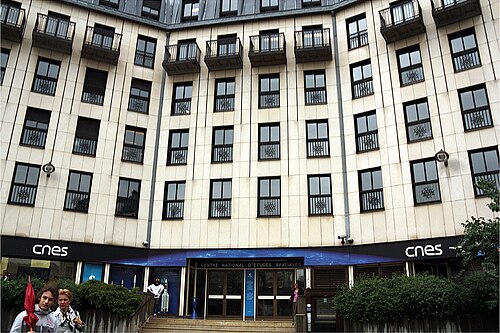
The Centre National d'Études Spatiales (CNES) is France's national space agency, established in 1961 and headquartered in Paris. CNES is responsible for shaping and implementing French space policy and manages an annual budget of €3.029 billion (2024), making it one of Europe's largest space agencies. The agency operates the Guiana Space Centre (CSG) in Kourou, French Guiana — Europe's primary orbital launch facility and the site for Ariane, Vega, and Soyuz launches. CNES develops satellites and scientific instruments, leads French contributions to ESA programs, and manages international collaborations with NASA, JAXA, and ISRO. Key programs include the Copernicus Earth observation series, the Galileo navigation system (in partnership with ESA), the SWOT ocean-topography satellite (joint with NASA), and France's military space surveillance capabilities. CNES has a staff of approximately 2,400 engineers and scientists.

Paris, France · Est. 1961
Space Agencies Verified

UKSA

Swindon, United Kingdom government

The UK Space Agency (UKSA) is the UK government body responsible for the civil space program, established in 2010 and headquartered in Swindon. UKSA manages approximately £600 million in annual space investment, coordinates UK contributions to ESA programs (the UK is ESA's third-largest contributor), and regulates commercial spaceflight under the Space Industry Act 2018. The agency supports UK satellite manufacturing — including companies like SSTL and Airbus UK — and has been actively developing domestic launch capabilities following the Space Industry Act. UKSA contributed to the Rosetta comet mission, the Beagle 2 Mars lander, and ExoMars, and manages UK participation in Copernicus Earth observation. The agency's National Space Strategy (2021) targets making the UK a leading space nation, with goals in launch services, satellite applications, and space manufacturing. The UK's space sector generates approximately £18.6 billion in income and employs about 55,000 people.

Swindon, United Kingdom · Est. 2010
Launch Services Verified

CASC

Beijing, China government

China Aerospace Science and Technology Corporation (CASC, 中国航天科技集团公司), founded in 1999 as a restructuring of the Ministry of Aerospace Industry, is China's primary state-owned space enterprise and the main contractor for virtually all of China's government space programs — manufacturing the Long March family of launch vehicles, Shenzhou crewed spacecraft, Tianhe space station modules, lunar exploration vehicles, and China's major civilian and military satellites. CASC's Long March rocket family spans 13+ variants covering the complete payload spectrum from the 200 kg Long March 11 solid small-lift to the 25+ tonne LEO Long March 5 (China's heaviest operational rocket, used for Chang'e 5 lunar sample return and Tianwen-1 Mars mission). Long March 3B and 3C are workhorse GEO launchers for Chinese and commercial communications satellites; Long March 2F is the dedicated human spaceflight vehicle for Shenzhou crewed missions and Tianzhou cargo resupply to the Chinese Space Station (CSS/Tiangong). Long March 5B is the large module launcher for Tianhe core module and Wentian/Mengtian experiment modules. CASC spacecraft achievements include: Chang'e 3 (2013, first lunar soft landing since 1976), Chang'e 4 (2019, first far-side of Moon landing), Chang'e 5 (2020, first lunar sample return since 1976, 1.73 kg collected), Tianwen-1 (2021, Mars orbiter + lander + rover Zhurong), and the Chinese Space Station operational since 2021 with permanent crew rotation. The Shenzhou and CSS programs now conduct regular 6-month crew missions with three taikonauts. CASC also manufactures the DFH and Shijian series of communications and weather satellites, BeiDou navigation constellation satellites (35-satellite global system comparable to GPS), and reconnaissance/Earth observation satellites for the Chinese military. Annual CASC launch cadence exceeds 40 missions, making it one of the world's most active launch organizations.

Beijing, China · Est. 1999

Explore all 79 national space agencies organisations

Filter by country, type or status, sort by market value or founding year. The view is saved in the address bar.

Skip to results

Loading companies…

Loading companies…