Category

Space Sustainability Companies

6 organizations4 countries

6 organizations working in space sustainability across the global space industry.

Names to know in space sustainability

Rank all by market value →
Space Sustainability In development

BULL

Japan commercial

BULL is a Japanese startup developing HORN, a low-cost post-mission disposal device that is fitted to a spacecraft or launch vehicle stage before flight and deployed once its mission ends. A thin resin membrane unfurls like a sail from an extended boom, catching the residual atmospheric drag found at roughly 600 to 800 kilometres altitude to decelerate the object so it loses altitude and re-enters, rather than lingering in orbit for decades. The approach targets debris prevention rather than debris removal: because the hardware launches with the spacecraft, it avoids the cost and complexity of a separate rendezvous mission. BULL also markets on-orbit services built on the same technology. BULL signed a memorandum of understanding with Arianespace in 2024 to study fitting HORN to the Ariane 6 dual launch system, with candidate launch slots identified from 2027, and has run co-creation activities with JAXA on a device for the Epsilon S launch vehicle upper stage. In April 2026 it signed a basic agreement with Fujitsu to develop a high-precision Japanese space situational awareness service.

Japan
In-Space Services Verified

Astroscale

Tokyo, Japan commercial

Astroscale is a pioneering on-orbit servicing company developing satellite life extension, space situational awareness, and active debris removal solutions. Founded in 2013 by Mitsunobu Okada in Singapore and now headquartered in Tokyo, Astroscale is addressing the growing challenge of space sustainability through innovative spacecraft and operations. The ADRAS-J mission achieved historic milestones in 2024 as the world's first attempt to safely approach and characterize existing large debris through Rendezvous and Proximity Operations. Launched by Rocket Lab in February 2024, ADRAS-J targeted a defunct Japanese upper stage rocket body approximately 11 meters long and 3 tons in mass, orbiting since 2009. In December 2024, ADRAS-J achieved a historic 15-meter approach to the debris, the closest approach ever achieved by a commercial company to space debris through RPO. The spacecraft completed all observations required by JAXA, including multiple fly-around operations confirming the debris condition and providing critical data for future removal missions. ADRAS-J was selected by JAXA for Phase I of its Commercial Removal of Debris Demonstration Project. Astroscale Japan was also selected for Phase II, which will involve capturing and deorbiting the upper stage with the ADRAS-J2 spacecraft. Development is underway utilizing ADRAS-J heritage and collected data. Astroscale is a publicly traded company advancing commercial space sustainability services to ensure the long-term usability of orbital environments for future generations.

Tokyo, Japan · Est. 2013 $380M raised
Debris Removal Verified

ClearSpace

Ecublens, Switzerland commercial

ClearSpace SA is a Swiss space debris removal startup founded as a spin-off from EPFL (Swiss Federal Institute of Technology in Lausanne) by experienced space debris researchers. In 2019, ClearSpace won ESA's ADRIOS project tender and in November 2020 signed an 86 million euro contract for the ClearSpace-1 mission, the world's first mission to remove debris from orbit. Originally targeting the VESPA payload adapter from a 2013 Vega launch, the mission switched targets in April 2024 to ESA's 95 kg PROBA-1 satellite launched in 2001. ClearSpace-1 will launch on Vega C in 2029, initially entering a 500 km commissioning orbit before raising to target altitude for rendezvous and capture using a quartet of robotic arms. The mission is a cornerstone of ESA's Space Safety Programme and Zero Debris Approach, aiming to limit debris production by 2030.

Ecublens, Switzerland · Est. 2018
Debris Removal In development

Cosmoserve Space

Hyderabad, India commercial

Cosmoserve Space, headquartered in Hyderabad, India and founded in 2025, is an active debris removal startup developing autonomous robotic spacecraft using AI-driven control systems and soft robotics grappling mechanisms — designed to capture and deorbit non-cooperative defunct satellites and debris objects that cannot be approached with conventional rigid mechanical grippers because they are tumbling, uncooperative, or structurally degraded. Founded by former ISRO scientists including the Deputy Project Director of the Gaganyaan human spaceflight program — India's first crewed spacecraft, currently under development — Cosmoserve brings together experienced spacecraft system engineers with operational experience in Indian orbital missions. This heritage provides credibility in mission planning, rendezvous and proximity operations (RPO) design, and the kind of government procurement relationships that are essential for India's growing space sustainability programs. Cosmoserve's mission architecture is built around a 'Reviver and Mothercraft' duo concept: the Mothercraft is a larger servicing vehicle that operates as an orbital base station, carrying multiple smaller 'Reviver' autonomous capture vehicles. The Mothercraft can deploy Revivers to target objects in nearby orbits, enabling a single mission to address up to 100 satellite-sized debris objects across an orbital band — a multiplicative approach designed to address the debris accumulation challenge at scale rather than one object at a time. Soft robotics grappling — using compliant actuators and flexible capture mechanisms rather than rigid jaws — is the key enabling technology for capturing tumbling or damaged satellites whose solar panels, antennas, or structural elements may be compromised. Cosmoserve operates in India's newly liberalized commercial space sector following the Indian Space Policy 2023 and the establishment of IN-SPACe (Indian National Space Promotion and Authorization Centre) as the regulatory body for private space activities, positioning itself to address global LEO debris removal contracts as well as potential Indian government debris mitigation mandates.

Hyderabad, India · Est. 2025

Debris Removal In development

Orbital Lasers

Tokyo, Japan commercial

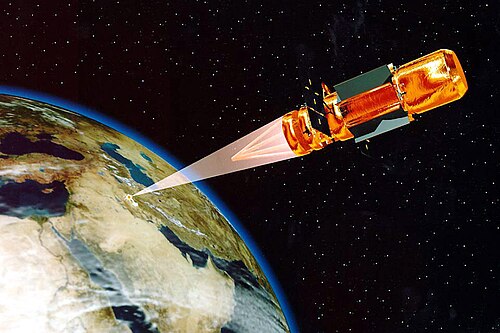
Orbital Lasers is a Tokyo-based space debris removal startup founded in 2024 as a spin-off from SKY Perfect JSAT, Japan's largest satellite communications operator, to commercialize laser ablation active debris removal technology developed in partnership with RIKEN — Japan's premier multi-disciplinary research institute. Laser ablation debris removal works by firing a high-powered pulsed laser at a piece of space debris from a servicing spacecraft or dedicated laser satellite: the laser pulse instantly vaporizes a tiny amount of material on the debris surface, and the resulting micro-jet of ablated material imparts a tiny impulse to the debris object — over thousands of pulses, this accumulated momentum change can lower the debris object's orbit enough for it to deorbit naturally through atmospheric drag within years rather than decades. The advantage over mechanical capture approaches (like Astroscale's magnetic grapple or a net system) is that laser ablation doesn't require physical contact with the debris — avoiding the challenging and dangerous docking/contact operations needed to capture an uncooperative, tumbling debris object. The technology was demonstrated in ground laboratory conditions by RIKEN researchers, and Orbital Lasers is commercializing this science for on-orbit application. The company is planning to launch a demonstration mission and begin commercial debris removal services in Japanese fiscal year 2029 (starting April 2029). SKY Perfect JSAT's backing provides Orbital Lasers with deep satellite operations expertise, regulatory relationships with the Japan Aerospace Exploration Agency (JAXA) and the Japanese Ministry of Internal Affairs and Communications, and customer access among satellite constellation operators worried about debris collision risk. Japan has taken a leadership role in space sustainability through the JAXA Space Debris Mitigation Guidelines and commercial ADR programs including Astroscale's ADRAS-J mission.

Tokyo, Japan · Est. 2024
Space Situational Awareness In development

OrbitArch

Dubai, United Arab Emirates commercial

OrbitArch is a Dubai-based space situational awareness startup developing a quantum radar system intended to track orbital objects as small as one centimetre across — well below the roughly ten-centimetre floor of most conventional ground-based radar catalogues. Paired with neural networks that forecast conjunctions weeks ahead, the company aims to have satellites autonomously execute collision avoidance manoeuvres. The company was founded in 2024 by Naman Chawla while an undergraduate at the Birla Institute of Technology and Science in Dubai, and operates as a venture of Skorbitron Technologies. Its stated goal is making Earth orbit safer and more sustainable as satellite populations grow. OrbitArch was a top-30 semifinalist at the Eureka business model competition in Dubai, and its founder spoke at the United Nations ITU Space Sustainability Forum. The company was one of ten selected to pitch at Via Satellite's Startup Space 2026 competition.

Dubai, United Arab Emirates · Est. 2024

Explore all 6 space sustainability organisations

Filter by country, type or status, sort by market value or founding year. The view is saved in the address bar.

Skip to results

Loading companies…

Loading companies…