Category

Spacesuits Life Support Companies

10 organizations3 countries3 listed

10 organizations working in spacesuits life support across the global space industry.

Names to know in spacesuits life support

Rank all by market value →
Launch Services Verified SPCX

SpaceX

Starbase, United States commercial

Space Exploration Technologies Corp. (SpaceX) is the world's leading aerospace company, listed on Nasdaq (SPCX) since June 2026, founded by Elon Musk in 2002 with the mission of reducing space transportation costs and enabling the colonization of Mars. Headquartered at Starbase, Texas, SpaceX designs, manufactures, and launches advanced rockets and spacecraft, having revolutionized the aerospace industry with its development of reusable launch vehicle technology. The company operates as a vertically integrated manufacturer, producing the majority of its rocket components in-house, including engines, avionics, and structures. SpaceX employs about 22,000 people (2026) across its facilities in California, Texas, Florida, and Washington state. Under the leadership of CEO Elon Musk and President Gwynne Shotwell, SpaceX has grown from a startup to the dominant force in commercial space launch. ## History and Milestones SpaceX was founded in June 2002 after Elon Musk sold PayPal and invested $100 million of his personal fortune into the venture. The company's first rocket, Falcon 1, achieved orbit on its fourth attempt in September 2008, becoming the first privately developed liquid-fueled rocket to reach orbit. This success secured a $1.6 billion NASA Commercial Resupply Services contract that proved crucial to the company's survival. The Falcon 9 rocket first launched in June 2010 and has since become the world's most frequently flown orbital rocket. In December 2015, SpaceX achieved a historic milestone by successfully landing a Falcon 9 first stage booster, demonstrating practical rocket reusability for the first time. The Falcon Heavy, a heavy-lift vehicle combining three Falcon 9 cores, first flew in February 2018 carrying a Tesla Roadster to solar orbit. SpaceX's Dragon spacecraft became the first commercial vehicle to deliver cargo to the International Space Station in 2012. In May 2020, Crew Dragon carried NASA astronauts to the ISS, ending U.S. reliance on Russian Soyuz vehicles for crew transport and marking the first crewed orbital spaceflight from American soil since the Space Shuttle's retirement. ## Products and Services SpaceX operates three primary launch vehicles. The Falcon 9 is a two-stage rocket designed for reliable and cost-effective transport of payloads to orbit, with first-stage reusability enabling rapid turnaround and reduced costs. Individual boosters have flown over 20 missions each. The Falcon Heavy combines three Falcon 9 first stages to provide heavy-lift capability for large satellites, deep space missions, and national security payloads. Starship is SpaceX's next-generation fully reusable transportation system, designed to carry crew and cargo to Earth orbit, the Moon, Mars, and beyond. The system consists of the Super Heavy booster and Starship upper stage, both designed for rapid reusability. Once operational, Starship will be the most powerful launch vehicle ever built. Dragon spacecraft provide cargo and crew transportation services to the International Space Station under NASA contracts. The company also operates Starlink, a satellite internet constellation providing global broadband connectivity from low Earth orbit to millions of customers worldwide, including in remote and underserved regions. ## Technology and Capabilities SpaceX's core technological innovation is practical rocket reusability. The company developed proprietary landing systems enabling first-stage boosters to return to landing zones or autonomous drone ships, reducing launch costs by recovering and refurbishing the most expensive rocket components. Grid fins, landing legs, and autonomous flight termination systems represent key enabling technologies. The Merlin engine family, burning RP-1 kerosene and liquid oxygen, powers Falcon vehicles with industry-leading thrust-to-weight ratios. SpaceX's Raptor engine, using liquid methane and oxygen, powers Starship and represents a generational advance in rocket propulsion with full-flow staged combustion enabling unprecedented efficiency and reusability. SpaceX manufactures most components in-house, including avionics, flight computers, and reaction control systems. This vertical integration provides cost advantages and rapid iteration capabilities. The company's Dragon spacecraft features proprietary life support systems, SuperDraco abort engines, and a reusable pressure vessel designed for multiple flights. ## Business and Financial Overview SpaceX listed on Nasdaq and Nasdaq Texas in June 2026 under the ticker SPCX. Elon Musk remains the largest shareholder through a dual-class structure. The IPO priced at $135 a share and raised about $75 billion at a $1.77 trillion valuation, after a December 2025 insider share sale had valued the company at about $800 billion. Earlier private rounds had raised over $10 billion; investors included Founders Fund, Google, Fidelity, and various sovereign wealth funds. Revenue sources include commercial satellite launches, NASA crew and cargo contracts, national security missions for the U.S. Space Force and NRO, and Starlink consumer and enterprise subscriptions. The commercial launch business captured over 80% of global launch mass in 2024. Starlink has emerged as the company's primary revenue driver, generating several billion dollars annually with a path to profitability. SpaceX holds multi-billion dollar NASA contracts including Commercial Crew Transportation, Commercial Resupply Services, and the Human Landing System contract for Artemis lunar missions. The company competes successfully against international launch providers and legacy aerospace contractors through pricing significantly below traditional government contractors. ## Recent Developments In 2024, SpaceX achieved a record-breaking 138 launches, including 134 Falcon family missions, shattering global launch records. The Falcon 9 maintained its streak of over 300 consecutive successful missions. Starlink expanded across consumer, business, maritime, aviation, and government segments and became the company's primary revenue driver. The Polaris Dawn mission achieved the first commercial spacewalk using SpaceX-designed EVA suits. Starship development achieved major milestones with multiple integrated flight tests from Starbase in Boca Chica, Texas. Flight 5 demonstrated the first successful catch of the Super Heavy booster using the launch tower's mechanical arms, a crucial step toward rapid reusability. Subsequent flights achieved controlled ocean landings and extended flight durations. Looking ahead, SpaceX is preparing for operational Starship flights, expanded Starlink service including direct-to-cell capability, continued ISS crew rotations, and initial work on the Artemis III lunar landing mission contracted by NASA. ## Market Position SpaceX dominates the global commercial launch market, conducting more launches than all other providers combined in 2024. The company's pricing and reliability have effectively ended competition from European, Russian, and most other international launch providers in commercial markets. Only China's state-backed launch programs maintain comparable launch cadence. Key competitors include United Launch Alliance (Boeing-Lockheed joint venture), Rocket Lab in the small launch segment, Blue Origin with New Glenn now flying, and emerging players like Relativity Space. In the satellite internet market, Starlink competes with OneWeb, Amazon's planned Project Kuiper, and traditional satellite operators like Viasat and SES. SpaceX's competitive advantages include demonstrated reusability, vertical integration, rapid innovation cycles, and pricing that undercuts competitors by significant margins. The company's track record of reliable launches and dominant market share position it to maintain leadership as space industry growth accelerates.

Starbase, United States · Est. 2002 $2.01T
Components Verified MOG-A

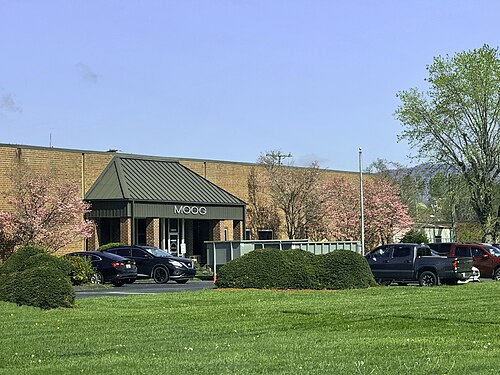
Moog Inc

East Aurora, United States commercial

Moog Space, founded in 1951 and headquartered in East Aurora, New York, is a key provider of solutions for the space industry, specializing in the design, development, and manufacture of critical systems and components. While initially focused on propulsion, the company has expanded its portfolio to encompass a broad range of technologies including spacecraft avionics, guidance systems, fluid controls, structures, and environmental control & life support systems (ECLSS). Moog serves both commercial and government customers, supporting missions ranging from launch vehicles and satellite buses to human spaceflight initiatives, including contributions to NASA’s Space Launch System and future lunar missions. A core strength lies in Moog’s advanced avionics systems, offering integrated Command and Data Handling (C&DH) and Electrical Power Systems (EPS). The company is actively investing in next-generation technologies such as radiation-hardened computing – exemplified by the Cascade Single Board Computer featuring a RISC-V processor – and additive manufacturing to enhance capabilities and meet evolving mission demands. Beyond electronics, Moog provides mechanical solutions including hexapods for precision payload positioning, spacecraft mechanisms, shock and vibration isolation systems, and structural adapters for various satellite sizes. This diverse offering positions Moog Space as a comprehensive partner for organizations operating across the entire space ecosystem.

East Aurora, United States · Est. 1951 $11.5B
Satellite Manufacturing Verified BA

Boeing Space

Arlington, United States commercial

Boeing Space & Launch is a division of The Boeing Company responsible for spacecraft development, space station operations, and launch vehicle systems. Operating from Houston, Texas, and other U.S. facilities, Boeing has contributed to human spaceflight since the Apollo era and continues as a prime contractor for the International Space Station and NASA's Space Launch System. Boeing's space operations fall within the Defense, Space & Security business unit, which generates approximately $26 billion in annual revenue with space programs representing a significant portion. The company maintains deep expertise in human spaceflight systems developed over six decades of NASA partnership. ## History and Milestones Boeing's space heritage extends to the dawn of the Space Age. North American Aviation, which merged with Rockwell International and later Boeing, built the Apollo command and service modules that carried astronauts to the Moon. The company also developed the S-II second stage of the Saturn V rocket. Boeing served as prime contractor for the Space Shuttle orbiter, building all five shuttles and supporting operations from 1981 to 2011. The company also led development of the International Space Station's U.S. modules and has served as prime contractor for ISS operations since the station's assembly began in 1998. The company developed the Delta rocket family, operating as United Launch Alliance (a Boeing-Lockheed Martin joint venture) since 2006. Boeing selected CST-100 Starliner for NASA's Commercial Crew Program in 2014, though development has faced significant delays. ## Products and Services Boeing manufactures the core stage and upper stage for NASA's Space Launch System (SLS), the most powerful rocket ever built. The core stage, produced at the Michoud Assembly Facility in New Orleans, provides the primary propulsion for Artemis missions to the Moon. The CST-100 Starliner spacecraft is designed to carry crew to the International Space Station and future destinations. After experiencing development delays and technical challenges, Starliner completed its first crewed mission in 2024. Boeing provides International Space Station operations and sustainment services, managing U.S. segment systems, crew activities, and ongoing maintenance. The company also develops satellite systems and provides space-related services to government and commercial customers. ## Technology and Capabilities Boeing operates major space manufacturing facilities including the Michoud Assembly Facility for SLS production, Kennedy Space Center processing facilities, and the Starliner production line at Kennedy. The company's Houston campus supports ISS operations and human spaceflight programs. The company develops advanced spacecraft technologies including life support systems, thermal protection, and avionics. Boeing's experience with crew-rated systems spans decades and includes extensive work on crew safety and spacecraft reliability. Boeing contributes to future exploration concepts including lunar surface systems, space habitat development, and deep space transportation. The company also invests in satellite technologies and autonomous systems for both government and commercial applications. ## Business and Financial Overview Boeing trades on NYSE under BA, with Defense, Space & Security representing a significant portion of overall company revenue. Space programs operate primarily under cost-plus government contracts, with fixed-price elements for commercial crew services. Major contracts include the Space Launch System core stage and exploration upper stage, Commercial Crew Transportation, and International Space Station operations. Boeing competes for NASA exploration contracts and Department of Defense space programs. The Commercial Crew program has experienced significant cost overruns on the fixed-price Starliner contract, resulting in charges against company earnings. SLS development has also faced cost and schedule challenges typical of complex government programs. ## Recent Developments In 2024, Boeing achieved a major milestone with the first crewed Starliner mission to the International Space Station, demonstrating the spacecraft's capability to transport astronauts despite an extended development timeline. The company continued SLS production for Artemis missions. Boeing supported NASA's Artemis program through SLS core stage production and exploration upper stage development. The company also maintained ISS operations and prepared for eventual station transition planning. The company addressed technical challenges across space programs while investing in manufacturing improvements and digital engineering capabilities. Boeing also participated in studies for commercial space stations and future exploration systems. ## Market Position Boeing maintains a significant position in human spaceflight as ISS prime contractor and SLS manufacturer, though the company faces increasing competition from SpaceX and emerging commercial providers. Cost and schedule performance on recent programs has created challenges. The company competes with SpaceX for commercial crew services and with Northrop Grumman, Lockheed Martin, and others for government space contracts. Boeing's historical human spaceflight expertise remains a competitive advantage. Strategic priorities include successful Starliner operations, SLS production for Artemis, ISS sustainment, and positioning for future exploration programs. The company seeks to demonstrate improved execution on space programs.

Arlington, United States · Est. 1916 $156.7B
Space Agencies Verified

ISRO

Bengaluru, India government

The Indian Space Research Organisation (ISRO) is India's national space agency, responsible for space science research and planetary exploration. Established in 1969 under the vision of Dr. Vikram Sarabhai, ISRO has developed into one of the world's most capable and cost-effective space organizations, achieving remarkable milestones including successful Mars and lunar missions. Headquartered in Bengaluru, Karnataka, ISRO operates under the Department of Space, Government of India. The agency employs approximately 17,000 scientists and engineers across multiple centers. Under Chairman Dr. V. Narayanan (since January 2025), ISRO continues advancing launch capabilities, satellite technology, and planetary exploration while maintaining its tradition of frugal engineering. ## History and Milestones India's space program began with the establishment of the Indian National Committee for Space Research (INCOSPAR) in 1962 under Dr. Vikram Sarabhai. ISRO was formed in 1969 and launched India's first satellite, Aryabhata, in 1975 using a Soviet rocket. The first successful Indian-built launch vehicle, SLV-3, flew in 1980. The Polar Satellite Launch Vehicle (PSLV), first launched in 1993, became ISRO's workhorse rocket, achieving over 50 successful consecutive missions. In 2008, Chandrayaan-1 discovered water molecules on the Moon, fundamentally changing understanding of lunar resources. The Mars Orbiter Mission (Mangalyaan) in 2014 made India the first nation to reach Mars on its maiden attempt. Chandrayaan-3 in 2023 achieved India's first lunar soft landing, making India the fourth nation to land on the Moon. The Vikram lander and Pragyan rover operated at the lunar south pole, conducting valuable scientific experiments and demonstrating ISRO's capabilities for complex missions. ## Products and Services ISRO operates the PSLV and GSLV launch vehicle families. PSLV provides reliable access to polar and sun-synchronous orbits, serving both Indian satellites and international customers through commercial arm Antrix/NSIL. GSLV Mk III (LVM3), India's heaviest operational rocket, supports geosynchronous and human spaceflight missions. India's satellite programs include the Indian National Satellite System (INSAT) for telecommunications and meteorology, the Indian Remote Sensing (IRS) satellites for Earth observation, and the Navigation with Indian Constellation (NavIC) regional navigation system. These satellites serve agriculture, disaster management, telecommunications, and national security needs. ISRO provides commercial launch services through NewSpace India Limited (NSIL), offering competitive pricing for small to medium satellite deployments. The agency has launched satellites for numerous countries, establishing India as a reliable launch services provider. ## Technology and Capabilities ISRO developed the cryogenic upper stage technology independently after technology transfer denials in the 1990s, demonstrating capability for building advanced rocket propulsion. The agency's frugal engineering approach achieves missions at significantly lower costs than Western counterparts while maintaining high reliability. The Gaganyaan program is developing human spaceflight capabilities, including crew module, launch escape system, and life support systems. ISRO has conducted uncrewed test flights and aims to launch Indian astronauts (Vyomanauts) on indigenous systems. ISRO maintains extensive ground infrastructure including the Satish Dhawan Space Centre at Sriharikota, tracking stations across India and internationally, and satellite assembly and test facilities. The agency also develops applications using satellite data for agriculture, urban planning, and disaster response. ## Business and Financial Overview ISRO operates with an annual budget of approximately $1.5-2 billion from the Indian government, significantly smaller than NASA or ESA but delivering remarkable achievements through cost efficiency. The agency's missions typically cost a fraction of comparable international programs. Commercial activities through NSIL generate revenue from satellite launches, satellite construction for foreign customers, and technology transfer. ISRO has launched over 400 foreign satellites from more than 35 countries, establishing a strong commercial track record. India's space policy reforms in 2020 opened the sector to private investment, with ISRO supporting emerging Indian space startups through technology transfer and testing facilities. This policy shift aims to expand India's share of the global space economy. ## Recent Developments In 2024, ISRO continued preparations for the Gaganyaan human spaceflight program, conducting test vehicle flights and astronaut training. The agency also advanced Chandrayaan-4 lunar sample return mission planning and Venus Orbiter Mission (Shukrayaan) development. ISRO expanded commercial operations, launching satellites for international customers and supporting India's growing private space sector. The agency also conducted PSLV and GSLV missions for national satellite programs including communications and Earth observation. Development continued on the Next Generation Launch Vehicle (NGLV), designed to provide heavy-lift capability with reusability features. ISRO also advanced small satellite launch vehicle (SSLV) operations for responsive, lower-cost access to orbit. ## Market Position ISRO ranks among the world's top space agencies in terms of launch frequency, technical capability, and mission success. The agency's cost-effective approach has established India as a preferred destination for satellite launches, particularly for smaller satellites and constellation deployments. India competes commercially with SpaceX, Rocket Lab, and other providers while maintaining unique capabilities in cost-efficient mission execution. ISRO's emerging private sector partnerships aim to expand India's space industry beyond government programs. The agency's strategic priorities include human spaceflight, planetary exploration, and expanding commercial launch services. ISRO's demonstrated success with Chandrayaan-3 and the Mars Orbiter Mission establishes credibility for increasingly ambitious future missions.

Bengaluru, India · Est. 1969
Human Spaceflight Verified

Final Frontier Design

Brooklyn, United States commercial

Final Frontier Design, founded in 2010 and based in Brooklyn, New York, is a company focused on the development of commercial spacesuits. Specializing solely in this niche, Final Frontier aims to provide advanced protective garments for a broadening space market beyond traditional government space programs. While specific product details are currently limited due to a lack of publicly available information, the company’s focus suggests an intention to serve the emerging private spaceflight sector, potentially including space tourism, research, and on-orbit servicing. The company’s core capability lies in spacesuit design and engineering. This encompasses the complex integration of life support systems, pressure regulation, thermal control, and mobility features necessary for human survival and operation in the harsh environment of space. Given the competitive landscape of spacesuit development, Final Frontier likely emphasizes innovation in areas such as lightweight materials, improved range of motion, and potentially, more streamlined and cost-effective manufacturing processes. Currently, publicly available information regarding specific missions, achievements, or customer contracts is limited. However, the company’s existence and continued operation indicate a level of traction within the industry and potential partnerships or development contracts not yet made public. Final Frontier Design positions itself to capitalize on the growing demand for commercially available spacesuits as the private space industry expands. By focusing exclusively on this specialized area, the company aims to become a key provider of essential protective gear for a new generation of space explorers and professionals, differentiating itself from larger aerospace companies with broader portfolios.

Brooklyn, United States · Est. 2010
Human Spaceflight Verified

Paragon Space Development

Tucson, United States commercial

Paragon Space Development Corporation is a Tucson, Arizona-based engineering company founded in 1993 by Jane Poynter and Taber MacCallum — both Biosphere 2 crew members — specializing in environmental control and life support systems (ECLSS) and thermal control systems (TCS) for human spaceflight applications ranging from near-Earth orbital habitats to deep space and lunar surface missions. Paragon's core engineering competency is the design and manufacture of closed-loop life support systems that maintain human-habitable atmospheric conditions in sealed pressurized environments: oxygen generation (via electrolysis or chemical oxygen generators), carbon dioxide removal (using lithium hydroxide canisters or regenerable 4-bed molecular sieves), humidity and temperature control, trace contaminant monitoring, and cabin pressure management. The company also develops water recovery systems that process crew condensate, urine, and wastewater through filtration and distillation into potable water — a critical system for long-duration missions where water resupply is impractical. Thermal control systems designed by Paragon manage heat rejection from spacecraft internal equipment through heat exchangers, cold plates, fluid loops (using ammonia or water as working fluid), radiators, and multi-layer insulation (MLI) blankets. For lunar surface operations, Paragon has developed regolith-facing thermal management concepts that must handle extreme temperature swings from -173°C (lunar night) to +127°C (lunar day). Paragon has contributed ECLSS hardware and engineering services to multiple programs: Bigelow Aerospace's BEAM (Bigelow Expandable Activity Module) on the ISS, NASA Commercial Crew program, Sierra Space Dream Chaser spaceplane life support design, and early-stage lunar lander habitat concepts under NASA's Artemis Commercial Lunar Payload Services (CLPS) framework. The company has also developed prototype spacesuit life support systems and portable life support system (PLSS) components. Competitors in the ECLSS space include Hamilton Sundstrand (now Collins Aerospace, which built the ISS ECLSS), Honeywell Aerospace, and NASA's own Johnson Space Center engineering teams. Paragon differentiates through its willingness to support smaller commercial customers and novel habitat architectures where legacy ECLSS vendors lack incentive to engage.

Tucson, United States · Est. 1993
Components Acquired

Collins Aerospace

Charlotte, United States commercial

Collins Aerospace Space, a subsidiary of RTX, is a leading provider of integrated solutions for the space industry, with a history dating back to 1933. The company focuses on the design, development, and production of spacecraft components, advanced communications systems, and critical electronics for both crewed and uncrewed missions. Core capabilities include life support systems for space stations and extravehicular activity (EVA) equipment, demonstrating a significant heritage in human spaceflight support. Collins Aerospace serves a broad range of customers across multiple sectors, including military & defense, commercial aviation, and business aviation, extending into the broader aerospace landscape with solutions for air traffic management and airports. Recent activities highlight a focus on innovation and modernization, exemplified by upgrades to the FlightAware AeroAPI® and the introduction of the Venue™ smart monitor for aircraft like the Dassault Falcon 7X. Notably, the company was recently awarded a contract from NATO for an electromagnetic warfare command and control system, demonstrating its capabilities in defense-related space technologies. Collins Aerospace is also actively investing in advanced manufacturing techniques, as evidenced by improvements at its Cedar Rapids facility aiming for an 80% reduction in production time. Through a diverse portfolio and collaborative approach, Collins Aerospace positions itself as a full-spectrum aerospace provider, integrating solutions across various platforms “from the battlespace to deep space.” The company emphasizes its ability to connect expertise and deliver impactful solutions for evolving industry challenges.

Charlotte, United States · Est. 2018
Aerospace In development

Lockheed Martin Habitation

Denver, United States commercial

Lockheed Martin Habitation, established in 2018 and based in Denver, Colorado, focuses on the development of space habitats, specifically for lunar applications. As a division of the broader Lockheed Martin corporation – a leading global security, defense, and aerospace contractor – Habitation leverages decades of experience in spacecraft engineering and systems integration to address the challenges of long-duration space living. The company’s core business centers on designing and building habitats intended to support sustained human presence in space. Lockheed Martin Habitation’s work benefits from Lockheed Martin’s extensive capabilities across multiple domains, including space systems, advanced materials, and life support technologies. The company is actively contributing to NASA’s Artemis program, as evidenced by their involvement with the Orion spacecraft, preparing it for missions like Artemis II. While specific details regarding the lunar habitat development are limited in the provided information, Lockheed Martin’s overall portfolio demonstrates a commitment to innovation in areas critical for space habitation, such as reliable life support systems and radiation shielding. The company positions itself as a trusted partner for critical missions, delivering solutions for the most challenging environments. Lockheed Martin Habitation’s unique value proposition lies in its integration with a larger, established defense and aerospace company, providing access to significant resources, expertise, and a proven track record of delivering complex systems for national security and space exploration.

Denver, United States · Est. 2018
Lunar In development

Spartan Space

Grenoble, France commercial

Spartan Space, founded in 2021 and based in Grenoble, France, is a space company focused on developing solutions for human intervention in extreme environments, specifically lunar habitats. The company’s core business centers around the design and development of these habitats, with a key project being the Eurohab module. Spartan Space is actively involved in testing and validation through simulations; notably, they have conducted multiple one-week lunar mission simulations utilizing the Eurohab module at the DLR/ESA LUNA facility. A significant portion of Spartan Space’s work involves advanced technology development for lunar surface operations. This includes the development of a Dusty Thermal Vacuum Chamber (DTVC) for ESA, and notably, the co-development of an intravehicular (IVA) spacesuit – the “EUROSUIT” – in partnership with CNES, MEDES, and DECATHLON. They are also contributing to the I-HAB module for the Lunar Gateway, having developed and exhibited interior mock-ups. Spartan Space partners closely with major European space organizations like ESA and CNES, indicating a strong position within the European space ecosystem. Their work on the Versatile Berthing and Observation Bay (BOB) module for ESA further demonstrates their capabilities in contributing to larger-scale lunar infrastructure projects. While a relatively young company, Spartan Space is quickly establishing itself as a key player in the development of lunar habitats and associated technologies, with a focus on practical testing and collaboration with leading space agencies and industry partners.

Grenoble, France · Est. 2021

Explore all 10 spacesuits life support organisations

Filter by country, type or status, sort by market value or founding year. The view is saved in the address bar.

Skip to results

Loading companies…

Loading companies…