Category

Training Companies

13 organizations8 countries

13 organizations working in training across the global space industry.

Names to know in training

Rank all by market value →
Training Verified

European Astronaut Centre

Cologne, Germany government

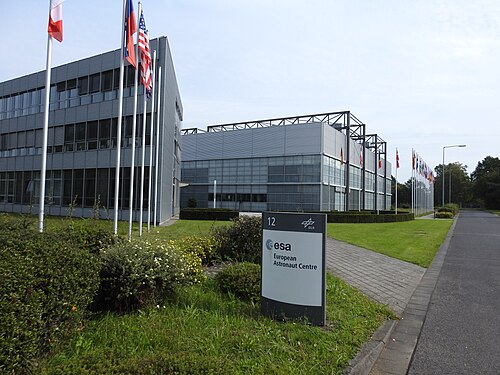
The European Astronaut Centre (EAC) is the European Space Agency's official center for astronaut selection, training, medical support, and operational preparation — located in Cologne, Germany adjacent to the German Aerospace Center (DLR) campus, founded in 1990 and staffed by over 100 professionals spanning flight surgeons, training instructors, engineers, physiologists, and mission specialists. The EAC's primary function is preparing European astronauts for long-duration missions to the International Space Station (ISS) and future destinations including lunar Gateway and the Moon's surface. The training curriculum covers multiple domains: systems training for ISS modules (Columbus European laboratory, Node modules, Soyuz/Crew Dragon spacecraft), spacewalk (EVA) training in the EAC's 10-meter-deep neutral buoyancy pool (the Neutral Buoyancy Facility, NBF) where astronauts in pressure suits practice maintenance tasks and construction procedures in simulated microgravity conditions, robotics training for Canadarm2 and European Robotic Arm (ERA) operation, Russian language training (historically required for Soyuz operations), scientific experiment protocols, emergency procedures, survival training (sea/jungle/winter), and physical fitness. The EAC also conducts ESA's astronaut selection campaigns — the most recent 2021-2022 campaign received over 22,500 applications from ESA member state citizens, the highest response rate in ESA's history, resulting in the selection of five career astronauts and 17 reserve astronauts. The selection process involves physical health screening, psychological assessment, cognitive testing, group dynamics exercises, and technical aptitude evaluation. Medical support for European astronauts on orbit — monitoring crew health, coordinating with ISS flight surgeons, providing telemedicine consultations, and managing return-to-flight medical clearance — is a continuous EAC function during mission operations. Post-flight rehabilitation for astronauts returning from the physiological effects of microgravity (bone density loss, muscle atrophy, cardiovascular deconditioning, fluid redistribution) takes place partially at the EAC. The EAC's location in Cologne also provides proximity to ESTEC (Netherlands), ESOC (Darmstadt), and ESA's European Space Astronomy Centre (ESAC, Madrid), with coordinated training activities distributed across ESA facilities and partner agency training centers (NASA JSC, Roscosmos GCTC, JAXA Tsukuba).

Cologne, Germany · Est. 1990
Space Tourism Verified

RocketBreaks

Ramsgate, United Kingdom commercial

RocketBreaks, located in the United Kingdom, is a pioneering space travel agency focused on making space accessible to private individuals. The company specializes in curating bespoke space experiences, ranging from Earth-based activities – including space-themed parties with astronaut appearances – to suborbital and orbital spaceflights, and zero-gravity flights. RocketBreaks positions itself as a full-service agency, handling all logistical details of a client’s space travel package, including pre-flight training, transportation, and personalized arrangements to ensure a seamless and memorable experience. Leveraging over 15 years of experience in the luxury travel industry, RocketBreaks aims to capitalize on the growing opportunities within the private space travel market as international space programs expand. They offer a range of experiences to cater to varying levels of ambition, from introductory zero-gravity flights to potential future offerings like lunar travel. Notably, RocketBreaks gained visibility through an appearance on BBC’s *Dragon’s Den*, demonstrating early stage investment interest and public awareness. The company emphasizes a commitment to personalized service, tailoring each experience to the client’s preferences and abilities. RocketBreaks differentiates itself as the “world’s first dedicated space travel agency,” positioning itself at the forefront of a rapidly evolving industry and targeting individuals seeking unique and extraordinary adventures. They currently offer experiences through partnerships with companies like Zephalto, and aim to expand offerings as space travel becomes more readily available.

Ramsgate, United Kingdom · Est. 2020
Training Verified

Yuri Gagarin Cosmonaut Training Center

Star City, Russia government

The Yuri Gagarin Cosmonaut Training Center (GCTC — Tsentr Podgotovki Kosmonavtov, or TsPK), located in Star City (Zvyozdny Gorodok) approximately 25 kilometers northeast of Moscow in the Shchyolkovsky District, is Russia's primary facility for training cosmonauts for missions to the International Space Station and future space programs — and historically the training ground for all Soviet cosmonauts from Yuri Gagarin's 1961 flight through the end of the Soviet space program. Founded in 1960 by order of the Soviet Ministry of Defense following the selection of the first cosmonaut detachment, GCTC is a closed military-scientific city that at its peak housed hundreds of cosmonauts, engineers, and their families in dedicated residential buildings, schools, and facilities surrounding the training campus. The center is named in honor of Yuri Gagarin, who trained there before his historic April 12, 1961 Vostok 1 flight — the first human spaceflight — and served as deputy director of the center until his death in a MiG-15 training accident in 1968. GCTC's training infrastructure includes full-scale Soyuz spacecraft and ISS module simulators for mission procedure training, the Hydrolaboratory (hydrolab) — a 23-meter diameter, 12-meter deep neutral buoyancy pool equivalent to NASA's Neutral Buoyancy Laboratory — for spacewalk (EVA) procedure training, centrifuges for G-force physiological training including a 18-meter arm centrifuge capable of 30G, altitude decompression chambers for vacuum suit qualification, and virtual reality ISS systems for familiarization training. GCTC has trained cosmonauts from over 30 countries and served as the mandatory training venue for international astronauts flying to ISS aboard Soyuz spacecraft — including NASA, ESA, JAXA, and CSA astronauts — due to Soyuz's role as the primary crew transport vehicle from 2011-2020 during the post-shuttle era. Following the introduction of SpaceX Crew Dragon in 2020, international participation at GCTC has significantly reduced, though Russian cosmonauts continue training for ISS rotations and China has sent taikonauts for joint training exchanges.

Star City, Russia · Est. 1960
Launch Vehicles In development

Success Rockets

Moscow, Russia commercial

Success Rockets, founded in 2017 and based in Moscow, Russia, is a company focused on the development of small launch vehicles. While currently positioned within the launch-vehicles sector of the space industry, publicly available information primarily details career and life coaching services provided by founder Larry Boyer. The company offers individual and corporate programs centered around career development, personal fulfillment, and navigating technological and economic disruption. Success Rockets differentiates itself by integrating business principles and methodologies into personal and professional coaching, aiming to help clients define and achieve success in a rapidly changing landscape. Testimonials highlight the positive impact of this approach, with clients reporting career advancements, skill development, and the successful pursuit of new ventures with guidance from Larry Boyer. Notably, the company’s website does not currently feature details regarding launch vehicle development, missions, or customers. The core business appears to have shifted or expanded to heavily emphasize career and personal development coaching, potentially leveraging the “Success Rockets” branding. Further investigation would be needed to determine the current status of the company’s original focus on small launch vehicles and its position within the competitive space launch market.

Moscow, Russia · Est. 2017
Education Verified

Euro Space Center

Transinne, Belgium nonprofit

The Euro Space Center (ESC) is Belgium's primary space-themed educational and tourism facility, located in Transinne in the province of Luxembourg in the Ardennes region — one of the least light-polluted areas in Western Europe, making it ideal for astronomical observation programs. Founded in 1991 and operating across approximately 7 hectares, the center attracts school groups and families from Belgium and neighboring countries (Netherlands, France, Germany, Luxembourg) seeking immersive space education experiences. The center's signature offering is its astronaut training simulation program: visitors undergo simplified versions of the physical and psychological challenges astronauts face during training and spaceflight. The multi-axis Human Gyroscope rotates participants in three axes simultaneously, simulating the disorientation of spacecraft tumbling and the need to maintain spatial orientation while vestibular senses are overwhelmed. Full-motion simulators recreate rocket launches and atmospheric reentry forces. Simulated microgravity chair experiments recreate the sensations of weightlessness through chair tilting and water pool activities. Mission simulation programs organize groups into crew roles — mission commander, science officer, communications — to work through scripted mission scenarios requiring teamwork and problem-solving under simulated time pressure, mimicking astronaut task management approaches. The space history and science exhibition covers the human spaceflight program from Sputnik through ISS and Artemis: scale models of Saturn V, Ariane 5, and current launchers; full-scale ISS module mock-ups enabling visitors to experience the interior layout of the actual ISS segments; Moon rock and meteorite samples; original space food sampling; and interactive demonstrations of orbital mechanics, rocket propulsion, and satellite communication. Belgium's space heritage — contributions to Ariane 5 and Vega launch vehicles through Walloon companies (Sabca, Spacebel), ESA membership with strong national delegation, and Belgian ESA astronauts (Frank De Winne, who commanded ISS Expedition 21 in 2009) — gives ESC's educational mission authentic national narrative grounding. The center serves as Belgium's public engagement institution for space science, receiving approximately 80,000-100,000 visitors annually and running educator training programs for secondary school teachers.

Transinne, Belgium · Est. 1991
Simulation

Loft Dynamics

Zurich, Switzerland commercial

Loft Dynamics, founded in 2016 and based in Zurich, Switzerland, is a company focused on the development of virtual reality (VR) flight simulation technology. The company’s core business centers around creating immersive training and simulation experiences, though current publicly available information suggests a diversification into retail product offerings beyond its initial focus. Loft Dynamics’ key capability lies in its VR simulation development, positioning it within the growing market for realistic and accessible flight training solutions. While specific technological details are not readily available, the company appears to be leveraging VR to provide a platform for skill development and potentially entertainment. Currently, the company website primarily lists a range of retail products – including various packaged deals and accessories like bracelets and health supplements – rather than detailing specific simulation clients or missions. This suggests a recent or ongoing shift in business strategy. Given the limited information, it is difficult to definitively assess Loft Dynamics’ current market position. However, its initial focus on VR flight simulation indicates a potential value proposition centered on providing cost-effective and accessible training solutions, though the current product offerings suggest a broader, and potentially evolving, business model.

Zurich, Switzerland · Est. 2016
Training

NASTAR Center

Southampton, United States commercial

The National AeroSpace Training and Research (NASTAR) Center, located in Southampton, Pennsylvania, is the world's first FAA-approved center for commercial human spaceflight crew qualification and training, providing aerospace physiology training to astronaut candidates, spaceflight participants, military aircrew, and aviation professionals. Founded in 2007 by Wyle Laboratories (now KBR), NASTAR operates a short-arm human centrifuge — the Environmental Tectonics Corporation (ETC) Authentic Tactical Fighting Instrument Trainer (ATFS-400) — capable of generating up to +20Gz sustained acceleration. This centrifuge simulates the gravitational forces experienced during rocket launch ascent, reentry, and emergency abort scenarios. Trainees learn G-LOC (G-force induced Loss Of Consciousness) prevention techniques, AGSM (Anti-G Straining Maneuver) protocols, and physiological warning signs of hypoxia and acceleration-induced incapacitation. NASTAR's Commercial Spaceflight Training program (NASTAR-SFT) was developed in collaboration with the FAA Office of Commercial Space Transportation and Virgin Galactic, which selected NASTAR as its training partner for SpaceShipTwo crew and flight research passengers. The program covers three phases: academic ground school in aerospace physiology, centrifuge-based G-force training simulating the unique 6-second 3.5G boost of SpaceShipTwo's hybrid rocket motor, and emergency procedures. Blue Origin also worked with NASTAR on New Shepard passenger preparation protocols. Beyond commercial spaceflight, NASTAR provides altitude chamber training simulating hypoxia onset, spatial disorientation demonstrations in a gyroscopic chair, and spatial disorientation flight simulation. The center has trained NASA astronauts, military pilots, and government agency personnel alongside commercial space participants. NASTAR's human factors research program contributes to understanding of human performance limits in aerospace environments, informing FAA rulemaking around commercial spaceflight medical certification and crew training standards.

Southampton, United States · Est. 2007
Ground Systems Verified

Space Applications Services

Zaventem, Belgium commercial

Space Applications Services (SAS) is a Zaventem, Belgium-based aerospace engineering and services company founded in 1987, operating as one of ESA's most important industrial contractors for astronaut training, mission operations, and ground system development. The company's Spaceship EAC division at the European Astronaut Centre in Cologne provides the operational backbone for ESA astronaut training — developing ISS procedures, virtual reality training scenarios, EUROCOM (spacecraft communicator) support, and mission-specific hardware familiarization courses. SAS built and now operates the ISS Columbus module's Human Research Facility payload, providing rack-level science support for life sciences experiments in microgravity. For the Lunar Gateway program, SAS is part of the prime contractor team for the International Habitat (I-HAB) and is developing crew training and operations concepts for cislunar space — a domain where the communication time delays and reduced ground contact require greater crew autonomy than ISS operations. SAS also develops ground control software and FDIR (failure detection, isolation, and recovery) systems for European satellite missions and operates mission control room infrastructure for ESA programs. The company participates in the EU Horizon research program and has active contracts under ESA's OSIP (Open Space Innovation Platform). Beyond ESA work, Space Applications Services has expanded into drone operations, autonomous systems, and terrestrial training simulation markets to diversify its revenue base. With approximately 150 engineers across European sites, SAS occupies a unique niche combining deep human spaceflight operations expertise with technical ground systems engineering capability.

Zaventem, Belgium · Est. 1987
Education Verified

Space Camp

Huntsville, United States nonprofit

Space Camp is the world's premier youth space education and astronaut training experience program, operated by the US Space & Rocket Center in Huntsville, Alabama — a nonprofit educational institution founded in 1982 inspired by NASA astronaut and director of Marshall Space Flight Center Wernher von Braun's vision of inspiring young people toward space exploration careers, that has now served over one million alumni from all 50 US states and more than 150 countries in its 40+ year history. Located adjacent to NASA's Marshall Space Flight Center — the birthplace of the Saturn V rocket and the primary center for NASA's heavy-lift rocket programs — Space Camp immerses participants in simulated astronaut experiences: multi-day residential programs that include shuttle/International Space Station mission simulations (with roles including commander, pilot, mission specialists, and ground control crew), space flight simulators including multi-axis trainers (spinning chairs used to simulate tumbling), underwater neutral buoyancy exercises, micro-g environment simulations, rocket building and launch activities, NASA mission control center tours, and visits to the Rocket Park featuring Saturn V and Saturn IB rockets. Programs are tiered by age: Space Camp (ages 9-11), Space Academy (12-14), Advanced Space Academy (14-18), and adult Aviation and Space programs. International camps use simultaneous English-language instruction with translation support for participants from non-English-speaking countries. Aviation Camp variants at Space Camp offer hands-on flight simulator training and general aviation exploration for participants interested in pilot careers rather than astronaut paths. Space Camp alumni include numerous NASA astronauts — participants have gone on to serve as Space Shuttle and ISS crew members — as well as engineers, scientists, and space industry executives who cite the program as a formative influence on their career choice. The program's cultural impact extends through the 1986 film 'SpaceCamp' (a fictional story featuring Space Camp participants accidentally launched into orbit) that introduced the program to a generation of children. The US Space & Rocket Center museum adjacent to Space Camp is one of the largest space museums in the world, housing the only remaining Saturn V rocket displayed horizontally indoors, Shuttle Pathfinder (the Space Shuttle test article), and extensive Apollo and Space Shuttle program artifacts.

Huntsville, United States · Est. 1982

Explore all 13 training organisations

Filter by country, type or status, sort by market value or founding year. The view is saved in the address bar.

Skip to results

Loading companies…

Loading companies…