
United States operational
University of Arizona LPL
The Lunar and Planetary Laboratory (LPL) at the University of Arizona in Tucson is one of the world's leading planetary science research institutions, founded in 1960 by Gerard Kuiper — discoverer of the Kuiper Belt — with a mission to understand the formation and evolution of planetary systems.
- Founded
- 1960
- Headquarters
- Tucson, United States
- Ownership
- Subsidiary of University of Arizona
Quick Facts
About University of Arizona LPL
The Lunar and Planetary Laboratory (LPL) at the University of Arizona in Tucson is one of the world's leading planetary science research institutions, founded in 1960 by Gerard Kuiper — discoverer of the Kuiper Belt — with a mission to understand the formation and evolution of planetary systems.
LPL's faculty lead some of NASA's highest-profile planetary science missions: Dante Lauretta served as PI for OSIRIS-REx, the asteroid sample return mission that collected material from near-Earth asteroid Bennu in 2020 and delivered its sample capsule to Earth in September 2023, providing the largest-ever asteroid sample (~121 grams) for Earth laboratory analysis.
Alfred McEwen leads the HiRISE (High Resolution Imaging Science Experiment) camera aboard NASA's Mars Reconnaissance Orbiter — the most powerful camera ever sent to another planet, resolving features as small as 25 cm from orbit and generating over 100 terabytes of Mars imagery used by planetary scientists worldwide for landing site selection, geomorphology research, and seasonal change detection.
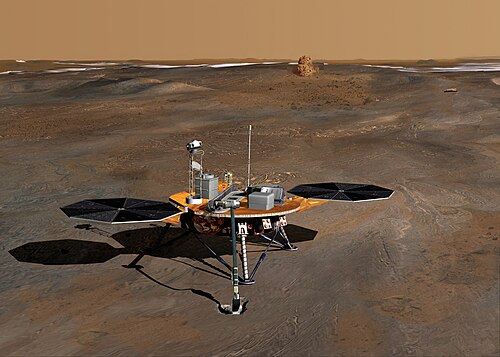
Caitlin Griffith leads Cassini VIMS atmospheric research on Titan's hydrocarbon lakes, and LPL has contributed instruments and science team leadership to missions including Voyager, Galileo, Mars Observer, Mars Polar Lander, Deep Impact, and New Horizons. Tucson's dark-sky environment, proximity to Kitt Peak National Observatory and the Multiple Mirror Telescope atop Mt. Hopkins, and the university's Steward Observatory give LPL faculty natural access to ground-based follow-up telescope time complementing their space mission leadership. LPL trains dozens of planetary science PhDs annually who populate NASA centers, other research universities, and the growing commercial space science sector.
Team
- Gerard Kuiper Founder · source
Signals
- Verification
- Verified 2026-09-05
Categories & Capabilities
Industry Categories
Location
Loading map...
Share
Suggest an Edit
Is this information outdated or incorrect? Help us improve this profile.
Submit CorrectionExplore More
Discover 1,000+ space companies worldwide
Similar Companies
Other companies in research
UC Berkeley Space Sciences Lab
The Space Sciences Lab (SSL) at UC Berkeley is a leading research institution dedicated to space exploration and the dev...
Arizona State SESE
Arizona State University’s School of Earth and Space Exploration (SESE), founded in 2006 and located in Tempe, Arizona, ...
Cornell Space Sciences
Cornell University's astronomy and space science programs in Ithaca, New York have shaped planetary science, SETI resear...
UCLA Institute for Planets and Exoplanets
The UCLA Institute for Planets and Exoplanets (iPlex) is a research-focused academic institute dedicated to the study of...
LASP - Laboratory for Atmospheric and Space Physics
The Laboratory for Atmospheric and Space Physics (LASP) at the University of Colorado Boulder is one of the world's lead...
Mars Institute
The Mars Institute is an international nonprofit research organization headquartered at NASA Ames Research Park in Mount...
Also in United States
Other space companies based in United States
Frequently asked about University of Arizona LPL
Quick answers to the questions readers most often search for.
- When was University of Arizona LPL founded?
- University of Arizona LPL was founded in 1960 in United States.
- Where is University of Arizona LPL headquartered?
- University of Arizona LPL is headquartered in Tucson, United States.
- What does University of Arizona LPL do?
- The Lunar and Planetary Laboratory (LPL) at the University of Arizona in Tucson is one of the world's leading planetary science research institutions, founded in 1960 by Gerard Kuiper — discoverer of the Kuiper Belt — with a mission to understand the formation and evolution of planetary systems. LPL's faculty lead some…
- Is University of Arizona LPL a public or private company?
- University of Arizona LPL is a private academic and is not listed on any stock exchange.
- What sector does University of Arizona LPL operate in?
- University of Arizona LPL works in research and Planetary science.
Data Accuracy Notice: Information about University of Arizona LPL is compiled from publicly available sources including company websites, press releases, regulatory filings, and industry reports. Data is reviewed periodically but may not reflect the most recent developments.