
NASA Technology

Blue Origin
Blue Origin is a private aerospace manufacturer and spaceflight services company founded by Amazon founder Jeff Bezos in 2000.
Kent, United States Est. 2000 Commercial
- Founded
- 2000
- Headquarters
- Kent, United States
- Ownership
- Private
- Employees
- 12,600as of 2025
Quick Facts
Country
United States
Founded
2000
Type
commercial
Status
operational
About Blue Origin
Updated 2026-09-12
Blue Origin is a private aerospace manufacturer and spaceflight services company founded by Amazon founder Jeff Bezos in 2000. Headquartered in Kent, Washington, the company develops reusable launch vehicles and space technologies with a long-term vision of enabling millions of people to live and work in space. The company operates under the motto "Gradatim Ferociter" (Step by Step, Ferociously).
Blue Origin employs over 10,000 people across facilities in Washington, Texas, Florida, and Alabama. The company operates with significant financial backing from Jeff Bezos, who has invested billions of his personal fortune into the venture. Under CEO Dave Limp (appointed 2023), Blue Origin is transitioning from development to operational launch services.
History and Milestones
Jeff Bezos founded Blue Origin in September 2000, initially operating in secrecy while developing vertical takeoff and landing technology. The company's first vehicle, New Shepard, made its debut flight in 2015 and achieved its first successful landing, demonstrating reusable rocket technology. By January 2026 New Shepard had flown 38 times and carried 98 people above the Kármán line.
In July 2021, Blue Origin made history when Jeff Bezos, his brother Mark, aviation pioneer Wally Funk, and Oliver Daemen flew on New Shepard's first crewed flight. This mission marked Blue Origin's entry into commercial human spaceflight. The company has since flown multiple crewed suborbital missions carrying paying customers and researchers.
NASA awarded the first Artemis Human Landing System contract to SpaceX in 2021; Blue Origin protested, then won a separate $3.4 billion Artemis V landing contract in 2023. The company manufactures BE-4 engines in Huntsville, Alabama, and flies New Glenn from Launch Complex 36 at Cape Canaveral.
Products and Services
New Shepard is Blue Origin's fully reusable suborbital vehicle for tourism and research, carrying up to six people above the Kármán line. On 30 January 2026 the company paused New Shepard flights for at least two years to shift people and resources onto Blue Moon and New Glenn.
New Glenn is Blue Origin's heavy-lift orbital launch vehicle that achieved its orbital debut on 16 January 2025, successfully delivering payloads to orbit on its inaugural flight. The two-stage rocket features a reusable first stage powered by seven BE-4 engines, with a first-stage booster recovery profile targeting ship landings similar to SpaceX's approach. New Glenn targets commercial, civil, and national security launch contracts and is now an operational competitor in the medium-to-heavy lift market.
Blue Origin manufactures rocket engines for both internal use and external customers. The BE-4 engine, burning liquid oxygen and methane, powers both New Glenn and United Launch Alliance's Vulcan Centaur rocket. The BE-3 engine powers New Shepard, while the BE-7 is designed for lunar landers.
Technology and Capabilities
Blue Origin's BE-4 engine represents a significant technological achievement as the most powerful American liquid oxygen/methane engine, producing 550,000 pounds of thrust. The engine's oxygen-rich staged combustion cycle provides high efficiency and performance. BE-4 development required over a decade and billions of dollars in investment.
The company has developed vertical landing capabilities for both New Shepard and the planned New Glenn first stage. This reusability approach mirrors SpaceX's Falcon 9 operations but uses different landing technologies, including thrust vector control and deployable landing systems.
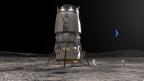
Blue Origin's lunar activities center on the Blue Moon lander program, selected by NASA for Artemis V and beyond. The company leads a National Team including Lockheed Martin, Draper, and Boeing to develop sustainable lunar surface access. Blue Origin is also developing technologies for in-space manufacturing and orbital infrastructure.
Business and Financial Overview
Blue Origin is privately held, with Jeff Bezos providing ongoing financial support reportedly totaling over $10 billion since the company's founding. The company does not disclose detailed financial information but generates revenue from New Shepard flights, engine sales to ULA, and government development contracts.
NASA has awarded Blue Origin significant contracts including the Human Landing System development agreement worth $3.4 billion and various technology development awards. The company also holds contracts with the Department of Defense and commercial customers for New Glenn launches.
Blue Origin competes for talent with SpaceX and other aerospace companies, offering competitive compensation in the Seattle and greater Washington D.C. areas. The company has expanded its manufacturing footprint with facilities in Huntsville, Alabama, and Cape Canaveral, Florida.
Recent Developments
New Glenn reached orbit on its maiden flight on 16 January 2025, making Blue Origin an operational orbital launch provider after more than two decades of development. The debut flight successfully delivered payloads to orbit, validating the BE-4 engine cluster, first-stage performance, and overall vehicle architecture. Booster recovery was also attempted on the maiden flight.
In 2024-2025, Blue Origin delivered multiple BE-4 engines to ULA for Vulcan Centaur operations and continued New Shepard crewed tourism flights. The company advanced Blue Moon lunar lander development for NASA's Artemis V mission and progressed on the Orbital Reef commercial space station in partnership with Sierra Space.
The company continues aggressive hiring and facility expansion, with engine production in Huntsville and launch operations at Cape Canaveral's LC-36 complex. The NSSL Phase 3 contract (National Security Space Launch) positions New Glenn for U.S. government payloads alongside SpaceX's Falcon 9 and Falcon Heavy.
Market Position
Blue Origin is positioned as SpaceX's primary competitor in the U.S. launch services market, now operational with New Glenn joining the orbital launch roster in January 2025. The company's patient development approach has resulted in longer timelines than SpaceX's rapid iteration model, but the BE-4 engine, New Glenn, and Blue Moon lander represent a credible full-stack space infrastructure play.
Key competitors include SpaceX in nearly all market segments, United Launch Alliance for government launches, and emerging companies like Rocket Lab and Relativity Space. In space tourism, Blue Origin competes with Virgin Galactic for high-net-worth customers seeking suborbital experiences.
Blue Origin's competitive advantages include significant financial backing from Jeff Bezos, the BE-4 engine's proven performance, and strategic contracts with NASA and national security customers. New Glenn's January 2025 debut, the November 2025 ESCAPADE mission with a successful booster landing, and a May 2026 static-fire accident at LC-36 now define the vehicle's operational record.
Products and product lines
| Product | Line | Note |
|---|---|---|
| New Glenn | Launch vehicle | Heavy-lift orbital rocket that debuted 16 January 2025 (NG-1), reached orbit but lost its booster; achieved its first successful booster landing on NG-2 (13 November 2025) and first booster reuse on NG-3 (19 April 2026). |
| BE-4 engine | Rocket propulsion | Methane/liquid-oxygen engine powering New Glenn's first stage and United Launch Alliance's Vulcan Centaur; a BE-4 main oxygen valve failure caused the 28 May 2026 static-fire explosion that destroyed a New Glenn booster and damaged Launch Complex 36. |
| Blue Moon MK1 (Endurance) | Lunar lander | Robotic lander completing final navigation flight tests in the Mojave Desert (October 2025) and thermal-vacuum environmental testing at NASA Johnson Space Center (announced 4 May 2026) ahead of a planned 2026 CLPS delivery of NASA science payloads to the lunar south pole. |
| New Shepard | Suborbital launch vehicle | Continues crewed and payload suborbital flights; unaffected by the New Glenn program's 2026 setbacks. |
| NSSL Phase 3 launch services | National security launch | Awarded roughly $2.4 billion and seven missions under the Space Force's NSSL Phase 3 Lane 2 contract (5 April 2025), plus a Lane 1 task order for a National Reconnaissance Office mission (28 May 2025) targeted for Q4 2027-Q1 2028. |
Timeline
- 2025 New Glenn's maiden flight (NG-1) launches 16 January, reaching orbit with the Blue Ring Pathfinder payload but losing the first-stage booster on landing. [source]
- 2025 Blue Origin lays off about 10% of its roughly 14,000-person workforce (about 1,400 employees) on 13 February as CEO Dave Limp shifts the company from R&D toward manufacturing and launch-cadence scaling. [source]
- 2025 The U.S. Space Force awards $13.7 billion in NSSL Phase 3 Lane 2 launch contracts on 5 April, with Blue Origin receiving seven missions alongside SpaceX and ULA. [source]
- 2025 Space Force awards Blue Origin an NSSL Phase 3 Lane 1 task order on 28 May for a National Reconnaissance Office launch, hours before a New Glenn booster explodes in a hot-fire test. [source]
- 2025 New Glenn's second flight (NG-2) launches 13 November carrying NASA's twin ESCAPADE Mars spacecraft and achieves the vehicle's first successful booster landing. [source]
- 2026 New Glenn's third flight (NG-3) launches 19 April on a reused NG-2 booster carrying AST SpaceMobile's BlueBird 7 satellite; the booster lands successfully but an upper-stage issue leaves the satellite in the wrong orbit, prompting an FAA grounding. [source]
- 2026 Blue Origin completes thermal-vacuum environmental testing of the Blue Moon MK1 (Endurance) lunar lander at NASA Johnson Space Center, announced 4 May, ahead of a planned CLPS lunar south-pole delivery. [source]
- 2026 A New Glenn booster and upper stage are destroyed on 28 May in a static-fire test at Cape Canaveral's Launch Complex 36 after a BE-4 main oxygen valve failure, badly damaging Blue Origin's only operational New Glenn launch site. [source]
- 2026 Blue Origin pauses New Shepard flights for at least two years (announced 30 January), after 38 flights and 98 humans flown, to concentrate resources on Blue Moon and New Glenn. [source]
Key People
Jeff Bezos (Founder), Dave Limp (CEO)
Team
- Jeff BezosFounder · source
Signals
- Launch vehicles
- New Glenn
- Verification
- Verified 2026-09-12
Categories & Capabilities
Industry Categories
Vehicle Types
Suborbital Rocket Heavy Lift Reusable
Propulsion Systems
Liquid Methane Liquid Hydrogen
Latest from Agency Feeds
2 mentions across NASA, ESA, JAXA, ISRO, JPL & SpaceX
Auto-matched by name from primary national-agency RSS feeds. See full live feed →
Location
Loading map...
Click and drag to explore • Double-click to zoom
Share
Suggest an Edit
Is this information outdated or incorrect? Help us improve this profile.
Submit CorrectionExplore More
Discover 1,000+ space companies worldwide
Similar Companies
Other companies in launch-services
Pythom Space
Bishop, United States
Pythom Space is a Swedish-American aerospace company based in Bishop, California, founded by explorers and engineers Tin...
SpaceX
Starbase, United States
Space Exploration Technologies Corp. (SpaceX) is the world's leading aerospace company, listed on Nasdaq (SPCX) since Ju...
Astra
Alameda, United States
Astra Space is an American launch and spacecraft-propulsion company that developed small orbital rockets with a goal of ...
Sierra Space
Louisville, United States
Sierra Space is a commercial space company developing the Dream Chaser spaceplane, Orbital Reef commercial space station...
EXOS Aerospace
Caddo Mills, United States
Exos Aerospace, founded in 2014 and based in Caddo Mills, Texas, is a launch vehicle company focused on developing reusa...
Inversion Space
Torrance, United States
Inversion Space is a California-based company developing reusable reentry capsules for rapid cargo return from orbit. Fo...
Also in United States
Other space companies based in United States
Related Articles
Industry analysis mentioning Blue Origin
The Complete Guide to Space Launch Providers in 2025
Read article →
Launch Service Providers: A Comprehensive Comparison
Read article →
Space Propulsion Technologies: From Chemical Rockets to Electric Thrusters
Read article →
Blue Origin: New Glenn, New Shepard and the Road Ahead
Read article →
Commercial Space Stations: The Next Frontier After ISS
Read article →
Global Space Industry by Country: Market Analysis 2025
Read article →
Frequently asked about Blue Origin
Quick answers to the questions readers most often search for.
- When was Blue Origin founded?
- Blue Origin was founded in 2000 in United States.
- Where is Blue Origin headquartered?
- Blue Origin is headquartered in Kent, United States.
- What does Blue Origin do?
- Blue Origin is a private aerospace manufacturer and spaceflight services company founded by Amazon founder Jeff Bezos in 2000. Headquartered in Kent, Washington, the company develops reusable launch vehicles and space technologies with a long-term vision of enabling millions of people to live and work in space. The com…
- Is Blue Origin a public or private company?
- Blue Origin is a privately held company and is not listed on any stock exchange.
- What sector does Blue Origin operate in?
- Blue Origin works in launch services, Human spaceflight and Propulsion.
Sources
The structured fields on this page (founding year, location, sector, status, listing) and the profile text are drawn from the sources below. How profiles are drafted and checked is described in our methodology.
- Official website (blueorigin.com)
- Company LinkedIn page
- Wikidata / Wikipedia · retrieved 2026-09-04
- Wikipedia: List of New Glenn launches · retrieved 2026-09-06
- Wikipedia: 2026 New Glenn rocket explosion · retrieved 2026-09-06
- Via Satellite: Blue Origin Lays Off 10% of its Workforce (13 Feb 2025) · retrieved 2026-09-06
- Spaceflight Now: U.S. Space Force awards $13.7 billion in NSSL Phase 3 contracts (5 Apr 2025) · retrieved 2026-09-06
- SpaceNews: Blue Origin gets national security launch task order hours before New Glenn explosion · retrieved 2026-09-06
- Spaceflight Now: Blue Origin launches third New Glenn rocket, but payload ends up in wrong orbit · retrieved 2026-09-06
- NASA: Blue Origin Moon Lander Completes Testing at NASA Vacuum Chamber (4 May 2026) · retrieved 2026-09-06
- Blue Origin: New Shepard to pause flights (30 Jan 2026) · retrieved 2026-09-12
Data Accuracy Notice: Information about Blue Origin is compiled from publicly available sources including company websites, press releases, regulatory filings, and industry reports. Data is reviewed periodically but may not reflect the most recent developments.
Matched to Wikidata · data pass September 12, 2026
Editorial owner: Dr. Donovan, Editor-in-Chief Company representatives may submit corrections • This page does not constitute an endorsement or affiliation • Learn about our data methodology