
United States operational
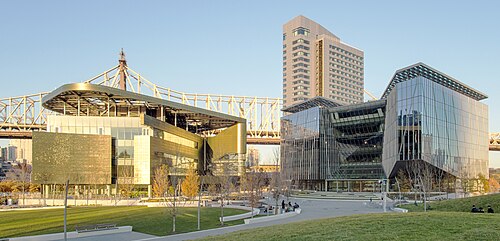
Cornell Space Sciences
Cornell University's astronomy and space science programs in Ithaca, New York have shaped planetary science, SETI research, and spacecraft instrumentation for seven decades.
- Founded
- 1865
- Headquarters
- Ithaca, United States
- Ownership
- Academic
Quick Facts
About Cornell Space Sciences
Cornell University's astronomy and space science programs in Ithaca, New York have shaped planetary science, SETI research, and spacecraft instrumentation for seven decades. Cornell's Department of Astronomy operates alongside the Carl Sagan Institute — named for Carl Sagan who was a Cornell professor for 30 years and whose Cosmos television series introduced millions to space exploration — focusing on exoplanet habitability, biosignature detection, and the conditions for life beyond Earth.
Cornell's most celebrated space science legacy is the Mars Exploration Rover program: Steve Squyres led the science team for Spirit and Opportunity (2004-2018), rovers that collectively drove over 50 km across Martian terrain and fundamentally transformed understanding of Mars's wet geological history. Cornell also led the science team for the Cassini RADAR instrument mapping Titan's methane seas and lakes, and contributed spectral analysis tools to the Mars Science Laboratory Curiosity rover.
The Arecibo Observatory in Puerto Rico — destroyed by cable failure in 2020 — was managed by Cornell/SRI under NSF contract for decades and was the world's most powerful radio telescope until superseded by China's FAST, used for SETI surveys, near-Earth asteroid radar ranging, and pulsar timing. Current Cornell space research priorities include direct imaging spectrographs for the proposed Habitable Worlds Observatory (HWO), machine learning methods for exoplanet atmosphere retrieval, and the ExoPAG (Exoplanet Exploration Program Analysis Group) advisory processes.
Cornell's proximity to top physics and engineering programs creates strong cross-disciplinary spacecraft instrumentation research, and the Cornell Center for Astrophysics and Planetary Science (CCAPS) coordinates across departments.
Signals
- Verification
- Awaiting review
Categories & Capabilities
Industry Categories
Location
Loading map...
Share
Suggest an Edit
Is this information outdated or incorrect? Help us improve this profile.
Submit CorrectionExplore More
Discover 1,000+ space companies worldwide
Similar Companies
Other companies in research
Arizona State SESE
Arizona State University’s School of Earth and Space Exploration (SESE), founded in 2006 and located in Tempe, Arizona, ...
UC Berkeley Space Sciences Lab
The Space Sciences Lab (SSL) at UC Berkeley is a leading research institution dedicated to space exploration and the dev...
UCLA Institute for Planets and Exoplanets
The UCLA Institute for Planets and Exoplanets (iPlex) is a research-focused academic institute dedicated to the study of...
University of Arizona LPL
The Lunar and Planetary Laboratory (LPL) at the University of Arizona in Tucson is one of the world's leading planetary ...
LASP - Laboratory for Atmospheric and Space Physics
The Laboratory for Atmospheric and Space Physics (LASP) at the University of Colorado Boulder is one of the world's lead...
Mars Institute
The Mars Institute is an international nonprofit research organization headquartered at NASA Ames Research Park in Mount...
Also in United States
Other space companies based in United States
Frequently asked about Cornell Space Sciences
Quick answers to the questions readers most often search for.
- When was Cornell Space Sciences founded?
- Cornell Space Sciences was founded in 1865 in United States.
- Where is Cornell Space Sciences headquartered?
- Cornell Space Sciences is headquartered in Ithaca, United States.
- What does Cornell Space Sciences do?
- Cornell University's astronomy and space science programs in Ithaca, New York have shaped planetary science, SETI research, and spacecraft instrumentation for seven decades. Cornell's Department of Astronomy operates alongside the Carl Sagan Institute — named for Carl Sagan who was a Cornell professor for 30 years and …
- Is Cornell Space Sciences a public or private company?
- Cornell Space Sciences is a private academic and is not listed on any stock exchange.
- What sector does Cornell Space Sciences operate in?
- Cornell Space Sciences works in research and Planetary science.
Data Accuracy Notice: Information about Cornell Space Sciences is compiled from publicly available sources including company websites, press releases, regulatory filings, and industry reports. Data is reviewed periodically but may not reflect the most recent developments.