
NASA JPL

SpaceX
SPCXSpace Exploration Technologies Corp.
Starbase, United States Est. 2002 Commercial
- Founded
- 2002
- Headquarters
- Starbase, United States
- Stage
- Public
- Ownership
- Listed
- Market cap
- $1.99T+3.5% 30d
- Employees
- 22,000as of 2026
- Last round
- IPO · $75B2026-06
- Investors
- 3
Quick Facts
Country
United States
Founded
2002
Type
commercial
Status
public
About SpaceX
Updated 2026-09-12
Space Exploration Technologies Corp. (SpaceX) is the world's leading aerospace company, listed on Nasdaq (SPCX) since June 2026, founded by Elon Musk in 2002 with the mission of reducing space transportation costs and enabling the colonization of Mars. Headquartered at Starbase, Texas, SpaceX designs, manufactures, and launches advanced rockets and spacecraft, having revolutionized the aerospace industry with its development of reusable launch vehicle technology.
The company operates as a vertically integrated manufacturer, producing the majority of its rocket components in-house, including engines, avionics, and structures. SpaceX employs about 22,000 people (2026) across its facilities in California, Texas, Florida, and Washington state. Under the leadership of CEO Elon Musk and President Gwynne Shotwell, SpaceX has grown from a startup to the dominant force in commercial space launch.
History and Milestones
SpaceX was founded in June 2002 after Elon Musk sold PayPal and invested $100 million of his personal fortune into the venture. The company's first rocket, Falcon 1, achieved orbit on its fourth attempt in September 2008, becoming the first privately developed liquid-fueled rocket to reach orbit. This success secured a $1.6 billion NASA Commercial Resupply Services contract that proved crucial to the company's survival.
The Falcon 9 rocket first launched in June 2010 and has since become the world's most frequently flown orbital rocket. In December 2015, SpaceX achieved a historic milestone by successfully landing a Falcon 9 first stage booster, demonstrating practical rocket reusability for the first time. The Falcon Heavy, a heavy-lift vehicle combining three Falcon 9 cores, first flew in February 2018 carrying a Tesla Roadster to solar orbit.
SpaceX's Dragon spacecraft became the first commercial vehicle to deliver cargo to the International Space Station in 2012. In May 2020, Crew Dragon carried NASA astronauts to the ISS, ending U.S. reliance on Russian Soyuz vehicles for crew transport and marking the first crewed orbital spaceflight from American soil since the Space Shuttle's retirement.
Products and Services
SpaceX operates three primary launch vehicles. The Falcon 9 is a two-stage rocket designed for reliable and cost-effective transport of payloads to orbit, with first-stage reusability enabling rapid turnaround and reduced costs. Individual boosters have flown over 20 missions each. The Falcon Heavy combines three Falcon 9 first stages to provide heavy-lift capability for large satellites, deep space missions, and national security payloads.
Starship is SpaceX's next-generation fully reusable transportation system, designed to carry crew and cargo to Earth orbit, the Moon, Mars, and beyond. The system consists of the Super Heavy booster and Starship upper stage, both designed for rapid reusability. Once operational, Starship will be the most powerful launch vehicle ever built.
Dragon spacecraft provide cargo and crew transportation services to the International Space Station under NASA contracts. The company also operates Starlink, a satellite internet constellation providing global broadband connectivity from low Earth orbit to millions of customers worldwide, including in remote and underserved regions.
Technology and Capabilities
SpaceX's core technological innovation is practical rocket reusability. The company developed proprietary landing systems enabling first-stage boosters to return to landing zones or autonomous drone ships, reducing launch costs by recovering and refurbishing the most expensive rocket components. Grid fins, landing legs, and autonomous flight termination systems represent key enabling technologies.
The Merlin engine family, burning RP-1 kerosene and liquid oxygen, powers Falcon vehicles with industry-leading thrust-to-weight ratios. SpaceX's Raptor engine, using liquid methane and oxygen, powers Starship and represents a generational advance in rocket propulsion with full-flow staged combustion enabling unprecedented efficiency and reusability.
SpaceX manufactures most components in-house, including avionics, flight computers, and reaction control systems. This vertical integration provides cost advantages and rapid iteration capabilities. The company's Dragon spacecraft features proprietary life support systems, SuperDraco abort engines, and a reusable pressure vessel designed for multiple flights.
Business and Financial Overview
SpaceX listed on Nasdaq and Nasdaq Texas in June 2026 under the ticker SPCX. Elon Musk remains the largest shareholder through a dual-class structure. The IPO priced at $135 a share and raised about $75 billion at a $1.77 trillion valuation, after a December 2025 insider share sale had valued the company at about $800 billion. Earlier private rounds had raised over $10 billion; investors included Founders Fund, Google, Fidelity, and various sovereign wealth funds.
Revenue sources include commercial satellite launches, NASA crew and cargo contracts, national security missions for the U.S. Space Force and NRO, and Starlink consumer and enterprise subscriptions. The commercial launch business captured over 80% of global launch mass in 2024. Starlink has emerged as the company's primary revenue driver, generating several billion dollars annually with a path to profitability.
SpaceX holds multi-billion dollar NASA contracts including Commercial Crew Transportation, Commercial Resupply Services, and the Human Landing System contract for Artemis lunar missions. The company competes successfully against international launch providers and legacy aerospace contractors through pricing significantly below traditional government contractors.
Recent Developments
In 2024, SpaceX achieved a record-breaking 138 launches, including 134 Falcon family missions, shattering global launch records. The Falcon 9 maintained its streak of over 300 consecutive successful missions. Starlink expanded across consumer, business, maritime, aviation, and government segments and became the company's primary revenue driver. The Polaris Dawn mission achieved the first commercial spacewalk using SpaceX-designed EVA suits.
Starship development achieved major milestones with multiple integrated flight tests from Starbase in Boca Chica, Texas. Flight 5 demonstrated the first successful catch of the Super Heavy booster using the launch tower's mechanical arms, a crucial step toward rapid reusability. Subsequent flights achieved controlled ocean landings and extended flight durations.
Looking ahead, SpaceX is preparing for operational Starship flights, expanded Starlink service including direct-to-cell capability, continued ISS crew rotations, and initial work on the Artemis III lunar landing mission contracted by NASA.
Market Position
SpaceX dominates the global commercial launch market, conducting more launches than all other providers combined in 2024. The company's pricing and reliability have effectively ended competition from European, Russian, and most other international launch providers in commercial markets. Only China's state-backed launch programs maintain comparable launch cadence.
Key competitors include United Launch Alliance (Boeing-Lockheed joint venture), Rocket Lab in the small launch segment, Blue Origin with New Glenn now flying, and emerging players like Relativity Space. In the satellite internet market, Starlink competes with OneWeb, Amazon's planned Project Kuiper, and traditional satellite operators like Viasat and SES.
SpaceX's competitive advantages include demonstrated reusability, vertical integration, rapid innovation cycles, and pricing that undercuts competitors by significant margins. The company's track record of reliable launches and dominant market share position it to maintain leadership as space industry growth accelerates.
Products and product lines
| Product | Line | Note |
|---|---|---|
| Falcon 9 | Launch vehicle | Reusable two-stage rocket and the world's most frequently flown orbital vehicle, launching Starlink, NASA, commercial and national-security payloads. |
| Falcon Heavy | Launch vehicle | Heavy-lift vehicle combining three Falcon 9 first stages for large satellites and deep-space missions. |
| Starship / Super Heavy | Launch vehicle (in development) | Fully reusable next-generation launch system; SpaceX began flying third-generation "V3"/Block 3 test vehicles in May 2026 after twelve prior flight tests of earlier versions. |
| Raptor engine | Rocket propulsion | Methane/liquid-oxygen engine powering Starship; a redesigned Raptor 3 debuted on the V3/Block 3 vehicle in May 2026. |
| Dragon (Cargo Dragon / Crew Dragon) | Spacecraft | Transports cargo and crew to the ISS; a Crew Dragon (Resilience) flew the first crewed polar-orbit mission, Fram2, in March-April 2025. |
| Starlink | Satellite internet constellation | Passed roughly 12 million subscribers across 164 countries by mid-2026 and generated about $11.4 billion in 2025 revenue, now SpaceX's largest revenue source. |
Timeline
- 2024 Starship Flight 5 (13 October) achieves the first catch of a returning Super Heavy booster by the launch tower's "chopstick" arms, a milestone toward rapid reusability. [source]
- 2025 SpaceX launches Fram2 (31 March-4 April), the first crewed mission to fly a true polar orbit, carrying four private astronauts aboard Crew Dragon Resilience. [source]
- 2025 The U.S. Space Force awards $13.7 billion in NSSL Phase 3 Lane 2 launch contracts on 5 April; SpaceX is the largest recipient, anticipated to receive about 60% (28) of the roughly 54 missions. [source]
- 2025 SpaceX conducts an insider share sale at $421/share on 13 December, valuing the company at about $800 billion, with CFO Bret Johnsen's shareholder memo describing preparation for a possible 2026 IPO. [source]
- 2026 Starship Flight 12 (22 May) is the first flight of Block 3 ("V3") vehicles from Starbase's new second pad; the Super Heavy booster crash-lands after an abnormal descent while the ship completes its mission and splashes down as planned. [source]
- 2026 SpaceX completes its IPO on 12 June, listing on Nasdaq under ticker SPCX at $135/share (having filed its S-1 on 20 May) for a $1.77 trillion valuation and about $75 billion raised — the largest IPO in history. [source]
- 2026 Starship Flight 13 (25 July) deploys 20 third-generation Starlink satellites and the ship survives splashdown intact for the first time, though the Super Heavy booster suffers engine failures on descent and a hard splashdown. [source]
Key People
Elon Musk (CEO, Chief Engineer), Gwynne Shotwell (President, COO)
Funding history
4 events · $10.6B raised| Date | Round | Amount | Investors | Source |
|---|---|---|---|---|
| 2026-06-12 | IPO | $75B | —Initial public offering on Nasdaq (SPCX) at $135 a share, 12 June 2026; about $75 billion raised at a $1.77 trillion target valuation. | en.wikipedia.org |
| 2026-04-01 | IPO filing | $75B (target) | —Confidential SEC S-1 filing for June 2026 Nasdaq IPO targeting $1.75T valuation | techfundingnews.com |
| 2025-12-13 | Secondary | Undisclosed | —Insider share sale at $421/share establishing $800B valuation | fortune.com |
| 2024-12-01 | Series I | $1.25B | Andreessen HorowitzFidelityGigafundSeries I funding at $210B valuation | cnbc.com |
Investors
From the sourced rounds above. Investors with two or more deals in the directory link to a portfolio page.
Team
Signals
- Market cap, 90 days
- -6.1%
- Launch vehicles
- Falcon 9, Falcon Heavy, Starship
- Verification
- Verified 2026-09-12
Categories & Capabilities
Industry Categories
Vehicle Types
Heavy Lift Super Heavy Reusable
Propulsion Systems
Liquid Methane Kerosene Rp1
Latest from Agency Feeds
5 mentions across NASA, ESA, JAXA, ISRO, JPL & SpaceX
NASA News
NASA's SpaceX Crew-12 to Discuss Station Mission, Upcoming Return
NASA Image of the Day
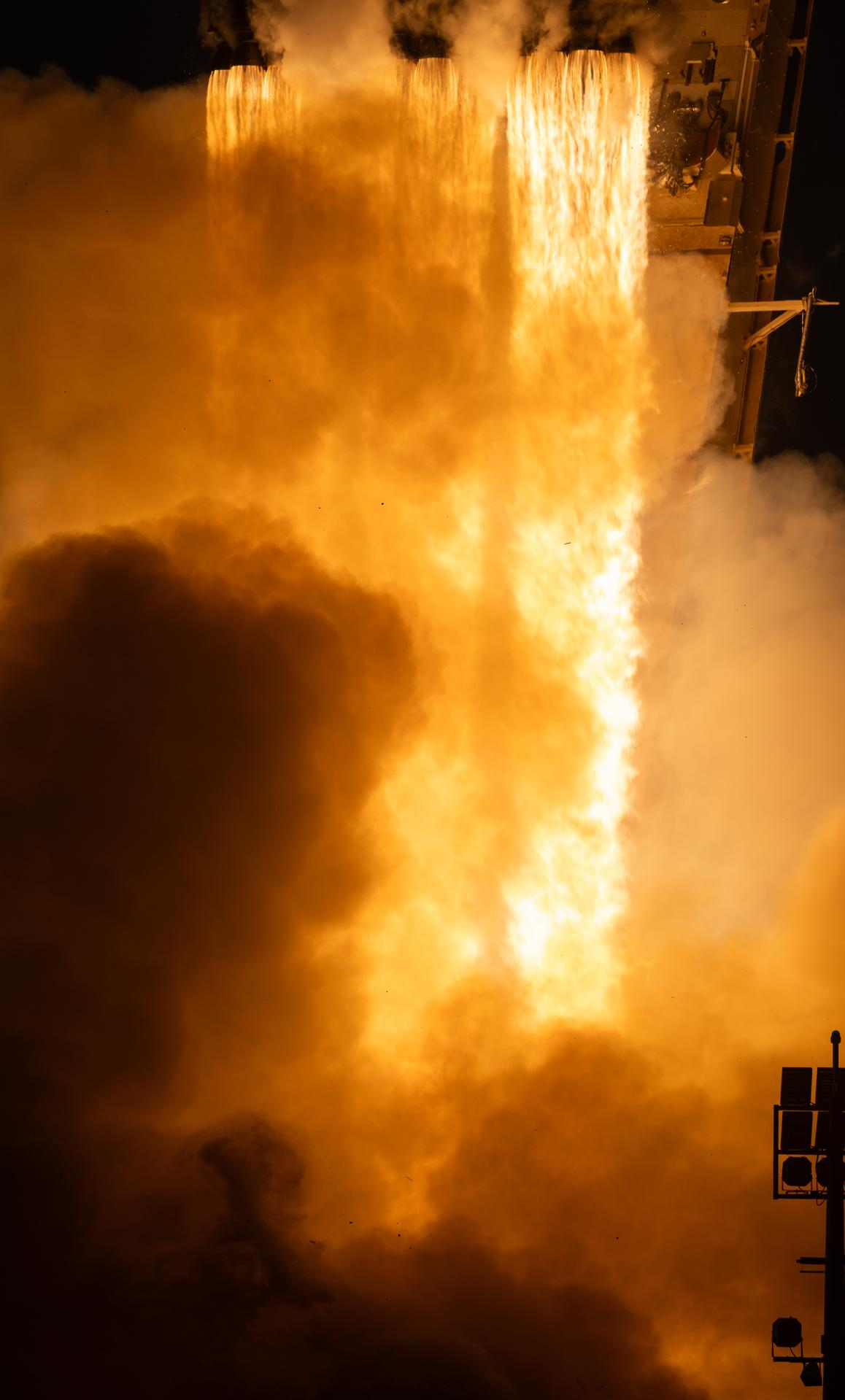
Igniting Roman's Journey
NASA Image of the Day
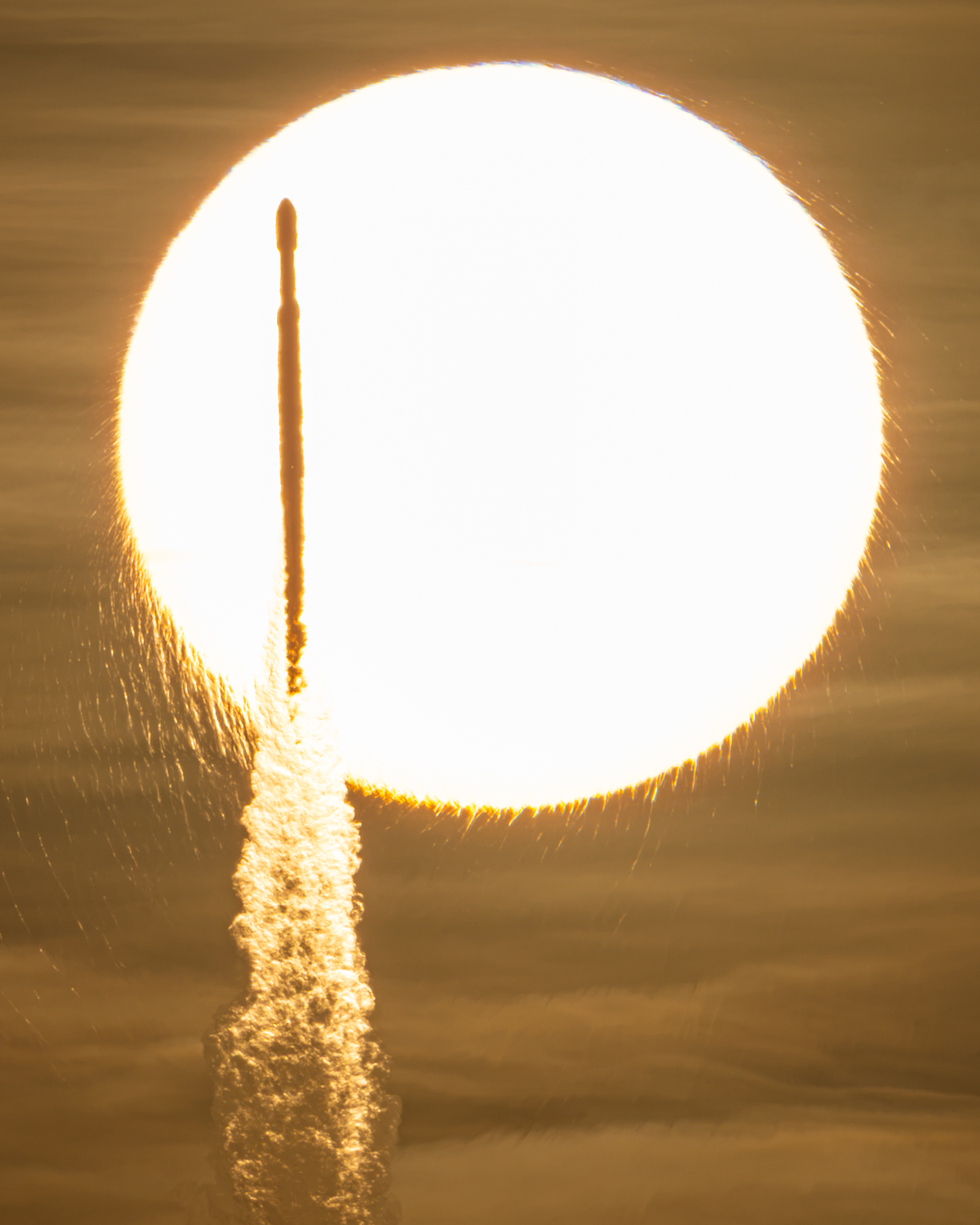
NASA's Nancy Grace Roman Space Telescope Launches
ESA Science
Roman lifts off on a mission to survey the infrared sky
Auto-matched by name from primary national-agency RSS feeds. See full live feed →
Stock Performance
SPCX · Daily close data
Funding
Total Raised
$10.6B
Market Cap
$1.99T
Location
Loading map...
Click and drag to explore • Double-click to zoom
Share
Suggest an Edit
Is this information outdated or incorrect? Help us improve this profile.
Submit CorrectionExplore More
Discover 1,000+ space companies worldwide
Similar Companies
Other companies in launch-services
Rocket Lab
Long Beach, United States
Rocket Lab is a leading aerospace company providing end-to-end space solutions including launch services, spacecraft man...
Sierra Space
Louisville, United States
Sierra Space is a commercial space company developing the Dream Chaser spaceplane, Orbital Reef commercial space station...
Mitsubishi Heavy Industries
Tokyo, Japan
Mitsubishi Heavy Industries (MHI), founded in 1884 and headquartered in Tokyo, Japan, is one of the world's largest indu...
Firefly Aerospace
Cedar Park, United States
Firefly Aerospace is an American launch and space systems company headquartered in Cedar Park, Texas, developing the Alp...
NASASpaceFlight
Orlando, United States
NASASpaceFlight, founded in 2005 and based in Orlando, Florida, is a media organization specializing in coverage of laun...
Northrop Grumman Space
Dulles, United States
Northrop Grumman Space Systems is a leading provider of comprehensive space solutions for government, civil, and commerc...
Also in United States
Other space companies based in United States
Related Articles
Industry analysis mentioning SpaceX
SpaceX: Comprehensive Company Analysis
Read article →
The Complete Guide to Space Launch Providers in 2025
Read article →
Launch Service Providers: A Comprehensive Comparison
Read article →
Satellite Internet Constellations: Starlink, OneWeb, Kuiper, and Beyond
Read article →
Space Propulsion Technologies: From Chemical Rockets to Electric Thrusters
Read article →
Amazon Project Kuiper: the Starlink Competitor
Read article →
Frequently asked about SpaceX
Quick answers to the questions readers most often search for.
- When was SpaceX founded?
- SpaceX was founded in 2002 in United States.
- Where is SpaceX headquartered?
- SpaceX is headquartered in Starbase, United States.
- What does SpaceX do?
- Space Exploration Technologies Corp. (SpaceX) is the world's leading aerospace company, listed on Nasdaq (SPCX) since June 2026, founded by Elon Musk in 2002 with the mission of reducing space transportation costs and enabling the colonization of Mars. Headquartered at Starbase, Texas, SpaceX designs, manufactures, and…
- Is SpaceX publicly traded?
- Yes. SpaceX trades under the ticker SPCX on NasdaqGS.
- What sector does SpaceX operate in?
- SpaceX works in launch services, Satellite manufacturing and Human spaceflight, plus 4 other space-industry sectors.
Sources
The structured fields on this page (founding year, location, sector, status, listing) and the profile text are drawn from the sources below. How profiles are drafted and checked is described in our methodology.
- Official website (spacex.com)
- Market data via Yahoo Finance (SPCX) · retrieved 2026-09-14
- Company LinkedIn page
- Wikidata / Wikipedia · retrieved 2026-09-04
- Merged duplicate entry spacex-starfactory · retrieved 2026-09-05
- Wikipedia: Starship flight test 5 · retrieved 2026-09-06
- Scientific American: SpaceX's Fram2 Mission Sends Four Private Astronauts into Polar Orbit · retrieved 2026-09-06
- Spaceflight Now: U.S. Space Force awards $13.7 billion in NSSL Phase 3 contracts (5 Apr 2025) · retrieved 2026-09-06
- Fortune: SpaceX's $800B insider share sale and 2026 IPO plan (13 Dec 2025) · retrieved 2026-09-06
- Wikipedia: Starship flight test 12 · retrieved 2026-09-06
- Wikipedia: Initial public offering of SpaceX · retrieved 2026-09-06
- Spaceflight Now: Super Heavy-Starship rocket chalks up mostly successful test flight (25 Jul 2026) · retrieved 2026-09-06
- Funding: Confidential SEC S-1 filing for June 2026 Nasdaq IPO targeting $1.75T valuation (2026-04-01) · retrieved 2026-09-04
- Funding: Series I funding at $210B valuation (2024-12-01) · retrieved 2026-09-04
Data Accuracy Notice: Information about SpaceX is compiled from publicly available sources including company websites, press releases, regulatory filings, and industry reports. Data is reviewed periodically but may not reflect the most recent developments.
Matched to SEC EDGAR, LEI register, OpenCorporates, Wikidata · data pass September 12, 2026
Editorial owner: Dr. Donovan, Editor-in-Chief Company representatives may submit corrections • This page does not constitute an endorsement or affiliation • Learn about our data methodology