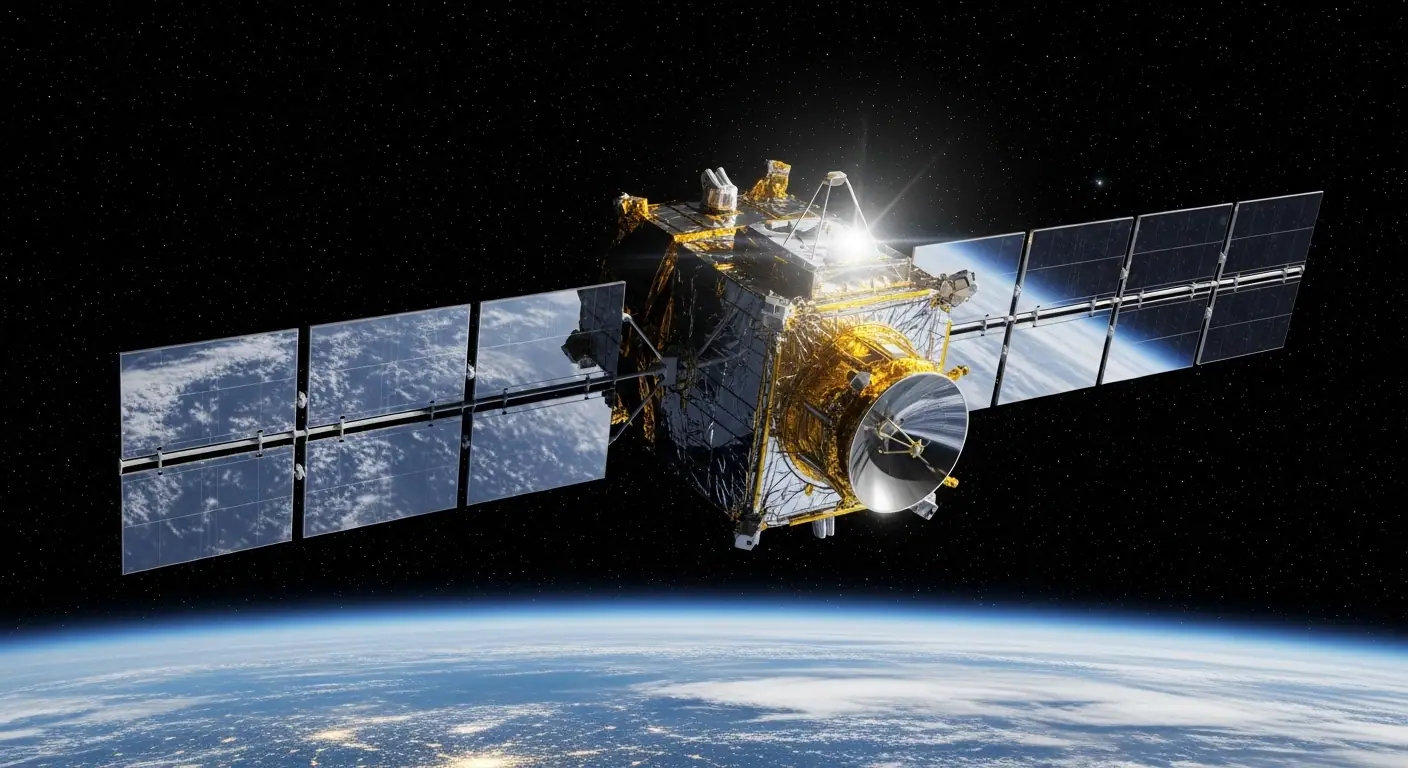
Maxar Technologies vs Lockheed Martin Space
Geospatial intelligence specialist vs the diversified prime — overlap on satellite buses, divergence on imagery.
Side by side
| Attribute | Maxar Technologies | Lockheed Martin Space |
|---|---|---|
| Founded | 2017 | 1995 |
| Headquarters | Westminster, United States | Littleton, United States |
| Entity type | commercial | commercial |
| Operational status | operational | public |
| Stock ticker | — | LMT |
| Sectors | satellite-manufacturing, earth-observation, analytics | satellite-manufacturing, defense, human-spaceflight |
| Significant people | Dan Jablonsky (CEO) | — |
What each one does
Maxar Technologies
Maxar Technologies is a space technology company that specializes in Earth observation satellites, geospatial analytics, and satellite manufacturing. Headquartered in Westminster, Colorado, Maxar operates a constellation of high-resolution imaging satellites and provides geospatial intelligence to government and commercial customers worldwide. Maxar was taken private in 2023 through acquisition by Advent International for approximately $6.4 billion after years as a publicly traded company. The company employs approximately 4,500 people across facilities in Colorado, California, and internationally. Maxar combines satellite manufacturing heritage with advanced Earth observation capabilities. ## History and Milestones Maxar's heritage traces to multiple pioneering space companies. DigitalGlobe, founded in 1992, launched the first commercial high-resolution imaging satellite (IKONOS) in 1999. MacDonald, Dettwiler and Associates (MDA) became a leader in space robotics and satellite systems. These companies merged to form Maxar Technologies in 2017. DigitalGlobe's satellite constellation set industry standards for commercial Earth observation. WorldView-1 (2007), WorldView-2 (2009), and WorldView-3 (2014) provided increasingly capable imaging platforms. The company's geospatial analysis served both government intelligence and commercial applications. Maxar's robotics heritage includes developing the Canadarm for the Space Shuttle and Canadarm2 for the International Space Station. The company also builds satellite buses and components for communications and Earth observation satellites. ## Products and Services Maxar operates a constellation of high-resolution Earth observation satellites including WorldView-3 (capable of 31-centimeter resolution) and WorldView Legion (next-generation satellites launched 2024). These satellites provide the highest resolution commercially available imagery. The company's geospatial intelligence services provide analysis, mapping, and information products derived from satellite imagery. Government customers rely on Maxar for intelligence, mapping, and situational awareness applications. Maxar Space Infrastructure builds satellites and components including robotic systems, satellite buses, and payloads. The company manufactures geostationary communication satellites and provides in-orbit services and technologies. ## Technology and Capabilities Maxar operates some of the world's most advanced commercial imaging satellites. WorldView-3 provides 31-cm panchromatic and 1.24-m multispectral resolution with shortwave infrared bands enabling material identification. WorldView Legion satellites expand this capability with increased revisit frequency. The company's geospatial platform combines imagery, analytics, and artificial intelligence to extract actionable information. Products include 3D terrain models, feature extraction, and change detection services. Maxar's space robotics expertise includes robotic arms for space stations and satellite servicing technologies. The company develops in-space assembly and servicing capabilities for future space infrastructure. ## Business and Financial Overview As a private company since 2023, Maxar does not disclose detailed financial information. Prior to privatization, annual revenue exceeded $1.7 billion, with Earth Intelligence representing approximately 60% and Space Infrastructure 40%. Major customers include the U.S. National Reconnaissance Office (EnhancedView contract), National Geospatial-Intelligence Agency, and allied government agencies. Commercial customers span multiple industries requiring high-resolution geospatial data. Under Advent International ownership, Maxar focuses on operational execution and technology investment while operating outside public market pressures. The company continues serving existing contracts while pursuing new opportunities. ## Recent Developments In 2024, Maxar launched WorldView Legion satellites, significantly expanding high-resolution imaging capacity and revisit frequency. These next-generation satellites position the company to meet growing government and commercial demand. The company continued executing major government contracts while expanding commercial applications of its imagery and analytics. Maxar also advanced space infrastructure programs and robotics technology development. Under private ownership, Maxar has invested in technology modernization and operational efficiency. The company explores new capabilities in satellite servicing and in-space assembly. ## Market Position Maxar is the leading provider of high-resolution commercial satellite imagery, with its WorldView constellation providing capabilities unmatched by competitors. Government customers rely on Maxar for the most detailed commercially available satellite imagery. Key competitors include Planet Labs (medium resolution, daily coverage), BlackSky (high resolution, lower capacity), and emerging international providers. Maxar's resolution advantage is most significant for government intelligence and defense applications. Strategic priorities include WorldView Legion constellation deployment, maintaining government customer relationships, growing commercial applications, and advancing space robotics and servicing technologies.
Full Maxar Technologies profileLockheed Martin Space
Lockheed Martin Space is a business segment of Lockheed Martin Corporation, one of the world's largest defense and aerospace companies. The Space segment develops and manufactures satellites, spacecraft, launch vehicle components, and space exploration systems from its headquarters in Denver, Colorado. As a prime contractor for major NASA and Department of Defense programs, Lockheed Martin Space shapes the future of space exploration and national security. Lockheed Martin Space employs approximately 18,000 people and generates annual revenue exceeding $12 billion. The segment operates facilities across the United States, with major centers in Colorado, California, and Alabama. Under Executive Vice President Robert Lightfoot, Lockheed Martin Space delivers systems from Earth orbit to deep space exploration. ## History and Milestones Lockheed Martin formed in 1995 through the merger of Lockheed Corporation and Martin Marietta, combining extensive space heritage from both companies. Martin Marietta built the Viking Mars landers in the 1970s and Titan launch vehicles, while Lockheed developed military satellites and the Hubble Space Telescope. The company has built spacecraft for every planet in the solar system. Major NASA programs include the Mars Atmosphere and Volatile Evolution (MAVEN) orbiter, Mars Reconnaissance Orbiter, Juno at Jupiter, and the OSIRIS-REx asteroid sample return mission, which returned samples from asteroid Bennu in 2023. Lockheed Martin is the prime contractor for NASA's Orion spacecraft, the crew vehicle for the Artemis lunar program. Orion completed its first deep space mission during Artemis I in 2022, circling the Moon and returning safely to Earth. ## Products and Services Lockheed Martin develops the Orion crew capsule and European Service Module integration for NASA's Artemis program. The company also builds GPS III satellites providing enhanced navigation for military and civilian users, continuing decades of GPS satellite development. The company manufactures advanced military satellites including missile warning, communications, and reconnaissance systems for the U.S. Space Force. Programs include the Space-Based Infrared System (SBIRS), Advanced Extremely High Frequency (AEHF) satellites, and classified programs. Lockheed Martin produces the Solid Rocket Motor Upgrade (SRMU) and other components for various launch vehicles. The company's Fleet Ballistic Missile program provides strategic deterrence capabilities, while advanced technology development spans hypersonics, directed energy, and autonomous systems. ## Technology and Capabilities Lockheed Martin operates extensive spacecraft development and testing facilities. The Denver campus includes clean rooms for satellite assembly, thermal vacuum chambers, and acoustic test facilities. The company maintains specialized manufacturing for complex space systems. The company invests heavily in research and development, operating Skunk Works advanced development programs and Lockheed Martin Ventures for technology investments. Space technology focus areas include advanced propulsion, space domain awareness, and in-space logistics. Lockheed Martin leads the Orion industry team and participates in Human Landing System development through partnerships. The company also advances lunar surface systems, space habitat technologies, and orbital infrastructure concepts. ## Business and Financial Overview Lockheed Martin trades on NYSE under LMT with a market capitalization exceeding $100 billion. The Space segment generated approximately $12.3 billion in 2023 revenue, with substantial backlog from multi-year government contracts. Space represents the smallest of four business segments by revenue but maintains strategic importance. Major contracts include the Orion spacecraft production, GPS III satellites, missile warning systems, and various classified programs. The company competes for NASA exploration contracts, DOD space systems, and international satellite programs. Lockheed Martin invests in technology through internal R&D, venture investments, and university partnerships. The company has acquired space technology companies and formed strategic partnerships to expand capabilities. ## Recent Developments In 2024, Lockheed Martin continued Orion production for Artemis II and subsequent missions while advancing GPS IIIF satellite development. The company won awards for next-generation missile warning satellites and continued classified program execution. The company advanced lunar surface systems development and participated in commercial space station studies for the post-ISS era. Lockheed Martin also expanded international space business and technology partnerships. Development continued on advanced propulsion systems, space domain awareness capabilities, and autonomous spacecraft technologies. The company invested in manufacturing modernization and digital engineering transformation. ## Market Position Lockheed Martin ranks as the largest U.S. defense contractor and a top-tier space systems provider. The company competes primarily with Northrop Grumman, Boeing, and Raytheon for government space programs, with emerging competition from SpaceX in certain segments. Competitive advantages include extensive government customer relationships, prime contractor experience on major programs, and comprehensive systems integration capabilities. The company's Orion leadership positions it for lunar and deep space exploration. Strategic priorities include Artemis program execution, next-generation military satellites, space domain awareness, and international growth. Lockheed Martin invests in commercial space ventures while maintaining core government business.
Full Lockheed Martin Space profileMaxar Technologies vs Lockheed Martin Space — frequently asked
Quick answers to the questions most often searched.
- What's the difference between Maxar Technologies and Lockheed Martin Space?
- Geospatial intelligence specialist vs the diversified prime — overlap on satellite buses, divergence on imagery.
- When was Maxar Technologies founded compared to Lockheed Martin Space?
- Maxar Technologies was founded in 2017, and Lockheed Martin Space was founded in 1995.
- Where are Maxar Technologies and Lockheed Martin Space headquartered?
- Maxar Technologies is headquartered in Westminster; Lockheed Martin Space is headquartered in Littleton.