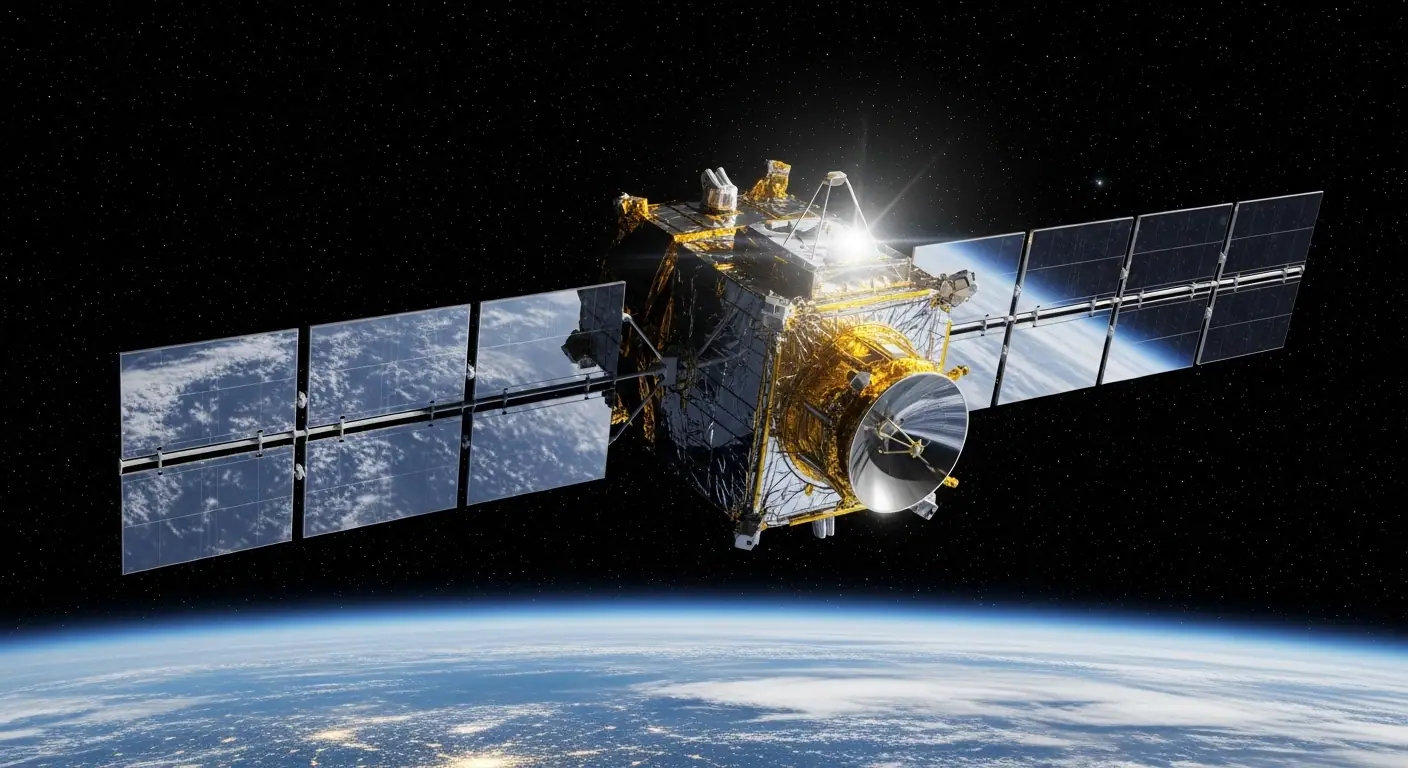
SpaceX vs Rocket Lab
The dominant launch provider vs the small-launch leader scaling into medium-lift with Neutron.
Side by side
| Attribute | SpaceX | Rocket Lab |
|---|---|---|
| Founded | 2002 | 2006 |
| Headquarters | Starbase, United States | Long Beach, United States |
| Entity type | commercial | commercial |
| Operational status | public | public |
| Stock ticker | SPCX | RKLB |
| Sectors | launch-services, satellite-manufacturing, human-spaceflight | launch-services, satellite-manufacturing, spacecraft |
| Vehicle type | heavy-lift, super-heavy, reusable | small-lift, medium-lift, reusable |
| Total raised | $10.6B | $780M |
| Significant people | Elon Musk (CEO, Chief Engineer), Gwynne Shotwell (President, COO) | Peter Beck (Founder, CEO) |
What each one does
SpaceX
Space Exploration Technologies Corp. (SpaceX) is the world's leading aerospace company, listed on Nasdaq (SPCX) since June 2026, founded by Elon Musk in 2002 with the mission of reducing space transportation costs and enabling the colonization of Mars. Headquartered at Starbase, Texas, SpaceX designs, manufactures, and launches advanced rockets and spacecraft, having revolutionized the aerospace industry with its development of reusable launch vehicle technology. The company operates as a vertically integrated manufacturer, producing the majority of its rocket components in-house, including engines, avionics, and structures. SpaceX employs about 22,000 people (2026) across its facilities in California, Texas, Florida, and Washington state. Under the leadership of CEO Elon Musk and President Gwynne Shotwell, SpaceX has grown from a startup to the dominant force in commercial space launch. ## History and Milestones SpaceX was founded in June 2002 after Elon Musk sold PayPal and invested $100 million of his personal fortune into the venture. The company's first rocket, Falcon 1, achieved orbit on its fourth attempt in September 2008, becoming the first privately developed liquid-fueled rocket to reach orbit. This success secured a $1.6 billion NASA Commercial Resupply Services contract that proved crucial to the company's survival. The Falcon 9 rocket first launched in June 2010 and has since become the world's most frequently flown orbital rocket. In December 2015, SpaceX achieved a historic milestone by successfully landing a Falcon 9 first stage booster, demonstrating practical rocket reusability for the first time. The Falcon Heavy, a heavy-lift vehicle combining three Falcon 9 cores, first flew in February 2018 carrying a Tesla Roadster to solar orbit. SpaceX's Dragon spacecraft became the first commercial vehicle to deliver cargo to the International Space Station in 2012. In May 2020, Crew Dragon carried NASA astronauts to the ISS, ending U.S. reliance on Russian Soyuz vehicles for crew transport and marking the first crewed orbital spaceflight from American soil since the Space Shuttle's retirement. ## Products and Services SpaceX operates three primary launch vehicles. The Falcon 9 is a two-stage rocket designed for reliable and cost-effective transport of payloads to orbit, with first-stage reusability enabling rapid turnaround and reduced costs. Individual boosters have flown over 20 missions each. The Falcon Heavy combines three Falcon 9 first stages to provide heavy-lift capability for large satellites, deep space missions, and national security payloads. Starship is SpaceX's next-generation fully reusable transportation system, designed to carry crew and cargo to Earth orbit, the Moon, Mars, and beyond. The system consists of the Super Heavy booster and Starship upper stage, both designed for rapid reusability. Once operational, Starship will be the most powerful launch vehicle ever built. Dragon spacecraft provide cargo and crew transportation services to the International Space Station under NASA contracts. The company also operates Starlink, a satellite internet constellation providing global broadband connectivity from low Earth orbit to millions of customers worldwide, including in remote and underserved regions. ## Technology and Capabilities SpaceX's core technological innovation is practical rocket reusability. The company developed proprietary landing systems enabling first-stage boosters to return to landing zones or autonomous drone ships, reducing launch costs by recovering and refurbishing the most expensive rocket components. Grid fins, landing legs, and autonomous flight termination systems represent key enabling technologies. The Merlin engine family, burning RP-1 kerosene and liquid oxygen, powers Falcon vehicles with industry-leading thrust-to-weight ratios. SpaceX's Raptor engine, using liquid methane and oxygen, powers Starship and represents a generational advance in rocket propulsion with full-flow staged combustion enabling unprecedented efficiency and reusability. SpaceX manufactures most components in-house, including avionics, flight computers, and reaction control systems. This vertical integration provides cost advantages and rapid iteration capabilities. The company's Dragon spacecraft features proprietary life support systems, SuperDraco abort engines, and a reusable pressure vessel designed for multiple flights. ## Business and Financial Overview SpaceX listed on Nasdaq and Nasdaq Texas in June 2026 under the ticker SPCX. Elon Musk remains the largest shareholder through a dual-class structure. The IPO priced at $135 a share and raised about $75 billion at a $1.77 trillion valuation, after a December 2025 insider share sale had valued the company at about $800 billion. Earlier private rounds had raised over $10 billion; investors included Founders Fund, Google, Fidelity, and various sovereign wealth funds. Revenue sources include commercial satellite launches, NASA crew and cargo contracts, national security missions for the U.S. Space Force and NRO, and Starlink consumer and enterprise subscriptions. The commercial launch business captured over 80% of global launch mass in 2024. Starlink has emerged as the company's primary revenue driver, generating several billion dollars annually with a path to profitability. SpaceX holds multi-billion dollar NASA contracts including Commercial Crew Transportation, Commercial Resupply Services, and the Human Landing System contract for Artemis lunar missions. The company competes successfully against international launch providers and legacy aerospace contractors through pricing significantly below traditional government contractors. ## Recent Developments In 2024, SpaceX achieved a record-breaking 138 launches, including 134 Falcon family missions, shattering global launch records. The Falcon 9 maintained its streak of over 300 consecutive successful missions. Starlink expanded across consumer, business, maritime, aviation, and government segments and became the company's primary revenue driver. The Polaris Dawn mission achieved the first commercial spacewalk using SpaceX-designed EVA suits. Starship development achieved major milestones with multiple integrated flight tests from Starbase in Boca Chica, Texas. Flight 5 demonstrated the first successful catch of the Super Heavy booster using the launch tower's mechanical arms, a crucial step toward rapid reusability. Subsequent flights achieved controlled ocean landings and extended flight durations. Looking ahead, SpaceX is preparing for operational Starship flights, expanded Starlink service including direct-to-cell capability, continued ISS crew rotations, and initial work on the Artemis III lunar landing mission contracted by NASA. ## Market Position SpaceX dominates the global commercial launch market, conducting more launches than all other providers combined in 2024. The company's pricing and reliability have effectively ended competition from European, Russian, and most other international launch providers in commercial markets. Only China's state-backed launch programs maintain comparable launch cadence. Key competitors include United Launch Alliance (Boeing-Lockheed joint venture), Rocket Lab in the small launch segment, Blue Origin with New Glenn now flying, and emerging players like Relativity Space. In the satellite internet market, Starlink competes with OneWeb, Amazon's planned Project Kuiper, and traditional satellite operators like Viasat and SES. SpaceX's competitive advantages include demonstrated reusability, vertical integration, rapid innovation cycles, and pricing that undercuts competitors by significant margins. The company's track record of reliable launches and dominant market share position it to maintain leadership as space industry growth accelerates.
Full SpaceX profileRocket Lab
Rocket Lab is a leading aerospace company providing end-to-end space solutions including launch services, spacecraft manufacturing, and on-orbit operations. Founded in 2006 by Peter Beck in New Zealand and now headquartered in Long Beach, California, the company has established itself as the second most frequently launched U.S. rocket operator behind SpaceX. The company trades on NASDAQ under the ticker RKLB following its 2021 SPAC merger. Rocket Lab employs approximately 2,000 people across facilities in California, Virginia, New Zealand, and Colorado. Under founder and CEO Peter Beck, the company has evolved from a small satellite launch provider into a comprehensive space systems company. ## History and Milestones Peter Beck founded Rocket Lab in New Zealand in 2006 with the goal of making space more accessible through small, affordable rockets. The company developed the Electron rocket, achieving first orbital flight in January 2018. Rocket Lab became the first private company to reach orbit from the Southern Hemisphere. The company pioneered electric-pump-fed rocket engines with the Rutherford engine, using 3D-printed components and electric motors instead of traditional turbopumps. This innovation reduced engine complexity and cost while maintaining performance. Electron has since completed over 50 launches with a strong success rate. In 2020, Rocket Lab successfully recovered an Electron first stage for the first time using parachute and helicopter capture, demonstrating a path to reusability. The company expanded into spacecraft manufacturing through the acquisition of Sinclair Interplanetary, Advanced Solutions Inc., and Planetary Systems Corporation, becoming a vertically integrated space company. ## Products and Services Electron is Rocket Lab's workhorse small satellite launcher, capable of delivering 300 kg to low Earth orbit from launch sites in New Zealand and Virginia. The rocket uses nine Rutherford engines on its first stage and a single vacuum-optimized Rutherford on the second stage. Electron launches are priced at approximately $7.5 million. Neutron is Rocket Lab's medium-lift reusable rocket currently in development, designed to carry 13,000 kg to low Earth orbit. The rocket features an innovative wide-body design with a reusable first stage landing on the launch pad rather than at sea. Neutron targets constellation deployment, cargo resupply, and potentially crewed missions. Rocket Lab's Space Systems division manufactures Photon spacecraft, providing satellite buses for customers who want turnkey solutions. Photon supports missions from low Earth orbit to interplanetary trajectories, including NASA's CAPSTONE lunar mission. The company also supplies spacecraft components to other manufacturers. ## Technology and Capabilities The Rutherford engine represents a significant advancement in small rocket propulsion, using electric pumps powered by lithium polymer batteries instead of gas generators or turbopumps. This approach simplifies the engine, enables high-performance 3D printing of major components, and provides precise throttle control for landing attempts. Rocket Lab operates the only private orbital launch complex in the Southern Hemisphere at Mahia Peninsula, New Zealand, providing unique launch geometry for polar and sun-synchronous orbits. The company's second launch complex at Wallops Island, Virginia, serves U.S. government and commercial customers requiring domestic launch. The Photon spacecraft bus provides integrated power, propulsion, attitude control, and communications for customer payloads, significantly reducing time to orbit for small satellite missions. Rocket Lab's spacecraft manufacturing capabilities include solar panels, reaction wheels, star trackers, and software, enabling rapid satellite production. ## Business and Financial Overview Rocket Lab trades publicly on NASDAQ (RKLB) with a market capitalization that has varied between $2-6 billion since its 2021 debut. The company generates revenue from launch services, spacecraft manufacturing, and component sales, with launch and space systems representing roughly equal revenue contributions. The company holds multiple NASA contracts including the Electron Launch Services Contract, spacecraft development for the Mars Sample Return mission, and various technology development awards. Rocket Lab also serves commercial constellation operators, defense customers, and civil space agencies worldwide. Rocket Lab has raised substantial capital through its public listing and subsequent offerings, investing in Neutron development, manufacturing expansion, and strategic acquisitions. The company targets profitability as launch cadence increases and Neutron becomes operational. ## Recent Developments In 2024, Rocket Lab achieved record launch cadence with multiple Electron missions per month, demonstrating manufacturing scalability. The company continued Neutron development, revealing detailed vehicle specifications and beginning construction of dedicated production facilities in Virginia. Rocket Lab successfully recovered additional Electron boosters via mid-air helicopter capture, advancing toward operational reuse. The company's Space Systems division delivered multiple spacecraft for commercial and government customers, growing its backlog of satellite manufacturing orders. The company expanded its component manufacturing business, supplying reaction wheels, solar panels, and other subsystems to external satellite manufacturers. Rocket Lab also advanced its deep space capabilities, supporting NASA's Mars exploration programs and commercial lunar mission customers. ## Market Position Rocket Lab leads the small satellite launch market, competing primarily with SpaceX rideshare services and emerging small launch providers. The company's reliable track record and dedicated launch service commands premium pricing compared to rideshare alternatives, serving customers requiring specific orbits or timing. Key competitors include SpaceX for all launch segments, Virgin Orbit (now defunct), Relativity Space, and international providers. In spacecraft manufacturing, Rocket Lab competes with Terran Orbital, AAC Clyde Space, and traditional satellite primes for small to medium satellite programs. Rocket Lab's competitive advantages include proven launch reliability, rapid cadence capability, vertical integration, and a clear path to medium-lift with Neutron. The company's expansion from launch to full space systems differentiates it from pure-play launch providers.
Full Rocket Lab profileSpaceX vs Rocket Lab — frequently asked
Quick answers to the questions most often searched.
- What's the difference between SpaceX and Rocket Lab?
- The dominant launch provider vs the small-launch leader scaling into medium-lift with Neutron.
- When was SpaceX founded compared to Rocket Lab?
- SpaceX was founded in 2002, and Rocket Lab was founded in 2006.
- Where are SpaceX and Rocket Lab headquartered?
- SpaceX is headquartered in Starbase; Rocket Lab is headquartered in Long Beach.