🇦🇹 Europe · Country hub

Space industry in Austria

12 organisations2 agenciessince 1958 tracked history

12 agencies, companies and research groups headquartered in Austria, from launch and satellites to data and defence.

Jump in

Each card opens a filtered view below

Quick facts

National space body
Austrian Space Agency · est. 1972
Tracked organisations
12
Industry active since
1958 · median founding 2017
Largest hub
Vienna (9)
Leading sector
Research (4)
Added in last 4 months
1
Space Agencies Verified

Austrian Space Agency

Vienna, Austria government

The Austrian Space Agency (ASA), established in 1972 and based in Vienna, Austria, serves as the national coordinating body for all Austrian space activities. Its core function is the management of Austria’s participation in European Space Agency (ESA) programs, ensuring effective contribution and benefit from collaborative European space endeavors. Beyond ESA coordination, ASA is responsible for fostering and supporting national space research initiatives and the development of the Austrian space industry. While specific technological details are not publicly available, ASA’s role necessitates expertise in program management, international collaboration, and the facilitation of advanced research and development across various space-related disciplines. The agency acts as a crucial link between Austrian research institutions, industrial partners, and ESA, enabling the translation of scientific advancements into practical space applications. Currently, information regarding specific missions or prominent customers is limited in publicly available sources. However, the agency’s long-standing involvement with ESA suggests participation in a wide range of European space programs, potentially encompassing Earth observation, telecommunications, navigation, and robotic exploration. The Austrian Space Agency’s unique value proposition lies in its role as a national gateway to European space programs, enabling Austrian entities to access funding, expertise, and collaborative opportunities within the broader European space ecosystem. It serves as a central point for promoting innovation and growth within the Austrian space sector, contributing to the nation’s technological advancement and economic competitiveness.


Vienna, Austria · Est. 1972
Propulsion Verified

Enpulsion

Wiener Neustadt, Austria commercial

Enpulsion is an Austrian electric propulsion company manufacturing FEEP (Field Emission Electric Propulsion) thrusters for small satellites. Founded in 2016 and headquartered in Wiener Neustadt, Austria, the company's IFM Nano and IFM Micro thrusters use indium propellant ionized by electric fields — achieving very high specific impulse (over 5,000 seconds) for precision orbital maneuvering, station-keeping, and deorbit operations. FEEP's key advantage over Hall thrusters and ion engines is its compact form factor and low power consumption, making it ideal for CubeSats and smallsats with limited power budgets. Enpulsion's thrusters have flown on hundreds of satellites for operators including Spire Global and commercial constellation providers across Europe and North America. The company is a spin-off from the Austrian Institute of Technology (AIT) and has received ESA BIC support.

Wiener Neustadt, Austria · Est. 2016
Lunar

Moon Village Association

Vienna, Austria nonprofit

The Moon Village Association (MVA), founded in 2017 and based in Vienna, Austria, is a non-profit organization dedicated to fostering international collaboration in sustainable lunar exploration and utilization. Operating as an industry association, the MVA promotes a vision of a permanently inhabited lunar settlement – inspired by the European Space Agency’s (ESA) Moon Village concept – through the facilitation of dialogue and cooperation between a diverse range of stakeholders. The MVA functions as a platform for both policy and technical discussions, evidenced by its organization into dedicated working groups focused on these key areas. While specific technologies are not detailed publicly, the organization’s focus suggests an interest in the development and implementation of technologies supporting long-duration lunar missions, resource utilization, and the establishment of a sustainable lunar presence. The association’s core activity centers around bringing together actors from space agencies, private companies, research institutions, and other relevant organizations. Currently, publicly available information does not detail specific missions undertaken or customers served by the MVA. Its value proposition lies in its role as a neutral, international forum for collaboration. By bridging gaps between different entities, the MVA aims to accelerate progress towards a coordinated and sustainable approach to lunar exploration and development, moving beyond purely national or commercial endeavors. As an industry association, the MVA occupies a unique position within the growing lunar ecosystem. It does not directly build or launch hardware, but rather focuses on enabling the conditions for successful, collaborative lunar ventures. The organization’s success will likely be measured by its ability to influence policy, facilitate partnerships, and contribute to a shared vision for the future of lunar activity.

Vienna, Austria · Est. 2017
Data Services In development

Another Earth

Vienna, Austria startup

Another Earth is a Vienna-based startup using generative AI and 3D modeling to create synthetic satellite imagery and geodatasets, aiming to bridge the gap between Earth observation data and practical AI adoption. Its platform generates realistic synthetic satellite data and simulations to train and improve machine-learning models for Earth observation, helping overcome the scarcity of labeled imagery and enabling analysis at scale, including in vulnerable and data-poor regions. The company targets geospatial analytics firms and organizations working on climate, environmental monitoring and risk applications. Founded by Maya Pindeus and Felix Geremus, Another Earth raised a seed round of around 3.5 million euros.

Vienna, Austria · Est. 2024
Propulsion In development

GATE Space

Vienna, Austria commercial

GATE Space (Graz Advanced Technology Enterprise), a Vienna-based Austrian startup founded in 2022, is developing modular chemical propulsion systems for small satellites — providing green bipropellant and monopropellant thruster modules designed to meet the growing propulsion demand from the commercial smallsat and cubesat market as orbit-raising, constellation deployment, debris avoidance, and end-of-life deorbit become operational requirements rather than optional capabilities. GATE Space's product architecture centers on modularity: a family of thruster modules, propellant tank assemblies, and propellant management components (valves, pressure transducers, fill/drain ports) that can be configured in different combinations to match the mass, volume, delta-v, and thrust requirements of satellites from 5 kg cubesats to 150+ kg smallsats. This plug-and-play approach reduces non-recurring engineering cost for customers who can select a proven module combination rather than commissioning a fully custom propulsion system design. GATE Space focuses on 'green' chemical propulsion — high-performance monopropellants such as AF-M315E (ASCENT), LMP-103S (HPGP), and hydrogen peroxide (H2O2) that offer higher specific impulse and lower toxicity than hydrazine (the conventional spacecraft monopropellant), which requires specialized handling infrastructure, respiratory protection, and hazardous materials regulations that complicate satellite processing at commercial launch sites. Green propellants can be handled by personnel with standard protective equipment and are more compatible with the rapid-integration workflows of rideshare launch campaigns. GATE Space benefits from Austria's technical university ecosystem — TU Wien (Vienna University of Technology) and TU Graz (Graz University of Technology) have strong aerospace and fluid dynamics programs — and from ESPI (European Space Policy Institute) and Austrian Space Forum connections that provide policy and partnership access. The company participates in ESA's Austrian industrial return programs and competes with Bradford ECAPS (Sweden, HPGP thrusters), Aerojet Rocketdyne (MR-103 hydrazine), and Enpulsion in the European small satellite propulsion market.

Vienna, Austria · Est. 2022
Optical Communications In development

qtlabs

Vienna, Austria commercial

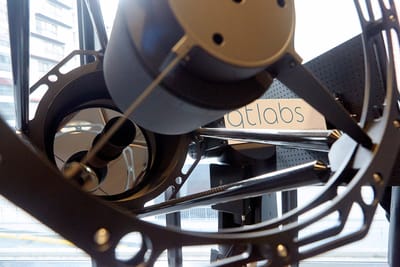
qtlabs, founded in 2017 and based in Vienna, Austria, is a European company specializing in the emerging field of quantum communication. The company positions itself as a full-service provider, offering consulting, development, and integration services for both satellite-based and terrestrial free-space quantum communication systems. This indicates a focus on building end-to-end solutions, rather than solely component manufacturing. qtlabs’ core business centers around enabling secure communication through the principles of quantum mechanics. While specific technological details aren’t publicly detailed, their focus on free-space optical communication suggests expertise in photonics, precision optics, and potentially advanced tracking and pointing systems necessary for maintaining links over long distances. The company’s dual focus on satellite and terrestrial systems suggests a versatile approach, potentially allowing for hybrid quantum networks. Currently positioning itself as a European leader, qtlabs appears to be targeting early adopters in sectors requiring ultra-secure communication, such as government, defense, and finance. While specific missions or customers aren’t publicly listed, the company’s services are geared towards establishing secure communication infrastructure, suggesting a role in building the foundational technology for future quantum networks. qtlabs’ unique value proposition lies in its comprehensive service offering – from initial consultation and system development to full integration – within the specialized and rapidly evolving field of quantum communication. This positions them as a key player in enabling the development and deployment of secure communication technologies for both terrestrial and space-based applications.

Vienna, Austria · Est. 2017

Explore all 12 organisations

Filter by sector, city, type or status. Sort by market value or founding year. Your view is saved in the address bar so you can share it.

Skip to results

12 companies found

Search results

Where they are

World map →
Loading map…CompanyListedAgency