🇫🇷 Europe · Country hub

Space industry in France

72 organisations2 listed4 agenciessince 1909 tracked history

The largest national space agency in Europe, the operational backbone of ESA, and the country with the deepest sovereign launch capability outside the US, China and Russia.

Jump in

Each card opens a filtered view below

Space Agencies Verified

ESA

Paris, France government

The European Space Agency (ESA) is an intergovernmental organization of 22 member states dedicated to space exploration, technology development, and Earth observation. Established in 1975 through the merger of the European Launcher Development Organisation (ELDO) and the European Space Research Organisation (ESRO), ESA coordinates European space activities and represents Europe's unified presence in space. ESA is headquartered in Paris, France, with major facilities across Europe including the European Space Research and Technology Centre (ESTEC) in the Netherlands, the European Space Operations Centre (ESOC) in Germany, and the European Astronaut Centre (EAC) in Cologne. The agency employs approximately 2,500 staff with an annual budget exceeding €7 billion. ## History and Milestones ESA traces its origins to European space cooperation in the 1960s, when Western European nations sought independent space capabilities. The agency was formally established on May 30, 1975, combining launcher and research organizations. Early achievements included the Giotto spacecraft's flyby of Halley's Comet in 1986. ESA developed the Ariane family of rockets, establishing Europe as a major player in commercial launch services. Ariane 4, introduced in 1988, became the world's leading commercial launcher. Ariane 5, first launched in 1996, has delivered over 100 successful missions, including major telecommunications satellites and scientific spacecraft. European astronauts have participated in Space Shuttle, Mir, and International Space Station missions. ESA provides the Columbus laboratory module and Automated Transfer Vehicles for the ISS, contributing essential infrastructure to the international partnership. ## Products and Services ESA's current launch vehicle is Ariane 6, which entered service in 2024 after years of development. Available in two configurations (Ariane 62 and 64), the rocket provides medium to heavy-lift capability for commercial and institutional missions. ESA also operates the Vega and Vega-C small launch vehicles for lighter payloads. The agency's science program includes flagship missions such as the BepiColombo Mercury mission, the JUICE mission to Jupiter's moons, and the Euclid space telescope for dark energy research. ESA's Earth observation program, Copernicus, operates Sentinel satellites providing free environmental data globally. ESA provides astronaut services, training European astronauts for ISS missions and developing capabilities for future lunar exploration. The agency participates in the Artemis program through the European Service Module, which provides propulsion, power, and life support for NASA's Orion spacecraft. ## Technology and Capabilities ESA operates world-class facilities including ESTEC's test facilities for spacecraft environmental testing, ESOC's mission control infrastructure, and the European Astronaut Centre's training capabilities. The agency maintains the European Space Tracking network (ESTRACK) for spacecraft communications. Technology development focuses on electric propulsion, advanced materials, autonomous navigation, and space debris mitigation. ESA's Clean Space initiative addresses sustainability through debris removal missions and eco-design principles. The agency also develops quantum communication and satellite navigation technologies. ESA coordinates European contributions to international exploration programs, developing technologies for lunar surface access, Mars exploration, and sample return missions. The agency's robotic exploration program includes rover development and autonomous navigation systems. ## Business and Financial Overview ESA operates through member state contributions based on gross national income, with optional programs funded separately by participating countries. The total 2024 budget exceeded €7.8 billion, distributed across science, Earth observation, telecommunications, navigation, human spaceflight, and technology development. Member states retain a "geographic return" principle, receiving contracts proportional to their contributions. This ensures industrial participation across Europe but can complicate efficient procurement. Major contractors include Airbus Defence and Space, Thales Alenia Space, and OHB. ESA's commercial arm, Arianespace, markets launch services globally, competing with SpaceX, ULA, and other providers. The transition from Ariane 5 to Ariane 6 aims to reduce costs and improve competitiveness in the commercial launch market. ## Recent Developments In 2024, ESA's Ariane 6 rocket made its debut launch, restoring European independent access to space following the retirement of Ariane 5 and Soyuz launches from French Guiana. The agency continued development of next-generation launchers including reusable technology demonstrators. ESA advanced lunar exploration preparations, with the European Large Logistics Lander (EL3) program progressing toward lunar surface cargo delivery. The agency's ExoMars rover, developed with Roscosmos partnership before its suspension, sought alternative launch arrangements. The Copernicus Earth observation program expanded with new Sentinel satellite launches, while ESA's science program saw launches and mission operations for major astronomical and planetary missions. The agency also strengthened partnerships with commercial providers for space transportation services. ## Market Position ESA serves as Europe's unified space agency, coordinating national space programs and representing European interests in international partnerships. The agency's mandatory science program and optional programs balance scientific exploration with practical applications in telecommunications, navigation, and Earth observation. ESA partners with NASA on the Artemis program, contributing the European Service Module essential for Orion operations. The agency also maintains partnerships with JAXA, CSA, and other space agencies while developing independent European capabilities in human spaceflight and exploration. Competitive challenges include SpaceX's impact on the commercial launch market and the need to develop reusable launch systems. ESA's response includes the Ariane 6 development, technology investments, and commercial partnership initiatives to strengthen European space industry competitiveness.

Paris, France · Est. 1975
Space Agencies Verified

CNES

Paris, France government

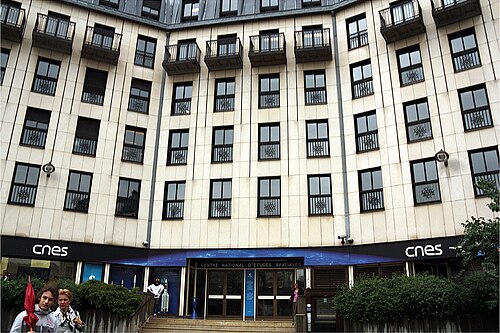
The Centre National d'Études Spatiales (CNES) is France's national space agency, established in 1961 and headquartered in Paris. CNES is responsible for shaping and implementing French space policy and manages an annual budget of €3.029 billion (2024), making it one of Europe's largest space agencies. The agency operates the Guiana Space Centre (CSG) in Kourou, French Guiana — Europe's primary orbital launch facility and the site for Ariane, Vega, and Soyuz launches. CNES develops satellites and scientific instruments, leads French contributions to ESA programs, and manages international collaborations with NASA, JAXA, and ISRO. Key programs include the Copernicus Earth observation series, the Galileo navigation system (in partnership with ESA), the SWOT ocean-topography satellite (joint with NASA), and France's military space surveillance capabilities. CNES has a staff of approximately 2,400 engineers and scientists.

Paris, France · Est. 1961
Propulsion Verified SAF.PA

Safran

Paris, France commercial

Safran is a French multinational aerospace company founded in 2005, with a core focus on the development and delivery of technologies within the propulsion and electronics sectors. While specific product details are limited based on available information, the company’s categorization suggests involvement in the design, manufacturing, and potentially the maintenance of systems critical to spacecraft and launch vehicle operation. This likely includes rocket engines, thrusters, and associated control systems, as well as the electronic components necessary for their function and integration. Given its positioning within aerospace, Safran likely leverages advanced materials science, precision engineering, and sophisticated software development in its work. Key capabilities likely encompass areas such as combustion technology, fluid dynamics, and the miniaturization of electronic systems for space applications. The company’s focus on both propulsion and electronics suggests a vertically integrated approach, potentially allowing for optimized system performance and reduced development timelines. Without further details regarding specific missions or customers, it is difficult to assess Safran’s current market position beyond its established presence within the broader aerospace industry. However, as a multinational company based in France, it is reasonable to assume involvement in European space programs and collaborations, potentially serving agencies like the European Space Agency (ESA) or commercial launch providers. Safran’s unique value proposition likely lies in its combined expertise in both propulsion and electronics, enabling the development of integrated and optimized space systems. This holistic approach, coupled with its established position in the aerospace sector, positions the company as a key player in the evolving space landscape.

Paris, France · Est. 2005 $158.3B
Launch Services Verified

Arianespace

Évry-Courcouronnes, France commercial

Arianespace is the world's first commercial launch services company, founded in 1980 and headquartered in Évry, France. The company provides launch services for commercial, institutional, and government customers from the Guiana Space Centre (CSG) in Kourou, French Guiana. Ariane 5 (now retired after its final launch in July 2023) flew 117 missions over 27 years, establishing itself as the most commercially successful heavy-lift rocket of its era. Ariane 6, its successor with two configurations (A62 two-strap-on, A64 four-strap-on), conducted its inaugural flight in July 2024 after years of delays, restoring Europe's autonomous heavy-lift access to space. Vega-C, the light-lift vehicle, suffered a launch failure in December 2022 and returned to flight in 2024 with improved upper-stage hardware. ESA agreed in August 2024 that Avio, Vega's prime contractor, would market Vega C directly; that handover was due to be complete by the end of 2025. As of October 2025 Arianespace reported 355 missions and more than 1,100 satellites launched. Arianespace suspended Soyuz launches in March 2022 following Russia's invasion of Ukraine. The company is majority-owned by ArianeGroup (with shareholders including Airbus and Safran) and CNES.

Évry-Courcouronnes, France · Est. 1980
Launch Services Verified

ArianeGroup

Issy-les-Moulineaux, France commercial

ArianeGroup is a joint venture equally owned by Airbus and Safran, responsible for developing and producing the Ariane family of launch vehicles. The company employs 8,300 highly qualified professionals across facilities in France (Issy-les-Moulineaux, Saint-Médard-en-Jalles, Vernon, Le Haillan, Les Mureaux, and Kourou) and Germany (Lampoldshausen, Bremen, and Ottobrunn). ArianeGroup develops and manufactures the Ariane 6 launch vehicle, Europe's next-generation heavy-lift rocket, and continues supporting Ariane 5 legacy systems. The company also produces strategic missile systems for French defense (M51 submarine-launched ballistic missiles) and advanced space propulsion systems. In 2024, ArianeGroup posted consolidated revenues of €2.5 billion. The company leads European launch autonomy efforts and operates through its subsidiary Arianespace for commercial launch services.

Issy-les-Moulineaux, France · Est. 2015
Satellite Manufacturing Verified

Thales Alenia Space

Cannes, France commercial

Thales Alenia Space is a joint venture between Thales (67%) and Leonardo (33%), headquartered in Toulouse, France with major operations in Rome and Cannes. One of Europe's largest satellite manufacturers with around 8,000 employees and revenue of €2.36 billion in 2025, the company has built over 200 spacecraft across telecommunications, Earth observation, navigation, and science programs. Thales Alenia Space manufactures pressurized modules for space infrastructure — including the Multi-Purpose Logistics Modules (MPLMs) used to supply the ISS and the HALO module for NASA's Lunar Gateway. The company builds the COSMO-SkyMed radar constellation for Italy, contributes to the Copernicus Earth observation program (Sentinel satellites), and produces the Iridium NEXT and OneWeb satellite buses. Thales Alenia Space is also selected to manufacture the Lunar I-Hab module for the Gateway.

Cannes, France · Est. 2007

Explore all 72 organisations

Filter by sector, city, type or status. Sort by market value or founding year. Your view is saved in the address bar so you can share it.

Skip to results

Loading companies…

Loading companies…

Where they are

World map →
Loading map…CompanyListedAgency