
🇳🇴 Europe · Country hub

Space industry in Norway

10 organisations2 agenciessince 1962 tracked history

10 agencies, companies and research groups headquartered in Norway, from launch and satellites to data and defence.

Jump in

Each card opens a filtered view below

Quick facts

National space body
Norwegian Space Agency · est. 1987
Tracked organisations
10
Industry active since
1962 · median founding 2002
Largest hub
Oslo (3)
Leading sector
Defense & Security (3)
Space Agencies Verified

Norwegian Space Agency

Oslo, Norway government

The Norwegian Space Agency (Norsk Romsenter, NOSA) is Norway's government space authority established in 1987 in Oslo, responsible for managing Norway's participation in the European Space Agency (Norway is a full ESA member state), coordinating national space activities, and administering Norwegian space policy and regulation. Norway's most strategically significant contribution to global space operations is its high-latitude ground station infrastructure: Svalbard Satellite Station (SvalSat) at 78°N latitude, operated by KSAT (Kongsberg Satellite Services), can see any polar-orbiting satellite on virtually every orbit as it crosses over the polar region — providing 10-12 contacts per day compared to 2-4 contacts from mid-latitude stations. This makes Svalbard the world's highest-throughput polar satellite ground station location and gives Norway (via KSAT) a dominant commercial position in LEO satellite data downlink services. The Tromsø Satellite Station at 70°N provides similar high-contact-rate services. Norway's Earth observation focus leverages these ground stations: Norway is a major user of Copernicus satellite data for monitoring the Arctic environment, ocean conditions in the Norwegian Sea, and the vast Norwegian coastline. NOSA also funds domestic space technology companies and research through the Norwegian Research Council and supports Norwegian participation in ESA programs including Galileo, Copernicus, and Aurora exploration.
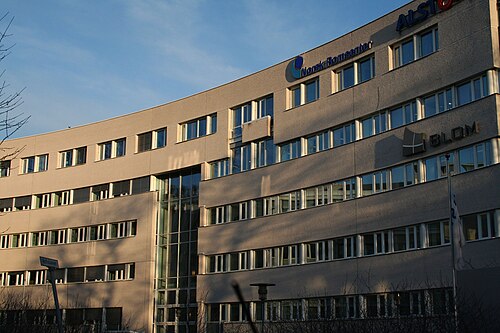

Oslo, Norway · Est. 1987
Satellite Operators Verified

Space Norway

Oslo, Norway government

Space Norway, headquartered in Oslo and established in 2014 as a fully government-owned company under Norway's Ministry of Trade, Industry and Fisheries, is the Norwegian state space company responsible for developing and operating satellite-based infrastructure serving the Norwegian government, Arctic region stakeholders, and commercial customers — with its most significant program being the Arctic Satellite Broadband Mission (ASBM), which provides broadband connectivity to the High Arctic where GEO satellites cannot reach due to geometry constraints. Space Norway's flagship ASBM constellation consists of two satellites (ASBM-1 and ASBM-2) in highly elliptical Molniya-type orbits with orbital inclinations of approximately 63.4 degrees — a special orbit where the argument of perigee is stable and the satellite spends long periods at high northern latitudes (apogee over the Arctic). Two satellites in complementary Molniya orbits provide continuous coverage above 65°N latitude, enabling broadband internet service for Arctic shipping routes (the Northern Sea Route increasingly usable as Arctic ice retreats), Norwegian Svalbard archipelago residents and research stations, Norwegian coast guard and fisheries patrol vessels, and Arctic offshore energy infrastructure. The ASBM satellites (each weighing approximately 3,000 kg, built by MDA Space) use Ka-band high-throughput satellite technology providing capacity of several hundred Gbps across the Arctic coverage zone, with user terminals aboard vessels and fixed installations. SpaceX launched both satellites on Falcon 9 vehicles. The project received financial support from the Norwegian government and the U.S. government (DoD Arctic connectivity interest) through a public-private structure involving SES as a strategic partner for satellite operations and capacity management. Space Norway also manages Norway's satellite tracking infrastructure (NORSAT series of small satellites), research satellite programs, and coordinates Norwegian participation in international space cooperation. The company's role bridges commercial satellite operations and Norwegian sovereign infrastructure requirements in one of the world's most strategically important and challenging communications environments.

Oslo, Norway · Est. 2014
Satellite Subsystems Verified

Kongsberg Defence & Aerospace

Kongsberg, Norway commercial

Kongsberg Defence & Aerospace (KDA) is the defense and aerospace division of Kongsberg Gruppen, Norway's largest defense and technology conglomerate founded in 1814 and headquartered in Kongsberg, Norway. KDA develops and manufactures a range of space technology products as well as defense missiles, military electronics, and weapons systems for NATO customers. In the space sector, KDA supplies satellite structural components, mechanisms, and spacecraft subsystems to European satellite prime contractors and space agencies, representing Norway's primary industrial contribution to commercial and scientific spacecraft. KDA's space product portfolio includes solar array deployment mechanisms (SADMs) — the hinge and damper assemblies that unfold a satellite's solar panels after launch, a critical spacecraft mechanism where deployment failure can be mission-ending. The company also manufactures composite antenna structures and reflector support structures for communications satellites, carbon fiber reinforced spacecraft structural panels and struts, and thermal hardware including heat pipes and radiator panels. These products are delivered to Airbus Defence and Space, Thales Alenia Space, and OHB for integration into GEO communications satellites, ESA science missions, and Earth observation spacecraft. KDA's space work benefits from Norway's status as an ESA member state contributing approximately €80 million per year to ESA programmes, with industrial return policies ensuring Norwegian companies like KDA receive a proportional share of ESA contracts. KDA participates in ESA's European Data Relay System, Sentinel Earth observation constellation component supply, and various ESA science mission instrument support structures. Beyond space, KDA's defense products — including the Naval Strike Missile (NSM), the Joint Strike Missile (JSM) qualified for the F-35, and the NASAMS ground-based air defense system (used by 15+ nations including Ukraine) — generate the revenue and engineering capability base that supports KDA's space activities. KDA employs approximately 3,000 engineers across Norway, competing with Airbus Defence and Space, Beyond Gravity (formerly RUAG Space), and Terma in the European space mechanisms and structures supply chain.

Kongsberg, Norway · Est. 1814
Ground Systems Verified

Kongsberg Satellite Services

Tromso, Norway commercial

Kongsberg Satellite Services (KSAT) is the world's largest ground station network operator, providing satellite contact services from over 250 antennas at more than 26 locations including Arctic sites in Tromsø and Svalbard (Norway), Antarctic stations, and sites across North America, Europe, Asia, and Australia. Founded in 2002 and headquartered in Tromsø, KSAT is a joint venture between the Norwegian Space Agency and Kongsberg Defence & Aerospace. The Arctic location in Svalbard is particularly valuable as it allows communication with satellites in polar and sun-synchronous orbits on nearly every pass — a key advantage for Earth observation and weather satellite operators. KSAT provides TT&C (telemetry, tracking, and command), science data downlink, and managed ground services for commercial satellite operators, ESA, NASA, NOAA, and over 70 other customers. The company processes hundreds of terabytes of satellite data daily.

Tromso, Norway · Est. 2002
Ground Systems Verified

KSAT

Tromsø, Norway commercial

Kongsberg Satellite Services (KSAT), headquartered in Tromsø, Norway and jointly owned by Kongsberg Defence & Aerospace and the Norwegian Space Agency, operates the world's largest commercial ground station network with over 200 antennas at more than 25 global sites — a geographic coverage advantage built on Norway's position near the North Pole, which provides natural high-elevation access to all polar-orbiting sun-synchronous LEO satellites on every orbital pass. KSAT's flagship facility is the Svalbard Satellite Station (SvalSat) in Longyearbyen, Svalbard archipelago (78°N latitude) — the only commercial ground station in the world that can contact polar and sun-synchronous LEO satellites on every single orbit rather than just selected passes. SvalSat's extreme northern latitude means every polar-orbiting satellite passes directly overhead multiple times per day, making it the highest-throughput single-site ground station for LEO data download. For Earth observation operators like ESA's Sentinel program, Planet Labs, and Airbus Defence & Space, SvalSat access dramatically reduces data latency from typical 6-12 hour contact gaps to near-continuous availability. KSAT's global network extends the Svalbard advantage with complementary stations in Antarctica (TrollSat at Troll Station, Norwegian Antarctic territory — providing south polar coverage), Hawaii, Singapore, Miami, Punta Arenas Chile, Hartebeesthoek South Africa, and other mid-latitude sites filling coverage gaps for geostationary and highly elliptical orbital customers. This integrated network enables KSAT to guarantee multiple daily contacts for virtually any LEO orbit, and provides TT&C (telemetry, tracking, and command) services for operational satellite commanding alongside data download. Customers include ESA (Copernicus Sentinel operational ground segment), NASA, NOAA, commercial EO operators (Planet, BlackSky, Satellogic), satellite internet operators, and government defense agencies. KSAT competes with Amazon Web Services Ground Station, Microsoft Azure Orbital, and SSC/Inigo in the commercial ground station market, holding a structural advantage through its Svalbard polar position that competitors cannot easily replicate.

Tromsø, Norway · Est. 2002
Spaceports Verified

Andøya Space

Andøya, Norway commercial

Andøya Space, headquartered on Andøya island in Nordland county, northern Norway (69°N latitude, above the Arctic Circle), operates the Andøya Spaceport — one of Europe's most historically active rocket ranges with over 1,200 sounding rockets and atmospheric research rockets launched since 1962 — which received its Norwegian orbital launch site operator license in August 2024, authorizing up to 30 orbital launches per year and establishing Norway as a Western European orbital launch nation. Andøya's polar location provides exceptional access to high-inclination, sun-synchronous, and polar orbits — the same geographic advantages that make Norway's KSAT Svalbard ground station valuable for LEO satellite contact apply to launch: a northward-flying rocket from 69°N is naturally aligned with polar orbital planes without requiring costly plane-change maneuvers. Andøya is located on a peninsula with Atlantic Ocean access on multiple azimuths, providing safe over-water downrange for launch trajectories without overflight of populated land masses. German launch company Isar Aerospace has signed a 20-year exclusive contract for access to Andøya's first orbital launch pad, using Andøya as the primary launch site for its Spectrum small launch vehicle targeting approximately 1,000 kg to LEO. This anchor tenant relationship provides Andøya Space with launch revenue certainty for orbital pad construction, while giving Isar Aerospace a dedicated European launch site aligned with the EU's space industry sovereignty goals. Andøya's sounding rocket heritage includes decades of atmospheric physics, aurora research, and microgravity experiments for ESA, NASA, JAXA, DLR, and academic research programs, establishing the operations team, range safety procedures, and technical infrastructure that orbital launch operations build upon. Andøya Space competes with SaxaVord Spaceport (UK), Esrange/SSC (Sweden), and Sutherland Spaceport (UK) in the European commercial orbital launch market.

Andøya, Norway · Est. 1962

Explore all 10 organisations

Filter by sector, city, type or status. Sort by market value or founding year. Your view is saved in the address bar so you can share it.

Skip to results

10 companies found

Search results

Where they are

World map →
Loading map…CompanyListedAgency