🇹🇷 Middle East · Country hub

Space industry in Turkey

12 organisations1 agencysince 1984 tracked history

12 agencies, companies and research groups headquartered in Turkey, from launch and satellites to data and defence.

Jump in

Each card opens a filtered view below

Quick facts

National space body
Turkish Space Agency · est. 2018
Tracked organisations
12
Industry active since
1984 · median founding 2018
Largest hub
Ankara (7)
Leading sector
Satellite Manufacturing (4)
Added in last 4 months
2
Space Agencies Verified

Turkish Space Agency

Ankara, Turkey government

The Turkish Space Agency (TUA — Türkiye Uzay Ajansı), established in 2018 by Presidential Decree in Ankara, is Turkey's national space agency responsible for coordinating and implementing Turkey's National Space Program (2021-2023, extended through 2030) — an ambitious 10-goal roadmap announced by President Erdoğan in February 2021 that outlined Turkey's intentions for satellite manufacturing, a national launch site, lunar exploration, and ultimately crewed spaceflight capability. Turkey's existing space infrastructure predates TUA: Türksat A.Ş. (established 1990) operates Turkey's GEO telecommunications satellite fleet for broadcasting and broadband across Turkey, the Balkans, the Middle East, and Central Asia. GÖKTÜRK-1 (2016, Airbus-built, 0.8-meter resolution optical satellite) and GÖKTÜRK-2 (2012, domestically developed with Roketsan/TAI) provide military and government Earth observation imagery for the Turkish armed forces and intelligence services. The domestic development of GÖKTÜRK-2 represented a significant step in Turkey's satellite manufacturing capability, with TÜBİTAK UZAY (Space Technologies Research Institute) leading the technical development. TUA's National Space Program goals include developing an indigenous satellite bus technology family, establishing a Turkish space launch site (a coastal equatorial site for efficient GTO orbital insertion), landing a Turkish spacecraft on the Moon by 2023 (revised after missing initial timeline), training Turkish astronauts for ISS missions (Alper Gezeravcı flew to ISS aboard SpaceX Crew Dragon in January 2024 — Turkey's first astronaut in space), and eventually developing crewed spaceflight capability. Turkey's defense aerospace industry — dominated by companies including Roketsan, ASELSAN, TAI, and TUSAŞ — provides an existing industrial base for space technology development. TUA also participates in ESA's Plan for European Cooperating States (PECS) as a step toward potential ESA European Cooperating State membership.

Ankara, Turkey · Est. 2018
Satellite Manufacturing Verified

Turkish Aerospace

Ankara, Turkey commercial

Turkish Aerospace Industries (TAI — TUSAŞ, Türk Havacılık ve Uzay Sanayii A.Ş.), headquartered in Ankara's Kahramankazan district and founded in 1984, is Turkey's national aerospace prime contractor — designing and manufacturing military and civilian aircraft, unmanned aerial vehicles, helicopters, and space systems for the Turkish Armed Forces and export customers, while serving as the anchor of Turkey's ambition to develop an indigenous space industrial capability. TAI is best known internationally for its UAV (unmanned aerial vehicle) programs including the ANKA medium-altitude long-endurance (MALE) UCAV — a domestically developed UAV used by the Turkish military for intelligence, surveillance, reconnaissance, and strike missions — and for manufacturing F-16 fighters under license and various helicopter and transport aircraft programs. The defense aerospace success has generated both the financial resources and the systems integration experience that TAI is now applying to space systems development. In the space domain, TAI is developing TÜRKSAT 6A — Turkey's first domestically designed and manufactured geostationary communications satellite, which will validate Turkey's entire GEO satellite design and manufacturing capability chain. The TÜRKSAT 6A program involves TAI as prime contractor with TÜBİTAK UZAY (Space Technologies Research Institute) for avionics, ROKETSAN for satellite propulsion, and ASELSAN for communications payload electronics — engaging Turkey's entire defense electronics industrial ecosystem in satellite manufacturing for the first time. TÜRKSAT 6A's successful completion would represent a major milestone in Turkey's National Space Program. TAI also develops and manufactures Göktürk series Earth observation satellites for the Turkish Armed Forces and intelligence services, having already delivered GÖKTÜRK-2 (2012, indigenously developed) and contributing to GÖKTÜRK-1 (2016, Airbus-built with Turkish participation). The company is developing GÖKTÜRK-3 with further domestic content, advancing toward full end-to-end indigenous satellite manufacturing capability.

Ankara, Turkey · Est. 1984
Satellite Manufacturing Verified

TUSAS Space Systems

Ankara, Turkey commercial

TUSAS Space Systems, established in 1984 and based in Ankara, Turkey, is a satellite manufacturing company focused on the development and production of satellites for domestic and potentially international applications. As a key component of Turkish Aerospace Industries (TAI), the company contributes to Turkey’s growing capabilities in space technology and aims to reduce reliance on foreign suppliers in this critical sector. Currently, publicly available information regarding TUSAS Space Systems is limited, but the core business is confirmed as satellite development. Specific details on the types of satellites manufactured (e.g., Earth observation, communications, military) or the technologies employed are not readily accessible. However, given the company’s position within TAI, it is reasonable to infer involvement in advanced engineering, systems integration, and potentially the development of key satellite subsystems. While specific mission details and customer lists are not publicly available, TUSAS Space Systems is demonstrably focused on serving the needs of the Turkish government and defense sector through indigenous satellite production. This focus on national capability building represents a significant aspect of the company’s value proposition. Given the limited public information, assessing TUSAS Space Systems’ precise market position is challenging. However, as a national champion in satellite manufacturing within Turkey, the company is uniquely positioned to capture a significant share of domestic demand and potentially expand into regional export markets as its capabilities mature.

Ankara, Turkey · Est. 1984
Launch Services Verified

Roketsan

Ankara, Turkey commercial

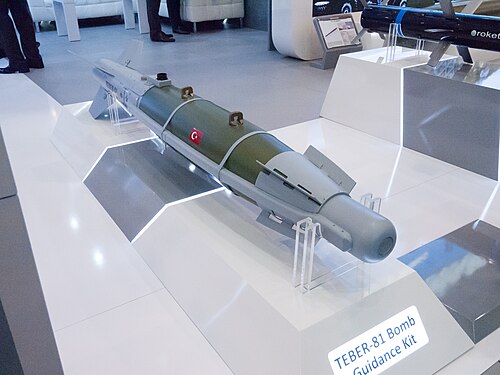
Roketsan is Turkey's primary rocket and missile manufacturer, founded in 1988 in Ankara with a 50.1% stake held by MKEK (Machinery and Chemical Industry Corporation, a Turkish state defense enterprise) and the remainder by ROKETSAN employees and Turkish defense industry entities. As Turkey's largest domestic missile and rocket house, Roketsan has built a comprehensive portfolio of tactical weapons and is now extending its expertise toward space launch capabilities under Turkey's National Space Program. The company's defense product line is extensive and export-proven: the UMTAS laser-guided anti-tank missile integrated on the ATAK helicopter, the CIRIT 70mm semi-active laser rocket for precision strikes, the SOM air-launched cruise missile (600+ km range, JASSM-class), TRG-230/300 multiple launch rocket system rounds equipping Turkish ground forces, and the HISAR family of short-range air defense systems. This breadth of solid and liquid propulsion experience directly underpins Roketsan's sounding rocket and nascent orbital launch programs. Defense export clients include Pakistan, Malaysia, Saudi Arabia, and Kazakhstan. In space, Roketsan develops the Miçotesi sounding rocket family reaching altitudes of 100-200 km for atmospheric science, payload qualification, and microgravity experiments. The company is developing the RTA (Roketsan Turkish Rocket — orbital-class) solid-fueled launch vehicle to deliver small satellites to LEO, aligned with Turkey's National Space Program goal of an indigenous orbital launch capability by 2028. Turkey's Space Agency (TUA), established in 2018, coordinates with Roketsan, TÜBITAK UZAY, and Türksat on space ambitions including a domestic satellite manufacturing ecosystem and lunar missions by 2033. Roketsan's space launch work positions Turkey among an emerging tier of nations — alongside South Korea, New Zealand, Japan, and India — developing commercially and militarily relevant independent orbital access. Domestically, Roketsan competes for program leadership with TÜBITAK SAGE (guided systems R&D) and ASELSAN (electronics/avionics), while internationally Turkey's ambitions compare with the ISRO-PSLV ecosystem and KSLV-II Nuri as sovereign orbital launch programs outside the major spacefaring nations.

Ankara, Turkey · Est. 1988
Satellite Manufacturing

Cervos Space

Ankara, Turkey commercial

Cervos Space is a Turkish nanosatellite manufacturer and space systems company founded in 2020, developing configurable CubeSat and nanosatellite platforms with in-house subsystem design, assembly, integration and testing (AIT), and technical support services — contributing to Turkey's emerging commercial space sector alongside established state entities like TÜBITAK UZAY and the Turkish Space Agency (TUA). Cervos Space's core product line comprises nanosatellite bus platforms in standard CubeSat form factors (3U, 6U, 12U, and larger) with standardized PC/104 or CubeSat Standard mechanical and electrical interfaces accommodating customer payloads. In-house subsystem development includes onboard computers (OBC) built on ARM Cortex-M or Cortex-A processors with radiation-tolerant memory configurations, electrical power systems (EPS) with multi-channel MPPT solar charge controllers and lithium-ion battery management, UHF/VHF radio transceivers for standard amateur frequency TT&C links, and modular structural frames in 6061 aluminum alloy compatible with standard deployer ejectors (ISILaunch, Nanoracks). Beyond platform hardware, Cervos offers full mission support services: requirements definition and feasibility studies, payload integration engineering, RF link budget analysis, ground station coordination, and on-orbit operations support — positioning itself as a one-stop shop for Turkish academic institutions, startups, and defense-adjacent organizations entering the small satellite market for the first time. Turkey's space ambitions are codified in the National Space Program (2021-2031) announced by TUA, targeting indigenous satellite manufacturing, geostationary communications satellite production, and lunar mission participation. TÜBITAK UZAY (the Scientific and Technological Research Council's space division in Ankara) leads government R&D, while Türksat operates GEO communications satellites. Roketsan is developing launch vehicles. Cervos operates in the commercial hardware supply layer — building the CubeSat buses that Turkish universities and commercial operators need as the ecosystem matures. Domestic competitors include Uydu Teknolojileri, while international competition comes from GomSpace (Denmark), AAC Clyde Space (UK), and NanoAvionics (Lithuania).

Ankara, Turkey · Est. 2020
Launch Services

DeltaV Space Technologies

Istanbul, Turkey commercial

DeltaV Space Technologies is a Turkish aerospace company specializing in hybrid rocket propulsion systems, celebrated for achieving the world's first successful ignition of a hybrid rocket motor as a second stage engine in space — a significant milestone in hybrid propulsion maturity that demonstrated this technology class can reliably ignite in the vacuum and thermal conditions of space, not just at sea level. Hybrid rockets use a solid fuel grain (typically HTPB or paraffin wax) combined with a liquid or gaseous oxidizer (typically liquid oxygen, nitrous oxide, or hydrogen peroxide), offering safety advantages over solid rockets (inert fuel without oxidizer) and simplicity advantages over liquid rockets (no cryogenic fuel handling for some propellant combinations). Achieving hybrid ignition in space — in near-vacuum at the thermal extremes between Sun and shadow — validates hybrid propulsion for upper stage applications where these conditions are encountered. DeltaV's vehicle reached altitudes exceeding 200 km (above the Kármán line), making it a suborbital spaceflight achievement qualifying its passengers as astronauts by international conventions. The company operates within Turkey's growing aerospace ecosystem, which includes ROKETSAN (solid rocket motors for defense), BAYKAR (drone technology), Turkish Aerospace Industries (TAI), and significant government support through the Presidency of Space Activities (SSB). DeltaV's commercial focus targets both launch services (small sounding rockets and eventual orbital capability) and propulsion component sales to satellite manufacturers. The company benefits from Turkey's strategic interest in developing sovereign space capabilities following the successful launch of Türkiye's GÖKTÜRK-2 reconnaissance satellite and the Türksat GEO telecommunications satellite series.

Istanbul, Turkey · Est. 2016

Explore all 12 organisations

Filter by sector, city, type or status. Sort by market value or founding year. Your view is saved in the address bar so you can share it.

Skip to results

12 companies found

Search results

Where they are

World map →
Loading map…CompanyListedAgency