Launch Providers

Compare 187 launch providers delivering payloads to orbit.

187
Total Providers
115
Operational
58
In Development
33
Countries

New Space Tracker directory, Apr 2026 — counts drawn from company records and FAA AST licensing data

By Country

Vehicle Types

Unknown 122
small lift 37
medium lift 24
heavy lift 11
suborbital rocket 9
reusable 9
orbital rocket 6
spaceplane 4
super heavy 3
air launch 2

All launch providers

Launch Vehicles

Abyom SpaceTech

Hyderabad, India commercial

Abyom SpaceTech is an Indian startup based in Hyderabad focused on developing advanced launch vehicle technology. The company is pioneering the development of India’s first reusable rocket, distinguished by its re-ignitable and throttleable cryogenic engine. This technology aims to significantly reduce the cost and turnaround time for space launches, enabling more frequent access to orbit. Abyom’s core technological focus lies in cryogenic engine design and reusable rocket systems. The development of a re-ignitable cryogenic engine is particularly noteworthy, as it allows for precise control during flight and facilitates multiple in-space maneuvers, enhancing mission flexibility. This capability is central to their goal of providing affordable and rapid launch services. Currently, Abyom SpaceTech is in the development phase of its reusable rocket technology. While specific missions or customers have not been publicly disclosed, the company positions itself as a key player in lowering the barriers to space access within India and potentially internationally. Abyom’s unique value proposition centers on its commitment to reusability and advanced engine technology. By focusing on these areas, the company aims to disrupt the launch services market with a more cost-effective and responsive solution compared to traditional expendable launch vehicles.

Hyderabad, India · Est. 2020
Launch Services Verified

Agnikul Cosmos

Chennai, India commercial

Agnikul Cosmos is an Indian private launch company that achieved a historic milestone on May 30, 2024, when its Agnibaan SOrTeD (Sub-Orbital Technology Demonstrator) became the first rocket in the world to fly powered by a single-piece, fully 3D-printed semi-cryogenic engine — the Agnilet. Founded in 2017 and headquartered at IIT Madras Research Park in Chennai, Agnikul is developing the Agnibaan orbital small-sat launcher designed to carry up to 100 kg to a 700 km orbit. The company's additive manufacturing approach reduces part count from thousands to a handful, enabling faster production cycles and lower cost. Agnikul operates its own mobile launch pad (Dhanush) at Satish Dhawan Space Centre and aims to offer highly customizable launch windows for small satellite customers.

Chennai, India · Est. 2017
Satellite Manufacturing Verified

Airbus Defence and Space

Taufkirchen, Germany commercial

Airbus Defence and Space (Airbus D&S), headquartered in Taufkirchen near Munich, Germany, with major sites in Toulouse, Stevenage UK, and Madrid, is the space and defense division of Airbus SE — Europe's largest aerospace company — and one of the three dominant global satellite prime contractors alongside Boeing Satellite Systems and Thales Alenia Space, generating revenues exceeding €11 billion annually across satellites, space exploration, defense systems, and military aircraft. In commercial satellite manufacturing, Airbus D&S produces the Eurostar GEO telecommunications satellite platform and the flexible Eurostar-1000 through Eurostar-3000 variants serving Intelsat, SES, Inmarsat, and national operators. The company won major high-throughput satellite contracts including OneWeb's 648-satellite LEO constellation (partially manufactured at a joint facility with OneWeb in Florida before OneWeb bankruptcy and Eutelsat acquisition). The Pleiades NEO and Pleiades 1 high-resolution optical Earth observation satellites are operated by Airbus Intelligence, providing 30 cm sub-meter commercial imagery. In space exploration, Airbus D&S built the European Service Module (ESM) for NASA's Orion spacecraft — the propulsion and power module supporting NASA's Artemis crewed lunar program. Multiple ESMs have been delivered under ESA contract for Artemis I (launched 2022) through Artemis V. For Mars exploration, Airbus supplied the ExoMars Trace Gas Orbiter structure and is developing the ExoMars Rosalind Franklin rover cruise stage. ArianeGroup, co-owned 50/50 by Airbus and Safran, manufactures the Ariane 6 launch vehicle and operates the Guiana Space Centre. This ownership gives Airbus D&S structural alignment with European launcher sovereignty — ensuring launch access for European institutional and commercial satellites and preventing over-dependence on SpaceX. Defense products include the MUSIS/CSO reconnaissance satellite constellation for the French military, military communication satellites (SATCOM), missile defense systems, radar systems, and cyber security services for NATO member governments.

Taufkirchen, Germany · Est. 2014
Spaceports Verified

Alcântara Launch Center

Alcântara, Brazil government

Centro de Lançamento de Alcântara (CLA) is Brazil's primary space launch facility, located at approximately 2.3° S latitude on Maranhão state's northern coast — one of the closest operational launch sites to the equator on Earth, providing launch efficiency advantages for GEO transfer orbit missions compared to higher-latitude sites. The center was established in 1983 and is operated by the Brazilian Air Force (FAB). Alcântara's low-latitude location translates directly into launch performance: a rocket launching to geostationary transfer orbit from 2.3° S benefits from Earth's full equatorial rotational velocity (~465 m/s), reducing the propellant required to achieve the eastward velocity needed for GEO insertion compared to sites like Cape Canaveral (28.4° N), Baikonur (45.9° N), or Kourou at 5.2° N. This geography has long attracted international interest in Alcântara for commercial launches. A catastrophic explosion on August 22, 2003 during ground testing killed 21 Brazilian technicians preparing the VLS (Veículo Lançador de Satélites) rocket — the worst disaster in Brazil's space program history. VLS development never achieved orbital flight. Brazil subsequently pursued international partnerships to utilize the site. A Technology Safeguards Agreement (TSA) signed with the United States in 2019 removed the legal barrier preventing American companies from launching at Alcântara, enabling US launch providers to use the facility. South Korea's Innospace conducted its successful 2023 HANBIT-TLV suborbital test from CLA, and Brazilean private launch company Visiona and international operators have expressed commercial launch interest.

Alcântara, Brazil · Est. 1983
Spaceports Verified

Andøya Space

Andøya, Norway commercial

Andøya Space, headquartered on Andøya island in Nordland county, northern Norway (69°N latitude, above the Arctic Circle), operates the Andøya Spaceport — one of Europe's most historically active rocket ranges with over 1,200 sounding rockets and atmospheric research rockets launched since 1962 — which received its Norwegian orbital launch site operator license in August 2024, authorizing up to 30 orbital launches per year and establishing Norway as a Western European orbital launch nation. Andøya's polar location provides exceptional access to high-inclination, sun-synchronous, and polar orbits — the same geographic advantages that make Norway's KSAT Svalbard ground station valuable for LEO satellite contact apply to launch: a northward-flying rocket from 69°N is naturally aligned with polar orbital planes without requiring costly plane-change maneuvers. Andøya is located on a peninsula with Atlantic Ocean access on multiple azimuths, providing safe over-water downrange for launch trajectories without overflight of populated land masses. German launch company Isar Aerospace has signed a 20-year exclusive contract for access to Andøya's first orbital launch pad, using Andøya as the primary launch site for its Spectrum small launch vehicle targeting approximately 1,000 kg to LEO. This anchor tenant relationship provides Andøya Space with launch revenue certainty for orbital pad construction, while giving Isar Aerospace a dedicated European launch site aligned with the EU's space industry sovereignty goals. Andøya's sounding rocket heritage includes decades of atmospheric physics, aurora research, and microgravity experiments for ESA, NASA, JAXA, DLR, and academic research programs, establishing the operations team, range safety procedures, and technical infrastructure that orbital launch operations build upon. Andøya Space competes with SaxaVord Spaceport (UK), Esrange/SSC (Sweden), and Sutherland Spaceport (UK) in the European commercial orbital launch market.

Andøya, Norway · Est. 1962
Launch Services

AnyShape

Villers-le-Bouillet, Belgium commercial

AnyShape is a Belgium-based aerospace additive manufacturing company certified to ISO 9001 and EN 9100 (the aerospace quality management system standard), specializing in selective laser melting (SLM) and electron beam melting (EBM) metal additive manufacturing (3D printing) of complex aerospace-grade components for propulsion, structures, and radio frequency applications. AnyShape's customer portfolio centers on major European aerospace primes: Airbus, Safran (propulsion and aircraft equipment divisions), ArianeGroup (Ariane launch vehicles), and ESA, for whom AnyShape manufactures flight-intent and qualification hardware. Specific product categories include rocket thruster chambers and injector heads — where the geometric freedom of additive manufacturing enables internal cooling channel geometries that would be impossible or prohibitively expensive with conventional subtractive machining — and RF antenna structures and waveguide components, where complex internal geometry optimized for electromagnetic performance can be printed as single monolithic parts rather than assembled from multiple machined pieces. AnyShape collaborates with ESA's European Space Research and Technology Centre (ESTEC) in Noordwijk, Netherlands on advanced material development, specifically focusing on titanium alloy (Ti-6Al-4V) parameters for space applications, including qualification testing of additively manufactured titanium structures for fracture mechanics, fatigue life, and vacuum thermal cycling performance. This research collaboration reflects the broader European space industry effort to qualify AM processes for flight hardware, reducing costs and lead times versus traditional forging and machining. Additive manufacturing's principal advantages for space hardware are design freedom (complex internal channels, lattice structures, topology-optimized geometries), reduced part count (consolidating multi-piece assemblies into single prints), and faster iteration cycles for development programs — critical when rocket programs need rapid design changes without retooling. Lead time advantages are particularly significant for components with complex geometries that previously required months of machining. AnyShape operates in a growing European AM-for-aerospace ecosystem alongside peers like AddUp (France), Elementum 3D (US), and RUAG's AM division (Switzerland). Belgian manufacturing expertise and proximity to ESA's ESTEC facilities position AnyShape well in the European aerospace supply chain.

Villers-le-Bouillet, Belgium
Launch Services

Arceon

Delft, Netherlands commercial

Arceon is a Dutch advanced materials company based in the Netherlands, operating out of the ESA space cluster in the Noordwijk area, that produces Carbeon — a proprietary silicon carbide fiber-reinforced silicon carbide matrix ceramic matrix composite (SiCf/SiCm CMC) capable of maintaining structural integrity at temperatures up to 1600°C, with excellent oxidation resistance and low density compared to refractory metals. Ceramic matrix composites represent the materials frontier for extreme-temperature aerospace applications: unlike ablative thermal protection systems (PICA, AVCOAT) that erode on each reentry and require replacement, structural CMC components are designed to be reusable — a critical advantage for the reusable launch vehicle era. Arceon's Carbeon targets applications including reentry heat shields for capsules and lifting bodies, rocket nozzle extensions and combustion chamber inserts (replacing ablative carbon-carbon or tungsten), hypersonic vehicle leading edges and control surfaces, and high-temperature structural brackets in satellite propulsion systems. Arceon graduated from the ESA Business Incubation Centre (BIC) at ESTEC in Noordwijk in 2023 — co-located with Europe's main space engineering campus — providing access to ESA's materials testing facilities, European space prime contractor networks, and ESA's TRL maturation funding. Validation of Carbeon in space environments progressed significantly when samples were sent to the International Space Station aboard SpaceX CRS-31 (the 31st Commercial Resupply Services mission), exposing the material to microgravity, vacuum, atomic oxygen, and thermal cycling conditions that simulate orbital reentry stresses before qualification for flight hardware. The Dutch deep-tech ecosystem — Delft University of Technology's materials science programs, NL Space Office funding instruments, and proximity to Airbus Defence and Space, RUAG, and other European space prime suppliers — supports Arceon's development path. Primary competitors include Safran/Herakles (CMC for Ariane 6 nozzle extensions), Albany Engineered Composites (US carbon-carbon and CMC), SGL Carbon, and established refractory ceramic manufacturers like CoorsTek for niche structural applications in rocket propulsion.

Delft, Netherlands · Est. 2018
Launch Services Verified

ArianeGroup

Issy-les-Moulineaux, France commercial

ArianeGroup is a joint venture equally owned by Airbus and Safran, responsible for developing and producing the Ariane family of launch vehicles. The company employs 8,300 highly qualified professionals across facilities in France (Issy-les-Moulineaux, Saint-Médard-en-Jalles, Vernon, Le Haillan, Les Mureaux, and Kourou) and Germany (Lampoldshausen, Bremen, and Ottobrunn). ArianeGroup develops and manufactures the Ariane 6 launch vehicle, Europe's next-generation heavy-lift rocket, and continues supporting Ariane 5 legacy systems. The company also produces strategic missile systems for French defense (M51 submarine-launched ballistic missiles) and advanced space propulsion systems. In 2024, ArianeGroup posted consolidated revenues of €2.5 billion. The company leads European launch autonomy efforts and operates through its subsidiary Arianespace for commercial launch services.

Issy-les-Moulineaux, France · Est. 2015
Launch Services Verified

Arianespace

Évry-Courcouronnes, France commercial

Arianespace is the world's first commercial launch services company, founded in 1980 and headquartered in Évry, France. The company provides launch services for commercial, institutional, and government customers from the Guiana Space Centre (CSG) in Kourou, French Guiana. Ariane 5 (now retired after its final launch in July 2023) flew 117 missions over 27 years, establishing itself as the most commercially successful heavy-lift rocket of its era. Ariane 6, its successor with two configurations (A62 two-strap-on, A64 four-strap-on), conducted its inaugural flight in July 2024 after years of delays, restoring Europe's autonomous heavy-lift access to space. Vega-C, the light-lift vehicle, suffered a launch failure in December 2022 and returned to flight in 2024 with improved upper-stage hardware. ESA agreed in August 2024 that Avio, Vega's prime contractor, would market Vega C directly; that handover was due to be complete by the end of 2025. As of October 2025 Arianespace reported 355 missions and more than 1,100 satellites launched. Arianespace suspended Soyuz launches in March 2022 following Russia's invasion of Ukraine. The company is majority-owned by ArianeGroup (with shareholders including Airbus and Safran) and CNES.

Évry-Courcouronnes, France · Est. 1980
Launch Services Verified

Astraius

London, United Kingdom commercial

Astraius is a UK-based air-launch company focused on providing dedicated and responsive launch services for small to mid-sized satellites. Utilizing a Boeing C-17 carrier aircraft and operating from Prestwick Spaceport in Scotland, Astraius offers a flexible and cost-effective alternative to traditional vertical launch options. The company’s core offering centers around its Hera II rocket, capable of delivering payloads of up to 800kg to Low Earth Orbit (LEO). Astraius differentiates itself by emphasizing responsiveness and orbital flexibility. The air-launch system allows for launches from optimal geographic locations, enabling direct insertion of customer payloads into their desired orbit – a key benefit for missions with specific orbital requirements. This approach aims to simplify the launch process and reduce lead times compared to fixed launch site scheduling. Currently, specific mission details or customer lists are not publicly available. However, Astraius positions itself as a provider of simplified, reliable, and affordable access to space, targeting a growing market for small and medium satellite constellations. The company’s business model centers on providing dedicated launches, meaning a single rocket delivers a customer’s payload, rather than sharing a ride with other satellites – a service increasingly valued by organizations needing precise control over launch timing and orbital parameters.

London, United Kingdom · Est. 2020
Launch Services Verified

Astron Systems

Harwell, United Kingdom commercial

Astron Systems is a UK-based small launch vehicle developer building Aurora, a fully reusable two-stage-to-orbit rocket powered by liquid methane and liquid oxygen propulsion. Founded by former aerospace engineers, Astron targets the rapidly expanding small satellite launch market with a vehicle designed for complete vertical-take-off, vertical-landing (VTVL) reusability — both first and second stages return to the launch site for rapid reflight. Aurora is designed to deliver payloads to LEO at under $4,000 per kilogram, competitive with Rocket Lab's Electron on a per-flight basis while offering higher cadence through reuse. The Aurora architecture uses a cluster of Merlin-class-scale methane engines for the first stage and a vacuum-optimized upper stage engine, with regeneratively cooled chambers drawing on UK research at Rolls-Royce and the University of Bristol. Astron has secured over $600K in early-stage backing and reports customer bookings extending through 2030, reflecting the demand backlog in the European dedicated small-launch market created by the retirement of Vega and ongoing delays in Ariane 6 production rate. The company is based in the Bristol/South West England aerospace corridor, with access to UK Space Agency grant programs and MOD DSEI procurement pathways. Astron Systems competes in a crowded UK launch market alongside Orbex (Prime methane rocket at Sutherland), Skyrora (Skylark-L kerosene), and BAE Systems' investment in smallsat launch, as well as global competitors Rocket Lab, Firefly, and ABL Space Systems.

Harwell, United Kingdom · Est. 2021
Launch Services Verified

Black Arrow Space Technologies

Swindon, United Kingdom commercial

Black Arrow Space Technologies is a United Kingdom-based company focused on developing a novel seaborne launch system, the Black Arrow 2. The company is designing a small launch vehicle capable of delivering payloads of up to 500 kilograms to polar Low Earth Orbit (LEO). This approach utilizes a mobile launch platform at sea, offering flexibility in launch location and potentially reducing launch costs compared to traditional land-based facilities. A key technological focus for Black Arrow Space Technologies is the utilization of Liquefied Natural Gas (LNG) and Liquid Oxygen (LOX) as propellants. This propellant combination offers a balance of performance and cost-effectiveness. Furthermore, the company is incorporating additive manufacturing, or 3D-printing, into the production of vehicle components, suggesting a focus on streamlined manufacturing processes and potential for rapid iteration and customization. Currently, details regarding specific missions or customers are unavailable. However, the development of a dedicated small launch vehicle positions Black Arrow Space Technologies within the growing market segment catering to the increasing demand for dedicated and responsive access to space for small satellites. Given the limited publicly available information, Black Arrow Space Technologies’ unique value proposition appears to be a combination of flexible, seaborne launch capabilities and the integration of modern manufacturing techniques like 3D printing, potentially offering a cost-effective and adaptable launch solution for the small satellite market.

Swindon, United Kingdom · Est. 2017
Launch Services Verified

Blue Origin

Kent, United States commercial

Blue Origin is a private aerospace manufacturer and spaceflight services company founded by Amazon founder Jeff Bezos in 2000. Headquartered in Kent, Washington, the company develops reusable launch vehicles and space technologies with a long-term vision of enabling millions of people to live and work in space. The company operates under the motto "Gradatim Ferociter" (Step by Step, Ferociously). Blue Origin employs over 10,000 people across facilities in Washington, Texas, Florida, and Alabama. The company operates with significant financial backing from Jeff Bezos, who has invested billions of his personal fortune into the venture. Under CEO Dave Limp (appointed 2023), Blue Origin is transitioning from development to operational launch services. ## History and Milestones Jeff Bezos founded Blue Origin in September 2000, initially operating in secrecy while developing vertical takeoff and landing technology. The company's first vehicle, New Shepard, made its debut flight in 2015 and achieved its first successful landing, demonstrating reusable rocket technology. By January 2026 New Shepard had flown 38 times and carried 98 people above the Kármán line. In July 2021, Blue Origin made history when Jeff Bezos, his brother Mark, aviation pioneer Wally Funk, and Oliver Daemen flew on New Shepard's first crewed flight. This mission marked Blue Origin's entry into commercial human spaceflight. The company has since flown multiple crewed suborbital missions carrying paying customers and researchers. NASA awarded the first Artemis Human Landing System contract to SpaceX in 2021; Blue Origin protested, then won a separate $3.4 billion Artemis V landing contract in 2023. The company manufactures BE-4 engines in Huntsville, Alabama, and flies New Glenn from Launch Complex 36 at Cape Canaveral. ## Products and Services New Shepard is Blue Origin's fully reusable suborbital vehicle for tourism and research, carrying up to six people above the Kármán line. On 30 January 2026 the company paused New Shepard flights for at least two years to shift people and resources onto Blue Moon and New Glenn. New Glenn is Blue Origin's heavy-lift orbital launch vehicle that achieved its orbital debut on 16 January 2025, successfully delivering payloads to orbit on its inaugural flight. The two-stage rocket features a reusable first stage powered by seven BE-4 engines, with a first-stage booster recovery profile targeting ship landings similar to SpaceX's approach. New Glenn targets commercial, civil, and national security launch contracts and is now an operational competitor in the medium-to-heavy lift market. Blue Origin manufactures rocket engines for both internal use and external customers. The BE-4 engine, burning liquid oxygen and methane, powers both New Glenn and United Launch Alliance's Vulcan Centaur rocket. The BE-3 engine powers New Shepard, while the BE-7 is designed for lunar landers. ## Technology and Capabilities Blue Origin's BE-4 engine represents a significant technological achievement as the most powerful American liquid oxygen/methane engine, producing 550,000 pounds of thrust. The engine's oxygen-rich staged combustion cycle provides high efficiency and performance. BE-4 development required over a decade and billions of dollars in investment. The company has developed vertical landing capabilities for both New Shepard and the planned New Glenn first stage. This reusability approach mirrors SpaceX's Falcon 9 operations but uses different landing technologies, including thrust vector control and deployable landing systems. Blue Origin's lunar activities center on the Blue Moon lander program, selected by NASA for Artemis V and beyond. The company leads a National Team including Lockheed Martin, Draper, and Boeing to develop sustainable lunar surface access. Blue Origin is also developing technologies for in-space manufacturing and orbital infrastructure. ## Business and Financial Overview Blue Origin is privately held, with Jeff Bezos providing ongoing financial support reportedly totaling over $10 billion since the company's founding. The company does not disclose detailed financial information but generates revenue from New Shepard flights, engine sales to ULA, and government development contracts. NASA has awarded Blue Origin significant contracts including the Human Landing System development agreement worth $3.4 billion and various technology development awards. The company also holds contracts with the Department of Defense and commercial customers for New Glenn launches. Blue Origin competes for talent with SpaceX and other aerospace companies, offering competitive compensation in the Seattle and greater Washington D.C. areas. The company has expanded its manufacturing footprint with facilities in Huntsville, Alabama, and Cape Canaveral, Florida. ## Recent Developments New Glenn reached orbit on its maiden flight on 16 January 2025, making Blue Origin an operational orbital launch provider after more than two decades of development. The debut flight successfully delivered payloads to orbit, validating the BE-4 engine cluster, first-stage performance, and overall vehicle architecture. Booster recovery was also attempted on the maiden flight. In 2024-2025, Blue Origin delivered multiple BE-4 engines to ULA for Vulcan Centaur operations and continued New Shepard crewed tourism flights. The company advanced Blue Moon lunar lander development for NASA's Artemis V mission and progressed on the Orbital Reef commercial space station in partnership with Sierra Space. The company continues aggressive hiring and facility expansion, with engine production in Huntsville and launch operations at Cape Canaveral's LC-36 complex. The NSSL Phase 3 contract (National Security Space Launch) positions New Glenn for U.S. government payloads alongside SpaceX's Falcon 9 and Falcon Heavy. ## Market Position Blue Origin is positioned as SpaceX's primary competitor in the U.S. launch services market, now operational with New Glenn joining the orbital launch roster in January 2025. The company's patient development approach has resulted in longer timelines than SpaceX's rapid iteration model, but the BE-4 engine, New Glenn, and Blue Moon lander represent a credible full-stack space infrastructure play. Key competitors include SpaceX in nearly all market segments, United Launch Alliance for government launches, and emerging companies like Rocket Lab and Relativity Space. In space tourism, Blue Origin competes with Virgin Galactic for high-net-worth customers seeking suborbital experiences. Blue Origin's competitive advantages include significant financial backing from Jeff Bezos, the BE-4 engine's proven performance, and strategic contracts with NASA and national security customers. New Glenn's January 2025 debut, the November 2025 ESCAPADE mission with a successful booster landing, and a May 2026 static-fire accident at LC-36 now define the vehicle's operational record.

Kent, United States · Est. 2000
Launch Vehicles Verified

bluShift Aerospace

Brunswick, United States commercial

bluShift Aerospace, founded in 2014 and based in Brunswick, Maine, is a propulsion company focused on developing innovative rocket engines for the spaceflight industry. The company’s core business centers around the design and construction of a modular, scalable hybrid propulsion system intended for launch vehicles. This system represents a departure from traditional rocket propulsion, utilizing bio-derived, non-toxic propellants. BluShift’s key technological focus is on hybrid rocket engine technology, combining solid and liquid propellants to achieve performance and safety benefits. The emphasis on bio-derived fuels positions the company as a potential leader in sustainable space access, addressing growing concerns about the environmental impact of traditional rocket fuels. The modular design of their propulsion system suggests an intention to serve a range of launch vehicle sizes and mission profiles, offering scalability to potential customers. Currently available information does not detail specific missions, launches, or established customer relationships. However, the company’s development of a novel propulsion system indicates a focus on providing a potentially more environmentally friendly and adaptable solution for the small to medium lift launch market. BluShift Aerospace aims to differentiate itself through its commitment to sustainable propulsion and a scalable engine architecture. This approach could appeal to a growing segment of the space industry prioritizing both performance and environmental responsibility, potentially positioning them as a key player in the future of space access.

Brunswick, United States · Est. 2014
Launch Vehicles Verified

CALT

Beijing, China government

China Academy of Launch Vehicle Technology (CALT), established in 1957 and based in Beijing, is China’s primary contractor for launch vehicles. As a category within the China Aerospace Science and Technology Corporation (CASC), CALT is responsible for the development, production, and operation of the Long March rocket family, encompassing a range of vehicles including those designed for crewed spaceflight. While specific details regarding proprietary technologies are not publicly available from the provided information, CALT’s core competency lies in rocketry, propulsion systems, and the broader field of space launch technology. The company’s activities are central to China’s space program, and it plays a critical role in enabling both orbital and deep-space missions. Although the provided information focuses on CALT’s association with research and education through links to Caltech, it does not detail specific mission successes or customer base beyond its role as a national asset supporting China’s space endeavors. CALT’s unique value proposition lies in its position as the leading domestic provider of launch capabilities for the nation, driving innovation and self-reliance in space access.

Beijing, China · Est. 1957
Launch Services

CAS Space

Guangzhou, China commercial

CAS Space (中科宇航, Zhongke Aerospace), founded in 2018 and headquartered in Beijing, is a Chinese commercial launch company affiliated with the Chinese Academy of Sciences (CAS) — China's premier state research institution — providing solid-fuel small-lift launch services and developing medium-lift reusable vehicles for the growing commercial satellite constellation market. CAS Space's operational vehicle is the Lijian-1 (also marketed internationally as Kinetica-1), a four-stage solid-fuel rocket with approximately 1.5-tonne payload capacity to 500 km sun-synchronous orbit. Lijian-1 made its debut flight in July 2022, successfully deploying six commercial satellites in a rideshare configuration — making it China's first commercially successful solid-fuel orbital rocket. Subsequent flights have delivered commercial EO and communications satellites for Chinese operators, establishing Lijian-1 as a reliable catalog launch vehicle competing with Kuaizhou-1A and other Chinese commercial solid rockets. Beyond Lijian-1, CAS Space is developing the Lijian-2 medium-lift vehicle featuring a liquid-propellant reusable first stage with vertical landing recovery, following SpaceX Falcon 9 reusability architecture. CAS Institute resources — including propulsion laboratories, materials science expertise, and testing facilities — provide CAS Space with access to research infrastructure that pure commercial startups lack, potentially accelerating propulsion development timelines. CAS Space competes domestically with CASC (state), CASIC (state), iSpace, Galactic Energy, Landspace, and Space Pioneer in China's expanding commercial launch market. International competition for LEO constellation launch contracts includes SpaceX, RocketLab, and ISRO's PSLV. CAS Space's institutional parentage provides government customer relationships while its commercial structure enables market-rate pricing flexibility.

Guangzhou, China · Est. 2018
Launch Services Verified

CASC

Beijing, China government

China Aerospace Science and Technology Corporation (CASC, 中国航天科技集团公司), founded in 1999 as a restructuring of the Ministry of Aerospace Industry, is China's primary state-owned space enterprise and the main contractor for virtually all of China's government space programs — manufacturing the Long March family of launch vehicles, Shenzhou crewed spacecraft, Tianhe space station modules, lunar exploration vehicles, and China's major civilian and military satellites. CASC's Long March rocket family spans 13+ variants covering the complete payload spectrum from the 200 kg Long March 11 solid small-lift to the 25+ tonne LEO Long March 5 (China's heaviest operational rocket, used for Chang'e 5 lunar sample return and Tianwen-1 Mars mission). Long March 3B and 3C are workhorse GEO launchers for Chinese and commercial communications satellites; Long March 2F is the dedicated human spaceflight vehicle for Shenzhou crewed missions and Tianzhou cargo resupply to the Chinese Space Station (CSS/Tiangong). Long March 5B is the large module launcher for Tianhe core module and Wentian/Mengtian experiment modules. CASC spacecraft achievements include: Chang'e 3 (2013, first lunar soft landing since 1976), Chang'e 4 (2019, first far-side of Moon landing), Chang'e 5 (2020, first lunar sample return since 1976, 1.73 kg collected), Tianwen-1 (2021, Mars orbiter + lander + rover Zhurong), and the Chinese Space Station operational since 2021 with permanent crew rotation. The Shenzhou and CSS programs now conduct regular 6-month crew missions with three taikonauts. CASC also manufactures the DFH and Shijian series of communications and weather satellites, BeiDou navigation constellation satellites (35-satellite global system comparable to GPS), and reconnaissance/Earth observation satellites for the Chinese military. Annual CASC launch cadence exceeds 40 missions, making it one of the world's most active launch organizations.

Beijing, China · Est. 1999
Launch Services Verified

CASIC

Beijing, China government

China Aerospace Science and Industry Corporation (CASIC, 中国航天科工集团) is China's second major state-owned aerospace and defense conglomerate after CASC. Established in 1999 and headquartered in Beijing, CASIC employs approximately 150,000 people across 14 major research institutes and numerous factories. CASIC operates the Kuaizhou (快舟) commercial launch vehicle program through its subsidiary Expace Technology — the Kuaizhou-1A solid rocket has conducted dozens of commercial launches since 2017. CASIC is also China's primary missile manufacturer (cruise missiles, anti-ship missiles, air defense systems) and manufactures spacecraft and ground systems for PLA space programs. The company's commercial satellite manufacturing arm has launched Earth observation and communications satellites for domestic and international customers.

Beijing, China · Est. 1999
Launch Services Verified

Celestis

Houston, United States commercial

Celestis, founded in 1994 and based in Houston, Texas, is a launch services provider specializing in memorial spaceflights. The company offers a unique service enabling customers to launch a symbolic portion of cremated remains into space, providing a novel and enduring memorial experience. Celestis facilitates both suborbital and orbital missions, allowing for varying degrees of space exposure and duration. While specific technological details are not publicly emphasized, Celestis’ core capability lies in integrating memorial payloads with existing launch vehicles and managing the logistical complexities of spaceflight. This includes payload preparation, mission planning, and coordination with launch providers. The company effectively bridges the gap between the growing space access market and a desire for distinctive memorialization options. Celestis has successfully flown numerous missions, sending remains into space on a variety of rockets and trajectories. These missions represent a tangible fulfillment of a growing interest in space-based memorialization. Celestis occupies a unique niche within the broader space industry. It is currently the primary provider of dedicated memorial spaceflight services, differentiating itself through a highly specialized offering that appeals to individuals seeking a profoundly symbolic and lasting tribute.

Houston, United States · Est. 1994
Launch Services Verified

China Great Wall Industry

Beijing, China government

China Great Wall Industry Corporation (CGWIC), established in 1980, operates as the primary commercial interface for China’s state-owned China Aerospace Science and Technology Corporation (CASC) in the international space sector. As the sole organization authorized by the Chinese government for this purpose, CGWIC focuses on the export of Chinese space capabilities, encompassing satellite manufacturing, commercial launch services, and international space cooperation initiatives. The company facilitates access to China’s Long March launch vehicles for foreign customers seeking to deploy payloads into orbit. CGWIC’s core business centers around providing end-to-end space solutions, from satellite procurement and launch to in-orbit services. This includes offering a range of satellite types, though specific details on these are not publicly available, and coordinating launch arrangements utilizing the established Long March rocket family. The company acts as a crucial link between international clients and China’s extensive space infrastructure and expertise. While specific mission details and a comprehensive customer list are not publicly detailed, CGWIC’s role signifies China’s commitment to participating in and contributing to the global space economy. The company’s unique position as the officially sanctioned commercial arm of CASC provides it with exclusive access to national space assets and capabilities, establishing a distinct value proposition for international partners seeking reliable and cost-effective space solutions originating from China.

Beijing, China · Est. 1980
Launch Services

CST Composites

Kurnell, Australia commercial

CST Composites, headquartered in Australia, is a carbon fiber composite materials manufacturer and engineering company serving aerospace, defense, and space sectors — specializing in high-performance composite structures including pressure vessels, propellant tanks, structural panels, and thermally protective components where the strength-to-weight ratio of carbon fiber reinforced polymer (CFRP) composites provides decisive mass advantages over metallic alternatives. CST Composites has worked with NASA's Marshall Space Flight Center on the design and manufacture of high-pressure composite overwrapped pressure vessels (COPVs) for propellant storage — a critical and technically demanding space application where composite tanks must contain LOX, RP-1, liquid hydrogen, or high-pressure helium pressurant at cryogenic temperatures while minimizing mass through optimized fiber layup design. COPVs are used throughout the launch vehicle and spacecraft propulsion industry (SpaceX Falcon 9's COPV helium pressurant tanks, for example) and their performance requires sophisticated analysis of fiber-matrix interface behavior at cryogenic temperatures, liner permeability, and burst pressure margins. CST Optimum is a joint venture CST Composites established to create Australia's first domestic manufacturing capability for high-pressure composite hydrogen vessels — targeting the defense VTOL unmanned aircraft market, which is transitioning to hydrogen fuel cell propulsion systems for extended endurance, and the emerging commercial space launch market where Australian launch startups including Gilmour Space, Hypersonix, and Southern Launch are developing vehicles that will require domestically sourced composite propellant tanks under Australian government Defense Export controls. CST Composites positions Australia's composite manufacturing capability within the broader Australian government's strategy to develop sovereign defense and space industrial capability, reducing dependence on U.S. and European composite suppliers for nationally sensitive aerospace components. The company works with DSTG (Defence Science and Technology Group) and industry customers on materials qualification programs.

Kurnell, Australia · Est. 1995
Launch Services Verified

Dawn Aerospace

Delft, New Zealand commercial

Dawn Aerospace, founded in 2018 and headquartered in Christchurch, New Zealand (with an R&D presence in the Netherlands), is developing a reusable suborbital spaceplane and green propulsion systems for satellites — pursuing a long-term vision of aircraft-like daily access to space using horizontally-launched, rocket-propelled vehicles that can fly multiple missions per day from conventional airstrips without large launch infrastructure. Dawn's Mk-II Aurora is an autonomous (uncrewed) suborbital spaceplane approximately 4 meters long, launched horizontally from an aircraft runway, powered by a nitrous oxide/propylene propulsion system. The Mk-II targets 100+ km altitude (Kármán line crossing) for microgravity research payloads, atmospheric science instruments, and space boundary experiments, with recovery via autonomous landing for rapid reuse. Flight testing of the Mk-II began in New Zealand in 2023 with approach-and-landing trials, working toward full rocket-powered ascent and hypersonic re-entry envelope expansion. The longer-term Mk-III concept targets orbital capability with a recoverable first stage and expendable upper stage. Dawn's satellite propulsion division manufactures green monopropellant thruster systems using hydroxylammonium nitrate (HAN)-based propellants — non-toxic, non-carcinogenic propellants with density impulse superior to hydrazine for small satellite applications. These thrusters are sold to satellite bus manufacturers and constellation operators as drop-in replacements for hydrazine monopropellant systems, avoiding the extensive ground safety equipment and handling procedures hydrazine requires. Dawn's New Zealand base leverages RocketLab's regulatory precedent for commercial launches from NZ airspace, the country's Southern Hemisphere orbital trajectory advantage, and a growing local aerospace manufacturing ecosystem. The company competes with Hermeus, Reaction Engines, and Virgin Galactic in reusable spaceplane development, and with Bradford ECAPS, Aerojet Rocketdyne, and Benchmark Space Systems in green smallsat propulsion.

Delft, New Zealand · Est. 2017
Launch Services

DeltaV Space Technologies

Istanbul, Turkey commercial

DeltaV Space Technologies is a Turkish aerospace company specializing in hybrid rocket propulsion systems, celebrated for achieving the world's first successful ignition of a hybrid rocket motor as a second stage engine in space — a significant milestone in hybrid propulsion maturity that demonstrated this technology class can reliably ignite in the vacuum and thermal conditions of space, not just at sea level. Hybrid rockets use a solid fuel grain (typically HTPB or paraffin wax) combined with a liquid or gaseous oxidizer (typically liquid oxygen, nitrous oxide, or hydrogen peroxide), offering safety advantages over solid rockets (inert fuel without oxidizer) and simplicity advantages over liquid rockets (no cryogenic fuel handling for some propellant combinations). Achieving hybrid ignition in space — in near-vacuum at the thermal extremes between Sun and shadow — validates hybrid propulsion for upper stage applications where these conditions are encountered. DeltaV's vehicle reached altitudes exceeding 200 km (above the Kármán line), making it a suborbital spaceflight achievement qualifying its passengers as astronauts by international conventions. The company operates within Turkey's growing aerospace ecosystem, which includes ROKETSAN (solid rocket motors for defense), BAYKAR (drone technology), Turkish Aerospace Industries (TAI), and significant government support through the Presidency of Space Activities (SSB). DeltaV's commercial focus targets both launch services (small sounding rockets and eventual orbital capability) and propulsion component sales to satellite manufacturers. The company benefits from Turkey's strategic interest in developing sovereign space capabilities following the successful launch of Türkiye's GÖKTÜRK-2 reconnaissance satellite and the Türksat GEO telecommunications satellite series.

Istanbul, Turkey · Est. 2016
Launch Services Verified

DM3D Technology

Auburn Hills, United States commercial

DM3D Technology is an Auburn Hills, Michigan-based metal additive manufacturing company specializing in Directed Energy Deposition (DED) — a process distinct from laser powder bed fusion (LPBF) in which a focused energy source (laser or electron beam) melts metal feedstock (powder or wire) as it is deposited onto a substrate or partially-built component, building up material in a pattern controlled by a 5-or-6-axis robotic arm. DED's key advantage for aerospace and space applications is scale: while LPBF machines are limited to build envelopes typically under 400mm × 400mm × 400mm, DED systems can fabricate parts several meters in dimension — enabling the production of rocket engine nozzles, turbine disk preforms, pressure vessel sections, and structural frames that would otherwise require forging, casting, and extensive machining from raw billet. DM3D's most significant space program contribution is its role in NASA's RAMPT (Refractory Advanced Manufacturing for Propulsion Technology) program, which aims to demonstrate additive manufacturing of rocket engine components from refractory metals and alloys — materials like Inconel 625/718, copper alloys for regenerative cooling channels, and refractory high-entropy alloys that resist the extreme temperatures (2,000-3,000°C) inside rocket combustion chambers. DM3D is printing a 10-foot (3+ meter) scale rocket nozzle as a RAMPT demonstrator — a component that would take 3-6 months to manufacture conventionally through forging procurement, machining, and welding, achieved in weeks via DED with a 2-10× schedule reduction and dramatically less material waste (DED near-net-shape vs subtractive machining of large billet). DED also enables repair and life extension: existing rocket nozzle extensions with erosion or cracking can be restored by depositing new material in-situ rather than scrapping the entire component — a significant advantage for high-value reusable hardware. DM3D's Michigan location bridges automotive and aerospace manufacturing communities, with expertise in large-format DED applicable to both industries. Competitors in large-format DED include Sciaky (electron beam wire DED for titanium aerospace structures), MX3D, and Norsk Titanium (wire-arc DED for aircraft structural titanium).

Auburn Hills, United States · Est. 2013
Launch Services Verified

EOS GmbH

Krailling, Germany commercial

EOS GmbH (Electro Optical Systems) is a Krailling/Munich-based German company founded in 1989 by Dr. Hans Langer that pioneered and now leads the global market for industrial metal and polymer additive manufacturing (3D printing) systems — with particular significance for the aerospace and space industries where its laser powder bed fusion (LPBF) technology enables the production of complex flight-grade components previously impossible or prohibitively expensive to manufacture conventionally. EOS's core technology is Direct Metal Laser Sintering (DMLS) / LPBF: one or more high-power fiber lasers selectively melt successive 20-80μm layers of metal powder — titanium alloys (Ti-6Al-4V), Inconel 718/625 nickel superalloys, AlSi10Mg aluminum, maraging steels, CoCr alloys, and 30+ other materials — building complex three-dimensional parts layer by layer with internal features, undercuts, and topology-optimized lattice geometries that cannot be machined from billet or cast. Space industry applications are extensive. ArianeGroup uses EOS machines to manufacture Prometheus engine components — the reusable European cryogenic engine targeting 10× cost reduction vs Vulcan Engine — where printed Inconel nozzle extensions and thrust chamber walls enable complex regenerative cooling channels. Airbus prints titanium satellite structural brackets and antenna mounts at 40-60% mass reduction vs machined equivalents. VAST (US orbital platform startup) uses EOS-printed titanium structural hardware. Gilmour Space Technologies (Australia) partnered with EOS for printed components in its Eris orbital launch vehicle. SpaceX, Rocket Lab, and many launch startups print propulsion components on EOS or competing LPBF platforms. EOS offers 75+ qualified material-process parameter sets — crucial for aerospace buyers who need certified, reproducible mechanical properties (tensile strength, fatigue life, fracture toughness) rather than arbitrary print parameters. EOS's flagship systems include the M 290 (400W single-laser, most widely deployed globally) and the M 400-4 (quad-laser industrial production platform for high-throughput part manufacturing). With over $500M in annual revenue, EOS competes with Trumpf TruPrint, GE Additive (Concept Laser), Nikon SLM Solutions, and Velo3D (US, aerospace-specialized LPBF with no-support printing capability).

Krailling, Germany · Est. 1989
Spaceports

Equatorial Launch Australia

Darwin, Australia commercial

Equatorial Launch Australia (ELA), founded in 2018 and headquartered in Darwin, Northern Territory, operates the Arnhem Space Centre located on the Arnhem Land Indigenous land in Australia's far north — a remote equatorial launch site at approximately 12°S latitude with Pacific Ocean downrange access that is commercially unique: the only privately owned and operated multi-user equatorial orbital launch facility in the world. The equatorial location provides the maximum possible advantage from Earth's rotational velocity: at 12°S latitude, the launch site benefits from ~460 m/s of eastward velocity provided by Earth's rotation, which counts directly toward the ~7,800 m/s needed for LEO insertion — reducing the delta-V a rocket must provide and increasing payload capacity to equatorial LEO orbits compared to higher-latitude launch sites. This advantage is most valuable for GEO satellite launches (optimal from equatorial inclinations) and equatorial-plane LEO constellations for global broadband coverage. ELA signed agreements with NASA to use the Arnhem Space Centre for sub-orbital sounding rocket launches in 2022 — NASA's first launches from commercial ranges on Australian soil and the first time NASA launched from Australia since the Woomera program. The 2022 campaign demonstrated the spaceport's operational readiness, range safety infrastructure, and coordination with Australian Civil Aviation Safety Authority and the Australian Space Agency, establishing the regulatory precedent for future NASA and commercial orbital missions. ELA's 8 planned orbital launch complex pads are designed to accommodate diverse launch vehicle configurations from different customers, enabling a multi-manifest commercial launch range model analogous to Cape Canaveral's multiple launch complex operators. The Arnhem Land location required novel environmental approvals and Indigenous land use agreements with the Northern Land Council, reflecting Australia's requirement to balance commercial space development with Indigenous heritage protection. ELA competes internationally with ESA's Kourou (French Guiana, 5°N) for equatorial commercial launches.

Darwin, Australia · Est. 2016
Spaceports Verified

Esrange Space Center

Kiruna, Sweden commercial

Esrange Space Center, located near Kiruna in Swedish Lapland at approximately 68°N — 200 km north of the Arctic Circle — is one of the world's premier high-latitude space research and operations facilities, operated by SSC (Swedish Space Corporation) since its founding in 1966. Esrange serves as Europe's only orbital launch site on continental European/Scandinavian soil (excluding Russia's Plesetsk), conducts the world's most active stratospheric balloon launch program, and is one of the world's busiest sounding rocket ranges. Established originally as a rocket research range for atmospheric science, Esrange has conducted over 600 sounding rocket launches for ESA, NASA, DLR (German Space Center), Swedish National Space Agency (SNSA), and university research programs studying auroral physics, atmospheric chemistry, microgravity material science, and cosmic ray detection. The site's sub-Arctic location provides direct access to auroral zones for ionospheric and magnetospheric research, with near-zero radio frequency interference from sparse local population. Esrange's scientific balloon program is the world's largest, launching 30-50 high-altitude polyethylene balloons annually to 30-40 km altitude for payloads up to 3,000 kg — including NASA's Super-Pressure Balloon program for long-duration stratospheric research, ESA astrophysics instruments, and atmospheric science experiments. Balloon flights drift eastward across Scandinavia and Russia, with payload recovery operations coordinated across northern territories. In 2022, Esrange became Sweden's first orbital launch site when Swedish small launch startup MILA Space (now with SSC) began orbital launch infrastructure development. SSC has invested heavily in ground station upgrades at Esrange — adding satellite tracking antennas and satellite data relay infrastructure — making Esrange a key node in SSC's global ground station network serving commercial LEO satellite operators needing high-latitude passes for polar-orbit data downlinks.

Kiruna, Sweden · Est. 1966
Launch Services Verified

EXOS Aerospace

Caddo Mills, United States commercial

Exos Aerospace, founded in 2014 and based in Caddo Mills, Texas, is a launch vehicle company focused on developing reusable suborbital launch vehicles, specifically the SARGE platform. The company aims to revolutionize suborbital space access by providing affordable and reliable launch services. Exos Aerospace is one of only three U.S. companies currently demonstrating this reusable rocket capability, positioning itself as a leader in sustainable space solutions. A key technological differentiator for Exos Aerospace is its development of Type 5 carbon composite tanks. These tanks are currently deployed on the Moon and offer a non-toxic alternative to traditional hydrazine for in-space propulsion and orbital transfer, representing a potentially cost-effective and efficient solution for space transportation. Exos Aerospace’s long-term vision extends beyond suborbital launches to become a premier provider of orbital transfer solutions – essentially offering the “last mile” delivery service for payloads from rideshare orbits to their final destinations, as well as Earth-to-Lunar and Lunar-to-Earth transport. This focus on in-space logistics sets them apart and addresses a growing need within the expanding space economy.

Caddo Mills, United States · Est. 2014
Launch Services Verified

Expace

Wuhan, China commercial

Expace Technology (ExPace), established around 2016 and headquartered in Wuhan, China, is a commercial launch services subsidiary of CASIC (China Aerospace Science and Industry Corporation) — one of China's two major state-owned defense rocket corporations — operating the Kuaizhou (快舟, meaning "fast ship") family of solid-fueled small launch vehicles designed for rapid, responsive satellite deployment from mobile TEL (transporter-erector-launcher) platforms. Kuaizhou-1A (KZ-1A) is Expace's primary operational vehicle: a four-stage solid-fueled rocket approximately 20 meters tall capable of launching 200 kg to a 700 km sun-synchronous orbit. The mobile launch platform design eliminates dependence on fixed launch infrastructure, theoretically enabling launch from any prepared site within 72 hours of order — a "responsive launch" capability attractive to military customers needing rapid satellite replacement after a conflict event. KZ-1A has conducted commercial rideshare missions from the Taiyuan and Jiuquan launch centers, carrying commercial EO satellites, IoT constellations, and technology demonstration payloads. Kuaizhou-11 (KZ-11) is a larger vehicle in the same family, targeting approximately 1,000 kg to 700 km SSO, intended to bridge between KZ-1A's small-sat capacity and CASC's Long March 6/7 medium-lift vehicles for growing Chinese commercial constellation demand. Expace's market position is unique: as a CASIC subsidiary it has access to military-grade solid rocket motor technology and supply chains that give it potentially more reliable performance than fully private Chinese launch startups, while the commercial subsidiary structure enables competitive pricing and flexible commercial contracts. Expace competes domestically with Galactic Energy (Ceres-1), iSpace, and CAS Space, and positions KZ-1A's responsive launch capability as differentiated from the fixed-infrastructure launchers dominating the commercial market.

Wuhan, China · Est. 2016
Launch Services Verified

Firehawk Aerospace

Addison, United States commercial

Firehawk Aerospace is a Dallas-area hybrid rocket motor developer founded in 2019, combining additive manufacturing with hybrid propulsion to produce motors that are safer to handle, cheaper to produce, and more throttleable than solid rocket motors. Their proprietary 3D-Ultra printing process fabricates solid fuel grains — typically HTPB-based compounds — in complex internal geometries that optimize combustion efficiency and regression rate, achieving thrust profiles not possible with conventionally cast solid fuels. Firehawk's core technology is dual-use: hybrid motors power both tactical missiles (replacing legacy solid-fueled GMLRS-class munitions) and small launch vehicles, with the defense application funding the technology development that benefits the commercial space access market. A publicly disclosed GMLRS-class flight test saw their motor push a test article beyond Mach 1 at 18,000 feet, validating the propulsion system for tactical applications. On the commercial side, Firehawk is developing a family of hybrid motors scaled from small sounding rockets to small-satellite launch vehicle first stages. The company raised a $60M Series C led by ATL Partners and Shield Capital, reflecting investor confidence in the defense applications of hybrid propulsion. Hybrids offer operational safety advantages over solids (the fuel is inert without oxidizer) and can be throttled and shut down mid-burn — capabilities that improve mission abort options in both launch and missile applications. Firehawk competes with Virgin Orbit's legacy motor designs, Gilmour Space, and Bristol Aerospace in the hybrid propulsion niche.

Addison, United States · Est. 2019
Show all 187 launch providers
Launch Services Verified

Galactic Energy

Beijing, China commercial

Galactic Energy (星河动力, Xinghe Dongli) is a Chinese private launch company founded in 2018 and headquartered in Beijing, specializing in small solid-propellant and hybrid-propellant launch vehicles. The company's Ceres-1 solid rocket has established a reliable flight record with multiple successful launches since 2020, making Galactic Energy one of the most commercially active Chinese private launch providers. Ceres-1 can deliver approximately 400 kg to 500 km SSO. The company is developing Pallas-1 (formerly Ceres-1Y), a larger liquid-propellant vehicle. Galactic Energy has secured contracts with multiple satellite constellation operators and is notable for its rapid launch cadence relative to other Chinese private launch entrants.

Beijing, China · Est. 2018
Satellite Manufacturing Verified

GAUSS Srl

Rome, Italy commercial

GAUSS Srl is an Italian space company founded in 2012 as a spin-off from the Scuola di Ingegneria Aerospaziale at the University of Rome “Sapienza.” The company builds upon over ten years of academic tradition in microsatellite development, transitioning from a primarily educational focus to an innovative commercial entity. GAUSS Srl specializes in the design, manufacturing, and operation of small satellites, including CubeSats, and related space systems. Currently, GAUSS is engaged in a diverse portfolio of projects, including the development of innovative launch technologies like the AD ASTRA ramjet engine program and the SIMONA ship-based launch system, as well as in-space technologies such as the DEOS deorbiting solar sail and the COSMO magneto-thruster for orbit control, developed in collaboration with the Italian Space Agency (ASI). They are also working on hybrid rocket stages (MIUS) to improve mission flexibility. Notably, GAUSS Srl claims to be the first Italian company to launch nine different satellites, demonstrating a consistent track record of successful space missions. The company leverages a strong foundation in academic research and a collaborative network with institutions like the Scuola di Ingegneria Aerospaziale and ASI, positioning itself as a key player in the growing Italian small satellite market and offering solutions for both launch capabilities and in-space servicing.

Rome, Italy · Est. 2012
Launch Services Verified

GK Launch Services

Moscow, Russia government

GK Launch Services is a Russian commercial launch-services operator headquartered in Moscow, established in May 2017 as a joint venture between Glavkosmos — the commercial-export subsidiary of the Roscosmos state corporation — and International Space Company (ISC) Kosmotras, with Glavkosmos holding a 75% stake. The company was created to market and sell commercial launch capacity on the Soyuz-2 family of launch vehicles, flown from Russian spaceports including Baikonur Cosmodrome, to international satellite operators. GK Launch Services sells dedicated and rideshare launches primarily on the Soyuz-2 rocket, which the company markets on the vehicle's long flight-proven heritage, reliability and status as one of the few launch vehicles certified for crewed spaceflight (used operationally to carry cosmonauts and astronauts to the International Space Station on other Soyuz variants). The company conducted its first fully commercial mission on 22 March 2021, and has since managed additional rideshare missions carrying batches of international and domestic smallsat payloads. As a joint subsidiary of a Russian state space corporation, GK Launch Services' international commercial business has operated within the broader context of sanctions and reduced Western customer access to Russian launch vehicles that has affected the Russian space sector; the company nonetheless continues to offer Soyuz-2 commercial launch services and accepts satellite launch inquiries through its website. Specific current leadership names and a comprehensive launch manifest were not available in the primary sources reviewed for this entry.

Moscow, Russia · Est. 2017
Launch Services Verified

Glavkosmos

Moscow, Russia government

Glavkosmos is a Russian joint-stock company, a subsidiary of the state corporation Roscosmos, that manages the commercialisation and international export of Russian space launch and satellite services. It was established on 23 May 1985 — originally to coordinate Soviet space cooperation with foreign governments and to manage technology-transfer agreements, including a 1991 agreement to transfer KVD-1 cryogenic rocket engine production technology to the Indian Space Research Organisation, which led the United States to place sanctions on Glavkosmos in 1992. The company is headquartered in Moscow and is led by CEO Ilya Sergeyevich Tarasenko, who has held the role since 2023, following predecessors Dmitry Loskutov (2018-2023) and Denis Lyskov (2016-2018). Today Glavkosmos markets and coordinates a broad range of Russian space capabilities internationally: dedicated and rideshare commercial satellite launches (primarily on Soyuz-2.1 vehicles from Russian spaceports), short-duration commercial spaceflights to the International Space Station, and Earth observation imagery and data services. The company states it has more than 40 years of space-industry experience, has concluded more than 140 international contracts, and has executed over 300 successful launches carrying secondary/rideshare payloads; in November 2024 it coordinated a rideshare mission deploying 51 Russian spacecraft in a single launch, a national record. Glavkosmos's most significant operating subsidiary for commercial launch sales is GK Launch Services, a joint venture established in May 2017 with International Space Company Kosmotras in which Glavkosmos holds a 75% stake. Glavkosmos has also managed Russia's participation in the "Soyuz at the Guiana Space Centre" programme with Arianespace. As a wholly state-linked entity, Glavkosmos's international commercial business has been shaped by the broader pattern of sanctions affecting the Russian space sector, though specific current sanctions on the company were not detailed in the sources reviewed beyond the historical 1992 U.S. sanction noted above.

Moscow, Russia · Est. 1985
Launch Services Verified

i-Space (Beijing)

Beijing, China commercial

i-Space (Beijing), formally Beijing Interstellar Glory Space Technology Co. Ltd. (星际荣耀), is a Beijing-based commercial launch provider founded in 2016 that became the first Chinese private company to successfully reach orbit. On July 25, 2019, Hyperbola-1 (SQX-1) — a four-stage solid-fueled rocket standing 20.8 meters tall with a 300 kg LEO capacity — delivered two satellites to orbit from Jiuquan, a milestone for China's nascent commercial space sector that had seen previous private attempts fail at or before orbital insertion. The company was co-founded by former CASC engineers and received backing from top-tier Chinese venture funds including IDG Capital and Shunwei Capital as part of the broader opening of China's space market to commercial operators following the 2014 policy reforms. i-Space is developing Hyperbola-2 (SQX-2), a reusable liquid-fueled medium-lift rocket using a liquid oxygen/kerosene engine, directly challenging landspace's Zhuque-3 and LandSpace's architecture in a crowded Chinese commercial launch market. Hyperbola-2 is designed for propulsive vertical landing like SpaceX Falcon 9, targeting 1,900 kg to 500 km SSO with full first-stage reusability. The company operates launch site infrastructure at Jiuquan Satellite Launch Center and has signed rideshare agreements with satellite constellation operators. i-Space competes directly with LandSpace, CAS Space, Galactic Energy, and Deep Blue Aerospace in China's rapidly growing commercial launch ecosystem, which has seen over $3B in private investment since 2015.

Beijing, China · Est. 2016
Launch Services Verified

IHI Aerospace

Tokyo, Japan commercial

IHI Aerospace Co., Ltd. is Japan's primary solid rocket motor manufacturer and a critical component of JAXA's launch vehicle propulsion supply chain, established in 1960 as the aerospace division of Ishikawajima Harima Heavy Industries (IHI Corporation) and formally spun off as a dedicated subsidiary in 2003. The company supplies the solid propulsion systems for both of JAXA's primary orbital rocket families and has been central to Japanese rocketry since the early days of ISAS's pencil-rocket sounding vehicle programs. For the Epsilon solid orbital rocket — JAXA's science satellite launcher currently flying in its Epsilon-S upgraded configuration — IHI Aerospace manufactures the complete solid motor stack: the M-35 first stage motor (the largest element, providing the majority of the vehicle's total impulse), the M-34c second stage motor, and the KM-V2b third stage motor, representing virtually the entire propulsive system of a vehicle designed for autonomous launch operations with minimal ground control staffing. IHI's motor quality and reliability underpins JAXA's ambitious goal of a nearly automated launch process. For the H-series liquid rocket family — H-IIA, H-IIB (now retired), and the new H3 — IHI Aerospace manufactures the Solid Rocket Boosters (SRBs) that provide critical additional thrust at liftoff: the SRB-A and SRB-3 variants strap onto the H-IIA and H3 core stages respectively, enabling the heavy-payload configuration needed for GTO launches of commercial and government telecommunications satellites. Two or four SRBs can be attached to H-IIA to tune the payload capacity. IHI Aerospace also contributes to liquid propulsion: IHI Group's aerospace division participates in the turbopump manufacturing for JAXA's LE-7A engine (H-IIA/B) and the new LE-9 engine (H3), bridging solid and liquid propulsion expertise. Historical heritage includes contributions to ISAS's M-series solid rocket motors culminating in the M-V (Mu Five), Japan's largest solid rocket capable of 1.8 tonnes to LEO, which flew from 1997-2006 carrying landmark science missions including Hayabusa asteroid sample return. Domestically IHI competes and collaborates with Nissan's historical aerospace division and Daicel Corporation for propellant chemistry.

Tokyo, Japan · Est. 1960
Space Agencies Verified

Indonesian Space Agency

Jakarta, Indonesia government

BRIN (Badan Riset dan Inovasi Nasional / National Research and Innovation Agency) is Indonesia's consolidated national research body that absorbed LAPAN (the national space agency) in 2021. Indonesia's space activities under BRIN/LAPAN include the LAPAN-A series of microsatellites (LAPAN-A1, A2, A3 for EO and AIS ship tracking), development of a small launch vehicle (RX-450 rocket research program), and operation of ground stations. Indonesia has strategic value for equatorial orbit launches: sites at Biak (Papua) and Morotai at 0-2°N latitude offer near-equatorial trajectories that provide maximum performance for geostationary missions. Indonesia's growing space ambitions are driven by the practical needs of the world's largest archipelago nation (17,000 islands) where satellite communications are essential infrastructure for connecting remote communities.

Jakarta, Indonesia · Est. 1963
Launch Services Verified

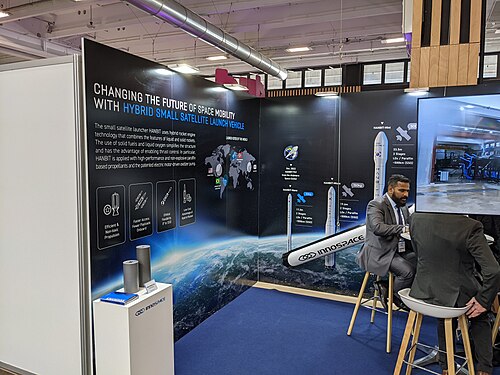
Innospace

Daejeon, South Korea commercial

Innospace is a South Korean private launch vehicle company founded in 2017 and headquartered in Daejeon, developing liquid-propellant small rockets for nanosatellite and microsatellite deployment under the HANBIT family of launch vehicles — representing the vanguard of South Korea's emerging commercial launch sector alongside government programs like the KSLV-II Nuri rocket. The company achieved a landmark milestone in March 2023 when its HANBIT-TLV (Technology Launch Vehicle) executed a successful suborbital test flight from the Alcântara Launch Center in Brazil — the first successful launch of a Korean private liquid-fuel rocket. The vehicle used a liquid oxygen / ethanol propulsion system developed entirely in-house, demonstrating core propulsion, structural, and flight control technologies in a controlled suborbital trajectory. This made Innospace the first Korean private company to successfully fly a liquid rocket to space. Building on HANBIT-TLV experience, Innospace is developing the HANBIT-Nano vehicle targeting 50 kg to sun-synchronous orbit, and the HANBIT-Micro targeting 200+ kg to SSO for commercial small satellite operators. The company's development program has received support from Korea's Ministry of Science and ICT and the Korea Aerospace Research Institute (KARI) ecosystem of technology transfers and test facilities, while maintaining private company commercialization rights. Innospace competes in the global small launch market alongside RocketLab, Exolaunch rideshare via SpaceX, and emerging Asian launch providers including iSpace Japan and China's Galactic Energy. The company targets commercial launch service contracts beginning in the mid-2020s.

Daejeon, South Korea · Est. 2017
Launch Services

Innospace Korea

Sejong City, South Korea commercial

Innospace Korea is the corporate entity of Innospace — South Korea's first successful commercial liquid-fuel rocket company, founded in 2017 and headquartered in Sejong City, South Korea. The company achieved a historic milestone in March 2023 when its HANBIT-TLV (Technology Launch Vehicle) successfully completed a suborbital test flight from the Alcântara Launch Center in Brazil — the first successful orbital-trajectory flight of a Korean private company's liquid-propellant rocket. Innospace develops the Hanbit family of launch vehicles using in-house developed liquid oxygen and ethanol propulsion systems, targeting the growing market for dedicated small satellite launch services in Asia and globally. The development roadmap progresses from the HANBIT-TLV suborbital demonstrator toward the HANBIT-Nano orbital vehicle targeting approximately 50 kg to sun-synchronous orbit, and the larger HANBIT-Micro targeting 200+ kg payload class for commercial satellite constellation deployment missions. South Korea's commercial space sector has emerged in parallel with the national KSLV-II (Nuri) government rocket program — Korea's first domestically developed orbital launch vehicle — with Innospace leading the private commercial launch segment. The company benefits from Korean government support through the Ministry of Science and ICT's commercial space promotion programs and from Korea's established aerospace engineering ecosystem. Innospace aims to provide dedicated launch services from Korean and international launch sites, competing with Rocket Lab, ISRO's SSLV and PSLV, and emerging Asian commercial launch providers for Asia-Pacific small satellite deployment contracts requiring precise orbital insertion to specific target orbits.

Sejong City, South Korea · Est. 2017
Launch Vehicles

Instituto de Aeronáutica e Espaço (IAE)

São José dos Campos, Brazil government

Instituto de Aeronáutica e Espaço (IAE) is a Brazilian military aerospace research institute under the Department of Aerospace Science and Technology (DCTA), which reports to the Brazilian Air Force. Formally established in 1969 in São José dos Campos, with roots tracing to the founding of Brazil's aerospace research complex, CTA, in 1954, IAE is responsible for developing Brazil's sounding rockets and orbital launch vehicles. Its Sonda series (I through IV) and the VS-30, VS-40 and VSB-30 sounding rockets have flown scientific and microgravity payloads for decades, including joint campaigns with Germany's DLR. IAE leads development of the VLS (Veículo Lançador de Satélites) and the smaller VLM-1 (Veículo Lançador de Microssatélites) orbital launch vehicles, intended to give Brazil an indigenous small-satellite launch capability from the Alcântara Launch Center. It also runs the 14-X hypersonic scramjet demonstrator program, which conducted a flight test in December 2021. IAE works alongside Brazil's National Institute for Space Research (INPE) and the Alcântara and Barreira do Inferno launch sites as one of the pillars of the Brazilian space program, though unlike INPE it focuses on launch vehicles and propulsion rather than satellites. The institute is funded through the Air Force budget rather than commercial revenue, and its flagship VLS program has suffered repeated schedule slips and a fatal pad accident in 2003. IAE remains active, continuing VLM and sounding-rocket development as of 2026.

São José dos Campos, Brazil · Est. 1969
Launch Services Verified

Interstellar Technologies

Taiki, Japan commercial

Interstellar Technologies (IST), founded in 2003 and headquartered in Taiki, Hokkaido, Japan, is Japan's first private space company to achieve orbital rocket development, known for the MOMO series of small suborbital sounding rockets and the ZERO orbital launch vehicle under development. The company was co-founded by internet entrepreneur Takafumi Horie (former Livedoor CEO, widely known in Japan as "Horiemon") alongside aerospace engineers, with operations based in rural Hokkaido rather than traditional urban aerospace clusters. IST's MOMO is a single-stage liquid-propellant (liquid oxygen and ethanol) suborbital rocket approximately 10 meters tall and 500 kg at liftoff, designed to reach 100+ km altitude (the Kármán line) for microgravity research, atmospheric science, and technology demonstration payloads. After early failures in 2017 and 2018, MOMO-3 became the first privately developed Japanese rocket to reach space in May 2019, reaching 113.4 km altitude. Subsequent MOMO flights continued achieving suborbital trajectory success, establishing IST as Japan's leading private suborbital launch provider with a cadence surpassing the JAXA sounding rocket program in commercial responsiveness. ZERO is IST's planned two-stage orbital rocket targeting ~200 kg payload to LEO, designed with liquid oxygen/liquid methane propulsion and reusable first-stage architecture. ZERO would make IST Japan's first privately developed orbital launch vehicle, competing with JAXA's Epsilon and H-IIA/H3 for small satellite rideshare and establishing Hokkaido's Taiki launch corridor as Japan's commercial spaceport. IST differentiates through extremely low costs achieved through Hokkaido's cheap land, open-sky access, and lean team culture inspired by Silicon Valley startup methods applied to aerospace — an approach Horie calls "garage rocket" development that challenges Japan's traditional large-contractor aerospace development model.

Taiki, Japan · Est. 2013
Launch Services Verified

Isar Aerospace

Ottobrunn, Germany commercial

Isar Aerospace reached orbit on 5 September 2026 on the second flight of its Spectrum rocket from Andøya, the first orbital launch by a commercial company from continental Europe. Isar Aerospace is a German aerospace company founded in March 2018 by Daniel Metzler (CEO), Markus Brandl, and Josef Peter Fleischmann, who met at Technical University of Munich. Headquartered in Ottobrunn near Munich, the company has grown to over 400 employees from 50+ nations across five international locations. Former SpaceX executive Bulent Altan serves as chairman. Isar develops the Spectrum rocket, a 28-meter tall, 2-meter diameter two-stage launch vehicle powered by ten in-house developed Aquila engines burning liquid oxygen and propane, targeting 1,000 kg to LEO at €10,000 per kg. With more than €400 million before a €270 million Series D in June 2026 in total funding including a €165 million Series C and €70 million extension from NATO Innovation Fund, Isar signed contracts to launch from Andøya, SaxaVord in Scotland, and CNES's Guiana Space Centre. On March 30, 2025, Isar became the first European commercial company to launch an orbital rocket from Continental Europe, though the maiden flight failed at T+30 seconds. The company is building the world's most modern production facility near Munich capable of producing 40 Spectrum rockets annually, targeting 6-8 launches by 2028.

Ottobrunn, Germany · Est. 2018 $310M raised
Satellite Manufacturing Verified

Israel Aerospace Industries

Lod, Israel commercial

Israel Aerospace Industries (IAI), founded in 1953 and headquartered in Lod, Israel, is Israel's state-owned aerospace and defense company and one of the world's most technically sophisticated small satellite manufacturers — building reconnaissance satellites, communications satellites, and the Shavit launch vehicle for the Israeli government while exporting satellite technology globally. IAI's OFEQ (Ofek) series of reconnaissance satellites are Israel's classified intelligence-gathering constellation, launched by the Shavit rocket from the Palmachim air base on westward retrograde trajectories over the Mediterranean to avoid overflying hostile neighbors — one of only two such westward-launched satellite programs globally. OFEQ satellites carry electro-optical and synthetic aperture radar (SAR) imaging payloads providing strategic intelligence on regional military developments. IAI manufactures the buses, payload integration, and ground segment for the classified OFEQ constellation on behalf of the Israeli Defense Intelligence. IAI's Space Systems division also produces EROS (Earth Remote Observation Satellite) commercial high-resolution optical observation satellites, operated by ImageSat International (ISI), providing sub-meter resolution imagery commercially and to government intelligence customers. The EROS satellites demonstrate that IAI's classified reconnaissance bus technology has direct commercial counterpart applications. The Shavit (Comet) is a three-stage solid-fuel launch vehicle developed from Israel's Jericho ICBM heritage, capable of placing 350 kg into polar retrograde LEO from Palmachim — one of the smallest national orbital launch vehicles ever developed. Shavit launched Israel's first satellite (OFEQ-1) in 1988, making Israel the eighth nation to independently achieve orbital launch capability. IAI exports satellite technology and systems to Singapore (TecSAR), India (co-development programs), and other partner nations. The company competes with Elbit Systems in Israeli defense, and with Airbus DS and Thales Alenia in international satellite procurement, generating over $3.5B annual revenue across its aerospace, space, and defense divisions.

Lod, Israel · Est. 1953 $5.00B
Satellite Manufacturing

Israel Aerospace Industries Space

Lod, Israel commercial

Israel Aerospace Industries Space, founded in 1969 and based in Lod, Israel, is a key player in the design, development, and manufacturing of space systems. The company focuses on two primary areas: satellite manufacturing and launch vehicles. Specifically, IAI Space is known for producing the AMOS series of communication satellites and the Shavit launch vehicle. The Shavit rocket represents a significant technological capability, having been utilized for launching Israeli satellites into orbit. While details regarding specific technologies employed in either the AMOS satellites or Shavit rockets are not publicly available, the consistent production and successful deployment of these systems demonstrate expertise in areas such as orbital mechanics, spacecraft engineering, and propulsion systems. IAI Space’s history includes the development and launch of multiple AMOS satellites, providing communication services. The Shavit launch vehicle has been instrumental in establishing Israel’s independent access to space. Given its long history and dual capability in both satellite and launch vehicle production, IAI Space occupies a unique position within the global space industry. The company provides end-to-end space solutions and contributes to national space capabilities, serving as a critical asset for both commercial and governmental applications.

Lod, Israel · Est. 1969
Space Agencies Verified

ISRO

Bengaluru, India government

The Indian Space Research Organisation (ISRO) is India's national space agency, responsible for space science research and planetary exploration. Established in 1969 under the vision of Dr. Vikram Sarabhai, ISRO has developed into one of the world's most capable and cost-effective space organizations, achieving remarkable milestones including successful Mars and lunar missions. Headquartered in Bengaluru, Karnataka, ISRO operates under the Department of Space, Government of India. The agency employs approximately 17,000 scientists and engineers across multiple centers. Under Chairman Dr. V. Narayanan (since January 2025), ISRO continues advancing launch capabilities, satellite technology, and planetary exploration while maintaining its tradition of frugal engineering. ## History and Milestones India's space program began with the establishment of the Indian National Committee for Space Research (INCOSPAR) in 1962 under Dr. Vikram Sarabhai. ISRO was formed in 1969 and launched India's first satellite, Aryabhata, in 1975 using a Soviet rocket. The first successful Indian-built launch vehicle, SLV-3, flew in 1980. The Polar Satellite Launch Vehicle (PSLV), first launched in 1993, became ISRO's workhorse rocket, achieving over 50 successful consecutive missions. In 2008, Chandrayaan-1 discovered water molecules on the Moon, fundamentally changing understanding of lunar resources. The Mars Orbiter Mission (Mangalyaan) in 2014 made India the first nation to reach Mars on its maiden attempt. Chandrayaan-3 in 2023 achieved India's first lunar soft landing, making India the fourth nation to land on the Moon. The Vikram lander and Pragyan rover operated at the lunar south pole, conducting valuable scientific experiments and demonstrating ISRO's capabilities for complex missions. ## Products and Services ISRO operates the PSLV and GSLV launch vehicle families. PSLV provides reliable access to polar and sun-synchronous orbits, serving both Indian satellites and international customers through commercial arm Antrix/NSIL. GSLV Mk III (LVM3), India's heaviest operational rocket, supports geosynchronous and human spaceflight missions. India's satellite programs include the Indian National Satellite System (INSAT) for telecommunications and meteorology, the Indian Remote Sensing (IRS) satellites for Earth observation, and the Navigation with Indian Constellation (NavIC) regional navigation system. These satellites serve agriculture, disaster management, telecommunications, and national security needs. ISRO provides commercial launch services through NewSpace India Limited (NSIL), offering competitive pricing for small to medium satellite deployments. The agency has launched satellites for numerous countries, establishing India as a reliable launch services provider. ## Technology and Capabilities ISRO developed the cryogenic upper stage technology independently after technology transfer denials in the 1990s, demonstrating capability for building advanced rocket propulsion. The agency's frugal engineering approach achieves missions at significantly lower costs than Western counterparts while maintaining high reliability. The Gaganyaan program is developing human spaceflight capabilities, including crew module, launch escape system, and life support systems. ISRO has conducted uncrewed test flights and aims to launch Indian astronauts (Vyomanauts) on indigenous systems. ISRO maintains extensive ground infrastructure including the Satish Dhawan Space Centre at Sriharikota, tracking stations across India and internationally, and satellite assembly and test facilities. The agency also develops applications using satellite data for agriculture, urban planning, and disaster response. ## Business and Financial Overview ISRO operates with an annual budget of approximately $1.5-2 billion from the Indian government, significantly smaller than NASA or ESA but delivering remarkable achievements through cost efficiency. The agency's missions typically cost a fraction of comparable international programs. Commercial activities through NSIL generate revenue from satellite launches, satellite construction for foreign customers, and technology transfer. ISRO has launched over 400 foreign satellites from more than 35 countries, establishing a strong commercial track record. India's space policy reforms in 2020 opened the sector to private investment, with ISRO supporting emerging Indian space startups through technology transfer and testing facilities. This policy shift aims to expand India's share of the global space economy. ## Recent Developments In 2024, ISRO continued preparations for the Gaganyaan human spaceflight program, conducting test vehicle flights and astronaut training. The agency also advanced Chandrayaan-4 lunar sample return mission planning and Venus Orbiter Mission (Shukrayaan) development. ISRO expanded commercial operations, launching satellites for international customers and supporting India's growing private space sector. The agency also conducted PSLV and GSLV missions for national satellite programs including communications and Earth observation. Development continued on the Next Generation Launch Vehicle (NGLV), designed to provide heavy-lift capability with reusability features. ISRO also advanced small satellite launch vehicle (SSLV) operations for responsive, lower-cost access to orbit. ## Market Position ISRO ranks among the world's top space agencies in terms of launch frequency, technical capability, and mission success. The agency's cost-effective approach has established India as a preferred destination for satellite launches, particularly for smaller satellites and constellation deployments. India competes commercially with SpaceX, Rocket Lab, and other providers while maintaining unique capabilities in cost-efficient mission execution. ISRO's emerging private sector partnerships aim to expand India's space industry beyond government programs. The agency's strategic priorities include human spaceflight, planetary exploration, and expanding commercial launch services. ISRO's demonstrated success with Chandrayaan-3 and the Mars Orbiter Mission establishes credibility for increasingly ambitious future missions.

Bengaluru, India · Est. 1969
Space Agencies Verified

JAXA

Tokyo, Japan government

The Japan Aerospace Exploration Agency (JAXA) is Japan's national aerospace and space agency, formed in 2003 through the merger of three organizations: the Institute of Space and Astronautical Science (ISAS), the National Aerospace Laboratory of Japan (NAL), and the National Space Development Agency of Japan (NASDA). JAXA conducts research and development in aeronautics, space technology, and space exploration. Headquartered in Chofu, Tokyo, JAXA operates major facilities including the Tsukuba Space Center, Tanegashima Space Center, and Sagamihara Campus. The agency employs approximately 1,500 staff and operates with an annual budget of ¥215.5 billion (JFY2023). Under President Hiroshi Yamakawa, JAXA pursues exploration, Earth observation, and technology development programs. ## History and Milestones Japan's space program dates to 1955 with the launch of the Pencil rocket. NASDA was established in 1969 for satellite and launcher development, while ISAS focused on space science. Japan launched its first satellite, Ohsumi, in 1970, becoming the fourth nation to orbit a satellite. The H-II rocket, first launched in 1994, established Japan's independent heavy-lift capability. The H-IIA, introduced in 2001, became Japan's primary launch vehicle with an excellent success rate. Japanese astronauts have participated in Space Shuttle and ISS missions, with the Kibo laboratory module contributing to the station since 2008. JAXA achieved notable exploration milestones including the Hayabusa mission, which returned asteroid samples to Earth in 2010—a world first. Hayabusa2 returned samples from asteroid Ryugu to Earth in 2020. These missions demonstrated Japan's prowess in deep space exploration and precision navigation. ## Products and Services JAXA's operational medium-lift launcher is H3, which entered service in 2024 with a new LE-9 engine and flexible configurations. The H-IIA, Japan's workhorse since 2001, flew its 50th and final mission on 28 June 2025 (16:33 UTC) from Tanegashima, carrying the GOSAT-GW climate satellite; H-IIB had already been retired after the last HTV cargo flight in 2020. Japan's satellite programs include the Advanced Land Observing Satellite (ALOS) series for Earth observation, the Quasi-Zenith Satellite System (QZSS) for regional navigation enhancement, and communications satellites. JAXA also develops and operates scientific satellites for astronomy and space physics research. The agency provides astronaut services, with Japanese astronauts serving on ISS expeditions and contributing to international partnerships. JAXA is developing lunar exploration capabilities through the Lunar Polar Exploration (LUPEX) mission partnership with ISRO and other international collaborations. ## Technology and Capabilities JAXA has developed advanced technologies in propulsion, materials, and robotics. The LE-9 engine uses an expander bleed cycle for high reliability. The agency's expertise in sample return missions—demonstrated by Hayabusa and Hayabusa2—represents world-leading capability in deep space navigation and precision operations. The H-II Transfer Vehicle (HTV), called "Kounotori," delivered cargo to the ISS from 2009 to 2020, demonstrating Japan's unmanned spacecraft capabilities. Its successor, HTV-X, will serve the station and potentially support lunar Gateway operations. JAXA maintains testing and tracking facilities including acoustic, thermal vacuum, and vibration testing at Tsukuba, plus ground stations for mission operations. The agency also develops technologies for space debris removal, satellite servicing, and in-space propulsion. ## Business and Financial Overview JAXA operates as an independent administrative institution funded primarily by the Japanese government, with an annual budget of ¥215.5 billion (JFY2023). The agency contracts with Japanese aerospace companies including Mitsubishi Heavy Industries, IHI Aerospace, and NEC for spacecraft and launch vehicle development. Commercial launch services are marketed through MHI, which operates H-IIA and H3 launches. Japan seeks to increase its share of the commercial launch market through H3's competitive pricing and reliability. International partnerships include collaboration with NASA on the Artemis program, ESA on various missions, and bilateral agreements with numerous countries. JAXA provides satellite services to international customers and participates in global space science collaborations. ## Recent Developments In 2024, JAXA achieved the first successful H3 launch following an initial failure in 2023, validating the new launch vehicle. The agency advanced lunar exploration preparations, including the SLIM (Smart Lander for Investigating Moon) mission, which achieved Japan's first lunar landing in January 2024. JAXA continued asteroid sample analysis from the Hayabusa2 mission and advanced the Martian Moons eXploration (MMX) mission for launch to Phobos. The agency also developed the HTV-X cargo vehicle and contributed to international Mars sample return planning. The agency expanded commercial space initiatives and private sector partnerships while advancing Earth observation capabilities and maintaining ISS operations. JAXA also developed technologies for the proposed Lunar Gateway station. ## Market Position JAXA represents Japan's comprehensive space capabilities, maintaining independent access to space while contributing to international partnerships. The agency competes with other launch providers through H3 while collaborating with NASA, ESA, and other agencies on exploration. Japan's aerospace industry, led by MHI, IHI, and Kawasaki Heavy Industries, supports JAXA's programs while developing commercial opportunities. The government has established space as a strategic sector, supporting industry growth and international competitiveness. JAXA's strategic priorities include lunar exploration, Mars sample return, Earth observation, and technology development for sustainable space activities.

Tokyo, Japan · Est. 2003
Spaceports Verified

Jiuquan Satellite Launch Center

Jiuquan, China government

Jiuquan Satellite Launch Center (JSLC), located in the Gobi Desert in Inner Mongolia at the Ejin Banner area of Alxa League (sometimes referred to as being in Jiuquan, Gansu Province, though it straddles the Gansu-Inner Mongolia border), is China's oldest, largest, and most historically significant space launch facility — home to all of China's crewed Shenzhou spacecraft launches and a major hub for both government and commercial Chinese rocket operations. Established in 1958 as China's first missile testing range under Project 596 (China's first ICBM development program), JSLC began satellite launch operations with China's first satellite, Dong Fang Hong 1 ('The East is Red'), launched April 24, 1970 on the Long March 1 rocket — a date now celebrated as China Space Day. The facility is located at approximately 41°N latitude in an arid desert basin chosen for its sparse population, flat terrain, clear skies, and favorable range safety conditions for eastward orbital insertion. JSLC is China's primary crewed spaceflight launch facility: all Shenzhou crewed missions including Yang Liwei's historic first Chinese human spaceflight (October 2003, Shenzhou 5), the Tiangong space station crew rotation missions, and the upcoming crewed lunar program will launch from JSLC's Launch Area 4 (Shenzhou launch complex). The facility also supports Tianzhou cargo spacecraft launches supplying China's Tiangong CSS. Beyond government missions, JSLC has become a hub for China's commercial launch industry. Private rocket companies including LandSpace (Zhuque-2 methane rocket), Galactic Energy, iSpace, and CAS Space operate or have operated from JSLC launch pads under China's commercial space liberalization policies, using the government facility's range safety infrastructure while operating their own vehicles. The facility's large footprint accommodates multiple active launch pads across different launch areas.

Jiuquan, China · Est. 1958
Launch Vehicles Verified

Kawasaki Heavy Industries Space

Kobe, Japan commercial

Kawasaki Heavy Industries Space Division (KHI, TYO:7012) is the aerospace manufacturing arm of Japan's iconic heavy industry conglomerate, responsible for producing critical structural components for JAXA's launch vehicle programs including the H-IIA, H3, and Epsilon rockets — particularly payload fairings, interstage structures, and spacecraft payload attachment fittings. Kawasaki manufactures the payload fairing (PLF) for the H-IIA and H3 rockets — the aerodynamic nose cone that protects the satellite from aerodynamic heating and acoustic loading during atmospheric ascent, then separates at altitude to expose the payload to space. The H3's 5.4 m diameter fairing is one of Japan's largest, capable of accommodating large GEO telecommunications satellites and Earth observation spacecraft. Kawasaki also produces key structural elements of the H3's first and second stages including propellant tank sections, interstage adapters, and equipment bays — applying its aerospace manufacturing expertise in high-strength aluminum alloys, composite materials, and precision machining. For spacecraft, KHI manufactures payload adapters and separation systems that mechanically connect and then cleanly release satellites from the rocket's upper stage. Beyond launch vehicles, Kawasaki's aerospace division produces structural components for commercial aircraft (Boeing 777/787 fuselage sections) and defense platforms (P-1 maritime patrol aircraft, C-2 transport), sharing manufacturing processes and quality systems across programs. KHI participates in the lunar exploration supply chain through structural component work for JAXA's planned Lunar Polar Exploration mission (LUPEX) and H3 missions carrying lunar probes. The Kobe and Nagoya facilities operate under JISQ9100 aerospace quality management.

Kobe, Japan · Est. 1969
Investment Verified

Khosla Ventures

Menlo Park, United States commercial

Khosla Ventures is a San Francisco-based venture capital firm with approximately $15 billion in assets under management. While not a space technology company itself, Khosla Ventures has established a significant presence as a key investor in the burgeoning space industry. The firm focuses on backing companies driving technological advancement across multiple sectors, and space technology represents a notable component of its investment portfolio. Khosla Ventures’ strategy centers around early-stage investments in potentially disruptive companies. Notably, the firm was an early investor in Rocket Lab, a vertically integrated space company specializing in small satellite launch services and space systems. This investment highlights Khosla Ventures’ focus on companies challenging traditional approaches to space access and infrastructure. Beyond Rocket Lab, the firm has completed over 20 deals within the space sector, indicating a sustained commitment to the industry’s growth. Given the limited publicly available information regarding specific portfolio companies beyond Rocket Lab, the full scope of Khosla Ventures’ space investments remains somewhat opaque. However, their early-stage focus suggests an interest in supporting innovative technologies and business models within areas like launch, satellite technology, space-based services, and potentially in-space resource utilization. Khosla Ventures differentiates itself through its willingness to invest in high-risk, high-reward ventures, particularly at the seed and Series A stages. This positions them as a critical funding source for emerging space companies aiming to disrupt established players and accelerate the development of next-generation space technologies.

Menlo Park, United States · Est. 2004
Launch Vehicles

Khrunichev State Research Center

Moscow, Russia government

Khrunichev State Research Center, founded in 1916 and based in Moscow, Russia, is a major Russian manufacturer specializing in launch vehicles, spacecraft, and propulsion systems. The company is best known as the primary manufacturer of the Proton rocket, a long-serving and reliable workhorse for both Russian government and commercial payloads to various orbits. Beyond the Proton, Khrunichev is actively developing the next-generation Angara rocket family, intended to replace existing launch systems and provide Russia with independent access to space. A key component of Khrunichev’s offerings is the Briz upper stage, utilized with both Proton and Angara rockets to enhance payload delivery capabilities and mission flexibility. This upper stage provides in-space maneuvering and precise orbital insertion. While specific details regarding spacecraft production are limited in available information, the company’s stated capabilities encompass the full spectrum of space systems development. As a historic aerospace facility with over a century of experience, Khrunichev plays a critical role in Russia’s space program. The company’s continued development of the Angara family signifies a commitment to maintaining independent launch capabilities and adapting to evolving space access needs. Given the limited publicly available information, a comprehensive assessment of Khrunichev’s customer base is difficult. However, as a major state-owned enterprise, it is understood to serve primarily the Russian government and its space agencies, while also historically providing launch services to international commercial clients.

Moscow, Russia · Est. 1916
Space Agencies Verified

Korea Aerospace Research Institute

Daejeon, South Korea government

The Korea Aerospace Research Institute (KARI), headquartered in Daejeon, South Korea, is the nation's principal government aerospace research and development organization — responsible for developing South Korea's launch vehicle technology, Earth observation satellite programs, space exploration initiatives, and aviation research, operating since May 2024 as an affiliated research institute of the Korea AeroSpace Administration (KASA). Founded in 1989, KARI's signature achievement is the Nuri (KSLV-II) launch vehicle — South Korea's first domestically designed and manufactured orbital rocket, developed entirely without foreign technology transfer assistance following U.S. restrictions on Korean launch vehicle development. Nuri is a three-stage liquid-propellant rocket powered by a cluster of 75-ton-force KRE-075 engines burning liquid oxygen (LOX) and kerosene. After a partial success in October 2021, Nuri achieved its first successful orbital launch in June 2022, placing a 1.3-ton payload into a 700km sun-synchronous orbit — making South Korea the seventh nation to independently develop and launch a 1+ ton satellite. A third launch in May 2023 successfully deployed the Next Generation Small Satellite-2 (CAS500-2) and multiple cubesats. The Korea Space Launch Vehicle (KSLV-II) program cost approximately 1.96 trillion Korean won ($1.5B USD) and employed over 300 domestic companies. KARI's KOMPSAT (Korea Multi-Purpose Satellite) program has produced a series of Earth observation satellites since KOMPSAT-1 (1999), progressing through electro-optical, SAR, and hyperspectral imaging satellites. KOMPSAT-3A provides 0.55-meter panchromatic resolution and 2.2-meter multispectral resolution; KOMPSAT-5 delivers X-band SAR imagery. KOMPSAT imagery is used for national security, disaster monitoring, urban planning, and export to international customers. KARI is developing the Korea Pathfinder Lunar Orbiter (Danuri), South Korea's first lunar mission launched in August 2022 aboard a SpaceX Falcon 9, which entered lunar orbit in December 2022 and carries a NASA ShadowCam instrument to image permanently shadowed craters. South Korea's independent launch capability and growing deep space ambitions position KARI as a rising mid-tier space agency alongside JAXA, ISRO, and CSA.

Daejeon, South Korea · Est. 1989
Launch Services Verified

LandSpace

Beijing, China commercial

LandSpace is a Chinese private launch company founded in 2015 and based in Beijing, best known as the developer of the Zhuque-2 rocket — the world's first methane-liquid oxygen (methalox) rocket to successfully reach orbit, achieving that milestone in July 2023. LandSpace was founded by Zhang Changwu and backed by a consortium of Chinese state and private investors. Zhuque-2, also known as TQ-2, uses the TQ-12 methalox engine and targets small-to-medium payloads up to 6,000 kg to LEO. The company is developing Zhuque-3, a fully reusable medium-lift rocket with Falcon 9-style landing legs, targeting first flight in 2025-2026. LandSpace operates from the Jiuquan Satellite Launch Centre and has established itself as one of China's leading commercial launch providers, competing with iSpace, Galactic Energy, and Orienspace.

Beijing, China · Est. 2015
Launch Vehicles Verified

LinkSpace

Beijing, China commercial

LinkSpace, founded in 2014 and based in Beijing, China, is a private aerospace company focused on the development and operation of launch vehicles and reusable rocket technology. The company positions itself as a pioneer in Vertical Takeoff, Vertical Landing (VTVL) technology within the Chinese space sector. This indicates a core business strategy centered around reducing the cost of space access through fully and rapidly reusable launch systems. While detailed information regarding specific rocket models or engine technologies is currently limited in publicly available sources, LinkSpace’s focus on VTVL suggests significant investment in advanced guidance, navigation, and control systems, as well as potentially novel propulsion methods to facilitate precise landing capabilities. The development of reusable rockets requires expertise in areas such as materials science, thermal protection systems, and autonomous flight control – all critical components of a successful program. As China’s first private rocket company to publicly pursue VTVL technology, LinkSpace occupies a unique position within the rapidly evolving Chinese commercial space landscape. While specific mission details or customer lists are not currently available, the company’s stated focus suggests an ambition to serve both the domestic Chinese launch market and potentially international customers with cost-effective and responsive launch services. Given the limited publicly accessible information, a comprehensive assessment of LinkSpace’s market position is challenging. However, its early entry into reusable rocket technology within China signifies a commitment to innovation and a potential to disrupt the traditional launch services paradigm. Further developments and public disclosures will be key to understanding the company’s long-term trajectory and competitive standing.

Beijing, China · Est. 2014
Propulsion Verified

Liquid Propulsion Systems Centre

Valiamala, India government

The Liquid Propulsion Systems Centre (LPSC) is a key constituent of the Indian Space Research Organisation (ISRO), operating under the Department of Space, Government of India. Established in 1986 and located in Valiamala, India, LPSC is dedicated to the development and production of liquid propulsion systems for India’s launch vehicles and space programs. Its core business centers around rocket engine technology, encompassing both development and manufacturing. LPSC’s key technological focus lies in cryogenic engine development, demonstrated through programs like the development of engines for heavier lift launch vehicles. The center is also responsible for the production of the Vikas engine, a workhorse propulsion system utilized in several ISRO launch vehicles. Current efforts include the development of semi-cryogenic engines, representing an advancement in propulsion technology and potentially increasing payload capacity. As an integral part of ISRO, LPSC directly supports critical launch vehicle propulsion needs for all of India’s space missions. While specific customer details beyond ISRO are not publicly available, the center’s output is fundamental to the success of India’s national space program. LPSC’s unique value proposition lies in its in-house capability to design, develop, and manufacture a complete range of liquid propulsion engines, reducing reliance on external suppliers and fostering self-reliance in critical space technology for India. This internal expertise is crucial for sustaining and advancing India’s independent space capabilities.

Valiamala, India · Est. 1986
Spaceports Verified

Mahia Launch Complex

Mahia Peninsula, New Zealand commercial

Mahia Launch Complex (Launch Complex 1, or LC-1) is Rocket Lab's primary launch site, located on the Mahia Peninsula on the East Cape of New Zealand's North Island. Opened in 2017, it was the world's first private orbital launch complex and the first in the Southern Hemisphere to successfully reach orbit. The remote coastal location provides clear over-ocean flight paths for a wide range of orbital inclinations and avoids populated downrange areas. LC-1 consists of two pads (LC-1A and LC-1B), enabling back-to-back Electron launches without pad refurbishment downtime. The site has supported dozens of Electron launches with a high cadence that no other small launch provider has matched. New Zealand's unique space launch regulation under the Outer Space and High-altitude Activities Act 2017 governs operations at the site.

Mahia Peninsula, New Zealand · Est. 2016
Spaceports Verified

Maritime Launch Services

Dartmouth, Canada commercial

Maritime Launch Services, founded in 2016 and headquartered in Halifax, Nova Scotia, is Canada's commercial launch services company developing Spaceport Nova Scotia near Canso on Nova Scotia's Atlantic coast — positioning Canada's first commercial spaceport at 45°N latitude with Atlantic Ocean downrange for access to polar, sun-synchronous, and east-coast launch trajectories serving growing Canadian and international small satellite constellation demand. Maritime Launch's spaceport at Canso provides geographical access to orbit that Canada's existing public launch capability (sounding rockets only) cannot offer: polar and sun-synchronous orbits from a Canadian-soil launch site using Atlantic downrange clearance over water without overflight of populated coastal areas. The 45°N latitude efficiently accesses inclinations from polar (90°) to mid-inclination (~45°) used by communications and remote sensing constellations, with summer launch windows aligned with daylight operations and winter windows providing SSO launch timing. The company partnered with Reaction Dynamics (Montreal-based hybrid rocket propulsion startup) for the Aurora-8 orbital launch vehicle — a small-lift rocket using Reaction Dynamics' hybrid propulsion technology targeting approximately 300-500 kg to LEO rideshare missions. In November 2025, Maritime Launch completed its first Barracuda suborbital test launch, demonstrating the spaceport's operational launch infrastructure and range safety procedures ahead of orbital vehicle development completion. Maritime Launch serves Canada's growing commercial space sector: companies like Telesat (LEO constellation), Satellite Vu, and defense customers seeking Canadian sovereign launch access that does not require export control approval from US or European launch providers. The company competes with PSCA (Kodiak Island, Alaska), Andøya Space (Norway), and SaxaVord (UK) for sub-2,000 km inclination LEO commercial launch contracts.

Dartmouth, Canada · Est. 2016
Spaceports Verified

Mid-Atlantic Regional Spaceport

Wallops Island, United States government

The Mid-Atlantic Regional Spaceport (MARS) is a commercial spaceport located at NASA's Wallops Flight Facility on Wallops Island, Virginia, operated by the Virginia Commercial Space Flight Authority. Founded in 1995, MARS hosts Northrop Grumman's Antares rocket launches (which carry Cygnus cargo vehicles to the ISS under NASA's CRS contracts) and Rocket Lab's US launch complex (LC-2), used for Electron missions from US soil primarily for national security customers. The spaceport's Pad 0A serves Antares/Cygnus; Pad 0B is available for other medium-class vehicles. MARS benefits from a mid-Atlantic coastal location with overwater flight paths to a range of orbital inclinations. Virginia has invested heavily in spaceport infrastructure as part of the state's space economy development strategy, including range upgrades shared with NASA Wallops.

Wallops Island, United States · Est. 1995
Manufacturing Verified

MT Aerospace

Augsburg, Germany commercial

MT Aerospace, founded in 1970 and based in Augsburg, Germany, is a leading manufacturer of lightweight structures and components for the international space and aerospace industry. The company focuses on both manufacturing and launch services, specializing in metal and composite material solutions. MT Aerospace develops and produces critical parts for launch vehicles and spacecraft, positioning itself as a key player in the European space supply chain. A core strength of MT Aerospace lies in its unique production technologies, allowing for the creation of highly specialized and complex aerospace components. Notably, the company is the largest supplier of components for the Ariane European launcher program outside of France, demonstrating a significant and established role in a major international space initiative. Recent news highlights a change in executive leadership with Ulrich Scheib appointed as the new Chairman of the Executive Board, signaling continued development and strategic direction for the company. While specific customer details beyond the Ariane program are not publicly available, MT Aerospace’s position as a major supplier to this program underscores its capabilities and reliability within the demanding aerospace sector. MT Aerospace differentiates itself through its specialized expertise in lightweight structures and its substantial contribution to the Ariane program, indicating a strong focus on quality, precision engineering, and a commitment to supporting European space access.

Augsburg, Germany · Est. 1970
Space Agencies Verified

NASA Marshall Space Flight Center

Huntsville, United States government

NASA’s Marshall Space Flight Center, established in 1960 and located in Huntsville, Alabama, serves as the agency’s lead center for propulsion systems and a key contributor to both launch vehicles and broader space systems development. With a workforce of over 6,000, Marshall has a storied history in rocketry, notably developing the Saturn V rockets that propelled the Apollo missions to the Moon. Currently, the center leads development of the Space Launch System (SLS), the powerful rocket designed for deep space exploration, including the Artemis program. Beyond launch systems, Marshall is responsible for significant contributions to space-based observatories, including the Chandra X-ray Observatory, and has played a role in the development of space stations, including Skylab and modules for the International Space Station. The center also actively fosters the next generation of engineers through programs like the Human Exploration Rover Challenge and the Student Launch challenge, engaging students in hands-on design, build, and launch activities. Marshall’s expertise extends to technology demonstration missions, continually advancing capabilities for future space endeavors.

Huntsville, United States · Est. 1960
Media Verified

NASASpaceFlight

Orlando, United States commercial

NASASpaceFlight, founded in 2005 and based in Orlando, Florida, is a media organization specializing in coverage of launch vehicle development. The company focuses on providing news, analysis, and in-depth reporting on the global space launch industry, with a particular emphasis on emerging technologies and programs. Recent content demonstrates a strong focus on the Chinese space program, specifically tracking the development and testing of reusable launch vehicles like the LandSpace Zhuque-3. NASASpaceFlight’s core capability lies in its dedicated reporting and analysis of complex launch systems and related advancements. The organization appears to prioritize timely coverage of key milestones, such as maiden flights and testing phases, offering detailed insights into the technical aspects of these developments. This suggests a team with strong technical understanding of rocketry and space technology. While specific customer details are not publicly available, NASASpaceFlight serves an audience interested in the technical and programmatic details of launch vehicle development – including space enthusiasts, industry professionals, and potentially those involved in related fields like aerospace engineering and investment. NASASpaceFlight differentiates itself through its focused reporting on launch vehicle technology, particularly its coverage of international programs and emerging players like LandSpace. This specialization positions the company as a valuable resource for those seeking detailed, up-to-date information on the rapidly evolving landscape of space launch capabilities.

Orlando, United States · Est. 2005
Satellite Manufacturing Verified

Northrop Grumman Space

Dulles, United States commercial

Northrop Grumman Space Systems is a leading provider of comprehensive space solutions for government, civil, and commercial customers. Founded in 1994, the company focuses on solving complex challenges across the space domain, leveraging a long history dating back to the beginning of the space age. Their core business encompasses the full lifecycle of space systems, including satellite manufacturing, ground systems development, and launch services – having successfully conducted nearly 100 space launch missions. Key technological capabilities center around missile defense – providing end-to-end defeat systems – as well as advanced areas like missile warning and tracking, space domain awareness, and military satellite communications. Northrop Grumman is also a leader in propulsion technology, notably developing and testing the world’s largest and most advanced solid rocket motors, including a recently tested, highly powerful segmented solid rocket booster. Recent achievements highlighted include the first-ever undocking between two commercial spacecraft in geosynchronous orbit and a contract to produce the first Hypersonic Glide Phase Interceptor. The company actively supports critical national security missions and is expanding its capabilities in emerging space technologies. Northrop Grumman Space Systems differentiates itself through its end-to-end systems integration expertise, a proven track record of successful missions, and a commitment to delivering reliable, agile, and affordable space solutions. They maintain a significant presence with career opportunities across multiple states including Arizona, California, Colorado, Maryland, Utah, and Virginia.

Dulles, United States · Est. 1994
Propulsion Verified

NPO Energomash

Khimki, Russia government

NPO Energomash, founded in 1929 and based in Khimki, Russia, is a leading rocket engine manufacturer specializing in the design, development, and production of propulsion systems. The company’s core business centers around liquid-propellant rocket engines, particularly those utilizing liquid oxygen (LOX) and kerosene as propellants. NPO Energomash focuses on high-performance engine technologies for a range of space launch applications. A key element of NPO Energomash’s capabilities lies in its established expertise in the development and production of powerful and reliable rocket engines. This is demonstrated by its production of the RD-180 engine, notably used on the United Launch Alliance’s Atlas V launch vehicle. Furthermore, the company manufactures the RD-191 engine, designed for use on Russia’s Angara family of launch vehicles. These engines represent a significant portion of their output and highlight their ability to deliver complex propulsion solutions. While specific mission details are not publicly available, NPO Energomash’s role as a supplier to both Russian and international launch providers, such as United Launch Alliance, positions it as a crucial component of global space access. The company’s longevity and continued production of widely-used engines demonstrate a consistent track record of performance and reliability. NPO Energomash’s unique value proposition lies in its decades of experience in high-performance LOX/kerosene engine technology, coupled with its established manufacturing capabilities. This allows the company to serve as a key global supplier of rocket engines for both government and commercial space programs.

Khimki, Russia · Est. 1929
Satellite Manufacturing Verified

OHB System

Bremen, Germany commercial

OHB System AG is the satellite manufacturing and system integration core of OHB SE, headquartered in Bremen, Germany. Founded in 1981, OHB System is one of Europe's three major satellite prime contractors alongside Airbus Defence and Space and Thales Alenia Space. The company's notable programs include: Galileo navigation satellites (OHB built 26 of the Galileo FOC satellites under ESA contract), SARah radar reconnaissance satellites for the German Bundeswehr, JUICE (Jupiter Icy Moons Explorer) spacecraft, and various ESA science and Earth observation missions. OHB System is distinguished by its status as Europe's largest independent (non-prime-defense-contractor) space prime, providing an alternative to Airbus and Thales that is owned by the OHB family rather than major aerospace conglomerates. The company also manages subsidiaries OHB Italia, OHB Sweden, and Rocket Factory Augsburg.

Bremen, Germany · Est. 1981
Launch Services Verified

Orienspace

Beijing, China commercial

Orienspace (东方空间, Dongfang Kongjian) is a Chinese commercial launch company founded in 2020 and based in Xi'an, developing the Gravity-1 solid-propellant launch vehicle. Gravity-1 achieved a successful inaugural launch in January 2024, orbiting 11 satellites and becoming the world's largest solid-propellant rocket to successfully reach orbit, with a payload capacity of approximately 6,500 kg to LEO. The launch took place from a sea platform in the Yellow Sea. Orienspace is developing Gravity-2, a larger liquid-propellant vehicle with reusability goals. The company attracted significant Chinese private capital and government support, positioning itself as a medium-lift complement to the solid-propellant leaders in China's rapidly growing commercial launch sector.

Beijing, China · Est. 2020
Spaceports Verified

Pacific Spaceport Complex Alaska

Kodiak, United States commercial

Pacific Spaceport Complex Alaska (PSCA), operated by the Alaska Aerospace Corporation (AAC) on Kodiak Island, Alaska, is the only commercial polar launch range in the United States — providing launch access to high-inclination, sun-synchronous, and polar orbits for small and medium-class launch vehicles from a remote Pacific coastal site that allows fully over-water ascent trajectories without overflight of populated areas. PSCA's Kodiak Island location (57°N latitude, Pacific Coast) is one of the few launch sites in the US from which rockets can fly directly north over the Pacific Ocean to reach polar orbits. This stands in contrast to the Eastern and Western Ranges at Cape Canaveral and Vandenberg Air Force Base, which are federal DoD ranges with complex range scheduling, high user fees, and capacity constraints that make them challenging for commercial responsive launch on tight timelines. PSCA operates as an independent commercial spaceport licensed by the FAA, allowing non-federal customer access with commercial-style scheduling flexibility. PSCA was established in 1991 and hosted its first orbital launch in 1998 (the Kodiak Launch Complex). The facility has supported government launch programs including DARPA, US Army, and Missile Defense Agency test flights, as well as commercial small satellite launches. The spaceport's capability set includes vertical launch pads, propellant storage, tracking antennas, and launch control facilities sized for small and medium-lift vehicles. As the commercial small launch vehicle market has grown with new providers like Astra Space (which used PSCA for multiple Rocket 3 launch attempts from 2020-2022), PSCA has positioned as a responsive alternative range for commercial operators. The spaceport competes with Cape Canaveral, Vandenberg, and new entrants like Spaceport America (New Mexico) and Mid-Atlantic Regional Spaceport (Virginia) for commercial launch business, differentiating through polar orbit direct access and independent commercial scheduling.

Kodiak, United States · Est. 1991
Launch Services Verified

Peenemünde Historical Technical Museum

Peenemünde, Germany nonprofit

The Peenemünde Historical Technical Museum (Historisch-Technisches Museum Peenemünde, HTM Peenemünde) is a technical history museum opened in 1991 on the island of Usedom in Mecklenburg-Vorpommern, Germany, located on the site of the Heeresversuchsanstalt Peenemünde (HVA) — the secret German rocket research and development facility where the V-2 (Aggregat 4) ballistic missile was developed and first flown to the edge of space in October 1942, making it the first human-built object to reach the Kármán line altitude. The museum preserves the history of one of the most significant — and morally complex — sites in the history of spaceflight. Under Wernher von Braun and Walter Dornberger, Peenemünde's engineers achieved genuine technical breakthroughs between 1937 and 1945: the A-4/V-2 was the world's first large liquid-propellant rocket, reaching altitudes of 80–100 km, using turbopump-fed ethanol/liquid oxygen propulsion, and demonstrating gyroscopic guidance that inspired all subsequent ballistic missiles and space launch vehicles. These advances directly enabled the space age — many Peenemünde engineers (von Braun's team) later developed the Redstone and Saturn rockets at NASA. But the V-2 program was also built on the forced labor of concentration camp prisoners — particularly from KZ Dora/Mittelbau, where approximately 10,000–20,000 people perished in underground V-2 production tunnels, more deaths than the weapon caused in combat. The museum addresses this duality directly, documenting both the engineering achievement and the human cost — including a permanent exhibition on the forced laborers and the ethical obligations of technology. The museum site includes the preserved power station (now the main exhibit hall), outdoor rocket exhibits including V-2 replicas and an R-7 ICBM, historic launch pad area, and technical exhibits on liquid rocket propulsion, German WWII rocket programs, and the postwar space programs that V-2 technology seeded. HTM Peenemünde serves approximately 200,000 visitors annually and is an important site for German and international aerospace history education.

Peenemünde, Germany · Est. 1991
Launch Vehicles

Pivdenmash

Dnipro, Ukraine government

Pivdenmash (also transliterated Yuzhmash), formally the Pivdenny Machine-Building Plant, is Ukraine's main rocket and satellite manufacturing facility, based in Dnipro and established on 21 July 1944. It is a state-owned enterprise reporting to the State Space Agency of Ukraine and, as of 2017, employed roughly 7,000 workers, well down from far larger Soviet-era staffing levels; its structure includes the Pavlohrad Mechanical Plant and several production complexes. Pivdenmash manufactures the launch vehicles and spacecraft designed by its long-standing partner, the Pivdenne (Yuzhnoye) Design Bureau, including the Zenit, Dnepr and Tsyklon launch-vehicle families and the first-stage core of Northrop Grumman's Antares rocket. During the Soviet period it built a series of intercontinental ballistic missiles, including the R-5M, R-16, R-36 and R-36M, and it continues some military production alongside its space work. It also has a long history of manufacturing civilian goods, including tractors, trolleybuses and other industrial equipment, a diversification dating to the Soviet era. Since Russia's full-scale invasion of Ukraine, Pivdenmash's facilities have been struck by missiles on multiple occasions, including in July and November 2022, and by August 2023 the plant had ceased producing further Antares first stages because it could no longer obtain the Russian-made engines the design required and could not otherwise resume production amid the war. The plant remains a nominally active state enterprise, though its output has been severely curtailed by the conflict.

Dnipro, Ukraine · Est. 1944
Launch Services Verified

PLD Space

Elche, Spain commercial

PLD Space (Payload Aerospace S.L.) is a Spanish launch company founded in 2011 in Elche, developing partially-reusable launch vehicles Miura 1 and Miura 5. Miura 1, a suborbital sounding rocket for microgravity research and technology development, successfully launched on October 7, 2023, serving as the technological demonstrator for the orbital Miura 5. The Miura 5 small launch vehicle can place approximately 500 kg into sun-synchronous orbit. PLD Space is targeting the first Miura 5 launch from the Guiana Space Centre in 2026, with an ESA European Launcher Challenge contract setting an orbital deadline of end-2027. The company expects to produce one TEPREL-C rocket engine every two weeks by end of 2025. PLD Space raised €488 million in total by September 2026, including a €288 million Series C in 2026. Beyond Miura 5, PLD Space revealed a family of next-generation larger rockets and the Lince crew capsule. In cargo configuration, Lince can carry 5,000 kg to ISS and return 3,400 kg; when carrying crew, it supports four or five astronauts. PLD Space aims to achieve 30 launches annually by 2030.

Elche, Spain · Est. 2011 €488M raised
Launch Vehicles Verified

Progress Rocket Space Centre

Samara, Russia government

Progress Rocket Space Centre (RKTs Progress, Ракетно-Космический Центр «Прогресс») is Russia's primary manufacturer of the Soyuz launch vehicle family, headquartered in Samara. Founded in 1894 as an aircraft repair facility and converted to rocket production in the 1950s, the Samara plant has manufactured all variants of the R-7 rocket family — the world's most-launched rocket — for nearly 70 years. Progress produces Soyuz-2.1a, Soyuz-2.1b, and Soyuz-2.1v rockets for crewed ISS missions, cargo resupply (Progress spacecraft), government satellite launches, and previously for commercial customers through Arianespace (Soyuz at Kourou, now suspended). The factory also manufactures Resurs and Meteor Earth observation satellites. Progress is part of the Roscosmos state corporation and employs several thousand people in Samara.

Samara, Russia · Est. 1894
Launch Services Verified

Reaction Dynamics

Longueuil, Canada commercial

Reaction Dynamics is a Quebec, Canada-based launch startup developing the Aurora small orbital launch vehicle using a novel eco-friendly hybrid propulsion system that burns a bio-derived polymer as fuel. Traditional hybrid rockets use inert solid fuel grains (typically HTPB rubber) combined with a liquid oxidizer (usually LOX or nitrous oxide). Reaction Dynamics' differentiating approach is replacing petroleum-derived HTPB with a biopolymer fuel derived from renewable biological feedstocks — reducing the carbon intensity of the propellant supply chain, a consideration that is growing in regulatory and public perception significance as the launch frequency of the industry scales. The Aurora vehicle targets the small satellite launch market in the 10-50 kg payload class to sun-synchronous orbit (SSO), a high-demand orbit for Earth observation and technology demonstration satellites. The company plans to launch from a Nova Scotia site, leveraging the Canadian Maritime province's favorable geographic position for SSO launches over the Atlantic — a trajectory that avoids populated downrange areas. With a target of first orbital launch by 2028, Reaction Dynamics is working toward flight heritage while competing with Rocket Lab's Electron, ABL Space Systems, and other micro-launch vehicles in a competitive market. The company benefits from the Canadian Space Agency's growing support for domestic commercial launch capability.

Longueuil, Canada · Est. 2017
Launch Services Verified

Relativity Space

Long Beach, United States commercial

Relativity Space is an aerospace manufacturer that pioneered 3D-printed rocket manufacturing and is now developing Terran R, a fully reusable medium-lift vehicle targeting the Falcon 9 market. Founded in 2015 and headquartered in Long Beach, California, the company raised over $1.3 billion from investors including Fidelity, Tiger Global, and Mark Cuban. Relativity's Terran 1 — the world's first 3D-printed orbital rocket — flew once in March 2023 but did not reach orbit; the company subsequently cancelled the program and pivoted entirely to Terran R. Terran R is designed for full reuse of both stages, targeting 23,500 kg to LEO, with a first-stage landing profile similar to Falcon 9. The rocket is manufactured using Relativity's proprietary Stargate metal printing system, which can print a full rocket in 60 days. Terran R represents a direct commercial challenge to Falcon 9's rideshare and dedicated market.

Long Beach, United States · Est. 2015 $2.45B raised
Launch Services Verified

Rendezvous Robotics

Golden, United States commercial

Rendezvous Robotics is a US space robotics startup that emerged from stealth in 2025 with $3M in seed funding, developing modular autonomous robotic systems designed for orbital construction, infrastructure assembly, and reconfigurable on-orbit operations. The company's core concept is modularity: rather than purpose-built single-function space robots, Rendezvous develops standardized robotic building-block modules that can be assembled and reconfigured in orbit to perform diverse tasks — grasping, manipulating, locomoting, sensing, or joining structural elements — depending on mission requirements. This reconfigurability addresses a fundamental challenge in space robotics where launching dedicated hardware for every possible task is prohibitively expensive. Target applications include assembling large space structures that cannot fit in a rocket fairing (solar power arrays, large telescope apertures, space station modules), maintaining and repairing on-orbit assets, and constructing cislunar or Mars-orbit infrastructure. Rendezvous Robotics competes in a space robotics landscape that includes NASA's OSAM-1 refueling demonstrator, Astroscale's servicing vehicles, and conceptual programs like DARPA's NOM4D (Novel Orbital and Moon Manufacturing, Materials, and Mass-efficient Design). The company's 2025 funding and stealth exit positions it as an early player in what analysts project will be a significant in-space services market as cislunar infrastructure development accelerates.

Golden, United States · Est. 2024
Propulsion Verified

Rocket Crafters

Cocoa, United States commercial

Rocket Crafters, founded in 2010 and based in Cocoa, Florida, is a propulsion company focused on the development of hybrid rocket motors. The company concentrates its efforts on this specific area of space technology, indicating a specialization within the broader launch vehicle industry. While detailed information regarding specific motor designs or performance characteristics is currently unavailable, the focus on hybrid propulsion suggests an approach potentially combining benefits of both solid and liquid propellant rockets – offering increased safety and potentially lower costs compared to fully liquid systems. Given the limited publicly available information, Rocket Crafters’ precise market position is difficult to ascertain. However, the company’s specialization in hybrid rocket motors positions it within a growing segment of the propulsion market. Hybrid engines are attracting renewed interest due to their potential for throttling and restart capabilities, features traditionally associated with more complex liquid rocket engines. Without access to website content or further details, it is not possible to detail specific achievements, missions, or customers. Further research would be needed to determine if Rocket Crafters has successfully completed engine tests, secured contracts, or partnered with larger aerospace organizations. The company’s long-standing presence since 2010 suggests ongoing development and potential for future contributions to the space industry.

Cocoa, United States · Est. 2010
Launch Vehicles Verified

Rocket Lab Launch Complex 2

Wallops Island, United States commercial

Rocket Lab is an end-to-end space company providing comprehensive space solutions, encompassing launch services, complete spacecraft development and manufacturing, and critical satellite components. The company operates Launch Complex 2 at Wallops Island, United States, focusing on providing dedicated and rideshare launch options for both commercial and government customers. Rocket Lab’s Electron rocket is currently the second most frequently launched U.S. rocket, and has successfully deployed payloads for organizations like the Japan Aerospace Exploration Agency (JAXA) and KAIST. Beyond launch, Rocket Lab designs and manufactures a family of configurable spacecraft – Photon, Pioneer, Lightning, and Explorer – and provides essential satellite components including star trackers, separation systems, and reaction wheels. The company is also a leader in space solar technology, providing high-efficiency solar cells and CICs powering over 1,000 spacecraft. Furthermore, Rocket Lab offers industry-leading flight and ground software solutions with a cumulative 150 years of operational experience across more than 50 spacecraft. Currently, Rocket Lab is expanding its capabilities with the development of Neutron, a medium-lift launch vehicle designed for 13-tonne payloads, and is also involved in hypersonic testing through the HASTE vehicle. This expansion aims to provide more versatile and cost-effective launch options for constellation deployment, cargo resupply, and interplanetary missions. With over 240 satellites launched by Electron and more than 1,700 satellites on orbit utilizing Rocket Lab technology, the company positions itself as a key player in enabling access to space and accelerating responsive space solutions.

Wallops Island, United States · Est. 2019
Launch Services Verified

Rocket Lab New Zealand

Auckland, New Zealand commercial

Rocket Lab New Zealand is an end-to-end space company headquartered in Auckland, New Zealand, providing comprehensive space solutions from launch services to satellite components. Founded in 2006, the company focuses on delivering reliable and responsive access to space for small to medium-sized satellites. Rocket Lab’s core offering is the Electron launch vehicle, currently the second most frequently launched U.S. rocket, offering both dedicated and rideshare launch options with tailored orbits and schedule control. Beyond launch, Rocket Lab designs and manufactures complete spacecraft – including the Photon, Pioneer, Lightning, and Explorer series – and provides critical satellite components such as star trackers, separation systems, and reaction wheels. They are also a leading provider of space solar cells and flight/ground software, with their software operating across more than 50 spacecraft for a cumulative 150 years in space. Notably, Rocket Lab has recently supported missions for organizations like the Japan Aerospace Exploration Agency (JAXA) and KAIST, demonstrating its capabilities in serving both government and academic clients. The company is currently developing Neutron, a larger 13-tonne payload class launch vehicle, to expand its service offerings for constellation deployment, cargo resupply, and interplanetary missions. Rocket Lab differentiates itself through its full-stack approach, offering an integrated suite of space technologies and services, and a commitment to responsive launch capabilities, accelerating the path to orbit for its customers.

Auckland, New Zealand · Est. 2006
Launch Services Verified

Roketsan

Ankara, Turkey commercial

Roketsan is Turkey's primary rocket and missile manufacturer, founded in 1988 in Ankara with a 50.1% stake held by MKEK (Machinery and Chemical Industry Corporation, a Turkish state defense enterprise) and the remainder by ROKETSAN employees and Turkish defense industry entities. As Turkey's largest domestic missile and rocket house, Roketsan has built a comprehensive portfolio of tactical weapons and is now extending its expertise toward space launch capabilities under Turkey's National Space Program. The company's defense product line is extensive and export-proven: the UMTAS laser-guided anti-tank missile integrated on the ATAK helicopter, the CIRIT 70mm semi-active laser rocket for precision strikes, the SOM air-launched cruise missile (600+ km range, JASSM-class), TRG-230/300 multiple launch rocket system rounds equipping Turkish ground forces, and the HISAR family of short-range air defense systems. This breadth of solid and liquid propulsion experience directly underpins Roketsan's sounding rocket and nascent orbital launch programs. Defense export clients include Pakistan, Malaysia, Saudi Arabia, and Kazakhstan. In space, Roketsan develops the Miçotesi sounding rocket family reaching altitudes of 100-200 km for atmospheric science, payload qualification, and microgravity experiments. The company is developing the RTA (Roketsan Turkish Rocket — orbital-class) solid-fueled launch vehicle to deliver small satellites to LEO, aligned with Turkey's National Space Program goal of an indigenous orbital launch capability by 2028. Turkey's Space Agency (TUA), established in 2018, coordinates with Roketsan, TÜBITAK UZAY, and Türksat on space ambitions including a domestic satellite manufacturing ecosystem and lunar missions by 2033. Roketsan's space launch work positions Turkey among an emerging tier of nations — alongside South Korea, New Zealand, Japan, and India — developing commercially and militarily relevant independent orbital access. Domestically, Roketsan competes for program leadership with TÜBITAK SAGE (guided systems R&D) and ASELSAN (electronics/avionics), while internationally Turkey's ambitions compare with the ISRO-PSLV ecosystem and KSLV-II Nuri as sovereign orbital launch programs outside the major spacefaring nations.

Ankara, Turkey · Est. 1988
Space Agencies Verified

Roscosmos

Moscow, Russia government

Roscosmos (State Space Corporation for Space Activities, Государственная корпорация по космической деятельности «Роскосмос»), restructured as a state corporation in 2015 under Director General Yuri Borisov (since 2022, succeeding Dmitry Rogozin), is Russia's government space corporation responsible for civilian and dual-use space programs, launch services, and Russia's space industrial complex — overseeing a workforce of approximately 160,000 people across dozens of enterprises including rocket manufacturers, satellite builders, and propulsion companies. Roscosmos' Soyuz rocket family is one of the most flown launch vehicles in history with over 1,900 launches since 1966. Soyuz crewed capsules have transported cosmonauts and international crew to the ISS since 2000, providing the sole crew transportation service to the station from 2011-2020 during the US Commercial Crew development gap. The Soyuz-2 family (medium lift) remains Russia's primary satellite launch vehicle. Proton-M (heavy lift, five-stage, Angara family successor) has launched GEO communications satellites, planetary missions, and heavy ISS modules including the Nauka laboratory module. Angara is Russia's next-generation launch vehicle family: Angara-1.2 (light) and Angara-A5 (heavy, 24 t LEO) use a modular Universal Rocket Module architecture that eliminates toxic UDMH/N2O4 propellants in favor of LOX/kerosene. Angara-A5's development has been prolonged, with limited flights through 2024. The Vostochny Cosmodrome (Amur Region, completed 2016) is Russia's new domestic launch site reducing dependence on Baikonur Cosmodrome (leased from Kazakhstan). Russia's invasion of Ukraine in 2022 severely disrupted Roscosmos: international commercial launch contracts cancelled, OneWeb launch halted, ESA's ExoMars Rosalind Franklin rover development paused (rover's carrier spacecraft was Russian Kazachok lander), and ESA's removal of Russian cooperation from multiple programs. Russia also withdrew from the ISS program partnership beyond 2024, though actual ISS cooperation continued. Roscosmos announced a Russian national space station (ROSS) to be built after ISS operational end.

Moscow, Russia · Est. 1992
Satellite Manufacturing Verified

RSC Energia

Korolev, Russia government

Rocket and Space Corporation Energia, founded in 1946 and based in Korolev, Russia, is a leading entity in the design and manufacturing of spacecraft and related systems. The company’s core business encompasses human spaceflight, satellite manufacturing, and the development of space station components. Energia is historically and currently focused on crewed space programs, most notably as the manufacturer of the Soyuz spacecraft – a reliable and long-serving vehicle for transporting cosmonauts and astronauts to and from orbit. A key capability of RSC Energia lies in its complete end-to-end expertise in crewed space systems, from spacecraft design and construction to launch support and mission operations. This extends to the development and provision of critical components for the International Space Station (ISS), including several Russian modules that contribute to the station’s functionality and habitable volume. Additionally, Energia manufactures the Progress cargo vehicle, essential for resupplying the ISS with necessary provisions and equipment. Founded by the pioneering Sergei Korolev, a central figure in the Soviet space program, Energia has a long legacy of achievement in space exploration. The company’s continued production of the Soyuz and Progress vehicles ensures consistent Russian participation in the ISS program and provides vital transportation capabilities for international partners. While detailed current market positioning is difficult to ascertain without further information, RSC Energia maintains a unique value proposition as one of the few companies globally with demonstrated expertise in all aspects of human spaceflight and a consistent record of reliable spacecraft delivery and operation. This positions them as a critical partner in both governmental and potentially commercial space endeavors.

Korolev, Russia · Est. 1946
Spacecraft Components Verified

RUAG Space

Zurich, Switzerland commercial

Beyond Gravity, formerly RUAG Space, is a European space supplier specializing in the design, development, and manufacture of critical components and systems for both spacecraft and launch vehicles. The company offers a broad portfolio encompassing spacecraft structures, electronics, mechanisms – including solar array mechanisms and thruster pointing mechanisms – and payload fairings for rockets like Ariane and Vega. Recent press releases highlight their provision of key systems for missions including Europe’s Galileo navigation network, the KOMPSAT-7 Earth observation satellite, and upcoming environmental and weather satellites like Sentinel-1D. Beyond Gravity demonstrates a commitment to full lifecycle support, from initial design to in-space operation. They have a 100% mission success rate in launcher products and are expanding production capacity to meet growing demand. Beyond hardware, the company is actively investing in digital transformation, incorporating technologies like AI and digital twins, and offers a Space Situational Awareness (SSA) service leveraging over six years of data. They also foster innovation through internal programs like the “Space Race” and an incubator program called “Launchpad,” as well as partnerships with universities and participation in industry think-tanks like ESPI.

Zurich, Switzerland · Est. 1999
Launch Services Verified

S7 Space

Moscow, Russia commercial

S7 Space is a Russian commercial space company and affiliate of S7 Airlines (Siberia Airlines), one of Russia's largest private carriers. Founded in 2016, S7 Space acquired the Sea Launch platform — a floating launch facility based on a converted Norwegian oil rig — from Boeing and partners in 2016, giving it a unique equatorial launch capability from the Pacific Ocean using Ukrainian Zenit-3SL rockets. The Sea Launch platform had operated commercially from 1999 to 2014 before bankruptcy. S7 Space planned to restart Sea Launch operations with Zenit rockets, but the conflict between Russia and Ukraine beginning in 2022 made this impossible, as Zenit is manufactured by Ukrainian manufacturer Yuzhnoye. S7 Space's commercial launch ambitions have been effectively frozen since 2022.

Moscow, Russia · Est. 2016
Launch Services Verified

Seagate Space

St. Petersburg, United States commercial

Seagate Space (not affiliated with Seagate Technology) is a Tampa, Florida-based startup developing offshore launch platforms for small orbital rockets. The company's Gateway-S platform is a semi-submersible offshore launch structure designed to provide launch flexibility: offshore positioning avoids overland flight path restrictions, reduces regulatory burden compared to land-based spaceports, and allows positioning for a wide range of azimuth options and inclinations. The Gateway-S received approval from the American Bureau of Shipping (ABS) as a floating spaceport in December 2024, a regulatory milestone for commercial maritime launch infrastructure. Seagate targets small launch vehicle operators (sub-1,000 kg class) seeking launch site flexibility without the infrastructure investment of a fixed land-based spaceport.

St. Petersburg, United States · Est. 2025
Launch Services Verified

Skyroot Aerospace

Hyderabad, India commercial

Vikram-1 reached low Earth orbit on its first flight on 18 July 2026, making Skyroot the first private Indian company to reach orbit. Skyroot Aerospace is India's leading private rocket company, becoming the first Indian private firm to launch a rocket to space when its Vikram-S suborbital vehicle reached 89.5 km altitude in November 2022 — a milestone enabled by ISRO's IN-SPACe framework that opened Indian space to private operators in 2020. Founded in 2018 in Hyderabad by ex-ISRO engineers, Skyroot is developing the Vikram-1 (500 kg to LEO) and Vikram-2 orbital launch vehicles using a combination of carbon-fiber composite structure and 3D-printed engines, significantly reducing manufacturing time and cost. The company has raised about $60 million in May 2026 at a $1.1 billion valuation, India's first space-technology unicorn, on top of roughly $68 million raised earlier from investors including GIC (Singapore sovereign wealth fund), Temasek, Lightspeed India, and others. Skyroot's Kalam engine series uses solid or liquid propellants depending on stage, targeting the growing Indian and global small satellite launch market.

Hyderabad, India · Est. 2018
Launch Services Verified

Southern Launch

Adelaide, Australia commercial

Southern Launch, founded in 2019 and headquartered in Adelaide, South Australia, is an Australian launch services company developing launch infrastructure on the Eyre Peninsula in South Australia — one of the most geographically advantaged locations in the Southern Hemisphere for accessing multiple orbital inclinations due to its southern latitude, sparse population, and wide safety corridor over the Southern Ocean. Southern Launch's flagship facility is Whalers Way Orbital Launch Complex, located at the southern tip of the Eyre Peninsula approximately 700 km west of Adelaide. Whalers Way's extreme southern latitude (~35°S) provides access to polar and sun-synchronous orbits with full over-ocean downrange trajectory — critical for Eastern Australian launch that avoids populated land masses. The site can also support equatorial-inclination launches for geostationary transfer trajectory insertion and retrograde orbital planes unavailable from Northern Hemisphere facilities. Southern Launch conducted Australia's first commercial rocket launch in 2022 when Southern Launch and Gilmour Space Technologies completed a suborbital test flight from the Koonibba Test Range, a smaller launch facility on the Yalata Aboriginal Lands. This marked the first rocket launched from Australian soil in over 50 years since the WRESAT program at Woomera in 1967. The company is positioning Whalers Way as a launch site for both Australian commercial rockets (Gilmour Space, Black Sky Aerospace) and international customers seeking Southern Hemisphere access. Australia's growing commercial space regulatory framework, developed by the Australian Space Agency established in 2018, has enabled the commercial launch activities that Southern Launch is targeting. The company competes with New Zealand-based RocketLab's Mahia launch site and Argentina's CELPA for Southern Hemisphere commercial launch business.

Adelaide, Australia · Est. 2017
Launch Services

Space One Japan

Tokyo, Japan commercial

Space One Japan is a Japanese aerospace company focused on the development of dedicated small satellite launch capabilities. The company is currently developing the KAIROS launch vehicle, a solid-fueled rocket designed to provide flexible and responsive orbital access for the growing small satellite market. This focus positions Space One to address the increasing demand for dedicated launches, circumventing the need for rideshare programs and offering tailored orbital delivery solutions. Key to Space One’s approach is the utilization of solid-fuel propulsion, potentially offering simplified logistics and faster turnaround times compared to liquid-fueled systems. While specific technological details are currently limited by available information, the development of KAIROS demonstrates a commitment to innovative launch solutions. Space One was selected under the JAXA-SMASH (Space Mission AMbitious challenge) initiative, indicating a level of validation and support from the Japan Aerospace Exploration Agency. This selection suggests alignment with national space strategy and potential collaboration with JAXA on future missions. Currently, details regarding specific missions or customers are unavailable. However, Space One’s development of a dedicated small launch vehicle positions it to compete within a rapidly expanding market, offering a potentially valuable service to both domestic and international customers seeking reliable and independent access to space for their small satellite constellations and payloads.

Tokyo, Japan · Est. 2018
Launch Services

Space Rickshaw

Chennai, India commercial

Space Rickshaw is an Indian NewSpace startup developing unmanned orbital laboratory platforms (space labs) and reusable re-entry capsules for microgravity research and commercial payload hosting in LEO. The company made its orbital debut with SR-0 DEMOSAT, a demonstration satellite launched in August 2024 aboard ISRO's SSLV-D3 — the Small Satellite Launch Vehicle's third development flight and the rocket's first fully successful mission, which successfully placed multiple commercial payloads into orbit. Following the SR-0 demonstration, Space Rickshaw entered commercial production with six additional satellites under manufacturing for paying customers, establishing early revenue traction. The company's re-entry capsule concept addresses a significant gap in the Indian and broader commercial space ecosystem: returning payloads from orbit remains extremely rare and expensive, as only government programs (NASA Dragon, JAXA HTV-R concepts, Russian Soyuz/Ресурс) and SpaceX Dragon routinely do so commercially. A commercial Indian re-entry capsule service would enable pharmaceutical crystallization experiments, biological sample return, and materials science research for Indian academic institutions, pharmaceutical companies, and industrial customers. Space Rickshaw operates within India's rapidly expanding NewSpace sector, accelerated by the 2023 liberalization of space regulations under IN-SPACe (Indian National Space Promotion and Authorisation Centre).

Chennai, India · Est. 2024
Launch Vehicles

Space Walker

Tokyo, Japan academic

Space Walker is a Japanese startup originating from Tokyo University of Science, focused on developing reusable suborbital spaceplanes. The company’s core business centers around providing sustainable space transportation solutions, aiming to democratize access to space – envisioning a future where space travel is as commonplace as air travel. Space Walker is currently developing a vehicle, branded “ECO ROCKET®,” designed for both manned spaceflight and satellite launch capabilities. A key technological differentiator for Space Walker is its focus on lightweight composite materials, specifically in the development of propellant tanks utilizing patented technology. They are also advancing autonomous navigation and guidance control systems to enable fully self-directed, round-trip flights. This emphasis on reusability directly addresses a major challenge in the space industry – reducing space debris and the environmental impact of disposable rockets. Space Walker’s development plan is structured around a four-stage milestone process, with a clear commitment to open innovation through collaboration between academia, industry, and government. The “ECO ROCKET®” is designed to utilize carbon-neutral liquid biomethane fuel, further reinforcing the company’s commitment to sustainable space access. While specific missions or customers are not currently detailed, Space Walker positions itself as a disruptive force in the launch market, advocating for reusable launch systems and environmentally responsible space transportation. The company aims to establish a new economic sphere in space, contributing to a more sustainable and prosperous future for humanity.

Tokyo, Japan · Est. 2017
Satellite Services Verified

Spaceflight Inc.

Seattle, United States commercial

Spaceflight Inc. is a Seattle-based aerospace company specializing in rideshare launch coordination and satellite deployment services, acquired by Firefly Aerospace in June 2023. The company provides orbital transportation services including rideshare launch coordination, mission management, payload integration, orbital transfer vehicle deployment, launch vehicle brokerage, and regulatory compliance support. Spaceflight has launched more than 270 satellites across nearly 30 rideshare missions. The company works with a diverse portfolio of launch vehicles including Falcon 9, Antares, Electron, Vega, and PSLV, providing variety and flexibility to customers. Spaceflight's Sherpa Orbital Transfer Vehicles extend mission capabilities beyond primary rideshare deployments. The company agreed with Maritime Launch to launch up to five Sherpa OTVs from Spaceport Nova Scotia. Spaceflight secured an agreement with Isar Aerospace for one dedicated launch in 2026 from Andøya, Norway.

Seattle, United States · Est. 2011
Rideshare Verified

Spaceflight Industries

Seattle, United States commercial

Spaceflight Inc. (formerly Spaceflight Industries), headquartered in Seattle, Washington and founded in 2011, is a U.S. rideshare launch services provider and satellite mission management company that aggregates manifests for small satellite launches — purchasing blocks of mass capacity on orbital launch vehicles (primarily SpaceX Falcon 9 Transporter rideshare missions, Rocket Lab Electron, and other vehicles) and reselling that capacity to satellite operators as individual manifested slots, handling all mission integration, documentation, regulatory compliance, and launch coordination complexity on the operator's behalf. Spaceflight's core value proposition is democratizing launch access for small satellite operators: instead of negotiating directly with SpaceX, managing FAA launch license applications, obtaining FCC frequency licenses, coordinating ITAR technical data exports, and managing payload processing schedules, a satellite developer can purchase a 'slot' from Spaceflight and hand off most of this complexity to Spaceflight's experienced launch services team. This intermediary role is particularly valuable for university cubesat programs, startup satellite companies launching their first satellite, and international operators who lack the regulatory relationships and technical expertise to navigate U.S. launch regulations independently. Spaceflight has coordinated hundreds of satellite launches across missions including the SSO-A SmallSat Express mission in 2018 — a landmark Falcon 9 dedicated rideshare mission carrying 64 satellites, at the time the largest number of commercial satellites deployed from a single U.S. launch — which demonstrated the viability of cost-effective rideshare as a primary launch modality for the commercial smallsat industry. The company provides integration services, satellite dispensers (including the Sherpa orbital transfer vehicle family for propulsive orbital adjustments post-separation), mission assurance, and post-launch data delivery services. Spaceflight's Sherpa propulsive tug enables 'last mile' orbital delivery: after the primary launch vehicle deploys satellites into a common rideshare orbit, Sherpa can maneuver individual payload groups to different orbital altitudes or inclinations, expanding the utility of rideshare missions for operators whose desired orbit differs from the primary mission orbit. Competitors include D-Orbit (Italy), Exolaunch, and directly contracted SpaceX Transporter rideshare slots.

Seattle, United States · Est. 2011
Launch Services Verified

SSC Space

Solna, Sweden commercial

SSC Space (currently Swedish Space Corporation) is a global provider of advanced space services with over 50 years of experience. The company focuses on enabling access to space for a diverse range of customers, including space organizations, research institutions, and commercial entities. SSC Space offers a comprehensive portfolio of services encompassing ground station networks – one of the world’s largest – launch services, and spacecraft operations & engineering support, covering all project phases from design to launch and operations. A key capability lies in its launch facilities at Esrange Space Center in Sweden, where it has launched over 600 sounding rockets and is developing orbital launch capabilities for small satellites. SSC Space also provides extensive rocket and engine testing services, demonstrated through partnerships with companies like Isar Aerospace, who have successfully tested their Spectrum rocket at Esrange. Beyond launch, the company offers specialized services through subsidiaries like LSE Space GmbH and Aurora Technology. SSC Space is actively expanding its offerings, recently introducing “SSC Go” to cater to the growing small satellite and constellation market. The company emphasizes collaboration and is involved in initiatives to strengthen Nordic and NATO space-based capabilities, as well as addressing emerging challenges in space cybersecurity and sustainable space operations.

Solna, Sweden · Est. 1972
Satellite Manufacturing

State Space Agency of Ukraine

Kyiv, Ukraine government

The State Space Agency of Ukraine (SSAU, formerly the National Space Agency of Ukraine / NKAU) is the government body established in 1992 following Ukraine's independence from the Soviet Union — responsible for developing and implementing Ukrainian state space policy, coordinating Ukraine's formidable rocket and spacecraft industrial complex, and representing Ukraine in international space cooperation, including maintaining partnerships with ESA, NASA, and bilateral agreements with spacefaring nations. Ukraine inherited a remarkable industrial space legacy from the USSR. The Yuzhnoye Design Bureau (Yuzhnoe, SDO Yuzhnoye) in Dnipro is one of the world's most experienced ballistic missile and launch vehicle design organizations — responsible for the SS-18 Satan ICBM (still the heaviest ICBM ever deployed), the Zenit launch vehicle family, the Cyclone launch vehicles, and numerous Soviet spacecraft. Yuzhmash (Yuzhny Machine-Building Plant), also in Dnipro, is the production facility that manufactured these systems at industrial scale. Together, Yuzhnoye and Yuzhmash represent Ukraine's core contribution to heavy rocket engineering. The Zenit rocket — powered by the RD-171 engine (the most powerful rocket engine ever produced, burning LOX/kerosene at 800 tonnes of thrust) — was manufactured by Yuzhmash and launched from Baikonur Cosmodrome and Sea Launch's oceangoing platform. The Sea Launch venture (a multinational consortium including Boeing, Kvaerner, RKK Energia, and Yuzhnoye/Yuzhmash) used Zenit to launch GEO communications satellites from the equatorial Pacific from 1999 to 2014, demonstrating Ukrainian rocket technology on the global commercial market. Russia's 2022 full-scale invasion of Ukraine severely disrupted SSAU and Ukraine's space industry. Dnipro, home to Yuzhnoye and Yuzhmash, has been a target of Russian missile strikes. International sanctions severed Russian engine supply chains that some Ukrainian programs depended on. SSAU has focused post-invasion efforts on maintaining continuity of essential space programs, preserving institutional knowledge, and exploring Western partnerships (with ESA, NASA, EU) to redirect Ukrainian rocket and satellite manufacturing expertise toward allied programs and commercial opportunities outside the Russian supply chain — including potential collaboration with European launch vehicle programs and satellite manufacturers.

Kyiv, Ukraine · Est. 1992
Launch Vehicles Verified

T-Minus Engineering

Delft, Netherlands commercial

T-Minus Engineering is a Dutch aerospace company headquartered in Delft, specializing in solid-fuel suborbital sounding rockets for scientific research, commercial, and national security applications. It is one of the few European firms designing and launching its own solid-propulsion rockets. Its DART sounding rocket stands about 3.5 meters tall and can reach altitudes near 200 kilometers, while the larger Barracuda platform serves higher-performance missions. T-Minus has conducted numerous launch campaigns and is developing pathways toward orbital and hypersonic test capabilities.

Delft, Netherlands · Est. 2011
Launch Services

Tehiru

Tel Aviv, Israel commercial

Tehiru is an Israeli-American aerospace startup developing a reusable air-launched small satellite launch vehicle with a hybrid rocket propulsion architecture and an electric-powered landing recovery mechanism — combining three unconventional choices in a single design philosophy aimed at cost-efficient, flexible access to LEO for payloads up to 550 kg. The air-launch approach deploys the rocket from a carrier aircraft at altitude (typically 10-12 km), gaining several advantages over ground launch: launch infrastructure is reduced to aircraft hangars rather than purpose-built pads, the launch location is flexible (any airfield with aircraft range), the starting altitude above most atmospheric drag reduces gravity losses, and orbital inclinations are selectable by varying aircraft heading rather than fixed by geographic latitude. Virgin Orbit's LauncherOne (2021-2023) was the most advanced commercial air-launch program before its bankruptcy, demonstrating both the technical feasibility and commercial challenges of the architecture. Stratolaunch's Roc carrier aircraft continues with hypersonic testbed missions. Hybrid propulsion (solid fuel with liquid or gaseous oxidizer injection, or liquid fuel with gaseous oxidizer) sits between solid rocket simplicity and liquid propellant flexibility: hybrids offer throttling capability and stop-restart capability unavailable to solids, without the complexity of full liquid propellant turbopump systems. SpaceShipTwo uses a hybrid motor, as do some experimental vehicles. Tehiru's specific hybrid formulation and oxidizer choice are proprietary. The electric landing mechanism represents the reusability innovation — using electric motors (rather than the hydraulic or pneumatic actuators common in landing leg systems) to extend landing legs and potentially power a controlled final descent phase, reducing the mass and complexity of recovery hardware. The 550 kg LEO payload target competes with Rocket Lab Electron (300 kg), Virgin Orbit LauncherOne (300 kg, retired), and at the lower end of Firefly Alpha (1,030 kg). Tehiru's Israeli roots provide access to MAFAT (Defense R&D Directorate) funding channels and Israel's deep aerospace engineering heritage from IAI, Elbit, and Rafael defense programs.

Tel Aviv, Israel · Est. 2022
Spacecraft Verified

The Exploration Company

Munich, Germany commercial

The Exploration Company (TEC) is a Munich-based European space logistics startup founded in 2021 developing Nyx, a reusable uncrewed cargo spacecraft designed to deliver supplies to the ISS, future commercial space stations (Axiom, Vast, Starlab, ORCAS), and eventually lunar surface outposts. Nyx is designed around a common spacecraft core that can be reconfigured for different mission types: a pressurized cargo module for delivering food, water, experiments, and crew consumables to stations; and a future propulsion module for higher-energy missions. The pressurized Nyx Earth module targets approximately 3,000 kg of cargo to ISS orbit — significantly less than SpaceX Dragon or Northrop Grumman Cygnus, but positioned as a smaller, more cost-competitive European alternative capable of serving the growing commercial station market that cannot be entirely serviced by U.S. providers. The reusability architecture focuses on the service module, which would perform propulsive deorbit control and potentially return the pressurized module intact for refurbishment, enabling multi-mission life. The Exploration Company is one of a cluster of European commercial spacecraft startups backed by ESA's BEPICOLOMBO Space Resources and commercial cargo partnership programs — alongside HEO Robotics, Rocket Factory Augsburg, and Isar Aerospace — that ESA is supporting as an alternative to total dependence on U.S. providers following the cancellation of Europe's own IXV and Space Rider reentry programs. TEC raised a €40.5 million Series A co-led by EQT Ventures and Red River West. Its Mission Possible capsule flew in June 2025 as a partial success (lost during descent after re-entry); the full-scale Nyx Earth flight, under ESA's LEO Cargo Return Service programme, is targeted for 2028.

Munich, Germany · Est. 2021
Spaceports Verified

Thumba Equatorial Rocket Launching Station

Thiruvananthapuram, India government

TERLS (Thumba Equatorial Rocket Launching Station) is India's first and most historically significant rocket launch site, located at Thiruvananthapuram (Trivandrum), Kerala, on the magnetic equator. Established in 1962 by Vikram Sarabhai and formally inaugurated in 1963 with a US Nike-Apache sounding rocket, TERLS marks the birthplace of India's space program — it is where ISRO was founded as an organizational concept. The magnetic equatorial location provides ideal conditions for ionospheric research using sounding rockets (magnetic field lines are nearly horizontal, enabling unique upper atmosphere studies). TERLS continues to operate as an active sounding rocket launch site for atmospheric and ionospheric research under ISRO's Vikram Sarabhai Space Centre (VSSC), which is located adjacent to it. The site is designated a UNESCO heritage site due to its role in the early global cooperative sounding rocket program in the 1960s.

Thiruvananthapuram, India · Est. 1962
Launch Services Verified

United Launch Alliance

Centennial, United States commercial

United Launch Alliance (ULA) is a premier launch services provider formed as a joint venture between Lockheed Martin and Boeing, delivering reliable access to space for U.S. national security, civil government, and commercial customers. The company successfully launched its next-generation Vulcan Centaur rocket for the first time on January 8, 2024. Vulcan Centaur is designed to replace ULA's legacy Atlas V and Delta IV rockets while providing competitive pricing for commercial missions. Powered by Blue Origin BE-4 engines, Vulcan addresses Congressional mandates to phase out Russian-made RD-180 engines used on Atlas V. The second Vulcan launch in October 2024 achieved an acceptable orbital insertion for Space Force certification, despite a solid rocket booster anomaly. Space Force certified Vulcan for National Security Space Launch missions in March 2025. ULA began Vulcan development in 2014 to compete with SpaceX's Falcon 9 while meeting national security requirements. The company has sold more than 70 Vulcan launches including 38 missions for Amazon's Project Kuiper constellation and multiple NSSL missions as part of Phase 2 launch procurement. Production of Atlas V ended in 2024, with the Delta rocket family fully retired. The company maintains the highest mission success rate in the industry, having delivered hundreds of successful launches for critical military, intelligence, and NASA missions. ULA provides assured access to space for the nation's most important payloads, combining Lockheed Martin and Boeing heritage with next-generation Vulcan capabilities to meet evolving national security and commercial space requirements.

Centennial, United States · Est. 2006
Launch Vehicles Verified

UP Aerospace

Denver, United States commercial

UP Aerospace is a privately held American suborbital launch services company founded by aerospace engineer Jerry Larson, a former Lockheed Martin engineer, with origins dating to 1998 and formal incorporation in 2004. The company is headquartered in Denver, Colorado, and conducts all of its launches from Spaceport America near Upham, New Mexico, where it was the first company to fly from the newly built spaceport. UP Aerospace's primary product is the SpaceLoft XL, a solid-fuelled sounding rocket capable of carrying research, educational and government payloads to suborbital altitudes, with parachute recovery of the payload section; the company has also flown smaller SL-series rockets. UP Aerospace has supported NASA's Flight Opportunities programme, Los Alamos National Laboratory, university researchers and U.S. military customers, and had completed around 21 SpaceLoft missions with a mixed flight-success record by the mid-2020s. The company has also announced development of an orbital small-satellite launch vehicle, Spyder, though this has not yet flown. UP Aerospace remains an active, privately held company under president Jerry Larson, operating as one of the longest-running commercial suborbital launch providers in the United States.

Denver, United States · Est. 1998
Propulsion Verified

Ursa Major

Berthoud, Colorado, United States commercial

Ursa Major is a privately held liquid rocket engine manufacturer based in Berthoud, Colorado, founded in 2015 by Joe Laurienti, a former SpaceX and Blue Origin propulsion engineer. The company specializes in turbopump-fed liquid oxygen/kerosene engines designed for commercial launch vehicles and hypersonic vehicle applications, positioning itself as a dedicated U.S.-based propulsion supplier that lets launch integrators avoid vertical integration. Its flagship products are the Hadley engine (a 5,000 lbf-class staged-combustion engine used by operators including Stratolaunch) and Ripley (a 50,000 lbf-class engine intended for medium-lift rockets). The company has also publicly disclosed Draper, a solid-liquid hybrid engine concept aimed at the hypersonic systems market. In 2024 Ursa Major announced "Lynx," a modular solid rocket motor production capability intended to shore up U.S. solid-motor supply for defense customers. Funding rounds through 2023–2024 from investors including Explorer1 Fund, BlackRock, Eclipse Ventures, and Space Capital have pushed valuations into the hundreds of millions. Government customers include the U.S. Air Force, U.S. Navy, and DARPA under hypersonic propulsion contracts. Ursa Major's strategy is to serve both the commercial smallsat-launch market and the U.S. defense propulsion base as a merchant-engine supplier.

Berthoud, Colorado, United States · Est. 2015
Launch Services

USC Astronautics

Los Angeles, United States commercial

The Department of Astronautical Engineering at the University of Southern California (USC) Viterbi School of Engineering in Los Angeles is one of the oldest and most established astronautics programs in the United States, with a curriculum spanning spacecraft design and analysis, orbital mechanics, astrodynamics, spacecraft propulsion, attitude control and dynamics, and space mission operations. USC's Los Angeles location is strategically positioned within one of the densest concentrations of aerospace and space employers in the world: The Aerospace Corporation (El Segundo), SpaceX (Hawthorne), Northrop Grumman (Redondo Beach), Raytheon Intelligence & Space (El Segundo), NASA's Jet Propulsion Laboratory (Pasadena), and Boeing Space in the region — all providing co-ops, internships, and immediate post-graduation employment for USC astronautics graduates. Research programs include liquid rocket engine development, electric propulsion for smallsats, spacecraft GNC (guidance, navigation, and control), orbital debris modeling, and space systems engineering. USC's AIAA student chapter and the Rocket Propulsion Laboratory (RPL) — a student-run organization that has successfully launched university-built sounding rockets — provide hands-on engineering experience beyond the classroom. The department trains engineers for the full spectrum of roles in the commercial and government space industry with particularly strong industry ties reflecting Los Angeles's position as America's space capital by employment.

Los Angeles, United States · Est. 1880
Launch Services Verified

Veng

Buenos Aires, Argentina commercial

Founded in 2011 and based in Buenos Aires, Argentina, Veng is a technology and services company specializing in the space sector. The company’s core business centers around the development of launch vehicles, specifically the Tronador II, indicating a focus on providing access to space. Beyond launch vehicle development, Veng offers a range of related services including satellite data solutions – combining SAR and optical information for applications in agriculture, hydrology, health, and business – and ground segment services such as antenna hosting, TT&C, data download, and software development for mission control centers. Veng demonstrates significant engineering and manufacturing capabilities, offering services from design and engineering to fabrication, assembly, integration, and testing. The company has invested in advanced facilities, including the Laboratory of Spatialization and Assurance (LEA), and recently completed installations of advanced electronic assembly lines and validation of friction stir welding techniques for structural tank manufacturing, in collaboration with institutions like CONAE and INTI. Recent activities highlight Veng’s growing international presence, with participation in industry events like Satellite 2024 in Washington D.C. and Space Show Brazil 2024. Furthermore, the company actively collaborates with CONAE on projects like the Development On-Board Computer (D-OBC), demonstrating a commitment to national space initiatives and technological advancement.

Buenos Aires, Argentina · Est. 2011
Research Verified

Vikram Sarabhai Space Centre

Thiruvananthapuram, India government

Vikram Sarabhai Space Centre (VSSC) is ISRO's lead center for launch vehicle technology, located in Thiruvananthapuram, Kerala, named after India's space program founder. Established in 1962, VSSC is responsible for the design, development, and realization of all ISRO launch vehicles — including PSLV (Polar Satellite Launch Vehicle), GSLV (Geosynchronous Satellite Launch Vehicle), GSLV Mk III (also called LVM3), and the future NGLV (Next Generation Launch Vehicle). The centre operates extensive propulsion test facilities for both solid and liquid rocket motors, composite manufacturing facilities for rocket structures, and an electronics systems laboratory. VSSC employs approximately 6,000 scientists and engineers and is the institutional brain behind India's launch capability from its first sounding rockets in the 1960s through the LVM3 rocket that launched the Gaganyaan crew module qualification mission in 2023.

Thiruvananthapuram, India · Est. 1962
Spaceports Verified

Wenchang Spacecraft Launch Site

Wenchang, China government

The Wenchang Spacecraft Launch Site is China's newest and lowest-latitude operational spaceport, located near Wenchang on Hainan Island at approximately 19.6° N — significantly closer to the equator than China's inland launch sites at Jiuquan (40.6° N), Taiyuan (37.5° N), and Xichang (28.2° N). The lower latitude provides meaningful orbital mechanics advantages: rockets launching toward geostationary transfer orbit (GTO) benefit from Earth's equatorial rotational velocity, reducing the propellant needed to achieve GEO insertion, while polar and sun-synchronous launches can proceed over open ocean rather than populated inland territory. Construction began in 2009 and the site conducted its first launch in June 2016 via the Long March 7. The facility was designed specifically for China's heavy-lift Long March 5 rocket — China's most capable operational launch vehicle at 25,000 kg to LEO — whose large 5-meter diameter core stage cannot be transported overland from the Tianjin factory complex. Hainan's coastal location enables the large stages to be sea-shipped from Tianjin, offloaded at Qinglan Harbor, and transported by road to the launch complex — a logistics chain analogous to NASA's barge transport of Saturn V stages. Major missions launched from Wenchang include: the Tianhe core module (2021) and Wentian and Mengtian laboratory modules of the Chinese Space Station, the Chang'e-5 lunar sample return mission (2020, returned 1.7 kg of lunar regolith), Chang'e-6 far-side lunar sample return (2024), and the Tianwen-1 Mars orbiter/rover (2020). The facility also hosts the Long March 8 pad and is planned to support next-generation Long March 9 super-heavy-lift vehicle and crewed lunar mission launches.

Wenchang, China · Est. 2014
Launch Vehicles Verified

Yuzhnoye Design Bureau

Dnipro, Ukraine government

Yuzhnoye Design Bureau (also transliterated Pivdenne, formally the State Enterprise "Yuzhnoye Design Bureau named after M.K. Yangel") is Ukraine's principal rocket and spacecraft design organization, headquartered in Dnipro and founded in 1951 by Soviet missile designer Mikhail Yangel. During the Soviet era it designed a series of intercontinental ballistic missiles, including the R-12, R-14 and R-16, under the OKB-586 designation; it continues ballistic-missile design work today, including the Hrim-2, alongside civilian and commercial space programs. Its launch-vehicle heritage includes the Zenit family, the Dnepr launcher (a converted R-36 ICBM used for commercial satellite launches), and the Cyclone family. Cyclone-4M remains in development without a launch site: Maritime Launch Services ended its Nova Scotia agreement in 2024 and has since signed with another launch provider. Yuzhnoye designed the first-stage core of Northrop Grumman's Antares rocket, flown on Cygnus cargo missions to the International Space Station, under a partnership with the former Orbital Sciences Corporation; Northrop moved that work to Firefly Aerospace in 2022 and the last Yuzhnoye-built stage flew in August 2023. The bureau also designs satellites, including the Sich Earth-observation series (Sich-2-1, Sich-2-M, Sich-3-O, Sich-3-P), the Mikrosat and Ionosat-Micro small satellites, and YuzhSat variants, along with a range of rocket engines and steering thrusters, including the RD-843 and RD-861K. Yuzhnoye is a fully state-owned enterprise reporting to Ukraine's State Space Agency and is in the process of being converted into a joint-stock company wholly owned by the state. It works closely with, but is organizationally distinct from, the Pivdenmash manufacturing plant that builds the hardware it designs. As of 2026 the bureau remains active despite the disruption the Russian invasion has caused to Ukraine's space-manufacturing base.

Dnipro, Ukraine · Est. 1951
Space Tourism Verified

Zero 2 Infinity

Barcelona, Spain commercial

Zero 2 Infinity is a Barcelona, Spain-based aerospace company founded in 2009 developing two complementary near-space and orbital access services: high-altitude scientific balloon flights carrying payloads and passengers to the stratosphere (~40 km), and the Bloostar orbital launch vehicle — a rockoon (rocket launched from a stratospheric balloon) designed to deliver small satellites to low Earth orbit at significantly lower cost than conventional ground-launched rockets. Zero 2 Infinity's near-space balloon program, branded as 'bloon', targets both scientific payload hosting and commercial space tourism experiences — carrying customers and experiments in a pressurized gondola suspended beneath a helium balloon that ascends over four hours to approximately 36-40 km altitude, where passengers experience the curvature of the Earth against the black sky of space (though technically below the Kármán line at 100 km). The stratosphere at these altitudes offers near-vacuum conditions beneficial for atmospheric science instruments, microgravity-analogous environments for biology experiments, and views that have been valuable for marketing experiences for brands (Red Bull, luxury goods companies) seeking the visual imagery of near-space. The balloon approach is gentler than rocket flight — no vibration, no high g-forces — making it accessible to non-astronaut passengers and fragile scientific instruments. The Bloostar orbital launch vehicle concept is the company's more ambitious program. Rather than launching from the ground, Bloostar is carried to high altitude beneath a balloon before igniting its rocket engine — gaining several significant performance advantages: launching above approximately 99% of atmospheric mass (eliminating drag losses), allowing launch from any location on Earth (not fixed to a ground launch site), and reducing the rocket's structural requirements since it need not survive high-dynamic-pressure ascent through the lower atmosphere. Bloostar uses a toroidal (donut-shaped) rocket engine configuration and is designed to deploy CubeSats and small payloads into LEO. Competitors in rockoon launch concepts include Interstellar Technologies (Japan) and Sanborn Space, while in the near-space tourism balloon market World View Enterprises and Space Perspective are building similar stratospheric passenger balloon services. Zero 2 Infinity's Barcelona base gives it access to Spanish industrial ecosystem and ESA's ESAC facilities.

Barcelona, Spain · Est. 2009
Launch Services Verified AVIO.MI

AVIO

Colleferro, Italy commercial

AVIO is an Italian aerospace company listed on Borsa Italiana (ticker: AVIO.MI) specializing in the development and operation of the Vega family of small-lift launch vehicles and solid rocket motors for European launch programs. Headquartered in Colleferro, Italy, AVIO is the prime contractor for Vega and Vega-C, which launch from the Guiana Space Centre in Kourou, French Guiana. Vega-C suffered an in-flight anomaly in its second launch in December 2022 traced to a degraded nozzle in the Zefiro-23 upper stage; AVIO conducted redesign work and returned Vega-C to flight readiness in 2024. AVIO also manufactures solid rocket boosters for Ariane 6 (P120C) and is developing Vega-E, a next-generation version using a liquid oxygen/liquid methane upper stage for improved performance and lower cost. The company employs about 1,200 people and generates around €400 million in annual revenue.

Colleferro, Italy · Est. 1984 $1.55B
Launch Services Verified FLY

Firefly Aerospace

Cedar Park, United States commercial

Firefly Aerospace is an American launch and space systems company headquartered in Cedar Park, Texas, developing the Alpha small launch vehicle and the Blue Ghost lunar lander. Founded in 2017 by Tom Markusic after acquiring assets from the original Firefly Space Systems bankruptcy, the company has made rapid progress across both launch and lunar surface delivery. Alpha achieved orbital success in October 2022 after a failed first attempt and has since flown multiple successful missions. Firefly's Blue Ghost lunar lander achieved a historic milestone on March 2, 2025, when it became the first commercially contracted lunar lander to successfully touch down on the Moon and complete a full NASA science mission — delivering ten NASA payloads to Mare Crisium and operating on the lunar surface for a full lunar day (approximately two Earth weeks). The mission represented a major win for NASA's Commercial Lunar Payload Services (CLPS) program. Firefly is majority-owned by AE Industrial Partners and has also developed the Elytra orbital transfer vehicle for in-space transportation services.

Cedar Park, United States · Est. 2017 $3.54B
Propulsion Verified 012450.KS

Hanwha Aerospace

Changwon, South Korea commercial

Hanwha Aerospace, publicly traded on the Korea Stock Exchange (ticker 012450.KS, ~$8B market cap), is South Korea's largest aerospace and defense company, manufacturing jet engines, rocket propulsion systems, aircraft components, ammunition, and ground vehicle systems. Headquartered in Seongnam with manufacturing in Changwon, the company traces origins to Samsung Aerospace before the Hanwha Group acquisition in 2015. In space propulsion, Hanwha Aerospace is the prime contractor for Korea's KSLV-II Nuri rocket engines — the 300-kN liquid oxygen/kerosene first-stage engines and the upper-stage engine are manufactured in-house, making Hanwha the backbone of Korea's sovereign launch capability. Nuri's first successful orbital launch in June 2022 and subsequent launches demonstrated indigenous engine production at a level previously achieved only by a handful of national programs globally. Hanwha is developing larger 2nd-generation engines for an upgraded next-generation launch vehicle targeting 2030s. Beyond propulsion, Hanwha Aerospace is expanding into satellite manufacturing, space situational awareness systems, and satellite assembly through its Hanwha Systems subsidiary. The company invested in Korea's LEO satellite internet initiative and participated in the government's Korea Space Launch Vehicle program as a key industrial anchor. Hanwha Defense Australia and Hanwha's global defense footprint support international space and defense partnerships. Hanwha Aerospace competes with KAI (Korea Aerospace Industries) domestically and with Mitsubishi Heavy Industries, JAXA partners, and ISRO in the broader Asia-Pacific launch and aerospace manufacturing sector. The company's integration across propulsion, aircraft, and defense systems positions it as South Korea's primary aerospace industrial champion in the post-NuriSat era.

Changwon, South Korea · Est. 1977 $43.4B
Aerospace Verified HAL

Hindustan Aeronautics Limited

Bengaluru, India commercial

Hindustan Aeronautics Limited (HAL) is an Indian government-controlled aerospace and defence manufacturer headquartered in Bengaluru, Karnataka. It traces its origin to Hindustan Aircraft Limited, established on 23 December 1940, and was reorganised under its current name on 1 October 1964. HAL is classified as a "Maharatna" Central Public Sector Enterprise, with the Government of India holding roughly 71-72% of its equity; the remainder trades publicly, with the stock listed on the NSE (ticker HAL) and BSE (code 541154). HAL's core business is the design, manufacture, upgrade and maintenance, repair and overhaul of military and civil aircraft, helicopters, aero-engines and avionics for India's armed forces. Its space-sector work sits alongside this aviation business as a hardware supplier to the Indian Space Research Organisation (ISRO): HAL has long produced integrated L-40 liquid stages for the GSLV Mk II, and propellant tanks and feed lines for the PSLV, GSLV Mk II and GSLV Mk III (LVM3) launch vehicles. HAL's role expanded significantly in September 2022, when NewSpace India Limited (NSIL), ISRO's commercial arm, signed a contract with an HAL-led consortium — with Larsen & Toubro as the other principal partner — for the industrial production of five PSLV-XL launch vehicles, the first attempt to transfer end-to-end PSLV manufacturing from ISRO to private industry. In June 2025, ISRO separately transferred Small Satellite Launch Vehicle (SSLV) technology to HAL for approximately ₹511 crore, giving the company a second Indian launch-vehicle production line. As of its FY2023 disclosures HAL employed approximately 24,457 people. The company is led by Chairman and Managing Director D. K. Sunil. Beyond space hardware, HAL remains primarily an aircraft and helicopter manufacturer (Tejas, Su-30MKI, HAL Dhruv and others), with its space work representing a smaller but growing share of a large, diversified aerospace manufacturing business.

Bengaluru, India · Est. 1940 $29.9B
Launch Vehicles KRMN

Karman Holdings

Huntington Beach, United States commercial

Karman Holdings Inc., trading as Karman Space & Defense, is a publicly traded American manufacturer of launch-vehicle and missile structures, headquartered in Huntington Beach, California. The current company was formed in October 2020 through the merger of Aerospace Engineering LLC and AMRO Fabricating Corporation, though its manufacturing predecessors date back more than 40 years; it completed an initial public offering on the New York Stock Exchange in February 2025 under ticker KRMN, at an initial valuation of roughly $4 billion. For the 2025 fiscal year the company reported revenue of $471.5 million and about 1,400 employees, including 300 engineers, supporting more than 130 active programs. Karman organizes its hardware into three families: payload protection and deployment systems (encapsulation structures and low-shock separation and deployment mechanisms for sensitive payloads), aerodynamic interstage systems (the structures connecting rocket stages and fairings), and propulsion systems, including solid rocket motor cases and nozzles supplied through its Systima Technologies division. Its three end markets — hypersonics and strategic missile defense, tactical missiles and integrated defense systems, and space and launch — each contributed roughly 30-37% of 2025 revenue. Karman supplies structural and separation hardware that most launch-vehicle integrators buy rather than build in-house, making it a significant but little-known tier of the launch supply chain. Jon Rambeau became CEO in March 2026, succeeding Tony Koblinski.

Huntington Beach, United States · Est. 2020 $4.68B
Launch Vehicles Verified LT

Larsen & Toubro

Mumbai, India commercial

Larsen & Toubro Limited (L&T) is a large, diversified Indian engineering, construction, manufacturing and technology conglomerate headquartered at L&T House, Ballard Estate, Mumbai. The business began as a trading partnership in 1938 between Danish engineers Henning Holck-Larsen and Søren Kristian Toubro and was legally incorporated on 7 February 1946 (CIN L99999MH1946PLC004768). L&T is publicly listed in India, trading on the NSE (ticker LT) and BSE (code 500510) as a constituent of both the BSE Sensex and Nifty 50 indices, and employs more than 50,000 professionals directly (with group-reported workforce figures, including subsidiaries, cited as high as roughly 407,000 in 2024). Within L&T's Precision Engineering & Systems (PES) business segment, the company manufactures defence and space hardware including missile and launch-vehicle structures, precision-machined components and systems integration work. L&T has supplied structural and propulsion-related hardware to the Indian Space Research Organisation (ISRO) for missions including Chandrayaan-3, and the company has stated it is expanding its space business to include manufacturing of launch vehicles and satellites. L&T's most significant space-industry role to date is as the other principal partner, alongside Hindustan Aeronautics Limited (HAL), in the industrial consortium selected by NewSpace India Limited (NSIL), ISRO's commercial arm, in September 2022 to manufacture five PSLV-XL launch vehicles under India's programme to transfer PSLV production from ISRO to private industry — the first such privately built PSLV variant. Outside space, L&T's core revenue is generated by its infrastructure, hydrocarbon, power, heavy engineering, defence and IT/technology services businesses, making its space work a small but strategically significant part of a much larger industrial group. Chairman & Managing Director is S. N. Subrahmanyan, with A. M. Naik serving as Chairman Emeritus.

Mumbai, India · Est. 1946
Launch Services Verified 7011.T

Mitsubishi Heavy Industries

Tokyo, Japan commercial

Mitsubishi Heavy Industries (MHI), founded in 1884 and headquartered in Tokyo, Japan, is one of the world's largest industrial conglomerates with revenues exceeding ¥4 trillion ($27B) annually across energy, infrastructure, logistics, and aerospace divisions. In space, MHI serves as the prime contractor for Japan's national launch vehicle program through its MHI Launch Services subsidiary, manufacturing and operating the H-IIA and H3 rockets at the Tanegashima Space Center in southern Japan. H-IIA, introduced in 2001, became Japan's primary commercial and government launch vehicle with a 98% success rate across 50 flights before its retirement on 28 June 2025 — launching JAXA scientific missions, Japanese government satellites, and commercial GEO communications satellites for customers including JCSAT, KOREASAT, and the UAE Hope Mars Mission (EMM, 2020). H-IIA achieved commercial launch market credibility as an alternative to Ariane 5 and Atlas V for GTO-class payloads. H3, Japan's next-generation two-stage liquid oxygen/liquid hydrogen rocket, began operations in 2024 after an initial March 2023 first launch failure (second stage ignition anomaly). H3 is designed to halve launch costs compared to H-IIA through engine manufacturing simplification (LE-9 LOX/LH2 first stage engines replace H-IIA's LE-7A) and increased launch cadence from Tanegashima. H3's primary customers are JAXA government missions and Japanese commercial satellite operators, with ambitions for international commercial market competitiveness. MHI's broader aerospace portfolio includes F-15J/F-2 fighter maintenance, P-1 maritime patrol aircraft, MRJ/SpaceJet regional jet development (suspended), rocket engine manufacturing (LE-9, LE-5B), and participation in the Joint Strike Fighter (F-35) production chain. The company's H-IIA and H3 programs represent Japan's sovereign guaranteed access to space, critical for the Japan Self-Defense Forces' growing satellite reconnaissance and communication needs.

Tokyo, Japan · Est. 1884 $81.8B
Launch Services Verified NOC

Northrop Grumman

Falls Church, United States commercial

Northrop Grumman Corporation is a global aerospace and defense technology company that is a leading provider of space systems, launch vehicles, and satellite solutions. The company's Space Systems sector, headquartered in Dulles, Virginia, develops and manufactures satellites, spacecraft components, and the Antares rocket while providing propulsion systems for various launch vehicles. Northrop Grumman ranks among the largest defense contractors in the world and is a significant player in the space industry. The company employs over 100,000 people globally, with substantial workforce dedicated to space programs. Under CEO Kathy Warden, Northrop Grumman provides end-to-end space solutions from components to complete spacecraft systems. ## History and Milestones Northrop Grumman's space heritage traces to multiple predecessor companies. Orbital Sciences Corporation, founded in 1982, became a pioneer in small rockets and satellites, developing the Pegasus air-launched vehicle and Minotaur rocket family. Orbital ATK formed through the 2015 merger of Orbital Sciences and ATK Aerospace, combining launch vehicles, satellites, and solid rocket motor capabilities. Northrop Grumman acquired Orbital ATK in 2018 for $9.2 billion, creating a comprehensive space systems business. The acquisition brought the Antares rocket, Cygnus cargo spacecraft, and solid rocket motor manufacturing to Northrop Grumman's portfolio. The company's solid rocket motors power the Space Launch System boosters, supporting NASA's Artemis program. Cygnus spacecraft have delivered cargo to the International Space Station since 2014 under NASA's Commercial Resupply Services contracts. ## Products and Services Northrop Grumman develops and manufactures a wide range of satellites including national security payloads, communications satellites, and scientific spacecraft. The company builds satellite buses and components for both government and commercial customers, with particular expertise in classified missions. The Antares rocket, developed originally by Orbital Sciences, launches Cygnus cargo missions from Wallops Island, Virginia. Cygnus spacecraft deliver supplies to the ISS and provide reboost capability. The company also produces Minotaur rockets from decommissioned ICBM motors for small payloads. Northrop Grumman supplies solid rocket boosters for ULA's Atlas V and the Space Launch System. The company manufactures propulsion systems, structures, and spacecraft components sold to other prime contractors and government agencies. ## Technology and Capabilities Northrop Grumman operates advanced manufacturing facilities for spacecraft assembly and solid rocket motor production. The company's Utah operations produce SLS boosters and commercial solid motors, while facilities in Arizona, Virginia, and California handle satellite development. The company has pioneered satellite servicing through its SpaceLogistics subsidiary, operating the Mission Extension Vehicle (MEV) that docks with customer satellites to provide station-keeping and life extension. This technology enables in-orbit servicing as a commercial business. Northrop Grumman develops advanced payloads for national security missions including sensing, communications, and missile warning satellites. The company also provides ground systems, operations services, and cybersecurity solutions for space programs. ## Business and Financial Overview Northrop Grumman trades on NYSE under NOC with a market capitalization exceeding $70 billion. The Space Systems sector generates approximately $13-14 billion in annual revenue, representing about 35% of company revenue. Space programs include both cost-plus government contracts and fixed-price commercial arrangements. Major contracts include NASA's Commercial Resupply Services, SLS booster production, various classified satellite programs, and international sales. The company competes for NASA exploration contracts and Department of Defense space programs. The satellite servicing business through SpaceLogistics represents a growth area, with multiple MEV contracts signed with commercial operators. Northrop Grumman invests in next-generation capabilities including advanced propulsion, autonomous systems, and space logistics. ## Recent Developments In 2024, Northrop Grumman continued Cygnus cargo missions to the ISS and SLS booster production for Artemis. The company advanced its next-generation rocket propulsion technologies and expanded satellite servicing operations with SpaceLogistics. The company won significant contract awards for national security space programs and continued development of the Habitation and Logistics Outpost (HALO) module for NASA's Lunar Gateway. Northrop Grumman also advanced autonomous spacecraft capabilities and satellite constellation programs. Development progressed on upgraded Antares rocket configurations and expanded solid propulsion capabilities. The company invested in advanced manufacturing and digital engineering to improve production efficiency across space programs. ## Market Position Northrop Grumman ranks among the top five space and defense companies globally, competing with Lockheed Martin, Boeing, Raytheon, and L3Harris. In space specifically, the company competes with these primes plus SpaceX and emerging companies for both government and commercial programs. Competitive advantages include comprehensive capabilities from components to complete systems, strong national security customer relationships, and unique solid rocket motor manufacturing capacity. The company's satellite servicing business has first-mover advantages in a growing market segment. Strategic priorities include expanding space logistics and servicing capabilities, advancing propulsion technology, winning next-generation satellite programs, and growing international space business.

Falls Church, United States · Est. 1939 $73.7B
Launch Services Verified RKLB

Rocket Lab

Long Beach, United States commercial

Rocket Lab is a leading aerospace company providing end-to-end space solutions including launch services, spacecraft manufacturing, and on-orbit operations. Founded in 2006 by Peter Beck in New Zealand and now headquartered in Long Beach, California, the company has established itself as the second most frequently launched U.S. rocket operator behind SpaceX. The company trades on NASDAQ under the ticker RKLB following its 2021 SPAC merger. Rocket Lab employs approximately 2,000 people across facilities in California, Virginia, New Zealand, and Colorado. Under founder and CEO Peter Beck, the company has evolved from a small satellite launch provider into a comprehensive space systems company. ## History and Milestones Peter Beck founded Rocket Lab in New Zealand in 2006 with the goal of making space more accessible through small, affordable rockets. The company developed the Electron rocket, achieving first orbital flight in January 2018. Rocket Lab became the first private company to reach orbit from the Southern Hemisphere. The company pioneered electric-pump-fed rocket engines with the Rutherford engine, using 3D-printed components and electric motors instead of traditional turbopumps. This innovation reduced engine complexity and cost while maintaining performance. Electron has since completed over 50 launches with a strong success rate. In 2020, Rocket Lab successfully recovered an Electron first stage for the first time using parachute and helicopter capture, demonstrating a path to reusability. The company expanded into spacecraft manufacturing through the acquisition of Sinclair Interplanetary, Advanced Solutions Inc., and Planetary Systems Corporation, becoming a vertically integrated space company. ## Products and Services Electron is Rocket Lab's workhorse small satellite launcher, capable of delivering 300 kg to low Earth orbit from launch sites in New Zealand and Virginia. The rocket uses nine Rutherford engines on its first stage and a single vacuum-optimized Rutherford on the second stage. Electron launches are priced at approximately $7.5 million. Neutron is Rocket Lab's medium-lift reusable rocket currently in development, designed to carry 13,000 kg to low Earth orbit. The rocket features an innovative wide-body design with a reusable first stage landing on the launch pad rather than at sea. Neutron targets constellation deployment, cargo resupply, and potentially crewed missions. Rocket Lab's Space Systems division manufactures Photon spacecraft, providing satellite buses for customers who want turnkey solutions. Photon supports missions from low Earth orbit to interplanetary trajectories, including NASA's CAPSTONE lunar mission. The company also supplies spacecraft components to other manufacturers. ## Technology and Capabilities The Rutherford engine represents a significant advancement in small rocket propulsion, using electric pumps powered by lithium polymer batteries instead of gas generators or turbopumps. This approach simplifies the engine, enables high-performance 3D printing of major components, and provides precise throttle control for landing attempts. Rocket Lab operates the only private orbital launch complex in the Southern Hemisphere at Mahia Peninsula, New Zealand, providing unique launch geometry for polar and sun-synchronous orbits. The company's second launch complex at Wallops Island, Virginia, serves U.S. government and commercial customers requiring domestic launch. The Photon spacecraft bus provides integrated power, propulsion, attitude control, and communications for customer payloads, significantly reducing time to orbit for small satellite missions. Rocket Lab's spacecraft manufacturing capabilities include solar panels, reaction wheels, star trackers, and software, enabling rapid satellite production. ## Business and Financial Overview Rocket Lab trades publicly on NASDAQ (RKLB) with a market capitalization that has varied between $2-6 billion since its 2021 debut. The company generates revenue from launch services, spacecraft manufacturing, and component sales, with launch and space systems representing roughly equal revenue contributions. The company holds multiple NASA contracts including the Electron Launch Services Contract, spacecraft development for the Mars Sample Return mission, and various technology development awards. Rocket Lab also serves commercial constellation operators, defense customers, and civil space agencies worldwide. Rocket Lab has raised substantial capital through its public listing and subsequent offerings, investing in Neutron development, manufacturing expansion, and strategic acquisitions. The company targets profitability as launch cadence increases and Neutron becomes operational. ## Recent Developments In 2024, Rocket Lab achieved record launch cadence with multiple Electron missions per month, demonstrating manufacturing scalability. The company continued Neutron development, revealing detailed vehicle specifications and beginning construction of dedicated production facilities in Virginia. Rocket Lab successfully recovered additional Electron boosters via mid-air helicopter capture, advancing toward operational reuse. The company's Space Systems division delivered multiple spacecraft for commercial and government customers, growing its backlog of satellite manufacturing orders. The company expanded its component manufacturing business, supplying reaction wheels, solar panels, and other subsystems to external satellite manufacturers. Rocket Lab also advanced its deep space capabilities, supporting NASA's Mars exploration programs and commercial lunar mission customers. ## Market Position Rocket Lab leads the small satellite launch market, competing primarily with SpaceX rideshare services and emerging small launch providers. The company's reliable track record and dedicated launch service commands premium pricing compared to rideshare alternatives, serving customers requiring specific orbits or timing. Key competitors include SpaceX for all launch segments, Virgin Orbit (now defunct), Relativity Space, and international providers. In spacecraft manufacturing, Rocket Lab competes with Terran Orbital, AAC Clyde Space, and traditional satellite primes for small to medium satellite programs. Rocket Lab's competitive advantages include proven launch reliability, rapid cadence capability, vertical integration, and a clear path to medium-lift with Neutron. The company's expansion from launch to full space systems differentiates it from pure-play launch providers.

Long Beach, United States · Est. 2006 $40.3B
Propulsion Verified SAF.PA

Safran

Paris, France commercial

Safran is a French multinational aerospace company founded in 2005, with a core focus on the development and delivery of technologies within the propulsion and electronics sectors. While specific product details are limited based on available information, the company’s categorization suggests involvement in the design, manufacturing, and potentially the maintenance of systems critical to spacecraft and launch vehicle operation. This likely includes rocket engines, thrusters, and associated control systems, as well as the electronic components necessary for their function and integration. Given its positioning within aerospace, Safran likely leverages advanced materials science, precision engineering, and sophisticated software development in its work. Key capabilities likely encompass areas such as combustion technology, fluid dynamics, and the miniaturization of electronic systems for space applications. The company’s focus on both propulsion and electronics suggests a vertically integrated approach, potentially allowing for optimized system performance and reduced development timelines. Without further details regarding specific missions or customers, it is difficult to assess Safran’s current market position beyond its established presence within the broader aerospace industry. However, as a multinational company based in France, it is reasonable to assume involvement in European space programs and collaborations, potentially serving agencies like the European Space Agency (ESA) or commercial launch providers. Safran’s unique value proposition likely lies in its combined expertise in both propulsion and electronics, enabling the development of integrated and optimized space systems. This holistic approach, coupled with its established position in the aerospace sector, positions the company as a key player in the evolving space landscape.

Paris, France · Est. 2005 $158.3B
Launch Services Verified SPCX

SpaceX

Starbase, United States commercial

Space Exploration Technologies Corp. (SpaceX) is the world's leading aerospace company, listed on Nasdaq (SPCX) since June 2026, founded by Elon Musk in 2002 with the mission of reducing space transportation costs and enabling the colonization of Mars. Headquartered at Starbase, Texas, SpaceX designs, manufactures, and launches advanced rockets and spacecraft, having revolutionized the aerospace industry with its development of reusable launch vehicle technology. The company operates as a vertically integrated manufacturer, producing the majority of its rocket components in-house, including engines, avionics, and structures. SpaceX employs about 22,000 people (2026) across its facilities in California, Texas, Florida, and Washington state. Under the leadership of CEO Elon Musk and President Gwynne Shotwell, SpaceX has grown from a startup to the dominant force in commercial space launch. ## History and Milestones SpaceX was founded in June 2002 after Elon Musk sold PayPal and invested $100 million of his personal fortune into the venture. The company's first rocket, Falcon 1, achieved orbit on its fourth attempt in September 2008, becoming the first privately developed liquid-fueled rocket to reach orbit. This success secured a $1.6 billion NASA Commercial Resupply Services contract that proved crucial to the company's survival. The Falcon 9 rocket first launched in June 2010 and has since become the world's most frequently flown orbital rocket. In December 2015, SpaceX achieved a historic milestone by successfully landing a Falcon 9 first stage booster, demonstrating practical rocket reusability for the first time. The Falcon Heavy, a heavy-lift vehicle combining three Falcon 9 cores, first flew in February 2018 carrying a Tesla Roadster to solar orbit. SpaceX's Dragon spacecraft became the first commercial vehicle to deliver cargo to the International Space Station in 2012. In May 2020, Crew Dragon carried NASA astronauts to the ISS, ending U.S. reliance on Russian Soyuz vehicles for crew transport and marking the first crewed orbital spaceflight from American soil since the Space Shuttle's retirement. ## Products and Services SpaceX operates three primary launch vehicles. The Falcon 9 is a two-stage rocket designed for reliable and cost-effective transport of payloads to orbit, with first-stage reusability enabling rapid turnaround and reduced costs. Individual boosters have flown over 20 missions each. The Falcon Heavy combines three Falcon 9 first stages to provide heavy-lift capability for large satellites, deep space missions, and national security payloads. Starship is SpaceX's next-generation fully reusable transportation system, designed to carry crew and cargo to Earth orbit, the Moon, Mars, and beyond. The system consists of the Super Heavy booster and Starship upper stage, both designed for rapid reusability. Once operational, Starship will be the most powerful launch vehicle ever built. Dragon spacecraft provide cargo and crew transportation services to the International Space Station under NASA contracts. The company also operates Starlink, a satellite internet constellation providing global broadband connectivity from low Earth orbit to millions of customers worldwide, including in remote and underserved regions. ## Technology and Capabilities SpaceX's core technological innovation is practical rocket reusability. The company developed proprietary landing systems enabling first-stage boosters to return to landing zones or autonomous drone ships, reducing launch costs by recovering and refurbishing the most expensive rocket components. Grid fins, landing legs, and autonomous flight termination systems represent key enabling technologies. The Merlin engine family, burning RP-1 kerosene and liquid oxygen, powers Falcon vehicles with industry-leading thrust-to-weight ratios. SpaceX's Raptor engine, using liquid methane and oxygen, powers Starship and represents a generational advance in rocket propulsion with full-flow staged combustion enabling unprecedented efficiency and reusability. SpaceX manufactures most components in-house, including avionics, flight computers, and reaction control systems. This vertical integration provides cost advantages and rapid iteration capabilities. The company's Dragon spacecraft features proprietary life support systems, SuperDraco abort engines, and a reusable pressure vessel designed for multiple flights. ## Business and Financial Overview SpaceX listed on Nasdaq and Nasdaq Texas in June 2026 under the ticker SPCX. Elon Musk remains the largest shareholder through a dual-class structure. The IPO priced at $135 a share and raised about $75 billion at a $1.77 trillion valuation, after a December 2025 insider share sale had valued the company at about $800 billion. Earlier private rounds had raised over $10 billion; investors included Founders Fund, Google, Fidelity, and various sovereign wealth funds. Revenue sources include commercial satellite launches, NASA crew and cargo contracts, national security missions for the U.S. Space Force and NRO, and Starlink consumer and enterprise subscriptions. The commercial launch business captured over 80% of global launch mass in 2024. Starlink has emerged as the company's primary revenue driver, generating several billion dollars annually with a path to profitability. SpaceX holds multi-billion dollar NASA contracts including Commercial Crew Transportation, Commercial Resupply Services, and the Human Landing System contract for Artemis lunar missions. The company competes successfully against international launch providers and legacy aerospace contractors through pricing significantly below traditional government contractors. ## Recent Developments In 2024, SpaceX achieved a record-breaking 138 launches, including 134 Falcon family missions, shattering global launch records. The Falcon 9 maintained its streak of over 300 consecutive successful missions. Starlink expanded across consumer, business, maritime, aviation, and government segments and became the company's primary revenue driver. The Polaris Dawn mission achieved the first commercial spacewalk using SpaceX-designed EVA suits. Starship development achieved major milestones with multiple integrated flight tests from Starbase in Boca Chica, Texas. Flight 5 demonstrated the first successful catch of the Super Heavy booster using the launch tower's mechanical arms, a crucial step toward rapid reusability. Subsequent flights achieved controlled ocean landings and extended flight durations. Looking ahead, SpaceX is preparing for operational Starship flights, expanded Starlink service including direct-to-cell capability, continued ISS crew rotations, and initial work on the Artemis III lunar landing mission contracted by NASA. ## Market Position SpaceX dominates the global commercial launch market, conducting more launches than all other providers combined in 2024. The company's pricing and reliability have effectively ended competition from European, Russian, and most other international launch providers in commercial markets. Only China's state-backed launch programs maintain comparable launch cadence. Key competitors include United Launch Alliance (Boeing-Lockheed joint venture), Rocket Lab in the small launch segment, Blue Origin with New Glenn now flying, and emerging players like Relativity Space. In the satellite internet market, Starlink competes with OneWeb, Amazon's planned Project Kuiper, and traditional satellite operators like Viasat and SES. SpaceX's competitive advantages include demonstrated reusability, vertical integration, rapid innovation cycles, and pricing that undercuts competitors by significant margins. The company's track record of reliable launches and dominant market share position it to maintain leadership as space industry growth accelerates.

Starbase, United States · Est. 2002 $1.99T
Human Spaceflight Verified

Copenhagen Suborbitals

Copenhagen, Denmark nonprofit

Copenhagen Suborbitals is a Danish non-profit, all-volunteer amateur space programme founded on 1 May 2008 by Kristian von Bengtson and Peter Madsen, with the stated goal of launching one of its own members into space on a crewed suborbital flight above 100 km altitude using self-funded, home-built rockets. The organisation operates from a workshop and test facility at Refshaleøen in Copenhagen harbour and is funded almost entirely by its Copenhagen Suborbitals Support (CSS) donor club, supplemented by one-off donations, merchandise sales and consultancy work, rather than by venture capital or government contracts. Since its first launch attempt, the HEAT-1X Tycho Brahe booster in 2011 (which reached only 2.8 km before a parachute failure), the group has flown a series of increasingly capable sounding rockets, including Smaragd, Sapphire, Nexø I (2016) and Nexø II, which reached roughly 6.5 km in August 2018 using the group's own BPM-5 bipropellant engine. As of late 2024 the organisation had around 60 active volunteers, led by chairman Jørgen Skyt, and was developing the larger Spica rocket and a pressurised crew capsule, alongside continued engine testing (including the BPM-17 test engine), toward its long-stated but still unmet goal of a crewed flight. Copenhagen Suborbitals remains active and continues to publish regular progress updates on its ongoing hardware development.

Copenhagen, Denmark · Est. 2008
Launch Services In development

Aevum Inc

Huntsville, United States commercial

Aevum Inc. is an American autonomous air-launch company founded in 2016 and headquartered in Huntsville, Alabama, that developed the Ravn X — claimed as the world's largest autonomous unmanned aircraft system (UAS), designed to serve as the first stage of an air-launch-to-orbit satellite delivery system enabling rapid, runway-based small satellite deployments for defense and commercial customers. The Ravn X autonomous aircraft spans approximately 80 feet in wingspan and weighs up to 55,000 pounds at maximum takeoff weight, capable of taking off from standard runways without any launch pad and flying to a release altitude of approximately 18,000 feet over open ocean before releasing the Ravn rocket second stage for powered ascent to orbit. The system's claimed advantage is operational flexibility: launching from any suitable runway eliminates dependence on fixed launch infrastructure, allows launches from multiple geographic locations, and enables rapid turnaround for responsive space access where satellite deployment must occur within hours rather than weeks of notice. Aevum received a US Air Force contract for the Air Force Research Laboratory (AFRL) Agile Small Launch Operational Normalizer (ASLON-45) program to demonstrate responsive small satellite launch capability on demand. The company unveiled the Ravn X in 2021 and conducted initial ground demonstrations at Mojave Air and Space Port, but orbital flight demonstration had not been achieved as of publicly available information, placing the program in an uncertain development status. Aevum competes conceptually with Rocket Lab (Electron), the former Virgin Orbit (LauncherOne, ceased 2023), and DARPA's Launch Challenge concept for defense small satellite responsive launch contracts.

Huntsville, United States · Est. 2016
Launch Services In development

Angkasa-X

Kuala Lumpur, Malaysia commercial

Angkasa-X is a Kuala Lumpur-based Malaysian commercial space company founded in 2020 with the ambitious goal of becoming Southeast Asia's first indigenous small satellite launch provider, positioning Malaysia and ASEAN at the frontier of the new commercial space economy. The company is developing a family of small launch vehicles targeting the sub-500 kg to LEO market, designed specifically for the growing demand from Southeast Asian satellite operators who currently depend entirely on foreign launch services (SpaceX Transporter, ISRO PSLV, and Rocket Lab) for access to orbit. Angkasa-X participates in the ASEANSAT collaborative project, a regional initiative to develop shared satellite infrastructure among ASEAN member states (Brunei, Cambodia, Indonesia, Laos, Malaysia, Myanmar, Philippines, Singapore, Thailand, Vietnam) for Earth observation, disaster monitoring, and maritime domain awareness in one of the world's most disaster-prone regions. The company is led by aerospace engineers and has received early-stage support from Malaysian government innovation funds and the Malaysia Space Agency (MySA), which oversees Malaysia's national space strategy following the country's long history with the MEASAT GEO telecommunications satellite series. Malaysia's equatorial location near 3°N latitude provides a significant launch performance advantage for equatorial LEO and GEO transfer orbits compared to launches from higher latitudes, reducing propellant requirements substantially. Angkasa-X is also developing small satellite platforms for Earth observation applications targeting palm oil plantation monitoring, coastal erosion tracking, and maritime vessel tracking across Southeast Asia's 5 million square kilometers of archipelagic waters.

Kuala Lumpur, Malaysia · Est. 2020
Launch Vehicles In development

ARCA Space Corporation

Râmnicu Vâlcea, Romania commercial

ARCA Space Corporation (also styled ARCAspace) is a Romanian aerospace company founded in 1999 by Dumitru Popescu (CEO) and headquartered in Râmnicu Vâlcea, Romania, with a period of expanded U.S. operations in Las Cruces, New Mexico, near Spaceport America, between roughly 2014 and 2017. ARCA has spent over two decades developing a series of rockets, engines and aircraft, including the Haas family of suborbital/orbital launch vehicles, the IAR-111 supersonic rocket plane, the Executor and Venator aerospike rocket engines, the EcoRocket Demonstrator and EcoRocket Heavy orbital launcher concept, and AirStrato unmanned aircraft, alongside contracted composite-structure testing work for the European Space Agency's ExoMars programme. The company has not achieved an orbital launch despite this long history, and several of its announced test milestones, notably a 2017 'Demonstrator 3' aerospike engine test, were publicly disputed by outside observers as overstated. In November 2017, founder and CEO Dumitru Popescu was arrested in New Mexico and charged with 12 counts of fraud relating to ARCA's U.S. operations; the charges were later dropped, and Popescu relocated the company's operations back to Romania. In recent years ARCA has diversified into adjacent ventures branded from the same company, including ARCABOARD hover-racing vehicles and an 'AMi' asteroid-mining/exploration concept, alongside continued work on the EcoRocket orbital launcher. ARCA Space remains an active, privately held company operating from Râmnicu Vâlcea, Romania, though it has not reached orbit.

Râmnicu Vâlcea, Romania · Est. 1999
Launch Services In development

Astronstone

China commercial

Astronstone, also known as Yushi Space Aerospace Technology, is a Chinese launch startup developing AS-1, a fully reusable methane and liquid oxygen rocket. The vehicle is 70 metres tall and 4.2 metres in diameter, powered by a customised version of the 80-tonne-thrust Longyun engine from commercial engine maker Jiuzhou Yunjian, and is designed to lift about 15,700 kilograms to low Earth orbit expendably or 10,000 kilograms when the booster is recovered. The company was founded in mid-2024 and has adopted a stainless steel airframe and a tower-based catch recovery scheme for the first stage, closely modelled on SpaceX's Starship and its chopstick arms. Recovering the booster on the launch tower rather than on legs removes landing hardware mass from the vehicle, at the cost of demanding far tighter guidance accuracy on return. Astronstone completed a second stage static fire campaign in December 2025 and claims the first full-scale 100-tonne-class catch arm ground test in China. It has raised $29 million, following an earlier round of about $13.9 million, and targets a debut flight between late 2026 and early 2027.

China · Est. 2024
Launch Services In development

Auriga Space

Irvine, United States startup

Auriga Space is a California company developing a ground-based electromagnetic launch system that uses magnetic levitation to accelerate rockets to hypersonic speeds along a track before their engines ignite for final ascent, reducing propellant needs and launch costs. Auriga describes its platforms as a unified, reusable, all-electric architecture powered by electricity rather than chemical propellants. The company has raised around $6 million (a round led by OTB Ventures) and holds U.S. defense contracts including a Missile Defense Agency STTR and an AFWERX SBIR.

Irvine, United States · Est. 2022
Launch Services In development

B2Space

Newport, United Kingdom startup

B2Space is a near-space operations company founded in 2016 in the UK with operations in Spain, developing a balloon-based 'rockoon' launch system to provide small satellites with access to orbit. Its concept uses a high-altitude balloon to carry a rocket to around 35 kilometers before ignition, reducing atmospheric drag and launch energy, with a planned capability of delivering up to about 200 kilograms to low Earth orbit. In November 2025, B2Space completed an integrated rockoon launch test from the Canary Islands.

Newport, United Kingdom · Est. 2016
Launch Services In development

Bizu Space

Brazil startup

Bizu Space is a Brazilian launch-technology startup developing rocket propulsion for space access using domestically built technology. It is a strategic subcontractor in the Brazilian Microlauncher Project (MLBR) under FINEP's VLPP program, where it is developing a liquid rocket engine for the launch vehicle's third stage using hydrogen peroxide and kerosene propellants to improve orbital accuracy and payload capacity. The MLBR is being designed with a one-meter diameter, twelve-meter height and capacity of up to 30 kg to low Earth orbit. In December 2023, Bizu Space secured two contracts to support MLBR development.

Brazil · Est. 2023
Launch Services In development

Black Arrow Space

Plymouth, United Kingdom commercial

Black Arrow Space, founded in 2017 and based in Plymouth, United Kingdom, is a space company focused on providing launch services. The company is currently developing the Horizon Sea Launch system, indicating a specialization in maritime launch capabilities. This approach utilizes a seaborne vessel as a launch platform, differentiating it from traditional land-based launch facilities. Currently, publicly available information regarding Black Arrow Space is limited, however, the focus on sea launch suggests a core competency in marine engineering, launch vehicle integration, and potentially autonomous systems for at-sea operations. The development of a mobile launch platform offers potential advantages in terms of launch flexibility, geographic coverage, and responsiveness, allowing for launches from a variety of locations and potentially reducing reliance on fixed infrastructure. As of late 2023, specific details regarding completed missions or contracted customers are not publicly available. The company appears to be in a development phase, concentrating on bringing the Horizon Sea Launch system to operational readiness. Black Arrow Space’s unique value proposition lies in its commitment to sea launch, a relatively niche area within the growing small satellite launch market. This approach could position the company to serve customers requiring flexible launch locations or rapid response capabilities, and potentially offer cost-effective access to space compared to more established launch providers.

Plymouth, United Kingdom · Est. 2017
Launch Vehicles In development

Canada Rocket Company

Toronto, Canada startup

Canada Rocket Company (CRC) is a Toronto-based launch startup that emerged from stealth in January 2026 with C$6.2 million in seed funding, aiming to establish sovereign Canadian launch capability. The company is developing two methalox vehicles: R-1, a light-lift demonstrator powered by a single E-1 engine designed to deliver about 700 kg to LEO, and R-2, a larger medium-lift reusable rocket powered by seven E-1 engines and intended to carry around 6,500 kg to LEO. Founded by CEO Hugh Kolias with SpaceX alumni, CRC is in early development.

Toronto, Canada · Est. 2025
Launch Services In development

Cosmoleap

Beijing, China commercial

Cosmoleap (凌空天行, Lingkong Tianxing) is a Beijing-based Chinese commercial launch vehicle startup founded in 2018 developing liquid-methane/liquid-oxygen (LNG/LOX) powered small-to-medium lift reusable rockets, targeting the rapidly growing Chinese commercial launch market for smallsat constellation operators requiring affordable rideshare and dedicated launch services. Cosmoleap's development focus on liquid methane propulsion aligns with the global trend toward methane-oxygen propulsion (SpaceX Raptor/Starship, Rocket Lab Neutron, ABL RS1 use similar propellant combinations) for reusable vehicles: methane burns cleaner than RP-1 kerosene, deposits less soot in engine turbopumps and chamber walls between flights (improving reusability economics), has higher specific impulse than kerosene, and can potentially be produced via in-situ resource utilization on Mars from atmospheric CO2 and subsurface ice. For reusable rockets, reducing post-flight inspection and engine refurbishment costs between flights is critical to making reusability economically transformative rather than merely technically demonstrable. The Chinese commercial launch market has grown dramatically since 2018, with the government's opening of commercial space launch licensing creating a competitive ecosystem of startups — LandSpace (Zhuque-2, the world's first orbital methane rocket, reached orbit December 2023), Space Pioneer (Tianlong-2, first Chinese private RP-1/LOX rocket to orbit), Galactic Energy (Ceres-1 solid-fuel rocket), and iSpace — all competing to serve Chinese commercial satellite operators building LEO constellations for internet connectivity, Earth observation, and IoT. Cosmoleap competes in this crowded domestic market while targeting international rideshare customers seeking alternatives to Western launch providers. The company's propulsive landing reusability ambitions follow the SpaceX Falcon 9 first-stage recovery model, with boostback burns and grid fin guidance for controlled descent to a landing pad. Chinese regulations on landing zone approvals and the development of offshore drone ships (similar to SpaceX's drone ships) represent logistical challenges for the reusability program. Cosmoleap has conducted engine testing milestones and is working toward an orbital debut in the mid-2020s timeframe.

Beijing, China · Est. 2024
Launch Services In development

Deep Blue Aerospace

Beijing, China commercial

Deep Blue Aerospace (深蓝航天, Shenlanhangtiān), founded in 2016 and headquartered in Beijing, is a Chinese private launch company developing reusable liquid-propellant rockets for commercial small satellite and rideshare missions, most notable for becoming one of the first Chinese companies to demonstrate controlled vertical takeoff and landing (VTOL) rocket recovery — a key enabling technology for economically reusable boosters. Deep Blue's Nebula-1 (星云一号) is a small-lift liquid-oxygen/kerosene rocket with approximately 500 kg payload to low Earth orbit. The company conducted a series of sub-orbital VTVL (vertical takeoff, vertical landing) hop tests with the Nebula-M test vehicle between 2021 and 2023, achieving kilometer-class altitude hops with successful propulsive landings — demonstrating the guidance, navigation, and control software needed for first-stage recovery. These tests placed Deep Blue alongside Space Pioneer (Tianlong) and Landspace (Zhuque-2) as frontrunners in China's commercial launch reusability race. Deep Blue Aerospace's technical team includes engineers with backgrounds from CASC and CASIC, leveraging China's state aerospace industry expertise in a venture-backed commercial structure. The company has raised funding from prominent Chinese venture capital and industrial investors supporting the commercial space sector. The Chinese commercial launch market has grown rapidly since the 2015 regulatory opening that permitted private companies to build orbital rockets. Deep Blue competes with iSpace (Hyperbola-1, first Chinese private orbital rocket 2019), Galactic Energy (Ceres-1 operational), Orienspace, and Spacety. Internationally, it positions against RocketLab and ISRO PSLV for Asian rideshare customers seeking sovereign Chinese launch alternatives.

Beijing, China · Est. 2016
Launch Services In development

Equatorial Space Systems

Singapore, Singapore commercial

Equatorial Space Systems is a Singaporean launch vehicle startup founded in 2019 developing small satellite launch capabilities targeting the Southeast Asian market — leveraging Singapore's near-equatorial geographic position (1.3°N latitude) to offer orbital insertion advantages for equatorial and low-inclination LEO missions that higher-latitude launch sites cannot efficiently provide. The equatorial launch advantage is physics-driven: Earth's rotational velocity at the equator is approximately 465 m/s (1,675 km/h) — meaningfully higher than the 400-430 m/s available at mid-latitude sites like Vandenberg AFB (34°N) or Kagoshima (30°N). For launches targeting geostationary orbit (at 0° inclination) or low-inclination LEO constellations, equatorial or near-equatorial launch sites can contribute this full rotational velocity directly to the insertion burn, reducing propellant requirements or enabling heavier payloads per launch compared to higher-latitude competitors. This advantage is most pronounced for GEO missions (where plane change maneuvers from mid-inclination injection orbits waste significant ΔV) and for equatorial orbit smallsat constellations (IoT, maritime, low-inclination EO). Singapore's broader space ecosystem — anchored by DSO National Laboratories (defense electronics), ST Engineering's satellite division, and the government's strong support for commercial space through the Economic Development Board and Singapore Space and Technology Association — provides a favorable environment for a launch startup. The Southeast Asian satellite demand picture is substantial: Indonesia, the Philippines, Malaysia, Thailand, and Vietnam all operate or plan satellites for maritime domain awareness across the world's busiest shipping lanes (Malacca Strait), fisheries monitoring, disaster response, and telecommunications; most currently depend on foreign launch services. However, the commercial small launch market is intensely competitive: Rocket Lab Electron has established reliability and cost advantages, ISRO's PSLV and SSLV serve regional customers at competitive prices, and SpaceX Transporter rideshare offers low-cost mass delivery. Equatorial Space Systems is pre-launch as of 2024, competing with New Zealand's Rocket Lab and Indian launch capabilities for Southeast Asian commercial customers. A regulatory/site challenge: Singapore's city-state geography offers no sovereign land for launch range operations, likely requiring offshore or partner-nation launch pads.

Singapore, Singapore · Est. 2017
Launch Vehicles In development

EtherealX

Bengaluru, India startup

EtherealX is an Indian launch vehicle startup developing Razor Crest Mk-1, a fully reusable medium-lift rocket designed to place up to roughly eight tonnes into low Earth orbit, with capability for geostationary transfer and trans-lunar injection orbits. The company is building two engines in-house: the 80-kilonewton 'Pegasus' upper-stage engine and the 1.2-meganewton 'Stallion' booster engine, and aims for full reusability of both stages to drive launch costs as low as a few hundred dollars per kilogram. EtherealX has raised a Series A of about $21 million and reports over $130 million in customer contracts, with engine hot-fire testing underway and a first orbital flight targeted around 2027.

Bengaluru, India · Est. 2022
Launch Vehicles In development

Firefly Defense

Cedar Park, United States commercial

Firefly Defense is the defense-focused division of Firefly Aerospace, a U.S.-based space company founded in 2023, providing launch and space services. Firefly Aerospace offers a comprehensive suite of capabilities encompassing launch, lunar landing, and in-space operations. The company is currently scaling production of its Alpha rocket, a fully operational launch vehicle in the 1,000-kilogram class, and is developing the larger, reusable Eclipse rocket in partnership with Northrop Grumman, targeting a 16,000-kilogram payload capacity. A key achievement for Firefly is becoming the first commercial company to successfully land on the Moon with its Blue Ghost lunar lander. Firefly is planning multiple annual missions to the Moon utilizing Blue Ghost, offering payload delivery, lunar surface operations support, and sample return capabilities. Additionally, the company’s Elytra spacecraft provides in-space maneuverability and services, including on-demand payload delivery, imaging, and communications across cislunar space. Firefly Aerospace currently serves a diverse customer base including Lockheed Martin, the U.S. Space Force, and NASA, demonstrating its growing role within the defense and space sectors. The company’s integrated approach – encompassing launch, landing, and on-orbit services – positions it as a versatile provider for both government and commercial clients seeking end-to-end space solutions.

Cedar Park, United States · Est. 2023
Launch Vehicles In development

Generation Orbit

Atlanta, United States commercial

Generation Orbit Launch Services (GO) is an American aerospace company founded on 25 April 2011 in Atlanta, Georgia, as a spin-off of SpaceWorks Enterprises, originally to develop air-launched small-satellite orbital launch vehicles under the GOLauncher family. The company's GOLauncher1 air-launch concept, intended to be carried aloft by a business-jet carrier aircraft, won the 2013 NewSpace Business Plan Competition and a NASA 'NEXT' award, and was later adapted into the X-60A, a reusable, air-launched hypersonic flight-test vehicle developed with the U.S. Air Force Research Laboratory; GO conducted a captive-carry test of its GO-FET testbed using a Learjet 35 in 2014 and continued ground and flight testing of the X-60A through the late 2010s and early 2020s. Rather than bringing an orbital small-launch vehicle to commercial service, Generation Orbit has increasingly repositioned itself as a hypersonic flight-test systems provider for defense customers, marketing the X-60A testbed and a newer reusable 'GO-Next' platform alongside propulsion test services. Public news coverage and announced flight activity dropped off sharply after 2021, and the company has not disclosed an orbital launch vehicle flight to date. Generation Orbit's own website remained live, describing current hypersonic-testing products with a 2025 copyright notice, as of research in September 2026, indicating the company continues to operate in some capacity, though its current scale of activity could not be independently confirmed from public sources.

Atlanta, United States · Est. 2011
Launch Services In development

Gilmour Space

Gold Coast, Australia commercial

Gilmour Space Technologies is an Australian space company developing the Eris orbital launch vehicle, a three-stage rocket standing 25 meters tall with 1.5 meter diameter. On July 29, 2025, Gilmour attempted Australia's first orbital launch from Australian soil in over 50 years at the Bowen Orbital Spaceport at Abbot Point, Queensland. The Eris Block 1 rocket, unveiled by Prime Minister Anthony Albanese as Australia's first sovereign orbital rocket, lifted off but experienced failure after 14 seconds of flight, drifting sideways before returning to Earth. Despite the setback, Gilmour Space is committed to launching again in 2026. Eris Block 1 can carry up to 215 kg to 500 km sun-synchronous orbit, providing low to mid-inclination equatorial orbit access from its coastal Queensland location. Gilmour Space received $5 million from the Australian Government to accelerate development of Eris' next-generation liquid rocket engine. The Bowen Orbital Spaceport is Australia's first licensed commercial orbital launch facility.

Gold Coast, Australia · Est. 2013
Launch Services In development

Gravitilab Aerospace

Scotland, United Kingdom commercial

Gravitilab Aerospace is a Scottish aerospace company developing suborbital rockets for space environment testing and research services. Founded in 2020 and based in Scotland, Gravitilab builds sounding rockets capable of reaching altitudes above the Kármán line, providing microgravity testing, radiation environment exposure, and payload flight services for academic and commercial customers. The company positions itself as a low-cost European alternative for suborbital experiments, with particular focus on serving the UK's growing university and research institute space sector.

Scotland, United Kingdom · Est. 2020
Launch Services In development

Green Launch

Austin, United States commercial

Green Launch, founded in 2019 and based in Austin, Texas, is a launch vehicle company focused on dramatically reducing the cost and increasing the availability of orbital launch services. The company is developing a hydrogen impulse launch system – a ground-based method utilizing impulse to accelerate payloads – intended to replace the traditional first stage of a rocket. This technology builds upon existing, decades-old NASA and Air Force testing methods. Green Launch differentiates itself by targeting the growing small satellite market – specifically cube-sats and similarly sized, acceleration-tolerant payloads – for which flexibility, rapid deployment, and low cost are paramount. While pursuing orbital launch capabilities, the company is initially focused on providing on-demand, sub-orbital services for applications like hypersonic testing and atmospheric research, catering to customers prioritizing speed and reliability over price. A first light-gas vertical launch was successfully completed in December 2021, demonstrating core technology. Green Launch emphasizes the environmental benefits of its approach, highlighting minimized emissions compared to conventional rocket launches. The company aims to enable a wider range of space applications, including experimentation, Earth observation, and support for lunar and deep space missions through orbital refueling.

Austin, United States · Est. 2016
Launch Vehicles In development

Honda Space

Tokyo, Japan commercial

Honda Space refers to the reusable-rocket and space research programme run by Honda R&D Co., Ltd., the research and development subsidiary of Japanese automaker Honda Motor Co., Ltd., rather than to Honda's automotive or motorcycle businesses. Honda disclosed that it had begun developing rocket engines in 2019 as part of a broader effort to apply its internal-combustion, combustion-control, guidance and materials expertise to space applications, stating ambitions to use small launch vehicles to deploy its own satellites in support of other Honda businesses, such as connected-vehicle data services, and eventually to offer suborbital flight services. On 17 June 2025, Honda conducted a launch-and-landing test of an experimental reusable rocket prototype — just over 6 metres tall and roughly 1,300 kg in mass — at its test facility in Taiki, Hokkaido, reaching an altitude of nearly 300 metres before landing under rocket propulsion within about 15 inches (37 cm) of its target, a vertical-takeoff-vertical-landing (VTVL) test broadly analogous to early SpaceX Grasshopper/Falcon 9 hop tests. Honda CEO Toshihiro Mibe said the test was 'another step forward in our research on reusable rockets' and described rocket research as 'a meaningful endeavor that leverages Honda's technological strengths.' Honda has stated a goal of conducting a suborbital launch by 2029, though as of the test the programme remained an internal R&D effort with no announced dedicated commercial launch vehicle, customer contracts or corporate spin-off. The rocket programme continues as an active research effort within Honda R&D.

Tokyo, Japan · Est. 2019
Launch Services In development

HyImpulse Technologies

Neuenstadt am Kocher, Germany commercial

HyImpulse Technologies GmbH is a German aerospace company focused on revolutionizing access to space by making it affordable and environmentally sustainable. The company specializes in hybrid rocket motors powered by paraffin-based fuel with liquid oxygen, offering improved safety, efficiency, and reduced environmental impact compared to kerosene-based propellants. Their flagship HyPLOx75 engine produces 75 kN of thrust. HyImpulse is developing a 3-stage orbital launcher capable of transporting 600 kg payloads to low Earth orbit, as well as a sounding rocket carrying 250 kg payloads to 200 km altitude. The company is headquartered in Neuenstadt am Kocher, Germany, with additional facilities in Ottobrunn (design office) and a UK office in Lerwick, Shetland for supporting European spaceport operations.

Neuenstadt am Kocher, Germany · Est. 2018
Launch Services In development

HyPrSpace

Bordeaux, France commercial

HyPrSpace is a Bordeaux, France-based launch startup founded in 2019 developing hybrid-propulsion micro-launch vehicles targeting the emerging smallsat rideshare market. Hybrid propulsion — combining a solid fuel grain with a liquid or gaseous oxidizer — offers a middle path between the simplicity of solid rockets and the performance of full liquid engines: simpler handling than bipropellant liquids, no SCAPE suit requirements for loading, inherently throttleable, and restartable in ways pure solids cannot match. HyPrSpace positions its propellant choices as more environmentally conscious than kerosene/RP-1 engines, reducing black carbon soot emissions — a growing concern for regulators as launch frequency increases. The company has developed subscale demonstrators under its POC (Proof of Concept) series and targets dedicated small launch for payloads in the 50-150 kg class to LEO. Operating out of Bordeaux, France, HyPrSpace benefits from proximity to ArianeGroup and the broader Nouvelle-Aquitaine aerospace cluster, with support from French innovation agency Bpifrance and the CNES Future Investments Program.

Bordeaux, France · Est. 2019
Launch Vehicles In development

Independence-X Aerospace

Seremban, Malaysia commercial

Independence-X Aerospace (IDXA) is a Malaysian aerospace company founded in 2013 by Izmir Yamin, who serves as founder, CEO and CTO, with Wikipedia recording its headquarters as Seremban, Negeri Sembilan, Malaysia (a separate Wikidata record instead lists a Kuala Lumpur address, a discrepancy this research could not resolve against the company's own site). The company traces its rocket-engine work back to 2003, when it began developing a series of solid- and liquid-propellant motors — the ID-1, an upgraded ID-2, and the liquid-fuelled ID-3 — winning recognition for innovation in Malaysia's nascent private space sector. Independence-X's current focus is the Dedicated Nano Launch Vehicle (DNLV), a small orbital launch vehicle intended to place up to roughly 200 kg into a 500 km sun-synchronous orbit, which the company had targeted for commercial readiness around 2025, alongside continued development of a cryogenic rocket engine and a Hall-effect electric thruster. The company also offers, or has proposed, microgravity experiment re-entry capsule services (MERCAP) for short-duration microgravity research, satellite development and launch integration, and ground-station services, and has discussed longer-term ambitions toward interplanetary missions. As of the most recent public reporting available, Independence-X had not yet completed an orbital launch of the DNLV. Independence-X Aerospace remains an active, privately held company and is one of a small number of Malaysian commercial space ventures; its own website could not be reached during this research (SSL connection failure), so its live operating status rests on the Wikipedia/Wikidata sourcing cited below rather than a first-party site visit.

Seremban, Malaysia · Est. 2013
Launch Vehicles In development

Innovative Space Carrier

Tokyo, Japan startup

Innovative Space Carrier (ISC) is a Japanese launch startup founded in 2022 and led by CEO Kojiro Hatada, developing the ASCA fully reusable, single-stage-to-orbit rocket. The company aims to begin commercial services around 2028 and is pursuing rapid, low-cost reusability. ISC's ASCA 1.0 demonstrator is slated to perform a 100-meter vertical takeoff and landing test at Spaceport America in New Mexico using a Hadley engine supplied by Ursa Major. The company has raised billions of yen including MEXT SBIR Phase 3 funding.

Tokyo, Japan · Est. 2022
Launch Vehicles In development

Interorbital Systems

Mojave, United States commercial

Interorbital Systems is a privately held American rocket company founded in 1996 by Roderick (Rod) and Randa Milliron and based at the Mojave Air and Space Port in Mojave, California. The company has spent almost three decades developing the modular NEPTUNE family of orbital launch vehicles, built around a Common Propulsion Module (CPM) — a cluster of small liquid-oxygen/densified-propane rocket engines, each producing roughly 4,500 lbf of thrust — that can be grouped in different quantities to scale the rocket's payload capacity; related TRITON and TRITON HEAVY variants have also been proposed. Alongside the launch vehicle work, Interorbital sells low-cost 'TubeSat' and 'CubeSat' personal satellite kits to schools, hobbyists and research groups, intended to be flown as rideshare payloads once NEPTUNE or a partner vehicle is available; the company has used ISRO and JAXA rideshare opportunities to fly some customer payloads, and also developed the suborbital NEUTRINO and TACHYON sounding rockets. Interorbital served as the launch-vehicle partner for Team Synergy Moon in the Google Lunar X Prize, and earlier competed for the Ansari X Prize and America's Space Prize. Despite multiple announced static-fire and suborbital test campaigns dating back to the 2000s, Interorbital Systems has not yet completed an orbital launch; as of October 2023 NEPTUNE, TRITON and TRITON HEAVY remained in development, with the company reporting around a dozen employees as of 2017. The company continues to operate from Mojave.

Mojave, United States · Est. 1996
Launch Services In development

Jiuzhou Yunjian

Beijing, China commercial

Jiuzhou Yunjian (九州云箭, literally "Nine Provinces Cloud Arrow") is a Chinese private rocket company founded in 2017 and headquartered in Beijing, developing liquid-fueled, reusable launch vehicles targeting China's rapidly growing commercial satellite launch market — operating in a competitive ecosystem alongside LandSpace, Galactic Energy, iSpace, and CAS Space. The company focuses on liquid oxygen and methane (methalox) propulsion technology for its Kunpeng engine series, following the global trend toward methane propellants that promise lower soot formation (enabling rapid reuse without extensive cleaning), potential future compatibility with in-situ resource utilization on Mars, and performance characteristics competitive with RP-1 at favorable propellant cost profiles. Jiuzhou Yunjian conducted static fire tests of its methane engines at national rocket test facilities, validating combustion stability and thrust performance for its planned launch vehicles. The company's development roadmap targets a small-lift first vehicle providing hundreds of kilograms to LEO as a technology demonstration and early revenue platform, with a medium-lift reusable vehicle as the ultimate commercial goal — pursuing the vertical landing first-stage recovery model pioneered by SpaceX Falcon 9 that China's commercial launch sector is broadly developing. China's commercial launch market has been supported by government policy enabling private capital in the space sector since 2015, generating strong domestic demand from remote sensing, IoT, and broadband satellite constellation operators seeking launch services beyond CNSA's government launch manifest. Jiuzhou Yunjian raised institutional funding from Chinese aerospace investment funds.

Beijing, China · Est. 2017
Satellite Manufacturing In development

Latitude

Toulouse, France commercial

Latitude (formerly Nexeya Space, rebranded 2021) is a French company developing the Zephyr small orbital launch vehicle and end-to-end nanosatellite solutions. Headquartered in Toulouse, the company offers integrated small satellite missions including satellite manufacturing (3U to 16U CubeSats), mission operations software, and launch integration services. Latitude's Zephyr rocket targets the 50–150 kg to SSO class with a two-stage configuration using liquid oxygen and kerosene, aiming to launch from CSG in Kourou. The company has received ESA BIC and BPI France funding and is part of France's strategy to develop sovereign small satellite launch capability to complement Ariane 6 and future European launchers. Latitude competes with MaiaSpace, Isar Aerospace, and other European small launch startups.

Toulouse, France · Est. 2021
Propulsion In development

LegendSpace

Beijing, China commercial

LegendSpace, registered as Linjie Hangtian (Beijing) Intelligent Technology, develops liquid rocket engines with an AI-centred design process. Its Prime research platform combines simulation with metal additive manufacturing, the aim being to compress the design–test–iterate cycle that normally dominates engine development schedules. The company raised a 200 million yuan angel round, roughly $29.5 million, announced in July 2026, with VitalBridge, Yuanma Lüdong, Shangshi Capital, Crystal Stream Capital and Oriental Fortune Capital participating and Gaohu Capital advising. Proceeds fund qualification, ground testing and hot-fire verification of several engines across thrust classes, upgrades to the Prime platform, and a supply chain and production test system. The round reflects wider momentum in Chinese commercial space, where reusable rockets are reaching the pad, launch and satellite firms are moving toward IPOs, and the sector has explicit backing in the country's 15th Five Year Plan approved in March 2026.

Beijing, China · Est. 2024
Launch Services In development

LIA Aerospace

Buenos Aires, Argentina commercial

LIA Aerospace (Laboratorio de Investigación Aeroespacial), a Buenos Aires-based Argentine aerospace startup, is developing sustainable propulsion systems and small launch vehicles for orbital access from South America — gaining recognition as the creator of Zonda 1.0, Argentina's first biofuel rocket manufactured by a private company, demonstrating technical capability to develop alternative propellant rocket technology in South America. Zonda 1.0 is a sounding/suborbital rocket using biofuel propellants — biological or synthetic fuel alternatives to conventional petroleum-derived kerosene or UDMH that reduce petroleum dependency and, in some formulations, offer reduced toxicity compared to hypergolic propellants. The biofuel focus positions LIA within the growing segment of aerospace companies pursuing propellant sustainability to address environmental concerns about rocket exhaust atmospheric effects and align with broader decarbonization narratives in the launch industry. LIA Aerospace's longer-term ambition is orbital launch capability from Argentine soil — a goal that would serve South America's growing satellite operator community and potentially provide launch competition in a region currently dependent on foreign rockets. Argentina's INVAP national technology company has aerospace design expertise, and CONAE (Argentina's space agency) has operated satellite programs providing a domestic customer base and regulatory framework for commercial launch development. Argentina's geographic position at southern latitudes offers the same polar and sun-synchronous orbit access advantages as other Southern Hemisphere launch sites, with Pacific Ocean downrange corridors from western Argentina or Atlantic access from eastern coastal sites. LIA Aerospace competes in the Argentine commercial launch space with TLON Space (Aventura I), while internationally facing competition from RocketLab (New Zealand), ISRO PSLV (India), and Chinese commercial small rockets for the South American satellite launch market.

Buenos Aires, Argentina · Est. 2019
Launch Services In development

MaiaSpace

Les Mureaux, France commercial

MaiaSpace is a French commercial launch company and subsidiary of ArianeGroup, founded in 2022 and headquartered in Les Mureaux. The company is developing the Maia rocket — a small, partially reusable launch vehicle targeting the 1,000 kg to LEO class — to fill the gap in European small satellite launch capability. MaiaSpace's design uses a reusable first stage with a restartable engine and a expendable upper stage, intended to provide cost-competitive dedicated launches for European customers. The company leverages ArianeGroup's propulsion expertise (including HM7B and Vinci engine technology) and manufacturing infrastructure, giving it an advantage over pure startups. MaiaSpace is targeting first launch from CSG (Guiana Space Centre) in the late 2020s and competes with Isar Aerospace, RFA, and Orbex in the European small launch market.

Les Mureaux, France · Est. 2022
Launch Services In development

Nakuja Project

Juja, Kenya academic

Nakuja Project is a Kenyan rocketry and small-launch initiative based at Jomo Kenyatta University of Agriculture and Technology (JKUAT) near Nairobi. It develops liquid- and solid-propellant sounding rockets with the long-term goal of building an indigenous micro-launch vehicle capable of placing nanosatellites into low Earth orbit, leveraging Kenya's equatorial location. The team has progressively flight-tested a series of rockets (Nakuja 1 through Nakuja 3.5), advancing propulsion, avionics and recovery systems while training Kenyan engineers. It works closely with the Kenya Space Agency and is positioned as a commercial spin-off pursuing low-cost launch services for the African market.

Juja, Kenya · Est. 2021
Launch Vehicles In development

Nayuta Space

Beijing, China commercial

Nayuta Space is a Beijing-based aerospace company founded in 2023 focused on the development of launch vehicles and reusable rocket technology. The company is currently centered around the development of its “Black Bird” rocket, a launch vehicle notable for its construction utilizing stainless steel. This material choice suggests a focus on cost-effectiveness and potentially rapid manufacturing techniques, mirroring approaches seen in other emerging space companies. The core technological differentiator for Nayuta Space appears to be its implementation of a “belly-flop” landing maneuver for the Black Bird rocket. This landing profile, popularized by SpaceX’s Falcon 9, is a complex system requiring advanced guidance, navigation, and control, as well as robust aerodynamic surfaces and engine throttling capabilities. The company’s commitment to this approach indicates an intention to achieve full and rapid reusability, lowering launch costs and increasing launch cadence. As a newly established company founded in 2023, Nayuta Space has not yet publicly announced completed missions or secured specific customer contracts. Information regarding the rocket’s payload capacity, target orbit, or development timeline is currently unavailable. Nayuta Space’s unique value proposition lies in its focus on stainless steel construction and belly-flop landing technology within the rapidly growing Chinese commercial space sector. While many Chinese launch providers utilize more traditional materials, Nayuta Space is positioning itself as a potentially disruptive force through innovative design and a commitment to full reusability, aiming to offer competitive and frequent access to space.

Beijing, China · Est. 2023
Propulsion In development

Pangea Aerospace

Barcelona, Spain commercial

Pangea Aerospace is a Spanish propulsion company based in Barcelona developing methalox (methane/liquid oxygen) rocket engines using aerospike nozzle technology. Founded in 2018, the company's aerospike design maintains near-optimal combustion efficiency across a wide altitude range, unlike conventional bell nozzles that are optimized for a single altitude. Pangea is developing the Meso engine as a component for future European micro-launcher programs and in-space propulsion applications. The company has received funding from ESA's BIC program and the European Commission and represents the emerging Southern European commercial space propulsion ecosystem.

Barcelona, Spain · Est. 2018
Launch Services In development

PD AeroSpace

Hekinan, Japan commercial

PD AeroSpace (PD stands for Pulse Detonation) is a Japanese aerospace company developing suborbital spaceplanes using hybrid jet-rocket propulsion with pulse detonation technology. The company aims to carry 2 pilots and 6 passengers on suborbital flights. PD AeroSpace plans to operate from Shimojishima spaceport in Okinawa and envisions point-to-point transport connecting Tokyo to New York in 60 minutes.

Hekinan, Japan · Est. 2007
Launch Services In development

Perigee Aerospace

Seoul, South Korea commercial

Perigee Aerospace is a South Korean commercial launch company developing the Blue Whale series of small orbital rockets. Founded in 2018 in Seoul, Perigee is building South Korea's first private-sector orbital launch capability alongside government programs like KARI's Nuri rocket. The company's Blue Whale 1 is a two-stage kerosene-LOX rocket targeting 50 kg to sun-synchronous orbit (SSO), with a modular design allowing scaling to larger configurations. Perigee has received investment from KT SAT and other Korean corporate investors and is working toward South Korea's growing cadence of government and commercial satellite launches that currently rely on foreign launch services.

Seoul, South Korea · Est. 2018
Launch Services In development

Phantom Space Corporation

Tucson, United States commercial

Phantom Space Corporation, founded in 2019 and based in Tucson, Arizona, is a vertically integrated space company focused on providing end-to-end solutions for satellite deployment. The company is currently developing the Daytona launch vehicle and positions itself as a provider of both launch services *and* satellite manufacturing, aiming to streamline access to space for a broader range of customers. Phantom Space emphasizes a “digital future in orbit” through its planned “Phantom Cloud” – data centers deployed in space – suggesting a focus on supporting data-intensive applications and potentially offering space-based computing services. A key differentiator for Phantom Space is its commitment to a fully domestic, U.S.-controlled supply chain, adhering to stringent Department of Defense and NASA guidelines. This focus aims to address current limitations in launch supply and the high barriers to entry in satellite technology, positioning the company to offer rapid and low-cost deployment of satellite constellations. The company highlights its “vertical tech stack” as enabling a significant reduction in cost – claiming half the cost – and a ten-fold increase in deployment speed compared to existing solutions. While specific missions or customers are not detailed publicly, Phantom Space targets organizations requiring dedicated orbital placement and scalable satellite solutions, particularly those building large constellations. The company’s business model centers around providing a complete solution, from satellite build to launch and in-space data infrastructure, aiming to “revolutionize space commerce” and broaden access to space-based technologies and data.

Tucson, United States · Est. 2019
Launch Services In development

Polaris Spaceplanes

Bremen, Germany commercial

Polaris Spaceplanes is a Bremen, Germany-based launch startup founded in 2019 developing a concept for fully reusable horizontal take-off, horizontal landing (HTHL) spaceplanes that could launch from conventional airport runways without requiring dedicated vertical launch infrastructure. The company's Aurora spaceplane concept targets up to 1,000 kg payload to low Earth orbit and a reusability goal of up to 200 flights per vehicle — theoretical economics that would dramatically reduce per-kg launch costs if achievable. HTHL spaceplanes use a combination of air-breathing jet engines for the lower atmosphere and rocket engines for the upper atmosphere and orbit insertion, landing back on a runway like an aircraft after reentry using thermal protection systems and aerodynamic glide capability. The runway-launch flexibility is a significant potential differentiator — any major commercial airport becomes a potential launch site, eliminating the geographic and infrastructure constraints of vertical launch pads. These technical challenges are formidable: combined-cycle propulsion (efficiently transitioning between air-breathing and rocket modes), thermal protection for reentry at orbital velocities, and structural mass fractions competitive with expendable rockets have blocked similar programs for decades (including Sänger II, the British HOTOL, and ESA's various Hopper studies). Polaris Spaceplanes is competing in a conceptual space alongside Reaction Engines' Skylon (UK) and is at early development stage, working to demonstrate propulsion and aerodynamic concepts before committing to full-scale vehicle development.

Bremen, Germany · Est. 2019
Launch Services In development

Promin Aerospace

Dnipro, Ukraine startup

Promin Aerospace is a Ukrainian launch startup founded in 2021 by aerospace researcher Vitaliy Yemets and entrepreneur Misha Rudominski. The company is developing an ultra-light orbital launch vehicle based on autophagic (self-consuming) rocket technology, in which the polymer rocket body is burned as fuel during flight. This approach dramatically simplifies the structure and is intended to enable low-cost, rapidly manufactured micro-launchers for small satellites. Despite operating through Russia's full-scale invasion, Promin has continued suborbital test development and secured early funding, representing one of Ukraine's most prominent NewSpace launch ventures.

Dnipro, Ukraine · Est. 2021
Launch Vehicles In development

Pythom Space

Bishop, United States startup

Pythom Space is a Swedish-American aerospace company based in Bishop, California, founded by explorers and engineers Tina and Tom Sjogren. The company is developing a complete human-rated space transportation system, including rockets, landers, and spaceships intended for Earth orbit, the Moon, Mars, and asteroids. Pythom's vehicles are designed around storable propellants and a proprietary common propulsion architecture. The company has pursued a fast, low-cost, vertically integrated development approach, conducting early engine and small-rocket tests.

Bishop, United States · Est. 2020
Launch Services In development

Radian Aerospace

Seattle, United States commercial

Radian Aerospace is developing Radian One, a horizontal takeoff/landing single-stage-to-orbit spaceplane—the 'holy grail' of space transportation. The vehicle will launch from a 3+ kilometer rocket-powered rail sled, reaching orbit with rocket engines before runway landing, capable of flying again in 48 hours. Radian One will carry five people and 2,270 kg cargo to LEO. In April 2025, the company unveiled the R3V (Radian Reusable Reentry Vehicle) platform for near-term revenue generation. Radian partnered with General Atomics in March 2025 for advanced avionics. The company's ambitious SSTO design could revolutionize space access if successful.

Seattle, United States · Est. 2016
Launch Services In development

Rocket Factory Augsburg

Augsburg, Germany commercial

Rocket Factory Augsburg (RFA) is a German commercial launch company developing the RFA ONE rocket for small and medium satellite launches. Founded in 2018 in Augsburg, Bavaria, RFA is a subsidiary of OHB SE, one of Europe's major space corporations. RFA ONE is a two-stage kerosene-LOX rocket targeting 1,300 kg to SSO, using a proprietary staged combustion HELIX engine cluster for high efficiency. The company plans to launch from SaxaVord Spaceport in the Shetland Islands, Scotland, which would give Europe its first mainland orbital launch capability. RFA targets the underserved 300–1,500 kg small satellite market with European-built hardware, providing launch sovereignty for customers who want to avoid US-built rockets for ITAR or policy reasons. The company has conducted engine test campaigns and progressed to integrated stage testing.

Augsburg, Germany · Est. 2018
Launch Services In development

Rocket Lab National Security

Long Beach, United States commercial

Rocket Lab National Security is a division of Rocket Lab, an end-to-end space company providing launch services, spacecraft development and manufacturing, and satellite components. Founded in 2021 and based in Long Beach, California, the division focuses on serving defense-related applications within the broader company portfolio. Rocket Lab offers dedicated and rideshare launch options via its Electron rocket – currently the second most frequently launched U.S. rocket – alongside development of the larger Neutron launch vehicle, designed for 13-tonne payloads. Beyond launch, Rocket Lab provides complete spacecraft solutions including the Photon, Pioneer, Lightning, and Explorer platforms, as well as critical satellite components like star trackers, separation systems, and reaction wheels. The company also develops and provides industry-leading flight and ground software with a proven record of over 150 cumulative years of operation across more than 50 spacecraft. Notably, Rocket Lab has recently supported missions for organizations such as the Japan Aerospace Exploration Agency (JAXA) and KAIST, demonstrating its capabilities in delivering tailored orbital solutions. Rocket Lab distinguishes itself through a focus on responsive space access, offering rapid call-up launch services and agile satellite solutions. The company is also a leader in space solar technology, providing high-efficiency cells and components powering over 1,000 spacecraft. With over 240 satellites launched by Electron and more than 1,700 on orbit utilizing Rocket Lab technology, the company is positioned as a key player in the growing small and medium launch market.

Long Beach, United States · Est. 2021
Space Stations In development

Sierra Space

Louisville, United States commercial

Sierra Space is a commercial space company developing the Dream Chaser spaceplane, Orbital Reef commercial space station, and related space technologies. Spun off from Sierra Nevada Corporation in 2021, Sierra Space is based in Louisville, Colorado, and aims to build commercial infrastructure in low Earth orbit to support NASA, commercial, and international customers. Sierra Space operates as a privately held company backed by strategic investors including General Atlantic, Coatue, and Moore Strategic Ventures. The company employs approximately 1,500 people and is led by CEO Tom Vice. Sierra Space positions itself as a leader in the commercialization of low Earth orbit. ## History and Milestones Sierra Nevada Corporation's Space Systems group developed the Dream Chaser vehicle beginning in 2004, based on NASA's HL-20 lifting body design. The spacecraft competed for NASA's Commercial Crew Program but was not selected. Sierra Nevada pivoted to cargo delivery, winning a Commercial Resupply Services-2 contract in 2016. Sierra Space was established as a separate company in 2021 to focus on commercial space opportunities beyond government contracts. The spinoff attracted significant private investment, valuing the company at over $4.5 billion. In 2021, Sierra Space partnered with Blue Origin to propose Orbital Reef, a commercial space station selected by NASA's Commercial LEO Destinations program. This partnership positions Sierra Space as a potential successor to the International Space Station. ## Products and Services Dream Chaser is a reusable lifting-body spaceplane designed to deliver cargo to the International Space Station and future destinations. The vehicle launches atop a ULA Vulcan Centaur or Atlas V rocket and returns to Earth with a runway landing, enabling rapid payload recovery. Dream Chaser carries both pressurized and unpressurized cargo. The LIFE (Large Integrated Flexible Environment) habitat is Sierra Space's expandable space station module technology. LIFE modules launch compactly and inflate to provide large pressurized volume. This technology is central to Orbital Reef and could support lunar surface habitats. Sierra Space is developing Shooting Star, a cargo module that accompanies Dream Chaser, providing additional volume for supplies and waste disposal. The company also works on space station systems, life support, and related technologies. ## Technology and Capabilities Dream Chaser's lifting body design provides cross-range capability during reentry, enabling landing at multiple locations. The spacecraft is designed for gentle returns (1.5 g maximum), suitable for sensitive cargo including biological experiments. Dream Chaser can land on commercial runways at non-federal spaceports. LIFE habitat technology uses advanced materials to create expandable structures that provide more volume per launch than traditional rigid modules. Sierra Space has conducted full-scale burst tests demonstrating the technology's structural integrity and safety margins. The company develops life support, thermal control, and power systems for space habitats. Sierra Space also works on in-space manufacturing technologies, including plans for industrial facilities aboard Orbital Reef. ## Business and Financial Overview Sierra Space raised approximately $1.4 billion in private funding, including a 2021 Series A at a $4.5 billion valuation. The company generates revenue from NASA contracts, including the Commercial Resupply Services agreement for Dream Chaser cargo flights. Major contracts include NASA CRS-2 (at least six Dream Chaser cargo missions), Commercial LEO Destinations funding for Orbital Reef, and various technology development awards. The company seeks additional commercial and international customers for Dream Chaser and space station services. Sierra Space competes for astronaut and cargo transportation services while developing commercial space station offerings. The company's path to profitability depends on successful Dream Chaser operations and Orbital Reef development. ## Recent Developments In 2024, Sierra Space prepared for the first Dream Chaser mission, completing spacecraft integration and testing. The inaugural flight to the International Space Station was targeted for launch on ULA's Vulcan Centaur rocket. The company advanced Orbital Reef development, conducting system design reviews and component testing. Sierra Space also expanded its LIFE habitat program, completing additional structural tests and advancing manufacturing capabilities. Sierra Space strengthened international partnerships and explored additional commercial applications for its technologies. The company also invested in workforce development and facilities expansion to support upcoming operations. ## Market Position Sierra Space positions itself as a commercial space infrastructure provider, distinct from launch companies like SpaceX or satellite operators. The Dream Chaser and Orbital Reef represent comprehensive solutions for low Earth orbit commercialization. Key competitors include SpaceX (for cargo services and potentially stations), Axiom Space (for commercial space stations), and other companies developing LEO infrastructure. Sierra Space's reusable spaceplane technology offers unique capabilities for cargo return. Competitive advantages include the Dream Chaser's gentle return capability, expandable habitat technology, and diverse technology portfolio. Strategic partnerships with Blue Origin for Orbital Reef and ULA for launch services strengthen the company's position.

Louisville, United States · Est. 2021 $2.25B raised
Launch Services In development

Skyrora

Edinburgh, United Kingdom commercial

Skyrora is a Glasgow-based UK rocket company developing launch vehicles to provide British sovereign space access. In August 2025, the UK Civil Aviation Authority granted Skyrora the first vertical launch operator license awarded to a UK-based rocket company, authorizing up to 16 sub-orbital Skylark L launches per year from the CAA-licensed SaxaVord Spaceport in Shetland. This historic milestone made Skyrora the first British company licensed to launch from UK soil. The Skylark L suborbital rocket is designed to loft 50 kg payloads to 120 km altitude above the Karman Line. The Skyrora XL, designed to deliver up to 315 kg of small satellites into orbit, stands nearly 23 meters tall and 2.2 meters in diameter, featuring carbon composite construction, nine 3D-printed engines on the first stage, a vacuum-optimized second stage engine, and a third kick stage for precise orbital insertions. Skyrora partnered with Viasat to use satellite-powered InRange telemetry systems during upcoming sub-orbital launches.

Edinburgh, United Kingdom · Est. 2017
Launch Services In development

Space Epoch

Beijing, China commercial

Space Epoch (Shanghai Yuanxinghang Technology, 上海元行航) is a Chinese reusable launch vehicle startup founded in 2023 and headquartered in Beijing with test facilities in Shandong. The company is developing the Yuanxingzhe-1 (YXZ-1) medium-lift two-stage launch vehicle designed around a reusable first stage, using liquid oxygen / methane propellants and a stainless-steel structure — design choices visibly influenced by SpaceX's Starship architecture. In May 2024, Space Epoch successfully conducted a 10-kilometer altitude vertical takeoff / vertical landing hop test of a subscale stainless-steel stage in the Yellow Sea, making it one of the first Chinese private companies to publicly demonstrate high-altitude reusable-rocket flight and recovery. The company targets orbital reuse later in the decade. Space Epoch is part of a growing cohort of Chinese commercial launch startups pursuing reusability, including Landspace (Zhuque-3), Orienspace, Deep Blue Aerospace, Galactic Energy, and iSpace. Funding has come from a mix of Chinese industrial-technology funds and state-linked investors.

Beijing, China · Est. 2023
Launch Services In development

Space One

Tokyo, Japan commercial

Space One is a Japanese commercial launch company developing the KAIROS solid-fuel small rocket for responsive satellite launches. Founded in 2018 by Canon Electronics, IHI Aerospace, Shimizu Corporation, and Japan Bank for International Cooperation, the company aims to become Japan's first private orbital launch provider. Space One conducted KAIROS's inaugural launch attempt on March 13, 2024, from its Kii Spaceport in Wakayama Prefecture — the first privately-operated orbital launch site in Japan — but the vehicle exploded shortly after ignition due to a flight termination system activation. The company is analyzing the failure and preparing for a second launch attempt. KAIROS is designed to deliver 250 kg to SSO, targeting the responsive launch market for Japanese government and commercial satellite customers.

Tokyo, Japan · Est. 2018
Launch Services In development

Space Pioneer

Beijing, China commercial

Space Pioneer (北京天兵科技, Beijing Tianbing Technology) is a Chinese commercial launch company that made history on April 2, 2023, when its Tianlong-2 (TL-2) rocket became the first privately developed kerosene-liquid oxygen rocket to reach orbit in China. Founded in 2019 and headquartered in Beijing, Space Pioneer is developing the Tianlong-3, a reusable medium-lift rocket with first-stage booster recovery capability targeting 17,000 kg to LEO — comparable to Falcon 9. The company raised approximately ¥1.2 billion ($165M) in 2023 funding rounds and is building manufacturing facilities to support a high-flight-rate commercial service. Space Pioneer's success on Tianlong-2 was particularly significant as it beat several better-funded Chinese commercial launch competitors to the milestone of kerosene-LOX orbital flight.

Beijing, China · Est. 2019
Launch Services In development

Space Transportation

Beijing, China commercial

Space Transportation (凌空天行, Lingkong Tianxing) is a Beijing-based Chinese commercial aerospace company founded in 2018 developing a family of reusable winged rocket-powered vehicles for suborbital cargo transport, hypersonic point-to-point passenger transport, and eventual low Earth orbit access — pursuing an alternative architecture to vertical-launch rockets by leveraging the aerodynamic efficiency and runway landing capability of spaceplane designs. The company's Tianxing vehicle family is designed for horizontal runway landing, recovering the vehicle for rapid reflight similarly to an aircraft. The near-term commercial target is hypersonic point-to-point (P2P) cargo and passenger transport: a suborbital trajectory that reaches Mach 5-20 enables cargo delivery from China to Europe in 1-2 hours, or passenger transport in 3-4 hours compared to 10-12 hours by conventional aircraft — a market Space Transportation is targeting alongside competitors Sierra Space's Dream Chaser and Hermeus in the West, and Rocket Cargo and DARPA's DRACO for military applications. Space Transportation has conducted multiple hot-fire tests of its rocket engines and vehicle flights, with significant Chinese venture capital backing from investors including Shunwei Capital and other top-tier Chinese funds. China's civil-military fusion (CMF) industrial policy means Space Transportation's hypersonic spaceplane technology has dual defense significance for the People's Liberation Army Rocket Force alongside its commercial transport applications. The company competes within China's commercial spaceplane sector alongside Lingkong Hypersonics and the Beijing-based teams developing winged reusable launch vehicles, and internationally with Sierra Space, Rocket Lab's future reusable plans, and Hermeus.

Beijing, China · Est. 2012
Launch Vehicles In development

SpaceForest

Gdynia, Poland commercial

SpaceForest, founded in 2016 and based in Gdynia, Poland, is a technology company specializing in the development and commercialization of advanced systems for diverse industries including defense, aviation, telecommunications, and space technology. The company operates across several key areas: synthetic aperture radar (SAR) systems, advanced electronics, microwave filters, and rocket technologies. Their product portfolio includes the HUSSAR portable X-band SAR radar for terrain mapping and object detection, and a suite of electronic components like solid-state power amplifiers and frequency generators. SpaceForest is actively developing both suborbital and supersonic rocket platforms. The PERUN rocket is designed as a cost-effective platform for research, technology testing, and marketing applications, offering fully managed flight services. They also offer the VIRA supersonic rocket for similar purposes, alongside the SF-1000 space rocket engine. Complementing their hardware offerings are software solutions like the FTS automated filter tuning system, utilizing AI to optimize microwave filter performance, and the RASEL autonomous tracking and communication system for flying vehicles. SpaceForest maintains an in-house composites facility, providing advanced design and production services for lightweight, high-strength materials. Certified under ISO 9001 and ISO 14001, the company emphasizes quality and sustainability. Their core brands – HUSSAR, PERUN, FTS, and RASEL – represent a commitment to innovation and technological excellence, positioning SpaceForest as a versatile provider of cutting-edge solutions.

Gdynia, Poland · Est. 2016
Launch Services In development

SpinLaunch

Long Beach, United States commercial

SpinLaunch is a Long Beach, California company developing a kinetic energy launch system that uses a ground-based centrifuge to spin-accelerate small payloads to hypersonic speeds before releasing them vertically, reducing the fraction of propellant required for a launch vehicle. Founded in 2014 by Jonathan Yaney, the company raised over $150M from investors including Airbus Ventures, Google Ventures, and Kleiner Perkins. SpinLaunch completed construction of a 33-meter suborbital accelerator at Spaceport America in New Mexico and conducted 10 successful test launches between October 2021 and September 2022, demonstrating the core kinetic launch concept. The company plans a full-scale orbital system capable of delivering 200 kg payloads per day. Critics note that rapid-rotating electronics must survive ~10,000g acceleration, limiting payload options primarily to rugged government and mass-production commercial satellites.

Long Beach, United States · Est. 2014
Launch Services In development

Stoke Space

Kent, United States commercial

Founded in 2019 and headquartered in Kent, Washington, Stoke Space Technologies is a launch vehicle company focused on developing fully reusable rockets. Their core product is the Nova rocket, designed for affordable and rapid access to orbit, and beyond, with a stated goal of reducing orbital access costs by a factor of twenty. Stoke differentiates itself through a commitment to full reusability – encompassing both the first and second stages – enabling dynamic space operations including on-demand access to any orbit, asset repositioning, and cargo logistics. Key to Stoke’s approach is vertically integrated manufacturing at their 168,000-square-foot facility, allowing for rapid prototyping and iteration of rocket engines, structures, and avionics. Recent technological milestones include successful hotfires of both the Zenith and Andromeda engines, demonstration of reentry heat shield technology under flight conditions, and a flight demonstration of a full-scale reusable upper stage prototype. Stoke Space has secured significant funding, including a $510 million Series D round in September 2025, to scale manufacturing of the Nova vehicle. Notably, the company was selected to participate in the U.S. Space Force’s $5.6 billion National Security Space Launch (NSSL) Phase 3 program, indicating a growing role in national security space access. Stoke emphasizes sustainability, aiming to reduce atmospheric impact by 98% compared to conventional rockets, and positions itself as a key enabler of a scalable and environmentally responsible space economy.

Kent, United States · Est. 2019 $2.3B raised
Launch Vehicles In development

Success Rockets

Moscow, Russia commercial

Success Rockets, founded in 2017 and based in Moscow, Russia, is a company focused on the development of small launch vehicles. While currently positioned within the launch-vehicles sector of the space industry, publicly available information primarily details career and life coaching services provided by founder Larry Boyer. The company offers individual and corporate programs centered around career development, personal fulfillment, and navigating technological and economic disruption. Success Rockets differentiates itself by integrating business principles and methodologies into personal and professional coaching, aiming to help clients define and achieve success in a rapidly changing landscape. Testimonials highlight the positive impact of this approach, with clients reporting career advancements, skill development, and the successful pursuit of new ventures with guidance from Larry Boyer. Notably, the company’s website does not currently feature details regarding launch vehicle development, missions, or customers. The core business appears to have shifted or expanded to heavily emphasize career and personal development coaching, potentially leveraging the “Success Rockets” branding. Further investigation would be needed to determine the current status of the company’s original focus on small launch vehicles and its position within the competitive space launch market.

Moscow, Russia · Est. 2017
Launch Services In development

TiSpace

Hsinchu, Taiwan commercial

Taiwan Innovative Space (TiSpace) is a Hsinchu, Taiwan-based launch vehicle startup founded in 2016 developing hybrid propulsion rocket technology for suborbital and orbital small satellite deployment — one of the first companies pursuing an indigenous Taiwanese launch capability as Taiwan's government and commercial space sector work to establish sovereign access to orbit independent of mainland Chinese launch vehicles. TiSpace's propulsion approach uses hybrid rocket motors — a middle path between solid and liquid propellant rockets that burns a solid fuel (typically hydroxyl-terminated polybutadiene, HTPB) with a liquid or gaseous oxidizer (typically liquid oxygen or nitrous oxide N2O). Hybrid motors offer operational advantages over liquid bipropellant engines: simpler mechanically (no liquid fuel turbopumps required), safer to handle and manufacture (solid fuel is inert until the oxidizer flows), and easily throttleable by controlling oxidizer flow rate. Compared to solid rockets, hybrids offer better specific impulse (fuel efficiency) and the ability to shut down and potentially restart the motor. The trade-off is lower thrust-to-weight ratio than liquid engines and combustion instability challenges that have made scaling hybrid motors to orbital class vehicles historically difficult. TiSpace's HAPITH (Hybrid Advanced Propulsion Innovation TaiwanHybrid) rocket series started with suborbital sounding rocket tests — HAPITH I, III, and subsequent vehicles conducting test flights from Taiwan's Pingtung Launch Site operated by the National Space Organization (NSPO) and the Hualien coast — building flight heritage and demonstrating the hybrid propulsion technology at progressively larger scales. The ultimate goal is an orbital small satellite launcher, the Hapith V, capable of reaching LEO with smallsat payloads. Taiwan's space program has intensified following geopolitical tension and the recognition that satellite communications are critical national security infrastructure. The NSPO (now Taiwan Space Agency, TASA) has launched Formosat Earth observation satellites and is developing the operational satellite constellation program. TiSpace's launch capability development is part of this broader effort. Competitors for Asia-Pacific small satellite launch include iSpace (Japan), Rocket Lab (New Zealand), and growing Indian commercial launchers.

Hsinchu, Taiwan · Est. 2016
Launch Services In development

TLON Space

Buenos Aires, Argentina commercial

TLON Space is an Argentine aerospace startup developing Aventura I — a small, environmentally sustainable orbital launch vehicle designed to provide affordable nanosatellite launch access from South America. The 10-meter tall rocket targets approximately 25 kg payload capacity to low Earth orbit, positioning it in the ultra-light launch segment serving 1U-6U CubeSats and small nanosatellite constellations. TLON's sustainability emphasis distinguishes its design philosophy: the company is focused on propellant choices and operational practices that minimize environmental impact relative to conventional small rockets. This includes considering bio-derived or lower-toxicity propellant alternatives and minimizing launch infrastructure footprint — important considerations as the launch industry faces growing scrutiny over atmospheric deposition of rocket exhaust products and black carbon soot in the mesosphere from increasing launch cadence. Argentina is a credible launch nation: CONAE (the Argentine space agency) has operated the SAC series of Earth observation satellites and the INVAP technology company has built reactors and the SAC satellites, establishing a domestic aerospace manufacturing ecosystem. TLON seeks to leverage this foundation to build commercial launch capability that would give South American satellite operators a regional sovereign launch option, reducing dependence on US, European, and Asian launch providers. The ultra-light launch market (sub-100 kg payloads) has attracted numerous startups globally given the growth of CubeSat and nanosatellite deployments, though the market has proven difficult to scale economically against SpaceX Transporter rideshare pricing. TLON competes conceptually with Electron (RocketLab), PSLV-CA (ISRO), and other small launch vehicles, differentiating through South American location, sustainability positioning, and regional market relationships within Latin America's growing space sector.

Buenos Aires, Argentina · Est. 2021
Launch Services In development

Unastella

Seoul, South Korea commercial

Unastella (유나스텔라) is a Seoul, South Korea-based commercial space tourism and launch startup founded in 2022, positioning itself as South Korea's first private company developing manned suborbital spaceflight capabilities. The company's ambition is to build a suborbital rocket-powered vehicle carrying up to six passengers to altitudes above 100 km — past the Kármán line and into officially recognized space — using liquid-propellant engines burning kerosene (RP-1) and liquid oxygen (LOX), a propellant combination selected for its higher performance and established engineering heritage compared to solid or hybrid alternatives. South Korea's emerging commercial space sector was energized by the successful first orbital flight of the fully indigenous Nuri (KSLV-II) rocket in June 2022 and the government's 2023 restructuring of space activities to encourage private sector participation alongside KARI (Korea Aerospace Research Institute). Unastella represents the aspirational ambition of Korean entrepreneurship to participate in the global commercial human spaceflight market pioneered by Blue Origin's New Shepard (suborbital passenger flights since 2021) and Virgin Galactic's SpaceShipTwo program. The technical challenge of developing a LOX/kerosene rocket capable of carrying passengers to 100 km and safely returning them is substantial — requiring turbopump-fed propulsion, precision guidance and control, abort systems certified for human spaceflight, and a recovery system (typically vertical propulsive landing or parachute return) for the crew vehicle. Unastella's development roadmap targets incremental milestones from propulsion testing through unmanned suborbital demonstration before crewed flights. Unastella's market opportunity is the Asia-Pacific space tourism segment — wealthy Korean, Japanese, Chinese, and Southeast Asian passengers who would prefer domestic suborbital experiences over traveling to US or European operators. South Korea's high GDP per capita (top 30 globally), strong tech entrepreneurship culture, and government enthusiasm for space industry development create favorable conditions for the company's seed funding and partnership development. Unastella competes conceptually with Blue Origin (New Shepard), PD Aerospace (Japan), and Space Perspective (stratospheric balloon) for Asia-Pacific suborbital tourism.

Seoul, South Korea · Est. 2022
Launch Services In development

Vaya Space

Cocoa, United States commercial

Vaya Space (formerly Rocket Crafters), founded in 2010 and headquartered in Cocoa, Florida, develops hybrid rocket propulsion technology using a proprietary STAR-3D (Spinning Toroidal Architecture with Rotating 3D printed fuel) vortex combustion approach — where the LOX (liquid oxygen) oxidizer flows in a spiral pattern through a 3D-printed thermoplastic solid fuel grain, creating a vortex that dramatically improves hybrid engine combustion efficiency versus conventional end-burning hybrid designs. Conventional hybrid rockets (LOX/HTPB or N2O/PE) suffer from low regression rates that limit thrust-to-mass ratio — the fuel grain burns slowly because oxidizer transport to the burning surface is diffusion-limited. Vaya Space's STAR-3D architecture uses rotating vortex oxidizer flow that continuously scrubs the burning fuel surface, increasing oxidizer mass flux and fuel regression rate to achieve combustion efficiencies comparable to liquid-propellant engines. The fuel grain is 3D-printed from thermoplastic polymers — 99% recycled content per company claims — creating complex internal channel geometry that is impractical with conventional cast HTPB fuels but enabled by additive manufacturing. The STAR-3D engine produces 110 kN thrust and is the propulsion basis for Vaya Space's Dauntless orbital launch vehicle targeting 600+ kg payload to sun-synchronous orbit — a competitive specification in the small launch vehicle market segment between RocketLab Electron (300 kg) and SpaceX Transporter rideshare. Vaya Space has an allocated Cape Canaveral launch pad assignment at SLC-46, providing launch infrastructure without requiring the company to build its own facilities. In 2025, Vaya partnered with Velo3D, an industrial metal additive manufacturing company, through a $4 million collaboration targeting advanced 3D-printed metal components for Dauntless propulsion systems. The company competes with ABL Space Systems, Relativity Space, and Rocket Lab in the small dedicated orbital launch market.

Cocoa, United States · Est. 2017
Launch Services In development

Veloces

Los Angeles, United States commercial

Veloces is a Los Angeles-based space company founded in 2023 focused on the development of launch vehicles. Currently, the company’s core business centers around designing and building rockets intended for rapid-response launch capabilities. Specific details regarding vehicle size, payload capacity, or target orbits are not publicly available at this time. Given the company’s stated focus, Veloces appears to be targeting a niche within the launch services market emphasizing speed and agility. This suggests potential applications in supporting responsive space access for small satellite constellations, on-demand launch services, or time-critical missions. Key technologies and capabilities are currently unspecified, though development of rapid-response vehicles inherently requires streamlined manufacturing, efficient logistics, and potentially innovative propulsion or staging systems. As a newly founded company established in 2023, Veloces has not yet publicly announced any completed missions, deployments, or secured customer contracts. Information regarding funding rounds or partnerships is also currently unavailable. Veloces’ unique value proposition, based on available information, lies in its commitment to rapid-response launch capabilities. While the broader launch market includes established players offering a range of services, a dedicated focus on speed and flexibility could position Veloces to serve a growing demand for more agile space access solutions, particularly within the burgeoning small satellite sector.

Los Angeles, United States · Est. 2023
Launch Vehicles In development

Venturi Lab

Naples, Switzerland commercial

Venturi Lab is a relatively new Italian aerospace company, founded in 2021 and based in Naples, currently focused on the development of orbital launch vehicles. As a launch-vehicle company, Venturi Lab aims to provide access to space, though specific details regarding vehicle size, payload capacity, or intended market segment are currently unavailable. Given the company’s recent establishment, it is likely in the research, development, and testing phases of its launch vehicle program. Currently, publicly available information regarding Venturi Lab’s key technologies or capabilities is limited. The company’s focus on launch vehicles suggests expertise in areas such as rocket propulsion, aerodynamics, materials science, and flight control systems. Further details regarding proprietary technologies or innovative approaches to launch vehicle design are not presently accessible. As a newly established company, Venturi Lab has not yet publicly announced any completed missions, launches, or secured major customer contracts. Its current stage of development indicates a focus on building and testing its launch vehicle technology, with future activities likely centered around securing funding, partnerships, and ultimately, demonstrating successful orbital launch capability. Venturi Lab enters a competitive launch vehicle market, alongside established players and emerging NewSpace companies. Its location in Italy positions it within the growing European space ecosystem, potentially allowing it to leverage regional expertise and infrastructure. The company’s unique value proposition will likely become clearer as it progresses with development and defines its target market within the broader space launch services industry.

Naples, Switzerland · Est. 2021
Launch Services In development

Wave Motion Launch

San Francisco, United States commercial

Wave Motion Launch is a newly established launch vehicle company founded in 2023 and based in San Francisco, California. The company is currently focused on the development of next-generation launch capabilities, indicating an intention to provide services for delivering payloads into space. Specific details regarding the type of launch vehicle, target orbit, or payload capacity are currently unavailable. Given the limited publicly available information, details regarding Wave Motion Launch’s key technologies or capabilities remain undisclosed. The designation of “next-gen launch” suggests the company is likely pursuing innovative approaches to space access, potentially involving novel propulsion systems, materials, or launch architectures. However, without further details, it is difficult to assess the specific technological advancements being pursued. As a recently founded company with no publicly available mission history or customer base, Wave Motion Launch is currently an emerging player in the competitive launch services market. Its market position and unique value proposition are yet to be defined. The company will need to demonstrate technological progress and secure contracts to establish itself within the industry. Further information regarding Wave Motion Launch’s development programs, funding, and strategic partnerships will be crucial to understanding its long-term viability and potential impact on the space launch sector.

San Francisco, United States · Est. 2023
Propulsion Acquired

Aerojet Rocketdyne

Palm Bay, United States commercial

Aerojet Rocketdyne, an L3Harris Technologies company, is a leading rocket propulsion manufacturer providing engines for NASA's Space Launch System, commercial launch vehicles, and defense missile systems. The company develops liquid rocket engines, solid rocket motors, and advanced propulsion systems powering human spaceflight and national security missions. In July 2024, Aerojet Rocketdyne completed modernizing four RS-25 engines for NASA's Artemis IV mission, the first flight of the enhanced SLS Block 1B configuration and last mission using space shuttle-era inventory engines. The company upgraded flight computers to withstand higher temperatures from solid rocket motor proximity. RS-25 engines produce 1,859 kN thrust burning liquid hydrogen and oxygen, with new versions operating at 111 percent power for Artemis V and beyond. In November 2024, L3Harris delivered the first RL10 engine featuring a 3D-printed copper thrust chamber to United Launch Alliance for Vulcan Centaur. The RL10 powered Vulcan's successful maiden flight in January 2024 and will power the SLS Block 1B exploration upper stage with four engines, enabling 38 metric tons of payload to cislunar space for crewed missions. L3Harris acquired Aerojet Rocketdyne in 2023, creating the world's leading propulsion company. The combined entity provides rocket propulsion for NASA human exploration, national security launches, and commercial vehicles. Aerojet Rocketdyne continues developing advanced propulsion systems including hypersonic technologies and in-space propulsion for the next generation of space exploration.

Palm Bay, United States · Est. 1942
Launch Services Acquired

Launcher Space Services

Hawthorne, United States commercial

Launcher Space Services, a company under the Vast umbrella, is focused on providing launch services, specifically orbital deployment for small satellites. Founded in 2018 and based in Hawthorne, California, the company is currently developing in-house propulsion technology to support its launch capabilities. The core of Launcher’s technological development centers around the E-2 liquid rocket engine. The company positions this engine as a potentially groundbreaking advancement in small satellite launch vehicle efficiency, aiming for what they believe will be world-leading performance in its class. While currently focused on engine development, this technology is intended to directly enable Launcher’s orbital deployment services. Currently available information does not detail specific missions flown or customers secured. However, the company’s focus on high-efficiency propulsion suggests a strategy geared towards cost-effective access to orbit for the growing small satellite market. Launcher’s unique value proposition appears to be centered on vertically integrating key engine technology, potentially allowing for greater control over costs and performance compared to companies relying on off-the-shelf propulsion systems. This approach, if successful, could position Launcher as a competitive player in the increasingly crowded small launch vehicle sector.

Hawthorne, United States · Est. 2018
Launch Services Defunct

Arianespace - Sea Launch

Long Beach, International commercial

Sea Launch was a multinational ocean-based launch service founded in 1995 as a joint venture between Boeing (USA), RSC Energia (Russia), Yuzhnoye/Yuzhmash (Ukraine), and Kvaerner (Norway), operating a converted oil drilling platform and command ship to provide equatorial launches of Ukrainian-Russian Zenit-3SL rockets from a position in the Pacific Ocean at 0° latitude — the prime location for achieving maximum payload to geostationary transfer orbit (GTO) without costly plane-change maneuvers required from higher-latitude continental launch sites. The Sea Launch concept was audacious: a 400-foot offshore drilling rig called Ocean Odyssey (later renamed Launch Platform) was converted into a mobile rocket launch facility, towed to the equatorial Pacific, and used to launch GEO telecommunications satellites for commercial operators worldwide. From 1999 to 2014, Sea Launch conducted 36 successful missions out of 43 attempts, delivering commercial communications satellites for PanAmSat, DirecTV, Hughes, XM Satellite Radio, and other operators. The program went bankrupt in 2009 during the financial crisis but emerged under new ownership. Russia's S7 Group acquired Sea Launch in 2016, and the service was suspended in 2014 after the Crimea conflict made Ukrainian-Russian cooperation impossible (the Zenit rocket used Ukrainian-built first stage with Russian RD-171 engine). All assets remain in Long Beach, California. The Sea Launch program demonstrated that ocean-based mobile launch was technically viable, achieving a near-equatorial launch advantage, but the complex multinational industrial structure, cost, and political dependencies ultimately proved unsustainable. Its legacy influences ongoing proposals for ocean-based launch pads from commercial startups.

Long Beach, International · Est. 1995
Launch Services Defunct

Dark

Bordeaux, France commercial

Dark (formerly Dark Aerospace) is a Bordeaux, France-based launch vehicle startup founded in 2021 developing Interceptor, an ultra-responsive small rocket designed for rapid-reaction government and defense launch missions. The company's central innovation is a fully autonomous pre-positioned launch capability: Interceptor is designed to be stored in a container-sized launcher module, transported to any site, and launched with minimal ground crew and infrastructure — enabling launch within hours of tasking rather than the weeks or months required by conventional range-based launch services. This responsive launch doctrine is explicitly aimed at NATO and allied defense ministries who need to rapidly reconstitute satellite capabilities in contested scenarios where adversary ASAT (anti-satellite) weapons might destroy on-orbit assets. Dark raised €2M in pre-seed funding from European defense-tech investors and has been developing its propulsion system, GNC algorithms for autonomous flight, and the containerized launch module form factor. The French Ministry of Armed Forces (DGA) is a target customer, aligned with France's 2023 space defense strategy that explicitly calls for sovereign responsive launch capability. Dark operates in the Bordeaux aerospace ecosystem near the University of Bordeaux engineering programs and benefits from BpiFrance and the Agence de l'innovation de Défense (AID) funding pathways. Competitors in the responsive launch niche include X-bow Launch Systems, Rocket Lab's HASTE hypersonic testbed, and Astra's responsive constellation approach, though Dark is specifically oriented toward European sovereign defense applications rather than the U.S. Space Force responsive launch market.

Bordeaux, France · Est. 2021
Launch Services Defunct

Leo Aerospace

Los Angeles, United States commercial

Leo Aerospace, founded in 2017 and based in Los Angeles, is a launch services company focused on providing dedicated and responsive access to space for microsatellites. The company is currently developing a unique air-launch system utilizing high-altitude balloons – commonly referred to as “rockoons” – to deploy small rockets into low Earth orbit. This approach aims to reduce the cost and complexity traditionally associated with orbital launches. Leo Aerospace’s core technology centers around integrating a small, dedicated launch vehicle with a stratospheric balloon platform. This system is designed to offer greater flexibility and quicker turnaround times compared to conventional ground-based launches, potentially enabling more frequent and targeted satellite deployments. While specific technical details are currently limited due to a lack of publicly available information, the rockoon concept inherently requires expertise in both balloon technology and small rocket propulsion systems. As a relatively young company, publicly available information regarding completed missions or established customer contracts is currently limited. However, the development of a rockoon system positions Leo Aerospace within the growing market for dedicated small satellite launch services, catering to the increasing demand from commercial, academic, and government entities requiring tailored orbital access. Leo Aerospace’s unique value proposition lies in its potential to offer a more cost-effective and responsive launch solution specifically for the microsatellite market. By leveraging balloon-based launch platforms, the company aims to bypass some of the infrastructure and logistical challenges associated with traditional launch sites, potentially opening up new opportunities for frequent and targeted satellite deployments.

Los Angeles, United States · Est. 2017
Lunar Defunct

Masten Space Systems

Mojave, United States commercial

Masten Space Systems was a Mojave, California-based rocket company founded in 2004 that pioneered vertical takeoff, vertical landing (VTVL) rocket propulsion testbeds and was one of the earliest companies in the NewSpace era to demonstrate precision propulsive landings — years before SpaceX's Falcon 9 boosters popularized the concept. Masten won the Northrop Grumman Lunar Lander Challenge at the 2009 X-Prize Cup, successfully flying the VTVL demonstration vehicle xB (later xombie) to 50 meters altitude, hovering, translating 100 meters, and landing with precision — demonstrating the core maneuver required for propulsive planetary landings. Over its history, Masten operated a family of flight-test vehicles named after female astronomers (xombie, xoie, Xodiac, Xaero) at the Mojave Air and Space Port, accumulating thousands of tethered and free-flight VTVL tests for customers including NASA, DARPA, the Air Force Research Laboratory, and aerospace prime contractors. These tests made Masten a go-to partner for propulsion and GNC (guidance, navigation, and control) experimental work that needed real flight environment data cheaply and quickly — filling a gap between simulation and expensive dedicated rocket flights. In 2019, NASA selected Masten Space Systems as a Commercial Lunar Payload Services (CLPS) provider, awarding the company a contract to deliver scientific instruments to the lunar surface using its planned XL-1 lunar lander. Masten's XL-1 was intended to land on the south polar region of the Moon in 2022, carrying eight NASA instruments studying the lunar south pole environment. However, Masten filed for Chapter 11 bankruptcy in July 2022 — unable to complete the lunar lander development amid cost overruns and financing challenges — before XL-1 ever launched. Astrobotic Technology acquired Masten's assets, including flight vehicles, intellectual property, and team members, in August 2022, integrating Masten's propulsion and GNC expertise into Astrobotic's lunar lander programs.

Mojave, United States · Est. 2004
Launch Services Defunct

Orbex

Forres, United Kingdom commercial

Orbex ceased operations in February 2026: after a planned acquisition by The Exploration Company collapsed and its Danish engine subsidiary entered bankruptcy, the company filed to appoint administrators on 11 February 2026. Orbex (Orbital Express Launch Ltd.) was a United Kingdom-based aerospace company headquartered in Forres, Moray, Scotland, with subsidiaries in Denmark and Germany, developing the Prime and Proxima orbital launch vehicles. Orbex is the only UK-owned launch services company in the UK. In January 2025, the UK Government made its first-ever direct investment in a space launch company, investing £20 million and becoming a shareholder in Orbex as part of its £23 million Series D fundraising. The Prime rocket, a 19-meter two-stage vehicle powered by renewable bio-propane fuel, is designed to transport small satellites into Low Earth Orbit with significantly reduced carbon emissions compared to similarly sized rockets. Prime will launch from SaxaVord Spaceport in Shetland. Orbex expects to launch its first Prime rocket toward the end of 2025. In July 2025, ESA preselected Orbex along with four other European companies for its European Launcher Challenge with funding up to €169 million per company.

Forres, United Kingdom · Est. 2015
Launch Services Defunct

SpaceRyde

Concord, Canada commercial

SpaceRyde is a Concord, Ontario-based Canadian launch startup founded in 2018 developing a balloon-assisted small satellite launch system that uses a stratospheric high-altitude balloon to carry a rocket to 30-40 km altitude before igniting — launching from air and bypassing the densest, most drag-intensive portion of Earth's atmosphere to dramatically reduce the propellant a rocket must carry. In the SpaceRyde concept, a high-altitude balloon lifts a small rocket to the stratosphere where atmospheric density is less than 1% of sea level; from there, the rocket ignites and continues to orbit without fighting the thick lower atmosphere that consumes 50-60% of propellant mass in ground-launched rockets. This air-launch approach is not unique — Northrop Grumman's Pegasus XL rocket uses a similar high-altitude release from a converted L-1011 aircraft — but SpaceRyde's balloon-based approach aims to be radically simpler and cheaper than aircraft-based launchers, as a stratospheric balloon requires no runways, no pilots, and minimal ground infrastructure. SpaceRyde targets the 100-500 kg to LEO market at a price point below conventional ground-launch alternatives. The company has conducted balloon demonstration flights and is developing its rocket propulsion system in Concord, leveraging Ontario's manufacturing ecosystem. Canadian aerospace companies like MDA Group and Canadensys Aerospace provide a technology ecosystem context. SpaceRyde competes with Rocketstar, Leo Aerospace (balloon-based), Aevum (drone-launched), and Virgin Orbit's carrier aircraft concept as air-launch alternative approaches, while ground-launched competitors Rocket Lab Electron and ABL Space RS1 remain the primary market alternatives for the sub-300 kg dedicated launch segment.

Concord, Canada · Est. 2018
Launch Services Defunct

Vector Launch

Tucson, United States commercial

Vector Launch was an American small satellite launch startup founded in 2016 and headquartered in Tucson, Arizona, that developed the Vector-R and Vector-H small launch vehicles targeting the emerging microsatellite and nanosatellite deployment market before ceasing operations in December 2019. The company was co-founded by Jim Cantrell — an aerospace entrepreneur who was among the original SpaceX founding team and served as SpaceX's first VP of Business Development — and John Garvey, whose Garvey Spacecraft Corporation had a long history of experimental rocket development. Vector's approach used liquid oxygen and propylene (a denser alternative to methane) in a gas generator cycle engine called Morpheus, targeting a payload capacity of approximately 100 kg to sun-synchronous orbit for the Vector-R rocket at a launch price of approximately $1.5 million. The larger Vector-H was designed for 300+ kg payloads. Vector conducted several suborbital test flights of subscale vehicles from Spaceport Camden in Georgia and other test sites, demonstrating propulsion and guidance systems, but never reached orbital flight before its collapse. The company raised approximately $100 million in venture capital, including from Sequoia Capital and Morgan Stanley's Counterpoint Global fund, before a breakdown in investor relations and funding difficulties led to an involuntary Chapter 7 bankruptcy filing in December 2019. Some Vector intellectual property and engineering talent dispersed across the small launch ecosystem. Jim Cantrell subsequently founded Phantom Space Corporation in 2019 to continue small launch development. Garvey Spacecraft Corporation continued independently. Vector's trajectory became a cautionary case study in the capital intensity of rocket development versus optimistic fundraising timelines for NewSpace launch startups.

Tucson, United States · Est. 2016
Launch Services Defunct

Virgin Orbit

Long Beach, United States commercial

Virgin Orbit was a launch services company founded in 2017 as a spin-off from Virgin Galactic, developing the air-launched LauncherOne rocket system. The company pioneered launching small satellites from a modified Boeing 747 carrier aircraft called Cosmic Girl, completing six total flights from 2020 to 2023 with four successes. Notable achievements included becoming the first commercial company to reach orbit from UK soil in January 2023, though that mission failed due to engine overheating. After going public via SPAC merger in December 2021 at a $3.7 billion valuation, financial difficulties led to Chapter 11 bankruptcy filing in April 2023. The company ceased operations in June 2023 after selling assets to Rocket Lab, Stratolaunch, and Launcher for approximately $36 million total.

Long Beach, United States · Est. 2017
Launch Services Verified

ABL Space Systems

El Segundo, United States commercial

ABL Space Systems, now rebranded as Long Wall following a strategic pivot in late 2024, was an American launch vehicle developer that operated the RS1 small-lift rocket. After setbacks with the RS1 program, the company transitioned to defense applications focusing on missile defense systems and hypersonic flight test vehicles. The RS1 rocket experienced its second launch attempt failure in July 2024 when a static fire test at Pacific Spaceport Complex-Alaska resulted in fire causing irrecoverable damage to the vehicle. The fire developed during a 13-second test of all 11 first stage engines. While brief with no injuries or infrastructure damage, the incident ended plans for a summer 2024 launch. The maiden RS1 flight in January 2023 had failed when a fire in the aft cavity damaged key harnessing, causing engine shutdown 11 seconds into flight. The rocket crashed near the launch pad, damaging spaceport infrastructure. Following the setbacks, ABL Space announced in November 2024 its exit from the commercial orbital launch market, pivoting to military applications leveraging existing launch vehicle and engine technology for missile defense. Long Wall lists Long Beach, El Segundo, Mojave, Camarillo and Kodiak, Alaska as operating sites. In February 2025, CEO Dan Piemont announced the rebrand to Long Wall with focus on missile defense systems and hypersonic flight test vehicles. The company's propulsion expertise continues serving defense customers.

El Segundo, United States · Est. 2017 $245M raised
Spacecraft Components Acquired

Andrews Space

Seattle, United States commercial

Andrews Space (originally Andrews Space & Technology) was an American aerospace engineering company founded in Seattle, Washington in 1999 by Jason Andrews and Marian Joh. The company worked on a wide range of spacecraft and launch-vehicle subsystems and studies for NASA, the U.S. Air Force, DARPA and the U.S. Army, including a 2003 NASA study on commercial cargo logistics to the International Space Station, a role as a finalist in NASA's Commercial Orbital Transportation Services (COTS) competition in 2006, and a $250 million Air Force IDIQ contract in 2011 for reusable booster system work. Andrews Space also developed hardware products including radiation-hardened PCI/104 power cards and solar panels for CubeSats, the CORTEX avionics suite for small satellites, magnetorquers for attitude control, and a Cargo Module Power Unit used on Orbital Sciences' Cygnus spacecraft, and it proposed vehicle concepts such as the Gryphon reusable spaceplane, the Peregrine small launch vehicle and the SHERPA orbital tug. In 2013 the company won a contract to build the Kestrel Eye 2 imaging microsatellite. In 2015, Andrews Space merged with Spaceflight, Inc. and BlackSky Global under the umbrella of Spaceflight Industries, with Andrews Space's hardware and engineering business continuing as 'Spaceflight Systems,' a subsidiary of that holding company. Andrews Space no longer exists as an independently branded company; its engineering work continued inside the Spaceflight/BlackSky corporate lineage after the 2015 merger.

Seattle, United States · Est. 1999
Launch Services Verified

Astra

Alameda, United States commercial

Astra Space is an American launch and spacecraft-propulsion company that developed small orbital rockets with a goal of frequent, low-cost launches for small satellites. Founded in 2016 in Alameda, California, and led by CEO Chris Kemp and CTO Adam London, Astra went public via SPAC in 2021 at a $2.1B valuation. The company's Rocket 3.3 achieved orbit in November 2021 but suffered multiple launch failures. Astra's Rocket 4 development was abandoned in 2022 after two LV008 failures. In July 2023, Astra announced it was suspending launch vehicle development indefinitely and laid off most of its staff, effectively shutting down the launch business. Co-founders Chris Kemp and Adam London took the company private at $0.50 a share in July 2024. It now builds satellite electric-propulsion systems (from the 2021 Apollo Fusion acquisition), reported 2025 revenue of about $45 million at breakeven EBITDA, shipped its 110th engine system in January 2026, and is developing Rocket 4 under a Defense Innovation Unit contract worth up to $44 million, with a first flight targeted for 2026.

Alameda, United States · Est. 2016 $355M raised
Launch Vehicles Verified

OneSpace

Beijing, China startup

OneSpace (零壹空间, Líng Yī Kōngjiān), legally Beijing OneSpace Technology Co., Ltd., is a Chinese commercial launch-vehicle company founded in August 2015 and headquartered in the Daxing district of Beijing. It was among the first wave of private Chinese launch startups to emerge after China opened commercial space launch to private capital, co-founded by Shu Chang (CEO) and Ma Chao, and raised several funding rounds between 2015 and 2018 — including an angel round from Spring Xiaozi Capital, Lenovo Star and Harbin Institute of Technology-linked investors, followed by Series A and Series A+ rounds reported in the hundreds of millions of yuan. OneSpace developed two rocket families. Its OS-X series was a suborbital solid-fuel flight-test platform intended to provide flight-test services for aerospace research and hypersonic-related payloads; the OS-X0 vehicle conducted China's first private rocket launch on 17 May 2018, reaching roughly 40 km altitude. Its OS-M series was intended as a small orbital launch vehicle serving smallsat customers. The maiden orbital launch attempt, OS-M1, failed on 27 March 2019 after a second-stage malfunction, and subsequent development of the OS-M orbital programme was discontinued. Following the 2019 failure, OneSpace maintained a markedly lower public profile, with no confirmed successful orbital launch to date and no clearly documented new launch activity in recent years. The company remains a registered private entity and continues to be referenced as a Chinese launch service provider, but its current operational status and scale are not well documented in public sources, in contrast to the more visible OS-X suborbital test-flight business it originally pursued.

Beijing, China · Est. 2015