Old Space

Old space: the legacy aerospace establishment

503 old space organizations1,809 tracked total

The industry often splits into "old space" — legacy primes and agencies built before the commercial launch boom — and "new space" — the newer wave of commercial entrants like SpaceX and Rocket Lab. We classify a company here as old space if its founding year is before roughly 2000 and its record isn't already tagged startup or scaleup (a tag that signals "new" regardless of a possibly-wrong founded year). This is our own editorial grouping, not an official industry standard, and it only covers the 1,749 of 1,809 tracked organizations with a known founding year.

Looking for the newer wave instead? Browse featured companies or search all 1,809 organizations and filter by founding year yourself. A machine-readable version of this exact list is available at /api/old-space.json.

Government agencies & bodies

96
Space Agencies Verified

Agência Espacial Brasileira

Brasília, Brazil government

The Agência Espacial Brasileira (AEB), founded in 1994 and based in Brasilia, Brazil, is the national space agency responsible for the development and coordination of Brazil’s national space program. Its core functions encompass space research, satellite development, and operation of the Alcântara Launch Center, a strategically located spaceport. AEB facilitates both governmental and commercial space activities within Brazil. A key focus of AEB’s work is the collaborative development of the China-Brazil Earth Resources Satellite (CBERS) program with China, providing Earth observation data for environmental monitoring and resource management. More recently, AEB has spearheaded the development and 2021 launch of Amazonia-1, a domestically designed and built Earth observation satellite, marking a significant advancement in Brazil’s independent space capabilities. AEB actively fosters innovation through support of scientific competitions like the NASA Space Apps Hackathon and the GLOBE program, encouraging participation from Brazilian teams. The agency also supports the commercialization of space technologies, as demonstrated by its collaboration with Innospace for testing technological orders on the Hanbit-Nano rocket and preparing for commercial launches. Through these initiatives and its ongoing programs, AEB positions itself as a central authority for space activities in Brazil, driving technological advancement, supporting scientific research, and promoting the nation’s role in the global space community.

Brasília, Brazil · Est. 1994
Spaceports Verified

Alcântara Launch Center

Alcântara, Brazil government

Centro de Lançamento de Alcântara (CLA) is Brazil's primary space launch facility, located at approximately 2.3° S latitude on Maranhão state's northern coast — one of the closest operational launch sites to the equator on Earth, providing launch efficiency advantages for GEO transfer orbit missions compared to higher-latitude sites. The center was established in 1983 and is operated by the Brazilian Air Force (FAB). Alcântara's low-latitude location translates directly into launch performance: a rocket launching to geostationary transfer orbit from 2.3° S benefits from Earth's full equatorial rotational velocity (~465 m/s), reducing the propellant required to achieve the eastward velocity needed for GEO insertion compared to sites like Cape Canaveral (28.4° N), Baikonur (45.9° N), or Kourou at 5.2° N. This geography has long attracted international interest in Alcântara for commercial launches. A catastrophic explosion on August 22, 2003 during ground testing killed 21 Brazilian technicians preparing the VLS (Veículo Lançador de Satélites) rocket — the worst disaster in Brazil's space program history. VLS development never achieved orbital flight. Brazil subsequently pursued international partnerships to utilize the site. A Technology Safeguards Agreement (TSA) signed with the United States in 2019 removed the legal barrier preventing American companies from launching at Alcântara, enabling US launch providers to use the facility. South Korea's Innospace conducted its successful 2023 HANBIT-TLV suborbital test from CLA, and Brazilean private launch company Visiona and international operators have expressed commercial launch interest.

Alcântara, Brazil · Est. 1983
Services Verified

Antrix Corporation

Bangalore, India government

Antrix Corporation is ISRO's commercial arm, established in 1992 and headquartered in Bangalore as a wholly-owned Government of India company under the Department of Space. Antrix markets ISRO's PSLV and LVM3 launch services to international customers, sells satellite transponder capacity and remote sensing data from Indian satellites (Cartosat, ResourceSat, RISAT), and handles technology transfer agreements with foreign governments and commercial clients. Notable commercial launches include coordinating the record-setting PSLV-C37 mission (104 satellites in 2017) for international rideshare customers. Antrix was embroiled in a significant legal dispute with Devas Multimedia over a cancelled S-band satellite deal (2011–2022) that resulted in a $1.2B+ arbitration award against India, later mostly reversed. In 2023, commercial launch activities were formally restructured under the new NewSpace India Limited (NSIL) entity, with Antrix retaining some functions.

Bangalore, India · Est. 1992
Research Verified

Argonne National Lab Space

Argonne, United States government

Argonne National Laboratory, established in 1946 and located in Argonne, Illinois, conducts research directly applicable to the space industry. As a U.S. Department of Energy national laboratory, its core business centers around scientific research and development, rather than the manufacture of space hardware or provision of launch services. While specific product lines are not publicly detailed, Argonne’s focus indicates expertise in areas supporting space exploration and utilization, potentially including materials science, advanced computing, power systems, and radiation effects mitigation – all critical for long-duration space missions. Given its national laboratory status, Argonne’s key capabilities lie in fundamental and applied research, leveraging significant computational resources and specialized facilities. This suggests a strong ability to conduct complex modeling and simulation, develop and test novel materials, and analyze data relevant to space environments. The lab likely collaborates extensively with NASA, the Department of Defense, and potentially commercial space entities, providing research outputs and technical expertise. Publicly available information does not detail specific missions or customers beyond its designation as a national laboratory serving U.S. federal interests. However, the longevity of Argonne National Laboratory suggests a consistent contribution to the broader space program over decades, likely through research contracts and collaborative projects. Argonne National Lab Space occupies a unique position as a federally-funded research institution dedicated to advancing scientific understanding and technological innovation for space applications. Its value proposition lies in providing cutting-edge research and development capabilities that support the long-term goals of space exploration and utilization, acting as a critical resource for both government and potentially commercial space initiatives.

Argonne, United States · Est. 1946
Space Agencies Verified

ASI

Rome, Italy government

The Italian Space Agency (ASI / Agenzia Spaziale Italiana), established in 1988 and headquartered in Rome, is the Italian government body responsible for coordinating Italy's space activities, managing national space programs, and representing Italy in ESA and bilateral international space agreements — one of Europe's most technically capable national space agencies with a budget of approximately €650-800 million annually and deep expertise in radar Earth observation satellites, space habitation modules, and planetary science. Italy's most internationally recognized space hardware contribution is in pressurized habitation: the Italian-manufactured Multi-Purpose Logistics Modules (MPLMs) — Leonardo, Raffaello, and Donatello — built by Thales Alenia Space Italy served as the primary cargo carriers for Space Shuttle pressurized logistics to the ISS. The ISS's permanent Permanent Multipurpose Module (PMM, formerly Leonardo) is an Italian-built module. Thales Alenia Space Italy also manufactured the majority of ISS pressurized modules including the Harmony, Tranquility, and Cupola nodes — making Italy the dominant manufacturer of pressurized living and work space on the station. ASI's COSMO-SkyMed program is Europe's most capable radar Earth observation constellation: four X-band SAR satellites (COSMO-SkyMed 1-4, 2007-2010) followed by COSMO-SkyMed Second Generation (CSG-1 2019, CSG-2 2022) operate in dual-use civil/military mode providing 40 cm resolution imagery for emergency response, environmental monitoring, maritime surveillance, and Italian/NATO defense intelligence. ASI operates these satellites jointly with the Italian Ministry of Defense, with civilian data distributed commercially and military products dedicated to defense users. ASI contributes to planetary science through instruments on ESA's Mars Express, Venus Express, Cassini, Rosetta, and BepiColombo missions, and leads the LICIACube cubesat that observed the DART asteroid impact ejecta in 2022 — Italy's first deep-space mission lead. Italy also flies astronauts through the ESA astronaut corps, with Luca Parmitano and Samantha Cristoforetti conducting long-duration ISS missions.

Rome, Italy · Est. 1988
Space Agencies Verified

Austrian Space Agency

Vienna, Austria government

The Austrian Space Agency (ASA), established in 1972 and based in Vienna, Austria, serves as the national coordinating body for all Austrian space activities. Its core function is the management of Austria’s participation in European Space Agency (ESA) programs, ensuring effective contribution and benefit from collaborative European space endeavors. Beyond ESA coordination, ASA is responsible for fostering and supporting national space research initiatives and the development of the Austrian space industry. While specific technological details are not publicly available, ASA’s role necessitates expertise in program management, international collaboration, and the facilitation of advanced research and development across various space-related disciplines. The agency acts as a crucial link between Austrian research institutions, industrial partners, and ESA, enabling the translation of scientific advancements into practical space applications. Currently, information regarding specific missions or prominent customers is limited in publicly available sources. However, the agency’s long-standing involvement with ESA suggests participation in a wide range of European space programs, potentially encompassing Earth observation, telecommunications, navigation, and robotic exploration. The Austrian Space Agency’s unique value proposition lies in its role as a national gateway to European space programs, enabling Austrian entities to access funding, expertise, and collaborative opportunities within the broader European space ecosystem. It serves as a central point for promoting innovation and growth within the Austrian space sector, contributing to the nation’s technological advancement and economic competitiveness.

Vienna, Austria · Est. 1972
Spaceports Verified

Baikonur Cosmodrome

Baikonur, Kazakhstan government

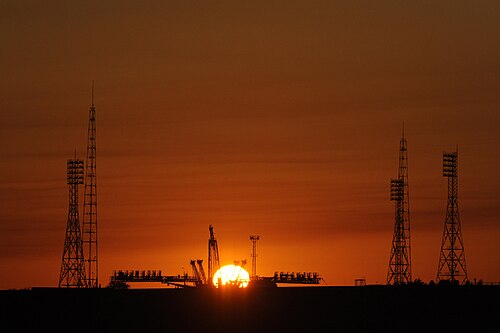
Baikonur Cosmodrome is the world's oldest operational spaceport, located on the steppe of southern Kazakhstan at 45.9° N latitude, constructed by the Soviet Union beginning in 1955 to serve as the primary launch site for its space and ballistic missile programs — and the origin point for more defining moments in space history than any other facility on Earth. From Baikonur, the Soviet Union launched Sputnik 1 on October 4, 1957 — the world's first artificial satellite, beginning the Space Age. On April 12, 1961, Yuri Gagarin lifted off aboard Vostok 1 from Site 1 (officially named Gagarin's Start after his flight) to become the first human in space, beginning his 108-minute orbital flight. The cosmodrome subsequently hosted all Soviet and Russian crewed missions including the first woman in space (Valentina Tereshkova, 1963), the first spacewalk (Alexei Leonov, 1965), all Mir space station module launches, and continued as the exclusive launch site for Soyuz crewed flights to the International Space Station through the Soyuz program's active ISS period. Following Soviet dissolution, Russia negotiated a Kazakhstan lease paying approximately $115 million annually for the cosmodrome complex spanning 6,717 square kilometers with 15 launch complexes and 4 launch pads. Russia progressively shifted uncrewed launches to the new Vostochny Cosmodrome in the Russian Far East to reduce Kazakhstan dependency, while Soyuz crew flights and commercial Proton-M launches continued from Baikonur. The Kazakh government has developed the adjacent Baiterek launch complex for Soyuz-5 and future vehicles.

Baikonur, Kazakhstan · Est. 1955
Space Agencies Verified

Belgian Science Policy Office - Space

Brussels, Belgium government

The Belgian Science Policy Office (BELSPO), established in 1959, serves as the coordinating body for space activities within Belgium and manages the nation’s participation in the European Space Agency (ESA) programs. BELSPO’s core function is to support and finance both space science and technology development initiatives, acting as a central point for Belgian contributions to broader international space efforts. Beyond space, BELSPO has a broad remit encompassing support for federal scientific institutions and museums, and the management of the Belgian telematics network, Belnet. However, within the space sector, its key capability lies in coordinating national resources and channeling funding towards research and development, and facilitating Belgium’s involvement in ESA projects. While specific missions or customer details aren’t explicitly highlighted, BELSPO’s role as the national coordinating body for ESA programs positions it as a vital link between Belgian research institutions, industry, and the wider European space landscape. This coordination ensures Belgium actively participates in and benefits from European space initiatives. BELSPO’s unique value proposition lies in its holistic approach to science policy, integrating space activities within a broader national research framework. This allows for cross-disciplinary innovation and ensures that investments in space technology contribute to wider societal and economic goals within Belgium.

Brussels, Belgium · Est. 1959
Launch Vehicles Verified

CALT

Beijing, China government

China Academy of Launch Vehicle Technology (CALT), established in 1957 and based in Beijing, is China’s primary contractor for launch vehicles. As a category within the China Aerospace Science and Technology Corporation (CASC), CALT is responsible for the development, production, and operation of the Long March rocket family, encompassing a range of vehicles including those designed for crewed spaceflight. While specific details regarding proprietary technologies are not publicly available from the provided information, CALT’s core competency lies in rocketry, propulsion systems, and the broader field of space launch technology. The company’s activities are central to China’s space program, and it plays a critical role in enabling both orbital and deep-space missions. Although the provided information focuses on CALT’s association with research and education through links to Caltech, it does not detail specific mission successes or customer base beyond its role as a national asset supporting China’s space endeavors. CALT’s unique value proposition lies in its position as the leading domestic provider of launch capabilities for the nation, driving innovation and self-reliance in space access.

Beijing, China · Est. 1957
Space Agencies Verified

Canadian Space Agency

Longueuil, Canada government

The Canadian Space Agency (CSA) is Canada's federal space agency, established in 1989 and headquartered in Longueuil, Quebec, responsible for the peaceful use and development of space, advancing space science, developing space technologies, and promoting commercial exploitation of space for the benefit of Canadians. Canada's most celebrated contribution to human spaceflight is the Canadarm family of robotic manipulators. The original Canadarm flew on all 135 Space Shuttle missions from 1981 to 2011 as the Remote Manipulator System (RMS). Canadarm2, installed on the International Space Station in 2001, is a 17.6-meter robotic arm that assembles station modules, captures visiting cargo vehicles, and supports spacewalks. Dextre (Special Purpose Dexterous Manipulator), installed in 2008, provides fine-dexterity maintenance capability for ISS exterior tasks. Together these systems gave Canada permanent relevance in human spaceflight through robotics expertise. CSA contributions to space science include the Fine Guidance Sensor and NIRISS (Near Infrared Imager and Slitless Spectrograph) instrument package on the James Webb Space Telescope, and the RADARSAT Constellation Mission (RCM, launched 2019) — three C-band SAR satellites providing all-weather surveillance of Canadian maritime zones, Arctic regions, and agriculture. Canadian astronauts including Chris Hadfield, David Saint-Jacques, and Jeremy Hansen (Artemis II lunar flyby crew) have conducted ISS expeditions and NASA mission assignments. CSA's Lunar Gateway contribution includes the Canadarm3 robotic system for the proposed cislunar station.

Longueuil, Canada · Est. 1989
Spaceports Verified

Cape Canaveral Space Force Station

Cape Canaveral, United States government

Cape Canaveral Space Force Station (CCSFS), located on Florida's Atlantic coast adjacent to and sharing facilities with NASA's Kennedy Space Center, is the United States' primary military spaceport and one of the world's busiest launch facilities — managed by the 45th Space Wing (now Space Launch Delta 45) of the United States Space Force, hosting launch complexes supporting SpaceX, United Launch Alliance, and other commercial and government launch providers. Established in 1950 as the Joint Long Range Proving Ground for missile testing, Cape Canaveral has served as the launch site for nearly every major U.S. space program milestone: the first American satellite (Explorer 1, 1958), the first American in orbit (John Glenn, Friendship 7, 1962), all of the Gemini program missions, and unmanned lunar probes. The station's launch complexes span decades of development: Launch Complex 36 hosted Atlas-Centaur rockets; LC-17 hosted Thor-Delta through Delta II; LC-41 hosts ULA's Atlas V and will host Vulcan Centaur. Today's active launch infrastructure includes Space Launch Complex 40 (SLC-40) — SpaceX's primary Falcon 9 launch pad for commercial satellite and government payload missions — and Space Launch Complex 37 (SLC-37), which hosts ULA's Delta IV Heavy and Atlas V operations. SpaceX's SLC-40 has supported over 100 Falcon 9 launches and serves as the workhorse pad for Starlink constellation replenishment, commercial satellite deployment, and NASA cargo missions. Space Launch Complex 13 (SLC-13) serves as SpaceX's primary landing zone for Falcon 9 first-stage boosters (Landing Zone 1 and Landing Zone 2), enabling rapid turnaround reuse. CCSFS also hosts Eastern Range tracking and range safety operations covering the Atlantic Ocean downrange corridor, manages frequency coordination and airspace/maritime exclusion zones for all launches from the Cape, and coordinates with the Federal Aviation Administration for commercial launch licensing. The station's proximity to the equator (28.5°N) provides favorable delta-v for geostationary transfer orbit missions.

Cape Canaveral, United States · Est. 1950
Launch Services Verified

CASC

Beijing, China government

China Aerospace Science and Technology Corporation (CASC, 中国航天科技集团公司), founded in 1999 as a restructuring of the Ministry of Aerospace Industry, is China's primary state-owned space enterprise and the main contractor for virtually all of China's government space programs — manufacturing the Long March family of launch vehicles, Shenzhou crewed spacecraft, Tianhe space station modules, lunar exploration vehicles, and China's major civilian and military satellites. CASC's Long March rocket family spans 13+ variants covering the complete payload spectrum from the 200 kg Long March 11 solid small-lift to the 25+ tonne LEO Long March 5 (China's heaviest operational rocket, used for Chang'e 5 lunar sample return and Tianwen-1 Mars mission). Long March 3B and 3C are workhorse GEO launchers for Chinese and commercial communications satellites; Long March 2F is the dedicated human spaceflight vehicle for Shenzhou crewed missions and Tianzhou cargo resupply to the Chinese Space Station (CSS/Tiangong). Long March 5B is the large module launcher for Tianhe core module and Wentian/Mengtian experiment modules. CASC spacecraft achievements include: Chang'e 3 (2013, first lunar soft landing since 1976), Chang'e 4 (2019, first far-side of Moon landing), Chang'e 5 (2020, first lunar sample return since 1976, 1.73 kg collected), Tianwen-1 (2021, Mars orbiter + lander + rover Zhurong), and the Chinese Space Station operational since 2021 with permanent crew rotation. The Shenzhou and CSS programs now conduct regular 6-month crew missions with three taikonauts. CASC also manufactures the DFH and Shijian series of communications and weather satellites, BeiDou navigation constellation satellites (35-satellite global system comparable to GPS), and reconnaissance/Earth observation satellites for the Chinese military. Annual CASC launch cadence exceeds 40 missions, making it one of the world's most active launch organizations.

Beijing, China · Est. 1999
Launch Services Verified

CASIC

Beijing, China government

China Aerospace Science and Industry Corporation (CASIC, 中国航天科工集团) is China's second major state-owned aerospace and defense conglomerate after CASC. Established in 1999 and headquartered in Beijing, CASIC employs approximately 150,000 people across 14 major research institutes and numerous factories. CASIC operates the Kuaizhou (快舟) commercial launch vehicle program through its subsidiary Expace Technology — the Kuaizhou-1A solid rocket has conducted dozens of commercial launches since 2017. CASIC is also China's primary missile manufacturer (cruise missiles, anti-ship missiles, air defense systems) and manufactures spacecraft and ground systems for PLA space programs. The company's commercial satellite manufacturing arm has launched Earth observation and communications satellites for domestic and international customers.

Beijing, China · Est. 1999
Satellite Manufacturing Verified

CAST

Beijing, China government

China Academy of Space Technology (CAST), established in 1968 and based in Beijing, is a leading Chinese organization dedicated to the research, design, and manufacturing of spacecraft and related technologies. As a core component of the China Aerospace Science and Technology Corporation (CASC), CAST focuses primarily on satellite systems and deep space exploration vehicles. The company’s core business revolves around the development of complete satellite systems, encompassing design, fabrication, testing, and in-orbit operation. CAST is particularly known for its DFH series of satellite platforms, which serve as the foundation for a wide range of applications including communications, Earth observation, and navigation. Beyond commercial and operational satellites, CAST has played a pivotal role in China’s ambitious lunar exploration program, serving as the primary developer of the Chang'e lunar spacecraft series. This includes the landers, orbiters, and rovers that have successfully achieved soft landings on the Moon and conducted scientific investigations. Given its long history and position within CASC, CAST holds a significant and likely dominant position within the Chinese space industry, particularly in the development of complex spacecraft. While specific customer details are not publicly available, its involvement in national programs like the Chang'e missions and the development of essential satellite infrastructure suggests a primary role serving the Chinese government and national space initiatives. Without accessible website content, a detailed assessment of current product offerings and specific market positioning is limited. However, CAST’s established expertise in satellite platforms and deep space exploration clearly positions it as a key driver of China’s advancements in space technology and a major player in the global space landscape.

Beijing, China · Est. 1968
Launch Services Verified

China Great Wall Industry

Beijing, China government

China Great Wall Industry Corporation (CGWIC), established in 1980, operates as the primary commercial interface for China’s state-owned China Aerospace Science and Technology Corporation (CASC) in the international space sector. As the sole organization authorized by the Chinese government for this purpose, CGWIC focuses on the export of Chinese space capabilities, encompassing satellite manufacturing, commercial launch services, and international space cooperation initiatives. The company facilitates access to China’s Long March launch vehicles for foreign customers seeking to deploy payloads into orbit. CGWIC’s core business centers around providing end-to-end space solutions, from satellite procurement and launch to in-orbit services. This includes offering a range of satellite types, though specific details on these are not publicly available, and coordinating launch arrangements utilizing the established Long March rocket family. The company acts as a crucial link between international clients and China’s extensive space infrastructure and expertise. While specific mission details and a comprehensive customer list are not publicly detailed, CGWIC’s role signifies China’s commitment to participating in and contributing to the global space economy. The company’s unique position as the officially sanctioned commercial arm of CASC provides it with exclusive access to national space assets and capabilities, establishing a distinct value proposition for international partners seeking reliable and cost-effective space solutions originating from China.

Beijing, China · Est. 1980
Space Agencies Verified

CNES

Paris, France government

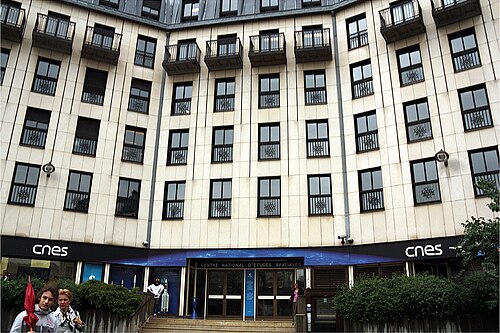
The Centre National d'Études Spatiales (CNES) is France's national space agency, established in 1961 and headquartered in Paris. CNES is responsible for shaping and implementing French space policy and manages an annual budget of €3.029 billion (2024), making it one of Europe's largest space agencies. The agency operates the Guiana Space Centre (CSG) in Kourou, French Guiana — Europe's primary orbital launch facility and the site for Ariane, Vega, and Soyuz launches. CNES develops satellites and scientific instruments, leads French contributions to ESA programs, and manages international collaborations with NASA, JAXA, and ISRO. Key programs include the Copernicus Earth observation series, the Galileo navigation system (in partnership with ESA), the SWOT ocean-topography satellite (joint with NASA), and France's military space surveillance capabilities. CNES has a staff of approximately 2,400 engineers and scientists.

Paris, France · Est. 1961
Space Agencies Verified

CNSA

Beijing, China government

The China National Space Administration (CNSA), established in 1993 and headquartered in Haidian District, Beijing, is the governmental organization responsible for China's national civil space program and international space cooperation. Operating as a national bureau under the Ministry of Industry and Information Technology, CNSA oversees policy and international relations but does not directly execute space programs—that responsibility falls to the China Aerospace Science and Technology Corporation (CASC). CNSA has achieved historic milestones including becoming the first space agency to land on the far side of the Moon with Chang'e 4, successfully returning lunar samples with Chang'e 5 and Chang'e 6, and becoming only the second agency to land a rover on Mars with Tianwen-1. CNSA operates three launch facilities: Jiuquan (Gansu province), Taiyuan (Shanxi province), and Xichang (Sichuan province). Human spaceflight programs are managed separately by the China Manned Space Agency.

Beijing, China · Est. 1993
Space Agencies Verified

CONAE

Buenos Aires, Argentina government

The National Commission for Space Activities (CONAE, Comisión Nacional de Actividades Espaciales) is Argentina's government space agency, established in 1991 and headquartered in Buenos Aires — one of Latin America's most technically capable space agencies, known internationally for its SAR Earth observation satellite constellation, bilateral cooperation agreements with NASA and ESA, and its role as an anchor for Argentina's aerospace industrial base. CONAE's flagship achievement is the SAOCOM (Satélite Argentino de Observación Con Microondas) constellation — two L-band synthetic aperture radar (SAR) satellites that together provide continuous SAR imaging of South America and other regions. SAOCOM 1A launched in 2018 aboard a SpaceX Falcon 9 from Vandenberg in the first West Coast Falcon 9 launch, and SAOCOM 1B followed in 2020. L-band SAR (23 cm wavelength) penetrates vegetation canopy and can image through cloud cover — making SAOCOM ideal for agricultural monitoring (soil moisture mapping, crop identification, flood extent mapping beneath forest canopy), emergency management, and subsidence monitoring of infrastructure and cities. SAOCOM is part of a bilateral Argentina-Italy cooperation program: Italy's ASI (Agenzia Spaziale Italiana) provides COSMO-SkyMed X-band SAR data to CONAE in exchange for SAOCOM L-band data, creating a complementary multi-frequency SAR monitoring capability called SIASGE (Sistema Italo-Argentino de Satélites para la Gestión de Emergencias) that has been used extensively for disaster response in South America. Earlier CONAE programs include the SAC (Satélite de Aplicaciones Científicas) series: SAC-A (1998), SAC-B (1996, technology demonstration), and SAC-C (2000, Earth observation with NASA data-sharing partnership). CONAE's Córdoba ground station receives satellite data and the agency operates the INVAP space technology company (which builds CONAE's satellites) through the provincial government of Río Negro. CONAE represents Argentina as a respected peer in international space cooperation, having contributed instruments to ESA's Earth observation missions and maintaining bilateral agreements with NASA, ESA, DLR, and China's CNSA. Argentina's status as one of only a handful of developing nations with indigenous SAR satellite design and manufacturing capability distinguishes CONAE globally.

Buenos Aires, Argentina · Est. 1991
Research

CSIRO Space Technology

Canberra, Australia government

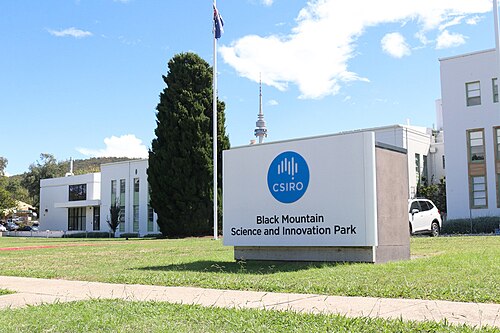
CSIRO (Commonwealth Scientific and Industrial Research Organisation) Space Technology is Australia's national science agency's space division, operating critical space infrastructure and conducting space-related research. CSIRO operates the Canberra Deep Space Communication Complex (CDSCC) at Tidbinbilla under NASA's Deep Space Network — one of only three DSN complexes worldwide (alongside Madrid and Goldstone) — providing essential communications for NASA deep space missions including Mars rovers, Voyager, and the Artemis/Orion tracking. CSIRO also operates the Australia Telescope National Facility including the Parkes Radio Telescope (Murriyang) and ASKAP for radio astronomy. The organization supports Australian space industry through research partnerships and technology transfer, and runs space weather monitoring stations critical for HF communications and satellite operations.

Canberra, Australia · Est. 1916
Space Agencies Verified

DLR

Cologne, Germany government

The German Aerospace Center (Deutsches Zentrum für Luft- und Raumfahrt, DLR) is Germany's national research center for aeronautics, space, energy, transport, and security, with approximately 10,000 employees at 30 locations across Germany. Founded in 1969 and headquartered in Cologne, DLR operates research aircraft, wind tunnels, simulation facilities, and Germany's primary satellite control center in Oberpfaffenhofen. In space, DLR manages German participation in ESA programs including Ariane rocket development, the ExoMars mission, and ISS research. The agency develops remote sensing satellites (TerraSAR-X, TanDEM-X), planetary science instruments, and reentry capsule technology. DLR also operates ESOC (European Space Operations Centre) facilities and coordinates Germany's space surveillance capabilities. The agency's annual budget is €1.701 billion (2024), funded jointly by the German federal government and its 16 states.

Cologne, Germany · Est. 1969
Space Agencies Verified

ESA

Paris, France government

The European Space Agency (ESA) is an intergovernmental organization of 22 member states dedicated to space exploration, technology development, and Earth observation. Established in 1975 through the merger of the European Launcher Development Organisation (ELDO) and the European Space Research Organisation (ESRO), ESA coordinates European space activities and represents Europe's unified presence in space. ESA is headquartered in Paris, France, with major facilities across Europe including the European Space Research and Technology Centre (ESTEC) in the Netherlands, the European Space Operations Centre (ESOC) in Germany, and the European Astronaut Centre (EAC) in Cologne. The agency employs approximately 2,500 staff with an annual budget exceeding €7 billion. ## History and Milestones ESA traces its origins to European space cooperation in the 1960s, when Western European nations sought independent space capabilities. The agency was formally established on May 30, 1975, combining launcher and research organizations. Early achievements included the Giotto spacecraft's flyby of Halley's Comet in 1986. ESA developed the Ariane family of rockets, establishing Europe as a major player in commercial launch services. Ariane 4, introduced in 1988, became the world's leading commercial launcher. Ariane 5, first launched in 1996, has delivered over 100 successful missions, including major telecommunications satellites and scientific spacecraft. European astronauts have participated in Space Shuttle, Mir, and International Space Station missions. ESA provides the Columbus laboratory module and Automated Transfer Vehicles for the ISS, contributing essential infrastructure to the international partnership. ## Products and Services ESA's current launch vehicle is Ariane 6, which entered service in 2024 after years of development. Available in two configurations (Ariane 62 and 64), the rocket provides medium to heavy-lift capability for commercial and institutional missions. ESA also operates the Vega and Vega-C small launch vehicles for lighter payloads. The agency's science program includes flagship missions such as the BepiColombo Mercury mission, the JUICE mission to Jupiter's moons, and the Euclid space telescope for dark energy research. ESA's Earth observation program, Copernicus, operates Sentinel satellites providing free environmental data globally. ESA provides astronaut services, training European astronauts for ISS missions and developing capabilities for future lunar exploration. The agency participates in the Artemis program through the European Service Module, which provides propulsion, power, and life support for NASA's Orion spacecraft. ## Technology and Capabilities ESA operates world-class facilities including ESTEC's test facilities for spacecraft environmental testing, ESOC's mission control infrastructure, and the European Astronaut Centre's training capabilities. The agency maintains the European Space Tracking network (ESTRACK) for spacecraft communications. Technology development focuses on electric propulsion, advanced materials, autonomous navigation, and space debris mitigation. ESA's Clean Space initiative addresses sustainability through debris removal missions and eco-design principles. The agency also develops quantum communication and satellite navigation technologies. ESA coordinates European contributions to international exploration programs, developing technologies for lunar surface access, Mars exploration, and sample return missions. The agency's robotic exploration program includes rover development and autonomous navigation systems. ## Business and Financial Overview ESA operates through member state contributions based on gross national income, with optional programs funded separately by participating countries. The total 2024 budget exceeded €7.8 billion, distributed across science, Earth observation, telecommunications, navigation, human spaceflight, and technology development. Member states retain a "geographic return" principle, receiving contracts proportional to their contributions. This ensures industrial participation across Europe but can complicate efficient procurement. Major contractors include Airbus Defence and Space, Thales Alenia Space, and OHB. ESA's commercial arm, Arianespace, markets launch services globally, competing with SpaceX, ULA, and other providers. The transition from Ariane 5 to Ariane 6 aims to reduce costs and improve competitiveness in the commercial launch market. ## Recent Developments In 2024, ESA's Ariane 6 rocket made its debut launch, restoring European independent access to space following the retirement of Ariane 5 and Soyuz launches from French Guiana. The agency continued development of next-generation launchers including reusable technology demonstrators. ESA advanced lunar exploration preparations, with the European Large Logistics Lander (EL3) program progressing toward lunar surface cargo delivery. The agency's ExoMars rover, developed with Roscosmos partnership before its suspension, sought alternative launch arrangements. The Copernicus Earth observation program expanded with new Sentinel satellite launches, while ESA's science program saw launches and mission operations for major astronomical and planetary missions. The agency also strengthened partnerships with commercial providers for space transportation services. ## Market Position ESA serves as Europe's unified space agency, coordinating national space programs and representing European interests in international partnerships. The agency's mandatory science program and optional programs balance scientific exploration with practical applications in telecommunications, navigation, and Earth observation. ESA partners with NASA on the Artemis program, contributing the European Service Module essential for Orion operations. The agency also maintains partnerships with JAXA, CSA, and other space agencies while developing independent European capabilities in human spaceflight and exploration. Competitive challenges include SpaceX's impact on the commercial launch market and the need to develop reusable launch systems. ESA's response includes the Ariane 6 development, technology investments, and commercial partnership initiatives to strengthen European space industry competitiveness.

Paris, France · Est. 1975
Training Verified

European Astronaut Centre

Cologne, Germany government

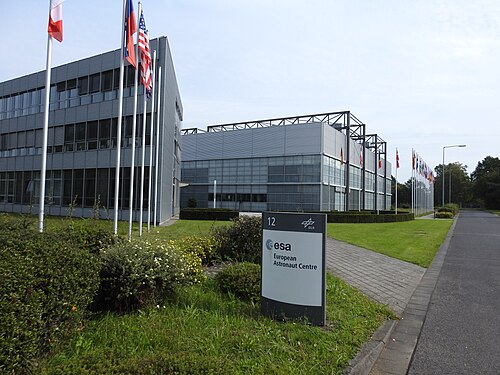
The European Astronaut Centre (EAC) is the European Space Agency's official center for astronaut selection, training, medical support, and operational preparation — located in Cologne, Germany adjacent to the German Aerospace Center (DLR) campus, founded in 1990 and staffed by over 100 professionals spanning flight surgeons, training instructors, engineers, physiologists, and mission specialists. The EAC's primary function is preparing European astronauts for long-duration missions to the International Space Station (ISS) and future destinations including lunar Gateway and the Moon's surface. The training curriculum covers multiple domains: systems training for ISS modules (Columbus European laboratory, Node modules, Soyuz/Crew Dragon spacecraft), spacewalk (EVA) training in the EAC's 10-meter-deep neutral buoyancy pool (the Neutral Buoyancy Facility, NBF) where astronauts in pressure suits practice maintenance tasks and construction procedures in simulated microgravity conditions, robotics training for Canadarm2 and European Robotic Arm (ERA) operation, Russian language training (historically required for Soyuz operations), scientific experiment protocols, emergency procedures, survival training (sea/jungle/winter), and physical fitness. The EAC also conducts ESA's astronaut selection campaigns — the most recent 2021-2022 campaign received over 22,500 applications from ESA member state citizens, the highest response rate in ESA's history, resulting in the selection of five career astronauts and 17 reserve astronauts. The selection process involves physical health screening, psychological assessment, cognitive testing, group dynamics exercises, and technical aptitude evaluation. Medical support for European astronauts on orbit — monitoring crew health, coordinating with ISS flight surgeons, providing telemedicine consultations, and managing return-to-flight medical clearance — is a continuous EAC function during mission operations. Post-flight rehabilitation for astronauts returning from the physiological effects of microgravity (bone density loss, muscle atrophy, cardiovascular deconditioning, fluid redistribution) takes place partially at the EAC. The EAC's location in Cologne also provides proximity to ESTEC (Netherlands), ESOC (Darmstadt), and ESA's European Space Astronomy Centre (ESAC, Madrid), with coordinated training activities distributed across ESA facilities and partner agency training centers (NASA JSC, Roscosmos GCTC, JAXA Tsukuba).

Cologne, Germany · Est. 1990
Launch Services Verified

Glavkosmos

Moscow, Russia government

Glavkosmos is a Russian joint-stock company, a subsidiary of the state corporation Roscosmos, that manages the commercialisation and international export of Russian space launch and satellite services. It was established on 23 May 1985 — originally to coordinate Soviet space cooperation with foreign governments and to manage technology-transfer agreements, including a 1991 agreement to transfer KVD-1 cryogenic rocket engine production technology to the Indian Space Research Organisation, which led the United States to place sanctions on Glavkosmos in 1992. The company is headquartered in Moscow and is led by CEO Ilya Sergeyevich Tarasenko, who has held the role since 2023, following predecessors Dmitry Loskutov (2018-2023) and Denis Lyskov (2016-2018). Today Glavkosmos markets and coordinates a broad range of Russian space capabilities internationally: dedicated and rideshare commercial satellite launches (primarily on Soyuz-2.1 vehicles from Russian spaceports), short-duration commercial spaceflights to the International Space Station, and Earth observation imagery and data services. The company states it has more than 40 years of space-industry experience, has concluded more than 140 international contracts, and has executed over 300 successful launches carrying secondary/rideshare payloads; in November 2024 it coordinated a rideshare mission deploying 51 Russian spacecraft in a single launch, a national record. Glavkosmos's most significant operating subsidiary for commercial launch sales is GK Launch Services, a joint venture established in May 2017 with International Space Company Kosmotras in which Glavkosmos holds a 75% stake. Glavkosmos has also managed Russia's participation in the "Soyuz at the Guiana Space Centre" programme with Arianespace. As a wholly state-linked entity, Glavkosmos's international commercial business has been shaped by the broader pattern of sanctions affecting the Russian space sector, though specific current sanctions on the company were not detailed in the sources reviewed beyond the historical 1992 U.S. sanction noted above.

Moscow, Russia · Est. 1985
Spaceports Verified

Guiana Space Centre

Kourou, France government

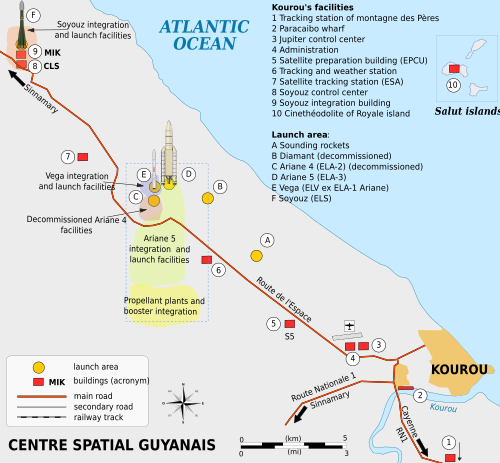
The Guiana Space Centre (Centre Spatial Guyanais, CSG), located near Kourou in French Guiana on the northeast coast of South America, is Europe's primary orbital launch facility — operated jointly by ESA, CNES (French space agency), and the French government — providing the ideal geographic location for launching satellites into geostationary transfer orbit (GTO) and various low-Earth orbit mission profiles with maximum propellant efficiency. Kourou's location at approximately 5.2°N latitude (close to the equator) is the key advantage that makes it Europe's premier launch site: satellites launched eastward from Kourou can take full advantage of Earth's rotation velocity (~460 m/s at this latitude), reducing the delta-v required to reach geostationary orbit by approximately 2 km/s compared to higher-latitude launch sites like Cape Canaveral (28.5°N) or Baikonur (46°N). For a GEO communications satellite, this propellant savings translates directly to either a heavier satellite or 2-3 additional years of operational lifetime — a substantial commercial value. Launches south toward polar orbits benefit from the clear ocean downrange corridor and minimal range safety overfly constraints. The Centre Spatial Guyanais operates multiple launch pads: the ELA-4 (Ensemble de Lancement Ariane 4) pad for Ariane 6 launches, the historic ELA-3 pad that supported Ariane 5 from 1996-2023 (over 100 launches), and the SLV (Site de Lancement Vega) pad for the Vega and Vega-C light launcher serving small satellite customers. A Russian Soyuz launch pad (ELS) operated from 2011-2022 before Russia's suspension following the Ukraine invasion. Founded in 1968, the CSG has launched over 300 satellites, employs approximately 9,000 people across CSG site operators and major contractors (ArianeGroup, Arianespace, Regulus services company), and is a critical asset for European strategic launch autonomy — the EU's stated policy of maintaining independent access to space without dependence on foreign launch providers.

Kourou, France · Est. 1968
Space Agencies Verified

Indonesian Space Agency

Jakarta, Indonesia government

BRIN (Badan Riset dan Inovasi Nasional / National Research and Innovation Agency) is Indonesia's consolidated national research body that absorbed LAPAN (the national space agency) in 2021. Indonesia's space activities under BRIN/LAPAN include the LAPAN-A series of microsatellites (LAPAN-A1, A2, A3 for EO and AIS ship tracking), development of a small launch vehicle (RX-450 rocket research program), and operation of ground stations. Indonesia has strategic value for equatorial orbit launches: sites at Biak (Papua) and Morotai at 0-2°N latitude offer near-equatorial trajectories that provide maximum performance for geostationary missions. Indonesia's growing space ambitions are driven by the practical needs of the world's largest archipelago nation (17,000 islands) where satellite communications are essential infrastructure for connecting remote communities.

Jakarta, Indonesia · Est. 1963
Research Verified

INPE

São José dos Campos, Brazil government

INPE (Instituto Nacional de Pesquisas Espaciais) is Brazil's national space research institute, founded in 1961 and headquartered in São José dos Campos, São Paulo. INPE is internationally recognized for operating DETER and PRODES — near-real-time and annual deforestation monitoring systems for the Amazon — making it the primary global authority on Amazon forest loss data cited by governments, NGOs, and media. The institute manages Brazil's participation in the CBERS (China-Brazil Earth Resources Satellite) program, a joint Earth observation constellation producing multispectral imagery available free to Latin American and African countries. INPE also operates meteorological satellites, conducts atmospheric science research, and manages the CRS ground station in Cuiabá. The institute employs approximately 1,800 researchers and technical staff and has trained generations of Brazilian space scientists.

São José dos Campos, Brazil · Est. 1961
Launch Vehicles

Instituto de Aeronáutica e Espaço (IAE)

São José dos Campos, Brazil government

Instituto de Aeronáutica e Espaço (IAE) is a Brazilian military aerospace research institute under the Department of Aerospace Science and Technology (DCTA), which reports to the Brazilian Air Force. Formally established in 1969 in São José dos Campos, with roots tracing to the founding of Brazil's aerospace research complex, CTA, in 1954, IAE is responsible for developing Brazil's sounding rockets and orbital launch vehicles. Its Sonda series (I through IV) and the VS-30, VS-40 and VSB-30 sounding rockets have flown scientific and microgravity payloads for decades, including joint campaigns with Germany's DLR. IAE leads development of the VLS (Veículo Lançador de Satélites) and the smaller VLM-1 (Veículo Lançador de Microssatélites) orbital launch vehicles, intended to give Brazil an indigenous small-satellite launch capability from the Alcântara Launch Center. It also runs the 14-X hypersonic scramjet demonstrator program, which conducted a flight test in December 2021. IAE works alongside Brazil's National Institute for Space Research (INPE) and the Alcântara and Barreira do Inferno launch sites as one of the pillars of the Brazilian space program, though unlike INPE it focuses on launch vehicles and propulsion rather than satellites. The institute is funded through the Air Force budget rather than commercial revenue, and its flagship VLS program has suffered repeated schedule slips and a fatal pad accident in 2003. IAE remains active, continuing VLM and sounding-rocket development as of 2026.

São José dos Campos, Brazil · Est. 1969
Research Verified

INTA

Madrid, Spain government

The Spanish National Institute for Aerospace Technology (INTA), founded in 1942 and based in Madrid, Spain, is a multidisciplinary research institution focused on aerospace technology. INTA’s core activities encompass the development and testing of satellites, alongside atmospheric research. The institute functions as a key national center for aerospace engineering and technology, contributing to both civilian and defense applications. INTA’s capabilities center around the complete satellite lifecycle, from design and fabrication to in-orbit testing and data analysis. Their atmospheric research programs likely leverage specialized instrumentation and data processing techniques to study Earth’s atmosphere and related phenomena. A significant aspect of INTA’s operations involves active participation in programs led by the European Space Agency (ESA), indicating a collaborative approach to space exploration and technology development. While specific mission details aren’t readily available from the provided information, INTA’s ESA program participation suggests involvement in a range of European space initiatives. This collaboration positions INTA as a contributing member of the European space ecosystem. INTA’s long history and broad scope of research and development activities establish it as a national asset for Spain, providing expertise in aerospace engineering, satellite technology, and atmospheric science. The institute’s role in ESA programs further solidifies its position as a key player in European space endeavors.

Madrid, Spain · Est. 1942
Satellite Operators Verified

Intersputnik

Moscow, Russia government

Intersputnik (International Organization of Space Communications) is a Moscow-based intergovernmental organization founded in 1971 as the Soviet-era counterpart to INTELSAT — the US-dominated global satellite communications organization — providing a multilateral telecommunications satellite framework for the Soviet Union and its allied states during the Cold War. Established by treaty among 9 founding socialist states, Intersputnik grew to 26 member states drawn primarily from former Soviet republics, Eastern European countries, Cuba, Vietnam, and other nations in the Soviet sphere of influence. Unlike INTELSAT (later privatized as PanAmSat/Intelsat), Intersputnik remains an intergovernmental organization operating under its founding international treaty, which grants it certain immunities and privileges as an international legal entity. Its primary commercial function is satellite transponder capacity resale — leasing satellite bandwidth from Russian operators (RSCC, Gazprom Space Systems) and reselling to member state telecommunications companies and broadcasters for DTH television, broadband, and government communications. Post-2022 Western sanctions on Russia following the invasion of Ukraine have significantly complicated Intersputnik's operations, as many member-state connections to Western financial systems and satellite capacity markets have been disrupted, though the organization formally continues operating as an international body.

Moscow, Russia · Est. 1971
Space Agencies Verified

Israel Space Agency

Tel Aviv, Israel government

The Israel Space Agency (ISA), established in 1983 and operating under the Israeli Ministry of Innovation, Science and Technology in Tel Aviv, is the government body responsible for Israel's civil space program — coordinating national space R&D strategy, funding academic and industrial space research, managing international cooperation agreements, and promoting Israel's space industrial sector within an environment where civil and military space capabilities are closely intertwined. Israel's space technical achievements significantly exceed what might be expected from a nation of 9 million people with a $500 billion economy: Israel became the 8th nation to independently achieve orbital launch capability in 1988 with the Shavit rocket (developed from Jericho ICBM heritage), operates a constellation of high-resolution optical reconnaissance satellites (OFEQ series, classified), and is one of the few nations with consistent indigenous government satellite manufacturing capability through IAI (Israel Aerospace Industries). ISA's civil program funding supports academic research in astrophysics, space materials science, remote sensing, and satellite communications at Israeli universities including Weizmann Institute, Technion, Tel Aviv University, and Ben-Gurion University. The agency coordinates Israel's participation in ESA programs under an Associate Member agreement, providing Israeli researchers and companies access to ESA mission contributions, procurement opportunities, and technical collaborations. ISA also manages Israel's growing international space diplomacy: bilateral cooperation agreements with NASA, ESA, CNES, DLR, and ISRO; participation in UN COPUOS (Committee on the Peaceful Uses of Outer Space); and promoting Israeli space exports through Israel's extensive defense and technology export relationships. Israeli space technology companies — IAI, Elbit Systems, Rafael Advanced Defense Systems, and commercial startups — generate significant defense and commercial space export revenues annually. The Beresheet 1 lunar lander (2019, SpaceIL) and Beresheet 2 planning represent civil science ambitions funded through ISA and private philanthropy, demonstrating Israeli deep-space technical capabilities beyond Earth-orbit reconnaissance programs.

Tel Aviv, Israel · Est. 1983
Space Agencies Verified

ISRO

Bengaluru, India government

The Indian Space Research Organisation (ISRO) is India's national space agency, responsible for space science research and planetary exploration. Established in 1969 under the vision of Dr. Vikram Sarabhai, ISRO has developed into one of the world's most capable and cost-effective space organizations, achieving remarkable milestones including successful Mars and lunar missions. Headquartered in Bengaluru, Karnataka, ISRO operates under the Department of Space, Government of India. The agency employs approximately 17,000 scientists and engineers across multiple centers. Under Chairman Dr. V. Narayanan (since January 2025), ISRO continues advancing launch capabilities, satellite technology, and planetary exploration while maintaining its tradition of frugal engineering. ## History and Milestones India's space program began with the establishment of the Indian National Committee for Space Research (INCOSPAR) in 1962 under Dr. Vikram Sarabhai. ISRO was formed in 1969 and launched India's first satellite, Aryabhata, in 1975 using a Soviet rocket. The first successful Indian-built launch vehicle, SLV-3, flew in 1980. The Polar Satellite Launch Vehicle (PSLV), first launched in 1993, became ISRO's workhorse rocket, achieving over 50 successful consecutive missions. In 2008, Chandrayaan-1 discovered water molecules on the Moon, fundamentally changing understanding of lunar resources. The Mars Orbiter Mission (Mangalyaan) in 2014 made India the first nation to reach Mars on its maiden attempt. Chandrayaan-3 in 2023 achieved India's first lunar soft landing, making India the fourth nation to land on the Moon. The Vikram lander and Pragyan rover operated at the lunar south pole, conducting valuable scientific experiments and demonstrating ISRO's capabilities for complex missions. ## Products and Services ISRO operates the PSLV and GSLV launch vehicle families. PSLV provides reliable access to polar and sun-synchronous orbits, serving both Indian satellites and international customers through commercial arm Antrix/NSIL. GSLV Mk III (LVM3), India's heaviest operational rocket, supports geosynchronous and human spaceflight missions. India's satellite programs include the Indian National Satellite System (INSAT) for telecommunications and meteorology, the Indian Remote Sensing (IRS) satellites for Earth observation, and the Navigation with Indian Constellation (NavIC) regional navigation system. These satellites serve agriculture, disaster management, telecommunications, and national security needs. ISRO provides commercial launch services through NewSpace India Limited (NSIL), offering competitive pricing for small to medium satellite deployments. The agency has launched satellites for numerous countries, establishing India as a reliable launch services provider. ## Technology and Capabilities ISRO developed the cryogenic upper stage technology independently after technology transfer denials in the 1990s, demonstrating capability for building advanced rocket propulsion. The agency's frugal engineering approach achieves missions at significantly lower costs than Western counterparts while maintaining high reliability. The Gaganyaan program is developing human spaceflight capabilities, including crew module, launch escape system, and life support systems. ISRO has conducted uncrewed test flights and aims to launch Indian astronauts (Vyomanauts) on indigenous systems. ISRO maintains extensive ground infrastructure including the Satish Dhawan Space Centre at Sriharikota, tracking stations across India and internationally, and satellite assembly and test facilities. The agency also develops applications using satellite data for agriculture, urban planning, and disaster response. ## Business and Financial Overview ISRO operates with an annual budget of approximately $1.5-2 billion from the Indian government, significantly smaller than NASA or ESA but delivering remarkable achievements through cost efficiency. The agency's missions typically cost a fraction of comparable international programs. Commercial activities through NSIL generate revenue from satellite launches, satellite construction for foreign customers, and technology transfer. ISRO has launched over 400 foreign satellites from more than 35 countries, establishing a strong commercial track record. India's space policy reforms in 2020 opened the sector to private investment, with ISRO supporting emerging Indian space startups through technology transfer and testing facilities. This policy shift aims to expand India's share of the global space economy. ## Recent Developments In 2024, ISRO continued preparations for the Gaganyaan human spaceflight program, conducting test vehicle flights and astronaut training. The agency also advanced Chandrayaan-4 lunar sample return mission planning and Venus Orbiter Mission (Shukrayaan) development. ISRO expanded commercial operations, launching satellites for international customers and supporting India's growing private space sector. The agency also conducted PSLV and GSLV missions for national satellite programs including communications and Earth observation. Development continued on the Next Generation Launch Vehicle (NGLV), designed to provide heavy-lift capability with reusability features. ISRO also advanced small satellite launch vehicle (SSLV) operations for responsive, lower-cost access to orbit. ## Market Position ISRO ranks among the world's top space agencies in terms of launch frequency, technical capability, and mission success. The agency's cost-effective approach has established India as a preferred destination for satellite launches, particularly for smaller satellites and constellation deployments. India competes commercially with SpaceX, Rocket Lab, and other providers while maintaining unique capabilities in cost-efficient mission execution. ISRO's emerging private sector partnerships aim to expand India's space industry beyond government programs. The agency's strategic priorities include human spaceflight, planetary exploration, and expanding commercial launch services. ISRO's demonstrated success with Chandrayaan-3 and the Mars Orbiter Mission establishes credibility for increasingly ambitious future missions.

Bengaluru, India · Est. 1969
Satellite Manufacturing Verified

ISRO Satellite Centre

Bangalore, India government

The ISRO Satellite Centre (ISAC), established in 1972 and located in Bangalore, India, is the primary hub for satellite technology development within the Indian Space Research Organisation (ISRO). ISAC’s core function is the end-to-end realization of Indian satellites, encompassing the complete lifecycle from conceptual design and engineering to fabrication, integration, testing, and launch support. This includes a diverse range of satellite types catering to communications, remote sensing, meteorology, and scientific research. ISAC’s capabilities center around expertise in structural design, thermal control, power systems, propulsion, and on-board electronics for satellites. They demonstrate proficiency in building both small and large satellites, utilizing indigenous technologies and increasingly incorporating advanced materials and miniaturization techniques. While specific technological details are not publicly available, the organization’s long history suggests a strong internal capability in areas critical to satellite functionality and reliability. As a government agency and integral part of ISRO, ISAC’s primary customer is the Indian government, supporting national needs in areas like telecommunications, earth observation for resource management, and weather forecasting. Details regarding specific missions or a comprehensive list of completed satellites are not readily available in the provided information. However, the organization’s sustained operation for over five decades indicates a consistent record of successful satellite development and deployment contributing to India’s space program. ISAC’s unique value proposition lies in its ability to provide end-to-end satellite solutions indigenously, reducing reliance on foreign suppliers and fostering self-sufficiency in space technology for India. This internal capability allows for tailored satellite designs optimized for specific national requirements and contributes to the growth of India’s broader space ecosystem.

Bangalore, India · Est. 1972
Satellite Manufacturing Verified

ISS Reshetnev

Zheleznogorsk, Russia government

Information Satellite Systems Reshetnev, founded in 1959 and located in Zheleznogorsk, Russia, is a key player in the Russian space industry focused on the design and manufacturing of satellites. The company operates as a comprehensive satellite systems provider, with core business areas encompassing satellite manufacturing, communications, and navigation technologies. ISS Reshetnev is notably the primary developer and manufacturer of satellites for the GLONASS global navigation satellite system, Russia’s equivalent to GPS. A significant portion of ISS Reshetnev’s activity centers around the “Express” series of communications satellites, providing crucial infrastructure for Russian communications networks. The company functions as a full-cycle manufacturer, indicating capabilities spanning satellite design, component production, assembly, testing, and launch support. Operating as a “Siberian space center,” ISS Reshetnev appears to be a strategically important national asset for Russia. Due to limited publicly available information, a detailed assessment of specific technologies beyond its core areas is difficult. However, its long-standing role as the GLONASS satellite provider and manufacturer of the Express series suggests expertise in areas such as satellite platform design, radio frequency systems, and on-board processing. ISS Reshetnev holds a unique position as the leading Russian satellite platform manufacturer and a critical component of Russia’s independent space capabilities in both communications and navigation. Its focus on full-cycle manufacturing and strategic location within Russia underscore its importance to the nation’s space infrastructure.

Zheleznogorsk, Russia · Est. 1959
Ground Systems Verified

ISTRAC

Bangalore, India government

ISTRAC (established 1984 and located in Bangalore, India) is a critical component of the Indian Space Research Organisation (ISRO), functioning as its dedicated telemetry, tracking, and command (TT&C) network. The organization designs, develops, and maintains a global network of ground stations essential for supporting both low-Earth orbit and interplanetary missions. This infrastructure provides vital communication links for spacecraft operations, encompassing launch vehicle missions and the Indian Regional Navigation Satellite System (IRNSS). ISTRAC’s core capabilities center around ground-based systems, specifically the design and implementation of TT&C infrastructure. This includes not only the physical ground stations but also the associated software and expertise required for reliable communication and control of space assets. Notably, ISTRAC operates a deep space network specifically tailored to support India’s ambitious lunar and Mars missions, demonstrating a capacity for complex, long-distance spacecraft communication. Beyond its primary role in space missions, ISTRAC also diversifies into terrestrial applications. The organization designs and develops weather radars and provides search and rescue facilities, leveraging its expertise in signal processing and communication technologies for broader societal benefit. ISTRAC’s position within ISRO and its specialized focus on ground systems establish it as a foundational element of India’s space program. It doesn’t compete in launch services or satellite manufacturing, but rather provides the essential infrastructure that *enables* those activities, and increasingly, contributes to terrestrial monitoring and safety applications.

Bangalore, India · Est. 1984
Spaceports Verified

Jiuquan Satellite Launch Center

Jiuquan, China government

Jiuquan Satellite Launch Center (JSLC), located in the Gobi Desert in Inner Mongolia at the Ejin Banner area of Alxa League (sometimes referred to as being in Jiuquan, Gansu Province, though it straddles the Gansu-Inner Mongolia border), is China's oldest, largest, and most historically significant space launch facility — home to all of China's crewed Shenzhou spacecraft launches and a major hub for both government and commercial Chinese rocket operations. Established in 1958 as China's first missile testing range under Project 596 (China's first ICBM development program), JSLC began satellite launch operations with China's first satellite, Dong Fang Hong 1 ('The East is Red'), launched April 24, 1970 on the Long March 1 rocket — a date now celebrated as China Space Day. The facility is located at approximately 41°N latitude in an arid desert basin chosen for its sparse population, flat terrain, clear skies, and favorable range safety conditions for eastward orbital insertion. JSLC is China's primary crewed spaceflight launch facility: all Shenzhou crewed missions including Yang Liwei's historic first Chinese human spaceflight (October 2003, Shenzhou 5), the Tiangong space station crew rotation missions, and the upcoming crewed lunar program will launch from JSLC's Launch Area 4 (Shenzhou launch complex). The facility also supports Tianzhou cargo spacecraft launches supplying China's Tiangong CSS. Beyond government missions, JSLC has become a hub for China's commercial launch industry. Private rocket companies including LandSpace (Zhuque-2 methane rocket), Galactic Energy, iSpace, and CAS Space operate or have operated from JSLC launch pads under China's commercial space liberalization policies, using the government facility's range safety infrastructure while operating their own vehicles. The facility's large footprint accommodates multiple active launch pads across different launch areas.

Jiuquan, China · Est. 1958
Research Verified

JPL - Jet Propulsion Laboratory

Pasadena, United States government

NASA's Jet Propulsion Laboratory (JPL) is a federally funded research and development center (FFRDC) located in Pasadena, California, operated by the California Institute of Technology (Caltech) under a contract with NASA since 1958 — one of the world's premier planetary science and robotic spacecraft institutions, founded in 1936 by a group of Caltech graduate students and aeronautics pioneer Theodore von Kármán who conducted early rocket propulsion experiments in the Arroyo Seco riverbed. JPL's defining capability is the design, fabrication, testing, and operation of robotic spacecraft for solar system exploration and Earth science. The laboratory's spacecraft heritage spans every planet in the solar system: Voyager 1 and 2 (outer solar system grand tour and now in interstellar space), the Mars Science Laboratory (Curiosity rover, Mars 2020/Perseverance rover), Mars Odyssey, Mars Reconnaissance Orbiter, MAVEN, Cassini (Saturn system), Juno (Jupiter), Europa Clipper, the MESSENGER Mercury orbiter (co-managed), New Horizons (Pluto flyby), Dawn (asteroid belt), and dozens of smaller missions. In Earth science, JPL operates major instruments and satellites for climate monitoring including the GRACE/GRACE-FO gravity field measurements (tracking groundwater depletion), TOPEX/Poseidon and Jason sea level altimetry, and the Atmospheric Infrared Sounder (AIRS) for atmospheric temperature profiling. JPL manages the Deep Space Network (DSN) — the global network of large-aperture radio telescopes at Goldstone (California), Madrid (Spain), and Canberra (Australia) that provide communications and tracking for all NASA planetary spacecraft and many international missions. DSN antennas up to 70 meters in diameter maintain radio contact with spacecraft billions of kilometers away. With approximately 6,000 employees and an annual budget exceeding $3 billion, JPL employs scientists across all disciplines of planetary science (geology, geophysics, atmospheric science, astrobiology, ice physics), along with engineers in spacecraft systems, avionics, propulsion, robotics, and telecommunications. The laboratory has pioneered miniaturized planetary rovers (Sojourner, Spirit/Opportunity, Curiosity, Perseverance), planetary entry descent and landing systems (Curiosity's sky crane, Perseverance's MOXIE oxygen production), and subsurface life detection concepts for Europa's ocean missions.

Pasadena, United States · Est. 1936
Space Agencies Verified

KACST

Riyadh, Saudi Arabia government

KACST Space, established in 1985 and based in Riyadh, Saudi Arabia, focuses on the research and development, and manufacturing of satellites. The company operates as a key component of the King Abdulaziz City for Science and Technology (KACST), dedicating its efforts to advancing the Kingdom’s capabilities in space technology. While specific product details are limited in publicly available information, KACST Space’s core business centers around providing Saudi Arabia with domestically developed satellite solutions. Currently, KACST Space’s key capability lies in its end-to-end satellite manufacturing process. This includes research into satellite technologies, design, assembly, testing, and ultimately, launch support. The company appears to be building internal expertise to reduce reliance on external suppliers and foster a sovereign space capability within the Kingdom. Publicly available information does not detail specific missions or customers beyond the indication that KACST develops satellites *for* Saudi Arabia, suggesting a primary role serving national interests and governmental agencies. Given the limited information, KACST Space’s unique value proposition appears to be the development of a national, independent satellite manufacturing capability within Saudi Arabia. This positions the company as a critical asset for the Kingdom, enabling control over its own space-based assets and fostering technological advancement in a strategically important sector.

Riyadh, Saudi Arabia · Est. 1977
Spaceports Verified

Kennedy Space Center

Merritt Island, United States government

NASA's Kennedy Space Center (KSC) is America's premier space launch and processing facility, established in 1962 on Merritt Island, Florida — adjacent to Cape Canaveral — designated as NASA's primary center for launch and landing operations, spacecraft processing, and launch vehicle integration for both government and commercial missions. KSC's iconic Vehicle Assembly Building (VAB), constructed for the Apollo program and standing 160 meters tall, served as the assembly facility for Saturn V rockets and later Space Shuttle stacks. Launch Complex 39A hosted every crewed Apollo mission including the historic Apollo 11 liftoff in July 1969, and later all Space Shuttle missions before being leased to SpaceX — which now operates it for Falcon 9, Falcon Heavy, and Starship test and launch campaigns. Launch Complex 39B was modified for NASA's Space Launch System (SLS) rocket, which launched Artemis I in November 2022 — the first uncrewed Artemis lunar test mission. Commercial operators beyond SpaceX also launch from adjacent Cape Canaveral Space Force Station: United Launch Alliance from SLC-41 (Atlas V and Vulcan Centaur) and SLC-37 (Delta IV Heavy until retirement), and multiple smallsat providers from SLC-46. KSC hosts Artemis astronaut mission training facilities, the Operations and Checkout Building for Orion crew module preparation and crew equipment stowage, the Launch Control Center firing rooms (updated for SLS digital systems from their Apollo-era heritage), and extensive cryogenic liquid oxygen and liquid hydrogen propellant infrastructure supporting the full government and commercial launch cadence from the Cape Canaveral spaceport complex.

Merritt Island, United States · Est. 1962
Spaceports Verified

Kennedy Space Center Launch Complex 39

Merritt Island, United States government

Launch Complex 39 (LC-39) at Kennedy Space Center is the most historically significant launch infrastructure in human spaceflight history. Built for the Saturn V Apollo program in the 1960s, LC-39A and 39B supported all Apollo missions including Apollo 11 (1969) and all Space Shuttle launches from 1981 to 2011. Today, LC-39A is leased to SpaceX and serves as the primary Falcon 9 and Falcon Heavy launch pad — the most-used orbital launch pad on Earth, with dozens of launches per year supporting ISS resupply, Starlink deployment, and commercial/government missions. LC-39B is NASA's launch pad for SLS/Artemis crewed lunar missions, having supported Artemis I (November 2022) and subsequent Artemis flights. The mobile launcher platforms, vehicle assembly building (VAB), and crawler transporters from the Apollo era were modified and reused for both Shuttle and SLS programs, representing remarkable institutional continuity.

Merritt Island, United States · Est. 1967
Launch Vehicles

Khrunichev State Research Center

Moscow, Russia government

Khrunichev State Research Center, founded in 1916 and based in Moscow, Russia, is a major Russian manufacturer specializing in launch vehicles, spacecraft, and propulsion systems. The company is best known as the primary manufacturer of the Proton rocket, a long-serving and reliable workhorse for both Russian government and commercial payloads to various orbits. Beyond the Proton, Khrunichev is actively developing the next-generation Angara rocket family, intended to replace existing launch systems and provide Russia with independent access to space. A key component of Khrunichev’s offerings is the Briz upper stage, utilized with both Proton and Angara rockets to enhance payload delivery capabilities and mission flexibility. This upper stage provides in-space maneuvering and precise orbital insertion. While specific details regarding spacecraft production are limited in available information, the company’s stated capabilities encompass the full spectrum of space systems development. As a historic aerospace facility with over a century of experience, Khrunichev plays a critical role in Russia’s space program. The company’s continued development of the Angara family signifies a commitment to maintaining independent launch capabilities and adapting to evolving space access needs. Given the limited publicly available information, a comprehensive assessment of Khrunichev’s customer base is difficult. However, as a major state-owned enterprise, it is understood to serve primarily the Russian government and its space agencies, while also historically providing launch services to international commercial clients.

Moscow, Russia · Est. 1916
Policy Verified

KISTEP

Sejong City, South Korea government

KISTEP (Korea Institute of Science and Technology Evaluation and Planning) is a South Korean government research institute founded in 1999, headquartered in Sejong City, that operates under the Ministry of Science and ICT (MSIT). KISTEP evaluates and plans national R&D budgets across all science and technology domains including space, providing data-driven recommendations that shape funding for major programs such as the Korea Space Launch Vehicle (KSLV/Nuri), KOMPSAT Earth observation satellites, and the Korea Pathfinder Lunar Orbiter (Danuri). The institute conducts foresight studies, technology assessment (TA), and program evaluation to guide Korea's strategic science priorities. KISTEP played a significant role in developing Korea's 2045 Space Economy Roadmap, which aims to grow the domestic space industry to global top-5 status and establish lunar and interplanetary exploration capabilities. Its evaluations directly influence annual government R&D appropriations — Korea's space budget crossed 700 billion KRW (~$530M) by the mid-2020s, with KISTEP analysis supporting the allocation across KARI, ETRI, and university programs.

Sejong City, South Korea · Est. 1999
Space Agencies Verified

Korea Aerospace Research Institute

Daejeon, South Korea government

The Korea Aerospace Research Institute (KARI), headquartered in Daejeon, South Korea, is the nation's principal government aerospace research and development organization — responsible for developing South Korea's launch vehicle technology, Earth observation satellite programs, space exploration initiatives, and aviation research, operating since May 2024 as an affiliated research institute of the Korea AeroSpace Administration (KASA). Founded in 1989, KARI's signature achievement is the Nuri (KSLV-II) launch vehicle — South Korea's first domestically designed and manufactured orbital rocket, developed entirely without foreign technology transfer assistance following U.S. restrictions on Korean launch vehicle development. Nuri is a three-stage liquid-propellant rocket powered by a cluster of 75-ton-force KRE-075 engines burning liquid oxygen (LOX) and kerosene. After a partial success in October 2021, Nuri achieved its first successful orbital launch in June 2022, placing a 1.3-ton payload into a 700km sun-synchronous orbit — making South Korea the seventh nation to independently develop and launch a 1+ ton satellite. A third launch in May 2023 successfully deployed the Next Generation Small Satellite-2 (CAS500-2) and multiple cubesats. The Korea Space Launch Vehicle (KSLV-II) program cost approximately 1.96 trillion Korean won ($1.5B USD) and employed over 300 domestic companies. KARI's KOMPSAT (Korea Multi-Purpose Satellite) program has produced a series of Earth observation satellites since KOMPSAT-1 (1999), progressing through electro-optical, SAR, and hyperspectral imaging satellites. KOMPSAT-3A provides 0.55-meter panchromatic resolution and 2.2-meter multispectral resolution; KOMPSAT-5 delivers X-band SAR imagery. KOMPSAT imagery is used for national security, disaster monitoring, urban planning, and export to international customers. KARI is developing the Korea Pathfinder Lunar Orbiter (Danuri), South Korea's first lunar mission launched in August 2022 aboard a SpaceX Falcon 9, which entered lunar orbit in December 2022 and carries a NASA ShadowCam instrument to image permanently shadowed craters. South Korea's independent launch capability and growing deep space ambitions position KARI as a rising mid-tier space agency alongside JAXA, ISRO, and CSA.

Daejeon, South Korea · Est. 1989
Research Verified

Lawrence Livermore Space

Livermore, United States government

Lawrence Livermore Space, operating as part of Lawrence Livermore National Laboratory (LLNL), is a research and development organization focused on applying innovative science and engineering to address national security challenges. Founded in 1952, LLNL develops space science instruments as part of its broader mission, which encompasses nuclear deterrence, energy security, and threat preparedness. The organization leverages a multidisciplinary approach, utilizing advanced computing capabilities – including some of the world’s most powerful supercomputers – and expertise across various directorates including Global Security, Engineering, and Physical & Life Sciences. LLNL’s work extends to multi-domain deterrence, incorporating space as a critical component alongside strategic defense, cyber, and conventional strike capabilities. While specific details regarding space-focused instruments aren’t extensively detailed publicly, the organization’s overall capabilities suggest a focus on developing technologies for space-based sensing, security, and potentially, defense applications. LLNL operates a network of world-class facilities and centers designed to foster cross-disciplinary collaboration and drive scientific breakthroughs, positioning it as a key contributor to national security advancements in the space domain and beyond.

Livermore, United States · Est. 1952
Propulsion Verified

Liquid Propulsion Systems Centre

Valiamala, India government

The Liquid Propulsion Systems Centre (LPSC) is a key constituent of the Indian Space Research Organisation (ISRO), operating under the Department of Space, Government of India. Established in 1986 and located in Valiamala, India, LPSC is dedicated to the development and production of liquid propulsion systems for India’s launch vehicles and space programs. Its core business centers around rocket engine technology, encompassing both development and manufacturing. LPSC’s key technological focus lies in cryogenic engine development, demonstrated through programs like the development of engines for heavier lift launch vehicles. The center is also responsible for the production of the Vikas engine, a workhorse propulsion system utilized in several ISRO launch vehicles. Current efforts include the development of semi-cryogenic engines, representing an advancement in propulsion technology and potentially increasing payload capacity. As an integral part of ISRO, LPSC directly supports critical launch vehicle propulsion needs for all of India’s space missions. While specific customer details beyond ISRO are not publicly available, the center’s output is fundamental to the success of India’s national space program. LPSC’s unique value proposition lies in its in-house capability to design, develop, and manufacture a complete range of liquid propulsion engines, reducing reliance on external suppliers and fostering self-reliance in critical space technology for India. This internal expertise is crucial for sustaining and advancing India’s independent space capabilities.

Valiamala, India · Est. 1986
Launch Vehicles

Makeyev Rocket Design Bureau

Miass, Russia government agency

The Makeyev Rocket Design Bureau (State Rocket Center "Academician V.P. Makeyev Design Bureau"), founded in 1947 as SKB-385 and based in Miass, Russia, is Russia's principal designer of submarine-launched ballistic missiles. Beyond its military missile work, the bureau adapted decommissioned Soviet SLBM technology into the Shtil' family of small orbital launch vehicles, which conducted two satellite launches in the late 1990s. The bureau now operates as a joint-stock company under the state corporation Roscosmos.

Miass, Russia · Est. 1947
Spaceports Verified

Mid-Atlantic Regional Spaceport

Wallops Island, United States government

The Mid-Atlantic Regional Spaceport (MARS) is a commercial spaceport located at NASA's Wallops Flight Facility on Wallops Island, Virginia, operated by the Virginia Commercial Space Flight Authority. Founded in 1995, MARS hosts Northrop Grumman's Antares rocket launches (which carry Cygnus cargo vehicles to the ISS under NASA's CRS contracts) and Rocket Lab's US launch complex (LC-2), used for Electron missions from US soil primarily for national security customers. The spaceport's Pad 0A serves Antares/Cygnus; Pad 0B is available for other medium-class vehicles. MARS benefits from a mid-Atlantic coastal location with overwater flight paths to a range of orbital inclinations. Virginia has invested heavily in spaceport infrastructure as part of the state's space economy development strategy, including range upgrades shared with NASA Wallops.

Wallops Island, United States · Est. 1995
Space Agencies Verified

Moroccan Royal Centre for Remote Sensing

Rabat, Morocco government

The Royal Centre for Remote Sensing (CRTS — Centre Royal de Télédétection Spatiale), headquartered in Rabat, Morocco and founded in 1989, is Morocco's primary space institution responsible for operating Earth observation satellites, processing and distributing satellite imagery for national development applications, and coordinating Morocco's space activities in cooperation with international space agencies — making Morocco one of Africa's most sophisticated space-using nations. CRTS's flagship program is the Mohammed VI Earth observation satellite series: Mohammed VI-A and Mohammed VI-B are twin high-resolution optical Earth observation satellites built by Airbus Defence & Space (France) and Thales Alenia Space (France) in a €500 million technology transfer and manufacturing program funded by Morocco, with both satellites launched in 2017 and 2018 respectively. The satellites operate in sun-synchronous orbit at approximately 700 km altitude, providing 0.7-meter panchromatic and 2-meter multispectral resolution imagery — a very high resolution capability comparable to commercial satellites from Maxar and Airbus Intelligence. The satellite manufacturing contract included provisions for significant Moroccan industrial participation and technology transfer, with Moroccan engineers working alongside French contractors at the Airbus Toulouse facility. Mohammed VI imagery is used for Morocco's national mapping programs, agricultural land use monitoring across Morocco's diverse agricultural regions (the Souss-Massa region's intensive horticulture, the Gharb plain's cereals, the High Atlas region's mountain agriculture), urban planning and informal settlement mapping in rapidly growing cities like Casablanca and Rabat, disaster response including earthquake and flood damage assessment, and border surveillance applications. Morocco's geopolitical position — borders with Algeria, Mauritania, and the disputed Western Sahara territory — makes satellite surveillance capability strategically significant. CRTS participates in regional remote sensing cooperation through the Arab Centre for Remote Sensing (ACSRS) and collaborates with the European Space Agency (ESA) under Morocco's ESA Associated Country agreement, which provides access to Copernicus Sentinel data and ESA research programs. Morocco has expressed aspirations for a Mohammed VI-C satellite with even higher resolution and a domestic small satellite program to build indigenous manufacturing capability.

Rabat, Morocco · Est. 1989
Launch Vehicles

Moscow Institute of Thermal Technology

Moscow, Russia government agency

The Moscow Institute of Thermal Technology (MITT), founded in 1946, is a Russian research and design institute historically responsible for solid-fuel ballistic missiles such as the Topol and Bulava families. MITT converted its Start ICBM design into the Start-1 orbital launch vehicle, which conducted seven small-satellite launches between 1993 and the early 2000s, and has more recently worked on a proposed Start-1M successor. The institute operates today as a subsidiary of the state corporation Roscosmos.

Moscow, Russia · Est. 1946
Earth Observation

NARSS

Cairo, Egypt government

The National Authority for Remote Sensing and Space Sciences (NARSS) is an Egyptian government body headquartered in Cairo, with a satellite receiving station in Aswan. It traces its origins to 1973, when it was created as the Egyptian Remote Sensing Center under a joint American-Egyptian project, and was formally reorganized as an authority under the Ministry of Scientific Research in 1994. NARSS has built and operated Egypt's first three Earth-observation satellites. EgyptSat 1, a 100-kilogram multispectral imaging satellite, launched in April 2007 and lost contact in July 2010. EgyptSat 2, built with Russia's RKK Energia, launched in April 2014 but was lost in April 2015 after a flight-control-system failure; its replacement, EgyptSat-A (also known as MisrSat-A), was jointly built by NARSS and RKK Energia, with imaging-payload components from Belarus's Peleng and NIRUP Geoinformation Systems, and launched from Baikonur in February 2019 as Egypt's third Earth remote-sensing satellite. NARSS uses its satellite imagery and ground infrastructure for environmental monitoring, agriculture, water-resource management and disaster response across Egypt. It now operates within the broader institutional framework of the Egyptian Space Agency (EgSA), created in 2018, but remains a distinct, separately founded organization with its own satellite-operations history predating EgSA by more than four decades. NARSS is state-funded and does not sell commercial imagery services at scale.

Cairo, Egypt · Est. 1973
Space Agencies Verified

NASA

Washington, United States government

The National Aeronautics and Space Administration (NASA) is the United States government agency responsible for the nation's civilian space program, aeronautics research, and space science. Established in 1958 in response to Soviet space achievements, NASA has led humanity's exploration of the solar system and advanced scientific understanding of Earth, the cosmos, and the potential for life beyond our planet. NASA is headquartered in Washington, D.C., with ten field centers across the United States employing approximately 18,000 civil servants. The agency's budget for fiscal year 2024 exceeded $25 billion. Under Administrator Bill Nelson (appointed 2021), NASA pursues exploration, science, technology development, and aeronautics research missions that benefit humanity. ## History and Milestones NASA was established on July 29, 1958, absorbing the National Advisory Committee for Aeronautics (NACA) and rapidly expanding to pursue President Kennedy's goal of landing humans on the Moon. The Mercury and Gemini programs developed the capabilities that enabled Apollo, which achieved six crewed lunar landings between 1969 and 1972. Following Apollo, NASA operated the Space Shuttle from 1981 to 2011, completing 135 missions that deployed satellites, built the International Space Station, and serviced the Hubble Space Telescope. The Shuttle program also experienced two tragic accidents—Challenger (1986) and Columbia (2003)—that shaped the agency's safety culture. NASA's robotic missions have explored every planet in the solar system, landed rovers on Mars, and sent Voyager 1 and 2 beyond the heliosphere into interstellar space. The Hubble Space Telescope has revolutionized astronomy, while the James Webb Space Telescope, launched in 2021, is transforming understanding of the early universe. ## Products and Services NASA develops and operates space launch systems, spacecraft, space stations, and robotic explorers. Current human spaceflight programs include the Commercial Crew Program (SpaceX and Boeing) for ISS access and the Artemis program for lunar exploration using the Space Launch System (SLS) rocket and Orion spacecraft. The agency's science mission directorate operates space telescopes, planetary probes, and Earth observation satellites. Major science missions include JWST, Mars rovers Curiosity and Perseverance, the Europa Clipper, and numerous climate monitoring satellites. NASA shares data freely with researchers worldwide. NASA conducts aeronautics research through its Armstrong Flight Research Center and other facilities, developing technologies for safer, more efficient aircraft. The X-59 Quiet SuperSonic Technology aircraft aims to enable commercial supersonic flight over land by minimizing sonic booms. ## Technology and Capabilities NASA maintains unique national capabilities including space launch infrastructure at Kennedy Space Center and Wallops Flight Facility, mission operations centers at Johnson Space Center and Jet Propulsion Laboratory, and testing facilities at Stennis Space Center. These represent billions of dollars in infrastructure investment. The agency's technology development spans propulsion, materials, life support, robotics, and autonomous systems. NASA's technology transfer program commercializes innovations developed for space applications, contributing to spinoff products in healthcare, transportation, and manufacturing. NASA operates the Deep Space Network, providing communications and tracking for missions throughout the solar system. The agency's Space Network of Tracking and Data Relay Satellites provides communications for Earth-orbiting missions including the International Space Station and Hubble Space Telescope. ## Business and Financial Overview NASA operates as a federal agency funded by Congressional appropriations, with a fiscal year 2024 budget of approximately $25.4 billion. Major budget categories include exploration ($7.5 billion), science ($7.8 billion), space technology ($1.2 billion), and aeronautics ($935 million). The agency contracts extensively with private industry, academia, and international partners. Major contractors include Lockheed Martin (Orion), Boeing (SLS core stage), Northrop Grumman (SLS boosters), and SpaceX (Commercial Crew, Human Landing System). NASA stimulates the commercial space industry through public-private partnerships. NASA employs approximately 18,000 civil servants, with contractor workforce multiplying total program support significantly. The agency's economic impact extends to communities around its centers and to technology development that strengthens U.S. industrial capabilities. ## Recent Developments In 2024, NASA advanced the Artemis program with preparations for Artemis II, the first crewed mission around the Moon since Apollo 17. The SLS rocket and Orion spacecraft continued testing and refurbishment following the successful uncrewed Artemis I mission in 2022. The agency's Mars Sample Return mission faced budget challenges and restructuring, while the Perseverance rover continued collecting samples for eventual return to Earth. Europa Clipper launched aboard a SpaceX Falcon Heavy to begin its journey to Jupiter's moon Europa. NASA expanded commercial partnerships through the Commercial Lunar Payload Services program, with multiple companies delivering payloads to the lunar surface. The agency also advanced plans for commercial space stations to succeed the International Space Station in the 2030s. ## Market Position NASA is the world's largest civil space agency by budget, leading in deep space exploration, space science, and human spaceflight capabilities. The agency collaborates internationally with ESA, JAXA, CSA, and other agencies while maintaining U.S. leadership in space. NASA partners with commercial providers rather than competing directly, fostering private space industry growth through contracts, technology sharing, and regulatory support. The agency's transition from developer and operator to customer for certain services has enabled SpaceX, Rocket Lab, and other commercial companies to grow. NASA's role has evolved from sole provider of U.S. space access to strategic investor and anchor customer in commercial markets, while maintaining unique capabilities in deep space exploration, science missions, and technology development that industry alone would not pursue.

Washington, United States · Est. 1958
Space Agencies Verified

NASA Marshall Space Flight Center

Huntsville, United States government

NASA’s Marshall Space Flight Center, established in 1960 and located in Huntsville, Alabama, serves as the agency’s lead center for propulsion systems and a key contributor to both launch vehicles and broader space systems development. With a workforce of over 6,000, Marshall has a storied history in rocketry, notably developing the Saturn V rockets that propelled the Apollo missions to the Moon. Currently, the center leads development of the Space Launch System (SLS), the powerful rocket designed for deep space exploration, including the Artemis program. Beyond launch systems, Marshall is responsible for significant contributions to space-based observatories, including the Chandra X-ray Observatory, and has played a role in the development of space stations, including Skylab and modules for the International Space Station. The center also actively fosters the next generation of engineers through programs like the Human Exploration Rover Challenge and the Student Launch challenge, engaging students in hands-on design, build, and launch activities. Marshall’s expertise extends to technology demonstration missions, continually advancing capabilities for future space endeavors.

Huntsville, United States · Est. 1960
Space Agencies Verified

NASRDA

Abuja, Nigeria government

The National Space Research and Development Agency (NASRDA) is Nigeria's national space agency, established in 1999 and headquartered in Abuja, responsible for developing and operating Nigerian satellite programs, building national space technology capabilities, and positioning Nigeria as one of Africa's most active space-capable nations. NASRDA has commissioned several satellites through international manufacturing partnerships. NigeriaSat-1, launched in 2003 aboard a Rokot rocket from Plesetsk Cosmodrome, was Nigeria's first satellite and among the first from sub-Saharan Africa — a 100-kg Earth observation satellite that contributed to the international Disaster Monitoring Constellation (DMC) by providing imagery for flood, earthquake, and agricultural disaster response globally. NigeriaSat-2, launched in 2011, provided higher-resolution 2.5-meter panchromatic imagery for agricultural monitoring, urban planning, and natural resource mapping across Nigeria's diverse geography. NigComSat-1R, Nigeria's replacement geostationary communications satellite (successor to the failed NigComSat-1), launched in 2011 and provides C-band, Ku-band, Ka-band, and L-band capacity for broadband internet, digital television broadcasting, and mobile services across Nigeria and neighboring countries. NASRDA operates the Centre for Remote Sensing (CEFRS) in Jos, the Centre for Space Science and Technology Education in Ile-Ife, and a network of ground stations including the Abuja Control Centre managing NigComSat-1R operations. The agency promotes Nigeria as a continental hub for space technology development across West Africa and engages with African Union space policy frameworks aimed at developing a coordinated pan-African space program.

Abuja, Nigeria · Est. 1999
Testing & Qualification

National Physical Laboratory

Teddington, United Kingdom government agency

The National Physical Laboratory (NPL), the UK's national measurement institute based in Teddington, supports the space sector with spacecraft component testing, materials characterisation, trajectory measurement and space-qualification standards to help hardware survive the harsh space environment. NPL is a partner on ESA's TRUTHS climate-calibration satellite mission, applying its expertise in dimensional metrology and radiometric calibration to improve confidence in satellite Earth-observation data.

Teddington, United Kingdom · Est. 1900
Earth Observation Verified

National Remote Sensing Centre

Hyderabad, India government

The National Remote Sensing Centre (NRSC), established in 1979 and located in Hyderabad, India, is a key organization focused on processing data acquired from Indian Earth observation satellites. The NRSC’s core function is the reception, processing, and dissemination of remote sensing data for a variety of applications, with a strong emphasis on disaster management and infrastructure monitoring. Demonstrated through recent imagery of events like the Uttarkashi cloudburst, the Maha Kumbh Mela, and flood-affected areas, the NRSC provides critical geospatial information. The organization utilizes optical and microwave SAR imagery from satellites like IRS, Cartosat-2S, and Cartosat-3, and is also involved in the NASA-ISRO Synthetic Aperture Radar (NISAR) mission, indicating advanced capabilities in satellite data acquisition and analysis. Beyond immediate response, the NRSC develops products like flood hazard zonation atlases and maintains a National Database for Emergency Management, highlighting a commitment to long-term risk assessment and mitigation. The NRSC operates as a government agency and serves as a vital resource for national-level monitoring and decision-making, particularly within the context of disaster preparedness, infrastructure development, and environmental monitoring. Recent announcements indicate ongoing recruitment efforts and training programs, suggesting a continued expansion of capabilities and workforce.

Hyderabad, India · Est. 1979
Research Verified

National Research Council Canada

Ottawa, Canada government

NRC Aerospace (National Research Council of Canada, Aerospace Research Centre) is Canada's national aerospace R&D laboratory, founded in 1916 and headquartered in Ottawa. The center operates Canada's largest aerospace testing complex including wind tunnels, icing research facilities, flight simulators, and structural test rigs. NRC Aerospace supports Canadian industry through collaborative research, technology transfer, and test services for aircraft, rotorcraft, and space systems development. The facility has contributed to RADARSAT satellite structure testing, Canadian space robotics qualification, and commercial aircraft certification programs. NRC also works with the Canadian Space Agency on space vehicle technology and is a critical partner for Canadian aerospace SMEs that cannot afford proprietary large-scale test infrastructure.

Ottawa, Canada · Est. 1916
Research Verified

NLR (Netherlands Aerospace Centre)

Amsterdam, Netherlands government

The Netherlands Aerospace Centre (NLR), founded in 1919 and based in Amsterdam, is the Netherlands’ leading aerospace research organization. NLR provides expertise across a broad spectrum of the aerospace sector, encompassing aviation, space technology, and unmanned systems. Core areas of expertise include aircraft operation & certification, air traffic management, construction & manufacturing, data science, defence & security, and sustainability. The organization supports research programs focused on key industry challenges such as climate-neutral aviation, safe operations, and the development of future air and space vehicles. NLR distinguishes itself through specialized facilities and collaborative partnerships. Notably, the organization is developing a unique, modular Energy to Propulsion Test Facility (EPTF) – the first of its kind in the EU – dedicated to testing hydrogen-electric aircraft propulsion systems. Recent collaborations include partnerships with Lockheed Martin focused on e-Pilot capability development and airframe repair/life extension technologies, and a strategic cooperation with TNO to accelerate Dutch military space capabilities. NLR actively publishes research reports, including assessments of aviation’s environmental footprint and roadmaps for future aviation concepts, accessible through its online repository. The organization maintains a strong focus on applied research, serving both civil and defense markets and contributing to advancements in aerospace technology and sustainability.

Amsterdam, Netherlands · Est. 1919
Space Agencies Verified

Norwegian Space Agency

Oslo, Norway government

The Norwegian Space Agency (Norsk Romsenter, NOSA) is Norway's government space authority established in 1987 in Oslo, responsible for managing Norway's participation in the European Space Agency (Norway is a full ESA member state), coordinating national space activities, and administering Norwegian space policy and regulation. Norway's most strategically significant contribution to global space operations is its high-latitude ground station infrastructure: Svalbard Satellite Station (SvalSat) at 78°N latitude, operated by KSAT (Kongsberg Satellite Services), can see any polar-orbiting satellite on virtually every orbit as it crosses over the polar region — providing 10-12 contacts per day compared to 2-4 contacts from mid-latitude stations. This makes Svalbard the world's highest-throughput polar satellite ground station location and gives Norway (via KSAT) a dominant commercial position in LEO satellite data downlink services. The Tromsø Satellite Station at 70°N provides similar high-contact-rate services. Norway's Earth observation focus leverages these ground stations: Norway is a major user of Copernicus satellite data for monitoring the Arctic environment, ocean conditions in the Norwegian Sea, and the vast Norwegian coastline. NOSA also funds domestic space technology companies and research through the Norwegian Research Council and supports Norwegian participation in ESA programs including Galileo, Copernicus, and Aurora exploration.

Oslo, Norway · Est. 1987
Propulsion Verified

NPO Energomash

Khimki, Russia government

NPO Energomash, founded in 1929 and based in Khimki, Russia, is a leading rocket engine manufacturer specializing in the design, development, and production of propulsion systems. The company’s core business centers around liquid-propellant rocket engines, particularly those utilizing liquid oxygen (LOX) and kerosene as propellants. NPO Energomash focuses on high-performance engine technologies for a range of space launch applications. A key element of NPO Energomash’s capabilities lies in its established expertise in the development and production of powerful and reliable rocket engines. This is demonstrated by its production of the RD-180 engine, notably used on the United Launch Alliance’s Atlas V launch vehicle. Furthermore, the company manufactures the RD-191 engine, designed for use on Russia’s Angara family of launch vehicles. These engines represent a significant portion of their output and highlight their ability to deliver complex propulsion solutions. While specific mission details are not publicly available, NPO Energomash’s role as a supplier to both Russian and international launch providers, such as United Launch Alliance, positions it as a crucial component of global space access. The company’s longevity and continued production of widely-used engines demonstrate a consistent track record of performance and reliability. NPO Energomash’s unique value proposition lies in its decades of experience in high-performance LOX/kerosene engine technology, coupled with its established manufacturing capabilities. This allows the company to serve as a key global supplier of rocket engines for both government and commercial space programs.

Khimki, Russia · Est. 1929
Spacecraft Verified

NPO Lavochkin

Khimki, Russia government

NPO Lavochkin, founded in 1937 and based in Khimki, Russia, is a key player in the Russian space industry specializing in the design and manufacture of planetary spacecraft and associated components. The company’s core business centers around developing systems for deep space exploration, with a significant historical focus on lunar missions exemplified by its involvement in the Luna program. Beyond lunar endeavors, NPO Lavochkin designs and builds spacecraft for a variety of interplanetary missions, demonstrating a long-standing heritage in this complex field. A critical component of NPO Lavochkin’s capabilities lies in the development and production of the Fregat upper stage. This versatile and reliable stage is utilized to deliver payloads to a range of orbits and is integral to many Russian and international launch campaigns. Furthermore, the company has experience in developing scientific payloads, as evidenced by its work on the Spektr space observatories, indicating expertise in both spacecraft bus design and the integration of sophisticated scientific instruments. While current public information is limited, NPO Lavochkin’s historical involvement in both robotic lunar missions and interplanetary science suggests a strong foundation in complex spacecraft engineering and mission operations. The continued production of the Fregat upper stage positions the company as a vital supplier to the broader launch services market. Given its long history and specialized capabilities, NPO Lavochkin appears to hold a unique position within the Russian space sector, focusing on the more technically demanding areas of deep space exploration and reliable upper stage propulsion. The company’s expertise is likely crucial for Russia’s continued participation in international planetary science initiatives and maintaining independent access to deep space.

Khimki, Russia · Est. 1937
Space Agencies Verified

NRO - National Reconnaissance Office

Chantilly, United States government

The National Reconnaissance Office (NRO), headquartered in Chantilly, Virginia, is the U.S. government agency responsible for designing, building, launching, and maintaining America's intelligence satellite systems — operating one of the world's most sophisticated networks of reconnaissance satellites that provide signals intelligence (SIGINT), imagery intelligence (IMINT), and measurement and signature intelligence (MASINT) to the Intelligence Community and the Department of Defense. Established in 1961 as a classified organization — its very existence was not publicly acknowledged until 1992 — the NRO grew out of a joint CIA-Air Force program that produced early reconnaissance satellites including the CORONA film-return satellite program (1959-1972), which alone collected more photographic intelligence than all prior U-2 overflights combined. CORONA's declassification in 1995 revealed how the program resolved the 'missile gap' debate and provided critical Cold War strategic intelligence. Today the NRO operates a classified constellation of satellites in various orbits, working with prime contractors including Northrop Grumman, Lockheed Martin, Boeing, and Harris Corporation (now L3Harris) to develop successive generations of collection systems. Programs such as the KH-11 KENNEN electro-optical satellites (continuously upgraded since 1976), MISTY stealth reconnaissance satellites, and various SIGINT and radar systems provide near-real-time intelligence to warfighters and policymakers. The NRO's budget — historically among the largest of any intelligence agency — is classified as part of the National Intelligence Program. The NRO works closely with the National Geospatial-Intelligence Agency (NGA), NSA, and CIA as primary data consumers, and increasingly partners with the National Reconnaissance Office Innovation Initiative (NROIT) to evaluate commercial remote sensing data from companies like Planet Labs, Maxar, and BlackSky as supplements to classified systems. The NRO also supports allied intelligence sharing under the Five Eyes partnership.

Chantilly, United States · Est. 1961
Research Verified

Oak Ridge Space Applications

Oak Ridge, United States government

Oak Ridge Space Applications, operating as part of Oak Ridge National Laboratory (ORNL) since 1943, focuses on the development of space power systems. As a national laboratory, ORNL leverages a multidisciplinary approach and significant resources in materials science, nuclear science, and high-performance computing to address national priorities, including advancements in space technology. While specific details regarding current space power projects are not readily available, the laboratory’s broad capabilities suggest involvement in research, development, and potentially testing of power solutions for space applications. ORNL’s core strength lies in its ability to translate fundamental research into real-world applications, supported by over 7,000 scientists, engineers, and staff representing over 70 nationalities. The laboratory’s expertise in areas like isotope production and advanced computing – demonstrated through projects like the High Flux Isotope Reactor and collaborations with companies like AMD, HPE, and NVIDIA – likely contribute to innovative power system designs and testing capabilities. Beyond dedicated space projects, ORNL actively engages in partnerships with industry, academia, and government entities, fostering a collaborative environment for technological advancement. The laboratory’s output is substantial, with over 2,000 scientific publications annually and over 1,132 patents issued since 2010, indicating a consistent stream of innovation. While not explicitly stated, these capabilities position Oak Ridge Space Applications as a key contributor to the US space program through research and development of critical power technologies.

Oak Ridge, United States · Est. 1943
Research Verified

ONERA

Palaiseau, France government

ONERA (Office National d'Études et de Recherches Aérospatiales) is France's national aerospace research center, founded in 1946, headquartered in Palaiseau (south of Paris, in the Saclay scientific cluster) with multiple facilities across France including the major Modane-Avrieux wind tunnel complex in the Alps — home to Europe's largest supersonic wind tunnel, a 5,000 km² testing facility that serves Airbus, Safran, and MBDA hypersonic missile development. ONERA operates under the French Ministry of Defense (though conducting both civil and military research) and employs ~2,000 researchers and engineers. Space-relevant research spans: electric propulsion (Hall-effect thrusters, research informing ArianeGroup and CNES programs), reentry vehicle aerothermodynamics for hypersonic trajectories (TPS materials, heat flux modeling), laser-based space debris tracking and optical sensor development, atmospheric reentry trajectory prediction for satellite deorbiting, and structural dynamics and materials for launch vehicles. ONERA has contributed to major ESA programs: star tracker optics for Gaia (the precision astrometry mission mapping 1 billion stars), thermal protection analysis for Ariane 5 and Ariane 6, and structural testing for multiple ESA Earth observation satellites. The center bridges fundamental research and applied industrial development, acting as the technical bridge between academia and French aerospace industry.

Palaiseau, France · Est. 1946
Space Agencies

Peruvian Space Agency

Lima, Peru government

CONIDA (Comisión Nacional de Investigación y Desarrollo Aeroespacial) is Peru's national space agency, founded in 1974 and headquartered in Lima. Peru's flagship space asset is PeruSat-1, a 400 kg optical Earth observation satellite built by Airbus Defence and Space with 70 cm resolution, launched in 2016 — one of the highest-resolution satellites owned by a Latin American nation. PeruSat-1 provides imagery for land use mapping, deforestation monitoring in the Amazon, agricultural surveys, border surveillance, and disaster response. CONIDA also operates smaller technology satellites (PERUSAT-2 development) and conducts sounding rocket research from its Pucusana launch site. Peru's satellite investment reflects its strategic priorities: monitoring the Amazon basin (second-largest in South America), managing a diverse geography from coast to Andes to jungle, and developing sovereign intelligence capabilities.

Lima, Peru · Est. 1974
Research Verified

Physical Research Laboratory

Ahmedabad, India government

Founded in 1947 by Dr. Vikram Sarabhai, the Physical Research Laboratory (PRL) is a premier Indian research institution dedicated to advancing knowledge in space and atmospheric sciences, astronomy, astrophysics, and planetary & geo-sciences. Operating as a unit of the Department of Space, Government of India, PRL conducts fundamental research across these disciplines, contributing to India’s space program and broader scientific understanding. Key facilities include the Udaipur Solar Observatory and the Infrared Observatory at Mount Abu, alongside the Multi Application Solar Telescope (MAST). PRL’s research portfolio encompasses solar physics, planetary exploration, and astronomical observations, as evidenced by recent publications on stellar activity, solar radio bursts, and data analysis from the Aditya-L1 mission. The institute actively hosts and participates in national and international conferences, workshops, and training programs, including those focused on space weather and condensed matter physics. PRL also supports emerging researchers through scholarships and fellowships like the VIKAS program. While specific commercial products are not highlighted, PRL’s contributions are foundational to India’s space capabilities and scientific advancements. The institute’s ongoing research and development efforts, coupled with its established infrastructure and collaborative partnerships, position it as a critical national asset in the field of space science. Recent activity also indicates a focus on recruitment and infrastructure development, suggesting continued growth and expansion of its research capabilities.

Ahmedabad, India · Est. 1947
Launch Vehicles

Pivdenmash

Dnipro, Ukraine government

Pivdenmash (also transliterated Yuzhmash), formally the Pivdenny Machine-Building Plant, is Ukraine's main rocket and satellite manufacturing facility, based in Dnipro and established on 21 July 1944. It is a state-owned enterprise reporting to the State Space Agency of Ukraine and, as of 2017, employed roughly 7,000 workers, well down from far larger Soviet-era staffing levels; its structure includes the Pavlohrad Mechanical Plant and several production complexes. Pivdenmash manufactures the launch vehicles and spacecraft designed by its long-standing partner, the Pivdenne (Yuzhnoye) Design Bureau, including the Zenit, Dnepr and Tsyklon launch-vehicle families and the first-stage core of Northrop Grumman's Antares rocket. During the Soviet period it built a series of intercontinental ballistic missiles, including the R-5M, R-16, R-36 and R-36M, and it continues some military production alongside its space work. It also has a long history of manufacturing civilian goods, including tractors, trolleybuses and other industrial equipment, a diversification dating to the Soviet era. Since Russia's full-scale invasion of Ukraine, Pivdenmash's facilities have been struck by missiles on multiple occasions, including in July and November 2022, and by August 2023 the plant had ceased producing further Antares first stages because it could no longer obtain the Russian-made engines the design required and could not otherwise resume production amid the war. The plant remains a nominally active state enterprise, though its output has been severely curtailed by the conflict.

Dnipro, Ukraine · Est. 1944
Spaceports Verified

Plesetsk Cosmodrome

Mirny, Russia government

Plesetsk Cosmodrome (State Test Cosmodrome No. 1), located near Mirny in the Arkhangelsk Oblast of Russia at approximately 63°N latitude — roughly 800 km north of Moscow — is Russia's primary military spaceport and the world's most frequently used orbital launch site by cumulative historical launch count, having supported over 1,600 launches since 1966. Originally established in 1957 as an ICBM missile base for the R-7 intercontinental ballistic missile — the same rocket design that launched Sputnik — Plesetsk was converted to orbital launch operations in 1966 and remained classified as a military installation until 1983, never publicly acknowledged during the early space age. Its northern latitude provides natural access to high-inclination polar and sun-synchronous orbits used by Soviet and Russian military reconnaissance, electronic intelligence (ELINT), signals intelligence (SIGINT), and navigation satellites, as well as meteorological and scientific payloads requiring polar coverage. Plesetsk supports multiple launch vehicle families: the Soyuz-2 series (Soyuz-2.1a, Soyuz-2.1b, Soyuz-2.1v light variant) for medium-class payloads including Glonass navigation satellites, Earth observation reconnaissance satellites, and commercial/scientific payloads; the Angara rocket family (Angara-1.2 small, Angara-A5 heavy), Russia's new-generation modular launch vehicle designed to replace Soviet-era Proton and Zenit vehicles with Russian-made engines free from Ukrainian components; and historically the Rokot small launcher (derived from the UR-100N ICBM) which conducted its final launch in 2019. Angara is the centerpiece of Plesetsk's future — Russia's Defense Ministry has invested heavily in the Angara launch infrastructure at Plesetsk as the country's primary heavy-lift launch capability for military payloads, reducing dependence on Baikonur Cosmodrome in Kazakhstan (leased from Kazakhstan). The Angara-A5 heavy lift vehicle, delivering up to 24.5 tons to LEO, conducted its first successful flight from Plesetsk in December 2014 and has had subsequent test flights through 2023.

Mirny, Russia · Est. 1957
Launch Vehicles Verified

Progress Rocket Space Centre

Samara, Russia government

Progress Rocket Space Centre (RKTs Progress, Ракетно-Космический Центр «Прогресс») is Russia's primary manufacturer of the Soyuz launch vehicle family, headquartered in Samara. Founded in 1894 as an aircraft repair facility and converted to rocket production in the 1950s, the Samara plant has manufactured all variants of the R-7 rocket family — the world's most-launched rocket — for nearly 70 years. Progress produces Soyuz-2.1a, Soyuz-2.1b, and Soyuz-2.1v rockets for crewed ISS missions, cargo resupply (Progress spacecraft), government satellite launches, and previously for commercial customers through Arianespace (Soyuz at Kourou, now suspended). The factory also manufactures Resurs and Meteor Earth observation satellites. Progress is part of the Roscosmos state corporation and employs several thousand people in Samara.

Samara, Russia · Est. 1894
Propulsion Verified

Rafael Space Propulsion

Haifa, Israel government

Rafael Space Propulsion, a division of the larger Rafael Advanced Defense Systems founded in 1948 and headquartered in Haifa, Israel, develops space propulsion systems as part of its broader portfolio of defense technologies. While specific details regarding its space propulsion offerings are limited in the provided information, Rafael is demonstrably a technology-focused company with expertise in areas crucial to space systems, including missile systems, advanced communications, and laser technology – as evidenced by the development of systems like the IRON BEAM high-energy laser weapon system. The company’s core competencies extend beyond propulsion to encompass a wide range of defense solutions, including air and missile defense systems (IRON DOME, TROPHY APS), land warfare technologies, and naval systems. This suggests a potential for synergistic development and application of technologies across both terrestrial and space-based platforms. Rafael maintains a significant global footprint, serving customers in over 20 NATO countries and operating through a network of subsidiaries, joint ventures, and partnerships in locations including Israel, the USA, Brazil, and Europe. Recent news highlights Rafael’s focus on expanding production of existing systems like Iron Dome and delivering new capabilities such as the IRON BEAM laser system, as well as advancements in tactical communications and loitering munitions. This indicates a commitment to both established defense programs and the development of next-generation technologies. The company actively pursues industrial cooperation programs, emphasizing technology transfer and localized manufacturing to foster strong, long-term customer relationships.

Haifa, Israel · Est. 1948
Testing & Qualification

RAL Space NSTF

Harwell, United Kingdom government

RAL Space, established in 1957 and located at Harwell, United Kingdom, is a leading facility dedicated to space science, technology development, and testing. The organization provides comprehensive services for the design, build, and testing of space hardware and instruments, with a demonstrated history of involvement in over 210 instruments flown on space missions. A key capability is electromagnetic compatibility and interference (EMC-EMI) testing, facilitated by a large anechoic chamber, crucial for ensuring the reliable operation of sensitive space-based equipment. RAL Space’s expertise extends to advanced sensor development, including quantum sensors for monitoring space weather phenomena. Recent activities highlighted include support for the Transporter-15 launch and the SpeQtre project, suggesting involvement in both launch support and potentially instrument provision. While specific customer details are not publicly available, RAL Space serves a broad range of stakeholders within the space industry, evidenced by its hosting of events and conferences. The organization’s long history and extensive involvement in numerous missions position it as a significant contributor to the UK and international space sectors, offering specialized testing and development capabilities not widely available.

Harwell, United Kingdom · Est. 1957
Satellite Operators Verified

RASCOM

Abidjan, Côte d'Ivoire government

RASCOM is a pan-African satellite operator founded in 1992 and based in Abidjan, Côte d'Ivoire. The company focuses on providing satellite communication services across the African continent, currently serving 45 countries. As a satellite operator, RASCOM likely provides services such as telecommunications relay, broadcasting, and potentially data connectivity solutions utilizing its satellite infrastructure. Given the limited publicly available information, specific details regarding RASCOM’s technological capabilities are unavailable. However, as a functioning satellite operator for over three decades, it is reasonable to assume the company possesses expertise in satellite control, network operations, and signal transmission technologies. Their core business necessitates maintaining and operating a fleet of satellites and associated ground infrastructure. While specific missions or customers are not detailed in the provided information, RASCOM’s established presence and broad geographic reach suggest a significant role in connecting communities and enabling communication services throughout Africa. The company’s longevity indicates a sustained ability to secure funding, maintain operational capacity, and adapt to the evolving demands of the satellite communications market. RASCOM’s unique value proposition lies in its pan-African focus and long-standing commitment to serving the continent’s communication needs. This regional specialization potentially allows for tailored solutions and a deep understanding of the specific challenges and opportunities within the African telecommunications landscape, differentiating it from larger, globally-focused satellite operators.

Abidjan, Côte d'Ivoire · Est. 1992
Space Agencies Verified

Romanian Space Agency

Bucharest, Romania government

The Romanian Space Agency (ROSA — Agenția Spațială Română) is Bucharest's national space coordination body founded in 1991, operating as Romania's primary interface with the European Space Agency (ESA), of which Romania became an Associate Member in 1992 and a full Member State in 2011. ROSA coordinates Romania's participation in ESA programs across Earth observation (Copernicus/Sentinel data access and validation), navigation (Galileo ground segment), space science (Aurora exploration), and space technology research — channeling ESA membership contributions (approximately €30M annually) into Romanian aerospace industrial and academic participation in ESA contracts. Romania's space industry, while small, has developed specific competencies: COMOTI (National Institute for Research and Development of Gas Turbines) contributes propulsion research to ESA programs; ICI (National Institute for Computing Research) contributes to ESA data processing; and Romanian universities participate in ESA educational programs including ESA's ESEO (European Student Earth Orbiter) and CanSat competitions. ROSA manages the Romanian National Satellite Ground Station and operates within the pan-European Copernicus Relay network, providing EO data access to Romanian end users in agriculture (crop yield monitoring for one of the EU's major agricultural producers), flood and Black Sea coastal monitoring, and national emergency management. Romania's Black Sea coast location provides geographic interest for maritime monitoring and potential future launch site development given its access to equatorial launch inclinations via overwater trajectories. ROSA actively promotes NewSpace entrepreneurship through ESA BIC Romania (Business Incubation Centre), which has supported over 20 early-stage Romanian space startups since its launch.

Bucharest, Romania · Est. 1991
Space Agencies Verified

Roscosmos

Moscow, Russia government

Roscosmos (State Space Corporation for Space Activities, Государственная корпорация по космической деятельности «Роскосмос»), restructured as a state corporation in 2015 under Director General Yuri Borisov (since 2022, succeeding Dmitry Rogozin), is Russia's government space corporation responsible for civilian and dual-use space programs, launch services, and Russia's space industrial complex — overseeing a workforce of approximately 160,000 people across dozens of enterprises including rocket manufacturers, satellite builders, and propulsion companies. Roscosmos' Soyuz rocket family is one of the most flown launch vehicles in history with over 1,900 launches since 1966. Soyuz crewed capsules have transported cosmonauts and international crew to the ISS since 2000, providing the sole crew transportation service to the station from 2011-2020 during the US Commercial Crew development gap. The Soyuz-2 family (medium lift) remains Russia's primary satellite launch vehicle. Proton-M (heavy lift, five-stage, Angara family successor) has launched GEO communications satellites, planetary missions, and heavy ISS modules including the Nauka laboratory module. Angara is Russia's next-generation launch vehicle family: Angara-1.2 (light) and Angara-A5 (heavy, 24 t LEO) use a modular Universal Rocket Module architecture that eliminates toxic UDMH/N2O4 propellants in favor of LOX/kerosene. Angara-A5's development has been prolonged, with limited flights through 2024. The Vostochny Cosmodrome (Amur Region, completed 2016) is Russia's new domestic launch site reducing dependence on Baikonur Cosmodrome (leased from Kazakhstan). Russia's invasion of Ukraine in 2022 severely disrupted Roscosmos: international commercial launch contracts cancelled, OneWeb launch halted, ESA's ExoMars Rosalind Franklin rover development paused (rover's carrier spacecraft was Russian Kazachok lander), and ESA's removal of Russian cooperation from multiple programs. Russia also withdrew from the ISS program partnership beyond 2024, though actual ISS cooperation continued. Roscosmos announced a Russian national space station (ROSS) to be built after ISS operational end.

Moscow, Russia · Est. 1992
Satellite Manufacturing Verified

RSC Energia

Korolev, Russia government

Rocket and Space Corporation Energia, founded in 1946 and based in Korolev, Russia, is a leading entity in the design and manufacturing of spacecraft and related systems. The company’s core business encompasses human spaceflight, satellite manufacturing, and the development of space station components. Energia is historically and currently focused on crewed space programs, most notably as the manufacturer of the Soyuz spacecraft – a reliable and long-serving vehicle for transporting cosmonauts and astronauts to and from orbit. A key capability of RSC Energia lies in its complete end-to-end expertise in crewed space systems, from spacecraft design and construction to launch support and mission operations. This extends to the development and provision of critical components for the International Space Station (ISS), including several Russian modules that contribute to the station’s functionality and habitable volume. Additionally, Energia manufactures the Progress cargo vehicle, essential for resupplying the ISS with necessary provisions and equipment. Founded by the pioneering Sergei Korolev, a central figure in the Soviet space program, Energia has a long legacy of achievement in space exploration. The company’s continued production of the Soyuz and Progress vehicles ensures consistent Russian participation in the ISS program and provides vital transportation capabilities for international partners. While detailed current market positioning is difficult to ascertain without further information, RSC Energia maintains a unique value proposition as one of the few companies globally with demonstrated expertise in all aspects of human spaceflight and a consistent record of reliable spacecraft delivery and operation. This positions them as a critical partner in both governmental and potentially commercial space endeavors.

Korolev, Russia · Est. 1946
Satellite Operators Verified

RSCC

Moscow, Russia government

RSCC (Russian Satellite Communications Company) is Russia's primary state-owned GEO satellite operator, headquartered in Moscow and founded in 1967. The company operates the Express fleet of geostationary telecommunications satellites, providing direct-to-home (DTH) television broadcasting, broadband connectivity, government communications, and emergency/disaster response services across Russia and neighboring regions. With Russia's vast geographic expanse making satellite the only cost-effective means of reaching remote regions, RSCC holds a critical national infrastructure role. The Express fleet includes Ku-band, Ka-band, and C-band capacity. RSCC works closely with Reshetnev Information Satellite Systems (ISS Reshetnev) for satellite manufacturing and coordinates with Roscosmos on launches. Post-2022 Western sanctions have complicated procurement of foreign components for next-generation satellites.

Moscow, Russia · Est. 1967
Ground Systems Verified

Russian Space Systems

Moscow, Russia government

Russian Space Systems (RSS), founded in 1946 and based in Moscow, Russia, is a state-owned enterprise focused on the development and maintenance of ground-based infrastructure and the GLONASS global navigation satellite system. The company’s core business centers around providing the terrestrial components necessary for the operation of GLONASS, Russia’s equivalent to the United States’ GPS, and other space-based assets. This includes the design, construction, and operation of command and control centers, tracking stations, and communication networks. Currently, RSS’s publicly available information highlights a specialization in ground systems and navigation technologies. While specific details regarding the technologies employed are limited in available sources, the company’s function necessitates expertise in areas such as satellite communication, signal processing, data acquisition, and real-time control systems. Their work is critical for ensuring the accuracy, reliability, and availability of GLONASS positioning, timing, and navigation services. As the primary developer of GLONASS and its associated ground infrastructure, RSS holds a unique and essential position within the Russian space industry. The company effectively functions as a national asset, responsible for a key component of Russia’s strategic infrastructure and independent space capabilities. Given the limited publicly available information, a comprehensive assessment of RSS’s full capabilities and market position is challenging. However, their long history and dedicated focus on GLONASS development suggest a significant level of expertise and a vital role in supporting both civilian and military applications reliant on satellite navigation.

Moscow, Russia · Est. 1946
Research Verified

Sandia National Laboratories Space

Albuquerque, United States government

Sandia National Laboratories, founded in 1949 and based in Albuquerque, New Mexico, is a national laboratory focused on delivering science and technology solutions for U.S. national security challenges. A core area of expertise is the development of space nuclear systems, though the laboratory’s broader portfolio encompasses a wide range of research and engineering capabilities. Sandia leverages its unique foundation in nuclear weapons programs to address complex problems across multiple domains, including national security, energy, and infrastructure. Notably, Sandia is actively involved in space-based nuclear detonation detection, with recent launches of its Global Burst Detection system. The laboratory also conducts research into advanced technologies like artificial intelligence for grid protection and quantum computing education. Sandia’s work extends to flight testing and validation, as demonstrated by successful tests of the B61-12 weapon system on F-35 aircraft. Sandia National Laboratories positions itself as a primary resource for the U.S. government, striving to be the first point of contact for technology solutions to critical national and global security threats. Its long history and diverse research capabilities suggest a significant role in both fundamental research and applied engineering for national security applications.

Albuquerque, United States · Est. 1949
Spaceports Verified

Satish Dhawan Space Centre

Sriharikota, India government

Satish Dhawan Space Centre (SDSC-SHAR) on Sriharikota Island, Andhra Pradesh, is India's primary orbital launch facility, operated by ISRO since 1971. The spaceport features two launch pads: the First Launch Pad (FLP, commissioned 1993) and the Second Launch Pad (SLP, commissioned 2005), both capable of supporting PSLV and GSLV variants. SHAR's strategic location at approximately 13.7°N latitude — close to the equator — provides favorable launch geometry for GTO and sun-synchronous missions. The facility has hosted over 100 missions, including PSLV-C37 which set the world record for most satellites launched on a single rocket (104 satellites, 2017). SHAR is being upgraded to support Gaganyaan human spaceflight missions, with crew recovery and escape system test infrastructure added. The centre employs approximately 2,500 staff and is central to India's launch cadence of 8–12 missions per year.

Sriharikota, India · Est. 1971
Research Verified

Space Applications Centre

Ahmedabad, India government

SAC (Space Applications Centre) is one of ISRO's largest and most important technical centers, located in Ahmedabad, Gujarat, founded in 1972. SAC is responsible for designing and developing payloads for Earth observation, communication, meteorology, and navigation satellites. Notable contributions include: optical imaging cameras for Cartosat and ResourceSat series, synthetic aperture radar (SAR) payloads for RISAT satellites, the INSAT communication satellite transponder payloads, GSAT communication payloads, and NavIC navigation signal payloads. SAC has a staff of ~3,000 scientists and engineers and operates India's primary satellite remote sensing data reception and processing facility. The center also leads India's space-based climate applications research and coordinates with the India Meteorological Department for INSAT weather data products. SAC's applications-focus makes it the bridge between space hardware and operational societal benefits.

Ahmedabad, India · Est. 1972
Space Weather Verified

Space Weather Prediction Center

Boulder, United States government

The Space Weather Prediction Center (SWPC), established in 1965 and based in Boulder, Colorado, serves as the official U.S. government source for space weather forecasts, analysis, and warnings. The center continuously monitors the Sun and its activity, focusing on phenomena like solar flares, coronal mass ejections, and resulting geomagnetic disturbances. SWPC provides critical information regarding space weather events and their potential impacts. SWPC’s core capabilities center around the observation and prediction of space weather through a network of instruments and analytical tools. This includes real-time monitoring of solar activity using imagery from sources like GOES satellites (measuring X-Ray Flux and Proton Flux) and the LASCO coronagraphs, alongside thematic data analysis of EUV wavelengths. The center utilizes these observations to forecast geomagnetic storms, categorized on a NOAA scale from G1 (minor) to G5 (extreme), and disseminates alerts to various stakeholders. As a component of the National Weather Service (NWS) under NOAA, SWPC’s primary customer base is governmental, focusing on the protection of critical infrastructure. This includes power grids, satellite operations, communications systems, and aviation. While specific customer details are not publicly available, the center’s services are essential for maintaining the reliability of these systems in the face of potentially disruptive space weather events. SWPC uniquely positions itself as the authoritative source for space weather information within the U.S. government, providing a vital service for mitigating the risks posed by solar activity to both national infrastructure and technological assets. The center’s long history and continuous monitoring capabilities establish it as a key resource for understanding and predicting the dynamic environment of space weather.

Boulder, United States · Est. 1965
Space Agencies Verified

SPARRSO

Dhaka, Bangladesh government

The Bangladesh Space Research and Remote Sensing Organization (SPARRSO) is the national space science organization of Bangladesh, headquartered in Dhaka and established in 1980 under the Ministry of Defence — serving as Bangladesh's primary government institution for space technology application, remote sensing research, and satellite data utilization for socioeconomic development programs in agriculture, forestry, disaster management, and urban planning. SPARRSO's founding mission in 1980 positioned it during the era when remote sensing from Landsat 1-3 satellites was transforming developing country resource management, and Bangladesh — a low-lying, flood-prone delta nation acutely vulnerable to climate-related disasters — had compelling use cases for satellite-based monitoring. The organization operates ground receiving stations that downlink data from multiple satellite systems, processing imagery for flood mapping (Bangladesh experiences annual monsoon flooding affecting millions), agricultural crop assessment (satellite-derived crop area estimation and yield forecasting), coastline change monitoring (critical in the Bay of Bengal where cyclone storm surge reshapes the Sundarban mangroves and coastal settlements), and urban expansion monitoring around Dhaka. Bangladesh's most significant space milestone came with the launch of Bangabandhu-1 in May 2018 — the country's first geostationary communications satellite, built by Thales Alenia Space on a Spacebus 4000-B2 platform and launched aboard a SpaceX Falcon 9 from Kennedy Space Center. Bangabandhu-1 operates at 119.1°E longitude with Ku-band and C-band transponders providing telecommunications, DTH television, and broadband internet capacity across Bangladesh, India, and parts of South and Southeast Asia — marking Bangladesh's entry into the club of satellite-owning nations and providing capacity for domestic telecommunications infrastructure. SPARRSO manages liaison with international space organizations including ISRO (accessing Resourcesat and Cartosat data), ESA (Sentinel data through the Copernicus program), and JAXA (ALOS data), and trains Bangladeshi scientists in remote sensing techniques, GIS analysis, and satellite data processing. The organization coordinates with Bangladesh's Telecommunications Regulatory Commission on satellite spectrum matters and contributes technical expertise to Bangladesh's engagement with UN COPUOS.

Dhaka, Bangladesh · Est. 1980
Satellite Manufacturing

State Space Agency of Ukraine

Kyiv, Ukraine government

The State Space Agency of Ukraine (SSAU, formerly the National Space Agency of Ukraine / NKAU) is the government body established in 1992 following Ukraine's independence from the Soviet Union — responsible for developing and implementing Ukrainian state space policy, coordinating Ukraine's formidable rocket and spacecraft industrial complex, and representing Ukraine in international space cooperation, including maintaining partnerships with ESA, NASA, and bilateral agreements with spacefaring nations. Ukraine inherited a remarkable industrial space legacy from the USSR. The Yuzhnoye Design Bureau (Yuzhnoe, SDO Yuzhnoye) in Dnipro is one of the world's most experienced ballistic missile and launch vehicle design organizations — responsible for the SS-18 Satan ICBM (still the heaviest ICBM ever deployed), the Zenit launch vehicle family, the Cyclone launch vehicles, and numerous Soviet spacecraft. Yuzhmash (Yuzhny Machine-Building Plant), also in Dnipro, is the production facility that manufactured these systems at industrial scale. Together, Yuzhnoye and Yuzhmash represent Ukraine's core contribution to heavy rocket engineering. The Zenit rocket — powered by the RD-171 engine (the most powerful rocket engine ever produced, burning LOX/kerosene at 800 tonnes of thrust) — was manufactured by Yuzhmash and launched from Baikonur Cosmodrome and Sea Launch's oceangoing platform. The Sea Launch venture (a multinational consortium including Boeing, Kvaerner, RKK Energia, and Yuzhnoye/Yuzhmash) used Zenit to launch GEO communications satellites from the equatorial Pacific from 1999 to 2014, demonstrating Ukrainian rocket technology on the global commercial market. Russia's 2022 full-scale invasion of Ukraine severely disrupted SSAU and Ukraine's space industry. Dnipro, home to Yuzhnoye and Yuzhmash, has been a target of Russian missile strikes. International sanctions severed Russian engine supply chains that some Ukrainian programs depended on. SSAU has focused post-invasion efforts on maintaining continuity of essential space programs, preserving institutional knowledge, and exploring Western partnerships (with ESA, NASA, EU) to redirect Ukrainian rocket and satellite manufacturing expertise toward allied programs and commercial opportunities outside the Russian supply chain — including potential collaboration with European launch vehicle programs and satellite manufacturers.

Kyiv, Ukraine · Est. 1992
Space Agencies Verified

SUPARCO

Karachi, Pakistan government

The Space and Upper Atmosphere Research Commission (SUPARCO), headquartered in Karachi with administrative offices in Islamabad, is Pakistan's national space agency — the oldest space agency in Asia, established in 1961 (the same year as the first human spaceflight) — responsible for space research, satellite development and operations, remote sensing, and development of Pakistan's space capabilities. Founded initially under the Pakistan Atomic Energy Commission following discussions between Abdus Salam (Pakistan's Nobel laureate physicist) and NASA officials, SUPARCO launched Pakistan's first sounding rocket in 1962 from the Sonmiani Beach launch site — becoming one of the first developing nations to conduct space activities. The Sonmiani Space and Atmospheric Research Station (SUPARCO's launch facility in Balochistan) remains operational for sounding rocket research. SUPARCO's satellite program includes the Badr series: Badr-A (Pakistan's first satellite, launched 1990 aboard a Chinese Long March 2E), Badr-B (2001), and the PAKSAT series of geostationary communications satellites operated for the government and commercial telecommunications market. PAKSAT-1R, launched in 2011 and positioned at 38°E geostationary orbit, provides Ku-band television broadcasting, VSAT broadband, and government communications across South Asia and the Middle East. A follow-on PAKSAT-MM1 is planned. SUPARCO collaborates closely with China's National Space Administration (CNSA) — Pakistan was a beneficiary of Chinese space cooperation under the Pakistan-China space program framework, with Chinese expertise contributing to satellite bus development and ground station operations. Pakistan also operates an Earth observation program using remote sensing data from its satellites for flood monitoring, agricultural assessment, urban mapping, and border surveillance applications managed through SUPARCO's Regional Remote Sensing Applications Center. SUPARCO participates in UN COPUOS and the Asia-Pacific Space Cooperation Organization (APSCO).

Karachi, Pakistan · Est. 1961
Space Agencies Verified

Swiss Space Office

Bern, Switzerland government

The Swiss Space Office (SSO), established in 1998 and based in Bern, Switzerland, functions as the national space agency coordinating Swiss space policy and serving as the primary point of contact for relations with the European Space Agency (ESA). Its core function is to represent Switzerland’s interests within the broader European space landscape and to ensure the effective participation of Swiss entities in ESA programs and initiatives. The SSO’s activities center around supporting and fostering the growth of both the Swiss space industry and scientific research endeavors related to space. While specific technologies developed *by* the SSO aren’t detailed in available information, its role implies a focus on enabling access to and facilitating the application of space technologies within Switzerland. This includes supporting the development of capabilities in areas relevant to ESA programs, likely encompassing satellite technology, Earth observation, and potentially robotics or advanced materials. Currently available information does not detail specific missions undertaken directly by the SSO, nor does it list individual customers. However, its function as a coordinating body suggests it supports a range of Swiss organizations – both commercial and academic – in accessing space-based resources and participating in international space projects. The SSO’s unique value proposition lies in its role as a national focal point for space activities, ensuring Switzerland maintains a strategic presence in the European and international space sectors. By coordinating policy, supporting industry, and facilitating research, the SSO aims to maximize the benefits of space technologies for the Swiss economy and scientific community.

Bern, Switzerland · Est. 1998
Spaceports Verified

Taiyuan Satellite Launch Center

Taiyuan, China government

Taiyuan Satellite Launch Center (TSLC, 太原卫星发射中心) is one of China's four operational space launch sites, located in Kelan County, Xinzhou, Shanxi Province at approximately 38.8°N latitude, 1,500 m above sea level. Founded in 1967, TSLC is China's primary launch site for polar orbit and sun-synchronous orbit (SSO) missions — the high-inclination trajectories required for Earth observation, meteorological, and reconnaissance satellites that need global coverage. The site's inland latitude and elevation provide natural trajectory options for northward launches into SSO without flying over populated areas or contested maritime zones. TSLC operates multiple launch complexes serving the Long March rocket family, with the most active pads supporting Long March 2D (medium LEO), Long March 4B/4C (SSO workhorse), and Long March 6/6A (commercial small satellite multi-manifest) vehicles. The Long March 4C is TSLC's mainstay for meteorological satellites including the Fengyun-3 series (polar orbiting weather), oceanographic observation, and remote sensing payloads for Chinese government agencies. Long March 6A, introduced in 2022 using non-toxic liquid propellants and capable of deploying multiple small satellites, has made TSLC increasingly relevant for commercial constellation launches. Historically significant TSLC missions include China's first meteorological satellites, early reconnaissance satellite programs, and the complete Fengyun-3 constellation of operational polar weather satellites relied upon by the World Meteorological Organization and global numerical weather prediction models. The TSLC also supports launches for international customers through China Great Wall Industry Corporation, having orbited satellites for Algeria, Nigeria, and other countries. TSLC is operated by the People's Liberation Army Strategic Support Force (PLASSF) Space Systems Department, reflecting China's integrated civil-military space architecture. The center operates under CNSA mission oversight for civilian payloads while maintaining military launch capability. Its Shanxi location, roughly 700 km southwest of Beijing, was chosen for downrange safety over uninhabited terrain and access to the national rail network for rocket transport.

Taiyuan, China · Est. 1967
Spaceports Verified

Tanegashima Space Center

Minamitane, Japan government

Tanegashima Space Center (TNSC) is Japan's largest and primary orbital launch facility, operated by JAXA (Japan Aerospace Exploration Agency) since its establishment in 1969 on the southern tip of Tanegashima Island in Kagoshima Prefecture (30.4°N, 130.97°E). Its relatively low latitude — for a Japanese site — provides a meaningful velocity contribution from Earth's rotation for launches toward geostationary transfer orbit, and the surrounding Pacific Ocean provides a safe downrange area for debris fallout from early flight anomalies. TNSC hosts Japan's flagship launch vehicles from two launch pads at the Yoshinobu Launch Complex. The H-IIA rocket (first flight 2001) became Japan's workhorse medium-heavy lift launcher with 47 successes from 48 attempts (a single failure in 2003 led to its destruction), delivering 4-6 tonnes to GTO for JAXA science missions, Earth observation satellites, and commercial launches including the UAE's Al-Amal (Hope) Mars orbiter in 2020 and South Korea's Danuri lunar orbiter in 2022. H-IIA retired in 2024 after 48 flights. The H3 rocket — Japan's next-generation, lower-cost successor designed to be internationally competitive at approximately ¥5-6 billion per launch vs. H-IIA's ¥10+ billion — had a troubled debut: its first launch in March 2023 ended in second-stage failure and payload loss, but the second launch in February 2024 succeeded, lofting DAICHI-4 (ALOS-4) L-band SAR satellite to orbit. H3 targets 4-6.5 tonnes to GTO in standard configurations. The Epsilon solid-propellant small rocket launched from TNSC's mobile launcher has flown multiple times for JAXA science missions including ASNARO-2 and DETH SPI, though a 2022 anomaly led to flight suspension and program review. Epsilon-S, an upgraded variant, is under development. TNSC also hosts rocket engine and component testing stands used by JAXA and domestic aerospace suppliers including Mitsubishi Heavy Industries, IHI Aerospace, and JAXA's own propulsion laboratories. The center hosts a museum attracting tens of thousands of visitors per launch, making it a significant space tourism draw for Japan's southern Kyushu region.

Minamitane, Japan · Est. 1969
Space Agencies

TASA

Hsinchu, Taiwan government

The National Space Organization (NSPO), established in 1991 and was upgraded by the Legislative Yuan in 2022 and renamed the Taiwan Space Agency (TASA) in 2023, is the governmental agency responsible for Taiwan’s satellite programs. As the primary entity driving space development within Taiwan, NSPO/TASA focuses on the design, development, and operation of satellites for a variety of applications. While current public-facing information is limited due to the agency’s website being inactive, NSPO historically served as the central hub for Taiwan’s space capabilities. This included managing the full lifecycle of satellite missions, from initial concept and technology development to launch and in-orbit operations. The organization’s core competency lies in its ability to independently develop and integrate satellite systems, suggesting capabilities in areas such as satellite bus design, payload integration, and ground station operations. Specific mission details and customer lists are not currently available through public sources. However, as the sole governmental space agency for Taiwan, NSPO/TASA likely supports national security, scientific research, and potentially commercial applications through its satellite programs. The agency’s unique value proposition resides in its role as the national authority for space activities in Taiwan, enabling the country to independently pursue its space ambitions and develop critical space-based infrastructure. The transition to TASA suggests a potential broadening of scope beyond solely satellite development, though details of this expanded mandate are not currently available.

Hsinchu, Taiwan · Est. 1991
Spaceports Verified

Thumba Equatorial Rocket Launching Station

Thiruvananthapuram, India government

TERLS (Thumba Equatorial Rocket Launching Station) is India's first and most historically significant rocket launch site, located at Thiruvananthapuram (Trivandrum), Kerala, on the magnetic equator. Established in 1962 by Vikram Sarabhai and formally inaugurated in 1963 with a US Nike-Apache sounding rocket, TERLS marks the birthplace of India's space program — it is where ISRO was founded as an organizational concept. The magnetic equatorial location provides ideal conditions for ionospheric research using sounding rockets (magnetic field lines are nearly horizontal, enabling unique upper atmosphere studies). TERLS continues to operate as an active sounding rocket launch site for atmospheric and ionospheric research under ISRO's Vikram Sarabhai Space Centre (VSSC), which is located adjacent to it. The site is designated a UNESCO heritage site due to its role in the early global cooperative sounding rocket program in the 1960s.

Thiruvananthapuram, India · Est. 1962
Spaceports Verified

Uchinoura Space Center

Kimotsuki, Japan government

Uchinoura Space Center (USC), located near Kimotsuki in Kagoshima Prefecture (31.25°N, 131.08°E) at the southern tip of Kyushu, is one of Japan's oldest and most historically significant launch facilities — the birthplace of Japan's space program and the site from which Japan launched its first satellite in 1970 to become the fourth nation in history to achieve independent orbital capability. The facility was originally established in 1962 as the Kagoshima Space Center (KSC) by ISAS (Institute of Space and Astronautical Science), an independent academic organization separate from NASDA (the commercial/government satellite agency operating Tanegashima). This dual-track structure reflected a deliberate Japanese policy choice: ISAS focused on scientific missions driven by academic researchers using smaller, cheaper solid rockets, while NASDA handled commercial and government satellite programs with large liquid rockets. When NASDA, ISAS, and NAL merged to form JAXA in 2003, Kagoshima Space Center was renamed Uchinoura Space Center. The landmark achievement at Uchinoura was the February 11, 1970 launch of Osumi — Japan's first satellite — aboard the Lambda-4S solid rocket: a 24 kg technology demonstration satellite that made Japan the world's fourth orbital-capable nation (after the USSR, USA, and France). This national milestone is commemorated annually as Japan's Space Day. The facility subsequently launched the M-series (Mu) rocket family — Japan's primary scientific satellite launcher through the 1970s-2000s — with the M-V (1997-2006) achieving 1.8 tonnes to LEO and lofting landmark missions including Hayabusa (2003, asteroid Itokawa sample return) and Nozomi (1998, Mars exploration). Current operations center on the Epsilon solid rocket (300-700 kg LEO, launched since 2013), used for JAXA scientific missions including the ERG/Arase Van Allen belt probe, Hayabusa2 engineering validation instruments, and small satellite deployers. An improved Epsilon-S is under development following a 2022 launch anomaly. The center also operates sounding rocket ranges for suborbital science experiments — a function continuous since the 1950s under ISAS pioneer Hideo Itokawa, who began Japan's rocket program with pencil rockets and Kappa/Lambda sounding vehicles.

Kimotsuki, Japan · Est. 1962
Legal Verified

UNOOSA

Vienna, Austria government

The United Nations Office for Outer Space Affairs (UNOOSA), established in 1958 and based in Vienna, Austria, serves as the leading United Nations entity promoting the peaceful use of outer space. UNOOSA’s core function is not the operation of space infrastructure, but rather the development of international cooperation and legal frameworks governing space activities. This includes maintaining the registration of space objects launched by member states – as evidenced by numerous notifications from countries like Russia, Uruguay, and Portugal – and facilitating discussions on critical issues such as space debris mitigation and the safety of space objects with nuclear power sources. A key focus for UNOOSA is leveraging space technology to advance the 17 Sustainable Development Goals (SDGs), encapsulated in their “Space2030” Agenda and demonstrated through joint publications with organizations like the Food and Agriculture Organization. They achieve this through capacity-building initiatives, including online courses covering space law, policy, and the space economy, and by fostering access to space-based solutions for all nations. UNOOSA’s work extends to facilitating international workshops – such as those held in Nigeria on space weather – and publishing reports on critical topics within the space sector. While not a space operator, UNOOSA uniquely positions itself as a central coordinating body for international space governance and a promoter of equitable access to the benefits of space technology, serving a vital role for the global space community.

Vienna, Austria · Est. 1958
Satellite Manufacturing Verified

URSC

Bangalore, India government

U. R. Rao Satellite Centre (URSC), formerly ISRO Satellite Centre (ISAC), is ISRO's primary satellite development facility, named in honor of Professor U. R. Rao, the father of Indian satellite technology. Located in Bangalore, Karnataka, URSC is responsible for the design, development, fabrication, and testing of all ISRO spacecraft — including the IRS (Indian Remote Sensing) Earth observation constellation, the INSAT (Indian National Satellite) communications series, GSAT communications satellites, and science missions like Chandrayaan (lunar), Mangalyaan (Mars), and Aditya-L1 (solar observation). The centre employs approximately 3,000 scientists, engineers, and technicians and operates one of Asia's largest spacecraft integration and testing facilities, including vibration testing, thermal vacuum chambers, and acoustic test facilities.

Bangalore, India · Est. 1972
Spaceports Verified

Vandenberg Space Force Base

Lompoc, United States government

Vandenberg Space Force Base (VSFB), located near Lompoc on California's Central Coast at approximately 34.7°N latitude, is the United States' primary West Coast launch facility and the only U.S. launch site with unrestricted access to polar and sun-synchronous orbital inclinations — making it the preferred launch location for Earth observation, reconnaissance, weather, and GPS replenishment satellites that require coverage of all latitudes from pole to pole. Established in 1941 as Camp Cooke (U.S. Army), converted to an Air Force ICBM testing range in 1957, and renamed Vandenberg Air Force Base (redesignated Vandenberg Space Force Base in 2021 when USSF assumed command), the installation spans 98,000 acres with approximately 25 miles of Pacific coastline enabling southward launches over open ocean without overflying populated areas. This launch azimuth freedom — southward launches reaching polar orbits, southeast for sun-synchronous retrograde trajectories — is what distinguishes Vandenberg from Cape Canaveral, which is constrained to launches between 35° and 57° inclination to avoid overflying densely populated areas of the eastern United States and Caribbean. Space Launch Complex 4 East (SLC-4E) is SpaceX's primary pad at Vandenberg and one of the busiest launch pads in the world — hosting dozens of Falcon 9 missions annually for Starlink polar shell replenishment, commercial Earth observation satellite deployments (Planet Labs, BlackSky, Maxar payloads), and NRO reconnaissance satellite launches. LZ-4 (Landing Zone 4) enables Falcon 9 first-stage booster recovery at Vandenberg. Space Launch Complex 3E hosts ULA's Atlas V launches of military and intelligence community payloads. Vandenberg also hosts Rocket Lab's Launch Complex 2 (LC-2) for Electron small rockets serving the U.S. government market, and Space Launch Complex 6 (SLC-6) — the historic 'Slick 6' pad modified for Space Shuttle West Coast flights that were never flown — now repurposed for ULA's Vulcan Centaur heavy-lift vehicle.

Lompoc, United States · Est. 1957
Research Verified

Vikram Sarabhai Space Centre

Thiruvananthapuram, India government

Vikram Sarabhai Space Centre (VSSC) is ISRO's lead center for launch vehicle technology, located in Thiruvananthapuram, Kerala, named after India's space program founder. Established in 1962, VSSC is responsible for the design, development, and realization of all ISRO launch vehicles — including PSLV (Polar Satellite Launch Vehicle), GSLV (Geosynchronous Satellite Launch Vehicle), GSLV Mk III (also called LVM3), and the future NGLV (Next Generation Launch Vehicle). The centre operates extensive propulsion test facilities for both solid and liquid rocket motors, composite manufacturing facilities for rocket structures, and an electronics systems laboratory. VSSC employs approximately 6,000 scientists and engineers and is the institutional brain behind India's launch capability from its first sounding rockets in the 1960s through the LVM3 rocket that launched the Gaganyaan crew module qualification mission in 2023.

Thiruvananthapuram, India · Est. 1962
Spaceports Verified

Wallops Flight Facility

Wallops Island, United States government

NASA's Wallops Flight Facility, located on Wallops Island on Virginia's Eastern Shore, is one of the oldest rocket launch sites in the world — established in 1945 as the Pilotless Aircraft Research Station by the National Advisory Committee for Aeronautics (NACA), NASA's predecessor — and today operates as a multi-user spaceport supporting orbital launches, suborbital sounding rockets, scientific balloon flights, and aeronautical research for NASA and commercial customers. Wallops' primary orbital launch capability is anchored by Northrop Grumman's Antares medium-lift rocket, launched from the Mid-Atlantic Regional Spaceport (MARS) Pad 0A. Antares is the launch vehicle for Northrop Grumman's Cygnus commercial cargo spacecraft under NASA's Commercial Resupply Services (CRS) contracts, delivering pressurized and unpressurized cargo to the International Space Station. Cygnus missions fly from Wallops on a northeastern trajectory, leveraging Wallops' location for ISS-compatible orbital inclinations. Following Russian engine supply disruptions post-2022 (Antares originally used Ukrainian/Russian RD-181 engines), Northrop Grumman announced transitioning Antares to domestic engines and launched CRS-20 from Kennedy Space Center using a Falcon 9 while the Antares upgrade was completed. Wallops also hosts Rocket Lab's Launch Complex 2 (LC-2), the company's U.S. launch site for Electron small rockets — providing launch capacity for U.S. government payloads, particularly National Reconnaissance Office missions, that require domestic launch from U.S. soil. LC-2 launched its first Electron mission in 2023, complementing Rocket Lab's primary LC-1 site in New Zealand. The Wallops sounding rocket program is the world's busiest, launching 20-30 scientific sounding rockets annually for NASA, NOAA, universities, and international partners to altitudes from 50 km to 1,300 km for atmospheric research, microgravity experiments, and instrument testing. The facility's scientific balloon program lifts payloads to 40 km stratospheric altitude for astronomical, atmospheric, and cosmic ray research lasting days to weeks.

Wallops Island, United States · Est. 1945
Spaceports Verified

Xichang Satellite Launch Center

Xichang, China government

Xichang Satellite Launch Center (XSLC, 西昌卫星发射中心) is China's primary launch facility for geostationary orbit missions, located in Sichuan Province at 28.2°N latitude approximately 1,825 meters above sea level — an elevation and latitude combination that reduces the propellant required for geostationary transfer orbit (GTO) injections by allowing rockets to launch closer to the equator (compared to China's other launch centers at higher latitudes) and reducing the atmospheric column they must traverse. Xichang was established in 1984 specifically to support China's ambitions in geostationary communications satellite launch — first serving China's domestic satellite needs, then becoming the primary launch site for China's commercial GEO satellite launch service (Long March 3 family) offered to international customers through China Great Wall Industry Corporation. The mountainous Sichuan basin location provides natural terrain shielding that reduces noise complaints and provides geographic separation from populated areas, while valley topography concentrates the launch corridor. The launch center hosts multiple launch complexes equipped for the Long March 3A, 3B, and 3C families — China's medium-to-heavy lift rockets using LOX/kerosene first stages and LOX/liquid hydrogen upper stages, optimized for GTO insertion. The Long March 3B/E (Enhanced) in particular has become China's workhorse for heavy GEO communications satellite launches, deploying the DFH-4 and DFH-5 platform satellites for Chinese operators (China Satcom, APT Satellite, AsiaSat) and international customers (Thaicom, SatMex, Apstar, Intelsat lease arrangements). Long March 4C launches Sun-synchronous LEO missions from Xichang as well. Beidou navigation satellite launches — China's global navigation satellite system equivalent to GPS — are a major mission type at Xichang, including both MEO and GEO Beidou satellites that form the navigation constellation. The Chang'e lunar exploration program missions have also launched from Xichang, including Chang'e 1, 2, 3, 4, and 5. Xichang's location in Sichuan creates payload transport challenges: rocket stages are manufactured in other provinces (Beijing, Tianjin) and transported by rail and road to the remote mountainous site, requiring careful logistics coordination. The center's 1984-2024 record spans 200+ launches.

Xichang, China · Est. 1984
Training Verified

Yuri Gagarin Cosmonaut Training Center

Star City, Russia government

The Yuri Gagarin Cosmonaut Training Center (GCTC — Tsentr Podgotovki Kosmonavtov, or TsPK), located in Star City (Zvyozdny Gorodok) approximately 25 kilometers northeast of Moscow in the Shchyolkovsky District, is Russia's primary facility for training cosmonauts for missions to the International Space Station and future space programs — and historically the training ground for all Soviet cosmonauts from Yuri Gagarin's 1961 flight through the end of the Soviet space program. Founded in 1960 by order of the Soviet Ministry of Defense following the selection of the first cosmonaut detachment, GCTC is a closed military-scientific city that at its peak housed hundreds of cosmonauts, engineers, and their families in dedicated residential buildings, schools, and facilities surrounding the training campus. The center is named in honor of Yuri Gagarin, who trained there before his historic April 12, 1961 Vostok 1 flight — the first human spaceflight — and served as deputy director of the center until his death in a MiG-15 training accident in 1968. GCTC's training infrastructure includes full-scale Soyuz spacecraft and ISS module simulators for mission procedure training, the Hydrolaboratory (hydrolab) — a 23-meter diameter, 12-meter deep neutral buoyancy pool equivalent to NASA's Neutral Buoyancy Laboratory — for spacewalk (EVA) procedure training, centrifuges for G-force physiological training including a 18-meter arm centrifuge capable of 30G, altitude decompression chambers for vacuum suit qualification, and virtual reality ISS systems for familiarization training. GCTC has trained cosmonauts from over 30 countries and served as the mandatory training venue for international astronauts flying to ISS aboard Soyuz spacecraft — including NASA, ESA, JAXA, and CSA astronauts — due to Soyuz's role as the primary crew transport vehicle from 2011-2020 during the post-shuttle era. Following the introduction of SpaceX Crew Dragon in 2020, international participation at GCTC has significantly reduced, though Russian cosmonauts continue training for ISS rotations and China has sent taikonauts for joint training exchanges.

Star City, Russia · Est. 1960
Launch Vehicles Verified

Yuzhnoye Design Bureau

Dnipro, Ukraine government

Yuzhnoye Design Bureau (also transliterated Pivdenne, formally the State Enterprise "Yuzhnoye Design Bureau named after M.K. Yangel") is Ukraine's principal rocket and spacecraft design organization, headquartered in Dnipro and founded in 1951 by Soviet missile designer Mikhail Yangel. During the Soviet era it designed a series of intercontinental ballistic missiles, including the R-12, R-14 and R-16, under the OKB-586 designation; it continues ballistic-missile design work today, including the Hrim-2, alongside civilian and commercial space programs. Its launch-vehicle heritage includes the Zenit family, the Dnepr launcher (a converted R-36 ICBM used for commercial satellite launches), and the Cyclone family. Cyclone-4M remains in development without a launch site: Maritime Launch Services ended its Nova Scotia agreement in 2024 and has since signed with another launch provider. Yuzhnoye designed the first-stage core of Northrop Grumman's Antares rocket, flown on Cygnus cargo missions to the International Space Station, under a partnership with the former Orbital Sciences Corporation; Northrop moved that work to Firefly Aerospace in 2022 and the last Yuzhnoye-built stage flew in August 2023. The bureau also designs satellites, including the Sich Earth-observation series (Sich-2-1, Sich-2-M, Sich-3-O, Sich-3-P), the Mikrosat and Ionosat-Micro small satellites, and YuzhSat variants, along with a range of rocket engines and steering thrusters, including the RD-843 and RD-861K. Yuzhnoye is a fully state-owned enterprise reporting to Ukraine's State Space Agency and is in the process of being converted into a joint-stock company wholly owned by the state. It works closely with, but is organizationally distinct from, the Pivdenmash manufacturing plant that builds the hardware it designs. As of 2026 the bureau remains active despite the disruption the Russian invasion has caused to Ukraine's space-manufacturing base.

Dnipro, Ukraine · Est. 1951

Commercial primes & contractors

323
Software Verified

a.i. solutions

Lanham, United States commercial

a.i. solutions is an American space software and technical services company founded in 1996 and headquartered in Lanham, Maryland, best known for developing FreeFlyer — a leading commercial flight dynamics software platform — and the Meridian flight dynamics ground system that powers mission operations for over 250 NASA, DoD, and commercial satellite missions. FreeFlyer is a high-fidelity astrodynamics modeling and mission analysis software platform used by mission planners, flight dynamics officers, and satellite operators to compute orbits, plan maneuvers, analyze launch windows, design constellation geometries, and assess conjunction risks from approaching debris and satellites. The software's scripting language and modular architecture enable development of custom mission analysis tools without requiring users to write low-level numerical integration code, making sophisticated astrodynamics accessible to operations teams. FreeFlyer is used across NASA Goddard, Marshall, and Johnson Space Centers and by commercial satellite operators requiring precision orbit determination. The Meridian flight dynamics system, built on FreeFlyer, provides real-time flight dynamics infrastructure for mission operations — delivering orbit determination from tracking data, maneuver planning for station-keeping and debris avoidance, and conjunction data message (CDM) processing and response planning. Meridian serves as the primary flight dynamics software for the International Space Station (the highest-criticality mission in human spaceflight) and is used across 250+ missions, with architecture designed to scale to constellation operations involving thousands of spacecraft through cloud-native deployment and automated operations workflows. The company competes with AGI/Ansys Systems Tool Kit (STK), GMV, and CS Group for flight dynamics software and mission operations support contracts.

Lanham, United States · Est. 1996
Aerospace Verified AIR

AAR Corp Space

Wood Dale, United States commercial

AAR Corp is a Wood Dale, Illinois-based aviation and aerospace services company founded in 1951 (NYSE: AIR) that provides maintenance, repair, and overhaul (MRO) services, parts supply, logistics, and aircraft modifications to commercial airlines, cargo operators, and government/defense customers globally. While AAR's primary business is commercial aviation MRO — one of the largest independent aviation MRO providers in the United States — the company's capabilities in aerospace components, supply chain logistics, and government contracting extend into space and defense program support. AAR supports government aerospace programs including logistics services, component repair and overhaul, and supply chain management for military aircraft programs that share technologies with spacecraft and launch vehicles. The company's government services division holds contracts with the U.S. Air Force, Navy, and Army for aircraft maintenance and parts support, with supply chain capabilities that include space-grade hardware distribution and component traceability documentation required for space flight hardware. AAR's Parts Supply division manages one of the largest inventories of new, overhauled, and serviceable aerospace components in the industry, including avionics, landing gear, hydraulics, and structural parts. For space programs, this supply chain expertise translates to procuring flight-certified hardware, managing long-lead procurements, and providing distribution for components with space-rated qualifications. AAR also provides Integrated Solutions — long-term government contractor logistics services — which can encompass space ground equipment maintenance and supply management. The company generates approximately $2 billion in annual revenue and employs 6,000+ people across 14 locations in the U.S. and international facilities. While not primarily a space company, AAR's position as a critical aerospace supply chain and MRO provider means its logistics infrastructure touches space programs through component sourcing, repair, and government program support. AAR competes with Heico Corporation, TransDigm Group, and StandardAero in the aerospace parts supply and MRO services market.

Wood Dale, United States · Est. 1951 $4.54B
Radio Frequency Verified

Acorde Technologies

Santander, Spain commercial

Acorde Technologies is a Spanish electronics manufacturer founded in 1999 and headquartered in Santander, Cantabria, that designs, develops and manufactures radio-frequency (RF) and microwave subsystems for space and defence applications, marketed under the tagline "Space & Defence RF Experts." The company's product portfolio, organised under mythologically themed brand names, spans the core RF building blocks used in satellite communications payloads and ground terminals: Zeus (solid-state power boosters, SSPBs), Hercules (solid-state power amplifiers, SSPAs), Hermes (low-noise block downconverters, LNBs), Horus (low-noise amplifiers, LNAs), Eos (block upconverters, BUCs), Nyx (block downconverters, BDCs) and Jano (transceivers, TRX), covering X-band and Ka-band frequencies used by telecommunications, Earth observation and navigation satellites. Acorde positions its hardware as flight-proven, citing users across more than 20 countries and all six continents as well as payloads operating beyond Earth, and reports more than €10 million in annual revenue with a workforce of over 55 people. The company holds Spain's "PYME Innovadora" (Innovative SME) designation, ISO 9001 quality certification and AQAP 2110 NATO defence-quality standard compliance, and has completed more than 100 research and development projects, reflecting its role as a specialist RF component supplier rather than a prime satellite or launch-vehicle manufacturer. Acorde supplies RF subsystems to satellite manufacturers, defence primes and ground-segment integrators rather than operating its own satellites or launch systems; its role in the space value chain is as a component-level specialist embedded in larger spacecraft and ground-terminal programmes across the European and international space and defence industry.

Santander, Spain · Est. 1999
Satellite Communications Verified

Advantech Wireless

Montreal, Canada commercial

Advantech Wireless is a Canadian designer and manufacturer specializing in advanced satellite communication solutions and terrestrial wireless technologies. The company focuses on providing high-performance equipment, including GaN-based solid state power amplifiers (SSPAs), block upconverters (BUCs), and frequency converters, catering to a diverse range of applications. Advantech Wireless distinguishes itself through its utilization of Gallium Nitride (GaN) technology, which enables higher power, increased bandwidth, and reduced operating costs in its amplifier products. Their product portfolio extends to complete SATCOM terminal solutions, such as the Engage Class 2.4-meter Flyaway terminal, alongside a range of fixed and deployable antennas and related controllers. Advantech Wireless serves multiple sectors, including commercial broadband, broadcasting (with solutions ready for Ultra HD 4K/8K), maritime, direct-to-home satellite television and internet, and critical infrastructure/government applications. Notably, Advantech Wireless is actively involved in the space sector, participating in initiatives with NASA’s Artemis lunar program. The company emphasizes innovation through dedicated research and development, aiming to deliver custom solutions with a commitment to industry leadership in design and reliability. Their SSPAs are marketed as providing the highest output power currently available on the market.

Montreal, Canada · Est. 1988
In-Space Manufacturing Verified

Aegis Aerospace

Webster, United States commercial

Aegis Aerospace, based in Webster, Texas, provides space and lunar test platforms and payload development services for government and commercial customers. The current company was formed in 2021 through the merger of Alpha Space and MEI Technologies, both of which trace their space-hardware work back to 1992. It is a woman-owned company serving NASA, the U.S. Space Force, the Air Force and the Department of Defense, alongside commercial partners including Boeing, Lockheed Martin, Northrop Grumman and a number of universities. Its best-known product is the Materials International Space Station Experiment (MISSE) platform, a space-testing-as-a-service facility mounted externally on the ISS that exposes materials, coatings and components to the orbital environment for later return and analysis; the company was preparing the MISSE-21 mission as of 2026 alongside the STP-H10 and STPSat-7 payloads. Aegis also operates two lunar surface test platforms, the Regolith Adherence Characterization (RAC) facility and the Space Science Test and Evaluation Facility (SSTEF), which expose hardware to lunar dust and surface conditions. On 6 January 2026, Aegis Aerospace and United Semiconductor announced what they described as the first in-space advanced-materials manufacturing facility, moving the company beyond passive materials exposure into active in-space production. The company has continued expanding its government relationships, announcing a second Defense Health and Science Technology Office (DHSTO 2) contract award on 2 September 2026, and formalized a research partnership with Texas A&M's SPIRIT program in August 2025.

Webster, United States · Est. 1992
Propulsion Acquired

Aerojet Rocketdyne

Palm Bay, United States commercial

Aerojet Rocketdyne, an L3Harris Technologies company, is a leading rocket propulsion manufacturer providing engines for NASA's Space Launch System, commercial launch vehicles, and defense missile systems. The company develops liquid rocket engines, solid rocket motors, and advanced propulsion systems powering human spaceflight and national security missions. In July 2024, Aerojet Rocketdyne completed modernizing four RS-25 engines for NASA's Artemis IV mission, the first flight of the enhanced SLS Block 1B configuration and last mission using space shuttle-era inventory engines. The company upgraded flight computers to withstand higher temperatures from solid rocket motor proximity. RS-25 engines produce 1,859 kN thrust burning liquid hydrogen and oxygen, with new versions operating at 111 percent power for Artemis V and beyond. In November 2024, L3Harris delivered the first RL10 engine featuring a 3D-printed copper thrust chamber to United Launch Alliance for Vulcan Centaur. The RL10 powered Vulcan's successful maiden flight in January 2024 and will power the SLS Block 1B exploration upper stage with four engines, enabling 38 metric tons of payload to cislunar space for crewed missions. L3Harris acquired Aerojet Rocketdyne in 2023, creating the world's leading propulsion company. The combined entity provides rocket propulsion for NASA human exploration, national security launches, and commercial vehicles. Aerojet Rocketdyne continues developing advanced propulsion systems including hypersonic technologies and in-space propulsion for the next generation of space exploration.

Palm Bay, United States · Est. 1942
Haps

Aerostar

Sioux Falls, United States commercial

Aerostar is a U.S.-based company with over 65 years of experience in lighter-than-air (LTA) platform development and operation, dating back to the first stratospheric airship flown in 1969. The company focuses on providing life-saving solutions for enhanced situational awareness and safety within the aerospace and defense sectors. Aerostar’s core capabilities encompass the design, development, and deployment of stratospheric balloons and airships, alongside associated engineering services, data management, and operational support. Key technologies include their Thunderhead Balloon Systems and Zero Pressure Balloons, utilized for applications such as Intelligence, Surveillance, and Reconnaissance (ISR), communications, and scientific research. In 2021, Aerostar successfully demonstrated the feasibility of a networked constellation of stratospheric balloons capable of establishing communications and tracking devices over a 200-mile range. They also piloted a Thunderhead Balloon program to monitor wildfires, collecting valuable visible and thermal imagery for containment efforts. Aerostar has a demonstrated history of supporting critical missions for a diverse customer base, including NASA, Google, and the U.S. Air Force. The company positions itself as a provider of unique, high-altitude LTA solutions that fill gaps in traditional strategic operations, offering capabilities in areas like persistent surveillance, communications relay, and data collection.

Sioux Falls, United States · Est. 1956
Haps Verified

AeroVironment HAPS

Arlington, United States commercial

AeroVironment HAPS is a division of AeroVironment, Inc., a company founded in 1971 and specializing in global defense technology. While broadly known for its unmanned aircraft systems (UAS), unmanned aerial vehicles (UAVs), loitering munitions, and unmanned ground vehicles utilized by the U.S. Military, allied nations, and commercial industries for surveillance and reconnaissance, AeroVironment HAPS focuses specifically on the development of High-Altitude Pseudo-Satellite (HAPS) platforms. The core of AeroVironment HAPS’ offering is the Sunglider, a solar-powered HAPS designed for persistent, high-altitude operation. This platform provides capabilities bridging the gap between aircraft and satellites, offering long-duration surveillance, communications relay, and other data services. Recent developments include the AV_HALO unified software platform, intended to enhance operational advantages for next-generation systems. While specific mission details are not publicly available, the Sunglider platform is positioned to provide cost-effective, persistent coverage for applications requiring extended loiter times and regional focus. This differentiates it from traditional satellite constellations which can be expensive to deploy and maintain. AeroVironment HAPS leverages the parent company’s extensive experience in unmanned systems and aerospace engineering to offer a unique capability within the growing high-altitude platform market, serving both defense and commercial sectors with a focus on persistent, solar-powered aerial solutions.

Arlington, United States · Est. 1971
Satellite Manufacturing Verified

Airbus Defence and Space Netherlands

Leiden, Netherlands commercial

Airbus Defence and Space Netherlands, located in Leiden, Netherlands, is a division of Airbus focused on the design and manufacturing of satellite components. Specifically, the company builds solar arrays for satellites, a critical element in providing power for space-based operations. As part of the larger Airbus Defence and Space business, it contributes to a broad portfolio encompassing satellites, launchers, and related space systems. Airbus is currently consolidating its space activities with Leonardo and Thales, aiming to establish a new European leader in the space sector. This suggests a strategic focus on strengthening its position within the European space industry. Airbus as a whole reports significant financial results, with a focus on expanding industrial capacity and navigating a complex operating environment. While specific customer details for the Netherlands division are not publicly available in the provided information, Airbus’ broader activities support critical missions and serve a diverse range of applications, including defense, security, and scientific research.

Leiden, Netherlands · Est. 1968
Satellite Manufacturing Verified

Airbus Defence and Space UK

Stevenage, United Kingdom commercial

Airbus Defence and Space UK is the British arm of Airbus's space division, registered at Gunnels Wood Road, Stevenage, and tracing its lineage through British Aerospace, Matra Marconi Space and Astrium. Its Stevenage site is prime contractor for the UK's Skynet military satellite communications system and assembled the Rosalind Franklin ExoMars rover, while its Portsmouth facility manufactures telecommunications satellite payloads and antennas. The UK business is distinct from the German-headquartered Airbus Defence and Space group entity already listed in this dataset.

Stevenage, United Kingdom · Est. 1989
Legal

Akin Space Law & Policy

Washington, United States commercial

Akin Gump Strauss Hauer & Feld LLP's Space Law & Policy practice is one of Washington DC's premier legal groups advising clients across the commercial and government space sectors. The practice, part of a major Am Law 100 firm founded in 1945 with deep DC regulatory and government contracting expertise, serves satellite operators, launch vehicle companies, GPS technology providers, remote sensing companies, and government contractors on the full spectrum of space-specific legal challenges. Practice areas include FAA commercial launch licensing, FCC spectrum licensing and ITU orbital slot filings, export controls (ITAR/EAR for space hardware and technology), NASA and DoD contract negotiations, orbital debris mitigation regulatory compliance, and emerging commercial space frameworks under the Commercial Space Launch Act. The team includes former senior officials from Capitol Hill committees overseeing NASA and DoD space programs, as well as former FCC and FAA staff with direct experience in the regulatory processes space companies must navigate. Akin Gump competes with other major DC space law practices at Hogan Lovells, Crowell & Moring, and Wilson Sonsini in an increasingly active legal market as commercial space regulation and spectrum disputes intensify globally.

Washington, United States · Est. 1945
Testing & Qualification

Alter Technology Group

Sevilla, Spain commercial

Alter Technology Group, founded in 1986 and based in Sevilla, Spain, is a specialist company providing testing services for electronic components destined for space applications. Their core business centers on ensuring the reliability and performance of these components in the harsh environments of space, with a particular focus on radiation testing. This includes services like microsection testing for soldering verification, indicating a capability in detailed physical analysis of components. The company’s recent activities, as evidenced by news releases, demonstrate a broad range of testing and project involvement. Alter Technology Group supports projects like the DIGISOLAR and THRUST initiatives, and has been involved in the successful launch of the MTG-S1 satellite. They also participate in educational and outreach programs, such as CanSat competitions, and are engaged in emerging technologies like Quantum Key Distribution (QKD) photonics. Alter Technology Group is actively expanding its capabilities and geographic reach, recently announcing the opening of a state-of-the-art semiconductor testing facility in Minnesota, signifying entry into the US market. This expansion, coupled with involvement in diverse projects and technologies, positions them as a key player in the growing space electronics testing sector. While specific customer details are not publicly available, their contracts with the European Space Agency (ESA) and participation in various space programs suggest a client base encompassing both governmental space agencies and potentially private space companies. Their focus on specialized testing services provides a valuable contribution to the broader space industry by mitigating risk and ensuring mission success.

Sevilla, Spain · Est. 1986
Spacecraft Components Verified APH

Amphenol Space

Wallingford, United States commercial

Amphenol Aerospace is a leading global supplier of space-qualified interconnect solutions, delivering hermetically sealed connectors, high-speed fiber optics, and ruggedized cable assemblies engineered for the extremely harsh environment of space. Aerospace engineers have relied on Amphenol connectors for everything from low-Earth orbit satellites enabling modern communications to the International Space Station and deep space exploration missions. The company's SpaceVPX connector family is specifically designed for space-based electronic systems, leveraging VITA 78 OpenVPX architecture and technology with rigorous testing for extreme space environments including radiation exposure. The Deep Space 38999 series addresses the frigid temperatures of space and extreme cold-weather environments, perfectly suited for below-zero applications where satellites and space vehicles experience temperature swings from 125 degrees Celsius to minus 65 degrees Celsius during orbital operations. Amphenol's Series Five connector represents the next evolutionary step in combining traditional 38999 capabilities in a lighter, smaller package, delivering D38999 performance while being 20% smaller and 50% lighter. High-speed solutions combine the company's extensive legacy of Mil-Spec connectors with cutting-edge technology, supporting data rates up to 56 Gbps in lightweight, aluminum MIL-DTL-38999 shells for demanding bandwidth requirements. Space-qualified connectors must withstand intense vibrations during liftoff and remain mated under rapid acceleration exceeding 17,000 mph when leaving Earth's atmosphere, as demonstrated on NASA's Artemis missions. Amphenol's extensive product portfolio includes cylindrical, rectangular, fiber optic, and high-speed connectors, plus EMI/EMP filters and specialized interconnect systems. The company continues advancing interconnect technology for next-generation satellites, lunar missions, and space launch systems from their manufacturing facilities worldwide.

Wallingford, United States · Est. 1932 $191.2B
Satellite Manufacturing

Ananth Technologies

Hyderabad, Telangana, India commercial

Ananth Technologies Limited (ATL) is an Indian aerospace and defense systems manufacturer headquartered in Hyderabad, Telangana, founded in 1992 by Dr. Subba Rao Pavuluri. The company is one of India's longest-established private aerospace contractors and a key supplier to the Indian Space Research Organisation (ISRO), providing avionics, checkout systems, and integration services for launch vehicles including the PSLV and GSLV. Ananth also operates a satellite assembly, integration, and testing (AIT) facility — one of only a handful of end-to-end commercial satellite AIT lines in India — and has partnered with ISRO and the Indian government on multiple small-satellite and communications-satellite programs. Defense product lines include electronics and ground-support equipment for missile and radar programs. With the Indian government's 2020–2023 space-sector reforms opening satellite manufacturing and launch to the private sector, Ananth's long-standing experience has positioned it as a prime domestic supplier alongside newer entrants like Ananth-partnered joint ventures with global primes and peers such as Centum Electronics and TATA Advanced Systems.

Hyderabad, Telangana, India · Est. 1992
Spaceports Verified

Andøya Space

Andøya, Norway commercial

Andøya Space, headquartered on Andøya island in Nordland county, northern Norway (69°N latitude, above the Arctic Circle), operates the Andøya Spaceport — one of Europe's most historically active rocket ranges with over 1,200 sounding rockets and atmospheric research rockets launched since 1962 — which received its Norwegian orbital launch site operator license in August 2024, authorizing up to 30 orbital launches per year and establishing Norway as a Western European orbital launch nation. Andøya's polar location provides exceptional access to high-inclination, sun-synchronous, and polar orbits — the same geographic advantages that make Norway's KSAT Svalbard ground station valuable for LEO satellite contact apply to launch: a northward-flying rocket from 69°N is naturally aligned with polar orbital planes without requiring costly plane-change maneuvers. Andøya is located on a peninsula with Atlantic Ocean access on multiple azimuths, providing safe over-water downrange for launch trajectories without overflight of populated land masses. German launch company Isar Aerospace has signed a 20-year exclusive contract for access to Andøya's first orbital launch pad, using Andøya as the primary launch site for its Spectrum small launch vehicle targeting approximately 1,000 kg to LEO. This anchor tenant relationship provides Andøya Space with launch revenue certainty for orbital pad construction, while giving Isar Aerospace a dedicated European launch site aligned with the EU's space industry sovereignty goals. Andøya's sounding rocket heritage includes decades of atmospheric physics, aurora research, and microgravity experiments for ESA, NASA, JAXA, DLR, and academic research programs, establishing the operations team, range safety procedures, and technical infrastructure that orbital launch operations build upon. Andøya Space competes with SaxaVord Spaceport (UK), Esrange/SSC (Sweden), and Sutherland Spaceport (UK) in the European commercial orbital launch market.

Andøya, Norway · Est. 1962
Spacecraft Components Acquired

Andrews Space

Seattle, United States commercial

Andrews Space (originally Andrews Space & Technology) was an American aerospace engineering company founded in Seattle, Washington in 1999 by Jason Andrews and Marian Joh. The company worked on a wide range of spacecraft and launch-vehicle subsystems and studies for NASA, the U.S. Air Force, DARPA and the U.S. Army, including a 2003 NASA study on commercial cargo logistics to the International Space Station, a role as a finalist in NASA's Commercial Orbital Transportation Services (COTS) competition in 2006, and a $250 million Air Force IDIQ contract in 2011 for reusable booster system work. Andrews Space also developed hardware products including radiation-hardened PCI/104 power cards and solar panels for CubeSats, the CORTEX avionics suite for small satellites, magnetorquers for attitude control, and a Cargo Module Power Unit used on Orbital Sciences' Cygnus spacecraft, and it proposed vehicle concepts such as the Gryphon reusable spaceplane, the Peregrine small launch vehicle and the SHERPA orbital tug. In 2013 the company won a contract to build the Kestrel Eye 2 imaging microsatellite. In 2015, Andrews Space merged with Spaceflight, Inc. and BlackSky Global under the umbrella of Spaceflight Industries, with Andrews Space's hardware and engineering business continuing as 'Spaceflight Systems,' a subsidiary of that holding company. Andrews Space no longer exists as an independently branded company; its engineering work continued inside the Spaceflight/BlackSky corporate lineage after the 2015 merger.

Seattle, United States · Est. 1999
Simulation Verified

Ansys AGI

Exton, United States commercial

Ansys AGI (the Ansys subsidiary formerly known as Analytical Graphics Inc., acquired by Ansys in 2021), headquartered in Exton, Pennsylvania, develops Systems Tool Kit (STK) and Orbit Determination Tool Kit (ODTK) — the aerospace and defense industry's standard software platforms for space mission modeling, analysis, and operations, used by over 50,000 engineers across NASA, ESA, DoD, national intelligence agencies, and commercial satellite operators worldwide. STK (Systems Tool Kit, originally called Satellite Tool Kit when founded in 1989) is a physics-based modeling and simulation environment that enables engineers to model orbital mechanics with high fidelity, simulate satellite sensor coverage and ground station contact windows, perform link budget analysis for communications missions, model rendezvous and proximity operations, and conduct space situational awareness and conjunction analysis. STK's comprehensive library of propagators — SGP4/SDP4 for TLE-based orbit propagation, HPOP (High Precision Orbit Propagator) for precise numerical integration, and specialized models for different orbit regimes — makes it suitable for everything from cubesat mission planning to GPS constellation analysis to deep space trajectory design. ODTK (Orbit Determination Tool Kit) provides the companion statistical orbit determination capability: processing tracking data from radar, laser ranging, GNSS receivers, and optical observations to produce high-accuracy orbit state estimates and covariance matrices used for satellite conjunction screening, sensor tasking, and precision maneuver planning. Ansys's acquisition of AGI integrated STK's space mission modeling with Ansys's simulation portfolio spanning structural mechanics (ANSYS Mechanical), electromagnetic simulation (HFSS, Multiphysics), thermal analysis, and fluid dynamics — creating an end-to-end spacecraft design and analysis workflow where satellite orbital environment models directly feed spacecraft thermal loading, electromagnetic interference analysis, and structural stress calculations. STK is used across virtually all major U.S. and allied space programs and is effectively required knowledge for space mission analysts in the defense and civil space sectors.

Exton, United States · Est. 1989
Software Verified

Ansys Space

Canonsburg, United States commercial

Ansys Space, founded in 1970 and based in Canonsburg, United States, is a provider of engineering simulation software. The company focuses on delivering product modeling solutions with a comprehensive multiphysics foundation, enabling detailed analysis and design optimization. Ansys’ core business revolves around software tools used for simulating various physical phenomena, supporting industries from aerospace to automotive and beyond. Key to Ansys’ capabilities is its advanced simulation technology, recently enhanced with AI-driven tools in the 2025 R2 release. These digital accelerators are designed to scale simulations, allowing for faster exploration of design options and informed decision-making. The company also offers specialized optics simulation tools, supporting the development of miniaturized optical systems for applications including aerospace, healthcare, and data centers. While specific mission details are not publicly available, Ansys serves a diverse customer base including prominent companies like Honeywell, Agile Robots, and Danfoss Drives. The company is actively involved in supporting the growing field of satellite constellations, providing simulation capabilities relevant to enhancing connectivity and navigation. Following a recent union with Synopsys, Ansys positions itself as a leader in comprehensive engineering solutions, spanning from silicon to systems-level design and simulation. This integration aims to provide a more holistic approach to product development, leveraging simulation throughout the entire engineering lifecycle.

Canonsburg, United States · Est. 1970
Ground Systems

Antwerp Space

Antwerp, Belgium commercial

Antwerp Space, founded in 1963 and based in Antwerp, Belgium, is a leading provider of satellite ground segment solutions specializing in radio frequency (RF) applications. As part of the larger European space and technology group, OHB SE, the company delivers satellite communication, navigation, and radar solutions, alongside instruments for scientific and exploration missions. Their product portfolio includes offerings for radio science, navigation (PNT payloads for small satellites), communication systems, and solutions for radio frequency interference detection and mitigation. Antwerp Space’s core competencies lie in high-frequency design, digital signal processing, software-defined radio, and photonics, continually reinforced through dedicated investment. This expertise positions them as a recognized market leader in these technical areas. Notably, the company has contributed to significant missions, including the development of the Communication Subsystem for the Ariel space mission and providing technology for communication with the JUICE mission. Furthermore, Antwerp Space developed the Lander Radioscience (LaRa) instrument, the first scientific instrument originating from Belgium to successfully land on another celestial body. The company actively participates in industry events and conferences, demonstrating its commitment to innovation and collaboration within the space sector.

Antwerp, Belgium · Est. 1963
Propulsion

Antycip Simulation

Adderbury, United Kingdom commercial

Antycip Simulation (rebranded STE|Antycip after its acquisition by Singapore-based defense and engineering conglomerate ST Engineering) is a UK-headquartered provider of simulation software integration, training, and immersive visualization systems for space mission planning and analysis. The company is a leading European reseller and integrator of Ansys Systems Tool Kit (STK), the industry-standard orbital mechanics and space systems analysis software used by virtually every major space agency and defense contractor worldwide for conjunction analysis, coverage modeling, link budgets, and mission planning. Beyond STK consulting, Antycip provides immersive visualization — large-format display walls, CAVE virtual reality environments, and dome projection systems — used by space operations centers to visualize orbital environments and rehearse mission scenarios. As an ST Engineering subsidiary, Antycip benefits from a parent company operating across defense electronics, smart city, and aerospace MRO globally, with offices across Europe serving ESA, UK Space Agency clients, national defense agencies, and commercial satellite operators that require complex multi-orbit analysis and simulation tooling.

Adderbury, United Kingdom · Est. 1996
Space Insurance Verified

Aon International Space Brokers

Washington, United States commercial

Aon International Space Brokers, founded in 1977 and based in Washington, United States, is a leading provider of insurance brokerage services specifically for the space industry. The company distinguishes itself as the first-ever space insurance broker and currently handles approximately 35% of global space insurance premiums. While Aon operates broadly across risk capital and human capital solutions, its space insurance practice focuses on mitigating financial risks associated with space activities, including launch failures, operational issues with satellites, and other potential liabilities. Aon leverages its global expertise and relationships to access capital and provide tailored risk management solutions for organizations involved in space exploration, satellite operations, and related ventures. Beyond insurance brokerage, Aon offers broader risk capital advisory services, connecting expertise across various financial instruments and markets. The company’s insights extend to analyzing emerging trends impacting businesses, including those related to technology, weather, and workforce dynamics, and applies this knowledge to inform its risk management strategies. Aon’s extensive industry experience and global reach position it as a key player in enabling the continued growth and resilience of the space industry by providing critical financial protection and advisory services.

Washington, United States · Est. 1977
Composites

Applied Composites

Los Angeles, United States commercial

Applied Composites is a Los Angeles-based advanced composites manufacturing company founded in 1989, specializing in high-performance carbon fiber and composite structures for aerospace applications including satellite primary and secondary structures, antenna reflectors, launch vehicle components, and spacecraft mechanisms. The company serves as a Tier 1 and Tier 2 supplier to major satellite prime contractors including Northrop Grumman Space, Boeing Satellite Systems, Maxar Technologies, and Lockheed Martin Space, providing flight-qualified composite assemblies that meet the stringent dimensional stability, mass, and outgassing requirements of space hardware. Applied Composites' core manufacturing capabilities include autoclave and out-of-autoclave (OOA) composite laminate fabrication, precision machined composite assemblies, honeycomb sandwich structures, and complex curved surfaces for reflectors and fairings. For satellite applications, the company manufactures structural tubes, panels, brackets, and primary spacecraft bus structural members in carbon fiber reinforced polymer (CFRP) — materials that achieve stiffness-to-weight ratios 5–10x better than aluminum at comparable mass, enabling satellite designers to reduce structural mass and allocate more to payload. Dimensional stability under the thermal cycling of space (from +100°C in sunlight to -150°C in shadow) requires ultra-low coefficient of thermal expansion (CTE) composite layup designs that Applied Composites specializes in. Antenna reflectors for communications satellites represent another key product: parabolic and offset reflector dishes in the 1–5 meter class fabricated from carbon fiber/cyanate ester composites that maintain surface accuracy to fractions of a millimeter under the launch environment and thermal extremes of GEO operations. Applied Composites also manufactures payload fairings and interstage structures for launch vehicles, applying similar high-volume CFRP fabrication techniques under AS9100 quality management. The company operates in the highly competitive but strategically important space composites supply chain alongside Albany Engineered Composites, Orbital Sciences' composites division (now Northrop Grumman), and Ducommun in the aerospace structural composites market.

Los Angeles, United States · Est. 1989
Electronics Verified

Applied Technical Services

Marietta, United States commercial

Applied Technical Services (ATS) is a U.S.-based testing and engineering services laboratory with space radiation testing capabilities serving the defense, aerospace, and commercial space industries, providing the specialized radiation characterization and qualification testing required for electronics intended to operate in space radiation environments. The company's radiation testing services cover the three major space radiation effects: Total Ionizing Dose (TID) testing using Co-60 gamma irradiators to assess accumulated radiation damage from years of orbital exposure; Single Event Effects (SEE) testing using proton and heavy ion beams to characterize bit flips, latch-up, and burnout susceptibility from cosmic rays and solar energetic particle events; and dose rate testing simulating the prompt radiation environments relevant to nuclear weapon effects for military space systems. ATS conducts testing following DLA Land and Maritime (DSCC) standards required for JANTX and QML-qualified components, making their test reports acceptable for use in military satellite programs requiring formal DLA qualification. The laboratory operates proton accelerators for SEE testing (protons are used as a surrogate for the high-energy heavy ion events that drive SEL and SET in real space environments) and is equipped for heavy ion SEE testing through partnerships with nuclear accelerator facilities. For commercial space programs using COTS (commercial-off-the-shelf) electronics, ATS provides radiation characterization testing that enables designers to select components based on measured TID tolerance and SEE cross-section data rather than relying solely on manufacturer specifications. ATS competes with HIREX Engineering, Sandia National Laboratories (on CRADA basis), and university-based radiation test facilities at UCSC and TAMU in providing commercial radiation test services.

Marietta, United States · Est. 1967
Satellite Operators Verified 1045.HK

APT Satellite

Hong Kong, Hong Kong commercial

APT Satellite Holdings is a Hong Kong-based satellite operator providing telecommunications services across the Asia-Pacific region through its APSTAR satellite fleet. A red chip company controlled by China Aerospace Science and Technology Corporation, APT Satellite operates five in-orbit satellites covering Asia, Europe, Africa, Australia, and Pacific islands reaching approximately 75% of the world's population. The APSTAR fleet includes APSTAR-7, APSTAR-9, APSTAR-5C, APSTAR-6C, and APSTAR-6D satellites, providing superior satellite transponder leasing, broadcast distribution, teleport services, data center operations, and OTT services to broadcasters and telecommunications customers. Gateway stations throughout Southeast Asia enhance service capabilities connecting HTS satellites with terrestrial networks for high-quality broadband telecommunications. In November 2024, APSTAR Alliance Satcom Limited held the in-orbit delivery ceremony for APSTAR-6E, China's first fully electric propulsion communications satellite, manufactured by China Academy of Space Technology using the innovative DFH-3E platform. APSTAR-6E features 25 Ku-band user beams and 3 Ka-band gateway beams, operating in collocation with APSTAR-6C and APSTAR-6D at the 134E orbital slot. The APSTAR constellation provides comprehensive coverage enabling direct-to-home television distribution, corporate networking, maritime connectivity, and government communications throughout the Asia-Pacific region. With trailing twelve-month revenue of approximately $101 million, APT Satellite continues expanding capacity and capabilities to serve the growing demand for satellite-based communications across one of the world's most populous and economically dynamic regions.

Hong Kong, Hong Kong · Est. 1992 $242M
Satellite Operators Verified

Arabsat

Riyadh, Saudi Arabia commercial

Arab Satellite Communications Organization (Arabsat), established in 1976 by the Arab League and headquartered in Riyadh, Saudi Arabia, is one of the world's largest regional satellite operators — providing GEO communications infrastructure for the 22-nation Arab world's television broadcasting, broadband internet, enterprise telecommunications, and government communications sectors across the Middle East, North Africa, and Europe. Arabsat operates a fleet of GEO satellites positioned at orbital slots including 26°E and 30.5°E (Badr position) and 20°E — strategic positions providing simultaneous coverage of the Arab world's 400+ million population, sub-Saharan Africa, and Europe. The Badr satellite position at 26°E is the most watched satellite position in the Arab world, carrying hundreds of free-to-air and pay-television Arabic channels that are received by DTH (Direct-to-Home) satellite dishes across the Middle East and diaspora communities in Europe and North America. Arabsat's satellite fleet is primarily manufactured by European primes (Airbus Defence & Space, Thales Alenia Space) and American manufacturers (Boeing Satellite Systems, Lockheed Martin), reflecting the international supply chain for GEO telecommunications platforms. Recent satellites include Arabsat-6A (built by Lockheed Martin, launched on Falcon 9 Heavy in April 2019 — SpaceX's most powerful operational rocket — in a landmark commercial mission demonstrating Falcon Heavy commercial viability) and Hellas-Sat-4 (shared with Hellas-Sat). As a regional multilateral organization owned by Arab League member states and Arab investors, Arabsat serves a dual role as commercial operator and political instrument of Arab world space sovereignty — ensuring Arabic-language broadcasting and government communications infrastructure remains under regional rather than Western or Chinese control. Arabsat competes with Es'hailSat (Qatar), Yahsat (UAE), and international operators SES and Intelsat for transponder capacity in the region.

Riyadh, Saudi Arabia · Est. 1976
Launch Vehicles In development

ARCA Space Corporation

Râmnicu Vâlcea, Romania commercial

ARCA Space Corporation (also styled ARCAspace) is a Romanian aerospace company founded in 1999 by Dumitru Popescu (CEO) and headquartered in Râmnicu Vâlcea, Romania, with a period of expanded U.S. operations in Las Cruces, New Mexico, near Spaceport America, between roughly 2014 and 2017. ARCA has spent over two decades developing a series of rockets, engines and aircraft, including the Haas family of suborbital/orbital launch vehicles, the IAR-111 supersonic rocket plane, the Executor and Venator aerospike rocket engines, the EcoRocket Demonstrator and EcoRocket Heavy orbital launcher concept, and AirStrato unmanned aircraft, alongside contracted composite-structure testing work for the European Space Agency's ExoMars programme. The company has not achieved an orbital launch despite this long history, and several of its announced test milestones, notably a 2017 'Demonstrator 3' aerospike engine test, were publicly disputed by outside observers as overstated. In November 2017, founder and CEO Dumitru Popescu was arrested in New Mexico and charged with 12 counts of fraud relating to ARCA's U.S. operations; the charges were later dropped, and Popescu relocated the company's operations back to Romania. In recent years ARCA has diversified into adjacent ventures branded from the same company, including ARCABOARD hover-racing vehicles and an 'AMi' asteroid-mining/exploration concept, alongside continued work on the EcoRocket orbital launcher. ARCA Space remains an active, privately held company operating from Râmnicu Vâlcea, Romania, though it has not reached orbit.

Râmnicu Vâlcea, Romania · Est. 1999
Launch Services Verified

Arianespace

Évry-Courcouronnes, France commercial

Arianespace is the world's first commercial launch services company, founded in 1980 and headquartered in Évry, France. The company provides launch services for commercial, institutional, and government customers from the Guiana Space Centre (CSG) in Kourou, French Guiana. Ariane 5 (now retired after its final launch in July 2023) flew 117 missions over 27 years, establishing itself as the most commercially successful heavy-lift rocket of its era. Ariane 6, its successor with two configurations (A62 two-strap-on, A64 four-strap-on), conducted its inaugural flight in July 2024 after years of delays, restoring Europe's autonomous heavy-lift access to space. Vega-C, the light-lift vehicle, suffered a launch failure in December 2022 and returned to flight in 2024 with improved upper-stage hardware. ESA agreed in August 2024 that Avio, Vega's prime contractor, would market Vega C directly; that handover was due to be complete by the end of 2025. As of October 2025 Arianespace reported 355 missions and more than 1,100 satellites launched. Arianespace suspended Soyuz launches in March 2022 following Russia's invasion of Ukraine. The company is majority-owned by ArianeGroup (with shareholders including Airbus and Safran) and CNES.

Évry-Courcouronnes, France · Est. 1980
Launch Services Defunct

Arianespace - Sea Launch

Long Beach, International commercial

Sea Launch was a multinational ocean-based launch service founded in 1995 as a joint venture between Boeing (USA), RSC Energia (Russia), Yuzhnoye/Yuzhmash (Ukraine), and Kvaerner (Norway), operating a converted oil drilling platform and command ship to provide equatorial launches of Ukrainian-Russian Zenit-3SL rockets from a position in the Pacific Ocean at 0° latitude — the prime location for achieving maximum payload to geostationary transfer orbit (GTO) without costly plane-change maneuvers required from higher-latitude continental launch sites. The Sea Launch concept was audacious: a 400-foot offshore drilling rig called Ocean Odyssey (later renamed Launch Platform) was converted into a mobile rocket launch facility, towed to the equatorial Pacific, and used to launch GEO telecommunications satellites for commercial operators worldwide. From 1999 to 2014, Sea Launch conducted 36 successful missions out of 43 attempts, delivering commercial communications satellites for PanAmSat, DirecTV, Hughes, XM Satellite Radio, and other operators. The program went bankrupt in 2009 during the financial crisis but emerged under new ownership. Russia's S7 Group acquired Sea Launch in 2016, and the service was suspended in 2014 after the Crimea conflict made Ukrainian-Russian cooperation impossible (the Zenit rocket used Ukrainian-built first stage with Russian RD-171 engine). All assets remain in Long Beach, California. The Sea Launch program demonstrated that ocean-based mobile launch was technically viable, achieving a near-equatorial launch advantage, but the complex multinational industrial structure, cost, and political dependencies ultimately proved unsustainable. Its legacy influences ongoing proposals for ocean-based launch pads from commercial startups.

Long Beach, International · Est. 1995
Satellite Operators Verified

AsiaSat

Hong Kong, Hong Kong commercial

AsiaSat (Asia Satellite Telecommunications Company) is a Hong Kong-based regional satellite operator founded in 1988, providing direct-to-home broadcasting, broadband, and VSAT telecommunications services across the Asia-Pacific region from geostationary orbit. The company was originally established through a consortium including Hutchison Whampoa and Cable & Wireless, later transitioning to ownership by CITIC Pacific and GE Capital before being taken private in 2015 by a consortium led by CITIC and the Carlyle Group. AsiaSat operates a fleet of GEO satellites — AsiaSat 4, 5, 6, 7, 8, and 9 — positioned at orbital slots covering China, Southeast Asia, South Asia, the Middle East, and Australasia. AsiaSat 9 (2017) and AsiaSat 8 (2014) carry Ku-band and Ka-band high-throughput satellite (HTS) capacity, enabling broadband internet delivery to maritime vessels, aircraft, and underserved terrestrial locations. The company's AsiaSat 5 and AsiaSat 7 satellites anchor major DTH broadcasting platforms distributing television channels across the region. AsiaSat's primary revenue comes from transponder leasing to broadcasters, telecommunications carriers, enterprise VSAT network operators, and government customers. The company competes with SES, Intelsat, Thaicom, JCSAT, and Measat for transponder capacity across overlapping Asia-Pacific coverage regions. Operating from its Tai Po Earth Station facility in Hong Kong, AsiaSat maintains 24/7 satellite control and teleport uplink services. The company's position at major orbital slots over Asia provides coverage reaching approximately half the world's population.

Hong Kong, Hong Kong · Est. 1988
Small Satellites

ASPINA

Tokyo, Japan commercial

ASPINA is a Japanese technology company founded in 1918 with a diversified portfolio, now including a growing presence in the space industry. While historically focused on movement solutions for automotive, health & wellness, and life environment applications – encompassing motors, drivers, actuators, and blower/compressor systems – ASPINA is actively developing products for the small satellite market. Specifically, the company offers its ARW series of reaction wheels designed for CubeSats and other small spacecraft, focusing on balancing quality, cost, and delivery. A key technological focus appears to be miniaturization and performance in motion control, demonstrated by their development of compact and lightweight components. This is highlighted by the recent launch of an ASPINA Space Blower to the International Space Station, showcasing their ability to deliver technology for demanding space environments. Furthermore, ASPINA has entered into a sponsored research agreement with Kyushu Institute of Technology to further advance its space technology capabilities. ASPINA’s market position in the space sector is currently centered on providing essential components to the growing small satellite industry. While a relatively new entrant, the company leverages decades of experience in precision motor and movement control technologies from other sectors to offer competitive solutions. Their participation in events like the Small Satellite Conference indicates a commitment to establishing themselves as a reliable supplier in this market.

Tokyo, Japan · Est. 1918
Spacecraft Components

Assurance Technology Corporation

Carlisle, Massachusetts, United States commercial

Assurance Technology Corporation designs and builds RF and optical payloads, payload controllers and processors, power systems and scientific instruments for space, avionics, shipboard and terrestrial use, serving the US military, NASA and NOAA. It also provides high-reliability space parts processing and failure analysis, the unglamorous qualification work that determines whether a component survives a decade in orbit. The company was established in 1969 in Carlisle, Massachusetts as a design, development and consulting operation. Its first systems reached orbit in 1973, and it has since delivered more than 350 space payloads and systems — an institutional track record that long predates the new-space cohort it now competes alongside. ATC employs roughly 180 people. In 2026 it was one of three small companies selected by the Space Rapid Capabilities Office, in partnership with SpaceWERX, for a $3 million contract to develop radar warning receivers for highly manoeuvrable satellites in geostationary orbit.

Carlisle, Massachusetts, United States · Est. 1969
Space Insurance

Assure Space

Bethesda, United States commercial

Assure Space, founded in 1973 and based in Bethesda, United States, is a company focused on providing insurance services specifically for the satellite industry. While detailed information regarding their specific insurance products is limited in available resources, their name and historical presence indicate a specialization in risk management and financial protection for space-based assets. Currently, the primary publicly available information concerns the sale of the domain name AssureSpace.com, suggesting a potential rebranding or shift in online presence. The domain is being offered for immediate purchase or through a payment plan, managed through the registrar NameBright.com. While the company’s current operational status beyond the domain sale isn’t explicitly stated, its long-standing history points to established experience within the space insurance sector.

Bethesda, United States · Est. 1973
Space Medicine

AstraZeneca Space Research

Cambridge, United Kingdom commercial

AstraZeneca Space Research refers to the ISS-based biologics and cell-therapy research run by AstraZeneca, the pharmaceutical group formed in 1999 from the merger of Sweden's Astra AB and Britain's Zeneca Group, headquartered in Cambridge, UK, listed on the London Stock Exchange, Nasdaq Stockholm and NYSE as AZN, and employing about 89,900 people as of 2025. The company has run several distinct investigations aboard the International Space Station National Laboratory: nanoparticle formation for cancer vaccines, examining how microgravity affects the development of nanoparticles used in therapeutic cancer vaccines; monoclonal antibody production and stability, since these biologic molecules are used to treat cancer and autoimmune disease; and regenerative-medicine work on cell therapies targeting leukemia, breast cancer and glioblastoma. According to the ISS National Lab, AstraZeneca's nanoparticle cancer-vaccine research launched on SpaceX's CRS-17 cargo mission in April 2019, and its monoclonal-antibody stability study launched on SpaceX's CRS-18 mission in July 2019. The company is named by the ISS National Lab alongside Sanofi Pasteur, Merck, Bristol Myers Squibb, Eli Lilly and GlaxoSmithKline as one of several major pharmaceutical companies leveraging microgravity to improve biopharmaceutical manufacturing and drug development. As with the other large drugmakers running similar programs, AstraZeneca's space-based research is one research line within a much larger global pharmaceutical business rather than a separately incorporated company.

Cambridge, United Kingdom · Est. 1999
Components Verified

ASTROFEIN

Berlin, Germany commercial

ASTROFEIN, founded in 1993 and based in Berlin, Germany, is a specialized aerospace company focused on the design, manufacture, and testing of high-precision components and systems for the space industry. The company’s core product lines center around reaction wheels and CubeSat deployers, serving the growing small satellite market. ASTROFEIN maintains full in-house capabilities, from engineering and production to environmental simulation and product qualification, and is certified to both DIN EN ISO 9001:2015 and DIN EN 9100:2018 standards. ASTROFEIN is recognized as a world market leader in reaction wheels, providing intelligent systems for precise and reliable attitude control of satellites in orbit. Complementing this, their PicoSatellite Launcher (PSL) is a patented CubeSat deployment mechanism capable of safely transporting and ejecting satellites ranging in size from 1U to 16U. This focus on both attitude control and deployment positions ASTROFEIN as a key supplier for complete small satellite solutions. The company has a demonstrated history of innovation and quality, evidenced by awards including the ESA Space Spin-off Award (2012) and the Bavarian State Prize (awarded in 2010 & 2011), as well as being a Lilienthal Prize winner in 2010. While specific customer details are not publicly available, these accolades and product offerings suggest a strong position within the European and international space industry.

Berlin, Germany · Est. 1993
Satellite Communications Verified

Astronics Corporation

East Aurora, United States commercial

Astronics Corporation (Nasdaq: ATRO) is an East Aurora, New York-based aerospace technology company providing integrated connectivity, avionics, and power systems for commercial, military, and business aviation — with satellite communications (SATCOM) representing a growing portion of its portfolio. Astronics makes Ku-band and Ka-band satellite antenna systems and SATCOM controllers for commercial airline in-flight connectivity (passenger WiFi), aeromedical and government communications, and business jet connectivity — hardware that integrates with satellite networks from Inmarsat, Viasat, and LEO operators to deliver broadband internet to passengers at 30,000 feet. The company also produces advanced lighting systems (aircraft cabin/exterior LED), aircraft electrical power systems and conversion hardware, avionics integration, and specialized testing equipment for aerospace. Aviation SATCOM is a large and growing market as airlines increasingly offer passenger broadband as standard service: a Boeing 737 requires on the order of 12-15 Mbps per flight, and with thousands of aircraft in the global fleet, passenger aviation represents a major capacity consumer for satellite operators. Astronics has 20+ years experience integrating SATCOM on major commercial platforms including Boeing 737/777/787 and Airbus A320/A330/A350, as well as military aircraft and government platforms requiring secure SATCOM capability.

East Aurora, United States · Est. 1968
Media Verified

Astronomy Now

London, United Kingdom commercial

Astronomy Now is a long-standing UK-based media company specializing in astronomy news and information. Founded in 1987 by the renowned astronomer Sir Patrick Moore, the company’s core business centers around the publication of the UK’s largest astronomy magazine. This publication serves as a primary source of information for amateur and professional astronomers, space enthusiasts, and the general public interested in celestial events and discoveries. While specific technological capabilities aren’t publicly detailed, Astronomy Now’s longevity and consistent publication suggest a robust editorial and production process, capable of delivering timely and accurate astronomical content. The company’s founding by Sir Patrick Moore, a highly respected figure in the field, initially established a strong foundation of credibility and expertise. Currently, information regarding specific missions supported or direct customers is unavailable. However, the magazine’s position as the UK’s largest in its category indicates a substantial readership and established presence within the UK astronomy community. Astronomy Now’s unique value proposition lies in its historical significance, association with a celebrated astronomer, and consistent delivery of dedicated astronomy content within the UK market. The company fills a niche as a comprehensive, print-based resource for a passionate and engaged audience, differentiating itself from purely digital or general science publications.

London, United Kingdom · Est. 1987
Satellite Communications Verified

Avantel Limited

Vishakhapatnam, India commercial

Avantel Limited is a publicly listed Indian defence-electronics company, founded in 1990, that manufactures satellite communications terminals and networks for naval, airborne, and ground platforms, including software-defined radios and VSAT/INMARSAT ground equipment. Its SATCOM systems provide network-centric communications infrastructure for Indian defence customers, placing the company in the ground-terminal segment of India's space and defence supply chain. Avantel has operated for over three decades as one of India's established private satellite-ground-equipment manufacturers, predating the wave of NewSpace startups that has since entered the country's space sector.

Vishakhapatnam, India · Est. 1990
Launch Services Verified AVIO.MI

AVIO

Colleferro, Italy commercial

AVIO is an Italian aerospace company listed on Borsa Italiana (ticker: AVIO.MI) specializing in the development and operation of the Vega family of small-lift launch vehicles and solid rocket motors for European launch programs. Headquartered in Colleferro, Italy, AVIO is the prime contractor for Vega and Vega-C, which launch from the Guiana Space Centre in Kourou, French Guiana. Vega-C suffered an in-flight anomaly in its second launch in December 2022 traced to a degraded nozzle in the Zefiro-23 upper stage; AVIO conducted redesign work and returned Vega-C to flight readiness in 2024. AVIO also manufactures solid rocket boosters for Ariane 6 (P120C) and is developing Vega-E, a next-generation version using a liquid oxygen/liquid methane upper stage for improved performance and lower cost. The company employs about 1,200 people and generates around €400 million in annual revenue.

Colleferro, Italy · Est. 1984 $1.53B
Ground Systems Verified

AvL Technologies

Asheville, United States commercial

AvL Technologies is an Asheville, North Carolina-based manufacturer of satellite ground antenna systems founded in 1994, specializing in motorized tracking and stabilized antenna platforms for mobile and deployable satellite communications applications. The company's product range spans vehicle-mounted auto-acquire antennas (designed for trucks, SUVs, and broadcast production vehicles), flyaway manpack and case-based systems deployable in under 30 minutes for field operations, marine stabilized platforms for ships and offshore vessels, and fixed hub antenna stations from 1.2 m to 7.3 m aperture. AvL's antennas cover Ku-band, Ka-band, C-band, and X-band frequencies, supporting a customer base ranging from network broadcast television (ENG/SNG satellite news gathering trucks), through government emergency management agencies requiring rapidly deployable communications, to military flyaway terminals for forward operating bases and diplomatic operations centers. The Asheville facility designs, manufactures, and tests antennas in-house, controlling quality from mechanical assembly through RF alignment — a vertical integration rare among antenna manufacturers that primarily source dishes from overseas fabricators. AvL has supplied antennas to major U.S. government integrators including General Dynamics, L3Harris, and ViaSat for DoD programs requiring man-portable and vehicle-mounted SATCOM. For broadcast customers, AvL's SNG (Satellite News Gathering) systems are used by major television networks and local news affiliates for live remote broadcasts. The company competes with Cobham SATCOM (acquired Sea Tel marine antennas), Norsat, and EPS (Equipment Product Solutions) in the mobile satellite antenna market.

Asheville, United States · Est. 1994
Space Insurance Verified

AXA XL Space

Paris, France commercial

AXA XL is a global commercial insurance and specialty risk company, operating as the P&C and reinsurance division of AXA. Founded in 1997, the company provides insurance coverage for launch and in-orbit risks within the space industry, and extends its offerings to a broad range of commercial clients across over 200 countries and territories. AXA XL distinguishes itself as one of the largest space insurance underwriters globally, and offers more than 30 lines of business encompassing property, casualty, professional, financial lines, and specialty risks. The company’s core strength lies in its robust capital platform, data-driven insights, and technological capabilities, enabling it to deliver innovative and flexible insurance solutions. Notably, AXA XL was recognized as a product innovator for five consecutive years (2016-2020) by Advisen’s Pacesetters Index. It serves a significant client base, including more than 90% of Fortune 500 companies and the majority of the world’s leading insurance companies through its reinsurance services. AXA XL’s financial strength is underscored by ratings of A+ (AM Best), AA- (S&P & Fitch), and A1 (Moody’s) from leading financial assessment agencies.

Paris, France · Est. 1997
Power Systems Verified

AZUR SPACE Solar Power

Heilbronn, Germany commercial

AZUR SPACE Solar Power GmbH is a Heilbronn, Germany-based manufacturer of space-grade multi-junction solar cells with over 55 years of continuous production experience — founded in 1964 as part of AEG Telefunken's semiconductor division and later independent, the company holds the European market leadership position in III-V multi-junction photovoltaic cells for satellite and spacecraft power systems. AZUR SPACE's multi-junction solar cells use stacked semiconductor junctions — typically triple-junction structures combining germanium (Ge), indium gallium arsenide (InGaAs), and indium gallium phosphide (InGaP) layers — each tuned to absorb different wavelength bands of the solar spectrum, collectively achieving 28-32% solar energy conversion efficiency under the AM0 (air mass zero, extraterrestrial) solar spectrum. This is roughly double the efficiency of conventional silicon solar cells, making them essential for satellite power budgets where mass and deployed panel area are severely constrained. The company has manufactured over 10 million individual solar cells delivered for more than 550 space projects, with a claimed 100% on-orbit mission success rate since the first space deployment in 1969 — a statistic reflecting both product reliability and rigorous quality control processes including 100% individual cell electrical characterization, visual inspection, and lot traceability required by ESA ECSS standards and equivalent US MIL-SPEC qualification regimes. Notable missions powered by AZUR SPACE cells include the Hubble Space Telescope (HST) solar array replacements, ESA's Rosetta comet orbiter (which operated in deep space at reduced solar irradiance with high-efficiency cells critical to mission viability), the Europa Clipper outer planet mission, and numerous Galileo navigation satellites, commercial GEO communications satellites, and Earth observation platforms. AZUR SPACE also supplies terrestrial high-concentration photovoltaic (HCPV) cells — the same multi-junction III-V technology used in concentrating solar power systems that focus sunlight with mirrors or lenses — leveraging space manufacturing processes in ground power applications. In space, AZUR SPACE competes primarily with Spectrolab (Boeing subsidiary, Sylmar California), SolAero Technologies (Rocket Lab subsidiary, Albuquerque NM), and Microlink Devices (flexible thin-film III-V cells). European satellite primes (Airbus Defence & Space, Thales Alenia Space) are the primary customers, with AZUR SPACE providing cells that satellite panel assemblers (APCO Technologies, Netherlands Aerospace Centre) integrate into complete solar array panels.

Heilbronn, Germany · Est. 1964
Defense & Security Verified BA.L

BAE Systems

Farnborough, United Kingdom commercial

BAE Systems is a British multinational defense company founded in 1999 and headquartered in Farnborough, United Kingdom. While broadly categorized within the defense and electronics industries, the company’s involvement in space is a significant, though currently undetailed, component of its overall portfolio. Given its core competencies, BAE Systems likely contributes to space through the development and provision of critical technologies and systems for satellite communications, surveillance, and security applications. Due to limited publicly available information regarding specific space-related products and services, a detailed assessment of their key technologies is challenging. However, leveraging their expertise in electronics and defense, it is reasonable to infer capabilities in areas such as advanced sensors, secure communications payloads, and potentially, components for satellite platforms themselves. Their focus would likely be on providing robust and resilient space-based solutions for governmental and defense applications. Currently, specific notable achievements, missions, or a detailed customer list within the space sector are not publicly available. This suggests a potential focus on providing components or services *to* other space companies or governmental agencies, rather than operating as a direct-to-consumer or independent launch/satellite operator. BAE Systems’ unique value proposition within the space industry likely rests on its established reputation for delivering highly reliable and secure technology for demanding environments. This positions them as a trusted partner for organizations requiring mission-critical space-based assets, particularly within the defense and national security sectors. Further information is needed to fully understand the scope and scale of their space-related activities.

Farnborough, United Kingdom · Est. 1999 $79.4B
Satellite Manufacturing Acquired

Ball Aerospace

Boulder, United States commercial

Ball Aerospace, now part of BAE Systems' Space & Mission Systems division following the $5.6 billion acquisition completed in February 2024, is a leading provider of advanced satellites, space telescopes, and defense systems. The company delivers intelligence gathering, missile defense, and electronic warfare capabilities for national security and civil space missions. Ball Aerospace shipped the Weather System Follow-on Microwave (WSF-M) satellite to Vandenberg Space Force Base for launch in early 2024. As the first of two operational environmental satellites for Space Systems Command, WSF-M will dramatically improve space-based weather monitoring for the Department of Defense, using Ball's Microwave Imager to capture real-time data on sea ice, surface winds, tropical cyclone intensity, snow depth, and soil moisture. The company completed assembly of the Nancy Grace Roman Space Telescope's Wide Field Instrument with NASA Goddard Space Flight Center. The WFI camera system will capture images at Hubble resolution but with a field of view at least 100 times greater, enabling discovery of exoplanets and advancing understanding of dark matter and dark energy. Roman Space Telescope is expected to launch no later than May 2027. Ball Aerospace's heritage includes nearly 60 years of NASA partnership, contributing to all Great Observatories, seven Hubble Space Telescope science instruments, and the advanced optical technology and lightweight mirror system for the James Webb Space Telescope. Under BAE Systems ownership, the company continues advancing space systems for defense, intelligence, and scientific exploration missions.

Boulder, United States · Est. 1956
Thermal Systems Verified

Bally Ribbon Mills

Bally, United States commercial

Bally Ribbon Mills is a US-based manufacturer specializing in the design, development, and production of engineered woven fabrics, webbing, and tapes. Founded in 1923, the company serves a diverse range of industries including aerospace, defense, medical, safety, and automotive. Currently, Bally Ribbon Mills focuses on two key categories: thermal systems and composites, with a particular emphasis on weaving 3D composite thermal protection materials. The company’s core competency lies in its weaving capabilities, allowing for the creation of highly specialized and customized narrow fabrics. This expertise extends to producing materials designed for demanding applications requiring precise construction and performance characteristics. While specific details regarding proprietary technologies aren't publicly available, the focus on 3D composite thermal protection suggests capabilities in advanced materials integration and complex weave patterns. Currently available information does not detail specific missions, achievements, or key customers. However, serving the aerospace and defense sectors indicates a commitment to meeting stringent quality and performance standards required for critical applications. Bally Ribbon Mills differentiates itself through its long history of expertise in narrow fabric weaving and its ability to engineer specialized solutions tailored to customer needs. The company positions itself as a provider of high-performance materials for industries where reliability and precision are paramount, particularly within the growing fields of composite materials and thermal management.

Bally, United States · Est. 1923
Ground Systems Verified

Beam Communications

Melbourne, Australia commercial

Beam Communications (ASX: BCC) is a Melbourne-based Australian company founded in 1999 that designs and manufactures satellite communication terminals and devices for Iridium and Inmarsat networks. Products include satellite phone docking stations (converting Iridium handsets into fixed terminals), IoT satellite data modems, tracking devices, personal locator beacons (PLBs), and specialized terminals for maritime, mining, agriculture, and emergency services applications. Beam holds preferred/authorized status with both Iridium and Inmarsat, enabling distribution of hardware across those networks. The company serves the professional satcom equipment market in Australia and internationally, targeting users who need satellite connectivity in areas without cellular coverage. Beam is listed on the Australian Securities Exchange (ASX: BCC) and benefits from Australia's vast geography and the professional field services market.

Melbourne, Australia · Est. 1999
Space Insurance Verified

Beazley Space

London, United Kingdom commercial

Beazley Space is the dedicated space insurance underwriting unit of Beazley plc (BEA.L), a leading Lloyd's of London specialty insurance group founded in 1986 and listed on the London Stock Exchange. Beazley operates through Lloyd's syndicates 2623 and 623, writing coverage for the full spectrum of space risk: pre-launch property insurance (covering the satellite from manufacturer delivery through integration), launch risk (covering loss during the launch phase, typically the highest single-event loss exposure), in-orbit property coverage (hull and machinery for operational satellite), and third-party liability insurance required by most national space laws for operators licensed under the UK Outer Space Act 1986 and analogous international regulations. Beazley Space has underwritten coverage for GEO telecommunications satellites, commercial LEO constellations, launch vehicle operators, and ground station infrastructure. As the smallsat market has grown, Beazley and competitors have developed parametric insurance products scaled to CubeSat and microsatellite missions with lower premiums and simplified underwriting. The broader Lloyd's space market — including Beazley, Global Aerospace, Atrium, and Satellite Risk Solutions — collectively underwrites several hundred million dollars of space premium annually. Beazley's space team works alongside its cyber, marine, and specialty risk divisions, drawing on underwriting expertise in complex technical systems. The space insurance market faces structural challenges from debris collision risk (uninsurable under standard policies), frequency of launch failures from new-entrant launch providers, and premium pressure as mega-constellation operators self-insure through diversification rather than purchasing per-satellite coverage.

London, United Kingdom · Est. 1986
Space Insurance

Berkshire Hathaway Space

Stamford, United States commercial

Berkshire Hathaway Space, a division of Berkshire Hathaway established in 1967 and based in Stamford, Connecticut, operates as a specialized insurance provider within the burgeoning space industry. The company focuses on underwriting the complex and evolving risks associated with space activities, offering financial protection to a range of stakeholders. Given the increasing commercialization of space and the rise of private space companies, this includes risks related to launch failures, in-orbit satellite operations, and potential liabilities arising from space-based activities. Currently, information regarding specific technologies or capabilities beyond risk assessment and financial underwriting is limited due to a lack of publicly available information. However, the core competency lies in leveraging Berkshire Hathaway’s substantial financial strength and actuarial expertise to accurately model and price the unique risks inherent in space endeavors. This likely involves sophisticated data analysis, risk modeling, and potentially collaboration with technical experts to understand the intricacies of space systems and operations. As a division of a well-established, highly-rated insurance conglomerate, Berkshire Hathaway Space benefits from a strong reputation for financial stability and claims-paying ability. While specific missions or customers are not publicly detailed, the company likely serves a diverse clientele including satellite operators, launch providers, manufacturers of space hardware, and potentially government agencies. The company’s unique value proposition centers on providing reliable and comprehensive insurance coverage in a sector often underserved by traditional insurance markets. This is particularly crucial as the space industry experiences rapid growth and increasing complexity, demanding specialized risk management solutions. Berkshire Hathaway Space positions itself as a key enabler of space commerce by mitigating financial risks and fostering confidence in space-based ventures.

Stamford, United States · Est. 1967
Investment Verified

Bessemer Venture Partners Space

San Francisco, United States commercial

Bessemer Venture Partners is a San Francisco-based venture capital firm founded in 1911. The firm invests across a variety of sectors, with a current focus on identifying and supporting ambitious entrepreneurs building enduring businesses. Notably, Bessemer actively invests in “space infrastructure” as part of its broader “Deep Tech” portfolio, recognizing opportunities for billion-dollar businesses in areas like space colonization. While specific portfolio companies within the space sector aren’t detailed, the firm’s investment roadmap highlights a long-term view of scientific advancement and commercialization. Bessemer supports companies across all stages of growth, from early-stage funding through to IPO and beyond, boasting a track record of over 150 IPOs/deSPACs and 420+ portfolio companies. Beyond space, key investment areas include AI & ML, cloud technologies, consumer internet, biotech, cybersecurity, and data infrastructure, demonstrating a diverse investment strategy focused on disruptive technologies.

San Francisco, United States · Est. 1911
Space Stations Defunct

Bigelow Aerospace

Las Vegas, United States commercial

Bigelow Aerospace, founded in 1999 and based in Las Vegas, Nevada, focuses on the development of inflatable space station modules. The company’s core business centers around designing and building expandable habitats intended for orbital use, representing a departure from traditional rigid spacecraft designs. This specialization positions Bigelow Aerospace within the emerging field of commercial space stations and long-duration space habitation. Key to Bigelow Aerospace’s approach is its proprietary inflatable technology. These modules are designed to be compactly stowed during launch and then expanded on-orbit, offering a potentially more cost-effective and volumetrically efficient solution for creating large habitable spaces compared to traditionally constructed modules. The company has invested significantly in materials science and deployment mechanisms to ensure the structural integrity and reliability of these expandable habitats in the harsh space environment. While specific mission details are not publicly available, Bigelow Aerospace notably launched and deployed two prototype expandable habitats – Genesis I in 2006 and Genesis II in 2007 – to demonstrate the viability of the technology in orbit. These missions served as crucial tests of the deployment mechanisms and material performance. Bigelow Aerospace’s unique value proposition lies in its focus on providing large-volume, privately owned space stations and habitats. By pursuing inflatable technology, the company aims to lower the barriers to entry for commercial activities in space, potentially enabling research, manufacturing, and tourism opportunities beyond those currently available on the International Space Station.

Las Vegas, United States · Est. 1999
Legal Verified

Bird & Bird Space

London, United Kingdom commercial

Bird & Bird is a global international law firm with a significant and growing practice focused on the space sector. Founded in 1846 and currently operating from 33 offices worldwide, the firm provides comprehensive legal counsel specifically tailored to the evolving landscape of satellite and space regulations. Their services encompass advising clients on the complex legal frameworks governing space activities, likely including licensing, liability, and compliance with international treaties. The firm’s core capability lies in its specialized knowledge of space law, a relatively niche area requiring expertise in both international and national regulations pertaining to space-based infrastructure and operations. Bird & Bird leverages its broad international presence – with lawyers across Europe, the Middle East, Asia-Pacific, and North America – to provide clients with localized expertise and navigate the varying regulatory environments crucial to successful space ventures. While specific missions or customer details are not publicly available, Bird & Bird positions itself as a key legal partner for organizations involved in all aspects of the space industry. This includes, but is not limited to, satellite operators, manufacturers, launch providers, and emerging space startups. Given the increasing commercialization of space and the growing number of actors involved, Bird & Bird’s specialized legal services offer a unique value proposition. They provide essential guidance to ensure clients operate within the legal boundaries of this rapidly evolving industry, mitigating risk and facilitating sustainable growth in the space sector.

London, United Kingdom · Est. 1846
Satellite Manufacturing Verified BA

Boeing Space

Arlington, United States commercial

Boeing Space & Launch is a division of The Boeing Company responsible for spacecraft development, space station operations, and launch vehicle systems. Operating from Houston, Texas, and other U.S. facilities, Boeing has contributed to human spaceflight since the Apollo era and continues as a prime contractor for the International Space Station and NASA's Space Launch System. Boeing's space operations fall within the Defense, Space & Security business unit, which generates approximately $26 billion in annual revenue with space programs representing a significant portion. The company maintains deep expertise in human spaceflight systems developed over six decades of NASA partnership. ## History and Milestones Boeing's space heritage extends to the dawn of the Space Age. North American Aviation, which merged with Rockwell International and later Boeing, built the Apollo command and service modules that carried astronauts to the Moon. The company also developed the S-II second stage of the Saturn V rocket. Boeing served as prime contractor for the Space Shuttle orbiter, building all five shuttles and supporting operations from 1981 to 2011. The company also led development of the International Space Station's U.S. modules and has served as prime contractor for ISS operations since the station's assembly began in 1998. The company developed the Delta rocket family, operating as United Launch Alliance (a Boeing-Lockheed Martin joint venture) since 2006. Boeing selected CST-100 Starliner for NASA's Commercial Crew Program in 2014, though development has faced significant delays. ## Products and Services Boeing manufactures the core stage and upper stage for NASA's Space Launch System (SLS), the most powerful rocket ever built. The core stage, produced at the Michoud Assembly Facility in New Orleans, provides the primary propulsion for Artemis missions to the Moon. The CST-100 Starliner spacecraft is designed to carry crew to the International Space Station and future destinations. After experiencing development delays and technical challenges, Starliner completed its first crewed mission in 2024. Boeing provides International Space Station operations and sustainment services, managing U.S. segment systems, crew activities, and ongoing maintenance. The company also develops satellite systems and provides space-related services to government and commercial customers. ## Technology and Capabilities Boeing operates major space manufacturing facilities including the Michoud Assembly Facility for SLS production, Kennedy Space Center processing facilities, and the Starliner production line at Kennedy. The company's Houston campus supports ISS operations and human spaceflight programs. The company develops advanced spacecraft technologies including life support systems, thermal protection, and avionics. Boeing's experience with crew-rated systems spans decades and includes extensive work on crew safety and spacecraft reliability. Boeing contributes to future exploration concepts including lunar surface systems, space habitat development, and deep space transportation. The company also invests in satellite technologies and autonomous systems for both government and commercial applications. ## Business and Financial Overview Boeing trades on NYSE under BA, with Defense, Space & Security representing a significant portion of overall company revenue. Space programs operate primarily under cost-plus government contracts, with fixed-price elements for commercial crew services. Major contracts include the Space Launch System core stage and exploration upper stage, Commercial Crew Transportation, and International Space Station operations. Boeing competes for NASA exploration contracts and Department of Defense space programs. The Commercial Crew program has experienced significant cost overruns on the fixed-price Starliner contract, resulting in charges against company earnings. SLS development has also faced cost and schedule challenges typical of complex government programs. ## Recent Developments In 2024, Boeing achieved a major milestone with the first crewed Starliner mission to the International Space Station, demonstrating the spacecraft's capability to transport astronauts despite an extended development timeline. The company continued SLS production for Artemis missions. Boeing supported NASA's Artemis program through SLS core stage production and exploration upper stage development. The company also maintained ISS operations and prepared for eventual station transition planning. The company addressed technical challenges across space programs while investing in manufacturing improvements and digital engineering capabilities. Boeing also participated in studies for commercial space stations and future exploration systems. ## Market Position Boeing maintains a significant position in human spaceflight as ISS prime contractor and SLS manufacturer, though the company faces increasing competition from SpaceX and emerging commercial providers. Cost and schedule performance on recent programs has created challenges. The company competes with SpaceX for commercial crew services and with Northrop Grumman, Lockheed Martin, and others for government space contracts. Boeing's historical human spaceflight expertise remains a competitive advantage. Strategic priorities include successful Starliner operations, SLS production for Artemis, ISS sustainment, and positioning for future exploration programs. The company seeks to demonstrate improved execution on space programs.

Arlington, United States · Est. 1916 $156.7B
Defense & Security Verified BAH

Booz Allen Hamilton

McLean, United States commercial

Booz Allen Hamilton is a technology consulting company providing solutions using AI, cyber, and advanced technologies for government and commercial customers. With approximately 35,800 employees globally, the firm provides consulting and technology services for space systems including space resilience and sustainability. Through Booz Allen Ventures, the company has made strategic investments in space technology companies including Starfish Space, supporting defense, intelligence, and civil space missions.

McLean, United States · Est. 1914 $9.27B
Aerospace

Boyd Corporation

Pleasanton, United States commercial

Boyd Corporation is a materials science and thermal management company specializing in engineered materials designed to seal, cool, protect, and insulate critical applications across a diverse range of industries. For over 50 years, Boyd has been a pioneer in heat pipe technology, manufacturing solutions ranging from cryogenic to high-temperature applications, with a particular focus on the aerospace sector. While serving multiple markets including eMobility and medical devices, a significant and growing portion of Boyd’s business centers on thermal management for high-performance computing, specifically artificial intelligence and machine learning infrastructure. Boyd’s core competencies lie in the design and manufacturing of advanced thermal solutions, including Coolant Distribution Units (CDUs) and liquid cooling loops. They offer scalable, high-performance cooling systems crucial for maintaining optimal operating temperatures in demanding environments like data centers and electric vehicle batteries. Notably, Boyd has established partnerships with leading technology companies like NVIDIA and Google, with their products featured in applications such as NVIDIA’s RVL custom cooling for next-generation AI infrastructure and Google’s Project Deschutes. Recent news highlights Boyd’s commitment to innovation in the rapidly evolving AI space, including the unveiling of a 2 Megawatt High-Capacity CDU and a rack emulator developed in collaboration with NVIDIA. The company is actively showcasing these technologies at industry events like Supercomputing and NVIDIA GTC. It is worth noting that Boyd recently announced the sale of its thermal business to Eaton for $9.5 billion, while Boyd Engineered Materials will continue to operate as an independent company.

Pleasanton, United States · Est. 1928
Space Medicine

Bristol Myers Squibb Space Research

Princeton, United States commercial

Bristol Myers Squibb Space Research refers to the ISS-based drug-development program of Bristol Myers Squibb (BMS), the pharmaceutical group founded in 1887, registered in Princeton, New Jersey, listed on the NYSE as BMY, and employing about 32,500 people as of 2025. BMS studies protein crystallization and alternative drug-delivery methods aboard the International Space Station National Laboratory, with a specific goal of finding ways to replace scheduled medication infusions with quick injections for patients. The company's main ISS research vehicle has been Redwire's Pharmaceutical In-space Laboratory (PIL-BOX) facility, a commercial service provider platform used to examine small-molecule compound crystallization in microgravity. BMS payloads have flown on multiple SpaceX Commercial Resupply Services missions to the station, including CRS-27 in March 2023, continuation supplies on CRS-28 in May 2023, and further work on CRS-31 in November 2024. The company has also run tissue-chip investigations aboard the ISS to gather drug-development insights that are difficult to obtain in terrestrial cell culture. BMS is represented on the ISS National Laboratory's Applied Research and Development Subcommittee, with the company's participation attributed to representatives including Robert Garmise. As with other large drugmakers using the station -- Sanofi, Merck, Eli Lilly, GlaxoSmithKline and AstraZeneca among them -- this space research is a specific, ongoing R&D program rather than a separately incorporated business.

Princeton, United States · Est. 1887
Recruitment Verified

Brunel Aerospace

Amsterdam, Netherlands commercial

Brunel Aerospace, founded in 1975 and headquartered in Amsterdam, Netherlands, is a global recruitment and workforce solutions provider with a specialized focus on the aerospace engineering sector. The company doesn’t directly manufacture space hardware, but instead connects skilled engineering specialists with projects requiring their expertise. Brunel offers a range of services including project and consulting solutions, workforce solutions, and global mobility solutions, facilitating talent acquisition and project staffing for companies within the aerospace industry and beyond. Brunel distinguishes itself through its extensive global network of over 12,000 specialists operating from 120+ offices worldwide. This network allows them to deliver customized workforce solutions and support sustainable industry transformations driven by technology and talent. While the website details a broad range of industries served – including renewables, energy, mining, life sciences, and future mobility – aerospace engineering is specifically highlighted as a core area of expertise. Currently, public information does not detail specific missions or customers within the space sector. However, the company’s focus on connecting specialists to pioneering projects suggests a role in supporting complex engineering endeavors, potentially including those related to satellite development, launch systems, or space exploration technologies. Brunel’s value proposition centers on providing flexible, scalable workforce solutions and access to a specialized talent pool, enabling companies to address critical skill gaps and accelerate project delivery.

Amsterdam, Netherlands · Est. 1975
Propulsion Verified

Busek

Natick, United States commercial

Busek Company, founded in 1985 and based in Natick, Massachusetts, specializes in the development of high-performance electric propulsion systems and spacecraft components. The company focuses on several key technologies including Hall thrusters, electrospray thrusters, RF ion thrusters, and green monopropellant thrusters utilizing a novel ASCENT formulation. Busek distinguishes itself through a commitment to efficiency and performance, offering solutions designed for a wide range of spacecraft missions. Busek has established a significant flight heritage, notably building the first flight-qualified US Hall thruster launched in 2006 on the TacSat-2 mission, and continues to supply propulsion systems for ongoing space endeavors. The company is currently a supplier to NASA’s Artemis program, providing thrusters for missions aimed at lunar exploration. Beyond Hall effect technology, Busek has pioneered electrospray thrusters demonstrated on the LISA Pathfinder mission, and is developing iodine-fueled RF ion thrusters for upcoming deep-space CubeSat missions. The company’s green monopropellant thruster, fueled by ASCENT, represents a further innovation, offering improved performance and reduced toxicity compared to traditional hydrazine-based systems. Busek’s diverse portfolio and thirty-five years of experience position it as a key player in the growing electric propulsion market, catering to both established space programs and the burgeoning small satellite industry.

Natick, United States · Est. 1985
Nuclear Verified BWXT

BWX Technologies Space

Lynchburg, United States commercial

BWX Technologies (NYSE: BWXT) stands at the forefront of nuclear technology development for space exploration, playing a pivotal role in NASA's ambitious plans to revolutionize deep space propulsion. Headquartered in Lynchburg, Virginia, the company brings decades of expertise in nuclear reactor design and manufacturing to the emerging field of space nuclear propulsion. BWXT was to build the reactor for DARPA's Demonstration Rocket for Agile Cislunar Operations (DRACO), a nuclear thermal propulsion demonstrator with Lockheed Martin, but the flight was put on hold in January 2025, NASA zeroed its share of the funding that May, and DARPA confirmed the programme had ended in June 2025. Under a contract worth approximately $200 million over three years, BWXT is responsible for designing the nuclear reactor, manufacturing the hardware and high-assay low-enriched uranium (HALEU) fuel, and delivering the complete fueled reactor subsystem. Nuclear thermal propulsion offers thrust-to-weight ratios 10,000 times greater than electric propulsion and specific impulse two to five times greater than chemical rockets. In March 2025, BWXT opened its Innovation Campus, a 170,000 square-foot facility dedicated to advancing nuclear technologies for land, sea, and space applications. This campus houses the Advanced Technologies business unit and over 350 team members working on cutting-edge nuclear systems for NASA, the Department of Energy, Department of Defense, and commercial applications. The company has been involved with NASA's Nuclear Thermal Propulsion design since 2017, establishing itself as a leading U.S. entity capable of producing space-grade nuclear reactors.

Lynchburg, United States · Est. 1867 $13.5B
Antennas Verified

C-COM Satellite Systems

Ottawa, Canada commercial

C-COM Satellite Systems is a Canadian company specializing in the development and manufacture of auto-deploying mobile satellite antenna systems. Founded in 1997, C-COM provides a range of VSAT (Very Small Aperture Terminal) antenna solutions, including driveaway, flyaway, manpack, and fixed motorized models, alongside controllers and accessories. With over 11,000 systems sold to customers in 100+ countries and 28+ years of experience, the company has established a global presence supported by a network of 600+ active dealer partners. C-COM’s iNetVu® antenna series serves diverse markets including military & government, oil & gas, satellite news gathering (SNG), telecommunications, banking, mobile education, and mobile office applications. The company highlights the durability and reliability of its products, particularly in harsh environments, and emphasizes cost-effectiveness. Key applications include providing connectivity for remote locations, cellular backhaul, mobile banking solutions, and educational initiatives where terrestrial infrastructure is limited. Customer testimonials indicate satisfaction with the performance, reliability, and support provided by C-COM’s iNetVu® systems. Currently, C-COM is also developing ESA (Electronically Steered Array) antennas to further expand its product offerings.

Ottawa, Canada · Est. 1997
Defense & Security Verified CACI

CACI International Space

Reston, United States commercial

CACI International is a leading provider of mission-critical space solutions, delivering advanced signals intelligence, optical communications, and satellite systems for national security and intelligence community customers. The company leverages world-class digital signal processing techniques and emerging technologies including generative AI to provide enhanced SIGINT capabilities for unprecedented space domain awareness and decision dominance. CACI develops and operates fixed and deployable solutions providing custom signal processing systems from front-end collection to operator visualization, enabling rapid sensing, deterrence, and countering of adversarial threats. The company's CrossBeam free-space optical terminals successfully demonstrated space-to-space optical communications links in low-Earth orbit as part of the DARPA and Space Development Agency Mandrake II program, with terminals supporting successful high-speed communication link demonstrations over three and half years in orbit. Through a five-year cooperative research development agreement with the U.S. Army Space and Missile Defense Technical Center, CACI advances payload technologies, space sensor applications, and resilient Positioning, Navigation, and Timing (PNT) capabilities. The company's demonstration satellite tests multi-mission payloads including software-defined applications enabling precise, resilient PNT and tactical signals intelligence while in low-Earth orbit. CACI's time-focused PNT payload demonstrates GPS-independent earth-space time synchronization exceeding current performance by 100 times, producing high-precision geolocation solutions for proliferated LEO constellations while contributing to GPS resiliency in denied or degraded environments. The tactical ISR payload demonstrates collection, geolocation, demodulation, and decoding of digital mobile radio signals from orbit. With over two decades of experience integrating and operating complex end-to-end collection, processing, and space domain awareness systems, CACI continues advancing space-based intelligence capabilities.

Reston, United States · Est. 1962 $13.9B
Ground Systems Verified

Calian Group

Ottawa, Canada commercial

Calian Group Ltd (TSX: CGY) is a Canadian professional services and advanced technology company headquartered in Ottawa, Ontario, founded in 1982 — publicly traded since 1993 — that operates one of Canada's longest-standing satellite ground system engineering businesses alongside healthcare staffing, defence training and simulation, and IT/cybersecurity service divisions. Its Advanced Technologies segment, the space and defence engineering business, traces continuous satellite ground segment work back to the early Telesat Canada Anik satellite era in the 1970s. The space division's core competency is designing, integrating, and operating satellite ground infrastructure: Telemetry, Tracking, and Command (TT&C) earth stations for satellite command and health monitoring; communications gateway earth stations for GEO broadband satellite networks converting between terrestrial IP and satellite uplink/downlink RF; and satellite network coordination stations managing frequency spectrum and interference between multiple satellite systems sharing orbital arc positions. Calian has historically been Canada's primary independent ground system integrator — serving Telesat Canada's GEO fleet as a multi-decade operations partner — and is developing ground infrastructure for Telesat Lightspeed, Canada's planned ~198-satellite Ka-band LEO constellation. Proprietary products include TITAN: a modular, software-defined satellite command and control platform providing telemetry ingest, command uplink scheduling, anomaly detection, and spacecraft health monitoring — deployable for both government and commercial satellite operations centers. Calian builds antenna systems from 1.8m to 9.1m diameter reflector aperture in C, X, Ku, and Ka-band configurations, designed to its customers' link budget specifications. Beyond Telesat, Calian supports the Canadian Space Agency's satellite operations, Department of National Defence satellite communication programs, and international satellite operators seeking Canadian ground infrastructure. With approximately CAD $250M+ in Advanced Technologies segment revenue within a ~CAD $750M total group, Calian competes with Kratos Defense & Security Solutions (US ground systems software), Comtech EF Data (US modem/terminal hardware), and ViaSat's government systems division for satellite ground segment contracts. The company's long-standing ITAR compliance, Canadian data sovereignty positioning, and Five Eyes alignment give it a differentiated position for Canadian military and intelligence community space programs.

Ottawa, Canada · Est. 1982
Ground Systems Verified

Calian SED

Saskatoon, Canada commercial

Calian SED (Systems Engineering Division) is the satellite ground systems and electronic systems division of Calian Group (TSX: CGY), a Saskatoon-Saskatchewan-based Canadian technology and services company, specializing in satellite antenna systems, ground station infrastructure, and communication system integration for commercial, government, and defense customers globally. SED Systems was founded in 1965 as a University of Saskatchewan spinout before becoming part of Calian, and has built deep expertise in satellite tracking antenna systems — mechanically steerable reflector antennas ranging from 2 m to 13 m diameter for satellite TT&C (telemetry, tracking, and command), Earth observation data downlink, and broadband communications. SED's antenna systems are installed at satellite ground stations worldwide, including major satellite operators' teleports, government satellite control facilities, and polar ground stations for LEO imaging constellation downlink. The company designs the full ground station stack: antenna reflector and pedestal mechanics, tracking receivers and servo controllers, RF uplink/downlink chains, and ground station control software — providing a complete ground system from a single supplier. Calian SED has supplied ground systems to Canadian Space Agency programs, to international satellite operators who need precision tracking capability, and to defense customers requiring man-portable and vehicle-mounted SATCOM systems. The company also manufactures small flyaway and motorized satellite terminals for emergency communications, broadcast, and military applications. Saskatoon's location in Saskatchewan, Canada's agricultural heartland, has also positioned Calian SED as a supplier of agricultural remote sensing ground stations that receive Copernicus Sentinel and Landsat data for Canadian crop monitoring. Calian SED competes with ViaSat Antenna Systems, General Dynamics Satcom, and Vertex Antennentechnik (Germany) in satellite ground antenna systems.

Saskatoon, Canada · Est. 1986
Launch Services Verified

Celestis

Houston, United States commercial

Celestis, founded in 1994 and based in Houston, Texas, is a launch services provider specializing in memorial spaceflights. The company offers a unique service enabling customers to launch a symbolic portion of cremated remains into space, providing a novel and enduring memorial experience. Celestis facilitates both suborbital and orbital missions, allowing for varying degrees of space exposure and duration. While specific technological details are not publicly emphasized, Celestis’ core capability lies in integrating memorial payloads with existing launch vehicles and managing the logistical complexities of spaceflight. This includes payload preparation, mission planning, and coordination with launch providers. The company effectively bridges the gap between the growing space access market and a desire for distinctive memorialization options. Celestis has successfully flown numerous missions, sending remains into space on a variety of rockets and trajectories. These missions represent a tangible fulfillment of a growing interest in space-based memorialization. Celestis occupies a unique niche within the broader space industry. It is currently the primary provider of dedicated memorial spaceflight services, differentiating itself through a highly specialized offering that appeals to individuals seeking a profoundly symbolic and lasting tribute.

Houston, United States · Est. 1994
Software Verified

CGI Space

Montreal, Canada commercial

CGI Space, a division of the global IT and business consulting firm CGI, focuses on the development and delivery of mission-critical ground systems and software for the space industry. Founded in 1976 and based in Montreal, Canada, the company specializes in command and control systems designed for satellites and utilized by space agencies internationally. This encompasses the software and infrastructure necessary to operate and manage space-based assets, facilitating communication, data processing, and overall mission control. CGI’s core capabilities lie in its expertise in software development, systems integration, and IT consulting, applied specifically to the demanding requirements of space operations. They provide end-to-end solutions, suggesting a focus on full lifecycle support – from initial design and implementation to ongoing maintenance and upgrades. While specific technological details aren’t publicly emphasized, their position as a provider of command and control systems implies proficiency in real-time data handling, secure communications, and robust, reliable software architectures. Currently, CGI serves a global clientele of space agencies and satellite operators, though specific customer names beyond this general description are not readily available. The company’s broader parent organization, CGI, also highlights a partnership with Volkswagen Group, demonstrating a diversification of services beyond the space sector, but also showcasing their capabilities in large-scale systems integration and managed services. Positioned as a significant player within the broader CGI organization, CGI Space offers established expertise in ground systems – a foundational element for any space mission. Their long history and focus on outcomes-based solutions suggest a reliable and experienced partner for organizations requiring robust and dependable mission control infrastructure.

Montreal, Canada · Est. 1976
Satellite Services Verified

CLS

Toulouse, France commercial

Collecte Localisation Satellites (CLS), founded in 1986 and headquartered in Ramonville-Saint-Agne near Toulouse, France, is a French space data services company and subsidiary of CNES (the French space agency) and Ifremer (French oceanographic institute), providing satellite-based tracking, monitoring, and data collection services across environmental monitoring, maritime surveillance, fisheries management, and oceanographic applications. CLS is the operator of the Argos satellite system — a unique global environmental monitoring and wildlife tracking network that collects data from hundreds of thousands of small platform transmitter terminals (PTTs) mounted on animals (birds, sea turtles, sharks, polar bears, whales), oceanographic buoys, weather stations, and scientific instruments worldwide. Argos instruments fly aboard NOAA weather satellites, MetOp satellites, and the Indian SARAL/AltiKa satellite, providing truly global coverage for environmental scientists studying migration patterns, ecosystem dynamics, and climate indicators. The Argos system has been operating continuously since 1978 in partnership with NOAA and Eumetsat, making it one of the longest-running operational environmental satellite services. CLS operates VMS (Vessel Monitoring System) for fisheries authorities in over 120 countries — a satellite-based system that tracks commercial fishing vessel positions to enforce fishing quotas, monitor illegal fishing in exclusive economic zones, and support port state control inspections. CLS processes fisheries monitoring data for the European Fisheries Control Agency, multiple national coast guards, and international tuna commissions. Maritime domain awareness is a growing CLS business: the company provides AIS (Automatic Identification System) vessel tracking, dark vessel detection (ships that disable AIS transponders), and multi-source fusion analytics combining AIS, SAR satellite imagery, and optical EO for comprehensive ocean intelligence. CLS competes with Spire Global, exactEarth (Harris), and Windward in maritime tracking, differentiating through Argos heritage and CNES/Ifremer scientific customer relationships.

Toulouse, France · Est. 1986
Antennas

Cobham Satcom

Copenhagen, Denmark commercial

Cobham Satcom is a Copenhagen, Denmark-headquartered satellite communications antenna and terminal manufacturer founded in 1972, specializing in mission-critical satellite communication solutions for maritime, airborne, land mobile, and new space ground system applications — operating as one of the world's leading manufacturers of mechanically stabilized satellite tracking antennas for mobile platforms. Cobham Satcom's flagship product line for maritime applications is the SAILOR series of vessel-mounted VSAT (Very Small Aperture Terminal) antenna systems — motorized stabilized antenna platforms that maintain pointing lock on a geostationary satellite despite ship roll, pitch, and yaw up to the sea state limits of the mechanical stabilization system. The SAILOR 900 and SAILOR 4300 series use electrically driven stabilization mechanisms (gyroscopes, servo motors, accelerometers) to actively compensate for ship motion and maintain the narrow beam required for Ku-band and Ka-band satellite communication, delivering broadband internet to crew and vessel management systems. Multi-orbit systems supporting both GEO and LEO satellite constellations (including Starlink Maritime) represent the next generation of Cobham Satcom's maritime product roadmap. For the new space ground segment market, Cobham Satcom develops compact tracking antenna systems for LEO satellite TT&C (telemetry, tracking, and command) operations — antennas that automatically track LEO satellites across their approximately 10-minute overhead passes, maintaining communication for command uplink, telemetry downlink, and data reception. As LEO satellite deployments grew from dozens to thousands of satellites per year, the demand for reliable, cost-effective LEO tracking stations proliferated, and Cobham Satcom's TT&C antenna systems have served commercial and government satellite operators requiring ground infrastructure. Cobham Satcom also manufactures satphone handsets and ground equipment for Iridium satellite service, compact man-pack BGAN (Broadband Global Area Network) terminals for humanitarian operations and remote site connectivity, and airborne satellite communication antennas for aircraft. The Cobham Satcom brand has navigated multiple ownership changes: originally part of the UK's Cobham plc conglomerate, it was sold to Polaris Capital in 2019 and later acquired by Orbit Communication parent structures as the maritime satellite antenna market consolidated.

Copenhagen, Denmark · Est. 1972
Satellite Subsystems Acquired

Com Dev

Cambridge, Canada commercial

Com Dev International was a Cambridge, Ontario Canada-based manufacturer of space-qualified RF (radio frequency) components and subsystems founded in 1974, one of North America's largest specialized space electronics suppliers. The company's core products — passive and active RF switches, bandpass filters, multiplexers, and antenna feed networks — flew on 900+ satellites across commercial, government, and military programs. Com Dev's components are found in virtually every major GEO communications satellite program of the 1980s-2010s era, providing the RF signal routing and filtering functions within satellite payloads. The company was acquired by Honeywell Aerospace in 2016, giving Honeywell's space business a deep catalog of qualified space RF hardware and Com Dev's manufacturing expertise in Cambridge. The Cambridge facility continued operating as Honeywell's space RF manufacturing center.

Cambridge, Canada · Est. 1974
Spacecraft Components

Comat Space

Flourens, France commercial

Comat Space is a French specialist in satellite mechanisms headquartered in Flourens, near Toulouse, founded in 1977. The company designs and manufactures precision space mechanisms including hold-down and release mechanisms (HDRMs), solar array drive assemblies (SADAs), antenna pointing mechanisms (APMs), and deployment devices. Comat's mechanisms have flown on Ariane launchers, Galileo navigation satellites, ISS payloads, and dozens of commercial and government spacecraft. The company is part of Groupe MUSIC, a Toulouse-based industrial holding focused on high-precision mechanics. Comat occupies a niche but critical supplier role — mechanisms are among the highest-reliability-requirement components on a spacecraft, and Comat's 45+ years of heritage gives it qualification pedigree that newer entrants struggle to match in prime contractor supply chains.

Flourens, France · Est. 1977
Satellite Communications Acquired

COMSAT

Bethesda, United States commercial

COMSAT Corporation (Communications Satellite Corporation) was a Bethesda, Maryland-based company that played a foundational role in creating the global commercial satellite communications industry. Founded in 1962 by Act of Congress under the Communications Satellite Act of 1962 — a unique public-private hybrid company with both public shareholders and mandated public interest obligations — COMSAT served as the United States' designated representative and shareholder in Intelsat (International Telecommunications Satellite Consortium, later Organization), the international satellite cooperative that built and operated the first commercial global satellite network beginning with Early Bird (Intelsat I) in 1965. COMSAT owned approximately 40% of Intelsat at its peak, receiving proportional revenue from the global satellite communications traffic. The company built COMSAT Laboratories in Clarksburg, Maryland — a major satellite communications R&D center that produced important technical advances in satellite modulation, modems, and earth station technology. COMSAT also held a stake in Inmarsat for maritime satellite communications. The company began diversifying in the 1980s-90s into direct services but struggled as Intelsat's privatization eliminated its privileged position. Lockheed Martin acquired COMSAT in 2000 for approximately $2.7B, absorbing it into its satellite services operations. COMSAT's legacy is the infrastructure architecture of global satellite communications that remains the foundation of the industry today.

Bethesda, United States · Est. 1962
Spectrum Management

Comsearch

Sterling, United States commercial

Founded in 1977 and based in Sterling, Virginia, Comsearch is a global leader specializing in spectrum management and satellite frequency coordination services. The company focuses on enabling efficient and intelligent use of the wireless spectrum through a comprehensive suite of engineering services and products. These offerings include frequency coordination and FCC licensing, microwave path surveys, and program management tailored to unique project requirements. Comsearch’s capabilities center around managing complex wireless communications networks, with a growing emphasis on the 6 GHz band. They provide solutions for both licensed and unlicensed 6 GHz operations, including an Automated Frequency Coordination (AFC) system designed to facilitate shared spectrum access between Standard Power Access Points and incumbent point-to-point microwave systems. This AFC solution recently supported Tarana’s G1 certification in Canada. Comsearch serves a broad customer base, providing services to thousands of clients annually. Beyond direct services, the company offers a range of products including online tools, planning tools, data products, and online training resources, all designed to empower users to optimize their spectrum usage and navigate regulatory requirements. Through decades of experience, Comsearch has established itself as a key player in the wireless industry, particularly in the increasingly important area of spectrum coordination and management for emerging technologies like Wi-Fi 6E and fixed wireless access.

Sterling, United States · Est. 1977
Satellite Communications Verified CMTL

Comtech Telecommunications

Chandler, United States commercial

Comtech Telecommunications is a leading provider of satellite communications technology, delivering mission-critical ground station equipment, modems, amplifiers, and network infrastructure supporting military missions, critical infrastructure, and everyday connectivity across the globe. The company specializes in resilient, secure, all-domain communications solutions for government and commercial satellite operations. In September 2024, Comtech launched the Digital Common Ground (DCG) portfolio of modems designed to enable the U.S. Department of Defense and coalition partners to transition to digitized, hybrid satellite network architectures. The DCG modems represent one of the first product lines with access to multi-orbit capabilities across commercial and purpose-built networks, being among the first modem lines compliant with Digital Intermediate Frequency Interoperability (DIFI) standards. These modems allow customers to switch between Geostationary Orbit (GEO), military satellite communications, Medium-Earth Orbit (MEO), and Low-Earth Orbit (LEO) networks on a single reconfigurable platform. Comtech offers award-winning bandwidth-efficient satellite modems featuring advanced technologies supporting applications including mobile backhaul, government communications, premium enterprise, and mobility markets. The company's WGS Modem received certification to operate on the O3b mPOWER satellite constellation, demonstrating compatibility with next-generation MEO systems. As a leading supplier of satellite communications uplink power amplifiers and frequency converter solutions, Comtech delivers high-efficiency HPA technology for airborne satcom systems alongside solid-state power amplifiers and BUCs. The company provides comprehensive satellite earth station solutions, VSAT technology, and troposcatter systems. Headquartered in Chandler, Arizona, Comtech continues advancing satellite communications technology to meet evolving connectivity requirements worldwide.

Chandler, United States · Est. 1967 $45M
Legal Verified

Cooley Space Practice

Palo Alto, United States commercial

Cooley LLP is one of the world's leading law firms for commercial space, satellite, and NewSpace ventures, with a dedicated Space Practice group headquartered in Palo Alto, California. Founded in 1920 and now operating across 19 offices globally, Cooley advises launch companies, satellite operators, earth observation startups, in-space manufacturing ventures, and space investors on the full lifecycle of legal challenges unique to the sector — from incorporation and early-stage venture financing through FAA launch licensing, FCC spectrum and earth station authorization, ITU filings, export control (ITAR/EAR) compliance, and M&A transactions. Cooley's space team is one of the few in BigLaw with attorneys who specialize exclusively in space law rather than treating it as an extension of aviation or telecom practice. The group has represented clients in landmark transactions including satellite constellation financing rounds, cross-border satellite acquisitions, spectrum coordination disputes, and liability frameworks for debris mitigation and on-orbit servicing. The firm also advises sovereign wealth funds, strategic corporate venture arms, and dedicated space venture capital funds on space-sector investments. The practice's regulatory strength is notable: Cooley attorneys have navigated clients through the FCC's Part 25 and experimental license process, the new streamlined small satellite licensing rules, ITU coordination for non-GSO constellations, and NOAA commercial remote sensing licenses. Export control counsel covers ITAR commodity jurisdiction determinations, dual-use payload licensing, and technology transfer agreements with foreign launch providers. Cooley is particularly active in the emerging areas of space resources law (advising companies pursuing asteroid mining and lunar extraction under the U.S. Commercial Space Launch Competitiveness Act), space tourism regulatory frameworks, and the liability and insurance structures for commercial orbital debris removal missions. The firm's venture capital practice depth — Cooley represents more VC-backed companies than any other law firm — gives its space clients direct connections to Silicon Valley investors who are increasingly active in NewSpace. Competing firms include Gibson Dunn, Hogan Lovells, and Milbank in the space regulatory and transactional space.

Palo Alto, United States · Est. 1920
Satellite Communications Verified

CPI

Plano, United States commercial

Communications & Power Industries (CPI) is a global leader in microwave, radio frequency (RF), power, and control solutions serving diverse sectors including defense, communications, medical, scientific, and industrial applications. With a workforce exceeding 3,000 employees, CPI designs, develops, and manufactures a broad portfolio of products encompassing vacuum electronic devices (VEDs) such as klystrons and traveling wave tubes (TWTs), solid-state power amplifiers (SSPAs), and advanced antenna systems. The company’s offerings also extend to power grid devices and medical imaging systems, demonstrating a diversified technological base. CPI holds the position of the world’s largest supplier of satellite communications antenna systems, and provides critical components like block upconverters (BUCs) and low-noise blocks (LNBs). Their expertise in RF and power technologies allows them to deliver innovative and reliable solutions for signal amplification, transmission, and control. While specific mission details aren’t publicly available, CPI’s products are essential for maintaining and enhancing connectivity across various platforms, suggesting involvement in numerous space and terrestrial communication networks. The breadth of their product line and established market leadership indicate a strong value proposition centered on providing highly engineered, dependable components for mission-critical applications.

Plano, United States · Est. 1948
Earth Observation

CPI VERTEX Antennentechnik

Duisburg, Germany commercial

CPI VERTEX Antennentechnik GmbH is a Duisburg, Germany-based manufacturer of precision ground station antenna systems, operating as part of Communications & Power Industries (CPI), a major US-based provider of electronic components and subsystems for defense, communications, and scientific applications. VERTEX produces a comprehensive range of full-motion tracking antenna systems from small 1.8m dishes to large 35m aperture reflectors, covering the full spectrum of ground station applications: TT&C (Telemetry, Tracking, and Command) for satellite operators needing to communicate with and control their spacecraft, Earth observation data reception (downlinking imagery and sensor data from remote sensing satellites), and deep space communications (where large apertures and high gain are required to maintain links across interplanetary distances). The 35m class antennas are used for deep space mission support comparable to ESA ESTRACK and NASA Deep Space Network stations. VERTEX systems support all commercial frequency bands (S, C, X, Ku, Ka) and military bands. The company's German engineering heritage and CPI's global support network make VERTEX antennas a standard choice for commercial satellite operators, national space agencies, and defense customers establishing new ground stations or upgrading legacy facilities worldwide.

Duisburg, Germany · Est. 1963
Software Acquired

CS GROUP

Paris, France commercial

CS GROUP (Communication & Systèmes) is a French defense and aerospace software company founded in 1968 and headquartered in Paris, best known as the developer of Orekit — the world's most widely used open-source space flight dynamics library — and the OreFLIDS commercial flight dynamics system used by ESA and national space agency mission operations programs. CS GROUP was acquired by Sopra Steria, a major French IT services group. Orekit is an open-source Java library providing fundamental space mechanics algorithms: orbit propagation (using SGP4, Eckstein-Hechler, and numerical integration methods), coordinate reference frame transformations, attitude computation, maneuver modeling, and ground contact prediction. Distributed under the Apache License, Orekit has become the de facto standard open-source flight dynamics foundation adopted by ESA, CNES, DLR, and hundreds of space companies worldwide — providing validated, peer-reviewed space mathematics without the liability of unverified proprietary implementations. The Orekit Foundation was established to govern the library's ongoing development by an open community of contributors. CS GROUP's OreFLIDS commercial flight dynamics system builds on Orekit to provide complete operational flight dynamics capability for satellite mission control. Key missions supported include NEOSAT (ESA/Eutelsat/SES next-generation GEO satellite platform), EGNOS V3 (Europe's GPS augmentation system), and EUMETSAT meteorological satellite operations. The company's 40+ year flight dynamics heritage provides institutional knowledge of edge cases in orbit propagation and maneuver planning that newer entrants lack. CS GROUP competes with a.i. solutions (FreeFlyer/Meridian), GMV (HIFLY/FDS Suite), and Kratos Defense for satellite flight dynamics software and operations support contracts.

Paris, France · Est. 1968
Launch Services

CST Composites

Kurnell, Australia commercial

CST Composites, headquartered in Australia, is a carbon fiber composite materials manufacturer and engineering company serving aerospace, defense, and space sectors — specializing in high-performance composite structures including pressure vessels, propellant tanks, structural panels, and thermally protective components where the strength-to-weight ratio of carbon fiber reinforced polymer (CFRP) composites provides decisive mass advantages over metallic alternatives. CST Composites has worked with NASA's Marshall Space Flight Center on the design and manufacture of high-pressure composite overwrapped pressure vessels (COPVs) for propellant storage — a critical and technically demanding space application where composite tanks must contain LOX, RP-1, liquid hydrogen, or high-pressure helium pressurant at cryogenic temperatures while minimizing mass through optimized fiber layup design. COPVs are used throughout the launch vehicle and spacecraft propulsion industry (SpaceX Falcon 9's COPV helium pressurant tanks, for example) and their performance requires sophisticated analysis of fiber-matrix interface behavior at cryogenic temperatures, liner permeability, and burst pressure margins. CST Optimum is a joint venture CST Composites established to create Australia's first domestic manufacturing capability for high-pressure composite hydrogen vessels — targeting the defense VTOL unmanned aircraft market, which is transitioning to hydrogen fuel cell propulsion systems for extended endurance, and the emerging commercial space launch market where Australian launch startups including Gilmour Space, Hypersonix, and Southern Launch are developing vehicles that will require domestically sourced composite propellant tanks under Australian government Defense Export controls. CST Composites positions Australia's composite manufacturing capability within the broader Australian government's strategy to develop sovereign defense and space industrial capability, reducing dependence on U.S. and European composite suppliers for nationally sensitive aerospace components. The company works with DSTG (Defence Science and Technology Group) and industry customers on materials qualification programs.

Kurnell, Australia · Est. 1995
Propulsion Verified

CU Aerospace

Champaign, United States commercial

CU Aerospace is a Champaign, Illinois-based propulsion company founded in 1998 as a spin-off from the University of Illinois at Urbana-Champaign (UIUC). The company specializes in Pulsed Plasma Thrusters (PPTs) and micro-propulsion systems for CubeSats and small satellites, as well as advanced combustion research. CU Aerospace's PPT technology uses solid polytetrafluoroethylene (PTFE/Teflon) propellant ablated by an electrical pulse — no pressurized tanks or toxic propellants required, making it inherently safe for rideshare and educational satellites. The company has also developed the CHIPS (CubeSat High Impulse Propulsion System) thruster based on R134a propellant and conducts combustion and energetic materials research under AFOSR, DARPA, and DoD contracts alongside its commercial propulsion product line.

Champaign, United States · Est. 1998
Spacecraft Components Verified CW

Curtiss-Wright Space

Davidson, United States commercial

Curtiss-Wright Defense Solutions provides radiation-tolerant electronics and data acquisition systems for the most demanding space applications, delivering mission-critical hardware for launch vehicles, re-entry vehicles, and satellites. The company's innovative technology enables spacecraft designers to leverage commercial off-the-shelf components in radiation-intensive environments without the typically high costs of fully radiation-hardened systems. Curtiss-Wright's breakthrough Smart Backplane technology provides an intelligent multi-slot backplane protecting critical data acquisition electronics with unique radiation-tolerant architecture. When potential Single Event Latchup (SEL) is detected on any chassis module, the Smart Backplane resets only the affected module, typically restoring operation within seconds and eliminating potentially harmful effects of ionizing radiation while allowing continued system operation. The company delivers MnACQ-2000 Miniature Network Data Acquisition Systems for NASA's Orion spacecraft and Space Launch System (SLS), with these systems hardened against the effects of space radiation. Curtiss-Wright's radiation-tolerant Smart Backplane technology supports the European Space Agency's Vega-C expendable launch rocket, demonstrating international adoption of their space-qualified solutions. The highly rugged Smart Backplane is designed for mission-critical data handling applications requiring extreme reliability, providing Space COTS capabilities with radiation-hardened backplane and specialized protection circuitry. As the small satellite and mega-constellation markets drive demand for cost-effective radiation-resistant components, Curtiss-Wright enables designers to meet aggressive timelines and budgets while maintaining space-grade reliability. The company's flight test and space development instrumentation supports spacecraft development programs from prototype testing through operational deployment.

Davidson, United States · Est. 1929 $21.0B
Aerospace Verified

Dassault Aviation Space

Saint-Cloud, France commercial

Dassault Aviation Space represents the space technology dimensions of Dassault Aviation (Euronext: AM), France's iconic aircraft manufacturer founded in 1929 and responsible for the Rafale fighter, Falcon business jets, and Mirage series — but also a significant player in space through its majority ownership stake in Dassault Systèmes (approximately 40%), the world's leading 3D design software company whose 3DEXPERIENCE and CATIA platforms underpin spacecraft design and manufacturing at virtually every major space prime contractor. Dassault Systèmes' CATIA is the aerospace industry's de facto standard for 3D spacecraft design: Airbus, Boeing, Lockheed Martin, ArianeGroup, and virtually every satellite manufacturer uses CATIA for structural design, mechanism layout, and manufacturing drawings. The 3DEXPERIENCE platform extends CATIA to a cloud-collaborative environment where spacecraft teams across multiple countries can work on a shared digital twin of a satellite or launch vehicle — a transformation in how large international space programs are managed. Beyond software, Dassault Aviation itself has supplied military drones and aircraft to the French Ministry of Armed Forces that operate in conjunction with military satellite intelligence systems, and has participated in studies for space vehicles including reentry vehicles and hypersonic systems. Dassault Systèmes also owns Simulia (FEA/CFD simulation tools widely used for spacecraft thermal and structural analysis), SolidWorks (CAD for smaller satellite manufacturers and startups), and Biovia (life sciences simulation that could apply to space medicine). The Dassault Group's space relevance therefore spans two dimensions: Dassault Systèmes as the software backbone of global spacecraft design, and Dassault Aviation as a defense aerospace prime with strategic interest in space-enabled military capabilities.

Saint-Cloud, France · Est. 1929
Satellite Communications

Datum Systems

Mesa, United States commercial

Datum Systems is a United States-based manufacturer specializing in satellite and troposcatter communication modems, with over 35 years of experience in the field. The company designs, manufactures, and sells its products globally, serving customers in over 120 countries. Datum Systems focuses on Software Defined (SD) modem technology, offering solutions compatible with Low Earth Orbit (LEO), Medium Earth Orbit (MEO), and Geostationary Earth Orbit (GEO) satellite constellations, as well as High Throughput Satellites (HTS). Key product lines include the M7XC, a compact and powerful SD modem capable of data rates exceeding 560Mbps, and the M7 platform, offering flexible configurations for point-to-multipoint, point-to-point, and mesh network topologies. A core differentiator for Datum Systems is its emphasis on Size, Weight, and Power (SWaP) optimized designs, making its modems suitable for integration into mobile, airborne, maritime, and man-portable terminals, as well as traditional fixed ground stations. Recent company news highlights deployments of its M7 platform and advancements in multi-receiver technology, including a 64-channel receiver within a single VSAT rack space. Datum Systems operates as an Original Equipment Manufacturer (OEM) and provides a range of supporting documentation and resources for its products.

Mesa, United States · Est. 1986
Testing & Qualification Verified

Dayton T. Brown

Bohemia, United States commercial

Dayton T. Brown, Inc. is an established, independent testing laboratory serving the military, aerospace, and commercial sectors. Founded in 1950 and located in Bohemia, New York, the company provides comprehensive testing, engineering, and technical services with a focus on ensuring product reliability and performance. Their core business centers around evaluating the robustness of components and systems through rigorous testing protocols. A key area of expertise for Dayton T. Brown is vibration testing, though their services extend beyond this specialization to encompass a broader range of engineering and technical evaluations. As one of the nation’s largest independent testing labs, they offer capabilities crucial for validating designs and identifying potential failure points before product deployment. While specific missions or customer details are not publicly highlighted, the company’s long-standing presence (75+ years) and client base suggest a history of supporting critical programs across demanding industries. Dayton T. Brown positions itself as a trusted partner for organizations requiring independent verification of product performance and adherence to stringent quality standards. Their independence is a key differentiator, offering unbiased assessments crucial for risk mitigation and ensuring the success of innovative projects.

Bohemia, United States · Est. 1950
Investment Verified

Draper Associates

San Mateo, United States investor

Draper Associates is a San Mateo, California venture capital firm founded in 1985 by Tim Draper, managing roughly $2.3 billion and credited with backing more than 60 unicorns across transformative technologies. Its aerospace and space portfolio includes early stakes in SpaceX and ICEYE, giving one of Silicon Valley's oldest family venture firms a direct line into two of the sector's most prominent companies.

San Mateo, United States · Est. 1985
Spacecraft Components Verified DCO

Ducommun Space

Santa Ana, United States commercial

Ducommun (Nasdaq: DCO) is one of America's oldest aerospace and defense suppliers, founded in 1849 in Los Angeles. The company's space division provides structural assemblies, electronic systems, radar components, and satellite structural panels for commercial and government spacecraft programs. Ducommun manufactures complex composite and metallic structures for launch vehicles and satellites, including structural components for Boeing, Lockheed Martin, and other prime contractors. The company also produces radar assemblies and avionics components for defense systems. With $700M+ revenue, Ducommun occupies the second-tier supplier position in aerospace — below the major primes but critical to the supply chain for specialized precision structures and electronics that require FAA/DCSA-qualified manufacturing.

Santa Ana, United States · Est. 1849 $2.51B
Lunar Landers Verified

Dynetics Lunar

Huntsville, United States commercial

Dynetics Lunar is the Huntsville, Alabama-based space systems division of Dynetics, Inc. — a defense and aerospace engineering firm founded in 1974 that was acquired by Leidos (NYSE: LDOS) in 2020 for $1.65B — focusing on lunar lander development, advanced propulsion systems, and space architecture studies. Dynetics became a major competitor in NASA's Human Landing System (HLS) Artemis program, proposing the ALPACA (Alphanumeric Lunar Ascent and Descent Architecture) lander — a horizontally-configured crewed lunar lander where the crew cabin remains close to the lunar surface without a tall ladder, a design the team argued would be safer and more accessible for suited astronauts collecting samples or deploying rovers. ALPACA was designed as a dual-element lander (descent and ascent stages separating on the lunar surface) with a wide, low profile unlike the tall, narrow Lunar Module architecture. NASA initially selected Dynetics as one of three HLS contractors (alongside SpaceX and the Blue Origin-led National Team) for the base period, awarding $253M in April 2020. In April 2021, NASA selected SpaceX exclusively for the Option A HLS contract, prompting Congressional criticism and awarding Dynetics $40.8M for continued HLS sustainable development concept studies — keeping the alternative architecture active for potential future competition. Dynetics also develops propulsion systems and components for other lunar mission customers, leveraging its Huntsville location within NASA Marshall Space Flight Center's propulsion heritage community. The company's defense engineering base (missile systems, directed energy, hypersonic vehicle components for DARPA and Army) cross-funds its space ambitions.

Huntsville, United States · Est. 1974
Power Systems Verified

EaglePicher Technologies

Joplin, United States commercial

EaglePicher Technologies, headquartered in Joplin, Missouri, is one of the world's longest-established and most flight-proven space battery manufacturers — with a heritage in space applications stretching back to the very beginning of the space age and an unparalleled reliability record across more than two billion cell hours in space without a single cell failure attributable to EaglePicher's manufacturing. Founded in 1843 as a lead and zinc mining company (Eagle White Lead Company), EaglePicher pivoted into electrochemical and specialty battery manufacturing through the 20th century. The company's space battery history begins with Explorer 1 — America's first satellite, launched in 1958 — for which EaglePicher provided the silver-zinc batteries that powered the cosmic ray instruments that discovered the Van Allen radiation belts. This early flight heritage led to battery supply roles across virtually every major U.S. space program: Mercury, Gemini, Apollo (including the Apollo Lunar Surface Experiments Package), Viking Mars landers, Voyager 1 and 2 (which have now operated for 45+ years), and the Space Shuttle. EaglePicher's current space battery product portfolio centers on lithium-ion battery systems for modern satellites and spacecraft — the dominant technology for GEO commercial satellites, LEO smallsats, and planetary science missions — where EaglePicher designs mission-specific cell formats, electrode formulations, and battery management electronics to meet the demanding cycle life, depth-of-discharge, and temperature range requirements of space applications. The company also continues producing nickel-hydrogen (NiH₂) batteries for legacy GEO satellite platforms that specified this chemistry in their original designs, and produces thermal batteries (single-use, heat-activated electrochemical sources) for missile and launch vehicle applications. EaglePicher supplies batteries for NASA's ISS, crewed vehicles, planetary missions, and commercial GEO satellites. The company competes with Saft (France), Ultralife, and Yardney Technical Products (now EaglePicher after an acquisition) for space-qualified battery contracts.

Joplin, United States · Est. 1843
Satellite Operators Verified ECHO

EchoStar

Englewood, United States commercial

EchoStar Corporation (Nasdaq: SATS) is an American satellite technology and services company operating Hughes Network Systems — the world's largest satellite broadband provider with over 1 million residential and business subscribers in North America. Founded in 1980 by Charlie Ergen, EchoStar provides satellite internet services under the HughesNet brand via its EchoStar XVII and EchoStar XIX Ka-band satellites. EchoStar and Dish Network (also founded by Ergen) were sister companies that merged in January 2024, reuniting the satellite television and internet operations under the EchoStar corporate umbrella. In 2025 EchoStar agreed to sell spectrum licences to AT&T (about $23 billion) and SpaceX (about $17 billion plus a $2.6 billion AWS-3 add-on), and in August 2026 its Hughes subsidiaries filed for Chapter 11 while the parent company continued outside bankruptcy. Hughes Network Systems' ground technology is also licensed internationally for broadband satellite networks.

Englewood, United States · Est. 1980 $27.1B
Defense & Security Verified

Elbit Systems

Haifa, Israel commercial

Elbit Systems, founded in 1966 and headquartered in Haifa, Israel, is a leading defense technology company with a significant presence in the space sector. As Israel’s largest weapons manufacturer, Elbit Systems focuses on providing comprehensive, multi-domain solutions for global security, encompassing air, land, sea, cyber, and space applications. The company delivers tailored solutions to meet specific customer needs, drawing on multidisciplinary expertise and a broad portfolio of technologies. While broadly focused on defense, Elbit Systems’ capabilities demonstrably extend to space systems, though specific details of these systems are not detailed in the provided information. The company reported $6.8 billion in revenue and a $22.6 billion order backlog in 2024, indicating a strong market position and consistent demand for its products and services. Recent contracts, including a $210 million agreement with the Israel Ministry of Defense for tank upgrades, highlight its ongoing work with key governmental clients. Elbit Systems’ solutions span several key areas, including Land, Cyber & Intelligence, Commercial Air & Space, Networked Warfare, Homeland Security, and Autonomous Naval systems. The company also demonstrates a commitment to environmental sustainability through its ESG initiatives, focusing on resource preservation and regulatory compliance throughout the product lifecycle. Through consistent innovation and a diverse product offering, Elbit Systems appears to be a key player in the defense and security landscape, with a growing footprint in the commercial and space sectors.

Haifa, Israel · Est. 1966
Defense & Security Verified

Electro Optic Systems

Canberra, Australia commercial

Electro Optic Systems (EOS) is an Australian defense and space technology company founded in 1983 and based in the Canberra area, with over four decades of experience developing optical surveillance systems for space domain awareness and laser-based space communications. EOS Space Systems — the company's space business unit — operates ground-based electro-optical telescopes equipped with adaptive optics and laser ranging systems that precisely track satellites, rocket bodies, and debris objects through the atmosphere, contributing to the global orbital catalog and providing commercial space situational awareness (SSA) data services. EOS's optical systems can image individual satellites to characterize their shape, orientation, and health status — capability increasingly important as both national security agencies and commercial operators need to know whether neighboring satellites are maneuvering or threatening their assets. The company also develops ground-to-space laser communication terminals for high-bandwidth optical downlinks from satellites, offering an alternative to RF communications with much higher data rates but requiring clear-sky optical paths. EOS has contracts with the Australian Department of Defence for national SSA capability and sells commercial SDA data internationally. Its position in Canberra — the Australian capital and hub for defense agencies — provides direct access to government customers, while its 40+ year legacy gives it institutional knowledge exceeding most commercial space startups.

Canberra, Australia · Est. 1983
Satellite Manufacturing

Element U.S. Space & Defense

Belcamp, United States commercial

Element U.S. Space & Defense is the aerospace and defense testing division of Element Materials Technology, a London-headquartered global network of testing laboratories with over 9,000 employees across 270+ facilities. The U.S. Space & Defense division provides qualification, acceptance, and certification testing for spacecraft, satellites, launch vehicle components, and military aerospace hardware — drawing on over 60 years of aerospace testing heritage from predecessor laboratories acquired into the Element network including Analytical Testing Laboratory and National Inspection and Consultants. Element's space testing services include thermal vacuum testing (from CubeSat scale to 3-meter class spacecraft chambers), vibration and shock testing per NASA-HDBK-7005 and MIL-STD-1540, acoustic testing in reverberant chambers for launch load environments, EMI/EMC testing per MIL-STD-461, component and material mechanical testing for structural certification, and failure analysis for in-orbit anomaly investigation. The company has received NASA's Space Flight Awareness (SFA) Supplier Award, recognizing suppliers whose quality management and testing rigor directly contributes to human spaceflight safety — a distinction that qualifies Element for sensitive manned spaceflight hardware testing contracts. Element U.S. Space & Defense competes with NTS (National Technical Systems), Celestica, and SGS aerospace testing divisions in the commercial space testing market, and with government facilities at NASA Goddard, JSC, and AFRL for government program testing. Element's global network gives it an advantage for international programs requiring testing at multiple geographic locations and for programs that need to coordinate materials testing, NDT inspection, and environmental qualification under a single supplier management relationship.

Belcamp, United States · Est. 1961
Space Medicine Verified

Eli Lilly Space Research

Indianapolis, United States commercial

Eli Lilly Space Research represents a unique extension of Eli Lilly and Company’s pharmaceutical research capabilities. Founded in 1876, the company is now conducting research in the realm of space-based medicine, specifically utilizing the microgravity environment of the International Space Station (ISS). Their primary focus is on investigating protein crystal growth and drug formulation in space, seeking to potentially improve the efficacy and development of pharmaceutical products. While specific mission details are not extensively publicized, this initiative demonstrates a commitment to innovative research methodologies beyond traditional terrestrial laboratories. Eli Lilly leverages its long-standing expertise – over 149 years in developing and delivering trusted medicines – to explore how the unique conditions of space can advance pharmaceutical science. The company’s broader mission, as evidenced by its overall operations, centers on increasing access to medicines, improving lives and communities, and operating ethically and responsibly. The space research component represents a forward-looking investment in potentially groundbreaking scientific advancements, aligning with their dedication to improving global health. Currently, Lilly supports the health of over 58 million people annually and employs a workforce of 47,000 dedicated to advancing medicine.

Indianapolis, United States · Est. 1876
Materials Verified

Elmet Technologies

Lewiston, United States commercial

Elmet Technologies is the largest US-owned producer of tungsten and molybdenum products, headquartered in Broadview Heights, Ohio (formerly Lewiston, Maine), with AS9100 and ISO 9001 certification and ITAR registration for defense and space applications. Elmet's refractory metal products serve space, defense, medical, semiconductor, and industrial markets where extreme temperature, radiation, or density requirements eliminate conventional materials. In space applications, tungsten's unique combination of properties — the highest melting point of any element (3,422°C), highest density (19.3 g/cm³, 1.7x denser than lead), and excellent radiation shielding effectiveness — makes Elmet products essential for several distinct spacecraft applications. Radiation shielding: tungsten heavy alloy (WHA, typically W-Ni-Fe or W-Ni-Cu) shields sensitive electronic components from total ionizing dose and single-event effects in the high-radiation environment of GEO orbit, the Van Allen belts, or near Jupiter. Elmet's WHAs provide 1.5x better radiation shielding per unit thickness than lead while being non-toxic and machinable into complex precision shapes. Thruster components: pure tungsten and tungsten-rhenium alloys serve as combustion chamber liners, nozzle inserts, and electrodes in ion thrusters and arcjets, where operating temperatures exceed 2,000°C during operation. Fasteners and ballast weights: high-density tungsten enables mass trimming of satellite structures to meet moment-of-inertia requirements within tight volume constraints. For launch vehicles, molybdenum and tungsten components appear in rocket engine components including nozzle extensions (TZM molybdenum alloy for upper-stage nozzle radiative cooling), thrust chamber hardware, and high-temperature valve and actuator components. Elmet also produces tantalum and niobium products that serve similar high-temperature structural roles. Elmet's manufacturing capabilities span powder metallurgy (sintering large billets), forging, rolling (sheet, plate, rod), machining, and chemical vapor deposition (CVD) coating of tungsten for surface property modification. The company competes with H.C. Starck (now Tungsten-Fabrik), Plansee, and Materion Corporation in the aerospace refractory metals market.

Lewiston, United States · Est. 1929
Defense & Security Verified

Embraer Defense & Security

São José dos Campos, Brazil commercial

Embraer Defense & Security is a division of the broader Embraer aerospace company, leveraging over 55 years of experience in aircraft design and manufacturing to provide defense and security solutions. While primarily known for its military aircraft – including the KC-390 Millennium multi-mission aircraft and the A-29 Super Tucano light attack and reconnaissance aircraft – the division actively supports space programs as part of its comprehensive portfolio encompassing air, land, sea, cyber, and space capabilities. Currently available information indicates Embraer Defense & Security’s involvement in the space sector is focused on systems integration, suggesting they contribute expertise and technology to larger space initiatives rather than operating as a standalone launch provider or satellite manufacturer. The company has a demonstrated track record of serving a substantial international customer base, having delivered over 9,000 aircraft to more than 60 governments and armed forces globally. Though specific details regarding their space-related projects are limited in the provided information, Embraer’s established expertise in complex systems engineering, aerospace technology, and project management positions them as a capable partner for space-based initiatives. Their broad defense portfolio and existing relationships with governmental organizations likely facilitate integration into larger defense and security-focused space programs.

São José dos Campos, Brazil · Est. 1969
Launch Services Verified

EOS GmbH

Krailling, Germany commercial

EOS GmbH (Electro Optical Systems) is a Krailling/Munich-based German company founded in 1989 by Dr. Hans Langer that pioneered and now leads the global market for industrial metal and polymer additive manufacturing (3D printing) systems — with particular significance for the aerospace and space industries where its laser powder bed fusion (LPBF) technology enables the production of complex flight-grade components previously impossible or prohibitively expensive to manufacture conventionally. EOS's core technology is Direct Metal Laser Sintering (DMLS) / LPBF: one or more high-power fiber lasers selectively melt successive 20-80μm layers of metal powder — titanium alloys (Ti-6Al-4V), Inconel 718/625 nickel superalloys, AlSi10Mg aluminum, maraging steels, CoCr alloys, and 30+ other materials — building complex three-dimensional parts layer by layer with internal features, undercuts, and topology-optimized lattice geometries that cannot be machined from billet or cast. Space industry applications are extensive. ArianeGroup uses EOS machines to manufacture Prometheus engine components — the reusable European cryogenic engine targeting 10× cost reduction vs Vulcan Engine — where printed Inconel nozzle extensions and thrust chamber walls enable complex regenerative cooling channels. Airbus prints titanium satellite structural brackets and antenna mounts at 40-60% mass reduction vs machined equivalents. VAST (US orbital platform startup) uses EOS-printed titanium structural hardware. Gilmour Space Technologies (Australia) partnered with EOS for printed components in its Eris orbital launch vehicle. SpaceX, Rocket Lab, and many launch startups print propulsion components on EOS or competing LPBF platforms. EOS offers 75+ qualified material-process parameter sets — crucial for aerospace buyers who need certified, reproducible mechanical properties (tensile strength, fatigue life, fracture toughness) rather than arbitrary print parameters. EOS's flagship systems include the M 290 (400W single-laser, most widely deployed globally) and the M 400-4 (quad-laser industrial production platform for high-throughput part manufacturing). With over $500M in annual revenue, EOS competes with Trumpf TruPrint, GE Additive (Concept Laser), Nikon SLM Solutions, and Velo3D (US, aerospace-specialized LPBF with no-support printing capability).

Krailling, Germany · Est. 1989
Spaceports Verified

Esrange Space Center

Kiruna, Sweden commercial

Esrange Space Center, located near Kiruna in Swedish Lapland at approximately 68°N — 200 km north of the Arctic Circle — is one of the world's premier high-latitude space research and operations facilities, operated by SSC (Swedish Space Corporation) since its founding in 1966. Esrange serves as Europe's only orbital launch site on continental European/Scandinavian soil (excluding Russia's Plesetsk), conducts the world's most active stratospheric balloon launch program, and is one of the world's busiest sounding rocket ranges. Established originally as a rocket research range for atmospheric science, Esrange has conducted over 600 sounding rocket launches for ESA, NASA, DLR (German Space Center), Swedish National Space Agency (SNSA), and university research programs studying auroral physics, atmospheric chemistry, microgravity material science, and cosmic ray detection. The site's sub-Arctic location provides direct access to auroral zones for ionospheric and magnetospheric research, with near-zero radio frequency interference from sparse local population. Esrange's scientific balloon program is the world's largest, launching 30-50 high-altitude polyethylene balloons annually to 30-40 km altitude for payloads up to 3,000 kg — including NASA's Super-Pressure Balloon program for long-duration stratospheric research, ESA astrophysics instruments, and atmospheric science experiments. Balloon flights drift eastward across Scandinavia and Russia, with payload recovery operations coordinated across northern territories. In 2022, Esrange became Sweden's first orbital launch site when Swedish small launch startup MILA Space (now with SSC) began orbital launch infrastructure development. SSC has invested heavily in ground station upgrades at Esrange — adding satellite tracking antennas and satellite data relay infrastructure — making Esrange a key node in SSC's global ground station network serving commercial LEO satellite operators needing high-latitude passes for polar-orbit data downlinks.

Kiruna, Sweden · Est. 1966
Satellite Communications Verified

ETL Systems

Hereford, United Kingdom commercial

ETL Systems is a UK-based designer and manufacturer of RF distribution equipment, serving the satellite communications, broadcast, defence, and maritime markets for over 35 years. The company specializes in providing solutions for seamless signal handling between antennas and modems, focusing on both analog and digital ground segment infrastructure with its GENUS DIGITAL platform. ETL Systems offers a comprehensive range of rack systems and RF components, including custom-built solutions tailored to specific client needs, and has recently expanded capabilities in amplification, digitization, and integration. ETL Systems has established a strong market position as a trusted supplier to leading organizations globally. Notably, the company’s equipment is used on 71% of the world’s largest cruise ships and by 80% of main NATO governments. They report that 100% of the top satellite operators have utilized their RF products. Recent collaborations, such as the partnership with Avealto on High-Altitude Platform Stations (HAPS) technology – resulting in newly granted patents – demonstrate a commitment to innovation within the evolving connectivity landscape. The company’s focus on performance and reliability has cemented its role as a key provider to the top 20 satellite operators and teleports worldwide. ETL Systems continues to invest in advanced communication technologies and fosters talent through project-based learning and mentorship programs, positioning itself for continued growth within the expanding ground segment market.

Hereford, United Kingdom · Est. 1984
Composites Verified

Euro-Composites

Echternach, Luxembourg commercial

Euro-Composites, founded in 1991 and headquartered in Echternach, Luxembourg, is a specialized manufacturer of advanced composite materials and structures. The company’s core business centers around the production of honeycomb sandwich panels, primarily serving the space industry, but also extending to aviation, rail, defense, and other engineering sectors. Euro-Composites offers a broad portfolio encompassing various honeycomb core materials – including Nomex®, glass fiber, aluminum, and Kevlar® – and covering sheets, allowing for customized panel solutions. Key technologies and capabilities include resin infusion, resin transfer molding (RTM), autoclave processing, and friction stir welding (FSW). They also utilize advanced manufacturing techniques like ECM-3D, a specialized 3D honeycomb production process. Euro-Composites maintains a robust quality control system, featuring clean rooms, X-ray facilities, material testing, and fire testing capabilities, and holds EASA PART 21 certification. Beyond manufacturing, they offer design and engineering services, including finite element analysis and CAD/CAM construction. While specific mission details or customer lists are not publicly available, the company’s focus on satellite panel manufacturing indicates a role in supplying critical components for space-based infrastructure. Euro-Composites operates locations in Luxembourg, Culpeper (USA), and Bitburg (Germany), suggesting a commitment to serving international markets. Euro-Composites differentiates itself through its specialized expertise in honeycomb sandwich panel technology, offering both standard and customized solutions. Their vertically integrated capabilities – from honeycomb production to finished part assembly and testing – position them as a valuable partner for companies requiring high-performance, lightweight composite structures.

Echternach, Luxembourg · Est. 1991
Satellite Communications Verified ETL.PA

Eutelsat

Paris, France commercial

Eutelsat (Euronext Paris: ETL) is a leading French satellite operator founded as an intergovernmental organization in 1977 and privatized in 2001. The company completed a merger with OneWeb in 2023, creating Eutelsat Group — a combined GEO and LEO operator with 31 geostationary satellites plus the 600-plus-satellite OneWeb LEO broadband constellation. The merger positions Eutelsat as the third-largest satellite operator by revenue globally, after SES and Intelsat (now SES-owned). Eutelsat's GEO fleet provides video broadcasting services to broadcasters across Europe, Africa, and the Middle East (including nearly 7,000 TV channels), plus government and enterprise broadband. The OneWeb LEO constellation targets enterprise, government, and aviation connectivity with fiber-like latency. Following the merger, Eutelsat faces the execution challenge of integrating two very different businesses while managing heavy debt from the OneWeb acquisition.

Paris, France · Est. 1977 $2.37B
Satellite Communications Verified

Eutelsat Americas

Mexico City, Mexico commercial

Eutelsat Americas, formerly Satmex, is a leading satellite communications operator focused on the Americas region and operating as part of the larger Eutelsat Group. The company provides high-performance multi-orbit satellite connectivity solutions, leveraging a combined fleet of 34 Geostationary Earth Orbit (GEO) satellites and the rapidly expanding OneWeb Low Earth Orbit (LEO) constellation of over 600 satellites. This unique GEO-LEO network enables resilient, secure, and high-throughput communications across land, sea, and air. Eutelsat Americas serves a diverse customer base including broadcasters, governments, enterprises, and the maritime and aviation industries. Their services encompass broadcast and video delivery reaching over 1 billion TV viewers daily and broadcasting over 6,400 channels, as well as tailored connectivity solutions for fixed and mobile enterprise applications, cellular backhaul, and critical infrastructure. They also provide specialized connectivity for government and international agencies, and high-speed solutions for maritime and aviation sectors. Founded in 1997, Eutelsat Americas benefits from over 40 years of experience within the Eutelsat Group, establishing itself as a European space pioneer. The company’s key differentiator lies in its ability to offer both the broad coverage of GEO satellites and the low-latency capabilities of the OneWeb LEO constellation, providing customers with adaptable and reliable connectivity options.

Mexico City, Mexico · Est. 1997
Testing & Qualification

Experior Laboratories

San Antonio, United States commercial

Founded in 1968 and based in San Antonio, Texas, Experior Laboratories is a leading provider of testing services for the aerospace, satellite, telecommunications, military, automotive, and railway industries. The company specializes in vibration and shock testing, as well as thermal vacuum environmental testing – critical processes for verifying the performance and reliability of components and systems destined for challenging operational environments. Experior Laboratories offers electrical and fiber optic component testing as well. Experior Laboratories supports a broad customer base including leading manufacturers, government agencies, and prime contractors. Recent projects highlighted by the company demonstrate its involvement in numerous high-profile space missions, including work with Johns Hopkins APL’s Dragonfly program, Pixxel Space Technologies’ Firefly satellite launch, and testing for Astrojet Rocketdyne, Sierra Space, and Astrobotic’s lunar lander. They have also supported testing for emerging space companies like Impulse Space, Turion Space, and XONA Space Systems. The company has recently expanded its capabilities with the addition of new ExploraVac chambers and custom slip tables equipped with T-Film bearing technology, enhancing its capacity for complex testing requirements. This investment demonstrates a commitment to providing state-of-the-art services and supporting the rapidly evolving needs of the space industry.

San Antonio, United States · Est. 1968
Optical Communications Verified

Fibertek

Herndon, United States commercial

Fibertek, Inc. is an American laser and electro-optic systems company founded in 1987 and headquartered in Herndon, Virginia, designing and manufacturing advanced laser systems, lidar instruments, and laser communication terminals for space science, Earth observation, and defense applications — including the uplink laser terminal for NASA's landmark Deep Space Optical Communications (DSOC) experiment. Fibertek built the uplink laser assembly for DSOC, a NASA technology demonstration instrument aboard the Psyche spacecraft launched in October 2023. DSOC achieved the world's first laser communication link from beyond the Moon when, in November 2023, it successfully transmitted test data via laser from the ground station at Palomar Observatory to the Psyche spacecraft at approximately 16 million kilometers distance — demonstrating data rates multiple orders of magnitude higher than conventional radio frequency links of equivalent transmitter power could achieve at that distance. This milestone validated laser (optical) communication as a technology for future deep space missions requiring high-bandwidth science data return. Beyond DSOC, Fibertek develops laser rangefinders and altimeters for planetary science instruments, high-energy pulsed lasers for atmospheric lidar remote sensing (ozone, CO2, aerosol profiling), laser systems for space situational awareness and satellite laser ranging, and electro-optic components for free-space optical communication terminals in LEO satellite crosslink and ground downlink systems. Fibertek competes with Coherent (formerly II-VI), FLIR/Teledyne, and other specialized laser system integrators for NASA and DoD space laser system procurement contracts.

Herndon, United States · Est. 1987
Engineering Verified

Frazer-Nash Consultancy

Leatherhead, United Kingdom commercial

Frazer-Nash Consultancy, registered at Hill Park Court, Springfield Drive, Leatherhead, Surrey, is a systems-engineering and technology consultancy that lists Space as one of its seven core industry sectors alongside defence, energy and transport. The firm provides systems engineering, strategic advisory and assurance work supporting UK satellite and space programmes, and maintains offices across the UK and Australia.

Leatherhead, United Kingdom · Est. 1990
Spacecraft Components

Frentech Aerospace

Brno, Czech Republic commercial

Frentech Aerospace is a Czech precision-machining and mechanism manufacturer based in Brno, founded in 1994, with more than a decade of that history in the space sector on top of over twenty years in aviation manufacturing. The company machines components in stainless steel, aluminium alloys and titanium and has delivered more than 2.5 million parts across aviation, space and defence programs, holding ISO 9001, ISO 14001 and AS9100 certification. Its space-sector work includes manufacturing the HEPA filter flight models used on the ESA/Roscosmos ExoMars 2020 Mars mission, produced in collaboration with Thales Alenia Space France on the mission's descent canister and associated mechanisms; cryostat structures for the Meteosat Third Generation weather satellites; and gold-plated mirror sets for the European Southern Observatory's ALMA radio-telescope array. For ESA's JUICE (Jupiter Icy Moons Explorer) mission, launched in 2023, Frentech acted as prime contractor for a deployment-boom mechanism developed under a Czech national space-industry initiative. On the commercial side, the company manufactures and tests several hundred solar-panel deployment mechanisms for Iridium NEXT communications satellites under a US contract, and it has separately built a test module intended for a future Phobos sample-return mission. Frentech is privately held and generates revenue from contract manufacturing for prime contractors such as Thales Alenia Space rather than from spacecraft products of its own, making it a specialised subcontractor within the European space supply chain.

Brno, Czech Republic · Est. 1994
Satellite Operators Verified

Gazprom Space Systems

Shchelkovo, Russia commercial

Gazprom Space Systems, a subsidiary of Gazprom, is a Russian satellite operator focused on the development and operation of telecommunication and geo-information systems. The company operates a fleet of geostationary communication satellites under the “Yamal” brand, providing coverage across Russia, approximately 60% of the world’s landmass, and reaching 85% of the Earth’s population. These satellites support communication services for both the Gazprom Group and external customers. Gazprom Space Systems’ core capabilities encompass the full lifecycle of satellite systems, including design, operation, and the provision of related services. Beyond communication, the company also develops aerospace monitoring systems, known as SMOTR, and offers geo-information services. They maintain key ground infrastructure including a teleport, mission control center, and aerospace monitoring center in Shchelkovo, Russia. Notably, Gazprom Space Systems has consistently ranked among the top global satellite telecommunication companies, appearing in the World Teleport Association’s “Global Top 20” as recently as 2022. The company actively pursues opportunities in growing sectors like in-flight connectivity and maritime communications, and regularly participates in international industry events such as CABSAT and SATEXPO to showcase its capabilities and network with potential partners.

Shchelkovo, Russia · Est. 1992
Propulsion Verified GE

GE Aerospace

Cincinnati, United States commercial

GE Aerospace (NYSE: GE) is one of the world's largest aero-engine manufacturers. It is listed here for completeness rather than for an identifiable space division: GE Aerospace publishes no space systems business, and its FY2025 annual report contains no mention of spacecraft, satellites, launch vehicles or Space Force work. Its nearest activity to spaceflight is high-speed propulsion research, including a hypersonic test aircraft programme funded by the US Defense Innovation Unit, alongside additive manufacturing and power electronics that serve aviation rather than orbital customers. Earlier versions of this profile described satellite power conversion, thermal management and radiation-tolerant electronics as GE space products; none of that could be traced to a primary source, so it has been removed. Readers looking for the company's spaceflight heritage should note that the aerospace businesses General Electric once held in that field were divested long before the 2023 to 2024 separation that created today's GE Aerospace, GE Vernova and GE HealthCare.

Cincinnati, United States · Est. 1917 $326.1B
Satellite Manufacturing

General Atomics EMS

San Diego, United States commercial

General Atomics Electromagnetic Systems (GA-EMS) is a diversified technology company applying decades of research and development expertise to deliver advanced systems for defense, security, and commercial applications. Founded in 1955 and based in San Diego, California, GA-EMS operates across a broad spectrum of capabilities, including satellite manufacturing as part of its Space Systems portfolio. Beyond space, the company focuses on areas such as aircraft launch and recovery systems, power and energy solutions – notably batteries and advanced capacitor technology – and missile defense. A significant portion of GA-EMS’ work centers around specialized technologies. This includes nuclear technologies and materials, precision manufacturing, and detection & imaging products. They also offer solutions for environmentally critical areas like demilitarization and hazardous waste destruction, utilizing electrostatic separation technologies through their Gulftronic product line. The company’s capabilities extend to the design and production of motors, generators, and drives, alongside radiation monitoring systems. While specific mission details and customer lists are not publicly emphasized, GA-EMS positions itself as a provider of multi-mission systems supporting national security interests and critical commercial enterprises globally. Their broad technological base suggests a role as a key supplier of specialized components and integrated systems to both government and private sector clients. GA-EMS differentiates itself through its long history of innovation and its ability to integrate diverse technologies – from nuclear materials to electromagnetic systems – into complex solutions. This allows them to address challenging requirements in demanding environments, offering a unique value proposition for customers seeking highly specialized and reliable technologies.

San Diego, United States · Est. 1955
Defense & Security Verified GD

General Dynamics

Reston, United States commercial

General Dynamics is a global aerospace and defense company with a history dating back to 1899. The company operates across a broad portfolio encompassing business aviation, land and sea-based combat vehicles and weapons systems, command, control, communications, computers, intelligence, surveillance, and reconnaissance (C4ISR) solutions, and shipbuilding. These capabilities are delivered through four primary business groups: Aerospace, Marine Systems, Combat Systems, and Technologies. Key to General Dynamics’ offerings are technologically advanced products like Gulfstream business jets and nuclear-powered submarines, indicating a focus on complex systems integration and engineering. The company highlights its commitment to innovation across all sectors, suggesting ongoing investment in research and development to maintain a competitive edge. While specific customer details are not publicly available from the provided information, General Dynamics positions itself as a provider of critical solutions for safety and security on a global scale. The company emphasizes responsible and ethical practices, alongside a commitment to sustainability and community support, indicating a focus on long-term value creation beyond purely technological advancement.

Reston, United States · Est. 1899 $95.5B
Ground Systems Verified GD

General Dynamics Mission Systems

Fairfax, United States commercial

General Dynamics Mission Systems is a leading provider of space ground systems and network operations for defense satellite constellations. The company is developing integrated ground infrastructure for the Space Development Agency's Proliferated Warfighter Space Architecture (PWSA), a transformative Low-Earth orbit satellite network supporting warfighter connectivity and missile tracking. General Dynamics won a $324.5 million contract to operate ground systems and manage network operations for SDA's LEO constellation, with $162.9 million baseline and $161.5 million in options over seven years. The Operations and Integration segment supports SDA's Tranche 1 constellation, a mesh network projected to include 166 communications, data-relay, and sensor satellites serving military users globally. The ground infrastructure includes two operations centers at Grand Forks Air Force Base, North Dakota, and Redstone Arsenal in Huntsville, Alabama. General Dynamics is also developing 14 new ground stations comprising eight Ka-band, two S-band, and four optical communications terminals. Tranche 1, with 126 Transport Layer satellites, 18 experimental satellites, and 28 Tracking Layer satellites, launched in September 2024. The Space Development Agency intends to award General Dynamics a sole-source contract to expand and sustain ground infrastructure for Tranche 2 satellites. Partnering with Iridium Communications, KSAT, Emergent, and Raytheon, General Dynamics provides critical ground segment capabilities connecting space-based assets with warfighters. The company continues advancing ground systems supporting the nation's proliferated defense satellite architecture.

Fairfax, United States · Est. 1899 $95.5B
Satellite Manufacturing Verified

General Dynamics SATCOM

Kilgore, United States commercial

General Dynamics SATCOM Technologies is a division of General Dynamics Mission Systems providing satellite antenna hardware and ground terminal equipment for commercial, government, and military satellite communication programs. The division manufactures fixed and transportable antenna systems across C, Ku, Ka, and X-bands, serving VSAT networks, direct-broadcast satellite uplinks, military SATCOM, and government teleport infrastructure. Products include flyaway terminals for rapid deployment in the field, large hub antennas for network operations centers, and antenna controllers. The SATCOM division competes with ViaSat (terminals), General Dynamics Ordnance and Tactical Systems (separate), and Comtech EF Data in military ground terminal markets, and benefits from parent GD Mission Systems' broad defense satellite ground infrastructure contracts including SDA PWSA ground segment work.

Kilgore, United States · Est. 1999
Spacecraft Components Verified

Genesis Engineering Solutions

Lanham, United States commercial

Genesis Engineering Solutions is an established space engineering firm founded in 1993 and based in Lanham, Maryland. The company provides comprehensive spaceflight solutions, encompassing the entire lifecycle from initial concept and design through fabrication, integration, and testing. Genesis Engineering positions itself as a full-service provider, supporting both government and commercial clients with a range of space-related projects. Currently, a key focus for Genesis Engineering is the development of single-person spacecraft specifically for the Orbital Reef project, a planned commercial space station. This indicates a capability in designing and building crewed spacecraft components, and potentially complete vehicles, tailored to specific station architectures. The company’s website highlights experience working with both NASA and the Department of Defense, suggesting a proven track record in meeting the rigorous requirements of these agencies. While specific project details beyond the Orbital Reef work are not readily available, Genesis Engineering emphasizes a commitment to client success and positions its work as a testament to its capabilities. This suggests a focus on delivering reliable, custom-engineered solutions. Given its long history and established client base, Genesis Engineering Solutions appears to be a mature player in the space infrastructure market, uniquely positioned to contribute to the emerging commercial space station economy with its expertise in single-person spacecraft development and end-to-end engineering services.

Lanham, United States · Est. 1993
Earth Observation Verified

Geosat

Lisbon, Portugal commercial

Geosat, founded in 1996 and based in Lisbon, Portugal, is a company specializing in geospatial services. Currently operating within the earth-observation sector, Geosat’s core business revolves around delivering data and insights derived from remotely sensed imagery and geospatial analysis. While specific product details are not publicly available, the company’s focus indicates expertise in collecting, processing, and interpreting data related to the Earth’s surface. Given the limited publicly available information, details regarding Geosat’s key technologies are currently unavailable. However, a company operating in earth-observation typically utilizes technologies such as satellite imagery processing, Geographic Information Systems (GIS), remote sensing techniques, and potentially data analytics/machine learning to extract meaningful information from geospatial data. Their services likely cater to industries requiring location-based intelligence. As a company established in 1996, Geosat has a history within the geospatial services market. Without access to their website or further documentation, specific notable achievements, missions, or a detailed customer base remain unknown. Geosat’s position within the market appears to be as a provider of specialized geospatial services. Their longevity suggests established capabilities and potentially a niche focus within the broader earth-observation landscape. Further information would be needed to fully assess their unique value proposition and competitive advantages.

Lisbon, Portugal · Est. 1996
Satellite Communications Verified GILT

Gilat Satellite Networks

Petah Tikva, Israel commercial

Gilat Satellite Networks (NASDAQ: GILT, TASE: GILT) is a pioneering Israeli company that has spent over 35 years developing satellite-based broadband communications solutions that connect people and businesses worldwide. Headquartered in Petah Tikva, Israel, Gilat has established itself as a global leader in satellite networking technology, creating systems that power communications for enterprises, governments, and individuals across GEO, MEO, and LEO satellite constellations. The company's technology portfolio addresses the full spectrum of satellite communications needs, from ground infrastructure to user terminals. Their flagship SkyEdge IV platform represents their next-generation multi-service architecture, designed to work seamlessly across multiple satellite orbits with software-defined capabilities. This platform supports everything from remote connectivity and cellular backhaul to mobility services and government communications. Gilat's Gateway Solid State Power Amplifiers (SSPAs) have become essential components for LEO constellation operators worldwide. In recent years, Gilat has secured substantial contracts supporting the LEO constellation revolution. In 2024, the company won approximately $15 million in orders from major satellite operators for GEO, MEO, and LEO constellation solutions, along with multimillion-dollar defense contracts for advanced satellite connectivity. Their technology enables faster data transmission and enhanced performance compared to traditional geostationary systems, making them particularly valuable for broadband internet, disaster recovery, and IoT applications.

Petah Tikva, Israel · Est. 1987 $756M
Components Verified

Glenair

Glendale, United States commercial

Glenair is a privately held American manufacturer of connectors, cable assemblies and electromechanical hardware, headquartered in Glendale, California, and founded in 1956, when it began making electrical connector backshells and accessories. The company has since grown into one of the larger independent suppliers of ruggedized interconnect products for military, industrial, aerospace and space applications, with additional manufacturing plants in Mansfield (England), Bologna (Italy) and Salem (Germany). Glenair's space-qualified product lines include MIL-DTL-38999 and MIL-DTL-83513 micro-miniature and micro-D circular and rectangular connectors, its Series 806 and Series 89 miniature and nano-miniature connectors, RF multi-port connectors, space-grade wire and cable systems, and ArmorLite shielded cable systems designed to reduce harness weight on spacecraft. It also supplies non-pyrotechnic hold-down-and-release mechanisms (HDRMs) used to secure deployable satellite appendages such as solar arrays and antennas until release, and blind-mate, dead-face and lanyard-release disconnects used in robotic and crewed spacecraft servicing. Glenair states its space products are designed to comply with NASA, ESA and JAXA standards, though the company does not publicly name specific missions or customers for its space hardware. Connectors and wiring harnesses are line items that essentially every satellite and launch-vehicle builder buys rather than manufactures in-house, and Glenair is one of a small number of established suppliers in this niche, alongside Amphenol Space and Heico Space, both already represented in this directory.

Glendale, United States · Est. 1956
Space Insurance

Global Aerospace Underwriters

Parsippany, United States commercial

Global Aerospace Underwriters is a Parsippany, New Jersey-based specialist insurance company founded in 1969 that is among the world's leading underwriters of space and aviation insurance risks. The company underwrites the complete spectrum of space insurance: pre-launch terrestrial coverage (protecting spacecraft while in the factory and during transport to the launch site), launch and early orbit coverage (the highest-risk phase when most satellite losses historically occur, covering roughly the first 6-12 months of operation), in-orbit life coverage (protecting against on-orbit failures, solar events, and collision risks over the satellite's 15+ year operational life), and third-party liability coverage (protecting launch providers and satellite operators against claims from ground-based or space asset damage caused by their operations). Aviation underwriting covers commercial airline hull/liability, general aviation, and aerospace product liability. Global Aerospace operates through Lloyd's of London syndicates and as a direct insurer, working alongside other major space insurance market participants including Marsh (broker), Aon (broker), Atrium Underwriting, Talbot, and Beazley. The space insurance market covers $3-6B in satellite values annually (premium volumes of $300-600M depending on launch activity and claims history). Major covered assets include geostationary communications satellites (each worth $300M-$500M), government Earth observation satellites, and increasingly, large LEO constellation operators.

Parsippany, United States · Est. 1969
Ground Systems Verified

Global Invacom

Canterbury, United Kingdom commercial

Global Invacom is a British manufacturer of satellite ground equipment, headquartered in Canterbury, England. Its oldest operating subsidiary, Global Invacom Limited, was incorporated in 1988 (originally as Global Communications (UK) Limited), giving the group more than three decades of history in the sector. The company designs and makes low-noise block downconverters (LNBs), RF components, receiver electronics, waveguides and RF-over-fiber equipment used on the ground-station side of satellite television, broadband and earth-observation networks — the antenna feed and signal-conditioning hardware that broadcasters, direct-to-home platform operators and VSAT integrators typically buy from specialist manufacturers rather than build themselves. The company states that more than 40 million of its satcom antenna components and 30 million RF products have been installed, with operations reaching more than 120 countries, and it serves commercial, government and defense markets across satellite communications, television distribution, earth observation and network 'digital edge' applications. Global Invacom operates as a group with affiliated brands including Foxcom for fiber-optic signal distribution. The RF-front-end and LNB layer of the ground segment is dominated by a small number of specialist suppliers; Global Invacom is one of the longer-established independent names in this niche, distinct from the antenna and modem makers, teleport operators and larger integrators already represented in this directory.

Canterbury, United Kingdom · Est. 1988
Satellite Communications Verified GSAT

Globalstar

Covington, United States commercial

Globalstar is a leading provider of mobile satellite voice and data services, operating the world's newest and most advanced low-Earth orbit (LEO) satellite constellation for affordable, reliable connectivity beyond terrestrial network coverage. The company serves commercial and recreational users across land, sea, and air with solutions ranging from satellite phones to IoT asset tracking devices. The Globalstar constellation consists of second-generation satellites launched between 2010-2013, orbiting approximately 1,414 kilometers above Earth. This LEO architecture enables lower latency and better signal quality than geostationary alternatives while supporting compact, handheld devices. The satellites utilize CDMA technology and operate in S-band and L-band frequencies, delivering voice, duplex data, and one-way data services globally. Globalstar's SPOT product line revolutionized personal safety with GPS messenger devices enabling location sharing, tracking, and emergency SOS communications in remote areas. The SPOT X and SPOT Gen4 serve hikers, adventurers, fleet managers, and outdoor workers. Globalstar satellite phones provide push-to-talk and voice communications for industries including oil and gas, mining, forestry, emergency response, and government. The company's Commercial IoT division delivers satellite connectivity for asset tracking, SCADA monitoring, pipeline surveillance, and machine-to-machine applications. Globalstar technology enables connectivity for vessels, vehicles, and equipment operating beyond cellular coverage. Through partnerships with automotive manufacturers, Globalstar provides emergency services and connected car features. On 14 April 2026 Amazon announced a definitive agreement to acquire Globalstar for up to $90 per share (about $11.6 billion) and fold it into Amazon Leo, with closing expected in 2027.

Covington, United States · Est. 1991 $10.7B
Software Verified

GMV Aerospace

Tres Cantos, Spain commercial

GMV Aerospace, founded in 1984 and headquartered in Tres Cantos, Spain, is a technology company specializing in software and systems development. While operating across diverse sectors including aeronautics, defense, intelligent transportation, and cybersecurity, GMV maintains a significant presence in the space industry. The company designs and implements solutions for a variety of space applications, though specific product details are not readily available from the provided information. GMV positions itself as a provider of tailored, high-tech solutions, emphasizing in-depth client understanding and comprehensive support. Recent news highlights advancements in resilient satellite navigation with a new BEACON beamforming capability, suggesting expertise in satellite communications and navigation technologies. The company actively participates in industry events focused on space, defense, and related technologies, indicating a commitment to innovation and market engagement. GMV’s international presence and focus on employee development are also key characteristics, fostering a collaborative and skilled workforce.

Tres Cantos, Spain · Est. 1984
Rocket Engines Verified

Godrej Aerospace

Mumbai, India commercial

Godrej Aerospace is the aerospace and precision-engineering division of Godrej & Boyce Mfg. Co. Ltd., part of the Godrej Enterprises Group, operating out of the group's Pirojshanagar manufacturing campus in Vikhroli, Mumbai. The division began its aerospace and space work in 1985 under the direction of Naval P. Godrej, initially to support India's nascent space launch programme, and has grown into a Tier-1 precision manufacturer serving both the Indian Space Research Organisation (ISRO) and global aerospace primes including Honeywell, GE, Rolls-Royce and Boeing. Godrej Aerospace describes itself as the sole fabricator, for ISRO, of several classes of liquid rocket engine hardware. Its space-related product lines include combustion chambers, thrust chambers and engine/injector assemblies for the Vikas engine family (used on the PSLV and GSLV second stages), the L110 liquid stage engines and the CE20 cryogenic upper-stage engine, both used on the LVM3 (GSLV Mk III) launch vehicle, as well as satellite thrusters and other propulsion components. The company's facilities include CNC machining, precision welding and dedicated engine-component testing infrastructure. Godrej Aerospace hardware has flown on India's major recent deep-space missions: Vikas engines and remote-sensing components on Chandrayaan-1, engines and thruster systems for the Chandrayaan-2 orbiter and lander, and L110/CE20 engine hardware for the LVM3 rocket that launched Chandrayaan-3 in 2023. The business is run as a division of Godrej & Boyce rather than as a separately incorporated or listed company, and is headed by Maneck Behramkamdin as Business Head. Godrej & Boyce itself, the unlisted flagship manufacturing company of the Godrej Enterprises Group, was founded in 1897 and remains privately held by the Godrej family.

Mumbai, India · Est. 1985
Satellite Communications Verified GOGO

Gogo Business Aviation

Broomfield, United States commercial

Gogo Business Aviation is the leading provider of in-flight connectivity solutions for business aviation, operating proprietary air-to-ground networks across North America while delivering high-speed satellite coverage worldwide. The company harnesses LEO, GEO, and ATG networks to provide redundancy, maximum coverage, and ultimate reliability for private aircraft connectivity. Gogo Galileo represents the company's next-generation LEO satellite service, partnering with Eutelsat OneWeb's constellation of 588 low-Earth orbit satellites to deliver high-speed, low-latency internet to business aircraft regardless of size or geography. Galileo covers 99% of business aviation routes with enterprise-grade connectivity purpose-built for mobility, offering extremely low latency under 200 milliseconds roundtrip for exceptional in-flight productivity exceeding traditional GEO satellite performance. The Galileo HDX (half-duplex) and FDX (full-duplex) electronically steerable antennas are purpose-built for business aviation, with HDX optimized for smaller aircraft and FDX designed for aircraft carrying multiple passengers using multiple devices simultaneously on international routes. Multi-orbit, multi-band connectivity combining Ka-band GEO and Ku-band LEO provides resilience and continuous connectivity through network redundancy. Gogo's Essential service delivers core North American connectivity via air-to-ground networks covering the contiguous United States, parts of Canada, and Alaska with flexible hourly-to-unlimited plans. Signature Solutions provide high-speed, low-latency WiFi enabling simultaneous streaming, browsing, and cloud work. The company maintains over 120 authorized dealers, operates as a factory option at major business aviation OEMs, and provides enterprise-grade cybersecurity with end-to-end encryption and real-time threat monitoring for demanding corporate aviation customers.

Broomfield, United States · Est. 1991 $329M
Space Insurance Verified

Hannover Re Space

Hannover, Germany commercial

Hannover Re Space is the aviation and space reinsurance division of Hannover Rückversicherung AG, the world's third-largest reinsurer by premium volume (after Munich Re and Swiss Re), headquartered in Hannover, Germany, with approximately €25B in annual gross written premium across its reinsurance lines. Hannover Re has written aviation and space business continuously for over 30 years, making it one of the most experienced space reinsurance underwriters globally — providing the financial backstop behind satellite insurance policies written at the primary Lloyd's and direct insurance market level. Space reinsurance operates differently from direct insurance: when a primary insurer like Beazley, Global Aerospace, or AXA Space writes a policy covering a GEO satellite worth $300-500M, they retain only a portion of that exposure on their own balance sheet and cede the remainder to reinsurers like Hannover Re through treaty reinsurance (proportional shares of a portfolio of risks) and facultative reinsurance (case-by-case capacity for individual large risks). Hannover Re's participation in the space insurance market provides the loss-absorbing capacity that allows primary insurers to offer coverage limits that would otherwise exceed their own capital base. The company provides both obligatory treaty reinsurance (where Hannover Re automatically accepts shares of all risks in a primary insurer's space portfolio) and facultative reinsurance (negotiated on individual large satellite programs). Hannover Re's space underwriting covers pre-launch, launch, and in-orbit phases as well as liability lines for third-party damage from satellite operations. The space reinsurance market is highly concentrated — Munich Re, Swiss Re, Hannover Re, and a few Lloyd's syndicates write the vast majority of global capacity — making Hannover Re's continued participation essential to the market's overall functioning.

Hannover, Germany · Est. 1966
Propulsion Verified 012450.KS

Hanwha Aerospace

Changwon, South Korea commercial

Hanwha Aerospace, publicly traded on the Korea Stock Exchange (ticker 012450.KS, ~$8B market cap), is South Korea's largest aerospace and defense company, manufacturing jet engines, rocket propulsion systems, aircraft components, ammunition, and ground vehicle systems. Headquartered in Seongnam with manufacturing in Changwon, the company traces origins to Samsung Aerospace before the Hanwha Group acquisition in 2015. In space propulsion, Hanwha Aerospace is the prime contractor for Korea's KSLV-II Nuri rocket engines — the 300-kN liquid oxygen/kerosene first-stage engines and the upper-stage engine are manufactured in-house, making Hanwha the backbone of Korea's sovereign launch capability. Nuri's first successful orbital launch in June 2022 and subsequent launches demonstrated indigenous engine production at a level previously achieved only by a handful of national programs globally. Hanwha is developing larger 2nd-generation engines for an upgraded next-generation launch vehicle targeting 2030s. Beyond propulsion, Hanwha Aerospace is expanding into satellite manufacturing, space situational awareness systems, and satellite assembly through its Hanwha Systems subsidiary. The company invested in Korea's LEO satellite internet initiative and participated in the government's Korea Space Launch Vehicle program as a key industrial anchor. Hanwha Defense Australia and Hanwha's global defense footprint support international space and defense partnerships. Hanwha Aerospace competes with KAI (Korea Aerospace Industries) domestically and with Mitsubishi Heavy Industries, JAXA partners, and ISRO in the broader Asia-Pacific launch and aerospace manufacturing sector. The company's integration across propulsion, aircraft, and defense systems positions it as South Korea's primary aerospace industrial champion in the post-NuriSat era.

Changwon, South Korea · Est. 1977 $40.0B
Spacecraft Components Verified HEI

Heico Space

Hollywood, United States commercial

HEICO Corporation (NYSE: HEI, HEI.A) has evolved from a small aerospace components manufacturer into one of the most successful growth stories in the aerospace and defense industry, with significant contributions to space technology through its Electronic Technologies Group. Headquartered in Hollywood, Florida, HEICO designs, manufactures, and distributes critical components and systems for aviation, defense, space, medical, and telecommunications applications. The company operates through two main segments: the Flight Support Group (FSG), which produces FAA-approved jet engine and aircraft component replacement parts, and the Electronic Technologies Group (ETG), which manufactures high-reliability electronic components for mission-critical applications. For space applications, ETG produces precision-engineered subcomponents and subsystems that support satellite systems, launch vehicles, and ground-based space infrastructure. These components must meet stringent reliability standards for operation in the harsh space environment. HEICO's financial performance reflects its strong market position, with 2024 revenue reaching $3.86 billion—a 30% increase over the prior year. The company has achieved 17 consecutive quarters of net sales growth, with operating income rising 53% for fiscal 2024. Their acquisition-driven growth strategy has brought over 100 companies into the HEICO family, expanding capabilities across aerospace, defense, and space sectors. The company maintains a remarkable track record of 93 consecutive semi-annual dividends since 1979, demonstrating consistent shareholder value creation while investing in advanced technologies for the space industry.

Hollywood, United States · Est. 1957 $41.7B
Materials Verified

Hexcel Corporation

Stamford, United States commercial

Hexcel Corporation (NYSE: HXL) is a Stamford, Connecticut-headquartered advanced composites manufacturer founded in 1948 and the world's leading producer of aerospace-grade carbon fiber prepreg materials and the undisputed global leader in honeycomb core manufacturing — a position that makes it an essential supplier to virtually every major Western launch vehicle, satellite, and aerospace platform across more than 100 space and defense programs. Hexcel's HexTow carbon fiber family covers the spectrum of aerospace requirements: IM7 (intermediate modulus, 276 GPa, 5.7 GPa tensile strength — the single most widely used aerospace carbon fiber globally, present in the F-35 airframe, Boeing 787, Airbus A350, and numerous space structures); AS4 and AS7 (standard modulus for non-critical structural applications); and IM2/IM8/IM10 (progressively higher performance for highly loaded structures). These fibers are woven into fabrics or formed into unidirectional tape before being pre-impregnated with HexPly resin systems — epoxy, bismaleimide (BMI), or cyanate ester — to produce HexPly prepreg, the ready-to-layup material that composite part fabricators cure in autoclaves or by out-of-autoclave (OOA) methods. Hexcel's second major product line — and its most defensible market position — is aerospace honeycomb: HexWeb aluminum honeycomb panels (and Nomex aramid honeycomb for fire-resistant applications) provide the rigid sandwich core for satellite structural panels, spacecraft decks, launch vehicle fairings, control surfaces, and solar array substrates. Honeycomb sandwich achieves stiffness-to-mass ratios 10-50× greater than solid aluminum panels of equivalent area — making it the standard structural approach for any flat or moderately curved spacecraft surface where mass efficiency is paramount. Space applications span the complete program portfolio: Atlas V and Vulcan Centaur composite payload fairings; Ariane 5 and Ariane 6 composite interstage and fairing structures (via Hexcel/Safran joint ventures in Europe); SLS composite structures and Orion service module panels; ISS integrated truss segment composites; GEO and LEO satellite bus structural panels; and solar array substrate backing structures requiring near-zero coefficient of thermal expansion. With approximately $1.6 billion in annual revenue and EBITDA margins exceeding 20%, Hexcel competes primarily with Toray Composite Materials America (Tacoma WA) for prepreg sales and with Euro-Composites (Luxembourg) for honeycomb, while holding a commanding position in both markets.

Stamford, United States · Est. 1948
Aerospace Verified HAL

Hindustan Aeronautics Limited

Bengaluru, India commercial

Hindustan Aeronautics Limited (HAL) is an Indian government-controlled aerospace and defence manufacturer headquartered in Bengaluru, Karnataka. It traces its origin to Hindustan Aircraft Limited, established on 23 December 1940, and was reorganised under its current name on 1 October 1964. HAL is classified as a "Maharatna" Central Public Sector Enterprise, with the Government of India holding roughly 71-72% of its equity; the remainder trades publicly, with the stock listed on the NSE (ticker HAL) and BSE (code 541154). HAL's core business is the design, manufacture, upgrade and maintenance, repair and overhaul of military and civil aircraft, helicopters, aero-engines and avionics for India's armed forces. Its space-sector work sits alongside this aviation business as a hardware supplier to the Indian Space Research Organisation (ISRO): HAL has long produced integrated L-40 liquid stages for the GSLV Mk II, and propellant tanks and feed lines for the PSLV, GSLV Mk II and GSLV Mk III (LVM3) launch vehicles. HAL's role expanded significantly in September 2022, when NewSpace India Limited (NSIL), ISRO's commercial arm, signed a contract with an HAL-led consortium — with Larsen & Toubro as the other principal partner — for the industrial production of five PSLV-XL launch vehicles, the first attempt to transfer end-to-end PSLV manufacturing from ISRO to private industry. In June 2025, ISRO separately transferred Small Satellite Launch Vehicle (SSLV) technology to HAL for approximately ₹511 crore, giving the company a second Indian launch-vehicle production line. As of its FY2023 disclosures HAL employed approximately 24,457 people. The company is led by Chairman and Managing Director D. K. Sunil. Beyond space hardware, HAL remains primarily an aircraft and helicopter manufacturer (Tejas, Su-30MKI, HAL Dhruv and others), with its space work representing a smaller but growing share of a large, diversified aerospace manufacturing business.

Bengaluru, India · Est. 1940 $28.0B
Satellite Operators Verified

Hispasat

Madrid, Spain commercial

Hispasat, headquartered in Madrid and founded in 1989, is Spain's national satellite operator and a major European GEO telecommunications satellite fleet operator — providing television broadcasting, broadband internet, corporate networks, and government communications services across the Iberian Peninsula, Latin America, the United States, and North Africa through a fleet of geostationary satellites at orbital positions that provide optimal footprints for its key markets. Historically a state-controlled company with Spanish government and Eutelsat as primary shareholders, Hispasat operates a fleet of GEO satellites including the Hispasat 1E (positioned at 30°W, serving Spain, Portugal, and the Americas), Hispasat 1F (also 30°W), Amazonas series (61°W, serving Latin America), and later-generation high-throughput satellites serving broadband markets. The 30°W orbital slot is particularly valuable because it sits in the middle of the Atlantic Ocean, providing strong coverage of both Western Europe and the entire Americas on a single satellite — a geographic advantage that has made Hispasat the dominant satellite TV platform for Spanish-language content distributed simultaneously to Spain and Latin American nations. Hispasat's broadcasting business serves Spanish and Portuguese public broadcasters (RTVE, RTP) and pay-TV platforms across Latin America, with transponder capacity leased to content aggregators who distribute hundreds of TV and radio channels to cable systems, DTH (direct-to-home satellite dish) subscribers, and IPTV platforms across 20+ countries. The government services segment provides secure satellite communications to Spain's Ministry of Defense, National Intelligence Centre (CNI), and other government entities requiring sovereign communications infrastructure. In 2022, Red Eléctrica Corporation (now Redeia) took a majority ownership stake in Hispasat from Eutelsat, restoring dominant Spanish state-adjacent control. Hispasat competes with SES, Intelsat, and Eutelsat for Latin American satellite capacity, and participates in the next-generation broadband satellite capacity market alongside Viasat and Hughes Network Systems.

Madrid, Spain · Est. 1989
Spaceports Verified

Hokkaido Spaceport

Taiki, Japan commercial

Hokkaido Spaceport (HOSPO), located in Taiki Town (大樹町, Taiki-cho) in Hokkaido prefecture on Japan's northernmost main island, is Japan's first commercial multi-user spaceport supporting both vertical and horizontal rocket launches — designated Japan's third rocket launch complex (alongside JAXA's Tanegashima and Uchinoura facilities) and recognized as the first public-use commercial spaceport in the Asian region when it began commercial operations. HOSPO's Taiki location was initially developed as a balloon launch site by JAXA for stratospheric balloon experiments, then expanded to support Interstellar Technologies' MOMO rocket launch campaigns (the suborbital sounding rockets that achieved Japan's first private orbital space boundary crossing in May 2019 at 113.4 km altitude). The spaceport's wide-open agricultural flatlands, low population density, and proximity to the Pacific Ocean provide safety corridor clearance for both eastward and northward launch azimuths. HOSPO's expansion into commercial spaceport infrastructure reflects Japan's post-2015 commercial space policy opening that enabled private rocket companies (Interstellar Technologies, Space One, Synspective launch support) to develop outside JAXA's traditional program structure. The spaceport provides launch pad infrastructure, propellant storage, safety monitoring systems, and launch operations support services to multiple launch vehicle customers — reducing the capital burden on individual companies who would otherwise need to build dedicated launch sites. HOSPO also supports horizontal launches for air-launched or runway-based systems, providing Japan's commercial space ecosystem with access to both vertical orbit insertion and potentially future aircraft-based small satellite launch capabilities. The Hokkaido region's broad flat terrain and coastal access make it suitable for multiple launch vehicle configurations that require different trajectory azimuths and range clearances than JAXA's southern island launch sites.

Taiki, Japan · Est. 1995
Legal Verified

Holland & Knight Space

Washington, United States commercial

Holland & Knight Space is the aerospace practice group within Holland & Knight, a full-service law firm established in 1889. The practice focuses specifically on space law, providing legal representation to clients operating within the rapidly evolving space industry. As part of a firm with over 2,200 attorneys and expertise spanning 250 legal areas, Holland & Knight Space offers a broad legal foundation alongside specialized knowledge of the unique challenges and opportunities presented by space-related activities. While specific technologies or client details are not publicly highlighted, the firm’s scope of practice inherently involves navigating complex regulatory frameworks surrounding space operations, including launch licensing, satellite communications, remote sensing, and increasingly, space resource utilization. Their position is as a legal advisor, supporting clients through the legal and policy landscape of the space sector. Given its long history and broad legal capabilities, Holland & Knight Space likely serves a diverse clientele, potentially including established aerospace companies, emerging space startups, governmental agencies, and investors. The firm’s unique value proposition lies in its ability to provide comprehensive legal support – extending beyond specialized space law – leveraging the resources of a large, established firm with a wide range of practice areas.

Washington, United States · Est. 1889
Robotics Acquired

Honeybee Robotics

Altadena, United States commercial

Honeybee Robotics is a US aerospace robotics company founded in 1983 in New York City (later relocated to Altadena, California) with a 40-year heritage designing and manufacturing robotic sampling systems, planetary drills, mechanisms, and end effectors for NASA and commercial planetary exploration missions — acquired by Blue Origin in 2021 to strengthen Blue Origin's planetary surface robotics capabilities for lunar and Mars applications. Honeybee's signature engineering domain is rock and regolith sampling: the mechanisms that acquire solid material samples from extraterrestrial surfaces for in-situ analysis or Earth return. The company designed and built the Rock Abrasion Tool (RAT) for the Mars Exploration Rovers Spirit and Opportunity — a grinding wheel that abraded centimeter-deep circular patches in Martian rocks to expose unweathered surfaces for the APXS spectrometer and Microscopic Imager. For the Mars Science Laboratory (Curiosity), Honeybee built the Sample Acquisition, Processing, and Handling (SA/SPaH) system incorporating a rotary-percussive drill, bit carousel, inlet funnel, and powder transport to deliver rock samples to the CheMin and SAM onboard laboratories. The Mars 2020 (Perseverance) rover carries Honeybee's upgraded Adaptive Caching Assembly (ACA) handling system that stores sealed sample tubes for eventual Mars Sample Return retrieval. Beyond Mars, Honeybee has developed the Planetary Volatiles Extractor (PVEx) — a percussive drill designed to bore into icy regolith at lunar permanently shadowed regions (PSRs) and extract water ice by heating, then capturing vapor for in-situ resource utilization (ISRU). The company has also designed mechanisms for asteroid sample collection concepts, comet lander systems, and lunar surface mobility platforms. Following the Blue Origin acquisition, Honeybee's engineering teams support Blue Origin's lunar lander programs (Blue Moon) and surface robotics development. Competitors in planetary robotics mechanisms include JPL's own mechanism design group, Maxon Motor (Swiss actuator supplier), and Tethers Unlimited's sampling systems. Honeybee's multi-decade NASA flight heritage makes it a preferred source for mission-critical sampling mechanisms.

Altadena, United States · Est. 1983
Components Verified HONA

Honeywell Aerospace

Phoenix, United States commercial

Honeywell Aerospace is the aerospace division of Honeywell International, a Phoenix, Arizona-headquartered Fortune 100 industrial conglomerate, providing navigation, guidance, and control systems, sensors, and avionics for military and commercial aviation, launch vehicles, and spacecraft — with roots tracing to the Minneapolis Honeywell Regulator Company's aerospace work beginning in the 1930s and more than seven decades of space program involvement. For space applications, Honeywell supplies inertial measurement units (IMUs) and inertial navigation systems (INS) — gyroscope and accelerometer packages that measure acceleration and rotation to calculate position, velocity, and attitude without external reference signals. These are critical for launch vehicle guidance (where GPS signals may be jammed or insufficient) and for spacecraft attitude determination during burns and maneuvers. Honeywell's HG9900, HG1700, and HG1900 IMU series are widely used in commercial and military launchers. The company's ring laser gyroscopes and MEMS-based accelerometers are mature, flight-heritage components qualifying for space-grade applications. Star trackers — optical sensors that photograph star fields and compare the pattern against an onboard star catalog to determine spacecraft attitude with arc-second precision — are a Honeywell specialty product for satellite attitude determination and control systems (ADCS). The ST16 and ST-2000 star trackers are used across government and commercial satellite buses. Reaction wheel assemblies (RWAs) and control moment gyroscopes (CMGs) for attitude control are also produced by Honeywell, with CMGs specifically used on the International Space Station's attitude control system. For launch vehicles, Honeywell provides flight computers, power electronics, and sensor packages. The company's navigation systems supported Apollo guidance (as part of MIT's Instrumentation Lab's electronics supply chain), Shuttle navigation, and continue to appear in Atlas V, Delta IV, and commercial launch vehicles. Honeywell competes with Northrop Grumman (Litton division legacy inertial systems), Collins Aerospace (formerly UTC Aerospace), Safran (French inertial navigation), and Kearfott Corporation in the precision navigation segment. The space business is a modest portion of Honeywell Aerospace's ~$13 billion annual revenue.

Phoenix, United States · Est. 1936 $51.9B
Satellite Communications Verified

Hughes Network Systems

Germantown, United States commercial

Hughes Network Systems is an American satellite broadband technology company founded in 1971 and headquartered in Germantown, Maryland, that invented VSAT (Very Small Aperture Terminal) technology and built the largest satellite internet service in the Americas — the HughesNet service connecting over one million residential and business subscribers across the United States, Canada, and Latin America. Hughes invented VSAT technology in the early 1980s — small-aperture dish terminals communicating via geostationary satellite to provide cost-effective data connectivity to locations without terrestrial infrastructure. This technology became the backbone of enterprise satellite networks connecting retail chains, gas stations, and remote branch offices globally, and evolved into the consumer satellite internet services that serve rural subscribers today. Hughes holds hundreds of VSAT-related patents establishing foundational intellectual property in the field. The company's JUPITER High-Throughput Satellite (HTS) system uses Ka-band spot beams to concentrate satellite capacity over coverage areas, enabling download speeds up to 100 Mbps for subscribers. JUPITER 3 (EchoStar 24), launched by Falcon 9 in July 2023, is among the world's largest and most powerful commercial communications satellites at launch — a 9,200 kg spacecraft in GEO providing over 500 Gbps of total throughput capacity to expand HughesNet service across the Americas. Hughes operates as a subsidiary of EchoStar Corporation and commands approximately 69% of the US residential satellite internet subscriber market. The company competes with ViaSat (Viasat-3 HTS constellation) and Starlink (SpaceX LEO broadband) as the satellite internet market undergoes a generational shift toward LEO-based low-latency services.

Germantown, United States · Est. 1971
Testing & Qualification Verified

IABG

Ottobrunn, Germany commercial

IABG (Industrieanlagen-Betriebsgesellschaft mbH), founded in 1961 and headquartered in Ottobrunn/Munich, Germany (adjacent to Airbus D&S and OHB Munich facilities), is one of Europe's four major space system-level environmental test centers — operating some of the continent's largest and most capable thermal vacuum, acoustic, vibration, electromagnetic compatibility, and magnetic simulation facilities for satellite and spacecraft qualification testing. IABG's flagship space test infrastructure is the WSA/TVA (Weltraum-Simulations-Anlage / Thermisch-Vakuum-Anlage) facility: a thermal vacuum chamber with approximately 500 m³ interior volume (6.8 m diameter) capable of sustaining pressures below 2×10⁻⁶ mbar and thermal environments from -180°C to +150°C using liquid nitrogen cooling and controlled IR radiation simulation. This volume accommodates complete large satellite system-level testing — including full-sized GEO telecommunications satellites and complete scientific spacecraft — under conditions that simulate the space environment without the expense of launch. The chamber can also simulate the deep cold of space with helium cooling systems reaching approximately 10 Kelvin for cryogenic instrument testing. IABG's magnetic field simulation facility uses large coil arrays to produce controlled uniform magnetic fields that cancel Earth's ambient field and simulate the weak magnetic environment of interplanetary space — essential for validating sensitive magnetometers and star trackers that could be disturbed by residual magnetic materials in the spacecraft. Major European space programs tested at IABG include ESA mission satellites, Airbus Defence & Space commercial GEO platforms, and numerous European military satellites. IABG competes with ESTEC Large Space Simulator (ESA, Netherlands), CNES Space Centre (France), ISSL (Intespace, Toulouse), and DLR test facilities for European spacecraft environmental test campaigns — a competitive market driven by schedule and slot availability as European launch cadence has increased.

Ottobrunn, Germany · Est. 1961
Launch Services Verified

IHI Aerospace

Tokyo, Japan commercial

IHI Aerospace Co., Ltd. is Japan's primary solid rocket motor manufacturer and a critical component of JAXA's launch vehicle propulsion supply chain, established in 1960 as the aerospace division of Ishikawajima Harima Heavy Industries (IHI Corporation) and formally spun off as a dedicated subsidiary in 2003. The company supplies the solid propulsion systems for both of JAXA's primary orbital rocket families and has been central to Japanese rocketry since the early days of ISAS's pencil-rocket sounding vehicle programs. For the Epsilon solid orbital rocket — JAXA's science satellite launcher currently flying in its Epsilon-S upgraded configuration — IHI Aerospace manufactures the complete solid motor stack: the M-35 first stage motor (the largest element, providing the majority of the vehicle's total impulse), the M-34c second stage motor, and the KM-V2b third stage motor, representing virtually the entire propulsive system of a vehicle designed for autonomous launch operations with minimal ground control staffing. IHI's motor quality and reliability underpins JAXA's ambitious goal of a nearly automated launch process. For the H-series liquid rocket family — H-IIA, H-IIB (now retired), and the new H3 — IHI Aerospace manufactures the Solid Rocket Boosters (SRBs) that provide critical additional thrust at liftoff: the SRB-A and SRB-3 variants strap onto the H-IIA and H3 core stages respectively, enabling the heavy-payload configuration needed for GTO launches of commercial and government telecommunications satellites. Two or four SRBs can be attached to H-IIA to tune the payload capacity. IHI Aerospace also contributes to liquid propulsion: IHI Group's aerospace division participates in the turbopump manufacturing for JAXA's LE-7A engine (H-IIA/B) and the new LE-9 engine (H3), bridging solid and liquid propulsion expertise. Historical heritage includes contributions to ISAS's M-series solid rocket motors culminating in the M-V (Mu Five), Japan's largest solid rocket capable of 1.8 tonnes to LEO, which flew from 1997-2006 carrying landmark science missions including Hayabusa asteroid sample return. Domestically IHI competes and collaborates with Nissan's historical aerospace division and Daicel Corporation for propellant chemistry.

Tokyo, Japan · Est. 1960
Propulsion Verified

IHI Corporation

Tokyo, Japan commercial

IHI Corporation is a major Japanese industrial and aerospace conglomerate founded in 1853 as the Ishikawajima Shipyard in Tokyo, evolving over 170 years into one of Japan's largest manufacturers of aircraft engines, rocket propulsion systems, industrial machinery, and energy infrastructure — serving as a critical supplier to Japan's national space program. In the space domain, IHI (through subsidiary IHI Aerospace) is the primary manufacturer of Japan's liquid rocket engines. The LE-5B engine — a restartable liquid hydrogen and liquid oxygen expander cycle engine producing approximately 137 kN of thrust — powered the second stages of the H-IIA and H-IIB rockets, Japan's primary heavy-lift vehicles. For the successor H3 rocket (developed by JAXA and Mitsubishi Heavy Industries as prime contractor), IHI developed the new LE-9 first stage engine: a 150 kN thrust expander bleed cycle LH2/LOX engine designed for improved manufacturing cost-effectiveness through simplified turbomachinery compared to the LE-7A it supplements. IHI Aerospace also manufactures solid rocket boosters (SRB-A and SRB-3 series) used as H-II and H3 strap-on boosters, and the solid motors for JAXA's smaller Epsilon orbital rocket. Beyond space propulsion, IHI manufactures high-bypass turbofan aircraft engines through GE Aviation partnerships (CF34 and CFM LEAP programs), industrial gas turbines and compressors for power generation, aerostructure components for Boeing commercial aircraft, industrial pressure vessels and heat exchangers for petrochemical plants, and shipbuilding equipment. IHI's industrial diversification across capital equipment sectors reflects the company's origins as a shipbuilding and heavy manufacturing enterprise that continuously diversified into new industrial domains through the twentieth century.

Tokyo, Japan · Est. 1853
Human Spaceflight Verified

ILC Dover

Frederica, United States commercial

ILC Dover is a Frederica, Delaware manufacturer of flexible, fabric-based structures for aerospace and defense, with a space heritage spanning from the original Apollo lunar surface suits to modern commercial space station components. Founded in 1947 and spun off from International Latex Corporation (maker of Playtex products), ILC Dover won the NASA contract to manufacture the Apollo A7L pressure suit in the 1960s — the suit worn by every astronaut who walked on the Moon. The company subsequently produced the Extravehicular Mobility Unit (EMU) worn on Space Shuttle and ISS EVAs for over four decades. ILC Dover's core competency is in flexible pressure vessels and softgoods: the combination of pressure-tight bladders, restraint layers, and thermal/micrometeroid protection in sewn and bonded assemblies that can be folded for launch and deployed in space. Beyond suits, this expertise extends to inflatable spacecraft structures including TransHab-derived habitat modules, inflatable airlocks, and deployable decelerators. The company supplied softgoods for the Mars Pathfinder and Mars Exploration Rover airbag landing systems — the giant inflatable bubbles that cushioned rover landings. For Artemis, ILC Dover supplies components to Axiom Space's next-generation lunar suit (AxEMU) and is developing softgoods for inflatable airlock systems on future lunar Gateway stations. Their work on HALO and other Gateway modules positions them as a critical supplier for NASA's return-to-Moon architecture. ILC Dover also produces ballistic protection, pharmaceutical containment, and chemical-biological protective gear, diversifying revenue while sharing manufacturing processes.

Frederica, United States · Est. 1947
Earth Observation Verified

ImageSat International

Tel Aviv, Israel commercial

ImageSat International, founded in 1997 and based in Tel Aviv, Israel, is an Earth observation satellite operator specializing in high-resolution imagery. The company focuses on providing geospatial intelligence solutions to both defense and commercial sectors. Their core business revolves around capturing and delivering detailed imagery of the Earth’s surface, enabling applications such as mapping, environmental monitoring, and infrastructure planning. ImageSat International operates the EROS satellite constellation, which is central to their service offerings. While specific technological details aren’t publicly detailed, the company’s focus on high-resolution imagery suggests advanced sensor technology and image processing capabilities. They position themselves as a provider of critical intelligence, implying a focus on timely and accurate data delivery for informed decision-making. Currently available information does not detail specific missions or a comprehensive customer list. However, the company’s stated focus on defense applications indicates a role in supporting national security and potentially serving governmental agencies. ImageSat International occupies a niche within the growing Earth observation market, concentrating on high-resolution data for intelligence and defense purposes. Their Israeli base and long-standing operation since 1997 suggest established expertise and a potential competitive advantage in serving clients requiring specialized geospatial solutions.

Tel Aviv, Israel · Est. 1997
Satellite Operators Acquired

Inmarsat

London, United Kingdom commercial

Inmarsat, headquartered in London and founded in 1979 as an intergovernmental organization before privatization in 1999, was one of the world's pioneering and most significant mobile satellite communications companies — operating the world's most extensive L-band GEO satellite network for maritime, aviation, government, and enterprise mobile connectivity — acquired by Viasat in 2023 in a $7.3 billion transaction that created one of the world's largest integrated satellite communications companies. Inmarsat pioneered mobile satellite communications for maritime vessels, establishing the global maritime distress and safety system (GMDSS) standard that requires all vessels over 300 gross tons in international waters to carry Inmarsat-compatible emergency communications equipment — a mandate embedded in the International Maritime Organization's (IMO) SOLAS (Safety of Life at Sea) convention. Inmarsat's L-band constellation (currently I-4 and I-6 series GEO satellites) provides omnidirectional, highly reliable connectivity even in adverse weather through the 1.5-1.6 GHz L-band, which penetrates rain, atmospheric absorption, and moderate cloud cover better than higher frequency bands. Inmarsat's product portfolio spans: BGAN (Broadband Global Area Network) for portable satellite terminals used by journalists, humanitarian organizations, and military forces in remote areas; FleetBroadband and Fleet One for maritime ship broadband and IoT; SwiftBroadband for aviation passenger connectivity and cockpit communications; and Global Xpress (GX) — Inmarsat's Ka-band high-throughput satellite service providing 50-100+ Mbps for maritime and aviation broadband that competes with Viasat's ViaSat-3 and SES's O3b mPOWER. Viasat's acquisition of Inmarsat combined Viasat's U.S. government satellite communications, consumer broadband, and ViaSat-3 Ka-band constellation with Inmarsat's L-band global GMDSS franchise, aviation IFC market leadership, and GX Ka-band network, creating a full-spectrum competitor to SES, Intelsat, and SpaceX Starlink for maritime and aviation connectivity.

London, United Kingdom · Est. 1979
Defense & Security Acquired

Innovative Signal Analysis

Richardson, Texas, United States commercial

Innovative Signal Analysis builds real-time signal and image processing systems for defence and homeland security customers. Its patented Wide Area View technology underpins wide-area surveillance cameras that automatically track moving objects across a broad field and flag anomalies, reducing the operator burden of watching many feeds at once. The company was founded in 1997 in Richardson, Texas by Stacy Kniffen and David L. Stevens, two engineers with a combined half-century in signal processing. Its systems have been deployed with the US Navy and in joint seaport security operations with the US Coast Guard on both American coasts and the Gulf of Mexico. It employs roughly 96 people. Innovative Signal Analysis was acquired by radio-frequency geospatial company HawkEye 360 in late 2025, expanding that company's defence footprint, and now operates as a subsidiary. In 2026 it was among three firms selected by the Space Rapid Capabilities Office to develop GEO radar warning receivers.

Richardson, Texas, United States · Est. 1997
Ground Systems

Instro Precision

Kortrijk, Belgium commercial

Instro Precision, founded in 1965 and based in Kortrijk, Belgium, is a company specializing in the development of ground-based tracking systems. Their core business centers around providing support equipment for both military and commercial electro-optical sensors. This indicates a focus on the infrastructure necessary for operating and maintaining systems that rely on light-based detection, such as telescopes, surveillance equipment, and potentially guidance systems. Instro positions itself as a system integrator, suggesting they don’t simply manufacture components, but assemble and deliver complete, functional tracking solutions. While specific technologies aren’t detailed publicly, the company’s focus on electro-optical sensors implies expertise in precision mechanics, optics, and control systems required for accurate tracking and data acquisition. Their longevity – over 55 years in operation – suggests a sustained capability in this specialized field. Currently available information does not detail specific missions, notable achievements, or a comprehensive customer list. However, serving both military and commercial sectors indicates a diverse client base and an ability to meet stringent performance and reliability requirements. Instro Precision’s unique value proposition appears to be its role as a dedicated system integrator for electro-optical sensor support equipment. This specialization allows them to provide tailored solutions and potentially offer a higher level of expertise compared to companies with broader product portfolios.

Kortrijk, Belgium · Est. 1965
Satellite Communications Verified

Integrasys

Madrid, Spain commercial

Integrasys is a privately-owned Spanish company founded in 1990 specializing in the engineering and manufacturing of satellite spectrum monitoring systems and related software solutions. The company focuses on delivering precision automation and advanced solutions for secure connectivity within both commercial and defense networks. Their core offerings encompass interference management, cybersecurity tools, and support for space operations, with a particular emphasis on automating network efficiency and reliability. Integrasys’ technology centers around signal monitoring and analysis, offering solutions like CleanRF, and tools for VSAT deployment and link budget calculation – exemplified by their Beam Budget tool which simplifies complex calculations for sales teams. They provide both off-the-shelf and custom, tailor-made solutions, and actively participate in collaborative research and development projects to advance satellite and defense technologies. Notable achievements include a recent first-of-its-kind regulatory and monitoring system deployment with KAI Networks, and the CleanRF system receiving a Better Satellite World Award. Integrasys counts global telcos, satellite service providers, operators, and governments among its customers, with Kymeta specifically highlighting the time-saving benefits of their link budget tools. With over 30 years of experience and a growing global presence – including 10+ offices – Integrasys positions itself as a key innovator in the satellite communications sector, dedicated to enhancing network performance and security through advanced automation and precision engineering. They are also actively involved in strengthening defense innovation, demonstrated by their collaboration with the IRON Cluster to support Ukraine.

Madrid, Spain · Est. 1990
Satellite Communications Acquired

Intelsat

McLean, United States commercial

Intelsat is a pioneering satellite communications company founded in 1964 as an intergovernmental consortium — the International Telecommunications Satellite Organization — that operated the world's first commercial communications satellites. Intelsat was privatized in 2001 and became the world's largest GEO satellite operator by fleet size, serving broadcasters, telecommunications companies, governments, and enterprises across 200+ countries. The company filed for Chapter 11 bankruptcy in May 2020 amid the decline in video broadcasting revenue and the costs of clearing C-band spectrum for 5G (for which it received a $3.97 billion FCC payment). SES completed the acquisition of Intelsat in May 2024, creating a combined operator with over 100 satellites and approximately $3.5 billion in combined annual revenue, substantially consolidating the GEO communications satellite market.

McLean, United States · Est. 1964
Space Insurance

International Space Brokers

Bethesda, United States commercial

International Space Brokers (ISB), founded in 1982 and based in Bethesda, United States, is an insurance brokerage firm specializing exclusively in the space industry. The company provides comprehensive insurance solutions tailored to the unique risks and requirements of space-related ventures. While specific details regarding policy offerings are not publicly available, ISB positions itself as a dedicated provider within this specialized market. Currently, the primary focus of International Space Brokers appears to be the sale of its domain name, IsBrokers.com, through a third-party service. The company is actively offering the domain for purchase with options for immediate payment or a 24-month payment plan. This suggests a potential shift in business strategy or a restructuring of the company's operations. Despite the current domain sale focus, ISB maintains a long-standing history in the space insurance sector. The company’s longevity suggests established relationships and expertise within the industry, even as its current public-facing activity centers on the domain asset. ISB’s unique value proposition lies in its focused specialization. By concentrating solely on the space industry, the company aims to provide a level of understanding and tailored insurance solutions that general insurance brokers may lack.

Bethesda, United States · Est. 1982
Launch Vehicles In development

Interorbital Systems

Mojave, United States commercial

Interorbital Systems is a privately held American rocket company founded in 1996 by Roderick (Rod) and Randa Milliron and based at the Mojave Air and Space Port in Mojave, California. The company has spent almost three decades developing the modular NEPTUNE family of orbital launch vehicles, built around a Common Propulsion Module (CPM) — a cluster of small liquid-oxygen/densified-propane rocket engines, each producing roughly 4,500 lbf of thrust — that can be grouped in different quantities to scale the rocket's payload capacity; related TRITON and TRITON HEAVY variants have also been proposed. Alongside the launch vehicle work, Interorbital sells low-cost 'TubeSat' and 'CubeSat' personal satellite kits to schools, hobbyists and research groups, intended to be flown as rideshare payloads once NEPTUNE or a partner vehicle is available; the company has used ISRO and JAXA rideshare opportunities to fly some customer payloads, and also developed the suborbital NEUTRINO and TACHYON sounding rockets. Interorbital served as the launch-vehicle partner for Team Synergy Moon in the Google Lunar X Prize, and earlier competed for the Ansari X Prize and America's Space Prize. Despite multiple announced static-fire and suborbital test campaigns dating back to the 2000s, Interorbital Systems has not yet completed an orbital launch; as of October 2023 NEPTUNE, TRITON and TRITON HEAVY remained in development, with the company reporting around a dozen employees as of 2017. The company continues to operate from Mojave.

Mojave, United States · Est. 1996
Testing & Qualification Verified

Intespace

Toulouse, France commercial

Intespace is a Toulouse, France-based space testing facility founded in 1982, providing independent spacecraft environmental qualification and acceptance testing services to satellite manufacturers, space agencies, and launch vehicle prime contractors. The facility is one of Europe's primary independent spacecraft test centers, situated in Toulouse — the heart of Europe's space manufacturing cluster anchored by Airbus Defence and Space, Thales Alenia Space, and CNES headquarters — providing third-party testing services to an ecosystem that requires independent facility access. Intespace's test capabilities cover the complete environmental test matrix required for European space qualification standards (ECSS-E-ST-10-03): thermal vacuum (TV) testing to simulate the vacuum and temperature extremes of space (thermal cycling from -180°C to +180°C in chambers ranging from 1 cubic meter for instruments to large chambers accommodating full-size GEO satellites), vibration and shock testing to simulate launch loads using electrodynamic shakers and shock tables, acoustic testing in reverberant chambers to simulate the launch vehicle payload fairing acoustic environment, electromagnetic compatibility (EMC) and electromagnetic interference (EMI) testing for spacecraft-level conducted and radiated emissions/immunity, and sine vibration testing for structure resonance verification. Intespace has tested hundreds of European space missions including geostationary telecommunications satellites for Airbus, Thales, and international operators; ESA science and Earth observation missions; Ariane and Vega launch vehicle payload adapters and dispenser systems; and instruments destined for deep space missions. CNES and ESA are among Intespace's primary institutional clients, with the facility's independence from prime contractors making it the preferred choice when manufacturers need to demonstrate test results to agency customers without potential conflicts of interest. The facility is accredited under COFRAC (France's national accreditation body) and holds certifications conforming to ISO/IEC 17025 test laboratory standards. Intespace competes with DLR's European Space Operations Centre testing facilities, ESTEC (ESA's technical center in Noordwijk), and Element Materials Technology's space testing division for European spacecraft testing contracts.

Toulouse, France · Est. 1982
Satellite Manufacturing Verified

INVAP

San Carlos de Bariloche, Argentina commercial

INVAP (Investigación Aplicada) is an Argentine state-owned high-technology company headquartered in San Carlos de Bariloche, Patagonia, and owned by the Río Negro provincial government — one of Latin America's most capable aerospace and nuclear technology organizations, with a satellite manufacturing program recognized internationally for delivering complex space systems to both domestic and export customers. Founded in 1976 as a spin-off of the Argentine Atomic Energy Commission (CNEA), INVAP's original mandate was to design and manufacture research nuclear reactors. The company has since exported research reactors to Algeria, Egypt, Australia, Peru, and Saudi Arabia — a unique commercial achievement for a developing-nation nuclear technology exporter. This engineering culture of complex system integration transitioned naturally into satellite development as Argentina's space program expanded under CONAE (Comisión Nacional de Actividades Espaciales). In the satellite domain, INVAP has manufactured SAOCOM 1A and 1B — twin L-band synthetic aperture radar (SAR) Earth observation satellites launched in 2018 and 2020 aboard SpaceX Falcon 9 rockets. SAOCOM is operated by CONAE and forms part of a bilateral Italian-Argentine SIASGE constellation with the Italian COSMO-SkyMed radar satellites, providing complementary L-band and X-band SAR coverage for flood mapping, soil moisture measurement, agricultural monitoring, and emergency response. L-band SAR penetrates cloud cover and vegetation canopy, making SAOCOM particularly valuable for tropical and polar-region land monitoring. INVAP also manufactured the SAC-D/Aquarius satellite (launched 2011, a joint NASA-CONAE mission) that carried NASA's Aquarius instrument for global ocean salinity mapping alongside CONAE instruments for thermal radiation and microwave imaging. Additionally, INVAP built the SAC-A and SAC-C Earth observation satellites, establishing Argentina's continuity as one of the few developing nations with indigenous satellite manufacturing capability spanning optical, radar, and scientific payload platforms.

San Carlos de Bariloche, Argentina · Est. 1976
Satellite Manufacturing Verified

Israel Aerospace Industries

Lod, Israel commercial

Israel Aerospace Industries (IAI), founded in 1953 and headquartered in Lod, Israel, is Israel's state-owned aerospace and defense company and one of the world's most technically sophisticated small satellite manufacturers — building reconnaissance satellites, communications satellites, and the Shavit launch vehicle for the Israeli government while exporting satellite technology globally. IAI's OFEQ (Ofek) series of reconnaissance satellites are Israel's classified intelligence-gathering constellation, launched by the Shavit rocket from the Palmachim air base on westward retrograde trajectories over the Mediterranean to avoid overflying hostile neighbors — one of only two such westward-launched satellite programs globally. OFEQ satellites carry electro-optical and synthetic aperture radar (SAR) imaging payloads providing strategic intelligence on regional military developments. IAI manufactures the buses, payload integration, and ground segment for the classified OFEQ constellation on behalf of the Israeli Defense Intelligence. IAI's Space Systems division also produces EROS (Earth Remote Observation Satellite) commercial high-resolution optical observation satellites, operated by ImageSat International (ISI), providing sub-meter resolution imagery commercially and to government intelligence customers. The EROS satellites demonstrate that IAI's classified reconnaissance bus technology has direct commercial counterpart applications. The Shavit (Comet) is a three-stage solid-fuel launch vehicle developed from Israel's Jericho ICBM heritage, capable of placing 350 kg into polar retrograde LEO from Palmachim — one of the smallest national orbital launch vehicles ever developed. Shavit launched Israel's first satellite (OFEQ-1) in 1988, making Israel the eighth nation to independently achieve orbital launch capability. IAI exports satellite technology and systems to Singapore (TecSAR), India (co-development programs), and other partner nations. The company competes with Elbit Systems in Israeli defense, and with Airbus DS and Thales Alenia in international satellite procurement, generating over $3.5B annual revenue across its aerospace, space, and defense divisions.

Lod, Israel · Est. 1953 $5.00B
Satellite Manufacturing

Israel Aerospace Industries Space

Lod, Israel commercial

Israel Aerospace Industries Space, founded in 1969 and based in Lod, Israel, is a key player in the design, development, and manufacturing of space systems. The company focuses on two primary areas: satellite manufacturing and launch vehicles. Specifically, IAI Space is known for producing the AMOS series of communication satellites and the Shavit launch vehicle. The Shavit rocket represents a significant technological capability, having been utilized for launching Israeli satellites into orbit. While details regarding specific technologies employed in either the AMOS satellites or Shavit rockets are not publicly available, the consistent production and successful deployment of these systems demonstrate expertise in areas such as orbital mechanics, spacecraft engineering, and propulsion systems. IAI Space’s history includes the development and launch of multiple AMOS satellites, providing communication services. The Shavit launch vehicle has been instrumental in establishing Israel’s independent access to space. Given its long history and dual capability in both satellite and launch vehicle production, IAI Space occupies a unique position within the global space industry. The company provides end-to-end space solutions and contributes to national space capabilities, serving as a critical asset for both commercial and governmental applications.

Lod, Israel · Est. 1969
Engineering Verified J

Jacobs

Dallas, United States commercial

Jacobs is a global engineering and consulting firm founded in 1947, with approximately $12 billion in annual revenue and a team of nearly 43,000 professionals. While operating across diverse sectors including advanced manufacturing, cities, energy, and life sciences, Jacobs provides specialized engineering services for the aerospace industry. The company focuses on delivering end-to-end solutions, encompassing advisory services, planning, design, and lifecycle management. Jacobs leverages data-driven solutions and digital technologies – including advanced algorithms and data integration – to address complex challenges and drive impactful results for its clients. Recent projects highlight their work in sustainable infrastructure, including decarbonization efforts at Heathrow Airport, the development of a net-zero utility campus in Florida, and grid strengthening in Singapore. They are also involved in large-scale transportation initiatives, such as a major rail project in Australia and AI-driven urban development in Riyadh. Beyond project execution, Jacobs emphasizes thought leadership and innovation, offering insights on topics ranging from urban sediment remediation to the future of transportation. Through strategic partnerships, such as with PA Consulting, they provide advisory services to public sector organizations and focus on creating a more connected and sustainable world.

Dallas, United States · Est. 1947 $16.8B
Spacecraft Components Verified

Jena-Optronik

Jena, Germany commercial

Jena-Optronik, founded in 1991 and based in Jena, Germany, is a company specializing in attitude determination and control systems (ADCS) for spacecraft. Their core business centers around the development and manufacturing of high-precision instruments used to determine and maintain a satellite’s orientation in space. Currently, Jena-Optronik focuses on integrating star-tracker technology with gyroscope systems, culminating in their ASTROgyro product line. The ASTROgyro represents a key technological capability for the company, combining the absolute reference provided by star trackers – which identify spacecraft orientation by recognizing star patterns – with the high-accuracy, short-term stability of gyroscopes. This integrated approach aims to deliver robust and reliable attitude control, potentially offering advantages in precision, redundancy, and performance compared to systems relying on single technologies. While publicly available information regarding specific missions or customers is limited, Jena-Optronik’s focus on ADCS positions them within a critical segment of the space technology market. Reliable attitude control is essential for a wide range of space applications, including Earth observation, telecommunications, scientific research, and increasingly, commercial space activities. Given the growing demand for small and medium-sized satellites, and the increasing complexity of space missions, Jena-Optronik’s integrated ASTROgyro technology potentially offers a compelling value proposition by providing a high-performance, integrated solution for precise attitude determination and control.

Jena, Germany · Est. 1991
Launch Vehicles Verified

Kawasaki Heavy Industries Space

Kobe, Japan commercial

Kawasaki Heavy Industries Space Division (KHI, TYO:7012) is the aerospace manufacturing arm of Japan's iconic heavy industry conglomerate, responsible for producing critical structural components for JAXA's launch vehicle programs including the H-IIA, H3, and Epsilon rockets — particularly payload fairings, interstage structures, and spacecraft payload attachment fittings. Kawasaki manufactures the payload fairing (PLF) for the H-IIA and H3 rockets — the aerodynamic nose cone that protects the satellite from aerodynamic heating and acoustic loading during atmospheric ascent, then separates at altitude to expose the payload to space. The H3's 5.4 m diameter fairing is one of Japan's largest, capable of accommodating large GEO telecommunications satellites and Earth observation spacecraft. Kawasaki also produces key structural elements of the H3's first and second stages including propellant tank sections, interstage adapters, and equipment bays — applying its aerospace manufacturing expertise in high-strength aluminum alloys, composite materials, and precision machining. For spacecraft, KHI manufactures payload adapters and separation systems that mechanically connect and then cleanly release satellites from the rocket's upper stage. Beyond launch vehicles, Kawasaki's aerospace division produces structural components for commercial aircraft (Boeing 777/787 fuselage sections) and defense platforms (P-1 maritime patrol aircraft, C-2 transport), sharing manufacturing processes and quality systems across programs. KHI participates in the lunar exploration supply chain through structural component work for JAXA's planned Lunar Polar Exploration mission (LUPEX) and H3 missions carrying lunar probes. The Kobe and Nagoya facilities operate under JISQ9100 aerospace quality management.

Kobe, Japan · Est. 1969
In-Space Manufacturing Verified

Kayser Italia

Livorno, Italy commercial

Kayser Italia, founded in 1986 and headquartered in Livorno, Italy, is a specialist SME in microgravity experiment hardware design, manufacturing, and operation for the International Space Station and other space platforms — one of Europe's most experienced providers of ISS research payload hardware and user support services with over 30 years of continuous operation spanning more than 70 space missions and 100+ scientific payloads delivered. Kayser Italia's core competency is translating scientific experiment requirements from academic and industrial researchers into flight-qualified hardware: designing containment systems for biological samples, fluid physics experiments, combustion studies, and materials processing that comply with ISS safety standards (pressure containment, flammability, toxicity, electromagnetic compatibility) while preserving the experimental fidelity that makes microgravity research scientifically meaningful. The company's 5,000 square meter Livorno facility includes cleanrooms for final assembly and integration, an ISS-representative vacuum and thermal test chamber, and electronics integration areas for experiment control systems. Kayser also operates a User Support Operation Centre (USOC) — one of ESA's designated ground control nodes for ISS research — where Kayser engineers monitor experiment status, command payload operations in real-time, and manage science data downlink for experiment teams who are not co-located at major space centers. This operational ground support distinguishes Kayser from pure hardware manufacturers: the company provides end-to-end support from experiment design through post-flight analysis. Kayser Italia has worked with ESA's Columbus module since its 2008 launch, supporting experiments in the European Drawer Rack, Biolab, Fluid Science Laboratory, and other Columbus research facilities. The company competes with Airbus Defense & Space Research, NanoRacks (Voyager Space), and DLR's space research hardware teams for ISS experiment integration contracts, differentiating through European USOC certification and 30-year flight heritage.

Livorno, Italy · Est. 1990
Engineering Verified KBR

KBR

Houston, United States commercial

KBR (NYSE: KBR) is a Houston-based global engineering and technology services company with approximately $7B in annual revenues and a major presence in NASA human spaceflight operations spanning five decades of continuous support. KBR's space business — operating from facilities adjacent to NASA Johnson Space Center in Clear Lake — provides the engineering workforce behind ISS mission operations: flight controllers, trajectory analysts, systems engineers, EVA planners, and crew training specialists who work alongside NASA civil servants in the Mission Control Center. KBR holds the HEOMD (Human Exploration and Operations Mission Directorate) engineering services contract, one of NASA's largest single-award contracts, covering ISS real-time operations support, astronaut training curriculum development, flight procedures writing, and mission planning for over 40 years of human spaceflight programs including Space Shuttle, ISS assembly, and now Artemis Gateway planning. The company also provides NASA Artemis support including commercial Lunar Lander program technical assistance, Gateway habitat module systems engineering, and deep space EVA procedure development for the Artemis lunar surface missions. Beyond NASA, KBR provides defense engineering services to the U.S. Army, Navy, and Air Force including mission systems engineering, logistics modernization, and C4ISR system integration. KBR's government services segment (approximately 70% of revenue) competes directly with Leidos, SAIC, and Jacobs Engineering for NASA and DoD professional services contracts. The space operations segment's depth of institutional knowledge — from Apollo-era engineers through current Artemis planning — gives KBR an incumbency advantage difficult for competitors to displace without decades of mission heritage. KBR's board approved spinning off the Mission Technology Solutions segment, which holds this space work, as an independent company named Trinzic, targeted for January 2027.

Houston, United States · Est. 1998 $4.48B
Spacecraft Components Verified

Kelly Space & Technology

San Bernardino, United States commercial

Kelly Space & Technology is a San Bernardino, California-based independent environmental testing laboratory providing qualification and acceptance testing services for space hardware, satellite components, and aerospace systems. The company's test capabilities include vibration testing (sinusoidal sweep, random vibration, shock), thermal vacuum cycling, thermal shock, altitude simulation, electromagnetic compatibility (EMI/EMC), and combined environments testing — the full environmental stress suite required to qualify flight hardware to MIL-STD-810, MIL-STD-1540, GEVS (NASA General Environmental Verification Standard), and customer-specific test plans. Independent test houses like Kelly Space play a critical role in the space supply chain: component and subsystem manufacturers require third-party environmental qualification to demonstrate workmanship and design margin before flight acceptance. With the smallsat revolution driving higher production volumes of CubeSat and ESPA-class satellite components, independent test labs serving the new-space supply chain have grown in demand. Kelly Space serves satellite bus manufacturers, payload developers, launch vehicle component suppliers, and defense contractors in the greater Los Angeles and Inland Empire aerospace corridor.

San Bernardino, United States · Est. 1993
Satellite Subsystems Verified

Kongsberg Defence & Aerospace

Kongsberg, Norway commercial

Kongsberg Defence & Aerospace (KDA) is the defense and aerospace division of Kongsberg Gruppen, Norway's largest defense and technology conglomerate founded in 1814 and headquartered in Kongsberg, Norway. KDA develops and manufactures a range of space technology products as well as defense missiles, military electronics, and weapons systems for NATO customers. In the space sector, KDA supplies satellite structural components, mechanisms, and spacecraft subsystems to European satellite prime contractors and space agencies, representing Norway's primary industrial contribution to commercial and scientific spacecraft. KDA's space product portfolio includes solar array deployment mechanisms (SADMs) — the hinge and damper assemblies that unfold a satellite's solar panels after launch, a critical spacecraft mechanism where deployment failure can be mission-ending. The company also manufactures composite antenna structures and reflector support structures for communications satellites, carbon fiber reinforced spacecraft structural panels and struts, and thermal hardware including heat pipes and radiator panels. These products are delivered to Airbus Defence and Space, Thales Alenia Space, and OHB for integration into GEO communications satellites, ESA science missions, and Earth observation spacecraft. KDA's space work benefits from Norway's status as an ESA member state contributing approximately €80 million per year to ESA programmes, with industrial return policies ensuring Norwegian companies like KDA receive a proportional share of ESA contracts. KDA participates in ESA's European Data Relay System, Sentinel Earth observation constellation component supply, and various ESA science mission instrument support structures. Beyond space, KDA's defense products — including the Naval Strike Missile (NSM), the Joint Strike Missile (JSM) qualified for the F-35, and the NASAMS ground-based air defense system (used by 15+ nations including Ukraine) — generate the revenue and engineering capability base that supports KDA's space activities. KDA employs approximately 3,000 engineers across Norway, competing with Airbus Defence and Space, Beyond Gravity (formerly RUAG Space), and Terma in the European space mechanisms and structures supply chain.

Kongsberg, Norway · Est. 1814
Ground Systems

Kongsberg Space

Kongsberg, Norway commercial

Kongsberg Space is the space technology and ground station division of Kongsberg Gruppen (KOG), Norway's largest defense and aerospace technology conglomerate, founded in 1814 and headquartered in Kongsberg, Norway. While Kongsberg Satellite Services (KSAT) — the world's leading polar ground station network operator — is a separate joint venture, Kongsberg's broader space activities span satellite ground systems engineering, space electronics, and defense space applications. Kongsberg's most globally significant space infrastructure contribution is its involvement in and adjacency to the Svalbard Satellite Station (SvalSat) at Longyearbyen on the Norwegian Arctic archipelago of Svalbard at 78°N. SvalSat, operated by KSAT (jointly owned by Kongsberg and Andøya Space), is the world's largest commercial polar satellite ground station, with 31 antenna systems capable of contacting any sun-synchronous LEO satellite on virtually every orbital pass — up to 12 contacts per day per satellite — due to the convergence of polar orbital ground tracks over the high Arctic. SvalSat provides TT&C and data downlink for hundreds of satellites from agencies and operators including NASA, ESA, NOAA, Planet, Airbus, and dozens more. Beyond KSAT, Kongsberg develops space-grade electronics and software for spacecraft subsystems and ground-based satellite tracking systems. The company's defense electronics heritage — Kongsberg makes the Naval Strike Missile (NSM), NASAMS air defense systems, and the Joint Strike Missile (JSM) for F-35 — translates into radiation-tolerant electronics design and real-time software expertise applicable to satellite systems. Kongsberg participates in Norway's national space program through contracts with the Norwegian Space Agency (NOSA) and ESA, contributing to European Earth observation infrastructure and the navigation satellite ground support segment. The company competes in the space electronics and ground systems engineering market with Thales Alenia Space, Airbus Defence and Space, and Cobham Advanced Electronic Systems.

Kongsberg, Norway · Est. 1814
Aerospace Verified 047810.KS

Korea Aerospace Industries

Sacheon, South Korea commercial

Korea Aerospace Industries (KAI), founded in 1999 and headquartered in Sacheon, South Korea, is South Korea's national aerospace champion and the country's largest aerospace company — established through the consolidation of Samsung Aerospace, Daewoo Heavy Industries, and Hyundai Space & Aircraft divisions — manufacturing military aircraft, trainers, helicopters, satellites, and unmanned aerial vehicles while serving as the primary contractor for South Korea's KF-21 Boramae next-generation jet fighter program. KAI's space business has grown significantly as South Korea pursues satellite manufacturing sovereignty. The company developed and integrated the Arirang (KOMPSAT) Earth observation satellites for the Korea Aerospace Research Institute (KARI): KOMPSAT-3 (2012, 70 cm optical resolution), KOMPSAT-5 (2013, SAR), and KOMPSAT-3A (2015, 55 cm multispectral) — each generation pushing South Korean optical and radar imaging capabilities toward commercial-grade resolution. KAI manufactures satellite bus structures and integration at its Sacheon facilities, with payload instruments typically sourced from KARI, ETRI (Electronics and Telecommunications Research Institute), or international partners. In launch vehicle collaboration, KAI supported the Korean Satellite Launch Vehicle (KSLV-I / Naro) program as an integration partner, and contributes to the KSLV-II Nuri rocket's stage manufacturing — with Hanwha Aerospace producing the engines and KAI contributing structural components. KAI declined to bid for the next-generation KSLV-III launcher in March 2024, leaving Hanwha Aerospace as that programme's system integrator. KAI's military aircraft programs dominate its revenue: the T-50 Golden Eagle supersonic trainer (exported to Philippines, Indonesia, Iraq, Thailand), the FA-50 light combat aircraft, the Surion helicopter, and the KF-21 Boramae stealth-capable 4.5-generation fighter (first flight 2022) intended to reduce South Korea's dependence on F-35 imports for advanced air combat.

Sacheon, South Korea · Est. 1999 $9.14B
Ground Systems Verified KTOS

Kratos Defense

San Diego, United States commercial

Kratos Defense & Security Solutions, Inc., founded in 1994 and headquartered in San Diego, California, is a technology company focused on the defense and aerospace industries. The company specializes in providing critical infrastructure and technology solutions, primarily centered around satellite ground systems and radio frequency (RF) products. While specific product details are limited based on available information, Kratos appears to operate within the essential network that supports space-based communications and operations. Kratos’ core capabilities lie in the development and provision of the ground-based infrastructure necessary for satellite command, control, and communications. This includes technologies for signal processing, data handling, and network management. The focus on RF products suggests expertise in the design and manufacturing of components and systems operating within the radio frequency spectrum, likely crucial for both satellite uplinks/downlinks and broader defense applications. As a company established in 1994, Kratos has been a long-standing player in the defense sector, though publicly available information regarding specific missions, achievements, or key customers is currently limited. Their longevity suggests a proven ability to navigate the complexities of government contracting and maintain relevance within a demanding industry. Kratos’ value proposition centers on providing reliable and secure ground infrastructure for satellite operations, a critical component for both commercial and government space activities. By focusing on these foundational elements, Kratos positions itself as a key enabler of space-based capabilities, supporting a range of applications from communications and Earth observation to national security.

San Diego, United States · Est. 1994 $8.91B
Ground Systems Verified KTOS

Kratos Defense Space

San Diego, United States commercial

Kratos Defense Space is the satellite ground systems and communications division of Kratos Defense & Security Solutions (Nasdaq: KTOS). The division provides satellite command and control software (QuantumGS virtual ground systems), signal processing hardware (RT Logic signal generators and analyzers), and enterprise ground architecture for commercial and government satellite operators. Kratos' ground systems process signals for hundreds of satellites across multiple orbits and are deployed at military satellite operations centers, commercial teleports, and civilian ground stations worldwide. The company is a leading vendor to the US Space Force for enterprise ground architecture that will manage the proliferated LEO satellite constellations being deployed under Space Development Agency programs. Kratos' RF products are also used in electronic warfare testing, radar, and 5G testing applications.

San Diego, United States · Est. 1994 $8.91B
Defense & Security Verified

Kratos Space and Missile Defense

San Diego, United States commercial

Kratos Space and Missile Defense, founded in 1994 and headquartered in San Diego, California, is a company focused on providing defense and ground-based systems for the space and missile defense industries. While detailed public information regarding specific products and services is limited, the company’s categorization indicates a specialization in the development and delivery of technologies supporting critical national security missions. This likely encompasses areas such as satellite command and control, data processing, and potentially the development of components for missile defense systems. Based on its stated focus, Kratos likely possesses key capabilities in areas like radio frequency (RF) technologies, signal processing, cybersecurity, and systems engineering – all crucial for reliable and secure space and missile defense operations. The company’s longevity – over two decades in operation – suggests a proven ability to navigate the complex regulatory landscape and demanding technical requirements of the defense sector. Without access to detailed website content or public mission details, specific achievements and customer lists remain unknown. However, a company operating within the defense and missile defense sectors inherently serves government agencies and potentially prime defense contractors as key customers. Kratos’ value proposition appears to center on providing specialized, ground-based infrastructure and systems vital for maintaining space domain awareness and enabling effective missile defense capabilities. The company likely positions itself as a reliable partner for organizations requiring secure and resilient communication and control systems for space-based assets.

San Diego, United States · Est. 1994
Ground Systems Verified

KVH Industries

Middletown, United States commercial

KVH Industries (Nasdaq: KVHI) is a Middletown, Rhode Island-based satellite communications and navigation company founded in 1982 that is one of the most recognized names in maritime VSAT connectivity, supplying stabilized antenna systems and satellite broadband services to commercial shipping, recreational yachting, offshore energy, and military maritime platforms. KVH's TracPhone terminal product line dominates the small maritime VSAT market: compact autotracking antennas (1 m - 1.5 m dish diameters) that maintain satellite lock as ships pitch, roll, and yaw in ocean swell — providing internet, communications, and media to merchant ships, fishing vessels, passenger ferries, and research ships. The company operates the AgilePlans subscription model, allowing maritime customers to purchase connectivity as a service with a flat monthly subscription rather than purchasing terminal hardware upfront — a business model innovation that lowered the barrier to maritime VSAT adoption for smaller fleet operators. KVH's mini-VSAT Broadband service combines Ku-band satellite capacity leased from major satellite operators with its proprietary terminal hardware and network operations center, providing a vertically integrated maritime connectivity offering. In addition to maritime, KVH develops fiber optic gyroscopes (FOGs) and inertial navigation systems (INS) under the KVH TACNAV brand — precision attitude and navigation systems for military vehicles that integrate GPS with inertial sensors for GPS-denied navigation, a product line sold to defense customers for armored vehicle navigation and stabilized weapon platform pointing. These dual-use navigation sensing technologies serve both maritime stabilized antenna systems (where precise attitude knowledge is needed for antenna pointing) and military platform navigation. KVH competes with Cobham SATCOM (maritime antennas), Intellian, and ViaSat's maritime services in the maritime VSAT market.

Middletown, United States · Est. 1982
Launch Vehicles Verified LT

Larsen & Toubro

Mumbai, India commercial

Larsen & Toubro Limited (L&T) is a large, diversified Indian engineering, construction, manufacturing and technology conglomerate headquartered at L&T House, Ballard Estate, Mumbai. The business began as a trading partnership in 1938 between Danish engineers Henning Holck-Larsen and Søren Kristian Toubro and was legally incorporated on 7 February 1946 (CIN L99999MH1946PLC004768). L&T is publicly listed in India, trading on the NSE (ticker LT) and BSE (code 500510) as a constituent of both the BSE Sensex and Nifty 50 indices, and employs more than 50,000 professionals directly (with group-reported workforce figures, including subsidiaries, cited as high as roughly 407,000 in 2024). Within L&T's Precision Engineering & Systems (PES) business segment, the company manufactures defence and space hardware including missile and launch-vehicle structures, precision-machined components and systems integration work. L&T has supplied structural and propulsion-related hardware to the Indian Space Research Organisation (ISRO) for missions including Chandrayaan-3, and the company has stated it is expanding its space business to include manufacturing of launch vehicles and satellites. L&T's most significant space-industry role to date is as the other principal partner, alongside Hindustan Aeronautics Limited (HAL), in the industrial consortium selected by NewSpace India Limited (NSIL), ISRO's commercial arm, in September 2022 to manufacture five PSLV-XL launch vehicles under India's programme to transfer PSLV production from ISRO to private industry — the first such privately built PSLV variant. Outside space, L&T's core revenue is generated by its infrastructure, hydrocarbon, power, heavy engineering, defence and IT/technology services businesses, making its space work a small but strategically significant part of a much larger industrial group. Chairman & Managing Director is S. N. Subrahmanyan, with A. M. Naik serving as Chairman Emeritus.

Mumbai, India · Est. 1946
Defense & Security Verified LDOS

Leidos

Reston, United States commercial

Leidos Holdings is an American defense, aviation, information technology, and biomedical research company with approximately 48,000 employees. The company's Defense Solutions segment delivers space systems including digital modernization, mission systems integration, C5ISR technologies, and comprehensive space mission support. Leidos supports NASA, the Department of Defense, intelligence agencies, and other government customers with advanced space technologies, satellite systems, and mission-critical operations.

Reston, United States · Est. 1969 $16.0B
Defense & Security Verified LDO.MI

Leonardo

Rome, Italy commercial

Leonardo is a multinational aerospace, defense, and security company headquartered in Rome, Italy, with a history dating back to 1948. The company operates across several business areas including aeronautics, automation, cyber & security, electronics, helicopters, and space. While a broad-based technology firm, Leonardo maintains a significant presence in satellite manufacturing as part of its space division. Leonardo invests heavily in research and development, with €2.5 billion allocated in 2024, and is actively pursuing innovation in areas like multi-domain integrated defense systems – exemplified by the recent successful testing of the Michelangelo Security Dome in Italy. The company also demonstrates a commitment to sustainability, with 64% of its financing linked to Environmental, Social, and Governance (ESG) parameters. With a substantial order backlog of €44.2 billion and revenues of €17.8 billion in 2024, Leonardo is a major player in the global aerospace and defense industry. Recent strategic agreements, such as the collaboration with Telespazio and Intuitive Machines, indicate a growing focus on lunar communication and navigation capabilities, expanding its presence in the space sector. Employing over 60,000 people across 129 sites worldwide, Leonardo positions itself as a technology partner offering integrated solutions across multiple domains, with a clear emphasis on security, innovation, and sustainable practices.

Rome, Italy · Est. 1948 $33.4B
Sensors Verified

Leonardo DRS

Arlington, United States commercial

Leonardo DRS is a US defense electronics company headquartered in Arlington, Virginia, operating as a subsidiary of Leonardo S.p.A. (the Italian defense conglomerate) and providing advanced sensors, electronics, and integrated systems for military and intelligence applications. With a founding lineage tracing back to Diagnostic/Retrieval Systems (DRS) and earlier defense electronics companies, Leonardo DRS has extensive space-related capabilities in infrared imaging sensors, signal processing, electro-optical/infrared (EO/IR) systems, and space-grade electronics for reconnaissance and surveillance satellites. Leonardo DRS's most strategically significant space capabilities are in infrared detector arrays and focal plane assemblies for military reconnaissance satellites and missile warning systems. The company manufactures space-qualified InSb, HgCdTe (MCT), and quantum-well infrared photodetector (QWIP) focal plane arrays for classified satellite programs including infrared imagery collection systems, missile warning and tracking payloads, and intelligence, surveillance, and reconnaissance (ISR) sensor systems. The precision, sensitivity, and radiation tolerance required for persistent infrared surveillance from GEO and MEO orbits represent DRS's core technical differentiation. In signal processing and electronics, Leonardo DRS provides embedded computing, signal processing boards, and power electronics qualified for the space radiation environment. Space-qualified processing hardware (radiation-tolerant VME, cPCI, and VPX form-factor boards) enables onboard image processing, data compression, and AI-assisted target detection for intelligence payloads — capabilities that reduce downlink bandwidth requirements for high-revisit surveillance constellations. Leonardo DRS's defense satellite communications work includes electronic warfare receivers, jam-resistant communications terminals, and anti-tamper protection for satellite communications hardware. The company supplies components to US Space Force programs including Protected Tactical Waveform (PTW) terminals and other anti-jam SATCOM systems. Leonardo DRS generates approximately $2.5 billion in annual revenue, serving primarily the US Department of Defense. The company competes with Raytheon Intelligence & Space (now RTX SAS), L3Harris Technologies, and Northrop Grumman for defense electronics, space sensor, and SATCOM terminal programs.

Arlington, United States · Est. 1968
Satellite Communications Verified

Ligado Networks

Reston, United States commercial

Ligado Networks is a satellite spectrum and wireless infrastructure company holding 40 MHz of spectrum licenses in the nationwide L-Band spectrum and operating the SkyTerra 1 satellite. The company has been developing a satellite-terrestrial network to support emerging 5G markets and Internet of Things applications, with controlling stakes owned by Fortress Investment Group, Centerbridge Partners, and JPMorgan Chase.

Reston, United States · Est. 1988
Space Insurance Verified

Lloyd's Space

London, United Kingdom commercial

Lloyd's Space is the dedicated space risk underwriting class within Lloyd's of London — the world's largest and oldest specialist insurance marketplace, founded in 1688 — connecting over 34 expert space risk syndicates and underwriters who collectively insure the majority of the world's commercial satellites, launch vehicles, and space infrastructure against loss from launch failure, in-orbit anomalies, and collision damage. Lloyd's of London placed the world's first commercial satellite insurance policy in 1965 for Early Bird (Intelsat I), establishing the space insurance market that has since grown to cover billions of dollars in satellite assets annually. Today, Lloyd's syndicates underwrite across the full satellite lifecycle: pre-launch terrestrial coverage (satellite under construction and in storage before transport to the launch site), launch and early orbit coverage (the highest-risk phase — typically the 90-day period following launch through initial orbit raising and payload commissioning when the probability of total loss is highest), and in-orbit life insurance (multi-year policies covering on-orbit failure from electronics anomalies, solar storm induced single-event upsets, propulsion system failures, and debris collision over the satellite's operational life, typically 15 years for GEO platforms). Lloyd's Space recently developed the Llift product — a parametric smallsat insurance offering targeting commercial CubeSat and small satellite operators with coverage up to $25 million, streamlined underwriting timelines measured in days rather than months (versus traditional large satellite insurance requiring months of technical due diligence), and pricing calibrated to the commercial smallsat market's lower capital exposure per mission but higher launch frequency. The market's underwriting capacity is provided by syndicates including Atrium Underwriters, Talbot Underwriting, Beazley, and others with dedicated space underwriting expertise, with policies placed through specialist space insurance brokers including Marsh, Aon, Willis Towers Watson, and Global Aerospace. Risk modeling incorporates launch vehicle historical reliability data, satellite design heritage, orbital environment solar cycle predictions, and conjunction probability analysis. Lloyd's operates as a marketplace rather than a single insurer — individual syndicates subscribe to portions of each risk, spreading catastrophic losses (such as the 1999 Protostar failure year when multiple major satellite losses created a temporary market crisis) across dozens of capital providers including pension funds, hedge funds, and traditional reinsurers.

London, United Kingdom · Est. 1965
Satellite Manufacturing Verified LMT

Lockheed Martin Space

Littleton, United States commercial

Lockheed Martin Space is a business segment of Lockheed Martin Corporation, one of the world's largest defense and aerospace companies. The Space segment develops and manufactures satellites, spacecraft, launch vehicle components, and space exploration systems from its headquarters in Denver, Colorado. As a prime contractor for major NASA and Department of Defense programs, Lockheed Martin Space shapes the future of space exploration and national security. Lockheed Martin Space employs approximately 18,000 people and generates annual revenue exceeding $12 billion. The segment operates facilities across the United States, with major centers in Colorado, California, and Alabama. Under Executive Vice President Robert Lightfoot, Lockheed Martin Space delivers systems from Earth orbit to deep space exploration. ## History and Milestones Lockheed Martin formed in 1995 through the merger of Lockheed Corporation and Martin Marietta, combining extensive space heritage from both companies. Martin Marietta built the Viking Mars landers in the 1970s and Titan launch vehicles, while Lockheed developed military satellites and the Hubble Space Telescope. The company has built spacecraft for every planet in the solar system. Major NASA programs include the Mars Atmosphere and Volatile Evolution (MAVEN) orbiter, Mars Reconnaissance Orbiter, Juno at Jupiter, and the OSIRIS-REx asteroid sample return mission, which returned samples from asteroid Bennu in 2023. Lockheed Martin is the prime contractor for NASA's Orion spacecraft, the crew vehicle for the Artemis lunar program. Orion completed its first deep space mission during Artemis I in 2022, circling the Moon and returning safely to Earth. ## Products and Services Lockheed Martin develops the Orion crew capsule and European Service Module integration for NASA's Artemis program. The company also builds GPS III satellites providing enhanced navigation for military and civilian users, continuing decades of GPS satellite development. The company manufactures advanced military satellites including missile warning, communications, and reconnaissance systems for the U.S. Space Force. Programs include the Space-Based Infrared System (SBIRS), Advanced Extremely High Frequency (AEHF) satellites, and classified programs. Lockheed Martin produces the Solid Rocket Motor Upgrade (SRMU) and other components for various launch vehicles. The company's Fleet Ballistic Missile program provides strategic deterrence capabilities, while advanced technology development spans hypersonics, directed energy, and autonomous systems. ## Technology and Capabilities Lockheed Martin operates extensive spacecraft development and testing facilities. The Denver campus includes clean rooms for satellite assembly, thermal vacuum chambers, and acoustic test facilities. The company maintains specialized manufacturing for complex space systems. The company invests heavily in research and development, operating Skunk Works advanced development programs and Lockheed Martin Ventures for technology investments. Space technology focus areas include advanced propulsion, space domain awareness, and in-space logistics. Lockheed Martin leads the Orion industry team and participates in Human Landing System development through partnerships. The company also advances lunar surface systems, space habitat technologies, and orbital infrastructure concepts. ## Business and Financial Overview Lockheed Martin trades on NYSE under LMT with a market capitalization exceeding $100 billion. The Space segment generated approximately $12.3 billion in 2023 revenue, with substantial backlog from multi-year government contracts. Space represents the smallest of four business segments by revenue but maintains strategic importance. Major contracts include the Orion spacecraft production, GPS III satellites, missile warning systems, and various classified programs. The company competes for NASA exploration contracts, DOD space systems, and international satellite programs. Lockheed Martin invests in technology through internal R&D, venture investments, and university partnerships. The company has acquired space technology companies and formed strategic partnerships to expand capabilities. ## Recent Developments In 2024, Lockheed Martin continued Orion production for Artemis II and subsequent missions while advancing GPS IIIF satellite development. The company won awards for next-generation missile warning satellites and continued classified program execution. The company advanced lunar surface systems development and participated in commercial space station studies for the post-ISS era. Lockheed Martin also expanded international space business and technology partnerships. Development continued on advanced propulsion systems, space domain awareness capabilities, and autonomous spacecraft technologies. The company invested in manufacturing modernization and digital engineering transformation. ## Market Position Lockheed Martin ranks as the largest U.S. defense contractor and a top-tier space systems provider. The company competes primarily with Northrop Grumman, Boeing, and Raytheon for government space programs, with emerging competition from SpaceX in certain segments. Competitive advantages include extensive government customer relationships, prime contractor experience on major programs, and comprehensive systems integration capabilities. The company's Orion leadership positions it for lunar and deep space exploration. Strategic priorities include Artemis program execution, next-generation military satellites, space domain awareness, and international growth. Lockheed Martin invests in commercial space ventures while maintaining core government business.

Littleton, United States · Est. 1995 $123.1B
Satellite Manufacturing Acquired

Loral Space & Communications

New York, United States commercial

Loral Space & Communications was a major New York-based satellite company that combined GEO satellite manufacturing (through Space Systems Loral, SSL, in Palo Alto, California) with GEO satellite fleet operations — until a series of strategic transactions between 1996 and 2021 progressively dismantled its operations and absorbed them into larger entities. Loral Corporation was founded in 1948 as a defense electronics company; under Bernard Schwartz's leadership it acquired Space Systems Loral (and earlier Ford Aerospace's satellite manufacturing business) to build one of the largest GEO satellite manufacturers outside the traditional prime contractors. In 1996, Loral sold the defense electronics operations to Lockheed Martin for $9.1 billion — using those proceeds to double down on its space and satellite business — while spinning off Loral Space & Communications as the satellite-focused public company (Nasdaq: LORL) retaining SSL manufacturing and the LoralSkynet GEO satellite fleet. The LoralSkynet fleet provided transponder capacity to television broadcasters and government customers through Telstar satellites (Telstar 4, 5, 6, 7 series) and other leased orbital slots. However, Loral's aggressive investment in the Globalstar LEO satellite telephone constellation — a major equity stake in the late 1990s $2.5B venture — proved devastating when Globalstar's business model failed in the dot-com bust. Loral filed for Chapter 11 bankruptcy protection in 2003, simultaneously facing controversy over a 1999 State Department investigation into whether Loral improperly transferred missile guidance technology to China during a commercial satellite launch review — resulting in a $20M fine and significant reputational damage. Emerging from bankruptcy in 2005, the restructured Loral retained a 33% stake in Telesat Canada and its SSL manufacturing subsidiary. MDA Corporation acquired SSL for approximately $875 million in 2012, leaving Loral as primarily a Telesat holding company. The subsequent Maxar Technologies formation in 2017 (MDA + DigitalGlobe + SSL) and Loral's eventual merger into Telesat Canada's ownership structure in 2021 completed the dissolution of the independent Loral entity.

New York, United States · Est. 1992
Spectrum Management Verified

LS telcom

Lichtenau, Germany commercial

LS telcom, founded in 1992 and headquartered in Lichtenau, Germany, is a publicly traded provider of spectrum management solutions. The company delivers software and services to a diverse customer base including national and international regulatory bodies, mobile and broadcast operators, and industries such as public safety, transport, utilities, oil & gas, defense, and more, with a presence in over 100 countries. LS telcom focuses on optimizing spectrum usage and enabling new business models, particularly in the growing area of IoT connectivity. Key technologies and capabilities center around radio communications, spectrum management, and radio monitoring. A recent product introduction, SPECTRAemo, highlights their focus on mission-critical applications, providing tools for precise radio link assessment and interference detection, even in disconnected environments. The company also offers training through the LS telcom Training Academy, covering topics like broadcast, spectrum management, and radio communications. LS telcom is actively involved in the defense sector, demonstrated by recent contracts for electronic warfare systems in the Gulf region and membership in AFCEA. They are also expanding their presence through participation in industry events like the World Defense Show and various spectrum management conferences globally. LS telcom positions itself as a “one-stop-shop” for telecommunications regulators and network operators, offering a comprehensive suite of solutions. The company maintains certifications in Quality, Environmental, and Information Security Management Systems, underscoring its commitment to robust and reliable service delivery.

Lichtenau, Germany · Est. 1992
Spacecraft Components Verified MAL.TO

Magellan Aerospace

Mississauga, Canada commercial

Magellan Aerospace, founded in 1996 and headquartered in Mississauga, Canada, is a global aerospace manufacturer providing integrated products to the aerospace industry. The company focuses on complex machined components and assemblies for both engine and structural applications. Magellan’s product portfolio includes aeroengine components (hot and cold sections, shafts), aerostructures, major assemblies, and specialized materials. They also manufacture rocket motor cases, spacecraft deployables, and components for small satellite buses. Notably, Magellan has secured long-term agreements with major industry players, including Pratt & Whitney Canada and GE Aerospace. Recent contracts involve the production of components for the F414-GE-400K aircraft engine used in the Korean KF-21 program, and continued manufacturing for Pratt & Whitney Canada through 2034. Magellan is actively expanding its manufacturing capabilities, demonstrated by a recent Memorandum of Understanding to explore establishing a 50/50 jointly-owned sand casting facility in India with Aequs Private Limited. As a publicly traded company listed on the TSX, Magellan Aerospace appears to position itself as a key supplier of critical components to leading aerospace and defense companies, with a growing international footprint and focus on expanding manufacturing capacity. Their diverse product range and established relationships suggest a strong position within the aerospace supply chain.

Mississauga, Canada · Est. 1996
Quantum Verified

MagiQ Technologies

Somerville, United States commercial

MagiQ Technologies, founded in 1999 and based in Somerville, Massachusetts, is a technology company specializing in optical sensor innovation and quantum cryptography solutions. The company focuses on developing and commercializing technologies for defense, telecommunications, and energy exploration, with a core competency in fiber optics. MagiQ Technologies notably claims to be the first company to commercialize quantum cryptography, offering its MagiQ QPN™ solution for enhanced network security. Their product portfolio includes MagiQ GeoLite™ sensors for optical seismic surveillance used in oil and gas exploration, and MagiQ AIMS™ for electromagnetic interference mitigation in military applications. They also offer MagiQ CSR™ for RF interference cancellation in wireless telecommunications. Recent activities highlight successful testing of their fiber-optic accelerometers at Sandia National Laboratories, demonstrating high-temperature capabilities relevant to energy exploration, and shore-based testing of RF interference cancellation technology for defense communications. MagiQ Technologies actively engages with key government and industry partners, including presentations at the U.S. Department of Energy’s National Energy Technology Laboratory and collaborations with Sandia National Laboratories. This suggests a focus on providing advanced, reliable solutions for challenging operational environments. The company’s unique value proposition centers on leveraging optical technologies – including quantum cryptography – to deliver enhanced security, accuracy, and cost-effectiveness in critical infrastructure sectors. They aim to improve data acquisition in energy exploration and bolster secure communications for both defense and telecommunications industries.

Somerville, United States · Est. 1999
Defense & Security Verified

ManTech

Herndon, United States commercial

ManTech is a technology solutions provider focused on national security, serving the Defense, Intelligence, and Federal Civilian sectors. Founded in 1968 and headquartered in Herndon, Virginia, the company delivers capabilities in areas including cybersecurity, data and artificial intelligence (AI), and digital engineering. ManTech emphasizes a mission-centric approach, integrating emerging technologies with deep operational experience to address complex challenges for its clients. Key technological strengths lie in full-spectrum cyber capabilities, AI integration for efficient mission success, and support for hybrid multi-cloud IT solutions through a state-of-the-art software factory. Recent news highlights include the acquisition of Elder Research, strengthening ManTech’s position in the data and AI space. ManTech positions itself as a leader in delivering “game-changing” solutions at the speed of mission, with a core competitive advantage stemming from its highly skilled workforce and leadership—recognized by Glassdoor as a 2024 ‘Top 50 Best-Led Company’. The company’s focus is on empowering clients to navigate unfamiliar territory and maintain superiority in increasingly complex operational environments.

Herndon, United States · Est. 1968
Components Verified

Marotta Controls

Montville, United States commercial

Marotta Controls is a privately held American manufacturer of precision valves, pressure regulators and control systems, founded in 1943 and headquartered in Montville, New Jersey, with an additional Motorfox division in Chaska, Minnesota. The company's propulsion-valve business supplies components most satellite and launch-vehicle builders buy rather than design themselves: solenoid valves, pressure regulators, cold-gas microthrusters and delta-V in-space propulsion hardware that control the flow of propellant through a spacecraft's thruster system. Marotta states it has supplied spaceflight hardware since the earliest years of the US space program, including fuel-control valves on the Saturn rocket and propulsion-system valves for the Apollo Lunar Module's ascent and descent engines. Programs the company lists among its customers include the Space Shuttle, the International Space Station, NASA's Space Launch System, Boeing's CST-100 Starliner crew capsule, Sierra Space's Dream Chaser spaceplane, Virgin Galactic's SpaceShipTwo, Blue Origin's New Glenn and New Shepard vehicles, Virgin Orbit's LauncherOne, and United Launch Alliance's Atlas and Delta rockets, alongside Japan's H-IIA/H-IIB launchers and ESA's GOCE gravity-mapping satellite. The company remains privately controlled and operates as a non-traditional defense and aerospace supplier, competing in the propulsion-component niche with firms such as VACCO Industries and Moog, both already present in this directory.

Montville, United States · Est. 1943
Space Insurance Verified

Marsh Space

New York, United States commercial

Marsh's Space Practice is the world's leading space insurance brokerage — part of Marsh McLennan (NYSE: MMC), the global professional services firm — providing comprehensive insurance advisory, placement, and risk management services to satellite operators, launch service providers, governments, and investors across the full lifecycle of space missions from pre-launch through end of operational life. Founded in 1871 and headquartered in New York, Marsh's Space Practice operates through dedicated space insurance specialists in its London, New York, Paris, and Singapore offices who maintain relationships with the specialized underwriters and syndicates at Lloyd's of London (where 90%+ of the world's space insurance capacity is placed), as well as specialty insurers including AXA XL, Allianz Global Corporate & Specialty, and Munich Re's space reinsurance team. Marsh places insurance across all phases of the space insurance value chain: pre-launch coverage (protecting against delays, vehicle accidents during transport and integration), launch coverage (the highest-risk phase, covering the rocket and satellite during ascent through initial orbit insertion), in-orbit life coverage (annual or multi-year policies covering GEO satellites against random failure of components, transponder degradation, attitude control anomalies, and debris collision), third-party liability coverage (protecting operators against claims from property or personal injury damage from satellite reentry debris), and specialized coverage for commercial human spaceflight operators. Marsh's scale — the broker for dozens of the world's largest satellite fleet operators, national space agencies, and launch vehicles — means it has actuarial data on satellite failure modes, orbital debris risk at different altitudes, launch vehicle reliability statistics, and in-orbit anomaly frequencies across the entire global fleet that no individual operator or insurer possesses. This information asymmetry advantage enables Marsh to structure optimal coverage terms, challenge insurer premium assumptions with historical data, and advise clients on risk mitigation measures that reduce premiums. Marsh competes with Aon's space practice and Willis Towers Watson as the three dominant space insurance brokers globally.

New York, United States · Est. 1871
Simulation

Maya HTT

Montreal, Canada commercial

Maya HTT is a Montreal-based software developer and engineering solutions provider with over 40 years of experience in the CAE, CAD, CAM, and PLM spaces. The company specializes in creating and implementing digital twin technology, particularly for spacecraft applications, offering solutions focused on simulation and analysis – notably thermal and fluid flow modeling using their Simcenter 3D suite. Maya HTT doesn’t solely develop proprietary software; they are also a key partner of Siemens, offering and tailoring Siemens’ engineering software for specific client needs, including scalable solutions for startups. A significant portion of Maya HTT’s business revolves around providing comprehensive simulation and virtual prototyping services, helping clients optimize designs and improve performance across various industries. They have established a strong customer base, serving 21 of the world’s 25 largest aerospace and defense companies, as well as 9 out of 10 top global electronics companies – including four of the FAANG companies. Case studies highlight applications in areas like hybrid rocket engine development and optimization of hydraulic actuator designs, demonstrating their impact on complex engineering challenges. Beyond software and services, Maya HTT actively fosters innovation through events like the Simulation & AI Forum, and provides digital services for over 2000 projects. With over 2 million licenses sold for their 35+ commercial software products, the company positions itself as a trusted partner for organizations seeking to accelerate innovation and achieve digital transformation throughout the product lifecycle.

Montreal, Canada · Est. 1982
Satellite Manufacturing Verified MDA.TO

MDA Space

Brampton, Canada commercial

MDA Space (TSX: MDA) is a leading Canadian space technology company with over 50 years of heritage building systems that operate in some of the most demanding environments on Earth and in space. The company is best known for developing Canadarm (Space Shuttle) and Canadarm2 (International Space Station), iconic robotic systems that placed Canada among the world's space powers. MDA's three business lines are robotics and space operations (including Canadarm3, originally built for the Lunar Gateway and since August 2026 being redirected by the Canadian Space Agency toward lunar surface logistics for Artemis), geointelligence (processing and analyzing imagery from RADARSAT and other satellite constellations), and satellite systems (manufacturing communications and Earth observation satellites). MDA is the satellite manufacturer for Telesat Lightspeed's LEO constellation and builds satellite components for SatixFy, Globalstar, and others. The company went public on the Toronto Stock Exchange in 2021, raising $400M in its IPO, and employs more than 4,000 people across Canada, the UK and the US.

Brampton, Canada · Est. 1969 $4.87B
Satellite Operators Verified

MEASAT

Kuala Lumpur, Malaysia commercial

MEASAT (Malaysian East Asia Satellite), headquartered in Kuala Lumpur and founded in 1996, is Malaysia's premier satellite communications company — operating a fleet of geostationary satellites positioned at prime orbital slots that provide television broadcasting, broadband internet, VSAT corporate networks, and government communications services across Southeast Asia, South Asia, East Africa, and the Middle East. MEASAT's satellite fleet operates primarily from 91.5°E orbital position — one of the most commercially valuable GEO orbital slots in Asia, providing line-of-sight coverage spanning from Africa through South Asia, Southeast Asia, and reaching into the Pacific. The company has operated multiple generations of satellites at this position: MEASAT-1 (1996) and MEASAT-2 (1996) were the founding satellites; MEASAT-3 (2006), MEASAT-3a (2009), MEASAT-3b (2014), and MEASAT-3d (planned) provide Ku-band, Ka-band, and C-band transponder capacity for broadcast and broadband applications. MEASAT's primary businesses include direct-to-home (DTH) satellite television broadcasting (as the infrastructure provider for Astro — Malaysia's dominant pay-TV platform, which uses MEASAT satellites to deliver 550+ TV channels and radio stations to subscribers across Malaysia, Brunei, and parts of Indonesia), VSAT broadband for corporate enterprise networks, maritime and aviation connectivity, and government telecommunications services including Malaysia's e-Government data network and rural broadband under the Malaysian government's universal service programs. MEASAT is majority-owned by Khazanah Nasional (Malaysia's sovereign wealth fund) with an ownership structure that reflects Malaysia's strategic interest in maintaining domestic satellite infrastructure. The company competes with regional operators Thaicom, Telkom Indonesia, and Singtel's satellite businesses for Southeast Asian broadcast and broadband transponder contracts, and faces growing competition from Starlink's LEO broadband service for enterprise and maritime connectivity markets.

Kuala Lumpur, Malaysia · Est. 1996
Research Verified

Merck Space Lab

Rahway, United States commercial

Merck Space Lab, a division of the long-established pharmaceutical company Merck & Co., Inc. (founded 1891), focuses on leveraging the unique environment of space for pharmaceutical research and development. The company’s core business centers around conducting drug development research aboard the International Space Station (ISS). This research isn’t focused on creating space-specific drugs, but rather on improving terrestrial pharmaceutical development processes. Specifically, Merck Space Lab utilizes microgravity to enhance the crystallization of drug compounds. Crystallization is a critical step in understanding a drug’s structure and properties, and growing high-quality crystals in microgravity can yield data unattainable on Earth. This process allows for a better understanding of how drug compounds behave, potentially leading to the development of more effective and safer medications. Currently available information does not detail specific missions beyond research conducted *aboard* the ISS, nor does it list specific customers beyond implying a benefit to Merck’s overall pharmaceutical portfolio. However, the company’s work represents a growing trend of utilizing space-based research for terrestrial applications. Merck Space Lab’s unique value proposition lies in its integration of established pharmaceutical expertise with access to the ISS National Laboratory. By applying decades of drug development knowledge to the challenges and opportunities of space, Merck is positioned to potentially accelerate pharmaceutical innovation and improve the quality of future medications through a novel research approach.

Rahway, United States · Est. 1891
Satellite Manufacturing Verified MRCY

Mercury Systems

Andover, United States commercial

Mercury Systems (Nasdaq: MRCY) is an Andover, Massachusetts defense electronics company founded in 1981 that is a leading supplier of radiation-hardened processors, secure processing modules, and mission computing systems for defense satellite programs and space-based intelligence platforms. The company's OpenVPX-based processing architectures, secure enclave modules, and high-bandwidth RF signal processing boards are used in SIGINT (signals intelligence) satellites, EO/IR surveillance satellites, and ground-based tactical processing systems. Mercury specializes in "trusted" processing — electronics qualified for classified programs with supply chain integrity assurance and anti-tamper protection. With ~$1B revenue, Mercury occupies the critical mid-tier between defense primes (Lockheed, Northrop) and component suppliers, providing ruggedized commercial-off-the-shelf (RCOTS) processing that primes integrate into their space systems.

Andover, United States · Est. 1981 $5.19B
Recruitment Verified

Michael Page Aerospace

London, United Kingdom commercial

Michael Page Aerospace is a recruitment firm specializing in talent acquisition for the aerospace sector, operating as part of the larger PageGroup. Founded in 1976 and headquartered in London, United Kingdom, the company provides comprehensive recruitment solutions, connecting employers with qualified professionals for permanent, temporary, and contract positions. With over 45 years of experience, Michael Page leverages a vast network of candidates and clients to offer personalized services tailored to specific hiring needs. The company’s core capability lies in its extensive reach and industry specialization. Michael Page combines local market knowledge with a global presence – operating 139 offices across 36 countries – allowing it to source talent from diverse regions and industries. Beyond standard recruitment, PageGroup offers related services through its brands Page Executive (executive-level search) and Page Outsourcing (project resourcing and managed services), providing end-to-end people solutions. While specific aerospace clients or mission support are not detailed, Michael Page serves over 25 industries, indicating a strong foothold in key manufacturing and engineering markets relevant to the space sector. The company positions itself as a full-service partner for organizations seeking to build and maintain a skilled workforce. Michael Page’s unique value proposition centers on its longevity, global scale, and diversified service offerings, enabling it to address a wide range of talent acquisition and workforce management challenges for companies within the aerospace industry and beyond.

London, United Kingdom · Est. 1976
Spacecraft Components Verified MCHP

Microchip Space

San Jose, United States commercial

Microchip Technology (space division) is the space electronics product line of Microchip Technology Inc. (Nasdaq: MCHP), a $40B+ semiconductor company headquartered in Chandler, Arizona. Through its 2018 acquisition of Microsemi, Microchip inherited a comprehensive portfolio of radiation-hardened and radiation-tolerant devices including microcontrollers (RTG4 FPGA, SmartFusion2 SoC-FPGA), power management ICs, timing products, and memory for spacecraft applications. Microsemi itself had acquired Actel (FPGAs) and other space electronics companies over the years. Microchip's space products serve NASA missions, defense satellites, and commercial spacecraft, competing with Xilinx/AMD, BAE Systems, and Renesas in the space-grade semiconductor market. The space product line benefits from Microchip's broad R&D, qualification infrastructure, and long-term production commitments expected by space programs.

San Jose, United States · Est. 1987 $39.8B
Satellite Manufacturing Verified

Microchip Technology

Chandler, United States commercial

Microchip Technology (Nasdaq: MCHP) is a Chandler, Arizona semiconductor company that is among the most important suppliers of radiation-hardened electronics to the global space industry, with space heritage spanning NASA interplanetary probes, GPS satellites, classified national security payloads, and commercial GEO telecommunications spacecraft. The company's space product portfolio spans three complementary radiation-hardened categories: FPGAs (field-programmable gate arrays) including the RTAX and RTG4 families widely used in satellite data processing, attitude control, and payload signal processing; microprocessors and microcontrollers including radiation-hardened ARM Cortex-based processors and 8/16-bit MCUs for command and data handling; and power management ICs including DC-DC converters, point-of-load regulators, and motor drivers for spacecraft power distribution. Microchip's space products achieve radiation tolerance ratings of 50-300 krad TID (total ionizing dose) and SEL (single-event latchup) immunity, meeting MIL-PRF-38535 Class V requirements for the harshest military and deep-space environments. The company acquired Microsemi in 2018 for $8.35B, adding Microsemi's extensive space heritage in power management and timing — including GPS timing modules used across U.S. military infrastructure. Microchip's RTAX-S and RT ProASIC3 FPGAs are used in virtually every major U.S. defense satellite program including GPS III, AEHF, WGS, and SBIRS. For commercial operators, Microchip competes with Xilinx/AMD's space-qualified products and offers COTS-plus options for LEO commercial constellations where lower radiation tolerance is acceptable in exchange for cost savings. The company's San Jose design center focuses on next-generation rad-hard logic nodes.

Chandler, United States · Est. 1989
Space Law Verified

Milbank Space

New York, United States commercial

Milbank Space, a practice within the broader international law firm Milbank LLP, focuses on providing legal services specifically for the burgeoning space industry. Founded in 1866, Milbank leverages its extensive experience in finance and mergers & acquisitions to advise clients on complex transactions within the space sector. The firm’s core offerings center on space finance, including financing for satellite projects, and legal support for mergers, acquisitions, and overall project development in space. While details on specific missions or clients are not publicly available, Milbank’s expertise positions it to support a range of actors involved in space activities, from satellite operators to emerging space technology companies. The firm’s global presence, with offices in locations like New York, London, Singapore, and Frankfurt, allows it to facilitate cross-border transactions and navigate the international regulatory landscape of the space industry. Milbank’s established reputation in complex financial and corporate law, combined with its dedicated focus on the space sector, suggests a value proposition centered on providing sophisticated legal counsel for high-value space-related projects and investments. The firm appears well-positioned to serve as a key legal partner for companies and investors seeking to capitalize on the growing commercial opportunities in space.

New York, United States · Est. 1866
Propulsion Verified

MIT

Cambridge, United States commercial

The Massachusetts Institute of Technology's Department of Aeronautics and Astronautics (MIT AeroAstro) is consistently ranked among the top aerospace engineering programs globally, founded in 1914 in Cambridge, Massachusetts, conducting pioneering research in spacecraft systems design, advanced propulsion, autonomous vehicles, and space exploration technologies across undergraduate, graduate, and doctoral programs. MIT AeroAstro's most historically significant contribution to space exploration is the Apollo Guidance Computer software: Margaret Hamilton led the MIT Instrumentation Laboratory programming team that wrote the flight software for the Apollo spacecraft, developing real-time operating system priority-interrupt scheduling concepts that enabled the computer to manage multiple concurrent tasks during the lunar descent — innovations that contributed foundationally to modern software engineering. The MIT Instrumentation Laboratory (now Draper) also designed the Apollo inertial measurement unit and guidance algorithms that guided astronauts to and from the Moon. Modern research spans multiple flagship programs: the MIT Space Propulsion Laboratory investigates Hall-effect thrusters, ion engines, and alternative launch propulsion; the Humans and Automation Laboratory studies human-robot teaming for planetary exploration; and the Space Systems Laboratory develops CubeSat and microsatellite technologies. The REXIS (Regolith X-ray Imaging Spectrometer) instrument, built by MIT students, flew on NASA's OSIRIS-REx asteroid sample return mission. MIT Lincoln Laboratory — the federally funded R&D center managed by MIT — conducts space surveillance, space object tracking, and signals intelligence research under classified and unclassified defense contracts. MIT AeroAstro alumni have founded or lead major space organizations including SpaceX technical leadership, iRobot, and numerous satellite companies — maintaining a pipeline from Cambridge to the frontiers of the space industry.

Cambridge, United States · Est. 1861
Satellite Manufacturing Verified 6503.T

Mitsubishi Electric Space

Tokyo, Japan commercial

Mitsubishi Electric Corporation's Space Systems division (commonly known in the industry as MELCO Space), headquartered in Tokyo and part of the Mitsubishi Electric Corporation founded in 1921, is Japan's largest satellite manufacturer and a critical component of Japan's space industrial base — producing Earth observation, communications, and navigation satellites for JAXA, the Japanese government, and international customers. MELCO's Earth observation satellite portfolio is anchored by the ALOS (Advanced Land Observing Satellite) series for JAXA: ALOS-1 'Daichi' (launched 2006) combined PRISM panchromatic stereo imaging at 2.5m, AVNIR-2 multispectral at 10m, and PALSAR L-band SAR to create Japan's most capable remote sensing satellite to that date; ALOS-2 'Daichi-2' (2014) carries the upgraded PALSAR-2 L-band SAR providing 1-3 meter high resolution SAR imagery for disaster monitoring, deforestation detection, and agriculture; and ALOS-3 (planned for optical VHR imagery) and ALOS-4 (L-band SAR) continue the program. ALOS satellites have been particularly important for disaster response across Asia-Pacific, with PALSAR providing all-weather, day-night SAR coverage during typhoon flooding, earthquake damage assessment, and volcanic activity monitoring. MELCO is the prime contractor and manufacturer for Japan's Quasi-Zenith Satellite System (QZSS) — a regional navigation constellation completed as seven satellites in August 2026 after the planned QZS-5 was lost in the December 2025 H3 launch failure providing GPS augmentation and independent positioning for Japan and the Asia-Pacific region. QZSS uses Michibiki satellites in quasi-zenith orbits that remain nearly overhead Japan for extended periods, improving GPS availability in urban canyons and mountainous terrain where buildings and mountains block low-elevation GPS satellites. MELCO also manufactures commercial GEO communications satellites for international operators and supplies satellite components — solar arrays, thermal control panels, and attitude control systems — to other satellite manufacturers. MELCO competes globally with Boeing Satellite Systems, Thales Alenia Space, and Airbus Defence & Space for commercial GEO contracts.

Tokyo, Japan · Est. 1921 $66.9B
Launch Services Verified 7011.T

Mitsubishi Heavy Industries

Tokyo, Japan commercial

Mitsubishi Heavy Industries (MHI), founded in 1884 and headquartered in Tokyo, Japan, is one of the world's largest industrial conglomerates with revenues exceeding ¥4 trillion ($27B) annually across energy, infrastructure, logistics, and aerospace divisions. In space, MHI serves as the prime contractor for Japan's national launch vehicle program through its MHI Launch Services subsidiary, manufacturing and operating the H-IIA and H3 rockets at the Tanegashima Space Center in southern Japan. H-IIA, introduced in 2001, became Japan's primary commercial and government launch vehicle with a 98% success rate across 50 flights before its retirement on 28 June 2025 — launching JAXA scientific missions, Japanese government satellites, and commercial GEO communications satellites for customers including JCSAT, KOREASAT, and the UAE Hope Mars Mission (EMM, 2020). H-IIA achieved commercial launch market credibility as an alternative to Ariane 5 and Atlas V for GTO-class payloads. H3, Japan's next-generation two-stage liquid oxygen/liquid hydrogen rocket, began operations in 2024 after an initial March 2023 first launch failure (second stage ignition anomaly). H3 is designed to halve launch costs compared to H-IIA through engine manufacturing simplification (LE-9 LOX/LH2 first stage engines replace H-IIA's LE-7A) and increased launch cadence from Tanegashima. H3's primary customers are JAXA government missions and Japanese commercial satellite operators, with ambitions for international commercial market competitiveness. MHI's broader aerospace portfolio includes F-15J/F-2 fighter maintenance, P-1 maritime patrol aircraft, MRJ/SpaceJet regional jet development (suspended), rocket engine manufacturing (LE-9, LE-5B), and participation in the Joint Strike Fighter (F-35) production chain. The company's H-IIA and H3 programs represent Japan's sovereign guaranteed access to space, critical for the Japan Self-Defense Forces' growing satellite reconnaissance and communication needs.

Tokyo, Japan · Est. 1884 $83.1B
Components Verified MOG-A

Moog Inc

East Aurora, United States commercial

Moog Space, founded in 1951 and headquartered in East Aurora, New York, is a key provider of solutions for the space industry, specializing in the design, development, and manufacture of critical systems and components. While initially focused on propulsion, the company has expanded its portfolio to encompass a broad range of technologies including spacecraft avionics, guidance systems, fluid controls, structures, and environmental control & life support systems (ECLSS). Moog serves both commercial and government customers, supporting missions ranging from launch vehicles and satellite buses to human spaceflight initiatives, including contributions to NASA’s Space Launch System and future lunar missions. A core strength lies in Moog’s advanced avionics systems, offering integrated Command and Data Handling (C&DH) and Electrical Power Systems (EPS). The company is actively investing in next-generation technologies such as radiation-hardened computing – exemplified by the Cascade Single Board Computer featuring a RISC-V processor – and additive manufacturing to enhance capabilities and meet evolving mission demands. Beyond electronics, Moog provides mechanical solutions including hexapods for precision payload positioning, spacecraft mechanisms, shock and vibration isolation systems, and structural adapters for various satellite sizes. This diverse offering positions Moog Space as a comprehensive partner for organizations operating across the entire space ecosystem.

East Aurora, United States · Est. 1951 $11.5B
Components Verified

Moog Space Systems

East Aurora, United States commercial

Moog Space Systems is the space and defense division of Moog Inc (NYSE: MOG.A), headquartered in East Aurora, New York, where Moog was founded in 1951 by engineer William C. Moog who invented the electrohydraulic servovalve. The space division is one of the most pervasive and deeply embedded precision motion and control component suppliers across the global satellite and launch vehicle industry — its mechanisms and thrusters appear aboard virtually every major Western spacecraft platform. Reaction wheels are among Moog's flagship space products: HR-series wheels ranging from 0.1 Nms to 2,000 Nms angular momentum storage for attitude control, deployed on over 1,000 spacecraft from CubeSats to GEO communications platforms. Solar Array Drive Assemblies (SADAs) — continuous rotary mechanisms that allow solar panels to track the sun while the satellite body rotates — are standard equipment on Boeing 702, Airbus Eurostar, and Maxar-platform GEO satellites, with thousands of units on orbit. Antenna positioning mechanisms (APMs), two-axis pointing gimbals for tracking antenna systems aboard GPS, TDRS, and commercial GEO satellites, represent another volume product line. Propulsion components include bipropellant thrusters (5-440 N), monopropellant hydrazine thrusters, and associated valve and regulator hardware supplied to Aerojet Rocketdyne, Northrop Grumman, and Lockheed Martin spacecraft programs. Pyrotechnic separation systems — stage separation bolts, fairing release mechanisms, payload adapters — appear on Atlas V, Delta IV, Vulcan, and other launch vehicles. The Orion MPCV crew module docking system, ISS hardware, and Boeing CST-100 Starliner docking ring all use Moog mechanisms. With approximately $500M+ in annual space division revenue within Moog Inc's $3B+ total, Moog Space Systems competes with Maxon Motor (Swiss precision drive manufacturer), Collins Aerospace (mechanisms), and Astro Aerospace for specific product lines, though its heritage and qualification base across DoD, NASA, and commercial satellite prime contractors create substantial switching-cost moats.

East Aurora, United States · Est. 1951
Manufacturing Verified

MT Aerospace

Augsburg, Germany commercial

MT Aerospace, founded in 1970 and based in Augsburg, Germany, is a leading manufacturer of lightweight structures and components for the international space and aerospace industry. The company focuses on both manufacturing and launch services, specializing in metal and composite material solutions. MT Aerospace develops and produces critical parts for launch vehicles and spacecraft, positioning itself as a key player in the European space supply chain. A core strength of MT Aerospace lies in its unique production technologies, allowing for the creation of highly specialized and complex aerospace components. Notably, the company is the largest supplier of components for the Ariane European launcher program outside of France, demonstrating a significant and established role in a major international space initiative. Recent news highlights a change in executive leadership with Ulrich Scheib appointed as the new Chairman of the Executive Board, signaling continued development and strategic direction for the company. While specific customer details beyond the Ariane program are not publicly available, MT Aerospace’s position as a major supplier to this program underscores its capabilities and reliability within the demanding aerospace sector. MT Aerospace differentiates itself through its specialized expertise in lightweight structures and its substantial contribution to the Ariane program, indicating a strong focus on quality, precision engineering, and a commitment to supporting European space access.

Augsburg, Germany · Est. 1970
Propulsion Verified MTX.DE

MTU Aero Engines Space

Munich, Germany commercial

MTU Aero Engines AG (Frankfurt: MTX.DE, ~€15B market cap) is Munich, Germany's publicly-traded premier aerospace propulsion company, founded in 1934, that manufactures high-precision turbine and propulsion components for both commercial aviation jet engines and European space launch vehicles. MTU's space propulsion contribution is primarily through its role as a key industrial partner in ArianeGroup's Ariane 6 launch vehicle: MTU manufactures critical turbine hardware for the Vulcain 2.1 main engine (the cryogenic hydrogen/oxygen engine powering Ariane 6's core stage), contributing Germany's significant share of the ESA launcher program. MTU also manufactures components for the Vinci upper stage engine and participates in the P120C solid rocket motor program (used as strap-on boosters for Ariane 6 and as the main stage for Vega-C). In commercial aviation, MTU is a risk-and-revenue sharing partner in the CFM LEAP engine (Boeing 737 MAX, Airbus A320neo), GE90 (Boeing 777), and Pratt & Whitney geared turbofan programs — bringing its precision turbine disc, blade, and high-pressure compressor manufacturing to engines powering a significant fraction of the global commercial aircraft fleet. MTU's Munich manufacturing facilities include some of Europe's most advanced turbine blade precision machining, welding, and coating capabilities, directly applicable to the extreme thermal and pressure environments of rocket engine turbopumps.

Munich, Germany · Est. 1934 $21.0B
Space Insurance Verified

Munich Re Space

Munich, Germany commercial

Munich Re is the world's largest reinsurance company, founded in 1880 and headquartered in Munich, Germany, and a foundational pillar of the global space insurance market as a major reinsurance capacity provider for launch vehicle, satellite in-orbit, and third-party liability risks. Munich Re's space insurance involvement spans over four decades — from the early commercial satellite era of the 1980s through today's LEO constellation boom — making it one of the most experienced underwriters of space risk globally alongside Lloyd's of London syndicates and Swiss Re. In the space reinsurance market, Munich Re provides capacity to primary space insurers (London market syndicates, AXA Space, Allianz) who directly underwrite satellite operators and launch vehicle manufacturers. When a GEO satellite worth $300–500 million is insured, the primary insurer typically retains a portion of the risk and reinsures the majority with reinsurers including Munich Re, spreading the risk of catastrophic loss (total satellite failure, launch vehicle failure, on-orbit anomaly) across the global reinsurance market. Munich Re's technical space underwriting team evaluates launch vehicle reliability statistics, satellite bus heritage, orbit parameters, launch site risk, and operator track record to price reinsurance treaty and facultative (per-satellite) agreements. The space market faces a structural challenge Munich Re navigates carefully: after decades of only a handful of satellites per year needing insurance, LEO constellations are launching hundreds to thousands of satellites, changing the loss frequency and correlation structure fundamentally. A software anomaly affecting Starlink satellites, for example, could trigger simultaneous losses across many insured platforms — a correlated risk profile very different from independent GEO satellite failures. Munich Re has invested in modeling this evolving risk landscape, including debris cascade risk and solar storm event scenarios. Munich Re also insures emerging commercial space activities including commercial crew launch risk, in-space services, and lunar mission liability. The company's global scale — Munich Re manages approximately €60 billion in reinsurance premiums annually across all lines — gives it the capital base and diversification to participate in even the largest space risk programs. Munich Re competes in space reinsurance with Swiss Re, Hannover Re, General Re, and the Lloyd's market.

Munich, Germany · Est. 1880
Propulsion Verified

Nammo

Raufoss, Norway commercial

Nammo is an international aerospace and defense company with over 3,700 employees across 27 production sites in 11 countries. The company provides rocket and missile propulsion for European and North American programs since 1948, including motors for AMRAAM, ESSM, and IRIS-T missiles. Nammo developed Norway's first indigenous sounding rocket and has an ESA contract for the Heracles lunar lander engine.

Raufoss, Norway · Est. 1998
Satellite Communications

Narda-MITEQ

Hauppauge, United States commercial

Narda-MITEQ is a United States-based company specializing in the design, development, and manufacturing of RF/microwave components and subsystems. With seven decades of experience, they provide a broad portfolio including low noise amplifiers (LNAs), active and passive components, integrated microwave assemblies (IMAs), SATCOM products, and fiber optic solutions, covering a frequency range from 1 kHz to 67 GHz. A key focus area is the space industry, with their Space Low Noise Amplifier (SLNA) family offered as commercial-off-the-shelf (COTS) solutions for missions ranging from Low Earth Orbit (LEO) to deep space exploration. The company serves both military and commercial sectors, delivering products designed for demanding environments. Narda-MITEQ actively participates in industry events such as AOC EWCI, Satellite, ARMMS, NBAA-BACE, and European Microwave Week, demonstrating a commitment to engagement and showcasing their capabilities. While specific customer details aren’t publicly available, their product offerings and event presence suggest a position as a supplier to organizations involved in satellite communications, aerospace, and defense applications. Narda-MITEQ differentiates itself through its long-standing expertise in RF/microwave technology and its provision of both standard and custom-designed solutions. Their focus on COTS space-qualified components allows for faster integration and potentially reduced costs for satellite manufacturers and mission operators.

Hauppauge, United States · Est. 1953
Satellite Manufacturing Verified

NASA Ames Research Center

Mountain View, United States commercial

NASA Ames Research Center is NASA's Silicon Valley research facility, located at Moffett Field in Mountain View, California. Established in 1939, Ames leads NASA research in several key areas: astrobiology (the Astrobiology Institute studies the origins of life and habitability of other worlds), advanced thermal protection systems (the Arc Jet Complex tests heat shields for spacecraft reentry, including materials used on Orion and Mars entry vehicles), small satellite technology (the GeneSat, PharmaSat, and PhoneSat CubeSat programs pioneered low-cost biological and technology demonstrations), and high-performance computing (the Pleiades supercomputer supports NASA mission modeling and climate research). Ames also hosts the NASA Advanced Supercomputing (NAS) facility and manages NASA's relationship with Silicon Valley technology companies through research partnerships and the NASA Research Park on the Moffett airfield.

Mountain View, United States · Est. 1939
Propulsion Verified

NASA Glenn Research Center

Cleveland, United States commercial

NASA Glenn Research Center (GRC), located in Cleveland, Ohio, is NASA's primary center for aerospace propulsion and power research. Glenn has led development of electric propulsion (the Hall-effect thruster for Dawn spacecraft, Solar Electric Propulsion/SEP for Gateway's Power and Propulsion Element), solar power systems, fuel cells, and aircraft/spacecraft engine research going back to its NACA origins (1941). The center's major space contributions include developing the ion propulsion technology that powered the Dawn mission to Vesta and Ceres, SEP work enabling deep space missions with reduced propellant mass, and communications technology (including disruption-tolerant networking/DTN for deep space relay). Glenn operates unique facilities: a world-class vacuum chamber (Space Power Facility at Plum Brook Station), electric propulsion test facilities, and cryogenic fuel research equipment. The center plays a critical role in NASA's future deep space propulsion architecture.

Cleveland, United States · Est. 1941
Satellite Manufacturing Verified

NASA Goddard Space Flight Center

Greenbelt, United States commercial

NASA Goddard Space Flight Center (GSFC), located in Greenbelt, Maryland near Washington DC, is NASA's largest field center and the agency's primary hub for Earth observation, space science, and astrophysics missions, employing roughly 10,000 civil servants and contractors. Goddard manages some of NASA's most iconic programs: the Hubble Space Telescope (launched 1990, with Goddard managing all five servicing missions and ongoing science operations), the James Webb Space Telescope (launched December 2021, which Goddard led as primary center through a decade of development to deliver the most powerful astronomical observatory ever built), and the Nancy Grace Roman Space Telescope (in development). In Earth science, Goddard manages the Landsat long-term satellite imagery archive (jointly with USGS, providing the world's longest continuous record of Earth's surface from space since 1972), the Terra and Aqua EOS (Earth Observing System) missions, and serves as the science and operations center for NOAA's GOES geostationary weather satellites. For heliophysics, Goddard leads the Magnetospheric Multiscale (MMS) mission studying magnetic reconnection and TESS (the exoplanet-finding satellite). The center also manages the Wallops Flight Facility in Virginia for suborbital rocket launches and CubeSat missions, and operates a dedicated cleanroom facility for building and testing large space telescopes — one of few in the world capable of housing JWST-scale optics.

Greenbelt, United States · Est. 1959
Ground Systems Verified

ND SatCom

Immenstaad, Germany commercial

ND SatCom is an Immenstaad am Bodensee, Germany-based satellite communications ground systems company with heritage tracing to 1969, now a subsidiary of Teles Communications Group, specializing in the design, manufacturing, and integration of satellite ground infrastructure for defense, government, and commercial customers. The company's SKYWAN product family delivers satellite VSAT networks using TDMA and FDMA access schemes optimized for government and military applications where security, resilience, and anti-jam performance take priority over commercial cost efficiency. SKYWAN systems provide secure broadband connectivity for military command networks, government emergency communications, diplomatic missions, and NGO field operations in austere environments. ND SatCom's flyaway and fly-away-in-a-box terminals enable rapid deployment of satellite communications for military expeditionary forces, disaster relief operations, and broadcast-quality video feeds from remote locations — packaging full Ka-band or Ku-band satellite uplink capability into ruggedized cases transportable by air in carry-on luggage. The company also develops Communications on the Move (COTM) systems integrating satellite terminals with vehicle stabilization platforms for land vehicles, ships, and aircraft requiring continuous satellite connectivity while mobile. ND SatCom's proximity to Airbus Defence and Space's Immenstaad facility — where Airbus develops telecommunications satellites — positions it within Germany's aerospace industrial cluster at Lake Constance. Customers include the German Bundeswehr, NATO member nation armed forces, and international government telecommunications authorities. ND SatCom competes with Datum Systems, iDirect (ST Engineering), ViaSat Government, and Hughes Defense in the military and government VSAT ground system market.

Immenstaad, Germany · Est. 1969
Satellite Manufacturing Acquired

Newtec

Sint-Niklaas, Belgium commercial

Newtec is a Belgian satellite communications technology company based in Sint-Niklaas, Belgium that was acquired by ST Engineering iDirect (the VSAT technology subsidiary of Singapore's ST Engineering group) in 2019, becoming a key part of ST Engineering's satellite ground systems portfolio. Founded as an independent company, Newtec specialized in high-performance satellite modems and VSAT (Very Small Aperture Terminal) hub equipment, with its Dialog platform serving as a centralized network management and hub system for enterprise and carrier-grade VSAT deployments supporting hundreds to thousands of remote terminals. The company's technical leadership is in DVB-S2X modulation — the most advanced version of the DVB-S2 satellite broadcasting standard, adding 22 additional modulation/coding combinations beyond DVB-S2 to achieve higher spectral efficiency, enabling data rates up to 425 Mbps per carrier over high-throughput satellite (HTS) beams operating in spot-beam Ka-band or Ku-band. This technology is essential for maximizing the revenue capacity of HTS satellites from Inmarsat (GX), SES-17, Eutelsat KONNECT, and Intelsat's Epic fleet. Post-acquisition, Newtec's modem and hub technology complements ST Engineering iDirect's own platform, expanding the combined group's VSAT hardware portfolio for maritime, enterprise, energy sector, government, and backhaul customers who require high-throughput, reliable satellite broadband connectivity.

Sint-Niklaas, Belgium · Est. 1985
Satellite Communications Verified

Nilesat

Cairo, Egypt commercial

Nilesat, founded in 1996 and based in Cairo, Egypt, is a leading satellite operator focused on providing communications services across the Middle East and North Africa (MENA) region. The company’s core business centers around the operation of communications satellites, delivering direct-to-home (DTH) broadcasting and satellite broadband services, specifically within Egypt. Nilesat also provides broader communication services to the MENA region, though specific details of these services are not publicly detailed. Nilesat demonstrates a commitment to quality and operational standards, holding ISO9001 and WTA Tier 4 accreditations. Recent activity indicates a focus on strategic partnerships and industry engagement, evidenced by a Memorandum of Understanding (MoU) with RASCOM to strengthen cooperation in space technology and satellite services, as well as participation in and attendance at industry events like SATEXPO in Dubai. The company reports significant scale with “0+ channels” and a “0+” audience, and “0+” revenues, suggesting a substantial operational footprint within its target market. Nilesat has also been recognized for its business performance, being ranked among Egypt’s Top 50 Companies by Forbes in 2025. While specific technological details are not readily available, the company’s continued operation and industry involvement position it as a key player in the MENA region’s satellite communications landscape.

Cairo, Egypt · Est. 1996
Satellite Communications Verified

Norsat International

Richmond, Canada commercial

Norsat International Inc., founded in 1977 and now a Kongsberg company, is a provider of satellite communication solutions for remote and challenging applications. The company designs, manufactures, and distributes a broad portfolio of products including satellite terminals – notably the WAYFARER fly-away series – and critical satellite components such as Low Noise Block downconverters (LNBs), Block Upconverters (BUCs), and Solid State Power Amplifiers (SSPAs), covering C, X, Ku, and Ka frequency bands. Norsat also offers customizable solutions tailored to specific communication needs. Beyond traditional satellite components, Norsat has expanded into terrestrial robotics, offering intelligent quadruped, tracked, and wheeled robots, as well as drones, under the “Ground Guardian” product line. These robotic solutions cater to industrial and reconnaissance applications. The company’s product range extends to large-scale earth station antennas, including the ANCHOR series available in 9.0m and 13.0m Ka-band configurations. Norsat serves a diverse customer base with a network of resellers and direct support channels. While specific mission details aren’t publicly available, the company’s offerings suggest a focus on serving industries requiring reliable communication in demanding environments, including maritime, defense, and potentially disaster response. Norsat differentiates itself through a combination of established expertise in satellite communications and a growing portfolio of robotic solutions, offering both standard and highly customizable products to meet unique client requirements. The company’s breadth of offerings, from individual components to complete terminal and robotic systems, positions it as a versatile provider in the satellite and robotics industries.

Richmond, Canada · Est. 1977
Launch Services Verified NOC

Northrop Grumman

Falls Church, United States commercial

Northrop Grumman Corporation is a global aerospace and defense technology company that is a leading provider of space systems, launch vehicles, and satellite solutions. The company's Space Systems sector, headquartered in Dulles, Virginia, develops and manufactures satellites, spacecraft components, and the Antares rocket while providing propulsion systems for various launch vehicles. Northrop Grumman ranks among the largest defense contractors in the world and is a significant player in the space industry. The company employs over 100,000 people globally, with substantial workforce dedicated to space programs. Under CEO Kathy Warden, Northrop Grumman provides end-to-end space solutions from components to complete spacecraft systems. ## History and Milestones Northrop Grumman's space heritage traces to multiple predecessor companies. Orbital Sciences Corporation, founded in 1982, became a pioneer in small rockets and satellites, developing the Pegasus air-launched vehicle and Minotaur rocket family. Orbital ATK formed through the 2015 merger of Orbital Sciences and ATK Aerospace, combining launch vehicles, satellites, and solid rocket motor capabilities. Northrop Grumman acquired Orbital ATK in 2018 for $9.2 billion, creating a comprehensive space systems business. The acquisition brought the Antares rocket, Cygnus cargo spacecraft, and solid rocket motor manufacturing to Northrop Grumman's portfolio. The company's solid rocket motors power the Space Launch System boosters, supporting NASA's Artemis program. Cygnus spacecraft have delivered cargo to the International Space Station since 2014 under NASA's Commercial Resupply Services contracts. ## Products and Services Northrop Grumman develops and manufactures a wide range of satellites including national security payloads, communications satellites, and scientific spacecraft. The company builds satellite buses and components for both government and commercial customers, with particular expertise in classified missions. The Antares rocket, developed originally by Orbital Sciences, launches Cygnus cargo missions from Wallops Island, Virginia. Cygnus spacecraft deliver supplies to the ISS and provide reboost capability. The company also produces Minotaur rockets from decommissioned ICBM motors for small payloads. Northrop Grumman supplies solid rocket boosters for ULA's Atlas V and the Space Launch System. The company manufactures propulsion systems, structures, and spacecraft components sold to other prime contractors and government agencies. ## Technology and Capabilities Northrop Grumman operates advanced manufacturing facilities for spacecraft assembly and solid rocket motor production. The company's Utah operations produce SLS boosters and commercial solid motors, while facilities in Arizona, Virginia, and California handle satellite development. The company has pioneered satellite servicing through its SpaceLogistics subsidiary, operating the Mission Extension Vehicle (MEV) that docks with customer satellites to provide station-keeping and life extension. This technology enables in-orbit servicing as a commercial business. Northrop Grumman develops advanced payloads for national security missions including sensing, communications, and missile warning satellites. The company also provides ground systems, operations services, and cybersecurity solutions for space programs. ## Business and Financial Overview Northrop Grumman trades on NYSE under NOC with a market capitalization exceeding $70 billion. The Space Systems sector generates approximately $13-14 billion in annual revenue, representing about 35% of company revenue. Space programs include both cost-plus government contracts and fixed-price commercial arrangements. Major contracts include NASA's Commercial Resupply Services, SLS booster production, various classified satellite programs, and international sales. The company competes for NASA exploration contracts and Department of Defense space programs. The satellite servicing business through SpaceLogistics represents a growth area, with multiple MEV contracts signed with commercial operators. Northrop Grumman invests in next-generation capabilities including advanced propulsion, autonomous systems, and space logistics. ## Recent Developments In 2024, Northrop Grumman continued Cygnus cargo missions to the ISS and SLS booster production for Artemis. The company advanced its next-generation rocket propulsion technologies and expanded satellite servicing operations with SpaceLogistics. The company won significant contract awards for national security space programs and continued development of the Habitation and Logistics Outpost (HALO) module for NASA's Lunar Gateway. Northrop Grumman also advanced autonomous spacecraft capabilities and satellite constellation programs. Development progressed on upgraded Antares rocket configurations and expanded solid propulsion capabilities. The company invested in advanced manufacturing and digital engineering to improve production efficiency across space programs. ## Market Position Northrop Grumman ranks among the top five space and defense companies globally, competing with Lockheed Martin, Boeing, Raytheon, and L3Harris. In space specifically, the company competes with these primes plus SpaceX and emerging companies for both government and commercial programs. Competitive advantages include comprehensive capabilities from components to complete systems, strong national security customer relationships, and unique solid rocket motor manufacturing capacity. The company's satellite servicing business has first-mover advantages in a growing market segment. Strategic priorities include expanding space logistics and servicing capabilities, advancing propulsion technology, winning next-generation satellite programs, and growing international space business.

Falls Church, United States · Est. 1939 $74.9B
Spacecraft Components Verified

Northrop Grumman Aerospace Structures

Clearfield, United States commercial

Northrop Grumman Aerospace Structures (formerly Alliant Techsystems/ATK, headquartered in Clearfield, Utah) is Northrop Grumman's composite structures and spacecraft bus division, one of North America's largest manufacturers of spacecraft structural assemblies. The division produces primary and secondary composite structures for satellite buses (Cygnus spacecraft bus), antenna reflectors (including large deployable mesh and solid reflectors for GEO communications satellites), rocket motor cases, and launch vehicle components including fairings and interstages. The Clearfield, Utah facility spans several manufacturing complexes and supports commercial satellite primes (Boeing, Northrop's own programs), NASA science missions, and military satellite programs. The division's carbon fiber composite manufacturing expertise is a critical enabler for lightweight spacecraft structures where mass directly translates to launch cost or mission capability.

Clearfield, United States · Est. 1968
Satellite Manufacturing Verified

Northrop Grumman Space

Dulles, United States commercial

Northrop Grumman Space Systems is a leading provider of comprehensive space solutions for government, civil, and commercial customers. Founded in 1994, the company focuses on solving complex challenges across the space domain, leveraging a long history dating back to the beginning of the space age. Their core business encompasses the full lifecycle of space systems, including satellite manufacturing, ground systems development, and launch services – having successfully conducted nearly 100 space launch missions. Key technological capabilities center around missile defense – providing end-to-end defeat systems – as well as advanced areas like missile warning and tracking, space domain awareness, and military satellite communications. Northrop Grumman is also a leader in propulsion technology, notably developing and testing the world’s largest and most advanced solid rocket motors, including a recently tested, highly powerful segmented solid rocket booster. Recent achievements highlighted include the first-ever undocking between two commercial spacecraft in geosynchronous orbit and a contract to produce the first Hypersonic Glide Phase Interceptor. The company actively supports critical national security missions and is expanding its capabilities in emerging space technologies. Northrop Grumman Space Systems differentiates itself through its end-to-end systems integration expertise, a proven track record of successful missions, and a commitment to delivering reliable, agile, and affordable space solutions. They maintain a significant presence with career opportunities across multiple states including Arizona, California, Colorado, Maryland, Utah, and Virginia.

Dulles, United States · Est. 1994
Satellite Manufacturing Verified

Northrop Grumman SpaceLogistics

Dulles, United States commercial

Northrop Grumman SpaceLogistics is the commercial on-orbit servicing subsidiary of Northrop Grumman, operating the Mission Extension Vehicle (MEV) fleet to extend the operational life of GEO satellites. MEV-1 docked with Intelsat 901 in February 2020 — the first ever docking between two commercial spacecraft in orbit — providing propulsion services to extend the satellite's life by five years. MEV-2 followed in 2021, servicing Intelsat 10-02. The company's Mission Robotic Vehicle (MRV) is a next-generation servicer designed to perform inspection, relocation, and repair of satellites beyond life extension, with the capability to be reused across multiple client satellites. SpaceLogistics pioneered the commercial satellite servicing market and continues to expand the MEV and MRV fleet for GEO satellite operators.

Dulles, United States · Est. 1994
Space Medicine

Novartis Space Research

Basel, Switzerland commercial

Novartis Space Research refers to the ISS-based rodent-physiology program run by the Novartis Institutes of Biomedical Research, the R&D arm of Novartis, the Swiss pharmaceutical group formed in 1996 from the merger of Ciba-Geigy and Sandoz, headquartered in Basel, listed on the SIX Swiss Exchange as NOVN and on the NYSE as NVS (ADS), and employing roughly 75,900 people as of 2024. Novartis's research has focused on muscle wasting (sarcopenia) in microgravity, including work on an implantable device designed to safely administer a muscle-wasting drug over a long period, developed with partners Houston Methodist Research Institute and NanoMedical Systems alongside NASA. The program flew mice to the International Space Station on NASA's Rodent Research-1 (RR-1) mission, which carried five wild-type mice, launched aboard a SpaceX Dragon capsule in September 2014. It continued with Rodent Research-2 (RR-2), led by Dr. Samuel Cadena, which monitored the effects of microgravity on rodent muscle and bone. Results from the first rodent-research mission were published in June 2019, with related publications appearing from 2014 through 2021. The ISS National Lab highlights Novartis as one of the earlier pharmaceutical users of the station's Rodent Research Facility for translational muscle and bone research, a line of work distinct from the protein-crystallization and antibody-stability studies run by pharmaceutical peers such as Merck, Eli Lilly, Sanofi, Bristol Myers Squibb, GlaxoSmithKline and AstraZeneca. It remains a specific research program within Novartis's much larger global pharmaceutical business rather than a separate company.

Basel, Switzerland · Est. 1996
Consulting Verified

Novaspace

Paris, France commercial

Novaspace is the global leading space industry consulting and market intelligence firm formed in 2024 through the merger of Euroconsult and SpaceTec Partners, combining two of the sector's most respected advisory brands into a unified organization with approximately 11 offices across Paris, Washington DC, Tokyo, Singapore, Montreal, and other major space industry hubs. Euroconsult (founded 1983) had spent four decades producing the definitive annual market reports on satellite manufacturing, satellite communications revenues, government space budgets, and Earth observation market forecasts — publications used by satellite manufacturers, investors, launch providers, and government agencies as authoritative benchmarks. SpaceTec Partners brought deep European institutional consulting expertise with ESA, EU Copernicus program management support, and national space agency advisory work. Together as Novaspace, the combined entity offers market research reports (the annual Satellites to be Built & Launched report tracking the full pipeline of commercial satellites), custom market studies for investment due diligence and strategic planning, government advisory services for national space agency roadmap development, and policy consulting for space industrial strategy. Novaspace advisors have contributed to the space programs of over 60 countries and are frequently cited in parliamentary testimony, investor prospectuses, and industry conference presentations. The firm competes with Bryce Tech (Alexandria VA), Quilty Analytics, and NSR (Northern Sky Research, now part of Analysys Mason) in the space market research and advisory space, but Novaspace's global footprint and government advisory depth create a wider service scope than pure-research competitors.

Paris, France · Est. 1983
Gnss Verified

NovAtel

Calgary, Canada commercial

NovAtel, founded in 1978 and currently operating as part of Hexagon, is a Canadian company specializing in high-precision Global Navigation Satellite System (GNSS) solutions. The company focuses on the design, manufacture, and sale of GNSS receivers, antennas, and related technologies. These solutions enable precise positioning and timing capabilities for a variety of applications, indicating a core business centered around accuracy and reliability in location data. While specific technological details are limited in available information, NovAtel’s focus on “precision-positioning” suggests expertise in areas like differential GNSS, Real-Time Kinematic (RTK) processing, and potentially other advanced signal processing techniques to mitigate errors and achieve centimeter-level accuracy. This implies a strong engineering capability in radio frequency (RF) design, embedded systems, and signal processing algorithms. As a component of Hexagon, a larger technology group, NovAtel likely serves a diverse customer base across multiple industries. While specific missions or customers aren’t detailed, the precision-positioning focus suggests applications in areas like surveying, construction, agriculture, autonomous vehicles, and potentially defense or aerospace. NovAtel’s established history and integration within Hexagon position it as a significant player in the GNSS market. Its core value proposition centers on delivering robust, high-accuracy positioning solutions, differentiating it from providers of more general-purpose GNSS technology. The company likely competes on performance, reliability, and specialized features tailored to demanding applications.

Calgary, Canada · Est. 1978
Space Tourism Verified

Novespace

Bordeaux, France commercial

Novespace, founded in 1986 and headquartered in Bordeaux, France, is a wholly owned subsidiary of CNES (Centre National d'Études Spatiales — the French space agency) that operates the Airbus A310 ZERO-G aircraft for parabolic flight campaigns providing microgravity research conditions and commercial zero-gravity experiences. The company is the primary European provider of parabolic flight services and has logged thousands of parabolas carrying scientific experiments and tens of thousands of research participants, astronauts, and public customers since its founding. The A310 ZERO-G aircraft conducts parabolic maneuvers — a sequence of climbs and dives — where during the noseover and downward arc, the aircraft follows a free-fall trajectory that creates approximately 22 seconds of microgravity (0g) per parabola. A standard research flight includes 31 parabolas, providing researchers with approximately 11 minutes of cumulative weightlessness — sufficient to conduct fluid physics experiments, biological cell culture studies, material processing tests, and astronaut training exercises that would otherwise require a trip to the ISS. Between parabolas, the aircraft briefly subjects occupants to approximately 1.8g hypergravity during the pull-up, enabling combined hypo/hypergravity research in a single flight. Novespace serves as the primary flight operator for ESA, CNES, and DLR (German Aerospace Center) microgravity research campaigns. These institutional research flights are flown from Bordeaux-Mérignac Airport (Aéroport de Bordeaux-Mérignac) and cover scientific priority experiments in fluid physics, combustion, biology, human physiology, and technology demonstrations selected through competitive research calls. Novespace operates approximately 6 research campaign flights per year plus commercial and discovery flights. The Air Zero G service offers commercial and public discovery flights — typically 15 parabolas — where individuals and corporate groups experience weightlessness without requiring scientific credentials. These commercial flights fund the broader research infrastructure and have introduced zero-g to celebrities, journalists, and space enthusiasts. Novespace competes with Zero Gravity Corporation (the FAA-approved U.S. operator using a Boeing 727) and, for astronaut training specifically, with ROSCOSMOS's Il-76 parabolic aircraft.

Bordeaux, France · Est. 1986
Satellite Communications Verified

NSSLGlobal

Redhill, United Kingdom commercial

NSSLGlobal is a leading independent full-service satellite systems integrator with over 55 years of experience, originally founded in 1969. The company specializes in designing, integrating, and managing complex communication and navigation systems for a diverse range of sectors including maritime, energy, media, enterprise, and government/defence. NSSLGlobal doesn’t simply provide hardware; they offer end-to-end solutions encompassing network design, cybersecurity, crew welfare applications, and digital transformation support. Their core capabilities lie in integrating cutting-edge satellite technology with deep engineering expertise, working with major satellite providers and manufacturers globally. Solutions include VSAT marine broadband, smart navigation systems, push-to-talk services, tracking solutions, and a centralized management portal (INSIGHT) for data and bandwidth oversight. NSSLGlobal has a strong focus on secure and resilient communications, particularly for defence, government, and responder organizations, offering tailored solutions for use at sea, on land, and in the air. Notably, NSSLGlobal actively participates in industry events, such as the upcoming Public Security Exhibition (PSE) in October 2025, and demonstrates commitment to social responsibility through initiatives like supporting Macmillan Cancer Support. Their long-standing presence in the maritime sector, exceeding five decades, positions them as a trusted partner for organizations seeking comprehensive and integrated satellite communication solutions.

Redhill, United Kingdom · Est. 1969
Testing & Qualification Verified

NTS (National Technical Systems)

Calabasas, United States commercial

NTS (National Technical Systems), headquartered in Calabasas, California, is one of North America's largest independent environmental testing laboratory networks, with over 25 test facilities across the United States providing the full range of environmental qualification and acceptance testing required for space hardware to achieve flight certification. Founded in 1961, NTS operates thermal vacuum chambers (ranging from small component-level chambers to full spacecraft systems vacuum chambers 3+ meters in diameter), multi-axis vibration tables for sine, random, and acoustic testing per NASA-HDBK-7005, shock test machines for pyrotechnic release events, EMI/EMC anechoic chambers for radiated emissions and susceptibility testing, and radiation test capabilities including proton and gamma irradiation for total ionizing dose (TID) and single-event effects (SEE) characterization. Space hardware clients span the full industry spectrum: NASA prime contractors like Lockheed Martin Space, Northrop Grumman, and Boeing submit flight hardware for qualification campaigns; small satellite manufacturers use NTS for acceptance testing of individual units and subsystems; and commercial constellation operators rely on NTS for proto-flight campaigns where qualification and acceptance occur on the same unit. NTS's multi-site network means customers can schedule testing across facilities to avoid the bottlenecks common at single-location test facilities, particularly important during high-tempo launch campaign periods when thermal vacuum chamber time is scarce industry-wide. The company is accredited to NVLAP, A2LA, and ISO/IEC 17025 standards. NTS competes with Element Materials Technology (formerly Exova), TEAM Corporation for vibration, and government test facilities at NASA Goddard, JPL, and AFRL for radiation.

Calabasas, United States · Est. 1961
Space Situational Awareness Acquired

Numerica

Fort Collins, United States commercial

Numerica, founded in 1996 and based in Fort Collins, Colorado, is a provider of space situational awareness (SSA) solutions. The company focuses on tracking objects in space, offering critical data and insights for a range of applications within the defense and security sectors. Numerica’s core business centers around delivering actionable intelligence derived from the space domain. Numerica distinguishes itself through its utilization of advanced sensor networks combined with proprietary artificial intelligence (AI) algorithms. This technology stack enables the company to process and analyze data related to space objects, providing enhanced tracking capabilities and potentially predictive analysis. While specific details of the sensor networks are not publicly available, the combination suggests a focus on automated data collection and real-time assessment. Currently, Numerica appears to be working in conjunction with Anduril Industries, a defense technology company, potentially providing SSA data to support Anduril’s broader autonomous systems and defense applications. This collaboration highlights Numerica’s role in bolstering national security initiatives. Positioned within the growing SSA market, Numerica offers a specialized capability in object tracking and data analysis. The company’s focus on AI-driven solutions suggests a commitment to providing increasingly sophisticated and automated SSA services, potentially offering advantages in accuracy, speed, and predictive capabilities compared to more traditional methods.

Fort Collins, United States · Est. 1996
Aerospace Verified

Oceaneering Space Systems

Houston, United States commercial

Oceaneering Space Systems, founded in 1988 and headquartered in Houston, Texas, is a key contractor specializing in life support and Extravehicular Activity (EVA) systems for NASA’s human spaceflight programs. While part of the broader Oceaneering International, Inc., which provides engineered products and services across multiple industries including energy, defense, and aerospace, the Space Systems division focuses on critical technologies for astronaut safety and mission success. The company’s expertise extends to designing, developing, and delivering solutions for challenging environments, as demonstrated by their Crew Module Uprighting System (CMUS) designed to enhance astronaut safety during landing. Beyond space applications, Oceaneering offers a diverse portfolio of services including asset integrity management, equipment performance monitoring, and advanced data visualization through their Vision™ platform – recently expanded with a subsea module. They leverage advanced technologies like remotely operated vehicles (ROVs) and drones (such as the Elios 3) for inspection and maintenance tasks in demanding environments, both underwater and potentially adaptable for space applications. Recent achievements include successful completion of a North Sea field trial for a marine wildlife mitigation solution and ongoing projects focused on optimizing maintenance and reliability for critical infrastructure. Oceaneering’s commitment to quality is evidenced by their recent ASQE Diamond Award for Quality Excellence.

Houston, United States · Est. 1988
Materials Verified

Oerlikon Metco

Winterthur, Switzerland commercial

Oerlikon Metco is a division of OC Oerlikon Group (SIX: OERL), the Swiss advanced manufacturing conglomerate, headquartered in Winterthur, Switzerland, and is the global leader in thermal spray coating technology — depositing metallic, ceramic, carbide, and composite coatings onto aerospace components operating under extreme heat, wear, and corrosion conditions. Founded in its modern form in 1964 (Oerlikon itself dates to 1906), Metco operates 44 service centers in 22 countries with service points co-located inside major aerospace MRO facilities. Thermal spray is the core technology platform: High-Velocity Oxy-Fuel (HVOF) spraying deposits dense metallic coatings at 300-1,000 m/s particle velocity for maximum bond strength and minimal porosity; atmospheric plasma spray (APS) applies ceramic thermal barrier coatings (TBCs) at temperatures above the melting point of most ceramics; cold spray uses supersonic gas jets to deposit metallic powders below their melting point — enabling repair of aluminum and titanium structures without heat distortion. These processes deposit layers from 50μm to several millimeters thick. For gas turbine engines (GE90, Trent 1000, F135, etc.), Metco's yttria-stabilized zirconia (YSZ) thermal barrier coatings on turbine blades and vanes are the enabling technology behind modern turbine inlet temperatures exceeding 1,700°C — 300°C above the melting point of the nickel superalloy substrate. Abradable seal coatings on shrouds maintain tight blade-tip clearances for aerodynamic efficiency, while MCrAlY bond coats provide oxidation resistance underneath TBCs. Space applications include thermal protection system (TPS) coatings for reentry vehicles (ablative and insulating oxides for heat shields), protective coatings on rocket nozzle extensions and combustion chamber walls, and repair/buildup of metallic satellite structural components via cold spray. Metco's 5,000+ proprietary powder formulations — manufactured in-house — are a significant competitive moat alongside process certification to NADCAP, AS9100, and OEM-specific aerospace process specifications. Competitors include Praxair Surface Technologies (Linde subsidiary) and Bodycote's coating services division.

Winterthur, Switzerland · Est. 1964
Satellite Manufacturing Verified OHB.DE

OHB SE

Bremen, Germany commercial

OHB SE is a German space technology company listed on Frankfurt Stock Exchange and headquartered in Bremen, Germany. Founded in 1981, OHB is Europe's third-largest space company by revenue, operating through subsidiaries including OHB System AG (satellite manufacturing), MT Aerospace (structural components and solid rocket motors), Rocket Factory Augsburg (small launch vehicle development), and OHB Italia. The company has built satellites for the Galileo navigation constellation (25+ spacecraft), the SARah synthetic aperture radar reconnaissance constellation for Germany's Bundeswehr, and medium-Earth-orbit science satellites. OHB employs about 3,800 people (end of 2025) across Germany and Italy. The company's diversified structure spans from satellite manufacturing through propulsion components, and its Rocket Factory Augsburg subsidiary is developing the RFA ONE small launch vehicle.

Bremen, Germany · Est. 1981 $4.16B
Satellite Manufacturing Verified

OHB System

Bremen, Germany commercial

OHB System AG is the satellite manufacturing and system integration core of OHB SE, headquartered in Bremen, Germany. Founded in 1981, OHB System is one of Europe's three major satellite prime contractors alongside Airbus Defence and Space and Thales Alenia Space. The company's notable programs include: Galileo navigation satellites (OHB built 26 of the Galileo FOC satellites under ESA contract), SARah radar reconnaissance satellites for the German Bundeswehr, JUICE (Jupiter Icy Moons Explorer) spacecraft, and various ESA science and Earth observation missions. OHB System is distinguished by its status as Europe's largest independent (non-prime-defense-contractor) space prime, providing an alternative to Airbus and Thales that is owned by the OHB family rather than major aerospace conglomerates. The company also manages subsidiaries OHB Italia, OHB Sweden, and Rocket Factory Augsburg.

Bremen, Germany · Est. 1981
Satellite Operators Verified

Optus

Sydney, Australia commercial

Optus, founded in 1981 and headquartered in Sydney, Australia, is a telecommunications company with a significant presence in satellite operations. The company’s core business revolves around operating a fleet of Australian-based satellites, providing critical infrastructure for communications services across the country. While details regarding specific satellite capabilities are limited in available information, Optus’ operation of these assets positions it as a key provider of connectivity solutions. As a satellite operator and telecommunications provider, Optus likely leverages technologies related to satellite communications, including transponders, uplink/downlink facilities, and network management systems. Their capabilities extend to maintaining and controlling orbital assets, ensuring reliable signal transmission, and delivering services to a broad customer base. Currently available information does not detail specific notable missions or a comprehensive list of customers. However, as a long-established Australian telecommunications provider operating satellites, Optus likely serves a diverse range of sectors including government, enterprise, and consumer markets, providing services such as broadcast television, broadband internet, and mobile communications backhaul. Optus’ unique value proposition lies in its established Australian presence and long history of providing telecommunications services. Operating its own satellite infrastructure allows for greater control over service delivery and potentially customized solutions for the Australian market, differentiating it from companies reliant solely on leased satellite capacity.

Sydney, Australia · Est. 1981
IoT / M2M Verified

ORBCOMM

Rochelle Park, United States commercial

ORBCOMM, headquartered in Rochelle Park, New Jersey and founded in 1993, is a global machine-to-machine (M2M) and Internet of Things (IoT) connectivity provider operating its own constellation of 31 OG2 low Earth orbit satellites alongside ground infrastructure spanning 130+ countries — delivering asset tracking, fleet management, remote monitoring, and sensor data connectivity for transportation, heavy equipment, maritime, and industrial markets. ORBCOMM's space segment comprises the OG2 LEO constellation at approximately 750 km altitude, using VHF frequencies (137-150.05 MHz uplink, 137-138 MHz downlink) that enable small, low-power subscriber communicator devices to transmit short data messages from remote locations where cellular coverage is unavailable — ships at sea, freight trains in mountain passes, oil pipeline monitoring stations in Arctic environments, and heavy equipment operating in mines. The company operates its own network of ground stations and teleports for VHF message relay, and resells Inmarsat's IsatData Pro (IDP) GEO-based M2M service for customers requiring near-real-time data transfer that LEO satellites' intermittent pass schedules cannot provide. ORBCOMM's primary industry verticals are transportation (truck and trailer tracking, reefer container temperature monitoring, intermodal asset visibility), heavy equipment (construction and mining equipment telematics for Caterpillar, Komatsu, and CNH Industrial), maritime (vessel AIS tracking and fishing vessel monitoring), and oil and gas (pipeline monitoring, tank level sensing). The company sells both airtime subscriptions and subscriber communicator hardware devices. ORBCOMM was taken private by GI Partners in 2021 after operating as a Nasdaq-listed public company, providing capital for technology development and acquisitions to compete with Globalstar, Iridium's commercial IoT services, and emerging LEO IoT constellations from Satellogic and Lacuna Space. The company has served over 742,000 active subscriber communicators globally.

Rochelle Park, United States · Est. 1993
Antennas

Orbit Communication Systems

Netanya, Israel commercial

Orbit Communication Systems (formerly Orbit International, now being acquired by Kratos Defense & Security Solutions in a $356 million deal announced in 2024) is a Netanya, Israel-based precision tracking antenna and satellite ground system company with over 60 years of operational heritage — providing telemetry, tracking, and command (TT&C) antenna systems, maritime tracking solutions, and antenna control systems for satellite operations, military applications, and airborne platform tracking across defense and commercial customers. Orbit's core product lines center on precision mechanically-steered reflector antennas for satellite ground stations: fixed-site large dish antennas (from 1.2 to 13-meter aperture) for GEO satellite TT&C and data downlink, transportable antenna systems mounted on vehicle trailers for deployable military command posts and disaster response communications, and stabilized satellite tracking antennas for maritime vessels and airborne platforms that must maintain pointing lock on a GEO satellite despite ship pitch/roll/yaw or aircraft banking maneuvers. The maritime antenna stabilization technology requires fast servo drives, inertial reference sensors, and predictive control algorithms that compensate for vessel motion to maintain the narrow beam pointing needed for Ku-band and Ka-band satellite communications. The military and government customer base spans NATO member state defense forces, US military installations, intelligence agencies, and coast guard/naval organizations that require hardened, jam-resistant satellite communication links for deployed operations. Commercial customers include satellite operators (for TT&C earth stations), broadcast uplink facilities, and maritime shipping companies. Orbit's acquisition by Kratos Defense & Security Solutions — a San Diego-based defense technology company specializing in satellite ground systems, electronic warfare, and national security communications — will integrate Orbit's antenna hardware expertise with Kratos's broader satellite ground software portfolio (including the OpenSpace ground system platform and COMPASS mission planning software). The combined entity would offer end-to-end ground segment solutions from antenna hardware through mission control software, strengthening Kratos's position as a vertically integrated satellite ground system provider competing with Cobham, General Dynamics, and Collins Aerospace in the defense SATCOM terminal market.

Netanya, Israel · Est. 1960
Spaceports Verified

Pacific Spaceport Complex Alaska

Kodiak, United States commercial

Pacific Spaceport Complex Alaska (PSCA), operated by the Alaska Aerospace Corporation (AAC) on Kodiak Island, Alaska, is the only commercial polar launch range in the United States — providing launch access to high-inclination, sun-synchronous, and polar orbits for small and medium-class launch vehicles from a remote Pacific coastal site that allows fully over-water ascent trajectories without overflight of populated areas. PSCA's Kodiak Island location (57°N latitude, Pacific Coast) is one of the few launch sites in the US from which rockets can fly directly north over the Pacific Ocean to reach polar orbits. This stands in contrast to the Eastern and Western Ranges at Cape Canaveral and Vandenberg Air Force Base, which are federal DoD ranges with complex range scheduling, high user fees, and capacity constraints that make them challenging for commercial responsive launch on tight timelines. PSCA operates as an independent commercial spaceport licensed by the FAA, allowing non-federal customer access with commercial-style scheduling flexibility. PSCA was established in 1991 and hosted its first orbital launch in 1998 (the Kodiak Launch Complex). The facility has supported government launch programs including DARPA, US Army, and Missile Defense Agency test flights, as well as commercial small satellite launches. The spaceport's capability set includes vertical launch pads, propellant storage, tracking antennas, and launch control facilities sized for small and medium-lift vehicles. As the commercial small launch vehicle market has grown with new providers like Astra Space (which used PSCA for multiple Rocket 3 launch attempts from 2020-2022), PSCA has positioned as a responsive alternative range for commercial operators. The spaceport competes with Cape Canaveral, Vandenberg, and new entrants like Spaceport America (New Mexico) and Mid-Atlantic Regional Spaceport (Virginia) for commercial launch business, differentiating through polar orbit direct access and independent commercial scheduling.

Kodiak, United States · Est. 1991
Satellite Communications Verified

Panasonic Avionics

Lake Forest, United States commercial

Panasonic Avionics, founded in 1979 and headquartered in Lake Forest, California, is a leading provider of in-flight entertainment (IFE) and connectivity systems for the commercial aviation industry. The company specializes in designing, developing, and implementing comprehensive solutions that enhance the passenger experience, ranging from traditional IFE systems to advanced in-flight Wi-Fi. Panasonic Avionics has pioneered innovations in this space for over 40 years and is currently focused on evolving beyond traditional seat-back entertainment to encompass a broader range of digital solutions and connectivity options. A key differentiator for Panasonic Avionics is its investment in a multi-orbit network, providing airlines with unparalleled global coverage for in-flight internet access. Their current offerings include the Astrova next-generation IFE system and the MAYA premium cabin suite, alongside comprehensive technical services and support. The company is actively adapting to the increasing prevalence of personal devices and evolving passenger expectations, focusing on seamless integration of connectivity and entertainment throughout the passenger journey. Panasonic Avionics serves a broad customer base within the airline industry, including Norwegian Air Shuttle, as evidenced by direct testimonials. The company’s solutions are designed to improve passenger engagement and satisfaction, and ultimately contribute to a more positive travel experience. Through continuous innovation and a commitment to connectivity, Panasonic Avionics maintains a strong position as a key player in the evolving landscape of in-flight entertainment and passenger experience solutions.

Lake Forest, United States · Est. 1979
Human Spaceflight Verified

Paragon Space Development

Tucson, United States commercial

Paragon Space Development Corporation is a Tucson, Arizona-based engineering company founded in 1993 by Jane Poynter and Taber MacCallum — both Biosphere 2 crew members — specializing in environmental control and life support systems (ECLSS) and thermal control systems (TCS) for human spaceflight applications ranging from near-Earth orbital habitats to deep space and lunar surface missions. Paragon's core engineering competency is the design and manufacture of closed-loop life support systems that maintain human-habitable atmospheric conditions in sealed pressurized environments: oxygen generation (via electrolysis or chemical oxygen generators), carbon dioxide removal (using lithium hydroxide canisters or regenerable 4-bed molecular sieves), humidity and temperature control, trace contaminant monitoring, and cabin pressure management. The company also develops water recovery systems that process crew condensate, urine, and wastewater through filtration and distillation into potable water — a critical system for long-duration missions where water resupply is impractical. Thermal control systems designed by Paragon manage heat rejection from spacecraft internal equipment through heat exchangers, cold plates, fluid loops (using ammonia or water as working fluid), radiators, and multi-layer insulation (MLI) blankets. For lunar surface operations, Paragon has developed regolith-facing thermal management concepts that must handle extreme temperature swings from -173°C (lunar night) to +127°C (lunar day). Paragon has contributed ECLSS hardware and engineering services to multiple programs: Bigelow Aerospace's BEAM (Bigelow Expandable Activity Module) on the ISS, NASA Commercial Crew program, Sierra Space Dream Chaser spaceplane life support design, and early-stage lunar lander habitat concepts under NASA's Artemis Commercial Lunar Payload Services (CLPS) framework. The company has also developed prototype spacesuit life support systems and portable life support system (PLSS) components. Competitors in the ECLSS space include Hamilton Sundstrand (now Collins Aerospace, which built the ISS ECLSS), Honeywell Aerospace, and NASA's own Johnson Space Center engineering teams. Paragon differentiates through its willingness to support smaller commercial customers and novel habitat architectures where legacy ECLSS vendors lack incentive to engage.

Tucson, United States · Est. 1993
Spacecraft Components Verified PH

Parker Hannifin Space

Irvine, United States commercial

Parker Hannifin Space, a division of the century-old Parker Hannifin Corporation, focuses on the design and manufacture of critical components for the space industry. The company specializes in spacecraft components, with a core product line encompassing space valves, seals, and advanced thermal-management systems. Beyond these foundational elements, Parker Hannifin Space also develops and provides propulsion components and cryogenic systems essential for a range of space applications. A key strength of Parker Hannifin Space lies in its established engineering expertise and demonstrated flight heritage. The company highlights a history of successful implementation across both commercial and government space programs, suggesting a reliable and proven technology base. While specific technologies aren’t detailed publicly, the focus on cryogenic systems indicates capabilities in handling extremely low temperatures – a crucial requirement for propellant storage and advanced space exploration. Given the limited publicly available information, assessing precise market position is challenging. However, the combination of valves, seals, thermal control, and propulsion elements suggests Parker Hannifin Space operates as a key supplier to larger prime contractors and spacecraft manufacturers. Their long history and flight heritage likely position them as a trusted, established provider within the supply chain, rather than a direct-to-end-user company. Ultimately, Parker Hannifin Space appears to be a vital, if understated, contributor to the space industry, providing essential enabling technologies for a broad spectrum of missions. Their focus on reliability and proven performance, evidenced by their flight heritage, likely differentiates them in a competitive market.

Irvine, United States · Est. 1917 $119.0B
Defense & Security Verified PSN

Parsons Corporation

Centreville, United States commercial

Parsons Corporation (NYSE: PSN) is a US defense and intelligence technology company with approximately $6 billion in annual revenue, providing critical mission systems for space domain awareness, missile defense, and cyber operations. Founded in 1944 and headquartered in Centreville, Virginia, Parsons develops space situational awareness (SSA) software and sensor integration systems for the US Space Force, including contributions to the Space Fence radar ground station used to track orbital debris. The company provides ground control systems for military satellite constellations, electronic warfare systems, and command and control infrastructure for national security space programs. Parsons acquired Braxton Science & Technology (satellite ground systems) and Centra Technology, expanding its intelligence-space market position. The company employs approximately 18,000 people.

Centreville, United States · Est. 1944 $4.79B
Satellite Manufacturing

Penn State Aerospace

University Park, United States commercial

The Department of Aerospace Engineering at Penn State University (University Park, Pennsylvania) is one of the nation's largest aerospace programs, with approximately 600 undergraduate students and strong graduate programs, distinguished by nationally recognized research in propulsion, combustion, rotorcraft aerodynamics, spacecraft structures, and autonomous systems. Penn State Aerospace's most prominent research identity is in propulsion and combustion: the department operates the High Bay Research Laboratory for large-scale jet and rocket engine testing, the Propulsion Engineering Research Center (PERC) with Navy and Air Force funding for turbine engine cooling and advanced combustion, and active research in solid rocket propulsion, hybrid motors, and liquid rocket combustion instability — making Penn State one of the few universities with sustained experimental rocket propulsion research programs comparable in scale to university programs at Purdue and the University of Alabama Huntsville. Space systems research at Penn State includes CubeSat development through the student-run LION (Laboratory for Intelligent Net-Centric Research) program and the interdisciplinary Center for Space Physics and Aeronomy Research (CSPAM) which contributes instruments to ionospheric and magnetospheric missions. Penn State's Applied Research Laboratory (ARL) — an adjacent FFRDC — provides a pathway for classified defense space systems research that complements the academic department, giving students access to programs that cannot be housed in an unclassified university setting. The proximity of major Pennsylvania defense contractors (Lockheed Martin in King of Prussia, BAE Systems in York, and L3Harris in Camden NJ) creates strong internship and recruiting pipelines. Penn State's aerospace alumni hold senior propulsion engineering roles at NASA, Pratt & Whitney, GE Aerospace, and SpaceX.

University Park, United States · Est. 1961
Composites In development

Piran Composites

Newquay, United Kingdom commercial

Piran Composites, founded in 2015 and located in Newquay, UK, is an advanced composites design, engineering, and manufacturing service provider. The company specializes in the production of ultra-lightweight carbon fiber structures, offering a complete end-to-end solution encompassing design, engineering, manufacturing, and quality inspection. Piran Composites serves as a Tier 1 and Tier 2 supplier to major global Original Equipment Manufacturers (OEMs) across a diverse range of industries including aerospace, space, UAVs, defence, automotive, motorsport, medical, renewables, and marine sectors. With three manufacturing sites and over 30,000 square feet of production space, Piran Composites produces over 20,000 parts annually. Their capabilities include in-house 5-axis machining, oven/autoclave curing, clean rooms, bonding/assembly, and dimensional inspection. Notably, the company recently achieved AS9100 accreditation, demonstrating a commitment to high quality and aerospace standards. Piran Composites is recognized as a key business within the Cornwall region, contributing to advanced manufacturing and skills development through apprenticeship programs, and is actively involved in research and development within the advanced aerostructures field.

Newquay, United Kingdom · Est. 1997
Earth Observation Verified

Planetek Italia

Bari, Italy commercial

Planetek Italia is an Earth observation and geospatial technology company founded in 1994 and headquartered in Bari, Italy, with roughly 50-200 employees. It develops software and cloud services spanning the full geospatial data lifecycle, from satellite tasking and processing through GIS analysis and web-based sharing, for customers in defense and security, environmental monitoring, infrastructure, energy, agriculture, and smart cities. Its Rheticus product line uses satellite radar interferometry to monitor ground and structural movement, and the company has been named among the Global Top 100 Geospatial Companies for 2026.

Bari, Italy · Est. 1994
Propulsion Verified

Pratt & Whitney Space Propulsion

West Palm Beach, United States commercial

Pratt & Whitney Space Propulsion (now operating as Aerojet Rocketdyne following its 2013 acquisition by GenCorp, and subsequently as L3Harris's Aerojet Rocketdyne following the 2023 acquisition) is the West Palm Beach, Florida heritage site for Pratt & Whitney's rocket engine development, most famous for producing the RL10 — the world's most flight-proven upper stage engine with over 500 successful space missions. The RL10 uses liquid hydrogen and liquid oxygen in an expander cycle (where fuel is heated by the engine chamber to drive the turbopump, with no separate preburner), achieving specific impulse of 450-465 seconds — the highest Isp of any production liquid rocket engine — making it the gold standard for upper stages where maximum efficiency per kilogram of propellant is paramount. RL10 variants (A-4, B-2, C-1, C-3) power the Centaur upper stage of Atlas V and Vulcan, Boeing's DCSS (Delta Cryogenic Second Stage), and have been selected for ULA's new Vulcan Centaur as RL10Cs. The RS-25 (Space Shuttle Main Engine, SSME) — the world's most sophisticated liquid rocket engine — was developed at what is now Aerojet Rocketdyne's Canoga Park facility, now refurbished for NASA's Space Launch System (SLS): each SLS launches with four RS-25s producing 490,000 lbs thrust each at near-maximum efficiency. Pratt & Whitney also developed the RL50, COBRA, and various advanced concepts for upper stage applications. The company's space propulsion heritage, concentrated in the RL10 engine which has accumulated thousands of starts and hundreds of upper stage missions without a single in-flight failure attributable to the engine, represents one of the most reliable engineering achievements in launch vehicle history.

West Palm Beach, United States · Est. 1925
Satellite Communications

PT Pasifik Satelit Nusantara (PSN)

Bekasi, Indonesia commercial

PT Pasifik Satelit Nusantara (PSN) is Indonesia's first private satellite telecommunications company, headquartered in Kota Bekasi in the Jakarta metropolitan area. It was founded in 1991 by satellite engineers Adi Rahman Adiwoso and Iskandar Alisjahbana, and in 1996 became the first Indonesian company listed on the NASDAQ exchange. PSN provides satellite-based telecommunications, broadband and connectivity services across the Indonesian archipelago and wider Southeast Asia, and today ranks among Indonesia's small number of satellite operators. The company owns and operates Nusantara Satu (also known as PSN-6), a high-throughput communications satellite built by SSL (Space Systems Loral) with roughly 15 gigabits per second of capacity across C-band, extended C-band and Ku-band transponders, launched on a Falcon 9 in February 2019 to expand broadband access in rural Indonesia. PSN subsequently partnered with the Indonesian government on Nusantara Tiga (SATRIA-1), a very-high-throughput satellite delivering roughly 150 gigabits per second that launched in June 2023 as part of Indonesia's national broadband-access program, and has since added Nusantara Lima, launched in September 2025 and described by the company as the largest-capacity satellite in the region at around 160 gigabits per second. PSN sells connectivity services to corporate, small-business, government and retail customers, with a particular focus on extending internet access to Indonesia's remote islands and rural regions, and operates as a commercial, privately led satellite operator working in close partnership with Indonesian state broadband initiatives.

Bekasi, Indonesia · Est. 1991
Satellite Manufacturing Verified

QinetiQ Space

Kruibeke, Belgium commercial

QinetiQ Space, founded in 1988 and based in Kruibeke, Belgium, is a European company specializing in the design, development, and manufacturing of satellites, satellite instruments, and small satellite platforms. The company focuses on delivering complete satellite solutions, encompassing all phases from initial concept to in-orbit operations. Their expertise lies in small satellite technology, positioning them within the growing market for constellations and specialized space-based services. QinetiQ Space has a demonstrated history of successful collaborations with the European Space Agency (ESA). Notably, they are the prime contractor for the PROBA series of satellites – small, technology demonstration missions designed to test new space technologies in orbit. They also played a key role in the QB50 international CubeSat constellation project, contributing to a large-scale scientific experiment utilizing a network of small satellites. While current website access is unavailable, historical information indicates a core competency in space instrument development and rigorous testing capabilities. This suggests a focus on high-reliability components and a commitment to ensuring the performance of their satellite systems in the harsh space environment. QinetiQ Space’s long-standing relationship with ESA and experience in both complete satellite builds and specialized instruments position them as a key player in the European small satellite ecosystem. They appear to offer a complete solution for organizations seeking reliable, European-built small satellite technology and expertise.

Kruibeke, Belgium · Est. 1988
Defense & Security Verified

Raytheon

El Segundo, United States commercial

Raytheon, an RTX business, is a leading defense technology company providing advanced missile systems, space-based sensors, and ground systems for missile warning and defense. With over 100 years of technology development, Raytheon delivers integrated solutions across land, air, sea, and space domains. In September 2024, Raytheon delivered its first Next-Generation Overhead Persistent Infrared (Next-Gen OPIR) sensor payload to prime contractor Lockheed Martin, keeping the U.S. Space Force's first GEO Block 0 missile warning satellite on track for 2025 initial launch capability. Two Next-Gen OPIR GEO satellites will provide continuous mid-latitude coverage, with Raytheon designing and building sensor payloads for both satellites. In May 2024, Raytheon's advanced FORGE MDPAF ground system became operational at the Space Force's Overhead Persistent Infrared Battlespace Awareness Center. This modular framework processes satellite data from both the existing Space Based Infrared System constellation and future Next-Gen OPIR systems, enabling fast integration of mission-focused applications to process, exploit, and disseminate information from space-based sensors. Raytheon operates a 49,000 square-foot Space Systems Operations facility in Tucson, Arizona, where technicians, engineers, and operators develop, test, and assemble highly precise defensive weapons known as kill vehicles that track and defeat ballistic missiles in space. In April 2024, Raytheon was awarded a $344 million contract for SM-2 Block IIICU and SM-6 Block IU missile development. The company continues advancing space-based missile warning and defense technologies.

El Segundo, United States · Est. 1922
Propulsion Defunct

Reaction Engines

Abingdon, United Kingdom commercial

Reaction Engines Limited (REL) is a UK company developing the SABRE (Synergistic Air-Breathing Rocket Engine) — a revolutionary combined cycle engine that operates as a jet engine in the atmosphere and as a rocket in space, potentially enabling single-stage-to-orbit and hypersonic point-to-point flight. Founded in 1989 and headquartered in Abingdon, the company's key innovation is a pre-cooler heat exchanger that chills incoming air from 1,000°C to -150°C in just one-twentieth of a second using liquid hydrogen, preventing engine overheating at hypersonic speeds. Reaction Engines raised over £100M from investors including BAE Systems, Rolls-Royce, and Boeing HorizonX, and demonstrated its pre-cooler technology in test firings in 2019. The UK Space Agency has provided grant funding for SABRE development. The technology, if successfully demonstrated at full scale, would fundamentally change the economics of space access by eliminating the need to carry liquid oxygen through the atmosphere.

Abingdon, United Kingdom · Est. 1989
Ground Systems

RHEA Group

Wavre, Belgium commercial

RHEA Group is a Belgian engineering and consulting company headquartered in Wavre, founded in 1992, providing ground segment operations, mission operations, systems engineering, and satellite application services to European space agencies and commercial satellite operators. The company has grown into a pan-European engineering house with offices in the Czech Republic, France, Germany, Italy, Luxembourg, the Netherlands, Spain, the United Kingdom, and Canada, supporting ESA, EUMETSAT, and national space agency programs alongside separate security and general systems-engineering divisions. RHEA's space business spans spacecraft operations support, flight dynamics, and mission control software used across institutional and commercial satellite missions, positioning it as one of Europe's established independent ground-segment engineering suppliers.

Wavre, Belgium · Est. 1992
Launch Services Verified

Roketsan

Ankara, Turkey commercial

Roketsan is Turkey's primary rocket and missile manufacturer, founded in 1988 in Ankara with a 50.1% stake held by MKEK (Machinery and Chemical Industry Corporation, a Turkish state defense enterprise) and the remainder by ROKETSAN employees and Turkish defense industry entities. As Turkey's largest domestic missile and rocket house, Roketsan has built a comprehensive portfolio of tactical weapons and is now extending its expertise toward space launch capabilities under Turkey's National Space Program. The company's defense product line is extensive and export-proven: the UMTAS laser-guided anti-tank missile integrated on the ATAK helicopter, the CIRIT 70mm semi-active laser rocket for precision strikes, the SOM air-launched cruise missile (600+ km range, JASSM-class), TRG-230/300 multiple launch rocket system rounds equipping Turkish ground forces, and the HISAR family of short-range air defense systems. This breadth of solid and liquid propulsion experience directly underpins Roketsan's sounding rocket and nascent orbital launch programs. Defense export clients include Pakistan, Malaysia, Saudi Arabia, and Kazakhstan. In space, Roketsan develops the Miçotesi sounding rocket family reaching altitudes of 100-200 km for atmospheric science, payload qualification, and microgravity experiments. The company is developing the RTA (Roketsan Turkish Rocket — orbital-class) solid-fueled launch vehicle to deliver small satellites to LEO, aligned with Turkey's National Space Program goal of an indigenous orbital launch capability by 2028. Turkey's Space Agency (TUA), established in 2018, coordinates with Roketsan, TÜBITAK UZAY, and Türksat on space ambitions including a domestic satellite manufacturing ecosystem and lunar missions by 2033. Roketsan's space launch work positions Turkey among an emerging tier of nations — alongside South Korea, New Zealand, Japan, and India — developing commercially and militarily relevant independent orbital access. Domestically, Roketsan competes for program leadership with TÜBITAK SAGE (guided systems R&D) and ASELSAN (electronics/avionics), while internationally Turkey's ambitions compare with the ISRO-PSLV ecosystem and KSLV-II Nuri as sovereign orbital launch programs outside the major spacefaring nations.

Ankara, Turkey · Est. 1988
Propulsion Verified RR.L

Rolls-Royce

London, United Kingdom commercial

Rolls-Royce is a long-established engineering company headquartered in London, United Kingdom, with a core business focused on the development and provision of power systems, specifically engines, for the aerospace and defense industries. Founded in 1906, the company leverages over a century of engineering expertise to design, manufacture, and maintain advanced propulsion solutions. While specific product details are not currently available, the company’s stated focus indicates a specialization in the complex engineering required for aircraft and defense applications. Given its history and industry, Rolls-Royce likely provides a range of engine types, potentially including turbofan, turboprop, and potentially even rocket engines, tailored to various aircraft – commercial, military, and potentially space launch vehicles. Key capabilities likely reside in materials science, combustion technology, and advanced manufacturing processes necessary to create high-performance, reliable, and efficient power systems. The company’s involvement in both aerospace and defense suggests a robust understanding of stringent performance and safety requirements. Without further information, specific notable achievements, missions, or a detailed customer base remain unknown. However, given its longevity and prominence, Rolls-Royce is almost certainly a key supplier to major aerospace and defense organizations globally. Rolls-Royce’s unique value proposition likely centers on its established reputation for engineering excellence, reliability, and a comprehensive understanding of complex power system integration. This positions the company as a trusted partner for organizations requiring high-performance propulsion solutions in demanding operational environments.

London, United Kingdom · Est. 1906 $159.9B
Spectrum Management Verified

RPC Telecommunications

Hadleigh, United Kingdom commercial

RPC Telecommunications is a UK-based company specializing in spectrum management and regulatory consulting for the satellite communications industry. Founded in 1993 and located in Hadleigh, the company focuses on ensuring compliance with international regulations governing the use of the radio frequency spectrum by satellite operators. Their core business revolves around facilitating coordination between satellite operators to avoid harmful interference and secure necessary regulatory approvals. Based on publicly available information, RPC Telecommunications has a demonstrated history of successful regulatory filings and coordination efforts. Since its founding, the company has participated in over 120 satellite coordination meetings and submitted more than 90 filings to the International Telecommunication Union (ITU). This substantial volume indicates a long-standing presence and established expertise within the complex landscape of international space regulations. Given the limited publicly available information, details regarding specific technologies or customer base remain unclear. However, the company’s consistent activity with the ITU suggests a focus on supporting operators seeking to license and operate satellites, navigating the intricate process of frequency allocation and interference mitigation. RPC Telecommunications appears to occupy a niche position as a specialist consultancy providing essential regulatory support to the satellite industry. Their extensive experience in ITU filings and coordination meetings positions them as a potentially valuable partner for satellite operators, particularly those navigating the complexities of international spectrum management.

Hadleigh, United Kingdom · Est. 1993
Spacecraft Components Verified

RUAG Space

Zurich, Switzerland commercial

Beyond Gravity, formerly RUAG Space, is a European space supplier specializing in the design, development, and manufacture of critical components and systems for both spacecraft and launch vehicles. The company offers a broad portfolio encompassing spacecraft structures, electronics, mechanisms – including solar array mechanisms and thruster pointing mechanisms – and payload fairings for rockets like Ariane and Vega. Recent press releases highlight their provision of key systems for missions including Europe’s Galileo navigation network, the KOMPSAT-7 Earth observation satellite, and upcoming environmental and weather satellites like Sentinel-1D. Beyond Gravity demonstrates a commitment to full lifecycle support, from initial design to in-space operation. They have a 100% mission success rate in launcher products and are expanding production capacity to meet growing demand. Beyond hardware, the company is actively investing in digital transformation, incorporating technologies like AI and digital twins, and offers a Space Situational Awareness (SSA) service leveraging over six years of data. They also foster innovation through internal programs like the “Space Race” and an incubator program called “Launchpad,” as well as partnerships with universities and participation in industry think-tanks like ESPI.

Zurich, Switzerland · Est. 1999
Power Systems Verified

Saft

Levallois-Perret, France commercial

Saft, founded in 1918 and headquartered in Levallois-Perret, France, is a leading supplier of advanced battery solutions, with a significant and established presence in the space sector. The company focuses on the design, development, and manufacture of high-performance lithium-ion (Li-ion) batteries specifically tailored for space applications. While broadly operating within the power-systems and battery industries, Saft’s current focus, as indicated by their public positioning, centers on providing reliable power solutions for the demanding requirements of orbital and deep-space missions. Saft’s key technological capabilities lie in the engineering of robust and long-life Li-ion battery systems capable of withstanding the extreme conditions of space – including radiation, vacuum, and temperature fluctuations. Their batteries are designed for high energy density, extended operational life, and exceptional safety, critical factors for long-duration space missions. Specific details regarding proprietary technologies are not publicly available, but their sustained position as a leading supplier suggests a strong foundation in battery chemistry, materials science, and rigorous quality control. Currently available information does not detail specific missions or customers. However, being identified as a “leading Li-ion battery supplier for space” implies a history of successful deployments on various satellite and spacecraft programs. This suggests Saft serves a diverse customer base including satellite operators, space agencies, and manufacturers of space-based infrastructure. Saft’s unique value proposition appears to be its long-standing expertise and proven reliability in providing critical power solutions for the space industry. With over a century of battery technology experience, the company is well-positioned to meet the growing demand for high-performance, dependable power systems as space exploration and commercialization continue to expand.

Levallois-Perret, France · Est. 1918
Power Systems Verified

Saft Batteries

Poitiers, France commercial

Saft Batteries (Saft Groupe S.A.) is a Poitiers, France-headquartered battery manufacturer founded in 1918 and a TotalEnergies subsidiary since 2011, recognized as the world leader in space-grade and defense lithium-ion batteries — supplying the energy storage systems that power satellites through Earth's shadow when solar panels generate no electricity and provide backup power for critical satellite bus functions. Saft's space battery heritage is unmatched in Europe: batteries aboard more than 380 satellites currently in orbit use Saft cells or battery assemblies — including the full Galileo European GNSS constellation (24+ operational navigation satellites), Meteosat geostationary weather satellites operated by EUMETSAT, the SPOT series of Earth observation satellites (CNES), Arabsat communications satellites, and numerous classified government programs. This fleet representation means Saft's reliability record is the de facto standard against which competing space battery suppliers are measured. The core product is the VL (Very Long Life) series of space lithium-ion cells: standardized 25Ah-65Ah cylindrical or prismatic format cells engineered specifically for geosynchronous orbit (GEO) satellite applications — where the battery undergoes approximately 90 deep discharge cycles per year during eclipse seasons (twice yearly, each lasting up to 72 minutes) over a 15-year+ satellite operational lifetime. VL cells are manufactured at Saft's Bordeaux and Poitiers facilities under ECSS (European Cooperation for Space Standardization) qualification, with performance verified by ESA-certified testing. For LEO constellations experiencing 16 charge/discharge cycles per day (5,840/year), Saft supplies shallow-cycle optimized cells designed for 80,000+ cycle life at partial depth of discharge. Defense applications extend to primary lithium batteries for missiles, torpedoes, submarine electronics, and soldier power systems — the same chemistries (Li-SO₂, Li-SOCl₂) that underpin long-shelf-life military readiness requirements. US manufacturing is conducted at Saft's Maryland facility serving ITAR-restricted DoD satellite customers (GPS, WGS, SBIRS programs). TotalEnergies' 2011 acquisition for approximately €950 million provided Saft with capital to invest in next-generation solid-state battery research aligned with TotalEnergies' decarbonization strategy. Primary competitors include EaglePicher Technologies (Joplin MO, primary US competitor for DoD space batteries) and GS Yuasa (Japan, NiH₂ and Li-ion batteries for JAXA missions).

Poitiers, France · Est. 1918
Space Medicine

Sanofi Space Research

Paris, France commercial

Sanofi Space Research refers to the ISS-based vaccine research run by Sanofi Pasteur, the vaccines division of French pharmaceutical group Sanofi (founded 1973, headquartered in Paris, listed on Euronext Paris as SAN and Nasdaq as SNY, with roughly 83,000 employees). Sanofi uses BioServe Space Technologies as its implementation partner to fly experiments to the International Space Station National Laboratory studying how the microgravity environment affects vaccine performance. Its documented research includes an 'MDCK Influenza Virus Infection' investigation examining how influenza virus behaves in microgravity, with the goal of informing more effective vaccines, particularly for older adults whose immune response to flu vaccination is typically weaker. According to the ISS National Lab, the project has produced what it described in 2026 as 'unexpected' findings that could help improve vaccine design. Sanofi's ISS research activity is documented from at least 2019 through 2026, and its payloads have flown on ISS cargo resupply missions, including a presence referenced on the SpaceX CRS-21 mission manifest in November 2020. The ISS National Lab lists Sanofi alongside several other large pharmaceutical companies -- including Merck, Eli Lilly, Bristol Myers Squibb, GlaxoSmithKline and AstraZeneca -- as part of a broader wave of drugmakers using the station to study protein behavior, vaccine formulation and drug stability under conditions that cannot be replicated on Earth. As with those peers, the space research is a minor, specific R&D program within a far larger global pharmaceutical business rather than a separate operating company.

Paris, France · Est. 1973
Satellite Communications Acquired

Satcom Direct

Melbourne, United States commercial

Satcom Direct, founded in 1997 and based in Melbourne, United States, is a provider of global satellite communications and connectivity solutions, primarily serving the aviation sector with a strong focus on military, government, and civilian applications. The company delivers end-to-end solutions encompassing satellite services utilizing L, Ku, and Ka-band, alongside specialized devices like their SD Plane Simple antenna systems and cabin routers. Beyond hardware, Satcom Direct offers critical infrastructure services, cybersecurity solutions, and ground-based satellite control capabilities, including secure MAC1 satellite ground stations and interfaces with the US Department of Defense’s Global Information Grid. A key differentiator for Satcom Direct is its expertise in secure MILSATCOM, providing resilient and agnostic communication options for demanding environments. They offer portable and assault kits designed for global operation, and innovative technologies like the Video Bandwidth Agility Kit (vBAK) for high-speed, near real-time video transmission. Satcom Direct has established itself as a trusted partner to government entities, notably providing communications solutions for Head of State aircraft in over 20 countries, including all US Senior Government Leadership aircraft. The company demonstrates a strong commitment to veteran employment, with a majority of their team comprised of US military veterans, bringing specialized experience to complex communications requirements.

Melbourne, United States · Est. 1997
Satellite Manufacturing Verified

Satrec Initiative

Daejeon, South Korea commercial

Satrec Initiative (SaTReCI) is a Daejeon-based South Korean commercial satellite manufacturer founded in 1999 by the original engineering team that built KAIST's KITSAT-1, South Korea's first satellite launched in 1992. This heritage — direct experience designing, building, and operating satellites from scratch under Surrey Satellite Technology's mentorship — gives Satrec Initiative deep vertical integration capabilities that most satellite integrators lack. The company's flagship product line is the SpaceEye high-resolution optical Earth observation satellite: SpaceEye-X achieved 50 cm panchromatic resolution from a compact 460 kg platform, competitive with much larger satellite systems. Satrec Initiative supplied the UAE's DubaiSat-1 (2009) and DubaiSat-2 (2013) satellites through a contract with MBRSC, establishing itself as a capable export satellite manufacturer. The company's SpaceEye-1 satellite, operated by SI Imaging Services (SIIS) — its commercial imagery subsidiary — provides 50 cm imagery commercially alongside DigitalGlobe/Maxar and Airbus Defence & Space products. Satrec Initiative is developing the SpaceEye-T wide-area imaging constellation to provide frequent revisit global coverage for agriculture, infrastructure monitoring, and change detection applications. The company has also participated in ESA satellite programs and supplies subsystems including star trackers, reaction wheels, and mission-specific sensors to international prime contractors. Listed on KOSDAQ (086960), Satrec Initiative bridges government-funded Korean space program heritage with commercial satellite export ambitions, competing in a market where Airbus, Thales Alenia, and Israeli IAI dominate larger platforms.

Daejeon, South Korea · Est. 1999
Human Spaceflight Verified

Scaled Composites

Mojave, United States commercial

Scaled Composites is an American aerospace prototyping and experimental aircraft company founded in 1982 by aerospace designer Burt Rutan and based at the Mojave Air and Space Port in Mojave, California. The company built SpaceShipOne, the first privately developed crewed vehicle to reach space, which won the $10 million Ansari X Prize in 2004 after two flights above 100 km; that programme, funded by Microsoft co-founder Paul Allen, established Scaled Composites as the leading builder of experimental suborbital spaceplanes. Scaled subsequently designed and built the original SpaceShipTwo and its WhiteKnightTwo carrier aircraft for Virgin Galactic, though manufacture and testing of later SpaceShipTwo-class vehicles was transferred to Virgin's own subsidiary, The Spaceship Company. Other notable Scaled Composites projects include the Proteus high-altitude research aircraft, the Virgin Atlantic GlobalFlyer (first solo non-stop flight around the world), the X-47A Pegasus unmanned combat air vehicle demonstrator, and structural work on the Stratolaunch carrier aircraft, the largest aircraft by wingspan ever flown. Northrop Grumman acquired full ownership of Scaled Composites on 24 August 2007, and the company now operates as a wholly owned Northrop Grumman subsidiary specialising in composite-structure design, prototype fabrication and flight test services for aerospace and defense customers, rather than as an independent spacecraft developer. Scaled Composites remains active, employing several hundred staff at its Mojave facility under president Greg Morris.

Mojave, United States · Est. 1982
Space Insurance

SCOR Space

Paris, France commercial

SCOR SE is a global reinsurance group headquartered in Paris, France, consistently ranked among the world's largest reinsurers by premium volume, with a dedicated Aviation and Space reinsurance business that provides risk transfer capacity for satellite operators, launch service providers, space agencies, and — increasingly — the commercial new space economy including large low-Earth orbit constellation operators. Founded in 1970 as the Société Commerciale de Réassurance (SCOR), the company operates globally with offices in over 30 countries and underwrites reinsurance across life, property, casualty, and specialty lines. The Aviation and Space unit sits within SCOR's P&C (property and casualty) specialty segment and provides reinsurance capacity to direct space insurers including AXA XL, Marsh, and broker-dealers that place satellite launch and in-orbit coverage. Space reinsurance is a technically demanding class: SCOR's underwriters specialize in satellite fleet accumulation modeling, distinguishing between systematic risks (component or software defects affecting an entire constellation) and random failure risks (individual satellite anomalies from component aging or micrometeorite strikes). Mega-constellation coverage is a defining specialty — as operators like SpaceX (Starlink), Amazon (Kuiper), and OneWeb deploy hundreds to thousands of satellites, traditional per-satellite insurance structures become impractical, and SCOR has developed aggregate and per-event reinsurance structures that cap an insurer's total loss exposure across large fleets while providing meaningful protection against systemic events such as Kessler-cascade debris fields or solar energetic particle events causing simultaneous degradation across a constellation. SCOR's space reinsurance team works with operators during constellation design phases to assess risk mitigation measures — orbital altitude selection, deorbit fuel reserves, redundant propulsion systems — that influence risk pricing. The unit participates in the Space industry working groups coordinated through Lloyd's of London and the International Union of Marine Insurance (IUMI) space committee to develop standardized policy language as the new space market evolves.

Paris, France · Est. 1970
Composites Verified

Scorpius Space Launch

Torrance, United States commercial

Scorpius Space Launch, founded in 1999 and based in Torrance, California, specializes in the design, engineering, and production of advanced composite structures for the space industry. The company’s core business centers around all-composite cryogenic pressure vessels, specifically utilizing Type-V tank technology. These unibody structures integrate propellant tanks without requiring traditional support elements, aiming to reduce failure modes for both chemical and electric propulsion systems. A key technological differentiator for Scorpius is its proprietary Sapphire 77 resin, a cryogenic high-performance matrix used in conjunction with Hexcel carbon fiber to manufacture these Type-V pressure vessels. They also offer the Tridyne High-Performance Pressurization System, which utilizes enriched helium with small quantities of gaseous hydrogen and oxygen. Scorpius emphasizes flexible production runs, capable of fulfilling orders ranging from single prototypes to larger quantities, and provides turn-key assembly services. While specific mission or customer details are not publicly available, Scorpius positions itself as a provider of innovative, lightweight, and reliable propellant storage solutions for a range of spacecraft and launch vehicle applications. With over 30 years of experience in product development, the company focuses on bringing customer concepts to life through its manufacturing and design capabilities.

Torrance, United States · Est. 1999
Components Verified

SEAKR Engineering

Centennial, United States commercial

SEAKR Engineering is a Centennial, Colorado-based space electronics company founded in 1982 specializing in high-performance radiation-hardened computing systems, solid-state recorders, digital signal processors, and advanced processing electronics for military, intelligence, and commercial satellites — operating as a key supplier to US national security space programs and as a subsidiary of Raytheon Technologies (now RTX Corporation). SEAKR's core product lines address the onboard computing and data management challenges of modern high-performance satellites. Solid-state recorders (SSRs) store the large volumes of sensor data generated by reconnaissance satellites, synthetic aperture radar (SAR) systems, signals intelligence (SIGINT) receivers, and Earth observation imagers — typically holding terabytes of compressed imagery or signal data in radiation-tolerant NAND flash memory arrays with fast read/write interfaces to sensor electronics. SEAKR's SSR products are qualified for the space radiation environment (total ionizing dose, single-event effects) and designed for the cryogenic temperature cycling of orbit. High-performance space computing boards use radiation-hardened processors (BAE Systems RAD750, GR712, or custom FPGA-based designs from Xilinx/AMD Virtex-5QV or Microsemi RTG4 FPGAs) to perform onboard signal processing tasks that reduce the volume of raw sensor data transmitted to ground — on-board image compression, change detection, target recognition for tasking optimization, or radar pulse compression for SAR satellites. As satellite sensors increase in resolution and bandwidth, the data volume problem grows, making onboard processing electronics increasingly critical to mission design. SEAKR's military and intelligence heritage means most program details are classified, but the company is known to have supplied electronics to GEO reconnaissance systems (classified NRO programs), military communications satellites, and missile defense sensor satellites. Commercial customers include high-resolution EO satellite manufacturers requiring radiation-hardened storage and processing without the overhead of a full government procurement process. Competitors include Mercury Systems (space ruggedized computing), Data Systems Network, and Curtiss-Wright Defense Solutions. SEAKR's Raytheon affiliation provides access to larger program opportunities and integration with Raytheon's missile and sensor systems that need space-segment data handling.

Centennial, United States · Est. 1982
Engineering Verified

SENER Aerospace

Getxo, Spain commercial

SENER Aerospace is the aerospace engineering division of SENER Group, a private Spanish engineering and technology corporation headquartered in Getxo (Basque Country), founded in 1956 — operating as one of Europe's leading independent suppliers of high-precision spacecraft mechanisms, antenna pointing mechanisms (APMs), deployable and retractable structures, and complete spacecraft structure assemblies for ESA, NASA, and commercial satellite programs. SENER's flagship product family is antenna pointing mechanisms: precision two-axis or three-axis gimbal assemblies that point satellite communication antennas, reflectors, or science instrument apertures toward specific ground targets, stars, or planets with arc-minute to arc-second pointing accuracy. These mechanisms must operate reliably across hundreds of millions of actuations in the thermal and radiation environment of GEO orbit, requiring ultra-high-reliability bearings, brushless motor drives, position sensors (resolvers or encoders), and structural designs that minimize thermal distortion. SENER's APMs are used on Inmarsat, SES, and Eutelsat communications satellites as well as ESA science missions. For planetary exploration, SENER designed and built the High Gain Antenna Pointing Mechanism for ESA's Mars Express (launched 2003) and BepiColombo missions, and contributed the Solar Array Drive Assembly (SADA) for multiple ESA and commercial platforms. The company also built the Locomotion Subsystem mechanisms for ESA's ExoMars Rosalind Franklin rover — the drive train and wheel assemblies for the six-wheeled suspension system designed to traverse rough Martian terrain. For navigation, SENER provided deployment mechanisms for the Galileo satellite navigation constellation (Europe's GPS equivalent) solar array and antenna systems. Deployable structures from SENER include solar array hold-down and release mechanisms (HDRMs), boom deployments, and antenna reflector unfolding mechanisms — all of which must function reliably after surviving launch vibration and then successfully actuate exactly once in the correct sequence for mission success. The company's mechanism heritage across 100+ space missions provides qualification data that reduces risk for future programs. SENER also performs complete satellite structural design and manufacturing for medium-class spacecraft buses. The company's engineering integration capability — from mechanism development through full structural assembly — positions it as a tier-1 supplier to prime contractors Airbus Defence & Space, Thales Alenia Space, and Indra, while also bidding as prime contractor on smaller ESA missions.

Getxo, Spain · Est. 1956
Services Verified

Serco Space

Hook, United Kingdom commercial

Serco Space is the space division of Serco Group plc, a UK-based government services contractor with £4B+ revenue. Serco Space provides operations services to ESA as one of its largest contractors — staffing mission control teams at ESOC (Darmstadt), ESAC (Madrid), and ESTEC (Noordwijk), as well as ground station management and engineering support for ESA's science and Earth observation missions. The division also supports UK Space Agency programs and has expanded into commercial satellite operations services. Serco's space business model is an outsourced operations provider rather than a technology developer — the company supplies skilled operators, engineers, and program managers to run infrastructure that agencies own but do not directly staff themselves. The Hook, Hampshire UK location is near Serco's Group headquarters.

Hook, United Kingdom · Est. 1929
Satellite Communications Verified SESG.PA

SES

Betzdorf, Luxembourg commercial

SES is one of the world's leading satellite operators, pioneering data connectivity solutions across geostationary (GEO) and medium-Earth orbit (MEO) constellations to deliver managed services worldwide. Headquartered in Luxembourg with a global presence spanning 50+ locations, SES serves telecommunications providers, broadcasters, enterprises, and governments with reliable, high-throughput satellite communications. The company operates a fleet of over 70 satellites in geostationary orbit providing comprehensive coverage across every continent. These GEO assets deliver video distribution reaching hundreds of millions of homes, enterprise networking, government communications, and mobility services for aviation and maritime customers. SES's Astra satellites form the backbone of European direct-to-home television distribution. SES's revolutionary O3b mPOWER constellation represents the most advanced MEO communications system ever deployed. Operating at approximately 8,000 kilometers altitude - significantly closer than traditional GEO satellites - O3b mPOWER delivers fiber-equivalent, low-latency broadband connectivity with terabits of throughput capacity. The system's fully steerable, electronically-formed beams enable dynamic capacity allocation across thousands of coverage cells, providing flexibility to serve evolving customer demands. The combined GEO-MEO multi-orbit architecture uniquely positions SES to deliver differentiated solutions spanning video broadcast, cloud connectivity, government missions, and mobility applications. SES Networks provides managed data services leveraging the satellite infrastructure, while SES Video delivers broadcast and streaming solutions. The company continues investing in next-generation capabilities including software-defined satellites and ground infrastructure modernization. Through acquisitions of Intelsat and strategic partnerships, SES is creating the most comprehensive satellite communications platform to meet growing global connectivity demands.

Betzdorf, Luxembourg · Est. 1985 $2.23B
Composites Verified

SGL Carbon

Wiesbaden, Germany commercial

SGL Carbon, founded in 1992 and headquartered in Wiesbaden, Germany, is a specialist in the development and production of specialty graphite and carbon fiber composites. The company operates across the entire value chain, offering materials and solutions through four core business units: Graphite Solutions, Carbon Fibers, Composite Solutions, and Process Technology. This vertically integrated approach allows SGL Carbon to control quality and innovation from raw material to finished product. SGL Carbon’s expertise lies in the manufacturing of both graphite and carbon fiber-reinforced materials, catering to a diverse range of industrial applications. While specific applications aren’t detailed publicly, the company’s product portfolio suggests a focus on high-performance materials requiring strength, lightweight properties, and thermal resistance. Their Process Technology unit indicates a capability in developing and optimizing manufacturing processes related to these advanced materials. Currently available information does not detail specific missions, customers, or notable achievements beyond the company’s established presence as a materials manufacturer. However, the focus on graphite and carbon fiber composites positions SGL Carbon within the growing market for advanced materials used in industries demanding high performance and efficiency. SGL Carbon’s unique value proposition appears to be its comprehensive approach – encompassing both material production *and* process technology – allowing them to offer tailored solutions and maintain a strong position in the specialty materials landscape.

Wiesbaden, Germany · Est. 1992
Legal Verified

Sheppard Mullin Space

Los Angeles, United States commercial

Sheppard Mullin is a full-service AmLaw 100 law firm with a significant and growing presence in the space industry, providing specialized legal counsel in government contracts and space law. Founded in 1927, the firm operates with offices across the United States, Europe, and Asia, offering a broad legal skillset applicable to the increasingly complex regulatory environment surrounding space activities. A key area of focus for Sheppard Mullin is navigating the Federal Acquisition Regulation (FAR), demonstrated by the launch of their innovative FAR Overhaul Tracker. This indicates a commitment to providing clients with up-to-date insights into evolving government contracting rules, crucial for companies operating within the space sector. Furthermore, the firm’s robust intellectual property practice, recently enhanced by the addition of the Elite IP Group, positions them to assist clients with patent litigation and the protection of innovative technologies – a critical aspect of the competitive space landscape. While specific space-focused clients or missions aren’t detailed publicly, Sheppard Mullin’s expertise in government contracts suggests a client base likely includes companies involved in government space programs and contracts. The firm’s broad legal capabilities, combined with its dedicated space law practice, offer a unique value proposition for companies seeking comprehensive legal support throughout the lifecycle of their space ventures, from contract negotiation and regulatory compliance to intellectual property protection and litigation.

Los Angeles, United States · Est. 1927
Satellite Manufacturing Verified

Sierra Nevada Corporation Space Systems

Louisville, United States commercial

Sierra Nevada Corporation Space Systems is the space division of Sierra Nevada Corporation, a privately held aerospace and defense company founded in 1963 and owned by Fatih and Eren Ozmen since 1994. The division developed critical space technologies including the Dream Chaser spaceplane, which transferred to the spun-off Sierra Space company in 2021. SNC Space Systems continues providing spacecraft solutions, propulsion systems, and space-based communications for government and commercial customers. The company has a rich heritage in precision navigation systems, space propulsion, and satellite technologies. Notable programs include hybrid rocket motors, orbital debris mitigation systems, and advanced composites for space applications. SNC maintains facilities across the United States and serves NASA, the Department of Defense, and international space agencies with innovative space solutions.

Louisville, United States · Est. 1963
Satellite Operators Verified 9412.T

SKY Perfect JSAT

Tokyo, Japan commercial

SKY Perfect JSAT is a leading satellite communications operator based in Tokyo, Japan. Founded in 1994, the company is recognized as Asia’s largest satcom provider and holds the distinction of being Japan’s first private sector entity to launch a communications satellite. Its core business revolves around the operation of a substantial satellite fleet delivering a range of communication and broadcasting services. The company is best known for operating “SKY PerfecTV!”, a direct-to-home satellite television service in Japan. While specific technological details aren’t widely publicized, SKY Perfect JSAT’s capabilities center around satellite design, launch operations, in-orbit management, and the delivery of high-quality broadcast and data communication services. SKY Perfect JSAT’s pioneering role in the Japanese satellite industry and its long-standing operation of a major broadcasting platform establish a strong market position. The company uniquely combines broadcasting services with broader satellite communication capabilities, serving both consumer and potentially business/government sectors within the Asia-Pacific region. Further details regarding specific satellite technologies, data services offered, or recent missions are not readily available in the provided information, but the company’s history and current categorization clearly position it as a key player in the regional space and communications landscape.

Tokyo, Japan · Est. 1994 $3.78B
Components Verified

Sodern

Limeil-Brévannes, France commercial

Sodern is a French manufacturer of space optronic instruments and neutron-generation technology, headquartered in Limeil-Brévannes near Paris. Founded in 1962, the company is majority owned by ArianeGroup (90%), with the French Atomic Energy Commission (CEA) holding the remaining 10%. Sodern is one of the world's leading suppliers of star trackers, the optical sensors satellites use to determine their orientation by observing star fields; competitors in this market include Jena-Optronik of Germany and Leonardo of Italy, both already represented in this directory. Its star tracker product line includes the SED16, SED26 and Hydra sensor families, alongside Earth sensors, solar sensors and other optronic instruments. The company states it has delivered more than 2,000 products that have accumulated over 40 million hours of in-orbit operation. Its hardware has flown on NASA's Dawn asteroid orbiter and InSight Mars lander, ESA's Automated Transfer Vehicle resupply craft, the European SPOT Earth-observation satellites, Japan's Akatsuki (Planet-C) Venus orbiter and India's Mars Orbiter Mission. Beyond star trackers, Sodern also produces neutron generators and tubes for materials analysis, nuclear, industrial and security applications, and operates a US subsidiary, Sodern America. Customers include NASA, ESA, Airbus Defence and Space, Thales Alenia Space and JAXA. The company has also worked with Eutelsat and ArianeGroup on space-situational-awareness systems for European institutions.

Limeil-Brévannes, France · Est. 1962
Components Acquired

SolAero Technologies

Albuquerque, United States commercial

SolAero Technologies is an Albuquerque, New Mexico-based manufacturer of high-efficiency space-grade solar cells, panels, and complete photovoltaic assemblies founded in 1998 as a spin-off from Emcore Corporation — acquired by Rocket Lab in January 2022 for approximately $80 million to provide Rocket Lab with vertical integration of solar power systems for its satellite manufacturing business and Photon spacecraft platform. SolAero's core products are multi-junction III-V semiconductor solar cells grown via metalorganic chemical vapor deposition (MOCVD) on germanium substrates — achieving 29-32% conversion efficiency under AM0 solar spectrum (the extraterrestrial spectrum used for space rating), compared to 15-22% for silicon solar cells used in terrestrial applications. The company's Z4J and ZTJ product lines represent successive efficiency improvements, with ZTJ cells achieving ~30.7% beginning-of-life efficiency at 28°C. Multi-junction cells stack multiple p-n junctions (germanium, indium gallium arsenide, indium gallium phosphide) each tuned to absorb different portions of the solar spectrum, maximizing photon capture across ultraviolet, visible, and near-infrared wavelengths. SolAero manufactures complete integrated solar panel assemblies (ISAs) — rigid panels incorporating cells, bypass diodes, interconnects, and substrate — for direct installation on satellite solar array wings. For high-power applications, the company produces large deployable panel assemblies. Customers include commercial satellite operators, NASA planetary science missions (cells have flown on missions to Mars and beyond), and the International Space Station's solar array upgrades. Following the Rocket Lab acquisition, SolAero's production was prioritized to supply solar panels for Rocket Lab's Photon spacecraft and satellite manufacturing line, while continuing to supply third-party satellite manufacturers. The acquisition gave Rocket Lab control of the complete power generation supply chain — previously a dependency on external vendors — and deepened its vertically integrated space systems strategy. Competitors include Spectrolab (a Boeing subsidiary, historically the world's largest space solar cell manufacturer), Azur Space (Germany), and Microlink Devices, which has developed flexible, thin-film III-V solar cells. The overall space solar power market is driven by satellite proliferation (LEO constellations) and high-power requirements for electric propulsion satellites.

Albuquerque, United States · Est. 1998
Space Weather

Solar Terrestrial Dispatch

Stirling, Canada commercial

Solar Terrestrial Dispatch (STD), founded in 1989 and based in Stirling, Canada, is a company specializing in space-weather forecasting and data services. With over three decades of experience, STD focuses on monitoring and predicting space weather events – disturbances in the space environment that can impact technological systems on Earth and in space. The company’s core business revolves around providing actionable intelligence related to these events. A key differentiator for STD is its utilization of an advanced flare prediction model developed in collaboration with NASA and IBM, leveraging artificial intelligence. This suggests a focus on solar flare forecasting, a critical component of space weather prediction, and indicates an investment in sophisticated data analysis and modeling techniques. While specific data services aren’t detailed, the company’s longevity and focus on expertise suggest provision of data feeds, reports, or customized analyses related to space weather conditions. Currently available information does not detail specific missions or a comprehensive customer list. However, the company’s sustained operation for 36 years indicates a reliable service offering and established relationships within industries sensitive to space weather impacts – potentially including satellite operators, power grid companies, and aviation. Given the increasing reliance on space-based assets and terrestrial infrastructure vulnerable to space weather, Solar Terrestrial Dispatch positions itself as a provider of critical risk mitigation tools. The combination of long-standing expertise and the application of cutting-edge AI technology suggests a unique value proposition focused on improving the accuracy and timeliness of space weather forecasts.

Stirling, Canada · Est. 1989
Space Tourism Verified

Space Adventures

Vienna, United States commercial

Space Adventures is an American space tourism and experiences company founded in 1998 by Eric Anderson and headquartered in Vienna, Virginia, that arranged the only private orbital spaceflights conducted to date — a record of seven private citizens flown to the International Space Station aboard Russian Soyuz spacecraft between 2001 and 2009. The company's pioneering achievement came in April 2001 when Dennis Tito, an American businessman and former JPL rocket scientist, flew to the ISS aboard Soyuz TM-32 as the world's first paying space tourist — reportedly paying approximately $20 million for the 10-day orbital mission. Subsequent Space Adventures clients included Mark Shuttleworth (South Africa, 2002), Gregory Olsen (2005), Anousheh Ansari (2006, first woman space tourist), Charles Simonyi (two flights: 2007 and 2009), Richard Garriott (2008), and Guy Laliberté, Cirque du Soleil founder (2009). Each mission was brokered through RSC Energia and Roscosmos, with clients training at Star City cosmonaut facility near Moscow for 6-8 months before flight. The ISS tourist program suspended when Space Shuttle retirement eliminated spare Soyuz seats that had accommodated paying passengers. Space Adventures also arranged suborbital training and stratospheric flight experiences, MiG-25 Foxbat flights to 82,000 feet at Zhukovsky Air Base near Moscow, and complete cosmonaut training packages at Star City. The company announced lunar flyby missions using modified Soyuz trajectories — a product predating Artemis that never flew. Space Adventures remains a brokering entity for commercial spaceflight arrangements as SpaceX, Axiom Space, and Virgin Galactic now offer direct consumer orbital and suborbital experiences.

Vienna, United States · Est. 1998
Ground Systems Verified

Space Applications Services

Zaventem, Belgium commercial

Space Applications Services (SAS) is a Zaventem, Belgium-based aerospace engineering and services company founded in 1987, operating as one of ESA's most important industrial contractors for astronaut training, mission operations, and ground system development. The company's Spaceship EAC division at the European Astronaut Centre in Cologne provides the operational backbone for ESA astronaut training — developing ISS procedures, virtual reality training scenarios, EUROCOM (spacecraft communicator) support, and mission-specific hardware familiarization courses. SAS built and now operates the ISS Columbus module's Human Research Facility payload, providing rack-level science support for life sciences experiments in microgravity. For the Lunar Gateway program, SAS is part of the prime contractor team for the International Habitat (I-HAB) and is developing crew training and operations concepts for cislunar space — a domain where the communication time delays and reduced ground contact require greater crew autonomy than ISS operations. SAS also develops ground control software and FDIR (failure detection, isolation, and recovery) systems for European satellite missions and operates mission control room infrastructure for ESA programs. The company participates in the EU Horizon research program and has active contracts under ESA's OSIP (Open Space Innovation Platform). Beyond ESA work, Space Applications Services has expanded into drone operations, autonomous systems, and terrestrial training simulation markets to diversify its revenue base. With approximately 150 engineers across European sites, SAS occupies a unique niche combining deep human spaceflight operations expertise with technical ground systems engineering capability.

Zaventem, Belgium · Est. 1987
Launch Services Verified

Space Services Inc

Houston, United States commercial

Space Services Inc., founded in 1980 and based in Houston, Texas, is a provider of unique memorialization services focused on space-based launches. The company operates primarily through its Celestis brand, offering customers the opportunity to send a symbolic portion of cremated remains into space. These missions range from suborbital flights reaching near-space altitudes to orbital and even deep space launches, providing varying levels of duration and destination for the memorial payload. Celestis leverages established launch providers and technologies to facilitate these missions, focusing on integrating memorial payloads with existing launch schedules. While specific technological details are not publicly emphasized, the company demonstrates a capability in payload integration, mission planning, and regulatory compliance for space launches. This allows Space Services to offer a service previously unavailable, bridging the gap between traditional memorialization and the growing public interest in space exploration. Space Services Inc. currently occupies a niche market within the broader space industry. As a first mover in the memorial spaceflight sector, Celestis has established itself as a recognizable brand for individuals seeking a distinctive and lasting tribute. The company appeals to a customer base interested in both space and unique memorialization options, differentiating itself from traditional burial or scattering services. Though customer lists are not publicly available, the continued operation of Celestis for several decades indicates sustained demand for its services. Space Services Inc. continues to innovate within this specialized area, offering increasingly ambitious mission profiles and expanding the possibilities for memorializing loved ones through space exploration.

Houston, United States · Est. 1980
Software Verified

Spacebel

Liège, Belgium commercial

Spacebel, headquartered in Liège, Belgium and founded in 1988, is a Belgian space systems software and engineering company with 100+ employees — specializing in on-board flight software, ground control systems, mission planning applications, and automation solutions for European and international space programs, having contributed software and systems to over 50 space missions over three decades. Spacebel's core competency is the development of safety-critical software for space applications: real-time mission data processing systems, satellite onboard software executing on space-qualified processors (LEON-based SPARC processors, RAD750, and RISC-V space processors), ground control system front-ends, and satellite simulation testbeds used by satellite operators for training and system validation. The company is an ESA-certified supplier and regularly participates in ESA mission development as a software subcontractor to prime satellite integrators including Airbus Defence & Space, Thales Alenia Space, and OHB. Spacebel's mission portfolio spans Earth observation (Copernicus Sentinel ground processing software), navigation and science (GNSS receiver software), telecommunications (satellite network management), and planetary exploration (onboard data handling for ESA science missions). The company developed ground segment software for ESA's PROBA series of small experimental satellites, including PROBA-V vegetation monitoring — gaining end-to-end mission experience that positions it for primary system roles on future small satellite programs. Spacebel's European office network — Liège (headquarters), Brussels, Toulouse (France, co-located with CNES and Airbus), and Warsaw (Poland) — reflects the company's strategy of embedding teams near Europe's major space centers. The Toulouse presence is particularly strategic for engaging with CNES programs and the large Airbus Defence & Space satellite production facility. The Warsaw office serves Poland's growing ESA member participation programs and Central European space market. Spacebel competes with GMV (Spain), Rhea Group (Belgium), and Telespazio (Italy) for ESA and European national space agency software development contracts.

Liège, Belgium · Est. 1988
Ground Systems Verified

SpaceBridge

Montreal, Canada commercial

SpaceBridge Inc. is a Montreal, Quebec-based satellite communications equipment manufacturer founded in 1988, developing VSAT (Very Small Aperture Terminal) hub systems, terminal equipment, and network management software for broadband internet, cellular backhaul, and enterprise connectivity applications delivered via geostationary satellite. SpaceBridge's core technology is the VSAT network architecture: a central hub station connected to a large satellite transponder, and remote VSATs (typically 0.9-2.4 m dishes at customer sites) that communicate with each other and the internet through the satellite, enabling broadband connectivity to remote locations far from terrestrial fiber networks. The company's products are used for delivering internet access to rural and remote communities in Canada, Africa, and Latin America via government-funded programs, cellular network backhaul for mobile operators expanding coverage into areas where fiber backhaul is uneconomical, enterprise connectivity for energy sector remote sites (oil rigs, mines, pipeline pumping stations), and government/military field communications. SpaceBridge's SVHub and VirtuosoNXT hub platform support DVB-S2X and proprietary waveforms for maximum spectral efficiency, competing for the high-throughput satellite capacity market where operators like ViaSat, Hughes Network Systems, and SES networks offer competing VSAT platforms. The company is an important Canadian technology company in the satellite communications value chain — design and engineering in Montreal, with global deployment through partnerships with satellite operators and regional telecommunications distributors. Canada's geography — vast rural territories where satellite connectivity is the only economically viable access technology — makes SpaceBridge's home market both a proving ground and a significant revenue source through CRTC-funded rural connectivity programs.

Montreal, Canada · Est. 1988
Satellite Operators Verified SCC.TA

Spacecom

Ramat Gan, Israel commercial

Space Communications Ltd. (Spacecom), founded in 1993 and headquartered in Ramat Gan, Israel, is Israel's primary commercial geostationary satellite operator, providing broadcast distribution, broadband internet, and enterprise telecommunications services through the AMOS (AMOSat) satellite fleet positioned at orbital slots serving Europe, the Middle East, Africa, and the Eastern United States. Spacecom's AMOS fleet has historically occupied the 4°W orbital slot over the Atlantic Ocean — a premium position providing simultaneous visibility of both the Eastern United States and Europe, enabling transoceanic content distribution that requires coverage of both continents. AMOS-6, ordered by Facebook to support internet connectivity in sub-Saharan Africa for the internet.org initiative, was destroyed in September 2016 when the Falcon 9 rocket carrying it exploded on the launch pad during a pre-launch test — a total loss estimated at $200 million insured value. AMOS-17, launched in 2019 on a SpaceX Falcon 9, replaced lost capacity with a high-throughput Ka-band payload providing broadband services across Africa at dramatically higher capacity than previous AMOS satellites. Spacecom's primary revenue streams include: video broadcasting distribution for Israeli and international TV broadcasters using Ku-band transponders to relay content to cable headends and DTH dish subscribers; broadband VSAT services for enterprise customers, government agencies, and ISPs in Israel, Eastern Europe, and Africa; and government/military secure communications services leveraging dedicated transponder capacity. SKY Perfect JSAT (Japan's largest commercial satellite operator) acquired a controlling stake in Spacecom in 2017, followed by additional shareholding transactions, embedding Spacecom within the SKY Perfect JSAT group's global satellite capacity strategy. Spacecom competes with Intelsat, SES, and Eutelsat in the European-Middle East satellite capacity market.

Ramat Gan, Israel · Est. 1993 $51M
Satellite Operators

Spacecom Israel

Ramat Gan, Israel commercial

Spacecom Israel, founded in 1993 and based in Ramat Gan, Israel, is a satellite fleet operator specializing in telecommunications and broadcasting services. The company’s core business revolves around the operation of the AMOS satellite fleet, providing communication infrastructure for a regional focus encompassing the Middle East and Europe. As a satellite operator, Spacecom provides essential connectivity for various applications, including television broadcasting, data communications, and other telecommunication needs. Spacecom’s key capability lies in its ownership and control of geostationary communication satellites, enabling reliable and consistent signal transmission across its coverage area. While specific technological details are not publicly available, operating a satellite fleet requires expertise in satellite control, signal processing, and maintaining orbital positioning. The company’s focus on regional coverage suggests a specialization in addressing the unique communication needs of this geographic area. Listed on the Tel Aviv Stock Exchange, Spacecom has established itself as a publicly traded entity within the space sector. Details regarding specific missions or major customer contracts are not currently available in the provided information. However, its long-standing operation since 1993 indicates a sustained presence and established relationships within the telecommunications and broadcasting industries. Spacecom’s value proposition centers on providing dedicated regional communications coverage, potentially offering tailored solutions and localized support to customers in the Middle East and Europe. This regional focus differentiates it from larger, global satellite operators and allows it to address specific market demands within its operational footprint.

Ramat Gan, Israel · Est. 1993
Media

Spaceflight Now

Orlando, United States commercial

Spaceflight Now, founded in 1999 and based in Orlando, Florida, is a dedicated online media outlet focused on space exploration and launch coverage. The company serves as a primary source of news for the space industry and enthusiasts, providing up-to-date reporting on a variety of missions and launch activities. Their content centers around delivering timely information regarding launch schedules, mission details, and broader developments within the space sector. Spaceflight Now distinguishes itself through its detailed and consistent coverage of launch events, as evidenced by their reporting on United Launch Alliance’s Atlas 5 rocket launches from Cape Canaveral Space Force Station. While specific technological capabilities aren’t detailed, the company’s consistent and accurate reporting suggests a strong understanding of launch operations and space systems. The company’s longevity – operating since 1999 – positions it as a well-established and reliable source within the space news landscape. They serve a broad audience including space professionals, industry observers, and the general public interested in space exploration. Spaceflight Now’s unique value proposition lies in its focused dedication to launch and space exploration news, providing a consistent stream of information for those seeking detailed and timely updates on space activities. They function as a key information resource within a rapidly evolving industry.

Orlando, United States · Est. 1999
Media Verified

SpaceNews

Washington, United States commercial

SpaceNews, founded in 1989 and headquartered in Washington, DC, is the space industry's leading trade publication and media company, providing authoritative news coverage, analysis, and data across commercial, civil, government, and military space activities for a global professional audience of industry executives, government officials, investors, and engineers. The publication covers the full spectrum of the space sector: launch vehicle programs and manifest updates, satellite manufacturing contracts, government budget proposals and Congressional actions, regulatory proceedings at the FCC and international frequency coordination bodies, defense space programs and procurement, and the venture capital and M&A transactions shaping the industry. SpaceNews reporters cultivate Washington, DC government sources, industry executive relationships, and international correspondents to break news before it appears in mainstream financial media. SpaceNews publishes a daily digital newsletter, a flagship magazine, and the annual SpaceNews Top 50 companies ranking — the industry's most-cited annual benchmark of revenue, market position, and strategic momentum across launch, satellite manufacturing, services, and government. The publication's Behind the Headlines podcast series and virtual events connect readers with executives from SpaceX, Boeing, Northrop Grumman, Airbus, and emerging startups. The publication organizes the annual SmallSat Symposium and contributes editorial programming to major industry conferences including Space Symposium, IAC, and SATELLITE. SpaceNews was acquired by Questex, a B2B media group, though it maintains editorial independence in its journalism. The publication competes with Aviation Week & Space Technology, Spaceflight Now, NASASpaceFlight, and Breaking Defense in the space trade media landscape, differentiating through financial and policy coverage depth targeting procurement decision-makers and investors.

Washington, United States · Est. 1989
Satellite Manufacturing Acquired

SpaceQuest

Fairfax, United States commercial

AAC SpaceQuest, located in Fairfax, Virginia, is a provider of small satellite solutions and space-data services. Founded in 1994 and now a brand of AAC Clyde Space, the company designs and builds microsatellite systems, satellite components, and ground stations. They offer a comprehensive suite of services, including mission operations and the delivery of satellite data, with a particular focus on Automatic Identification System (AIS) data and Machine-to-Machine (M2M) connectivity. Since 2004, AAC SpaceQuest has successfully delivered and operated over 20 satellites for a diverse clientele including government agencies like NASA, the U.S. Navy, and the Canadian Space Agency, as well as commercial organizations such as LeoStella, ORBCOMM, and Iceye. They maintain their own satellite constellation and global ground station network – spanning locations in Sweden, Svalbard, the UK, and the US – enabling the collection and delivery of critical data. A key differentiator is their extensive archive of satellite-based AIS data, collected since 2009, and advanced data analytics capabilities. AAC SpaceQuest actively participates in in-orbit testing of new technologies for partners, as demonstrated by missions like THEA and BRIO, which focus on advancements in satellite radio equipment and signal processing. Their AprizeSat-8 and -10 satellites, operational since 2013 and 2014, exemplify their long-term commitment to AIS data collection, processing over 1 million messages daily. The company has established itself as a leader in the US small satellite market, providing end-to-end solutions and a robust data service offering.

Fairfax, United States · Est. 1994
Media

SpaceRef

Washington, United States commercial

SpaceRef, founded in 1999 and based in Washington, D.C., is a media company focused on delivering news and information related to the space industry. The company operates primarily through two core platforms: SpaceRef, a general space news outlet, and NASA Watch, which specifically focuses on coverage of the National Aeronautics and Space Administration (NASA). While detailed information regarding specific services or product offerings is limited based on available data, the company functions as a source of current events, analysis, and potentially investigative reporting within the space sector. Key to SpaceRef’s capabilities is its established presence in space journalism and its dedicated focus on NASA activities. This specialization allows for potentially in-depth reporting and a focused understanding of agency programs, budgets, and policy. The company’s longevity – operating for over two decades – suggests a sustained ability to navigate the evolving media landscape and maintain relevance within a competitive industry. Currently, publicly available information does not detail specific notable missions supported or a comprehensive customer list. However, the consistent publication of space-related news and NASA-focused content indicates a role in informing a broad audience, including industry professionals, policymakers, and the general public. SpaceRef’s unique value proposition lies in its long-standing dedication to space and NASA coverage. In a field often dominated by broader technology or science news outlets, SpaceRef provides a focused resource for those seeking detailed and consistent information about space exploration, development, and policy.

Washington, United States · Est. 1999
Ground Systems Verified

SpaceTech GmbH

Immenstaad, Germany commercial

SpaceTech GmbH, founded in 1991 and based in Immenstaad, Germany, specializes in the development and production of satellite ground segment solutions. The company focuses on providing reliable, innovative, and cost-effective equipment and subsystems for a diverse range of space missions, including Earth observation, navigation, scientific research, and emerging mega-constellations. SpaceTech’s core business encompasses both ground-systems and software development, indicating a full-stack approach to ground segment provision. While specific technologies aren’t detailed publicly, SpaceTech highlights capabilities supporting advanced satellite payloads, specifically in the areas of photonic and quantum technology. This suggests a focus on enabling next-generation space applications beyond traditional communication and imaging. The company positions itself as a provider of “smart solutions” for both satellite platforms and these specialized payloads, implying a level of integration and intelligent system design. Currently available information does not detail specific missions, achievements, or a customer list. However, the breadth of mission types mentioned – from established areas like Earth observation to cutting-edge mega-constellations – suggests SpaceTech aims to serve a wide spectrum of actors within the space industry. SpaceTech GmbH appears to be positioned as a European provider of comprehensive satellite ground segment solutions, with a growing emphasis on supporting advanced and emerging space technologies. Their focus on reliability, cost-effectiveness, and innovation suggests a commitment to meeting the evolving needs of the modern space market.

Immenstaad, Germany · Est. 1991
Components Verified

Spectrolab

Sylmar, United States commercial

Spectrolab, Inc. is a Sylmar, California-based Boeing subsidiary founded in 1956 and the world's foremost manufacturer of multi-junction (MJ) solar cells for space applications — producing the III-V compound semiconductor photovoltaic cells that generate electrical power aboard the majority of Western satellites, spacecraft, and the International Space Station, with efficiency levels 50-75% higher than the best commercial silicon solar cells. The core technology is multi-junction III-V photovoltaics: Spectrolab's cells stack multiple semiconductor layers (typically Gallium Indium Phosphide / Gallium Arsenide / Germanium, or GaInP/GaAs/Ge and advanced variants thereof) in a vertically integrated structure where each sub-cell absorbs a different portion of the solar spectrum. The top junction captures short-wavelength blue/UV light; the middle junction captures visible/near-IR; the bottom germanium junction captures longer infrared wavelengths. The result is a conversion efficiency of 32-35% under the AM0 (air mass zero, unfiltered sunlight in space) spectrum — compared to 18-22% for the best commercial silicon panels. In research settings with concentrated light, Spectrolab has set multijunction efficiency records above 45%. Nearly every major Western communications satellite flying today uses Spectrolab solar cells: Boeing 702/702MP bus (Boeing's own satellite platform), Maxar GeoStar bus, Airbus Eurostar 3000 and Neo buses, SSTL-300/1000 platforms, Northrop Grumman GEOStar platforms — all standard with Spectrolab cells in their solar arrays. LEO constellations including the original GPS Block IIA/IIR/IIF satellites and GPS III use Spectrolab cells. The International Space Station's ISS Roll-Out Solar Arrays (iROSA) installed in 2021-2024 use advanced Spectrolab cells achieving higher power density than the 1990s-era original arrays they augment. Historically, Spectrolab cells powered the Mars Exploration Rovers Spirit and Opportunity (2003), which each far outlasted their 90-day design life on solar power. Boeing acquired Spectrolab from Hughes Aircraft (its original owner and the originator of space solar cell production) in 1997. Primary competitors include SolAero Technologies (acquired by Rocket Lab in 2022, providing Rocket Lab's solar array supply chain vertical integration) and Azur Space (Germany, European MJ cell manufacturer serving ESA programs).

Sylmar, United States · Est. 1956
Satellite Communications Verified

Speedcast

Sydney, Australia commercial

Speedcast, headquartered in Sydney, Australia and founded in 1999, is a global managed network services and satellite communications provider serving maritime, energy, enterprise, and government customers — designing and operating end-to-end connectivity solutions that integrate satellite capacity from multiple GEO and LEO satellite operators with terrestrial fiber, LTE/5G, and VSAT infrastructure to deliver reliable, managed broadband connectivity to vessels at sea, offshore oil and gas platforms, remote mine sites, and enterprise branch offices in locations beyond cellular reach. Speedcast operates as a value-added reseller (VAR) and managed services integrator: rather than owning satellites, the company purchases transponder capacity wholesale from operators including Intelsat, SES, Eutelsat, Inmarsat, and increasingly SpaceX Starlink and Viasat, then packages this capacity with network operations center (NOC) monitoring, cybersecurity services, SD-WAN (software-defined wide area network) optimization, and technical field support into monthly managed service contracts. This integration layer — combining multiple connectivity technologies and managing them as a unified network — is Speedcast's core value proposition for customers who need carrier-grade reliability but cannot justify building in-house satellite network expertise. Speedcast's maritime division is particularly significant, serving commercial shipping lines (tankers, bulk carriers, container ships), cruise vessels, offshore supply vessels, and fishing fleets globally with VSAT broadband connectivity for crew welfare (video calling, streaming), vessel operations management, navigation data services, and port logistics integration. The energy division serves offshore drilling rigs and production platforms in the Gulf of Mexico, North Sea, and Asia-Pacific. Speedcast emerged from Chapter 11 bankruptcy restructuring in 2021 — caused by COVID-19's simultaneous collapse of cruise ship revenue (Speedcast's largest maritime customer segment) and oil price crash (eliminating offshore energy connectivity revenue) — and returned to growth as post-pandemic cruise recovery and offshore energy reinvestment rebuilt demand. Competitors include Marlink, Intelsat General, and KVH Industries.

Sydney, Australia · Est. 1999
Navigation Verified

Spirent Space

Paignton, United Kingdom commercial

Spirent Space, founded in 1936 and currently located in Paignton, United Kingdom, is a leading global provider of automated testing and assurance solutions. The company focuses on networks, security, and positioning technologies, with a core offering centered around GNSS (Global Navigation Satellite System) simulation. Spirent’s solutions are designed to accelerate technology development, reduce complexity, and optimize user experience while strengthening security defenses. Key to Spirent’s capabilities is its expertise in validating and assuring the performance of next-generation technologies, including 5G, Wi-Fi, and positioning systems used in applications ranging from autonomous vehicles to aerospace. They offer solutions for active assurance, providing real-time visualization of network issues, and comprehensive cybersecurity assessment and validation services. Spirent serves a diverse customer base of leading technology providers, and has demonstrated its capabilities through partnerships and case studies with companies like Interstellar Technologies, DISH Wireless, Telefónica, and Vodafone. These collaborations highlight Spirent’s role in testing and validating critical systems, including satellite launch vehicles, 5G networks, and private network deployments. As part of Keysight Technologies, Spirent aims to accelerate time to market and reduce costs for its customers. The company also fosters innovation through its Spirent Academia Program, collaborating with universities on research, product development, and innovation initiatives.

Paignton, United Kingdom · Est. 1936
Legal Verified

Squire Patton Boggs Space

Washington, United States commercial

Squire Patton Boggs Space is a specialized practice within the full-service international law firm, Squire Patton Boggs, focusing on space policy and legal matters. Founded in 1890, the firm leverages its broad legal expertise to advise clients navigating the increasingly complex regulatory landscape of the space industry. Based in Washington, D.C., Squire Patton Boggs Space operates at the intersection of law, business, and government, providing counsel on issues impacting space-related ventures. The firm’s core offering centers on legal guidance related to space policy, though specific technological capabilities aren’t detailed publicly. Their strength lies in understanding and interpreting the evolving legal and regulatory frameworks governing space activities, likely encompassing areas such as space traffic management, satellite communications licensing, and international space law compliance. While specific missions or customers are not publicly detailed, Squire Patton Boggs’ location in Washington, D.C., suggests a focus on advising organizations interacting with U.S. government agencies and policymakers. The firm positions itself as a strategic partner for clients seeking to navigate the legal challenges and opportunities presented by the expanding space sector. Squire Patton Boggs differentiates itself through its full-service capabilities as a large international law firm, offering a broad range of legal expertise beyond specialized space law. This allows them to provide comprehensive support to clients with multifaceted legal needs within the space industry and beyond.

Washington, United States · Est. 1890
Launch Services Verified

SSC Space

Solna, Sweden commercial

SSC Space (currently Swedish Space Corporation) is a global provider of advanced space services with over 50 years of experience. The company focuses on enabling access to space for a diverse range of customers, including space organizations, research institutions, and commercial entities. SSC Space offers a comprehensive portfolio of services encompassing ground station networks – one of the world’s largest – launch services, and spacecraft operations & engineering support, covering all project phases from design to launch and operations. A key capability lies in its launch facilities at Esrange Space Center in Sweden, where it has launched over 600 sounding rockets and is developing orbital launch capabilities for small satellites. SSC Space also provides extensive rocket and engine testing services, demonstrated through partnerships with companies like Isar Aerospace, who have successfully tested their Spectrum rocket at Esrange. Beyond launch, the company offers specialized services through subsidiaries like LSE Space GmbH and Aurora Technology. SSC Space is actively expanding its offerings, recently introducing “SSC Go” to cater to the growing small satellite and constellation market. The company emphasizes collaboration and is involved in initiatives to strengthen Nordic and NATO space-based capabilities, as well as addressing emerging challenges in space cybersecurity and sustainable space operations.

Solna, Sweden · Est. 1972
Satellite Manufacturing Acquired

SSL

Palo Alto, United States commercial

SSL (Space Systems Loral) was one of the world's premier GEO commercial communications satellite manufacturers, headquartered in Palo Alto, California, founded in 1957. The company built the highly successful 1300 bus platform — a large GEO satellite platform that pioneered all-electric propulsion (replacing chemical apogee kick motors with ion thrusters for orbit raising, dramatically reducing satellite mass and launch cost while increasing orbit-raising time). SSL built 100+ satellites for major operators including SES, Intelsat, and DirecTV. The company was acquired by Maxar Technologies (formerly MDA) and the combined entity operates as Maxar Space Systems. The all-electric 1300 platform introduced an industry paradigm shift: LaunchStation-class electric propulsion allowed large GEO satellites to launch on smaller vehicles, fundamentally changing satellite economics.

Palo Alto, United States · Est. 1957
Satellite Manufacturing Verified

SSTL

Guildford, United Kingdom commercial

Surrey Satellite Technology Limited (SSTL) is a pioneering UK small satellite manufacturer founded in 1985 as a University of Surrey spin-off, now owned by Airbus Defence and Space. Based in Guildford, SSTL has been a world leader in small satellite design, build, test, and operations for over 40 years with 74 satellite missions completed. The company specializes in small satellite platforms, customer training programmes, and complete satellite missions. SSTL's Lunar Pathfinder spacecraft, launching in 2025, will provide affordable communications services to lunar missions via S-band and UHF links, enabling polar and far-side missions lacking direct Earth line of sight. MULA (Multi-Spectral Unit for Land Assessment) for the Philippine Space Agency, an SSTL True Colour 130kg platform with wide-swath multi-spectral imaging, is scheduled for 2026 launch. SSTL is building second and third Mid Wave Infra-Red thermal imaging satellites for Satellite Vu, measuring building heat signatures to derive insights about emissions, energy use, and insulation.

Guildford, United Kingdom · Est. 1985
Satellite Communications

ST Engineering iDirect

Herndon, United States commercial

ST Engineering iDirect (formerly iDirect, now a subsidiary of Singapore's ST Engineering) is a VSAT satellite communications technology company founded in 1994 and headquartered in Herndon, Virginia. The company develops the satellite modem hardware, hub infrastructure, and network management software that forms the backbone of enterprise, government, and mobility VSAT networks worldwide. iDirect's technology is deployed across hundreds of satellite operators and service providers globally, making it one of the world's most widely used VSAT platform vendors by installed network count. iDirect's flagship product family, the iQ Series modem line and the Evolution platform, implements advanced waveforms including DVB-S2/S2X return channel processing, adaptive coding and modulation (ACM), and multi-frequency TDMA (MF-TDMA) that maximize spectral efficiency over both traditional GEO satellites and modern high-throughput satellites (HTS) using Ku-band and Ka-band spot beams. The iQ terminals achieve throughputs up to 100+ Mbps downlink, enabling high-bandwidth enterprise branches, maritime vessels, government mobile platforms, and cellular backhaul applications. The Velocity platform extends iDirect's capabilities to MEO (O3b/SES mPOWER) and LEO satellite networks, supporting the low-latency handoff management required as terminals move between beams across non-geostationary constellations. This positions iDirect as a multi-orbit networking layer, allowing service providers to manage mixed GEO/MEO/LEO hybrid networks through a single platform — a key differentiator as operators like SES, Intelsat, and Telesat deploy MEO and LEO systems alongside existing GEO fleets. iDirect was acquired by ST Engineering, the Singapore defense and engineering conglomerate, in 2015 (via ST Engineering's subsidiary Satcom) for approximately $340 million. The acquisition aligned with ST Engineering's strategy of building defense SATCOM capabilities alongside commercial satellite ground systems. iDirect's government division serves DoD and allied military customers with Type 1 encrypted terminal systems, HAIPE-compliant networks, and deployable satellite communications suites. The company competes with Hughes Network Systems, ViaSat's ground systems division, Comtech EF Data, and Gilat Satellite Networks for the VSAT equipment market.

Herndon, United States · Est. 1994
Software

Starion Group

Wavre, Belgium commercial

Starion Group, headquartered in Wavre, Belgium (adjacent to the European Space Agency's ESTEC technical center in Noordwijk and Thales Alenia Space's Belgian operations) and founded in 1992, is a major European space engineering services company with 800+ employees providing technical expertise, software development, and systems engineering support across ESA missions, European national space agencies, and commercial satellite programs. Starion's core business is supplying specialized space engineers to ESA and European prime contractors on a staff augmentation and managed services basis — a model common in the European space industry where ESA's political structure requires broad member state industrial participation, making it more efficient for ESA centers to draw on a constellation of technical services firms rather than maintaining large permanent in-house engineering staffs. Starion engineers work embedded within ESA teams at ESTEC, ESOC, ESRIN, and ESAC, contributing to programs across satellite development, ground system operations, and mission science. Starion's software products include the Astral tool suite — a suite of ground segment software applications for satellite mission operations including monitoring and control, data processing, and operations automation — and the CDP4-COMET platform. CDP4-COMET (a Concurrent Design Platform, open-source based on ESA's CDF methodology) is a collaborative systems engineering environment that enables multidisciplinary design teams (spacecraft engineers, thermal engineers, power systems engineers, propulsion engineers, mission analysts) to work simultaneously on a shared spacecraft model with live data updates across all disciplines — the digital backbone of modern concurrent design facilities (CDFs) used in phase A/B1 concept studies for ESA missions. Starion participates as a product owner in the CDP4 consortium (which includes ESA and RHEA Group), with COMET being Starion's commercial implementation of the open-source CDP4 framework. CDP4-COMET has been used for preliminary design of European Earth observation, telecommunications, science, and navigation missions, and is gaining adoption in commercial satellite design processes. Starion competes with RHEA Group, Terma, and Serco in the European space engineering services market.

Wavre, Belgium · Est. 1992
Defense & Security Verified

STMicroelectronics

Geneva, Switzerland commercial

STMicroelectronics (NYSE: STM, Geneva) is a €15B+ revenue global semiconductor company that supplies radiation-tolerant and radiation-hardened electronic components for space and defense applications alongside its massive consumer/industrial business. ST's space product line includes radiation-hardened power management ICs (DC-DC converters, voltage regulators, linear regulators), mixed-signal devices, and motor driver ICs that meet the demanding qualification standards (ESA ECSS, MIL-PRF-38535) for satellite and launch vehicle use. ST's rad-hard products benefit from the company's advanced CMOS process technology. The company supplies European satellite primes (Airbus, Thales Alenia), ESA programs, and commercial satellite manufacturers. ST competes with Texas Instruments, Microchip, and Renesas in the radiation-hardened power/mixed-signal segment of the space electronics market.

Geneva, Switzerland · Est. 1987
Materials Verified

Surrey NanoSystems

Newhaven, United Kingdom commercial

Surrey NanoSystems, based in Newhaven, East Sussex, is the developer of Vantablack, an ultra-black carbon-nanotube coating publicly unveiled in 2014 that absorbs up to 99.965% of incident light. The company has worked with the University of Surrey to develop Vantablack coatings for satellites in Earth orbit, aiming to suppress stray light and reduce satellites' interference with ground-based optical astronomy, alongside its established use for stray-light suppression in space and infrared imaging instruments.

Newhaven, United Kingdom · Est. 1999
Space Insurance Verified

Swiss Re Space

Zurich, Switzerland commercial

Swiss Re Space, a division of the globally recognized Swiss Re Group founded in 1863, focuses on providing reinsurance solutions specifically tailored to the burgeoning space industry. The company operates as a major reinsurer, mitigating financial risks associated with both satellite launch and in-orbit operations. This includes coverage for a wide range of potential issues, from launch failures and on-orbit anomalies to operational risks impacting satellite performance and longevity. As a leading provider in this specialized field, Swiss Re Space plays a critical role in enabling space activities by absorbing a portion of the financial risk for its clients. While specific details regarding their underwriting models aren’t publicly available, their position suggests a strong understanding of the complex technical and operational challenges inherent in space endeavors. Publicly available information does not detail specific missions supported or a comprehensive customer list. However, as a “major reinsurer” globally, it is reasonable to infer Swiss Re Space supports a diverse portfolio of space operators, including satellite manufacturers, launch providers, and commercial and governmental satellite operators. Swiss Re Space’s unique value proposition lies in its financial strength, extensive risk management expertise honed over decades in the broader reinsurance market, and its dedication to building resilience within the rapidly expanding space ecosystem. By offering robust reinsurance coverage, the company facilitates investment and innovation in space technologies and services.

Zurich, Switzerland · Est. 1863
Space Medicine Acquired

Techshot

Greenville, United States commercial

Techshot was a Greenville, Indiana life sciences hardware company founded in 1988 that became one of the premier commercial users of the ISS for biological research. The company developed the BioFabrication Facility (BFF) — the first 3D bioprinter to operate in space, launched to the ISS in 2019 — designed to print cardiac and vascular tissue structures that may eventually be used for organ repair. Techshot also built and operated cell culture hardware, space bioreactors, and plant growth chambers aboard the ISS, providing commercial microgravity research services to pharmaceutical and biotech companies. The company was acquired by Redwire Corporation in 2021, integrating Techshot's life sciences capabilities into Redwire's growing portfolio of in-space manufacturing and payload services. Redwire continued operating the BFF and expanding commercial bioprinting research as part of its ISS services business.

Greenville, United States · Est. 1988
Components Verified

Teledyne e2v

Chelmsford, United Kingdom commercial

Teledyne e2v, registered in Chelmsford, Essex (formerly E2V Technologies, now part of Teledyne Technologies), designs and manufactures high-performance image sensors used across Earth observation and space science. Its CCD detectors form the focal-plane array of ESA's Gaia astrometry satellite, mapping over a billion stars of the Milky Way, and its sensors have flown on numerous other ESA and NASA science and Earth-observation missions. The company markets its imaging technology as supporting efforts to observe the effects of climate change from space.

Chelmsford, United Kingdom · Est. 1947
Nuclear Verified TDY

Teledyne Energy Systems

Hunt Valley, United States commercial

Teledyne Energy Systems, headquartered in Hunt Valley, Maryland and operating as a division of Teledyne Technologies (NYSE: TDY), is the United States' leading manufacturer of radioisotope thermoelectric generators (RTGs) and hydrogen-oxygen fuel cells for deep space, planetary science, and lunar surface spacecraft — providing the nuclear and electrochemical power systems that enable missions to destinations too distant from the Sun for solar panels to generate sufficient power. Teledyne Energy Systems has manufactured RTGs for NASA since the Apollo lunar surface science experiments through a decades-long partnership with the U.S. Department of Energy. RTGs convert heat from the natural radioactive decay of plutonium-238 (Pu-238) — produced in the DOE's Oak Ridge National Laboratory reactors — into electricity via thermoelectric couples (silicon-germanium alloys and PbTe thermoelectrics), with no moving parts, no fuel consumption, and multi-decade operating lifetimes. The Multi-Mission Radioisotope Thermoelectric Generator (MMRTG) developed by Teledyne Energy Systems (with prime contractor responsibilities shared with Aerojet Rocketdyne) powers NASA's Curiosity Mars rover and Perseverance Mars rover — generating approximately 110 watts of electrical power at Beginning of Mission (BOM) from a General Purpose Heat Source (GPHS) module stack containing 4.8 kg of Pu-238 dioxide pellets. The MMRTG also provides continuous waste heat that warms rover electronics through the extreme cold of Martian nights (below -73°C). Beyond RTGs, Teledyne Energy Systems manufactures closed-cycle hydrogen-oxygen fuel cells and electrolyzers for spacecraft water electrolysis and power storage, custom lithium-ion battery systems for satellite and spacecraft applications, and electrochemical systems for life support. The company's fuel cell heritage includes systems for ISS. Teledyne Energy Systems competes with its own parent company's other divisions and with Battery Technology Solutions and EaglePicher Technologies for specialized space power applications.

Hunt Valley, United States · Est. 1968 $28.0B
Sensors Verified TDY

Teledyne FLIR Space

Thousand Oaks, United States commercial

Teledyne FLIR Space is the space-dedicated product division of Teledyne FLIR (part of Teledyne Technologies, NYSE: TDY), headquartered in Thousand Oaks, California, providing infrared imaging systems, focal plane arrays (FPAs), and complete camera systems for Earth observation satellites, planetary science missions, defense surveillance payloads, and space situational awareness instruments. FLIR's space heritage traces through multiple legacy companies assembled by Teledyne's acquisition strategy — including Santa Barbara Research Center (SBRC, formerly part of Raytheon/Hughes) and other infrared detector specialists. Teledyne FLIR Space's core technology is semiconductor-based infrared detector arrays — the focal plane arrays at the heart of thermal and near-infrared cameras. For space applications, FLIR produces indium antimonide (InSb), mercury cadmium telluride (HgCdTe, also called MCT), and microbolometer detector arrays that operate across wavelength ranges from near-infrared (0.8–2.5 µm SWIR) through mid-wave infrared (MWIR, 3–5 µm) and long-wave infrared (LWIR, 8–14 µm). These wavelength bands enable different application types: SWIR for daytime vegetation analysis and cloud-penetrating imaging, MWIR for missile plume detection and fire sensing, LWIR for land surface temperature and atmospheric emission measurements. Space mission heritage includes FPAs for NASA's WISE (Wide-field Infrared Survey Explorer) telescope that catalogued over 700 million objects, instruments on the Mars Reconnaissance Orbiter, thermal imaging systems for NOAA weather satellites, and detectors for various classified defense reconnaissance systems. The JWST (James Webb Space Telescope) uses near-infrared detector arrays where Teledyne FLIR's legacy sensor technology is present in the NIRCam, NIRSpec, and FGS instruments — among the most technically demanding infrared detectors ever built, requiring operation at 37 K and achieving noise levels measured in electrons per pixel per hour. Teledyne FLIR Space competes primarily with Raytheon (now RTX) Vision Systems, DRS Technologies (Leonardo DRS), and Sofradir (now Lynred, France) for the infrared focal plane array market.

Thousand Oaks, United States · Est. 1978 $28.0B
Spacecraft Components Verified TDY

Teledyne Technologies Space

Thousand Oaks, United States commercial

Teledyne Technologies Space, founded in 1999 and based in Thousand Oaks, California, focuses on the design and manufacture of advanced space-based sensors and imaging systems. The company specializes in critical components for spacecraft, with a core competency in infrared detectors utilized for both astronomical observation and Earth science applications. Additionally, Teledyne develops and provides digital imaging sensors, suggesting a broad capability in capturing and processing visual data from space. A key differentiator for Teledyne Technologies Space is its established role as a major instrument supplier to NASA. This indicates a high level of technical expertise, reliability, and adherence to stringent aerospace standards. While specific mission details are not publicly available, consistent supply to a demanding organization like NASA suggests involvement in a variety of significant space exploration and scientific endeavors. Given the limited publicly available information, it’s difficult to fully assess Teledyne’s market position beyond its established relationship with NASA. However, specialization in high-performance sensors and imaging – crucial for modern satellite technology and scientific research – positions the company within a growing and competitive sector. Their focus on infrared technology, in particular, suggests a potential niche within the broader space component market, catering to applications requiring sensitive thermal imaging capabilities.

Thousand Oaks, United States · Est. 1999 $28.0B
Satellite Communications Verified TSAT

Telesat

Ottawa, Canada commercial

Telesat is one of the world's largest and most innovative global satellite operators, working collaboratively with customers to deliver critical connectivity solutions across telecommunications, mobility, government, and broadcast sectors. With headquarters in Ottawa, Canada, and a heritage spanning over 50 years, Telesat combines operational excellence with pioneering technology development to address evolving connectivity demands. The company operates a fleet of geostationary (GEO) satellites providing reliable, high-throughput coverage across the Americas, Atlantic, and other regions. These assets deliver essential backhaul for telecommunications carriers, enterprise networking for corporations, broadcast distribution for media companies, and connectivity for maritime and aviation customers. Telesat's extensive teleport infrastructure enables comprehensive ground-based services supporting global operations. Telesat Lightspeed represents the company's transformative low-Earth orbit (LEO) satellite constellation, designed to deliver fiber-like connectivity worldwide. The advanced LEO network will provide enterprise-grade, high-capacity, secure, and resilient broadband with low latency enabling real-time applications previously impossible via satellite. Lightspeed targets enterprise networks, government communications, backhaul for mobile operators, and mobility applications requiring next-generation performance. The company serves diverse verticals including data and telecom carriers requiring internet and wireless backhaul, mobility customers in aviation and maritime, government agencies needing universal connectivity and defense solutions, and first responder organizations requiring resilient communications. Telesat's engineering teams provide technical expertise for antenna pointing, link budget analysis, and service optimization. With combined GEO reliability and LEO innovation, Telesat continues advancing satellite communications capabilities for customers worldwide.

Ottawa, Canada · Est. 1969 $2.51B
Ground Systems Verified

Telespazio

Rome, Italy commercial

Telespazio, founded in 1961 and headquartered in Rome, Italy, is a leading provider of satellite services with a core focus on ground infrastructure, satellite communications, and navigation solutions. As a joint venture between Leonardo and Thales, the company leverages a strong industrial partnership to deliver comprehensive capabilities across the space value chain. Telespazio specializes in the operation and management of satellite ground systems, enabling communication and data relay for a variety of applications. The company’s service portfolio encompasses a range of offerings including satellite control, telemetry, tracking, and command (TT&C), as well as data reception and processing. Telespazio also provides services related to satellite navigation systems, likely including Galileo and potentially GPS, and supports Earth observation programs through data acquisition and value-added services. While specific technological details are limited in available information, the company’s focus suggests expertise in RF communications, signal processing, and data analytics related to satellite data. Currently available information does not detail specific missions or a comprehensive customer list. However, given its long history and parent companies, it is reasonable to assume Telespazio supports governmental agencies, commercial operators, and potentially defense organizations requiring reliable satellite infrastructure and services. Telespazio’s position within the space industry is characterized by its established presence as a European leader in satellite ground systems and services. The joint venture structure with Leonardo and Thales provides a unique advantage through integrated expertise and resources, allowing the company to offer end-to-end solutions and contribute to the development of next-generation space technologies.

Rome, Italy · Est. 1961
Satellite Manufacturing Verified

Telnet Holding

Tunis, Tunisia commercial

Telnet Holding is a Tunisian technology and engineering group that has expanded into satellite manufacturing, becoming the company behind Challenge ONE, Tunisia's first domestically built satellite. Launched in March 2021 aboard a Russian Soyuz-2 from Baikonur, Challenge ONE made Tunisia the sixth African nation to manufacture a satellite and the first in the Maghreb. The satellite is an Internet of Things spacecraft using the LoRaWAN protocol, designed as the first of a planned constellation of around 30 satellites providing low-cost IoT connectivity. Telnet's space division designs and integrates small satellites and their communications payloads in-house.

Tunis, Tunisia · Est. 1994
Components Verified

Terma

Aarhus, Denmark commercial

Terma A/S is an Aarhus, Denmark-headquartered defense and aerospace technology company founded in 1945 — originally producing radio equipment for the Danish military — that has evolved into a diversified provider of space electronics, defense electronics, and aerospace components for European and international customers, with the space division being one of its three major business lines alongside defense and aviation. Terma's space products portfolio centers on high-precision star trackers — optical instruments that photograph star fields and autonomously identify star patterns against an onboard catalog to determine spacecraft attitude (orientation) with arc-second accuracy. Star trackers are a primary sensor in satellite attitude determination and control systems (ADCS), providing absolute attitude reference independent of drift or error accumulation that affects gyroscopic sensors over time. Terma's T1 and HE-5AS star tracker families are flight-heritage products used on ESA missions including the Rosetta comet mission, Herschel space telescope, Planck cosmic microwave background observatory, BepiColombo (Mercury mission), JUICE (Jupiter Icy Moons Explorer), and numerous commercial and government satellites. The star trackers must operate reliably in the space radiation environment across temperature extremes while maintaining precise optical alignment. Beyond star trackers, Terma develops satellite on-board computers (OBCs) — radiation-tolerant computing platforms running satellite management software for telemetry, command handling, fault detection and recovery, and payload data management. The company's OBC heritage includes systems on ESA missions and EUMETSAT meteorological satellites. Power conditioning electronics, data handling units, and harness assemblies for specific ESA missions round out the space electronics portfolio. Terma also manufactures mission-specific structural and electronic assemblies for ESA science missions and Copernicus Earth observation satellites. The company participates in Ariane launch vehicle avionics and ground systems through European supply chain relationships. In the defense sector, Terma is a major NATO-aligned defense electronics company providing radar systems, self-protection systems for military aircraft, and command and control software — giving Terma technological depth in electronics, signal processing, and radiation-hardened computing that directly benefits the space product line. Competitors in space star trackers include Ball Aerospace, Jena-Optronik (Germany), Leonardo (Italy), and Sodern (France).

Aarhus, Denmark · Est. 1945
In-Space Services

Tethers Unlimited (now Amergint Space)

Bothell, United States commercial

Amergint Space, now operating as part of ARKA AMERGINT Technologies, is a Bothell, Washington-based company focused on the development of in-space services and manufacturing technologies. Founded in 1994, the company currently concentrates on building systems for orbital assembly and space debris removal, indicating a commitment to the growing in-space servicing, repair, and manufacturing (ISRM) sector. While recent information emphasizes integration with ARKA, Amergint’s core expertise appears to lie in advanced technologies for the space domain. ARKA AMERGINT Technologies leverages a 60-year legacy of innovation and offers solutions spanning advanced communications, defense systems, modern software, and mission applications, in addition to space systems. The company provides hardware, software, and cloud solutions, addressing signal, network, and data processing needs. Currently available information does not detail specific missions or customers beyond indicating a willingness to collaborate with partners. However, the focus on orbital assembly and debris removal positions Amergint within a rapidly expanding market driven by the need for sustainable space operations and the development of a space-based economy. Amergint’s value proposition centers on providing critical ground and space-based system solutions, backed by ARKA’s broader capabilities and experience. The company aims to address complex challenges in the space sector through innovative technologies and a commitment to performance and reliability.

Bothell, United States · Est. 1994
Materials Verified

Tex Tech Industries

Kernersville, United States commercial

Tex-Tech Industries is a specialty textiles and advanced materials manufacturer founded in 1904, headquartered in the northeastern United States, producing thermal protection system (TPS) materials, ablatives, refractory textiles, and specialty fabrics for space vehicles, defense applications, and industrial uses. Tex-Tech's space heritage includes materials that flew on NASA's Space Shuttle program and products that continue to serve modern launch vehicles and spacecraft. Tex-Tech's space product line focuses on the critical thermal protection challenges of reentry vehicles and rocket engine components: the Q Shield TPS material system for space vehicle thermal protection, providing lightweight ablative or reusable thermal protection at temperatures encountered during atmospheric entry; Felt Reusable Surface Insulation (FRSI) materials capable of withstanding sustained temperatures to 600°F (315°C) on vehicle surfaces with lower heat flux exposure than the Space Shuttle's high-temperature carbon-carbon or HRSI tile systems; ablative coatings and materials for rocket nozzle extensions and combustion chamber surfaces where pyrolysis and charring of the ablative provides cooling; and Strain Isolation Pads (SIPs) — the mechanical interface materials between rigid ceramic tiles and flexible metal structures that accommodate the differential thermal expansion between dissimilar materials during heating and cooling cycles (a technology proven on the Space Shuttle TPS). Tex-Tech's Space Shuttle material heritage reflects the company's long-standing involvement in NASA thermal protection development, where the unique properties of specialty woven and non-woven fabrics (silica, quartz, carbon, and ceramic fibers in various constructions) provided solutions unavailable from structural metals or polymers alone. As reusable space vehicles — SpaceX Starship's heat shield tiles, commercial crew vehicles, and lunar return capsules — require proven thermal protection materials, Tex-Tech's specialty textile expertise positions it as a niche supplier for the demanding property combinations only achievable through fiber architecture engineering. Tex-Tech competes in the specialty aerospace TPS materials market with Albany Engineered Composites (ceramic fiber preforms), BF Goodrich (now Goodrich/UTC Aerospace) in ablatives, and Materials Research & Design in the thermal protection supply chain.

Kernersville, United States · Est. 1904
Satellite Manufacturing

Texas A&M Aerospace

College Station, United States commercial

The Department of Aerospace Engineering at Texas A&M University is one of the nation's largest aerospace engineering programs, consistently ranked among the top 10 in the United States and housed at Texas A&M's main campus in College Station, Texas. The department combines strong programs across aerodynamics, structures, propulsion, controls, and space systems, with close geographic and institutional ties to NASA Johnson Space Center in nearby Houston — one of the strongest university-NASA relationships in the country that channels co-op students, thesis research, and joint research programs. Texas A&M's aerospace space research spans multiple areas: orbital mechanics and astrodynamics, satellite communications systems, electric propulsion, hypersonic reentry aerothermodynamics, and space mission design. The TAMU Space Engineering Institute coordinates student satellite programs including CubeSat development projects that give undergraduates hands-on mission experience from design through launch operations. Texas A&M has participated in NASA's CubeSat Launch Initiative (CSLI) for educational payloads and operates ground station infrastructure for satellite contacts. In propulsion, the department's combustion and propulsion research at the Turbine Engine Laboratory and advanced propulsion groups contributes to both air-breathing and space propulsion — from solid rocket motor burn analysis to electric propulsion thruster plasma diagnostics. The close proximity to NASA JSC (approximately 200 km) creates consistent pipeline for internships, co-ops, and full-time employment for Aggie graduates, with JSC engineers frequently visiting campus and participating in curriculum advisory roles. Texas A&M's broader engineering college — one of the largest in the United States by enrollment — provides aerospace students access to materials science, electrical engineering, and computer science resources important for spacecraft systems integration. The Dwight Look College of Engineering's research expenditures exceed $500 million annually. Texas A&M's Aerospace Engineering department has produced thousands of alumni working throughout NASA, the US Air Force, SpaceX, Boeing Defense, Lockheed Martin Space, and Texas's domestic aerospace industry cluster.

College Station, United States · Est. 1876
Spacecraft Components Verified TXN

Texas Instruments Space

Dallas, United States commercial

Texas Instruments Space (Nasdaq: TXN, ~$185B market cap) is the space-qualified product division of Texas Instruments Incorporated, a Dallas, Texas-based semiconductor giant founded in 1951 — historically significant as the birthplace of the integrated circuit (Jack Kilby at TI won the Nobel Prize in Physics in 2000 for the invention). TI Space offers high-reliability and radiation-hardened versions of TI's extensive analog and mixed-signal semiconductor portfolio for use in satellites, launch vehicles, and space exploration systems. The product range includes radiation-tolerant voltage regulators and power management ICs (managing the power distribution systems aboard satellites), precision analog-to-digital converters (ADCs) and digital-to-analog converters (DACs) for sensor and telemetry electronics, operational amplifiers, data converters, microcontrollers, and signal processing components. These parts are qualified to JANTX, JANTXV, and QML (Qualified Manufacturers List) standards — the radiation testing and high-reliability manufacturing certification regimes required for flight hardware. TI's space-grade components power solar panel power conditioning systems, battery management electronics, instrument sensor chains, and telemetry systems across commercial and government satellites globally. TI competes with Analog Devices (ADI), Microchip Technology, Renesas Space, and Cobham CAES in the space-grade analog semiconductor market. Its massive commercial volume production base gives TI cost advantages that translate to competitive pricing even for the relatively small quantities typical of space programs.

Dallas, United States · Est. 1951 $243.5B
Satellite Operators Verified THCOM.BK

Thaicom

Nonthaburi, Thailand commercial

Thaicom Public Company Limited (SET: THCOM) is Thailand's national satellite operator, publicly listed on the Stock Exchange of Thailand with approximately $500 million market capitalization — founded in 1991 as an initiative of the Thai government and the Shinawatra Group (founded by former Thai Prime Minister Thaksin Shinawatra), operating GEO communications satellites that provide broadcasting, broadband, and telecommunications services across Thailand and the broader Asia-Pacific region. Thaicom's satellite fleet includes multiple GEO satellites positioned at orbital slots providing coverage across Southeast Asia, South Asia, and extending into parts of Africa and Eastern Europe. Thaicom 6 (2014) and Thaicom 8 (2016) are the newer additions to the fleet, with Ka-band high-throughput capacity for broadband services and Ku-band capacity for broadcasting. Thaicom 4 (IPStar, 2005) was Asia's first and the world's largest Ka-band high-throughput satellite at launch, providing broadband internet across 14 countries in Asia-Pacific using spot beam technology — a landmark satellite representing Thai space ambitions at a time when HTS satellite technology was emerging. Direct-to-home television broadcasting is Thaicom's primary revenue source: the company provides capacity for Thai free-to-air national broadcasters, pay-TV platform operators, and international content distribution across Southeast Asia. Rural broadband connectivity for underserved communities in Thailand and neighboring countries without fiber infrastructure represents a growing service. Thaicom owns and operates Thailand's first and only satellite-based maritime communication network covering the Gulf of Thailand and the Andaman Sea — providing connectivity for Thai fishing vessels, merchant shipping, and offshore platforms in waters where terrestrial cellular networks don't reach. The company has navigated the challenges facing GEO satellite operators as LEO constellations (Starlink in particular) have expanded into Asia-Pacific markets with compelling price-to-performance advantages for broadband applications. Thaicom's strategic focus has shifted toward value-added services and government contracts — including working with the Thai government on satellite-based connectivity for remote schools and government offices — while exploring potential LEO constellation participation. Competitors include SES/O3b, Intelsat, Eutelsat/OneWeb, AsiaSat, and SpaceX Starlink for specific market segments across Asia-Pacific.

Nonthaburi, Thailand · Est. 1991 $324M
Legal

Thompson Hine Space Law

Cleveland, United States commercial

Thompson Hine is a full-service business law firm with approximately 400 attorneys across eight offices, providing legal services with a specialized focus on the aerospace and space industries. Founded in 1911, the firm offers comprehensive legal support to companies operating within the space sector, though specific service details are not publicly available beyond this categorization. A key differentiator for Thompson Hine is its commitment to innovation in legal service delivery. The firm has been recognized by publications such as *The Financial Times*, *The National Law Journal*, and *Bloomberg* for its pioneering approach, and was ranked number one in “Most innovative North American law firms: New working models” by *The Financial Times*. This innovation is embodied in their SmartPaTHTM methodology, designed to provide predictable, efficient, and goal-aligned legal solutions for clients. While specific clients and missions are not detailed, Thompson Hine positions itself as a legal partner for businesses navigating the complexities of the growing space industry. Their focus on innovative legal technology and service models suggests a commitment to providing efficient and accurate support in a rapidly evolving regulatory landscape. The firm’s broad business law expertise, coupled with its space law specialization and commitment to innovation, positions Thompson Hine as a unique provider within the legal services market for aerospace and space companies.

Cleveland, United States · Est. 1911
Satellite Communications Verified

Thuraya

Abu Dhabi, United Arab Emirates commercial

Thuraya Telecommunications Company, headquartered in Abu Dhabi, UAE and founded in 1997, is a geostationary mobile satellite services (MSS) operator providing voice, broadband data, and IoT connectivity across Europe, Africa, the Middle East, Central Asia, South and Southeast Asia, and Australia — a combined coverage footprint encompassing over 160 countries and approximately 2/3 of the Earth's populated area. Thuraya operates three Boeing HS-702 geostationary satellites: Thuraya-2 (launched 2003, Indian Ocean region), Thuraya-3 (launched 2008, covering Central Asia and Europe), and a supplemental satellite providing backup capacity. The satellites deliver L-band MSS services to handheld satellite phones, maritime and aeronautical terminals, and compact IoT data modems — enabling reliable connectivity in areas beyond terrestrial mobile network coverage including remote mining sites, offshore oil platforms, disaster zones, maritime vessels, and conflict areas where Thuraya satellite phones have been widely documented in use by journalists and aid workers. Thuraya's product portfolio includes the XT-LITE and XT-PRO handheld satellite phones (among the world's smallest satellite handsets at 138g), the X5-Touch Android satellite smartphone, the WE terminal (a portable Wi-Fi hotspot over satellite), the SatSleeve adapter converting iPhones and Android phones into satellite communicators, and maritime/aeronautical broadband terminals. The company also offers IoT data services for asset tracking and telemetry applications. Yahsat, the UAE satellite operator also headquartered in Abu Dhabi and majority-owned by Mubadala Investment Company (Abu Dhabi sovereign wealth), acquired majority control of Thuraya in 2010, embedding it within the UAE's sovereign satellite infrastructure strategy. Thuraya competes with Iridium, Inmarsat (Viasat), and GlobalStar in the global MSS market, differentiating through its Middle East and Central Asia coverage strength and compact handheld terminal portfolio.

Abu Dhabi, United Arab Emirates · Est. 1997
Ground Systems Verified

TICRA

Copenhagen, Denmark commercial

TICRA is a Copenhagen, Denmark-based electromagnetic software company founded in 1971 specializing in the development of electromagnetic radiation analysis software for satellite reflector antennas, feed systems, and complex antenna structures — best known for creating GRASP (General Reflector Antenna Software Package) in 1976, the world's first commercially available reflector antenna analysis code, which remains the global reference standard for satellite reflector antenna design and verification five decades after its introduction. GRASP computes the far-field radiation pattern, gain, sidelobe levels, polarization characteristics, cross-polarization isolation, and near-field properties of reflector antenna systems using rigorous electromagnetic methods: physical optics (PO), physical theory of diffraction (PTD), method of moments (MoM), and geometrical theory of diffraction (GTD). These methods allow engineers to accurately predict antenna performance — the shape of the beam on Earth, the gain at band edge where GEO satellite beams must maintain signal strength, and the suppression of sidelobe radiation that could cause interference to adjacent satellite systems — during the design phase, long before antenna hardware is fabricated and measured in an anechoic chamber. Satellite antenna designers at every major GEO satellite manufacturer (Airbus DS, Thales Alenia Space, Boeing Satellite Systems, MDA, SSL) and their customers (Intelsat, SES, Inmarsat, ViaSat) use GRASP as the authoritative tool for predicting how shaped reflectors, multiple feed arrays, and multibeam antenna systems will perform. Regulatory submissions to ITU and national telecom regulators for satellite interference coordination (required before any satellite can be licensed) use GRASP-computed antenna patterns as the reference data. The software's 50-year legacy means that virtually all reflector antenna performance standards and measurement verification procedures worldwide were developed with GRASP as the computational benchmark. Beyond GRASP, TICRA develops CHAMP (Complex Hardware Antenna Modelling Program) for terrestrial wireless antenna systems, POS/POS-Taper for feed horn design, and various specialized electromagnetic analysis tools for ESA and satellite industry customers. The company's small team (approximately 30 engineers and software developers) produces software that underpins billions of dollars in annual satellite hardware procurement decisions. TICRA is headquartered near the ESA ESTEC technology center in spirit (Denmark is an ESA member state) and maintains close relationships with European satellite research institutions.

Copenhagen, Denmark · Est. 1971
Gnss

Topcon Positioning

Tokyo, Japan commercial

Topcon Positioning Systems, headquartered in Tokyo, Japan, is a manufacturer of precision positioning technology with a history dating back to 1932. The company focuses on providing Global Navigation Satellite System (GNSS) receivers and integrated solutions for a diverse range of industries including surveying, civil engineering, construction, agriculture, and equipment manufacturing. Topcon’s offerings extend beyond hardware to encompass software and services, including 3D mass data capture solutions marketed as Capture Reality® for creating digital twins. Key technologies center around GNSS, with products like the HiPer XR receiver designed for high-precision applications. Topcon also integrates these technologies into comprehensive systems such as MC-Mobile, a 3-in-1 solution for layout, machine control, and grade checking. The company demonstrates a commitment to interoperability through collaborations like its partnership with Amberg Technologies for rail and tunnel projects. Topcon’s solutions have been deployed in large-scale projects, as evidenced by a case study involving a 405,000 sq. ft. barn construction where millimeter-grade GPS technology resulted in a reported 25% savings in time and labor. The company actively participates in industry events like AED Summit and World of Concrete, and provides ongoing support through its myTopcon NOW! platform. Recent media coverage in publications like GIM International and Construction Equipment highlights Topcon’s innovation and commitment to the geospatial and construction technology sectors.

Tokyo, Japan · Est. 1932
Materials

Toray Composite Materials

Tacoma, United States commercial

Toray Composite Materials America (TCMA) is the Tacoma, Washington-based US manufacturing subsidiary of Toray Industries (Tokyo, Japan), established in 1992 to produce carbon fiber reinforced polymer (CFRP) prepreg materials — pre-impregnated carbon fiber fabric or tape in a partially-cured epoxy resin matrix — for the American aerospace and space markets under domestic production conditions compliant with ITAR and NASA/aerospace quality requirements. Toray Industries is the world's largest carbon fiber manufacturer: its Torayca carbon fiber (T700, T800, T1100, M40J, M55J grades and dozens of others) is embedded in the structure of the Airbus A350 XWB and Boeing 787 Dreamliner (each approximately 50% composite by weight) — making Toray's carbon fiber arguably the highest-volume structural material in advanced aviation. This aviation heritage directly translates to space: the same fiber grades, epoxy resin systems, and prepreg manufacturing processes qualified for commercial aircraft appear throughout Western space launch vehicles and satellite structures. Space applications at TCMA span the full hardware spectrum. Launch vehicles: SpaceX Falcon 9's interstage, payload fairing, and secondary structures use Toray CFRP; Rocket Lab's Electron upper stage uses CFRP; Atlas V composite payload fairings; SLS interstage structure and ICPS adapter. Satellite buses: Maxar GeoStar GEO satellite bus structural panels; SSTL Earth observation satellite structures; CubeSat deployer structures and chassis. Spacecraft mechanisms: solar array substrates (requiring extremely high stiffness-to-mass ratio with near-zero coefficient of thermal expansion in the 0°C to +150°C on-orbit environment); antenna reflectors requiring sub-millimeter surface accuracy across 2-10m diameter parabolas. Key material grades: T700S (standard modulus 230 GPa, tensile strength 4,900 MPa — highest-volume production carbon fiber globally); T800H/T1100G (intermediate-high modulus for demanding structural applications); M40J/M55J (high modulus 395-540 GPa for dimensionally stable antenna reflectors and optical benches). Thirty years of spaceflight qualification across NASA, ESA, JAXA, and commercial programs enables simplified material qualification for new programs using existing heritage databases. TCMA's primary competitor in the aerospace prepreg market is Hexcel Corporation (Stamford CT, HexTow fiber and HexPly prepreg).

Tacoma, United States · Est. 1992
Quantum

Toshiba Quantum Technology

Cambridge, United Kingdom commercial

Toshiba Quantum Technology, founded in 1999 and based in Cambridge, UK, is a pioneering company specializing in quantum key distribution (QKD) and broader quantum-safe cybersecurity solutions. The company focuses on protecting sensitive data from future threats posed by quantum computing through the application of quantum physics to network communications. Toshiba Quantum delivers provably secure communication networks, offering solutions that are resilient against decryption by quantum computers without compromising performance. A key differentiator for Toshiba Quantum is its demonstrated leadership in deploying QKD technology. The company has achieved several world firsts, including underpinning the world’s first quantum-secured metro network and successfully demonstrating QKD over live, national-scale telecommunications infrastructure, achieving multiplexing of over 30 Tbps of data. Recent partnerships, such as those with Orange Business, BT, Equinix, and ST Engineering, demonstrate a commitment to commercializing quantum-safe network services and expanding reach into new markets like France and Southeast Asia. Toshiba Quantum also offers integrated solutions combining QKD with post-quantum cryptography (PQC) for a defense-in-depth approach, and has successfully demonstrated QKD applications in diverse environments, including nuclear reactors and data center interconnectivity.

Cambridge, United Kingdom · Est. 1999
Components Verified TDG

TransDigm Space

Cleveland, United States commercial

TransDigm Group (NYSE: TDG) is a Cleveland, Ohio-based aerospace component manufacturer founded in 1993 and publicly traded with a market capitalization exceeding $70 billion — one of the largest specialized aerospace component suppliers globally, operating through a highly acquisitive roll-up strategy that has assembled over 50 subsidiary brands manufacturing proprietary, sole-source components for commercial and military aviation, launch vehicles, and spacecraft systems. TransDigm's space-related product portfolio spans multiple technical domains through its subsidiary brands. Aerospace & Defense actuators — including linear actuators, rotary actuators, and solenoid valves — are used for gimbal mechanisms in launch vehicle thrust vector control (TVC), propellant valve actuation, and deployable mechanism control in satellites. Ignition systems products cover pyrotechnic initiators, squibs, and electro-explosive devices (EEDs) used for stage separation, fairing jettison, and propellant line burst disk actuation in rockets. The company's valve products include propellant control valves, pressure relief valves, check valves, and flow control orifices used in propulsion systems. Fluid handling hardware encompasses pressure vessels, manifolds, and fuel system components. TransDigm's business model is centered on acquiring manufacturers of proprietary, sole-source aerospace components where switching costs are extremely high — because components are qualified and certified to specific part numbers embedded in aerospace system drawings, replacing them requires expensive re-qualification testing. This creates durable pricing power and high margins (operating margins consistently above 40%) that have driven the stock's exceptional long-term performance. The model depends on dominating niche component categories rather than competing in commoditized hardware. For space specifically, TransDigm benefits from the same dynamics: rocket and satellite designers specify components to qualified part numbers, making substitution difficult even after launches. As launch cadence increased with commercial space growth, demand for qualified components rose alongside mission rates for SpaceX, ULA, Northrop Grumman, and international launchers. Key subsidiary brands with space relevance include Palomar Products (pyrotechnics), Dukes Aerospace (valves), Aerospace Fluid Systems, and Champion Aerospace (ignition). Competitors in specific component niches include Moog Inc., Curtiss-Wright, and Parker Hannifin.

Cleveland, United States · Est. 1993 $60.0B
Spectrum Management Verified

Transfinite Systems

London, United Kingdom commercial

Transfinite Systems is a UK-based company founded in 1994 specializing in radiocommunications modeling and spectrum management software. The company is recognized as the world’s leading provider of Visualyse software, a suite of tools focused on interference analysis and spectrum coordination. Transfinite Systems supports a diverse clientele including governments, regulatory bodies, manufacturers, operators, and expert consultancies with its products and associated services. The core of Transfinite Systems’ offering revolves around the Visualyse brand, providing software solutions for complex radio spectrum challenges. Beyond software, the company delivers consultancy and training services, leveraging deep expertise in technical, regulatory, and policy issues related to radio spectrum – particularly within the International Telecommunication Union – Radiocommunication Sector (ITU-R). Since its product launch at WRC 95, Visualyse has become a trusted tool for spectrum studies, with user-generated results frequently contributing to technical papers presented to ITU Study Groups and conferences. Transfinite Systems’ consultants actively represent and support clients in ITU-R meetings, providing expert input on critical studies. Transfinite Systems differentiates itself through a commitment to usability in its software, dedicated customer support, and a client-focused approach. The company aims to streamline spectrum management processes, improve study efficiency, and deliver high-quality results for its users.

London, United Kingdom · Est. 1994
Gnss Verified

Trimble

Westminster, United States commercial

Trimble, founded in 1978 and headquartered in Westminster, Colorado, is a global provider of positioning technologies and solutions. The company focuses on connecting physical and digital worlds through its hardware and software offerings, primarily centered around Global Navigation Satellite Systems (GNSS) and precision positioning. Trimble serves a diverse range of industries including construction, geospatial, transportation, and natural resources, offering solutions designed to improve productivity and workflow efficiency. Key to Trimble’s capabilities is its expertise in GNSS technology, 3D modeling, and data analytics. The company reports significant market penetration, including over 1 million subscribers to its SketchUp software, delivery of over 200,000 geospatial instruments in the last five years, and a substantial presence in the transportation sector, with 90% of the top 200 North American trucking companies utilizing their technology. Trimble also highlights its growing focus on Artificial Intelligence integration within its solutions. Notably, Trimble manages over $500 billion in annual construction project value and supports over 1 million hours of surveying and mapping work monthly. Beyond these core industries, the company demonstrates a commitment to innovation through strategic investments in startups and partnerships with organizations like RFK Racing and Liverpool Football Club, showcasing the versatility of its technology. Trimble positions itself as a provider of end-to-end solutions, aiming to empower customers to optimize operations and drive progress across their respective fields.

Westminster, United States · Est. 1978
Aerospace Verified

Triumph Group Space

Berwyn, United States commercial

Triumph Group Space (TGI, NYSE: TGI) is the space-focused segment of Triumph Group Inc., a Berwyn, Pennsylvania-based aerospace manufacturing conglomerate with approximately $1.3B in annual revenues that has supplied structural components, assemblies, and systems to virtually every major U.S. launch vehicle and spacecraft program over its three decades of operation. Triumph Group Space manufactures composite and metallic primary structures for launch vehicles — including payload fairings, interstage adapters, thrust structures, and propellant tanks — as well as thermal protection system (TPS) components, aircraft structures, and mechanical assemblies. The company has supplied structural elements to United Launch Alliance's Atlas V and Delta IV programs, NASA's Space Launch System (SLS), and various commercial satellite programs. Triumph's expertise in high-performance composite structures (carbon fiber reinforced polymer) for load-bearing aerospace applications reflects decades of experience in both commercial aviation (fuselage sections, wing components for Boeing and Airbus) and defense aerospace (F-35 structural assemblies). In the space sector specifically, Triumph manufactures filament-wound composite propellant tanks, machined aluminum thrust structures, precision-formed TPS panels, and metallic joining structures that interface between stages and between rockets and spacecraft. Triumph has undergone significant restructuring since 2019, divesting non-core maintenance and repair businesses to focus on higher-value manufacturing. The company competes with Ducommun, Moog, and Heico's space structures businesses for aerospace component manufacturing contracts, and with SpaceX's increasingly vertically integrated rocket manufacturing (where SpaceX produces most structural elements in-house) as a structural market trend that threatens traditional aerospace tier-2 suppliers.

Berwyn, United States · Est. 1993 $1.50B
Satellite Manufacturing Verified

Turkish Aerospace

Ankara, Turkey commercial

Turkish Aerospace Industries (TAI — TUSAŞ, Türk Havacılık ve Uzay Sanayii A.Ş.), headquartered in Ankara's Kahramankazan district and founded in 1984, is Turkey's national aerospace prime contractor — designing and manufacturing military and civilian aircraft, unmanned aerial vehicles, helicopters, and space systems for the Turkish Armed Forces and export customers, while serving as the anchor of Turkey's ambition to develop an indigenous space industrial capability. TAI is best known internationally for its UAV (unmanned aerial vehicle) programs including the ANKA medium-altitude long-endurance (MALE) UCAV — a domestically developed UAV used by the Turkish military for intelligence, surveillance, reconnaissance, and strike missions — and for manufacturing F-16 fighters under license and various helicopter and transport aircraft programs. The defense aerospace success has generated both the financial resources and the systems integration experience that TAI is now applying to space systems development. In the space domain, TAI is developing TÜRKSAT 6A — Turkey's first domestically designed and manufactured geostationary communications satellite, which will validate Turkey's entire GEO satellite design and manufacturing capability chain. The TÜRKSAT 6A program involves TAI as prime contractor with TÜBİTAK UZAY (Space Technologies Research Institute) for avionics, ROKETSAN for satellite propulsion, and ASELSAN for communications payload electronics — engaging Turkey's entire defense electronics industrial ecosystem in satellite manufacturing for the first time. TÜRKSAT 6A's successful completion would represent a major milestone in Turkey's National Space Program. TAI also develops and manufactures Göktürk series Earth observation satellites for the Turkish Armed Forces and intelligence services, having already delivered GÖKTÜRK-2 (2012, indigenously developed) and contributing to GÖKTÜRK-1 (2016, Airbus-built with Turkish participation). The company is developing GÖKTÜRK-3 with further domestic content, advancing toward full end-to-end indigenous satellite manufacturing capability.

Ankara, Turkey · Est. 1984
Satellite Operators Verified

Türksat

Ankara, Turkey commercial

Türksat A.Ş. (Türksat Uydu Haberleşme Kablo TV ve İşletme A.Ş.), headquartered in Ankara and founded in 1990 as a government enterprise, is Turkey's national satellite operator providing telecommunications, broadcasting, and internet services to Turkey, the surrounding region, and extending to Central Asia and parts of Africa through a fleet of geostationary satellites positioned at orbital slots that optimize coverage for Turkish-language content distribution and government communications infrastructure. Türksat operates satellites at multiple GEO orbital positions: Türksat 1C (42°E), Türksat 2A (42°E), Türksat 3A (42°E), Türksat 4A (42°E), and Türksat 4B (50°E) — with the 42°E position being the primary slot for Turkish broadcasting, providing beam coverage over Turkey, Europe, the Middle East, and Central Asia. Türksat 5A (31°E, launched January 2021) and Türksat 5B (42°E, launched December 2021) are the company's newest high-throughput satellites built by Airbus Defence & Space, delivering significantly increased Ku-band and Ka-band capacity for broadband internet services and HD/4K television broadcasting. Türksat's primary business lines include: DTH satellite television broadcasting (as the infrastructure backbone for Turkey's national broadcasters TRT, Digitürk, and D-Smart pay-TV platforms), terrestrial internet service provider (Türksat ISP, providing ADSL and fiber broadband to Turkish consumers as a fixed-line ISP as well as satellite broadband), VSAT corporate network services, and government/military secure communications. Türksat is fully owned by Turkey's national holding company, Varlık Fonu (Turkey Wealth Fund), reflecting its status as sovereign infrastructure. Türksat plays a central role in Turkey's space strategy: the company has been the operational anchor for Turkey's satellite manufacturing technology transfer programs (TÜRKSAT 5A/5B brought Turkish engineers to Airbus in Toulouse), and the planned TÜRKSAT 6A — to be Turkey's first domestically manufactured GEO satellite, built by TAI (Turkish Aerospace Industries) — will validate Turkey's satellite manufacturing industrial base.

Ankara, Turkey · Est. 1990
Satellite Manufacturing Verified

TUSAS Space Systems

Ankara, Turkey commercial

TUSAS Space Systems, established in 1984 and based in Ankara, Turkey, is a satellite manufacturing company focused on the development and production of satellites for domestic and potentially international applications. As a key component of Turkish Aerospace Industries (TAI), the company contributes to Turkey’s growing capabilities in space technology and aims to reduce reliance on foreign suppliers in this critical sector. Currently, publicly available information regarding TUSAS Space Systems is limited, but the core business is confirmed as satellite development. Specific details on the types of satellites manufactured (e.g., Earth observation, communications, military) or the technologies employed are not readily accessible. However, given the company’s position within TAI, it is reasonable to infer involvement in advanced engineering, systems integration, and potentially the development of key satellite subsystems. While specific mission details and customer lists are not publicly available, TUSAS Space Systems is demonstrably focused on serving the needs of the Turkish government and defense sector through indigenous satellite production. This focus on national capability building represents a significant aspect of the company’s value proposition. Given the limited public information, assessing TUSAS Space Systems’ precise market position is challenging. However, as a national champion in satellite manufacturing within Turkey, the company is uniquely positioned to capture a significant share of domestic demand and potentially expand into regional export markets as its capabilities mature.

Ankara, Turkey · Est. 1984
Components

Twigg Corporation

Chatsworth, United States commercial

Twigg Corporation, founded in 1976 and located in Chatsworth, California, is a precision component manufacturer serving the aerospace and defense industries. The company specializes in fabricating components from exotic alloys – including nickel, titanium, and aluminum-based materials – for a diverse range of applications. While serving multiple sectors, Twigg has established a significant presence as a long-term supplier to the U.S. Department of Defense and numerous original equipment manufacturers (OEMs) within the defense industry, providing components for fixed and rotor wing aircraft, armored vehicles, and missile systems. Twigg is expanding its focus to capitalize on the growth of the private space industry, leveraging its expertise in precision machining to supply components for spacecraft and space stations. Beyond defense and space, the company also serves the commercial aerospace, MRO (maintenance, repair, and overhaul), and industrial power generation markets. A core strength lies in its ability to provide both new component manufacturing and overhaul services, addressing supply chain challenges faced by its customers. The company emphasizes quality control and efficient manufacturing processes, supported by continuous investment in advanced CNC machining centers and a dedicated team of engineers assigned to individual customer projects. Twigg’s value proposition centers on its decades of experience working with demanding specifications and exotic materials, enabling it to deliver reliable, high-performance components across multiple critical industries.

Chatsworth, United States · Est. 1976
Gnss Verified

u-blox

Thalwil, Switzerland commercial

u-blox is a Swiss fabless semiconductor company founded in 1997 and publicly traded on the SIX Swiss Exchange (UBXN). The company specializes in positioning and wireless communication technologies, primarily focusing on Global Navigation Satellite System (GNSS) modules. u-blox designs and sells chips and modules enabling precise positioning, timing, and wireless connectivity for a diverse range of applications. A core competency lies in miniaturization and low-power consumption of GNSS technology, allowing integration into compact and energy-constrained devices. Their product portfolio supports various GNSS constellations, including GPS, GLONASS, Galileo, and BeiDou, and increasingly focuses on solutions relevant to advanced driver-assistance systems (ADAS) and autonomous driving development, indicated by their focus on AD levels evolution and safety. u-blox serves a broad customer base across automotive, industrial, and consumer markets. While specific mission details aren’t publicly highlighted, their technology is integral to applications requiring precise location and timing, such as vehicle navigation, asset tracking, precision agriculture, and wearable devices. The company positions itself as a global leader in its field, offering highly integrated and reliable GNSS solutions. Their focus on automotive applications, particularly those related to ADAS and autonomous driving, suggests a strategic emphasis on a rapidly growing and technologically demanding segment of the market.

Thalwil, Switzerland · Est. 1997
Electronics Acquired

Ultra Electronics Space

London, United Kingdom commercial

Ultra Electronics Space (now part of Cobham Advanced Electronic Systems following Cobham's acquisition of Ultra Electronics in 2022 for approximately £2.6B) was a British defense electronics company providing space-qualified electronics for military satellite communications, payload processing, and signals intelligence. Ultra's space heritage spans classified UK MoD Skynet military SATCOM payloads, for which Ultra supplied secure payload electronics including spread-spectrum transponders, anti-jam uplink processing, and nuclear-hardened TT&C (telemetry, tracking, and command) subsystems. The company also supplied signal processing electronics for civilian programs including ESA's Swarm magnetic field measurement constellation and contributed to the Galileo navigation satellite ground segment signal generators. Ultra's secure communications technology was embedded in NATO satellite terminals and U.S. military MILSATCOM ground equipment under ITAR-controlled bilateral agreements. As part of Cobham, the space electronics capabilities integrate with Cobham's broader satellite antenna, microwave component, and SATCOM terminal portfolio to offer more complete solution stacks for defense satellite programs. The Cobham acquisition and subsequent restructuring merged Ultra's Leicester and Portsmouth space electronics teams into Cobham's existing UK space business. Ultra Electronics had revenues of approximately £600M before acquisition across its six divisions. The space electronics segment specifically competed with Teledyne e2v, Spar Aerospace, and Leonardo DRS in the defense space electronics supply chain. Post-acquisition integration under Cobham's private equity owner Advent International (itself having acquired Cobham in 2020 for £4B) reflects the ongoing consolidation of the UK defense electronics supply chain.

London, United Kingdom · Est. 1993
Media Verified

Universe Today

Courtenay, Canada commercial

Founded in 1999 and based in Courtenay, Canada, Universe Today is a digital media company specializing in space and astronomy news. The company operates as a dedicated online resource, providing daily coverage of topics ranging from NASA missions and rocket launches to exoplanet discoveries and the latest advancements in astrophysics. Content focuses on expert reporting and analysis of current events and research within the space science community. Universe Today’s coverage extends to a broad spectrum of areas, including planetary science, astrophysics, solar astronomy, and space policy. Recent articles demonstrate reporting on topics such as the validation of new spacesuits during Chinese missions, research into the composition of Uranus and Neptune, the origins of oxygen on Earth, and the search for black holes. The company aggregates and disseminates information from a variety of sources, including research institutions like the University of Zurich, Southwest Research Institute, and the University of Southampton, as well as space agencies like NASA and ESA. While not directly involved in space exploration or manufacturing, Universe Today positions itself as a vital source of information for space enthusiasts, researchers, and the general public. Its consistent output of timely and accessible articles establishes it as a key player in the dissemination of space science news and fosters public engagement with these topics.

Courtenay, Canada · Est. 1999
Launch Vehicles Verified

UP Aerospace

Denver, United States commercial

UP Aerospace is a privately held American suborbital launch services company founded by aerospace engineer Jerry Larson, a former Lockheed Martin engineer, with origins dating to 1998 and formal incorporation in 2004. The company is headquartered in Denver, Colorado, and conducts all of its launches from Spaceport America near Upham, New Mexico, where it was the first company to fly from the newly built spaceport. UP Aerospace's primary product is the SpaceLoft XL, a solid-fuelled sounding rocket capable of carrying research, educational and government payloads to suborbital altitudes, with parachute recovery of the payload section; the company has also flown smaller SL-series rockets. UP Aerospace has supported NASA's Flight Opportunities programme, Los Alamos National Laboratory, university researchers and U.S. military customers, and had completed around 21 SpaceLoft missions with a mixed flight-success record by the mid-2020s. The company has also announced development of an orbital small-satellite launch vehicle, Spyder, though this has not yet flown. UP Aerospace remains an active, privately held company under president Jerry Larson, operating as one of the longest-running commercial suborbital launch providers in the United States.

Denver, United States · Est. 1998
Launch Services

USC Astronautics

Los Angeles, United States commercial

The Department of Astronautical Engineering at the University of Southern California (USC) Viterbi School of Engineering in Los Angeles is one of the oldest and most established astronautics programs in the United States, with a curriculum spanning spacecraft design and analysis, orbital mechanics, astrodynamics, spacecraft propulsion, attitude control and dynamics, and space mission operations. USC's Los Angeles location is strategically positioned within one of the densest concentrations of aerospace and space employers in the world: The Aerospace Corporation (El Segundo), SpaceX (Hawthorne), Northrop Grumman (Redondo Beach), Raytheon Intelligence & Space (El Segundo), NASA's Jet Propulsion Laboratory (Pasadena), and Boeing Space in the region — all providing co-ops, internships, and immediate post-graduation employment for USC astronautics graduates. Research programs include liquid rocket engine development, electric propulsion for smallsats, spacecraft GNC (guidance, navigation, and control), orbital debris modeling, and space systems engineering. USC's AIAA student chapter and the Rocket Propulsion Laboratory (RPL) — a student-run organization that has successfully launched university-built sounding rockets — provide hands-on engineering experience beyond the classroom. The department trains engineers for the full spectrum of roles in the commercial and government space industry with particularly strong industry ties reflecting Los Angeles's position as America's space capital by employment.

Los Angeles, United States · Est. 1880
Propulsion

VACCO Industries

South El Monte, United States commercial

VACCO Industries is a long-established designer and manufacturer of specialty fluid control products serving the defense, space, and commercial sectors. Founded in 1954 and based in South El Monte, California, the company focuses on critical components including valves and filters, offering engineered solutions for demanding applications. Currently, VACCO is developing both cold gas and environmentally-friendly (“green”) propulsion systems, expanding its offerings beyond traditional fluid control. VACCO’s core competency lies in the design and manufacturing of high-precision components capable of operating reliably in challenging environments. While specific technological details aren’t widely publicized, their work in both conventional and green propulsion suggests expertise in fluid dynamics, materials science, and potentially additive manufacturing to achieve necessary performance characteristics. The company’s longevity indicates a strong capability in quality control and adherence to stringent industry standards. Although specific missions or customers aren’t detailed publicly, VACCO’s focus on defense and space applications suggests involvement in a range of programs requiring high-reliability fluid control. Their products likely contribute to satellite systems, launch vehicles, and potentially other critical infrastructure. VACCO differentiates itself through its long history of providing specialized, engineered solutions. By focusing on niche, high-performance components and now expanding into propulsion technologies, the company positions itself as a key supplier for organizations requiring dependable fluid control and innovative propulsion options for critical missions.

South El Monte, United States · Est. 1954
Media Verified

Via Satellite

Potomac, United States commercial

Via Satellite is the leading trade publication and media brand serving the satellite communications and commercial space industry, founded in 1986 and published from the Washington DC area — the center of US satellite industry regulation, government contracting, and policy. The publication covers satellite technology developments, operator business news, regulatory changes (FCC, ITU spectrum proceedings), launch vehicle news, and market analysis for the global satcom industry. Via Satellite is published by Access Intelligence, which also organizes the annual SATELLITE Conference and Exhibition — the largest satellite industry trade show and conference in the Americas, typically held in Washington DC and drawing thousands of attendees from satellite manufacturers (Boeing, Airbus, Maxar, Thales Alenia Space), operators (SES, Intelsat, Viasat, Eutelsat), launch providers (SpaceX, ULA, Arianespace), and government customers. The publication serves as the industry's primary information clearinghouse: companies announce major contracts, partnerships, and technology milestones through Via Satellite press releases, and its market research reports are referenced by investors and executives tracking the $280B+ global satellite industry. Competitors include SpaceNews (space industry broader coverage) and SatMagazine (more technical focus).

Potomac, United States · Est. 1986
Ground Systems

ViaLite Communications

Swindon, United Kingdom commercial

ViaLite Communications is a British manufacturer of radio-frequency-over-fiber equipment, based in Swindon, England, and founded in 1994. The company is a division of Pulse, Power & Measurement Ltd (PPM). ViaLite's products convert RF signals into light for transmission over fiber-optic cable, and back again, allowing satellite ground stations and teleports to route L-, S- and C-band signals — and wider 1-18 GHz coverage via its infonX product line — between antennas and equipment rooms over distances beyond 100 km with minimal signal loss, replacing lossy coaxial cable runs. This RF-over-fiber layer is a small but necessary part of ground-station infrastructure that teleport operators and antenna integrators typically buy from specialist suppliers rather than build themselves. ViaLite's product range includes dedicated links for satcom, GPS/GNSS reference distribution, broadcast and government/defense applications, along with its fotonX optical switch for signal routing. The company holds ISO 9001, ISO 14001 and ISO 27001 certification and maintains both UK and US operations. ViaLite competes in the RF-over-fiber niche with larger antenna and ground-equipment houses already represented in this directory, such as ETL Systems and General Dynamics SATCOM, but specializes specifically in fiber-optic RF transport rather than antennas, modems or amplifiers.

Swindon, United Kingdom · Est. 1994
Satellite Communications Verified VSAT

Viasat

Carlsbad, United States commercial

Viasat is a global communications company pioneering secure, reliable satellite connectivity for consumers, businesses, governments, and military forces worldwide. The company operates an integrated network combining geostationary and planned medium-Earth orbit satellites to deliver high-speed internet, in-flight connectivity, and protected communications across land, sea, and air. The ViaSat-3 constellation represents the company's next-generation ultra-high-capacity satellite system, with each Ka-band satellite designed to deliver over 1 terabit per second of network capacity - the highest throughput of any single geostationary communications satellite. ViaSat-3 F1 launched in 2023 and entered commercial service in 2024 serving airline customers. ViaSat-3 F2 successfully launched in November 2025, expected to more than double Viasat's bandwidth capacity over the Americas with service entry anticipated in early 2026. Built by Boeing on the 702MP+ platform at over 25 kilowatts - Boeing's highest power commercial satellite ever - each ViaSat-3 satellite provides coverage over nearly one-third of Earth. The constellation's dynamic flexibility enables real-time bandwidth allocation to address shifting demand patterns, particularly valuable for mobility applications where high-concentration areas continuously change. Viasat delivers fast, free in-flight Wi-Fi to commercial aviation passengers through partnerships with major airlines globally. Consumer broadband services provide 100+ megabits per second home internet in rural and underserved areas. Government and defense customers rely on Viasat's encrypted satellite communications for resilient, secure connectivity supporting mission-critical operations worldwide. The company continues expanding its multi-orbit architecture, with ViaSat-3 F3 launched on 29 April 2026.

Carlsbad, United States · Est. 1986 $10.5B
Power Systems Verified

Vicor Corporation

Andover, United States commercial

Vicor Corporation, headquartered in Andover, Massachusetts and founded in 1981 by Patrizio Vinciarelli, is a power electronics company specializing in high-density, high-efficiency power conversion modules — and a supplier of radiation-tolerant power solutions for LEO, MEO, and GEO satellites, military space platforms, and launch vehicle avionics. Vicor's core product architecture is the Factorized Power Architecture (FPA), which separates voltage transformation from regulation into two distinct stages: a Power Component (PRM — Pre-Regulator Module) that performs isolated transformation, and a Voltage Transformation Module (VTM) acting as a current multiplier at the point-of-load. This two-stage approach achieves conversion efficiencies exceeding 95% and power densities up to 1,700 W/in³ — critical in satellite applications where mass, volume, and thermal dissipation budgets are tightly constrained. The Chip-on-Heat-Spreader (ChiP) package format, produced in Vicor's Andover fabrication facility, enables direct mounting to spacecraft thermal management structures. Vicor's space-grade product lines include radiation-hardened DC-DC converters and POL (point-of-load) regulators qualified to MIL-PRF-38534 Class K for high-radiation orbital environments. The company's BCM (Bus Converter Module) and DCM (DC-DC Converter Module) families are designed to handle the wide input voltage swings characteristic of satellite power buses (28V unregulated for LEO smallsats, 50V or 100V regulated for GEO buses) and convert to tightly regulated secondary voltages for payload electronics, reaction wheel drives, and transponders. In 2019 Vicor opened a $75 million, 90,000-square-foot fabrication facility expansion in Andover to increase ChiP module manufacturing capacity, reflecting growing demand from the commercial satellite and defense space markets. Customers include satellite bus manufacturers, payload integrators, and launch vehicle avionics suppliers across the U.S. and Europe. Vicor competes with Crane Aerospace, Behlman Electronics, and SynQor in the space power electronics segment.

Andover, United States · Est. 1981
Propulsion

Virginia Tech Aerospace

Blacksburg, United States commercial

Virginia Tech's Kevin T. Crofton Department of Aerospace and Ocean Engineering (AOE) in Blacksburg, Virginia is consistently ranked among the top aerospace engineering programs in the United States and globally, with particular research strength in hypersonics, space systems, and the unusual combination of aerospace with ocean engineering. The department is named after benefactor Kevin T. Crofton, and its dual aerospace-ocean focus reflects the shared fluid dynamics, vehicle design, and instrumentation challenges across both domains. Research areas include hypersonic vehicle aerothermodynamics (vital for both reentry vehicles and hypersonic cruise missiles), spacecraft dynamics and guidance/navigation/control, CubeSat development through the Virginia CubeSat Constellation program, computational fluid dynamics, and combustion/propulsion systems. Virginia Tech's proximity to Washington DC (roughly 4 hours), the Naval Research Laboratory, NASA Langley Research Center (Hampton, VA), and the Northern Virginia defense contractor cluster provides valuable research partnerships and recruiting access. Graduate research programs in AOE produce engineers placed at NASA, SpaceX, Boeing, Northrop Grumman, and DoD labs. The department operates experimental facilities including subsonic and supersonic wind tunnels, propulsion test cells, and spacecraft dynamics laboratories.

Blacksburg, United States · Est. 1872
Power Systems

VPT Inc

Blacksburg, United States commercial

VPT Inc., headquartered in Blacksburg, Virginia — home of Virginia Tech — is a Virginia Tech spinout founded in 1993 that has become the world's largest supplier of radiation-hardened DC-DC power converters and power modules for military electronics, aerospace systems, and space missions, with its power conversion products flight-qualified on virtually every category of U.S. military and civil spacecraft and achieving flight heritage on missions to Mercury, Venus, the Moon, Mars, and Pluto. VPT's core product families are radiation-hardened DC-DC converter modules — isolated power conversion circuits that take a spacecraft's primary bus voltage (typically 28V unregulated for LEO smallsats, 28-50V for military spacecraft, 100V for some GEO platforms) and produce tightly regulated secondary voltages (3.3V, 5V, 12V, 15V, ±15V, ±12V) for specific payload and avionics subsystems. Space-grade DC-DC converters must survive total ionizing dose (TID) radiation up to 100 krad or more (depending on mission orbit and shielding), single-event effects (SEE) from cosmic ray heavy ion strikes, and wide temperature cycling (-55°C to +125°C) over mission lifetimes of 5-20+ years with no maintenance. VPT's products appear on GPS Block III and GPS III satellites (navigation constellation), the New Horizons Pluto mission, Mars Science Laboratory (Curiosity rover), MESSENGER Mercury orbiter, the Venus Express ESA mission, Lunar Reconnaissance Orbiter, and hundreds of military communications, reconnaissance, and weather satellites. The breadth of mission heritage — spanning five planets plus lunar and deep space missions — reflects VPT's position as the default radiation-hardened power converter supplier across U.S. aerospace. VPT was acquired by HEICO Corporation (NYSE: HEI) — a Florida-based aviation and electronic components conglomerate — expanding VPT's distribution and manufacturing resources while maintaining its Blacksburg engineering team. VPT competes with Vicor's space division and Behlman Electronics in the rad-hard power converter market.

Blacksburg, United States · Est. 1993
Testing & Qualification Verified

VZLU Aerospace

Prague, Czech Republic commercial

VZLU Aerospace (Výzkumný a zkušební letecký ústav / Czech Aerospace Research Centre), founded in 1922 and headquartered in Prague, Czech Republic, is the Czech national aerospace research and test center providing infrastructure and expertise for aircraft and spacecraft development, environmental testing, and space technology research — operating Europe's comprehensive set of aerospace test facilities including thermal vacuum chambers, wind tunnels, structural test rigs, and materials laboratories. For space applications, VZLU operates FOCAL-style thermal vacuum chambers (both small satellite-scale and larger spacecraft volume chambers) with the temperature ranges and vacuum levels required for satellite environmental qualification testing to ECSS standards. Clean integration facilities meeting ISO Class 7 and 8 requirements support satellite assembly and payload integration for CubeSats through microsatellites. These test services are available to Czech space companies and European customers seeking independent verification facilities outside the major national space agencies' infrastructure. VZLU actively develops space technologies through its own satellite programs: the VZLUSAT constellation of CubeSats (VZLUSAT-1 launched 2017, VZLUSAT-2 in planning) serves as both technology demonstrators for Czech space components and test beds for novel sensor and propulsion technologies. VZLU's air-breathing ion thruster research explores the concept of using atmospheric gases (rather than stored propellant) as the ionizable propellant mass for electric propulsion in very low Earth orbits below 400 km, potentially enabling indefinitely propellant-free drag compensation if ion collection rates can match thruster consumption. As a national research laboratory, VZLU serves Czech aerospace companies (PBS Velká Bíteš for engines, Jihlavan Airplanes) and contributes to ESA programs under Czech ESA membership. Czech Republic joined ESA in 2008 and has growing participation in satellite manufacturing supply chains and small launcher development through companies like CZUB and TUG.

Prague, Czech Republic · Est. 1922
Spacecraft Components Verified

W.L. Gore Space

Newark, United States commercial

W.L. Gore Space, a division of W.L. Gore & Associates founded in 1958, focuses on providing specialized materials and components for the space industry. The company’s core business centers around the development and manufacture of high-performance space cables and wire products, specifically PTFE-insulated cables designed to withstand extreme environmental conditions encountered in space applications. Beyond cabling, W.L. Gore Space also offers advanced thermal management materials, crucial for maintaining operational temperatures of spacecraft and their components. A key technological strength lies in Gore’s materials science expertise, leveraging decades of innovation to create reliable and durable solutions for challenging aerospace environments. The company highlights a significant flight heritage, indicating a proven track record of supplying products for successful space missions. While specific customer or mission details are not publicly available in the provided information, the emphasis on reliability and extreme environment performance suggests a focus on serving demanding applications within the satellite, launch vehicle, and potentially deep-space exploration sectors. W.L. Gore Space differentiates itself through its commitment to materials science innovation and a long-standing history of providing dependable solutions for the space industry. The company’s focus on PTFE insulation and thermal management positions it as a supplier of critical components where performance and reliability are paramount, contributing to the overall success and longevity of space-based assets.

Newark, United States · Est. 1958
Space Law Verified

Wiley Rein Space Practice

Washington, United States commercial

Wiley Rein LLP's Space Practice is one of Washington D.C.'s premier specialized space law groups — operating within a firm that has for decades been among the most influential telecommunications and technology law practices in the United States, with deep FCC practice experience that extends naturally into satellite and space regulatory matters as the boundaries between telecommunications law and space law have converged. Wiley Rein's space attorneys represent satellite operators, launch service providers, commercial space stations, remote sensing companies, and space-related investors before the Federal Communications Commission (FCC) on satellite licensing — a process that has become extraordinarily complex as NGSO (non-geostationary orbit) constellation operators from SpaceX (Starlink), Amazon (Kuiper), Telesat Lightspeed, and dozens of smaller constellation developers pursue overlapping spectrum and orbital shell applications. Key FCC processes Wiley Rein navigates include Part 25 space station license applications and modifications, NGSO market access and coordination petitions, earth station licensing for gateways and user terminals, and spectrum sharing rule proceedings that determine how new entrants can access Ka-, Ku-, V-, and E-band frequencies without causing harmful interference to incumbents. On the launch and space transportation side, Wiley Rein advises clients before the FAA's Office of Commercial Space Transportation (FAA/AST) on launch vehicle licenses, experimental permits, payload determinations, and the increasingly complex reentry license process for reusable vehicles and orbital debris compliance. Orbital debris mitigation has become a major regulatory focus following FCC adoption of a five-year post-mission disposal rule in 2022. The firm's international space practice covers ITU filings for geostationary orbital slot coordination (a process that can take 7+ years and requires national administration sponsorship), Article 21 harmful interference dispute resolution, and bilateral satellite services agreement negotiations. Wiley Rein competes directly with Pillsbury's space practice, Hogan Lovells' satellite and spectrum group, and Holland & Knight's space industry team for Washington's satellite regulatory work.

Washington, United States · Est. 1983
Propulsion Verified WWD

Woodward Aerospace

Fort Collins, United States commercial

Woodward Inc. (Nasdaq: WWD), headquartered in Fort Collins, Colorado, is a 150-year-old industrial control systems company that has evolved from steam governor manufacturer to a critical supplier of precision fuel and actuation control systems for aerospace propulsion — including rocket engine control systems, satellite propulsion valves, and thrust vector control actuators that are essential but largely invisible components of modern launch vehicles and spacecraft. Woodward's aerospace segment manufactures fuel metering units (FMUs), propellant control valves, turbopump inlet valves, and electronic engine control units (EECUs) for gas turbine engines — and the same precision fluid control engineering applies directly to rocket engine propellant management, where valves must actuate within milliseconds, survive cryogenic temperatures, and maintain tight flow tolerances over thousands of operating cycles. For military aerospace, Woodward supplies actuation and fuel systems for the F-35, F-16, and other platforms including unmanned aerial vehicle propulsion systems. In space, Woodward components appear in liquid rocket engine control circuits — managing the precise timing and flow rates of LOX and methane or RP-1 that determine combustion stability, thrust level, and engine start/shutdown sequences. Woodward's Fort Collins headquarters places it within Colorado's aerospace manufacturing cluster alongside Ball Aerospace (now BAE Systems), Lockheed Martin Space, and United Launch Alliance. The company generates approximately $3B in annual revenues split between aerospace (commercial and defense aviation) and industrial (energy grid turbine governors, natural gas engine controls) markets. Woodward competes with Parker Hannifin, Moog, and Ducommun in precision aerospace control and actuation components.

Fort Collins, United States · Est. 1870 $19.0B
Ground Systems Verified

WORK Microwave

Holzkirchen, Germany commercial

WORK Microwave is a German manufacturer of satellite ground-segment electronics, headquartered in Holzkirchen near Munich. Founded in 1986, the company marked its 40th anniversary in 2026. Its core products are satellite modems, frequency converters, and digital and virtual ground-station equipment used by teleport operators, satellite network operators and government agencies to transmit and receive signals through antennas — the modem and RF-conversion layer that most ground-station operators buy from specialist vendors rather than build themselves. WORK Microwave also makes GNSS simulators, including its Xidus product line, used to test how receivers behave under multi-frequency GNSS signals, interference and spoofing conditions; the company has presented research on this topic at the European Navigation Conference. Its positioning, navigation and timing and satellite-communications product lines serve both commercial satellite operators and defense customers, and its digital/virtual ground-station technology reflects a broader industry shift away from large, dedicated dish-and-hardware teleport installations toward software-defined ground infrastructure. WORK Microwave competes in the modem and ground-equipment segment with larger, already-listed vendors such as ST Engineering iDirect, Gilat Satellite Networks and ND SatCom, occupying a smaller, specialist niche within satellite ground systems rather than operating ground stations itself.

Holzkirchen, Germany · Est. 1986
Components

ZARM Technik

Bremen, Germany commercial

ZARM Technik AG is a German manufacturer of attitude-control hardware for satellites, based in Bremen. The company was spun out in 1997 from the University of Bremen's Center of Applied Space Technology and Microgravity (ZARM), the academic institute from which it takes its name and which was itself founded in 1985. ZARM Technik's two principal product lines are magnetic torquers — electromagnetic actuators that generate a magnetic dipole moment to control a spacecraft's orientation by reacting against the Earth's magnetic field — and magnetometers for measuring that field, supplied as analog fluxgate sensors and digital, radiation-tolerant AMR sensors. The company offers more than 50 torquer designs, ranging from 0.1 to 1,000 Am² in dipole moment, each with flight heritage, and states that its fluxgate magnetometers have accumulated over 450,000 flight hours. According to the company, more than 250 international satellite missions have carried ZARM Technik hardware, with units continuing to operate reliably after several years in orbit. The company also supplies the electronic control units that drive its torquers and offers mission-specific customization. ZARM Technik holds ISO 9001 certification, works to ESA ECSS standards, and employs around 35 engineers, technicians and scientists. Magnetorquers are a small but essential item bought by most satellite builders rather than developed in-house, and ZARM Technik is one of a small number of specialist suppliers in this niche, alongside component houses such as NewSpace Systems, already represented in this directory.

Bremen, Germany · Est. 1997
Space Medicine Verified

Zealand Pharma Space

Copenhagen, Denmark commercial

Zealand Pharma (Nasdaq: ZEAL) is a Copenhagen, Denmark-based clinical-stage biopharmaceutical company founded in 1998 that primarily develops peptide-based medicines for metabolic diseases and gastrointestinal disorders — with a specialized interest in microgravity research to improve its drug development pipeline. Zealand conducts protein crystallization experiments through the ISS National Laboratory, exploiting a key advantage of microgravity: in the absence of convective flows and sedimentation that occur on Earth, protein crystals grow larger, more ordered, and with fewer defects, yielding crystal structures suitable for higher-resolution X-ray diffraction analysis. Precise 3D protein structures — produced by cryo-electron microscopy and X-ray crystallography from these superior crystals — enable Zealand's medicinal chemists to design peptide drugs that fit target receptor binding sites with greater specificity, improving potency and reducing off-target effects. This protein crystallization work supports Zealand's therapeutic programs including GLP-2 receptor agonists (teduglutide/Gattex for short bowel syndrome) and newer cardiometabolic peptides. Several major pharmaceutical companies including Merck, AstraZeneca, and Eli Lilly have similarly used ISS microgravity for drug crystal growth, reflecting a legitimate and commercially validated application of space-based research to pharmaceutical development.

Copenhagen, Denmark · Est. 1998

Academic & research institutes

51
Satellite Manufacturing Verified

Beihang University

Beijing, China academic

Beihang University (北京航空航天大学, BUAA) is China's premier aerospace and aviation university, founded in 1952 in Beijing. Known as "the cradle of Chinese aerospace," Beihang has trained generations of China's space and aviation engineers and scientists, including contributors to the Shenzhou crewed spacecraft, Chang'e lunar probes, and COMAC commercial aircraft programs. The university's research spans satellite design, spacecraft propulsion, materials science, autonomous systems, and unmanned aerial vehicles (UAVs). Beihang operates close ties with CNSA, CASC, and the PLAAF (People's Liberation Army Air Force), receiving substantial state R&D funding. The university has launched its own satellites (BH-1 and subsequent nanosatellites) and participates in international space research collaborations. Beihang's engineering graduates are heavily recruited by China's growing commercial space sector including CASC subsidiaries, LandSpace, iSpace, and Galactic Energy.

Beijing, China · Est. 1952
Space Medicine Verified

BioServe Space Technologies

Boulder, United States academic

BioServe Space Technologies is a research and development organization at the University of Colorado Boulder, established in 1987 as one of NASA's original Commercial Space Centers, that specializes in developing flight-certified hardware and conducting biological and pharmaceutical research in space. Over more than 35 years, BioServe has flown over 60 research payloads aboard the Space Shuttle (in the Spacelab and SPACEHAB modules), the International Space Station, and commercial cargo vehicles including SpaceX Dragon and Northrop Grumman Cygnus. BioServe's spaceflight hardware portfolio includes cell culture systems (growing human cells, bacteria, and plant cells in microgravity), bioreactors, centrifuges that provide simulated gravity control groups alongside free-float experimental groups, fluid processing units, and imaging systems for in-situ monitoring of biological samples during flight. Research customers include major pharmaceutical companies (Merck has used BioServe hardware for protein crystallization relevant to drug design) and academic institutions studying the effects of microgravity on cell biology, cancer research, aging, and tissue engineering. BioServe provides end-to-end services: hardware design and manufacturing, NASA flight certification, experiment planning, on-orbit operations coordination with astronauts, and sample return logistics. As commercial LEO destinations (Axiom Station, Blue Origin's Orbital Reef) expand the availability of microgravity research opportunities, BioServe is positioned to extend its hardware and services expertise beyond the ISS.

Boulder, United States · Est. 1987
Radar Imaging Verified

C-CORE

St. John's, Canada research institute

C-CORE is an applied research and technology organization headquartered in St. John's, Newfoundland and Labrador, founded in 1975 and affiliated with Memorial University, that develops synthetic aperture radar (SAR) processing, maritime and ice-surveillance analytics, and satellite ground station services for defence, space, and energy customers. The organization operates a second office in Ottawa, employs more than 70 research and engineering staff, and serves roughly 300 clients worldwide across defence and space, environment, and energy sectors. Its space-related work includes ground station operations support and space domain awareness analytics, building on decades of radar remote-sensing expertise developed for Canada's Arctic and offshore-monitoring requirements.

St. John's, Canada · Est. 1975
Small Satellites Verified

CalPoly CubeSat Lab

San Luis Obispo, United States academic

The Cal Poly CubeSat Lab, established in 1999 at California Polytechnic State University, San Luis Obispo, is a leading research and academic institution focused on small satellite technology. Notably, Cal Poly is a co-inventor of the CubeSat standard, a widely adopted specification for miniaturized satellites. The lab’s core activities center around the development and advancement of CubeSat technology, contributing to the broader small satellite ecosystem. The lab’s influence extends beyond research through its annual CubeSat Developers Workshop, a prominent conference attracting over 500 industry professionals, developers, and students. This workshop serves as a vital platform for knowledge sharing, networking, and the advancement of CubeSat technologies. Cal Poly also actively supports new entrants to the field, evidenced by resources like the NASA CubeSat Launch Initiative materials and introductory guides for first-time developers. Cal Poly’s involvement in initiatives like the Spanish Small Satellite International Forum, the UN Access to Space for All Initiative, and the IAF-CSA Space Universities CubeSat Challenge demonstrates its commitment to international collaboration and fostering the next generation of space professionals. While specific missions or commercial customers are not detailed, the lab’s foundational role in the CubeSat standard and its ongoing educational and outreach efforts position it as a key driver of innovation and accessibility within the small satellite market.

San Luis Obispo, United States · Est. 1999
Research Verified

Caltech GALCIT

Pasadena, United States academic

The Graduate Aerospace Laboratories at the California Institute of Technology (GALCIT) is the oldest graduate aerospace engineering research institution in the United States, founded in 1928 in Pasadena, California, under the direction of Theodore von Kármán — one of the twentieth century's most influential aerodynamicists — whose foundational research on supersonic flow, boundary layers, and turbulence established Caltech as a world center for aerospace science. GALCIT's most consequential historical contribution is the institutional founding of the Jet Propulsion Laboratory (JPL). In the 1930s, a group of Caltech graduate students and researchers including Frank Malina, Jack Parsons, and Edward Forman — informally dubbed the "Suicide Squad" for their dangerous early propellant experiments in the Arroyo Seco behind campus — developed JATO (Jet-Assisted TakeOff) rockets for the US Army Air Corps, establishing the lineage that evolved into JPL, now NASA's primary center for planetary science and robotic exploration missions. JPL is still technically managed by Caltech under contract with NASA. Modern GALCIT research spans compressible aerodynamics and hypersonic flight, combustion and propulsion, structural dynamics, bio-inspired flight mechanics, and space systems engineering. Faculty maintain research ties to JPL, NASA Armstrong Flight Research Center, and the Air Force Research Laboratory. GALCIT graduate programs attract students worldwide pursuing topics from high-speed flow characterization to reusable hypersonic vehicle aerothermal analysis. Notable GALCIT alumni populate executive and technical roles across NASA, DARPA, SpaceX, and established aerospace prime contractors.

Pasadena, United States · Est. 1928
Research

CBK PAN

Warsaw, Poland research institute

The Space Research Centre of the Polish Academy of Sciences (Centrum Badań Kosmicznych PAN, CBK PAN) is Poland's principal space-science research institute, headquartered in Warsaw with additional facilities in Wrocław, Borówiec near Poznań, Wałbrzych and Piwnice near Toruń. It was established by a decision of the PAN Presidium on 29 September 1976 and began operations on 1 April 1977. From its founding until the Polish Space Agency (POLSA) was fully established in 2014, CBK PAN effectively served as Poland's national space agency; it has coordinated Polish space-industry participation in ESA programs since Poland's 2012 ESA accession, building on a collaborative relationship with ESA dating to 1991. Over its history the institute has developed, built and flown more than 70 scientific instruments on over 50 space missions, including ESA's Cassini-Huygens, Mars Express, Rosetta, Venus Express and Herschel Space Observatory, as well as Russia's Koronas-Foton and Fobos-Grunt missions, China's Chang'e-4 lunar mission and NASA's InSight Mars lander. CBK PAN also built Poland's first domestically developed scientific satellite, Lem (part of the BRITE-PL/BRITE constellation), which launched in November 2013 to measure brightness and temperature variations in bright stars, followed by its sister satellite Heweliusz. It currently contributes instrumentation to ESA's JUICE Jupiter mission, the IMAP/GLOWS heliophysics mission and the PROBA-3 formation-flying mission. The institute employs 217 staff, including 16 professors, and is led by director Piotr Orleański (since 2023). It is funded through the Polish Academy of Sciences, national research grants and ESA program contracts rather than commercial sales.

Warsaw, Poland · Est. 1976
Space Situational Awareness Verified

CelesTrak

Wailuku, United States academic

CelesTrak, founded in 1985 and based in Wailuku, United States, is a provider of space data services focused on space-traffic-management. The company operates as a free service, currently maintained by Dr. T.S. Kelso, and specializes in collecting, processing, and disseminating orbital data for a wide range of space objects. This data is critical for tracking satellites, debris, and other objects in Earth orbit. While detailed information regarding specific technologies is limited in publicly available sources, CelesTrak’s core capability lies in its ability to compile and maintain a frequently updated catalog of Two-Line Element (TLE) sets. These TLEs are a standard format used globally for predicting the positions of objects in orbit, essential for collision avoidance and satellite operations. The longevity of the service, spanning nearly four decades, suggests a robust and reliable data processing and dissemination infrastructure. Currently, information regarding specific missions or customers is not publicly available. However, the widespread use of TLE data within the space industry indicates CelesTrak’s data is likely utilized by a broad spectrum of organizations, including satellite operators, government agencies, and researchers. CelesTrak’s unique value proposition lies in its provision of freely available, frequently updated orbital data. In a growing space environment with increasing congestion, access to accurate tracking information is paramount. By offering this service without cost, CelesTrak contributes significantly to space situational awareness and the safe operation of satellites.

Wailuku, United States · Est. 1985
Testing & Qualification Verified

Centre Spatial de Liège

Liège, Belgium academic

Centre Spatial de Liège (CSL), established in 1965 and located at the University of Liège, Belgium, is a world-class space instrumentation research center and ESA-certified space test facility specializing in the design, development, integration, calibration, and environmental testing of precision optical and electro-optical instruments for space science, Earth observation, and astronomy missions. CSL's FOCAL (FOcal Centre for Alignment of Large-scale optics) test facility complex is among Europe's most capable space instrument calibration infrastructure: vacuum chambers ranging from 1 m³ compact chambers for CubeSat components to 200 m³ large-scale vacuum facilities for full-instrument system testing, operating across the full cryogenic to thermal cycle range from -270°C (4 Kelvin, liquid helium range for cryogenic infrared detectors) to +120°C. This capability range enables testing of infrared spectrometers, optical telescopes, cryogenic focal plane arrays, and complete instrument assemblies under thermal-vacuum conditions simulating the space environment. CSL's instrument heritage includes major contributions to landmark ESA and NASA missions: GAIA (ESA astrometry mission, launched 2013, mapping 1+ billion stars), Euclid (ESA dark energy survey telescope, launched 2023, mapping large-scale universe structure), Herschel (ESA far-infrared space observatory), and James Webb Space Telescope (NASA/ESA/CSA, launched 2021) — CSL provided cryogenic optical performance testing for MIRI (Mid-Infrared Instrument), one of JWST's four science instruments. CSL's research capabilities extend beyond testing to instrument design, optics manufacturing supervision, detector characterization, and radiometric calibration — making it a vertically capable instrument development partner for both large ESA mission contributions and smaller commercial satellite payload development. The centre employs approximately 150 scientists, engineers, and technicians and generates revenue through ESA program contracts, bilateral agency partnerships, and commercial instrument development services. CSL competes with DLR's test facilities, OHB's calibration infrastructure, and ESTEC (ESA's technology center in the Netherlands) for large instrument environmental test campaigns.

Liège, Belgium · Est. 1964
Research

Cornell Space Sciences

Ithaca, United States academic

Cornell University's astronomy and space science programs in Ithaca, New York have shaped planetary science, SETI research, and spacecraft instrumentation for seven decades. Cornell's Department of Astronomy operates alongside the Carl Sagan Institute — named for Carl Sagan who was a Cornell professor for 30 years and whose Cosmos television series introduced millions to space exploration — focusing on exoplanet habitability, biosignature detection, and the conditions for life beyond Earth. Cornell's most celebrated space science legacy is the Mars Exploration Rover program: Steve Squyres led the science team for Spirit and Opportunity (2004-2018), rovers that collectively drove over 50 km across Martian terrain and fundamentally transformed understanding of Mars's wet geological history. Cornell also led the science team for the Cassini RADAR instrument mapping Titan's methane seas and lakes, and contributed spectral analysis tools to the Mars Science Laboratory Curiosity rover. The Arecibo Observatory in Puerto Rico — destroyed by cable failure in 2020 — was managed by Cornell/SRI under NSF contract for decades and was the world's most powerful radio telescope until superseded by China's FAST, used for SETI surveys, near-Earth asteroid radar ranging, and pulsar timing. Current Cornell space research priorities include direct imaging spectrographs for the proposed Habitable Worlds Observatory (HWO), machine learning methods for exoplanet atmosphere retrieval, and the ExoPAG (Exoplanet Exploration Program Analysis Group) advisory processes. Cornell's proximity to top physics and engineering programs creates strong cross-disciplinary spacecraft instrumentation research, and the Cornell Center for Astrophysics and Planetary Science (CCAPS) coordinates across departments.

Ithaca, United States · Est. 1865
Satellite Manufacturing Verified

Cranfield University

Cranfield, United Kingdom academic

Cranfield University Space, a division of Cranfield University established in 1946, focuses on aerospace and space technology through research, postgraduate education, and professional development. The organization operates as an academic institution offering a wide range of degree programs, including MSc, MBA, PhD, and professional development courses, with both full-time and part-time options available. Mid-year intakes beginning in January and March are offered for select programs starting in 2026. A key strength of Cranfield University Space lies in its strong collaborative relationships with industry. The university maintains partnerships with nearly 1,500 organizations, facilitating knowledge transfer and applied research. This integration allows for access to extensive expertise and world-class, large-scale national facilities, enhancing both research and teaching capabilities. While specific space missions or products aren’t detailed, the university’s focus on research and innovation suggests a contribution to advancements in aerospace and space technologies. Cranfield University Space positions itself as a provider of skilled professionals and technological solutions for the space industry, leveraging over 70 years of industry integration. The organization’s value proposition centers on delivering practical, industry-relevant education and research, and fostering a collaborative environment between academia and businesses to drive innovation in aerospace and space technology.

Cranfield, United Kingdom · Est. 1946
Components

CSEM

Neuchâtel, Switzerland research institute

CSEM (Centre Suisse d'Electronique et de Microtechnique) is a Swiss applied-research and technology-transfer institute headquartered in Neuchâtel, founded in 1984. Unlike the commercial manufacturers in this directory, CSEM operates as a research institute that develops technology through to prototype and pilot-production stages before licensing or transferring it to industrial partners, a model similar to Germany's Fraunhofer institutes. Its space and aeronautics group works on micro- and nanotechnology components for satellites, including sensors and precision electronics, and the institute participates in the European Space Agency's Industry Space Days supplier events. A named example of its space work is the BATMAM project, a collaboration with the Swiss space-mechanisms company Almatech (already represented in this directory) to develop a lighter, additively manufactured, multifunctional smart battery-pack frame intended to simplify integration and shorten manufacturing lead times for spacecraft. CSEM has described its relationship with the European Space Agency's International Space Station programme as collaborative, and the institute positions itself as a bridge between Swiss university research and the country's space and microtechnology industry, alongside commercial suppliers such as Beyond Gravity and Almatech. Because CSEM's work crosses many industries beyond space — including medtech, microsystems and renewable energy — only part of its research output is space-related at any given time, and its role in the space supply chain is as a technology developer and component prototyper rather than a volume manufacturer.

Neuchâtel, Switzerland · Est. 1984
Advocacy Verified

Dark Sky

Tucson, United States academic

DarkSky International, founded in 1988 and based in Tucson, Arizona, is a European space company dedicated to the preservation of the night sky environment. The organization focuses on mitigating the adverse effects of light pollution through a three-pronged approach encompassing advocacy, research, and conservation efforts. Rather than building or launching space hardware, DarkSky operates as a non-profit focused on environmental sustainability within the context of increasing space activity and terrestrial light sources. DarkSky’s core capabilities lie in its expertise regarding the impacts of artificial light on astronomical observation, ecosystems, and human health. They achieve their mission through public outreach programs, development of responsible lighting practices, and advocacy for dark sky-friendly policies at local, regional, and national levels. While not a technology developer in the traditional sense, DarkSky leverages scientific research to inform its conservation strategies and promote effective solutions. The company’s impact is demonstrated through its work with communities to establish Dark Sky Places – locations actively protecting their nighttime environment. Though specific customer details are not publicly available, these designations represent successful partnerships with municipalities, parks, and protected areas committed to reducing light pollution. DarkSky International occupies a unique position within the space industry as a non-governmental organization focused on the environmental consequences of both ground-based and space-based activities. Its value proposition centers on ensuring the long-term accessibility of the night sky for scientific research, cultural heritage, and the enjoyment of future generations, alongside protecting vulnerable ecosystems and human well-being.

Tucson, United States · Est. 1988
Propulsion Verified

Embry-Riddle Aeronautical University

Daytona Beach, United States academic

Embry-Riddle Aeronautical University (ERAU) is the world's largest and oldest university specializing in aviation and aerospace, with roots tracing to the Embry-Riddle Co. aviation school founded in 1926. Its two residential campuses — Daytona Beach, Florida and Prescott, Arizona — are both ranked among the top aerospace engineering programs in the United States, alongside a large online Worldwide Campus. ERAU offers dedicated aerospace engineering programs with astronautics tracks, space physics degrees, and planetary science coursework. Industry ties are among the strongest of any engineering university: SpaceX, Boeing, Northrop Grumman, Raytheon, L3Harris, Lockheed Martin, and NASA collectively hire hundreds of ERAU graduates annually. The Prescott campus in Arizona is particularly active in space research given proximity to Embry-Riddle's Optical Observatory and the Flagstaff/Tucson scientific community. ERAU's MicaPlex research park at Daytona Beach provides commercial space for aerospace startups and government contractors, and the university operates the Center for Space and Defense Studies focused on national security space policy and wargaming.

Daytona Beach, United States · Est. 1926
Satellite Manufacturing

Georgia Institute of Technology

Atlanta, United States academic

The Daniel Guggenheim School of Aerospace Engineering at Georgia Institute of Technology (Georgia Tech) is consistently ranked among the top two U.S. aerospace engineering programs, alongside MIT, producing graduates who populate NASA, SpaceX, Lockheed Martin, Boeing, Northrop Grumman, and the NewSpace startup ecosystem. Located in Atlanta, Georgia, the school was founded in 1930 with a focus that has expanded from aviation to encompass space systems design, hypersonics, astrodynamics, satellite technology, electric propulsion, and autonomous aerospace vehicles. Georgia Tech's Space Systems Design Lab (SSDL), led for decades by Dr. David Spencer (now PI on the LightSail program at The Planetary Society), is one of the premier university satellite development programs in the world. SSDL has built and flown multiple CubeSats and small satellites, developing the full mission lifecycle from concept through operations, producing spacecraft engineers with hands-on flight experience. SSDL's Prox-1 mission flew as a secondary payload on SpaceX's Falcon Heavy STP-2 flight in 2019, demonstrating autonomous proximity operations — a key technology for on-orbit servicing, debris removal, and formation flying. In hypersonics, Georgia Tech's research program encompasses aerothermodynamics, scramjet propulsion, and hypersonic vehicle design, funded by DARPA, the Air Force Research Laboratory, and NASA. This connects directly to space launch vehicle reentry aerodynamics and next-generation hypersonic strike and surveillance vehicles. The school's Advanced Concepts Laboratory (ACL) conducts systems architecture studies for NASA mission concepts, particularly in planetary science and human exploration. Georgia Tech operates the Space Policy and International Security program and participates in NASA's University Leadership Initiative (ULI) and Space Technology Research Grants (STRG) programs. The school's entrepreneurial pipeline — through Georgia Tech's Advanced Technology Development Center (ATDC) and CREATE-X startup program — has produced space venture alumni including executives at companies across the NewSpace ecosystem. The school enrolls approximately 600 undergraduate and 500 graduate aerospace students.

Atlanta, United States · Est. 1885
Research

Georgia Tech Space Systems Design Lab

Atlanta, United States academic

The Space Systems Design Lab (SSDL) at Georgia Tech's Daniel Guggenheim School of Aerospace Engineering is one of the premier university spacecraft research and development facilities in the United States, founded in 1990 and directed for decades by Professor David Spencer (now at Purdue). SSDL has produced flight hardware for dozens of missions ranging from 3U CubeSats to full spacecraft systems. Their most notable flight project is LightSail, developed in partnership with the Planetary Society — but SSDL has also built the Prox-1 CubeSat deployed to demonstrate proximity operations for DARPA, the E-TBEx ionospheric experiment for NRL, and contributed systems to the NASA MAVEN Mars mission and multiple AFRL technology demonstrations. The lab operates Georgia Tech's satellite integration and test facilities including a 3-meter thermal vacuum chamber, vibration testing equipment, and clean room space — capabilities that enable the lab to take projects from concept through flight-qualified hardware. SSDL trains approximately 30-50 graduate students and a rotating cohort of undergraduates, many of whom go on to careers at JPL, NASA Goddard, SpaceX, Lockheed Martin, and the Air Force Research Laboratory. The Atlanta location positions Georgia Tech graduates near Boeing's commercial space division, NCR's aviation analytics group, and Lockheed Martin's Advanced Technology Centers. The lab has received funding from NASA, DARPA, AFRL, NRL, and commercial companies including Ball Aerospace and L3Harris. SSDL's alumni network spans senior engineering and management roles at virtually every major U.S. space prime contractor.

Atlanta, United States · Est. 1990
Launch Services Verified

Harbin Institute of Technology

Harbin, China academic

Harbin Institute of Technology (HIT, 哈尔滨工业大学) is one of China's C9 league elite research universities, founded in 1920 under Russian influence in Harbin, Heilongjiang province, and consistently ranked among China's top three aerospace and engineering institutions alongside Beihang University and NUDT. HIT's School of Astronautics is among the largest aerospace engineering faculties in the world, training thousands of engineers annually who populate CASC, CASIC, CGWIC, and China's growing commercial space sector. In space robotics, HIT is a world leader: its research groups developed the dexterous robotic arms for China's Tianhe core module of the Chinese Space Station — the station's primary EVA robotic assistance tool — as well as robotic systems for lunar sample return missions. HIT has independently designed, built, and launched numerous small satellites through its satellite research center, including the ZDPS (Zhejiang-DIANZI Pico Satellite) series and HIT-branded experimental technology demonstrators testing novel propulsion, attitude control, and inter-satellite link concepts. The university operates extensive thermal vacuum test facilities, vibration testing infrastructure, and in-house fabrication for advanced materials including carbon fiber composite structures. HIT's strong ties to Harbin aircraft engine industry (AVIC Harbin Engine) and the adjacent Songhua River basin industrial cluster give its aerospace graduates a natural transition path. Notable HIT alumni include senior engineers at CASC, China Aerospace Times Electronics, and multiple commercial space startups in the Beijing-Shanghai-Shenzhen space industrial zones. HIT Shenzhen campus has emerged as a second hub focused on commercial space and quantum technologies.

Harbin, China · Est. 1920
Satellite Manufacturing Verified

HRL Laboratories

Malibu, United States academic

HRL Laboratories is a research center jointly owned by Boeing and General Motors, located in Malibu, California. Despite the GM co-ownership, HRL's space-relevant research is substantial: the lab works on quantum photonics (including the Q4S satellite program demonstrating quantum entanglement swapping in space, a key 2025 milestone toward quantum repeater networks), advanced materials, silicon photonics, RF/microwave electronics, and autonomous systems. For space applications, HRL's quantum networking research is directly relevant to the EuroQCI and future quantum internet infrastructure. HRL's materials research (including advanced metamaterials and additive manufacturing) also supports aerospace structures and antenna systems. As a corporate R&D lab rather than a startup, HRL operates on long-term DARPA, DoD, and internal R&D funding cycles, bridging fundamental research and eventual Boeing space product applications.

Malibu, United States · Est. 1948
Propulsion

IIT Bombay Aerospace

Mumbai, India academic

IIT Bombay's Department of Aerospace Engineering (founded 1963, Mumbai) is one of India's premier aerospace research institutions and a leading pipeline of aerospace talent for ISRO, DRDO, and India's commercial space sector. The department conducts research in aerodynamics, propulsion (including hypersonics and electric propulsion), flight mechanics, spacecraft structures, and avionics. Faculty and students collaborate extensively with ISRO on satellite development, small satellite programs, and specific propulsion subsystem development. IIT Bombay has been a launch customer for student-built nanosatellites deployed via ISRO's PSLV rideshare and JAXA's Kibo deployer. As India's space industry privatizes under IN-SPACe, IIT Bombay graduates are increasingly founding or joining commercial space startups — the department functions as a talent multiplier for the broader ecosystem.

Mumbai, India · Est. 1966
Research

Institute of Space Science (Romania)

Măgurele, Romania research institute

The Institute of Space Science (Institutul de Științe Spațiale) is a Romanian space research institute based in Măgurele, near Bucharest. It was established in 1996 as a legal subsidiary of the National Institute for Laser, Plasma and Radiation Physics (INFLPR), though its research lineage traces back to a Cosmic Ray Laboratory founded in 1956. The institute is organized into four laboratories covering high-energy physics, astrophysics and cosmology, space applications and technologies, and space plasma and magnetometry. It participates in major international physics collaborations, including CERN's LHC-ALICE and LHC-MoEDAL experiments, the Pierre Auger Observatory for ultra-high-energy cosmic rays, and the KM3NeT deep-sea neutrino telescope, and it contributes space-plasma instrumentation and analysis to ESA missions such as Cluster, Swarm and Solar Orbiter. On its own account, the institute designed and built EMISAR, a Romanian CubeSat launched into orbit to demonstrate asynchronous space-to-ground data exchange and communications techniques. The institute is government-funded as part of Romania's national research system and collaborates with ESA and NASA on an ongoing basis, continuing to recruit researchers and participate in international missions as of 2026. Together with the Romanian Space Agency (ROSA), it represents one of the country's two principal public space-sector institutions, with the Institute of Space Science focused on scientific instrumentation and plasma/astroparticle physics research rather than program management.

Măgurele, Romania · Est. 1996
Academic

Instituto Tecnológico de Aeronáutica (ITA)

São José dos Campos, Brazil academic

The Instituto Tecnológico de Aeronáutica (ITA) is a Brazilian aerospace engineering university founded in 1950 and based in São José dos Campos, São Paulo, within the Brazilian Air Force's CTA/DCTA aerospace technology complex — the same institutional family as the rocket-focused Institute of Aeronautics and Space (IAE). ITA offers five-year undergraduate engineering programs in aeronautical, aerospace, civil-aeronautical, computer, electronic and mechanical engineering, plus aerospace-focused graduate degrees, admitting roughly 110 undergraduates a year from a large applicant pool; all undergraduates receive full scholarships and on-campus housing. Beyond its teaching role, ITA builds its own flight hardware: ITASAT-1, a 8-kilogram 6U CubeSat carrying a data-collection payload, a GPS receiver and a roughly 80-metre-resolution camera, launched as a secondary payload on a Falcon 9 on the SSO-A rideshare mission on 3 December 2018. ITA's alumni have played an outsized role in Brazil's aerospace sector, including at aircraft maker Embraer and at the National Institute for Space Research (INPE), and the institution is consistently ranked among Brazil's top engineering schools. It is funded by the Brazilian Air Force as a state institution rather than through tuition or commercial revenue, and in 2024 it announced plans to open a second campus in Fortaleza, Ceará, expected in 2027. ITA is Brazil's primary training pipeline for aerospace engineers and one of the country's few universities with an orbital CubeSat flight of its own design.

São José dos Campos, Brazil · Est. 1950
Education Verified

International Space University

Strasbourg, France academic

The International Space University (ISU), headquartered in Strasbourg, France, is a private nonprofit graduate-level academic institution dedicated to multidisciplinary space education, research, and international cooperation — training the next generation of space leaders through programs that deliberately integrate technical, managerial, policy, business, legal, and humanistic perspectives on space activities. ISU was co-founded in 1987 by Peter Diamandis, Todd Hawley, and Bob Richards — then MIT graduate students — with a vision of creating an institution that would foster international collaboration in space exploration by educating a generation of space professionals who would work across national and disciplinary boundaries. The university received its permanent home in Strasbourg in 1994, co-located with the Parc d'Innovation technology campus adjacent to the University of Strasbourg, with support from the Alsace regional government and the French national government. ISU holds NGO consultative status with the United Nations Committee on the Peaceful Uses of Outer Space (COPUOS). ISU offers a full-time Master of Science in Space Studies (MSS), a Master of Space Management (MSM), and an Executive MBA with a space track, as well as the flagship Space Studies Program (SSP) — an intensive 9-week summer program held at a different university campus each year (rotating through North America, Europe, and Asia-Pacific) that brings together 100-150 participants from 30+ countries for interdisciplinary team projects on space-related challenges. The SSP has been hosted at NASA Ames, MIT, the University of Houston, Caltech, and leading international universities. ISU's 6,000+ alumni in 110 countries include ESA astronauts, NASA mission managers, commercial satellite company founders, national space agency directors, and space policy officials across six continents. Notable alumni include Andreas Mogensen (first Danish astronaut, ESA), Anousheh Ansari (first female private space traveler), and numerous executives at SpaceX, Blue Origin, Airbus, and Thales Alenia Space.

Strasbourg, France · Est. 1987
Research Verified

ISAE-SUPAERO

Toulouse, France academic

Founded in 1909, ISAE-SUPAERO is a leading French higher education and research institution specializing in aerospace engineering. The school offers a comprehensive portfolio of programs ranging from undergraduate engineering degrees to specialized Master’s and doctoral studies, with 33 programs available across various disciplines including aeronautics, space systems, and sustainable development. ISAE-SUPAERO distinguishes itself through a strong emphasis on applied research, actively contributing to innovation within the aerospace sector and aligning its research with future industry needs. The institution’s research activities span a wide range of areas, as evidenced by recent contributions to projects like NASA’s Artemis IV mission with a lunar seismological instrument and research into the Jovian system. ISAE-SUPAERO also fosters an entrepreneurial spirit among its students, integrating innovation and business skills into its curriculum. With a network of over 26,000 alumni and a significant percentage of international students (42%), the school maintains a global reach. Recognized as a top 5 engineering school in France and ranked within the global top 50 for aerospace engineering, ISAE-SUPAERO plays a crucial role in educating and developing the next generation of aerospace professionals.

Toulouse, France · Est. 1909
Research Verified

Johns Hopkins APL Space

Laurel, United States academic

Johns Hopkins University Applied Physics Laboratory (JHU APL), founded in 1942 and located in Laurel, Maryland, is a national research and development center primarily serving the U.S. Department of Defense and NASA. The laboratory focuses on solving complex challenges through research, engineering, and analytical problem-solving, with a significant emphasis on space systems development. JHU APL distinguishes itself through its ability to integrate technologies across disciplines, exemplified by applying expertise from areas like missile defense to additive manufacturing processes. Recent accomplishments highlight JHU APL’s contributions to space weather forecasting and understanding. Notably, the laboratory led the development of a publicly available predictive space weather model and has been selected by NASA to develop the CINEMA mission, designed to further investigate the impacts of space weather on Earth. These initiatives demonstrate a core competency in space-based observation and data analysis. JHU APL’s work extends beyond specific missions to include advanced capabilities in areas like artificial intelligence, as evidenced by the GenWar Lab, which utilizes AI and large language models for strategic national security analysis and planning. The laboratory is consistently recognized as a leading workplace for IT professionals, indicating a strong internal capacity for innovation and technological advancement.

Laurel, United States · Est. 1942
Satellite Manufacturing Verified

KAIST

Daejeon, South Korea academic

KAIST (Korea Advanced Institute of Science and Technology) is South Korea's premier science and technology research university, founded in 1971 in Daejeon. In aerospace, KAIST has been central to South Korea's space program development: KAIST's Satellite Technology Research Center (SaTReC) developed the KAISTSat/KITSAT series of small satellites — South Korea's first indigenous satellites (KITSAT-1, 1992) — and has launched 20+ satellites. KAIST's aerospace engineering faculty collaborate extensively with KARI (Korea Aerospace Research Institute) on the NURI launch vehicle, KSLV-III development, and satellite propulsion systems. The university produces a disproportionate share of Korea's space engineering talent. KAIST spin-offs contribute to Korea's commercial space sector, and the university's satellite research center (SaTReC Initiative, now a commercial entity) became a leading small satellite manufacturer in its own right.

Daejeon, South Korea · Est. 1971
Research Verified

KAIST Satellite Technology RC

Daejeon, South Korea academic

KAIST Satellite Technology Research Center (RC), established in 1989 and based in Daejeon, South Korea, focuses on the research, development, and implementation of small satellite technology. As an academic and research-focused organization affiliated with KAIST (Korea Advanced Institute of Science and Technology), the RC serves as a key hub for satellite systems engineering, contributing to the advancement of space technology within South Korea. Their core activity centers on the end-to-end process of satellite development, likely encompassing design, fabrication, testing, and operation. Given its academic nature, KAIST Satellite Technology RC’s key capabilities likely reside in fostering innovation and training the next generation of space engineers. While specific technologies aren’t detailed publicly, the development of small satellites necessitates expertise in areas such as miniaturized payloads, efficient power systems, reliable communication systems, and advanced orbital mechanics. The center likely leverages KAIST’s broader research strengths in related fields like materials science, computer engineering, and aerospace engineering. Publicly available information regarding specific missions or customers is limited. However, as a research center within a leading science and technology institute, it is reasonable to assume that developed satellites are utilized for research purposes, potentially supporting Earth observation, scientific experimentation, or technology demonstration. The RC likely collaborates with other Korean government agencies, research institutions, or potentially commercial entities on space-related projects. KAIST Satellite Technology RC’s unique value proposition lies in its role as a national resource for small satellite expertise and a critical component of South Korea’s growing space ecosystem. By focusing on research and development, and training highly skilled engineers, the center contributes to the nation’s self-reliance in space technology and fosters innovation in the field.

Daejeon, South Korea · Est. 1989
Propulsion

Łukasiewicz – Institute of Aviation

Warsaw, Poland research institute

Łukasiewicz – Institute of Aviation is a Polish state aerospace research institute headquartered in Warsaw, tracing its roots to 1926 and reorganized in 2019 as part of the government's Łukasiewicz Research Network. Its rocketry program produced the multistage ILR-33 AMBER suborbital rocket, pairing twin solid boosters with a hybrid main engine; three early AMBER flights between 2017 and 2019 reached altitudes up to 23 km. On 3 July 2024, the upgraded ILR-33 AMBER 2K — the first rocket in the world to use 98% hydrogen peroxide as an oxidizer — launched from Norway's Andøya Space Center and reached 101 km, becoming the first Polish-built rocket to reach space. Beyond rocketry, the institute continues to offer propulsion testing, design, and manufacturing services to industry.

Warsaw, Poland · Est. 1926
Research Verified

Luleå University Space Technology

Kiruna, Sweden academic

Luleå University Space Technology, established in 1984 as part of Luleå University of Technology in Kiruna, Sweden, is a research-focused academic institution. The organization conducts research within the space technology sector, alongside broader areas including sustainable energy, digitalization, health, and societal development. While specific space-related products aren’t detailed, the core function is advancing knowledge and innovation through research initiatives. A key aspect of Luleå University Space Technology is its collaborative approach, partnering with industry to strengthen competitiveness through student projects and research. Recent news highlights demonstrate a focus on applied research with practical applications, including advancements in autonomous agricultural machinery and a unique fire chamber for material science. Furthermore, the university has established collaborations with governmental agencies like the Swedish Defence Materiel Administration (FMV) to bolster research, innovation, and national defense capabilities, particularly within the Arctic region. The institution’s research extends beyond purely space-focused endeavors, but demonstrates a commitment to technological advancement and problem-solving with relevance to various sectors. Luleå University Space Technology operates as a vital component of Luleå University of Technology, contributing to Sweden’s broader innovation ecosystem and providing a pipeline of skilled professionals.

Kiruna, Sweden · Est. 1984
Research

Open University Planetary and Space Sciences Research Institute

Milton Keynes, United Kingdom academic

The Planetary and Space Sciences Research Institute (PSSRI) at the Open University in Milton Keynes was co-founded by the late Professor Colin Pillinger, who served as principal investigator for the European Space Agency's Beagle 2 Mars lander, which touched down on Mars on 25 December 2003 as part of the Mars Express mission. Pillinger and PSSRI colleagues also championed and developed the Ptolemy instrument flown on ESA's Rosetta mission, which analysed the composition of comet 67P/Churyumov-Gerasimenko via the Philae lander in 2014. The institute remains one of the UK's leading academic centres for planetary science and space-mission instrumentation.

Milton Keynes, United Kingdom · Est. 1969
Research Verified

Penn State Applied Research Lab

State College, United States academic

The Applied Research Laboratory (ARL) at Penn State University is a Department of Defense (DoD) designated University Affiliated Research Center (UARC) established in 1945 at the request of the U.S. Navy. ARL conducts research, development, and systems engineering focused on national security challenges, operating free from industry conflicts of interest. While initially founded to support the Navy, ARL currently serves all branches of the U.S. Armed Forces and other government agencies through a portfolio of over 400 programs. ARL’s core technical capabilities encompass a broad range of disciplines, including communications, information, and navigation systems; fluid dynamics and acoustics; materials and manufacturing; and undersea systems. Research extends across multiple domains – from seabed to geo-synchronous orbit and throughout cyberspace – with a focus on areas like artificial intelligence, autonomy, advanced analytics, and multi-domain sensors. The laboratory performs research ranging from basic scientific exploration and proof-of-concept experimentation to applied research, rapid prototyping, and operational support. ARL’s unique position as a UARC allows it to address critical technological needs with a long-term perspective, bridging the gap between fundamental research and practical application. This model facilitates innovation and provides the DoD with access to cutting-edge expertise without competitive pressures. Through its diverse research portfolio and collaborative partnerships, ARL plays a vital role in maintaining U.S. national security.

State College, United States · Est. 1945
Research Verified

Politecnico di Torino Aerospace

Turin, Italy academic

Politecnico di Torino Aerospace represents the aerospace engineering research and academic division of the Politecnico di Torino, a prestigious Italian public institution with a 160-year history. The organization focuses on education, research, technology transfer, and related services within the fields of architecture and engineering, with a dedicated stream in aerospace. Politecnico di Torino is internationally recognized, currently ranked 16th globally in the THE Interdisciplinary Science Rankings, and actively pursues international partnerships to expand its reach beyond the European Union. The institution conducts significant research, evidenced by substantial research funding and a portfolio of European and international projects. Its research and academic activities encompass a broad range of programs, including bachelor’s degrees, master’s degrees, doctoral research, and continuing education, all designed to address complex contemporary challenges. Politecnico di Torino also fosters innovation through collaborative agreements and actively participates in calls for proposals and conferences related to various scientific disciplines, including computational social science and environmental monitoring. The organization’s historic Castello del Valentino campus is a UNESCO World Heritage site, underscoring its commitment to both tradition and advancement.

Turin, Italy · Est. 1958
Research Verified

Purdue AAE

West Lafayette, United States academic

Purdue’s School of Aeronautics and Astronautics (AAE), established in 1945 and located in West Lafayette, Indiana, is a leading academic and research institution dedicated to aerospace engineering. The school focuses on providing comprehensive education to undergraduate and graduate students, alongside conducting innovative research across a variety of aerospace disciplines. Core areas of research include autonomous flight systems, Earth remote sensing utilizing satellite transmissions, and unmanned aerial systems (UAS), supported by facilities such as the world’s largest motion capture facility specifically for UAS research at the Purdue UAS Research and Test Facility. AAE distinguishes itself through a strong emphasis on practical experience and cutting-edge technology. The program has a demonstrated history of contributing to the broader space industry, evidenced by alumni like Loral O’Hara (MSAAE 2009) currently participating in ISS Expedition 69-70 and contributing to NASA’s Artemis program through testing new moonwalk gear. Purdue AAE also actively engages students in hands-on research opportunities, including participation at the Mars Desert Research Station. The school regularly publishes *Aerogram* magazine, showcasing student and faculty achievements and research. While primarily an educational and research institution, Purdue AAE’s contributions to astronaut training, space exploration technologies, and the development of future aerospace engineers position it as a vital component of the US space ecosystem. Purdue AAE’s long-standing history and continued investment in advanced research facilities and student development solidify its position as a key contributor to advancements in aerospace engineering and space exploration.

West Lafayette, United States · Est. 1945
Research

Purdue Zucrow Labs

West Lafayette, United States academic

The Maurice J. Zucrow Laboratories at Purdue University in West Lafayette, Indiana is the largest university rocket propulsion testing facility in the United States, named for Maurice Zucrow who founded Purdue's jet propulsion program in 1948 and whose textbooks defined the field for two generations of engineers. The facility operates multiple outdoor test cells capable of testing liquid rocket engines producing hundreds of kilonewtons of thrust, solid rocket motors, hypersonic propulsion systems, and advanced combustion research equipment — a scale of test infrastructure that most universities cannot approach due to cost, safety, and noise footprint requirements. Zucrow Labs hosts research in LOX/methane combustion (directly relevant to SpaceX's Raptor and Blue Origin's BE-4 engines), detonation wave combustion for rotating detonation engines (RDE, a next-generation cycle that offers thermodynamic efficiency beyond conventional gas turbines and rockets), cryogenic propellant fluid dynamics, and combustion instability modeling. The labs are co-located with Purdue's School of Aeronautics and Astronautics — consistently ranked among the top three aerospace engineering schools in the US alongside MIT and Caltech — giving Zucrow faculty joint appointments and graduate students who conduct thesis research on actual hot-fire experiments rather than simulations only. Zucrow alumni hold senior propulsion engineering roles at virtually every U.S. rocket engine company: Aerojet Rocketdyne, Blue Origin, SpaceX, Northrop Grumman, and Firefly Aerospace. The lab has received funding from NASA (Marshall, Glenn), DARPA, AFRL, and commercial companies developing next-generation propulsion systems. Purdue's Neil Armstrong connection — the first Moon-walker was a Purdue alumnus — gives the university a cultural aerospace identity matched by the technical reality of Zucrow's research.

West Lafayette, United States · Est. 1948
Satellite Manufacturing Verified

Space Flight Laboratory

Toronto, Canada academic

Space Flight Laboratory (SFL) is a world-renowned small satellite manufacturer operated by the University of Toronto Institute for Aerospace Studies (UTIAS), having built and operated 86+ satellites with 370+ cumulative orbit years of heritage. Founded in 1998, SFL builds satellites across the 3-500 kg range on multiple bus platforms (NEMO, NEMO-AM, NAUTILUS, LEOStar) for Earth observation, scientific, communications, and technology demonstration missions. SFL serves an international customer base including government agencies (GHGSat, CanX programs) and commercial operators, consistently delivering high-reliability satellites within tight mass/power/cost constraints. What distinguishes SFL from pure commercial manufacturers is its academic mission — each satellite involves graduate students as hands-on participants, producing both satellites and trained engineers. SFL has demonstrated formation flying, drag sails, and inter-satellite optical communications aboard its small spacecraft.

Toronto, Canada · Est. 1998
Propulsion Verified

TU Delft Aerospace

Delft, Netherlands academic

The Faculty of Aerospace Engineering (Luchtvaart- en Ruimtevaarttechniek, LR) at Delft University of Technology (TU Delft) in Delft, Netherlands is Europe's largest single dedicated aerospace engineering faculty by student enrollment and research staff, offering bachelor's, master's, and doctoral programs in aeronautics, astronautics, and aerospace engineering science. TU Delft Aerospace's location 15km from ESTEC (the European Space Research and Technology Centre — ESA's main technical establishment in Noordwijk) creates an unusually direct academic-agency pipeline: ESTEC researchers serve as lecturers and thesis supervisors, students access ESTEC facilities and internships, and TU Delft faculty hold joint appointments in ESA study programs. Research spans aerodynamics (low-speed to transonic wind tunnel testing, CFD), space systems engineering and mission design, structural mechanics and composites, propulsion (chemical and electric), and flight dynamics/GNC. The faculty's Delfi nanosatellite program has launched multiple student-built CubeSats including Delfi-C3 (2008, first Dutch nanosatellite), Delfi-n3Xt (2013), and Delfi-PQ (PocketQube, 2021) — giving hands-on satellite development experience across hundreds of students. Industry partnerships with Airbus, Netherlands Aerospace Centre (NLR), TNO, and ESA keep research commercially grounded. Notable alumni hold senior positions at ESA, Airbus Defence and Space, and leading European aerospace institutions.

Delft, Netherlands · Est. 1842
Satellite Manufacturing

TU Munich Aerospace

Munich, Germany academic

TU Munich's Department of Aerospace and Geodesy (Technische Universität München) is one of Germany's leading aerospace research institutions, conducting world-class work in satellite navigation, space robotics, autonomous spacecraft systems, and geodesy. The department's Institute of Astronomical and Physical Geodesy (IAPG) is globally renowned for satellite gravity field research (GRACE/GRACE-FO mission contributions, global gravity field models). The Chair of Astronautics works on spacecraft GNC, autonomous rendezvous, and CubeSat missions. TUM has developed small satellites through its dedicated space engineering students and participates in ESA and BMBF-funded programs. Munich's position as Germany's aerospace hub (Airbus Defence, MTU, MAN Energy nearby) gives TUM graduates and researchers direct pathways into the European space industry and startups including ISAR Aerospace, which counts TUM alumni among its founders.

Munich, Germany · Est. 1868
Research Verified

UC Berkeley Space Sciences Lab

Berkeley, United States academic

The Space Sciences Lab (SSL) at UC Berkeley is a leading research institution dedicated to space exploration and the development of innovative space instrumentation. Founded in 1959, SSL focuses on scientific research and academic pursuits, designing, building, and operating instruments for space-based missions. Their work spans a range of disciplines, including planetary science, astrophysics, and heliophysics, with a particular emphasis on understanding the origins of life and the evolution of planetary systems. SSL’s core competency lies in the engineering and fabrication of specialized instruments for deployment in challenging space environments. Recent research, as highlighted by a December 2025 publication, focuses on analyzing materials from asteroid Bennu to investigate the formation of organic precursor molecules – potentially key ingredients for life – under cryogenic conditions. This indicates a strong capability in materials science, analytical instrumentation, and the interpretation of complex data gathered from space missions. While specific mission details aren’t readily available, the lab’s focus on instrument development suggests a role as a provider of scientific payloads for larger space agencies or commercial entities. Their research publications demonstrate a commitment to disseminating findings and advancing the broader scientific community’s understanding of space. The Space Sciences Lab differentiates itself through its academic foundation and dedication to fundamental research. As a university-affiliated lab, SSL fosters a unique environment for training the next generation of space scientists and engineers while simultaneously contributing cutting-edge technology and data to the field of space exploration.

Berkeley, United States · Est. 1959
Research Verified

University of Arizona LPL

Tucson, United States academic

The Lunar and Planetary Laboratory (LPL) at the University of Arizona in Tucson is one of the world's leading planetary science research institutions, founded in 1960 by Gerard Kuiper — discoverer of the Kuiper Belt — with a mission to understand the formation and evolution of planetary systems. LPL's faculty lead some of NASA's highest-profile planetary science missions: Dante Lauretta served as PI for OSIRIS-REx, the asteroid sample return mission that collected material from near-Earth asteroid Bennu in 2020 and delivered its sample capsule to Earth in September 2023, providing the largest-ever asteroid sample (~121 grams) for Earth laboratory analysis. Alfred McEwen leads the HiRISE (High Resolution Imaging Science Experiment) camera aboard NASA's Mars Reconnaissance Orbiter — the most powerful camera ever sent to another planet, resolving features as small as 25 cm from orbit and generating over 100 terabytes of Mars imagery used by planetary scientists worldwide for landing site selection, geomorphology research, and seasonal change detection. Caitlin Griffith leads Cassini VIMS atmospheric research on Titan's hydrocarbon lakes, and LPL has contributed instruments and science team leadership to missions including Voyager, Galileo, Mars Observer, Mars Polar Lander, Deep Impact, and New Horizons. Tucson's dark-sky environment, proximity to Kitt Peak National Observatory and the Multiple Mirror Telescope atop Mt. Hopkins, and the university's Steward Observatory give LPL faculty natural access to ground-based follow-up telescope time complementing their space mission leadership. LPL trains dozens of planetary science PhDs annually who populate NASA centers, other research universities, and the growing commercial space science sector.

Tucson, United States · Est. 1960
Satellite Manufacturing Verified

University of Colorado Boulder

Boulder, United States academic

The Ann and H.J. Smead Department of Aerospace Engineering Sciences at the University of Colorado Boulder (CU Boulder) is one of the nation's top-ranked aerospace engineering programs and, by a significant margin, the public university that receives more NASA funding than any other — reflecting decades of deep collaboration with Boulder's extraordinary concentration of space research institutions. Located in Boulder at the foot of the Rocky Mountains, CU Aerospace operates within walking distance of LASP (Laboratory for Atmospheric and Space Physics), NOAA's Earth System Research Laboratory, NCAR (National Center for Atmospheric Research), and Ball Aerospace's former headquarters — forming one of the densest space science and engineering clusters in the world. CU Boulder's aerospace research spans the full spectrum: astrodynamics and orbital mechanics, autonomous systems and robotics, space weather physics, spacecraft design, electric propulsion, bioastronautics, and remote sensing. The department's astrodynamics group (known as the Aerospace Engineering Sciences orbital mechanics program, including the computational trajectory analysis group led by faculty like Bob Schumacher's successors) contributes to NASA mission planning, debris modeling, and autonomous satellite navigation. The propulsion group works on electric propulsion for nanosatellites, plasma physics, and advanced thruster concepts. CU's LASP is one of the most decorated space science research institutes in academia, having designed, built, and operated instruments on missions to the Moon, Mars, Jupiter, Saturn, comets, and the Sun — including the MAVEN Mars atmospheric escape mission (PI: Bruce Jakosky), the Solar Dynamics Observatory instruments, the TSIS solar irradiance sensor on ISS, the GOES-R weather satellite UV instrumentation, and dozens of planetary science instruments. LASP employs over 700 scientists, engineers, and students, making it one of the largest university-affiliated space institutes globally. CU Boulder's entrepreneurial culture has produced notable space alumni and spin-out companies. The university's aerospace ecosystem includes the Colorado Center for Astrodynamics Research and CU's research commercialization programs that have seeded multiple Boulder-area space startups. CU Boulder competes nationally with Caltech/JPL-adjacent programs, MIT, and the University of Michigan for top aerospace faculty and graduate students.

Boulder, United States · Est. 1876
Propulsion

University of Illinois Aerospace

Urbana, United States academic

The Department of Aerospace Engineering at the University of Illinois Urbana-Champaign (UIUC) is one of the largest and most research-intensive aerospace programs in the United States, housed in the Grainger College of Engineering with approximately 600 undergraduates and 400 graduate students. Founded in 1944, the department has produced thousands of engineers now working at NASA, Boeing, Lockheed Martin, SpaceX, and the Air Force Research Laboratory. UIUC aerospace research spans hypersonics and high-speed aerodynamics, spacecraft GNC (guidance, navigation, and control), electric propulsion (Hall-effect thrusters and ion engines), astrodynamics and orbital mechanics, structural mechanics of composite spacecraft, and remote sensing. The department operates wind tunnels, plasma propulsion test facilities, and a CubeSat program through the Illinois Space Society — a student-run organization with several flight heritage satellites. Notable UIUC aerospace alumni include multiple NASA astronauts and senior engineers behind commercial smallsat constellations. The university's proximity to major aerospace employers in Chicago and St. Louis, combined with strong STEM pipelines, makes UIUC a top recruiting target for Boeing (Hazelwood/St. Louis), Caterpillar's aerospace division, and Illinois-based defense contractors. UIUC collaborates extensively with NASA Marshall Space Flight Center on propulsion research, NASA Langley on hypersonics and computational aerodynamics, and AFRL on directed energy and advanced materials for spacecraft. The department's Center for the Utilization of Remote Sensing in the Intelligent Transportation (CURIIS) bridges Earth observation research with commercial applications, while the Computational Science and Engineering program attracts AI/ML researchers working on spacecraft autonomy problems.

Urbana, United States · Est. 1867
Propulsion

University of Michigan Aerospace

Ann Arbor, United States academic

The Department of Aerospace Engineering at the University of Michigan (Ann Arbor) is one of the nation's premier aerospace research programs, consistently ranked among the top 10 nationally, with approximately 500 undergraduates and 400 graduate students conducting research across hypersonics, space systems, autonomous vehicles, electric propulsion, structural mechanics, and atmospheric science. Michigan Aerospace's most distinctive research identity is in electric propulsion: the PEPL (Plasma Science and Propulsion Laboratory) led by Professor Alec Gallimore (also VP for Research) is among the world's most productive Hall-effect thruster research groups, with patents and alumni at Aerojet Rocketdyne, NASA Glenn, NASA JPL, and commercial thruster startups including Exotrail and Starfish Space. Michigan researchers developed key Hall thruster diagnostics and plume modeling tools adopted across the industry. In space systems, Michigan operates the Michigan Exploration Laboratory (MXL), which has built and launched CubeSats including the INSPIRE (Interplanetary NanoSpacecraft Pathfinder in Relevant Environment) mission — the first university CubeSat released into interplanetary space — and the MCubed-2 and CADRE missions for NASA JPL. Michigan's close proximity to Ann Arbor-Detroit automotive engineering culture creates unusual depth in autonomous systems research applicable to spacecraft autonomy and robotic vehicles. Notable Michigan Aerospace alumni include senior engineers at SpaceX, Blue Origin, Lockheed Martin, and NASA leadership. The department's annual Space@Michigan alumni gathering brings back hundreds of industry professionals each year, reinforcing a strong network. Michigan also operates the largest University of Michigan-linked plasma wind tunnel complex for hypersonic aerothermodynamics research under Air Force and DARPA contracts.

Ann Arbor, United States · Est. 1817
Research

University of Michigan SPRL

Ann Arbor, United States academic

The Space Physics Research Laboratory (SPRL) at the University of Michigan, Ann Arbor, is one of the United States' oldest and most distinguished space instrumentation groups, founded in 1958 — the same year NASA was established. SPRL has contributed instruments to dozens of landmark NASA and ESA missions over six decades, including the THEMIS and ARTEMIS missions studying Earth's magnetosphere and the lunar wake, the Van Allen Probes (formerly RBSP) characterizing radiation belt dynamics, Cassini's instruments at Saturn, and numerous ionospheric sounding rockets. The lab specializes in plasma physics instrumentation: Langmuir probes, retarding potential analyzers, electron spectrometers, and ion mass spectrometers that measure in-situ particle populations in space plasmas. SPRL is embedded in the University of Michigan's College of Engineering and collaborates closely with the university's Climate and Space Sciences and Engineering (CLASP) department. It remains active in cubesat-scale plasma science missions and university-led instrument development for future planetary and heliospheric missions.

Ann Arbor, United States · Est. 1958
Satellite Manufacturing Verified

University of Stuttgart Aerospace

Stuttgart, Germany academic

The University of Stuttgart's aerospace programs, centered on the Institut für Raumfahrtsysteme (IRS — Institute of Space Systems) and the Institut für Flugzeugbau (IAF — Institute of Aircraft Design), constitute one of Germany's strongest university-level space research hubs. Stuttgart's IRS is particularly known for hybrid rocket propulsion research — combining solid fuel grains with liquid or gaseous oxidizers — spacecraft thermal analysis, small satellite systems engineering, and space debris reentry modeling. A flagship IRS achievement is the Flying Laptop satellite, a 120 kg microsatellite launched in 2017 that has been fully developed and operated by Stuttgart University students and researchers, demonstrating advanced attitude control, optical imagery, and Earth observation capabilities. The IAF focuses on structural design for aerospace vehicles including lightweight composite structures relevant to launch vehicle and spacecraft manufacturing. Stuttgart's engineering heritage — the city is also home to Airbus (for helicopter systems), Daimler, Bosch, and the DLR Institute of Aerodynamics — creates a rich industrial partnership environment. The university works closely with DLR (German Aerospace Center) Stuttgart, which conducts parallel space propulsion, materials, and atmospheric research. Stuttgart graduate engineers feed into the broader German and European aerospace industry including ArianeGroup, OHB, and ESA, maintaining Germany's position as Europe's most industrially significant space nation by spending and employment.

Stuttgart, Germany · Est. 1829
Research

University of Stuttgart IRS

Stuttgart, Germany academic

The University of Stuttgart’s Institut für Raumfahrtsysteme (IRS) is a leading European university-based space research institute, founded in 1970. Its core activities encompass research, academic instruction, and the development of small satellites. IRS covers a broad spectrum of aerospace engineering fields, including astronautics, chemical space propulsion, airborne astronomy, space transportation technology, and satellite engineering & instrumentation. IRS distinguishes itself through a comprehensive educational program, offering a unique range of courses and practical training in space technology at the Bachelor’s, Master’s, and doctoral levels. The institute’s research portfolio is substantial, with recent highlights including contributions to data analysis from the SOFIA airborne observatory, participation in the Starlab Hackathon, and training of ESA reserve astronauts. Notably, IRS is actively involved in student-led satellite projects, such as SOURCE, which recently achieved success at the International Astronautical Congress and is currently in a new project phase. The institute also fosters innovation through groups like HyEnD, which has demonstrated success in European rocket competitions. As one of the largest university space institutes in Europe, the IRS plays a significant role in advancing space technology and educating the next generation of aerospace engineers.

Stuttgart, Germany · Est. 1970
Satellite Manufacturing Verified

University of Surrey Space Centre

Guildford, United Kingdom academic

The University of Surrey Space Centre, established in 1979, is a leading center for small satellite research and education based in Guildford, United Kingdom. The Centre operates as a key component of the broader University of Surrey, focusing on the development and advancement of satellite technology. Notably, the Space Centre is recognized as the birthplace of Surrey Satellite Technology Limited (SSTL), demonstrating its pioneering role in the modern small satellite industry. The Centre’s core activities encompass research and satellite manufacturing, contributing to innovation within the space sector. While specific details of current manufacturing projects are not readily available, the historical connection to SSTL suggests a strong capability in designing, building, and testing small satellite systems. The University emphasizes research that addresses global challenges and drives innovation, indicating a focus on applying space-based technologies to real-world problems. The University of Surrey consistently ranks highly within the UK for graduate employability and student satisfaction, suggesting a strong educational program that prepares students for careers in the space industry and related fields. Through its research and educational initiatives, the Space Centre contributes to the development of a skilled workforce and fosters advancements in space technology. The Centre’s long history and connection to a successful commercial entity like SSTL position it as a significant contributor to the UK’s space capabilities and a valuable resource for both academic research and practical application of small satellite technologies.

Guildford, United Kingdom · Est. 1979
Research

University of Texas at Austin Space Research Center

Austin, United States academic

The University of Texas at Austin Space Research Center is a long-standing research institution, established in 1960, focused on space-based Earth observation and geodetic studies. Its core activities center around utilizing space missions and advanced technologies for climate research and precise measurements of Earth’s gravity field. Key capabilities include satellite laser ranging and precise orbit determination, demonstrated through participation in missions like GRACE, which focuses on gravity mapping. The Center’s research extends beyond data acquisition to encompass advanced computational modeling, as evidenced by a recent award – the 2025 ACM Gordon Bell Prize – for pioneering real-time tsunami forecasting. This highlights a growing capability in utilizing space-derived data for rapid disaster response applications. While operating primarily as a university research entity, the Space Research Center supports a broad range of funding opportunities and provides access to specialized research core facilities. Recent initiatives also indicate a move towards fostering collaboration with the private sector, including the opening of off-campus lab space to accelerate life sciences research and regional innovation. The University of Texas at Austin Space Research Center occupies a unique position as a leading academic institution directly contributing to critical Earth science research, advanced modeling capabilities, and increasingly, translational applications of space-based data.

Austin, United States · Est. 1960
Research

University of Tokyo Space Science Institute

Tokyo, Japan academic

The University of Tokyo Space Science Institute (UTSSI) is a leading Japanese institution dedicated to space research, established in 1953. Rooted in the legacy of the Institute of Space and Astronautical Science (ISAS), UTSSI focuses on advancing fundamental knowledge in deep space science through dedicated research programs. The institute functions as a university-affiliated research center, contributing to the education and training of future space scientists and engineers. UTSSI is particularly recognized for its pioneering work in small satellite technology. The institute has a strong history with both CanSat and CubeSat development, indicating expertise in miniaturized spacecraft design, construction, and operation. This capability is further demonstrated by the team’s involvement in the IKAROS project, a groundbreaking mission that successfully deployed and operated a solar sail for interplanetary travel. While specific current missions or a comprehensive customer list are not publicly available, UTSSI’s historical contributions and ongoing research suggest a significant role in supporting Japan’s national space program and contributing to the global body of space science knowledge. The institute’s focus on small satellite technology positions it within a rapidly growing sector of the space industry, enabling cost-effective access to space for research and potential commercial applications.

Tokyo, Japan · Est. 1953
Education Verified

University of Washington Aerospace

Seattle, United States academic

The William E. Boeing Department of Aeronautics and Astronautics at the University of Washington in Seattle is one of the Pacific Northwest's premier aerospace engineering programs, named for Boeing founder William E. Boeing through a major endowment that reflects the historically deep relationship between the university and the Boeing Company, which built its manufacturing and engineering presence in the Seattle area. The department offers graduate and undergraduate programs spanning aerodynamics, propulsion, structures, orbital mechanics, and autonomous systems, with active research in hypersonic vehicles, UAV systems, small satellite technology, and space robotics. Its location in Seattle gives it unparalleled proximity to two of the world's most significant aerospace employers: Boeing (whose commercial airplane division is headquartered in the Seattle metro area) and Blue Origin (headquartered in Kent, WA), both of which recruit heavily from UW. The department maintains research relationships with NASA's Jet Propulsion Laboratory and Goddard Space Flight Center, and its graduates fill engineering roles throughout the commercial and government space sectors. Research centers include wind tunnel facilities and spacecraft dynamics laboratories that support both fundamental research and industry collaborations.

Seattle, United States · Est. 1861
Education Verified

USRA

Columbia, United States academic

The Universities Space Research Association (USRA), headquartered in Columbia, Maryland and founded in 1969 under the auspices of the National Academy of Sciences, is a U.S. nonprofit research consortium with 121 member universities that conducts space science research, manages large NASA facilities, and builds research partnerships between government space programs and academic institutions. USRA was established during the Apollo era with NASA's support to create an organizational model for managing large, multidisciplinary NASA research facilities through a consortium of universities — preserving academic openness and broad research community access while providing the management accountability and operational continuity that individual universities or pure government management could not easily achieve. This model proved successful and USRA has expanded to manage or contribute to numerous major NASA facilities and research centers. USRA's facility management portfolio includes the Lunar and Planetary Institute (LPI) in Houston, Texas — a NASA-funded research institute providing lunar and planetary science resources, hosting major conferences (Lunar and Planetary Science Conference, LPSC), and archiving Apollo sample data and returned sample analysis; the SOFIA (Stratospheric Observatory for Infrared Astronomy) science center during SOFIA operations; and contributions to the Quantum Artificial Intelligence Lab (QuAIL) — a joint initiative between USRA, NASA Ames Research Center, and Google that provides researchers with access to quantum computing hardware (D-Wave quantum annealers and gate-model quantum computers) for space-relevant optimization and machine learning problems. USRA's research activities span astrobiology, planetary science, heliophysics, Earth science, and space medicine. The association administers postdoctoral fellowship programs placing early-career researchers at NASA centers, manages visiting scientist programs, and operates STEM education initiatives that engage K-12 students and underrepresented communities in space science careers. USRA's 121 member universities represent the U.S. research university community's collective investment in space science infrastructure.

Columbia, United States · Est. 1969
Research

UT Austin Aerospace

Austin, United States academic

UT Austin Aerospace, formally the Department of Aerospace Engineering and Engineering Mechanics within the Cockrell School of Engineering at the University of Texas at Austin, is a leading academic and research institution dedicated to the advancement of aerospace technology. Founded in 1928, the department focuses on a broad spectrum of disciplines within the field, including astronautics, earth-space engineering and science, aviation, energy systems, robotics, and mechanics – both theoretical and experimental, alongside computational engineering. The department’s core activities center around research and instruction, offering undergraduate and graduate programs consistently ranked among the top ten nationally by U.S. News & World Report. Research efforts are conducted through dedicated centers and laboratories, emphasizing a hands-on approach where students collaborate closely with faculty. This collaborative environment facilitates the development and application of aerospace technologies to address significant global challenges. While primarily an academic institution, UT Austin Aerospace contributes to the broader space industry through its research output and the highly skilled engineers and scientists it produces. The department’s interdisciplinary approach and focus on practical application position it as a key contributor to innovation within the field. Currently, UT Austin Aerospace operates as a research and academic entity, and specific commercial products or direct mission participation are not detailed in available information. However, its consistent ranking and research focus suggest a strong position in cultivating future aerospace talent and driving technological advancements.

Austin, United States · Est. 1928
Research Verified

Utah State University Space Dynamics Lab

North Logan, United States academic

Space Dynamics Laboratory (SDL) is a University Affiliated Research Center (UARC) sponsored by the U.S. Space Force and affiliated with Utah State University. Founded in 1959, SDL focuses on providing mission engineering solutions to the military, science community, and industry, with core competencies in sensor development, satellite integration, and autonomous systems. The laboratory supports a broad range of applications, including multi-domain defense and space exploration. SDL’s capabilities encompass the full lifecycle of space systems, from initial concept and design through to integration, testing, and on-orbit operations. Key technology areas include rendezvous, proximity operations, and docking technologies, as well as thermal management solutions and calibration/characterization expertise. They also emphasize modernization, reengineering, mission assurance, and cybersecurity. Over its six-decade history, SDL has supported over 100 space missions, demonstrating a consistent record of successful project delivery. A notable achievement is the development of the SABER instrument, currently operating on the NASA TIMED satellite. As a UARC, SDL uniquely bridges academic research with practical defense and space applications, offering specialized engineering expertise and rapid prototyping capabilities to address complex technical challenges. They position themselves as a partner for organizations seeking innovative solutions in a rapidly evolving technological landscape.

North Logan, United States · Est. 1959
Ground Systems

VIRAC

Ventspils, Latvia research institute

The Ventspils International Radio Astronomy Centre (VIRAC) operates Latvia's radio astronomy and satellite-tracking infrastructure at Irbene, about 30 kilometers from Ventspils on the Baltic coast. The site was built in 1974 by the Soviet military as a signals-intelligence and satellite-communications facility known as Zvezdochka ("Little Star"); after Soviet forces withdrew in 1994 the facility was taken over by the Latvian Academy of Sciences, and it became an independent organization on 24 April 1996 under its current name. VIRAC operates two large parabolic antennas repurposed from the Soviet facility: the RT-32, a 32-metre dish on a 25-metre tower that underwent a major EU- and Latvian-government-funded restoration beginning in 2014, and the smaller RT-16, a 16-metre dish. Since October 2019 the Irbene site has also hosted a LOFAR low-frequency radio astronomy station, part of the pan-European LOFAR network. VIRAC's instruments are used for very-long-baseline interferometry and centimetre-wavelength radio astronomy, for tracking and receiving signals from deep-space and lunar missions through specialized receiving systems, and, more recently, for applying artificial-intelligence methods to astronomical data analysis. The centre now operates as part of Ventspils University of Applied Sciences' Engineering Sciences Institute and is funded through Latvian government and EU research grants. It is Latvia's only large ground-based space-tracking and radio-astronomy facility and the country's principal point of participation in international deep-space support networks.

Ventspils, Latvia · Est. 1974

Nonprofits & industry bodies

33
Research Verified

Aerospace Corporation

El Segundo, United States nonprofit

The Aerospace Corporation is a nonprofit Federally Funded Research and Development Center (FFRDC) established in El Segundo, California in 1960, serving as the U.S. government's sole-source, independent systems engineering and technical authority for national security space programs — providing expert technical guidance to the U.S. Space Force, National Reconnaissance Office, and other intelligence community space customers without the conflicts of interest inherent in contractor self-assessment. The FFRDC organizational model is unique to the U.S. national security ecosystem: private nonprofit organizations operating under long-term government sponsorship are chartered to maintain technical expertise and institutional knowledge that would be legally or practically unavailable through normal commercial contracting. The Aerospace Corporation operates under a prime contract with the U.S. Space Force covering independent systems engineering and technical assistance (SETA) for DoD space programs: reviewing satellite designs, launch vehicle certifications, ground system architectures, and mission integration plans for technical rigor; identifying cross-program risks visible only to an organization with access across multiple classified programs; and providing independent technical assessments of contractor performance claims. Major programs where The Aerospace Corporation has provided systems engineering support include GPS Block III (operational navigation satellite constellation), WGS (Wideband Global SATCOM military communications), SBIRS (Space-Based Infrared System missile warning), AEHF (Advanced Extremely High Frequency protected communications), the U.S. Space Force Ground Architecture (Combat Operations), and the classified NRO satellite programs underlying U.S. intelligence capabilities. The corporation employs approximately 4,000 engineers, scientists, and technical specialists — predominantly senior professionals with deep aerospace prime contractor experience who value Aerospace Corporation's mission-focused, clearance-intensive, intellectually independent environment. Technical research output is substantial: Aerospace researchers publish extensively on orbital debris mitigation, space environment characterization, satellite survivability, radiation effects in microelectronics, and launch reliability statistics — freely shared with the broader space community to advance best practices. The corporation also operates the COMSPOC (Commercial Space Operations Center) space situational awareness catalog — a public catalog of Earth-orbiting objects complementing U.S. Space Force's official SSN. Peer institutions include MITRE Corporation (defense FFRDC for different domains), MIT Lincoln Laboratory (radar/space sensor FFRDC), and the Institute for Defense Analyses.

El Segundo, United States · Est. 1960
Industry Associations Verified

Aerospace Industries Association

Arlington, United States nonprofit

The Aerospace Industries Association (AIA), founded in 1919 and headquartered in Arlington, Virginia, is the United States' premier trade association representing the aerospace, defense, and aviation manufacturing sector — a $900+ billion industry employing over 2.1 million American workers — advocating before Congress, the White House, executive agencies, and international forums on policies affecting its 300+ member companies spanning commercial aviation, national defense, space launch, satellite manufacturing, and unmanned systems. AIA's space policy advocacy covers the full range of federal issues affecting the commercial space sector: NASA authorization and appropriations (ISS continuation, Artemis commercial crew/cargo contracts, lunar surface access procurement), FCC spectrum licensing reforms for commercial satellite constellations, export control policy (ITAR/EAR regulations affecting satellite component sales and technology transfers), FAA launch licensing streamlining, and US government space acquisition reform toward commercial services. AIA's position as the voice of both traditional primes (Boeing, Lockheed Martin, Northrop Grumman, Raytheon) and the broader supply chain gives it credibility in congressional defense committees and civilian space policy debates. AIA's member universe includes virtually every significant US aerospace company: launch vehicle manufacturers, satellite prime contractors, component suppliers, software developers, and services companies. Major member categories include commercial aircraft manufacturers (Boeing), defense aerospace primes, commercial space companies (SpaceX, RocketLab, Aerojet Rocketdyne), and the extensive supply chain supporting these companies. This breadth allows AIA to present industry consensus positions rather than individual company lobbying on foundational policies. AIA publishes influential annual data reports — the Aerospace Industries Association Aerospace and Defense Overview — tracking industry revenue, employment, trade balance, and R&D investment trends that are widely cited in Congressional testimony, investment research, and economic impact studies. The association's councils and working groups also develop technical standards and best practices for manufacturing, cybersecurity, and supply chain management.

Arlington, United States · Est. 1919
Industry Associations Verified

AIAA

Reston, United States nonprofit

The American Institute of Aeronautics and Astronautics (AIAA), headquartered in Reston, Virginia, is the world's largest aerospace professional society, formed in 1963 from the merger of the Institute of the Aerospace Sciences (IAS, founded 1932) and the American Rocket Society (ARS, founded 1930). With over 30,000 individual members and 95 corporate members, AIAA serves as the primary professional home for aerospace engineers and scientists across aviation, space, and defense. The organization runs three major flagship conferences that define the annual calendar of the global aerospace R&D community: the AIAA SciTech Forum (January, the largest aerospace research conference in the US with ~5,000 technical papers), the AIAA Aviation Forum (June), and the AIAA Propulsion and Energy Forum (August). AIAA publishes 10+ peer-reviewed journals including the AIAA Journal, Journal of Spacecraft and Rockets, Journal of Propulsion and Power, and Journal of Guidance, Control, and Dynamics — the definitive venues for aerospace engineering research. The organization develops aerospace technical standards adopted by NASA, DoD, and FAA, and administers prestigious awards including the von Kármán Lectureship and Medal of Honor. Student chapters at hundreds of universities worldwide serve as primary professional development pathways for emerging aerospace engineers.

Reston, United States · Est. 1963
Satellite Manufacturing Verified

AMSAT

Kensington, United States nonprofit

Founded in 1969 and based in Kensington, United States, AMSAT – The Radio Amateur Satellite Corporation – is a non-profit organization dedicated to fostering amateur radio participation in space exploration and communication. AMSAT designs, builds, and manages amateur radio satellites, primarily utilizing volunteer effort and donated resources to advance space science, education, and technology. The organization’s activities range from satellite construction and operation to promoting space-based STEM initiatives, including opportunities for students to communicate with astronauts aboard the International Space Station. AMSAT’s history dates back to the earliest days of space exploration, originating from the Project OSCAR group which launched the first amateur radio satellite in 1961. Today, AMSAT continues this legacy by deploying and maintaining satellites that enable global communication for amateur radio operators. The organization also actively shares knowledge and data with the wider scientific community. AMSAT supports its mission through membership dues, donations, and merchandise sales. They regularly publish the bi-monthly *AMSAT Journal* and a weekly *News Service* bulletin, keeping members and the public informed about developments in amateur radio space activities. Recent activities include participation in deployments of new amateur radio payloads via missions like KSLV-II and ISS-based educational deployments.

Kensington, United States · Est. 1969
Education Verified

California Science Center

Los Angeles, United States nonprofit

The California Science Center is a state-owned science museum in Los Angeles, California, established in 1951 as the California Museum of Science and Industry, serving as the West Coast's primary public space science education institution. The Center houses Space Shuttle Endeavour (OV-105) — the youngest of NASA's operational shuttle fleet — displayed as the world's only Space Shuttle in vertical launch configuration, standing upright on its original external tank and solid rocket boosters, replicating the configuration in which it sat on Launch Pad 39A before each of its 25 missions. Endeavour's permanent display in the Samuel Oschin Air and Space Center (opened 2022 in a dedicated pavilion) required a multi-year engineering achievement: transporting the 78,000-pound orbiter through Los Angeles city streets in October 2012 — a two-day journey watched by hundreds of thousands of spectators — and subsequently mating it at the museum site with its 66,000-pound external tank (the only full ET never flown) and two Reusable Solid Rocket Boosters. This vertical stack assembly is a first for any shuttle location; the other orbiter displays (Discovery at Dulles, Atlantis at KSC Visitor Complex, Enterprise at the Intrepid Sea-Air-Space Museum in New York) are all displayed horizontally. The Science Center also displays Space Shuttle Main Engines, space suits, and dozens of aerospace artifacts alongside interactive science exhibits spanning life sciences, ecosystems, and world of life galleries. The facility operates adjacent to the Exposition Park campus near USC in downtown Los Angeles, serving over two million annual visitors.

Los Angeles, United States · Est. 1951
Education Verified

Cité de l'espace

Toulouse, France nonprofit

Cité de l'espace (City of Space), located in Toulouse, France and opened in 1997, is Europe's premier space-themed science and discovery center — a unique cultural and educational institution situated at the heart of Europe's space capital, where Airbus Defence and Space, Thales Alenia Space, CNES (Centre National d'Études Spatiales), and dozens of space technology companies are headquartered — bringing space exploration, astronomy, and space science to the general public through immersive exhibits, full-scale spacecraft replicas, and an expansive outdoor space environment. The Cité de l'espace's most iconic outdoor feature is a life-size Ariane 5 rocket — the complete 53-meter vehicle standing vertically as visitors approach the center — providing a visceral sense of scale that no photograph or model can convey. Other outdoor structures include a full-scale replica of the Mir space station exterior and a Soviet Soyuz spacecraft/launch vehicle model. Inside, the Observatoire dome houses a state-of-the-art planetarium with digital projection for astronomical shows, while the 4D cinema system presents space mission films with motion platform seats. The permanent exhibition covers human spaceflight history (Mercury, Gemini, Apollo, Shuttle, ISS), the solar system and universe (scale models, interactive orreries, Mars terrain simulations), satellite technology and applications, and astronomical observation techniques. Interactive zones allow visitors to simulate zero-gravity movement, lunar surface gravity (1/6 G), and experience the physiological preparation astronauts undergo. Temporary exhibitions regularly feature collaboration with CNES, ESA, and Airbus on current and future mission hardware. With approximately 280,000 visitors annually (pre-COVID), Cité de l'espace is one of France's most-visited science museums outside Paris. Its location in Toulouse — home to 20,000+ space industry employees — gives it unique access to active spacecraft engineers and astronauts for educational programming, and the museum plays a significant role in the Toulouse aerospace community's public engagement and STEM career inspiration mission.

Toulouse, France · Est. 1997
Education Verified

Deutsches Museum

Munich, Germany nonprofit

The Deutsches Museum (German Museum), located on the Museum Island (Museumsinsel) in the Isar River in Munich, Bavaria, is the world's largest science and technology museum by exhibition area — covering approximately 73,000 square meters across 90 departments — and one of the most visited science museums in Europe, attracting over 1.5 million visitors annually before the COVID-19 pandemic significantly reduced attendance. Founded in 1903 by Oskar von Miller and opened in its current building in 1925, the Deutsches Museum's founding philosophy was to make science and technology accessible and comprehensible to the general public through original objects, working models, and interactive demonstrations rather than mere display cases. This philosophy placed the museum at the forefront of hands-on science communication and influenced science museum design globally. The Deutsches Museum's aerospace exhibits are among its most celebrated and extensive. The aviation hall contains historically significant aircraft including original Focke-Wulf Fw 190 and Messerschmitt Bf 109 fighters, the Junkers Ju 52 transport, and early glider aircraft from the Lilienthal era. The spaceflight section features an original Ariane 1 rocket, the Spacelab D1 module (the Spacelab science laboratory that flew on the Space Shuttle Columbia in 1985 on Germany's first major crewed space mission), lunar samples from Apollo missions, and historical rocketry artifacts spanning German V-2 development (Wernher von Braun's work at Peenemünde) through modern ESA mission hardware. Following a major phased renovation that began in the 2010s and will extend through the 2030s, the Deutsches Museum is systematically modernizing its exhibits to integrate digital interactives, current scientific research, and contemporary perspectives on technology's societal impacts. The museum also operates three branch museums in Bavaria: the Deutsches Museum Flugwerft Schleißheim (aviation at a historic air base north of Munich), the Deutsches Museum Verkehrszentrum (transport history), and the Deutsches Museum Nuremberg.

Munich, Germany · Est. 1903
Lunar Landers Verified

Draper Laboratory

Cambridge, United States nonprofit

Draper Laboratory, founded in 1932 and based in Cambridge, Massachusetts, is a nonprofit research and development company specializing in the design, development, and deployment of advanced technological solutions. While operating across multiple sectors including biotechnology and electronic systems, Draper maintains a significant focus on space systems, specifically the development of guidance systems. The company distinguishes itself through a multidisciplinary engineering approach, offering capabilities ranging from initial concept formulation and component development to the integration of existing technologies. Draper’s history is deeply rooted in national security and space exploration, with a notable emphasis on its contributions to the Apollo missions, as highlighted by exhibits within the Draper Museum. Recent news indicates continued investment in research and development, including a $25 million funding award for a new IMPACT Center and partnerships like the one with Space Kinetic Corp., suggesting ongoing activity within the space sector. Though the specific details of current space guidance projects aren’t publicly detailed, Draper’s core competencies and historical involvement position it as a key player in providing advanced technological solutions for challenging problems, including those related to space exploration and national defense. The company supports a robust scholars program, indicating a commitment to fostering innovation and developing future engineering talent.

Cambridge, United States · Est. 1932
Education Verified

Euro Space Center

Transinne, Belgium nonprofit

The Euro Space Center (ESC) is Belgium's primary space-themed educational and tourism facility, located in Transinne in the province of Luxembourg in the Ardennes region — one of the least light-polluted areas in Western Europe, making it ideal for astronomical observation programs. Founded in 1991 and operating across approximately 7 hectares, the center attracts school groups and families from Belgium and neighboring countries (Netherlands, France, Germany, Luxembourg) seeking immersive space education experiences. The center's signature offering is its astronaut training simulation program: visitors undergo simplified versions of the physical and psychological challenges astronauts face during training and spaceflight. The multi-axis Human Gyroscope rotates participants in three axes simultaneously, simulating the disorientation of spacecraft tumbling and the need to maintain spatial orientation while vestibular senses are overwhelmed. Full-motion simulators recreate rocket launches and atmospheric reentry forces. Simulated microgravity chair experiments recreate the sensations of weightlessness through chair tilting and water pool activities. Mission simulation programs organize groups into crew roles — mission commander, science officer, communications — to work through scripted mission scenarios requiring teamwork and problem-solving under simulated time pressure, mimicking astronaut task management approaches. The space history and science exhibition covers the human spaceflight program from Sputnik through ISS and Artemis: scale models of Saturn V, Ariane 5, and current launchers; full-scale ISS module mock-ups enabling visitors to experience the interior layout of the actual ISS segments; Moon rock and meteorite samples; original space food sampling; and interactive demonstrations of orbital mechanics, rocket propulsion, and satellite communication. Belgium's space heritage — contributions to Ariane 5 and Vega launch vehicles through Walloon companies (Sabca, Spacebel), ESA membership with strong national delegation, and Belgian ESA astronauts (Frank De Winne, who commanded ISS Expedition 21 in 2009) — gives ESC's educational mission authentic national narrative grounding. The center serves as Belgium's public engagement institution for space science, receiving approximately 80,000-100,000 visitors annually and running educator training programs for secondary school teachers.

Transinne, Belgium · Est. 1991
Industry Associations Verified

Eurospace

Paris, France nonprofit

Eurospace is the Paris-based trade association for the European space industry manufacturers, founded in 1962 — serving as the collective voice of European aerospace companies engaged in space system manufacturing, representing members in policy advocacy at EU institutions, ESA governance bodies, and international trade forums, and publishing authoritative annual statistics on European space industry employment, revenues, and market position. Eurospace membership includes virtually all major European space primes and many mid-tier suppliers: Airbus Defence & Space, Thales Alenia Space, Leonardo, ArianeGroup, OHB, RUAG Space, Safran, MDA, Surrey Satellite Technology (SSTL), Terma, Cobham, GMV, and dozens of smaller specialized companies across ESA member states. This breadth of membership gives Eurospace unmatched visibility into the full European space industrial ecosystem — from launch vehicles through satellite manufacturing to ground segment and downstream applications. Eurospace's most visible annual product is the 'European Space Industry in Figures' report — a statistical survey that quantifies European space industry revenues (typically €8-10 billion annually for the manufacturing sector), employment (approximately 35,000-40,000 direct jobs), export ratios, investment in R&D, and breakdown by subsector (launchers, satellites, instruments, ground systems) and by country. This data is cited by ESA, EU Commission, and national space agencies in budget justification, industrial policy design, and competitiveness assessments. Policy advocacy is Eurospace's second major function: representing European manufacturers' interests in ESA ministerial council preparations (where ESA's multi-year budget and program portfolios are decided by member state ministers), in EU Space Programme governance (Galileo, Copernicus, EU Space Agency EUSPA), in European Defence Fund programs that include space components, and in trade policy discussions affecting export controls, spectrum allocation (ITU coordination), and industrial competitiveness versus non-European launch and satellite providers. Eurospace coordinates with its US counterpart (Satellite Industry Association, SIA; Aerospace Industries Association, AIA) and global industry bodies on multilateral space policy issues. The organization's secretariat maintains regular contact with the European Commission's DG DEFIS (Defence Industry and Space directorate) and with ESA's Industrial Policy Directorate.

Paris, France · Est. 1962
Investment Verified

In-Q-Tel

Arlington, United States nonprofit

In-Q-Tel (IQT) is an Arlington, Virginia-based nonprofit strategic investment firm founded in 1999 at the initiative of CIA Director George Tenet, designed to give the U.S. Intelligence Community (IC) access to emerging commercial technologies faster than traditional government procurement processes allow. Operating with an annual budget of approximately $100M+ from classified and unclassified government sources, In-Q-Tel makes equity investments in early-stage and growth-stage technology companies whose products have direct relevance to IC mission needs — investing not for financial return but to accelerate technology delivery to the IC. In the space and geospatial intelligence sector, IQT has been among the most consequential early investors in the commercial space renaissance: early investments in Planet Labs (satellite constellation for daily Earth imaging), Keyhole (acquired by Google, became Google Earth and Maps — used extensively by NGA), Palantir Technologies (big data analytics for intelligence), and SpaceCurve (geospatial database) seeded companies that became foundational to the entire commercial geospatial industry. IQT has also invested in satellite communications (OneWeb at formation), synthetic aperture radar (ICEYE US), spectral imaging, GPS signal processing, and autonomous vehicle sensors applicable to space situational awareness. Each IQT investment typically includes a technology access agreement where the invested company provides the IC with early or preferred access to their technology — the primary currency that justifies the investment beyond financial return. IQT's portfolio companies benefit from the association with IC customers, which can accelerate government procurement and signal technology credibility to commercial investors. IQT operates similarly structured programs for DoD (MACH37) and the broader national security enterprise.

Arlington, United States · Est. 1999
Advocacy Verified

International Astronautical Federation

Paris, France nonprofit

The International Astronautical Federation (IAF) is the world's foremost global space organization, founded in Paris in 1951 and serving as the umbrella body for national space agencies, industrial companies, research institutions, and professional societies from more than 70 countries. With over 400 member organizations spanning every major spacefaring nation, the IAF provides a neutral international forum for cooperation, coordination, and knowledge exchange across the full breadth of space activities. The IAF's flagship event is the International Astronautical Congress (IAC), the world's largest annual space conference and exhibition — typically drawing 5,000 to 10,000 participants from academia, industry, and government, with the host city rotating globally (Baku 2023, Milan 2024, Sydney 2025). The IAC is where major space milestones are announced, mission results presented, and international partnerships formed; it is the de facto annual gathering of the global space community. The IAF also manages the COSPAR (Committee on Space Research) partnership for space science, administers prestigious awards recognizing space achievement, runs Young Professionals and STEM programs to pipeline the next generation of space workers, and publishes position statements on global space policy issues including orbital sustainability, spectrum governance, and space traffic management.

Paris, France · Est. 1951
Legal

International Institute of Space Law

Paris, France nonprofit

The International Institute of Space Law (IISL), founded in 1960 and based in Paris, France, is dedicated to the advancement of space law as a distinct legal discipline. The Institute operates primarily through legal research and development, focusing on the evolving legal frameworks governing activities in outer space. While specific products are not detailed, its core function centers on providing expertise and fostering international collaboration in this specialized field of law. Currently, information regarding specific key technologies or capabilities is limited. However, the IISL’s longevity and continued operation suggest a strong foundation in legal scholarship, international law, and a network of experts within the space law community. Its activities likely involve analysis of treaties, national space legislation, and emerging issues like space resource utilization and space traffic management. Given the lack of publicly available information on missions or specific customers, it’s understood the IISL operates as a non-profit, academic and research-focused institution. Its influence is likely exerted through contributions to international legal discussions, participation in relevant forums, and the dissemination of knowledge within the space law field. The IISL occupies a unique position as one of the longest-standing and internationally recognized institutions dedicated solely to the development of space law. This specialized focus, combined with its decades of experience, positions it as a key resource for governments, international organizations, and legal professionals navigating the complex legal landscape of space activities.

Paris, France · Est. 1960
Education Verified

Intrepid Sea, Air & Space Museum

New York, United States nonprofit

The Intrepid Sea, Air & Space Museum is a major aerospace and military history museum in New York City, located on Pier 86 on the Hudson River at 46th Street in Midtown Manhattan, opened in 1982. The museum is housed aboard the USS Intrepid (CV-11), an Essex-class aircraft carrier that served in World War II (launching aircraft during the Pacific campaigns, surviving two kamikaze strikes and a torpedo hit), the Cold War (recovering Mercury and Gemini astronauts as a NASA prime recovery ship), and the Vietnam War era. The Intrepid was decommissioned in 1974 and designated a National Historic Landmark. The museum's space history collections are anchored by the Space Shuttle Enterprise (OV-101), the prototype orbiter used for NASA's Approach and Landing Tests at Edwards Air Force Base in 1977. Enterprise was the first Space Shuttle ever built but never flew in space — it was a structural/aerodynamic test vehicle without operational engines or heat shield tiles. After serving as a test article and exhibit at the Smithsonian's National Air and Space Museum Udvar-Hazy Center, Enterprise was transferred to Intrepid in 2012 when Space Shuttle Discovery arrived at Udvar-Hazy. Enterprise is housed in a dedicated glass pavilion on the Intrepid's flight deck visible from surrounding streets and the Hudson River. Beyond Enterprise, the museum's aviation collection spans a remarkable breadth: a Lockheed A-12 Avenger II (CIA SR-71 predecessor), Concorde (one of only 20 built, retired 2003), numerous carrier-based Navy and Marine fighter aircraft from the WWII and Cold War eras, and various missiles and rockets. The submarine USS Growler, a guided missile submarine, is permanently moored alongside the Intrepid as a walk-through exhibit. The museum attracts approximately 1 million visitors annually and operates STEM education programs for New York-area schools, including space science curricula tied to NASA mission histories.

New York, United States · Est. 1982
Education Verified

Kennedy Space Center Visitor Complex

Merritt Island, United States nonprofit

Kennedy Space Center Visitor Complex, located at NASA's Kennedy Space Center on Merritt Island, Florida, is the official visitor experience and public engagement venue for the nation's primary launch site — a nonprofit organization (contracted operations managed by Delaware North) that serves approximately 1.5 million visitors annually, making it Florida's most-visited tourist attraction after Walt Disney World and Universal Studios. The Complex's signature exhibit is Space Shuttle Atlantis — the actual orbiter Atlantis suspended in flight position at a 43.21-degree angle with payload bay doors open and robotic arm extended, displayed alongside a full-scale mockup of the Hubble Space Telescope and interactive crew compartment simulators. The 90,000-square-foot Atlantis pavilion also features Mission to Mars interactive experiences and a multi-screen IMAX film on the shuttle program's legacy. Apollo artifacts include the Saturn V rocket — one of only three remaining Saturn V vehicles — displayed horizontally in the Apollo/Saturn V Center alongside mission control consoles from the Apollo era and artifacts from the Apollo 1 fire investigation. The Rocket Garden showcases 12 actual rockets from the Mercury, Gemini, and early space age programs, including the Atlas, Titan II, Juno II, and Mercury-Redstone vehicles. The Complex offers bus tours of KSC's active launch pads including Launch Complex 39A (currently operated by SpaceX for Crew Dragon and Falcon Heavy missions) and LC-39B (NASA's Space Launch System Artemis missions), providing visitors views of actual launch infrastructure actively used for current missions. Beyond tourism, the Visitor Complex serves as NASA's primary public science communication venue on the east coast, hosting astronaut encounters, educator professional development programs, space camp programs for students, and live launch viewing events that attract tens of thousands of spectators. The facility was established in 1967, the year before the Apollo 8 first crewed circumlunar mission.

Merritt Island, United States · Est. 1967
Research Verified

LASP - Laboratory for Atmospheric and Space Physics

Boulder, United States nonprofit

The Laboratory for Atmospheric and Space Physics (LASP) at the University of Colorado Boulder is one of the world's leading space science research institutes, founded in 1948 — making it one of the oldest university-affiliated space research laboratories in the United States — with a 75-year heritage of designing, building, testing, and operating space science instruments and satellites across every planet in the solar system and spanning every domain of space physics. LASP has contributed instruments to more than 100 space missions, from early Explorer satellites to planetary orbiters. Notable instrument contributions include the Solar Irradiance Monitor (SIM) and Total Irradiance Monitor (TIM) on NASA's SORCE satellite, which measure total solar irradiance and spectral solar irradiance with unprecedented accuracy — data critical for climate science and understanding Earth's radiative energy balance. LASP instruments flew on the Mars Reconnaissance Orbiter, Mars Atmosphere and Volatile EvolutioN (MAVEN) mission (for which LASP served as Principal Investigator institution with Bruce Jakosky leading the mission), New Horizons Pluto flyby, and the Lunar Reconnaissance Orbiter Camera (LROC) CRaTER instrument. Beyond instrumentation, LASP operates several complete satellite missions: the SORCE solar monitoring satellite (2003-2020), the MinXSS CubeSat solar X-ray science mission, and the CTIPE (Coupled Thermosphere Ionosphere Plasmasphere Electrodynamics) ionosphere model. LASP's Mission Operations and Data Systems (MODS) group runs 24/7 satellite operations from Boulder for active missions. Research domains at LASP span heliophysics (solar wind, magnetospheric physics, space weather), planetary science (Mars and outer planet atmospheres, Pluto geology), Earth climate science (ozone chemistry, solar influence on climate), and space technology development. The institute employs approximately 750 scientists, engineers, and students — with a unique culture of involving undergraduate and graduate students directly in flight hardware development, making LASP a major pipeline for trained space scientists and engineers. The institute has trained over 2,000 alumni who now work across NASA, national laboratories, and the commercial space industry.

Boulder, United States · Est. 1948
Advocacy Verified

Mars Society

Lakewood, United States nonprofit

The Mars Society is a Lakewood, Colorado-based nonprofit organization founded in 1998 by aerospace engineer and author Dr. Robert Zubrin, dedicated to advocating for and enabling the human exploration and eventual settlement of Mars. Zubrin developed the Mars Direct mission architecture — a lean, cost-effective approach to human Mars missions using in-situ propellant production on Mars (manufacturing methane/oxygen rocket propellant from the Martian atmosphere and subsurface water ice) to eliminate the need for large orbital assembly or Earth-departure stages, dramatically reducing mission mass and cost. The Mars Society operates two analog research stations that simulate Martian surface conditions for field crew rotations: the Mars Desert Research Station (MDRS) in the Utah desert (operational year-round) and the Flashline Mars Arctic Research Station (FMARS) on Devon Island in the Canadian high Arctic (the world's largest uninhabited island, geologically Mars-like). Crew rotations at these stations conduct scientific research in geology, astrobiology, robotics, and human factors while living in simulated Mars habitat conditions including simulated EVA spacesuit operations. The organization hosts an annual International Mars Society Convention and has influenced commercial Mars ambitions — Elon Musk was an early Mars Society participant whose engagement with Zubrin's ideas contributed to SpaceX's eventual Starship/Mars architecture direction.

Lakewood, United States · Est. 1998
Research Verified

MIT Lincoln Laboratory

Lexington, United States nonprofit

MIT Lincoln Laboratory (MIT LL) is a Lexington, Massachusetts-based federally funded research and development center (FFRDC) operated by the Massachusetts Institute of Technology for the United States Department of Defense, founded in 1951 in response to the Korean War-era need for an advanced air defense system — developing the SAGE (Semi-Automatic Ground Environment) continental air defense network as its founding mission and expanding over 70 years into a broad portfolio of national security technology spanning space, radar, cyber, communications, and biodefense. Space surveillance and space situational awareness (SSA) have been central to MIT Lincoln Laboratory's work since the early Space Age. The lab designed and operated the Millstone Hill Radar — a large L-band radar in Westford, Massachusetts that conducted the first radar detection of an artificial satellite (Sputnik) in 1957 and has served continuously as a research radar for space object tracking, satellite characterization, and near-Earth asteroid detection. The Haystack Observatory UWB (Ultra-Wideband Satellite Imaging Radar) at Westford is the world's most powerful research radar for characterizing satellite structure and orbital debris, producing high-resolution inverse synthetic aperture radar (ISAR) images of spacecraft. These radars contribute data to the US Space Surveillance Network catalog maintained by US Space Command. The lab has developed numerous space-based technologies for military applications: satellite communications architectures, infrared sensor systems for missile warning and tracking, GPS signal processing, space-based radar concepts, and Electronic Intelligence (ELINT) satellite payload technologies for signals intelligence gathering. The lab's EO/IR (electro-optical/infrared) sensor development supports both ground-based space object characterization telescopes and satellite-borne sensing systems. Cyber security for space systems — ground station networks, command link encryption, satellite system cybersecurity architectures — has become an increasingly significant program area as adversary cyber threats to satellite operations have grown. MIT LL also conducts research on photonic integrated circuits, quantum computing applications, and advanced RF technology that cross-fertilize between space, air defense, and other national security domains. With approximately 4,000 staff and an annual budget near $2 billion, MIT LL operates as one of the largest and most technically capable defense FFRDCs alongside APL (Johns Hopkins), Aerospace Corporation, and MITRE.

Lexington, United States · Est. 1951
Research Verified

MITRE Space

McLean, United States nonprofit

MITRE Space, established in 1958 and located in McLean, Virginia, operates as a federally funded research and development center (FFRDC) supporting U.S. government space programs. The organization focuses on research and engineering initiatives within the space domain, with specific expertise in command and control systems, and space policy analysis. MITRE Space provides advisory services to both civil and national security space sectors, contributing to the advancement of U.S. capabilities in space. While specific missions are not detailed, MITRE Space’s connection to MIT suggests a strong foundation in fundamental research and technological innovation. Recent research highlighted through its association with MIT includes advancements in robotics – specifically a robotic gripper inspired by vine structures – and materials science, such as the study of self-healing concrete. These innovations, alongside work in areas like aerial robotics and non-invasive medical sensors, demonstrate a commitment to pushing the boundaries of technology with potential applications in space exploration and operations. Historically, MIT – and by extension, organizations like MITRE Space – has played a critical role in foundational technologies, including radar and GPS, impacting national security and civilian life. This legacy positions MITRE Space as a key contributor to maintaining U.S. leadership in space technology and innovation. Given its FFRDC status, MITRE Space likely operates as a trusted advisor and technical partner to government agencies, providing independent analysis and expertise to inform strategic decision-making and program development within the space sector.

McLean, United States · Est. 1958
Education Verified

National Air and Space Museum

Washington, United States nonprofit

The National Air and Space Museum, established in 1946 as part of the Smithsonian Institution, is dedicated to the preservation and display of aviation and spaceflight history. The museum maintains the world’s largest and most significant collection of artifacts related to human flight, encompassing all eras and disciplines. Its core function is public education and engagement through exhibitions and programs at its two facilities: the main museum in Washington, D.C., and the Steven F. Udvar-Hazy Center in Chantilly, Virginia. Key holdings within the collection include historically significant aircraft such as the 1903 Wright Flyer, the Bell X-1 Glamorous Glennis, the Space Shuttle *Discovery*, and the Lockheed SR-71 Blackbird, as well as the Apollo 11 Command Module *Columbia*. The museum actively hosts events, including live planetarium shows and discussions on future space technologies, and supports ongoing research related to flight and space exploration. Welcoming over eight million visitors annually, the National Air and Space Museum occupies a unique position as a leading public resource for understanding the history and future of flight. Support for the museum comes through membership programs and donations, which contribute to collection care, exhibition development, and research initiatives. The museum’s enduring value lies in its comprehensive collection and commitment to making the history and science of flight accessible to a broad audience, fostering appreciation for human innovation and inspiring future generations of explorers and scientists.

Washington, United States · Est. 1946
Advocacy Verified

National Space Society

Washington, United States nonprofit

The National Space Society (NSS) is a Washington DC-area nonprofit founded in 1974 (through the eventual 1987 merger of the L5 Society and the National Space Institute) that advocates for space exploration, development, and permanent human settlement beyond Earth. The L5 Society was founded by Carolyn and Keith Henson, inspired by physicist Gerard K. O'Neill's vision of large human settlements at Earth-Moon L4/L5 Lagrange points detailed in The High Frontier (1977); the National Space Institute was co-founded by Wernher von Braun. NSS publishes Ad Astra magazine and hosts the annual International Space Development Conference (ISDC), one of the longest-running space advocacy gatherings in the world. NSS members and alumni have played founding roles in numerous space organizations including the International Space University (ISU). Policy priorities include expanding commercial space, establishing property rights frameworks for space resources, development of space solar power as a clean energy source, and increasing NASA's human spaceflight budget. NSS chapters operate globally with thousands of members, making it the largest citizen-led space advocacy organization by membership. Its vision: a spacefaring civilization with humanity living and working throughout the solar system.

Washington, United States · Est. 1974
Launch Services Verified

Peenemünde Historical Technical Museum

Peenemünde, Germany nonprofit

The Peenemünde Historical Technical Museum (Historisch-Technisches Museum Peenemünde, HTM Peenemünde) is a technical history museum opened in 1991 on the island of Usedom in Mecklenburg-Vorpommern, Germany, located on the site of the Heeresversuchsanstalt Peenemünde (HVA) — the secret German rocket research and development facility where the V-2 (Aggregat 4) ballistic missile was developed and first flown to the edge of space in October 1942, making it the first human-built object to reach the Kármán line altitude. The museum preserves the history of one of the most significant — and morally complex — sites in the history of spaceflight. Under Wernher von Braun and Walter Dornberger, Peenemünde's engineers achieved genuine technical breakthroughs between 1937 and 1945: the A-4/V-2 was the world's first large liquid-propellant rocket, reaching altitudes of 80–100 km, using turbopump-fed ethanol/liquid oxygen propulsion, and demonstrating gyroscopic guidance that inspired all subsequent ballistic missiles and space launch vehicles. These advances directly enabled the space age — many Peenemünde engineers (von Braun's team) later developed the Redstone and Saturn rockets at NASA. But the V-2 program was also built on the forced labor of concentration camp prisoners — particularly from KZ Dora/Mittelbau, where approximately 10,000–20,000 people perished in underground V-2 production tunnels, more deaths than the weapon caused in combat. The museum addresses this duality directly, documenting both the engineering achievement and the human cost — including a permanent exhibition on the forced laborers and the ethical obligations of technology. The museum site includes the preserved power station (now the main exhibit hall), outdoor rocket exhibits including V-2 replicas and an R-7 ICBM, historic launch pad area, and technical exhibits on liquid rocket propulsion, German WWII rocket programs, and the postwar space programs that V-2 technology seeded. HTM Peenemünde serves approximately 200,000 visitors annually and is an important site for German and international aerospace history education.

Peenemünde, Germany · Est. 1991
Industry Associations Verified

Satellite Industry Association

Washington, United States nonprofit

The Satellite Industry Association (SIA) is the primary trade association and advocacy organization representing the U.S. commercial satellite industry, founded in 1995 and headquartered in Washington, D.C. SIA's membership spans the full commercial space value chain: satellite operators (SpaceX Starlink, SES, Intelsat, Viasat, Hughes), satellite manufacturers (Boeing Satellite Systems, Maxar, Airbus OneWeb Satellites), launch providers (SpaceX, Rocket Lab, ULA), and ground equipment manufacturers — collectively representing companies generating tens of billions in annual revenue. SIA's core function is regulatory advocacy before the FCC, FCC, NTIA, FAA, and NASA: fighting spectrum encroachment threats against GPS L-band guard bands (the LightSquared/Ligado controversy), advocating for expedited Part 25 satellite licensing processes to accommodate the pace of LEO constellation deployment, pushing for ITAR/EAR export control reform to prevent U.S. satellite component suppliers from losing market share to European competitors, and engaging in ITU World Radiocommunication Conference proceedings to protect U.S.-licensed orbital positions and frequency allocations. SIA has been a leading voice on orbital debris mitigation rules — supporting the FCC's 5-year deorbit requirement while opposing regulations that would impose asymmetric burdens on U.S. operators. The annual State of the Satellite Industry Report, co-produced with Quilty Space, provides the authoritative benchmark for global satellite revenue tracking — consistently cited by investors, policymakers, and media covering the approximately $300B+ satellite ecosystem. SIA also co-organizes the SATELLITE Conference in Washington D.C., drawing 10,000+ attendees annually as the industry's largest gathering. SIA competes for influence with the Commercial Spaceflight Federation (launch/crewed focus), the Space Foundation (broader space policy), and the Aerospace Industries Association (defense primes). SIA's strength is its satellite-specific depth and long institutional relationships at the FCC and ITU.

Washington, United States · Est. 1995
Research Verified

Southwest Research Institute

San Antonio, United States nonprofit

Southwest Research Institute (SwRI) is an independent, nonprofit applied research and development organization headquartered in San Antonio, Texas, founded in 1947 by oil entrepreneur Tom Slick. With approximately 3,000 staff and annual revenues exceeding $700 million, SwRI ranks among the largest contract research organizations in the United States, spanning mechanical engineering, chemistry, Earth sciences, and — most prominently in public visibility — planetary science and space instrumentation. SwRI's Space Science and Engineering Division has built flight instruments for some of NASA's most celebrated missions. New Horizons (launched 2006, Pluto flyby July 2015) is SwRI's highest-profile mission: principal investigator Alan Stern led the $700M spacecraft that provided the first close flyby of Pluto and returned 50GB of data revealing nitrogen ice plains (Tombaugh Regio), a hazy multi-layer atmosphere, and geologically active surface features. SwRI built New Horizons' ALICE ultraviolet spectrometer, PEPSSI particle spectrometer, and REX radio science instrument. Juno (Jupiter orbiter since 2016) carries SwRI's JADE plasma detector and UVS ultraviolet spectrograph mapping Jupiter's auroras and magnetosphere in unprecedented detail. Parker Solar Probe (launched 2018) carries SwRI's SWEAP suite measuring solar wind ions and electrons as the spacecraft achieves successive solar perihelion records approaching 4 million miles. Europa Clipper (launched 2024) carries SwRI's UVS instrument and SwRI contribution to MASPEX (mass spectrometer). SwRI's heliospheric physics heritage extends back to the 1960s with instruments on IMP, ACE, Ulysses, and Wind spacecraft defining the inner heliosphere's structure. The institute also operates space domain awareness programs: the MIST (MODEST Imagery Surveillance Telescope) optical sensor network and space weather modeling contracts for NOAA and DoD. Commercial services include instrument calibration in vacuum-UV chambers and particle accelerator beam testing facilities unavailable at most universities. Primary competitors for planetary instrument lead roles include APL (Johns Hopkins), LASP (Colorado), and JPL's internal instrument teams.

San Antonio, United States · Est. 1947
Industry Associations

Space & Satellite Professionals Intl

New York, United States nonprofit

Space & Satellite Professionals International (SSPI) is a trade association founded in 1983 and based in New York, serving professionals worldwide within the space and satellite industry. The organization focuses on fostering connections, career development, and industry advancement for its members. SSPI facilitates these goals through local chapters and affiliates offering networking opportunities, information sharing, and outreach programs. A key component of SSPI’s initiatives is its commitment to diversity and inclusion, exemplified by the SSPI Women In Space Engagement (WISE) network, which provides a global platform for support and allyship. The organization also actively recognizes emerging talent through programs like the “20 Under 35” awards, highlighting future leaders in the field. SSPI maintains a membership directory to facilitate connections and hosts a variety of events, ranging from regional networking dinners and soirées to larger award ceremonies like the “Night of Excellence.” These events provide platforms for industry professionals to connect and collaborate. SSPI’s value proposition lies in its role as a central hub for the space and satellite community, connecting professionals, supporting career growth, and promoting the advancement of the industry as a whole. The organization is supported by corporate partners including Access Intelligence, Clyde & Co., and Hughes, demonstrating its established position within the sector.

New York, United States · Est. 1983
Education Verified

Space Camp

Huntsville, United States nonprofit

Space Camp is the world's premier youth space education and astronaut training experience program, operated by the US Space & Rocket Center in Huntsville, Alabama — a nonprofit educational institution founded in 1982 inspired by NASA astronaut and director of Marshall Space Flight Center Wernher von Braun's vision of inspiring young people toward space exploration careers, that has now served over one million alumni from all 50 US states and more than 150 countries in its 40+ year history. Located adjacent to NASA's Marshall Space Flight Center — the birthplace of the Saturn V rocket and the primary center for NASA's heavy-lift rocket programs — Space Camp immerses participants in simulated astronaut experiences: multi-day residential programs that include shuttle/International Space Station mission simulations (with roles including commander, pilot, mission specialists, and ground control crew), space flight simulators including multi-axis trainers (spinning chairs used to simulate tumbling), underwater neutral buoyancy exercises, micro-g environment simulations, rocket building and launch activities, NASA mission control center tours, and visits to the Rocket Park featuring Saturn V and Saturn IB rockets. Programs are tiered by age: Space Camp (ages 9-11), Space Academy (12-14), Advanced Space Academy (14-18), and adult Aviation and Space programs. International camps use simultaneous English-language instruction with translation support for participants from non-English-speaking countries. Aviation Camp variants at Space Camp offer hands-on flight simulator training and general aviation exploration for participants interested in pilot careers rather than astronaut paths. Space Camp alumni include numerous NASA astronauts — participants have gone on to serve as Space Shuttle and ISS crew members — as well as engineers, scientists, and space industry executives who cite the program as a formative influence on their career choice. The program's cultural impact extends through the 1986 film 'SpaceCamp' (a fictional story featuring Space Camp participants accidentally launched into orbit) that introduced the program to a generation of children. The US Space & Rocket Center museum adjacent to Space Camp is one of the largest space museums in the world, housing the only remaining Saturn V rocket displayed horizontally indoors, Shuttle Pathfinder (the Space Shuttle test article), and extensive Apollo and Space Shuttle program artifacts.

Huntsville, United States · Est. 1982
Education Verified

Space Center Houston

Houston, United States nonprofit

Space Center Houston is the official visitor center of NASA Johnson Space Center (JSC), located in Houston, Texas, open since 1992. Operated by Manned Space Flight Education Foundation, Inc. — an independent nonprofit designated by NASA — Space Center Houston serves as the primary public interface for NASA JSC, the center responsible for human spaceflight mission operations, astronaut training, Mission Control, and the International Space Station program. The center attracts approximately 1.25 million visitors annually and is accredited by the American Alliance of Museums. Space Center Houston's exhibits span NASA's entire human spaceflight history from Mercury through Artemis. The centerpiece exhibit is the Independence Plaza, a Boeing 747 Shuttle Carrier Aircraft with a full-size Space Shuttle replica (Independence) mounted on top — the only place in the world where visitors can walk through a realistic Space Shuttle interior. Historic Mission Control (MCC-H), where Apollo missions were managed and where flight controllers directed the moon landings, is a National Historic Landmark preserved in its 1960s configuration and open for guided tram tours that also access rocket park, where Saturn V flight article SA-514 — one of only three remaining Saturn V rockets — lies horizontal for walk-alongside viewing in a climate-controlled facility, displaying all three stages at 111 meters of engineering history. The education mission is substantial: Space Center Houston's Manned Space Flight Education Foundation programs serve approximately 250,000 teachers and students annually through Space Center University (multi-day residential overnight programs for high school students), Mars Rover design challenges, robotics workshops, and STEM curriculum-aligned day programs. The center partners with NASA to provide educator professional development aligned with Next Generation Science Standards. Space Center Houston also houses the Astronaut Gallery (personal items and suits of all U.S. astronauts), the Gateway to Space gallery featuring mission hardware, and rotating special exhibitions. The center serves as a key anchor of the Houston Space Economy and hosts major events including public astronaut appearances, NASA mission celebrations, and FIRST Robotics programs.

Houston, United States · Est. 1992
Industry Associations Verified

Space Foundation

Colorado Springs, United States nonprofit

The Space Foundation is a Colorado Springs-based nonprofit organization founded in 1983 that serves as a central convening organization for the global space industry, best known as the organizer of the Space Symposium — the world's premier annual space industry event held each spring at The Broadmoor resort in Colorado Springs, drawing 15,000+ attendees including senior executives from every major aerospace prime, NASA and DoD leadership, international space agency heads, and commercial space entrepreneurs. The Space Symposium's combination of formal plenary sessions (featuring keynotes from NASA Administrator, USSF Chief of Space Operations, and major CEO announcements) and informal networking at the Colorado Springs venue has made it the most influential industry gathering of the year — where partnership announcements, contract decisions, and industry consensus positions are formed. The Space Foundation also manages Space Foundation Discovery, an educational initiative operating the Space Foundation Discovery Center museum in Colorado Springs and developing STEM curriculum resources used by thousands of U.S. schools. The organization's Space Certification program endorses consumer products and educational tools that incorporate authentic space technology — licensing program that provides revenue while promoting space technology spinoffs. The Space Foundation tracks and publishes the annual Space Report, a comprehensive data-rich assessment of global space economy size, sector breakdown, and growth trends used by analysts, policymakers, and investors as a benchmark reference. Colorado Springs is a natural headquarters given its identity as the U.S. military space capital — home to Peterson Space Force Base (Space Command HQ), Schriever SFB (satellite operations), Cheyenne Mountain Space Force Station, and NORAD — making the Space Foundation a natural convener for the civil-military-commercial space community.

Colorado Springs, United States · Est. 1983
Education Verified

Space Generation Advisory Council

Vienna, Austria nonprofit

The Space Generation Advisory Council (SGAC) is a Vienna-based international non-governmental organization founded in 1999 that represents students and young space professionals (generally under age 35) to the United Nations and major international space organizations. Officially associated with the UN Office for Outer Space Affairs (UNOOSA) and the UN Committee on the Peaceful Uses of Outer Space (COPUOS), SGAC provides a formal pathway for emerging space professionals to contribute policy inputs, conduct research, and participate in international space governance discussions that would otherwise be inaccessible to them. With over 20,000 members in 150+ countries, SGAC operates through regional groups across Europe, the Americas, Asia-Pacific, Africa, and the Middle East, and runs working groups on space policy, space law, Earth observation, space exploration, and sustainability. Each year alongside the International Astronautical Congress (IAC), SGAC organizes the Space Generation Congress (SGC) — a conference specifically for young professionals that generates formal recommendations sent to COPUOS and space agencies. SGAC alumni have gone on to leadership roles in national space agencies, commercial space companies, and international organizations, making the council an important professional network and talent pipeline for the global space sector.

Vienna, Austria · Est. 1999
Research Verified

Space Science Institute

Boulder, United States nonprofit

The Space Science Institute (SSI) is a Boulder, Colorado-based nonprofit research and education organization founded in 1992, conducting planetary science, astrophysics, space physics, and heliospheric research while simultaneously developing science education programs and informal learning exhibits for the general public. SSI operates as a distributed research institute — scientists are affiliated across university partners and NASA centers rather than centralized in Boulder — enabling SSI to serve as an organizational home for planetary scientists affiliated with major space mission teams. SSI's science contributions span some of NASA's most celebrated missions. The institute has had researchers as Co-Investigators or principal investigators on the Cassini Saturn orbiter, the Mars Reconnaissance Orbiter (MRO) camera science team, New Horizons Pluto flyby, Voyager data analysis, and various Mars lander instrument teams. SSI scientists led CICLOPS (Cassini Imaging Central Laboratory for Operations), which processed and released the iconic Saturn ring system, moon surface, and atmospheric imagery from the Cassini mission's 13-year Saturn tour from 2004 through 2017 — images that remain among the most scientifically rich and publicly celebrated in planetary history. On the education side, SSI develops Space Science Exhibits — museum-quality traveling science display installations — that have toured science centers, children's museums, and informal education venues across North America. These exhibits translate active NASA research into accessible public engagement, covering topics from solar system formation to aurora physics. SSI also produces educator guides, digital learning resources, and public outreach programs aligned with NASA's Education and Public Outreach requirements for funded missions. SSI's funding model combines NASA research grants, mission instrument team contracts, and NSF education program awards, with the Boulder nonprofit structure providing administrative infrastructure for geographically distributed researchers. The institute competes for NASA grants with planetary science departments at UC Berkeley, University of Arizona (LPL), Brown University, and Southwest Research Institute.

Boulder, United States · Est. 1992
Research Verified

Space Telescope Science Institute

Baltimore, United States nonprofit

The Space Telescope Science Institute (STScI) is a nonprofit astronomical research and science operations center located on the Johns Hopkins University campus in Baltimore, Maryland, founded in 1981 and operated by the Association of Universities for Research in Astronomy (AURA) under contract to NASA. STScI is NASA's primary center for managing the science programs of optical and near-infrared space telescopes — a role that encompasses the Hubble Space Telescope (operational since 1990) and the James Webb Space Telescope (launched December 2021, first science images July 2022). Hubble's science operations from STScI have produced over 1.5 million observations supporting more than 21,000 peer-reviewed scientific publications — among the most productive instruments in the history of astronomy. Key discoveries include the precise measurement of the Hubble Constant (triggering the Hubble Tension controversy), the acceleration of the universe's expansion (Nobel Prize 2011), characterization of supermassive black hole demographics, and the deep field images revealing the universe at cosmic dawn. STScI manages the annual time allocation competition receiving approximately 1,000 proposals for roughly 100 accepted programs, and maintains the Hubble Legacy Archive. JWST — sited at the Sun-Earth L2 Lagrange point 1.5 million km away — represents STScI's most complex operational challenge: a $10B observatory performing infrared astronomy at 6K operating temperature with no servicing mission possible. STScI manages proposal selection (oversubscribed 8:1 in early cycles), science data pipeline processing, and the MAST archive (Mikulski Archive for Space Telescopes) hosting Hubble, JWST, Kepler/K2, TESS, GALEX, and High Level Science Products. The Nancy Grace Roman Space Telescope (planned 2027 launch), with its 0.28 sq degree field of view — 100× Hubble's — is next in STScI's portfolio. Staff of approximately 700 spans astronomers, software engineers, archive specialists, and mission support personnel. Parallel infrared space telescope science operations are managed by IPAC at Caltech (Spitzer, WISE, Euclid).
Baltimore, United States · Est. 1981
Advocacy Verified

The Planetary Society

Pasadena, United States nonprofit

The Planetary Society is the world's largest independent space advocacy organization, founded in 1980 by Carl Sagan, Bruce Murray, and Louis Friedman at Caltech to build public and political support for planetary exploration, SETI, and the search for life beyond Earth. Based in Pasadena, California, the Society has over 50,000 paying members across more than 100 countries and engages millions more through its online platforms, the Planetary Report magazine, and the Planetary Radio podcast. The organization conducts actual spaceflight projects in addition to advocacy: its LightSail program developed two solar sail spacecraft — LightSail-1 (2015) and LightSail-2 (2019) — demonstrating solar radiation pressure propulsion for CubeSats in partnership with Georgia Tech's SSDL and Cal Poly San Luis Obispo. LightSail-2 successfully used solar sailing to raise its orbit, validating the technology for future low-cost deep space propulsion. The Society lobbies the U.S. Congress and international governments on space science budget allocations, frequently testifying in support of NASA planetary science programs such as the Europa Clipper, Mars Sample Return, and Uranus orbiter missions. It campaigns against cuts to NASA's planetary science division and supports policies enabling SETI research. Bill Nye ('the Science Guy') has served as CEO since 2010, dramatically increasing the organization's public profile. The Planetary Society's member-funded model makes it financially independent of government contracts, giving it credibility to advocate on contentious budget debates. Revenue from memberships, the Cosmos Studio educational programs, and major donor contributions from people like Yuri Milner and public celebrities funds both operations and the LightSail project series.

Pasadena, United States · Est. 1980
Research Verified

University Corporation for Atmospheric Research

Boulder, United States consortium

The University Corporation for Atmospheric Research (UCAR) is a US nonprofit consortium of universities, established in 1959 by faculty from 14 institutions and incorporated in 1960, headquartered in Boulder, Colorado. It now comprises more than 120 North American member universities plus dozens of international affiliates engaged in atmospheric and Earth-system science. UCAR's founding purpose, and its principal ongoing role, is managing NSF NCAR (the National Center for Atmospheric Research) on behalf of the US National Science Foundation, which remains its primary sponsor; UCAR also receives funding and contracts from NOAA, NASA, the Department of Defense/US Space Force, the FAA, DOE and EPA, with total fiscal-year expenditures of roughly $311 million in FY2024. UCAR manages the COSMIC GNSS radio-occultation satellite program in partnership with Taiwan's space agency. The original six-satellite COSMIC-1 constellation (also called FORMOSAT-3), built with Taiwan's National Space Organization (NSPO), launched in April 2006 and operated until roughly 2020, demonstrating that GPS radio-occultation soundings measurably improved numerical weather forecasts. Its successor, COSMIC-2 (FORMOSAT-7) — a six-satellite constellation again built with NSPO, which was reorganized and renamed the Taiwan Space Agency (TASA) in 2023 — launched aboard a SpaceX Falcon Heavy on 25 June 2019 and reached full operational capability in October 2021; as of early 2026 all six satellites remained operational, together producing several thousand atmospheric and ionospheric soundings daily. UCAR distributes this data worldwide, free of charge, through its COSMIC Data Analysis and Archive Center (CDAAC), and dozens of national weather services assimilate it operationally. Beyond COSMIC, UCAR's space-related work traces back to the 1995 GPS/MET proof-of-concept mission and extends, through NCAR and UCAR's community programs, into satellite data assimilation, space-weather research, and Earth-observation instrument and mission support for NASA and NOAA. Antonio J. Busalacchi Jr. has served as UCAR's president since August 2016.

Boulder, United States · Est. 1960