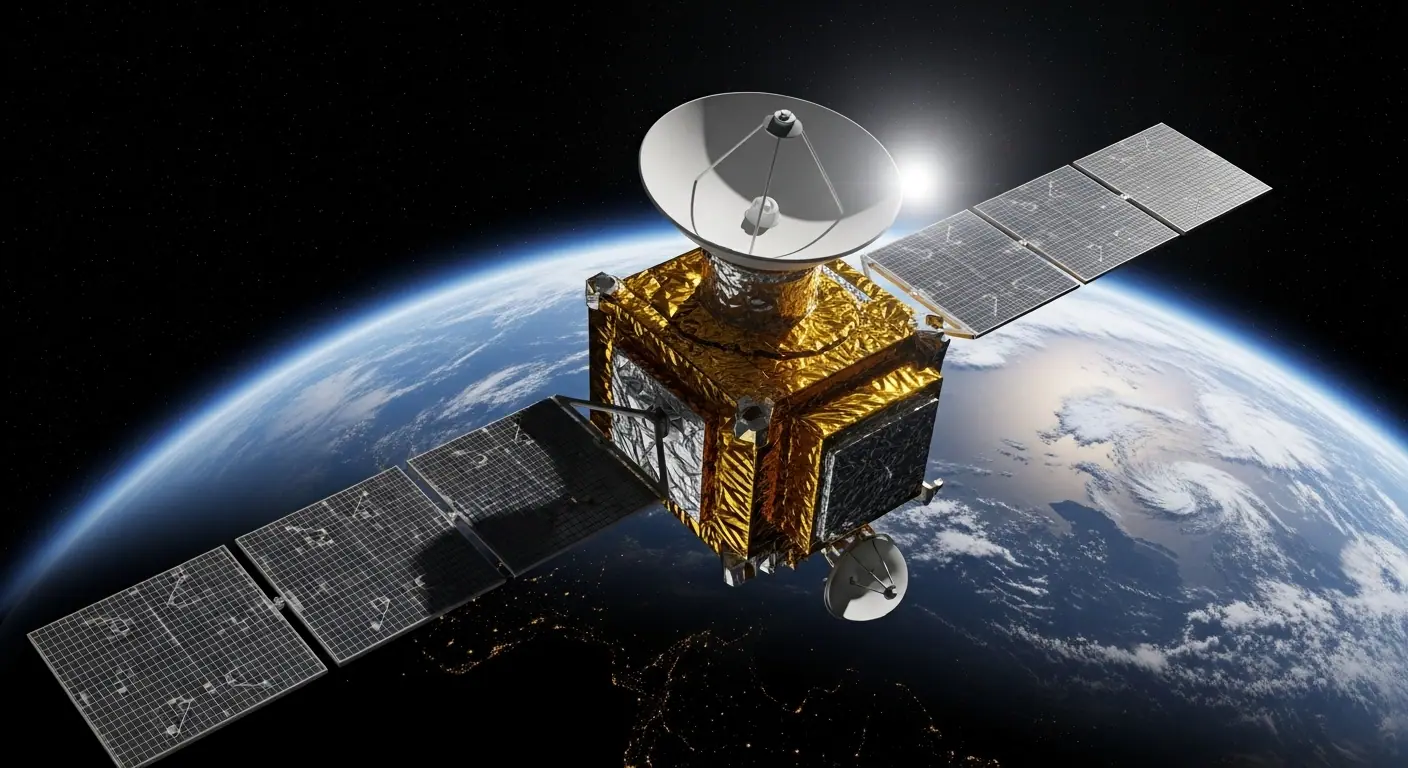
Russia's Space Program: From Sputnik to Roscosmos
From the first satellite and the first human in orbit to the modern Roscosmos state corporation, Russia's space program pioneered human spaceflight — and today navigates sanctions, an aging fleet, and plans for a new station and a joint lunar base with China.
Program Timeline
From Sputnik's first beep to the ISS partnership and today's post-sanctions reality, six decades of Soviet and Russian spaceflight history.
Sputnik 1
The world's first artificial satellite, launched by the Soviet Union from what is now the Baikonur Cosmodrome. Sputnik 1 was a 58 cm aluminum sphere that transmitted a simple radio beacon, shocking the West and opening the Space Race.
Key Facts
- First artificial satellite in orbit
- Launched on the R-7, ancestor of today's Soyuz-2
- Triggered the US response that created NASA in 1958
Vostok 1 — Yuri Gagarin
Yuri Gagarin became the first human in space and the first to orbit the Earth, launching from Baikonur and landing by parachute near Saratov after ejecting from the capsule during descent, as planned for the Vostok design.
Key Facts
- First human spaceflight
- First human to orbit Earth
- Made Gagarin an instant global icon of the Space Race
The Soyuz Program Begins
Soyuz grew out of a design shared with the Zenit military reconnaissance program, adapted for crewed Earth-orbit flight. Its first crewed flight ended in tragedy when a parachute failure killed cosmonaut Vladimir Komarov on reentry. The redesigned spacecraft went on to become the most-flown crewed vehicle in history and, decades later, the sole way to reach the ISS during 2011–2020.
Key Facts
- First crewed flight ended in the loss of Vladimir Komarov
- Redesigned Soyuz became the backbone of Soviet and Russian human spaceflight
- Descendant Soyuz MS variant still flies to the ISS today
N1 Moon Rocket Program
The Soviet answer to Saturn V, intended to land a cosmonaut on the Moon ahead of or alongside the US Apollo program. All four uncrewed test flights failed, including a launch-pad explosion in 1969 that remains one of the largest non-nuclear explosions in history. The program was quietly suspended after Apollo 11's success made a Soviet lunar landing moot, and formally cancelled in 1974.
Key Facts
- All four test flights ended in failure
- Program cancelled in 1974 after the US Moon landing
- The USSR never sent a cosmonaut toward the Moon
Salyut 1 — First Space Station
The world's first space station, opening a Soviet specialty in long-duration orbital habitats that continued through Salyut 2–7 and, later, Mir and the ISS Russian segment. The Soyuz 11 crew that occupied Salyut 1 for 23 days died during reentry when a cabin vent valve opened prematurely, depressurizing the capsule.
Key Facts
- First space station of any nation
- Founded the Soviet/Russian orbital-station lineage that runs through Mir to ISS
- Soyuz 11 tragedy drove a redesign that added seats for only two cosmonauts (with pressure suits) for years afterward
Mir Space Station
A modular station that grew to seven pressurized segments, Mir hosted long-duration missions including Valeri Polyakov's then-record 437-day stay and the Shuttle-Mir program that rehearsed US-Russian cooperation ahead of the ISS. It was deliberately deorbited into the Pacific Ocean in March 2001.
Key Facts
- Longest continuous human presence in orbit at the time (1989–1999)
- Shuttle-Mir docking missions rehearsed ISS operations
- Deorbited safely into the Pacific in 2001
Roscosmos Formation & the ISS Partnership
The Russian Space Agency (later restructured into the Roscosmos state corporation) was established in 1992 as the Soviet program's successor. Russia's Zarya module — funded by NASA but built by Khrunichev — became the ISS's first component in 1998, followed by the Zvezda service module in 2000 and later Rassvet and Nauka. Roscosmos has continuously flown Soyuz crew and Progress cargo missions to the station ever since.
Key Facts
- Zarya (1998) was the ISS's first launched module
- Zvezda (2000) provides the Russian segment's life support and propulsion
- Nauka module finally joined ISS in July 2021 after years of delay
Soyuz as Sole Crew Lifeline to ISS
After the Space Shuttle retired in 2011 and before SpaceX Crew Dragon's first crewed flight in 2020, Soyuz was the only spacecraft flying any astronaut to the ISS, including NASA's — a period during which Roscosmos sold seats to NASA for tens of millions of dollars each.
Key Facts
- Only ride to the ISS for any nation's astronauts, 2011–2020
- Ended with Crew Dragon's Demo-2 flight in May 2020
- Soyuz still flies dedicated Roscosmos crew rotations today
Post-2022 Sanctions and Isolation
Western sanctions following Russia's February 2022 invasion of Ukraine cut Roscosmos off from most Western commercial and institutional partners. ESA suspended the joint ExoMars rover mission in March 2022; Arianespace ended its Soyuz launches from French Guiana; and OneWeb, which had contracted Soyuz to launch its satellite constellation, moved its remaining launches to competitors. Roscosmos reported losing roughly 90% of its launch-service contracts and about 180 billion rubles (~$2.1 billion) in export revenue by early 2024. Russia's orbital launch cadence fell to its lowest level since 1961 by mid-2024, though Soyuz and Progress flights to the ISS Russian segment have continued uninterrupted throughout.
Key Facts
- ESA suspended ExoMars cooperation with Roscosmos (March 2022)
- Arianespace/Kourou Soyuz launches ended
- Roscosmos reported ~90% of launch-service contracts lost and ~$2.1B in lost export revenue by early 2024
- ISS Soyuz/Progress crew and cargo flights continued throughout
Luna 25 — Lunar South Pole Attempt
Russia's first lunar mission since 1976 aimed to be the first spacecraft to soft-land near the Moon's south pole, narrowly ahead of India's Chandrayaan-3. A pre-landing engine burn ran 127 seconds instead of the planned 84, sending the probe into a trajectory that intersected the lunar surface; it crashed in the vicinity of the Pontécoulant crater. Roscosmos director Yuri Borisov attributed the failure to an engine-cutoff fault.
Key Facts
- First Russian lunar mission since Luna 24 in 1976
- Malfunctioning engine burn caused a crash landing
- Successors Luna 27 and Luna 28 remain on the Luna-Glob program roadmap
ROSS — Russian Orbital Station
Russia's planned successor to its ISS modules. Roscosmos revised the design in December 2025 to reuse existing Russian ISS-segment hardware and fly it in the ISS's own 51.6° orbit, rather than the higher-inclination, more Earth-observant orbit originally proposed for a standalone station. The pivot reduces new-build cost but ties ROSS's timeline to detaching hardware from the ISS before its planned 2030 retirement.
Key Facts
- Redesigned in December 2025 to reuse ISS-segment hardware
- Now planned for the same 51.6° orbit as the ISS, not a new higher-inclination orbit
- Crew size unconfirmed post-pivot
ILRS and Future Luna Missions
Announced jointly with China's CNSA in 2021, the International Lunar Research Station (ILRS) is a proposed robotic-then-crewed lunar base, positioned as an alternative to the US-led Artemis Accords. Its roadmap runs reconnaissance (2021–2025), construction (2026–2035) and utilization (2036 onward). As of late 2024 the coalition included around a dozen countries beyond China and Russia. Russia's own robotic Luna-Glob missions (Luna 27, Luna 28) are expected to feed technology and lessons into the ILRS effort after Luna 25's failure.
Key Facts
- Announced by Roscosmos and CNSA in 2021
- Three-phase roadmap running through 2036+
- Positioned as an alternative coalition to the Artemis Accords
- Luna 27 (targeted 2029) and Luna 28 (targeted 2034) planned to precede a crewed base
Launch Vehicles & Infrastructure
Russia's fleet spans a Soviet-era workhorse being phased out, its modern replacement, and the crew spacecraft that has flown, in one form or another, since 1967.
Soyuz-2
Modernized descendant of the R-7 that launched Sputnik and Gagarin. One of the most-flown rocket families in history, still launching Soyuz crew and Progress cargo to the ISS.
Soyuz Spacecraft
Built by RSC Energia. Carries 3 cosmonauts/astronauts to and from the ISS. Current Soyuz MS variant traces its lineage to the 1967 original.
Angara A5
Russia's newer modular family, designed to end reliance on ex-Soviet Ukrainian components and eventually replace Proton. Flies from Plesetsk and Vostochny on Russian soil.
Proton-M
Soviet-era workhorse flying since 1965, over 400 launches. Being phased out in favor of Angara as its production line winds down.
ROSS
Planned successor to Russia's ISS modules, redesigned in December 2025 to reuse existing hardware in the ISS's own orbit rather than build an independent station from scratch.
Key Organizations
Roscosmos oversees a state-owned industrial base of design bureaus and manufacturers that has built every Soviet and Russian spacecraft since the 1950s.
Roscosmos
State corporation overseeing Russia's civil space program, crewed spaceflight, and lunar exploration
RSC Energia
Prime contractor for Soyuz and Progress spacecraft, and the ISS Russian segment
Khrunichev State Research Center
Builds Proton and Angara launch vehicles, and originally built the Zarya ISS module
Glavkosmos
Roscosmos's commercial arm for international launch contracts and satellite services
CNSA
China's space agency — co-leads the International Lunar Research Station with Roscosmos
The International Lunar Research Station
Announced jointly by Roscosmos and China's CNSA in 2021, the ILRS is a proposed robotic-then-crewed lunar base positioned as an alternative coalition to the US-led Artemis program and its Accords. Its roadmap runs reconnaissance (2021–2025), construction (2026–2035), and utilization (2036 onward), with a focus on the lunar south pole region.
The ILRS is formally open to any partner nation. As of late 2024 its membership included roughly a dozen countries beyond China and Russia — among them Venezuela, South Africa, Azerbaijan, Pakistan, Belarus, Egypt, Thailand, Nicaragua, Serbia, Kazakhstan, and Senegal — though outreach to European Space Agency member states reportedly ended after Russia's 2022 invasion of Ukraine.
and China's CNSA, open to
any partner nation
Related Content
Compare Russia's program with the other nations racing back to the Moon, and dig deeper into the hardware and history behind it.
The Soviet Rocket That Built the Modern World
The R-7's lineage from Sputnik and Gagarin to today's Soyuz-2 — still one of the most-flown rockets ever built.
ROSS Station Tracker
Track the design, timeline, and hardware pivot behind Russia's planned successor to its ISS modules.
NASA's Artemis Program
The US-led Moon program and its Artemis Accords — the coalition the ILRS is often framed against.
NASA's Apollo Program
The program the N1 rocket was racing against — and the landing that ended the Soviet Moon effort.
Roscosmos Company Profile
Full profile of the state corporation running Russia's civil space program.
Rocket Comparison Tool
Compare Soyuz-2, Angara, and Proton against every other launch vehicle flying today.