Germany · Space Hub

Bremen

6 organisations

Home to OHB SE, one of Europe's largest independent satellite manufacturers, plus a smaller base of subsystem and launch-vehicle suppliers.

Organisations in Bremen

Satellite Manufacturing Verified OHB.DE

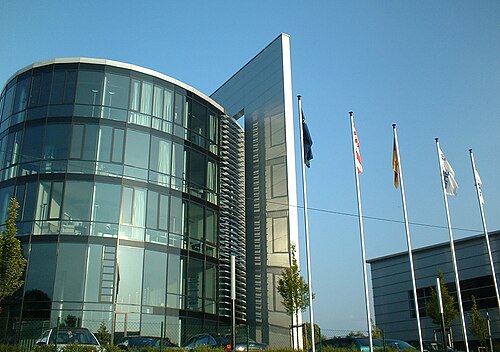
OHB SE

Bremen, Germany commercial

OHB SE is a German space technology company listed on Frankfurt Stock Exchange and headquartered in Bremen, Germany. Founded in 1981, OHB is Europe's third-largest space company by revenue, operating through subsidiaries including OHB System AG (satellite manufacturing), MT Aerospace (structural components and solid rocket motors), Rocket Factory Augsburg (small launch vehicle development), and OHB Italia. The company has built satellites for the Galileo navigation constellation (25+ spacecraft), the SARah synthetic aperture radar reconnaissance constellation for Germany's Bundeswehr, and medium-Earth-orbit science satellites. OHB employs about 3,800 people (end of 2025) across Germany and Italy. The company's diversified structure spans from satellite manufacturing through propulsion components, and its Rocket Factory Augsburg subsidiary is developing the RFA ONE small launch vehicle.

Bremen, Germany · Est. 1981 $4.16B
Satellite Manufacturing

Airbus Space Exploration

Bremen, Germany commercial

Airbus Space and Defence (formerly EADS Astrium) is Europe's largest space systems company, headquartered in Toulouse, France with major operations in Bremen, Germany and Stevenage, UK. The division employs approximately 15,000 people and generates revenues of around €5 billion annually across satellite manufacturing, space exploration, and defense systems. Airbus is the prime contractor for the European Service Module (ESM) that powers NASA's Orion spacecraft for Artemis missions — the first time a European system is critical for a US human spaceflight program. The company manufactures Eutelsat and OneWeb satellite buses, builds Earth observation satellites for the Pleiades and SPOT constellations, and manufactures Ariane 6 rocket components. Airbus is also a major partner in Starlab (commercial space station) and the Lunar Pathfinder navigation satellite.

Bremen, Germany · Est. 2000
Satellite Manufacturing Verified

OHB System

Bremen, Germany commercial

OHB System AG is the satellite manufacturing and system integration core of OHB SE, headquartered in Bremen, Germany. Founded in 1981, OHB System is one of Europe's three major satellite prime contractors alongside Airbus Defence and Space and Thales Alenia Space. The company's notable programs include: Galileo navigation satellites (OHB built 26 of the Galileo FOC satellites under ESA contract), SARah radar reconnaissance satellites for the German Bundeswehr, JUICE (Jupiter Icy Moons Explorer) spacecraft, and various ESA science and Earth observation missions. OHB System is distinguished by its status as Europe's largest independent (non-prime-defense-contractor) space prime, providing an alternative to Airbus and Thales that is owned by the OHB family rather than major aerospace conglomerates. The company also manages subsidiaries OHB Italia, OHB Sweden, and Rocket Factory Augsburg.

Bremen, Germany · Est. 1981
Components

ZARM Technik

Bremen, Germany commercial

ZARM Technik AG is a German manufacturer of attitude-control hardware for satellites, based in Bremen. The company was spun out in 1997 from the University of Bremen's Center of Applied Space Technology and Microgravity (ZARM), the academic institute from which it takes its name and which was itself founded in 1985. ZARM Technik's two principal product lines are magnetic torquers — electromagnetic actuators that generate a magnetic dipole moment to control a spacecraft's orientation by reacting against the Earth's magnetic field — and magnetometers for measuring that field, supplied as analog fluxgate sensors and digital, radiation-tolerant AMR sensors. The company offers more than 50 torquer designs, ranging from 0.1 to 1,000 Am² in dipole moment, each with flight heritage, and states that its fluxgate magnetometers have accumulated over 450,000 flight hours. According to the company, more than 250 international satellite missions have carried ZARM Technik hardware, with units continuing to operate reliably after several years in orbit. The company also supplies the electronic control units that drive its torquers and offers mission-specific customization. ZARM Technik holds ISO 9001 certification, works to ESA ECSS standards, and employs around 35 engineers, technicians and scientists. Magnetorquers are a small but essential item bought by most satellite builders rather than developed in-house, and ZARM Technik is one of a small number of specialist suppliers in this niche, alongside component houses such as NewSpace Systems, already represented in this directory.

Bremen, Germany · Est. 1997
Earth Observation In development

Marble Imaging

Bremen, Germany startup

Marble Imaging is a German Earth observation company developing a constellation of very-high-resolution (VHR) satellites to deliver near real-time imaging and analytics for time-critical applications. The company designs and operates its own space segment, built around multispectral instruments capturing visible, near-infrared and shortwave infrared data. Its first satellite is scheduled to launch in late 2026, with plans to expand to up to 20 satellites by the end of 2028 and ultimately as many as 200 satellites providing global near-real-time VHR coverage. Founded in Bremen, Marble works with manufacturer Reflex Aerospace and closed an oversubscribed 5.3 million euro seed round.

Bremen, Germany · Est. 2023
Launch Services In development

Polaris Spaceplanes

Bremen, Germany commercial

Polaris Spaceplanes is a Bremen, Germany-based launch startup founded in 2019 developing a concept for fully reusable horizontal take-off, horizontal landing (HTHL) spaceplanes that could launch from conventional airport runways without requiring dedicated vertical launch infrastructure. The company's Aurora spaceplane concept targets up to 1,000 kg payload to low Earth orbit and a reusability goal of up to 200 flights per vehicle — theoretical economics that would dramatically reduce per-kg launch costs if achievable. HTHL spaceplanes use a combination of air-breathing jet engines for the lower atmosphere and rocket engines for the upper atmosphere and orbit insertion, landing back on a runway like an aircraft after reentry using thermal protection systems and aerodynamic glide capability. The runway-launch flexibility is a significant potential differentiator — any major commercial airport becomes a potential launch site, eliminating the geographic and infrastructure constraints of vertical launch pads. These technical challenges are formidable: combined-cycle propulsion (efficiently transitioning between air-breathing and rocket modes), thermal protection for reentry at orbital velocities, and structural mass fractions competitive with expendable rockets have blocked similar programs for decades (including Sänger II, the British HOTOL, and ESA's various Hopper studies). Polaris Spaceplanes is competing in a conceptual space alongside Reaction Engines' Skylon (UK) and is at early development stage, working to demonstrate propulsion and aerodynamic concepts before committing to full-scale vehicle development.

Bremen, Germany · Est. 2019