United Kingdom · Space Hub

Harwell

14 organisations

The UK's largest space cluster, at the Harwell Science and Innovation Campus near Didcot, Oxfordshire — home to the UK Space Agency, ESA's ECSAT facility, RAL Space and the Satellite Applications Catapult, alongside more than 100 space-sector organisations on the same site.

Organisations in Harwell

Space Agencies Verified

UKSA

Didcot, United Kingdom government

The UK Space Agency (UKSA) is the UK government body responsible for the civil space program, established in 2010 and headquartered at the Harwell Science and Innovation Campus near Didcot, Oxfordshire (moved from its original Swindon offices). UKSA manages approximately £600 million in annual space investment, coordinates UK contributions to ESA programs (the UK is ESA's third-largest contributor), and regulates commercial spaceflight under the Space Industry Act 2018. The agency supports UK satellite manufacturing — including companies like SSTL and Airbus UK — and has been actively developing domestic launch capabilities following the Space Industry Act. UKSA contributed to the Rosetta comet mission, the Beagle 2 Mars lander, and ExoMars, and manages UK participation in Copernicus Earth observation. The agency's National Space Strategy (2021) targets making the UK a leading space nation, with goals in launch services, satellite applications, and space manufacturing. The UK's space sector generates approximately £18.6 billion in income and employs about 55,000 people.

Didcot, United Kingdom · Est. 2010
Launch Services Verified

Astron Systems

Harwell, United Kingdom commercial

Astron Systems is a UK-based small launch vehicle developer building Aurora, a fully reusable two-stage-to-orbit rocket powered by liquid methane and liquid oxygen propulsion. Founded by former aerospace engineers, Astron targets the rapidly expanding small satellite launch market with a vehicle designed for complete vertical-take-off, vertical-landing (VTVL) reusability — both first and second stages return to the launch site for rapid reflight. Aurora is designed to deliver payloads to LEO at under $4,000 per kilogram, competitive with Rocket Lab's Electron on a per-flight basis while offering higher cadence through reuse. The Aurora architecture uses a cluster of Merlin-class-scale methane engines for the first stage and a vacuum-optimized upper stage engine, with regeneratively cooled chambers drawing on UK research at Rolls-Royce and the University of Bristol. Astron has secured over $600K in early-stage backing and reports customer bookings extending through 2030, reflecting the demand backlog in the European dedicated small-launch market created by the retirement of Vega and ongoing delays in Ariane 6 production rate. The company is based in the Bristol/South West England aerospace corridor, with access to UK Space Agency grant programs and MOD DSEI procurement pathways. Astron Systems competes in a crowded UK launch market alongside Orbex (Prime methane rocket at Sutherland), Skyrora (Skylark-L kerosene), and BAE Systems' investment in smallsat launch, as well as global competitors Rocket Lab, Firefly, and ABL Space Systems.

Harwell, United Kingdom · Est. 2021
Space Technology Verified

Kayser Space

Didcot, United Kingdom academic

Kayser Space is a United Kingdom-based company operating from the Harwell Campus, specializing in the design and manufacture of experimental hardware for space-based scientific research. The company focuses on providing ISS-qualified equipment, indicating a commitment to meeting the rigorous standards required for deployment and operation on the International Space Station. This suggests a niche focus on supporting the scientific community with bespoke hardware solutions tailored for the space environment. Currently, Kayser Space’s core business appears to center around payload testing and the creation of experimental devices. While specific technologies aren’t detailed publicly, the emphasis on ISS qualification implies expertise in areas such as radiation hardening, thermal management, vacuum compatibility, and adherence to stringent safety protocols necessary for in-space operation. The company likely possesses capabilities in mechanical, electrical, and potentially software engineering related to space hardware. Given the limited publicly available information, details regarding notable achievements, missions, or specific customers are currently unavailable. However, the company’s focus on ISS-qualified hardware suggests a business-to-business model, likely serving research institutions, universities, or other space agencies requiring custom experimental equipment. Kayser Space’s unique value proposition appears to be providing specialized, high-reliability hardware for space-based scientific endeavors. Operating within the Harwell Campus, a recognized hub for space innovation in the UK, positions the company within a collaborative ecosystem and potentially facilitates access to testing facilities and expertise.

Didcot, United Kingdom · Est. 2015
Satellite Communications Verified

Lacuna Space

Didcot, United Kingdom commercial

Lacuna Space is a UK-based satellite IoT company providing global connectivity for low-power IoT devices using LoRaWAN protocols — the same long-range, low-power standard used in terrestrial smart city and agricultural sensor networks. Founded in 2017 and headquartered in Didcot, Oxfordshire, Lacuna's approach uses dedicated LoRaWAN gateways on LEO satellites to collect uplink messages from LoRa devices anywhere on Earth, extending the existing terrestrial LoRaWAN ecosystem globally without requiring specialized modems. Target markets include maritime shipping (container tracking), agriculture (field sensors in remote areas), wildlife conservation (animal tracking), and utilities. Lacuna has deployed multiple satellites, partnered with network operators in the LoRa Alliance ecosystem, and raised funding from European investors and strategic partners in the IoT connectivity space.

Didcot, United Kingdom · Est. 2017
Satellite Services Verified

Open Cosmos

Didcot, United Kingdom commercial

Open Cosmos is a UK space company providing end-to-end satellite mission services — from spacecraft design and manufacturing through launch integration and on-orbit operations. Founded in 2015 and headquartered in Didcot, Oxfordshire, the company builds standardized small satellites (20-200 kg class) on rapid timelines and operates them on behalf of customers, covering Earth observation, IoT connectivity, and technology demonstration missions. Open Cosmos serves government space agencies seeking sovereign satellite capability (including a national constellation for Algeria, ALSAT-1N), commercial operators, and research institutions. The company's business model is particularly attractive to emerging space nations that want an operational satellite without building a full internal space program. Open Cosmos received ESA and UK Space Agency contracts and Series B funding from investors including Seraphim Space Capital.

Didcot, United Kingdom · Est. 2015
Satellite Manufacturing Verified

Oxford Space Systems

Harwell, United Kingdom commercial

Oxford Space Systems, founded in 2013 and based in Harwell, United Kingdom, is a company specializing in the development of deployable structures and antennas for space applications. The company focuses on providing solutions that enable increased functionality within the constrained volume and weight limitations of spacecraft. Their core business centers around designing, manufacturing, and testing these critical components. While specific technological details are not publicly available, the focus on “deployable” structures suggests expertise in mechanisms and materials science related to folding, rolling, or otherwise compacting large structures for launch, followed by reliable in-space deployment. This likely involves innovative engineering in areas such as lightweight materials, precision mechanisms, and robust deployment systems. The company’s product line specifically highlights antenna development, indicating a capability in radio frequency (RF) engineering alongside structural mechanics. Currently, publicly available information regarding specific missions, achievements, or customers is limited. However, the company’s continued operation and specialization within a growing space sector suggests successful engagement with the satellite manufacturing and launch service provider ecosystem. Oxford Space Systems positions itself within a niche market – providing essential, enabling technology for more capable satellites. By focusing on deployable structures and antennas, they address a key challenge in modern spacecraft design – maximizing performance within the physical constraints of launch and operation. This specialization potentially offers a unique value proposition to customers requiring compact, high-performance solutions for communication, observation, or other space-based applications.

Harwell, United Kingdom · Est. 2013
Research Verified

Satellite Applications Catapult

Harwell, United Kingdom nonprofit

The Satellite Applications Catapult is a UK government-funded innovation centre established in 2013 at the Harwell Space Cluster in Oxfordshire as part of the UK Catapult Network — a series of technology and innovation centres funded by Innovate UK to bridge the gap between research institutions and commercial market application of emerging technologies. The Catapult's specific mission is to accelerate the adoption of satellite applications and data across the UK economy: helping businesses, public sector organizations, and local authorities understand what satellite-derived data (EO, navigation, communications) can do for their operations, and then connecting them with the technical expertise, funding, and industry partners needed to develop and deploy satellite-enabled services. The Catapult operates the National Earth Observation Applications Centre, a collaborative environment where satellite data analytics researchers and commercial developers can access ESA's Copernicus data, Landsat archives, and commercial satellite imagery — along with cloud computing infrastructure and machine learning tools — to develop practical applications for agriculture, urban planning, insurance, environmental monitoring, and flood risk management. The organization runs accelerator programs for SMEs and startups developing satellite services, provides laboratory and demonstration facilities, and conducts applied research in areas including satellite IoT integration, satellite-enabled autonomous vehicle positioning, and space sustainability. The Catapult has facilitated over 1,000 collaborations between businesses and the space industry and has supported the commercialization of dozens of satellite data products. Located at Harwell alongside the UK Space Agency, RAL Space, and European Space Operations Centre (ESOC) proximity at ESAC, the Catapult is a central node in the UK's space ecosystem strategy.

Harwell, United Kingdom · Est. 2013
In-Space Services In development

Astroscale UK

Harwell, United Kingdom commercial

Astroscale UK, the British subsidiary of Japan's Astroscale, operates the company's National In-orbit Servicing Control Centre facility at Harwell, established in 2018. It is developing ELSA-M, a commercial end-of-life satellite-removal servicer backed by ESA, the UK Space Agency and Eutelsat, and in June 2025 was awarded a £5.15 million contract by the UK's Defence Science and Technology Laboratory for the Orpheus debris-tracking mission. This UK entity is distinct from the Astroscale Japan, Astroscale Israel and Astroscale U.S. entries already in this dataset.

Harwell, United Kingdom · Est. 2018
Antennas In development

Curvalux

Harwell, United Kingdom commercial

Curvalux, founded in 2018 and based in Harwell, United Kingdom, develops and manufactures curved phased array antennas focused on sustainable fixed wireless access (FWA) solutions. The company specializes in solar-powered broadband technologies designed to extend connectivity to underserved areas, offering a lower-cost alternative to fiber optic deployments. Curvalux’s core product is a software-defined, multibeam antenna system capable of creating up to 16 focused beams, significantly increasing signal strength, range, and throughput while minimizing energy consumption. These antennas operate across both licensed and unlicensed frequencies, including Sub 7 GHz and 5G mmWave, and are compatible with Wi-Fi 5 and 6 standards. A key differentiator is the integration of solar power, enabling deployment in locations with limited or no access to traditional power sources. Curvalux’s technology has been adopted by major telecommunications companies including Globe Telecom, GeoLinks, CTL Nigeria, and TreeNet Brasil, and is currently deployed across multiple continents, reaching millions of customers. The company has received recognition for its innovation and social impact, including awards and strategic investment from Pegasus Capital Advisors, and recently merged with Cambridge Broadband Networks to further expand its reach.

Harwell, United Kingdom · Est. 2018
Propulsion In development

Magdrive

Harwell, United Kingdom commercial

Magdrive is a Harwell, Oxfordshire-based electric propulsion startup founded in 2020, developing a novel high-thrust plasma propulsion system for small satellites based on a pulsed inductive plasma acceleration architecture. Unlike conventional Hall-effect thrusters and gridded ion engines that operate continuously, Magdrive's system uses pulsed magnetic fields to accelerate plasma in high-energy bursts, targeting a combination of thrust density and specific impulse that neither traditional chemical propulsion nor existing electric propulsion achieves — positioning it for small satellite maneuver-intensive missions requiring rapid orbit changes that conventional low-thrust EP cannot accomplish in operationally relevant timeframes. Magdrive's propulsion technology leverages a fundamentally different physics regime: inductive plasma acceleration through pulsed electromagnetic coils, eliminating the erosion-prone electrodes of Hall thrusters and gridded ion engines — components that limit lifetime in conventional EP systems. The company claims this enables higher thrust-to-power ratios than Hall thrusters at comparable specific impulse, potentially suited for applications like rapid reconstitution of LEO constellations after orbital maneuvers, responsive space (quick repositioning for surveillance), and deep-space interplanetary missions where time-of-flight constraints demand higher thrust-to-mass ratio than existing smallsat EP provides. Magdrive is based at the Harwell Space Cluster, Oxfordshire — one of the UK's largest concentrations of space companies, alongside the UK Space Agency, RAL Space and the Satellite Applications Catapult — and has participated in ESA's Business Incubation Centre (ESA BIC UK). The UK Space Agency has supported British commercial propulsion through programs targeting sovereignty in space propulsion capability. Magdrive competes in the smallsat high-performance propulsion market with Morpheus Space (UK, field-emission EP), Phase Four (RF plasma thruster), and Exotrail (France, Hall-effect thruster) for the segment of operators who need more capability than existing cold gas or low-power Hall thrusters provide.

Harwell, United Kingdom · Est. 2020
Testing & Qualification

RAL Space NSTF

Harwell, United Kingdom government

RAL Space, established in 1957 and located at Harwell, United Kingdom, is a leading facility dedicated to space science, technology development, and testing. The organization provides comprehensive services for the design, build, and testing of space hardware and instruments, with a demonstrated history of involvement in over 210 instruments flown on space missions. A key capability is electromagnetic compatibility and interference (EMC-EMI) testing, facilitated by a large anechoic chamber, crucial for ensuring the reliable operation of sensitive space-based equipment. RAL Space’s expertise extends to advanced sensor development, including quantum sensors for monitoring space weather phenomena. Recent activities highlighted include support for the Transporter-15 launch and the SpeQtre project, suggesting involvement in both launch support and potentially instrument provision. While specific customer details are not publicly available, RAL Space serves a broad range of stakeholders within the space industry, evidenced by its hosting of events and conferences. The organization’s long history and extensive involvement in numerous missions position it as a significant contributor to the UK and international space sectors, offering specialized testing and development capabilities not widely available.

Harwell, United Kingdom · Est. 1957
Components

Helix Geospace

Harwell, United Kingdom startup

Helix Geospace develops resilient GNSS antennas for positioning, navigation and timing (PNT) applications in environments threatened by jamming, spoofing and multipath interference. The company commercializes patented dielectric-loaded multi-filar helical antenna technology (DielectriX) that delivers high-precision multi-frequency reception and anti-jamming performance in a compact form factor. Its antennas target connected and automated vehicles, critical infrastructure, marine and defense systems. Based at the Harwell campus near Oxford, Helix has collaborated with partners including Sony Semiconductor Solutions and ESA's NAVISP programme.

Harwell, United Kingdom · Est. 2017
Power Systems Verified

Space Solar UK

Didcot, United Kingdom commercial

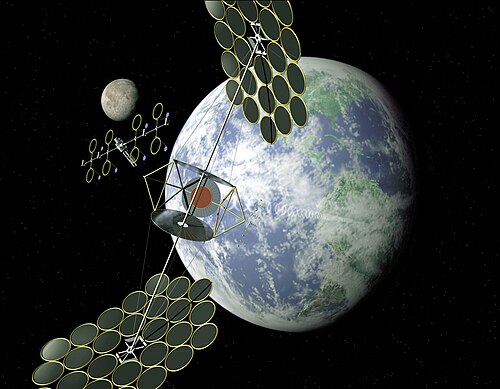
Space Solar UK is a British company developing CASSIOPeiA (Constant Aperture, Solid-State, Integrated, Orbiting Phased Array), an innovative architecture for space-based solar power (SBSP) that could potentially deliver clean electricity to Earth 24 hours a day regardless of weather or season. Space-based solar overcomes the fundamental limitation of terrestrial renewables: a satellite in geostationary orbit (GEO) receives uninterrupted sunlight 99.5% of the year with no atmospheric filtering, collecting solar energy then transmitted to Earth via microwave radio waves to ground-based receiving antennas (rectennas) where it is converted to electricity. The CASSIOPeiA design's distinctive feature is its novel orbital geometry: unlike traditional flat-plate SBSP concepts that require complex rotation mechanisms, CASSIOPeiA maintains a constant aperture facing both the sun and Earth simultaneously through a helical orbital configuration, enabling solid-state (no moving parts) continuous microwave transmission at multi-gigawatt scale. The company secured a letter of intent with Reykjavik Energy (Iceland's main utility) for 30 MW by 2030, scaling to 15 GW by the mid-2040s. SBSP has received serious UK government analysis through BEIS-commissioned feasibility studies that found it technically viable given SpaceX Starship-class launch cost reductions, with the UK's 2023 Space Innovation and Growth Strategy endorsing SBSP development. Space Solar UK's 2 GW commercial system concept represents the scale at which SBSP becomes economically competitive with nuclear and offshore wind.

Didcot, United Kingdom · Est. 2022
Space Solar In development

Space Solar

Didcot, United Kingdom commercial

Space Solar is a UK-based space-based solar power (SBSP) development company founded in 2022 and headquartered in Didcot, Oxfordshire, pursuing one of the most technically ambitious energy concepts: orbital solar power stations that collect sunlight continuously in geostationary orbit and beam energy wirelessly to Earth's surface using microwave or laser transmission. Space Solar targets an operational satellite power plant by 2030, with intermediate demonstration milestones in the late 2020s. The SBSP concept is compelling for energy transition: GEO satellites experience sunlight 24 hours per day (eclipsed only during brief equinox periods), eliminating the intermittency problem of terrestrial solar (which averages roughly 15–25% capacity factor due to night, clouds, and seasons). A single GEO SBSP platform of sufficient scale could theoretically beam multiple gigawatts of power to a rectenna on the ground. The received microwave energy density at Earth's surface would be lower than safe human exposure limits and far lower than direct sunlight — but the persistent power delivery matches baseload demand in a way no terrestrial renewable can. Space Solar's technical approach uses lightweight deployable photovoltaic arrays and phased-array microwave transmitters assembled in orbit, with power beamed at approximately 2.45 GHz to ground receiving stations (rectennas) that convert the microwave energy to DC electricity. The company has partnered with Transition Labs, an Iceland-based clean energy development firm, to provide renewable electricity to Reykjavik Energy — a natural first customer given Iceland's decarbonization goals and its high-latitude position (which reduces GEO SBSP geometry efficiency somewhat but makes the marketing narrative compelling). Space Solar's primary technical and business challenges are enormous: launching and assembling hundreds of thousands of square meters of photovoltaic arrays in GEO requires either radically cheaper launch costs or in-space assembly capabilities not yet demonstrated at commercial scale. The UK government has commissioned studies on SBSP feasibility, and the European Space Agency's SOLARIS initiative is building an R&D roadmap. Space Solar competes conceptually with Virtus Solis, Caltech's MAPLE demonstration (first wirelessly transmitted power from orbit to Earth in 2023), and Overview Energy in the nascent SBSP market.

Didcot, United Kingdom · Est. 2022