California, United States · Space Hub

LA Aerospace Corridor

62 organisations

The Los Angeles basin's satellite and launch-vehicle manufacturing base, running from the South Bay's satellite primes and small-launch startups out to the flight-test range at Mojave.

Organisations in LA Aerospace Corridor

Launch Services Verified RKLB

Rocket Lab

Long Beach, United States commercial

Rocket Lab is a leading aerospace company providing end-to-end space solutions including launch services, spacecraft manufacturing, and on-orbit operations. Founded in 2006 by Peter Beck in New Zealand and now headquartered in Long Beach, California, the company has established itself as the second most frequently launched U.S. rocket operator behind SpaceX. The company trades on NASDAQ under the ticker RKLB following its 2021 SPAC merger. Rocket Lab employs approximately 2,000 people across facilities in California, Virginia, New Zealand, and Colorado. Under founder and CEO Peter Beck, the company has evolved from a small satellite launch provider into a comprehensive space systems company. ## History and Milestones Peter Beck founded Rocket Lab in New Zealand in 2006 with the goal of making space more accessible through small, affordable rockets. The company developed the Electron rocket, achieving first orbital flight in January 2018. Rocket Lab became the first private company to reach orbit from the Southern Hemisphere. The company pioneered electric-pump-fed rocket engines with the Rutherford engine, using 3D-printed components and electric motors instead of traditional turbopumps. This innovation reduced engine complexity and cost while maintaining performance. Electron has since completed over 50 launches with a strong success rate. In 2020, Rocket Lab successfully recovered an Electron first stage for the first time using parachute and helicopter capture, demonstrating a path to reusability. The company expanded into spacecraft manufacturing through the acquisition of Sinclair Interplanetary, Advanced Solutions Inc., and Planetary Systems Corporation, becoming a vertically integrated space company. ## Products and Services Electron is Rocket Lab's workhorse small satellite launcher, capable of delivering 300 kg to low Earth orbit from launch sites in New Zealand and Virginia. The rocket uses nine Rutherford engines on its first stage and a single vacuum-optimized Rutherford on the second stage. Electron launches are priced at approximately $7.5 million. Neutron is Rocket Lab's medium-lift reusable rocket currently in development, designed to carry 13,000 kg to low Earth orbit. The rocket features an innovative wide-body design with a reusable first stage landing on the launch pad rather than at sea. Neutron targets constellation deployment, cargo resupply, and potentially crewed missions. Rocket Lab's Space Systems division manufactures Photon spacecraft, providing satellite buses for customers who want turnkey solutions. Photon supports missions from low Earth orbit to interplanetary trajectories, including NASA's CAPSTONE lunar mission. The company also supplies spacecraft components to other manufacturers. ## Technology and Capabilities The Rutherford engine represents a significant advancement in small rocket propulsion, using electric pumps powered by lithium polymer batteries instead of gas generators or turbopumps. This approach simplifies the engine, enables high-performance 3D printing of major components, and provides precise throttle control for landing attempts. Rocket Lab operates the only private orbital launch complex in the Southern Hemisphere at Mahia Peninsula, New Zealand, providing unique launch geometry for polar and sun-synchronous orbits. The company's second launch complex at Wallops Island, Virginia, serves U.S. government and commercial customers requiring domestic launch. The Photon spacecraft bus provides integrated power, propulsion, attitude control, and communications for customer payloads, significantly reducing time to orbit for small satellite missions. Rocket Lab's spacecraft manufacturing capabilities include solar panels, reaction wheels, star trackers, and software, enabling rapid satellite production. ## Business and Financial Overview Rocket Lab trades publicly on NASDAQ (RKLB) with a market capitalization that has varied between $2-6 billion since its 2021 debut. The company generates revenue from launch services, spacecraft manufacturing, and component sales, with launch and space systems representing roughly equal revenue contributions. The company holds multiple NASA contracts including the Electron Launch Services Contract, spacecraft development for the Mars Sample Return mission, and various technology development awards. Rocket Lab also serves commercial constellation operators, defense customers, and civil space agencies worldwide. Rocket Lab has raised substantial capital through its public listing and subsequent offerings, investing in Neutron development, manufacturing expansion, and strategic acquisitions. The company targets profitability as launch cadence increases and Neutron becomes operational. ## Recent Developments In 2024, Rocket Lab achieved record launch cadence with multiple Electron missions per month, demonstrating manufacturing scalability. The company continued Neutron development, revealing detailed vehicle specifications and beginning construction of dedicated production facilities in Virginia. Rocket Lab successfully recovered additional Electron boosters via mid-air helicopter capture, advancing toward operational reuse. The company's Space Systems division delivered multiple spacecraft for commercial and government customers, growing its backlog of satellite manufacturing orders. The company expanded its component manufacturing business, supplying reaction wheels, solar panels, and other subsystems to external satellite manufacturers. Rocket Lab also advanced its deep space capabilities, supporting NASA's Mars exploration programs and commercial lunar mission customers. ## Market Position Rocket Lab leads the small satellite launch market, competing primarily with SpaceX rideshare services and emerging small launch providers. The company's reliable track record and dedicated launch service commands premium pricing compared to rideshare alternatives, serving customers requiring specific orbits or timing. Key competitors include SpaceX for all launch segments, Virgin Orbit (now defunct), Relativity Space, and international providers. In spacecraft manufacturing, Rocket Lab competes with Terran Orbital, AAC Clyde Space, and traditional satellite primes for small to medium satellite programs. Rocket Lab's competitive advantages include proven launch reliability, rapid cadence capability, vertical integration, and a clear path to medium-lift with Neutron. The company's expansion from launch to full space systems differentiates it from pure-play launch providers.

Long Beach, United States · Est. 2006 $41.3B
Launch Services Verified

Relativity Space

Long Beach, United States commercial

Relativity Space is an aerospace manufacturer that pioneered 3D-printed rocket manufacturing and is now developing Terran R, a fully reusable medium-lift vehicle targeting the Falcon 9 market. Founded in 2015 and headquartered in Long Beach, California, the company raised over $1.3 billion from investors including Fidelity, Tiger Global, and Mark Cuban. Relativity's Terran 1 — the world's first 3D-printed orbital rocket — flew once in March 2023 but did not reach orbit; the company subsequently cancelled the program and pivoted entirely to Terran R. Terran R is designed for full reuse of both stages, targeting 23,500 kg to LEO, with a first-stage landing profile similar to Falcon 9. The rocket is manufactured using Relativity's proprietary Stargate metal printing system, which can print a full rocket in 60 days. Terran R represents a direct commercial challenge to Falcon 9's rideshare and dedicated market.

Long Beach, United States · Est. 2015 $2.45B raised
Launch Services Verified

ABL Space Systems

El Segundo, United States commercial

ABL Space Systems, now rebranded as Long Wall following a strategic pivot in late 2024, was an American launch vehicle developer that operated the RS1 small-lift rocket. After setbacks with the RS1 program, the company transitioned to defense applications focusing on missile defense systems and hypersonic flight test vehicles. The RS1 rocket experienced its second launch attempt failure in July 2024 when a static fire test at Pacific Spaceport Complex-Alaska resulted in fire causing irrecoverable damage to the vehicle. The fire developed during a 13-second test of all 11 first stage engines. While brief with no injuries or infrastructure damage, the incident ended plans for a summer 2024 launch. The maiden RS1 flight in January 2023 had failed when a fire in the aft cavity damaged key harnessing, causing engine shutdown 11 seconds into flight. The rocket crashed near the launch pad, damaging spaceport infrastructure. Following the setbacks, ABL Space announced in November 2024 its exit from the commercial orbital launch market, pivoting to military applications leveraging existing launch vehicle and engine technology for missile defense. Long Wall lists Long Beach, El Segundo, Mojave, Camarillo and Kodiak, Alaska as operating sites. In February 2025, CEO Dan Piemont announced the rebrand to Long Wall with focus on missile defense systems and hypersonic flight test vehicles. The company's propulsion expertise continues serving defense customers.

El Segundo, United States · Est. 2017 $245M raised
In-Space Services Verified

Impulse Space

Redondo Beach, United States commercial

Impulse Space is developing in-space transportation services using orbital transfer vehicles to deliver satellites from rideshare drop-off orbits to their final destinations. Founded in 2021 by Tom Mueller, SpaceX employee number one and principal engineer of the Merlin and Draco engines, Impulse Space provides last-mile delivery in space. The Mira orbital transfer vehicle completed its inaugural LEO Express-1 mission in 2024 after launching on SpaceX Transporter-9 in November 2023. Over seven months, Mira achieved the two largest orbital maneuvers ever made by a nitrous-based system, including a 150-kilometer orbit raise in 75 seconds, the largest single orbit raise ever by an OTV on its debut mission. In August 2024, Impulse Space announced a GEO Rideshare Program and upgraded Mira design enabling operations in geostationary and other high-energy orbits. The Helios kick stage provides small satellite access to GEO, while the enhanced Mira delivers high delta-v capability for missions requiring rapid repositioning. The updated Mira design launches in late 2025. Mira launched on LEO Express-2 aboard SpaceX Transporter-12, completing Final Mission Readiness Review in December 2024. The approximately 300-kg vehicle uses Saiph bipropellant thrusters with 290-second specific impulse, delivering 500-900 m/s delta-v depending on payload mass. Impulse Space partnered with Anduril Industries to integrate Mira for national security missions. The company continues expanding in-space transportation services for commercial and government customers.

Redondo Beach, United States · Est. 2021 $1B+ raised
Space Stations In development

Vast

Long Beach, United States commercial

Vast is an American commercial space station company founded in 2021 by billionaire Jed McCaleb (co-founder of Ripple and Stellar). The company acquired Launcher (rocket startup) in 2023 and is developing Haven-1, a single-module commercial space station whose launch on a SpaceX Falcon 9 is targeted for the first quarter of 2027 (Vast update, March 2026). Haven-1 would be the first commercial space station in orbit if launched as planned, hosting NASA, commercial, and private astronaut missions. Vast has a Launch Services Agreement with SpaceX and a NASA CLD (Commercial Low Earth Orbit Destination) study contract. The company is also developing Haven-2, a larger multi-module station intended to be operational when the ISS deorbits around 2030. Vast's business model centers on selling research time, tourism stays, and government crew transport slots. McCaleb has personally funded the company with hundreds of millions of dollars, giving Vast unusual financial runway for a space station startup.

Long Beach, United States · Est. 2021 $1.1B raised
Satellite Manufacturing In development

K2 Space

Torrance, United States commercial

K2 Space is a satellite manufacturing startup developing ultra-large, high-capability spacecraft at small satellite price points for a post-Starship future. Founded by brothers Karan and Neel Kunjur with a team from SpaceX and Blue Origin, K2 Space is building massive satellites optimized for dramatically lower launch costs. In 2024, K2 Space achieved significant milestones including scaling from 25 to 90 employees, expanding from 15,000 to 180,000 square feet of production facility, and securing over $50 million in customer contracts. The company successfully completed its first in-space mission, activating flight computer, microcontroller, motor controller, and reaction wheel hardware on orbit. The U.S. Space Force awarded K2 Space a $60 million contract to build its first Mega class satellite for Medium Earth Orbit. The Gravitas mission will launch no earlier than February 2026 on SpaceX Transporter-16, carrying national security payloads from LEO to MEO using a 20-kilowatt electric propulsion system among the most powerful ever flown commercially. K2 Space's Mega Class satellite bus delivers payload mass, power, and volume of large satellites at small satellite prices. The planned Giga Class platform will provide over 115 kW power and 15,000 kg payload mass, becoming the largest and highest power commercial satellite ever deployed. The company continues developing revolutionary satellite platforms anticipating continued reduction in launch costs from Starship and other heavy-lift vehicles.

Torrance, United States · Est. 2022 $1B+ raised
Space Tourism Verified

The Spaceship Company

Mojave, United States commercial

The Spaceship Company (TSC) is a spacecraft and aircraft manufacturer founded in mid-2005 by Burt Rutan and Richard Branson to build and own the vehicles flown by Virgin Galactic, separating manufacturing from Virgin Galactic's flight-operations business. Based at the Mojave Air and Space Port in Mojave, California, TSC became a wholly owned Virgin Galactic subsidiary in 2012 after Virgin bought out Scaled Composites' stake, and it subsequently took over production and flight testing of SpaceShipTwo-class suborbital spaceplanes and their WhiteKnightTwo carrier aircraft from Scaled Composites, which had built the original SpaceShipTwo, VSS Enterprise (lost in a fatal 2014 test-flight accident). TSC built and tested VSS Unity, VSS Imagine and related vehicles, and the carrier aircraft VMS Eve, supporting Virgin Galactic's commercial suborbital tourism flights, which began in 2023 and carried paying customers and researchers from Spaceport America, New Mexico. The company has also pursued supersonic aircraft work, partnering with Boom Technology from 2016 on the XB-1 demonstrator aircraft. In 2024 Virgin Galactic paused active flight operations of the Unity-class spaceplane and shifted TSC's manufacturing effort toward larger, more production-friendly Delta-class vehicles intended for commercial service later in the decade. The Spaceship Company remains active as Virgin Galactic's in-house manufacturing arm, based in Mojave, California, with additional facilities reported in Tustin, California.

Mojave, United States · Est. 2005
Defense & Security Verified

Raytheon

El Segundo, United States commercial

Raytheon, an RTX business, is a leading defense technology company providing advanced missile systems, space-based sensors, and ground systems for missile warning and defense. With over 100 years of technology development, Raytheon delivers integrated solutions across land, air, sea, and space domains. In September 2024, Raytheon delivered its first Next-Generation Overhead Persistent Infrared (Next-Gen OPIR) sensor payload to prime contractor Lockheed Martin, keeping the U.S. Space Force's first GEO Block 0 missile warning satellite on track for 2025 initial launch capability. Two Next-Gen OPIR GEO satellites will provide continuous mid-latitude coverage, with Raytheon designing and building sensor payloads for both satellites. In May 2024, Raytheon's advanced FORGE MDPAF ground system became operational at the Space Force's Overhead Persistent Infrared Battlespace Awareness Center. This modular framework processes satellite data from both the existing Space Based Infrared System constellation and future Next-Gen OPIR systems, enabling fast integration of mission-focused applications to process, exploit, and disseminate information from space-based sensors. Raytheon operates a 49,000 square-foot Space Systems Operations facility in Tucson, Arizona, where technicians, engineers, and operators develop, test, and assemble highly precise defensive weapons known as kill vehicles that track and defeat ballistic missiles in space. In April 2024, Raytheon was awarded a $344 million contract for SM-2 Block IIICU and SM-6 Block IU missile development. The company continues advancing space-based missile warning and defense technologies.

El Segundo, United States · Est. 1922
Launch Services In development

SpinLaunch

Long Beach, United States commercial

SpinLaunch is a Long Beach, California company developing a kinetic energy launch system that uses a ground-based centrifuge to spin-accelerate small payloads to hypersonic speeds before releasing them vertically, reducing the fraction of propellant required for a launch vehicle. Founded in 2014 by Jonathan Yaney, the company raised over $150M from investors including Airbus Ventures, Google Ventures, and Kleiner Perkins. SpinLaunch completed construction of a 33-meter suborbital accelerator at Spaceport America in New Mexico and conducted 10 successful test launches between October 2021 and September 2022, demonstrating the core kinetic launch concept. The company plans a full-scale orbital system capable of delivering 200 kg payloads per day. Critics note that rapid-rotating electronics must survive ~10,000g acceleration, limiting payload options primarily to rugged government and mass-production commercial satellites.

Long Beach, United States · Est. 2014
Launch Services Defunct

Virgin Orbit

Long Beach, United States commercial

Virgin Orbit was a launch services company founded in 2017 as a spin-off from Virgin Galactic, developing the air-launched LauncherOne rocket system. The company pioneered launching small satellites from a modified Boeing 747 carrier aircraft called Cosmic Girl, completing six total flights from 2020 to 2023 with four successes. Notable achievements included becoming the first commercial company to reach orbit from UK soil in January 2023, though that mission failed due to engine overheating. After going public via SPAC merger in December 2021 at a $3.7 billion valuation, financial difficulties led to Chapter 11 bankruptcy filing in April 2023. The company ceased operations in June 2023 after selling assets to Rocket Lab, Stratolaunch, and Launcher for approximately $36 million total.

Long Beach, United States · Est. 2017
Human Spaceflight Verified

Scaled Composites

Mojave, United States commercial

Scaled Composites is an American aerospace prototyping and experimental aircraft company founded in 1982 by aerospace designer Burt Rutan and based at the Mojave Air and Space Port in Mojave, California. The company built SpaceShipOne, the first privately developed crewed vehicle to reach space, which won the $10 million Ansari X Prize in 2004 after two flights above 100 km; that programme, funded by Microsoft co-founder Paul Allen, established Scaled Composites as the leading builder of experimental suborbital spaceplanes. Scaled subsequently designed and built the original SpaceShipTwo and its WhiteKnightTwo carrier aircraft for Virgin Galactic, though manufacture and testing of later SpaceShipTwo-class vehicles was transferred to Virgin's own subsidiary, The Spaceship Company. Other notable Scaled Composites projects include the Proteus high-altitude research aircraft, the Virgin Atlantic GlobalFlyer (first solo non-stop flight around the world), the X-47A Pegasus unmanned combat air vehicle demonstrator, and structural work on the Stratolaunch carrier aircraft, the largest aircraft by wingspan ever flown. Northrop Grumman acquired full ownership of Scaled Composites on 24 August 2007, and the company now operates as a wholly owned Northrop Grumman subsidiary specialising in composite-structure design, prototype fabrication and flight test services for aerospace and defense customers, rather than as an independent spacecraft developer. Scaled Composites remains active, employing several hundred staff at its Mojave facility under president Greg Morris.

Mojave, United States · Est. 1982
Launch Vehicles In development

Interorbital Systems

Mojave, United States commercial

Interorbital Systems is a privately held American rocket company founded in 1996 by Roderick (Rod) and Randa Milliron and based at the Mojave Air and Space Port in Mojave, California. The company has spent almost three decades developing the modular NEPTUNE family of orbital launch vehicles, built around a Common Propulsion Module (CPM) — a cluster of small liquid-oxygen/densified-propane rocket engines, each producing roughly 4,500 lbf of thrust — that can be grouped in different quantities to scale the rocket's payload capacity; related TRITON and TRITON HEAVY variants have also been proposed. Alongside the launch vehicle work, Interorbital sells low-cost 'TubeSat' and 'CubeSat' personal satellite kits to schools, hobbyists and research groups, intended to be flown as rideshare payloads once NEPTUNE or a partner vehicle is available; the company has used ISRO and JAXA rideshare opportunities to fly some customer payloads, and also developed the suborbital NEUTRINO and TACHYON sounding rockets. Interorbital served as the launch-vehicle partner for Team Synergy Moon in the Google Lunar X Prize, and earlier competed for the Ansari X Prize and America's Space Prize. Despite multiple announced static-fire and suborbital test campaigns dating back to the 2000s, Interorbital Systems has not yet completed an orbital launch; as of October 2023 NEPTUNE, TRITON and TRITON HEAVY remained in development, with the company reporting around a dozen employees as of 2017. The company continues to operate from Mojave.

Mojave, United States · Est. 1996
Satellite Communications

Anuvu (formerly Global Eagle)

Los Angeles, United States commercial

Anuvu, founded in 2011 and headquartered in Los Angeles, is a provider of connectivity and entertainment solutions primarily focused on the aviation and maritime industries. The company operates satellite networks designed to deliver services to cruise ships and airlines, enabling passenger connectivity and content delivery. Anuvu’s core business centers around providing the infrastructure and services needed for in-flight and at-sea entertainment and communication. A key component of Anuvu’s offering is its MTN-TV platform, a maritime entertainment service currently available on 116 cruise ships. Recent developments demonstrate a focus on expanding content offerings, as evidenced by a partnership with BBC Studios to launch premium channels – BBC Earth, BBC Lifestyle, and BritBox – specifically tailored for cruise ship passengers. This collaboration highlights Anuvu’s ability to integrate high-quality content into its existing service platform. While specific technological details are limited in available information, the operation of satellite networks and delivery of live sporting events and on-demand content suggests capabilities in satellite communication, content encoding/distribution, and network management. Anuvu appears to be positioned as a key enabler of the passenger experience within the cruise and aviation sectors, differentiating itself through curated content partnerships and the operation of dedicated connectivity infrastructure. The company focuses on delivering a comprehensive entertainment and communication package to its customers, enhancing the travel experience for passengers at sea and in the air.

Los Angeles, United States · Est. 2011
Satellite Manufacturing Verified

Apex

Los Angeles, United States commercial

Apex is a satellite manufacturing company producing standardized small satellite buses at unprecedented speed for commercial and government customers. Based in Los Angeles, Apex addresses the satellite bus bottleneck with productized platforms enabling rapid delivery of mission-ready spacecraft. In March 2024, Apex demonstrated its technology with the successful launch of Aries SN1 on SpaceX Transporter-10, representing the fastest build of any production small satellite bus in the industry. The GEO Aries platform extended capabilities to geostationary orbit, building on the LEO Aries success. The company has sold nearly a dozen Aries spacecraft to customers. Apex develops three satellite bus product lines: Aries (100 kg class for reliability and rapid production), Nova (250 kg ESPA Grande class for demanding LEO missions), and Comet (supporting payloads up to 500 kg). After customers finalize configuration, Apex retrieves completed buses from inventory and delivers finished satellites within six months versus the industry standard 12-24 months. In June 2024, Apex raised $95 million in Series B funding to ramp production for national security customers. The company later completed a $200 million Series C round, scaling production from 12 to 18 spacecraft per month with peak capacity exceeding 200 buses annually. Apex won a $45.9 million Space Force contract, their largest government deal. Anduril Industries selected Apex to provide satellite buses for military space missions. Apex continues expanding high-rate manufacturing capabilities for the growing proliferated satellite market.

Los Angeles, United States · Est. 2022
Composites

Applied Composites

Los Angeles, United States commercial

Applied Composites is a Los Angeles-based advanced composites manufacturing company founded in 1989, specializing in high-performance carbon fiber and composite structures for aerospace applications including satellite primary and secondary structures, antenna reflectors, launch vehicle components, and spacecraft mechanisms. The company serves as a Tier 1 and Tier 2 supplier to major satellite prime contractors including Northrop Grumman Space, Boeing Satellite Systems, Maxar Technologies, and Lockheed Martin Space, providing flight-qualified composite assemblies that meet the stringent dimensional stability, mass, and outgassing requirements of space hardware. Applied Composites' core manufacturing capabilities include autoclave and out-of-autoclave (OOA) composite laminate fabrication, precision machined composite assemblies, honeycomb sandwich structures, and complex curved surfaces for reflectors and fairings. For satellite applications, the company manufactures structural tubes, panels, brackets, and primary spacecraft bus structural members in carbon fiber reinforced polymer (CFRP) — materials that achieve stiffness-to-weight ratios 5–10x better than aluminum at comparable mass, enabling satellite designers to reduce structural mass and allocate more to payload. Dimensional stability under the thermal cycling of space (from +100°C in sunlight to -150°C in shadow) requires ultra-low coefficient of thermal expansion (CTE) composite layup designs that Applied Composites specializes in. Antenna reflectors for communications satellites represent another key product: parabolic and offset reflector dishes in the 1–5 meter class fabricated from carbon fiber/cyanate ester composites that maintain surface accuracy to fractions of a millimeter under the launch environment and thermal extremes of GEO operations. Applied Composites also manufactures payload fairings and interstage structures for launch vehicles, applying similar high-volume CFRP fabrication techniques under AS9100 quality management. The company operates in the highly competitive but strategically important space composites supply chain alongside Albany Engineered Composites, Orbital Sciences' composites division (now Northrop Grumman), and Ducommun in the aerospace structural composites market.

Los Angeles, United States · Est. 1989
Propulsion

Ethos Space

Los Angeles, United States commercial

Ethos Space is a US startup developing lunar surface infrastructure with two primary products: a system for extracting liquid oxygen (LOX) from lunar regolith via electrolysis (targeting the in-situ resource utilization market for propellant supply at lunar depots), and a lunar landing pad construction approach that melts and sinters regolith into hard-rock surfaces using focused solar or microwave energy to eliminate debris plume hazards from landing and launch. The company is positioned in the growing lunar infrastructure market ahead of sustained crewed and commercial lunar surface presence under NASA's Artemis program, where propellant availability and safe landing surfaces are recognized critical path items. Ethos competes in the same infrastructure layer as Maana Electric (regolith ISRU) and Lunar Outpost.

Los Angeles, United States · Est. 2022
Propulsion

Evolution Space

Mojave, United States commercial

Evolution Space (Evolution Space and Energetics Corp) is a solid rocket motor company headquartered in Mojave, California, with an additional propulsion production facility at NASA's Stennis Space Center in Mississippi, positioning itself as a 'solids as a service' partner for U.S. defense and aerospace customers. Its Whiplash and Maelstrom product lines are tailorable fast-burn and extended-boost solid propulsion systems tested at hypersonic speeds above Mach 5 and altitudes exceeding 100 km. In August 2024 the company won an Air Force SBIR Phase II contract for hypersonic boost and target propulsion solutions, and in September 2024 it carried out sea-based rocket testing in partnership with The Spaceport Company.

Mojave, United States
Satellite Manufacturing Verified

Millennium Space Systems

El Segundo, United States commercial

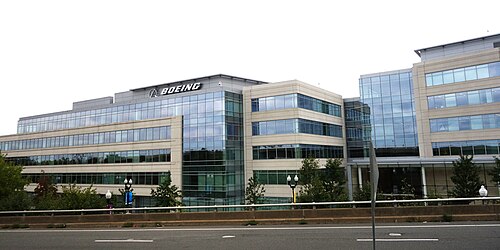
Millennium Space Systems, headquartered in El Segundo, California and founded in 2001 — acquired by Boeing in 2018 and operating as a wholly owned Boeing subsidiary — is a national security-focused small satellite manufacturer providing U.S. government intelligence, military, and civil agencies with rapidly developed, mission-specific spacecraft at timescales and cost points significantly lower than traditional large satellite programs. Millennium's core value proposition is 'responsive space': the company has developed production processes, component libraries, and systems engineering methodologies that allow it to design and build operational military small satellites in 12-24 months from contract award — compared to 5-10 years for traditional DoD large satellite programs. This speed advantage is critical for intelligence community customers who need to respond to evolving threat environments and technology opportunities faster than legacy acquisition programs can adapt. Millennium's satellite manufacturing experience includes prototype and demonstrator satellites for Space Development Agency (SDA) Transport and Tracking Layer programs, responsive space technology demonstration satellites for DARPA and NRO, and production small satellites for classified national security missions where specific capabilities, customers, and orbital parameters are not publicly disclosed. The company's El Segundo location — adjacent to the Space and Missile Systems Center (now Space Systems Command) at Los Angeles Air Force Base — provides proximity to its primary government customers' acquisition organizations and the dense Southern California defense satellite ecosystem including The Aerospace Corporation, RAND Corporation, and Northrop Grumman's satellite businesses. Boeing's acquisition of Millennium brought the subsidiary into Boeing's broader national security space portfolio alongside Boeing Satellite Systems International (BSS) — which builds large GEO satellites — and Boeing Defense, Space & Security (BDS) space programs, giving Millennium access to Boeing's manufacturing resources and supply chain while maintaining its lean, responsive-space culture. Competitors include York Space Systems (also SDA prime), General Atomics EMS, and Terran Orbital for the responsive national security smallsat market.

El Segundo, United States · Est. 2001
Propulsion Verified

Phase Four

El Segundo, United States commercial

Phase Four is a leading provider of electric propulsion systems for small satellites, developing innovative radio-frequency thrusters that simplify spacecraft propulsion while reducing size, weight, and cost. The Hawthorne, California company produces turn-key plasma propulsion systems for commercial and government customers. In July 2024, Phase Four announced the Maxwell Block 3 plasma propulsion thruster, with orders open for Q1 2024 delivery from the company's new 25,000 square-foot manufacturing facility. Maxwell Block 3 offers significantly shorter lead times and lower prices compared to legacy plasma propulsion systems while exceeding Hall effect thruster performance. In October 2024, Phase Four announced commercialization of monopropellant multi-mode capability, combining high-thrust chemical propulsion with efficient electric propulsion using a single propellant. The RF thruster uniquely supports chemical propellant integration, eliminating auxiliary xenon or krypton tanks required by other multi-mode systems. Ground demonstrations using ASCENT and hydrazine systems are planned with DoD and private partners by Q1 2025. The hallmark of Phase Four's technology is flexible architecture utilizing traditional noble gases and alternative propellants including iodine, water, and air. The next-generation RF plasma thruster doubles peak specific impulse above 900 seconds compared to earlier blocks, doubling total impulse for fixed propellant tank sizes. Phase Four continues advancing versatile electric propulsion technology for the growing small satellite market.

El Segundo, United States · Est. 2015
Composites Verified

Scorpius Space Launch

Torrance, United States commercial

Scorpius Space Launch, founded in 1999 and based in Torrance, California, specializes in the design, engineering, and production of advanced composite structures for the space industry. The company’s core business centers around all-composite cryogenic pressure vessels, specifically utilizing Type-V tank technology. These unibody structures integrate propellant tanks without requiring traditional support elements, aiming to reduce failure modes for both chemical and electric propulsion systems. A key technological differentiator for Scorpius is its proprietary Sapphire 77 resin, a cryogenic high-performance matrix used in conjunction with Hexcel carbon fiber to manufacture these Type-V pressure vessels. They also offer the Tridyne High-Performance Pressurization System, which utilizes enriched helium with small quantities of gaseous hydrogen and oxygen. Scorpius emphasizes flexible production runs, capable of fulfilling orders ranging from single prototypes to larger quantities, and provides turn-key assembly services. While specific mission or customer details are not publicly available, Scorpius positions itself as a provider of innovative, lightweight, and reliable propellant storage solutions for a range of spacecraft and launch vehicle applications. With over 30 years of experience in product development, the company focuses on bringing customer concepts to life through its manufacturing and design capabilities.

Torrance, United States · Est. 1999
Defense & Security Verified

SpaceX Starshield

Hawthorne, United States commercial

SpaceX Starshield is SpaceX's national security and defense satellite services division, established in 2022, offering Starlink-derived satellite capabilities hardened and adapted for US government and allied military use. Starshield includes: secure inter-satellite and satellite-to-ground communications with end-to-end encryption meeting government standards; a hosted payload capability allowing DoD sensor packages (EO cameras, SIGINT, etc.) to ride on SpaceX satellites; and earth observation services. SpaceX won the Space Development Agency's Tranche 1 contract to build tracking layer satellites for missile warning (HBTSS — Hypersonic and Ballistic Tracking Space Sensor) under the Starshield umbrella. Starshield's significance is that it integrates SpaceX's cost-efficient proliferated LEO architecture into US national security space infrastructure, offering capability at lower cost and higher satellite volume than traditional defense satellite programs built by primes like Northrop and Raytheon.

Hawthorne, United States · Est. 2022
Satellite Communications Verified

Starlink

Hawthorne, United States commercial

Starlink is a satellite internet constellation operated by Starlink Services, LLC, a subsidiary of SpaceX, providing high-speed, low-latency broadband internet globally. As of late 2025, SpaceX has launched over 10,000 Starlink satellites, making it the largest satellite constellation ever deployed and comprising approximately 65% of all active satellites in orbit. The service has grown to over 8 million active subscribers worldwide, with 2 million in the United States, adding roughly 12,200 new users daily. Starlink serves residential, business, maritime, aviation, and government customers across more than 70 countries. The constellation utilizes AI-powered beamforming, low-latency routing, and edge computing technologies. SpaceX maintains an aggressive launch cadence of approximately 233 satellites per month, with plans to expand to 12,000 satellites initially and potentially 34,400 in later phases.

Hawthorne, United States · Est. 2015 Included in SpaceX raised
Antennas Verified

ThinKom Solutions

Torrance, United States commercial

ThinKom Solutions is a Torrance, California antenna company founded in 2000 that developed Variable Inclination Continuous Transverse Stub (VICTS) phased array antenna technology — a mechanically-scanned flat-panel antenna design that provides high-efficiency satellite tracking without the power-hungry electronics of electronically-steered arrays. ThinKom's VICTS antennas are used extensively in commercial aviation in-flight connectivity (IFC) systems, installed on hundreds of aircraft worldwide for Ku and Ka-band satellite links. Airlines and aviation SATCOM providers (including ViaSat, Intelsat, and OneWeb-based IFC operators) use ThinKom antennas as the airborne terminal. The company also supplies maritime and ground mobile antennas. ThinKom competes with Kymeta (metamaterial ESA), Intellian, and ViaSat's antenna divisions in the mobility satellite terminal market.

Torrance, United States · Est. 2000
Launch Services

USC Astronautics

Los Angeles, United States commercial

The Department of Astronautical Engineering at the University of Southern California (USC) Viterbi School of Engineering in Los Angeles is one of the oldest and most established astronautics programs in the United States, with a curriculum spanning spacecraft design and analysis, orbital mechanics, astrodynamics, spacecraft propulsion, attitude control and dynamics, and space mission operations. USC's Los Angeles location is strategically positioned within one of the densest concentrations of aerospace and space employers in the world: The Aerospace Corporation (El Segundo), SpaceX (Hawthorne), Northrop Grumman (Redondo Beach), Raytheon Intelligence & Space (El Segundo), NASA's Jet Propulsion Laboratory (Pasadena), and Boeing Space in the region — all providing co-ops, internships, and immediate post-graduation employment for USC astronautics graduates. Research programs include liquid rocket engine development, electric propulsion for smallsats, spacecraft GNC (guidance, navigation, and control), orbital debris modeling, and space systems engineering. USC's AIAA student chapter and the Rocket Propulsion Laboratory (RPL) — a student-run organization that has successfully launched university-built sounding rockets — provide hands-on engineering experience beyond the classroom. The department trains engineers for the full spectrum of roles in the commercial and government space industry with particularly strong industry ties reflecting Los Angeles's position as America's space capital by employment.

Los Angeles, United States · Est. 1880
Research

USC Space Engineering Research Center

Los Angeles, United States academic

The USC Space Engineering Research Center (SERC), established in 2012 as part of the USC Viterbi Department of Astronautical Engineering, is a leading academic and research institution focused on advancing space technology. SERC’s core activities encompass a broad range of space engineering disciplines, including rocket propulsion, space robotics, hypersonic flight, and spacecraft systems. A key capability demonstrated by the student-run USC Rocket Propulsion Lab is the design, construction, and launch of high-altitude rockets, recently achieving a record-breaking altitude of 470,000 feet with the Aftershock II rocket and successfully launching a payload-carrying rocket, Malibu. SERC is actively involved in cutting-edge research, with projects ranging from the development of autonomous space robotics systems – including contributions to NASA’s Astrobee platform – to innovative docking systems like CLINGERS, currently being tested on the International Space Station. Faculty are engaged in research supported by NASA and other organizations, focusing on areas like electric spacecraft propulsion and hypersonic flight. The center’s work extends beyond research and student projects, with faculty frequently providing expert commentary on major space industry events, such as SpaceX launches and the evolving space economy. USC’s Astronautical Engineering program and SERC contribute to a pipeline of skilled engineers and researchers poised to impact the future of space exploration and technology.

Los Angeles, United States · Est. 2012
Power Systems In development

Antares Industries

Torrance, United States commercial

Antares Industries, founded in 2023 and based in Torrance, California, is a developing space technology company focused on advanced power systems. The company’s core business centers around the development of kilowatt-scale nuclear fission microreactors designed for space applications. This technology aims to provide a sustained, reliable power source independent of traditional methods like solar or batteries, particularly for long-duration missions and remote operations. Antares Industries emphasizes a key differentiator in its design: a three-year operational lifespan without requiring resupply or specialized maintenance. This is achieved through fully automated controls, integrated power management, and distribution systems, reducing the logistical complexities and costs associated with maintaining power infrastructure in space. The company’s focus on automation suggests a capability in robust control systems and potentially, advanced materials science to ensure long-term reliability in the harsh space environment. Currently, publicly available information regarding specific missions, deployments, or customer contracts is limited. However, the development of a sustained, independent power source positions Antares Industries to serve a growing need within the space industry. The company’s unique value proposition lies in providing a long-life, low-maintenance power solution, potentially enabling more ambitious and sustained space exploration, lunar surface operations, and deep-space missions where consistent, reliable power is paramount. This approach could reduce reliance on complex logistical support and specialized personnel, offering a cost-effective and scalable power solution for future space endeavors.

Torrance, United States · Est. 2023
Satellite Communications Acquired

Aquarian Space

Los Angeles, United States commercial

Aquarian Space, founded in 2021 and based in Los Angeles, is a space company focused on developing communications solutions for lunar and deep space environments. The company’s core business centers around enabling reliable connectivity beyond Earth orbit. While specific technologies are not detailed publicly, their focus indicates expertise in space-qualified communications hardware and software, potentially including advanced antenna systems, signal processing, and network protocols designed for the unique challenges of long-distance space communication. Currently, Aquarian Space is a Y Combinator Winter 2022 company, suggesting early-stage development and investment. Publicly available information regarding missions, customers, or deployed systems is limited. However, the company’s stated focus positions it within the growing market for lunar and deep space infrastructure, supporting future exploration and potential commercial activities beyond Earth. Aquarian Space aims to address the critical need for robust and dependable communications as space activities expand, offering a specialized service within the broader space communications landscape.

Los Angeles, United States · Est. 2015
Earth Observation In development

Earth Observant

Los Angeles, United States commercial

Earth Observant (EOI Space) is a Los Angeles-based Earth observation satellite developer founded in 2020 that is pioneering the use of large deployable optical apertures to achieve very high-resolution (VHR) imagery from satellites significantly smaller and cheaper than conventional VHR imaging spacecraft. Conventional VHR satellites like WorldView-3 or Pléiades Neo achieve 30-50 cm resolution using large (1.1 m) fixed telescope mirrors that require a heavy (2,000-3,500 kg) satellite bus to house and stabilize them. Earth Observant's approach instead uses a foldable, deployable primary mirror — a lightweight segmented or flexible optical aperture that collapses for launch in a small satellite form factor and then deploys in orbit to achieve the large aperture diameter needed for sub-50 cm resolution imaging. This mirrors the approach of space telescopes like JWST (its 6.5 m deployable gold-coated beryllium mirror) but applied to Earth observation. A deployable 1 m class mirror on a 200 kg satellite would achieve equivalent resolution to fixed-aperture satellites three to five times heavier, dramatically reducing launch costs and manufacturing time. The enabling technologies Earth Observant is developing include precision actuated mirror segment alignment, wavefront sensing and correction to maintain optical figure stability in the thermal cycling of LEO, and advanced image reconstruction algorithms that can compensate for residual aberrations. Earth Observant is backed by space-focused investors and has received SBIR Phase II funding from the National Geospatial-Intelligence Agency (NGA), which has a direct need for lower-cost VHR imaging capability to expand the number of domestic commercial providers it can source imagery from under the EnhancedView and Electra contract vehicles.

Los Angeles, United States · Est. 2020
Propulsion In development

General Galactic

El Segundo, United States startup

General Galactic is a California startup founded in 2023 by Stanford graduates Luke Neise and Halen Mattison, developing systems that synthesize fuel from carbon dioxide and water using renewable power, capturing CO2, producing hydrogen via electrolysis, and combining them into methane. The technology targets both terrestrial carbon-neutral fuel production and space applications, including water-based in-space propulsion and in-situ propellant generation relevant to Mars exploration. The company has built a water-powered satellite intended to demonstrate propulsion using only water as propellant.

El Segundo, United States · Est. 2023
Manufacturing In development

Hadrian

Torrance, United States commercial

Hadrian, founded in 2020 and based in Torrance, California, is a manufacturing company focused on developing automated precision component factories for the aerospace industry. The company aims to increase manufacturing efficiency to support a more accessible and expansive spacefaring future. While specific product details are limited in publicly available information, Hadrian’s core business centers around the design and construction of these advanced, automated facilities. Hadrian differentiates itself through a focus on complete factory solutions, rather than individual component manufacturing. This suggests a capability in integrating robotics, automation software, and precision engineering to create end-to-end production lines. The company recently secured $117 million in Series B funding, indicating investor confidence in its approach and potential for scalability. Currently categorized within both the manufacturing and defense sectors, Hadrian’s technology likely caters to applications requiring high-precision, reliable component production – potentially including satellite parts, rocket engine components, or specialized hardware for defense applications. Hadrian’s unique value proposition appears to be accelerating manufacturing capabilities for the aerospace industry through full factory automation, positioning it to potentially address supply chain bottlenecks and reduce production costs for its customers. Further details regarding specific contracts or customer base are not currently available publicly.

Torrance, United States · Est. 2020
Spacecraft In development

In Orbit Aerospace

El Segundo, United States startup

In Orbit Aerospace is a California startup, based in the El Segundo area and founded in 2020, building orbital platforms and reentry vehicles to enable mass manufacturing and research in space. Led by CEO Ryan Elliott, it positions itself as a third-party logistics provider: its Retriever reentry vehicle would autonomously dock with orbital platforms, and a robotic system would transfer manufactured material into the vehicle for return to Earth. The company won an AFWERX contract to develop a novel docking method with the University of Colorado Boulder and partnered with Nanoracks to demonstrate autonomous docking.

El Segundo, United States · Est. 2020
Human Spaceflight In development

Inversion Space

Torrance, United States commercial

Inversion Space is a California-based company developing reusable reentry capsules for rapid cargo return from orbit. Founded in 2021 in Torrance and a Y Combinator alumni, the company's flagship product is Ray — a heat-shielded capsule designed to deorbit cargo from the ISS or other orbital platforms and land at designated sites within hours, enabling time-critical applications like pharmaceutical manufacturing, materials science samples, and biotechnology experiments that require rapid return to Earth-based labs. Inversion distinguishes itself from competitors like Outpost Technologies through its emphasis on speed (hours, not days) and precision landing capability. The company has received backing from SpaceX (as a strategic investor), Founders Fund, and other venture investors, and is targeting the growing in-space manufacturing market that companies like Varda Space Industries and Space Forge are pioneering.

Torrance, United States · Est. 2021
Launch Services Acquired

Launcher Space Services

Hawthorne, United States commercial

Launcher Space Services, a company under the Vast umbrella, is focused on providing launch services, specifically orbital deployment for small satellites. Founded in 2018 and based in Hawthorne, California, the company is currently developing in-house propulsion technology to support its launch capabilities. The core of Launcher’s technological development centers around the E-2 liquid rocket engine. The company positions this engine as a potentially groundbreaking advancement in small satellite launch vehicle efficiency, aiming for what they believe will be world-leading performance in its class. While currently focused on engine development, this technology is intended to directly enable Launcher’s orbital deployment services. Currently available information does not detail specific missions flown or customers secured. However, the company’s focus on high-efficiency propulsion suggests a strategy geared towards cost-effective access to orbit for the growing small satellite market. Launcher’s unique value proposition appears to be centered on vertically integrating key engine technology, potentially allowing for greater control over costs and performance compared to companies relying on off-the-shelf propulsion systems. This approach, if successful, could position Launcher as a competitive player in the increasingly crowded small launch vehicle sector.

Hawthorne, United States · Est. 2018
Launch Services Defunct

Leo Aerospace

Los Angeles, United States commercial

Leo Aerospace, founded in 2017 and based in Los Angeles, is a launch services company focused on providing dedicated and responsive access to space for microsatellites. The company is currently developing a unique air-launch system utilizing high-altitude balloons – commonly referred to as “rockoons” – to deploy small rockets into low Earth orbit. This approach aims to reduce the cost and complexity traditionally associated with orbital launches. Leo Aerospace’s core technology centers around integrating a small, dedicated launch vehicle with a stratospheric balloon platform. This system is designed to offer greater flexibility and quicker turnaround times compared to conventional ground-based launches, potentially enabling more frequent and targeted satellite deployments. While specific technical details are currently limited due to a lack of publicly available information, the rockoon concept inherently requires expertise in both balloon technology and small rocket propulsion systems. As a relatively young company, publicly available information regarding completed missions or established customer contracts is currently limited. However, the development of a rockoon system positions Leo Aerospace within the growing market for dedicated small satellite launch services, catering to the increasing demand from commercial, academic, and government entities requiring tailored orbital access. Leo Aerospace’s unique value proposition lies in its potential to offer a more cost-effective and responsive launch solution specifically for the microsatellite market. By leveraging balloon-based launch platforms, the company aims to bypass some of the infrastructure and logistical challenges associated with traditional launch sites, potentially opening up new opportunities for frequent and targeted satellite deployments.

Los Angeles, United States · Est. 2017
Lunar Defunct

Masten Space Systems

Mojave, United States commercial

Masten Space Systems was a Mojave, California-based rocket company founded in 2004 that pioneered vertical takeoff, vertical landing (VTVL) rocket propulsion testbeds and was one of the earliest companies in the NewSpace era to demonstrate precision propulsive landings — years before SpaceX's Falcon 9 boosters popularized the concept. Masten won the Northrop Grumman Lunar Lander Challenge at the 2009 X-Prize Cup, successfully flying the VTVL demonstration vehicle xB (later xombie) to 50 meters altitude, hovering, translating 100 meters, and landing with precision — demonstrating the core maneuver required for propulsive planetary landings. Over its history, Masten operated a family of flight-test vehicles named after female astronomers (xombie, xoie, Xodiac, Xaero) at the Mojave Air and Space Port, accumulating thousands of tethered and free-flight VTVL tests for customers including NASA, DARPA, the Air Force Research Laboratory, and aerospace prime contractors. These tests made Masten a go-to partner for propulsion and GNC (guidance, navigation, and control) experimental work that needed real flight environment data cheaply and quickly — filling a gap between simulation and expensive dedicated rocket flights. In 2019, NASA selected Masten Space Systems as a Commercial Lunar Payload Services (CLPS) provider, awarding the company a contract to deliver scientific instruments to the lunar surface using its planned XL-1 lunar lander. Masten's XL-1 was intended to land on the south polar region of the Moon in 2022, carrying eight NASA instruments studying the lunar south pole environment. However, Masten filed for Chapter 11 bankruptcy in July 2022 — unable to complete the lunar lander development amid cost overruns and financing challenges — before XL-1 ever launched. Astrobotic Technology acquired Masten's assets, including flight vehicles, intellectual property, and team members, in August 2022, integrating Masten's propulsion and GNC expertise into Astrobotic's lunar lander programs.

Mojave, United States · Est. 2004
Computing In development

Orbital

Los Angeles, United States commercial

Orbital (legally Orbital Compute, Inc.) is a Los Angeles-based startup founded in early 2026 by CEO Euwyn Poon to build a constellation of GPU-equipped satellites in low Earth orbit for running Nvidia AI compute workloads in space. Its pitch is that space offers continuous, low-competition solar power and can use the vacuum as a passive heat sink for cooling, advantages the company argues let it scale AI infrastructure faster and more cheaply than terrestrial data centers once satellites are in mass production. The founding team is drawn from Amazon's Leo satellite-internet program, Northrop Grumman, Lockheed Martin, Firefly Aerospace and Millennium Space Systems. Orbital raised an oversubscribed $5 million pre-seed round backed by a16z's Speedrun program and the NVIDIA Inception program, with additional participation from Basis Set, Human Element, Wayfinder, Anti Fund and Antler. In April 2026 the company signed Reflex Aerospace, the German satellite manufacturer, as the exclusive satellite-platform provider for its first dedicated spacecraft, Orbital-1, targeted for a 2028 launch. Orbital's publicly stated roadmap calls for a smaller Pathfinder hosted-payload demonstration of AI inference compute in low Earth orbit in 2027, flying on a SpaceX Falcon 9, ahead of the multi-GPU-node Orbital-1 spacecraft. As of its FCC filings in mid-2026, Orbital had outlined ambitions to eventually deploy up to 100,000 satellites, a plan that drew scrutiny from astronomers and space-debris researchers over its potential effects on the night sky and orbital congestion. The company had not flown any hardware as of its most recent public disclosures.

Los Angeles, United States · Est. 2026 $5M raised
Components In development

Prime Lightworks

Los Angeles, United States commercial

Prime Lightworks, founded in 2022 and based in Los Angeles, is a space technology company focused on the development of laser communication systems for satellites. The company specializes in components and systems enabling high-bandwidth data transmission from space. While specific mission details are not publicly available, Prime Lightworks is positioned within the growing market of space-based optical communications, offering a potential alternative to traditional radio frequency systems. As a recent participant in the Y Combinator S22 program, the company is likely in an early stage of development and market entry, aiming to capitalize on the increasing demand for reliable and high-speed data links for satellite operations and expanding space-based services.

Los Angeles, United States · Est. 2022
Launch Services In development

Rocket Lab National Security

Long Beach, United States commercial

Rocket Lab National Security is a division of Rocket Lab, an end-to-end space company providing launch services, spacecraft development and manufacturing, and satellite components. Founded in 2021 and based in Long Beach, California, the division focuses on serving defense-related applications within the broader company portfolio. Rocket Lab offers dedicated and rideshare launch options via its Electron rocket – currently the second most frequently launched U.S. rocket – alongside development of the larger Neutron launch vehicle, designed for 13-tonne payloads. Beyond launch, Rocket Lab provides complete spacecraft solutions including the Photon, Pioneer, Lightning, and Explorer platforms, as well as critical satellite components like star trackers, separation systems, and reaction wheels. The company also develops and provides industry-leading flight and ground software with a proven record of over 150 cumulative years of operation across more than 50 spacecraft. Notably, Rocket Lab has recently supported missions for organizations such as the Japan Aerospace Exploration Agency (JAXA) and KAIST, demonstrating its capabilities in delivering tailored orbital solutions. Rocket Lab distinguishes itself through a focus on responsive space access, offering rapid call-up launch services and agile satellite solutions. The company is also a leader in space solar technology, providing high-efficiency cells and components powering over 1,000 spacecraft. With over 240 satellites launched by Electron and more than 1,700 on orbit utilizing Rocket Lab technology, the company is positioned as a key player in the growing small and medium launch market.

Long Beach, United States · Est. 2021
Satellite Communications In development

SpaceBelt

Los Angeles, United States commercial

SpaceBelt, founded around 2015 and based in the United States, is developing a space-based data center and secure cloud computing network — a constellation of satellites housing data storage and processing nodes in orbit that can serve as geographically distributed, physically isolated secure data infrastructure for government agencies and enterprises with the most demanding data security requirements. SpaceBelt's concept centers on the inherent security advantages of space-based data storage: data stored on orbit is physically unreachable by conventional server raids, physical intrusion, or country-specific legal data seizure orders. A foreign government cannot compel a US company to hand over data stored on an orbiting satellite the way it can compel access to a terrestrial data center. This "air gap in space" proposition targets classified government communications, financial transaction records requiring jurisdictional isolation, and enterprise data that crosses multiple national regulatory regimes creating GDPR/data sovereignty compliance challenges. The technical challenges of space-based cloud computing are substantial: data must be uplinked and downlinked through ground stations, introducing latency incompatible with many real-time applications; radiation in LEO degrades commercial-grade storage hardware rapidly; heat dissipation in vacuum requires specialized thermal management; and the economics of launching and operating data center mass in orbit are orders of magnitude more expensive than terrestrial equivalents per terabyte stored. SpaceBelt raised early funding and secured partnerships with satellite manufacturers exploring the concept's feasibility. The company's progress has been limited by these fundamental technical and economic hurdles — the space cloud computing concept remains largely unproven at commercial scale despite interest from defense customers. Competitors in adjacent space computing markets include Amazon Web Services' satellite edge computing initiative and Loft Orbital's hosted payload data services.


Los Angeles, United States · Est. 2014
Satellite Communications In development

Spacerex

Los Angeles, United States commercial

Spacerex is a Los Angeles-based satellite communications company founded in 2023. The company develops satellite communication systems, positioning itself within the growing space-based connectivity market. Currently, detailed information regarding specific products or services is limited, but the core focus appears to be on advancing technologies related to satellite communications infrastructure. As a recent participant in the Y Combinator S23 program, Spacerex is a very early-stage company. This suggests a focus on rapid innovation and development of its core technology. The repeated phrase on their website, “Slow down. The future is a wreck,” while unconventional, may indicate a company philosophy centered on careful, deliberate engineering and a cautious approach to a rapidly evolving industry – or potentially a commentary on the current state of satellite deployment and orbital debris. Given its founding date and participation in Y Combinator, Spacerex is likely focused on establishing itself within a competitive market. Further information is needed to determine its specific niche, target customers, or unique technological differentiators. However, its presence in Los Angeles places it within a significant hub for aerospace innovation and talent.

Los Angeles, United States · Est. 2023
Satellite Communications In development

Stara Space

Manhattan Beach, United States startup

Stara Space is building a constellation of low-cost nanosatellites to provide secure data relay, storage and computation as a subscription service for spacecraft in low Earth orbit. The company aims to function as space infrastructure-as-a-service, giving satellite operators affordable, real-time, high-speed connectivity for moving data to and from orbit. By lowering the cost of space communication networks, Stara targets emerging NewSpace operators who need persistent links but cannot afford traditional relay infrastructure. The company began with small demonstration spacecraft as proof of concept for its planned relay network.

Manhattan Beach, United States
Lunar In development

Starpath Robotics

Hawthorne, United States startup

Starpath Robotics is a Hawthorne, California startup founded in 2022 that designs robotic factories to produce rocket propellant from extraterrestrial resources. Its initial target is water ice at the lunar south pole: a fleet of mining rovers would excavate regolith, a refinery would extract and purify water, and electrolysis would split it into liquid oxygen and hydrogen propellant, alongside space-rated solar power generation. The company won second place at NASA's Break the Ice Lunar Challenge in 2024 and raised a $12 million seed round co-led by 8VC and Fusion Fund.

Hawthorne, United States · Est. 2022
Launch Services In development

Veloces

Los Angeles, United States commercial

Veloces is a Los Angeles-based space company founded in 2023 focused on the development of launch vehicles. Currently, the company’s core business centers around designing and building rockets intended for rapid-response launch capabilities. Specific details regarding vehicle size, payload capacity, or target orbits are not publicly available at this time. Given the company’s stated focus, Veloces appears to be targeting a niche within the launch services market emphasizing speed and agility. This suggests potential applications in supporting responsive space access for small satellite constellations, on-demand launch services, or time-critical missions. Key technologies and capabilities are currently unspecified, though development of rapid-response vehicles inherently requires streamlined manufacturing, efficient logistics, and potentially innovative propulsion or staging systems. As a newly founded company established in 2023, Veloces has not yet publicly announced any completed missions, deployments, or secured customer contracts. Information regarding funding rounds or partnerships is also currently unavailable. Veloces’ unique value proposition, based on available information, lies in its commitment to rapid-response launch capabilities. While the broader launch market includes established players offering a range of services, a dedicated focus on speed and flexibility could position Veloces to serve a growing demand for more agile space access solutions, particularly within the burgeoning small satellite sector.

Los Angeles, United States · Est. 2023
Lunar In development

Venturi Astrolab

Hawthorne, United States commercial

Venturi Astrolab, founded in 2019 and headquartered in Hawthorne, California, develops the FLEX Rover — a large-format lunar terrain vehicle designed to support both crewed astronaut operations and autonomous robotic missions on the Moon's surface, with particular emphasis on NASA's Artemis program requirements for sustained polar operations near the lunar south pole. The FLEX Rover's defining physical innovation is its hyper-deformable wheel system: custom-engineered wheels that flex and deform over rocks and craters rather than rigidly rolling over them, distributing load across a larger contact patch and reducing slippage in the loose, low-cohesion lunar regolith. NASA's Apollo-era Lunar Roving Vehicle used rigid wheels with wire mesh construction; FLEX's compliant wheel design draws on lessons from decades of Mars rover wheel failures (Curiosity's aluminum wheels accumulated extensive puncture damage) to engineer passive deformability as a durability solution for multi-year lunar surface operations. FLEX carries a 1,500 kg payload capacity — substantially larger than Apollo's LRV (approximately 490 kg total loaded) — and is designed for a 10-year operational life, reflecting NASA's intent to maintain permanent infrastructure near the lunar south pole rather than conduct short-duration sorties. The rover accommodates detachable payload modules (science instruments, drill systems, construction equipment) that can be swapped at a lunar base, enabling the same rover chassis to serve multiple mission types over its service life. In 2024, NASA selected Venturi Astrolab for the Lunar Terrain Vehicle (LTV) services contract, which will provide crewed and autonomous rover capabilities for Artemis lunar surface missions. NASA reported that Astrolab achieved the highest mission suitability score among finalists — which also included Intuitive Machines and a Lockheed Martin / General Motors team — validating the FLEX design against NASA's operational requirements for crew safety, payload versatility, range, and autonomous navigation capability. Venturi Astrolab is backed by the Venturi Group (Monaco-based clean energy and mobility conglomerate) and has conducted terrestrial FLEX prototype demonstrations in the Mojave Desert, accumulating dozens of kilometers of rough-terrain test data to validate the wheel design and autonomous navigation systems.

Hawthorne, United States · Est. 2020
In-Space Services Verified

Varda Space Industries

El Segundo, United States commercial

Founded in January 2021 by former SpaceX engineer Will Bruey and Founders Fund partner Delian Asparouhov, Varda Space Industries is pioneering in-space pharmaceutical manufacturing using microgravity to create superior drug formulations. The company designs spacecraft that process small molecule pharmaceuticals in microgravity where suppressed convection and sedimentation produce more uniform crystals, improving drug shelf-life, bioavailability, and patient experience. In February 2024, Varda made history as only the third company ever to return materials from orbit, successfully bringing back ritonavir HIV medication crystals from their W-1 mission after navigating complex regulatory approvals. With $329 million raised through Series C funding, the El Segundo-based company has flown a series of W-class reentry capsules, with missions through W-6 listed on its own platform page, demonstrating that materials can be processed in orbit and returned to Earth commercially.

El Segundo, United States · Est. 2021 $329M raised
Recruitment

Aerospace & Defense Recruiters

Los Angeles, United States commercial

Aerospace & Defense Recruiters is a Los Angeles-based firm specializing in talent acquisition within the aerospace industry. Founded in 2010, the company focuses exclusively on recruitment services, connecting professionals with opportunities across the aerospace and defense sectors. While specific details regarding specialization within these sectors are not publicly available, their focused approach suggests a deep understanding of the unique skillsets and qualifications required for roles within this highly technical field. Currently, information regarding the company’s key technologies or capabilities is limited to its core function as a recruitment agency. However, a dedicated focus on aerospace talent implies a robust network of candidates and a strong understanding of industry-specific job functions, certifications, and experience levels. Their value proposition centers on efficiently sourcing and vetting qualified professionals for companies operating in a competitive and demanding industry. Due to the limited publicly available information, details regarding notable achievements, specific missions supported, or a comprehensive customer list are unavailable. However, operating for over a decade suggests established relationships within the aerospace ecosystem and a proven track record of successful placements. Aerospace & Defense Recruiters positions itself as a specialized recruitment partner, differentiating itself from general staffing agencies by concentrating solely on the unique demands of the aerospace and defense industries. This focused approach likely allows them to provide more targeted and effective recruitment solutions for companies seeking highly skilled personnel.

Los Angeles, United States · Est. 2010
Research Verified

Aerospace Corporation

El Segundo, United States nonprofit

The Aerospace Corporation is a nonprofit Federally Funded Research and Development Center (FFRDC) established in El Segundo, California in 1960, serving as the U.S. government's sole-source, independent systems engineering and technical authority for national security space programs — providing expert technical guidance to the U.S. Space Force, National Reconnaissance Office, and other intelligence community space customers without the conflicts of interest inherent in contractor self-assessment. The FFRDC organizational model is unique to the U.S. national security ecosystem: private nonprofit organizations operating under long-term government sponsorship are chartered to maintain technical expertise and institutional knowledge that would be legally or practically unavailable through normal commercial contracting. The Aerospace Corporation operates under a prime contract with the U.S. Space Force covering independent systems engineering and technical assistance (SETA) for DoD space programs: reviewing satellite designs, launch vehicle certifications, ground system architectures, and mission integration plans for technical rigor; identifying cross-program risks visible only to an organization with access across multiple classified programs; and providing independent technical assessments of contractor performance claims. Major programs where The Aerospace Corporation has provided systems engineering support include GPS Block III (operational navigation satellite constellation), WGS (Wideband Global SATCOM military communications), SBIRS (Space-Based Infrared System missile warning), AEHF (Advanced Extremely High Frequency protected communications), the U.S. Space Force Ground Architecture (Combat Operations), and the classified NRO satellite programs underlying U.S. intelligence capabilities. The corporation employs approximately 4,000 engineers, scientists, and technical specialists — predominantly senior professionals with deep aerospace prime contractor experience who value Aerospace Corporation's mission-focused, clearance-intensive, intellectually independent environment. Technical research output is substantial: Aerospace researchers publish extensively on orbital debris mitigation, space environment characterization, satellite survivability, radiation effects in microelectronics, and launch reliability statistics — freely shared with the broader space community to advance best practices. The corporation also operates the COMSPOC (Commercial Space Operations Center) space situational awareness catalog — a public catalog of Earth-orbiting objects complementing U.S. Space Force's official SSN. Peer institutions include MITRE Corporation (defense FFRDC for different domains), MIT Lincoln Laboratory (radar/space sensor FFRDC), and the Institute for Defense Analyses.

El Segundo, United States · Est. 1960
Education Verified

California Science Center

Los Angeles, United States nonprofit

The California Science Center is a state-owned science museum in Los Angeles, California, established in 1951 as the California Museum of Science and Industry, serving as the West Coast's primary public space science education institution. The Center houses Space Shuttle Endeavour (OV-105) — the youngest of NASA's operational shuttle fleet — displayed as the world's only Space Shuttle in vertical launch configuration, standing upright on its original external tank and solid rocket boosters, replicating the configuration in which it sat on Launch Pad 39A before each of its 25 missions. Endeavour's permanent display in the Samuel Oschin Air and Space Center (opened 2022 in a dedicated pavilion) required a multi-year engineering achievement: transporting the 78,000-pound orbiter through Los Angeles city streets in October 2012 — a two-day journey watched by hundreds of thousands of spectators — and subsequently mating it at the museum site with its 66,000-pound external tank (the only full ET never flown) and two Reusable Solid Rocket Boosters. This vertical stack assembly is a first for any shuttle location; the other orbiter displays (Discovery at Dulles, Atlantis at KSC Visitor Complex, Enterprise at the Intrepid Sea-Air-Space Museum in New York) are all displayed horizontally. The Science Center also displays Space Shuttle Main Engines, space suits, and dozens of aerospace artifacts alongside interactive science exhibits spanning life sciences, ecosystems, and world of life galleries. The facility operates adjacent to the Exposition Park campus near USC in downtown Los Angeles, serving over two million annual visitors.

Los Angeles, United States · Est. 1951
Software Verified

Epsilon3

Los Angeles, United States startup

Epsilon3 is a space operations software company founded by former SpaceX and Google engineers. The company's platform digitizes and automates complex test and launch procedures, replacing paper-based processes with real-time collaborative workflows. Used by major launch providers, satellite manufacturers, and space agencies to manage pre-launch checklists, integration procedures, and mission operations. Epsilon3 has raised significant venture funding and counts multiple leading space companies among its customers.

Los Angeles, United States · Est. 2021 $18M raised
Spaceports Verified

Mojave Air and Space Port

Mojave, United States commercial

Mojave Air and Space Port, located in the Mojave Desert in Kern County, California at approximately 2,800 feet elevation, holds the historic distinction of being the world's first FAA-licensed spaceport for horizontal launch (licensed in June 2004) — and has served for decades as the preeminent hub for experimental aircraft development, private spacecraft design, and aerospace technology testing in the United States. Mojave's history as an aerospace center predates commercial space: the California Air National Guard operated the airfield during World War II, and in the post-war era it became a testing and storage facility before emerging as the base for Mojave's legendary experimental aircraft community. The combination of clear desert weather, unrestricted airspace, long runways (13,000-foot runway), and proximity to Edwards Air Force Base (40 miles east) attracted innovative aircraft designers and test organizations who required an environment conducive to experimental flight test. Burt Rutan's Scaled Composites — the company responsible for the White Knight carrier aircraft and SpaceShipOne, which won the Ansari X Prize in October 2004 as the first private spacecraft to reach space twice within two weeks — is headquartered at Mojave, and the first private crewed spaceflight departed from Mojave's runway. This achievement directly led to Mojave's FAA horizontal launch license and established its commercial space identity. Scaled Composites remains at Mojave developing successors and continues experimental aircraft work. Stratolaunch Systems operates the world's largest aircraft by wingspan (the Stratolaunch carrier aircraft with 385-foot wingspan) from Mojave, using it to test and eventually air-launch the Talon-A hypersonic test vehicle. Rocket engine test facilities (Virgin Orbit, Masten Space Systems during operations) and multiple smaller aerospace startups have tested hardware at Mojave. The spaceport also serves as a maintenance, repair, and storage facility for commercial airliners taking advantage of the dry desert climate.

Mojave, United States · Est. 2004
Ground Systems Verified

Northwood Space

El Segundo, United States commercial

Northwood Space is an El Segundo, California ground segment infrastructure company founded in 2022 that operates a shared, operator-neutral phased array ground station network for satellite communications — providing commercial satellite operators with downlink, uplink, and telemetry/tracking/command (TT&C) services without requiring them to build, own, or operate their own antenna infrastructure. Northwood is co-founded by Bridgit Mendler (CEO) — a Harvard Law School JD graduate (2020) who gained public recognition as a Disney Channel actress before pivoting to space entrepreneurship — and Shaun Sidey (CTO), a satellite systems engineer. Mendler's public profile and network accelerated investor engagement: the company raised a $30 million Series A led by Alpine Space Ventures and Andreessen Horowitz (a16z), one of the most prominent venture firms, whose space investment thesis centers on the infrastructure layer enabling the proliferated LEO economy. Phased array antennas are the key technology differentiation: unlike traditional parabolic dish antennas that mechanically track satellites — requiring motors, actuators, and moving parts that introduce latency, maintenance burden, and failure risk — phased arrays electronically steer beams at microsecond timescales by controlling phase delays across hundreds of antenna elements. This enables simultaneous multi-beam tracking of multiple satellites, instant handover between adjacent satellites in a LEO constellation, and the high contact rates required for latency-sensitive applications. For a LEO satellite at 500 km altitude, each ground station has approximately 8-12 minutes of contact per pass; phased arrays can maximize data throughput within that window. The shared infrastructure model serves satellite operators who cannot justify the capital cost of building a global owned antenna network — particularly startups with fewer than 10 satellites where owned ground infrastructure would be uneconomic. Northwood's neutral-carrier positioning is structurally important: unlike AWS Ground Station (Amazon) or Intelsat ground services, Northwood has no competing satellite operations that create conflicts of interest with customer data. Competitors include AWS Ground Station, KSAT (Norwegian, 70+ global sites), Leaf Space (European), Atlas Space Operations, and RBC Signals.

El Segundo, United States · Est. 2022
Media

Parabolic Arc

Los Angeles, United States commercial

Parabolic Arc, founded in 2005 and based in Los Angeles, is a media company focused on covering the commercial space industry. The company operates as a news outlet, providing reporting and analysis related to developments within the private space sector. While specific details regarding content focus are limited, its categorization as a “media” company indicates a primary function of information dissemination regarding commercial space activities. Given the lack of publicly available detailed information, specifics regarding key technologies or capabilities are unavailable. However, as a news organization, Parabolic Arc’s core capability lies in its ability to gather, analyze, and report on complex developments within the rapidly evolving commercial space landscape. This likely involves journalistic expertise, industry networking, and potentially data analysis to provide informed coverage. Currently, information regarding notable achievements, specific missions covered, or a detailed customer base is not publicly available. The company’s longevity – being founded in 2005 – suggests a sustained presence in the space media landscape, potentially establishing a degree of recognition within the industry. Parabolic Arc’s value proposition appears to be providing focused news coverage of the commercial space sector. In a field often dominated by broader science and technology reporting, a dedicated news source can offer specialized insights for industry professionals, investors, and enthusiasts seeking in-depth coverage of commercial space activities. Further information would be needed to fully assess its market position relative to other space news outlets.

Los Angeles, United States · Est. 2005
Legal Verified

Sheppard Mullin Space

Los Angeles, United States commercial

Sheppard Mullin is a full-service AmLaw 100 law firm with a significant and growing presence in the space industry, providing specialized legal counsel in government contracts and space law. Founded in 1927, the firm operates with offices across the United States, Europe, and Asia, offering a broad legal skillset applicable to the increasingly complex regulatory environment surrounding space activities. A key area of focus for Sheppard Mullin is navigating the Federal Acquisition Regulation (FAR), demonstrated by the launch of their innovative FAR Overhaul Tracker. This indicates a commitment to providing clients with up-to-date insights into evolving government contracting rules, crucial for companies operating within the space sector. Furthermore, the firm’s robust intellectual property practice, recently enhanced by the addition of the Elite IP Group, positions them to assist clients with patent litigation and the protection of innovative technologies – a critical aspect of the competitive space landscape. While specific space-focused clients or missions aren’t detailed publicly, Sheppard Mullin’s expertise in government contracts suggests a client base likely includes companies involved in government space programs and contracts. The firm’s broad legal capabilities, combined with its dedicated space law practice, offer a unique value proposition for companies seeking comprehensive legal support throughout the lifecycle of their space ventures, from contract negotiation and regulatory compliance to intellectual property protection and litigation.

Los Angeles, United States · Est. 1927
Space Weather Verified

Space Environment Technologies

Los Angeles, United States commercial

Space Environment Technologies (SET), founded in 2004 and headquartered in Pacific Palisades, California, is a commercial space weather services company providing real-time radiation environment measurements, space weather data products, and cloud-based analytics — specializing in the atmospheric radiation environment that affects aircraft crews, passengers, and avionics, and the near-Earth radiation environment affecting satellite operations. SET's flagship program is ARMAS (Automated Radiation Measurements for Aerospace Safety) — an aviation radiation monitoring network that has accumulated over 1,100 commercial aviation flights equipped with compact radiation measurement instruments providing real-time dose rate data at flight altitudes. These instruments measure the galactic cosmic ray and solar energetic particle radiation field that penetrates aircraft fuselages, accumulating dose in human tissue and in avionics components. ARMAS data enables quantification of crew and frequent-flyer radiation doses, supports ICAO (International Civil Aviation Organization) compliance with occupational dose limits for aircrew, and provides real-time input to radiation alert systems during solar energetic particle events that can suddenly elevate polar aviation doses to concerning levels. SET acquired the SpaceWx trademark from Northrop Grumman, establishing the company's brand identity in the commercial space weather intelligence market. The company provides cloud-based data applications that ingest SET's own sensor data alongside public space weather data sources (NOAA, NASA, ESA SWARM) to deliver customized space weather intelligence products for aviation customers, satellite operators, power grid operators, and military space situational awareness programs. SET competes with Metatech, Atmospheric and Environmental Research (AER), and SpaceWeather.com in the commercial space weather market, differentiating through the ARMAS real-time airborne measurement network that provides atmospheric radiation truth data unavailable from satellite-based or ground-based space weather monitoring networks alone.

Los Angeles, United States · Est. 2001
Space Tourism

SpaceVIP

Los Angeles, United States commercial

SpaceVIP is a Los Angeles-based ultra-luxury space tourism and experiences company founded in 2021, acting as an exclusive travel concierge and agency for high-net-worth individuals seeking private orbital spaceflight, ISS visits, circumlunar missions, and ancillary space experience packages. SpaceVIP occupies the luxury hospitality layer of the commercial space tourism market — purchasing seats and mission opportunities from operators (SpaceX, Axiom Space, Blue Origin) and packaging them into comprehensive, white-glove client experiences that include mission preparation, private astronaut training facilitation, Earth-based luxury events, and exclusive access to launches. The commercial human spaceflight market SpaceVIP serves emerged in 2021 with Axiom Space's AX-1 mission (April 2022, the first fully private ISS mission) and SpaceX's Inspiration4 all-civilian orbital flight (September 2021). Orbital spaceflight seats on Axiom missions have been publicly reported at approximately $55 million per seat — a price accessible only to ultra-high-net-worth individuals or well-funded corporate/national programs. SpaceVIP's role is to match wealthy clients with these opportunities, provide concierge services through the preparation and training process, and create surrounding luxury experiences that justify a premium over purchasing mission access directly. The company's services extend beyond pure spaceflight bookings to exclusive space-related experiences for clients who aspire to spaceflight but require preparatory experiences: zero-gravity parabolic flights, altitude chamber training, F-16 fighter jet rides, stratospheric balloon edge-of-space flights (World View, Space Perspective), and VIP access to rocket launches. This creates a tiered offering from accessible ultra-luxury experiences (parabolic flights at ~$10,000) through suborbital spaceflight (Blue Origin New Shepard, ~$500K) to orbital missions ($55M+). SpaceVIP competes with Space Perspective (stratospheric balloon tourism), Axiom Space's direct client sales, and boutique space tourism consultancies for the ultra-luxury space travel client, and participates in a market that Forbes estimated at roughly 600 potential orbital-class customers globally — billionaires and centimillionaires whose wealth, health, and interest align with multi-year astronaut preparation commitments.

Los Angeles, United States · Est. 2021
Investment Verified

Starburst Aerospace

Los Angeles, United States commercial

Starburst Aerospace, founded in 2012 in Paris and now headquartered in Los Angeles, is a global aerospace and defense startup accelerator and venture investment firm operating at the intersection of commercial innovation and defense/government procurement — running acceleration programs that connect early-stage aerospace startups with major industry primes (Airbus, Boeing, Lockheed Martin, Raytheon, Safran) and government agencies as strategic customers, investors, and technology partners. Starburst operates offices in eight cities globally — Los Angeles, Paris, Munich, Singapore, Seoul, Tel Aviv, Madrid, and Washington DC — providing local market access and corporate partnership networks across the major aerospace industry clusters in the US, Europe, and Asia-Pacific. This geographic footprint enables portfolio startups to navigate procurement processes and partnership negotiations in multiple markets simultaneously, a critical advantage in the highly relationship-dependent aerospace and defense procurement environment. Starburst Ventures, the firm's investment vehicle, invests in early-stage aerospace, defense technology, and dual-use deep tech companies across its global accelerator pipeline. With a portfolio exceeding 140 startups, Starburst's portfolio spans propulsion, avionics, autonomous systems, space situational awareness, cybersecurity, advanced materials, and AI-enabled mission systems. Notable portfolio companies include companies from multiple NewSpace sub-sectors benefiting from both Starburst acceleration resources and the firm's corporate partner introductions. The firm's accelerator programs run structured cohorts pairing startups with Starburst's corporate innovation partners for technology evaluation, joint development agreements, and procurement pilot contracts. This corporate venture-accelerator model generates revenue from corporate membership fees while also creating the deal flow and strategic context for Starburst Ventures' equity investments. Starburst competes with Lockheed Martin Ventures, Boeing HorizonX, and Techstars Defense in the defense tech accelerator market.

Los Angeles, United States · Est. 2012
Accelerators Verified

Techstars Space

Los Angeles, United States commercial

Techstars Space is a Los Angeles-based accelerator program focused on space technology startups, operated under the global Techstars network. The program runs a 13-week intensive acceleration for 10 selected startups per cohort, providing $120K in funding, mentorship from space industry veterans, and access to Techstars' global investor network. Key sponsors and mentors include USAF/Space Force personnel, Lockheed Martin, and other major space primes, giving startups early access to potential government and industry customers and contract pathways. Graduates include reOrbital (Techstars Space 2024) and other early-stage space companies across propulsion, software, and hardware. Techstars Space competes with Starburst Aerospace Accelerator, Y Combinator, and European space accelerators (ESA BIC, UK Space Agency programs) for top space startup talent.

Los Angeles, United States · Est. 2020
Space Finance Verified

Type One Ventures

Los Angeles, United States commercial

Type One Ventures is a Los Angeles-based early-stage venture capital firm founded in 2020, focused on space and frontier technology companies — particularly seed and pre-seed investments in companies developing breakthrough capabilities across space access, orbital infrastructure, Earth observation, satellite applications, and adjacent deep technology domains where physics-constrained engineering creates durable competitive moats. Type One's investment thesis reflects the thesis that the space sector is entering a phase transition: declining launch costs from SpaceX, growing data infrastructure from commercial constellations, and rising government spending from NASA, Space Force, and allied agencies are creating the conditions for a generation of space-enabled application companies — analogous to how declining internet infrastructure costs in the 2000s enabled web-native business models that were economically impossible in the 1990s. Type One targets the companies building on that infrastructure foundation: satellite-derived analytics for agriculture, insurance, and defense; in-space manufacturing; space domain awareness; space logistics; and enabling technologies for next-generation propulsion and spacecraft systems. The Los Angeles base positions Type One within Southern California's substantial aerospace cluster — the historic home of TRW, Hughes Aircraft, Northrop Grumman Aerospace Systems, Boeing Integrated Defense, Aerospace Corporation, and the growing NewSpace community centered on El Segundo and Hawthorne (SpaceX HQ). This geography provides deal flow access to both legacy aerospace spin-outs and university-affiliated startups from USC, Caltech, and UCLA, as well as proximity to the entertainment, media, and consumer technology capital that increasingly intersects with space applications (satellite broadband, space tourism marketing, Earth observation for social media). Type One Ventures competes for early space and frontier tech investments with Space Capital (New York), Promus Ventures (San Francisco), Starbridge Venture Capital (Denver), and the growing number of generalist seed VCs that have added space to their thesis as the sector has gained mainstream investor attention. The firm's frontier technology scope also positions it alongside Lux Capital and Founders Fund for deep tech companies where physics engineering creates exceptional business value.

Los Angeles, United States · Est. 2020
Research

UCLA Institute for Planets and Exoplanets

Los Angeles, United States academic

The UCLA Institute for Planets and Exoplanets (iPlex) is a research-focused academic institute dedicated to the study of planetary systems. Founded in 2015 as part of the UCLA Department of Earth, Planetary, and Space Sciences, iPlex offers graduate-level education – including new M.S. and Ph.D. programs in Planetary Science – and conducts cutting-edge research in areas such as planetary geology, seismology, and the search for biosignatures. A key focus of iPlex’s research involves supporting and contributing to major NASA missions, particularly those exploring Mars. iPlex faculty and researchers are actively involved in missions like the Perseverance rover program, with significant roles in instrument operation – such as Dr. David Paige’s leadership on the RIMFAX instrument – and scientific analysis of Martian geological features, including research into the Jezero Crater and the potential for past water activity led by Dr. Mackenzie Day. The institute’s expertise extends to analyzing data from past missions, like those utilizing Apollo samples, and informing future landing site selection and traverse planning. Notably, iPlex has a demonstrated track record of contributing to the development of future planetary scientists, with alumna Jessica Watkins recently selected for a mission to the International Space Station, leveraging research conducted under the guidance of iPlex-affiliated faculty. The institute’s research supports a broad range of planetary exploration efforts, from studying the emplacement of landslides on Mars and Earth to contributing to the understanding of the origins of life and the potential for habitability on other worlds.

Los Angeles, United States · Est. 2015
Software In development

First Resonance

Los Angeles, United States commercial

First Resonance, founded in 2018 and a Y Combinator company, provides manufacturing software solutions for hardware companies. Their core product, ION, is a Factory Operating System (MES) designed to transform productivity, efficiency, and scalability throughout the entire manufacturing process. ION offers a comprehensive suite of tools covering key stages from digital manufacturing and receiving to shipping and leadership analysis. The platform’s capabilities include visual work instruction, real-time issue alerting, constraint-based scheduling, inventory management with barcode tracking, and comprehensive data capture for traceability and quality control. ION distinguishes itself through its AI-powered features, open API for integration, and focus on providing a “living digital thread” of data throughout the product lifecycle. While specific customer details are not publicly available, First Resonance positions itself as serving “the most innovative hardware manufacturers.” The platform’s modular design supports both cell-based assembly and assembly line production, suggesting a versatility applicable to a range of hardware manufacturing scales and complexities. First Resonance aims to bridge the gap between prototype and production, offering a modern alternative to traditional MES systems with an emphasis on data-driven insights and streamlined workflows.

Los Angeles, United States · Est. 2018
Space Solar In development

Reflect Orbital

Hawthorne, United States commercial

Reflect Orbital, headquartered in Hawthorne, California, is a venture-backed space startup developing a constellation of sunlight-reflecting satellites designed to extend the productive hours of ground-based solar energy farms by redirecting sunlight onto solar panels during the hours immediately after sunset and before sunrise — addressing one of solar energy's core limitations: the mismatch between peak solar generation (midday) and peak electricity demand (evening). Founded in 2021, Reflect Orbital is developing a constellation of 57 small satellites equipped with lightweight deployable mylar mirror structures — positioned in a low Earth orbit at approximately 373 miles (600 km) altitude — designed to track specific ground-based solar farms and reflect sunlight onto them for targeted illumination windows during twilight hours. The company estimates that even a 1-2 hour extension of productive solar generation per day could substantially increase the energy yield of utility-scale solar farms without requiring additional land or panel installation. The reflector satellites are designed to be slewed to target different solar farms across their orbital ground track, providing a flexible revenue model based on illumination time sold to multiple energy customers. Reflect Orbital has raised $35.2 million in total funding, including a $28.7 million Series A led by Lux Capital and Sequoia Capital — a notable validation from two of Silicon Valley's most prominent deeptech venture firms. CEO Ben Nowack is a former SpaceX engineer who led propulsion development work, bringing operational launch vehicle and satellite deployment expertise to the company's technical execution. The concept faces multiple technical and regulatory challenges: precise attitude control and pointing accuracy to deliver useful illumination density onto solar panel arrays, international dark sky and satellite brightness regulations from the International Astronomical Union (IAU), and the economics of illumination intensity — Earth's solar constant is 1,361 W/m² at TOA, but reflector efficiency losses, distance, and atmospheric attenuation reduce delivered flux significantly. Reflect Orbital competes conceptually with space-based solar power proposals but targets the nearer-term terrestrial solar extension market.

Hawthorne, United States · Est. 2021
Space Logistics In development

Space Kinetic

El Segundo, United States commercial

Space Kinetic is an El Segundo, California company, with additional operations in Albuquerque, New Mexico, developing Whirlwind, a centrifugal space maneuverability and deployment system that flings small, ruggedized microsatellites off a host spacecraft at high velocity using electromechanical force instead of thrusters. Led by CEO and cofounder Ryan Sullivan, the roughly 50-person company raised a $12 million seed round in 2025 and had already won DARPA and SpaceWERX contracts before, on August 13, 2026, the U.S. Space Force awarded it a $50 million Other Transaction Agreement to further develop Whirlwind. Proposed applications span space domain awareness, Earth observation, science probes, rapid-response communications nodes and debris characterization payloads.

El Segundo, United States