Germany · Space Hub

Munich

20 organisations

A newer German cluster of satellite, in-space-servicing and space-venture-capital startups, distinct from Bremen's older manufacturing base.

Organisations in Munich

Academic Verified

Technical University of Munich Space

Munich, Germany academic

Technical University of Munich Space (TUM Space) is a research and academic group within the Technical University of Munich, founded in 2016. The organization focuses on the development of cubesats and broader space technology. While specific project details aren't readily available from the provided information, TUM Space operates as a platform for hands-on experience and innovation in the space sector, likely involving student and faculty participation. TUM’s extensive catalog of degree programs, including Bachelor's and Master's programs in Aerospace Engineering, and related fields like Bioeconomy and Automotive Engineering, suggests a strong academic foundation supporting its space-focused activities. This indicates a capability to integrate space technology development with broader engineering and scientific disciplines. The university’s overall emphasis on research and entrepreneurship, highlighted by its designation as an “Entrepreneurial University,” positions TUM Space to potentially translate research outcomes into practical applications and foster future space industry talent. While customer or mission details aren’t provided, the organization’s structure suggests a focus on internal research and development, and potentially collaborative projects with other academic institutions or industry partners.


Munich, Germany · Est. 2016
Propulsion Verified MTX.DE

MTU Aero Engines Space

Munich, Germany commercial

MTU Aero Engines AG (Frankfurt: MTX.DE, ~€15B market cap) is Munich, Germany's publicly-traded premier aerospace propulsion company, founded in 1934, that manufactures high-precision turbine and propulsion components for both commercial aviation jet engines and European space launch vehicles. MTU's space propulsion contribution is primarily through its role as a key industrial partner in ArianeGroup's Ariane 6 launch vehicle: MTU manufactures critical turbine hardware for the Vulcain 2.1 main engine (the cryogenic hydrogen/oxygen engine powering Ariane 6's core stage), contributing Germany's significant share of the ESA launcher program. MTU also manufactures components for the Vinci upper stage engine and participates in the P120C solid rocket motor program (used as strap-on boosters for Ariane 6 and as the main stage for Vega-C). In commercial aviation, MTU is a risk-and-revenue sharing partner in the CFM LEAP engine (Boeing 737 MAX, Airbus A320neo), GE90 (Boeing 777), and Pratt & Whitney geared turbofan programs — bringing its precision turbine disc, blade, and high-pressure compressor manufacturing to engines powering a significant fraction of the global commercial aircraft fleet. MTU's Munich manufacturing facilities include some of Europe's most advanced turbine blade precision machining, welding, and coating capabilities, directly applicable to the extreme thermal and pressure environments of rocket engine turbopumps.

Munich, Germany · Est. 1934 $21.0B
Spacecraft Verified

The Exploration Company

Munich, Germany commercial

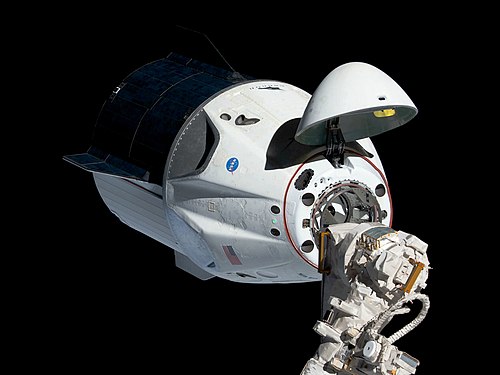
The Exploration Company (TEC) is a Munich-based European space logistics startup founded in 2021 developing Nyx, a reusable uncrewed cargo spacecraft designed to deliver supplies to the ISS, future commercial space stations (Axiom, Vast, Starlab, ORCAS), and eventually lunar surface outposts. Nyx is designed around a common spacecraft core that can be reconfigured for different mission types: a pressurized cargo module for delivering food, water, experiments, and crew consumables to stations; and a future propulsion module for higher-energy missions. The pressurized Nyx Earth module targets approximately 3,000 kg of cargo to ISS orbit — significantly less than SpaceX Dragon or Northrop Grumman Cygnus, but positioned as a smaller, more cost-competitive European alternative capable of serving the growing commercial station market that cannot be entirely serviced by U.S. providers. The reusability architecture focuses on the service module, which would perform propulsive deorbit control and potentially return the pressurized module intact for refurbishment, enabling multi-mission life. The Exploration Company is one of a cluster of European commercial spacecraft startups backed by ESA's BEPICOLOMBO Space Resources and commercial cargo partnership programs — alongside HEO Robotics, Rocket Factory Augsburg, and Isar Aerospace — that ESA is supporting as an alternative to total dependence on U.S. providers following the cancellation of Europe's own IXV and Space Rider reentry programs. TEC raised a €40.5 million Series A co-led by EQT Ventures and Red River West. Its Mission Possible capsule flew in June 2025 as a partial success (lost during descent after re-entry); the full-scale Nyx Earth flight, under ESA's LEO Cargo Return Service programme, is targeted for 2028.

Munich, Germany · Est. 2021
Earth Observation

Airmo

Munich, Germany commercial

Founded in 2022 and based in Munich, Germany, Airmo is a European startup focused on developing small satellite technology and sensor systems for comprehensive greenhouse gas and air quality monitoring. The company specializes in methane emissions detection and measurement, offering solutions tailored to support compliance with regulations like the EU Methane Regulation and the Oil and Gas Methane Partnership 2.0 (OGMP 2.0). Airmo provides a range of services, including drone-based leak detection (LDAR) utilizing a lightweight, high-precision methane sensor, as well as satellite-based monitoring for broader emissions tracking and reporting. Airmo’s core technological capabilities center around advanced spectrometry, specifically Tunable Diode Laser Absorption Spectroscopy (TDLAS), enabling the detection of methane leaks as small as 1 g/h from significant distances. They offer end-to-end compliance solutions, from on-site inspections and data analysis to automated reporting and actionable insights delivered through intuitive dashboards. Airmo’s technology is currently deployed across sites in Europe and Asia, serving customers in the energy sector, regulatory bodies, and impact-driven investors. The company positions itself as a provider of accurate, cost-effective, and scalable methane monitoring solutions, helping organizations meet increasingly stringent environmental regulations and achieve sustainability goals.

Munich, Germany · Est. 2022
In-Space Services Verified

Atmos Space Cargo

Munich, Germany commercial

Atmos Space Cargo, founded in 2022 and headquartered in Stuttgart, Germany, is developing Phoenix — a commercial atmospheric reentry vehicle for returning manufactured products, biological specimens, and research samples from the International Space Station and commercial space stations to Earth, using an inflatable aeroshell (HIAD — Hypersonic Inflatable Aerodynamic Decelerator) heat shield technology that provides high-volume return capacity at lower mass penalty than traditional rigid aeroshells. The Phoenix spacecraft is designed to carry up to 100 kg of payload in a pressurized cargo bay, with temperature-controlled environments for sensitive biological samples and precision-manufactured components. The inflatable aeroshell deploys before atmospheric entry, creating a large surface area that generates high drag for deceleration without the structural mass of a conventional ablative shield — potentially enabling higher mass fraction of payload per unit of total vehicle mass compared to capsule-style reentry vehicles like Northrop Grumman's Cygnus or SpaceX's Dragon. Atmos Space Cargo's April 2025 test flight successfully demonstrated Phoenix's inflatable heat shield deployment and atmospheric reentry survivability — a critical technical milestone validating the HIAD concept's performance in the actual entry environment rather than Earth atmosphere simulations. Following this success, the company is targeting commercial reentry service operations beginning in 2026, initially focusing on pharmaceutical and biotechnology customers conducting microgravity manufacturing research who need to return protein crystals, cell cultures, and drug compounds produced in the unique microgravity environment of the ISS. The company is part of the growing European in-space economy infrastructure sector, funded by European deep tech investors and supported by Germany's strong pharmaceutical and precision manufacturing industries that are primary customers for microgravity production services. Atmos competes with Varda Space Industries (US), Space Forge (UK), and Redwire Space in the commercial space manufacturing return logistics market.

Munich, Germany · Est. 2021
Earth Observation Verified

OroraTech

Munich, Germany commercial

OroraTech, headquartered in Munich, Germany and founded in 2018 as a spinout from the Technical University of Munich (TUM), is a space-based wildfire detection and monitoring company operating a constellation of small satellites equipped with thermal infrared sensors — providing global near-real-time wildfire detection services that give forestry agencies, fire services, property insurers, utility companies, and governments early warning of fires and continuous situational awareness during active fire events. Conventional wildfire detection relies on ground observers, aerial patrol aircraft, and optical cameras mounted on towers — methods that are expensive, miss remote areas, and provide no coverage at night or through smoke. Satellites have long been used for fire monitoring (NASA's MODIS instruments on Terra and Aqua, and Suomi NPP's VIIRS instrument), but at resolutions of 375m-1km with revisit times of 12-24 hours, these systems miss small fires at ignition when early suppression is most cost-effective. OroraTech's smallsat constellation — starting with thermal infrared-equipped 6U cubesats — detects heat signatures as small as 5-10 meters in size with sub-hourly global revisit, enabling fire detection within minutes of ignition rather than hours. OroraTech's FOREST-3 constellation builds on initial technology demonstration satellites and aims to deploy dozens of thermal infrared smallsats providing near-continuous global coverage. The thermal sensors detect mid-wave infrared (MWIR, 3-5 µm) and long-wave infrared (LWIR, 8-12 µm) emission characteristic of burning vegetation, with AI-based onboard processing to classify fire versus false positives (industrial heat, hot desert surfaces) before downlinking alerts. OroraTech's data platform delivers fire perimeter maps, radiative power estimates for fire intensity, and historical burn area analysis. Customers include German and European forest agencies (Bavarian State Forest Enterprise, BayWa), global insurers quantifying wildfire liability, and power utilities mapping asset exposure to fire risk. OroraTech has raised venture funding from the European Space Agency's BIC program and private investors including SET Ventures and Airbus Ventures, competing with Satellogic, Planet, and Maxar for wildfire monitoring contracts.

Munich, Germany · Est. 2018
Satellite Manufacturing Verified

Reflex Aerospace

Munich, Germany commercial

Reflex Aerospace, founded in 2021 and headquartered in Berlin, Germany, is a European satellite manufacturer targeting the agile commercial satellite market with a value proposition of rapid custom satellite production — delivering 75 to 500 kg class satellites in 12 months from contract to launch — using ITAR-free European component supply chains, generative design algorithms, and additive manufacturing to compress traditional 3-5 year satellite development timelines. Reflex's 12-month delivery model requires standardizing satellite bus architecture into modular, pre-qualified building blocks (power systems, ADCS, propulsion, comms) that can be configured for diverse missions without starting from clean-sheet design each time. Generative design software optimizes structural components for minimum mass with maximum stiffness using additive manufacturing constraints — allowing complex lattice structures impractical with CNC machining to achieve mass reduction that matters at 75-500 kg scale. The ITAR-free component mandate is strategically important: European and non-US customers increasingly require satellites built without US-controlled components to avoid ITAR re-export restrictions that limit satellite operations, data sharing, and resale in certain markets. Reflex's first satellite, SIGI (SIGnal Intelligence demonstration), launched in 2024 on a SpaceX rideshare mission — validating the company's manufacturing processes, ITAR-free supply chain, and compressed development timeline in orbit. SIGI provides early on-orbit heritage enabling commercial customer confidence in the Reflex bus for subsequent missions. With €50 million raised in a Series A round and over 70 employees, Reflex is scaling manufacturing capacity to support multiple simultaneous customer satellite programs. The Berlin headquarters situates Reflex within Germany's growing NewSpace ecosystem alongside OHB (traditional prime) and emerging startups. Reflex competes with Airbus D&S small satellite buses, SSTL (Airbus subsidiary), and AAC Clyde Space in the European small satellite market, differentiating through delivery speed and ITAR-independence.

Munich, Germany · Est. 2021
Satellite Manufacturing

TU Munich Aerospace

Munich, Germany academic

TU Munich's Department of Aerospace and Geodesy (Technische Universität München) is one of Germany's leading aerospace research institutions, conducting world-class work in satellite navigation, space robotics, autonomous spacecraft systems, and geodesy. The department's Institute of Astronomical and Physical Geodesy (IAPG) is globally renowned for satellite gravity field research (GRACE/GRACE-FO mission contributions, global gravity field models). The Chair of Astronautics works on spacecraft GNC, autonomous rendezvous, and CubeSat missions. TUM has developed small satellites through its dedicated space engineering students and participates in ESA and BMBF-funded programs. Munich's position as Germany's aerospace hub (Airbus Defence, MTU, MAN Energy nearby) gives TUM graduates and researchers direct pathways into the European space industry and startups including ISAR Aerospace, which counts TUM alumni among its founders.

Munich, Germany · Est. 1868
Satellite Communications Acquired

AXESS Networks

Munich, Germany commercial

AXESS Networks (now part of Hispasat) was a Munich-based managed satellite communication services provider founded in 2010, operating VSAT (Very Small Aperture Terminal) networks and managed connectivity solutions for enterprise, maritime, aviation, and government customers. The company built and operated satellite networks across Europe, Latin America, and Africa, particularly leveraging Hispasat's GEO satellite capacity over these regions. AXESS provided end-to-end service: from procuring satellite capacity to installing customer terminals and managing the network operations center (NOC). Its acquisition by Hispasat (the Spanish/Portuguese satellite operator) represented vertical integration — Hispasat gained a downstream service layer to complement its satellite capacity business, a common strategy among GEO operators seeking higher-margin managed service revenue beyond wholesale capacity sales.

Munich, Germany · Est. 2010
Satellite Communications In development

Hypersat

Munich, Germany commercial

Hypersat, founded in 2020 and based in Munich, Germany, is a company focused on the development of satellite communication technologies. Currently, details regarding specific products and services are limited due to a lack of publicly available information, including a company website. However, the company’s stated focus indicates involvement in the growing satellite communications sector, potentially encompassing areas like data relay, broadband access, or specialized communication networks. Given its recent founding, Hypersat is likely an emerging player in a competitive market. Key technologies and capabilities are currently unspecified, but development efforts would likely center around satellite design, ground station infrastructure, signal processing, and potentially, the development of proprietary communication protocols. The company’s location in Munich positions it within a strong European space ecosystem, offering access to skilled engineering talent and potential partnerships. Without further information, it is difficult to assess Hypersat’s specific market position or unique value proposition. The company may be targeting a niche within the satellite communications market, such as a specific geographic region, application (e.g., IoT connectivity, maritime communications), or a novel approach to existing technologies. Further details regarding Hypersat’s offerings, achievements, and customer base are needed to provide a more comprehensive analysis of its position within the space industry. As a relatively new company, tracking its future developments and announcements will be crucial to understanding its long-term potential.

Munich, Germany · Est. 2020
Propulsion In development

ISPTech

Munich, Germany commercial

ISPTech, founded in 2020 and based in Munich, Germany, is a space propulsion company specializing in the development and manufacture of green in-space propulsion systems. The company focuses on providing cost-effective, robust, and rapidly available solutions for the small satellite market – specifically CubeSats and SmallSats – and beyond. ISPTech’s core technology centers around non-toxic propellants, notably their HyNOx and HIP_11 systems. HyNOx utilizes a unique propellant combination for thrust levels ranging from 1N to 200N, while HIP_11 is a hypergolic propellant offering high performance and reduced hazards compared to conventional options, with thrust levels starting at 22N. Leveraging over a decade of research and development, including work originating at the DLR-Institute of Space Propulsion, ISPTech emphasizes streamlined production and in-house testing. Recent milestones include achieving Technology Readiness Level 5 for their 22N HIP_11 thruster and securing contracts with key industry players like ATMOS Space Cargo and The Exploration Company, who will utilize HIP_11 to power their Nyx capsule. ISPTech has also partnered with BINAR for a lunar mission, marking their first international collaboration. Supported by €2M in pre-seed funding and recognition through awards like the Horst Hauck Gründerpreis and Deep Tech Momentum prizes, ISPTech is positioning itself as a key innovator in sustainable space mobility.

Munich, Germany · Est. 2023
Satellite Communications Verified

Mynaric

Munich, Germany commercial

Mynaric is a leading manufacturer of laser optical communication terminals for satellite constellations and aerospace applications. Headquartered in Munich with facilities in Los Angeles, the company produces the CONDOR terminal line enabling high-bandwidth, secure communications between satellites and ground stations. In early 2024, Mynaric achieved a historic milestone with volume production of the CONDOR Mk3 optical communications terminal, beginning initial shipments to customers. The company delivered more than 130 laser terminals to York Space Systems and Northrop Grumman, marking a turnaround after supply chain challenges and restructuring. Mynaric supplied 42 CONDOR Mk3 terminals to Northrop Grumman and 21 terminals to Raytheon for the Space Development Agency's Tranche 1 Tracking Layer program, with deliveries throughout 2024 for deployment in 2025. These terminals enable the high-speed, low-latency optical inter-satellite links critical to SDA's Proliferated Warfighter Space Architecture. The company is developing the upgraded CONDOR Mk3.1 model for SDA's Tranche 2 satellites expected to begin launching in 2026. Rocket Lab announced plans to acquire Mynaric for $150 million in March 2024, pending completion of a major financial restructuring in Germany. Under Rocket Lab ownership, Mynaric will expand production capabilities to meet growing demand for laser communications in defense and commercial constellations. The company continues advancing optical terminal technology for the next generation of connected satellite networks.

Munich, Germany · Est. 2009 $400M
Satellite Operators In development

Rivada Space Networks

Munich, Germany commercial

Rivada Space Networks is a Munich, Germany-based satellite communications company founded in 2021 by Irish entrepreneur Declan Ganley, developing a planned 600-satellite LEO constellation interconnected by optical inter-satellite links (ISL) forming a mesh network in space. The company's core differentiator is its patent-protected dynamic bandwidth allocation architecture: rather than fixed bandwidth assignments to geographic regions or customers, Rivada's network dynamically routes traffic through the mesh ISL network to optimize utilization across the entire constellation in real time, offering highly efficient use of available capacity. This mesh architecture — where satellites relay data through multiple hops of optical laser links before reaching a ground station — can provide truly global coverage including polar regions and oceans with minimal dependency on ground station infrastructure along the path. Rivada targets government (NATO member militaries, national security agencies), emergency services, and enterprise customers requiring secure, resilient connectivity that is difficult to intercept, jam, or disrupt through a single point of failure — use cases where Starlink's consumer-optimized architecture is less appropriate and where spectrum security and network sovereignty matter. The company is in development phase with constellation deployment planned in the late 2020s, competing with Telesat Lightspeed (also using optical ISL for a similar secure-enterprise focus), SES O3b mPOWER, and SpaceX Starshield for the defense and government connectivity segment.

Munich, Germany · Est. 2021
Investment

Alpine Space Ventures

Munich, Germany commercial

Alpine Space Ventures, headquartered in Munich, Germany, is a European venture capital firm exclusively focused on early-stage space technology companies, founded in 2022 by Bulent Altan — formerly SpaceX's Vice President of Avionics who helped engineer Falcon 9's flight computer systems — and co-founder Stefan Quandt family office connections. The firm closed its debut Fund I at $184M (€170M), reportedly the largest first-time VC fund dedicated exclusively to space globally at its close. Alpine's investment mandate covers the full space technology stack at pre-seed through Series A: launch vehicles, satellite platforms, ground segment infrastructure, downstream data analytics, in-orbit servicing, space resources, and dual-use applications. The fund's Munich base positions it to source deals across the German-speaking space cluster (OHB, DLR spinouts, Technical University Munich programs) and broader European space ecosystem, while Altan's Silicon Valley and SpaceX network provides access to US deals and portfolio introductions. Key limited partners include the NATO Innovation Fund — a €1 billion multi-sovereign VC fund backing dual-use deep tech across NATO member states — and the European Investment Fund (EIF), which provides institutional anchor LP capital to technology venture funds across Europe. These backers provide strategic advantages beyond capital: NATO IF LPs bring government customer access, and EIF imprimatur facilitates co-investment from European institutional LPs. Alpine competes with Seraphim Space (UK), OTB Ventures (Amsterdam/Warsaw), Lakestar (with space allocations), and Airbus Ventures in the European space VC market, differentiating through its operator-founder leadership, exclusive space focus, and sovereign-LP network that enables portfolio companies to navigate government procurement and dual-use certification processes faster than generalist investors could facilitate.

Munich, Germany · Est. 2020
Deployable Structures

Dcubed

Munich, Germany commercial

Dcubed is a Munich-based German space technology company founded in 2019, developing deployable space structures and in-orbit manufacturing systems — particularly focused on manufacturing large-format solar arrays directly in space using UV-cured photopolymer resin technology, enabling spacecraft to deploy far larger power-generating structures than could be packaged and launched as pre-built rigid or folded arrays. The core innovation is the ARAQYS (Additive Resin Architecture for Quantified Yield in Space) system: a compact launch package containing liquid photopolymer resin within a precision fiber structure that, once on orbit, deploys and manufactures a rigid structural solar array by exposing the resin to the abundant UV radiation of the space environment — the sun's intense UV light (unfiltered by atmosphere in space) polymerizes the liquid resin into solid structural members at essentially zero energy cost to the spacecraft. ARAQYS is planned to demonstrate a 15-meter solar array generating 2 kW of electrical power in a Q1 2027 orbital mission, validating the manufacturing process at flight scale. The problem ARAQYS solves is fundamental: large solar arrays must fit within launch vehicle fairing constraints (~5m diameter) despite needing to deploy 10-30m across to generate sufficient power for ambitious missions. Current solutions — roll-out solar arrays (ROSA/iROSA), Z-fold rigid panels, Flex/PRAM concepts — achieve impressive mass efficiency but face packaging and deployment mechanism complexity. Dcubed's approach: launch the raw material (resin + fiber frame) in a compact roll, then manufacture the finished structure in the destination environment. Mass efficiency is dramatically superior because liquid resin is denser than air-gapped folded panel structures and no complex spring-loaded deployment mechanisms are required. Munich's space cluster provides essential ecosystem access: Airbus Defence and Space's Munich-Ottobrun facility (Ariane program hardware, satellite structures), ISAR Aerospace (orbital launch vehicle startup), OHB System (small satellite manufacturer), ESA BIC Bavaria incubation funding, and DLR's Munich/Oberpfaffenhofen campuses with space structures research laboratories. Dcubed competes with Redwire Space (US, roll-out solar arrays, Archinaut in-space fabrication), Made In Space/Redwire (fiber optic manufacturing in orbit), and ATK/Northrop Grumman ULTRAFLEX arrays for large deployable power generation aboard future spacecraft.

Munich, Germany · Est. 2019
Education Verified

Deutsches Museum

Munich, Germany nonprofit

The Deutsches Museum (German Museum), located on the Museum Island (Museumsinsel) in the Isar River in Munich, Bavaria, is the world's largest science and technology museum by exhibition area — covering approximately 73,000 square meters across 90 departments — and one of the most visited science museums in Europe, attracting over 1.5 million visitors annually before the COVID-19 pandemic significantly reduced attendance. Founded in 1903 by Oskar von Miller and opened in its current building in 1925, the Deutsches Museum's founding philosophy was to make science and technology accessible and comprehensible to the general public through original objects, working models, and interactive demonstrations rather than mere display cases. This philosophy placed the museum at the forefront of hands-on science communication and influenced science museum design globally. The Deutsches Museum's aerospace exhibits are among its most celebrated and extensive. The aviation hall contains historically significant aircraft including original Focke-Wulf Fw 190 and Messerschmitt Bf 109 fighters, the Junkers Ju 52 transport, and early glider aircraft from the Lilienthal era. The spaceflight section features an original Ariane 1 rocket, the Spacelab D1 module (the Spacelab science laboratory that flew on the Space Shuttle Columbia in 1985 on Germany's first major crewed space mission), lunar samples from Apollo missions, and historical rocketry artifacts spanning German V-2 development (Wernher von Braun's work at Peenemünde) through modern ESA mission hardware. Following a major phased renovation that began in the 2010s and will extend through the 2030s, the Deutsches Museum is systematically modernizing its exhibits to integrate digital interactives, current scientific research, and contemporary perspectives on technology's societal impacts. The museum also operates three branch museums in Bavaria: the Deutsches Museum Flugwerft Schleißheim (aviation at a historic air base north of Munich), the Deutsches Museum Verkehrszentrum (transport history), and the Deutsches Museum Nuremberg.

Munich, Germany · Est. 1903
Antennas Verified

HPS GmbH

Munich, Germany commercial

HPS GmbH (High Performance Space Structure Systems) is a Munich, Germany-based spacecraft antenna and thermal hardware specialist founded in 2000, providing European satellite programs with precision solid reflector antennas, large deployable reflector antenna subsystems, and passive thermal control hardware — operating as a niche systems supplier to major European primes (Airbus Defence & Space, Thales Alenia Space, OHB) and ESA for mission-critical antenna and thermal components. HPS's solid reflector antennas range from compact high-gain antennas for spacecraft TT&C uplink/downlink and scientific instrument beamforming to larger direct radiating and offset-fed parabolic reflectors for communications satellites. The company's engineering capability spans RF performance prediction (using electromagnetic simulation tools including GRASP), structural design for launch environment survival, and thermal stability design ensuring the reflector maintains its parabolic shape within allowable distortion limits across the orbital thermal environment (-180°C to +150°C cycling in shade-to-sun transitions). Large deployable reflector subsystems represent HPS's most technically demanding product area: foldable antenna structures that stow compactly within the satellite launch configuration and then unfurl to produce apertures several meters in diameter after satellite separation. These deployable reflectors use carbon fiber reinforced polymer (CFRP) ribs, tension cables, and precision release mechanisms, requiring rigorous structural analysis and test verification to guarantee deployment reliability on orbit. Flight heritage includes contributions to the Heinrich Hertz satellite (Germany's geostationary technology demonstration satellite, testing high-frequency Q-band and V-band communications for future beyond-5G applications) and ESA's Euclid space telescope — launched in 2023 to map the large-scale structure of the universe through weak gravitational lensing and galaxy clustering measurements, for which HPS provided antenna hardware for the satellite's communications system. Thermal control hardware from HPS includes multi-layer insulation (MLI) blankets, thermal radiators, heat pipes, and precision thermal management structures for temperature-sensitive instruments and batteries. The company's dual competency in antennas and thermal systems reflects the physical overlap between these domains — large antennas must be thermally designed to maintain dimensional stability, and thermal radiators often share structural integration requirements with antenna mounting.

Munich, Germany · Est. 2000
Space Insurance Verified

Munich Re Space

Munich, Germany commercial

Munich Re is the world's largest reinsurance company, founded in 1880 and headquartered in Munich, Germany, and a foundational pillar of the global space insurance market as a major reinsurance capacity provider for launch vehicle, satellite in-orbit, and third-party liability risks. Munich Re's space insurance involvement spans over four decades — from the early commercial satellite era of the 1980s through today's LEO constellation boom — making it one of the most experienced underwriters of space risk globally alongside Lloyd's of London syndicates and Swiss Re. In the space reinsurance market, Munich Re provides capacity to primary space insurers (London market syndicates, AXA Space, Allianz) who directly underwrite satellite operators and launch vehicle manufacturers. When a GEO satellite worth $300–500 million is insured, the primary insurer typically retains a portion of the risk and reinsures the majority with reinsurers including Munich Re, spreading the risk of catastrophic loss (total satellite failure, launch vehicle failure, on-orbit anomaly) across the global reinsurance market. Munich Re's technical space underwriting team evaluates launch vehicle reliability statistics, satellite bus heritage, orbit parameters, launch site risk, and operator track record to price reinsurance treaty and facultative (per-satellite) agreements. The space market faces a structural challenge Munich Re navigates carefully: after decades of only a handful of satellites per year needing insurance, LEO constellations are launching hundreds to thousands of satellites, changing the loss frequency and correlation structure fundamentally. A software anomaly affecting Starlink satellites, for example, could trigger simultaneous losses across many insured platforms — a correlated risk profile very different from independent GEO satellite failures. Munich Re has invested in modeling this evolving risk landscape, including debris cascade risk and solar storm event scenarios. Munich Re also insures emerging commercial space activities including commercial crew launch risk, in-space services, and lunar mission liability. The company's global scale — Munich Re manages approximately €60 billion in reinsurance premiums annually across all lines — gives it the capital base and diversification to participate in even the largest space risk programs. Munich Re competes in space reinsurance with Swiss Re, Hannover Re, General Re, and the Lloyd's market.

Munich, Germany · Est. 1880
Investment

UVC Partners

Munich, Germany investor

UVC Partners is a Munich- and Berlin-based venture capital firm that backs European B2B startups from pre-seed through Series A with initial checks of up to EUR10 million, spanning deep tech, quantum computing, climate and mobility. Its portfolio includes Isar Aerospace, the German small-launch company, positioning UVC among the cluster of Bavarian and German deep-tech investors — alongside Bayern Kapital, HTGF and Vsquared Ventures — that has financed the country's new-space manufacturing base.

Munich, Germany
Investment

Vsquared Ventures

Munich, Germany investor

Vsquared Ventures is a Munich-based deep-tech venture capital firm whose published portfolio includes two space companies already in this directory: Isar Aerospace, the German orbital-launch startup, and The Exploration Company, which builds reentry and cargo capsules. The rest of its book spans quantum computing (IQM), fusion-adjacent superconductors and advanced semiconductors, reflecting a broader "hard tech" thesis in which orbital and reentry hardware is one of several categories rather than the sole focus.

Munich, Germany