
Category

Academic Companies

34 organizations20 countries

34 organizations working in academic across the global space industry.

Names to know in academic

Rank all by market value →
Academic Verified

Technical University of Munich Space

Munich, Germany academic

Technical University of Munich Space (TUM Space) is a research and academic group within the Technical University of Munich, founded in 2016. The organization focuses on the development of cubesats and broader space technology. While specific project details aren't readily available from the provided information, TUM Space operates as a platform for hands-on experience and innovation in the space sector, likely involving student and faculty participation. TUM’s extensive catalog of degree programs, including Bachelor's and Master's programs in Aerospace Engineering, and related fields like Bioeconomy and Automotive Engineering, suggests a strong academic foundation supporting its space-focused activities. This indicates a capability to integrate space technology development with broader engineering and scientific disciplines. The university’s overall emphasis on research and entrepreneurship, highlighted by its designation as an “Entrepreneurial University,” positions TUM Space to potentially translate research outcomes into practical applications and foster future space industry talent. While customer or mission details aren’t provided, the organization’s structure suggests a focus on internal research and development, and potentially collaborative projects with other academic institutions or industry partners.
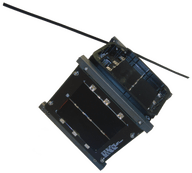

Munich, Germany · Est. 2016
Research

DTU Space

Kongens Lyngby, Denmark academic

DTU Space (the National Space Institute) is Denmark's largest space research institute, part of the Technical University of Denmark (DTU) and based at DTU's Kongens Lyngby campus near Copenhagen. It was established in 2005 as the Danish National Space Center through a merger of the Danish Space Research Institute with the geodesy division of Denmark's National Survey and Cadastre, and was folded into DTU in 2008 under its current name. The institute runs six research divisions spanning astrophysics and atmospheric physics, geodesy and Earth observation, geomagnetism and geospace, microwave and remote sensing, measurement and instrumentation systems, and electromagnetic systems, and employs around 169 researchers, engineers and technicians according to its most recent published staffing figures. DTU Space leads the European Space Agency's Swarm mission, a three-satellite constellation studying Earth's magnetic field, building on Denmark's earlier Ørsted magnetic-field satellite heritage. The institute also builds scientific instruments flown on interplanetary missions; a DTU-developed magnetometer passed its first in-flight scientific test en route to the asteroid Psyche following a Mars flyby in 2026. DTU Space collaborates with the Niels Bohr Institute on astrophysics and geophysics research and operates the R/V Dana research vessel in support of its geodesy and oceanographic work. The institute is government- and EU-grant funded as part of the Danish university system rather than commercially financed, and is Denmark's principal academic centre for spacecraft instrumentation and space-based geomagnetic and Earth-observation science.

Kongens Lyngby, Denmark · Est. 2005
Space Agencies Verified

Belgian Science Policy Office - Space

Brussels, Belgium government

The Belgian Science Policy Office (BELSPO), established in 1959, serves as the coordinating body for space activities within Belgium and manages the nation’s participation in the European Space Agency (ESA) programs. BELSPO’s core function is to support and finance both space science and technology development initiatives, acting as a central point for Belgian contributions to broader international space efforts. Beyond space, BELSPO has a broad remit encompassing support for federal scientific institutions and museums, and the management of the Belgian telematics network, Belnet. However, within the space sector, its key capability lies in coordinating national resources and channeling funding towards research and development, and facilitating Belgium’s involvement in ESA projects. While specific missions or customer details aren’t explicitly highlighted, BELSPO’s role as the national coordinating body for ESA programs positions it as a vital link between Belgian research institutions, industry, and the wider European space landscape. This coordination ensures Belgium actively participates in and benefits from European space initiatives. BELSPO’s unique value proposition lies in its holistic approach to science policy, integrating space activities within a broader national research framework. This allows for cross-disciplinary innovation and ensures that investments in space technology contribute to wider societal and economic goals within Belgium.

Brussels, Belgium · Est. 1959
Small Satellites Verified

CalPoly CubeSat Lab

San Luis Obispo, United States academic

The Cal Poly CubeSat Lab, established in 1999 at California Polytechnic State University, San Luis Obispo, is a leading research and academic institution focused on small satellite technology. Notably, Cal Poly is a co-inventor of the CubeSat standard, a widely adopted specification for miniaturized satellites. The lab’s core activities center around the development and advancement of CubeSat technology, contributing to the broader small satellite ecosystem. The lab’s influence extends beyond research through its annual CubeSat Developers Workshop, a prominent conference attracting over 500 industry professionals, developers, and students. This workshop serves as a vital platform for knowledge sharing, networking, and the advancement of CubeSat technologies. Cal Poly also actively supports new entrants to the field, evidenced by resources like the NASA CubeSat Launch Initiative materials and introductory guides for first-time developers. Cal Poly’s involvement in initiatives like the Spanish Small Satellite International Forum, the UN Access to Space for All Initiative, and the IAF-CSA Space Universities CubeSat Challenge demonstrates its commitment to international collaboration and fostering the next generation of space professionals. While specific missions or commercial customers are not detailed, the lab’s foundational role in the CubeSat standard and its ongoing educational and outreach efforts position it as a key driver of innovation and accessibility within the small satellite market.

San Luis Obispo, United States · Est. 1999
Satellite Manufacturing Verified

Cranfield University

Cranfield, United Kingdom academic

Cranfield University Space, a division of Cranfield University established in 1946, focuses on aerospace and space technology through research, postgraduate education, and professional development. The organization operates as an academic institution offering a wide range of degree programs, including MSc, MBA, PhD, and professional development courses, with both full-time and part-time options available. Mid-year intakes beginning in January and March are offered for select programs starting in 2026. A key strength of Cranfield University Space lies in its strong collaborative relationships with industry. The university maintains partnerships with nearly 1,500 organizations, facilitating knowledge transfer and applied research. This integration allows for access to extensive expertise and world-class, large-scale national facilities, enhancing both research and teaching capabilities. While specific space missions or products aren’t detailed, the university’s focus on research and innovation suggests a contribution to advancements in aerospace and space technologies. Cranfield University Space positions itself as a provider of skilled professionals and technological solutions for the space industry, leveraging over 70 years of industry integration. The organization’s value proposition centers on delivering practical, industry-relevant education and research, and fostering a collaborative environment between academia and businesses to drive innovation in aerospace and space technology.

Cranfield, United Kingdom · Est. 1946
Research Verified

KAIST Satellite Technology RC

Daejeon, South Korea academic

KAIST Satellite Technology Research Center (RC), established in 1989 and based in Daejeon, South Korea, focuses on the research, development, and implementation of small satellite technology. As an academic and research-focused organization affiliated with KAIST (Korea Advanced Institute of Science and Technology), the RC serves as a key hub for satellite systems engineering, contributing to the advancement of space technology within South Korea. Their core activity centers on the end-to-end process of satellite development, likely encompassing design, fabrication, testing, and operation. Given its academic nature, KAIST Satellite Technology RC’s key capabilities likely reside in fostering innovation and training the next generation of space engineers. While specific technologies aren’t detailed publicly, the development of small satellites necessitates expertise in areas such as miniaturized payloads, efficient power systems, reliable communication systems, and advanced orbital mechanics. The center likely leverages KAIST’s broader research strengths in related fields like materials science, computer engineering, and aerospace engineering. Publicly available information regarding specific missions or customers is limited. However, as a research center within a leading science and technology institute, it is reasonable to assume that developed satellites are utilized for research purposes, potentially supporting Earth observation, scientific experimentation, or technology demonstration. The RC likely collaborates with other Korean government agencies, research institutions, or potentially commercial entities on space-related projects. KAIST Satellite Technology RC’s unique value proposition lies in its role as a national resource for small satellite expertise and a critical component of South Korea’s growing space ecosystem. By focusing on research and development, and training highly skilled engineers, the center contributes to the nation’s self-reliance in space technology and fosters innovation in the field.

Daejeon, South Korea · Est. 1989
Small Satellites Verified

Kyushu Institute of Technology Space

Kitakyushu, Japan academic

Kyushu Institute of Technology Space (Kyutech) is a research-focused academic institution located in Kitakyushu, Japan, established in 2000. The organization concentrates its efforts on small satellite research, though specific project details are not extensively publicized in available materials. Kyutech demonstrates a commitment to applied research, as evidenced by student team participation in international competitions like BIOMOD, and successful observation of space magnetic storms. Recent achievements include a student team placing third in the international BIOMOD competition and recognition of student research at international conferences such as SSIP2025. The institute actively fosters collaboration through research partnerships and hosts events like space career events and science workshops for students of various ages. Kyutech currently has a crowdfunding campaign for a project called KIT-AURORA. While primarily an educational and research entity, Kyutech’s involvement in space-related projects and competitions positions it as a contributor to the growing Japanese space technology sector, particularly in the area of small satellite development and related research.

Kitakyushu, Japan · Est. 2000
Research Verified

Physical Research Laboratory

Ahmedabad, India government

Founded in 1947 by Dr. Vikram Sarabhai, the Physical Research Laboratory (PRL) is a premier Indian research institution dedicated to advancing knowledge in space and atmospheric sciences, astronomy, astrophysics, and planetary & geo-sciences. Operating as a unit of the Department of Space, Government of India, PRL conducts fundamental research across these disciplines, contributing to India’s space program and broader scientific understanding. Key facilities include the Udaipur Solar Observatory and the Infrared Observatory at Mount Abu, alongside the Multi Application Solar Telescope (MAST). PRL’s research portfolio encompasses solar physics, planetary exploration, and astronomical observations, as evidenced by recent publications on stellar activity, solar radio bursts, and data analysis from the Aditya-L1 mission. The institute actively hosts and participates in national and international conferences, workshops, and training programs, including those focused on space weather and condensed matter physics. PRL also supports emerging researchers through scholarships and fellowships like the VIKAS program. While specific commercial products are not highlighted, PRL’s contributions are foundational to India’s space capabilities and scientific advancements. The institute’s ongoing research and development efforts, coupled with its established infrastructure and collaborative partnerships, position it as a critical national asset in the field of space science. Recent activity also indicates a focus on recruitment and infrastructure development, suggesting continued growth and expansion of its research capabilities.

Ahmedabad, India · Est. 1947
Research Verified

Purdue AAE

West Lafayette, United States academic

Purdue’s School of Aeronautics and Astronautics (AAE), established in 1945 and located in West Lafayette, Indiana, is a leading academic and research institution dedicated to aerospace engineering. The school focuses on providing comprehensive education to undergraduate and graduate students, alongside conducting innovative research across a variety of aerospace disciplines. Core areas of research include autonomous flight systems, Earth remote sensing utilizing satellite transmissions, and unmanned aerial systems (UAS), supported by facilities such as the world’s largest motion capture facility specifically for UAS research at the Purdue UAS Research and Test Facility. AAE distinguishes itself through a strong emphasis on practical experience and cutting-edge technology. The program has a demonstrated history of contributing to the broader space industry, evidenced by alumni like Loral O’Hara (MSAAE 2009) currently participating in ISS Expedition 69-70 and contributing to NASA’s Artemis program through testing new moonwalk gear. Purdue AAE also actively engages students in hands-on research opportunities, including participation at the Mars Desert Research Station. The school regularly publishes *Aerogram* magazine, showcasing student and faculty achievements and research. While primarily an educational and research institution, Purdue AAE’s contributions to astronaut training, space exploration technologies, and the development of future aerospace engineers position it as a vital component of the US space ecosystem. Purdue AAE’s long-standing history and continued investment in advanced research facilities and student development solidify its position as a key contributor to advancements in aerospace engineering and space exploration.

West Lafayette, United States · Est. 1945

Explore all 34 academic organisations

Filter by country, type or status, sort by market value or founding year. The view is saved in the address bar.

Skip to results

Loading companies…

Loading companies…