Category

Avionics Companies

60 organizations18 countries8 listed

60 organizations working in avionics across the global space industry.

Names to know in avionics

Rank all by market value →
Launch Services Verified SPCX

SpaceX

Starbase, United States commercial

Space Exploration Technologies Corp. (SpaceX) is the world's leading aerospace company, listed on Nasdaq (SPCX) since June 2026, founded by Elon Musk in 2002 with the mission of reducing space transportation costs and enabling the colonization of Mars. Headquartered at Starbase, Texas, SpaceX designs, manufactures, and launches advanced rockets and spacecraft, having revolutionized the aerospace industry with its development of reusable launch vehicle technology. The company operates as a vertically integrated manufacturer, producing the majority of its rocket components in-house, including engines, avionics, and structures. SpaceX employs about 22,000 people (2026) across its facilities in California, Texas, Florida, and Washington state. Under the leadership of CEO Elon Musk and President Gwynne Shotwell, SpaceX has grown from a startup to the dominant force in commercial space launch. ## History and Milestones SpaceX was founded in June 2002 after Elon Musk sold PayPal and invested $100 million of his personal fortune into the venture. The company's first rocket, Falcon 1, achieved orbit on its fourth attempt in September 2008, becoming the first privately developed liquid-fueled rocket to reach orbit. This success secured a $1.6 billion NASA Commercial Resupply Services contract that proved crucial to the company's survival. The Falcon 9 rocket first launched in June 2010 and has since become the world's most frequently flown orbital rocket. In December 2015, SpaceX achieved a historic milestone by successfully landing a Falcon 9 first stage booster, demonstrating practical rocket reusability for the first time. The Falcon Heavy, a heavy-lift vehicle combining three Falcon 9 cores, first flew in February 2018 carrying a Tesla Roadster to solar orbit. SpaceX's Dragon spacecraft became the first commercial vehicle to deliver cargo to the International Space Station in 2012. In May 2020, Crew Dragon carried NASA astronauts to the ISS, ending U.S. reliance on Russian Soyuz vehicles for crew transport and marking the first crewed orbital spaceflight from American soil since the Space Shuttle's retirement. ## Products and Services SpaceX operates three primary launch vehicles. The Falcon 9 is a two-stage rocket designed for reliable and cost-effective transport of payloads to orbit, with first-stage reusability enabling rapid turnaround and reduced costs. Individual boosters have flown over 20 missions each. The Falcon Heavy combines three Falcon 9 first stages to provide heavy-lift capability for large satellites, deep space missions, and national security payloads. Starship is SpaceX's next-generation fully reusable transportation system, designed to carry crew and cargo to Earth orbit, the Moon, Mars, and beyond. The system consists of the Super Heavy booster and Starship upper stage, both designed for rapid reusability. Once operational, Starship will be the most powerful launch vehicle ever built. Dragon spacecraft provide cargo and crew transportation services to the International Space Station under NASA contracts. The company also operates Starlink, a satellite internet constellation providing global broadband connectivity from low Earth orbit to millions of customers worldwide, including in remote and underserved regions. ## Technology and Capabilities SpaceX's core technological innovation is practical rocket reusability. The company developed proprietary landing systems enabling first-stage boosters to return to landing zones or autonomous drone ships, reducing launch costs by recovering and refurbishing the most expensive rocket components. Grid fins, landing legs, and autonomous flight termination systems represent key enabling technologies. The Merlin engine family, burning RP-1 kerosene and liquid oxygen, powers Falcon vehicles with industry-leading thrust-to-weight ratios. SpaceX's Raptor engine, using liquid methane and oxygen, powers Starship and represents a generational advance in rocket propulsion with full-flow staged combustion enabling unprecedented efficiency and reusability. SpaceX manufactures most components in-house, including avionics, flight computers, and reaction control systems. This vertical integration provides cost advantages and rapid iteration capabilities. The company's Dragon spacecraft features proprietary life support systems, SuperDraco abort engines, and a reusable pressure vessel designed for multiple flights. ## Business and Financial Overview SpaceX listed on Nasdaq and Nasdaq Texas in June 2026 under the ticker SPCX. Elon Musk remains the largest shareholder through a dual-class structure. The IPO priced at $135 a share and raised about $75 billion at a $1.77 trillion valuation, after a December 2025 insider share sale had valued the company at about $800 billion. Earlier private rounds had raised over $10 billion; investors included Founders Fund, Google, Fidelity, and various sovereign wealth funds. Revenue sources include commercial satellite launches, NASA crew and cargo contracts, national security missions for the U.S. Space Force and NRO, and Starlink consumer and enterprise subscriptions. The commercial launch business captured over 80% of global launch mass in 2024. Starlink has emerged as the company's primary revenue driver, generating several billion dollars annually with a path to profitability. SpaceX holds multi-billion dollar NASA contracts including Commercial Crew Transportation, Commercial Resupply Services, and the Human Landing System contract for Artemis lunar missions. The company competes successfully against international launch providers and legacy aerospace contractors through pricing significantly below traditional government contractors. ## Recent Developments In 2024, SpaceX achieved a record-breaking 138 launches, including 134 Falcon family missions, shattering global launch records. The Falcon 9 maintained its streak of over 300 consecutive successful missions. Starlink expanded across consumer, business, maritime, aviation, and government segments and became the company's primary revenue driver. The Polaris Dawn mission achieved the first commercial spacewalk using SpaceX-designed EVA suits. Starship development achieved major milestones with multiple integrated flight tests from Starbase in Boca Chica, Texas. Flight 5 demonstrated the first successful catch of the Super Heavy booster using the launch tower's mechanical arms, a crucial step toward rapid reusability. Subsequent flights achieved controlled ocean landings and extended flight durations. Looking ahead, SpaceX is preparing for operational Starship flights, expanded Starlink service including direct-to-cell capability, continued ISS crew rotations, and initial work on the Artemis III lunar landing mission contracted by NASA. ## Market Position SpaceX dominates the global commercial launch market, conducting more launches than all other providers combined in 2024. The company's pricing and reliability have effectively ended competition from European, Russian, and most other international launch providers in commercial markets. Only China's state-backed launch programs maintain comparable launch cadence. Key competitors include United Launch Alliance (Boeing-Lockheed joint venture), Rocket Lab in the small launch segment, Blue Origin with New Glenn now flying, and emerging players like Relativity Space. In the satellite internet market, Starlink competes with OneWeb, Amazon's planned Project Kuiper, and traditional satellite operators like Viasat and SES. SpaceX's competitive advantages include demonstrated reusability, vertical integration, rapid innovation cycles, and pricing that undercuts competitors by significant margins. The company's track record of reliable launches and dominant market share position it to maintain leadership as space industry growth accelerates.

Starbase, United States · Est. 2002 $2.01T
Aerospace Verified HAL

Hindustan Aeronautics Limited

Bengaluru, India commercial

Hindustan Aeronautics Limited (HAL) is an Indian government-controlled aerospace and defence manufacturer headquartered in Bengaluru, Karnataka. It traces its origin to Hindustan Aircraft Limited, established on 23 December 1940, and was reorganised under its current name on 1 October 1964. HAL is classified as a "Maharatna" Central Public Sector Enterprise, with the Government of India holding roughly 71-72% of its equity; the remainder trades publicly, with the stock listed on the NSE (ticker HAL) and BSE (code 541154). HAL's core business is the design, manufacture, upgrade and maintenance, repair and overhaul of military and civil aircraft, helicopters, aero-engines and avionics for India's armed forces. Its space-sector work sits alongside this aviation business as a hardware supplier to the Indian Space Research Organisation (ISRO): HAL has long produced integrated L-40 liquid stages for the GSLV Mk II, and propellant tanks and feed lines for the PSLV, GSLV Mk II and GSLV Mk III (LVM3) launch vehicles. HAL's role expanded significantly in September 2022, when NewSpace India Limited (NSIL), ISRO's commercial arm, signed a contract with an HAL-led consortium — with Larsen & Toubro as the other principal partner — for the industrial production of five PSLV-XL launch vehicles, the first attempt to transfer end-to-end PSLV manufacturing from ISRO to private industry. In June 2025, ISRO separately transferred Small Satellite Launch Vehicle (SSLV) technology to HAL for approximately ₹511 crore, giving the company a second Indian launch-vehicle production line. As of its FY2023 disclosures HAL employed approximately 24,457 people. The company is led by Chairman and Managing Director D. K. Sunil. Beyond space hardware, HAL remains primarily an aircraft and helicopter manufacturer (Tejas, Su-30MKI, HAL Dhruv and others), with its space work representing a smaller but growing share of a large, diversified aerospace manufacturing business.

Bengaluru, India · Est. 1940 $28.0B
Components Verified MOG-A

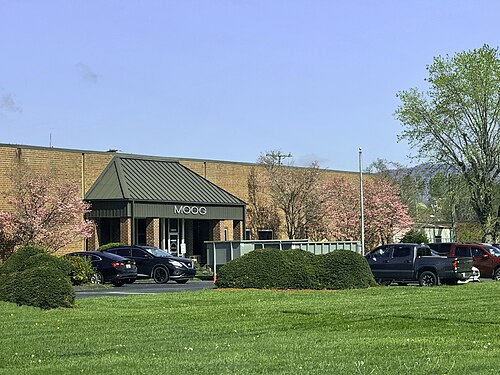
Moog Inc

East Aurora, United States commercial

Moog Space, founded in 1951 and headquartered in East Aurora, New York, is a key provider of solutions for the space industry, specializing in the design, development, and manufacture of critical systems and components. While initially focused on propulsion, the company has expanded its portfolio to encompass a broad range of technologies including spacecraft avionics, guidance systems, fluid controls, structures, and environmental control & life support systems (ECLSS). Moog serves both commercial and government customers, supporting missions ranging from launch vehicles and satellite buses to human spaceflight initiatives, including contributions to NASA’s Space Launch System and future lunar missions. A core strength lies in Moog’s advanced avionics systems, offering integrated Command and Data Handling (C&DH) and Electrical Power Systems (EPS). The company is actively investing in next-generation technologies such as radiation-hardened computing – exemplified by the Cascade Single Board Computer featuring a RISC-V processor – and additive manufacturing to enhance capabilities and meet evolving mission demands. Beyond electronics, Moog provides mechanical solutions including hexapods for precision payload positioning, spacecraft mechanisms, shock and vibration isolation systems, and structural adapters for various satellite sizes. This diverse offering positions Moog Space as a comprehensive partner for organizations operating across the entire space ecosystem.

East Aurora, United States · Est. 1951 $11.5B
Satellite Manufacturing Verified BA

Boeing Space

Arlington, United States commercial

Boeing Space & Launch is a division of The Boeing Company responsible for spacecraft development, space station operations, and launch vehicle systems. Operating from Houston, Texas, and other U.S. facilities, Boeing has contributed to human spaceflight since the Apollo era and continues as a prime contractor for the International Space Station and NASA's Space Launch System. Boeing's space operations fall within the Defense, Space & Security business unit, which generates approximately $26 billion in annual revenue with space programs representing a significant portion. The company maintains deep expertise in human spaceflight systems developed over six decades of NASA partnership. ## History and Milestones Boeing's space heritage extends to the dawn of the Space Age. North American Aviation, which merged with Rockwell International and later Boeing, built the Apollo command and service modules that carried astronauts to the Moon. The company also developed the S-II second stage of the Saturn V rocket. Boeing served as prime contractor for the Space Shuttle orbiter, building all five shuttles and supporting operations from 1981 to 2011. The company also led development of the International Space Station's U.S. modules and has served as prime contractor for ISS operations since the station's assembly began in 1998. The company developed the Delta rocket family, operating as United Launch Alliance (a Boeing-Lockheed Martin joint venture) since 2006. Boeing selected CST-100 Starliner for NASA's Commercial Crew Program in 2014, though development has faced significant delays. ## Products and Services Boeing manufactures the core stage and upper stage for NASA's Space Launch System (SLS), the most powerful rocket ever built. The core stage, produced at the Michoud Assembly Facility in New Orleans, provides the primary propulsion for Artemis missions to the Moon. The CST-100 Starliner spacecraft is designed to carry crew to the International Space Station and future destinations. After experiencing development delays and technical challenges, Starliner completed its first crewed mission in 2024. Boeing provides International Space Station operations and sustainment services, managing U.S. segment systems, crew activities, and ongoing maintenance. The company also develops satellite systems and provides space-related services to government and commercial customers. ## Technology and Capabilities Boeing operates major space manufacturing facilities including the Michoud Assembly Facility for SLS production, Kennedy Space Center processing facilities, and the Starliner production line at Kennedy. The company's Houston campus supports ISS operations and human spaceflight programs. The company develops advanced spacecraft technologies including life support systems, thermal protection, and avionics. Boeing's experience with crew-rated systems spans decades and includes extensive work on crew safety and spacecraft reliability. Boeing contributes to future exploration concepts including lunar surface systems, space habitat development, and deep space transportation. The company also invests in satellite technologies and autonomous systems for both government and commercial applications. ## Business and Financial Overview Boeing trades on NYSE under BA, with Defense, Space & Security representing a significant portion of overall company revenue. Space programs operate primarily under cost-plus government contracts, with fixed-price elements for commercial crew services. Major contracts include the Space Launch System core stage and exploration upper stage, Commercial Crew Transportation, and International Space Station operations. Boeing competes for NASA exploration contracts and Department of Defense space programs. The Commercial Crew program has experienced significant cost overruns on the fixed-price Starliner contract, resulting in charges against company earnings. SLS development has also faced cost and schedule challenges typical of complex government programs. ## Recent Developments In 2024, Boeing achieved a major milestone with the first crewed Starliner mission to the International Space Station, demonstrating the spacecraft's capability to transport astronauts despite an extended development timeline. The company continued SLS production for Artemis missions. Boeing supported NASA's Artemis program through SLS core stage production and exploration upper stage development. The company also maintained ISS operations and prepared for eventual station transition planning. The company addressed technical challenges across space programs while investing in manufacturing improvements and digital engineering capabilities. Boeing also participated in studies for commercial space stations and future exploration systems. ## Market Position Boeing maintains a significant position in human spaceflight as ISS prime contractor and SLS manufacturer, though the company faces increasing competition from SpaceX and emerging commercial providers. Cost and schedule performance on recent programs has created challenges. The company competes with SpaceX for commercial crew services and with Northrop Grumman, Lockheed Martin, and others for government space contracts. Boeing's historical human spaceflight expertise remains a competitive advantage. Strategic priorities include successful Starliner operations, SLS production for Artemis, ISS sustainment, and positioning for future exploration programs. The company seeks to demonstrate improved execution on space programs.

Arlington, United States · Est. 1916 $156.7B
Satellite Manufacturing Verified 6701.T

NEC Space Technologies

Fuchu, Japan commercial

NEC Space Technologies is the space systems division of NEC Corporation (Nippon Electric Company, Tokyo, founded 1899), Japan's largest information and communications technology conglomerate with annual revenues exceeding $25 billion. Within NEC's broad portfolio of IT services, enterprise software, and semiconductor products, the space division serves as a systems integrator and technology supplier for JAXA satellites, ground control infrastructure, and space communications equipment. NEC's most celebrated space achievement is its critical role in the Hayabusa asteroid sample return missions. For Hayabusa (launched 2003), NEC developed the spacecraft's ion engine system (the NSTAR-heritage IES microwave ion engines), guidance, navigation, and control systems, and communication hardware — systems that survived two years of interplanetary cruise, a harrowing landing and sample collection on asteroid Itokawa, and a desperate return journey that required improvising after multiple system failures before delivering Japan's first asteroid samples in June 2010. For Hayabusa2 (launched 2014), NEC again supplied propulsion electronics, navigation systems, and contributed to the impactor (SCI — Small Carry-on Impactor) mechanism that created an artificial crater on C-type asteroid Ryugu for subsurface sampling — the first ever such experiment. Hayabusa2 returned organic-rich carbonaceous samples including amino acid precursors in December 2020, a breakthrough for astrobiology. Beyond planetary missions, NEC Space Technologies has served as prime contractor or major systems integrator for multiple JAXA Earth observation satellites. The ALOS (Advanced Land Observing Satellite / Daichi) series — a 4-tonne L-band SAR + optical imaging platform — used NEC-led systems integration. MTSAT (Multi-functional Transport Satellite) geostationary weather and aviation satellites used NEC bus platforms. NEC also develops Japan's Quasi-Zenith Satellite System (QZSS) components — the 4-satellite GNSS augmentation constellation providing centimeter-level positioning across Japan — and ground systems for JAXA mission control and satellite command/data handling. Competitor Mitsubishi Electric (MELCO) is the other dominant Japanese satellite manufacturer prime.

Fuchu, Japan · Est. 2001 $40.7B
Spacecraft Components Verified DCO

Ducommun Space

Santa Ana, United States commercial

Ducommun (Nasdaq: DCO) is one of America's oldest aerospace and defense suppliers, founded in 1849 in Los Angeles. The company's space division provides structural assemblies, electronic systems, radar components, and satellite structural panels for commercial and government spacecraft programs. Ducommun manufactures complex composite and metallic structures for launch vehicles and satellites, including structural components for Boeing, Lockheed Martin, and other prime contractors. The company also produces radar assemblies and avionics components for defense systems. With $700M+ revenue, Ducommun occupies the second-tier supplier position in aerospace — below the major primes but critical to the supply chain for specialized precision structures and electronics that require FAA/DCSA-qualified manufacturing.

Santa Ana, United States · Est. 1849 $2.51B
Components Verified HONA

Honeywell Aerospace

Phoenix, United States commercial

Honeywell Aerospace is the aerospace division of Honeywell International, a Phoenix, Arizona-headquartered Fortune 100 industrial conglomerate, providing navigation, guidance, and control systems, sensors, and avionics for military and commercial aviation, launch vehicles, and spacecraft — with roots tracing to the Minneapolis Honeywell Regulator Company's aerospace work beginning in the 1930s and more than seven decades of space program involvement. For space applications, Honeywell supplies inertial measurement units (IMUs) and inertial navigation systems (INS) — gyroscope and accelerometer packages that measure acceleration and rotation to calculate position, velocity, and attitude without external reference signals. These are critical for launch vehicle guidance (where GPS signals may be jammed or insufficient) and for spacecraft attitude determination during burns and maneuvers. Honeywell's HG9900, HG1700, and HG1900 IMU series are widely used in commercial and military launchers. The company's ring laser gyroscopes and MEMS-based accelerometers are mature, flight-heritage components qualifying for space-grade applications. Star trackers — optical sensors that photograph star fields and compare the pattern against an onboard star catalog to determine spacecraft attitude with arc-second precision — are a Honeywell specialty product for satellite attitude determination and control systems (ADCS). The ST16 and ST-2000 star trackers are used across government and commercial satellite buses. Reaction wheel assemblies (RWAs) and control moment gyroscopes (CMGs) for attitude control are also produced by Honeywell, with CMGs specifically used on the International Space Station's attitude control system. For launch vehicles, Honeywell provides flight computers, power electronics, and sensor packages. The company's navigation systems supported Apollo guidance (as part of MIT's Instrumentation Lab's electronics supply chain), Shuttle navigation, and continue to appear in Atlas V, Delta IV, and commercial launch vehicles. Honeywell competes with Northrop Grumman (Litton division legacy inertial systems), Collins Aerospace (formerly UTC Aerospace), Safran (French inertial navigation), and Kearfott Corporation in the precision navigation segment. The space business is a modest portion of Honeywell Aerospace's ~$13 billion annual revenue.

Phoenix, United States · Est. 1936 $51.9B
Launch Services In development

Stoke Space

Kent, United States commercial

Founded in 2019 and headquartered in Kent, Washington, Stoke Space Technologies is a launch vehicle company focused on developing fully reusable rockets. Their core product is the Nova rocket, designed for affordable and rapid access to orbit, and beyond, with a stated goal of reducing orbital access costs by a factor of twenty. Stoke differentiates itself through a commitment to full reusability – encompassing both the first and second stages – enabling dynamic space operations including on-demand access to any orbit, asset repositioning, and cargo logistics. Key to Stoke’s approach is vertically integrated manufacturing at their 168,000-square-foot facility, allowing for rapid prototyping and iteration of rocket engines, structures, and avionics. Recent technological milestones include successful hotfires of both the Zenith and Andromeda engines, demonstration of reentry heat shield technology under flight conditions, and a flight demonstration of a full-scale reusable upper stage prototype. Stoke Space has secured significant funding, including a $510 million Series D round in September 2025, to scale manufacturing of the Nova vehicle. Notably, the company was selected to participate in the U.S. Space Force’s $5.6 billion National Security Space Launch (NSSL) Phase 3 program, indicating a growing role in national security space access. Stoke emphasizes sustainability, aiming to reduce atmospheric impact by 98% compared to conventional rockets, and positions itself as a key enabler of a scalable and environmentally responsible space economy.

Kent, United States · Est. 2019 $2.3B raised
Satellite Manufacturing Verified

Turkish Aerospace

Ankara, Turkey commercial

Turkish Aerospace Industries (TAI — TUSAŞ, Türk Havacılık ve Uzay Sanayii A.Ş.), headquartered in Ankara's Kahramankazan district and founded in 1984, is Turkey's national aerospace prime contractor — designing and manufacturing military and civilian aircraft, unmanned aerial vehicles, helicopters, and space systems for the Turkish Armed Forces and export customers, while serving as the anchor of Turkey's ambition to develop an indigenous space industrial capability. TAI is best known internationally for its UAV (unmanned aerial vehicle) programs including the ANKA medium-altitude long-endurance (MALE) UCAV — a domestically developed UAV used by the Turkish military for intelligence, surveillance, reconnaissance, and strike missions — and for manufacturing F-16 fighters under license and various helicopter and transport aircraft programs. The defense aerospace success has generated both the financial resources and the systems integration experience that TAI is now applying to space systems development. In the space domain, TAI is developing TÜRKSAT 6A — Turkey's first domestically designed and manufactured geostationary communications satellite, which will validate Turkey's entire GEO satellite design and manufacturing capability chain. The TÜRKSAT 6A program involves TAI as prime contractor with TÜBİTAK UZAY (Space Technologies Research Institute) for avionics, ROKETSAN for satellite propulsion, and ASELSAN for communications payload electronics — engaging Turkey's entire defense electronics industrial ecosystem in satellite manufacturing for the first time. TÜRKSAT 6A's successful completion would represent a major milestone in Turkey's National Space Program. TAI also develops and manufactures Göktürk series Earth observation satellites for the Turkish Armed Forces and intelligence services, having already delivered GÖKTÜRK-2 (2012, indigenously developed) and contributing to GÖKTÜRK-1 (2016, Airbus-built with Turkish participation). The company is developing GÖKTÜRK-3 with further domestic content, advancing toward full end-to-end indigenous satellite manufacturing capability.

Ankara, Turkey · Est. 1984

Explore all 60 avionics organisations

Filter by country, type or status, sort by market value or founding year. The view is saved in the address bar.

Skip to results

Loading companies…

Loading companies…