Category

Components Companies

113 organizations23 countries14 listed

113 organizations working in components across the global space industry.

Names to know in components

Rank all by market value →
Components Verified MOG-A

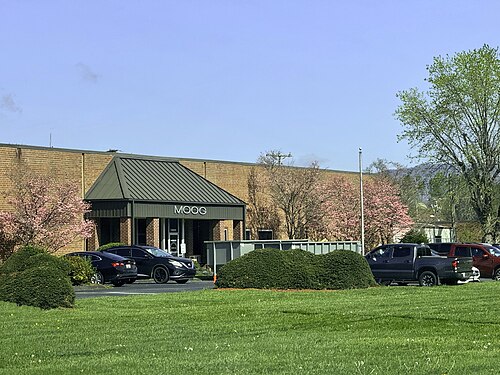
Moog Inc

East Aurora, United States commercial

Moog Space, founded in 1951 and headquartered in East Aurora, New York, is a key provider of solutions for the space industry, specializing in the design, development, and manufacture of critical systems and components. While initially focused on propulsion, the company has expanded its portfolio to encompass a broad range of technologies including spacecraft avionics, guidance systems, fluid controls, structures, and environmental control & life support systems (ECLSS). Moog serves both commercial and government customers, supporting missions ranging from launch vehicles and satellite buses to human spaceflight initiatives, including contributions to NASA’s Space Launch System and future lunar missions. A core strength lies in Moog’s advanced avionics systems, offering integrated Command and Data Handling (C&DH) and Electrical Power Systems (EPS). The company is actively investing in next-generation technologies such as radiation-hardened computing – exemplified by the Cascade Single Board Computer featuring a RISC-V processor – and additive manufacturing to enhance capabilities and meet evolving mission demands. Beyond electronics, Moog provides mechanical solutions including hexapods for precision payload positioning, spacecraft mechanisms, shock and vibration isolation systems, and structural adapters for various satellite sizes. This diverse offering positions Moog Space as a comprehensive partner for organizations operating across the entire space ecosystem.


East Aurora, United States · Est. 1951 $11.5B
Ground Systems Verified KTOS

Kratos Defense

San Diego, United States commercial

Kratos Defense & Security Solutions, Inc., founded in 1994 and headquartered in San Diego, California, is a technology company focused on the defense and aerospace industries. The company specializes in providing critical infrastructure and technology solutions, primarily centered around satellite ground systems and radio frequency (RF) products. While specific product details are limited based on available information, Kratos appears to operate within the essential network that supports space-based communications and operations. Kratos’ core capabilities lie in the development and provision of the ground-based infrastructure necessary for satellite command, control, and communications. This includes technologies for signal processing, data handling, and network management. The focus on RF products suggests expertise in the design and manufacturing of components and systems operating within the radio frequency spectrum, likely crucial for both satellite uplinks/downlinks and broader defense applications. As a company established in 1994, Kratos has been a long-standing player in the defense sector, though publicly available information regarding specific missions, achievements, or key customers is currently limited. Their longevity suggests a proven ability to navigate the complexities of government contracting and maintain relevance within a demanding industry. Kratos’ value proposition centers on providing reliable and secure ground infrastructure for satellite operations, a critical component for both commercial and government space activities. By focusing on these foundational elements, Kratos positions itself as a key enabler of space-based capabilities, supporting a range of applications from communications and Earth observation to national security.

San Diego, United States · Est. 1994 $8.93B
Satellite Manufacturing Verified RDW

Redwire

Jacksonville, United States commercial

Redwire Corporation is a leading space infrastructure company pioneering in-space manufacturing, 3D bioprinting, and advanced spacecraft systems. With over 20 facilities developed for the International Space Station and 10 currently operating on orbit, Redwire is advancing capabilities that will enable humanity to live and work sustainably in space. In May 2024, Redwire successfully 3D bioprinted the first live human heart tissue sample through its BioFabrication Facility (BFF) aboard the ISS. This breakthrough tissue returned to Earth in April 2024, opening doors to creating heart patches for damaged tissue treatment and more effective personalized medicine. The company plans to bioprint human blood vessels and knee meniscus tissue on future missions. The MSTIC (Manufacturing of Semiconductors and Thin-Film Integrated Coatings) facility completed its pathfinder mission in 2024, manufacturing 18 thin-film semiconductor samples to explore beneficial effects of microgravity on these structures. Launched on Northrop Grumman's NG-20 cargo mission in February 2024, MSTIC is an autonomous semiconductor manufacturing platform developed with the ISS National Laboratory and NASA. Redwire's Additive Manufacturing Facility produced 3D-printed radiation shielding on orbit, recycling polyethylene from packaging waste into filament for AstroRad radiation vest inserts, addressing a major hazard for deep space missions. The company broke ground on a new state-of-the-art microgravity payload development and space operations facility in Floyd County, Indiana. Redwire continues expanding in-space manufacturing capabilities to meet growing demand for space-based research and production.

Jacksonville, United States · Est. 2020 $2.62B
Spacecraft Components Verified APH

Amphenol Space

Wallingford, United States commercial

Amphenol Aerospace is a leading global supplier of space-qualified interconnect solutions, delivering hermetically sealed connectors, high-speed fiber optics, and ruggedized cable assemblies engineered for the extremely harsh environment of space. Aerospace engineers have relied on Amphenol connectors for everything from low-Earth orbit satellites enabling modern communications to the International Space Station and deep space exploration missions. The company's SpaceVPX connector family is specifically designed for space-based electronic systems, leveraging VITA 78 OpenVPX architecture and technology with rigorous testing for extreme space environments including radiation exposure. The Deep Space 38999 series addresses the frigid temperatures of space and extreme cold-weather environments, perfectly suited for below-zero applications where satellites and space vehicles experience temperature swings from 125 degrees Celsius to minus 65 degrees Celsius during orbital operations. Amphenol's Series Five connector represents the next evolutionary step in combining traditional 38999 capabilities in a lighter, smaller package, delivering D38999 performance while being 20% smaller and 50% lighter. High-speed solutions combine the company's extensive legacy of Mil-Spec connectors with cutting-edge technology, supporting data rates up to 56 Gbps in lightweight, aluminum MIL-DTL-38999 shells for demanding bandwidth requirements. Space-qualified connectors must withstand intense vibrations during liftoff and remain mated under rapid acceleration exceeding 17,000 mph when leaving Earth's atmosphere, as demonstrated on NASA's Artemis missions. Amphenol's extensive product portfolio includes cylindrical, rectangular, fiber optic, and high-speed connectors, plus EMI/EMP filters and specialized interconnect systems. The company continues advancing interconnect technology for next-generation satellites, lunar missions, and space launch systems from their manufacturing facilities worldwide.

Wallingford, United States · Est. 1932 $193.7B
Aerospace Verified HAL

Hindustan Aeronautics Limited

Bengaluru, India commercial

Hindustan Aeronautics Limited (HAL) is an Indian government-controlled aerospace and defence manufacturer headquartered in Bengaluru, Karnataka. It traces its origin to Hindustan Aircraft Limited, established on 23 December 1940, and was reorganised under its current name on 1 October 1964. HAL is classified as a "Maharatna" Central Public Sector Enterprise, with the Government of India holding roughly 71-72% of its equity; the remainder trades publicly, with the stock listed on the NSE (ticker HAL) and BSE (code 541154). HAL's core business is the design, manufacture, upgrade and maintenance, repair and overhaul of military and civil aircraft, helicopters, aero-engines and avionics for India's armed forces. Its space-sector work sits alongside this aviation business as a hardware supplier to the Indian Space Research Organisation (ISRO): HAL has long produced integrated L-40 liquid stages for the GSLV Mk II, and propellant tanks and feed lines for the PSLV, GSLV Mk II and GSLV Mk III (LVM3) launch vehicles. HAL's role expanded significantly in September 2022, when NewSpace India Limited (NSIL), ISRO's commercial arm, signed a contract with an HAL-led consortium — with Larsen & Toubro as the other principal partner — for the industrial production of five PSLV-XL launch vehicles, the first attempt to transfer end-to-end PSLV manufacturing from ISRO to private industry. In June 2025, ISRO separately transferred Small Satellite Launch Vehicle (SSLV) technology to HAL for approximately ₹511 crore, giving the company a second Indian launch-vehicle production line. As of its FY2023 disclosures HAL employed approximately 24,457 people. The company is led by Chairman and Managing Director D. K. Sunil. Beyond space hardware, HAL remains primarily an aircraft and helicopter manufacturer (Tejas, Su-30MKI, HAL Dhruv and others), with its space work representing a smaller but growing share of a large, diversified aerospace manufacturing business.

Bengaluru, India · Est. 1940 $29.2B
Launch Vehicles KRMN

Karman Holdings

Huntington Beach, United States commercial

Karman Holdings Inc., trading as Karman Space & Defense, is a publicly traded American manufacturer of launch-vehicle and missile structures, headquartered in Huntington Beach, California. The current company was formed in October 2020 through the merger of Aerospace Engineering LLC and AMRO Fabricating Corporation, though its manufacturing predecessors date back more than 40 years; it completed an initial public offering on the New York Stock Exchange in February 2025 under ticker KRMN, at an initial valuation of roughly $4 billion. For the 2025 fiscal year the company reported revenue of $471.5 million and about 1,400 employees, including 300 engineers, supporting more than 130 active programs. Karman organizes its hardware into three families: payload protection and deployment systems (encapsulation structures and low-shock separation and deployment mechanisms for sensitive payloads), aerodynamic interstage systems (the structures connecting rocket stages and fairings), and propulsion systems, including solid rocket motor cases and nozzles supplied through its Systima Technologies division. Its three end markets — hypersonics and strategic missile defense, tactical missiles and integrated defense systems, and space and launch — each contributed roughly 30-37% of 2025 revenue. Karman supplies structural and separation hardware that most launch-vehicle integrators buy rather than build in-house, making it a significant but little-known tier of the launch supply chain. Jon Rambeau became CEO in March 2026, succeeding Tony Koblinski.

Huntington Beach, United States · Est. 2020 $4.60B
Propulsion Verified GE

GE Aerospace

Cincinnati, United States commercial

GE Aerospace (NYSE: GE) is one of the world's largest aero-engine manufacturers. It is listed here for completeness rather than for an identifiable space division: GE Aerospace publishes no space systems business, and its FY2025 annual report contains no mention of spacecraft, satellites, launch vehicles or Space Force work. Its nearest activity to spaceflight is high-speed propulsion research, including a hypersonic test aircraft programme funded by the US Defense Innovation Unit, alongside additive manufacturing and power electronics that serve aviation rather than orbital customers. Earlier versions of this profile described satellite power conversion, thermal management and radiation-tolerant electronics as GE space products; none of that could be traced to a primary source, so it has been removed. Readers looking for the company's spaceflight heritage should note that the aerospace businesses General Electric once held in that field were divested long before the 2023 to 2024 separation that created today's GE Aerospace, GE Vernova and GE HealthCare.

Cincinnati, United States · Est. 1917 $329.5B
Satellite Manufacturing Verified 6503.T

Mitsubishi Electric Space

Tokyo, Japan commercial

Mitsubishi Electric Corporation's Space Systems division (commonly known in the industry as MELCO Space), headquartered in Tokyo and part of the Mitsubishi Electric Corporation founded in 1921, is Japan's largest satellite manufacturer and a critical component of Japan's space industrial base — producing Earth observation, communications, and navigation satellites for JAXA, the Japanese government, and international customers. MELCO's Earth observation satellite portfolio is anchored by the ALOS (Advanced Land Observing Satellite) series for JAXA: ALOS-1 'Daichi' (launched 2006) combined PRISM panchromatic stereo imaging at 2.5m, AVNIR-2 multispectral at 10m, and PALSAR L-band SAR to create Japan's most capable remote sensing satellite to that date; ALOS-2 'Daichi-2' (2014) carries the upgraded PALSAR-2 L-band SAR providing 1-3 meter high resolution SAR imagery for disaster monitoring, deforestation detection, and agriculture; and ALOS-3 (planned for optical VHR imagery) and ALOS-4 (L-band SAR) continue the program. ALOS satellites have been particularly important for disaster response across Asia-Pacific, with PALSAR providing all-weather, day-night SAR coverage during typhoon flooding, earthquake damage assessment, and volcanic activity monitoring. MELCO is the prime contractor and manufacturer for Japan's Quasi-Zenith Satellite System (QZSS) — a regional navigation constellation completed as seven satellites in August 2026 after the planned QZS-5 was lost in the December 2025 H3 launch failure providing GPS augmentation and independent positioning for Japan and the Asia-Pacific region. QZSS uses Michibiki satellites in quasi-zenith orbits that remain nearly overhead Japan for extended periods, improving GPS availability in urban canyons and mountainous terrain where buildings and mountains block low-elevation GPS satellites. MELCO also manufactures commercial GEO communications satellites for international operators and supplies satellite components — solar arrays, thermal control panels, and attitude control systems — to other satellite manufacturers. MELCO competes globally with Boeing Satellite Systems, Thales Alenia Space, and Airbus Defence & Space for commercial GEO contracts.

Tokyo, Japan · Est. 1921 $67.2B
Launch Services Verified

Astra

Alameda, United States commercial

Astra Space is an American launch and spacecraft-propulsion company that developed small orbital rockets with a goal of frequent, low-cost launches for small satellites. Founded in 2016 in Alameda, California, and led by CEO Chris Kemp and CTO Adam London, Astra went public via SPAC in 2021 at a $2.1B valuation. The company's Rocket 3.3 achieved orbit in November 2021 but suffered multiple launch failures. Astra's Rocket 4 development was abandoned in 2022 after two LV008 failures. In July 2023, Astra announced it was suspending launch vehicle development indefinitely and laid off most of its staff, effectively shutting down the launch business. Co-founders Chris Kemp and Adam London took the company private at $0.50 a share in July 2024. It now builds satellite electric-propulsion systems (from the 2021 Apollo Fusion acquisition), reported 2025 revenue of about $45 million at breakeven EBITDA, shipped its 110th engine system in January 2026, and is developing Rocket 4 under a Defense Innovation Unit contract worth up to $44 million, with a first flight targeted for 2026.

Alameda, United States · Est. 2016 $355M raised

Explore all 113 components organisations

Filter by country, type or status, sort by market value or founding year. The view is saved in the address bar.

Skip to results

Loading companies…

Loading companies…