Category

Iot Companies

36 organizations16 countries2 listed

36 organizations working in iot across the global space industry.

Names to know in iot

Rank all by market value →
Satellite Communications Verified IRDM

Iridium Communications

McLean, United States commercial

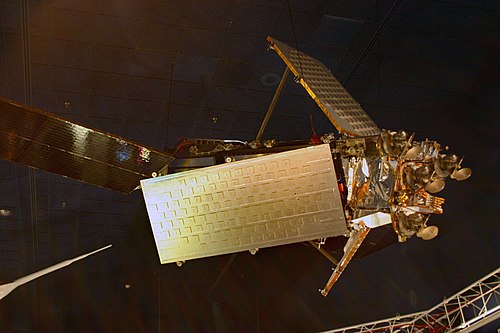
Rocket Lab agreed on 29 June 2026 to acquire Iridium at an enterprise value of about $8 billion, with closing expected in mid-2027. Iridium Communications is a satellite communications company operating the world's only truly global mobile satellite network. The Iridium constellation of 66 active satellites provides voice, data, and broadband services anywhere on Earth, including polar regions and remote oceans. Headquartered in McLean, Virginia, Iridium serves government, maritime, aviation, and IoT customers. Iridium trades on NASDAQ under IRDM with a market capitalization exceeding $4 billion. The company employs about 975 employees and generated $871.7 million of revenue in 2025. Under CEO Matt Desch, Iridium completed a $3 billion constellation replacement program and has grown into a profitable satellite operator. ## History and Milestones Motorola conceived the original Iridium system in the late 1980s as the first global mobile satellite communications network. The original 66-satellite constellation launched in the 1990s, but the company filed for bankruptcy in 1999 as adoption failed to meet projections. A investor group acquired Iridium assets in 2000 and rebuilt the business with a focus on government and specialized commercial markets. The company proved viable serving customers who needed communications where terrestrial networks couldn't reach. Iridium launched its replacement constellation, Iridium NEXT, between 2017 and 2019, deploying 75 new satellites (66 operational plus spares) aboard SpaceX Falcon 9 rockets. This $3 billion investment modernized the network with enhanced capabilities while maintaining backward compatibility. ## Products and Services Iridium provides satellite voice and data services through handheld devices, vehicle-mounted terminals, and embedded modules. The network's low Earth orbit constellation enables low-latency communications unavailable from geostationary satellites. Iridium Certus provides broadband connectivity for maritime, aviation, and land mobile applications. This L-band service offers speeds up to several megabits per second, serving customers requiring reliable connectivity in remote areas. The company's IoT services connect remote assets including shipping containers, pipeline sensors, and tracking devices. Iridium's global coverage makes it essential for assets that move beyond cellular network coverage. ## Technology and Capabilities The Iridium constellation consists of 66 active satellites in six polar orbital planes at approximately 780 km altitude. Cross-linked satellites create a mesh network that routes calls in space, reducing dependence on ground stations and enabling true global coverage including polar regions. Iridium NEXT satellites introduced capabilities including ADS-B receivers for aircraft tracking (Aireon service), AIS receivers for ship tracking, and hosted payloads for partner organizations. These hosted payloads generate additional revenue from the constellation investment. The L-band spectrum allocation provides rain-fade resistance and reliable service in adverse weather conditions. Iridium's network architecture enables direct phone-to-phone communication anywhere on Earth without routing through ground stations. ## Business and Financial Overview Iridium generated $871.7 million of revenue in 2025 with strong margins from its subscription-based model. Government services (primarily U.S. Department of Defense) represent the largest segment, followed by commercial maritime, aviation, and IoT. The company's long-term contract with the U.S. Department of Defense (worth approximately $738 million) provides stable revenue and demonstrates the network's strategic value. Commercial growth comes from maritime broadband, aviation safety services, and IoT applications. Iridium achieved profitability after completing the NEXT constellation deployment and paying down associated debt. The company maintains strong free cash flow and returns capital to shareholders through dividends and buybacks. ## Recent Developments In 2024, Iridium continued growing its subscriber base across all segments while expanding service capabilities. The company advanced partnerships with smartphone manufacturers for direct-to-device emergency satellite connectivity. Iridium expanded its IoT ecosystem, connecting more devices and applications through its network. The company also enhanced Iridium Certus services and grew the aviation connectivity business. The Aireon service (aircraft tracking via ADS-B) continued serving air navigation service providers worldwide. Iridium also advanced plans for eventual constellation sustainment and technology evolution. ## Market Position Iridium is the only satellite communications provider offering truly global coverage including polar regions. This unique capability serves customers who cannot rely on alternative networks for their communications needs. Competitors include Inmarsat, Globalstar, and emerging LEO broadband providers like Starlink. Iridium's advantages include complete global coverage, proven reliability, and specialized government relationships. Strategic priorities include growing commercial subscribers, expanding IoT applications, and planning for long-term constellation sustainment. Iridium's established market position and subscriber growth support continued financial performance.


McLean, United States · Est. 2001 $4.89B
Satellite Communications Verified GSAT

Globalstar

Covington, United States commercial

Globalstar is a leading provider of mobile satellite voice and data services, operating the world's newest and most advanced low-Earth orbit (LEO) satellite constellation for affordable, reliable connectivity beyond terrestrial network coverage. The company serves commercial and recreational users across land, sea, and air with solutions ranging from satellite phones to IoT asset tracking devices. The Globalstar constellation consists of second-generation satellites launched between 2010-2013, orbiting approximately 1,414 kilometers above Earth. This LEO architecture enables lower latency and better signal quality than geostationary alternatives while supporting compact, handheld devices. The satellites utilize CDMA technology and operate in S-band and L-band frequencies, delivering voice, duplex data, and one-way data services globally. Globalstar's SPOT product line revolutionized personal safety with GPS messenger devices enabling location sharing, tracking, and emergency SOS communications in remote areas. The SPOT X and SPOT Gen4 serve hikers, adventurers, fleet managers, and outdoor workers. Globalstar satellite phones provide push-to-talk and voice communications for industries including oil and gas, mining, forestry, emergency response, and government. The company's Commercial IoT division delivers satellite connectivity for asset tracking, SCADA monitoring, pipeline surveillance, and machine-to-machine applications. Globalstar technology enables connectivity for vessels, vehicles, and equipment operating beyond cellular coverage. Through partnerships with automotive manufacturers, Globalstar provides emergency services and connected car features. On 14 April 2026 Amazon announced a definitive agreement to acquire Globalstar for up to $90 per share (about $11.6 billion) and fold it into Amazon Leo, with closing expected in 2027.

Covington, United States · Est. 1991 $10.6B
Satellite Communications Verified

Kepler Communications

Toronto, Canada commercial

Kepler Communications is a Canadian satellite communications company operating a LEO constellation for global IoT connectivity and high-throughput data relay. Founded in 2015 in Toronto, the company provides narrowband KIPP (narrowband IoT) and TUNDRA (store-and-forward) satellite services for remote asset tracking, maritime, oil and gas, and industrial IoT applications. Kepler's differentiator is its multi-orbit data relay service — larger satellites with inter-satellite optical links that relay data from third-party satellites and ground-stranded assets in real time. The company has launched multiple operational satellites, raised significant funding from EDC Canada and space-focused investors, and is scaling its constellation to improve global coverage and revisit times. Kepler targets the growing market for affordable, reliable connectivity in areas where terrestrial networks cannot reach.

Toronto, Canada · Est. 2015
Satellite Manufacturing

Apogeo Space

Brescia, Italy commercial

Apogeo Space is an Italian private company pioneering IoT satellite connectivity through the development and deployment of a 96-satellite picosatellite constellation. Focused on addressing connectivity challenges in remote areas, Apogeo Space provides low-cost data collection and transmission services for a wide range of IoT devices. The company offers end-to-end solutions, encompassing satellite design and manufacture, ground station infrastructure, and comprehensive testing services within its state-of-the-art facilities, including a Thermal Vacuum Chamber and certified Clean Room capable of handling satellites up to 16U. Apogeo Space’s services are targeted towards industries including agriculture, livestock monitoring, oil & gas, glacier/water infrastructure monitoring, smart cities, maritime research, and wildlife tracking. They offer both satellite-based connectivity via their constellation and hybrid solutions utilizing ground satellite boosters. Beyond connectivity, Apogeo Space also develops compatible hardware, such as the “Apogeo Shield” plug-and-play boards, to enhance IoT project implementation. The company positions itself as a key enabler of the expanding IoT landscape, providing reliable and cost-effective connectivity for applications requiring data from previously unreachable locations.

Brescia, Italy · Est. 2015
Satellite Communications Verified

Astrocast

Chavannes-près-Renens, Switzerland commercial

Astrocast SA is a Swiss satellite IoT company founded in 2018 and headquartered in Plan-les-Ouates, Geneva, operating a constellation of nanosatellites to provide global machine-to-machine (M2M) and Internet of Things (IoT) connectivity for remote and maritime assets beyond cellular coverage. The company's network uses LoRaWAN-based protocols adapted for non-terrestrial networks (NTN), enabling ultra-low-power end devices to communicate with Astrocast satellites during orbital passes — a store-and-forward architecture suited for applications where data latency of hours is acceptable but coverage is paramount. Astrocast's constellation launched initial pathfinder satellites aboard ESA's Vega-C rocket and subsequent platforms via SpaceX rideshare, targeting a 100+ satellite network at approximately 550 km LEO. The company's technology stack includes an Astrocast-developed chip module enabling sub-milliwatt average current draw for IoT sensor nodes, making solar-powered deployment viable for multi-year field deployments in the most remote locations on Earth. Primary markets include maritime vessel tracking (shipping containers, fishing fleets), environmental monitoring (water level sensors, weather stations), precision agriculture (soil sensors across large farms), and cold chain logistics in regions without cellular infrastructure. The company competes with Lacuna Space (UK, similar LoRa satellite IoT approach), Semtech's NTN LoRa initiatives, and Globalstar's SPOT messaging services. Astrocast raised approximately $10M in Series A funding and partnered with Satcom Direct and other distribution partners to expand its global IoT service footprint.

Chavannes-près-Renens, Switzerland · Est. 2014
Ground Systems Verified

Beam Communications

Melbourne, Australia commercial

Beam Communications (ASX: BCC) is a Melbourne-based Australian company founded in 1999 that designs and manufactures satellite communication terminals and devices for Iridium and Inmarsat networks. Products include satellite phone docking stations (converting Iridium handsets into fixed terminals), IoT satellite data modems, tracking devices, personal locator beacons (PLBs), and specialized terminals for maritime, mining, agriculture, and emergency services applications. Beam holds preferred/authorized status with both Iridium and Inmarsat, enabling distribution of hardware across those networks. The company serves the professional satcom equipment market in Australia and internationally, targeting users who need satellite connectivity in areas without cellular coverage. Beam is listed on the Australian Securities Exchange (ASX: BCC) and benefits from Australia's vast geography and the professional field services market.

Melbourne, Australia · Est. 1999
Satellite Communications

Commsat

Beijing, China commercial

Commsat Technology Development (Beijing Commsat Technology Development Co.) is a Chinese commercial space company founded in 2015 and headquartered in Beijing, developing and operating the Ladybee (Chuangxing) satellite IoT constellation for global machine-to-machine communications across maritime, logistics, and industrial applications. The Ladybee constellation uses low Earth orbit nanosatellites to provide store-and-forward data relay services for IoT sensor networks in remote areas beyond cellular coverage — including maritime vessels, fishing fleets, shipping containers, oil and gas monitoring equipment in remote basins, and agricultural sensors across China's vast farming regions. The system operates using AIS (Automatic Identification System) adjacent frequencies and proprietary UHF communication protocols to interface with low-power IoT transmitters deployed across diverse industries. Commsat is part of China's rapidly expanding commercial space sector, which the government has actively encouraged since 2014 through opening private capital access to the space market. The company raised funding from multiple Chinese venture capital and state-aligned industry funds, reflecting the government's strategic emphasis on commercial space capability as a complement to CNSA's national programs. Commsat competes domestically with Guodian Gaoke (national AIS satellite operator), Aerospace Dongfanghong Satellite, and GEO AIS providers, while internationally competing with Orbcomm, Iridium's IoT data service, Astrocast, and Lacuna Space for maritime and industrial remote asset IoT connectivity markets.

Beijing, China · Est. 2015
Satellite Communications Verified

Fleet Space Technologies

Adelaide, Australia commercial

Fleet Space Technologies, founded in 2015 and headquartered in Adelaide, South Australia, operates a nanosatellite constellation providing two distinct service lines: global IoT connectivity for industrial remote asset monitoring, and satellite-enabled geophysical mineral exploration using ambient noise seismic tomography — a combination that positions Fleet as a mining industry solutions company with space infrastructure at its core. Fleet's IoT connectivity service uses a constellation of small LEO satellites to provide two-way data communication for remote sensors in mining operations, agriculture, oil and gas, and maritime logistics where terrestrial cellular coverage is unavailable. Mining applications include drill hole sensor data transmission, water monitoring in pit dewatering systems, vehicle and equipment tracking in remote open-cut mines, and environmental compliance monitoring across expansive mine sites. Fleet's ExoSphere geophysical mineral exploration platform is its most technically distinctive offering: a system where arrays of seismic nodes are deployed across a mineral exploration license area, generating ambient seismic noise (from ocean waves, wind, and industrial activity) that propagates through the Earth's crust. Fleet's satellites enable real-time data aggregation from these distributed node arrays, and machine learning algorithms process the seismic data to reconstruct 3D images of subsurface geological structures to depths of 2+ kilometers — revealing the density, lithology, and structural geology signatures associated with mineral deposits. This approach provides exploration intelligence comparable to expensive active seismic surveys at fraction of the cost and without explosive sources. Fleet has attracted significant investment from mining majors interested in exploration technology and IoT services, raising over A$100 million in funding. The company competes with Myriota (IoT), Sateliot, and terrestrial geophysical survey companies like CGG and TGS in their respective markets, with the unique integration of both creating defensible differentiation in the mining industry value chain.

Adelaide, Australia · Est. 2015
Satellite Communications

Fossa Systems

Madrid, Spain commercial

Fossa Systems is a Madrid-based Spanish company building and operating a constellation of PocketQube satellites — ultra-miniature spacecraft (5×5×5 cm per unit, roughly 1/8 the volume of a 1U CubeSat) — for low-cost global IoT connectivity. Founded in 2019 by university students and originally known for open-source amateur radio satellites, Fossa pivoted to commercial IoT services using LoRa/FSK radio protocols. The company also sells the FossaSat development kit, enabling universities and hobbyists to build and fly their own PocketQube payloads. Fossa's positioning is the extreme low end of the satellite IoT market — lower cost per satellite than Swarm, Lacuna, or Myriota — enabled by the drastically cheaper PocketQube form factor. The company has received ESA BIC Spain support.

Madrid, Spain · Est. 2019

Explore all 36 iot organisations

Filter by country, type or status, sort by market value or founding year. The view is saved in the address bar.

Skip to results

Loading companies…

Loading companies…