Category

Lunar Companies

58 organizations16 countries3 listed

58 organizations working in lunar across the global space industry.

Names to know in lunar

Rank all by market value →
Launch Services Verified FLY

Firefly Aerospace

Cedar Park, United States commercial

Firefly Aerospace is an American launch and space systems company headquartered in Cedar Park, Texas, developing the Alpha small launch vehicle and the Blue Ghost lunar lander. Founded in 2017 by Tom Markusic after acquiring assets from the original Firefly Space Systems bankruptcy, the company has made rapid progress across both launch and lunar surface delivery. Alpha achieved orbital success in October 2022 after a failed first attempt and has since flown multiple successful missions. Firefly's Blue Ghost lunar lander achieved a historic milestone on March 2, 2025, when it became the first commercially contracted lunar lander to successfully touch down on the Moon and complete a full NASA science mission — delivering ten NASA payloads to Mare Crisium and operating on the lunar surface for a full lunar day (approximately two Earth weeks). The mission represented a major win for NASA's Commercial Lunar Payload Services (CLPS) program. Firefly is majority-owned by AE Industrial Partners and has also developed the Elytra orbital transfer vehicle for in-space transportation services.

Cedar Park, United States · Est. 2017 $3.54B
Lunar Verified LUNR

Intuitive Machines

Houston, United States commercial

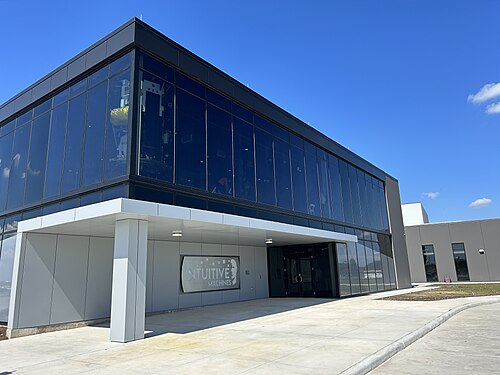
Intuitive Machines is a leading commercial lunar services company providing spacecraft, landers, and space infrastructure supporting NASA's return to the Moon. In February 2024, the company achieved a historic milestone when its Odysseus Nova-C lander became the first commercial spacecraft to successfully soft-land on the Moon and the first American spacecraft to reach the lunar surface since Apollo 17 in 1972. The IM-1 mission launched on SpaceX Falcon 9 from Kennedy Space Center on February 15, 2024, with Odysseus landing at Malapert A crater near the lunar south pole on February 22. The 4-meter tall hexagonal lander carried approximately 100 kg of payload including six NASA-developed experiments and commercial customer payloads. Odysseus was the first spacecraft to use liquid methane and liquid oxygen (methalox) propulsion beyond low-Earth orbit. Selected through NASA's Commercial Lunar Payload Services (CLPS) initiative, Intuitive Machines received $118 million to develop the Nova-C platform. The CLPS program enables NASA to contract with commercial partners providing launch and landing services, accelerating lunar exploration while building a commercial lunar economy. The IM-2 mission, launched in February 2025, delivered the Athena lander to the lunar south pole region, where it tipped over on landing and operated for about a day; it carried Nokia's Lunar Surface Communication System to establish the first cellular network on the Moon. Intuitive Machines continues developing lunar data transmission services, navigation systems, and infrastructure supporting NASA's Artemis campaign to establish a sustainable human presence on the Moon.

Houston, United States · Est. 2013 $2.30B
Lunar Verified 9348.T

ispace

Tokyo, Japan commercial

ispace is a Japanese lunar exploration company developing commercial lunar landers and transportation services. The company's Hakuto-R Mission 2, named Resilience, launched on SpaceX Falcon 9 on January 15, 2025, successfully reaching lunar orbit on May 6, 2025. On June 5, 2025, the lander attempted to touch down at the lunar south pole but experienced a hard landing after its Laser Range Finder encountered delays obtaining valid measurements. The technical analysis confirmed the lander likely impacted the lunar surface. Mission 2 carried TENACIOUS, the first European-built lunar rover (5 kg) designed and manufactured in Luxembourg with co-funding from the Luxembourg National Space Programme. After NASA and Draper ended the CLPS task order behind the ispace-U.S. APEX 1.0 lander in July 2026, ispace reset its roadmap: Mission 3 is now a Japan-built ULTRA lander targeting a 2028 launch on an H3 rocket, and Mission 4 a second ULTRA lander in 2029 carrying ESA's MAGPIE rover, while ispace-U.S. pursues NASA's CLPS 2.0 programme. The company continues working toward establishing lunar transportation infrastructure.

Tokyo, Japan · Est. 2010 $390M
Space Agencies Verified

Turkish Space Agency

Ankara, Turkey government

The Turkish Space Agency (TUA — Türkiye Uzay Ajansı), established in 2018 by Presidential Decree in Ankara, is Turkey's national space agency responsible for coordinating and implementing Turkey's National Space Program (2021-2023, extended through 2030) — an ambitious 10-goal roadmap announced by President Erdoğan in February 2021 that outlined Turkey's intentions for satellite manufacturing, a national launch site, lunar exploration, and ultimately crewed spaceflight capability. Turkey's existing space infrastructure predates TUA: Türksat A.Ş. (established 1990) operates Turkey's GEO telecommunications satellite fleet for broadcasting and broadband across Turkey, the Balkans, the Middle East, and Central Asia. GÖKTÜRK-1 (2016, Airbus-built, 0.8-meter resolution optical satellite) and GÖKTÜRK-2 (2012, domestically developed with Roketsan/TAI) provide military and government Earth observation imagery for the Turkish armed forces and intelligence services. The domestic development of GÖKTÜRK-2 represented a significant step in Turkey's satellite manufacturing capability, with TÜBİTAK UZAY (Space Technologies Research Institute) leading the technical development. TUA's National Space Program goals include developing an indigenous satellite bus technology family, establishing a Turkish space launch site (a coastal equatorial site for efficient GTO orbital insertion), landing a Turkish spacecraft on the Moon by 2023 (revised after missing initial timeline), training Turkish astronauts for ISS missions (Alper Gezeravcı flew to ISS aboard SpaceX Crew Dragon in January 2024 — Turkey's first astronaut in space), and eventually developing crewed spaceflight capability. Turkey's defense aerospace industry — dominated by companies including Roketsan, ASELSAN, TAI, and TUSAŞ — provides an existing industrial base for space technology development. TUA also participates in ESA's Plan for European Cooperating States (PECS) as a step toward potential ESA European Cooperating State membership.

Ankara, Turkey · Est. 2018
Space Stations In development

Thales Alenia Space Gateway

Turin, Italy commercial

Thales Alenia Space Gateway, founded in 2019 and based in Turin, Italy, is a business unit of Thales Alenia Space focused on the development of critical infrastructure for future space exploration. The company’s core business centers around the design and construction of modules intended for space stations and lunar surface habitats. Specifically, current activities are focused on the Gateway module development program. While detailed technological specifics are not publicly available, the company leverages Thales Alenia Space’s extensive expertise in life support systems, robotic technologies, and pressurized module construction – capabilities crucial for sustaining human presence in deep space. This suggests a focus on advanced materials, reliable power generation, and closed-loop environmental control systems. As a dedicated unit within Thales Alenia Space, the company is directly involved in supporting international space programs. The Gateway module development signifies a key role in the NASA-led Artemis program, aiming to establish a sustainable human presence on the Moon and utilize lunar orbit as a staging ground for future missions to Mars. This positions Thales Alenia Space Gateway as a vital contributor to international collaboration in space exploration. Given the limited publicly available information, it is difficult to fully assess the company’s unique value proposition beyond its parent company’s established reputation. However, the focused approach on Gateway module development suggests a specialization in providing critical, high-reliability infrastructure for long-duration space missions, potentially offering a streamlined and dedicated resource for partner space agencies.

Turin, Italy · Est. 2019
Satellite Communications Verified

CesiumAstro

Austin, United States commercial

CesiumAstro develops multi-beam phased array communications systems for satellites, UAVs, and other platforms. The company's active electronically steered array (AESA) technology enables high-bandwidth, software-defined communications that can dynamically allocate capacity. CesiumAstro's systems support both commercial and defense applications, with contracts from the US Department of Defense and commercial satellite operators. By March 2026 CesiumAstro had raised more than $426 million in equity (including a $270 million round) plus $200 million in EXIM financing, and in 2026 it acquired Vidrovr, Jariet Technologies and 1Aardvark and introduced the Element satellite platform.

Austin, United States · Est. 2017 $426M+ raised
Lunar Acquired

Astrobotic

Pittsburgh, United States commercial

Astrobotic Technology is a Pittsburgh-based lunar logistics company providing delivery services to the Moon through NASA's Commercial Lunar Payload Services (CLPS) program. The company's Griffin Mission One (Griffin-1) is targeting a late 2026 launch to Nobile Crater at the lunar South Pole. NASA modified the CLPS contract after discontinuing the VIPER project due to funding constraints; Griffin will demonstrate large lander capability flying similar mass to VIPER to the South Pole region as a technology demonstration flight. Griffin-1 payloads include Venturi Astrolab's FLIP rover demonstrating core components for the FLEX rover, Astrobotic's CubeRover-1 lunar rover (completed acceptance testing and deemed flight-ready), Carnegie Mellon's Iris Lunar Dream Capsule, and payloads from ESA and NASA. Astrobotic's earlier Peregrine Mission One launched January 8, 2024, aboard Vulcan Centaur's maiden flight but experienced propellant leak preventing lunar landing. Astrobotic was competitively selected by ESA to study delivery of payload packages on Peregrine lunar landers. Voyager Technologies completed its acquisition of Astrobotic on 13 July 2026; the business now operates as Voyager Lunar Systems under John Thornton.

Pittsburgh, United States · Est. 2007
Satellite Manufacturing

Airbus Space Exploration

Bremen, Germany commercial

Airbus Space and Defence (formerly EADS Astrium) is Europe's largest space systems company, headquartered in Toulouse, France with major operations in Bremen, Germany and Stevenage, UK. The division employs approximately 15,000 people and generates revenues of around €5 billion annually across satellite manufacturing, space exploration, and defense systems. Airbus is the prime contractor for the European Service Module (ESM) that powers NASA's Orion spacecraft for Artemis missions — the first time a European system is critical for a US human spaceflight program. The company manufactures Eutelsat and OneWeb satellite buses, builds Earth observation satellites for the Pleiades and SPOT constellations, and manufactures Ariane 6 rocket components. Airbus is also a major partner in Starlab (commercial space station) and the Lunar Pathfinder navigation satellite.

Bremen, Germany · Est. 2000
Satellite Manufacturing Verified

CAST

Beijing, China government

China Academy of Space Technology (CAST), established in 1968 and based in Beijing, is a leading Chinese organization dedicated to the research, design, and manufacturing of spacecraft and related technologies. As a core component of the China Aerospace Science and Technology Corporation (CASC), CAST focuses primarily on satellite systems and deep space exploration vehicles. The company’s core business revolves around the development of complete satellite systems, encompassing design, fabrication, testing, and in-orbit operation. CAST is particularly known for its DFH series of satellite platforms, which serve as the foundation for a wide range of applications including communications, Earth observation, and navigation. Beyond commercial and operational satellites, CAST has played a pivotal role in China’s ambitious lunar exploration program, serving as the primary developer of the Chang'e lunar spacecraft series. This includes the landers, orbiters, and rovers that have successfully achieved soft landings on the Moon and conducted scientific investigations. Given its long history and position within CASC, CAST holds a significant and likely dominant position within the Chinese space industry, particularly in the development of complex spacecraft. While specific customer details are not publicly available, its involvement in national programs like the Chang'e missions and the development of essential satellite infrastructure suggests a primary role serving the Chinese government and national space initiatives. Without accessible website content, a detailed assessment of current product offerings and specific market positioning is limited. However, CAST’s established expertise in satellite platforms and deep space exploration clearly positions it as a key driver of China’s advancements in space technology and a major player in the global space landscape.

Beijing, China · Est. 1968

Explore all 58 lunar organisations

Filter by country, type or status, sort by market value or founding year. The view is saved in the address bar.

Skip to results

Loading companies…

Loading companies…