Category

Power Systems Companies

40 organizations10 countries3 listed

40 organizations working in power systems across the global space industry.

Names to know in power systems

Rank all by market value →
Launch Services Verified RKLB

Rocket Lab

Long Beach, United States commercial

Rocket Lab is a leading aerospace company providing end-to-end space solutions including launch services, spacecraft manufacturing, and on-orbit operations. Founded in 2006 by Peter Beck in New Zealand and now headquartered in Long Beach, California, the company has established itself as the second most frequently launched U.S. rocket operator behind SpaceX. The company trades on NASDAQ under the ticker RKLB following its 2021 SPAC merger. Rocket Lab employs approximately 2,000 people across facilities in California, Virginia, New Zealand, and Colorado. Under founder and CEO Peter Beck, the company has evolved from a small satellite launch provider into a comprehensive space systems company. ## History and Milestones Peter Beck founded Rocket Lab in New Zealand in 2006 with the goal of making space more accessible through small, affordable rockets. The company developed the Electron rocket, achieving first orbital flight in January 2018. Rocket Lab became the first private company to reach orbit from the Southern Hemisphere. The company pioneered electric-pump-fed rocket engines with the Rutherford engine, using 3D-printed components and electric motors instead of traditional turbopumps. This innovation reduced engine complexity and cost while maintaining performance. Electron has since completed over 50 launches with a strong success rate. In 2020, Rocket Lab successfully recovered an Electron first stage for the first time using parachute and helicopter capture, demonstrating a path to reusability. The company expanded into spacecraft manufacturing through the acquisition of Sinclair Interplanetary, Advanced Solutions Inc., and Planetary Systems Corporation, becoming a vertically integrated space company. ## Products and Services Electron is Rocket Lab's workhorse small satellite launcher, capable of delivering 300 kg to low Earth orbit from launch sites in New Zealand and Virginia. The rocket uses nine Rutherford engines on its first stage and a single vacuum-optimized Rutherford on the second stage. Electron launches are priced at approximately $7.5 million. Neutron is Rocket Lab's medium-lift reusable rocket currently in development, designed to carry 13,000 kg to low Earth orbit. The rocket features an innovative wide-body design with a reusable first stage landing on the launch pad rather than at sea. Neutron targets constellation deployment, cargo resupply, and potentially crewed missions. Rocket Lab's Space Systems division manufactures Photon spacecraft, providing satellite buses for customers who want turnkey solutions. Photon supports missions from low Earth orbit to interplanetary trajectories, including NASA's CAPSTONE lunar mission. The company also supplies spacecraft components to other manufacturers. ## Technology and Capabilities The Rutherford engine represents a significant advancement in small rocket propulsion, using electric pumps powered by lithium polymer batteries instead of gas generators or turbopumps. This approach simplifies the engine, enables high-performance 3D printing of major components, and provides precise throttle control for landing attempts. Rocket Lab operates the only private orbital launch complex in the Southern Hemisphere at Mahia Peninsula, New Zealand, providing unique launch geometry for polar and sun-synchronous orbits. The company's second launch complex at Wallops Island, Virginia, serves U.S. government and commercial customers requiring domestic launch. The Photon spacecraft bus provides integrated power, propulsion, attitude control, and communications for customer payloads, significantly reducing time to orbit for small satellite missions. Rocket Lab's spacecraft manufacturing capabilities include solar panels, reaction wheels, star trackers, and software, enabling rapid satellite production. ## Business and Financial Overview Rocket Lab trades publicly on NASDAQ (RKLB) with a market capitalization that has varied between $2-6 billion since its 2021 debut. The company generates revenue from launch services, spacecraft manufacturing, and component sales, with launch and space systems representing roughly equal revenue contributions. The company holds multiple NASA contracts including the Electron Launch Services Contract, spacecraft development for the Mars Sample Return mission, and various technology development awards. Rocket Lab also serves commercial constellation operators, defense customers, and civil space agencies worldwide. Rocket Lab has raised substantial capital through its public listing and subsequent offerings, investing in Neutron development, manufacturing expansion, and strategic acquisitions. The company targets profitability as launch cadence increases and Neutron becomes operational. ## Recent Developments In 2024, Rocket Lab achieved record launch cadence with multiple Electron missions per month, demonstrating manufacturing scalability. The company continued Neutron development, revealing detailed vehicle specifications and beginning construction of dedicated production facilities in Virginia. Rocket Lab successfully recovered additional Electron boosters via mid-air helicopter capture, advancing toward operational reuse. The company's Space Systems division delivered multiple spacecraft for commercial and government customers, growing its backlog of satellite manufacturing orders. The company expanded its component manufacturing business, supplying reaction wheels, solar panels, and other subsystems to external satellite manufacturers. Rocket Lab also advanced its deep space capabilities, supporting NASA's Mars exploration programs and commercial lunar mission customers. ## Market Position Rocket Lab leads the small satellite launch market, competing primarily with SpaceX rideshare services and emerging small launch providers. The company's reliable track record and dedicated launch service commands premium pricing compared to rideshare alternatives, serving customers requiring specific orbits or timing. Key competitors include SpaceX for all launch segments, Virgin Orbit (now defunct), Relativity Space, and international providers. In spacecraft manufacturing, Rocket Lab competes with Terran Orbital, AAC Clyde Space, and traditional satellite primes for small to medium satellite programs. Rocket Lab's competitive advantages include proven launch reliability, rapid cadence capability, vertical integration, and a clear path to medium-lift with Neutron. The company's expansion from launch to full space systems differentiates it from pure-play launch providers.


Long Beach, United States · Est. 2006 $40.0B
Nuclear Verified TDY

Teledyne Energy Systems

Hunt Valley, United States commercial

Teledyne Energy Systems, headquartered in Hunt Valley, Maryland and operating as a division of Teledyne Technologies (NYSE: TDY), is the United States' leading manufacturer of radioisotope thermoelectric generators (RTGs) and hydrogen-oxygen fuel cells for deep space, planetary science, and lunar surface spacecraft — providing the nuclear and electrochemical power systems that enable missions to destinations too distant from the Sun for solar panels to generate sufficient power. Teledyne Energy Systems has manufactured RTGs for NASA since the Apollo lunar surface science experiments through a decades-long partnership with the U.S. Department of Energy. RTGs convert heat from the natural radioactive decay of plutonium-238 (Pu-238) — produced in the DOE's Oak Ridge National Laboratory reactors — into electricity via thermoelectric couples (silicon-germanium alloys and PbTe thermoelectrics), with no moving parts, no fuel consumption, and multi-decade operating lifetimes. The Multi-Mission Radioisotope Thermoelectric Generator (MMRTG) developed by Teledyne Energy Systems (with prime contractor responsibilities shared with Aerojet Rocketdyne) powers NASA's Curiosity Mars rover and Perseverance Mars rover — generating approximately 110 watts of electrical power at Beginning of Mission (BOM) from a General Purpose Heat Source (GPHS) module stack containing 4.8 kg of Pu-238 dioxide pellets. The MMRTG also provides continuous waste heat that warms rover electronics through the extreme cold of Martian nights (below -73°C). Beyond RTGs, Teledyne Energy Systems manufactures closed-cycle hydrogen-oxygen fuel cells and electrolyzers for spacecraft water electrolysis and power storage, custom lithium-ion battery systems for satellite and spacecraft applications, and electrochemical systems for life support. The company's fuel cell heritage includes systems for ISS. Teledyne Energy Systems competes with its own parent company's other divisions and with Battery Technology Solutions and EaglePicher Technologies for specialized space power applications.

Hunt Valley, United States · Est. 1968 $27.7B
Power Systems 6674

GS Yuasa

Kyoto, Japan commercial

GS Yuasa Corporation is a Japanese battery manufacturer headquartered in Kyoto, formed in April 2004 through the merger of two long-established makers, Japan Storage Battery (founded 1917) and Yuasa Storage Battery (founded 1918). The combined company is listed on the Tokyo Stock Exchange and is a constituent of the Nikkei 225 index. While GS Yuasa's largest businesses are automotive, motorcycle and industrial lead-acid and lithium-ion batteries, it also produces lithium-ion cells qualified for satellites, aircraft and deep-sea vessels. Its space battery heritage includes selection as the lithium-ion cell supplier for NASA's Radiation Belt Storm Probes mission (later renamed the Van Allen Probes), a pair of satellites launched in 2012 to study the radiation belts surrounding Earth. Satellite batteries are a thin, specialist layer of the supply chain that most constellation builders buy rather than manufacture in-house, and GS Yuasa is one of only a handful of qualified suppliers worldwide, alongside companies such as Saft and EaglePicher Technologies, both already represented in this directory. GS Yuasa's space-qualified cells are developed and tested to the same abuse, vibration and thermal-cycling standards used for its aviation and defense battery lines. The company's space-industry customers are satellite and spacecraft integrators seeking flight-proven lithium-ion power storage rather than end users; GS Yuasa does not build spacecraft itself.

Kyoto, Japan · Est. 2004
Satellite Manufacturing Verified

Airbus Defence and Space Netherlands

Leiden, Netherlands commercial

Airbus Defence and Space Netherlands, located in Leiden, Netherlands, is a division of Airbus focused on the design and manufacturing of satellite components. Specifically, the company builds solar arrays for satellites, a critical element in providing power for space-based operations. As part of the larger Airbus Defence and Space business, it contributes to a broad portfolio encompassing satellites, launchers, and related space systems. Airbus is currently consolidating its space activities with Leonardo and Thales, aiming to establish a new European leader in the space sector. This suggests a strategic focus on strengthening its position within the European space industry. Airbus as a whole reports significant financial results, with a focus on expanding industrial capacity and navigating a complex operating environment. While specific customer details for the Netherlands division are not publicly available in the provided information, Airbus’ broader activities support critical missions and serve a diverse range of applications, including defense, security, and scientific research.

Leiden, Netherlands · Est. 1968
Power Systems

Caltech Space Solar Power Project

Pasadena, United States academic

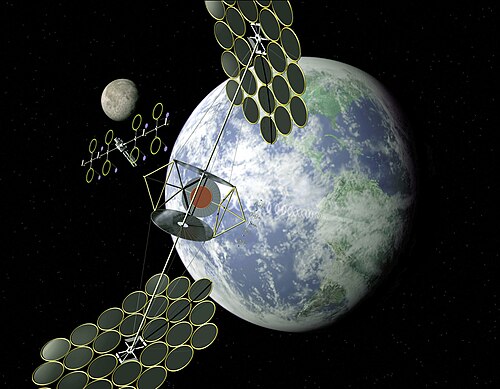
The Caltech Space Solar Power Project (SSPP), founded in 2011 and based in Pasadena, California, is focused on developing technology for the collection of solar power in space and its wireless transmission to Earth. The project aims to provide a continuous, weather-independent power source accessible globally. SSPP’s core research and development centers on overcoming the fundamental challenges of space-based solar power implementation. A key differentiator for SSPP is its approach to system design, utilizing modular, ultralight, and foldable 2D integrated elements. This architecture integrates solar power collection and radio frequency (RF) conversion into a single unit, eliminating the need for complex internal power distribution networks and reducing overall system weight. The project focuses on three core technology areas: high-efficiency photovoltaics, ultralight deployable structures, and large-scale phased array wireless power transfer. In 2023, the SSPP achieved a significant milestone by successfully demonstrating wireless power transmission from orbit. This demonstration featured a prototype that is an order of magnitude lighter than previous designs, showcasing the viability of their integrated approach. The system demonstrated the ability to collect sunlight, convert it to RF power, and wirelessly transmit that power in a steerable beam. SSPP’s research positions it as a key innovator in the emerging space-based solar power market, offering a potentially scalable and resilient solution to terrestrial power needs. The emphasis on lightweight, modular design and integrated functionality represents a unique value proposition within the field.

Pasadena, United States · Est. 2011
Power Systems

Electric Sky

Redmond, United States commercial

Electric Sky, founded in 2019 and based in Redmond, Washington, is a technology company focused on the development of wireless power beaming solutions. The company’s core business centers around enabling persistent operation of aerial vehicles – specifically drones and aircraft – through the transmission of power without physical connections. While relatively new, Electric Sky is actively pursuing both terrestrial and space-based applications of this technology. The company’s primary technological focus is on power-beaming, encompassing the development of both the transmitting and receiving systems necessary for efficient and safe wireless power transfer. This includes advancements in power systems engineering and potentially novel propulsion methods leveraging beamed energy. A key area of investigation appears to be in-orbit power transfer, suggesting Electric Sky envisions applications beyond Earth’s atmosphere, potentially supporting satellite operations or future space infrastructure. Currently available information does not detail specific missions, achievements, or established customer relationships. However, the focus on in-orbit power transfer indicates a long-term vision extending beyond immediate drone applications. Electric Sky’s unique value proposition lies in addressing the limitations of current power sources for unmanned aerial vehicles and space assets – namely, finite battery life and the logistical challenges of refueling or replacing power sources. By developing viable wireless power beaming technology, the company aims to unlock truly persistent operation for these platforms, potentially revolutionizing industries reliant on aerial and space-based capabilities.

Redmond, United States · Est. 2019
Power Systems

EnerSys ABSL

Reading, United States commercial

EnerSys ABSL, founded in 2000, is a global leader in stored energy solutions, specializing in the design and manufacture of innovative batteries, chargers, and power systems. The company positions itself as a provider of mission-critical power solutions, with a particular emphasis on lithium-ion batteries for space applications, claiming to be the world’s leading provider in this sector. EnerSys serves a diverse range of industries including aerospace and defense, communications networks, logistics, industrial power, transportation, and data centers. EnerSys’ portfolio includes established brands such as Alpha®, Bren-Tronics®, NexSys®, Odyssey®, and Rebel™, offering a comprehensive range of products from high-performance batteries to integrated power systems. They offer tailored solutions and emphasize compliance with customer requirements. Beyond batteries, EnerSys provides monitoring and fleet management services, and supports the deployment of 5G networks with reliable power systems designed for continuous operation, even during power outages. Recent news highlights consistent financial performance and a commitment to sustainability, including reporting on energy savings and adherence to European Sustainability Reporting Standards. Case studies demonstrate successful implementations of their battery technology in applications like lift truck fleets, showcasing immediate ROI and reliable performance. EnerSys aims to exceed customer expectations through world-class products, services, and a diverse global team.

Reading, United States · Est. 2000
Satellite Manufacturing

General Atomics EMS

San Diego, United States commercial

General Atomics Electromagnetic Systems (GA-EMS) is a diversified technology company applying decades of research and development expertise to deliver advanced systems for defense, security, and commercial applications. Founded in 1955 and based in San Diego, California, GA-EMS operates across a broad spectrum of capabilities, including satellite manufacturing as part of its Space Systems portfolio. Beyond space, the company focuses on areas such as aircraft launch and recovery systems, power and energy solutions – notably batteries and advanced capacitor technology – and missile defense. A significant portion of GA-EMS’ work centers around specialized technologies. This includes nuclear technologies and materials, precision manufacturing, and detection & imaging products. They also offer solutions for environmentally critical areas like demilitarization and hazardous waste destruction, utilizing electrostatic separation technologies through their Gulftronic product line. The company’s capabilities extend to the design and production of motors, generators, and drives, alongside radiation monitoring systems. While specific mission details and customer lists are not publicly emphasized, GA-EMS positions itself as a provider of multi-mission systems supporting national security interests and critical commercial enterprises globally. Their broad technological base suggests a role as a key supplier of specialized components and integrated systems to both government and private sector clients. GA-EMS differentiates itself through its long history of innovation and its ability to integrate diverse technologies – from nuclear materials to electromagnetic systems – into complex solutions. This allows them to address challenging requirements in demanding environments, offering a unique value proposition for customers seeking highly specialized and reliable technologies.

San Diego, United States · Est. 1955
Earth Observation Verified

Kayrros

Paris, France commercial

Kayrros is a Paris-based satellite-derived environmental intelligence company founded in 2016 by Antoine Rostand (formerly McKinsey energy practice) and Abhishek Bali, delivering quantitative monitoring of industrial assets and emissions for commodity trading desks, energy hedge funds, regulators, and policy institutions — translating raw satellite data into financial-grade intelligence products. The company's signature application is oil storage monitoring: Kayrros uses synthetic aperture radar (SAR) and optical satellite imagery to measure floating-roof crude oil storage tank levels across 100,000+ tanks globally by analyzing the geometric shadow cast by the floating roof plate inside each tank shell. The roof angle correlates directly with fill level, enabling daily inventory updates for tanks at OPEC+ facilities, US Gulf Coast terminals, Chinese strategic petroleum reserves, and Rotterdam/Fujairah hubs — with 1-3% accuracy and no field access required. Commodity trading firms use this data to front-run IEA/EIA oil inventory releases and detect demand signals before official government data is published. Methane emissions attribution is Kayrros's second major vertical: using TROPOMI (ESA's Sentinel-5P) and high-resolution satellite spectrometers, the company identifies super-emitter events from oil and gas upstream operations — pipeline leaks, flaring malfunctions, separator dumps — and attributes them to specific facility operators. Kayrros published analysis demonstrating that actual Permian Basin methane emissions exceeded EPA estimates by approximately 60%, contributing to pressure for stricter U.S. methane regulation under the IRA's methane fee provisions. Additional products include LNG terminal throughput tracking (thermal IR + AIS vessel detection), European gas storage fill monitoring during energy crises, crop burn detection for agricultural commodity forecasting, and deforestation carbon flux for nature-based solution integrity verification. Clients include Goldman Sachs commodity desk, Vitol, Gunvor, the International Energy Agency, and European Commission energy policy directorate. Competitors include Ursa Space Systems (US oil storage), RS Metrics, and SpaceKnow (satellite analytics). Kayrros's edge is its financial-analyst-facing product design versus raw satellite data vendors.

Paris, France · Est. 2016

Explore all 40 power systems organisations

Filter by country, type or status, sort by market value or founding year. The view is saved in the address bar.

Skip to results

Loading companies…

Loading companies…