INVAP
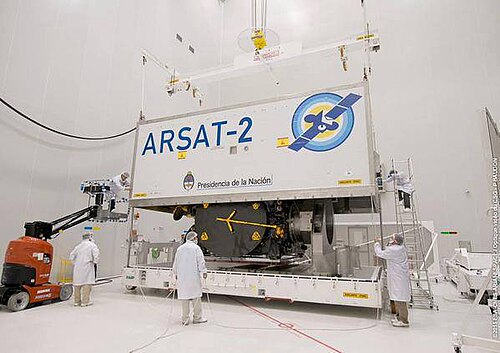
INVAP (Investigación Aplicada) is an Argentine state-owned high-technology company headquartered in San Carlos de Bariloche, Patagonia, and owned by the Río Negro provincial government — one of Latin America's most capable aerospace and nuclear technology organizations, with a satellite manufacturing program recognized internationally for delivering complex space systems to both domestic and export customers. Founded in 1976 as a spin-off of the Argentine Atomic Energy Commission (CNEA), INVAP's original mandate was to design and manufacture research nuclear reactors. The company has since exported research reactors to Algeria, Egypt, Australia, Peru, and Saudi Arabia — a unique commercial achievement for a developing-nation nuclear technology exporter. This engineering culture of complex system integration transitioned naturally into satellite development as Argentina's space program expanded under CONAE (Comisión Nacional de Actividades Espaciales). In the satellite domain, INVAP has manufactured SAOCOM 1A and 1B — twin L-band synthetic aperture radar (SAR) Earth observation satellites launched in 2018 and 2020 aboard SpaceX Falcon 9 rockets. SAOCOM is operated by CONAE and forms part of a bilateral Italian-Argentine SIASGE constellation with the Italian COSMO-SkyMed radar satellites, providing complementary L-band and X-band SAR coverage for flood mapping, soil moisture measurement, agricultural monitoring, and emergency response. L-band SAR penetrates cloud cover and vegetation canopy, making SAOCOM particularly valuable for tropical and polar-region land monitoring. INVAP also manufactured the SAC-D/Aquarius satellite (launched 2011, a joint NASA-CONAE mission) that carried NASA's Aquarius instrument for global ocean salinity mapping alongside CONAE instruments for thermal radiation and microwave imaging. Additionally, INVAP built the SAC-A and SAC-C Earth observation satellites, establishing Argentina's continuity as one of the few developing nations with indigenous satellite manufacturing capability spanning optical, radar, and scientific payload platforms.