Category

Satellite Subsystems Companies

84 organizations27 countries3 listed

84 organizations working in satellite subsystems across the global space industry.

Names to know in satellite subsystems

Rank all by market value →
Defense & Security Verified BA.L

BAE Systems

Farnborough, United Kingdom commercial

BAE Systems is a British multinational defense company founded in 1999 and headquartered in Farnborough, United Kingdom. While broadly categorized within the defense and electronics industries, the company’s involvement in space is a significant, though currently undetailed, component of its overall portfolio. Given its core competencies, BAE Systems likely contributes to space through the development and provision of critical technologies and systems for satellite communications, surveillance, and security applications. Due to limited publicly available information regarding specific space-related products and services, a detailed assessment of their key technologies is challenging. However, leveraging their expertise in electronics and defense, it is reasonable to infer capabilities in areas such as advanced sensors, secure communications payloads, and potentially, components for satellite platforms themselves. Their focus would likely be on providing robust and resilient space-based solutions for governmental and defense applications. Currently, specific notable achievements, missions, or a detailed customer list within the space sector are not publicly available. This suggests a potential focus on providing components or services *to* other space companies or governmental agencies, rather than operating as a direct-to-consumer or independent launch/satellite operator. BAE Systems’ unique value proposition within the space industry likely rests on its established reputation for delivering highly reliable and secure technology for demanding environments. This positions them as a trusted partner for organizations requiring mission-critical space-based assets, particularly within the defense and national security sectors. Further information is needed to fully understand the scope and scale of their space-related activities.

Farnborough, United Kingdom · Est. 1999 $76.6B
Components Verified MOG-A

Moog Inc

East Aurora, United States commercial

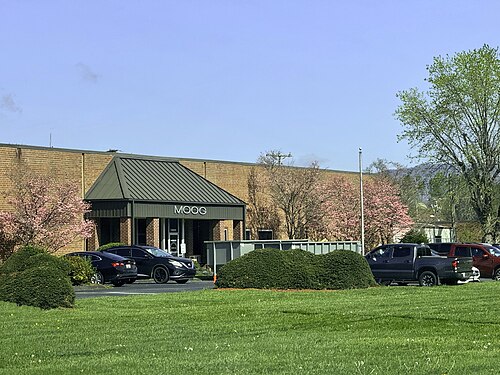
Moog Space, founded in 1951 and headquartered in East Aurora, New York, is a key provider of solutions for the space industry, specializing in the design, development, and manufacture of critical systems and components. While initially focused on propulsion, the company has expanded its portfolio to encompass a broad range of technologies including spacecraft avionics, guidance systems, fluid controls, structures, and environmental control & life support systems (ECLSS). Moog serves both commercial and government customers, supporting missions ranging from launch vehicles and satellite buses to human spaceflight initiatives, including contributions to NASA’s Space Launch System and future lunar missions. A core strength lies in Moog’s advanced avionics systems, offering integrated Command and Data Handling (C&DH) and Electrical Power Systems (EPS). The company is actively investing in next-generation technologies such as radiation-hardened computing – exemplified by the Cascade Single Board Computer featuring a RISC-V processor – and additive manufacturing to enhance capabilities and meet evolving mission demands. Beyond electronics, Moog provides mechanical solutions including hexapods for precision payload positioning, spacecraft mechanisms, shock and vibration isolation systems, and structural adapters for various satellite sizes. This diverse offering positions Moog Space as a comprehensive partner for organizations operating across the entire space ecosystem.

East Aurora, United States · Est. 1951 $11.5B
Spacecraft Components Verified TDY

Teledyne Technologies Space

Thousand Oaks, United States commercial

Teledyne Technologies Space, founded in 1999 and based in Thousand Oaks, California, focuses on the design and manufacture of advanced space-based sensors and imaging systems. The company specializes in critical components for spacecraft, with a core competency in infrared detectors utilized for both astronomical observation and Earth science applications. Additionally, Teledyne develops and provides digital imaging sensors, suggesting a broad capability in capturing and processing visual data from space. A key differentiator for Teledyne Technologies Space is its established role as a major instrument supplier to NASA. This indicates a high level of technical expertise, reliability, and adherence to stringent aerospace standards. While specific mission details are not publicly available, consistent supply to a demanding organization like NASA suggests involvement in a variety of significant space exploration and scientific endeavors. Given the limited publicly available information, it’s difficult to fully assess Teledyne’s market position beyond its established relationship with NASA. However, specialization in high-performance sensors and imaging – crucial for modern satellite technology and scientific research – positions the company within a growing and competitive sector. Their focus on infrared technology, in particular, suggests a potential niche within the broader space component market, catering to applications requiring sensitive thermal imaging capabilities.

Thousand Oaks, United States · Est. 1999 $27.7B
Satellite Manufacturing Verified

TUSAS Space Systems

Ankara, Turkey commercial

TUSAS Space Systems, established in 1984 and based in Ankara, Turkey, is a satellite manufacturing company focused on the development and production of satellites for domestic and potentially international applications. As a key component of Turkish Aerospace Industries (TAI), the company contributes to Turkey’s growing capabilities in space technology and aims to reduce reliance on foreign suppliers in this critical sector. Currently, publicly available information regarding TUSAS Space Systems is limited, but the core business is confirmed as satellite development. Specific details on the types of satellites manufactured (e.g., Earth observation, communications, military) or the technologies employed are not readily accessible. However, given the company’s position within TAI, it is reasonable to infer involvement in advanced engineering, systems integration, and potentially the development of key satellite subsystems. While specific mission details and customer lists are not publicly available, TUSAS Space Systems is demonstrably focused on serving the needs of the Turkish government and defense sector through indigenous satellite production. This focus on national capability building represents a significant aspect of the company’s value proposition. Given the limited public information, assessing TUSAS Space Systems’ precise market position is challenging. However, as a national champion in satellite manufacturing within Turkey, the company is uniquely positioned to capture a significant share of domestic demand and potentially expand into regional export markets as its capabilities mature.

Ankara, Turkey · Est. 1984
Satellite Subsystems Verified

Kongsberg Defence & Aerospace

Kongsberg, Norway commercial

Kongsberg Defence & Aerospace (KDA) is the defense and aerospace division of Kongsberg Gruppen, Norway's largest defense and technology conglomerate founded in 1814 and headquartered in Kongsberg, Norway. KDA develops and manufactures a range of space technology products as well as defense missiles, military electronics, and weapons systems for NATO customers. In the space sector, KDA supplies satellite structural components, mechanisms, and spacecraft subsystems to European satellite prime contractors and space agencies, representing Norway's primary industrial contribution to commercial and scientific spacecraft. KDA's space product portfolio includes solar array deployment mechanisms (SADMs) — the hinge and damper assemblies that unfold a satellite's solar panels after launch, a critical spacecraft mechanism where deployment failure can be mission-ending. The company also manufactures composite antenna structures and reflector support structures for communications satellites, carbon fiber reinforced spacecraft structural panels and struts, and thermal hardware including heat pipes and radiator panels. These products are delivered to Airbus Defence and Space, Thales Alenia Space, and OHB for integration into GEO communications satellites, ESA science missions, and Earth observation spacecraft. KDA's space work benefits from Norway's status as an ESA member state contributing approximately €80 million per year to ESA programmes, with industrial return policies ensuring Norwegian companies like KDA receive a proportional share of ESA contracts. KDA participates in ESA's European Data Relay System, Sentinel Earth observation constellation component supply, and various ESA science mission instrument support structures. Beyond space, KDA's defense products — including the Naval Strike Missile (NSM), the Joint Strike Missile (JSM) qualified for the F-35, and the NASAMS ground-based air defense system (used by 15+ nations including Ukraine) — generate the revenue and engineering capability base that supports KDA's space activities. KDA employs approximately 3,000 engineers across Norway, competing with Airbus Defence and Space, Beyond Gravity (formerly RUAG Space), and Terma in the European space mechanisms and structures supply chain.

Kongsberg, Norway · Est. 1814
Satellite Communications

Tekever

Lisbon, Portugal commercial

Tekever is a Portuguese aerospace, defence and technology company headquartered in the Lisbon area, founded in 2001 by former students of Portugal's Instituto Superior Técnico, with additional offices in the UK, France, the United States and Estonia and roughly 1,200 employees group-wide. The company is best known for its AR3, AR4, AR5 and ARX series of maritime and land surveillance drones, but it also runs a dedicated space-technology business developing inter-satellite and satellite-to-ground communications and radar hardware. Its GAMALINK product is a software-defined radio for inter-satellite links supporting point-to-point and multi-node packet communications with ranging and synchronization; Tekever-built GAMALINK inter-satellite-link terminals flew on the European Space Agency's HERA asteroid mission and PROBA-3 formation-flying mission, both launched in 2024, supporting their close-formation and rendezvous operations. The company also develops GAMASAR, a cloud-penetrating, light-independent synthetic-aperture radar technology intended for Earth observation in security, resource-management and environmental-monitoring applications. Tekever is privately held and primarily funded through drone sales to defence and maritime-security customers, with its space work carried out substantially as ESA-funded technology-development contracts rather than as an independent commercial satellite business. It is one of a small number of Portuguese companies with hardware that has actually flown on interplanetary and formation-flying ESA missions.

Lisbon, Portugal · Est. 2001
Radio Frequency Verified

Acorde Technologies

Santander, Spain commercial

Acorde Technologies is a Spanish electronics manufacturer founded in 1999 and headquartered in Santander, Cantabria, that designs, develops and manufactures radio-frequency (RF) and microwave subsystems for space and defence applications, marketed under the tagline "Space & Defence RF Experts." The company's product portfolio, organised under mythologically themed brand names, spans the core RF building blocks used in satellite communications payloads and ground terminals: Zeus (solid-state power boosters, SSPBs), Hercules (solid-state power amplifiers, SSPAs), Hermes (low-noise block downconverters, LNBs), Horus (low-noise amplifiers, LNAs), Eos (block upconverters, BUCs), Nyx (block downconverters, BDCs) and Jano (transceivers, TRX), covering X-band and Ka-band frequencies used by telecommunications, Earth observation and navigation satellites. Acorde positions its hardware as flight-proven, citing users across more than 20 countries and all six continents as well as payloads operating beyond Earth, and reports more than €10 million in annual revenue with a workforce of over 55 people. The company holds Spain's "PYME Innovadora" (Innovative SME) designation, ISO 9001 quality certification and AQAP 2110 NATO defence-quality standard compliance, and has completed more than 100 research and development projects, reflecting its role as a specialist RF component supplier rather than a prime satellite or launch-vehicle manufacturer. Acorde supplies RF subsystems to satellite manufacturers, defence primes and ground-segment integrators rather than operating its own satellites or launch systems; its role in the space value chain is as a component-level specialist embedded in larger spacecraft and ground-terminal programmes across the European and international space and defence industry.

Santander, Spain · Est. 1999
Navigation Acquired

Safran Navigation & Timing

Besancon, France commercial

Safran Navigation & Timing, headquartered in Besançon, France with major operations in Rochester, New York, is a supplier of resilient Positioning, Navigation, and Timing (PNT) solutions. The company, formerly known as Orolia and Spectracom, specializes in the design, development, and production of high-performance atomic clocks and associated technologies. Safran provides precise timing, synchronization, simulation, and inertial solutions for both commercial and defense industries, ensuring time and location integrity worldwide. A core focus for Safran is “Resilient PNT,” which addresses vulnerabilities in traditional GNSS (like GPS) by diversifying signal sources and implementing robust backup systems. Their product portfolio includes solutions like the TimeLynx™ system, offering nanosecond-level accuracy for data centers, and the MIRA Rubidium atomic frequency clock, known for its high accuracy and stability. They also offer simulation capabilities, such as the Skydel NAVWAR system, capable of high-iteration rates for multi-constellation, multi-frequency signals. Safran’s expertise extends to a wide range of industries requiring precise and reliable PNT data. The company emphasizes solutions tailored to Size, Weight, and Power (SWaP) constraints, and provides detailed specifications for performance metrics like accuracy, stability, and environmental resilience. Through decades of experience and a diverse technology portfolio, Safran Navigation & Timing positions itself as a critical provider of assured PNT, safeguarding critical operations and mitigating the impacts of GNSS vulnerabilities for its customers.

Besancon, France
Satellite Communications Verified

Advantech Wireless

Montreal, Canada commercial

Advantech Wireless is a Canadian designer and manufacturer specializing in advanced satellite communication solutions and terrestrial wireless technologies. The company focuses on providing high-performance equipment, including GaN-based solid state power amplifiers (SSPAs), block upconverters (BUCs), and frequency converters, catering to a diverse range of applications. Advantech Wireless distinguishes itself through its utilization of Gallium Nitride (GaN) technology, which enables higher power, increased bandwidth, and reduced operating costs in its amplifier products. Their product portfolio extends to complete SATCOM terminal solutions, such as the Engage Class 2.4-meter Flyaway terminal, alongside a range of fixed and deployable antennas and related controllers. Advantech Wireless serves multiple sectors, including commercial broadband, broadcasting (with solutions ready for Ultra HD 4K/8K), maritime, direct-to-home satellite television and internet, and critical infrastructure/government applications. Notably, Advantech Wireless is actively involved in the space sector, participating in initiatives with NASA’s Artemis lunar program. The company emphasizes innovation through dedicated research and development, aiming to deliver custom solutions with a commitment to industry leadership in design and reliability. Their SSPAs are marketed as providing the highest output power currently available on the market.

Montreal, Canada · Est. 1988

Explore all 84 satellite subsystems organisations

Filter by country, type or status, sort by market value or founding year. The view is saved in the address bar.

Skip to results

Loading companies…

Loading companies…