Category

Satellites Companies

61 organizations25 countries1 listed

61 organizations working in satellites across the global space industry.

Names to know in satellites

Rank all by market value →
Defense & Security Verified GD

General Dynamics

Reston, United States commercial

General Dynamics is a global aerospace and defense company with a history dating back to 1899. The company operates across a broad portfolio encompassing business aviation, land and sea-based combat vehicles and weapons systems, command, control, communications, computers, intelligence, surveillance, and reconnaissance (C4ISR) solutions, and shipbuilding. These capabilities are delivered through four primary business groups: Aerospace, Marine Systems, Combat Systems, and Technologies. Key to General Dynamics’ offerings are technologically advanced products like Gulfstream business jets and nuclear-powered submarines, indicating a focus on complex systems integration and engineering. The company highlights its commitment to innovation across all sectors, suggesting ongoing investment in research and development to maintain a competitive edge. While specific customer details are not publicly available from the provided information, General Dynamics positions itself as a provider of critical solutions for safety and security on a global scale. The company emphasizes responsible and ethical practices, alongside a commitment to sustainability and community support, indicating a focus on long-term value creation beyond purely technological advancement.

Reston, United States · Est. 1899 $96.5B
Space Agencies Verified

ACE - Chilean Space Agency

Santiago, Chile government

The Agencia Chilena del Espacio (ACE, Chilean Space Agency) is Chile's national space coordination body established in 2001 under what is now the Ministry of Science, Technology, Knowledge and Innovation (MINCIENCIA), responsible for regulating and promoting Chile's space activities, facilitating international space cooperation, and positioning Chile within the global space economy — leveraging the country's remarkable natural advantage for ground-based astronomy and satellite ground station operations. Chile's primary space asset is its geography: the Atacama Desert in northern Chile is the world's driest non-polar desert and one of the highest-altitude inhabited plateaus on Earth, creating exceptional atmospheric conditions — minimal humidity, minimal light pollution, and exceptional transparency at millimeter/submillimeter and optical wavelengths — that make Chilean territory host to the densest concentration of cutting-edge astronomical observatories anywhere on the planet. The Atacama Large Millimeter/submillimeter Array (ALMA, operational since 2013) deploys 66 high-precision antennas on the 5,000m Chajnantor plateau. The European Southern Observatory's VLT (Very Large Telescope, four 8.2m mirrors at Paranal) is the world's most productive ground-based optical observatory by publications. The Extremely Large Telescope (ELT, 39.3m primary mirror) is under construction at Cerro Armazones adjacent to Paranal, expected first light approximately 2028. The Vera C. Rubin Observatory (formerly LSST) at Cerro Pachón began commissioning in 2024-2025 and will conduct the world's deepest wide-field photographic survey of the southern sky over its 10-year mission. For satellite operations, Chile's clear, low-humidity atmosphere makes it ideal for satellite ground stations: ESA, CONAE (Argentina), and commercial operators including Inmarsat have established ground stations on Chilean territory. ACE coordinates Chile's ITU spectrum registrations, Chilean university CubeSat programs, and participation in COPUOS (UN Committee on Peaceful Uses of Outer Space). The SUCHAI CubeSat program at Universidad de Chile (SUCHAI-1 launched 2017) represents Chile's domestic satellite manufacturing capability. Chile increasingly attracts data mining applications for mineral exploration EO — the Atacama's lithium brine deposits, copper mines, and mining company satellites represent a growing domestic satellite data market. Argentina's CONAE (SAOCOM SAR satellite operator) represents a more advanced Latin American peer space agency.

Santiago, Chile · Est. 2001

Space Agencies Verified

Paraguayan Space Agency

Asuncion, Paraguay government

The Paraguayan Space Agency (AEP), established in 2014 and based in Asuncion, coordinates the nation’s developing space activities and the application of satellite technology for national development. The agency focuses on projects such as the GuaraniSat-1 and GuaraniSat-2 satellite programs, representing significant milestones for Paraguay’s entry into space capabilities. AEP’s activities encompass project management, and educational initiatives, including the GEOLab, suggesting a commitment to fostering expertise in space-related fields. Key areas of focus include satellite development and potential applications for socio-economic development, as evidenced by collaborations with institutions like JICA and SENAVE. The agency also prioritizes capacity building through training programs in areas such as space studies and satellite image processing, demonstrated by partnerships with FAP-OEI and AEM. AEP demonstrates a commitment to transparency through publicly available information regarding its organizational structure, finances, personnel, and project details, adhering to legal frameworks like Ley 5189 and Ley 5282. The agency actively engages in outreach and public awareness initiatives, including participation in events like World Space Week and maintaining a presence on social media platforms like Facebook and Instagram. While specific details regarding deployed services or commercial contracts are not readily available, the AEP is positioned as the central coordinating body for Paraguay’s space program, driving national capacity in satellite technology and related fields.

Asuncion, Paraguay · Est. 2014
Space Agencies Verified

Venezuelan Space Agency

Caracas, Venezuela government

The Agencia Bolivariana para Actividades Espaciales (ABAE), founded in 2008 and based in Caracas, Venezuela, is the national space agency responsible for executing Venezuela’s space policy and utilizing outer space for peaceful purposes. ABAE manages the nation’s space program, focusing on the development and operation of satellite infrastructure. Currently, the agency’s activities center around the VRSS series of satellites – specifically VRSS-1 (Miranda) and VRSS-2 (Sucre) – alongside the VENESAT-1 / Simón Bolívar satellite. These satellites are utilized for remote sensing applications, including environmental monitoring, and telecommunications services. ABAE also offers services related to satellite remote sensing data. The agency engages in both bilateral and multilateral international cooperation within the space sector, and supports research, innovation, and educational initiatives related to space technology. A key component of their work involves a dedicated center for documentation and a dictionary of space terminology, indicating a commitment to knowledge dissemination and technical expertise. While specific details regarding customer base are not publicly available, ABAE positions itself as a provider of space-based services and data to support national objectives in areas like environmental management and communications infrastructure.

Caracas, Venezuela · Est. 2008
Earth Observation Verified

Albedo

Denver, United States commercial

Albedo builds satellite buses for very low Earth orbit (VLEO, 250–450 km). It set out to operate its own 10-centimetre-resolution imaging constellation, but on 1 October 2025 it dropped the commercial imagery business to manufacture VLEO buses for other operators; its first satellite, Clarity-1 (launched March 2025), lost contact about nine months after launch and was not recovered. The Denver-based company's unique satellite bus platform enables operation in the denser atmosphere of VLEO. Clarity-1, the first satellite of Albedo's constellation, successfully launched on March 15, 2025 aboard SpaceX Transporter-13. The 530-kg satellite measures approximately 3 meters tall and 1 meter wide, using ion thrusters to continuously counteract atmospheric drag significantly stronger in VLEO. In June 2024, Albedo signed the launch contract with SpaceX. The satellites collect 10-centimeter optical imagery and 2-meter thermal longwave infrared imagery, far exceeding the 30-centimeter resolution offered by leading optical imagery providers. This resolution enables identification of objects as small as 10 centimeters, opening new applications in defense, infrastructure monitoring, and commercial analytics. In January 2024, Albedo raised $35 million in Series A-1 funding led by Standard Investments, bringing total funding to $97 million. Booz Allen Hamilton's venture arm made a strategic investment in the company. The National Reconnaissance Office awarded Albedo a contract for VLEO imaging capabilities, while the U.S. Air Force awarded a separate contract worth up to $12 million. Albedo plans an initial six-satellite constellation providing daily revisits, ultimately expanding to 24 satellites for five daily passes over any location.

Denver, United States · Est. 2020
Earth Observation Acquired

BlackBridge

Berlin, Germany commercial

BlackBridge, founded in 2004 and based in Berlin, Germany, is a company historically focused on Earth observation and, more recently, specialized in agricultural remote sensing. Originally established as the operator of the RapidEye satellite constellation, BlackBridge provided high-resolution, daily imagery of the Earth’s surface. This capability positioned the company as a German pioneer in Earth observation data provision. In 2015, BlackBridge was acquired by Planet Labs, integrating its assets and expertise into Planet’s larger constellation and data analytics platform. While operating as a distinct entity for a period, BlackBridge’s core function now centers on contributing to Planet’s mission of providing daily, global satellite imagery. This imagery is utilized for a broad range of applications, with a particular emphasis on supporting data-driven decision-making in the agricultural sector. Currently, BlackBridge’s legacy contributes to Planet’s ability to offer a multidimensional view of the changing planet, enabling insights into crop health, land use, and environmental monitoring. The integration has expanded the scope and frequency of data available to customers, leveraging BlackBridge’s historical experience in high-resolution imaging. Though no longer an independent operator, BlackBridge’s contribution remains significant within the Planet ecosystem, bolstering the company’s position as a leading provider of daily satellite imagery and Earth data analytics.

Berlin, Germany · Est. 2004
Space Agencies Verified

Agência Espacial Brasileira

Brasília, Brazil government

The Agência Espacial Brasileira (AEB), founded in 1994 and based in Brasilia, Brazil, is the national space agency responsible for the development and coordination of Brazil’s national space program. Its core functions encompass space research, satellite development, and operation of the Alcântara Launch Center, a strategically located spaceport. AEB facilitates both governmental and commercial space activities within Brazil. A key focus of AEB’s work is the collaborative development of the China-Brazil Earth Resources Satellite (CBERS) program with China, providing Earth observation data for environmental monitoring and resource management. More recently, AEB has spearheaded the development and 2021 launch of Amazonia-1, a domestically designed and built Earth observation satellite, marking a significant advancement in Brazil’s independent space capabilities. AEB actively fosters innovation through support of scientific competitions like the NASA Space Apps Hackathon and the GLOBE program, encouraging participation from Brazilian teams. The agency also supports the commercialization of space technologies, as demonstrated by its collaboration with Innospace for testing technological orders on the Hanbit-Nano rocket and preparing for commercial launches. Through these initiatives and its ongoing programs, AEB positions itself as a central authority for space activities in Brazil, driving technological advancement, supporting scientific research, and promoting the nation’s role in the global space community.

Brasília, Brazil · Est. 1994
Satellite Manufacturing Verified

Airbus OneWeb Satellites

Merritt Island, United States commercial

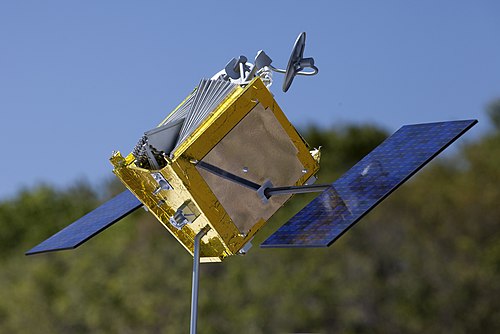
Airbus OneWeb Satellites is a joint venture established in 2016, focused on the manufacturing of satellites. Located in Merritt Island, Florida, the company specializes in the mass production of satellites specifically for the OneWeb constellation. As a collaboration leveraging the extensive aerospace expertise of Airbus, a leading European aeronautics and space company, Airbus OneWeb Satellites contributes to the deployment of a large-scale Low Earth Orbit (LEO) satellite network. The company’s core capability lies in efficient, high-volume satellite production, a critical element for rapidly deploying and scaling the OneWeb constellation. This positions Airbus OneWeb Satellites as a key player in the growing LEO satellite market, driven by demand for global broadband connectivity. While specific technological details beyond manufacturing capabilities aren’t detailed, the venture benefits from Airbus’s over 50 years of experience in aerospace engineering and innovation. Currently, the primary customer and focus of production is the OneWeb constellation, indicating a dedicated manufacturing partnership. Airbus’ broader portfolio includes commercial aircraft, helicopters, defense systems, and other space technologies, suggesting a strong foundation of resources and technical expertise supporting the satellite manufacturing operation. Airbus OneWeb Satellites differentiates itself through its focus on mass production and its backing by a major aerospace player, Airbus. This allows for economies of scale and leverages established quality control and engineering processes, crucial for the reliable deployment of a large satellite network.

Merritt Island, United States · Est. 2016
Satellite Manufacturing

Apex

Los Angeles, United States commercial

Apex is a satellite manufacturing company producing standardized small satellite buses at unprecedented speed for commercial and government customers. Based in Los Angeles, Apex addresses the satellite bus bottleneck with productized platforms enabling rapid delivery of mission-ready spacecraft. In March 2024, Apex demonstrated its technology with the successful launch of Aries SN1 on SpaceX Transporter-10, representing the fastest build of any production small satellite bus in the industry. The GEO Aries platform extended capabilities to geostationary orbit, building on the LEO Aries success. The company has sold nearly a dozen Aries spacecraft to customers. Apex develops three satellite bus product lines: Aries (100 kg class for reliability and rapid production), Nova (250 kg ESPA Grande class for demanding LEO missions), and Comet (supporting payloads up to 500 kg). After customers finalize configuration, Apex retrieves completed buses from inventory and delivers finished satellites within six months versus the industry standard 12-24 months. In June 2024, Apex raised $95 million in Series B funding to ramp production for national security customers. The company later completed a $200 million Series C round, scaling production from 12 to 18 spacecraft per month with peak capacity exceeding 200 buses annually. Apex won a $45.9 million Space Force contract, their largest government deal. Anduril Industries selected Apex to provide satellite buses for military space missions. Apex continues expanding high-rate manufacturing capabilities for the growing proliferated satellite market.

Los Angeles, United States · Est. 2022

Explore all 61 satellites organisations

Filter by country, type or status, sort by market value or founding year. The view is saved in the address bar.

Skip to results

Loading companies…

Loading companies…