Category

Space Situational Awareness Companies

40 organizations15 countries

40 organizations working in space situational awareness across the global space industry.

Names to know in space situational awareness

Rank all by market value →
Space Situational Awareness Verified

CelesTrak

Wailuku, United States academic

CelesTrak, founded in 1985 and based in Wailuku, United States, is a provider of space data services focused on space-traffic-management. The company operates as a free service, currently maintained by Dr. T.S. Kelso, and specializes in collecting, processing, and disseminating orbital data for a wide range of space objects. This data is critical for tracking satellites, debris, and other objects in Earth orbit. While detailed information regarding specific technologies is limited in publicly available sources, CelesTrak’s core capability lies in its ability to compile and maintain a frequently updated catalog of Two-Line Element (TLE) sets. These TLEs are a standard format used globally for predicting the positions of objects in orbit, essential for collision avoidance and satellite operations. The longevity of the service, spanning nearly four decades, suggests a robust and reliable data processing and dissemination infrastructure. Currently, information regarding specific missions or customers is not publicly available. However, the widespread use of TLE data within the space industry indicates CelesTrak’s data is likely utilized by a broad spectrum of organizations, including satellite operators, government agencies, and researchers. CelesTrak’s unique value proposition lies in its provision of freely available, frequently updated orbital data. In a growing space environment with increasing congestion, access to accurate tracking information is paramount. By offering this service without cost, CelesTrak contributes significantly to space situational awareness and the safe operation of satellites.


Wailuku, United States · Est. 1985
Propulsion Verified

MIT

Cambridge, United States commercial

The Massachusetts Institute of Technology's Department of Aeronautics and Astronautics (MIT AeroAstro) is consistently ranked among the top aerospace engineering programs globally, founded in 1914 in Cambridge, Massachusetts, conducting pioneering research in spacecraft systems design, advanced propulsion, autonomous vehicles, and space exploration technologies across undergraduate, graduate, and doctoral programs. MIT AeroAstro's most historically significant contribution to space exploration is the Apollo Guidance Computer software: Margaret Hamilton led the MIT Instrumentation Laboratory programming team that wrote the flight software for the Apollo spacecraft, developing real-time operating system priority-interrupt scheduling concepts that enabled the computer to manage multiple concurrent tasks during the lunar descent — innovations that contributed foundationally to modern software engineering. The MIT Instrumentation Laboratory (now Draper) also designed the Apollo inertial measurement unit and guidance algorithms that guided astronauts to and from the Moon. Modern research spans multiple flagship programs: the MIT Space Propulsion Laboratory investigates Hall-effect thrusters, ion engines, and alternative launch propulsion; the Humans and Automation Laboratory studies human-robot teaming for planetary exploration; and the Space Systems Laboratory develops CubeSat and microsatellite technologies. The REXIS (Regolith X-ray Imaging Spectrometer) instrument, built by MIT students, flew on NASA's OSIRIS-REx asteroid sample return mission. MIT Lincoln Laboratory — the federally funded R&D center managed by MIT — conducts space surveillance, space object tracking, and signals intelligence research under classified and unclassified defense contracts. MIT AeroAstro alumni have founded or lead major space organizations including SpaceX technical leadership, iRobot, and numerous satellite companies — maintaining a pipeline from Cambridge to the frontiers of the space industry.

Cambridge, United States · Est. 1861
Space Situational Awareness Verified

Neuraspace

Coimbra, Portugal commercial

Neuraspace, headquartered in Coimbra, Portugal and founded in 2020, is a European space traffic management (STM) company specializing in AI-powered collision risk assessment and conjunction analysis for satellite operators — providing automated, high-confidence probability-of-collision (Pc) calculations, actionable maneuver recommendations, and coordination services that help operators navigate the increasingly congested LEO orbital environment safely. Neuraspace's platform ingests tracking data from multiple sources: U.S. Space Force's 18th Space Control Squadron (18 SCS) publicly distributed Two-Line Element (TLE) sets via Space-Track.org, commercial Space Situational Awareness (SSA) data from providers including LeoLabs, ExoAnalytic, and CSpOC's high-fidelity conjunction data messages (CDMs), and sensor data from Neuraspace's own network of optical telescopes in Portugal and Chile. The multi-source data fusion approach provides more complete and accurate orbit determination than any single data source, reducing false-positive conjunction alerts that waste operators' time on unnecessary maneuvers while catching real conjunction threats that lower-fidelity TLE-based analysis would miss. Neuraspace's AI/ML models are trained on historical conjunction event data to assess probability of collision with tighter confidence intervals than traditional covariance-based methods — particularly for conjunction events involving debris objects with poorly characterized orbits, where large orbital uncertainty regions inflate apparent collision risk but AI-refined orbit solutions can reduce uncertainty. The platform automatically recommends time-optimized avoidance maneuvers (minimizing delta-v expenditure while achieving risk reduction) and generates regulatory-compliant documentation for national authorities and ITU records. Neuraspace DEF is the company's defense-sector product line, providing space situational awareness services to European military space operators and NATO space community customers who require sovereign (non-U.S.) space tracking and conjunction analysis data without dependence on U.S. Space-Track.org data feeds. The company competes with Slingshot Aerospace, COMSPOC Corporation, and AGI (now Ansys) in the commercial STM market, and benefits from Portugal's ESA member status and Atlantic coast telescope siting advantages.

Coimbra, Portugal · Est. 2020
Ground Systems Verified

Officina Stellare

Sarcedo, Italy commercial

Founded in 2009 and based in Italy, Officina Stellare designs, manufactures, and delivers integrated opto-electronic systems for the aerospace, scientific research, and defense industries. The company focuses on both space and ground segment solutions, specializing in optical ground stations and related technologies. Officina Stellare positions itself as a vertical integrator, handling in-house design, analysis, and manufacturing – including MAIT facilities – for optical payloads. Key technologies include adaptive optics systems and laser communication/Quantum Key Distribution (QKD) terminals and equipment, alongside the capability to produce fully automated telescopes up to 1.6 meters, including wide-field optical systems. The company’s products support applications in Earth Observation, Space Situational Awareness (SSA), Space Domain Awareness (SDA), and secure communication. Officina Stellare has been serving the ground segment for nearly two decades and has been involved in projects such as the Platino 3/4 Project with Leonardo and the Ylara Project. They emphasize quality, scalability, and continuous innovation through dedicated research and development. The company aims to provide cost-effective and reliable opto-mechanical systems, enabling customers to deploy space assets and infrastructure efficiently. Officina Stellare’s integrated approach and in-house capabilities differentiate it within the growing space technology market.

Sarcedo, Italy · Est. 2009
In-Space Services In development

Astroscale Israel

Tel Aviv, Israel commercial

Astroscale Israel, founded in 2019 and based in Tel Aviv, is a subsidiary of Astroscale Inc., focused on the development and provision of on-orbit services for the space industry. The company delivers solutions in three core areas: debris removal, life extension, and inspection, serving civil, defense, and commercial sectors. Astroscale is pioneering technologies for Rendezvous and Proximity Operations (RPO), demonstrated by the successful ADRAS-J mission – the world’s first attempt to safely approach and characterize existing space debris. Astroscale’s capabilities extend to advanced servicing to prolong satellite lifespan and safe deorbiting solutions aimed at mitigating the growing problem of space debris and ensuring orbital sustainability. The company has established partnerships with a diverse range of customers including JAXA, ESA, Eutelsat, OneWeb, the UK Space Agency, the United States Space Force, and CNES. Recent news highlights a $25 million Series C funding round and ongoing advancements in space monitoring capabilities. Astroscale positions itself as a leader in responsible space operations, building infrastructure to support a more sustainable, connected, and secure space environment for future generations.

Tel Aviv, Israel · Est. 2019
Space Situational Awareness Verified

Katalyst Space Technologies

Flagstaff, United States commercial

Katalyst Space Technologies is a Flagstaff, Arizona-based defense space technology company founded in 2020 developing autonomous robotic spacecraft and hosted payload systems for on-orbit servicing, space domain awareness (SDA) enhancement, and satellite life extension missions — operating at the intersection of in-space servicing technology and Space Force space domain awareness infrastructure. Katalyst's core innovation is the SIGHT (Space Integrated Ground-space Heritage Technology) sensor system — a small, modular SDA sensor package designed to be installed on existing satellites in orbit as a hosted payload, enabling the host satellite to contribute space situational awareness observations from its orbital position. The company won a Department of Defense contract to install SIGHT sensors aboard satellites operating as part of the US Space Force's National Space Test and Training Complex (NSTTC) — a distributed architecture of space-based and ground-based assets used for testing and evaluating Space Force capabilities. By hosting SDA sensors on platforms already operating in orbit, Katalyst can contribute sensing capability to the SSA network without requiring dedicated SSA satellites, leveraging existing host spacecraft infrastructure. The on-orbit servicing dimension of Katalyst's business involves autonomous docking and proximity operations spacecraft capable of approaching existing satellites to install hardware (like the SIGHT sensor packages), provide propellant transfer, inspect structural condition, or perform other maintenance functions. The autonomous navigation and rendezvous/proximity operations (RPO) technology required for servicing has direct dual-use relevance in space domain awareness — a spacecraft that can autonomously approach and characterize another satellite can also be used for close-up inspection of adversary satellites. Flagstaff, Arizona provides Katalyst with proximity to Lowell Observatory (a historic astronomical institution supporting space science collaboration), Northern Arizona University's engineering programs, and proximity to military test ranges in the Southwest. The company's DoD contract validates its technology approach in the national security space market where on-orbit servicing and SDA are both strategic priorities. Competitors in on-orbit servicing include Northrop Grumman's Mission Extension Vehicle (MEV), Astroscale's docking systems, and SpaceLogistics, while SDA sensor companies include Numerica Corporation, DigitalGlobe, and Maxar.

Flagstaff, United States · Est. 2020
Space Situational Awareness Verified

Advanced Space

Westminster, United States commercial

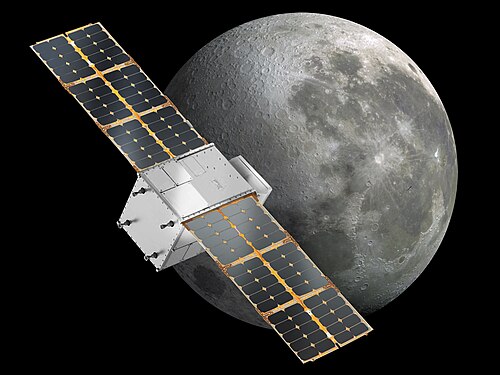
Advanced Space is a Westminster, Colorado-based spacecraft navigation, mission design, and autonomous systems company founded in 2011, specializing in advanced astrodynamics, spacecraft trajectory optimization, and on-orbit navigation services for cislunar and deep space missions — best known for developing the Cislunar Autonomous Positioning System (CAPS) and operating NASA's CAPSTONE mission, the first spacecraft to orbit the Moon in the Near Rectilinear Halo Orbit (NRHO) planned for the Gateway lunar station. NASA's CAPSTONE (Cislunar Autonomous Positioning System Technology Operations and Navigation Experiment) is a 12U CubeSat launched aboard Rocket Lab's Electron rocket in June 2022 that traveled to the Moon on a ballistic lunar transfer trajectory and entered the Near Rectilinear Halo Orbit in November 2022 — a highly elliptical orbit that passes within 1,500 km of the lunar north pole and extends 70,000 km toward Earth, chosen for the Lunar Gateway station because it provides consistent communications with Earth, good views of the south polar region, and near-constant access to sunlight. Advanced Space serves as the primary mission operator for CAPSTONE, managing navigation, command uplink, and telemetry downlink. CAPS — the eponymous technology CAPSTONE demonstrates — is an on-orbit navigation system that allows a cislunar spacecraft to determine its own position and velocity through direct communication with another spacecraft (like the Lunar Reconnaissance Orbiter, already operating at the Moon) rather than relying entirely on Earth-based tracking. This peer-to-peer navigation capability could reduce ground station tracking time demands for future lunar missions and enable greater operational autonomy. Beyond CAPSTONE, Advanced Space provides mission design, trajectory optimization, and navigation analysis services for lunar, Earth-Moon libration point, and interplanetary missions. The company has grown as the cislunar economy has expanded, supporting commercial and government customers planning missions to lunar orbit, the lunar surface, and the L1/L2 libration points. Competitors in spacecraft navigation services include KinetX Aerospace, Analytical Mechanics Associates (AMA), and Emergent Space Technologies.

Westminster, United States · Est. 2011
Defense & Security Verified

Anduril Industries

Costa Mesa, United States commercial

Anduril Industries is a defense technology company applying artificial intelligence and autonomous systems to national security challenges, expanding into the space domain with satellite systems and space surveillance capabilities. Founded by Palmer Luckey, Anduril is transforming military capabilities through software-defined solutions. In September 2024, Anduril announced plans to design, build, and launch fully integrated space systems by end of 2025, leveraging its Lattice AI platform for autonomous satellite operations. The company partnered with Apex Space to provide satellite buses for military space missions, enabling rapid payload deployment. Anduril also partnered with Impulse Space to integrate Mira orbital transfer vehicles for classified national security requirements. Space Systems Command awarded Anduril a $25 million contract in September 2024 to create a mesh network for the Space Surveillance Network, transforming the legacy communication system into a modern integrated network providing comprehensive operational awareness of the space environment. The company's Lattice platform manages data from multiple space surveillance sensors, enabling real-time threat assessment. Anduril's space payloads will provide warfighters with real-time data exploitation, autonomous satellite coordination, and resilient communication capabilities. The first 2025 launch will test multiple payloads including mission data processing and infrared imaging. In August 2024, Anduril raised $1.5 billion in Series F funding at $14 billion valuation. The company continues expanding AI-enabled defense capabilities from ground and air domains into space operations.

Costa Mesa, United States · Est. 2017
Simulation Verified

Ansys AGI

Exton, United States commercial

Ansys AGI (the Ansys subsidiary formerly known as Analytical Graphics Inc., acquired by Ansys in 2021), headquartered in Exton, Pennsylvania, develops Systems Tool Kit (STK) and Orbit Determination Tool Kit (ODTK) — the aerospace and defense industry's standard software platforms for space mission modeling, analysis, and operations, used by over 50,000 engineers across NASA, ESA, DoD, national intelligence agencies, and commercial satellite operators worldwide. STK (Systems Tool Kit, originally called Satellite Tool Kit when founded in 1989) is a physics-based modeling and simulation environment that enables engineers to model orbital mechanics with high fidelity, simulate satellite sensor coverage and ground station contact windows, perform link budget analysis for communications missions, model rendezvous and proximity operations, and conduct space situational awareness and conjunction analysis. STK's comprehensive library of propagators — SGP4/SDP4 for TLE-based orbit propagation, HPOP (High Precision Orbit Propagator) for precise numerical integration, and specialized models for different orbit regimes — makes it suitable for everything from cubesat mission planning to GPS constellation analysis to deep space trajectory design. ODTK (Orbit Determination Tool Kit) provides the companion statistical orbit determination capability: processing tracking data from radar, laser ranging, GNSS receivers, and optical observations to produce high-accuracy orbit state estimates and covariance matrices used for satellite conjunction screening, sensor tasking, and precision maneuver planning. Ansys's acquisition of AGI integrated STK's space mission modeling with Ansys's simulation portfolio spanning structural mechanics (ANSYS Mechanical), electromagnetic simulation (HFSS, Multiphysics), thermal analysis, and fluid dynamics — creating an end-to-end spacecraft design and analysis workflow where satellite orbital environment models directly feed spacecraft thermal loading, electromagnetic interference analysis, and structural stress calculations. STK is used across virtually all major U.S. and allied space programs and is effectively required knowledge for space mission analysts in the defense and civil space sectors.

Exton, United States · Est. 1989

Explore all 40 space situational awareness organisations

Filter by country, type or status, sort by market value or founding year. The view is saved in the address bar.

Skip to results

Loading companies…

Loading companies…