Category

Spacecraft Components Companies

157 organizations28 countries16 listed

157 organizations working in spacecraft components across the global space industry.

Names to know in spacecraft components

Rank all by market value →
Launch Services Verified RKLB

Rocket Lab

Long Beach, United States commercial

Rocket Lab is a leading aerospace company providing end-to-end space solutions including launch services, spacecraft manufacturing, and on-orbit operations. Founded in 2006 by Peter Beck in New Zealand and now headquartered in Long Beach, California, the company has established itself as the second most frequently launched U.S. rocket operator behind SpaceX. The company trades on NASDAQ under the ticker RKLB following its 2021 SPAC merger. Rocket Lab employs approximately 2,000 people across facilities in California, Virginia, New Zealand, and Colorado. Under founder and CEO Peter Beck, the company has evolved from a small satellite launch provider into a comprehensive space systems company. ## History and Milestones Peter Beck founded Rocket Lab in New Zealand in 2006 with the goal of making space more accessible through small, affordable rockets. The company developed the Electron rocket, achieving first orbital flight in January 2018. Rocket Lab became the first private company to reach orbit from the Southern Hemisphere. The company pioneered electric-pump-fed rocket engines with the Rutherford engine, using 3D-printed components and electric motors instead of traditional turbopumps. This innovation reduced engine complexity and cost while maintaining performance. Electron has since completed over 50 launches with a strong success rate. In 2020, Rocket Lab successfully recovered an Electron first stage for the first time using parachute and helicopter capture, demonstrating a path to reusability. The company expanded into spacecraft manufacturing through the acquisition of Sinclair Interplanetary, Advanced Solutions Inc., and Planetary Systems Corporation, becoming a vertically integrated space company. ## Products and Services Electron is Rocket Lab's workhorse small satellite launcher, capable of delivering 300 kg to low Earth orbit from launch sites in New Zealand and Virginia. The rocket uses nine Rutherford engines on its first stage and a single vacuum-optimized Rutherford on the second stage. Electron launches are priced at approximately $7.5 million. Neutron is Rocket Lab's medium-lift reusable rocket currently in development, designed to carry 13,000 kg to low Earth orbit. The rocket features an innovative wide-body design with a reusable first stage landing on the launch pad rather than at sea. Neutron targets constellation deployment, cargo resupply, and potentially crewed missions. Rocket Lab's Space Systems division manufactures Photon spacecraft, providing satellite buses for customers who want turnkey solutions. Photon supports missions from low Earth orbit to interplanetary trajectories, including NASA's CAPSTONE lunar mission. The company also supplies spacecraft components to other manufacturers. ## Technology and Capabilities The Rutherford engine represents a significant advancement in small rocket propulsion, using electric pumps powered by lithium polymer batteries instead of gas generators or turbopumps. This approach simplifies the engine, enables high-performance 3D printing of major components, and provides precise throttle control for landing attempts. Rocket Lab operates the only private orbital launch complex in the Southern Hemisphere at Mahia Peninsula, New Zealand, providing unique launch geometry for polar and sun-synchronous orbits. The company's second launch complex at Wallops Island, Virginia, serves U.S. government and commercial customers requiring domestic launch. The Photon spacecraft bus provides integrated power, propulsion, attitude control, and communications for customer payloads, significantly reducing time to orbit for small satellite missions. Rocket Lab's spacecraft manufacturing capabilities include solar panels, reaction wheels, star trackers, and software, enabling rapid satellite production. ## Business and Financial Overview Rocket Lab trades publicly on NASDAQ (RKLB) with a market capitalization that has varied between $2-6 billion since its 2021 debut. The company generates revenue from launch services, spacecraft manufacturing, and component sales, with launch and space systems representing roughly equal revenue contributions. The company holds multiple NASA contracts including the Electron Launch Services Contract, spacecraft development for the Mars Sample Return mission, and various technology development awards. Rocket Lab also serves commercial constellation operators, defense customers, and civil space agencies worldwide. Rocket Lab has raised substantial capital through its public listing and subsequent offerings, investing in Neutron development, manufacturing expansion, and strategic acquisitions. The company targets profitability as launch cadence increases and Neutron becomes operational. ## Recent Developments In 2024, Rocket Lab achieved record launch cadence with multiple Electron missions per month, demonstrating manufacturing scalability. The company continued Neutron development, revealing detailed vehicle specifications and beginning construction of dedicated production facilities in Virginia. Rocket Lab successfully recovered additional Electron boosters via mid-air helicopter capture, advancing toward operational reuse. The company's Space Systems division delivered multiple spacecraft for commercial and government customers, growing its backlog of satellite manufacturing orders. The company expanded its component manufacturing business, supplying reaction wheels, solar panels, and other subsystems to external satellite manufacturers. Rocket Lab also advanced its deep space capabilities, supporting NASA's Mars exploration programs and commercial lunar mission customers. ## Market Position Rocket Lab leads the small satellite launch market, competing primarily with SpaceX rideshare services and emerging small launch providers. The company's reliable track record and dedicated launch service commands premium pricing compared to rideshare alternatives, serving customers requiring specific orbits or timing. Key competitors include SpaceX for all launch segments, Virgin Orbit (now defunct), Relativity Space, and international providers. In spacecraft manufacturing, Rocket Lab competes with Terran Orbital, AAC Clyde Space, and traditional satellite primes for small to medium satellite programs. Rocket Lab's competitive advantages include proven launch reliability, rapid cadence capability, vertical integration, and a clear path to medium-lift with Neutron. The company's expansion from launch to full space systems differentiates it from pure-play launch providers.

Long Beach, United States · Est. 2006 $40.3B
Defense & Security Verified BA.L

BAE Systems

Farnborough, United Kingdom commercial

BAE Systems is a British multinational defense company founded in 1999 and headquartered in Farnborough, United Kingdom. While broadly categorized within the defense and electronics industries, the company’s involvement in space is a significant, though currently undetailed, component of its overall portfolio. Given its core competencies, BAE Systems likely contributes to space through the development and provision of critical technologies and systems for satellite communications, surveillance, and security applications. Due to limited publicly available information regarding specific space-related products and services, a detailed assessment of their key technologies is challenging. However, leveraging their expertise in electronics and defense, it is reasonable to infer capabilities in areas such as advanced sensors, secure communications payloads, and potentially, components for satellite platforms themselves. Their focus would likely be on providing robust and resilient space-based solutions for governmental and defense applications. Currently, specific notable achievements, missions, or a detailed customer list within the space sector are not publicly available. This suggests a potential focus on providing components or services *to* other space companies or governmental agencies, rather than operating as a direct-to-consumer or independent launch/satellite operator. BAE Systems’ unique value proposition within the space industry likely rests on its established reputation for delivering highly reliable and secure technology for demanding environments. This positions them as a trusted partner for organizations requiring mission-critical space-based assets, particularly within the defense and national security sectors. Further information is needed to fully understand the scope and scale of their space-related activities.

Farnborough, United Kingdom · Est. 1999 $75.1B
Components Verified MOG-A

Moog Inc

East Aurora, United States commercial

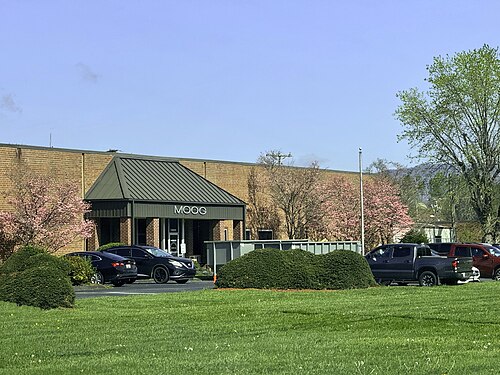
Moog Space, founded in 1951 and headquartered in East Aurora, New York, is a key provider of solutions for the space industry, specializing in the design, development, and manufacture of critical systems and components. While initially focused on propulsion, the company has expanded its portfolio to encompass a broad range of technologies including spacecraft avionics, guidance systems, fluid controls, structures, and environmental control & life support systems (ECLSS). Moog serves both commercial and government customers, supporting missions ranging from launch vehicles and satellite buses to human spaceflight initiatives, including contributions to NASA’s Space Launch System and future lunar missions. A core strength lies in Moog’s advanced avionics systems, offering integrated Command and Data Handling (C&DH) and Electrical Power Systems (EPS). The company is actively investing in next-generation technologies such as radiation-hardened computing – exemplified by the Cascade Single Board Computer featuring a RISC-V processor – and additive manufacturing to enhance capabilities and meet evolving mission demands. Beyond electronics, Moog provides mechanical solutions including hexapods for precision payload positioning, spacecraft mechanisms, shock and vibration isolation systems, and structural adapters for various satellite sizes. This diverse offering positions Moog Space as a comprehensive partner for organizations operating across the entire space ecosystem.

East Aurora, United States · Est. 1951 $11.6B
Spacecraft Components Verified PH

Parker Hannifin Space

Irvine, United States commercial

Parker Hannifin Space, a division of the century-old Parker Hannifin Corporation, focuses on the design and manufacture of critical components for the space industry. The company specializes in spacecraft components, with a core product line encompassing space valves, seals, and advanced thermal-management systems. Beyond these foundational elements, Parker Hannifin Space also develops and provides propulsion components and cryogenic systems essential for a range of space applications. A key strength of Parker Hannifin Space lies in its established engineering expertise and demonstrated flight heritage. The company highlights a history of successful implementation across both commercial and government space programs, suggesting a reliable and proven technology base. While specific technologies aren’t detailed publicly, the focus on cryogenic systems indicates capabilities in handling extremely low temperatures – a crucial requirement for propellant storage and advanced space exploration. Given the limited publicly available information, assessing precise market position is challenging. However, the combination of valves, seals, thermal control, and propulsion elements suggests Parker Hannifin Space operates as a key supplier to larger prime contractors and spacecraft manufacturers. Their long history and flight heritage likely position them as a trusted, established provider within the supply chain, rather than a direct-to-end-user company. Ultimately, Parker Hannifin Space appears to be a vital, if understated, contributor to the space industry, providing essential enabling technologies for a broad spectrum of missions. Their focus on reliability and proven performance, evidenced by their flight heritage, likely differentiates them in a competitive market.

Irvine, United States · Est. 1917 $119.8B
Propulsion Verified SAF.PA

Safran

Paris, France commercial

Safran is a French multinational aerospace company founded in 2005, with a core focus on the development and delivery of technologies within the propulsion and electronics sectors. While specific product details are limited based on available information, the company’s categorization suggests involvement in the design, manufacturing, and potentially the maintenance of systems critical to spacecraft and launch vehicle operation. This likely includes rocket engines, thrusters, and associated control systems, as well as the electronic components necessary for their function and integration. Given its positioning within aerospace, Safran likely leverages advanced materials science, precision engineering, and sophisticated software development in its work. Key capabilities likely encompass areas such as combustion technology, fluid dynamics, and the miniaturization of electronic systems for space applications. The company’s focus on both propulsion and electronics suggests a vertically integrated approach, potentially allowing for optimized system performance and reduced development timelines. Without further details regarding specific missions or customers, it is difficult to assess Safran’s current market position beyond its established presence within the broader aerospace industry. However, as a multinational company based in France, it is reasonable to assume involvement in European space programs and collaborations, potentially serving agencies like the European Space Agency (ESA) or commercial launch providers. Safran’s unique value proposition likely lies in its combined expertise in both propulsion and electronics, enabling the development of integrated and optimized space systems. This holistic approach, coupled with its established position in the aerospace sector, positions the company as a key player in the evolving space landscape.

Paris, France · Est. 2005 $158.3B
Spacecraft Components Verified TDY

Teledyne Technologies Space

Thousand Oaks, United States commercial

Teledyne Technologies Space, founded in 1999 and based in Thousand Oaks, California, focuses on the design and manufacture of advanced space-based sensors and imaging systems. The company specializes in critical components for spacecraft, with a core competency in infrared detectors utilized for both astronomical observation and Earth science applications. Additionally, Teledyne develops and provides digital imaging sensors, suggesting a broad capability in capturing and processing visual data from space. A key differentiator for Teledyne Technologies Space is its established role as a major instrument supplier to NASA. This indicates a high level of technical expertise, reliability, and adherence to stringent aerospace standards. While specific mission details are not publicly available, consistent supply to a demanding organization like NASA suggests involvement in a variety of significant space exploration and scientific endeavors. Given the limited publicly available information, it’s difficult to fully assess Teledyne’s market position beyond its established relationship with NASA. However, specialization in high-performance sensors and imaging – crucial for modern satellite technology and scientific research – positions the company within a growing and competitive sector. Their focus on infrared technology, in particular, suggests a potential niche within the broader space component market, catering to applications requiring sensitive thermal imaging capabilities.

Thousand Oaks, United States · Est. 1999 $28.0B
Spacecraft Components Verified TXN

Texas Instruments Space

Dallas, United States commercial

Texas Instruments Space (Nasdaq: TXN, ~$185B market cap) is the space-qualified product division of Texas Instruments Incorporated, a Dallas, Texas-based semiconductor giant founded in 1951 — historically significant as the birthplace of the integrated circuit (Jack Kilby at TI won the Nobel Prize in Physics in 2000 for the invention). TI Space offers high-reliability and radiation-hardened versions of TI's extensive analog and mixed-signal semiconductor portfolio for use in satellites, launch vehicles, and space exploration systems. The product range includes radiation-tolerant voltage regulators and power management ICs (managing the power distribution systems aboard satellites), precision analog-to-digital converters (ADCs) and digital-to-analog converters (DACs) for sensor and telemetry electronics, operational amplifiers, data converters, microcontrollers, and signal processing components. These parts are qualified to JANTX, JANTXV, and QML (Qualified Manufacturers List) standards — the radiation testing and high-reliability manufacturing certification regimes required for flight hardware. TI's space-grade components power solar panel power conditioning systems, battery management electronics, instrument sensor chains, and telemetry systems across commercial and government satellites globally. TI competes with Analog Devices (ADI), Microchip Technology, Renesas Space, and Cobham CAES in the space-grade analog semiconductor market. Its massive commercial volume production base gives TI cost advantages that translate to competitive pricing even for the relatively small quantities typical of space programs.

Dallas, United States · Est. 1951 $245.4B
Spacecraft Components Verified APH

Amphenol Space

Wallingford, United States commercial

Amphenol Aerospace is a leading global supplier of space-qualified interconnect solutions, delivering hermetically sealed connectors, high-speed fiber optics, and ruggedized cable assemblies engineered for the extremely harsh environment of space. Aerospace engineers have relied on Amphenol connectors for everything from low-Earth orbit satellites enabling modern communications to the International Space Station and deep space exploration missions. The company's SpaceVPX connector family is specifically designed for space-based electronic systems, leveraging VITA 78 OpenVPX architecture and technology with rigorous testing for extreme space environments including radiation exposure. The Deep Space 38999 series addresses the frigid temperatures of space and extreme cold-weather environments, perfectly suited for below-zero applications where satellites and space vehicles experience temperature swings from 125 degrees Celsius to minus 65 degrees Celsius during orbital operations. Amphenol's Series Five connector represents the next evolutionary step in combining traditional 38999 capabilities in a lighter, smaller package, delivering D38999 performance while being 20% smaller and 50% lighter. High-speed solutions combine the company's extensive legacy of Mil-Spec connectors with cutting-edge technology, supporting data rates up to 56 Gbps in lightweight, aluminum MIL-DTL-38999 shells for demanding bandwidth requirements. Space-qualified connectors must withstand intense vibrations during liftoff and remain mated under rapid acceleration exceeding 17,000 mph when leaving Earth's atmosphere, as demonstrated on NASA's Artemis missions. Amphenol's extensive product portfolio includes cylindrical, rectangular, fiber optic, and high-speed connectors, plus EMI/EMP filters and specialized interconnect systems. The company continues advancing interconnect technology for next-generation satellites, lunar missions, and space launch systems from their manufacturing facilities worldwide.

Wallingford, United States · Est. 1932 $206.9B
Spacecraft Components Verified MCHP

Microchip Space

San Jose, United States commercial

Microchip Technology (space division) is the space electronics product line of Microchip Technology Inc. (Nasdaq: MCHP), a $40B+ semiconductor company headquartered in Chandler, Arizona. Through its 2018 acquisition of Microsemi, Microchip inherited a comprehensive portfolio of radiation-hardened and radiation-tolerant devices including microcontrollers (RTG4 FPGA, SmartFusion2 SoC-FPGA), power management ICs, timing products, and memory for spacecraft applications. Microsemi itself had acquired Actel (FPGAs) and other space electronics companies over the years. Microchip's space products serve NASA missions, defense satellites, and commercial spacecraft, competing with Xilinx/AMD, BAE Systems, and Renesas in the space-grade semiconductor market. The space product line benefits from Microchip's broad R&D, qualification infrastructure, and long-term production commitments expected by space programs.

San Jose, United States · Est. 1987 $40.3B

Explore all 157 spacecraft components organisations

Filter by country, type or status, sort by market value or founding year. The view is saved in the address bar.

Skip to results

Loading companies…

Loading companies…