🇯🇵 Asia · Country hub

Space industry in Japan

54 organisations6 listed3 agenciessince 1918 tracked history

The most underrated space program in the world. Half a century of quiet excellence, plus a post-2018 commercial-startup wave that's starting to genuinely move the global market.

Jump in

Each card opens a filtered view below

Space Agencies Verified

JAXA

Tokyo, Japan government

The Japan Aerospace Exploration Agency (JAXA) is Japan's national aerospace and space agency, formed in 2003 through the merger of three organizations: the Institute of Space and Astronautical Science (ISAS), the National Aerospace Laboratory of Japan (NAL), and the National Space Development Agency of Japan (NASDA). JAXA conducts research and development in aeronautics, space technology, and space exploration. Headquartered in Chofu, Tokyo, JAXA operates major facilities including the Tsukuba Space Center, Tanegashima Space Center, and Sagamihara Campus. The agency employs approximately 1,500 staff and operates with an annual budget of ¥215.5 billion (JFY2023). Under President Hiroshi Yamakawa, JAXA pursues exploration, Earth observation, and technology development programs. ## History and Milestones Japan's space program dates to 1955 with the launch of the Pencil rocket. NASDA was established in 1969 for satellite and launcher development, while ISAS focused on space science. Japan launched its first satellite, Ohsumi, in 1970, becoming the fourth nation to orbit a satellite. The H-II rocket, first launched in 1994, established Japan's independent heavy-lift capability. The H-IIA, introduced in 2001, became Japan's primary launch vehicle with an excellent success rate. Japanese astronauts have participated in Space Shuttle and ISS missions, with the Kibo laboratory module contributing to the station since 2008. JAXA achieved notable exploration milestones including the Hayabusa mission, which returned asteroid samples to Earth in 2010—a world first. Hayabusa2 returned samples from asteroid Ryugu to Earth in 2020. These missions demonstrated Japan's prowess in deep space exploration and precision navigation. ## Products and Services JAXA's operational medium-lift launcher is H3, which entered service in 2024 with a new LE-9 engine and flexible configurations. The H-IIA, Japan's workhorse since 2001, flew its 50th and final mission on 28 June 2025 (16:33 UTC) from Tanegashima, carrying the GOSAT-GW climate satellite; H-IIB had already been retired after the last HTV cargo flight in 2020. Japan's satellite programs include the Advanced Land Observing Satellite (ALOS) series for Earth observation, the Quasi-Zenith Satellite System (QZSS) for regional navigation enhancement, and communications satellites. JAXA also develops and operates scientific satellites for astronomy and space physics research. The agency provides astronaut services, with Japanese astronauts serving on ISS expeditions and contributing to international partnerships. JAXA is developing lunar exploration capabilities through the Lunar Polar Exploration (LUPEX) mission partnership with ISRO and other international collaborations. ## Technology and Capabilities JAXA has developed advanced technologies in propulsion, materials, and robotics. The LE-9 engine uses an expander bleed cycle for high reliability. The agency's expertise in sample return missions—demonstrated by Hayabusa and Hayabusa2—represents world-leading capability in deep space navigation and precision operations. The H-II Transfer Vehicle (HTV), called "Kounotori," delivered cargo to the ISS from 2009 to 2020, demonstrating Japan's unmanned spacecraft capabilities. Its successor, HTV-X, will serve the station and potentially support lunar Gateway operations. JAXA maintains testing and tracking facilities including acoustic, thermal vacuum, and vibration testing at Tsukuba, plus ground stations for mission operations. The agency also develops technologies for space debris removal, satellite servicing, and in-space propulsion. ## Business and Financial Overview JAXA operates as an independent administrative institution funded primarily by the Japanese government, with an annual budget of ¥215.5 billion (JFY2023). The agency contracts with Japanese aerospace companies including Mitsubishi Heavy Industries, IHI Aerospace, and NEC for spacecraft and launch vehicle development. Commercial launch services are marketed through MHI, which operates H-IIA and H3 launches. Japan seeks to increase its share of the commercial launch market through H3's competitive pricing and reliability. International partnerships include collaboration with NASA on the Artemis program, ESA on various missions, and bilateral agreements with numerous countries. JAXA provides satellite services to international customers and participates in global space science collaborations. ## Recent Developments In 2024, JAXA achieved the first successful H3 launch following an initial failure in 2023, validating the new launch vehicle. The agency advanced lunar exploration preparations, including the SLIM (Smart Lander for Investigating Moon) mission, which achieved Japan's first lunar landing in January 2024. JAXA continued asteroid sample analysis from the Hayabusa2 mission and advanced the Martian Moons eXploration (MMX) mission for launch to Phobos. The agency also developed the HTV-X cargo vehicle and contributed to international Mars sample return planning. The agency expanded commercial space initiatives and private sector partnerships while advancing Earth observation capabilities and maintaining ISS operations. JAXA also developed technologies for the proposed Lunar Gateway station. ## Market Position JAXA represents Japan's comprehensive space capabilities, maintaining independent access to space while contributing to international partnerships. The agency competes with other launch providers through H3 while collaborating with NASA, ESA, and other agencies on exploration. Japan's aerospace industry, led by MHI, IHI, and Kawasaki Heavy Industries, supports JAXA's programs while developing commercial opportunities. The government has established space as a strategic sector, supporting industry growth and international competitiveness. JAXA's strategic priorities include lunar exploration, Mars sample return, Earth observation, and technology development for sustainable space activities.
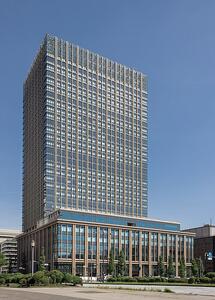

Tokyo, Japan · Est. 2003
Launch Services Verified 7011.T

Mitsubishi Heavy Industries

Tokyo, Japan commercial

Mitsubishi Heavy Industries (MHI), founded in 1884 and headquartered in Tokyo, Japan, is one of the world's largest industrial conglomerates with revenues exceeding ¥4 trillion ($27B) annually across energy, infrastructure, logistics, and aerospace divisions. In space, MHI serves as the prime contractor for Japan's national launch vehicle program through its MHI Launch Services subsidiary, manufacturing and operating the H-IIA and H3 rockets at the Tanegashima Space Center in southern Japan. H-IIA, introduced in 2001, became Japan's primary commercial and government launch vehicle with a 98% success rate across 50 flights before its retirement on 28 June 2025 — launching JAXA scientific missions, Japanese government satellites, and commercial GEO communications satellites for customers including JCSAT, KOREASAT, and the UAE Hope Mars Mission (EMM, 2020). H-IIA achieved commercial launch market credibility as an alternative to Ariane 5 and Atlas V for GTO-class payloads. H3, Japan's next-generation two-stage liquid oxygen/liquid hydrogen rocket, began operations in 2024 after an initial March 2023 first launch failure (second stage ignition anomaly). H3 is designed to halve launch costs compared to H-IIA through engine manufacturing simplification (LE-9 LOX/LH2 first stage engines replace H-IIA's LE-7A) and increased launch cadence from Tanegashima. H3's primary customers are JAXA government missions and Japanese commercial satellite operators, with ambitions for international commercial market competitiveness. MHI's broader aerospace portfolio includes F-15J/F-2 fighter maintenance, P-1 maritime patrol aircraft, MRJ/SpaceJet regional jet development (suspended), rocket engine manufacturing (LE-9, LE-5B), and participation in the Joint Strike Fighter (F-35) production chain. The company's H-IIA and H3 programs represent Japan's sovereign guaranteed access to space, critical for the Japan Self-Defense Forces' growing satellite reconnaissance and communication needs.

Tokyo, Japan · Est. 1884 $81.8B
Satellite Manufacturing Verified 6701.T

NEC Space Technologies

Fuchu, Japan commercial

NEC Space Technologies is the space systems division of NEC Corporation (Nippon Electric Company, Tokyo, founded 1899), Japan's largest information and communications technology conglomerate with annual revenues exceeding $25 billion. Within NEC's broad portfolio of IT services, enterprise software, and semiconductor products, the space division serves as a systems integrator and technology supplier for JAXA satellites, ground control infrastructure, and space communications equipment. NEC's most celebrated space achievement is its critical role in the Hayabusa asteroid sample return missions. For Hayabusa (launched 2003), NEC developed the spacecraft's ion engine system (the NSTAR-heritage IES microwave ion engines), guidance, navigation, and control systems, and communication hardware — systems that survived two years of interplanetary cruise, a harrowing landing and sample collection on asteroid Itokawa, and a desperate return journey that required improvising after multiple system failures before delivering Japan's first asteroid samples in June 2010. For Hayabusa2 (launched 2014), NEC again supplied propulsion electronics, navigation systems, and contributed to the impactor (SCI — Small Carry-on Impactor) mechanism that created an artificial crater on C-type asteroid Ryugu for subsurface sampling — the first ever such experiment. Hayabusa2 returned organic-rich carbonaceous samples including amino acid precursors in December 2020, a breakthrough for astrobiology. Beyond planetary missions, NEC Space Technologies has served as prime contractor or major systems integrator for multiple JAXA Earth observation satellites. The ALOS (Advanced Land Observing Satellite / Daichi) series — a 4-tonne L-band SAR + optical imaging platform — used NEC-led systems integration. MTSAT (Multi-functional Transport Satellite) geostationary weather and aviation satellites used NEC bus platforms. NEC also develops Japan's Quasi-Zenith Satellite System (QZSS) components — the 4-satellite GNSS augmentation constellation providing centimeter-level positioning across Japan — and ground systems for JAXA mission control and satellite command/data handling. Competitor Mitsubishi Electric (MELCO) is the other dominant Japanese satellite manufacturer prime.

Fuchu, Japan · Est. 2001 $41.6B
Lunar Verified 9348.T

ispace

Tokyo, Japan commercial

ispace is a Japanese lunar exploration company developing commercial lunar landers and transportation services. The company's Hakuto-R Mission 2, named Resilience, launched on SpaceX Falcon 9 on January 15, 2025, successfully reaching lunar orbit on May 6, 2025. On June 5, 2025, the lander attempted to touch down at the lunar south pole but experienced a hard landing after its Laser Range Finder encountered delays obtaining valid measurements. The technical analysis confirmed the lander likely impacted the lunar surface. Mission 2 carried TENACIOUS, the first European-built lunar rover (5 kg) designed and manufactured in Luxembourg with co-funding from the Luxembourg National Space Programme. After NASA and Draper ended the CLPS task order behind the ispace-U.S. APEX 1.0 lander in July 2026, ispace reset its roadmap: Mission 3 is now a Japan-built ULTRA lander targeting a 2028 launch on an H3 rocket, and Mission 4 a second ULTRA lander in 2029 carrying ESA's MAGPIE rover, while ispace-U.S. pursues NASA's CLPS 2.0 programme. The company continues working toward establishing lunar transportation infrastructure.

Tokyo, Japan · Est. 2010 $390M
Satellite Manufacturing Verified 6503.T

Mitsubishi Electric Space

Tokyo, Japan commercial

Mitsubishi Electric Corporation's Space Systems division (commonly known in the industry as MELCO Space), headquartered in Tokyo and part of the Mitsubishi Electric Corporation founded in 1921, is Japan's largest satellite manufacturer and a critical component of Japan's space industrial base — producing Earth observation, communications, and navigation satellites for JAXA, the Japanese government, and international customers. MELCO's Earth observation satellite portfolio is anchored by the ALOS (Advanced Land Observing Satellite) series for JAXA: ALOS-1 'Daichi' (launched 2006) combined PRISM panchromatic stereo imaging at 2.5m, AVNIR-2 multispectral at 10m, and PALSAR L-band SAR to create Japan's most capable remote sensing satellite to that date; ALOS-2 'Daichi-2' (2014) carries the upgraded PALSAR-2 L-band SAR providing 1-3 meter high resolution SAR imagery for disaster monitoring, deforestation detection, and agriculture; and ALOS-3 (planned for optical VHR imagery) and ALOS-4 (L-band SAR) continue the program. ALOS satellites have been particularly important for disaster response across Asia-Pacific, with PALSAR providing all-weather, day-night SAR coverage during typhoon flooding, earthquake damage assessment, and volcanic activity monitoring. MELCO is the prime contractor and manufacturer for Japan's Quasi-Zenith Satellite System (QZSS) — a regional navigation constellation completed as seven satellites in August 2026 after the planned QZS-5 was lost in the December 2025 H3 launch failure providing GPS augmentation and independent positioning for Japan and the Asia-Pacific region. QZSS uses Michibiki satellites in quasi-zenith orbits that remain nearly overhead Japan for extended periods, improving GPS availability in urban canyons and mountainous terrain where buildings and mountains block low-elevation GPS satellites. MELCO also manufactures commercial GEO communications satellites for international operators and supplies satellite components — solar arrays, thermal control panels, and attitude control systems — to other satellite manufacturers. MELCO competes globally with Boeing Satellite Systems, Thales Alenia Space, and Airbus Defence & Space for commercial GEO contracts.

Tokyo, Japan · Est. 1921 $67.9B
Satellite Operators Verified 9412.T

SKY Perfect JSAT

Tokyo, Japan commercial

SKY Perfect JSAT is a leading satellite communications operator based in Tokyo, Japan. Founded in 1994, the company is recognized as Asia’s largest satcom provider and holds the distinction of being Japan’s first private sector entity to launch a communications satellite. Its core business revolves around the operation of a substantial satellite fleet delivering a range of communication and broadcasting services. The company is best known for operating “SKY PerfecTV!”, a direct-to-home satellite television service in Japan. While specific technological details aren’t widely publicized, SKY Perfect JSAT’s capabilities center around satellite design, launch operations, in-orbit management, and the delivery of high-quality broadcast and data communication services. SKY Perfect JSAT’s pioneering role in the Japanese satellite industry and its long-standing operation of a major broadcasting platform establish a strong market position. The company uniquely combines broadcasting services with broader satellite communication capabilities, serving both consumer and potentially business/government sectors within the Asia-Pacific region. Further details regarding specific satellite technologies, data services offered, or recent missions are not readily available in the provided information, but the company’s history and current categorization clearly position it as a key player in the regional space and communications landscape.

Tokyo, Japan · Est. 1994 $3.61B

Explore all 54 organisations

Filter by sector, city, type or status. Sort by market value or founding year. Your view is saved in the address bar so you can share it.

Skip to results

Loading companies…

Loading companies…

Where they are

World map →
Loading map…CompanyListedAgency