🇰🇷 Asia · Country hub

Space industry in South Korea

23 organisations2 listed4 agenciessince 1971 tracked history

A national program that quietly became one of the seven indigenous-launcher operators in 2022 and has now formally established its own civilian space agency — a quarter-century later than peers but with disproportionate industrial momentum.

Jump in

Each card opens a filtered view below

Space Agencies Verified

Korea Aerospace Research Institute

Daejeon, South Korea government

The Korea Aerospace Research Institute (KARI), headquartered in Daejeon, South Korea, is the nation's principal government aerospace research and development organization — responsible for developing South Korea's launch vehicle technology, Earth observation satellite programs, space exploration initiatives, and aviation research, operating since May 2024 as an affiliated research institute of the Korea AeroSpace Administration (KASA). Founded in 1989, KARI's signature achievement is the Nuri (KSLV-II) launch vehicle — South Korea's first domestically designed and manufactured orbital rocket, developed entirely without foreign technology transfer assistance following U.S. restrictions on Korean launch vehicle development. Nuri is a three-stage liquid-propellant rocket powered by a cluster of 75-ton-force KRE-075 engines burning liquid oxygen (LOX) and kerosene. After a partial success in October 2021, Nuri achieved its first successful orbital launch in June 2022, placing a 1.3-ton payload into a 700km sun-synchronous orbit — making South Korea the seventh nation to independently develop and launch a 1+ ton satellite. A third launch in May 2023 successfully deployed the Next Generation Small Satellite-2 (CAS500-2) and multiple cubesats. The Korea Space Launch Vehicle (KSLV-II) program cost approximately 1.96 trillion Korean won ($1.5B USD) and employed over 300 domestic companies. KARI's KOMPSAT (Korea Multi-Purpose Satellite) program has produced a series of Earth observation satellites since KOMPSAT-1 (1999), progressing through electro-optical, SAR, and hyperspectral imaging satellites. KOMPSAT-3A provides 0.55-meter panchromatic resolution and 2.2-meter multispectral resolution; KOMPSAT-5 delivers X-band SAR imagery. KOMPSAT imagery is used for national security, disaster monitoring, urban planning, and export to international customers. KARI is developing the Korea Pathfinder Lunar Orbiter (Danuri), South Korea's first lunar mission launched in August 2022 aboard a SpaceX Falcon 9, which entered lunar orbit in December 2022 and carries a NASA ShadowCam instrument to image permanently shadowed craters. South Korea's independent launch capability and growing deep space ambitions position KARI as a rising mid-tier space agency alongside JAXA, ISRO, and CSA.

Daejeon, South Korea · Est. 1989
Aerospace Verified 047810.KS

Korea Aerospace Industries

Sacheon, South Korea commercial

Korea Aerospace Industries (KAI), founded in 1999 and headquartered in Sacheon, South Korea, is South Korea's national aerospace champion and the country's largest aerospace company — established through the consolidation of Samsung Aerospace, Daewoo Heavy Industries, and Hyundai Space & Aircraft divisions — manufacturing military aircraft, trainers, helicopters, satellites, and unmanned aerial vehicles while serving as the primary contractor for South Korea's KF-21 Boramae next-generation jet fighter program. KAI's space business has grown significantly as South Korea pursues satellite manufacturing sovereignty. The company developed and integrated the Arirang (KOMPSAT) Earth observation satellites for the Korea Aerospace Research Institute (KARI): KOMPSAT-3 (2012, 70 cm optical resolution), KOMPSAT-5 (2013, SAR), and KOMPSAT-3A (2015, 55 cm multispectral) — each generation pushing South Korean optical and radar imaging capabilities toward commercial-grade resolution. KAI manufactures satellite bus structures and integration at its Sacheon facilities, with payload instruments typically sourced from KARI, ETRI (Electronics and Telecommunications Research Institute), or international partners. In launch vehicle collaboration, KAI supported the Korean Satellite Launch Vehicle (KSLV-I / Naro) program as an integration partner, and contributes to the KSLV-II Nuri rocket's stage manufacturing — with Hanwha Aerospace producing the engines and KAI contributing structural components. KAI declined to bid for the next-generation KSLV-III launcher in March 2024, leaving Hanwha Aerospace as that programme's system integrator. KAI's military aircraft programs dominate its revenue: the T-50 Golden Eagle supersonic trainer (exported to Philippines, Indonesia, Iraq, Thailand), the FA-50 light combat aircraft, the Surion helicopter, and the KF-21 Boramae stealth-capable 4.5-generation fighter (first flight 2022) intended to reduce South Korea's dependence on F-35 imports for advanced air combat.

Sacheon, South Korea · Est. 1999 $9.14B
Propulsion Verified 012450.KS

Hanwha Aerospace

Changwon, South Korea commercial

Hanwha Aerospace, publicly traded on the Korea Stock Exchange (ticker 012450.KS, ~$8B market cap), is South Korea's largest aerospace and defense company, manufacturing jet engines, rocket propulsion systems, aircraft components, ammunition, and ground vehicle systems. Headquartered in Seongnam with manufacturing in Changwon, the company traces origins to Samsung Aerospace before the Hanwha Group acquisition in 2015. In space propulsion, Hanwha Aerospace is the prime contractor for Korea's KSLV-II Nuri rocket engines — the 300-kN liquid oxygen/kerosene first-stage engines and the upper-stage engine are manufactured in-house, making Hanwha the backbone of Korea's sovereign launch capability. Nuri's first successful orbital launch in June 2022 and subsequent launches demonstrated indigenous engine production at a level previously achieved only by a handful of national programs globally. Hanwha is developing larger 2nd-generation engines for an upgraded next-generation launch vehicle targeting 2030s. Beyond propulsion, Hanwha Aerospace is expanding into satellite manufacturing, space situational awareness systems, and satellite assembly through its Hanwha Systems subsidiary. The company invested in Korea's LEO satellite internet initiative and participated in the government's Korea Space Launch Vehicle program as a key industrial anchor. Hanwha Defense Australia and Hanwha's global defense footprint support international space and defense partnerships. Hanwha Aerospace competes with KAI (Korea Aerospace Industries) domestically and with Mitsubishi Heavy Industries, JAXA partners, and ISRO in the broader Asia-Pacific launch and aerospace manufacturing sector. The company's integration across propulsion, aircraft, and defense systems positions it as South Korea's primary aerospace industrial champion in the post-NuriSat era.

Changwon, South Korea · Est. 1977 $40.0B
Launch Services Verified

Innospace

Daejeon, South Korea commercial

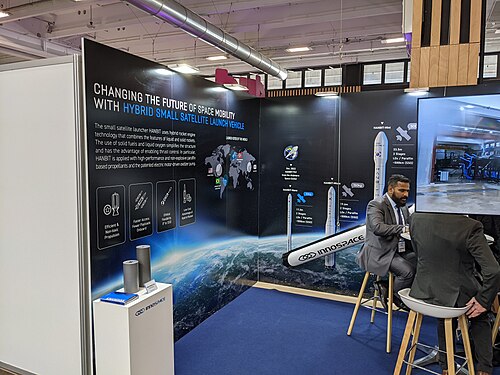
Innospace is a South Korean private launch vehicle company founded in 2017 and headquartered in Daejeon, developing liquid-propellant small rockets for nanosatellite and microsatellite deployment under the HANBIT family of launch vehicles — representing the vanguard of South Korea's emerging commercial launch sector alongside government programs like the KSLV-II Nuri rocket. The company achieved a landmark milestone in March 2023 when its HANBIT-TLV (Technology Launch Vehicle) executed a successful suborbital test flight from the Alcântara Launch Center in Brazil — the first successful launch of a Korean private liquid-fuel rocket. The vehicle used a liquid oxygen / ethanol propulsion system developed entirely in-house, demonstrating core propulsion, structural, and flight control technologies in a controlled suborbital trajectory. This made Innospace the first Korean private company to successfully fly a liquid rocket to space. Building on HANBIT-TLV experience, Innospace is developing the HANBIT-Nano vehicle targeting 50 kg to sun-synchronous orbit, and the HANBIT-Micro targeting 200+ kg to SSO for commercial small satellite operators. The company's development program has received support from Korea's Ministry of Science and ICT and the Korea Aerospace Research Institute (KARI) ecosystem of technology transfers and test facilities, while maintaining private company commercialization rights. Innospace competes in the global small launch market alongside RocketLab, Exolaunch rideshare via SpaceX, and emerging Asian launch providers including iSpace Japan and China's Galactic Energy. The company targets commercial launch service contracts beginning in the mid-2020s.

Daejeon, South Korea · Est. 2017
Launch Services

Innospace Korea

Sejong City, South Korea commercial

Innospace Korea is the corporate entity of Innospace — South Korea's first successful commercial liquid-fuel rocket company, founded in 2017 and headquartered in Sejong City, South Korea. The company achieved a historic milestone in March 2023 when its HANBIT-TLV (Technology Launch Vehicle) successfully completed a suborbital test flight from the Alcântara Launch Center in Brazil — the first successful orbital-trajectory flight of a Korean private company's liquid-propellant rocket. Innospace develops the Hanbit family of launch vehicles using in-house developed liquid oxygen and ethanol propulsion systems, targeting the growing market for dedicated small satellite launch services in Asia and globally. The development roadmap progresses from the HANBIT-TLV suborbital demonstrator toward the HANBIT-Nano orbital vehicle targeting approximately 50 kg to sun-synchronous orbit, and the larger HANBIT-Micro targeting 200+ kg payload class for commercial satellite constellation deployment missions. South Korea's commercial space sector has emerged in parallel with the national KSLV-II (Nuri) government rocket program — Korea's first domestically developed orbital launch vehicle — with Innospace leading the private commercial launch segment. The company benefits from Korean government support through the Ministry of Science and ICT's commercial space promotion programs and from Korea's established aerospace engineering ecosystem. Innospace aims to provide dedicated launch services from Korean and international launch sites, competing with Rocket Lab, ISRO's SSLV and PSLV, and emerging Asian commercial launch providers for Asia-Pacific small satellite deployment contracts requiring precise orbital insertion to specific target orbits.

Sejong City, South Korea · Est. 2017
Space Agencies Verified

Korea AeroSpace Administration

Sacheon, South Korea government

The Korea AeroSpace Administration (KASA), established in 2024 and located in Sacheon, South Korea, is the nation’s newly formed central government agency responsible for spearheading the country’s space endeavors. Modeled after NASA, KASA’s core function is to formulate and execute national space policy, oversee space-related projects, and foster the growth of the South Korean space industry. While specific programs are currently undefined given its recent establishment, the agency’s mandate encompasses all aspects of space exploration, development, and utilization. As a nascent organization, details regarding KASA’s key technologies and capabilities are still emerging. However, its structure suggests a focus on building national expertise across the full spectrum of space activities, likely including satellite development, launch vehicle technology, space science, and potentially human spaceflight. Given South Korea’s existing advancements in areas like satellite communications and Earth observation, KASA will likely leverage and expand upon these capabilities. Currently, specific missions or customers are not publicly available due to the agency’s recent founding. However, KASA is positioned to become the primary customer and coordinating body for South Korea’s growing private space sector, as well as collaborating with international partners on future space projects. KASA’s unique value proposition lies in consolidating and centralizing South Korea’s space efforts under a single, dedicated agency. This aims to accelerate the nation’s progress in space, fostering innovation, and establishing South Korea as a significant player in the global space landscape. The agency’s establishment signals a strong national commitment to expanding South Korea’s presence in space and realizing the economic and strategic benefits associated with space exploration and technology.

Sacheon, South Korea · Est. 2024

South Korea: the country report

Country Report N° 13 2 min read Lead agency KASA, est. 1989

~₩923B
Annual budget
/ ~$700M (KASA + KARI, FY 2024)
KASA inaugural budget announcement 2023; KARI annual report FY 2024
1-2
Launches / year
(Nuri / KSLV-II)
KARI Nuri launch manifest; New Space Tracker editorial estimate, Q1 2026
0
Active astronauts
(Yi So-yeon, the only Korean to fly to space, retired)
KASA official statement; New Space Tracker editorial estimate, Q1 2026
Nuri (KSLV-II)
Sovereign launcher
KARI KSLV-II program documentation
Flagship program Korean Pathfinder Lunar Orbiter (operational) + Nuri commercialisation + Korean Augmentation Satellite System KARI Nuri commercialisation contract award 2022; KARI Danuri mission overview
Notable firsts
  • First Korean indigenous orbital launch (Nuri, 2022)
  • First commercial private launch from Korea (Perigee, planned 2026)
KARI Nuri launch press release June 2022; Perigee Aerospace program statement

South Korea reached orbit on its own rocket in June 2022. The first Korean Space Launch Vehicle, KSLV-II Nuri, lifted off from Naro Space Center on the south coast and successfully placed a 162.5 kg verification payload in a 700 km Sun-synchronous orbit. It was the country's third attempt and the first success — and made Korea the seventh nation in history with an indigenous orbital-launch capability. The vehicle has flown two more times since (a successful operational launch in May 2023 and the third operational flight in May 2025), and is now in commercial-handoff to Hanwha Aerospace.

The institutional context took longer to settle. KARI (the Korea Aerospace Research Institute) ran the program through 2023, when the government finally established the Korea AeroSpace Administration (KASA) as a dedicated civilian space agency — bringing Korea broadly in line with peer countries that had created such institutions decades earlier. KASA's budget has grown rapidly since founding and is on track to roughly double by 2030. The proximate political driver is North Korea's increasingly active space and missile programs; the medium-term economic driver is Korea's strong general-industrial position in semiconductors, displays, and battery technology making space industrialisation an obvious capability adjacency.

The Korean Pathfinder Lunar Orbiter (Danuri), launched in August 2022 on a Falcon 9, has been operational at the Moon since December 2022 and is the country's first deep-space mission. The science payload includes a magnetometer, a polarimetric camera, and a NASA-supplied ShadowCam imager designed to look into permanently shadowed lunar craters. Danuri has been a credibility-building success and is the institutional bridge to a follow-on lunar lander (Korea Pathfinder Lunar Lander) that's currently targeting 2032.

Korean engineering culture's track record on industrial scale-up — semiconductors and batteries are the obvious comparisons — suggests that the space sector will scale faster than peer countries did at similar stages.

On the commercial side, Innospace (suborbital test of Hanbit-TLV in March 2023) and Perigee Aerospace (Blue Whale 1 in development, first orbital attempt 2026) are the most credible Korean startup launchers. Both are competing for the small-satellite launch niche, both targeting first commercial flight from outside Korea (Innospace from Brazil's Alcântara, Perigee from a Korean coastal site). The broader commercial cohort — Contec (ground-station services), Bumchun Precision (propulsion components), Satrec Initiative (small-satellite buses) — is thinner than the Japanese equivalent but growing.

The 28 Korean organisations on our directory understate the engineering capability available. Hanwha Systems and Hanwha Aerospace, Korea's largest aerospace conglomerate, are now scaled up around the Nuri commercialisation contract. LIG Nex1 builds defence-side reconnaissance satellites. Samsung and SK Telecom both operate satellite divisions for telecommunications. Korean engineering culture's track record on industrial scale-up — semiconductors and batteries are the obvious comparisons — suggests that the space sector will scale faster than peer countries did at similar stages.

WATCH 2026 – 2030

The next four years are the credibility window. Hanwha needs to take Nuri from KARI hands to commercial operation cleanly by 2026-2027. Perigee or Innospace needs to reach orbit on its first try (or a clean second try) before 2027. KASA's budget needs to keep growing. And the Korean Pathfinder Lunar Lander needs to actually break ground for its 2032 launch. Hit all four and Korea is structurally a tier-2 space nation. Hit two of them and Korea is where Japan was in 1995 — capable, growing, but still in catch-up mode.

Explore all 23 organisations

Filter by sector, city, type or status. Sort by market value or founding year. Your view is saved in the address bar so you can share it.

Skip to results

23 companies

Search results

Where they are

World map →
Loading map…CompanyListedAgency