🇪🇸 Europe · Country hub

Space industry in Spain

36 organisations1 agencysince 1942 tracked history

36 agencies, companies and research groups headquartered in Spain, from launch and satellites to data and defence.

Jump in

Each card opens a filtered view below

Quick facts

National space body
INTA · est. 1942
Tracked organisations
36
Industry active since
1942 · median founding 2015
Largest hub
Madrid (16)
Leading sector
Satellite Manufacturing (9)
Added in last 4 months
4
Launch Services Verified

PLD Space

Elche, Spain commercial

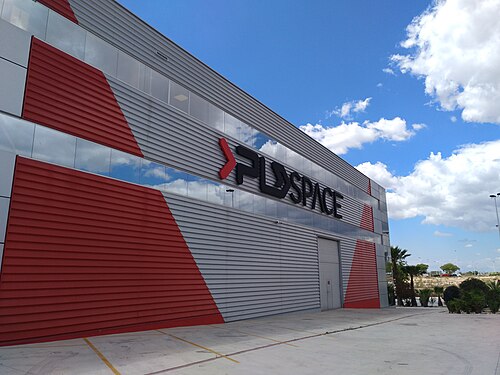
PLD Space (Payload Aerospace S.L.) is a Spanish launch company founded in 2011 in Elche, developing partially-reusable launch vehicles Miura 1 and Miura 5. Miura 1, a suborbital sounding rocket for microgravity research and technology development, successfully launched on October 7, 2023, serving as the technological demonstrator for the orbital Miura 5. The Miura 5 small launch vehicle can place approximately 500 kg into sun-synchronous orbit. PLD Space is targeting the first Miura 5 launch from the Guiana Space Centre in 2026, with an ESA European Launcher Challenge contract setting an orbital deadline of end-2027. The company expects to produce one TEPREL-C rocket engine every two weeks by end of 2025. PLD Space raised €488 million in total by September 2026, including a €288 million Series C in 2026. Beyond Miura 5, PLD Space revealed a family of next-generation larger rockets and the Lince crew capsule. In cargo configuration, Lince can carry 5,000 kg to ISS and return 3,400 kg; when carrying crew, it supports four or five astronauts. PLD Space aims to achieve 30 launches annually by 2030.

Elche, Spain · Est. 2011 €488M raised
Research Verified

INTA

Madrid, Spain government

The Spanish National Institute for Aerospace Technology (INTA), founded in 1942 and based in Madrid, Spain, is a multidisciplinary research institution focused on aerospace technology. INTA’s core activities encompass the development and testing of satellites, alongside atmospheric research. The institute functions as a key national center for aerospace engineering and technology, contributing to both civilian and defense applications. INTA’s capabilities center around the complete satellite lifecycle, from design and fabrication to in-orbit testing and data analysis. Their atmospheric research programs likely leverage specialized instrumentation and data processing techniques to study Earth’s atmosphere and related phenomena. A significant aspect of INTA’s operations involves active participation in programs led by the European Space Agency (ESA), indicating a collaborative approach to space exploration and technology development. While specific mission details aren’t readily available from the provided information, INTA’s ESA program participation suggests involvement in a range of European space initiatives. This collaboration positions INTA as a contributing member of the European space ecosystem. INTA’s long history and broad scope of research and development activities establish it as a national asset for Spain, providing expertise in aerospace engineering, satellite technology, and atmospheric science. The institute’s role in ESA programs further solidifies its position as a key player in European space endeavors.

Madrid, Spain · Est. 1942
Space Tourism Verified

Zero 2 Infinity

Barcelona, Spain commercial

Zero 2 Infinity is a Barcelona, Spain-based aerospace company founded in 2009 developing two complementary near-space and orbital access services: high-altitude scientific balloon flights carrying payloads and passengers to the stratosphere (~40 km), and the Bloostar orbital launch vehicle — a rockoon (rocket launched from a stratospheric balloon) designed to deliver small satellites to low Earth orbit at significantly lower cost than conventional ground-launched rockets. Zero 2 Infinity's near-space balloon program, branded as 'bloon', targets both scientific payload hosting and commercial space tourism experiences — carrying customers and experiments in a pressurized gondola suspended beneath a helium balloon that ascends over four hours to approximately 36-40 km altitude, where passengers experience the curvature of the Earth against the black sky of space (though technically below the Kármán line at 100 km). The stratosphere at these altitudes offers near-vacuum conditions beneficial for atmospheric science instruments, microgravity-analogous environments for biology experiments, and views that have been valuable for marketing experiences for brands (Red Bull, luxury goods companies) seeking the visual imagery of near-space. The balloon approach is gentler than rocket flight — no vibration, no high g-forces — making it accessible to non-astronaut passengers and fragile scientific instruments. The Bloostar orbital launch vehicle concept is the company's more ambitious program. Rather than launching from the ground, Bloostar is carried to high altitude beneath a balloon before igniting its rocket engine — gaining several significant performance advantages: launching above approximately 99% of atmospheric mass (eliminating drag losses), allowing launch from any location on Earth (not fixed to a ground launch site), and reducing the rocket's structural requirements since it need not survive high-dynamic-pressure ascent through the lower atmosphere. Bloostar uses a toroidal (donut-shaped) rocket engine configuration and is designed to deploy CubeSats and small payloads into LEO. Competitors in rockoon launch concepts include Interstellar Technologies (Japan) and Sanborn Space, while in the near-space tourism balloon market World View Enterprises and Space Perspective are building similar stratospheric passenger balloon services. Zero 2 Infinity's Barcelona base gives it access to Spanish industrial ecosystem and ESA's ESAC facilities.

Barcelona, Spain · Est. 2009
Software

Astroland Agency

Santander, Spain commercial

Astroland Agency is a Spanish company based in Cantabria, northern Spain, operating an analog space habitat and Mars surface simulation experience called Ares Station — a purpose-built isolated habitat constructed within the cave systems of the Monte Castillo area of Cantabria (famous for their UNESCO-listed prehistoric cave art). The facility offers immersive simulation programs for astronaut training analogs, scientific research teams studying human factors in isolation, corporate innovation and leadership programs, and educational experiences. Participants undergo simulated Mars mission protocols including EVA (extra-vehicular activity) simulations, geological survey exercises, closed-habitat operations with communication delays, and psychological isolation studies. Programs range from multi-day immersive experiences to extended 30-day missions replicating the physical and psychological conditions of a Mars surface stay. Astroland's cave habitat provides natural thermal stability and isolation from external light and sound — characteristics that distinguish it from surface-based analog sites like the Mars Desert Research Station (MDRS, Utah) or HI-SEAS (Hawaii). The company works with space agencies, research institutions, and universities using analog environments to prepare for future crewed deep-space missions.

Santander, Spain · Est. 2019
Radio Frequency Verified

Acorde Technologies

Santander, Spain commercial

Acorde Technologies is a Spanish electronics manufacturer founded in 1999 and headquartered in Santander, Cantabria, that designs, develops and manufactures radio-frequency (RF) and microwave subsystems for space and defence applications, marketed under the tagline "Space & Defence RF Experts." The company's product portfolio, organised under mythologically themed brand names, spans the core RF building blocks used in satellite communications payloads and ground terminals: Zeus (solid-state power boosters, SSPBs), Hercules (solid-state power amplifiers, SSPAs), Hermes (low-noise block downconverters, LNBs), Horus (low-noise amplifiers, LNAs), Eos (block upconverters, BUCs), Nyx (block downconverters, BDCs) and Jano (transceivers, TRX), covering X-band and Ka-band frequencies used by telecommunications, Earth observation and navigation satellites. Acorde positions its hardware as flight-proven, citing users across more than 20 countries and all six continents as well as payloads operating beyond Earth, and reports more than €10 million in annual revenue with a workforce of over 55 people. The company holds Spain's "PYME Innovadora" (Innovative SME) designation, ISO 9001 quality certification and AQAP 2110 NATO defence-quality standard compliance, and has completed more than 100 research and development projects, reflecting its role as a specialist RF component supplier rather than a prime satellite or launch-vehicle manufacturer. Acorde supplies RF subsystems to satellite manufacturers, defence primes and ground-segment integrators rather than operating its own satellites or launch systems; its role in the space value chain is as a component-level specialist embedded in larger spacecraft and ground-terminal programmes across the European and international space and defence industry.

Santander, Spain · Est. 1999
Launch Services

Aistech Space

Barcelona, Spain commercial

Aistech Space is a Spanish NewSpace company and thermal imaging pioneer, credited as the first company globally to fly a high-resolution thermal infrared (TIR) telescope aboard a small satellite — demonstrating that the miniaturization of long-wavelength infrared sensors could make orbital thermal imaging economically accessible beyond the large, expensive institutional satellites that had previously monopolized the capability. The Guardian-1 satellite — launched in May 2022 aboard a SpaceX Transporter-4 rideshare mission — carried Aistech's miniaturized thermal infrared telescope payload, achieving approximately 40m ground sample distance (GSD) thermal imaging from LEO in a 3U CubeSat format. Thermal infrared imagery in the 8-12μm wavelength range reveals temperature anomalies invisible to optical and multispectral sensors: ignition-stage wildfires detectable as hot spots before they grow to catastrophic scale, industrial heat waste from petrochemical facilities and power plants, shipping vessel detection by engine heat signature regardless of weather or nighttime conditions, and agricultural crop water stress mapping via canopy temperature. The Hydra constellation program plans 20 thermal imaging satellites funded by an €8.5 million raise, targeting operational constellation status by 2027. This scale would enable frequent global revisit for continuous wildfire monitoring (particularly critical for Mediterranean Europe and California fire seasons), methane/CO₂ emission thermal anomaly detection supporting industrial compliance and climate reporting, and maritime domain awareness applications for coast guards and navies tracking vessel traffic through heat signatures. Aistech's ESA Copernicus contract positions the company as a data contributor to Europe's Copernicus Earth observation program — the world's most comprehensive open-access EO data infrastructure. The Copernicus Emergency Management Service relies on EO data to map disaster extents and damage zones, an application where thermal imaging provides essential nighttime and smoke-obscured fire perimeter detection capability unavailable from optical sensors. Competitors include Pixxel (hyperspectral with thermal bands), Satellogic (thermal channels on EO-1 class satellites), and Maxar (thermal on larger GEO platforms).

Barcelona, Spain · Est. 2015

Explore all 36 organisations

Filter by sector, city, type or status. Sort by market value or founding year. Your view is saved in the address bar so you can share it.

Skip to results

36 companies found

Search results

Where they are

World map →
Loading map…CompanyListedAgency